
6 Elements of Design 1 Pattern 2 FormShape

- Slides: 50
6 Elements of Design 1 - Pattern 2 - Form/Shape 3 - Space 4 - Line 5 - Texture 6 - Color
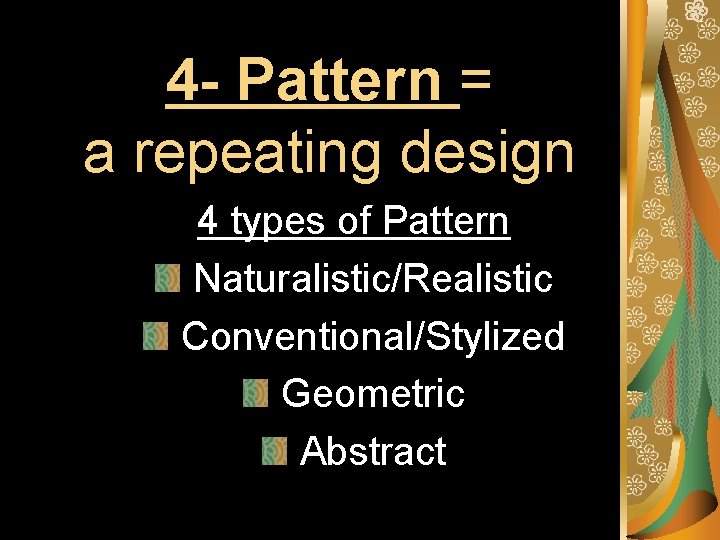
4 - Pattern = a repeating design 4 types of Pattern Naturalistic/Realistic Conventional/Stylized Geometric Abstract
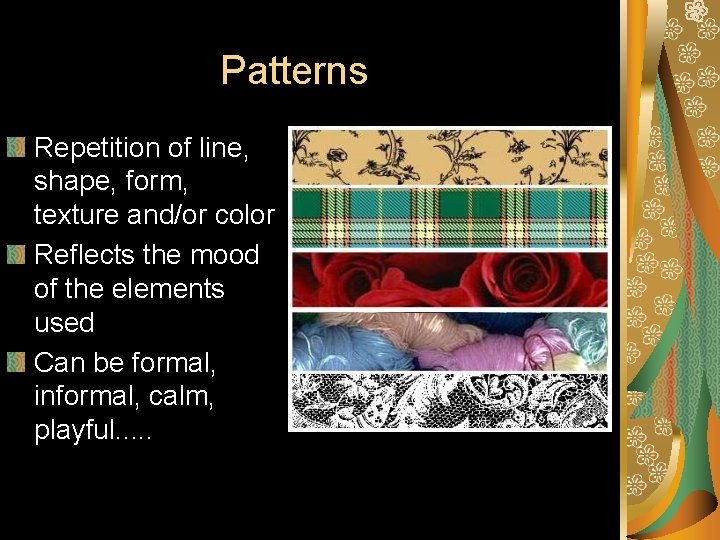
Patterns Repetition of line, shape, form, texture and/or color Reflects the mood of the elements used Can be formal, informal, calm, playful. . .
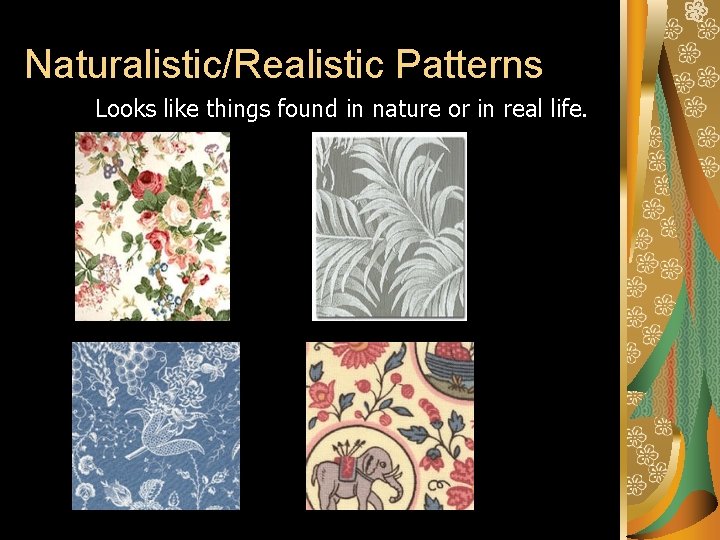
Naturalistic/Realistic Patterns Looks like things found in nature or in real life.
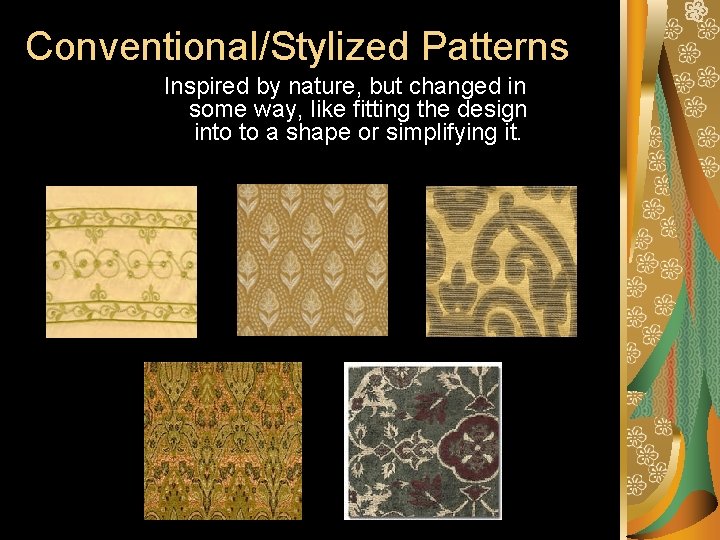
Conventional/Stylized Patterns Inspired by nature, but changed in some way, like fitting the design into to a shape or simplifying it.
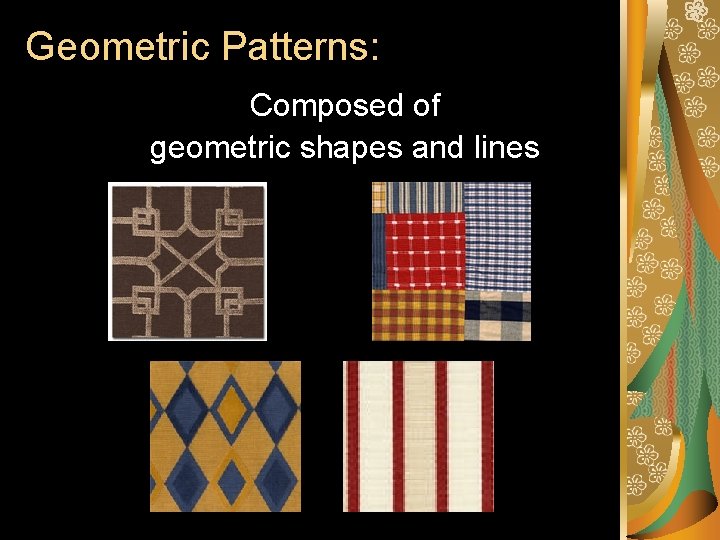
Geometric Patterns: Composed of geometric shapes and lines
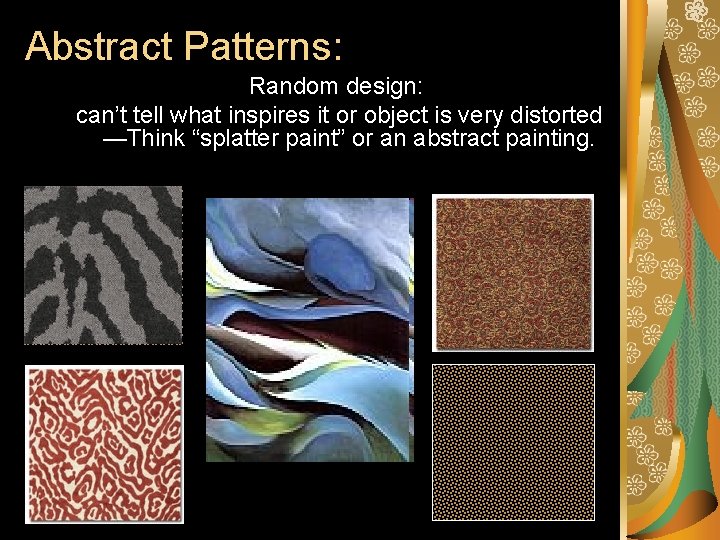
Abstract Patterns: Random design: can’t tell what inspires it or object is very distorted —Think “splatter paint” or an abstract painting.
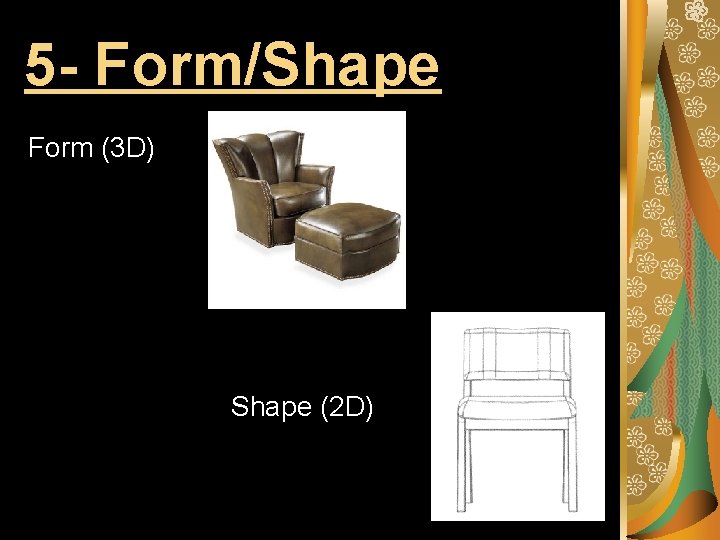
5 - Form/Shape Form (3 D) Shape (2 D)
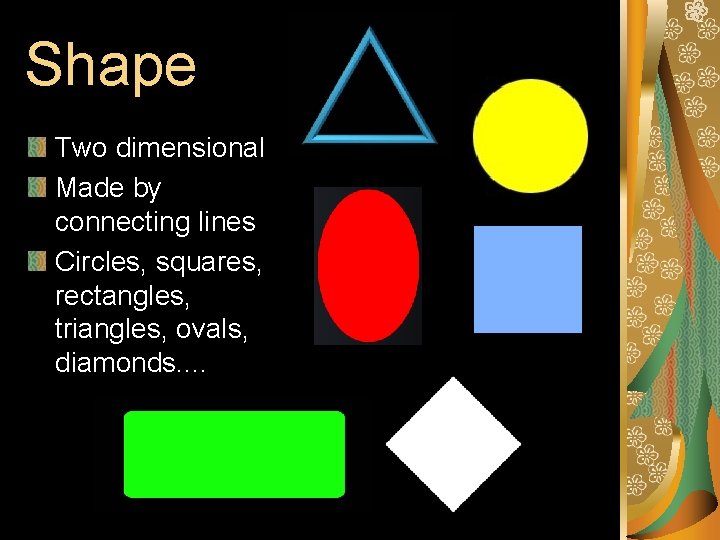
Shape Two dimensional Made by connecting lines Circles, squares, rectangles, triangles, ovals, diamonds. .
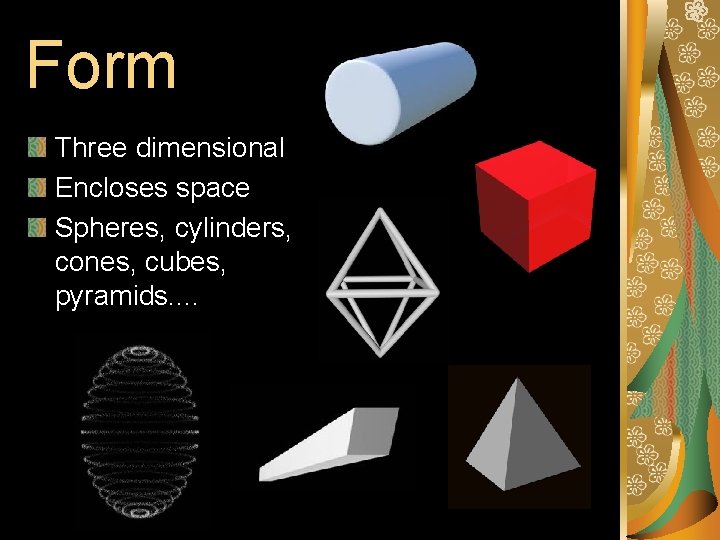
Form Three dimensional Encloses space Spheres, cylinders, cones, cubes, pyramids. .
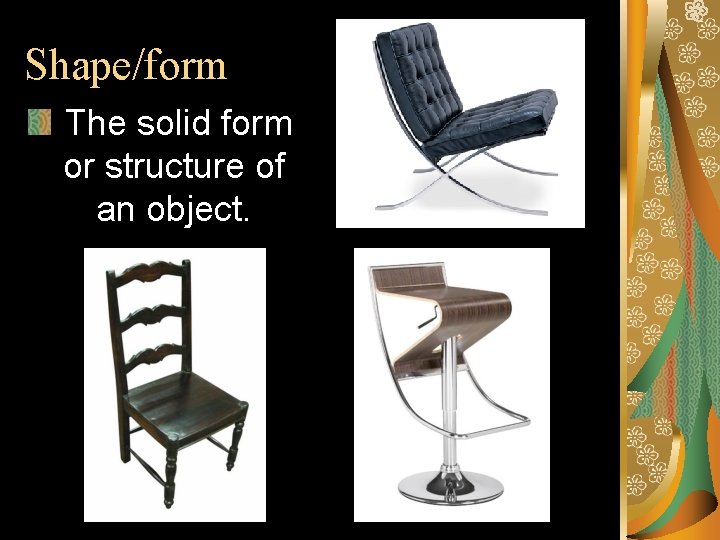
Shape/form The solid form or structure of an object.
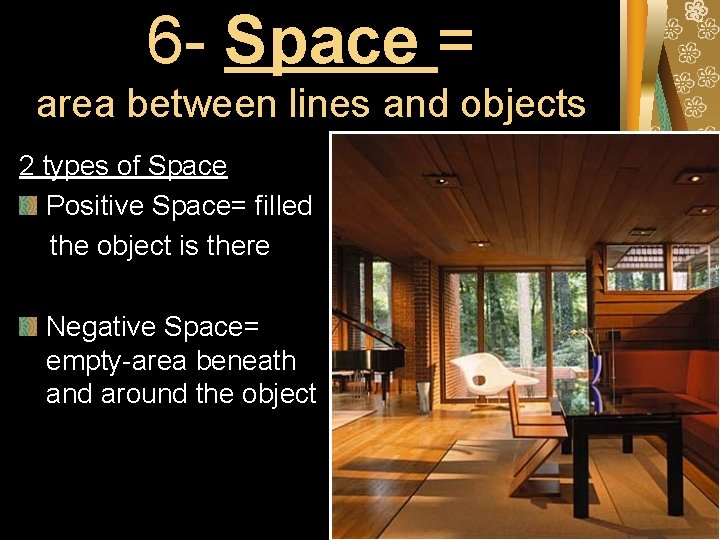
6 - Space = area between lines and objects 2 types of Space Positive Space= filled the object is there Negative Space= empty-area beneath and around the object
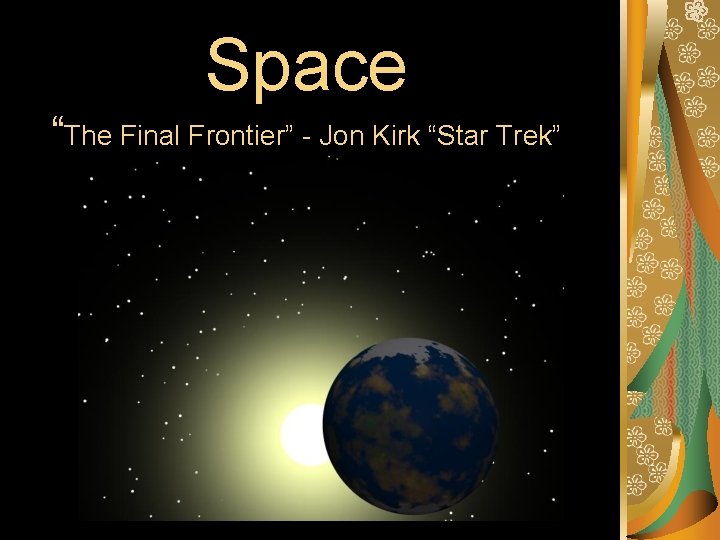
Space “The Final Frontier” - Jon Kirk “Star Trek”
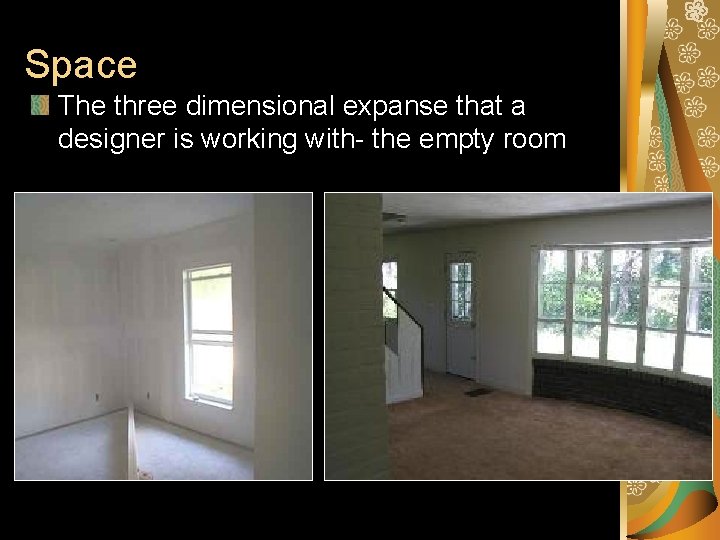
Space The three dimensional expanse that a designer is working with- the empty room
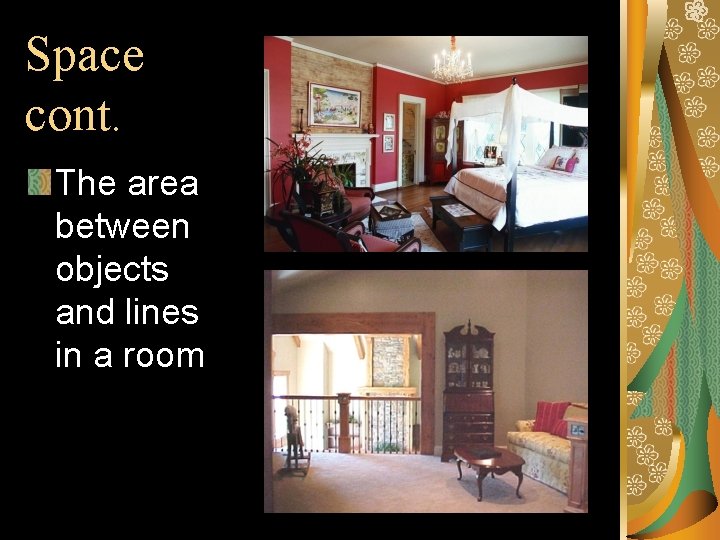
Space cont. The area between objects and lines in a room
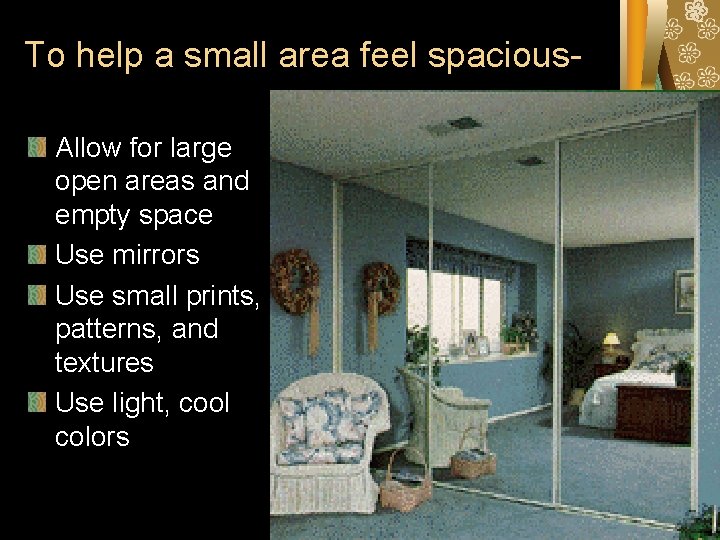
To help a small area feel spacious. Allow for large open areas and empty space Use mirrors Use small prints, patterns, and textures Use light, cool colors
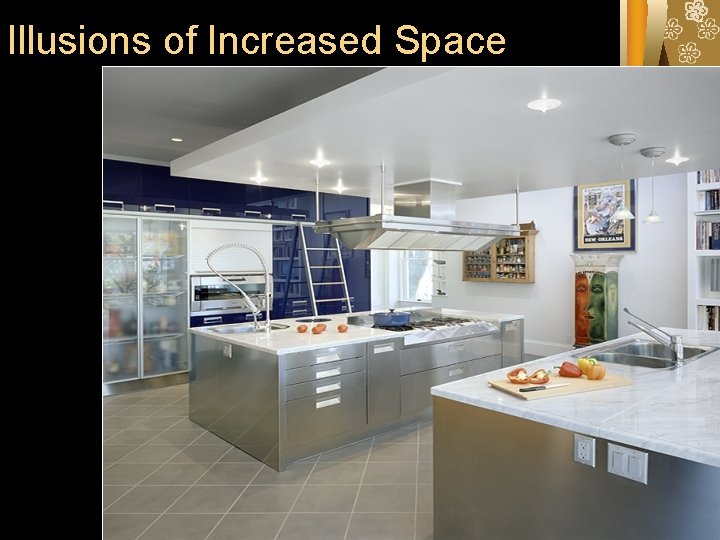
Illusions of Increased Space
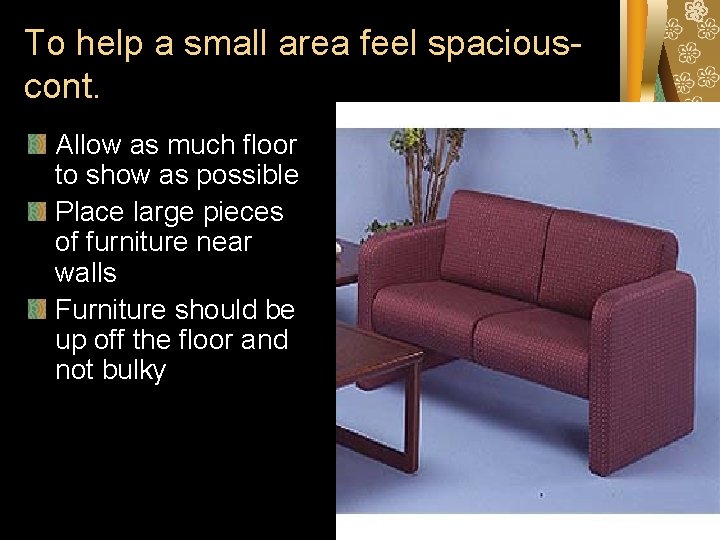
To help a small area feel spaciouscont. Allow as much floor to show as possible Place large pieces of furniture near walls Furniture should be up off the floor and not bulky
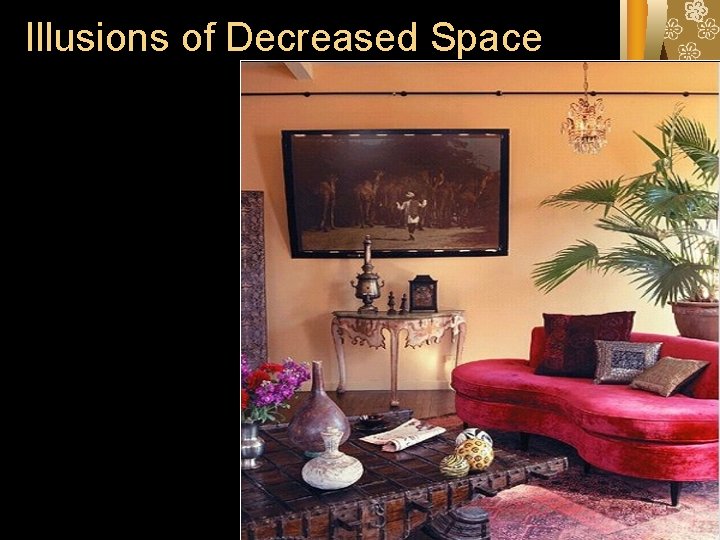
Illusions of Decreased Space
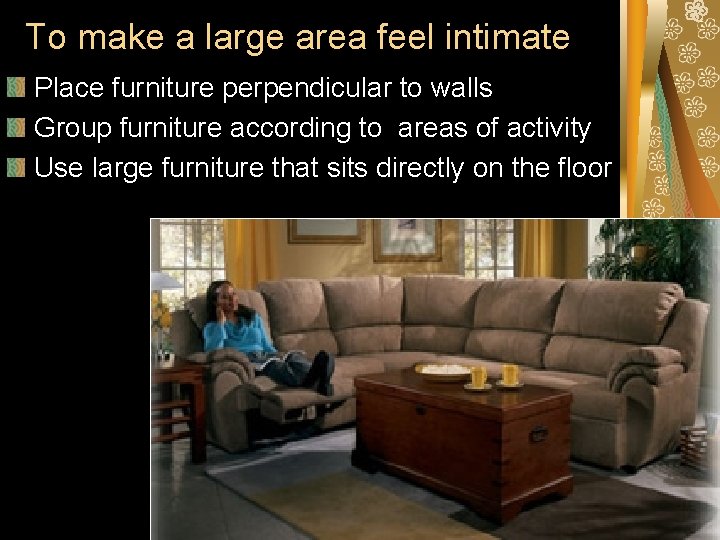
To make a large area feel intimate Place furniture perpendicular to walls Group furniture according to areas of activity Use large furniture that sits directly on the floor
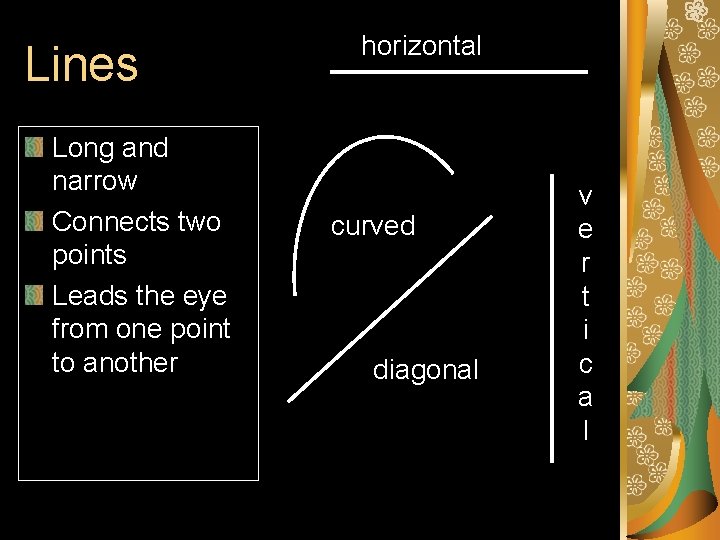
7 - Line: 2 connected points 4 Types of Line Vertical Horizontal Curved Diagonal All rooms contain all of the types of lines. When looking at room pictures, look at the predominant line. The predominant line is what will contribute to the overall feeling of the room.
Lines Long and narrow Connects two points Leads the eye from one point to another horizontal curved diagonal v e r t i c a l
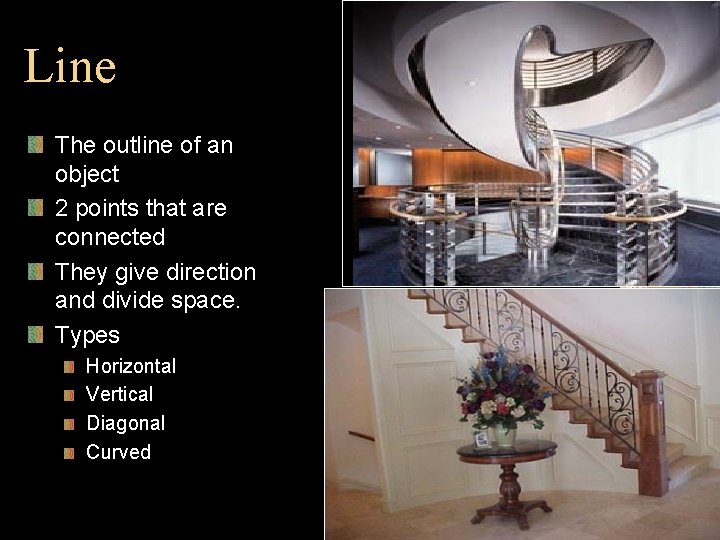
Line The outline of an object 2 points that are connected They give direction and divide space. Types Horizontal Vertical Diagonal Curved
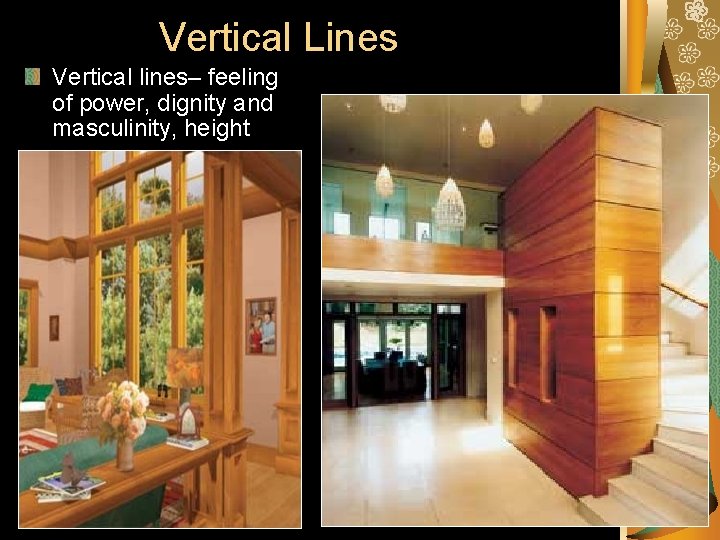
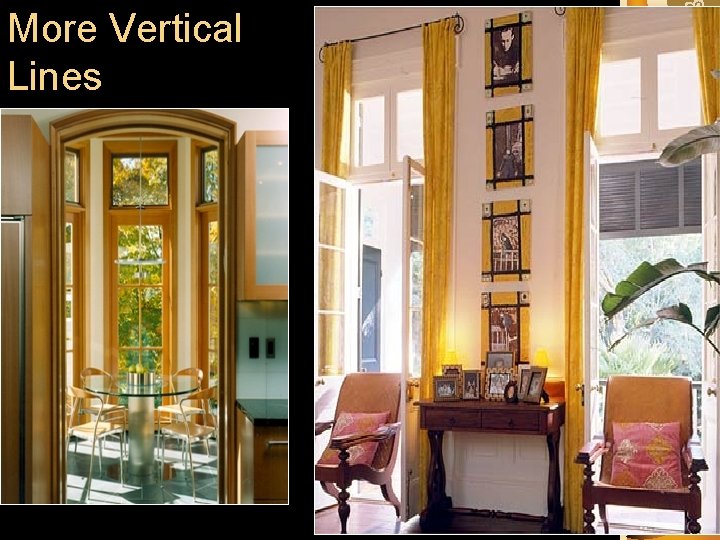
Vertical Lines Vertical lines– feeling of power, dignity and masculinity, height
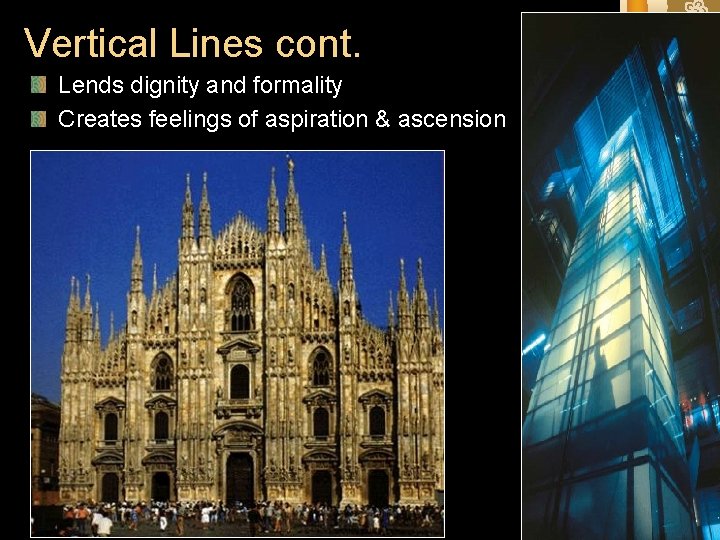
Vertical Lines cont. Lends dignity and formality Creates feelings of aspiration & ascension
More Vertical Lines
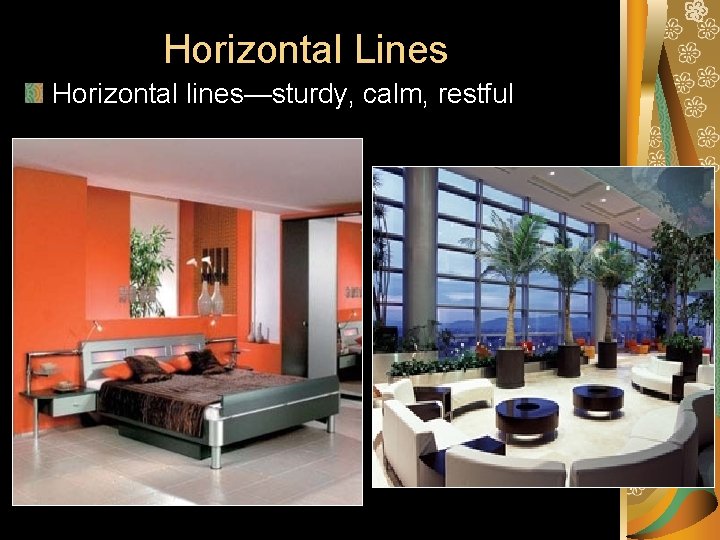
Horizontal Lines Horizontal lines—sturdy, calm, restful
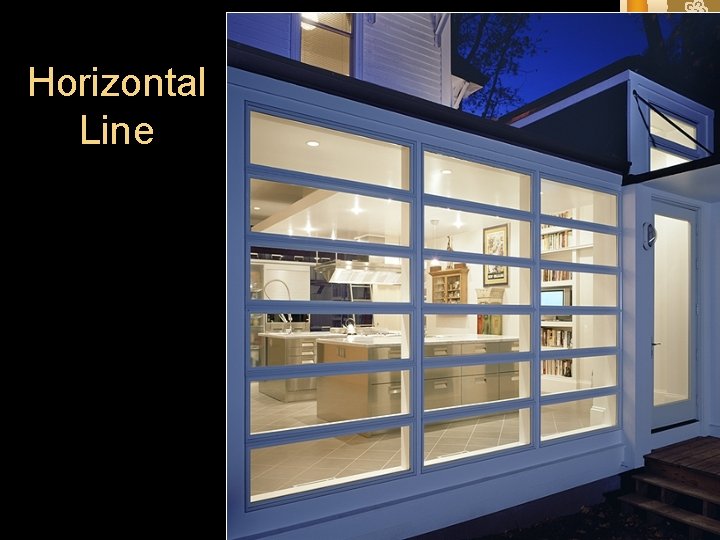
Horizontal Line
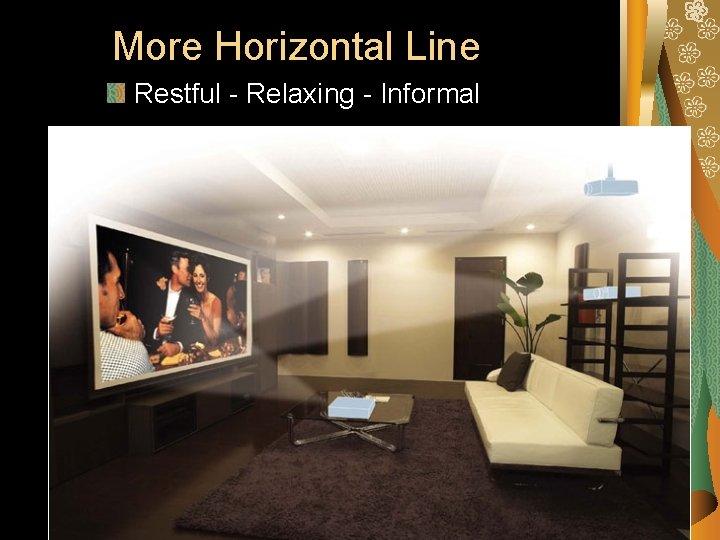
More Horizontal Line Restful - Relaxing - Informal
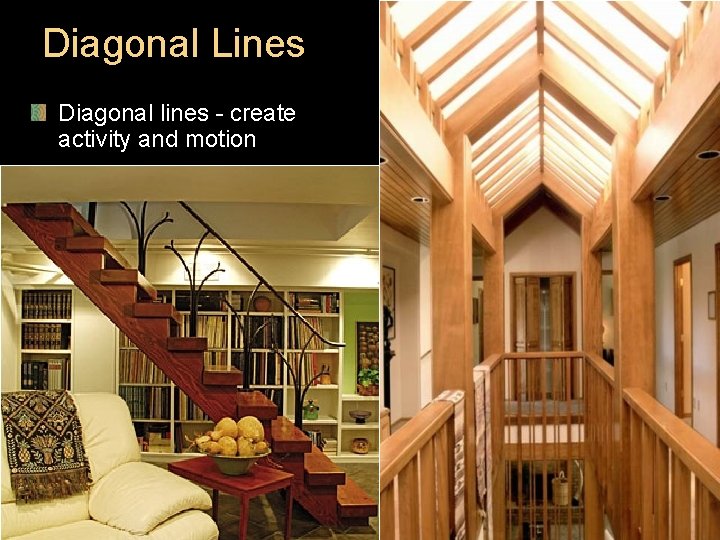
Diagonal Lines Diagonal lines - create activity and motion
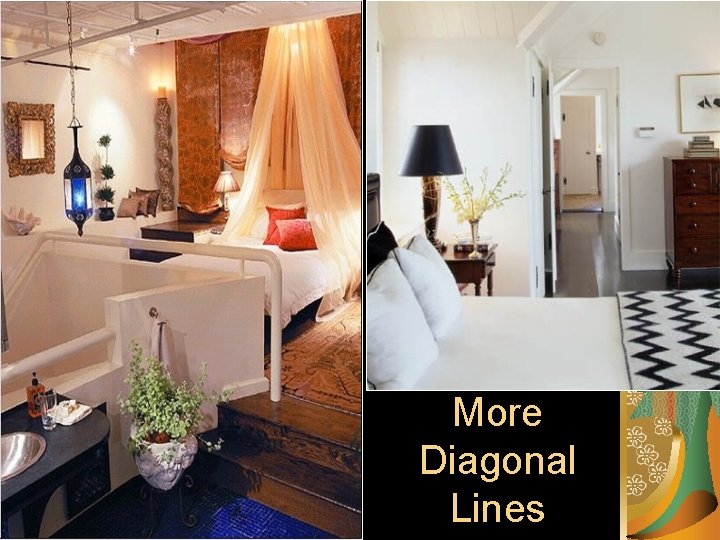
More Diagonal Lines
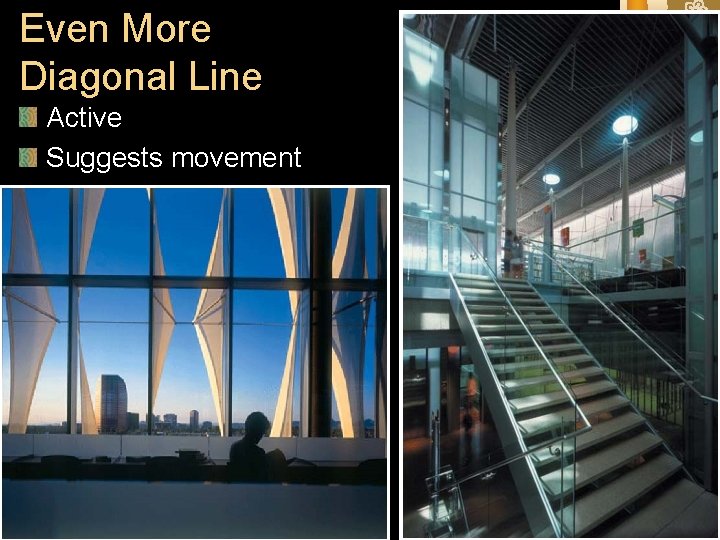
Even More Diagonal Line Active Suggests movement
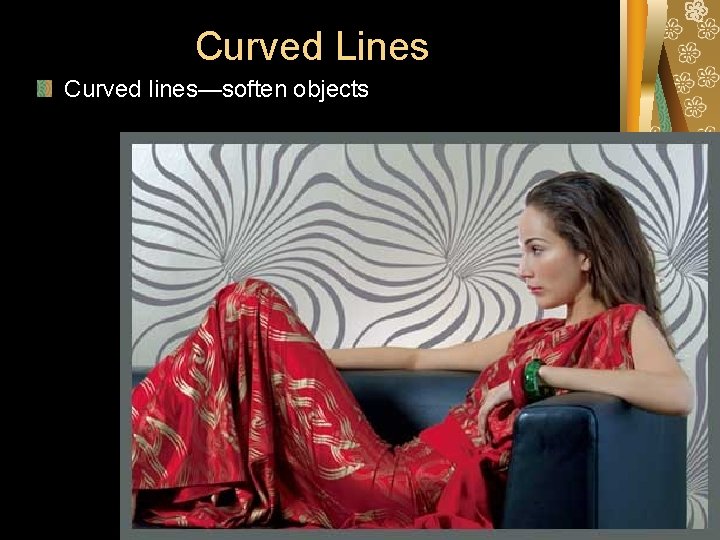
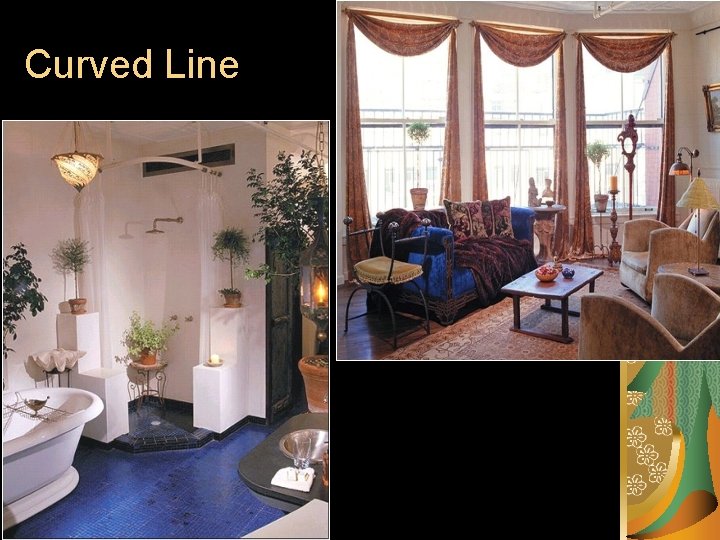
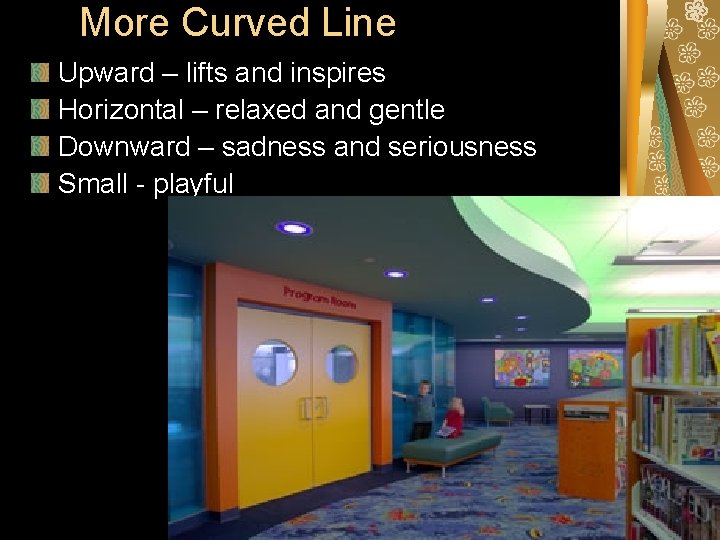
Curved Lines Curved lines—soften objects
Curved Line
More Curved Line Upward – lifts and inspires Horizontal – relaxed and gentle Downward – sadness and seriousness Small - playful
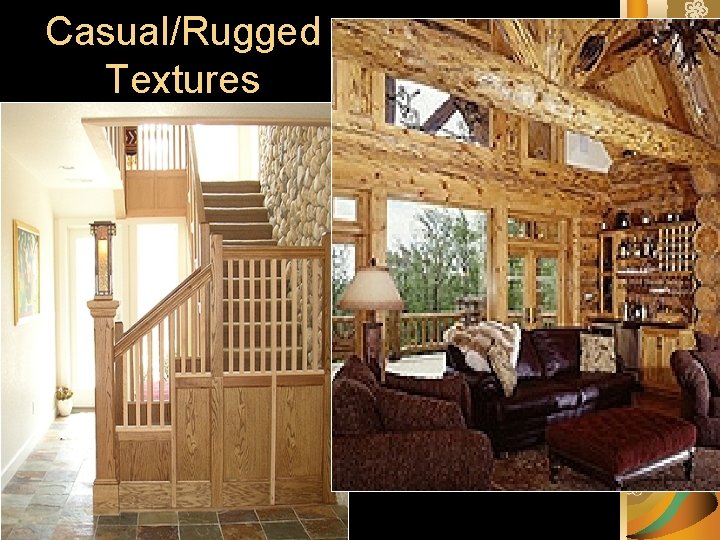
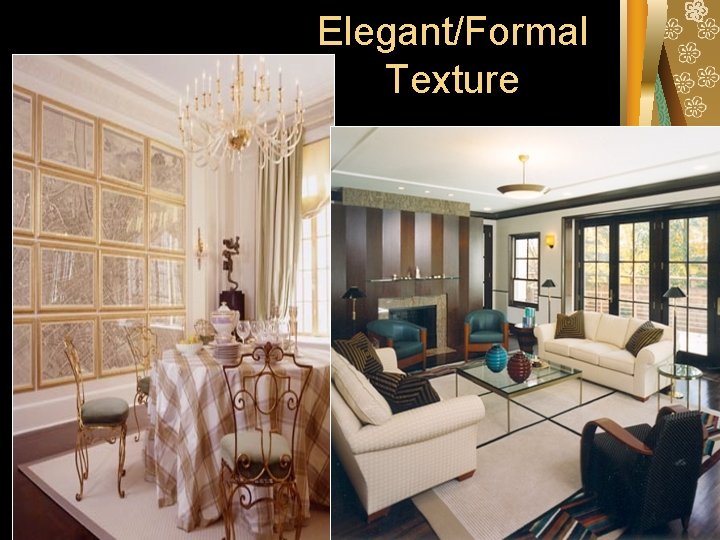
8 -Texture: How an object feels or looks like it feels 2 Types of Texture Visual = SEE Tactile = TOUCH Casual/Rugged look = rough, heavy, hard, and dull textures Elegant/Formal look = light, soft, shiny, and smooth textures
Texture The surface quality of an object or item Tactile How the object feels to the touch Can feel the variation in the surface Visual An illusion - how the object appears to feel Applied using line, color, & shading
SOME TEXTURE WORDS ribbed rough crinkled smooth soft bumpy satiny silky fluffy hard flat abrasive nubby shines plush fuzzy ridged spiky course gritty slick scratchy
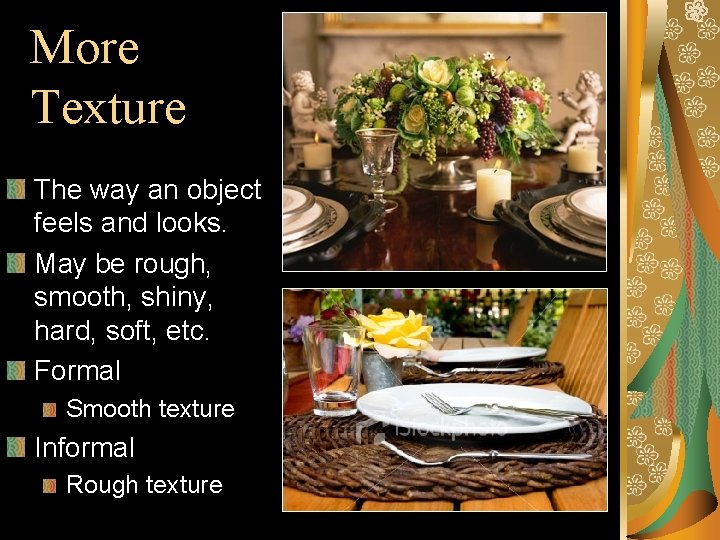
More Texture The way an object feels and looks. May be rough, smooth, shiny, hard, soft, etc. Formal Smooth texture Informal Rough texture
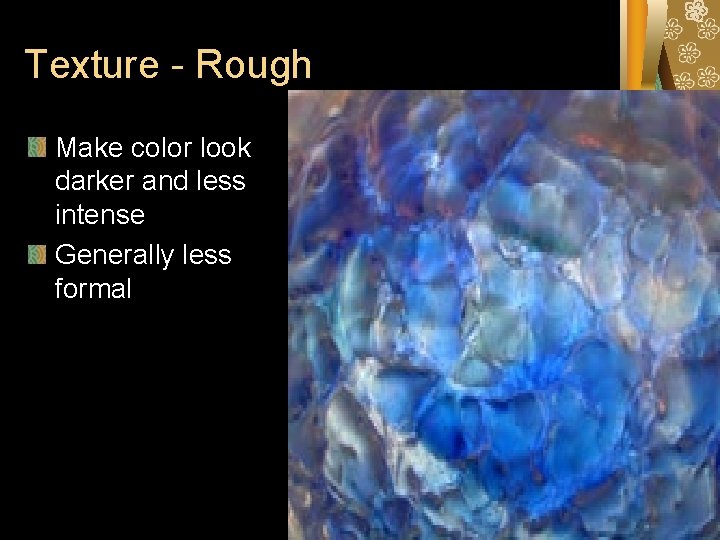
Texture - Rough Make color look darker and less intense Generally less formal
Casual/Rugged Textures
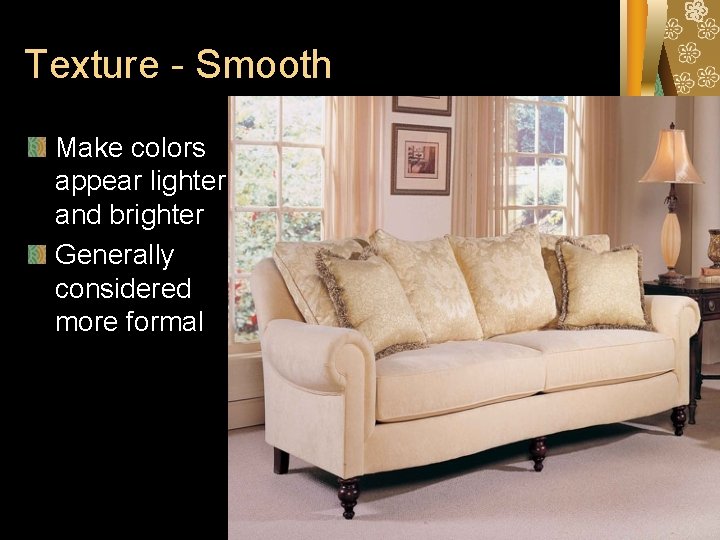
Texture - Smooth Make colors appear lighter and brighter Generally considered more formal
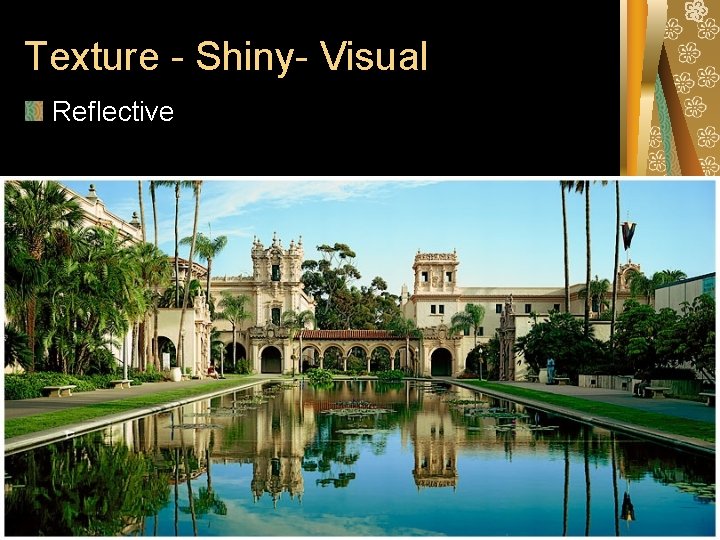
Texture - Shiny- Visual Reflective
Elegant/Formal Texture
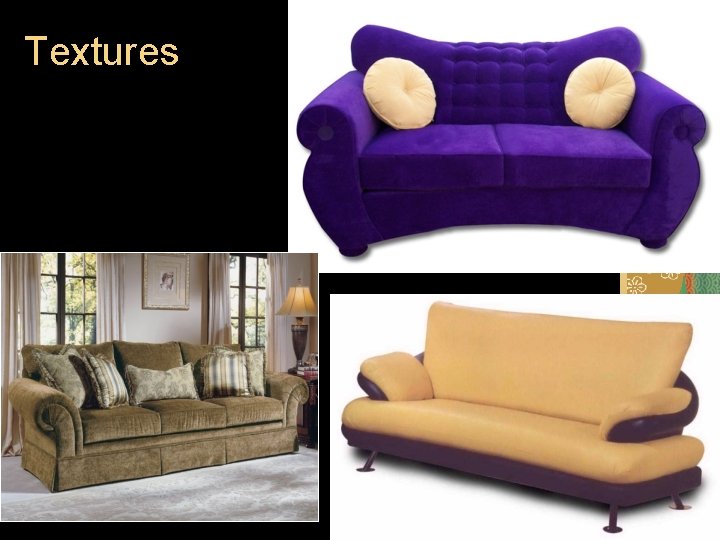
Textures
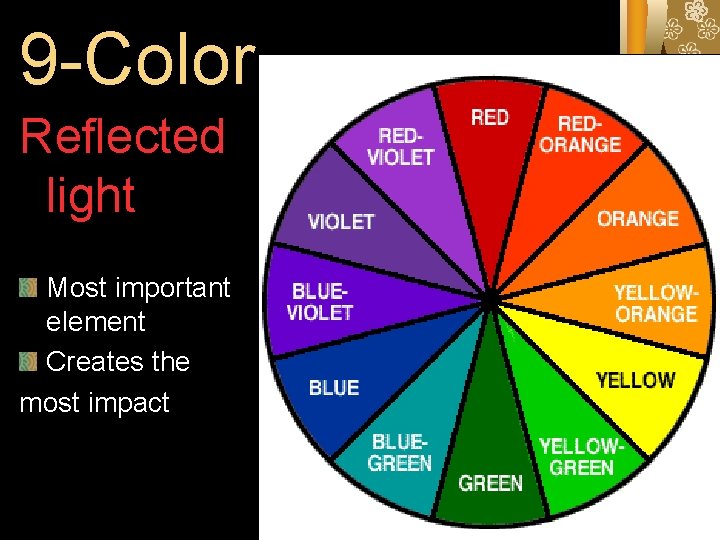
9 -Color Reflected light Most important element Creates the most impact
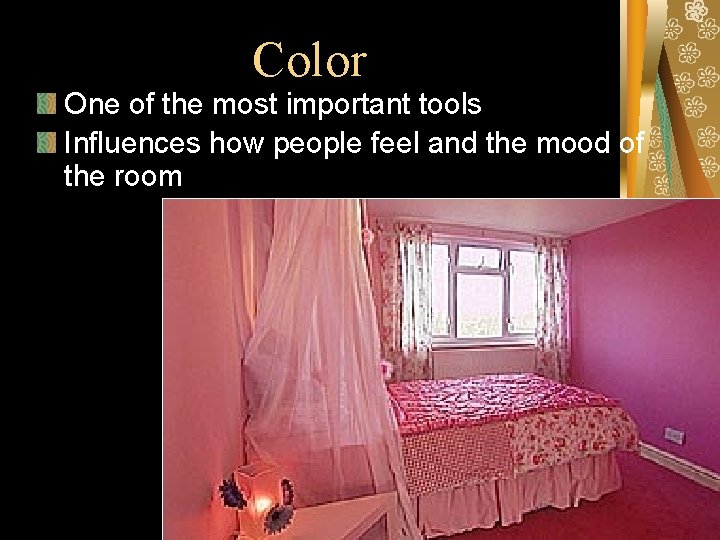
Color One of the most important tools Influences how people feel and the mood of the room
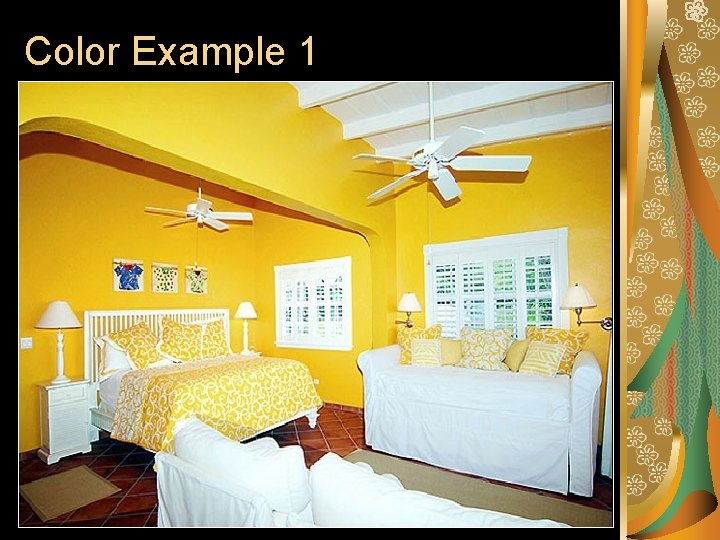
Color Example 1
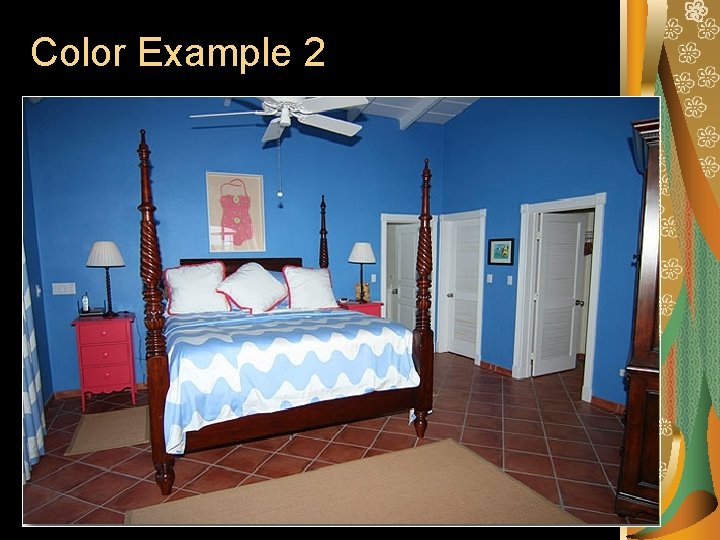
Color Example 2
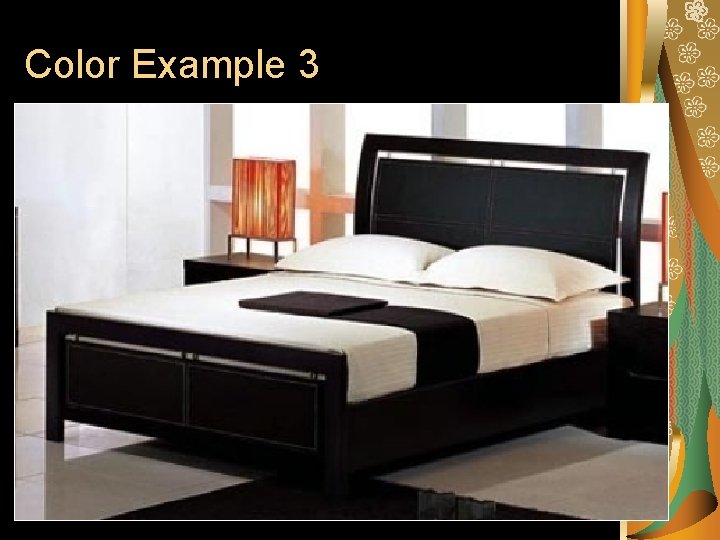
Color Example 3