THE CHALLENGES 2 The definition of the condition




- Slides: 27
THE CHALLENGES 2 The definition of the condition; 500 gms or 20 weeks WHO 1977 A group of women who ONLY share a similar miscarriage history. NO incidence studies; only prevalence studies 0. 6% to 2. 3%. The natural background risk of miscarriage will influence the expected results and patients perception of the condition. Shares similar risk factors with infertility and often overlaps. Associated with significant emotional and psychological problems in the couple.
DEFINITION OF RECURRENT MISCARRIAGE There is widespread disagreement on what constitutes Recurrent Pregnancy Loss. The classical definition of three consecutive miscarriages reflects the statistics. Live birth rates fall with increasing order of miscarriage: Live birth rates after 3 losses is 42 -86% After 4 - 41 -72% and after 5 it is 23 -51%. The risk of a further miscarriage increases with increasing order of miscarriage. This IS the most important prognostic factor. 3
MISCARRIAGE STATS The risk of miscarriage is generally 12 -15% in clinical pregnancies but 17 -22% if early losses are included Bio-chemical Pregnancies may account for 50 -75% of all losses The risk of a further miscarriage after two miscarriages is quoted to be around 20% After three miscarriages it is approx 40% There are only very small differences between patients with 2 and those with 3 pregnancy losses 4
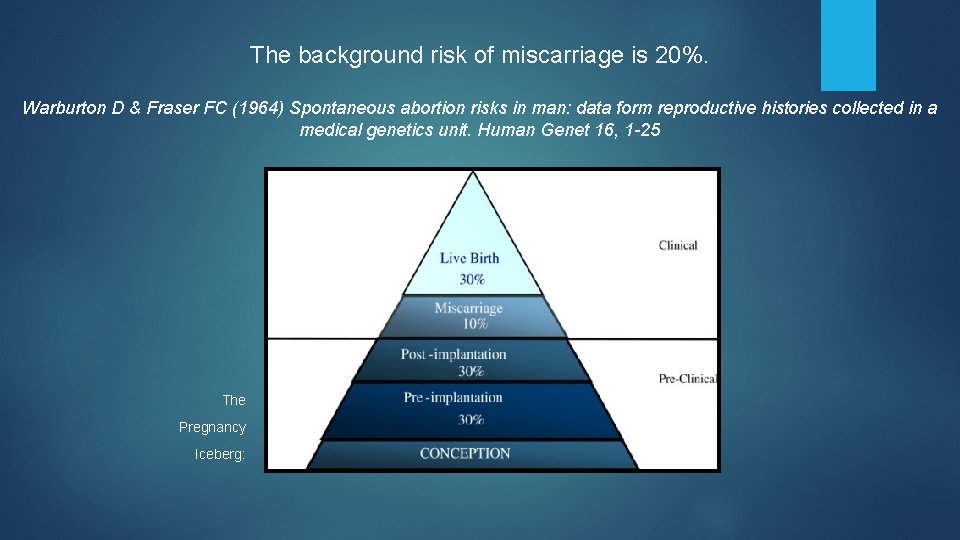
The background risk of miscarriage is 20%. Warburton D & Fraser FC (1964) Spontaneous abortion risks in man: data form reproductive histories collected in a medical genetics unit. Human Genet 16, 1 -25 The Pregnancy Iceberg:
MORE ON STATS CLINICAL PREGNANCY RATES ARE NOT EFFICIENT IN ANY ONE CYCLE THE MAX PROBABILITY OF CONCEPTION IS ONLY 30% ONLY 50% OF PREGNANCIES MAKE IT BEYOND 20 WEEKS Recurrent Pregnancy Loss can be considered as part of a spectrum of abnormalities resulting from a deficient implantation and early trophoblastic development The Great Obstetrical Syndromes
WHEN TO INVESTIGATE? Applying a criteria of 3 consecutive early pregnancy losses will mean that 1 -2% of couples trying to conceive will experience this condition If 2 consecutive losses is used then 5% of couples will be affected. These are both higher than that expected by chance alone.
BACK TO THE DEFINITION RCOG & ESHRE both insist on a definition of THREE consecutive pregnancy losses Patient groups and associations have argued that patients should be seen after two pregnancy losses. The ARSM in 2012 defined recurrent miscarriage as a condition after two consecutive pregnancy losses. Our own experience has shown that investigating patients with two miscarriages can lead to important interventions
RISK FACTORS Previous aneuploid miscarriage has a better prognosis than previous recurrent euploid miscarriage One or more second trimester loss is a strong risk factor for a poor prognosis. However the prognosis of primary and secondary RPL re live birth rates are similar. Higher late obstetric complication rates have been noted in the primary RPL’s.
GENETIC CONSIDERATIONS In secondary RPL the birth of male child is a negative prognostic indicator. Family studies have shown that RPL fits into a multifactorial pattern of inheritance. Many risk factors combine to give rise to a recurrent high risk of pregnancy loss. 10
GENETICS OF RPL 2 -4% of RPL is due to a balanced structural chromosomal rearragement. Translocations; reciprocal or Robertsonian Inversions, insertions and mosaicism Rarely single-gene defects. CMA on POC is the only test which can give a definite cause behind a miscarriage.
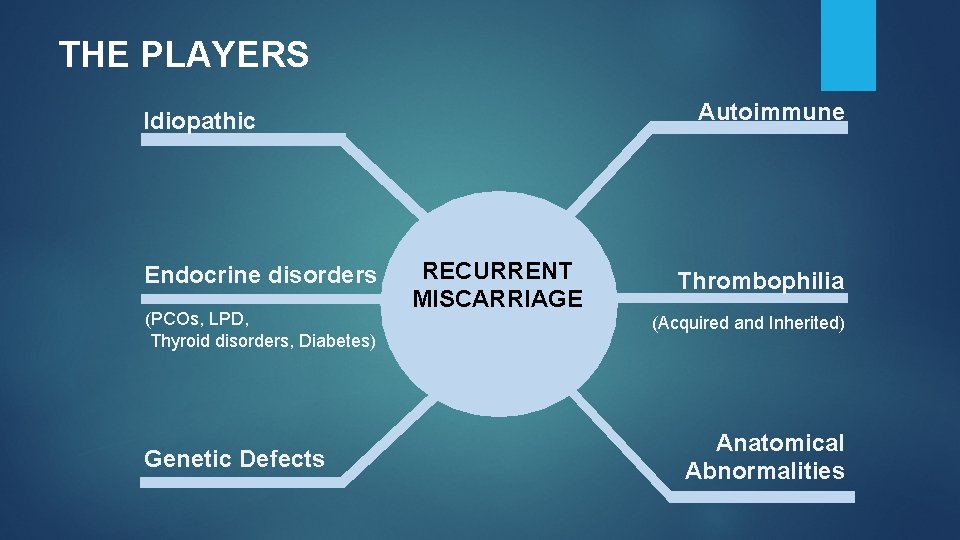
THE PLAYERS Autoimmune Idiopathic Endocrine disorders (PCOs, LPD, Thyroid disorders, Diabetes) Genetic Defects RECURRENT MISCARRIAGE Thrombophilia (Acquired and Inherited) Anatomical Abnormalities
THE CLINIC A TEAM OF DEDICATED STAFF Consultant/Specialist/Trainee Midwife/nurse practitioner Psychologist
A RETROSPECTIVE OBSERVATIONAL STUDY 14 A retrospective observational analysis of 232 patients who attended the Recurrent Miscarriage Clinic over the past 5 years. The causes of recurrent miscarriage and the effect of treatment were studied to determine the prevalence of the conditions associated with recurrent miscarriage in the Maltese population and to analyse the results of the treatment protocols applied.
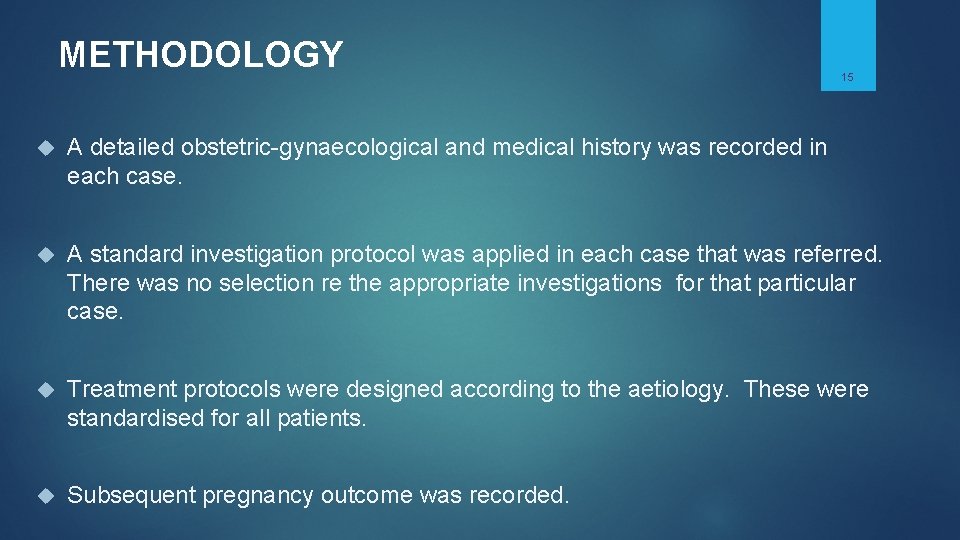
METHODOLOGY 15 A detailed obstetric-gynaecological and medical history was recorded in each case. A standard investigation protocol was applied in each case that was referred. There was no selection re the appropriate investigations for that particular case. Treatment protocols were designed according to the aetiology. These were standardised for all patients. Subsequent pregnancy outcome was recorded.
THE INVESTIGATION PROTOCOL IMMUNOLOGICAL PROFILE: Anticardiolipin antbody Beta-2 -glycoprotein 1 antibody Anti-TPO antibodies Anti-nuclear factor Ds-DNA 16
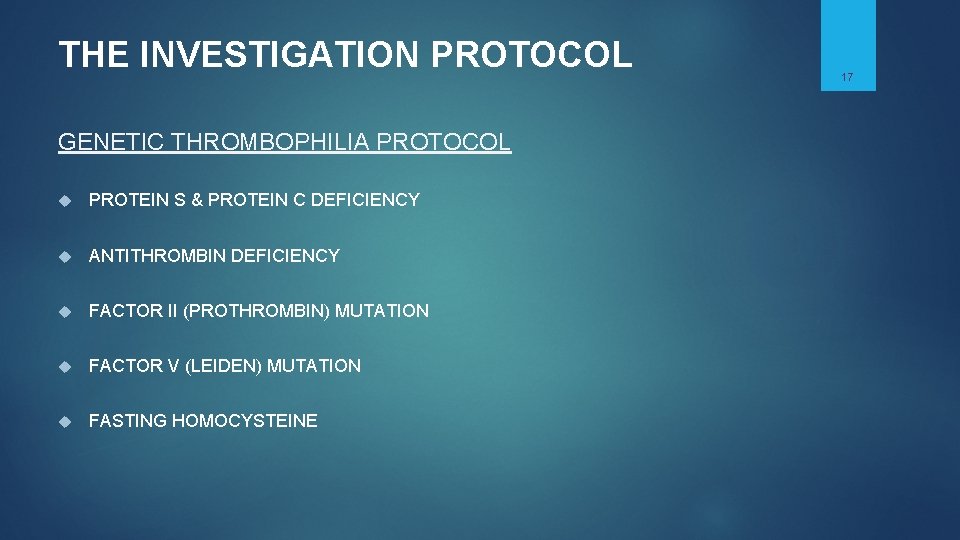
THE INVESTIGATION PROTOCOL GENETIC THROMBOPHILIA PROTOCOL PROTEIN S & PROTEIN C DEFICIENCY ANTITHROMBIN DEFICIENCY FACTOR II (PROTHROMBIN) MUTATION FACTOR V (LEIDEN) MUTATION FASTING HOMOCYSTEINE 17
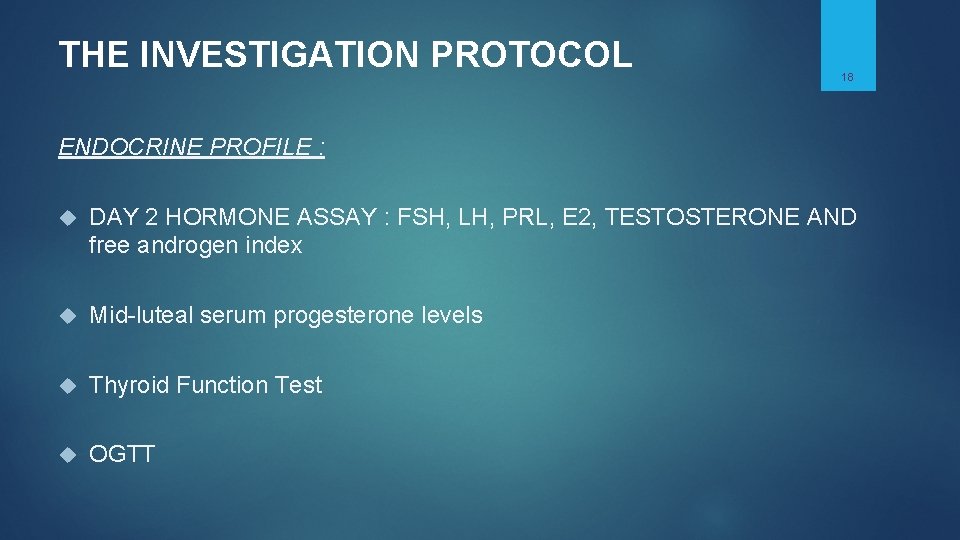
THE INVESTIGATION PROTOCOL 18 ENDOCRINE PROFILE : DAY 2 HORMONE ASSAY : FSH, LH, PRL, E 2, TESTOSTERONE AND free androgen index Mid-luteal serum progesterone levels Thyroid Function Test OGTT
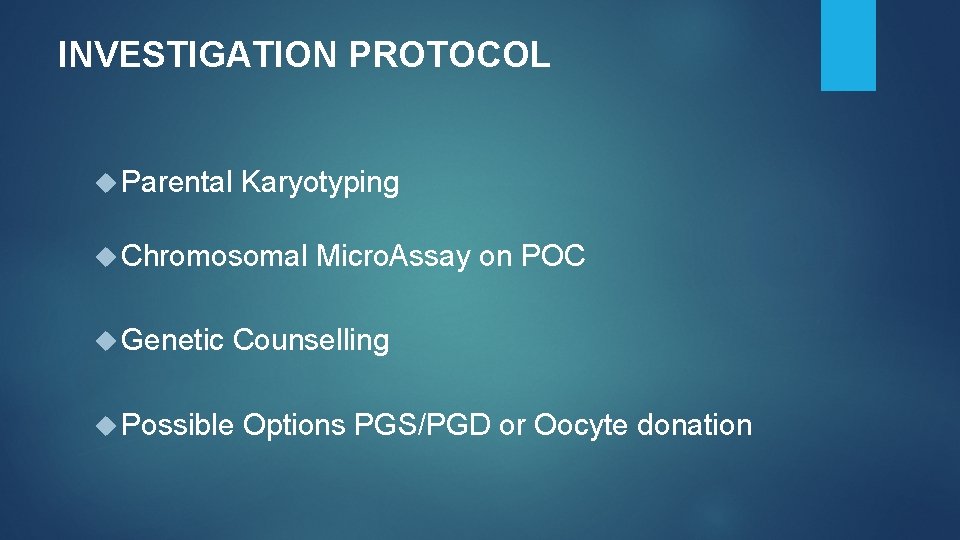
INVESTIGATION PROTOCOL Parental Karyotyping Chromosomal Micro. Assay on POC Genetic Counselling Possible Options PGS/PGD or Oocyte donation
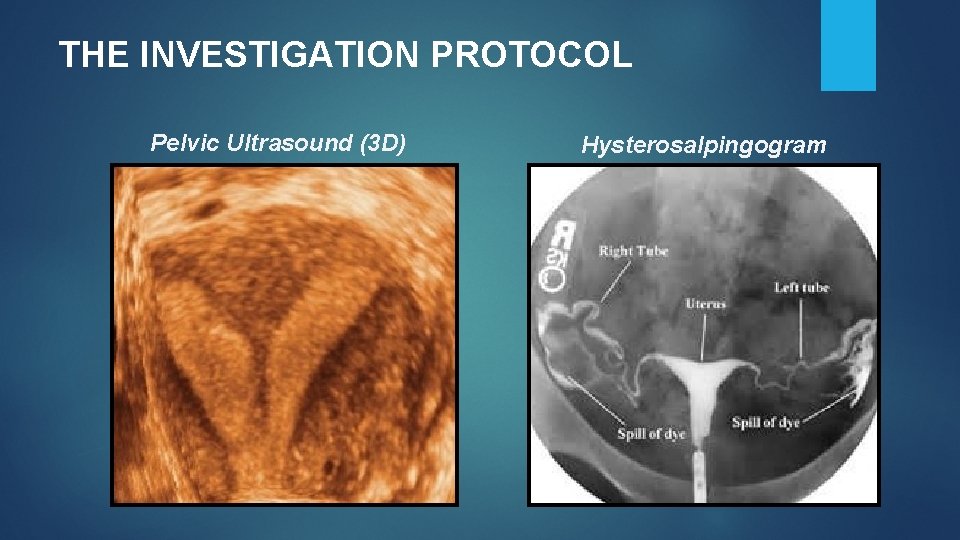
THE INVESTIGATION PROTOCOL Pelvic Ultrasound (3 D) Hysterosalpingogram
THE TREATMENT PROTOCOLS All patients were offered supportive care.
SUPPORTIVE CARE ESTABLISHED AS THE MOST IMPORTANT THERAPY IN IDIOPATHIC RECURRENT EARLY PREGNANCY LOSS PSYCHOLOGICAL SUPPORT : OFFERED CONSULTATION AT FIRST VISIT EARLY ULTRASOUND EXAMINATION ADMISSION TO HOSPITAL AT THE TIME OF THE PREVIOUS LOSS RELAXATION TAPES Avert 1954; Stray-Pedersen & Stray-Pedersen 1984; Liddell 1991; Clifford 1997 and Brigham 1999. 22
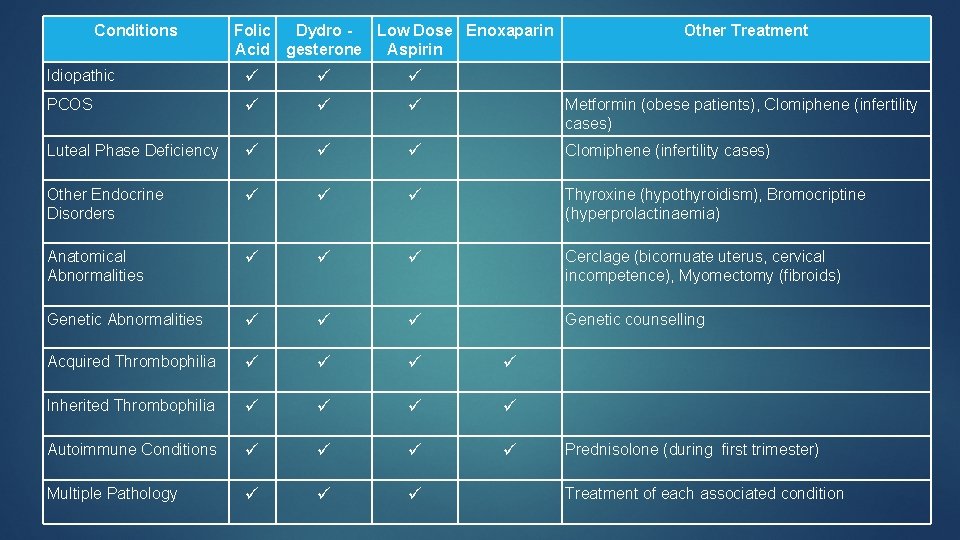
Conditions Folic Dydro Low Dose Enoxaparin Acid gesterone Aspirin Other Treatment Idiopathic PCOS Metformin (obese patients), Clomiphene (infertility cases) Luteal Phase Deficiency Clomiphene (infertility cases) Other Endocrine Disorders Thyroxine (hypothyroidism), Bromocriptine (hyperprolactinaemia) Anatomical Abnormalities Cerclage (bicornuate uterus, cervical incompetence), Myomectomy (fibroids) Genetic Abnormalities Genetic counselling Acquired Thrombophilia Inherited Thrombophilia Autoimmune Conditions Multiple Pathology Prednisolone (during first trimester) Treatment of each associated condition
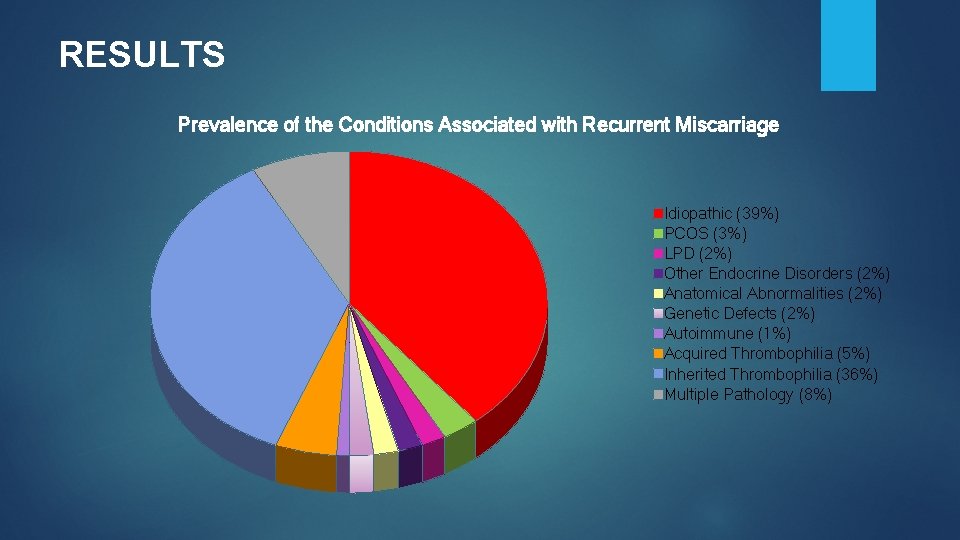
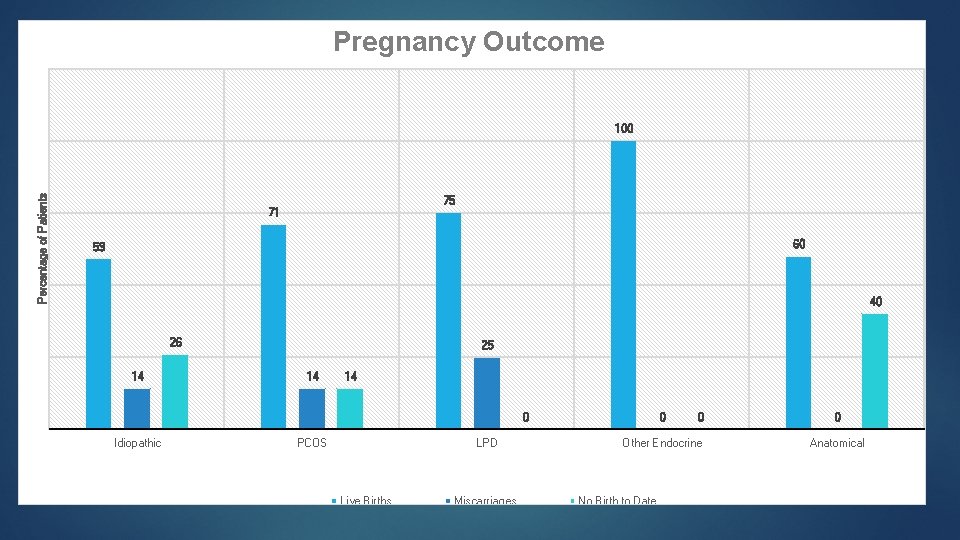
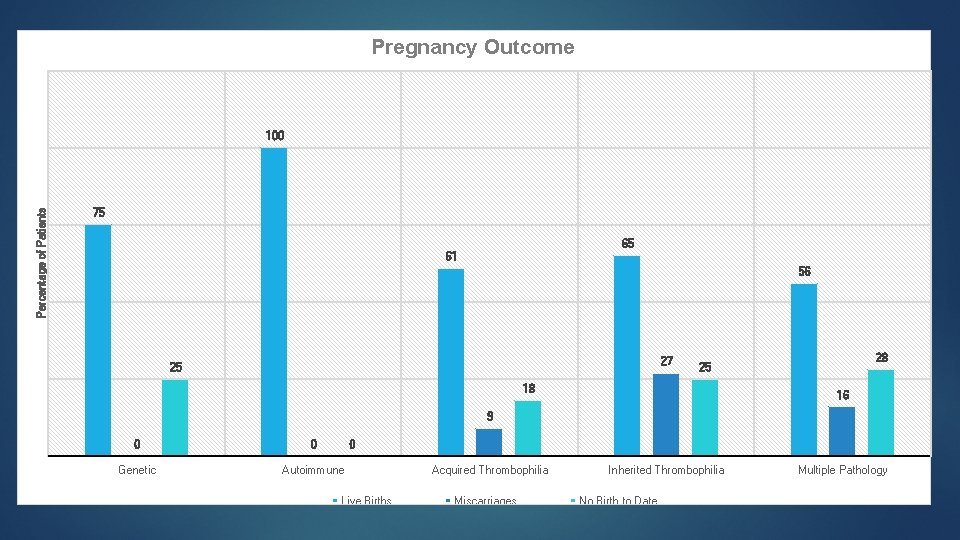
RESULTS Prevalence of the Conditions Associated with Recurrent Miscarriage Idiopathic (39%) PCOS (3%) LPD (2%) Other Endocrine Disorders (2%) Anatomical Abnormalities (2%) Genetic Defects (2%) Autoimmune (1%) Acquired Thrombophilia (5%) Inherited Thrombophilia (36%) Multiple Pathology (8%)
Pregnancy Outcome Percentage of Patients 100 75 71 60 59 40 26 14 25 14 14 0 Idiopathic PCOS LPD Live Births Miscarriages 0 0 Other Endocrine No Birth to Date 0 Anatomical
Pregnancy Outcome Percentage of Patients 100 75 65 61 56 27 25 28 25 18 16 9 0 0 0 Genetic Autoimmune Live Births Acquired Thrombophilia Miscarriages Inherited Thrombophilia No Birth to Date Multiple Pathology
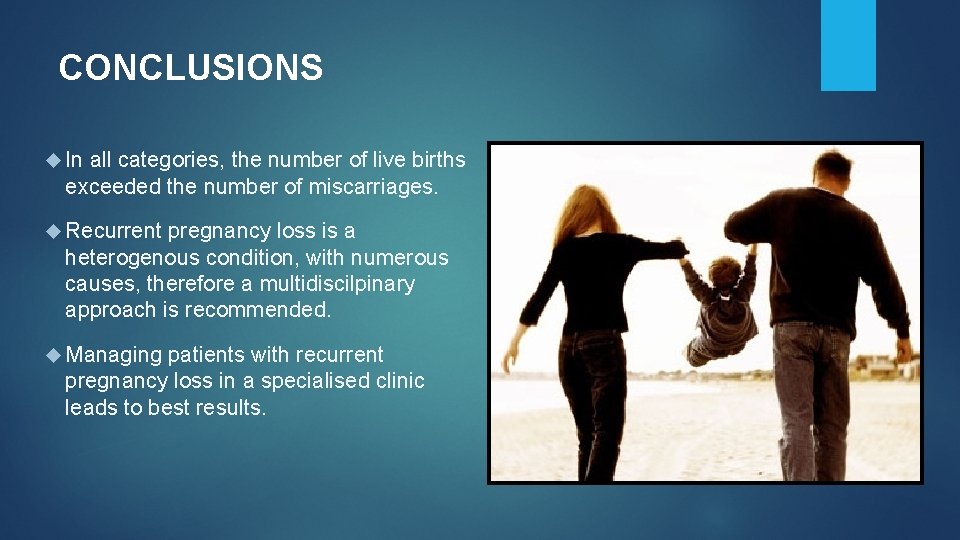
CONCLUSIONS In all categories, the number of live births exceeded the number of miscarriages. Recurrent pregnancy loss is a heterogenous condition, with numerous causes, therefore a multidiscilpinary approach is recommended. Managing patients with recurrent pregnancy loss in a specialised clinic leads to best results.