SECONDARY TWO STREAMING TALK Sec 2 Exp NA









- Slides: 83
SECONDARY TWO STREAMING TALK Sec 2 Exp & NA 19 April 2013, 6. 30 -8. 30 pm
Mr Seet Tiat Hee Principal Ms Jennifer Wong Vice-Principal Mr Steve Ow Vice-Principal Introduction of School Leaders
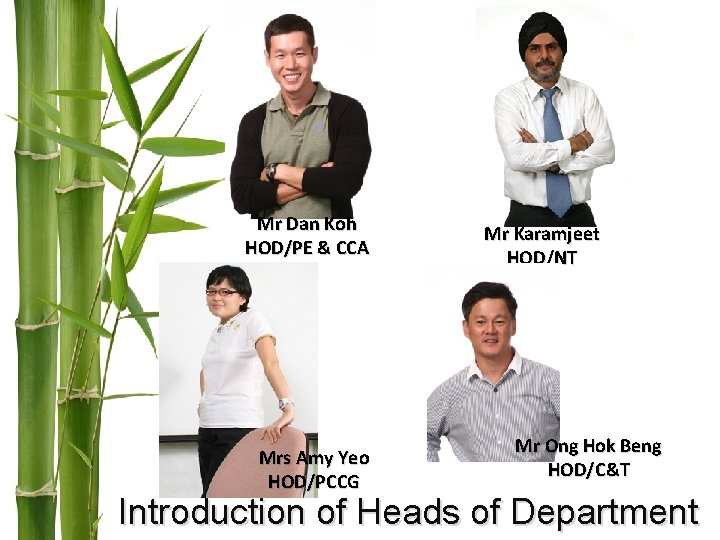
Mr Michael Low HOD/EL Mdm Norhafiani HOD/Maths Mdm Maslinni HOD/MT Mr Lee Hon Yen HOD/Science Introduction of Heads of Department
Mr Dan Koh HOD/PE & CCA Mrs Amy Yeo HOD/PCCG Mr Karamjeet HOD/NT Mr Ong Hok Beng HOD/C&T Introduction of Heads of Department
Ms Christina Ng SH/Aesthetics Ms Nurul Covering HOD/Humanities Mr Kelvin Teo Covering HOD/Student Dev Mr Tan Meng Hwee Covering HOD/ICT Introduction of Heads of Department
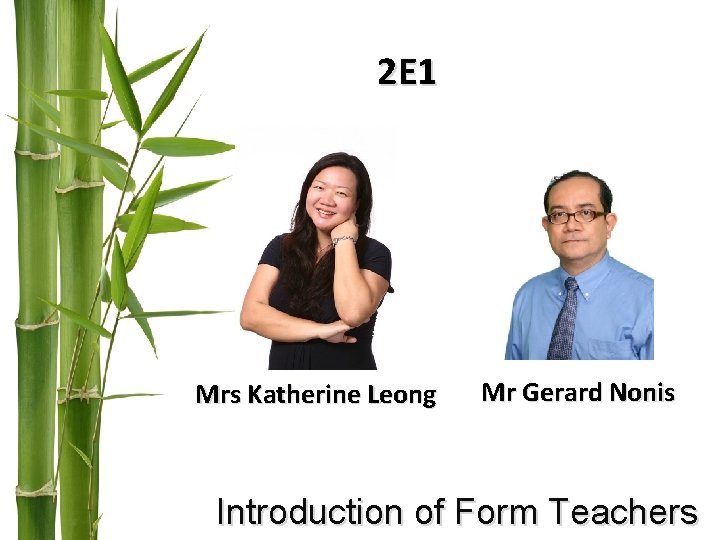
2 E 1 Mrs Katherine Leong Mr Gerard Nonis Introduction of Form Teachers
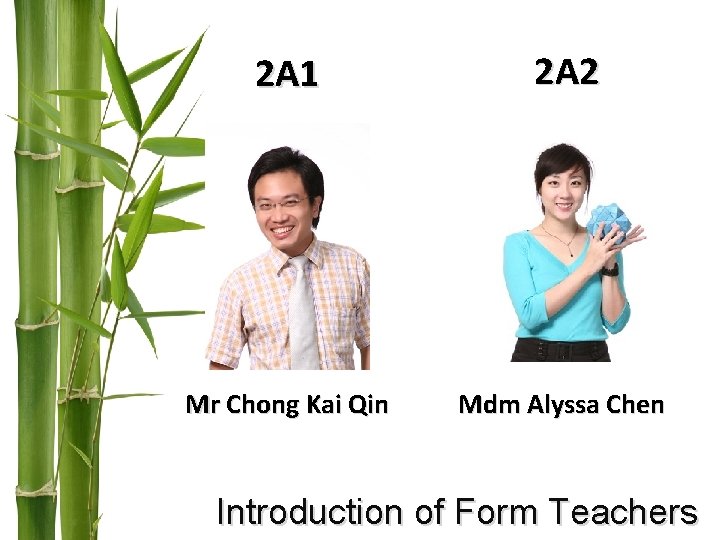
2 A 1 2 A 2 Mr Chong Kai Qin Mdm Alyssa Chen Introduction of Form Teachers
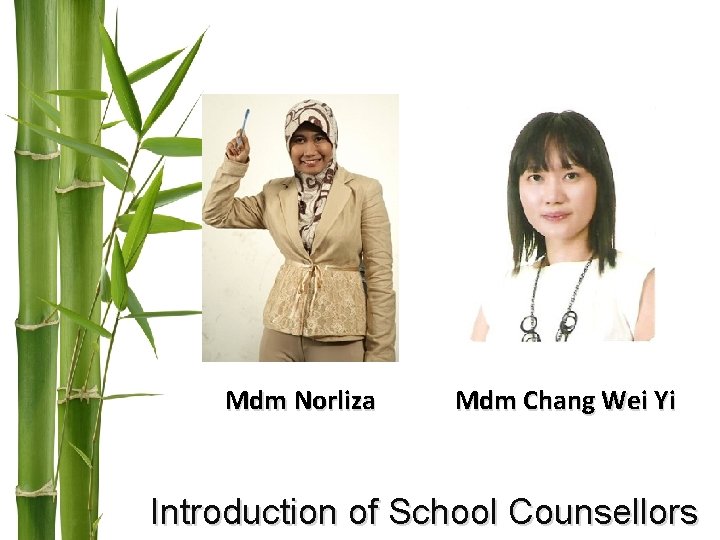
Mdm Norliza Mdm Chang Wei Yi Introduction of School Counsellors
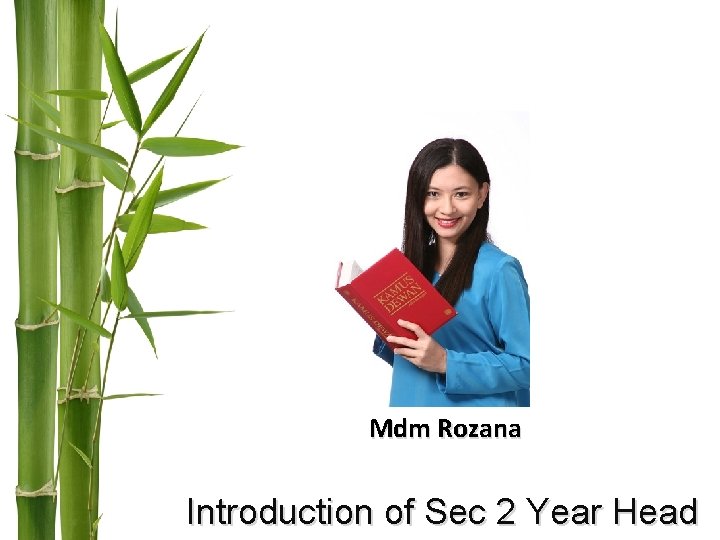
Mdm Rozana Introduction of Sec 2 Year Head
Different Pathways Secondary 3 Subject Options Support from parents Briefing by Dept HOD Objectives
Different Pathways
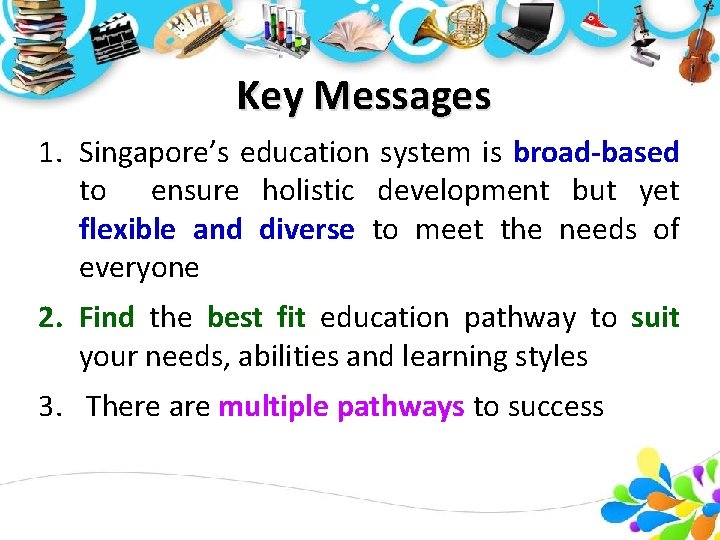
Key Messages 1. Singapore’s education system is broad-based to ensure holistic development but yet flexible and diverse to meet the needs of everyone 2. Find the best fit education pathway to suit your needs, abilities and learning styles 3. There are multiple pathways to success
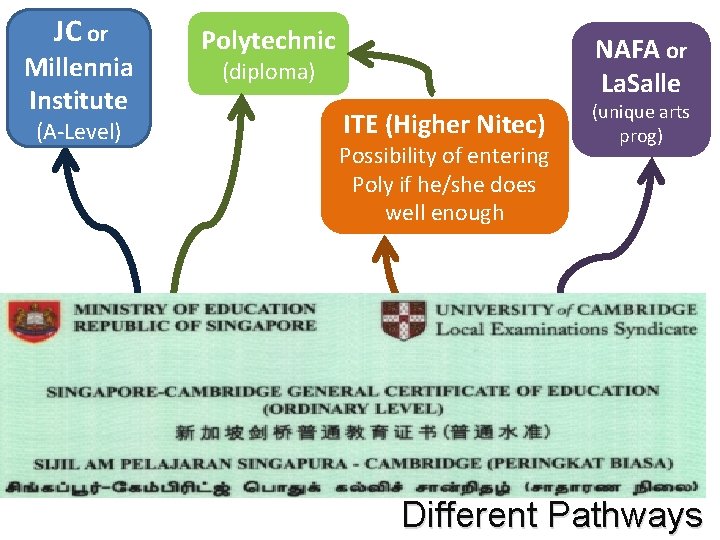
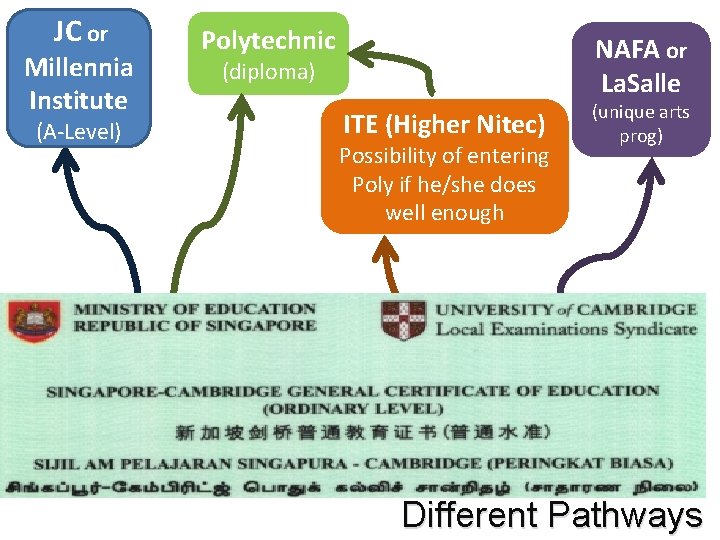
JC or Millennia Institute (A-Level) Polytechnic NAFA or La. Salle (diploma) ITE (Higher Nitec) Possibility of entering Poly if he/she does well enough (unique arts prog) Different Pathways
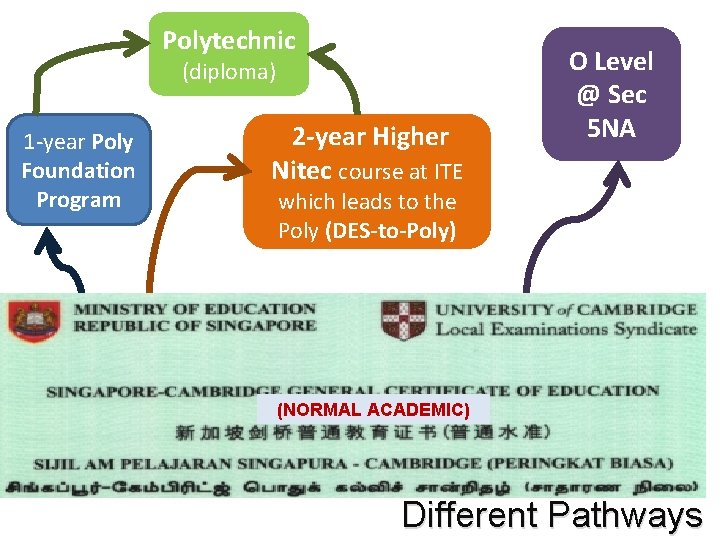
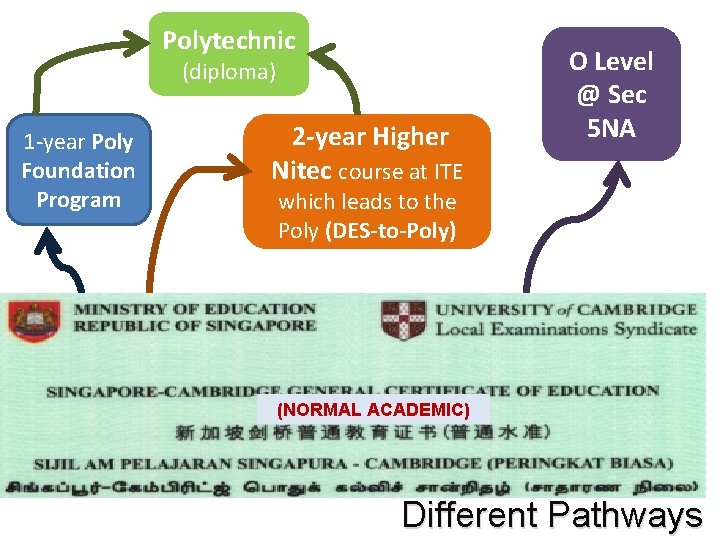
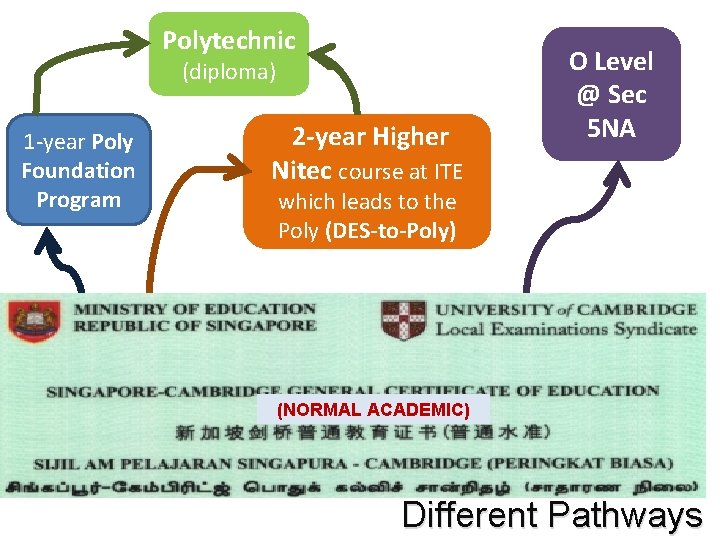
Polytechnic (diploma) 1 -year Poly Foundation Program 2 -year Higher Nitec course at ITE O Level @ Sec 5 NA which leads to the Poly (DES-to-Poly) (NORMAL ACADEMIC) Different Pathways
Junior Colleges (JCs) & Millennia Institute Prepares students for ‘A’ levels and tertiary education Length of study: JCs – 2 years MI – 3 years
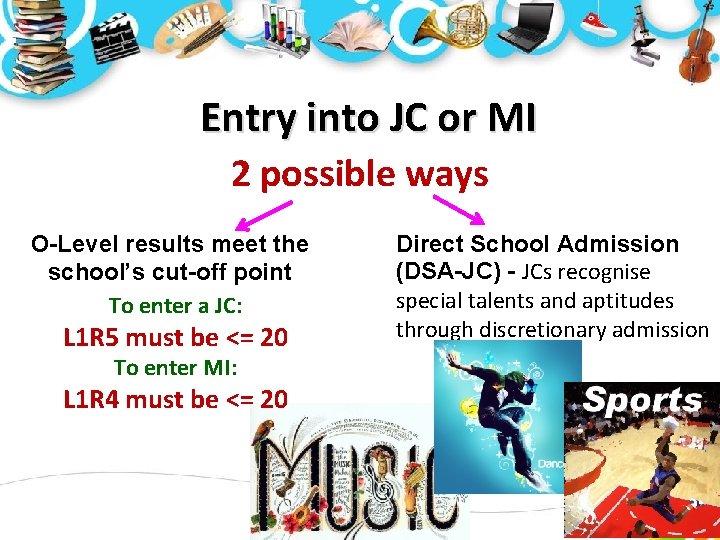
Entry into JC or MI 2 possible ways O-Level results meet the school’s cut-off point To enter a JC: L 1 R 5 must be <= 20 To enter MI: L 1 R 4 must be <= 20 Direct School Admission (DSA-JC) - JCs recognise special talents and aptitudes through discretionary admission
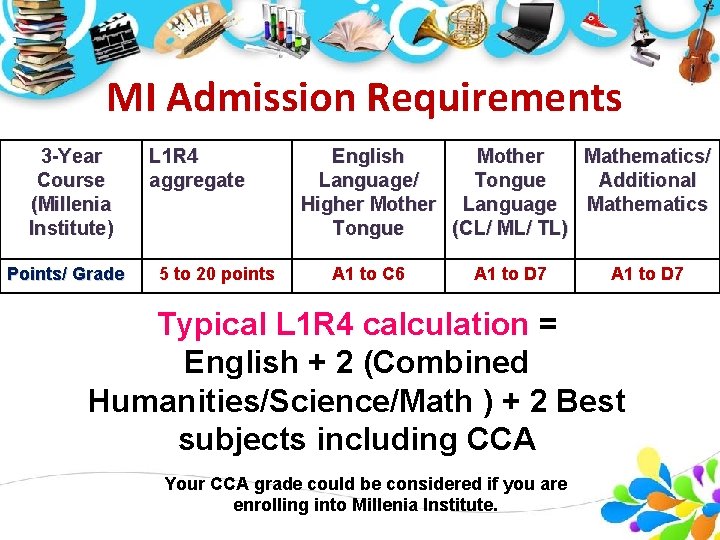
MI Admission Requirements 3 -Year Course (Millenia Institute) Points/ Grade L 1 R 4 aggregate 5 to 20 points English Mother Mathematics/ Language/ Tongue Additional Higher Mother Language Mathematics Tongue (CL/ ML/ TL) A 1 to C 6 A 1 to D 7 Typical L 1 R 4 calculation = English + 2 (Combined Humanities/Science/Math ) + 2 Best subjects including CCA Your CCA grade could be considered if you are enrolling into Millenia Institute.
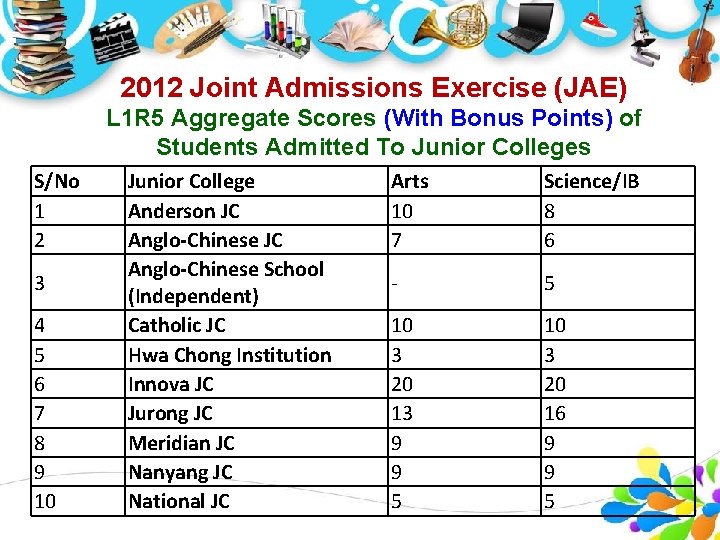
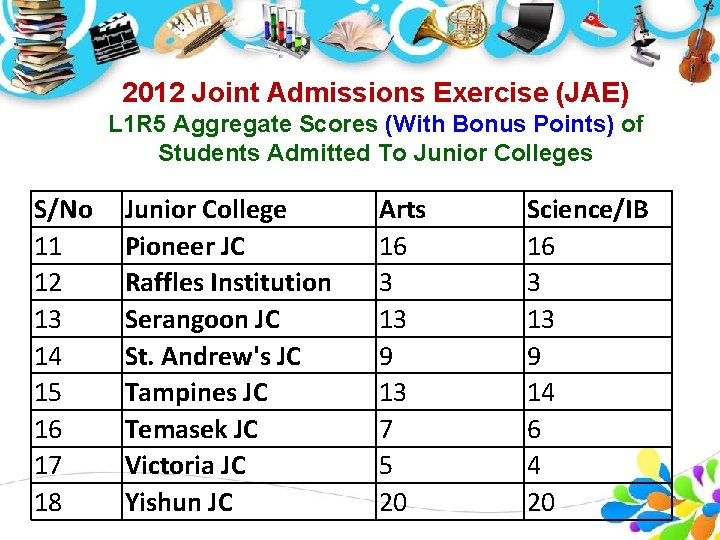
2012 Joint Admissions Exercise (JAE) L 1 R 5 Aggregate Scores (With Bonus Points) of Students Admitted To Junior Colleges S/No 1 2 3 4 5 6 7 8 9 10 Junior College Anderson JC Anglo-Chinese School (Independent) Catholic JC Hwa Chong Institution Innova JC Jurong JC Meridian JC Nanyang JC National JC Arts 10 7 Science/IB 8 6 - 5 10 3 20 13 9 9 5 10 3 20 16 9 9 5
2012 Joint Admissions Exercise (JAE) L 1 R 5 Aggregate Scores (With Bonus Points) of Students Admitted To Junior Colleges S/No 11 12 13 14 15 16 17 18 Junior College Pioneer JC Raffles Institution Serangoon JC St. Andrew's JC Tampines JC Temasek JC Victoria JC Yishun JC Arts 16 3 13 9 13 7 5 20 Science/IB 16 3 13 9 14 6 4 20
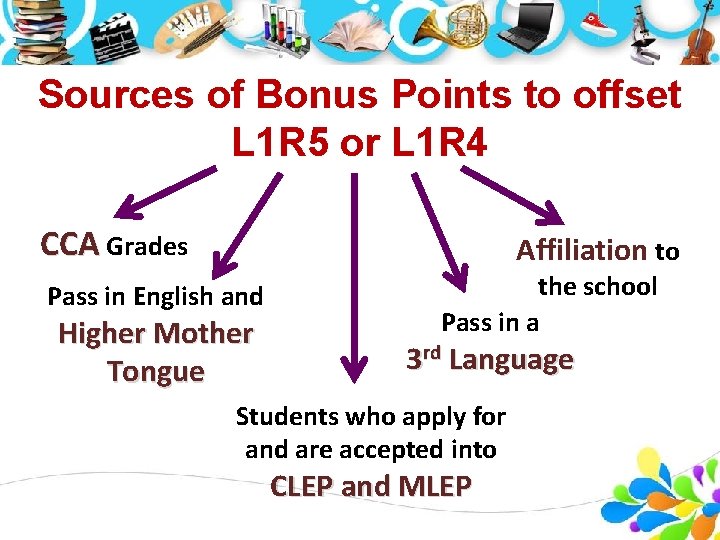
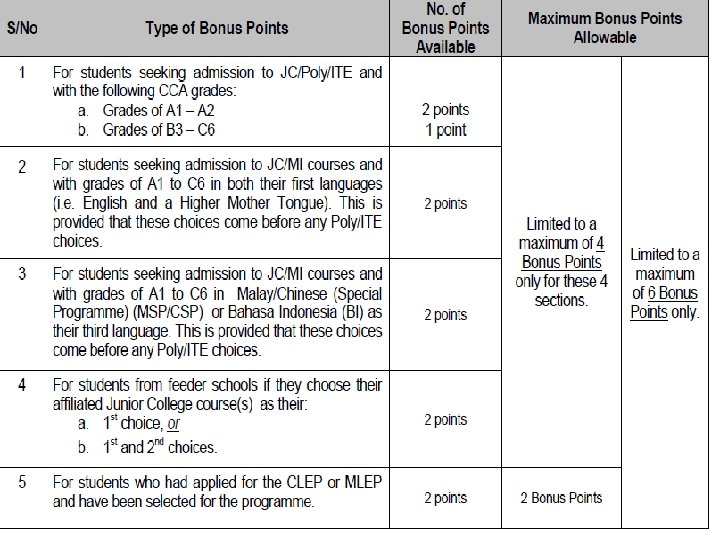
Sources of Bonus Points to offset L 1 R 5 or L 1 R 4 CCA Grades Affiliation to Pass in English and Higher Mother Tongue the school Pass in a 3 rd Language Students who apply for and are accepted into CLEP and MLEP
Polytechnics
Polytechnics Courses are market driven and career oriented Students graduate with a Diploma Ready to enter the workforce
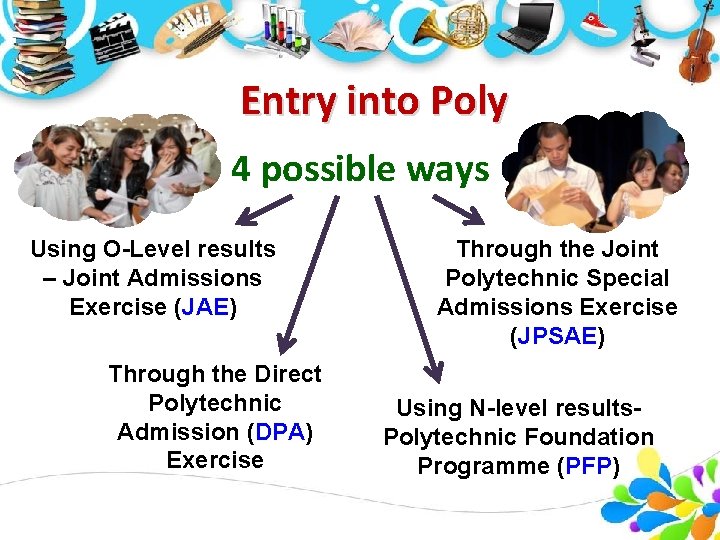
Entry into Poly 4 possible ways Using O-Level results – Joint Admissions Exercise (JAE) Through the Direct Polytechnic Admission (DPA) Exercise Through the Joint Polytechnic Special Admissions Exercise (JPSAE) Using N-level results. Polytechnic Foundation Programme (PFP)
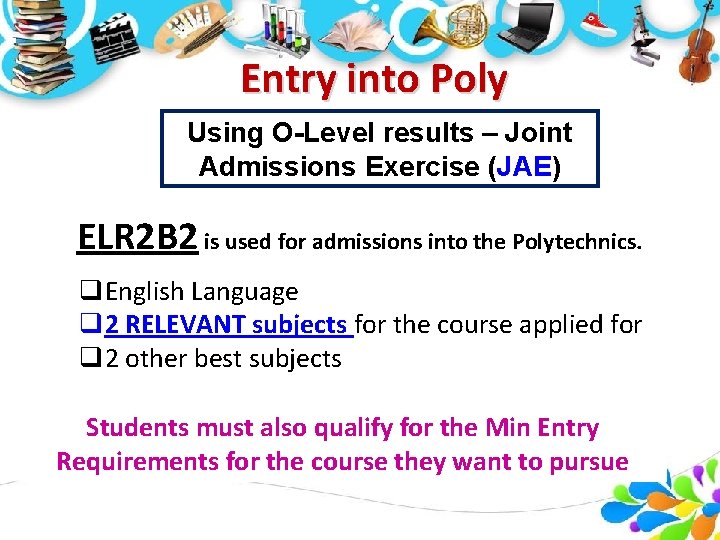
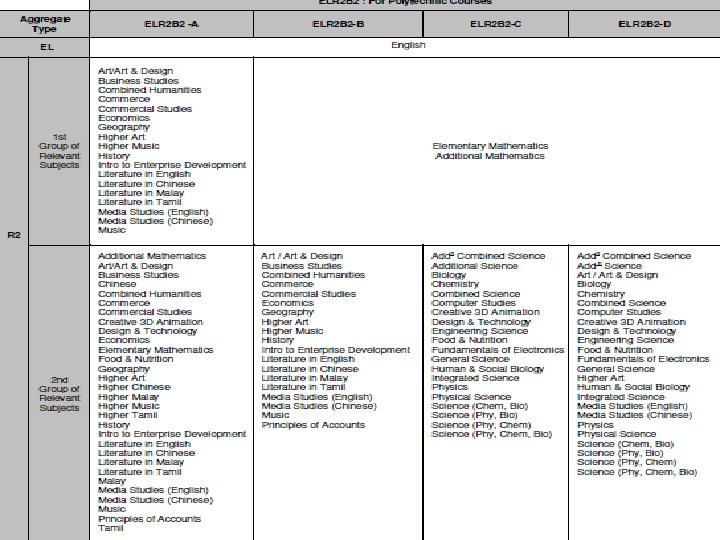
Entry into Poly Using O-Level results – Joint Admissions Exercise (JAE) ELR 2 B 2 is used for admissions into the Polytechnics. q. English Language q 2 RELEVANT subjects for the course applied for q 2 other best subjects Students must also qualify for the Min Entry Requirements for the course they want to pursue
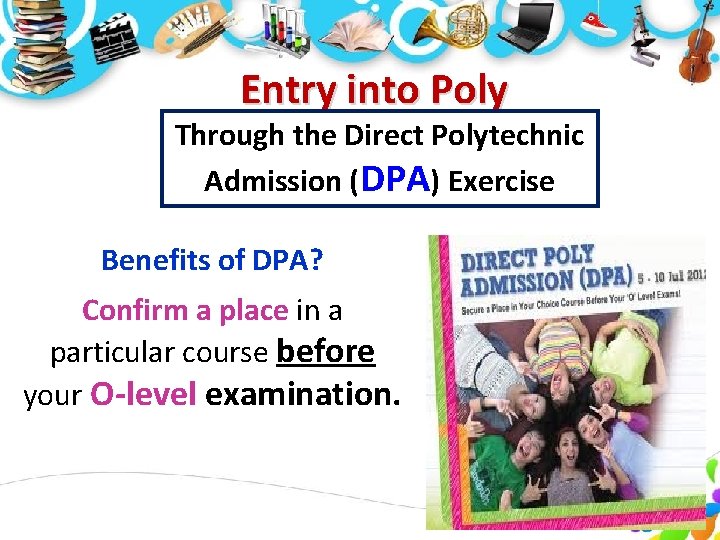
Entry into Poly Through the Direct Polytechnic Admission (DPA) Exercise Benefits of DPA? Confirm a place in a particular course before your O-level examination.
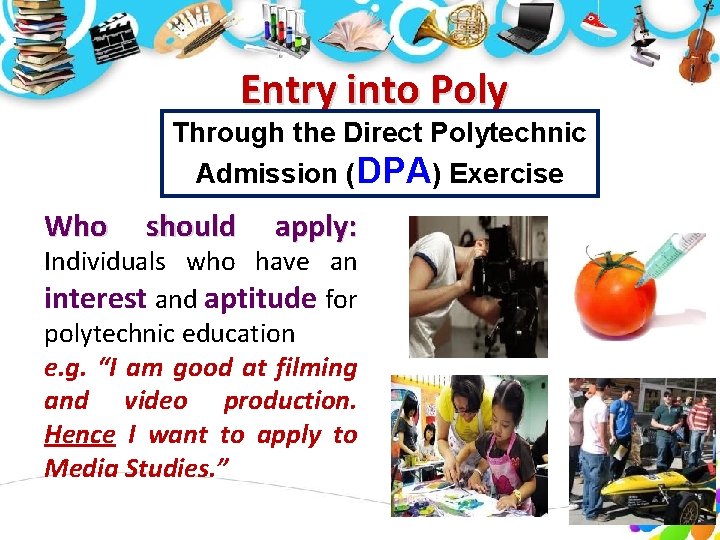
Entry into Poly Through the Direct Polytechnic Admission (DPA) Exercise Who should apply: Individuals who have an interest and aptitude for polytechnic education e. g. “I am good at filming and video production. Hence I want to apply to Media Studies. ”
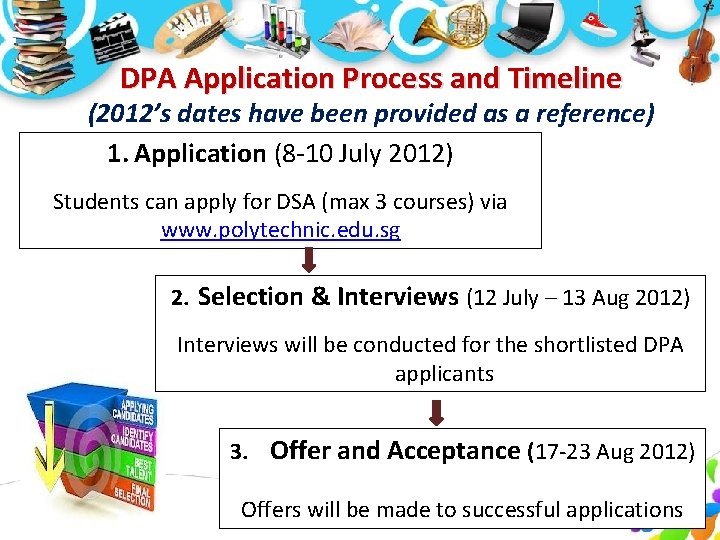
DPA Application Process and Timeline (2012’s dates have been provided as a reference) 1. Application (8 -10 July 2012) Students can apply for DSA (max 3 courses) via www. polytechnic. edu. sg 2. Selection & Interviews (12 July – 13 Aug 2012) Interviews will be conducted for the shortlisted DPA applicants 3. Offer and Acceptance (17 -23 Aug 2012) Offers will be made to successful applications
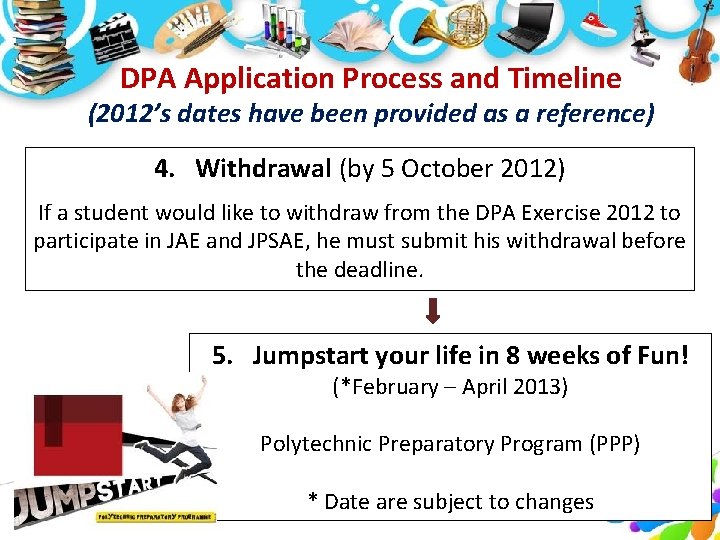
DPA Application Process and Timeline (2012’s dates have been provided as a reference) 4. Withdrawal (by 5 October 2012) If a student would like to withdraw from the DPA Exercise 2012 to participate in JAE and JPSAE, he must submit his withdrawal before the deadline. 5. Jumpstart your life in 8 weeks of Fun! (*February – April 2013) Polytechnic Preparatory Program (PPP) * Date are subject to changes
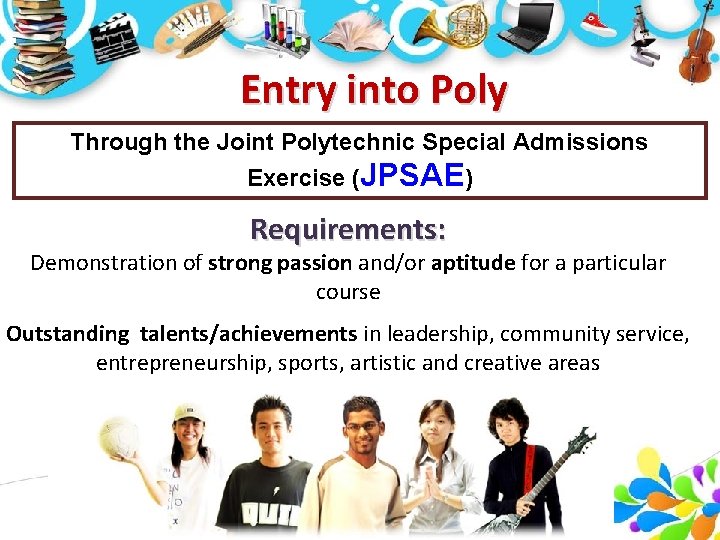
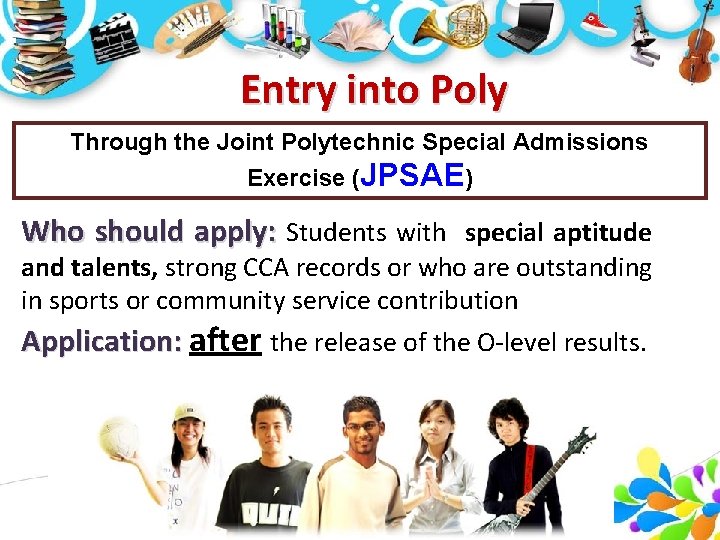
Entry into Poly Through the Joint Polytechnic Special Admissions Exercise (JPSAE) Requirements: Demonstration of strong passion and/or aptitude for a particular course Outstanding talents/achievements in leadership, community service, entrepreneurship, sports, artistic and creative areas
Entry into Poly Through the Joint Polytechnic Special Admissions Exercise (JPSAE) Who should apply: Students with special aptitude and talents, strong CCA records or who are outstanding in sports or community service contribution Application: after the release of the O-level results.
Polytechnic (diploma) 1 -year Poly Foundation Program 2 -year Higher Nitec course at ITE O Level @ Sec 5 NA which leads to the Poly (DES-to-Poly) (NORMAL ACADEMIC) Different Pathways
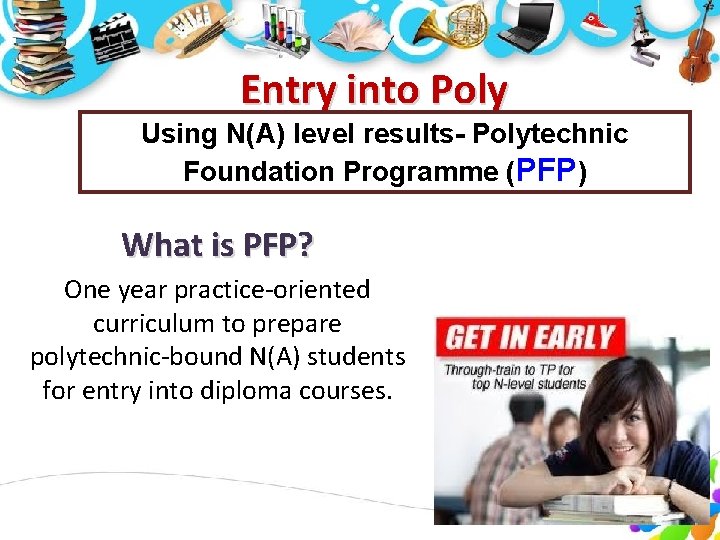
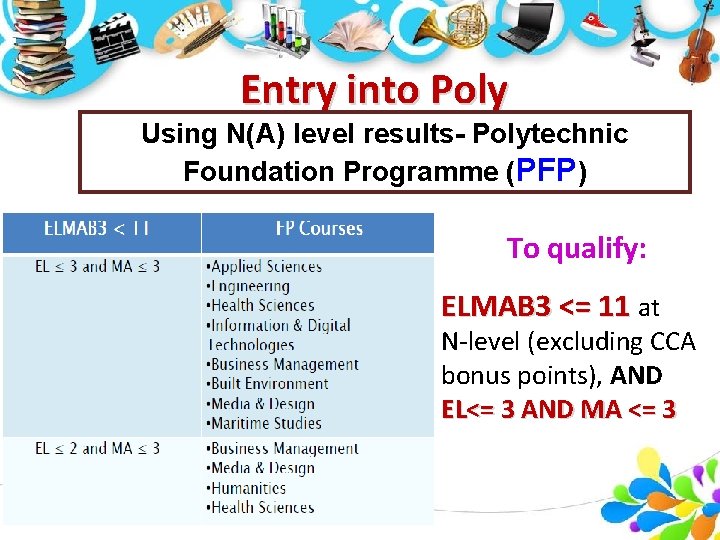
Entry into Poly Using N(A) level results- Polytechnic Foundation Programme (PFP) What is PFP? One year practice-oriented curriculum to prepare polytechnic-bound N(A) students for entry into diploma courses.
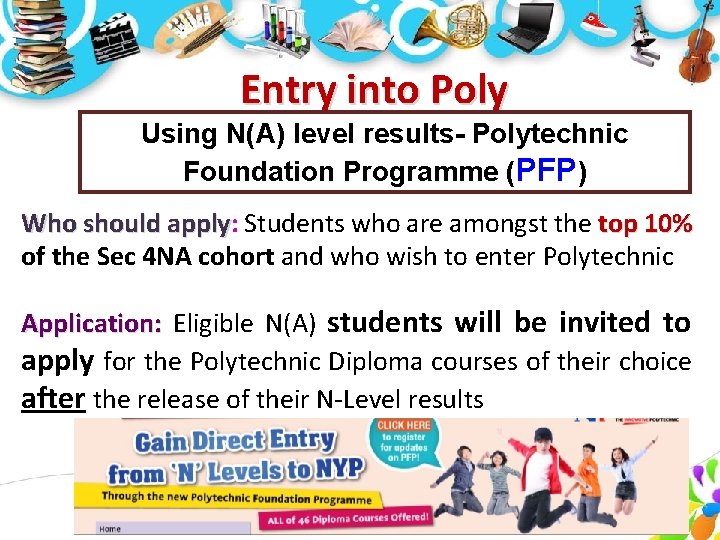
Entry into Poly Using N(A) level results- Polytechnic Foundation Programme (PFP) Who should apply: apply Students who are amongst the top 10% of the Sec 4 NA cohort and who wish to enter Polytechnic Application: Eligible N(A) students will be invited to apply for the Polytechnic Diploma courses of their choice after the release of their N-Level results
Entry into Poly Using N(A) level results- Polytechnic Foundation Programme (PFP) To qualify: ELMAB 3 <= 11 at N-level (excluding CCA bonus points), AND EL<= 3 AND MA <= 3
Singapore Institute of Technology (SIT) The SIT was set up primarily to enable Poly graduates to upgrade themselves and obtain an university degree.
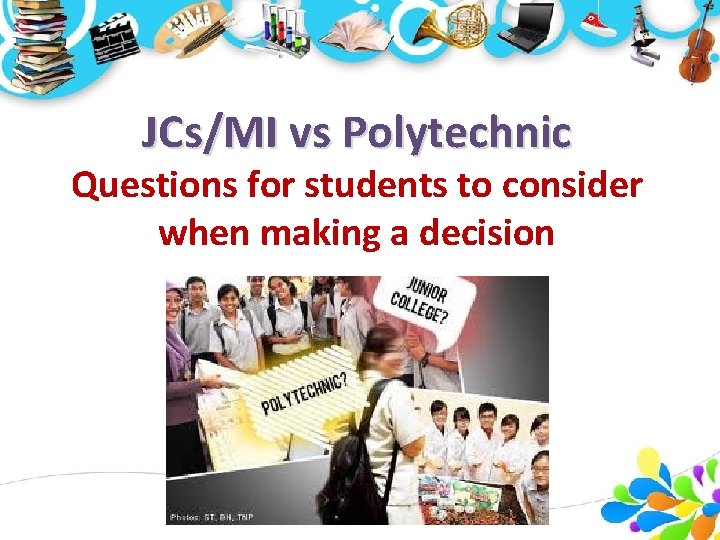
JCs/MI vs Polytechnic Questions for students to consider when making a decision
JCs/MI vs Polytechnic – Questions for students to consider 1. Would you prefer to delve deeper into academia (e. g. Math, Science, Humanities) or do you prefer learning that is tied to specific industries and work-ready qualification?
JCs/MI vs Polytechnic – Questions for students to consider 2. Would you prefer sitting for a summative examination (JC) or would you thrive better in a modular assessment setting (Poly)? 3. Are you considering working before pursing further qualifications?
JCs/MI vs Polytechnic – Questions for students to consider 4. Do you have a specific job which you are interested in? in 5. Are you more of a conceptual learner or do you prefer a more hands-on learning environment?
Institute of Technical Education (ITE)
JC or Millennia Institute (A-Level) Polytechnic NAFA or La. Salle (diploma) ITE (Higher Nitec) Possibility of entering Poly if he/she does well enough (unique arts prog) Different Pathways
Polytechnic (diploma) 1 -year Poly Foundation Program 2 -year Higher Nitec course at ITE O Level @ Sec 5 NA which leads to the Poly (DES-to-Poly) (NORMAL ACADEMIC) Different Pathways
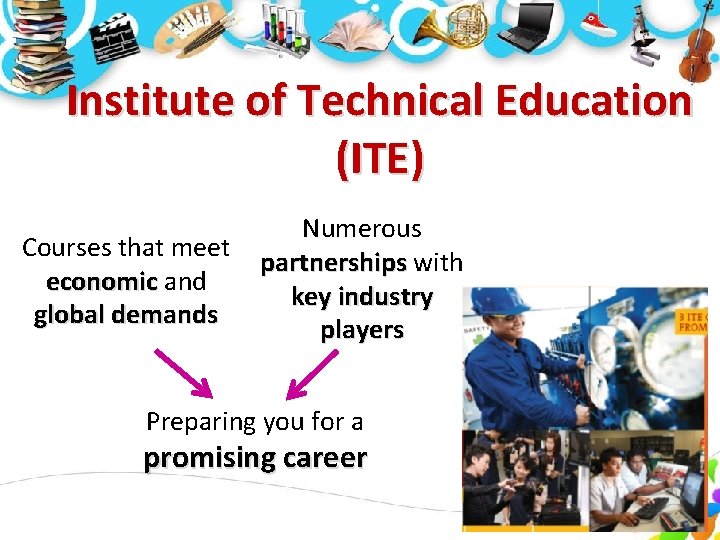
Institute of Technical Education (ITE) Courses that meet economic and global demands Numerous partnerships with key industry players Preparing you for a promising career
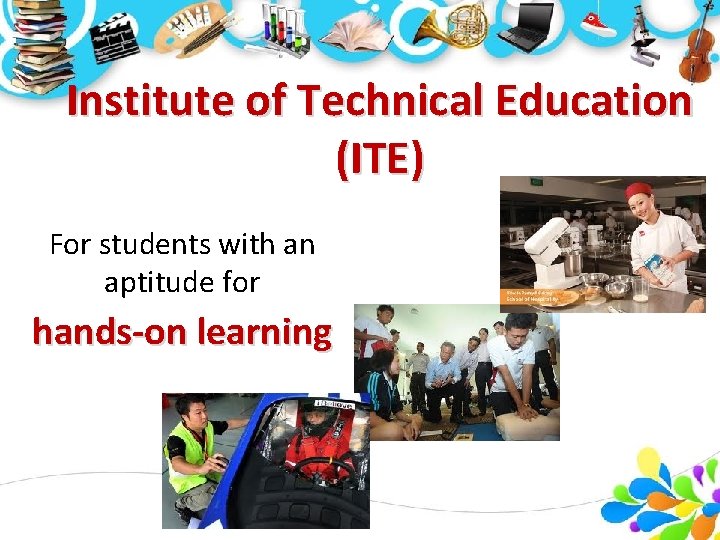
Institute of Technical Education (ITE) For students with an aptitude for hands-on learning
Institute of Technical Education (ITE) National ITE Certification (NITEC) Higher National ITE Certification (Higher NITEC)
Institute of Technical Education (ITE) Some factors for consideration. . . When selecting Nitec courses, check to see if there are relevant Higher Nitec courses to progress to.
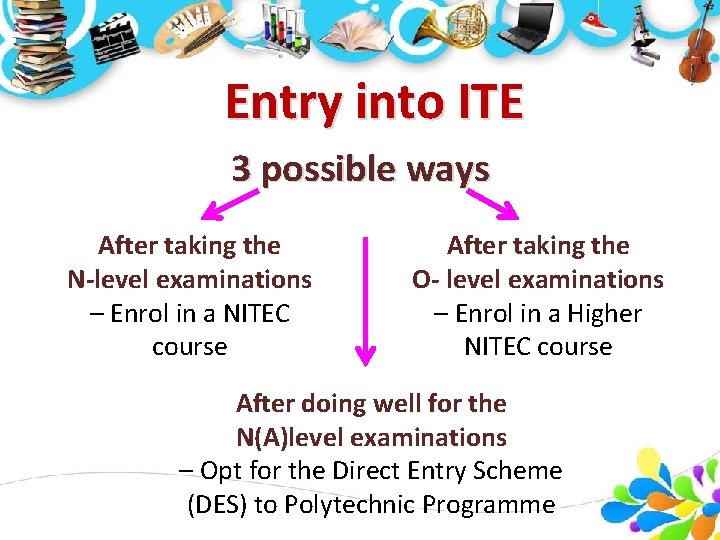
Entry into ITE 3 possible ways After taking the N-level examinations – Enrol in a NITEC course After taking the O- level examinations – Enrol in a Higher NITEC course After doing well for the N(A)level examinations – Opt for the Direct Entry Scheme (DES) to Polytechnic Programme
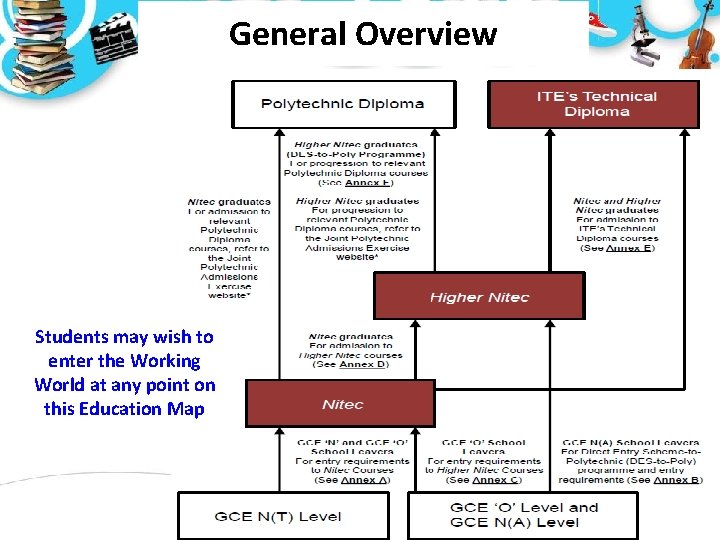
General Overview Students may wish to enter the Working World at any point on this Education Map
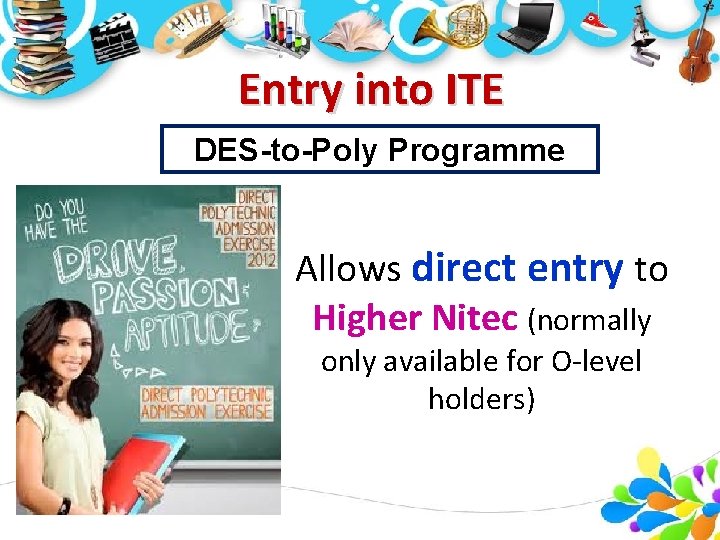
Entry into ITE DES-to-Poly Programme Allows direct entry to Higher Nitec (normally only available for O-level holders)
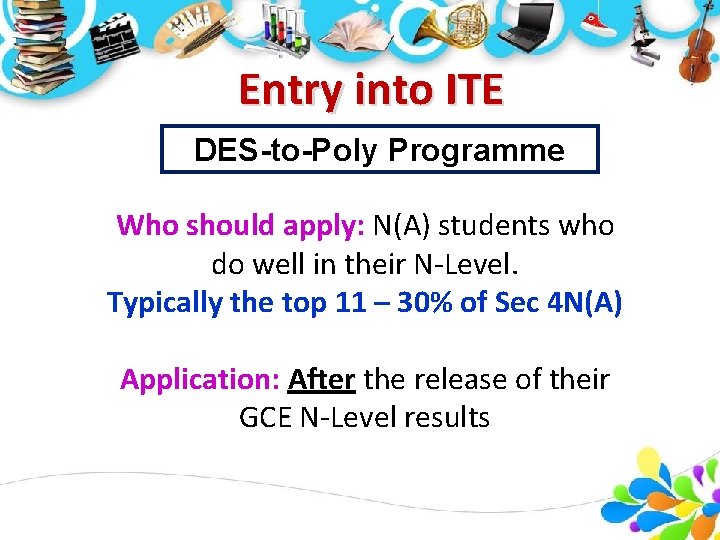
Entry into ITE DES-to-Poly Programme Who should apply: N(A) students who do well in their N-Level. Typically the top 11 – 30% of Sec 4 N(A) Application: After the release of their GCE N-Level results
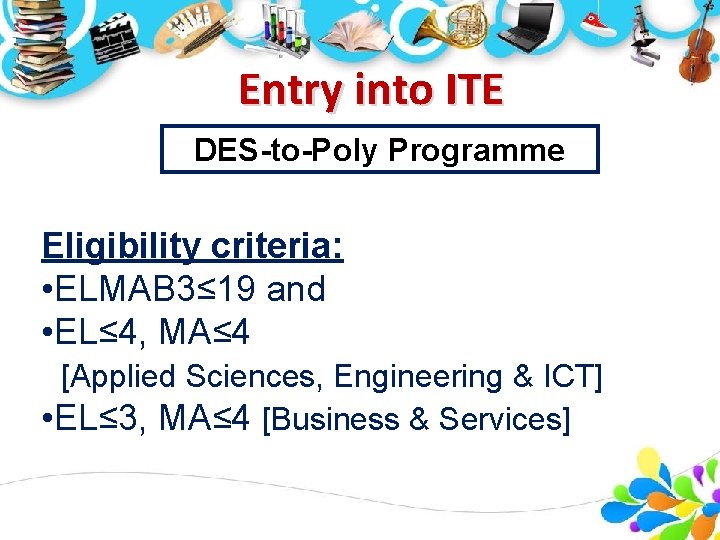
Entry into ITE DES-to-Poly Programme Eligibility criteria: • ELMAB 3≤ 19 and • EL≤ 4, MA≤ 4 [Applied Sciences, Engineering & ICT] • EL≤ 3, MA≤ 4 [Business & Services]
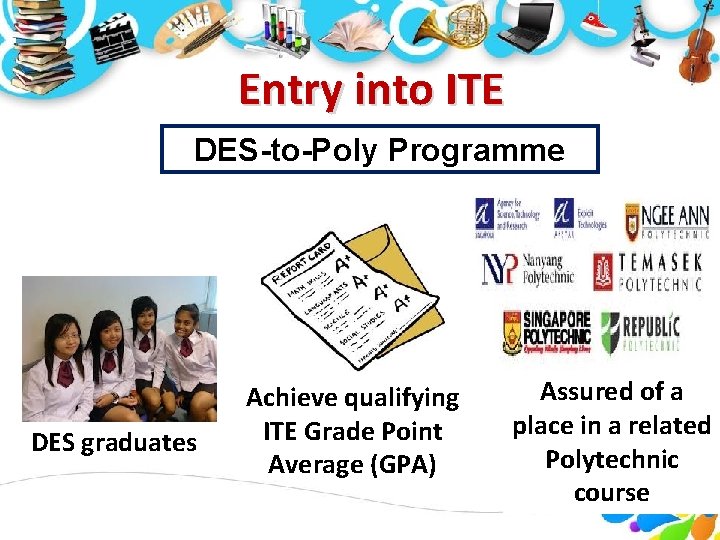
Entry into ITE DES-to-Poly Programme DES graduates Achieve qualifying ITE Grade Point Average (GPA) Assured of a place in a related Polytechnic course
Sec 5 vs ITE Questions for students to consider when making a decision ITE? ? 5 c Se
Sec 5 or ITE – Which one should I choose? Suggested questions for students to consider 1. Are you eligible for the Polytechnic Foundation Programme (PFP) or the Direct Entry Scheme (DES) into Polytechnic? 2. How quickly do you hope to enter the workforce?
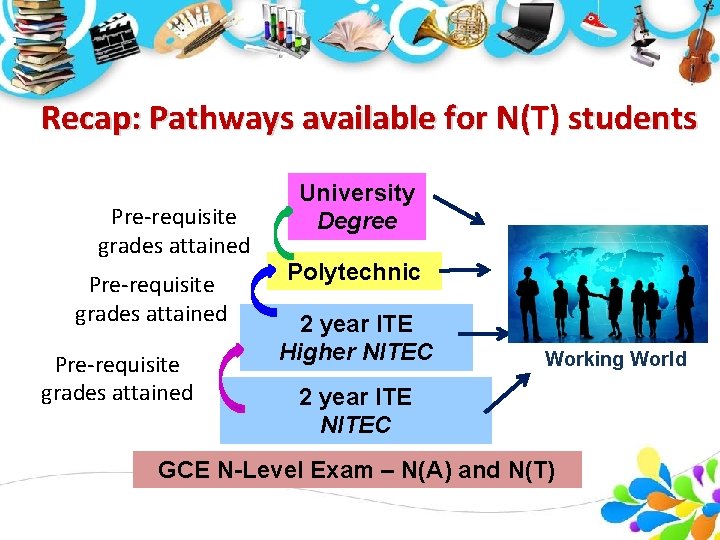
Recap: Pathways available for N(T) students Pre-requisite grades attained University Degree Polytechnic 2 year ITE Higher NITEC Working World 2 year ITE NITEC GCE N-Level Exam – N(A) and N(T)
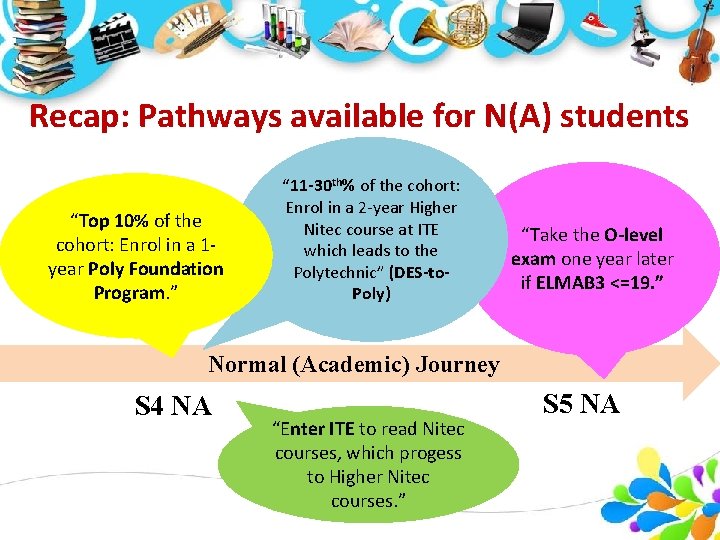
Recap: Pathways available for N(A) students “Top 10% of the cohort: Enrol in a 1 year Poly Foundation Program. ” “ 11 -30 th% of the cohort: Enrol in a 2 -year Higher Nitec course at ITE which leads to the Polytechnic” (DES-to. Poly) “Take the O-level exam one year later if ELMAB 3 <=19. ” Normal (Academic) Journey S 4 NA “Enter ITE to read Nitec courses, which progess to Higher Nitec courses. ” S 5 NA
Pointers for Students to Consider. . .
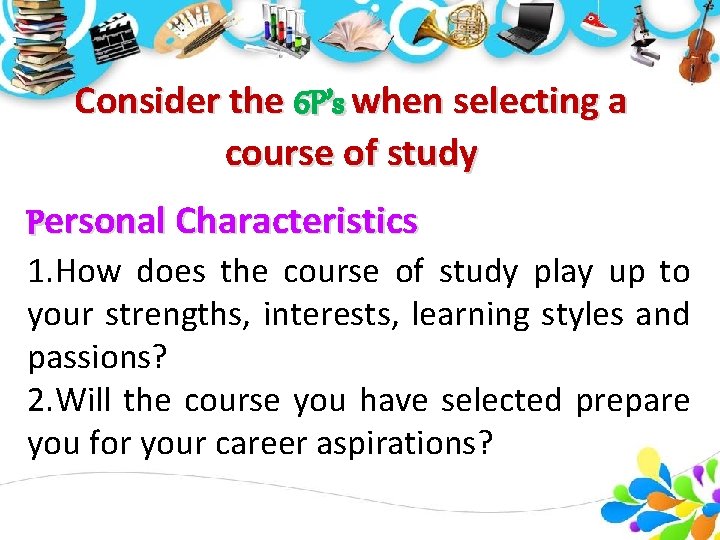
Consider the 6 P’s when selecting a course of study Personal Characteristics 1. How does the course of study play up to your strengths, interests, learning styles and passions? 2. Will the course you have selected prepare you for your career aspirations?
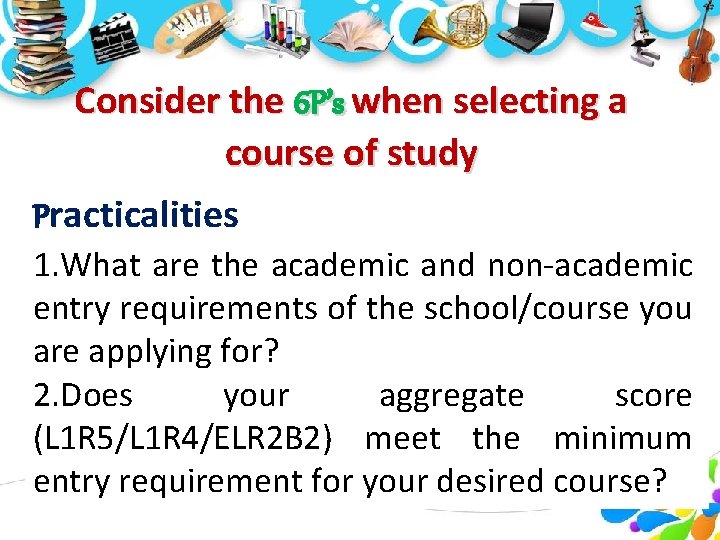
Consider the 6 P’s when selecting a course of study Practicalities 1. What are the academic and non-academic entry requirements of the school/course you are applying for? 2. Does your aggregate score (L 1 R 5/L 1 R 4/ELR 2 B 2) meet the minimum entry requirement for your desired course?
Consider the 6 P’s when selecting a course of study Progression Opportunities 1. What will your qualification allow you to do after graduation? 2. What is the industry outlook for the course of your choice?
Consider the 6 P’s when selecting a course of study Parents 1. What kind of guidance, perspective or support can they provide you to help you make a more informed choice?
Consider the 6 P’s when selecting a course of study Peers 1. Don’t follow your friends blindly. Their passions, strengths and interests may be different from yours. Hence the course they select might not be the best fit for you.
Consider the 6 P’s when selecting a course of study Plan 1. Plan ahead, where do you see yourself after graduation? 2. What actions can you take to increase the likelihood of reaching your destination?
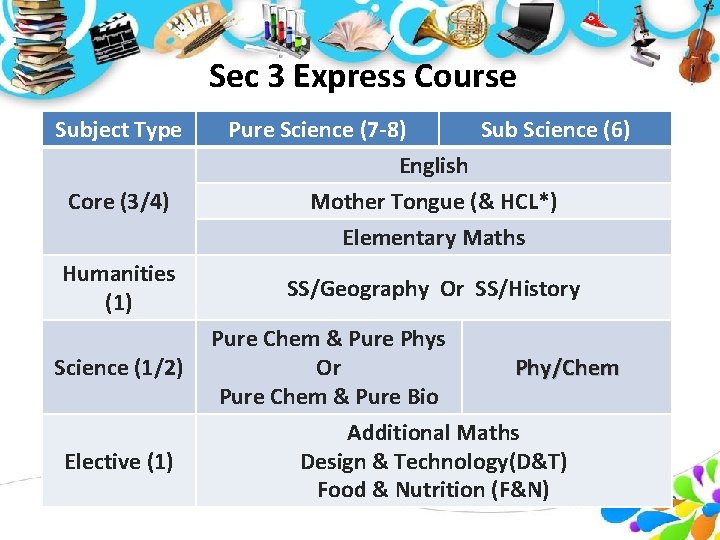
Sec 3 Express Course Subject Type Core (3/4) Humanities (1) Science (1/2) Elective (1) Pure Science (7 -8) Sub Science (6) English Mother Tongue (& HCL*) Elementary Maths SS/Geography Or SS/History Pure Chem & Pure Phys Or Pure Chem & Pure Bio Phy/Chem Additional Maths Design & Technology(D&T) Food & Nutrition (F&N)
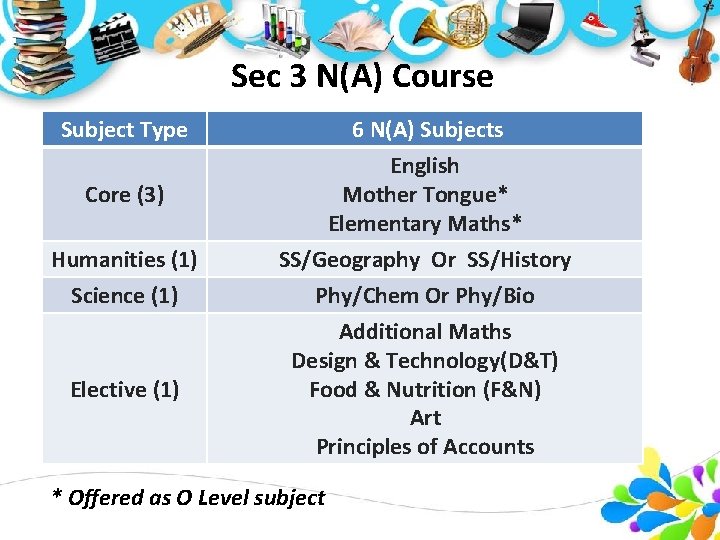
Sec 3 N(A) Course Subject Type 6 N(A) Subjects English Mother Tongue* Elementary Maths* Core (3) Humanities (1) Science (1) Elective (1) SS/Geography Or SS/History Phy/Chem Or Phy/Bio Additional Maths Design & Technology(D&T) Food & Nutrition (F&N) Art Principles of Accounts * Offered as O Level subject
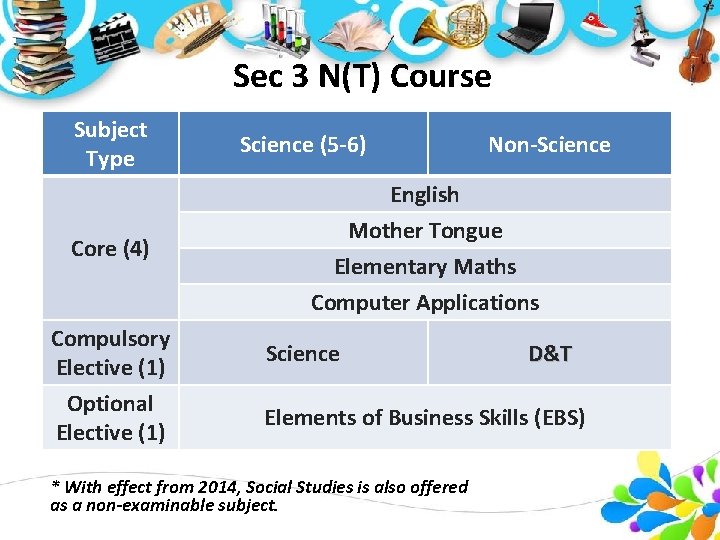
Sec 3 N(T) Course Subject Type Core (4) Compulsory Elective (1) Optional Elective (1) Science (5 -6) Non-Science English Mother Tongue Elementary Maths Computer Applications Science D&T Elements of Business Skills (EBS) * With effect from 2014, Social Studies is also offered as a non-examinable subject.
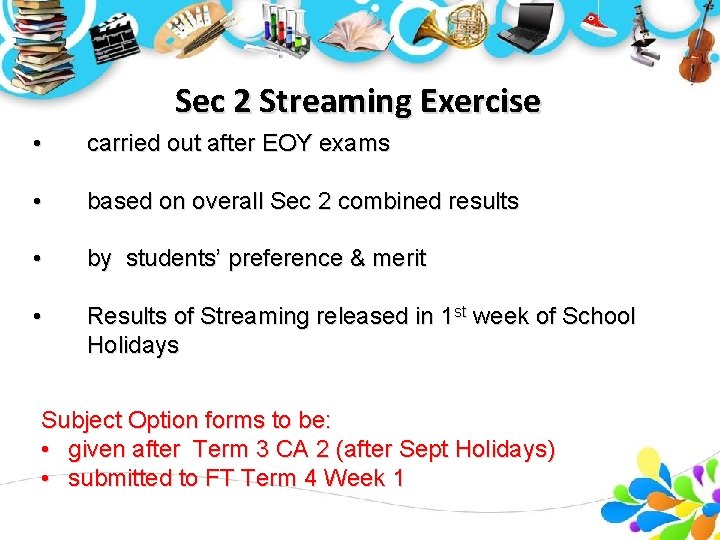
Sec 2 Streaming Exercise • carried out after EOY exams • based on overall Sec 2 combined results • by students’ preference & merit • Results of Streaming released in 1 st week of School Holidays Subject Option forms to be: • given after Term 3 CA 2 (after Sept Holidays) • submitted to FT Term 4 Week 1
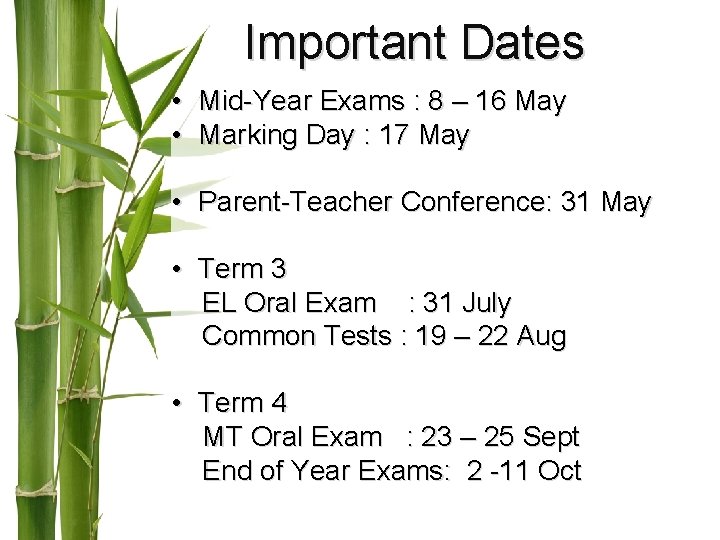
Important Dates • Mid-Year Exams : 8 – 16 May • Marking Day : 17 May • Parent-Teacher Conference: 31 May • Term 3 EL Oral Exam : 31 July Common Tests : 19 – 22 Aug • Term 4 MT Oral Exam : 23 – 25 Sept End of Year Exams: 2 -11 Oct
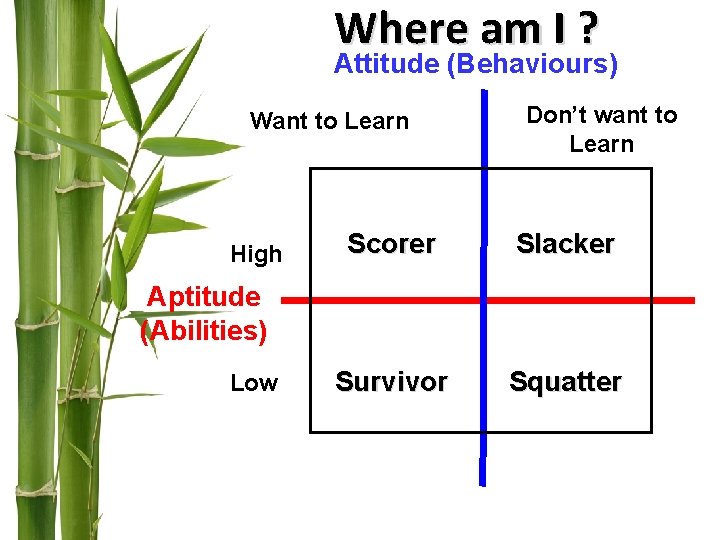
Where am I ? Attitude (Behaviours) Want to Learn High Don’t want to Learn Scorer Slacker Survivor Squatter Aptitude (Abilities) Low
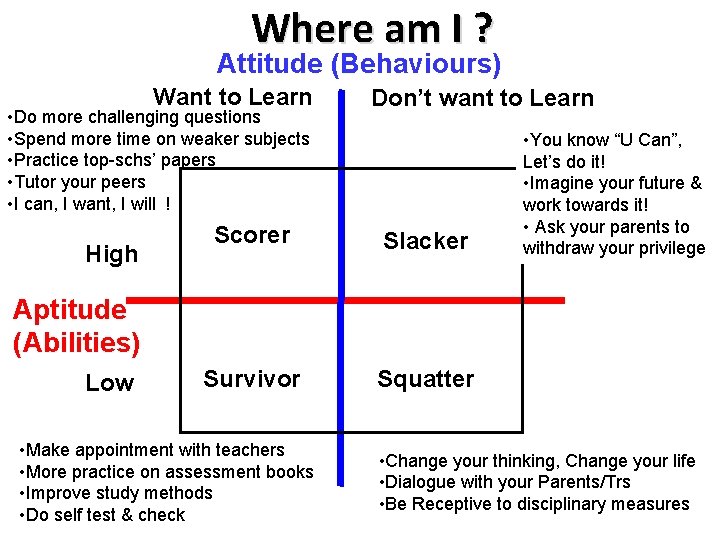
Where am I ? Attitude (Behaviours) Want to Learn • Do more challenging questions • Spend more time on weaker subjects • Practice top-schs’ papers • Tutor your peers • I can, I want, I will ! High Don’t want to Learn Scorer Slacker Survivor Squatter • You know “U Can”, Let’s do it! • Imagine your future & work towards it! • Ask your parents to withdraw your privilege Aptitude (Abilities) Low • Make appointment with teachers • More practice on assessment books • Improve study methods • Do self test & check • Change your thinking, Change your life • Dialogue with your Parents/Trs • Be Receptive to disciplinary measures
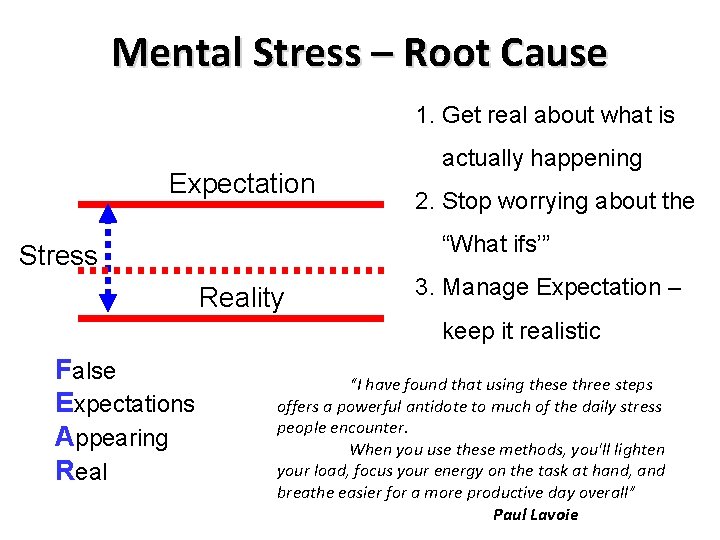
Mental Stress – Root Cause 1. Get real about what is Expectation actually happening 2. Stop worrying about the “What ifs’” Stress Reality 3. Manage Expectation – keep it realistic False Expectations Appearing Real “I have found that using these three steps offers a powerful antidote to much of the daily stress people encounter. When you use these methods, you'll lighten your load, focus your energy on the task at hand, and breathe easier for a more productive day overall” Paul Lavoie
• Take time to reinforce goal with your child • Motivate them to study - Give positive encouragement. - Praise for their effort - Promise reasonable and appropriate rewards for good results - Show that you’ve to work hard to support the family and their education Support from parents
• Attention to their needs and problems - Take care of their physical health. - Do not place excessive high expectation resulting in mental stress - Do not let them get distracted or into unnecessary Boy-Girl relationship - Ensure they do not mix with wrong friends who are not interested in studies Support from parents
• Supervise their studies at home - Ensure they’ve a revision time-table & follow it closely - Ensure they set target & work towards it - Monitor revision progress by checking on test dates, test marks, completion of assignment - Leave your contact with the FTs and STs so that teachers can give immediate feedback to you whenever needed - They don’t waste time at home in leisure activities such as computer games or watching too much television Support from parents
• Support them in their studies - Get help from relatives or friends - Provide conducive environment at home for their study (study table, proper lighting) - Minimise household chores or duties for them - Get them to come to school and do not let them skip school just because they are late. Support from parents
• Morale and emotional support – Showing concern in appropriate ways – Trust your children • Open communication – Have hear-to-heart talk • Good food, good rest – chicken of essence, ginseng • Role model /Encourage good habits routine – Sleep early; less computer/TV Support from parents
Juying Parents Support Group
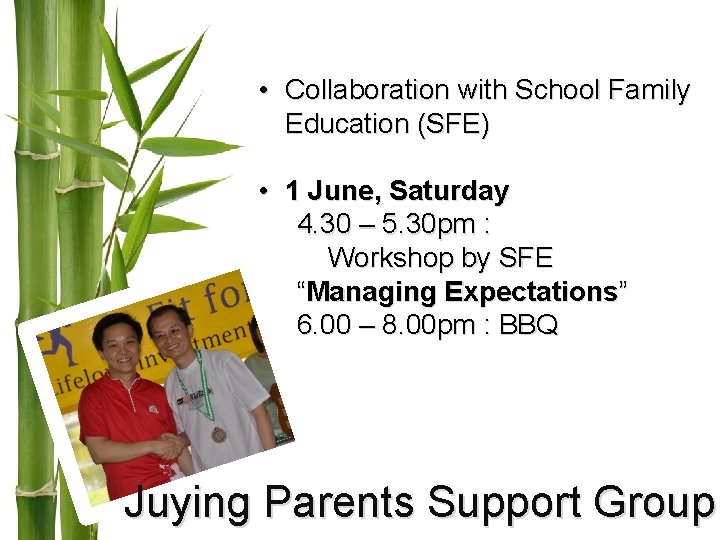
• Collaboration with School Family Education (SFE) • 1 June, Saturday 4. 30 – 5. 30 pm : Workshop by SFE “Managing Expectations” 6. 00 – 8. 00 pm : BBQ Juying Parents Support Group
Success Factors for Students • • • Attitude Believe in yourself Conscientious, Consistent Dreams, Aspirations & Hopes Expectations – realistic & challenging First thing first Goal setting Humility “I” & my future…
Together We Will Succeed!