
Science Review 5 th Grade Earth Science Review
- Slides: 105
Science Review 5 th Grade
Earth Science Review 1. What is weathering? • A. A type of climate • B. The movement of rock pieces from one place to another. • C. The breaking down of rock into smaller pieces. • D. A force that pulls pieces of rock downhill
2. Which word names a force that pulls pieces of rock downhill? • • A. B. C. D. Gravity Erosion Eruption Weathering
3. Which is one way earthquakes change the land? • A. They pick up weathered rock and move it. • B. They cause cracks in Earth’s surface. • C. They release ash and melted rock. • D. They help form soil.
4. A glacier moving a boulder is an example of • • A. B. C. D. Ice wedging Weathering Erosion A landslide
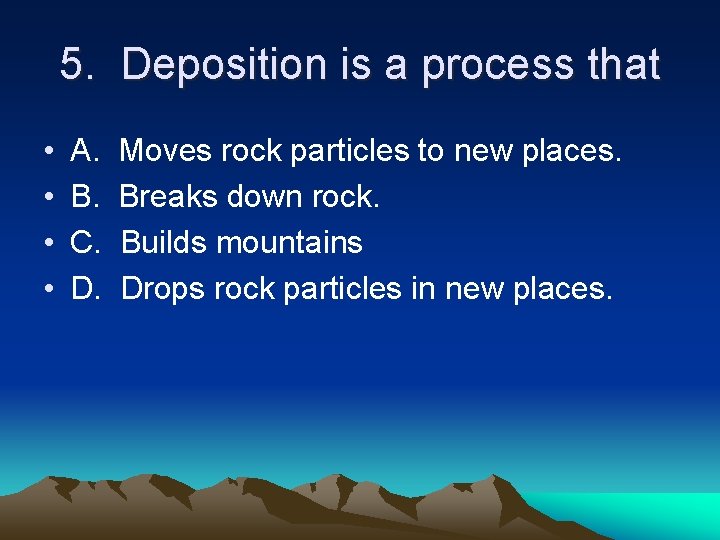
5. Deposition is a process that • • A. B. C. D. Moves rock particles to new places. Breaks down rock. Builds mountains Drops rock particles in new places.
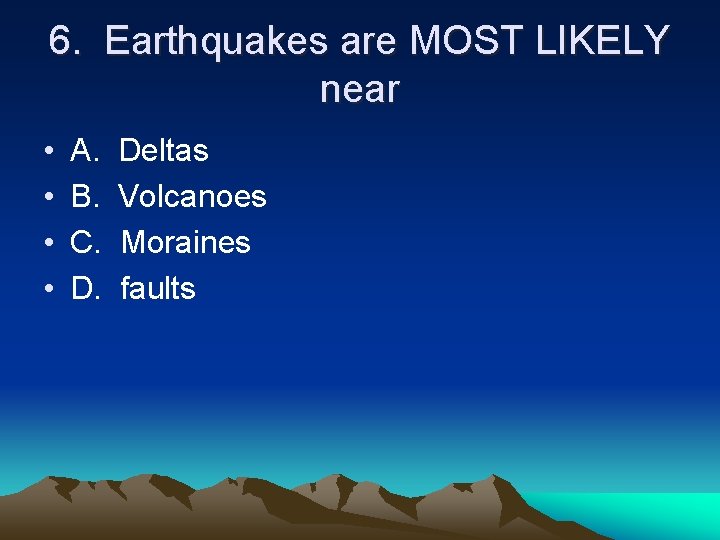
6. Earthquakes are MOST LIKELY near • • A. B. C. D. Deltas Volcanoes Moraines faults
7. Which landforms may form as a result of volcanic eruptions? • • A. B. C. D. Floodplains Cliffs Mountains Deltas
8. Which landform is deposited by a glacier? • • A. B. C. D. Dune Delta Mountain moraine
9. Which of these does NOT prevent soil erosion? • • A. B. C. D. Planting vegetation Using contour plowing Putting up windbreaks Building dams
10. Beaches that have eroded can be reclaimed through • • A. B. C. D. Weathering Building of seawalls Beach nourishment terracing
10 • C
11. Which statement is TRUE of both dams and levees? • • A. B. C. D. They both stop soil erosion. They both help control water levels. They are both built across a river. They both control erosion by wind.
11 • B
12. A tool that records earthquakes is called a • • A. B. C. D. Seismograph Seismologist Seismic wave seismogram
13. Which statement is TRUE? • A. Scientists can predict when an earthquake will happen. • B. Scientists can measure the size of an earthquake. • C. Scientists can stop an earthquake from happening. • D. Scientists can keep a volcano from erupting.
14. What is a tsnumani? • A. A movement of magma inside Earth’s crust. • B. A volcanic eruption • C. A huge ocean wave • D. A shaking of the ground
14 • C
15. Which one can cause an earthquake? • • A. B. C. D. Erosion of rock A landslide Weathering of rock Movement of rock along a fault
15 • D
16. Dr. Horn is a seismologist. Which of these does Dr. Horn study? • • A. B. C. D. Weathering Earthquakes Weather glaciers
17. Which process causes some beaches to get smaller? • • A. B. C. D. Erosion Weathering Deposition Beach nourishment
17 • A
18. Freezing and thawing of water in rock can cause • • A. B. C. D. Erosion Weathering Flooding Deposition
18 • B
19. Which one forms from material deposited by wind? • • A. B. C. D. Dune Delta Moraine floodplain
19 • A
20. Seismographs helped scientists predict • • A. Earthquakes B. Floods C. beach erosion D. tsunamis
20 • A
21. Which one is not a way to control floods? • • A. B. C. D. Building of dams Building of levees Beach nourishment Storm drain management
21 • C
22. Over time, lava that flows out of a volcano • • A. B. C. D. Can form mountains Can form moraines Can form faults Can freeze into ice
22 • A
23. John notices a sudden movement of rock and soil moving down a hill. What is John noticing? • • A. B. C. D. A landslide caused by gravity A landslide caused by deposition Weathering caused by wind Weathering caused by water
23 • A
24. Which of these can help stop soil erosion? • • A. B. C. D. Building dams Terracing Storm drain management Beach nourishment
24 • B
25. What is sediment? • A. Melted rock underground • B. Melted rock that flows out of a volcano • C. Material deposited by wind, water, or glaciers. • D. A break in Earth’s crust
25 • C
26.
Physical Science Review 1. In which state of matter do the particles move the least? • A. Solid • B. Liquid • C. gas
2. A change of a liquid to a solid is called • • A. B. C. D. Condensation Evaporation Melting freezing
3. How can you change liquid water to water vapor? • • A. B. C. D. By freezing the water By dissolving salt in the water By cooling the water By heating the water
4. Which one is an example of a chemical property? • • A. B. C. D. The color of a substance Whether a substance can rust The texture of a substance The density of a substance
5. What can you do to cake batter to cause a chemical change? • • A. B. C. D. Stir it Heat it Cool it Freeze it
6. A chemical change takes place when • • A. B. C. D. Water boils An apple is cut An ice cube melts An apple rots
7. If you moved two magnets together with both North poles facing each other, what would happen? • A. A pull • B. A push • C. No force
8. Which of these materials will a magnet attract? • • A. B. C. D. Copper Rubber Iron plastic
9. Which of these is caused by static electricity? • A. A magnet attracts a paper clip. • B. Glue holds two pieces of paper together. • C. Socks taken from a clothes dryer stick together. • D. Ice sticks to a car’s windshield on a cold winter day.
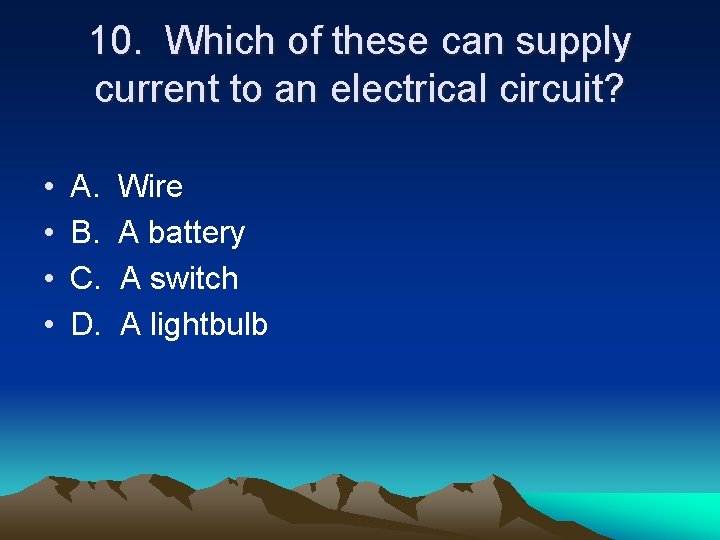
10. Which of these can supply current to an electrical circuit? • • A. B. C. D. Wire A battery A switch A lightbulb
10 • B
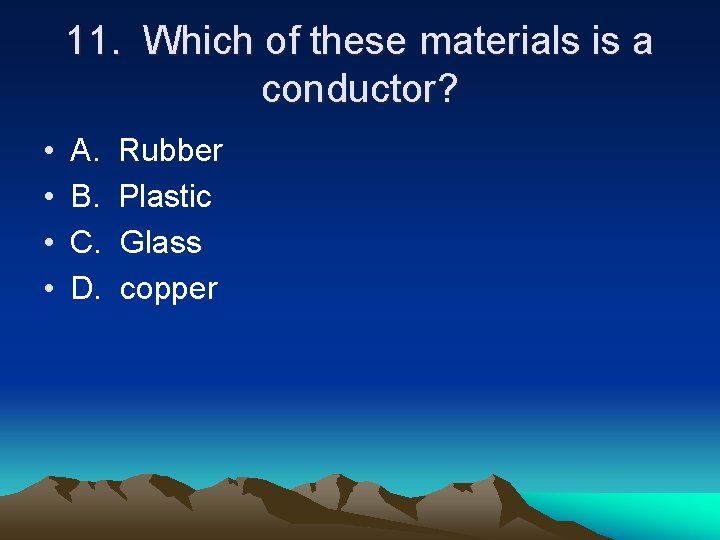
11. Which of these materials is a conductor? • • A. B. C. D. Rubber Plastic Glass copper
11 • D
12. Which of these materials is an insulator? • • A. B. C. D. Glass Aluminum Copper steel
12 • A
13. Which of these is NOT a permanent magnet? • • A. B. C. D. Electromagnet Refrigerator magnet Bar magnet Horseshoe magnet
14. In order to work, an electromagnet must be part of • • A. B. C. D. An electric crane An electrical circuit An open circuit A battery
14 • B
15. Which part of the circuit starts and stops the flow of electric current? • • A. B. C. D. Battery Lightbulb Wire Switch
15 • D
16. Which of these will the south pole of a bar magnet repel? • • A. B. C. D. A paper clip The north pole of another magnet The south pole of another magnet An iron nail
16 • C
17. Electric current does not flow in • • A. B. C. D. An open circuit A closed circuit An electromagnet A complete circuit
17 • A
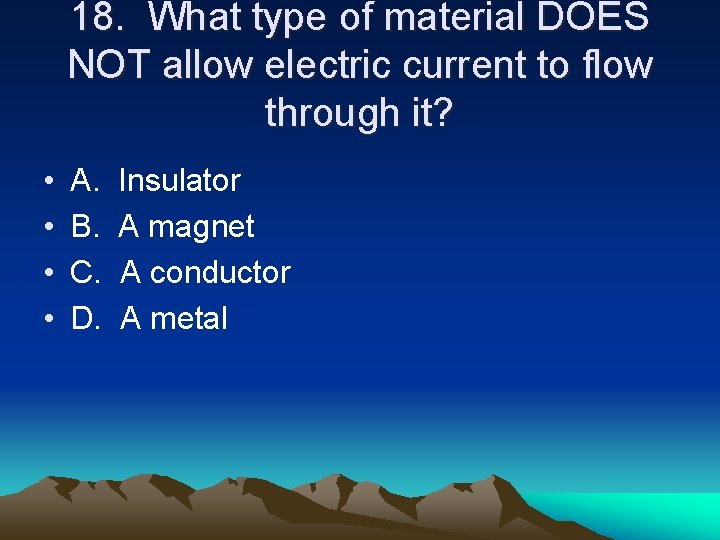
18. What type of material DOES NOT allow electric current to flow through it? • • A. B. C. D. Insulator A magnet A conductor A metal
18 • A
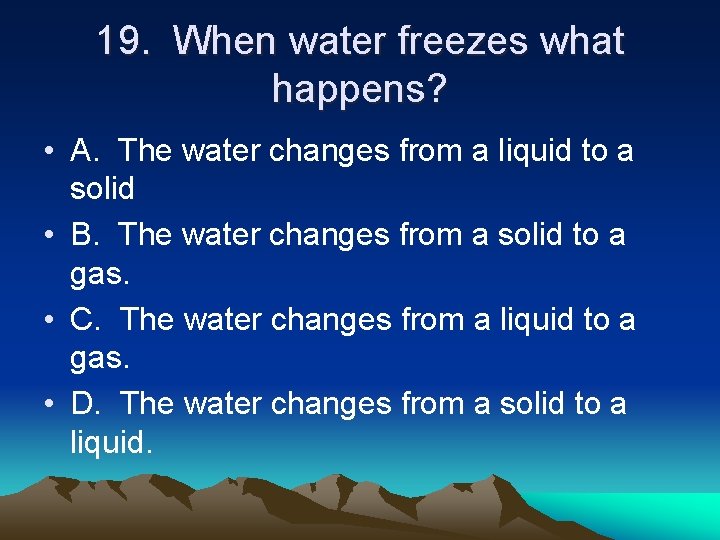
19. When water freezes what happens? • A. The water changes from a liquid to a solid • B. The water changes from a solid to a gas. • C. The water changes from a liquid to a gas. • D. The water changes from a solid to a liquid.
19 • A
20. What material is a conductor? • • A. B. C. D. Wood Glass Rubber aluminum
20 • D
21. Max makes a mixture of four solid materials. Which material could a bar magnet separate from the rest of the mixture? • • A. B. C. D. Sand Sugar Iron filings Dirt
21 • C
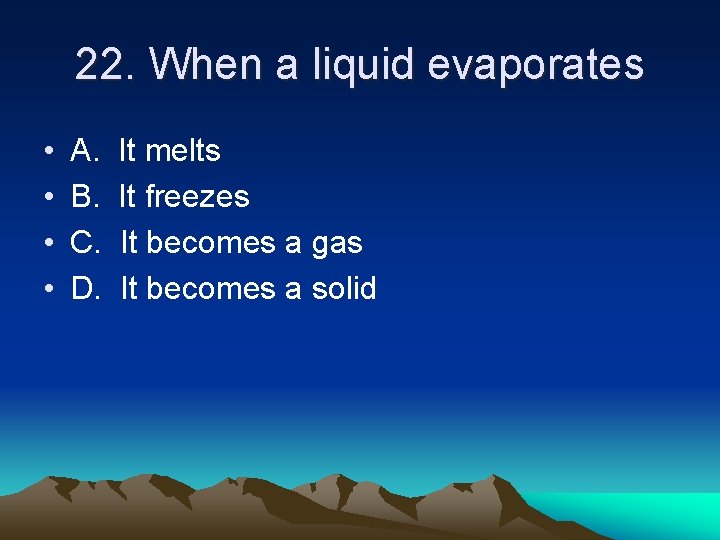
22. When a liquid evaporates • • A. B. C. D. It melts It freezes It becomes a gas It becomes a solid
22 • C
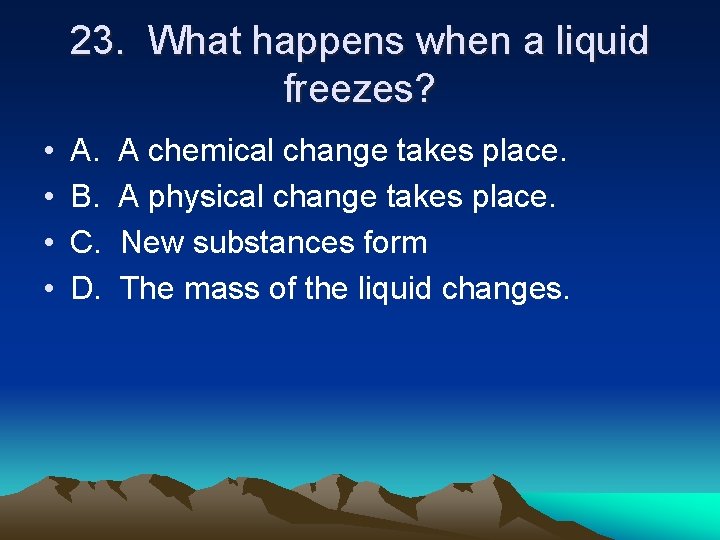
23. What happens when a liquid freezes? • • A. B. C. D. A chemical change takes place. A physical change takes place. New substances form The mass of the liquid changes.
23 • B
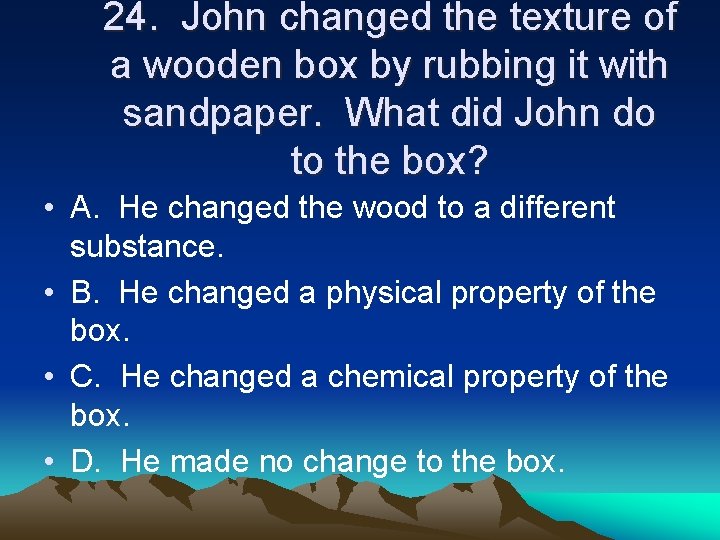
24. John changed the texture of a wooden box by rubbing it with sandpaper. What did John do to the box? • A. He changed the wood to a different substance. • B. He changed a physical property of the box. • C. He changed a chemical property of the box. • D. He made no change to the box.
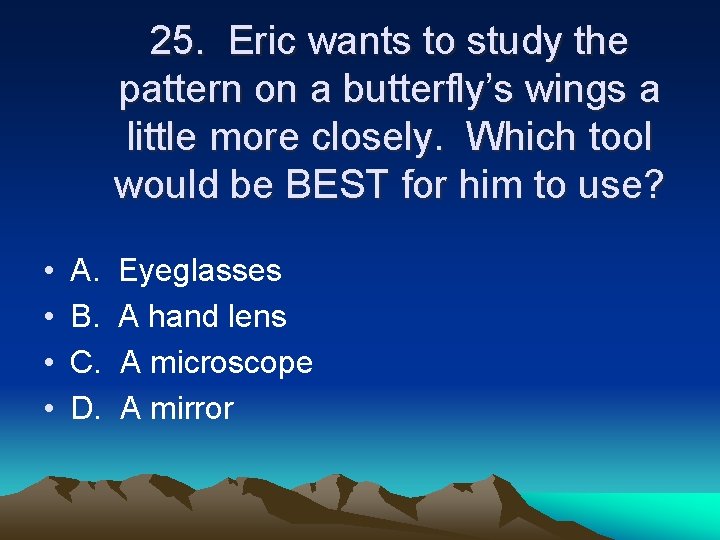
25. Eric wants to study the pattern on a butterfly’s wings a little more closely. Which tool would be BEST for him to use? • • A. B. C. D. Eyeglasses A hand lens A microscope A mirror
25 • B
26. Kevin places bananas on a pan balance. He puts a bunch of five bananas in one pan. He puts 5 separate bananas in the other pan. All the bananas are the same weight. What will the balance MOST LIKELY do? • • A. B. C. D. Tip toward the bunch of bananas Tip toward the separate bananas Dip back and forth Stay level
26 • D
27. Which one is a physical change due to temperature? • • A. B. C. D. Evaporating Burning Dissolving Becoming magnetized
27 • A