Natural Sciences Grade 7 Term 1 Live and




- Slides: 10
Natural Sciences Grade 7 Term 1: Live and Living Sexual Reproduction in Humans (Part 3) (PPT 7)
Topic 3 Sexual Reproduction Fertilisation, pregnancy and menstruation Natural Sciences – Grade 7
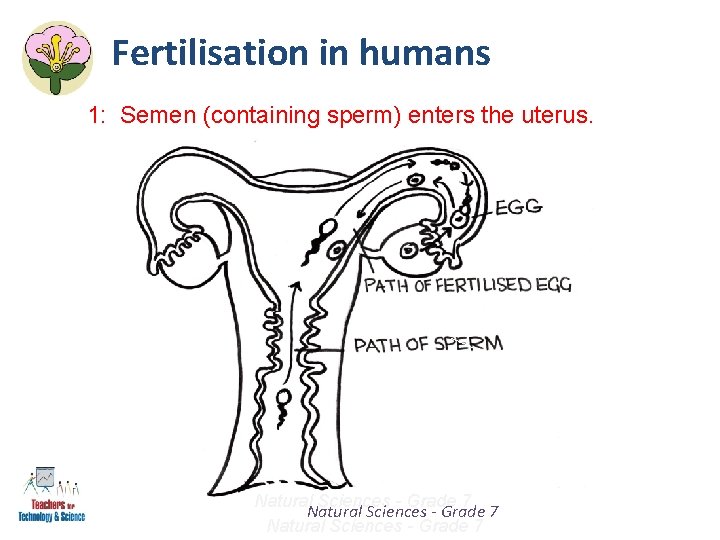
Fertilisation • Fertilisation happens when a sperm joins with an egg. • During sexual intercourse, millions of tiny sperms are released in the semen from the penis into the vagina. • The sperms swim up the uterus towards the egg cell. • When the ovum (egg cell) and one sperm join, it is called fertilisation. Natural Sciences - Grade 7
Fertilisation in humans 1: Semen (containing sperm) enters the uterus. Natural Sciences - Grade 7
Fertilisation Natural Sciences - Grade 7
How the uterus prepares for a fertilized egg • The female’s body produces an egg and prepares to reproduce once per month. • If fertilisation does not take place, the thick bloodrich layer in the uterus breaks down and the female bleeds through her vagina. This is called menstruation. • This is how the woman’s body clears all the preparations and starts the cycle with a new egg. This is called the menstrual cycle. Natural Sciences - Grade 7
Menstruation • This is when the blood and tissue of the lining of the uterus is lost from the woman’s body and comes out through her vagina. • The bleeding may last for 4 to 5 days. • Females have a menstrual cycle from puberty until about age 50. • The average menstrual cycle is 28 days, that means, the woman will start bleeding every 28 days. • All women are different, so their cycles are different too. Natural Sciences - Grade 7
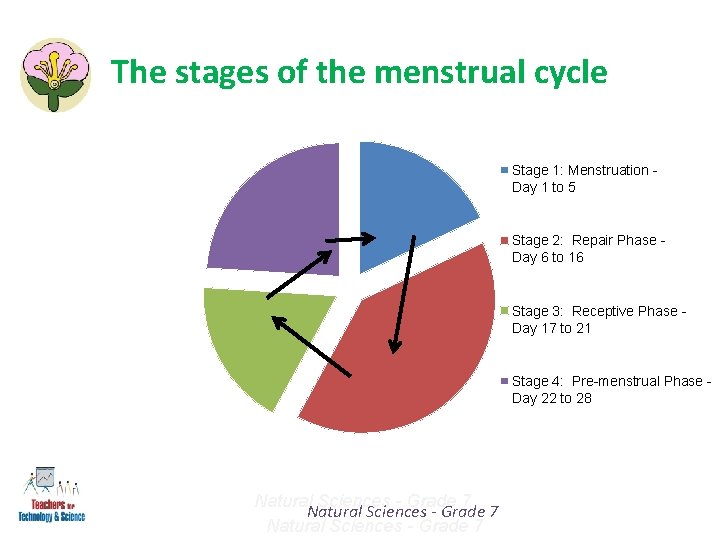
The stages of the menstrual cycle Stage 1: Menstruation Day 1 to 5 Stage 2: Repair Phase Day 6 to 16 Stage 3: Receptive Phase Day 17 to 21 Stage 4: Pre-menstrual Phase Day 22 to 28 Natural Sciences - Grade 7
Pregnancy • If fertilisation takes place, the fertilised egg is implanted into the blood-rich lining of the uterus. • The female is now pregnant. • The woman’s period stops during pregnancy. • It takes 39 weeks for the fertilised egg to develop into the baby. • For the first 9 weeks in the uterus, the baby is known as an embryo. • After 9 weeks in the uterus, the baby is called a foetus. Natural Sciences - Grade 7
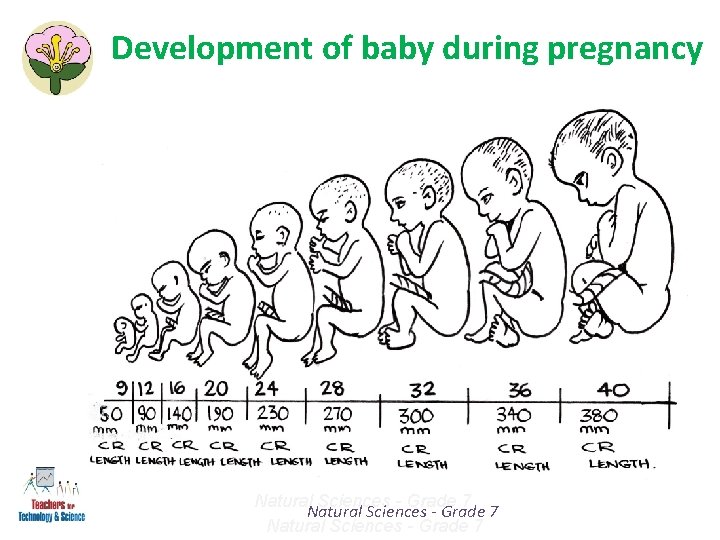
Development of baby during pregnancy Natural Sciences - Grade 7