Reassessing Film in the Foreign Language Curriculum A

- Slides: 32
Reassessing Film in the Foreign Language Curriculum: A multiliteracies approach Mark Kaiser Associate Director Berkeley Language Center University of California, Berkeley
Reassessing Film in the Foreign Language Curriculum: A multiliteracies approach Mark Kaiser Associate Director Berkeley Language Center
Re. Assessing Film in the Foreign Language Curriculum: A multiliteracies approach Mark Kaiser Associate Director Berkeley Language Center
Assessing Film in the Foreign Language Curriculum: A multiliteracies approach Mark Kaiser Associate Director Berkeley Language Center
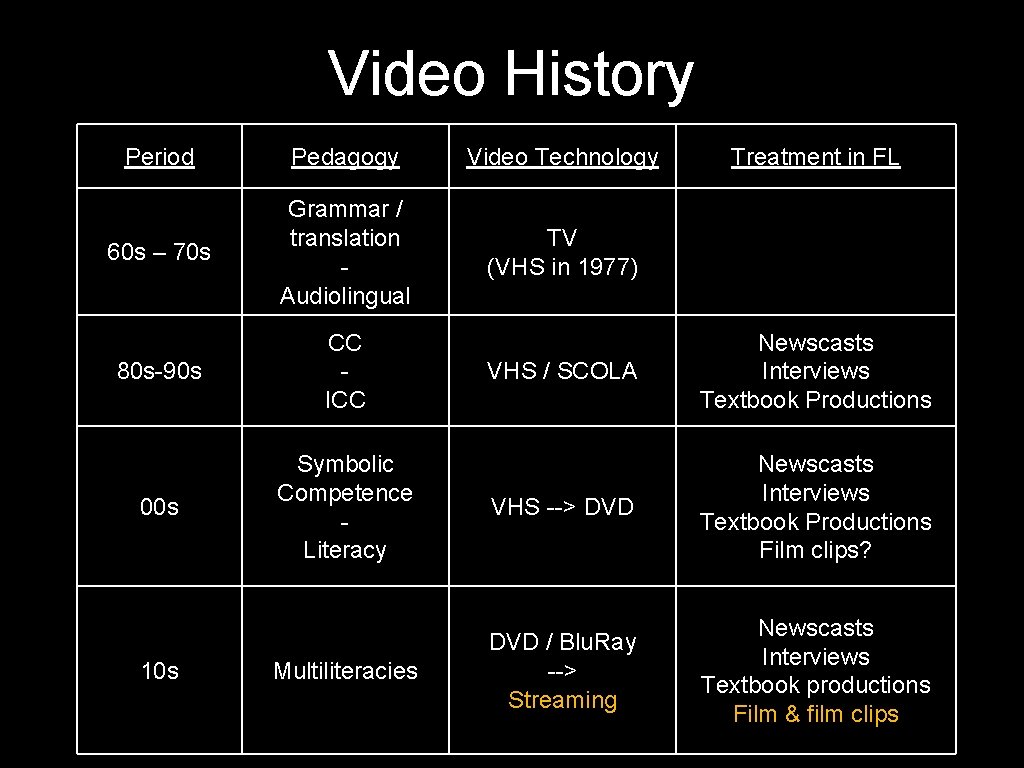
Video History Period Pedagogy Video Technology 60 s – 70 s Grammar / translation Audiolingual TV (VHS in 1977) 80 s-90 s CC ICC 00 s Symbolic Competence Literacy 10 s Multiliteracies Treatment in FL VHS / SCOLA Newscasts Interviews Textbook Productions VHS --> DVD Newscasts Interviews Textbook Productions Film clips? DVD / Blu. Ray --> Streaming Newscasts Interviews Textbook productions Film & film clips
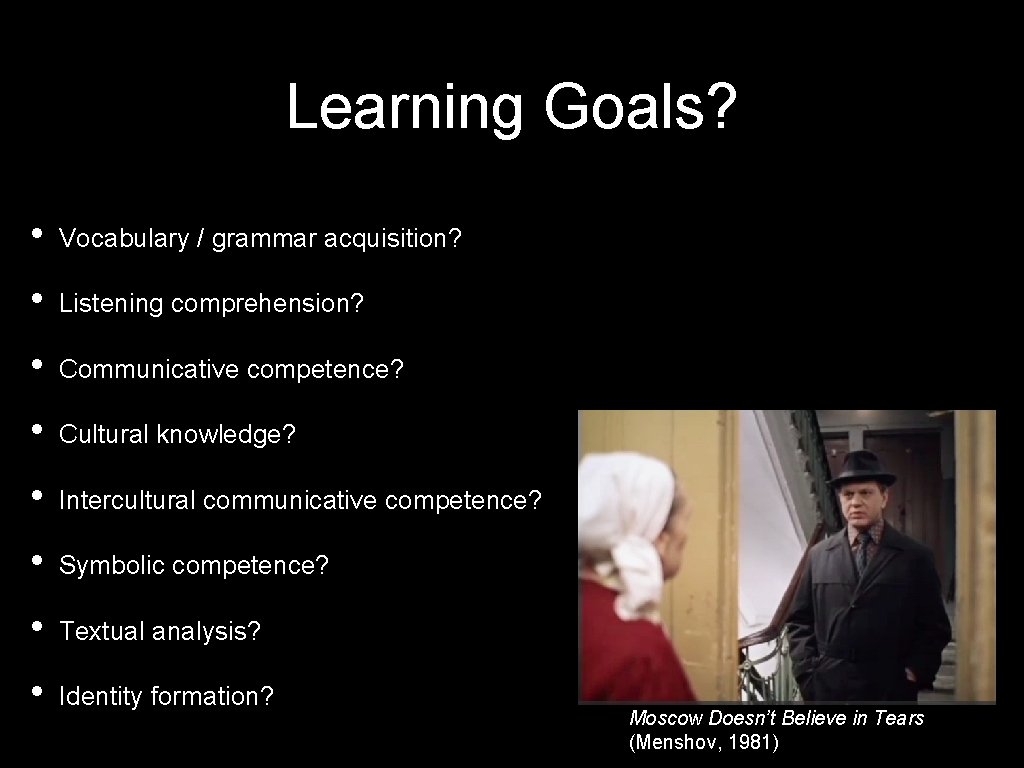
Learning Goals? • Vocabulary / grammar acquisition? • Listening comprehension? • Communicative competence? • Cultural knowledge? • Intercultural communicative competence? • Symbolic competence? • Textual analysis? • Identity formation? Moscow Doesn’t Believe in Tears (Menshov, 1981)
Pedagogies • Symbolic competence: ”Apprehension of the affordances of the context to create meaning. ” • Multiliteracies – • What: available designs: all the resources available to the producer and receiver of a text to create meaning. • How: interpretation, collaboration, problem solving, reflection and self reflection • Method: situated practice, overt instruction, critical framing, transformed practice
Filmic Devices • Camera • Scene • Editing • Intertextuality
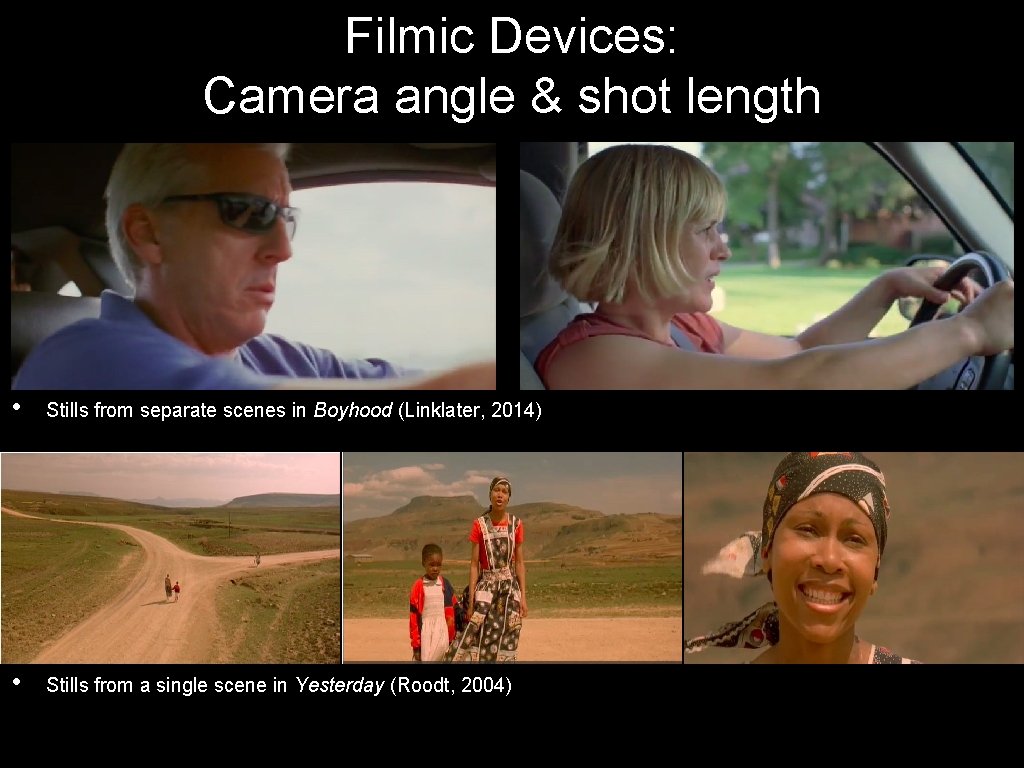
Filmic Devices: Camera angle & shot length • Stills from separate scenes in Boyhood (Linklater, 2014) • Stills from a single scene in Yesterday (Roodt, 2004)
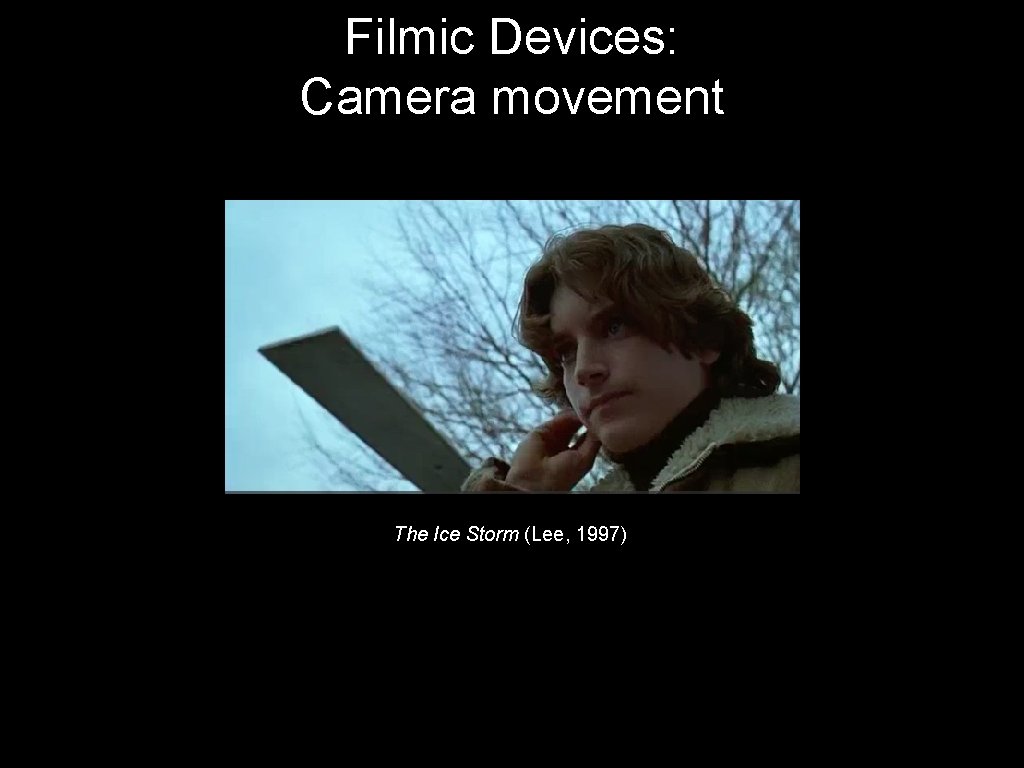
Filmic Devices: Camera movement The Ice Storm (Lee, 1997)
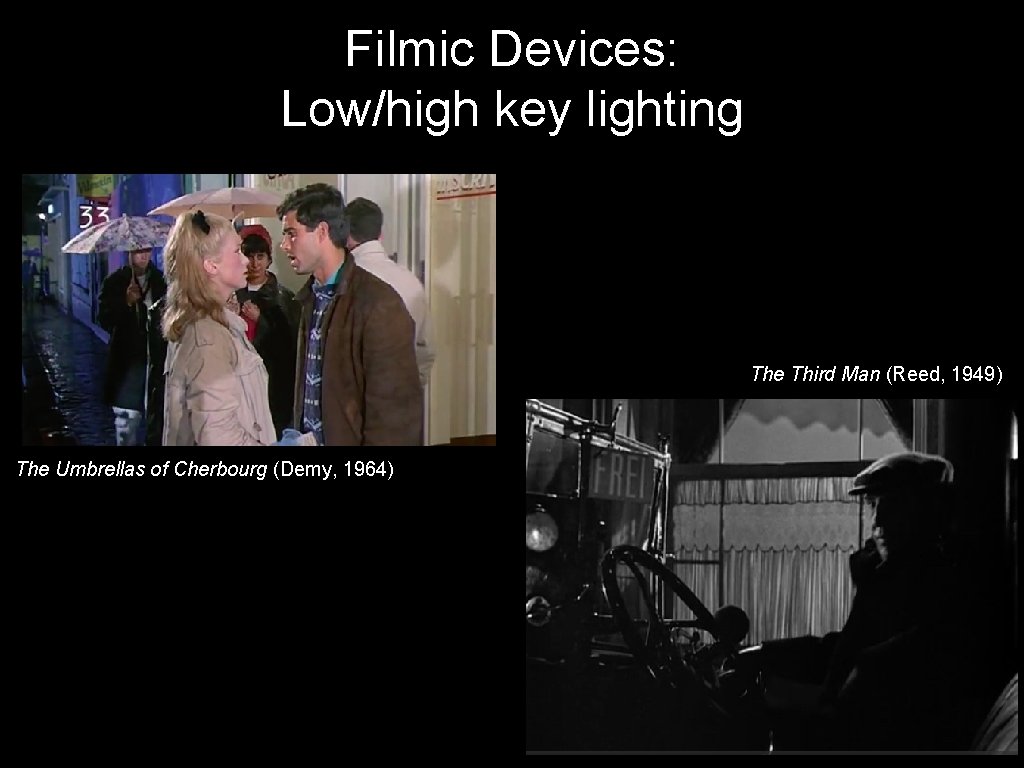
Filmic Devices: Low/high key lighting The Third Man (Reed, 1949) The Umbrellas of Cherbourg (Demy, 1964)
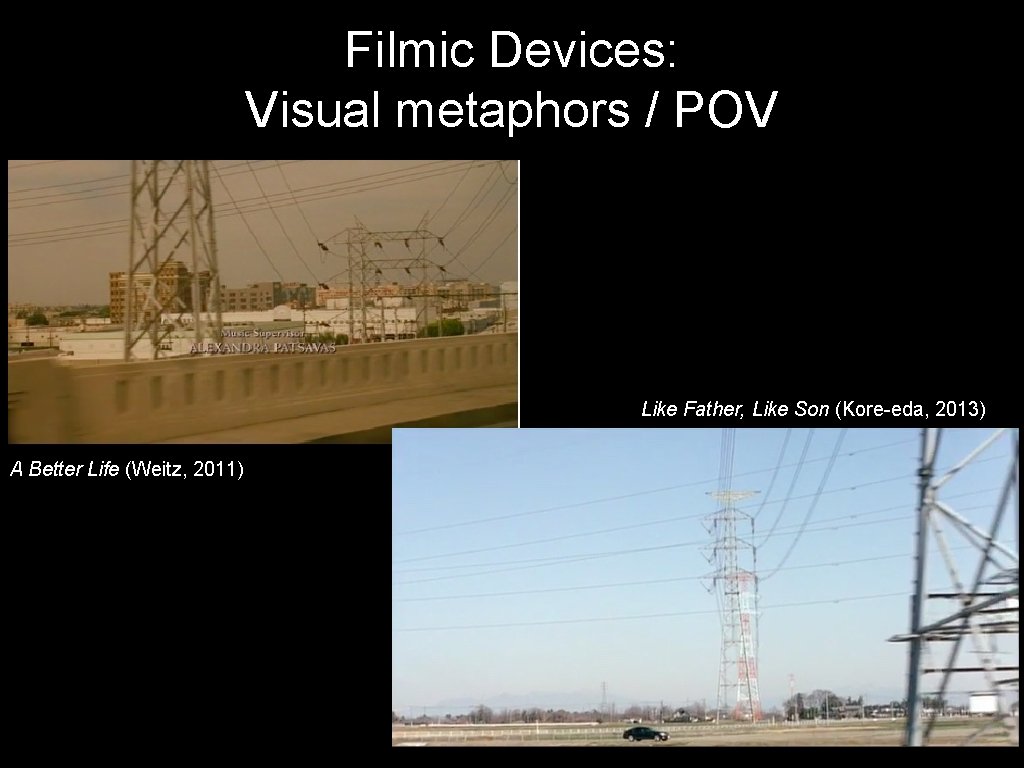
Filmic Devices: Visual metaphors / POV Like Father, Like Son (Kore-eda, 2013) A Better Life (Weitz, 2011)
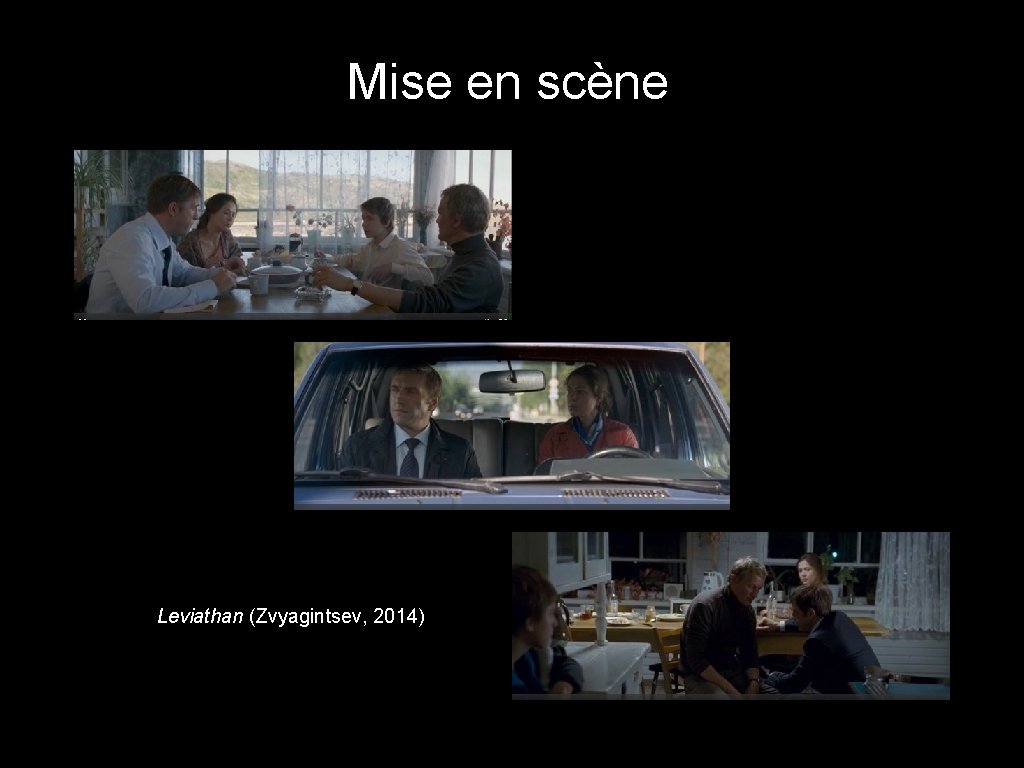
Mise en scène Leviathan (Zvyagintsev, 2014)
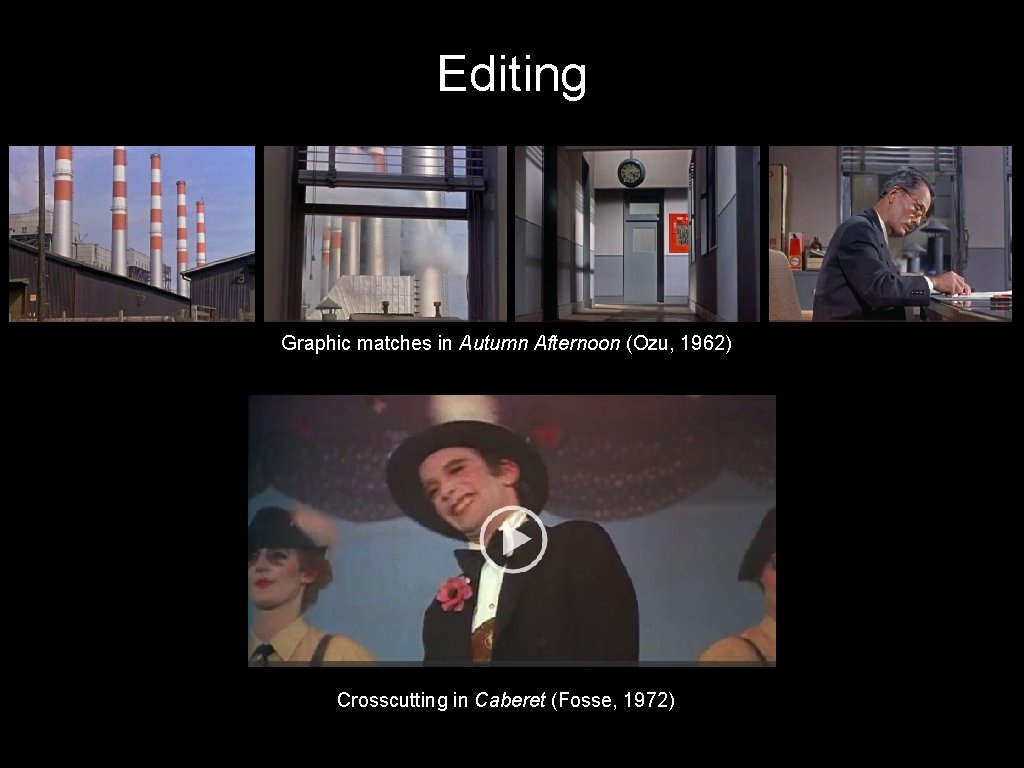
Editing Graphic matches in Autumn Afternoon (Ozu, 1962) Crosscutting in Caberet (Fosse, 1972)
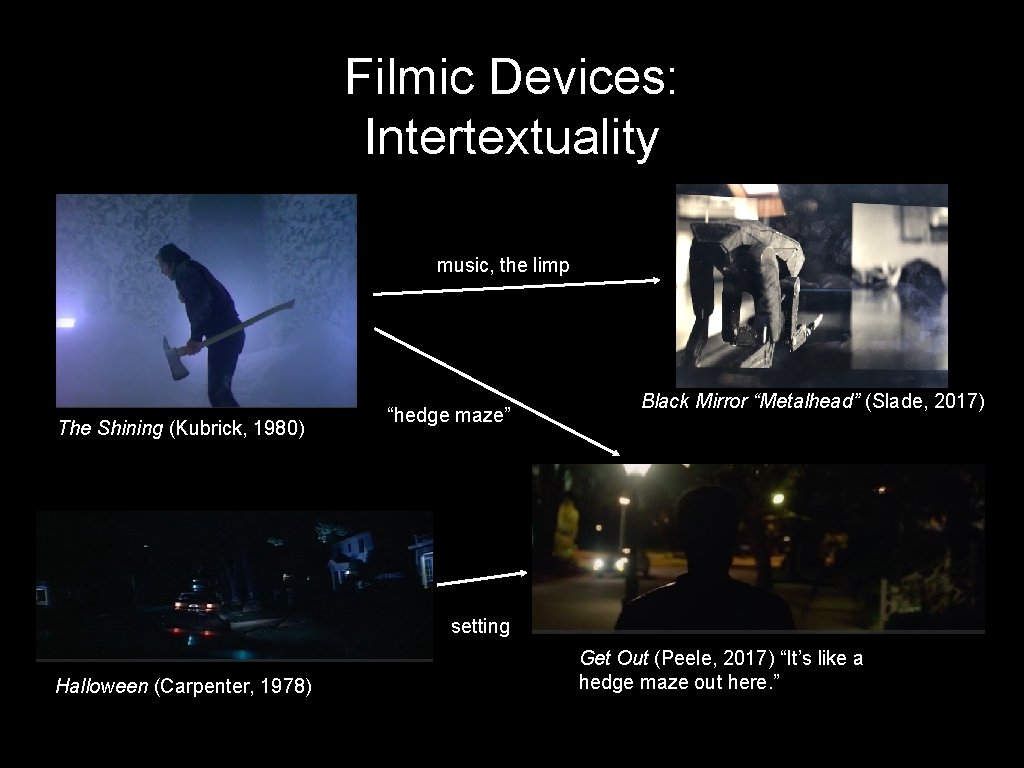
Filmic Devices: Intertextuality music, the limp The Shining (Kubrick, 1980) “hedge maze” Black Mirror “Metalhead” (Slade, 2017) setting Halloween (Carpenter, 1978) Get Out (Peele, 2017) “It’s like a hedge maze out here. ”
Language • Advances the plot • Reveals personality • Establishes socioeconomic class, education • Sets tone • References other works or other parts of the film • Works in concert with filmic devices to create meaning
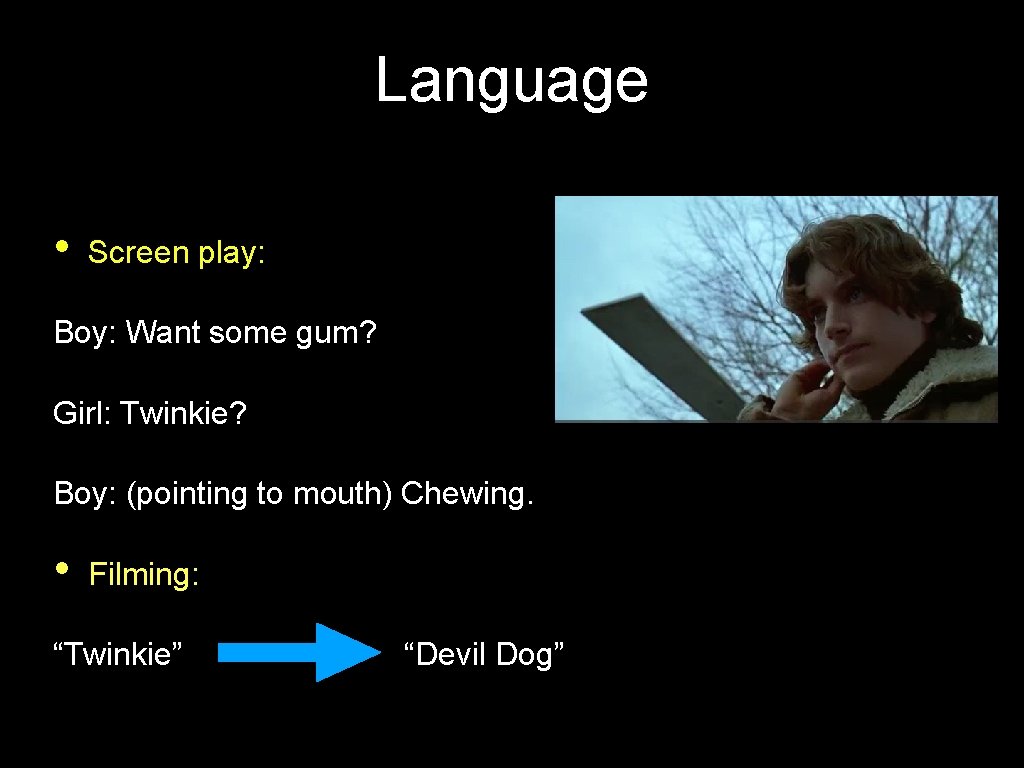
Language • Screen play: Boy: Want some gum? Girl: Twinkie? Boy: (pointing to mouth) Chewing. • Filming: “Twinkie” “Devil Dog”
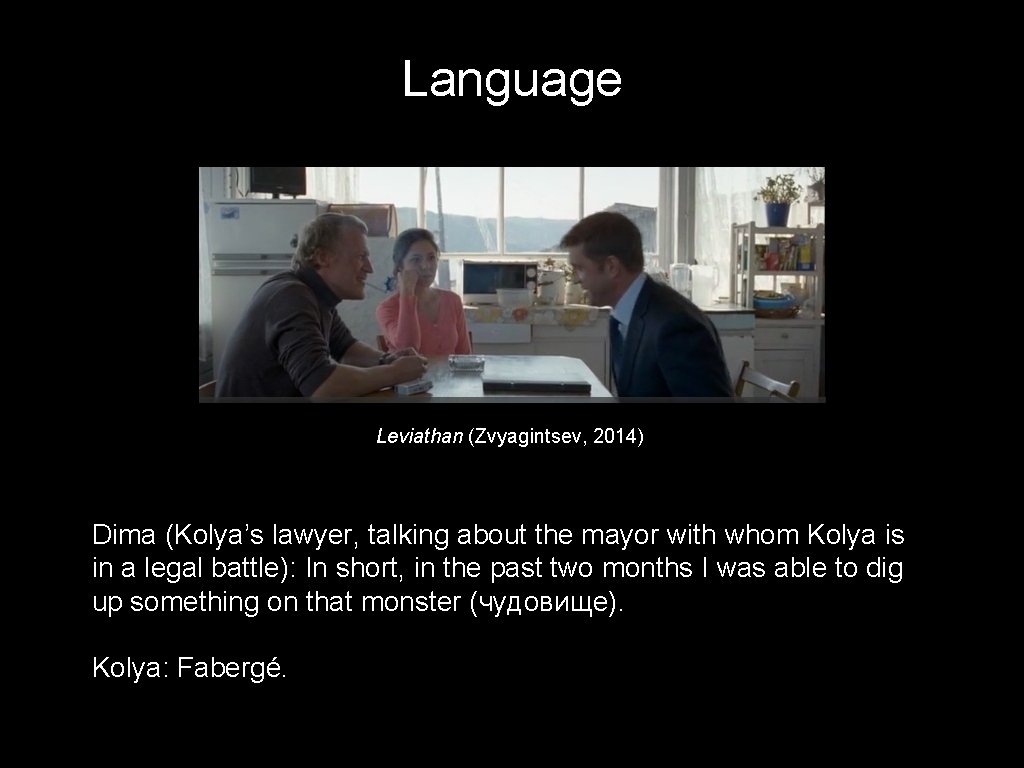
Language Leviathan (Zvyagintsev, 2014) Dima (Kolya’s lawyer, talking about the mayor with whom Kolya is in a legal battle): In short, in the past two months I was able to dig up something on that monster (чудовище). Kolya: Fabergé.
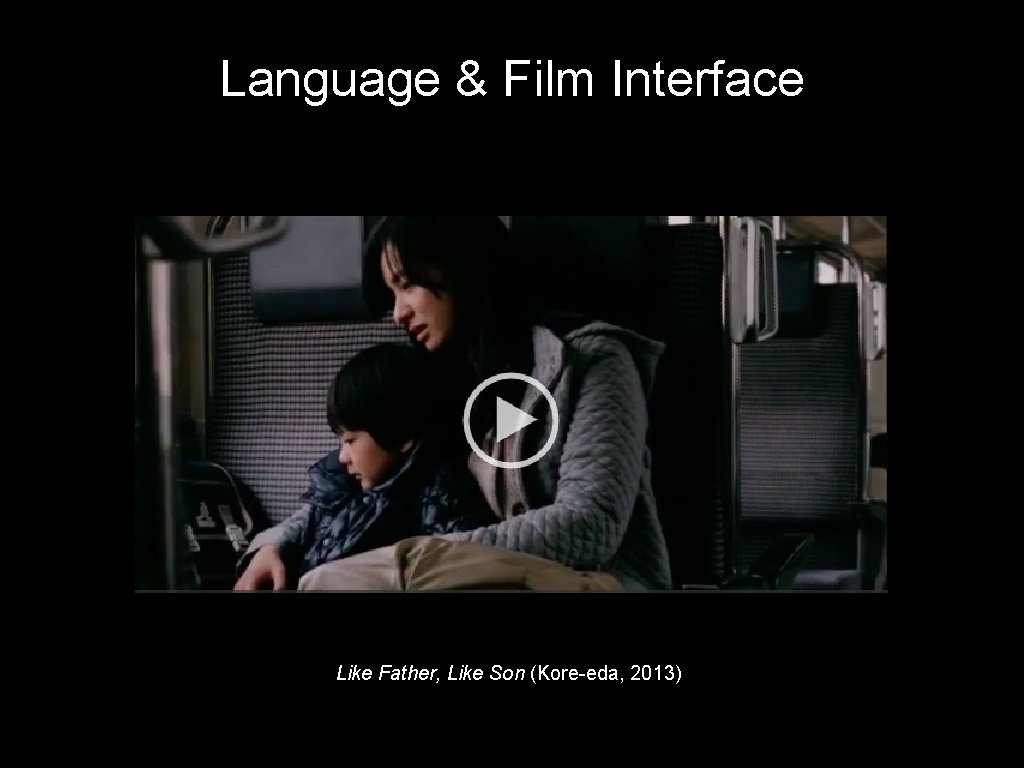
Language & Film Interface Like Father, Like Son (Kore-eda, 2013)
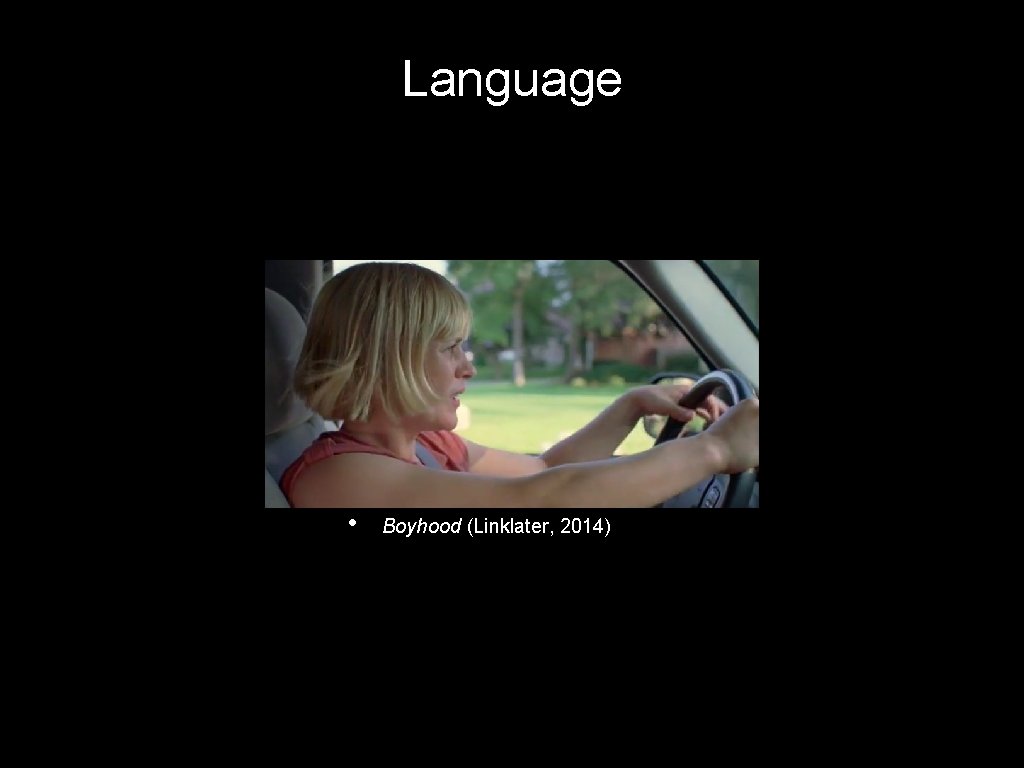
Language • Boyhood (Linklater, 2014)
Language • What style of language (colloquial, slang, bureaucratic, legalistic) is the clip in? What forms tell us so? • In the second scene the girl engages in a complaint. What grammatical forms and vocabulary choices are used to make and intensify the complaint? • In the first scene why did the hosting mother ask for daughter for help? (Locutionary vs. illocutionary act). • Linguistic cohesion: repetition of words, grammatical structures
Culture • Cultural facts: legal guardian, child protective services, socioeconomic status, elementary school classroom • Cultural practices: transporting kids to school, introducing a new student • Themes: violence in American culture, individualism vs. the social fabric • Mother/daughter relationship
Filmic devices • Abruptness of the opening scene • Over-the-shoulder shots in the kitchen and in the car with some j-cuts • Disconnect between the voice of the instructor urging the class to welcome Mason, and the shots of the children’s unwelcoming faces
Symbolic Competence / Multiliteracies • Symbolic competence is both a passive (interpretive) and productive skill; • Multiliteracies’ “transformed practice” How do we develop these?
For further consideration (and research) … • Film as a gateway to otherness
For further consideration (and research) … • Film as a gateway to otherness • Affective power of film
For further consideration (and research) … • Film as a gateway to otherness • Affective power of film • Foreign language identity formation
For further consideration (and research) … • Film as a gateway to otherness • Affective power of film • Foreign language identity formation • Embodied learning
For further consideration (and research) … • Film as a gateway to otherness • Affective power of film • Foreign language identity formation • Embodied learning • Performance-based learning
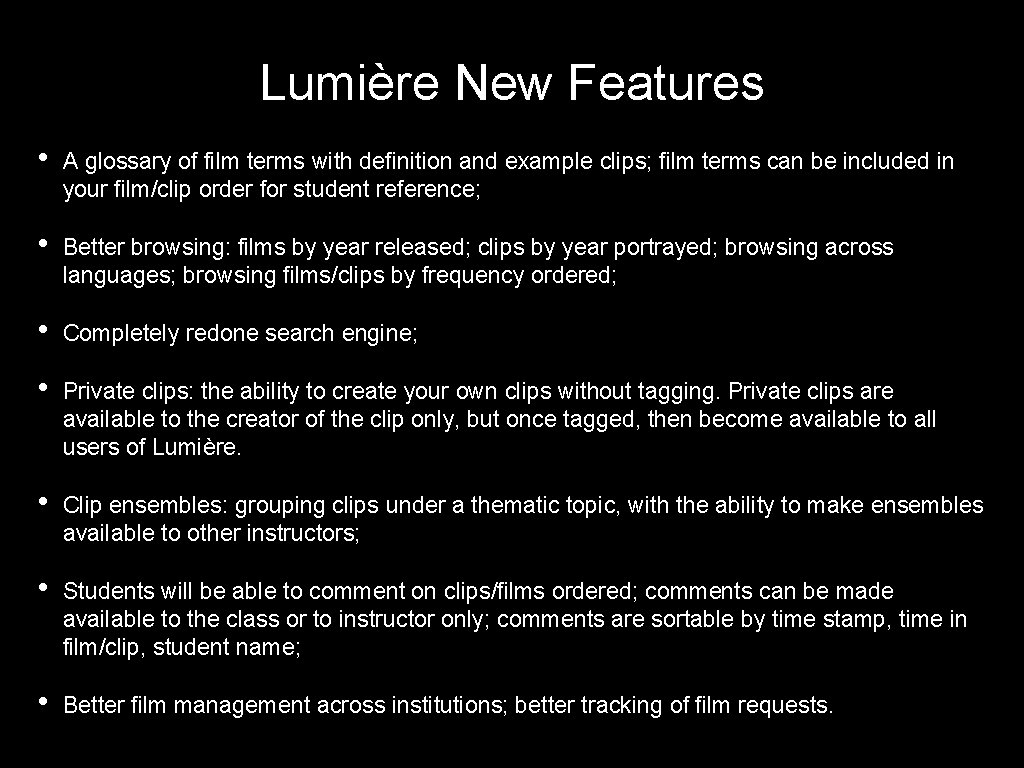
Lumière New Features • A glossary of film terms with definition and example clips; film terms can be included in your film/clip order for student reference; • Better browsing: films by year released; clips by year portrayed; browsing across languages; browsing films/clips by frequency ordered; • Completely redone search engine; • Private clips: the ability to create your own clips without tagging. Private clips are available to the creator of the clip only, but once tagged, then become available to all users of Lumière. • Clip ensembles: grouping clips under a thematic topic, with the ability to make ensembles available to other instructors; • Students will be able to comment on clips/films ordered; comments can be made available to the class or to instructor only; comments are sortable by time stamp, time in film/clip, student name; • Better film management across institutions; better tracking of film requests.
Thank you! mkaiser@berkeley. edu http: //blcvideoclips. berkeley. edu