Project Management Principles and Practices Level 2 Agenda
- Slides: 107
Project Management: Principles and Practices Level 2
Agenda n Introductions n Course Objectives n Unit 1: Leadership n Unit 2: Communication n Unit 3: Operating Guidelines n Unit 4: Procurement Management n Unit 5: Quality Management n Unit 6: Monitoring and Controlling n Unit 7: Close-out n Unit 8: Common Project Problems
Introductions n What is your Project Management experience? n What type of projects will you be involved in? n What would you like to get out of the course?
Course Objectives n Understand different types of leadership, how to lead change and organize people. n Establish project operating guidelines such as communication plans, change management procedures and reporting structures. n Evaluate different types of contracts and how they can benefit your project. n Build and plan quality into your solution. n Learn how to monitor the execution of the plan and control the project by balancing changing priorities and demands. n Understand how to properly close-out a project and learn what went right and what went wrong. n Explore common project problems and learn how to avoid them.
Reference Material n Project Management n The Complete Idiot’s Guide
Unit 1 Leadership
Leadership Chapter 18 n Types of leadership n Leading change n Ways to organize people n Stage of team formation and leadership
Leading vs. Managing n Leading means that you command respect and take responsibility for guiding the project. n Managing indicates that you monitor and control the project to ensure that the work is accomplished.
Leadership tips n Listen and ask lots of questions n Provide reliable information for the team n Observe what is going on and take notes n Know enough to know that you don’t know everything n Be available n Make decisions when needed but know when to defer decisions to stakeholders n Delegate work that needs to be delegated n Don’t micro-manage
Types of Leadership n Task-orientated leadership n Employee-oriented leadership n Reward-based leadership
Leading Change Case for Change 1. Why are we doing this project from a business perspective? 2. What will change when the project is completed? 3. What will happen if we don’t complete this project successfully? 4. What are the benefits of doing this project to us and the business? 5. What will we need to do differently?
Organizing People Chapter 14 n Functional n Pure project n Matrix
Functional Organization n Organized around common activities or expertise such accounting, customer service or information technology n Advantages n Familiarity of the team n Established administrative systems n Staff availability n Scheduling efficiency n Clear authority n Disadvantages n Project isolation n Limited resources n Bureaucratic procedures n Lack of project focus n Department orientation
Pure-Project Organization n The Project Manager has full authority to assign priorities and direct the work of all the members of the project team n Advantages n n Clear project authority Simplified project communications Access to special expertise Project focus and priority n Disadvantages n n n Duplication of efforts Unclear loyalties and motivations Intra-company rivalry
Matrix Organization n The Project Manager shares responsibility with the functional managers for assigning the priorities and directing the work of individuals assigned to the project n Advantages n Clear project focus n Flexible staffing n Adaptability to management needs and skills n Staff development opportunities n Adaptability to business changes n Disadvantages n Built-in conflicts n Resistance to termination n Complex command authority relationships n Complex employee recognition systems
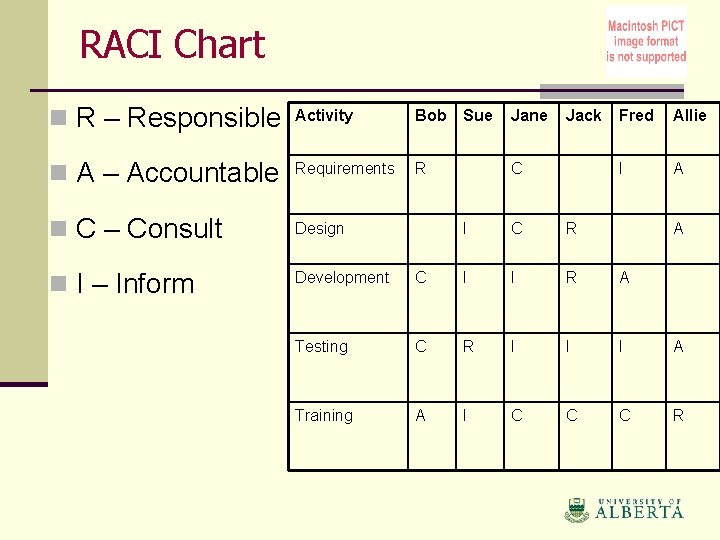
RACI Chart n R – Responsible Activity Bob n A – Accountable Requirements R n C – Consult Design n I – Inform Development Sue Jane Jack C Fred Allie I A I C R A C I I R A Testing C R I I I A Training A I C C C R
Project Team Chapter 14 n Need to let the team members know n The reason they are on the team, what they have to offer n Clear roles and responsibilities for each person on the team n Standards that they will be held accountable to
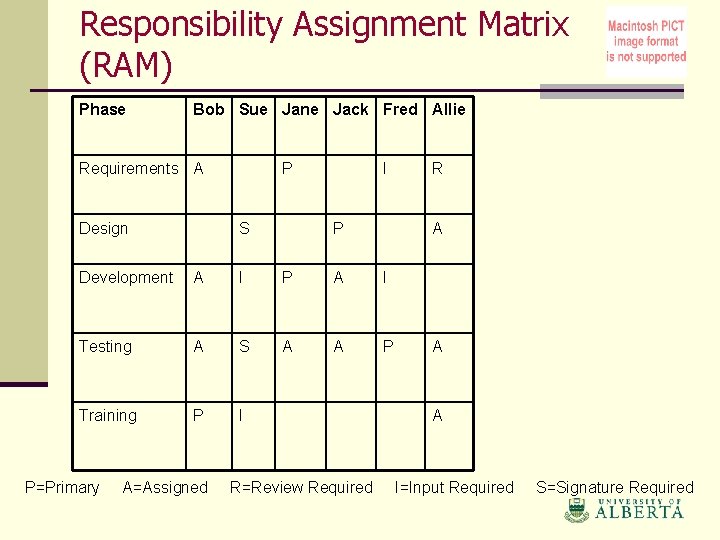
Responsibility Assignment Matrix (RAM) Phase Bob Sue Jane Jack Fred Allie Requirements A Design P S I P A Development A I P A I Testing A S A A P Training P I P=Primary A=Assigned R=Review Required R A A I=Input Required S=Signature Required
Building a team n What kinds of experience do you need? n What kind of competency do they have? n What is their availability? n Do they have a personal interest in the outcome of the project? n Will they work well in a team environment?
Staffing Alternatives n Use your own staff & people from your department n Staff from other departments n Contract with consultants, outside agencies, or temporary agencies n Hire and train new staff
Dealing with Staffing Challenges n Do the best you can with the people you have, and document problems and results. n If they do not have enough skills and training takes too long, consider contracting. n Compromise and negotiate for the team members you really need.
Activity n Using the case study, create a RAM (Responsibility Assignment Matrix) for the project
Stages of Team Forming and Leadership n Forming n Directive style of leadership n Gives structure n Clear responsibilities, lines of communication
Stages of Team Forming and Leadership n Storming n Selling or Influencing style of leadership n Team members may be questioning n Manage conflict
Stages of Team Forming and Leadership n Norming n Participative style of leadership n Team members are supportive n Work as a group
Stages of Team Forming and Leadership n Performing n Delegative style of leadership
Activity n Style of leadership survey
Unit 1 Review n Types of leadership n Leading change n Ways to organize people n Project teams n Stages of team formation and leadership
Unit 2 Communication
Communication Chapter 21 n Communication Plan n Communication and Leadership
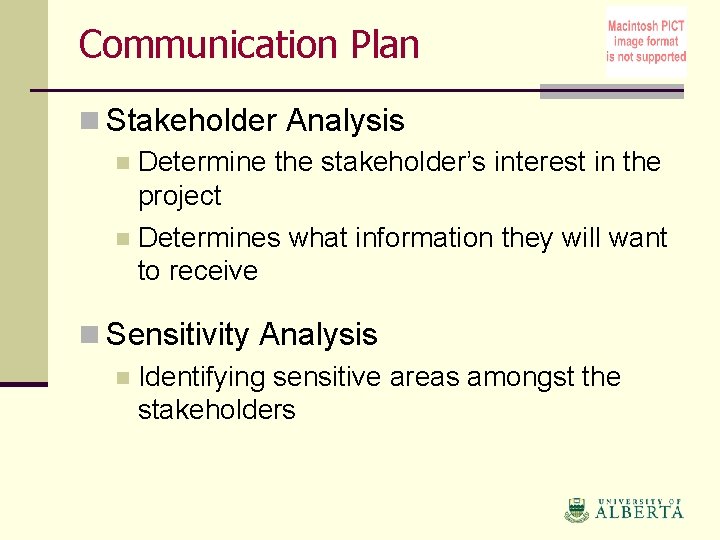
Communication Plan n Stakeholder analysis n Sensitivity analysis n Information needs n Media requirements n Delivery personnel and power base n Timing requirements n Common definitions n Feedback loops n Macro and micro barriers n Jargon and acronyms
Communication Plan n Stakeholder Analysis n Determine the stakeholder’s interest in the project n Determines what information they will want to receive n Sensitivity Analysis n Identifying sensitive areas amongst the stakeholders
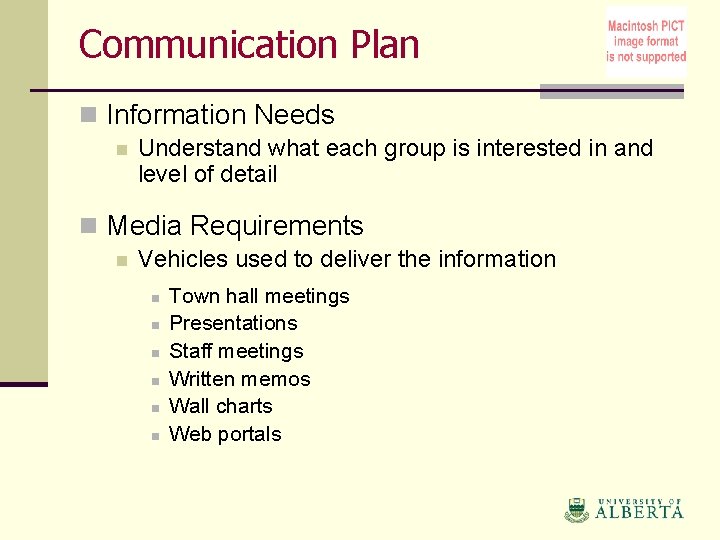
Communication Plan n Information Needs n Understand what each group is interested in and level of detail n Media Requirements n Vehicles used to deliver the information n n n Town hall meetings Presentations Staff meetings Written memos Wall charts Web portals
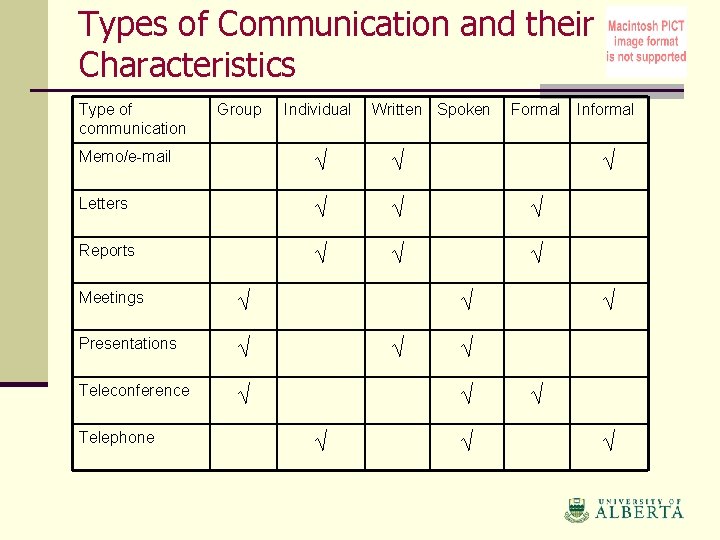
Types of Communication and their Characteristics Type of communication Group Individual Written Spoken Formal Memo/e-mail √ √ Letters √ √ √ Reports √ √ √ Meetings √ Presentations √ Teleconference √ Telephone √ √ √ √ Informal √ √ √
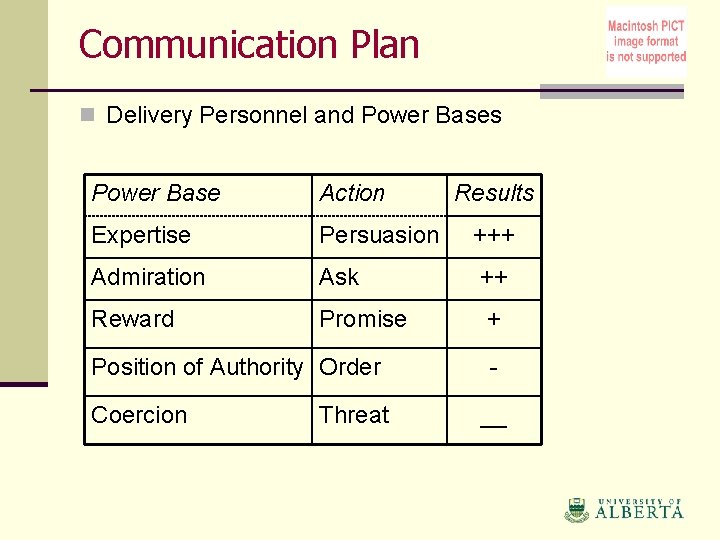
Communication Plan n Delivery Personnel and Power Bases Power Base Action Expertise Persuasion +++ Admiration Ask ++ Reward Promise + Position of Authority Order Coercion Threat Results __
Communication Plan n Timing Requirements n Just-in-time information n Common Definition n Make sure everyone speaks the same language n Feedback Loops n Ensures communication is received correctly
Communication Plan n Macro and Micro Barriers n Geography, language, culture n Attitudes n Jargon and Acronyms n Clarify acronyms n Use same jargon as stakeholders
Communication & Leadership n Vertical Communication n Horizontal Communication n Diagonal Communication The purpose of my message is……
Effective Messages n Draft the message and edit n Consider audience’s expectations, actions required, and your expectations after the message is delivered n Justify the choice of delivery medium n Start with an introduction that identifies the issue, context or opportunity of interest n Make required actions clear and specific n Be concise n Never surprise someone with information, ensure that important information is understood before discussed
Communicate by Listening n Stop talking and let others tell you what they want to say n Let people finish what they are saying n Eliminate distractions n Listen with purpose and intent n Restate what you hear people say
Activity n Develop a communication plan from the case study
Unit 2 Review n Communication Plan n Communication and Leadership
Unit 3 Operating Guidelines Chapters 24 & 20
Operating Guidelines n Change Management n Decision Making n Work Authorization n Reports
Change Management Chapter 24 n Change Control System n Formal documented procedures that define how project deliverables and documentation are controlled, changed and approved.
Rules of change control n Establish change control policy in planning phase and follow it. n Create a change control board (subset of working committee) who evaluates changes which impact stakeholders and the project n Establish an emergency decision-making authority, in case decisions are needed before the board can meet. n Maintain a change control log that tracks all changes requests.
Change Control Request n Identification n What is the change n Impact of change n Who authorized it
6 areas of change 1. The business reason the project was undertaken 2. The people who work on the project 3. The budget 4. The material and technical resources 5. The time 6. The quality requirements that were acceptable for the deliverables
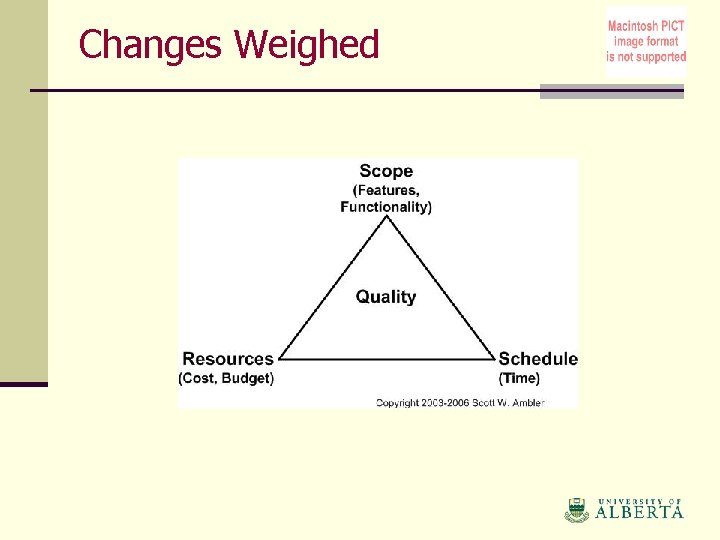
Balance n Project n n Balance to keep the project within its approved cost, schedule and quality PM and core member may make these decisions n Business Case n n Project cannot be balanced within cost, schedule and quality goals Stakeholders must approve n Enterprise n n Choice between projects to balance resources Business management decides with input from team
Balancing Choices n Reduce scope of tasks n Increase productivity by using in-house experts n Use outside resources n Use overtime n Crash the schedule n Adjust the profit requirements for the project n Adjust the project goals
Changes Weighed
Communicate Change n Inform project team n Inform stakeholders using communication plan n Log the change in the change log
Change and Conflict n Withdrawing n Smoothing n Compromising n Forcing n Confronting
Issue log n Keep track of any issues n Ensure they are documented and resolved
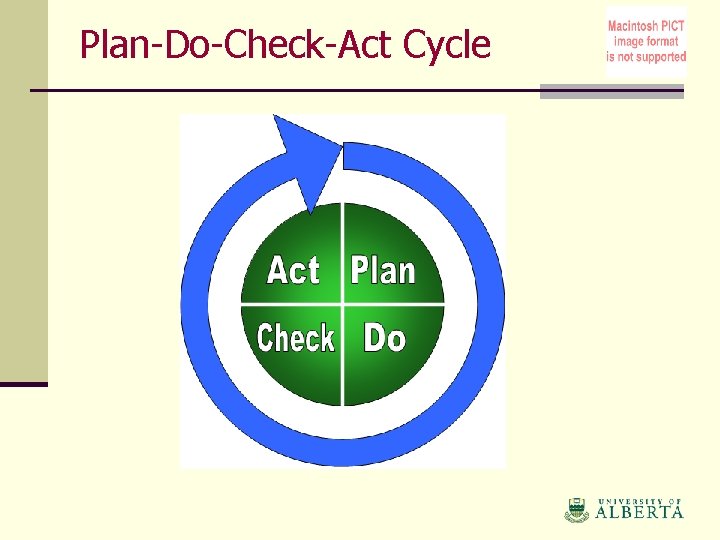
Plan-Do-Check-Act Cycle
Decision Making Chapter 20 n Need to have a clear path of authority indicating who makes what types of decisions Team decisions n Project Manager n Working Committee n Steering Committee n Project sponsor n n Escalation Procedure
Work Authorization System (WAS) Chapter 20 n When should I start the work I’ve been assigned? n A written method that sanctions the right work is done in the right order. n Provides direction that allows a team member to begin work on a specific activity or work package
Reporting purpose n For every report identify n How often is the report produced? n What is contained in the report? n Who is responsible for producing it? n What is the objective of the report? n Who will follow up on action items? n Who is the intended audience?
Reporting Chapter 20 n Status Reports n Tasks completed since last report n Tasks in progress n Tasks planned with completion dates n Budget expenditure n Issues n Recommendations for project improvements or changes n Questions or items that require approval or input
Project Diary n Notes on progress n Problems n Issues (positive and negative) n Discussion points n Decisions made n Action items n Outcomes of meetings n Accomplishments n Conflicts n Extraordinary events
Activity n Create a Change Control System for your project n n n How will changes be raised? How will they be handled (who, when where, etc)? How will they be communicated? n Determine decision making authority (who can decide what) n Determine reporting structure (what type of reports, when, to whom)
Unit 3 Review n Decision Making n Change Management n Work Authorization System n Reports
Unit 4 Procurement Management
Procurement Management Chapter 15 n Types of contracts n Fixed-price or lump sum n Cost-plus-fixed-fee n Time and materials n Working with procurement office
Types of Contracts n Fixed-price or lump sum n n Total price for the goods or services Risk is on the seller n Cost-plus-fixed-fee n n Pay vendor for costs plus a fee More risk on buyer but may add incentives n Time and materials n n Combination of fixed-price and cost-reimbursable Usually open-ended but a fee is established for specific resources
Contracts - estimates n Always get an estimate n In writing n Minimum of 3 bids n Negotiate n Based on WBS what is the max and min you expect to pay? n How will you evaluate the bids? n Single source or multiple vendors? n Review past performance
Working with the Purchasing Department n May have/do all purchasing for/with you n Great expertise however, may introduce overhead
Activity n What types of contracts will be negotiated in the case study? n How would you go about establishing them?
Unit 4 Review n Types of contracts n Contracting n Working with a procurement office
Unit 5 Quality Management
Quality Management Chapter 25 n Plan for Quality n Cost/Benefit Analysis n Benchmarking n Cause-and-Effect n Quality Assurance n Quality Control
Plan for Quality n Quality is conformance to requirements n Grade is the ranking applied to products that have the same functional use but different characteristics n Evaluate acceptance criteria n n n Functionality Appearance Accuracy of information Reliability Security
Cost/Benefit Analysis n Estimate of the costs and benefits of various alternatives n Using financial measures (ROI or payback period) determine which alternative is the most desirable
Benchmarking n Compare your project to other similar projects n Within your organization or PMI
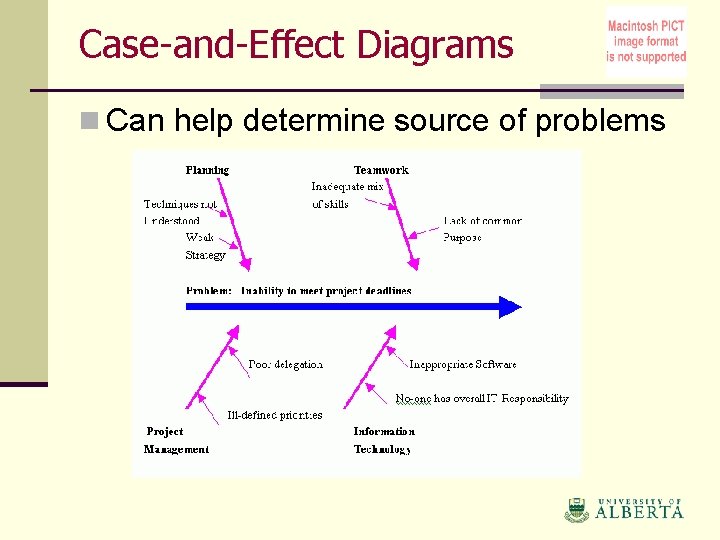
Case-and-Effect Diagrams n Can help determine source of problems
Quality Assurance n Reviews n Peer reviews n Informal reviews n Formal reviews
Quality Control n Inspection n Test
Activity n How could you build quality into your project? n What could be some benchmarks that you could use? n How will quality be assured? n How will quality be controlled?
Unit 5 Review n Planning for quality n Cost/benefit analysis n Benchmarking n Cause-and-effect n Quality assurance n Quality control
Unit 6 Monitoring and Controlling
Monitoring and Controlling Chapter 22 n Purpose of monitoring n What to monitor n Earned Value Analysis n Reviews
Purpose of Monitoring n Communicate project status and changes to team members n Manage expectations of stakeholders regarding project status n Provide justification for project adjustments n Document current project plans compared to original
What to Monitor n Completion of work packages compared to plan n Scope of work n Quality of work n Costs and expenditures n Attitudes of team n Cohesiveness and cooperation of team
Controlling n Use the project plan as a guide n Monitor and update plan regularly n Communicate n Get involved n Adapt project schedule, budget and work plan as needed n Document progress and changes, communicate them to the team
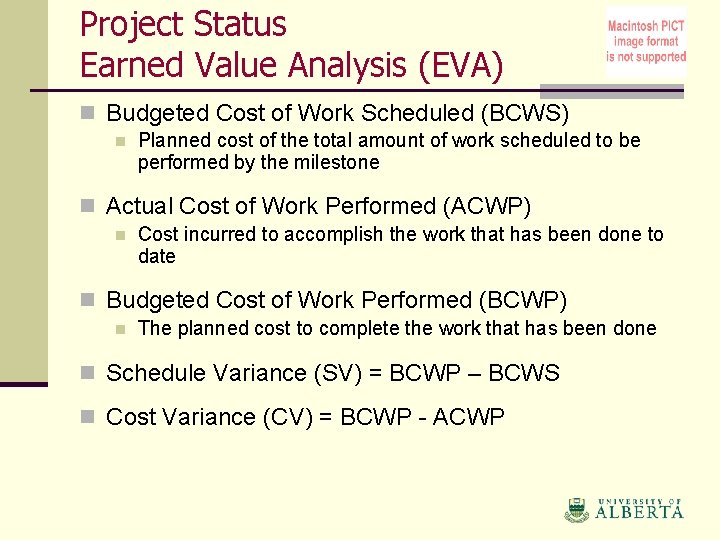
Project Status Earned Value Analysis (EVA) n Budgeted Cost of Work Scheduled (BCWS) n Planned cost of the total amount of work scheduled to be performed by the milestone n Actual Cost of Work Performed (ACWP) n Cost incurred to accomplish the work that has been done to date n Budgeted Cost of Work Performed (BCWP) n The planned cost to complete the work that has been done n Schedule Variance (SV) = BCWP – BCWS n Cost Variance (CV) = BCWP - ACWP
Reviews n Project review meeting n Project audit
Activity n How will your project be controlled? n What will be reviewed in your project?
Unit 6 Review n Purpose of monitoring n What to monitor n How to control n Earned Value Analysis n Reviews
Unit 7 Close-out
Close-Out Chapter 27 n Closing the project n Lessons Learned n Post-Implementation Review n Final Report
Closing the Project n Final approval from stakeholders n Finalize contractual commitments n Transfer responsibilities to others n Reassign people in the project n Release non-human resources n Complete final accounting n Document results and recommendations for the future
Lessons Learned n Focus areas n Project Management, Communications, Schedule & Budget, Training, Quality, Issues, Human Resources, Administration n What when well? n What didn’t? n What should be improved? n How? n Anything else?
Post-Implementation Review n Meeting with team n After celebration but before forgotten n What went well? n What could be improved? n Suggestions?
Final Report n Overview of project n Summary of Business Case n Major accomplishments n Achievements compared to Business Case objectives n Financial accounting n Analysis of quality against expectations n Evaluation of administration and management performance n Team’s performance n Special acknowledgments n Changes (approved and impact of changes) n Issues or tasks of further investigation n Recommendations for future projects n Post-implementation date
Activity n How will your project be closed out? n What type of post-implementation review will you do?
Unit 7 Review n Closing the project n Lessons learned n Post-implementation review n Final report
Unit 8 Common Project Problems Chapter 26
Start Date Moves but End Date Doesn’t n Communicate the issue to stakeholders (verbally and in writing) n Re-evaluate scope n Re-evaluate schedule and resources
Not enough time n Prioritize and delegate n Eliminate work that isn’t necessary n Fast track (parallel activities) or crash (add more people or reduce scope) n Overtime? ? ?
Changes, changes n Have a documented Change Control Process n Don’t start until plan is approved n Don’t agree to changes unless analyzed and approved
Key person quits or is unavailable n Keep them happy n Responsibility matrix – cross train other individuals n Ensure work is documented
Team has more enthusiasm than talent n Conduct objective skills appraisal at the beginning of the project n Watch for too much socializing n Training may be required n Mentoring
90% done n It may seem that 90% of the effort takes 30% of the time and the last 10% takes 200% n Investigate remaining work n Technical difficulties? n Additional tasks? n Ensure estimates are real and not what you want to hear
Politics n Treat politics as any other conflict and resolve
Take care of yourself n Remember that it is work n Scale back or step down
Course Review n Leadership n Operating Guidelines n Communication n Procurement Management n Quality Management n Monitoring and Controlling n Closing out a project
Activity n Conduct a post-implementation review of this course What went well? n What could be improved upon? n Suggestions? n