Ordinary Differential Equation The methods for Initial Value
- Slides: 57
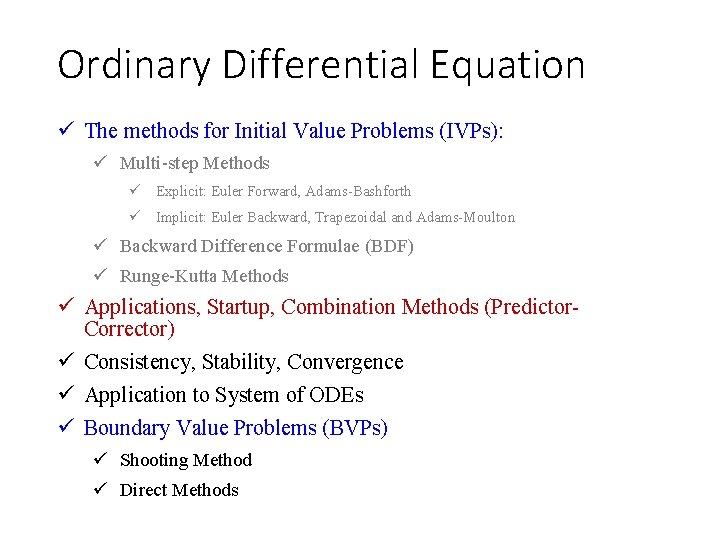
Ordinary Differential Equation ü The methods for Initial Value Problems (IVPs): ü Multi-step Methods ü Explicit: Euler Forward, Adams-Bashforth ü Implicit: Euler Backward, Trapezoidal and Adams-Moulton ü Backward Difference Formulae (BDF) ü Runge-Kutta Methods ü Applications, Startup, Combination Methods (Predictor. Corrector) ü Consistency, Stability, Convergence ü Application to System of ODEs ü Boundary Value Problems (BVPs) ü Shooting Method ü Direct Methods
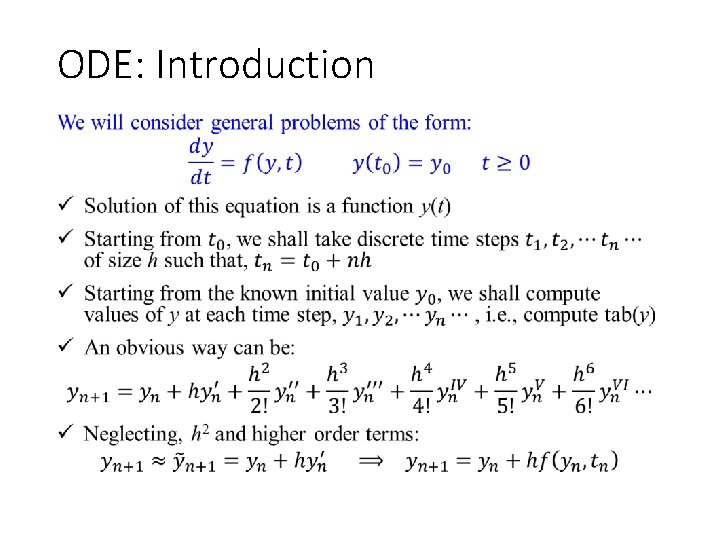
ODE: Introduction •
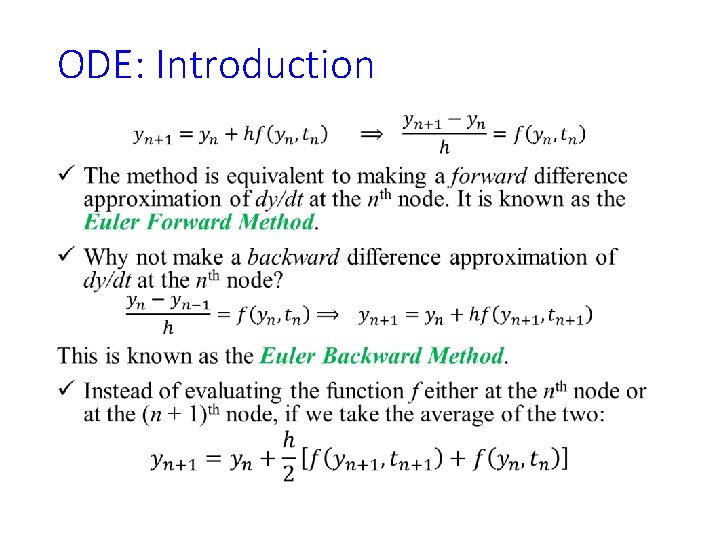
ODE: Introduction •
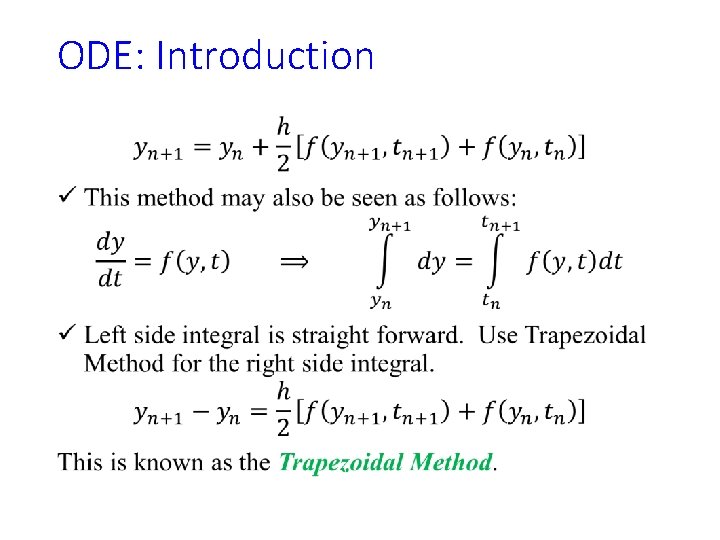
ODE: Introduction •
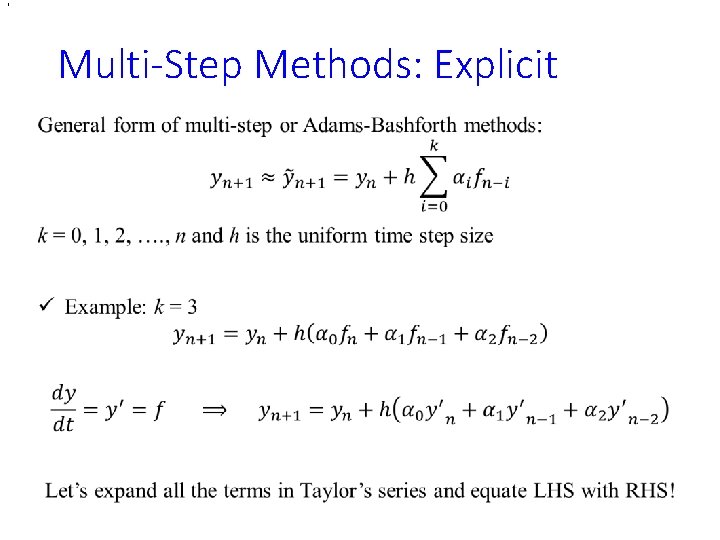
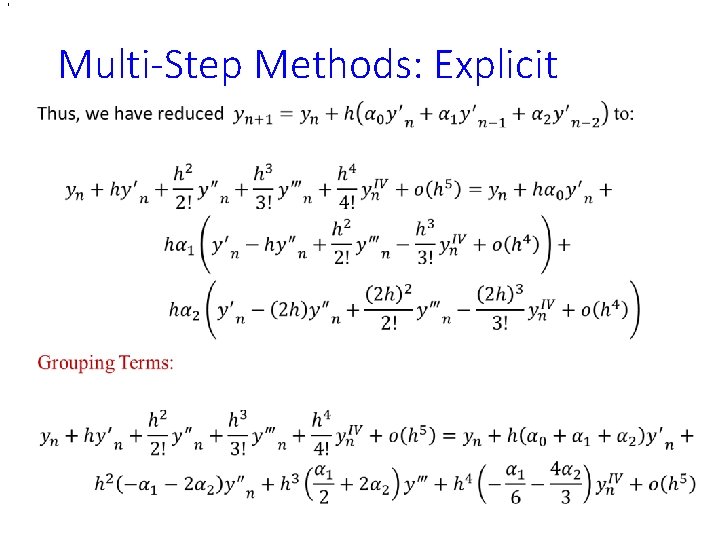
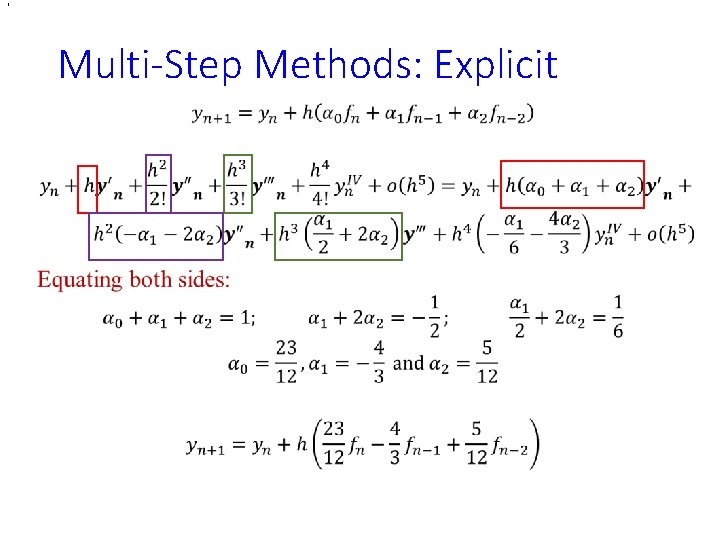
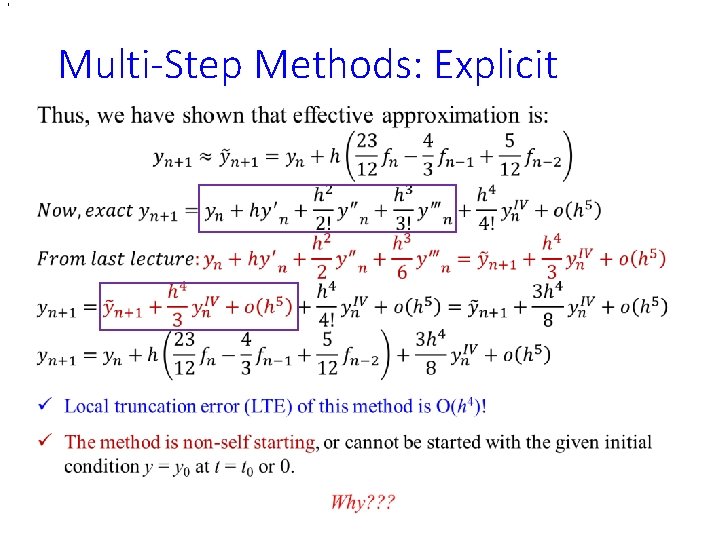
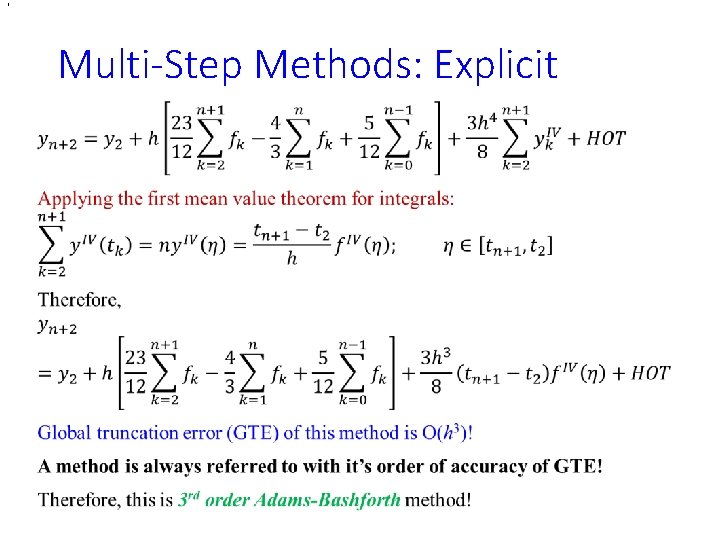
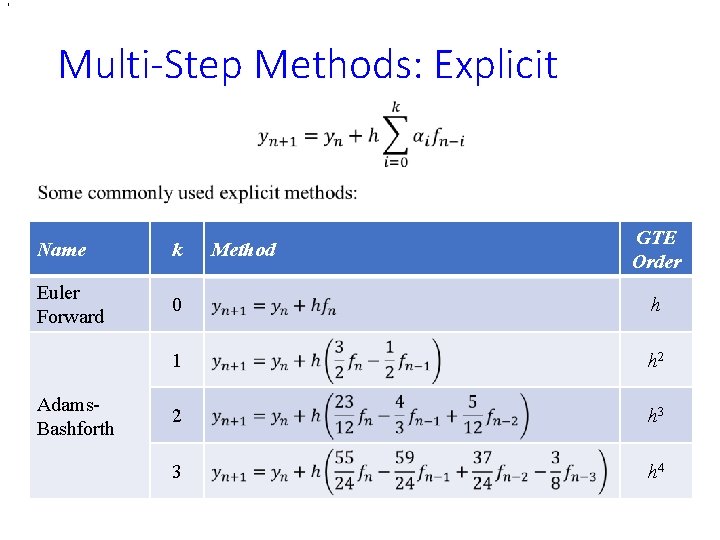
, Multi-Step Methods: Explicit •
, Multi-Step Methods: Explicit •
, Multi-Step Methods: Explicit •
, Multi-Step Methods: Explicit •
, Multi-Step Methods: Explicit •
, Multi-Step Methods: Explicit • k Euler Forward 0 h 1 h 2 2 h 3 3 h 4 Adams. Bashforth Method GTE Order Name
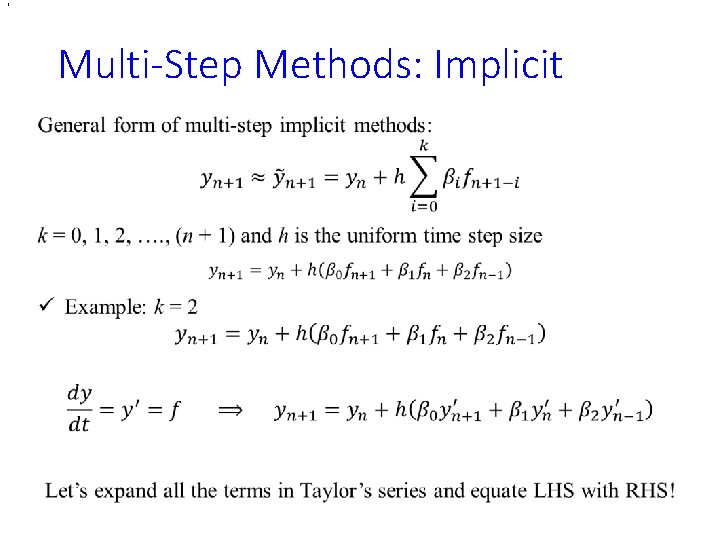
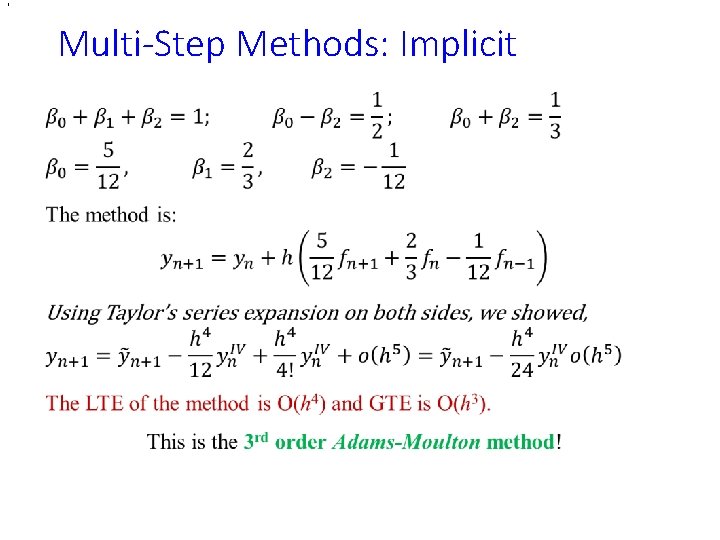
, Multi-Step Methods: Implicit •
, Multi-Step Methods: Implicit •
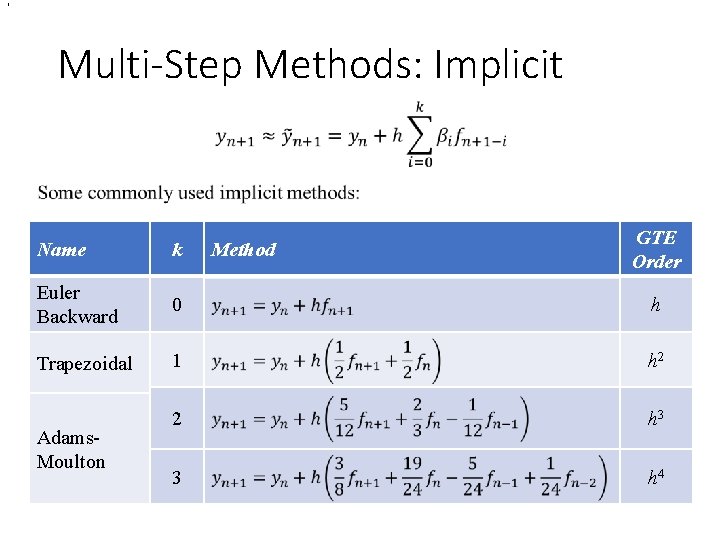
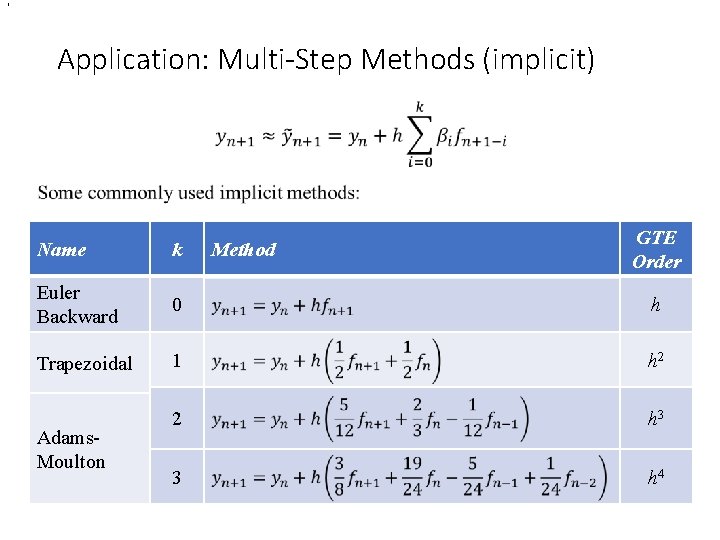
, Multi-Step Methods: Implicit • k Euler Backward 0 h Trapezoidal 1 h 2 2 h 3 3 h 4 Adams. Moulton Method GTE Order Name
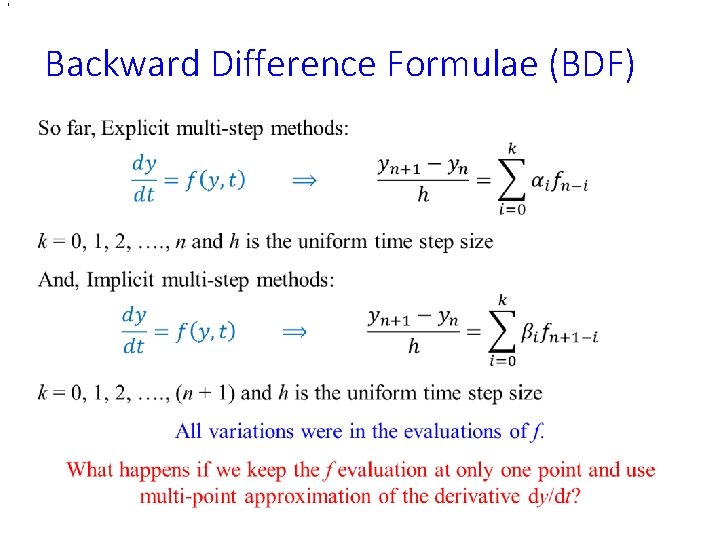
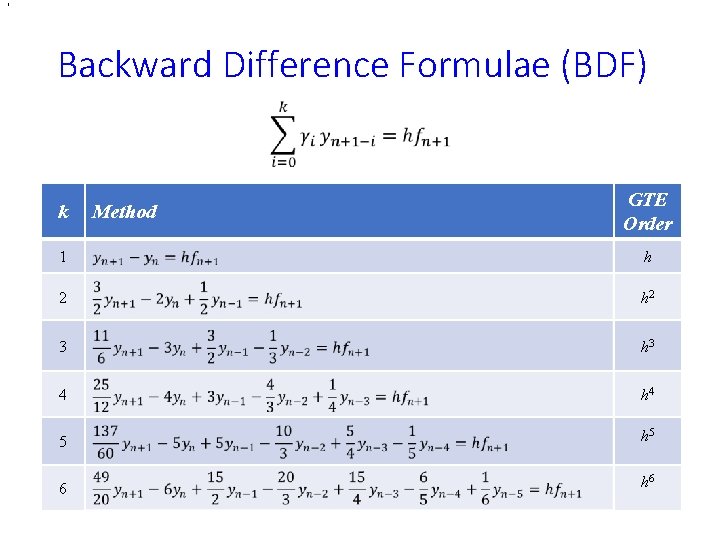
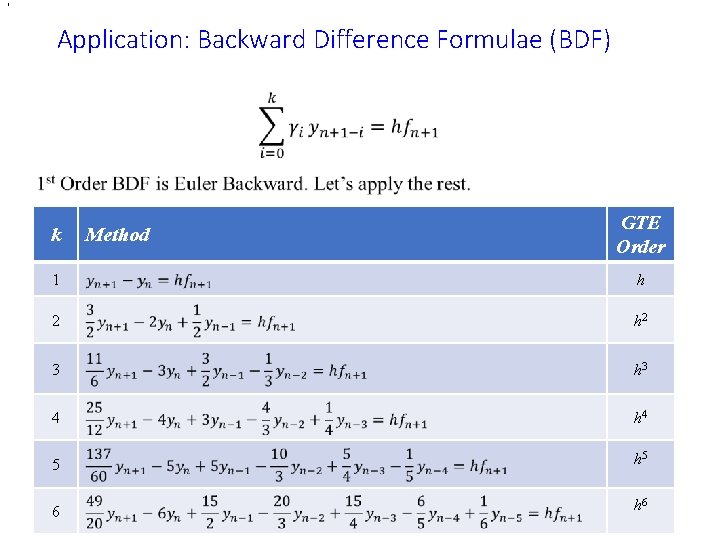
, Backward Difference Formulae (BDF) •
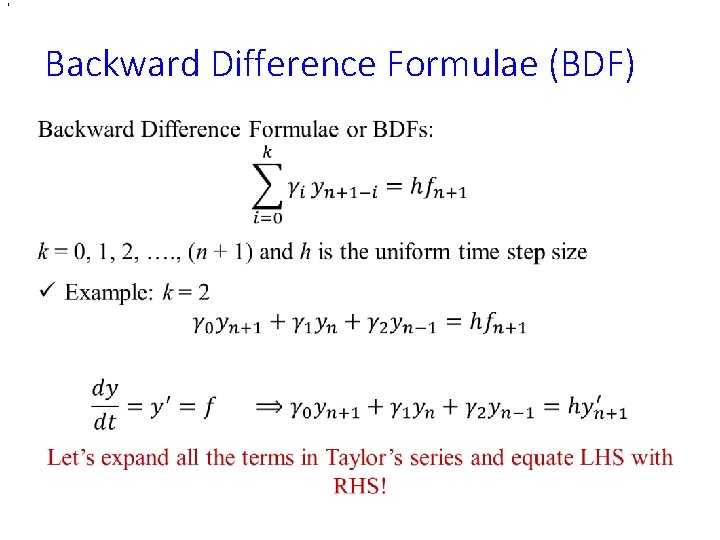
, Backward Difference Formulae (BDF) •
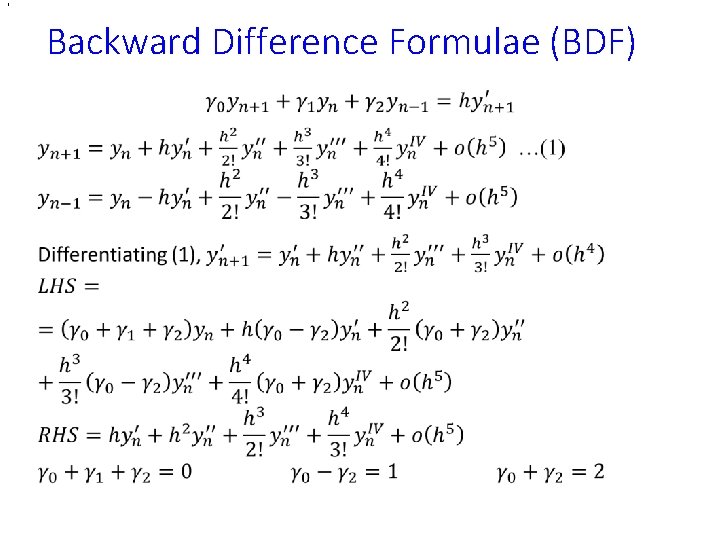
, Backward Difference Formulae (BDF) •
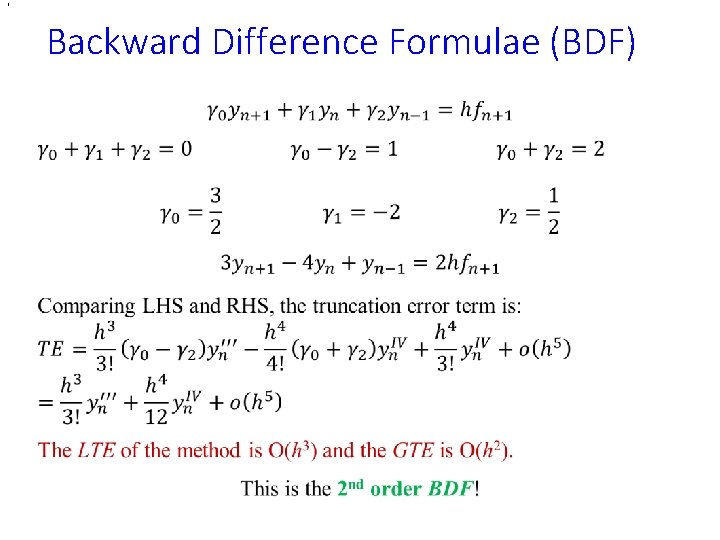
, Backward Difference Formulae (BDF) •
, Backward Difference Formulae (BDF) • k Method GTE Order 1 h 2 3 h 3 4 h 4 5 h 5 6 h 6
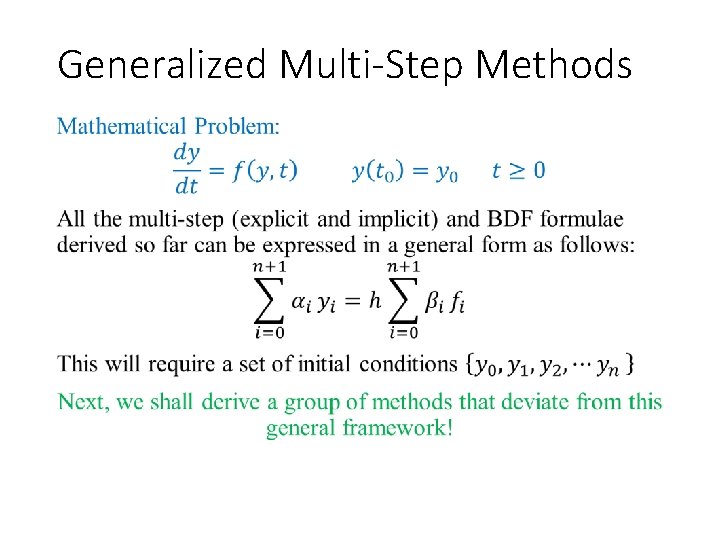
Generalized Multi-Step Methods •
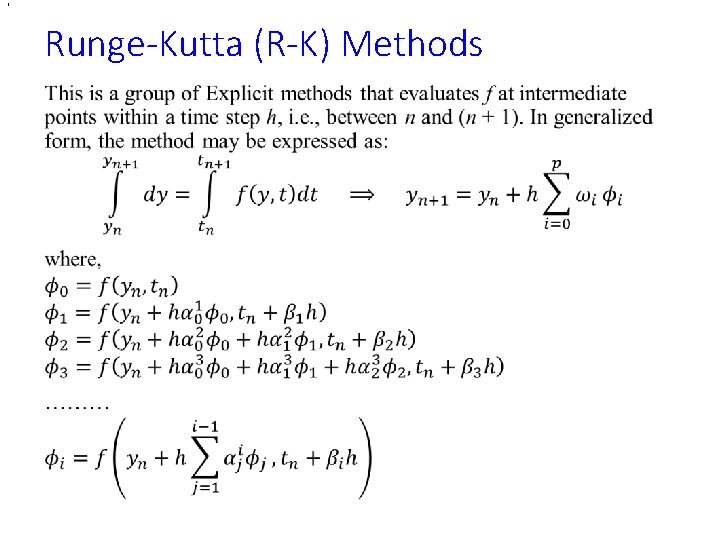
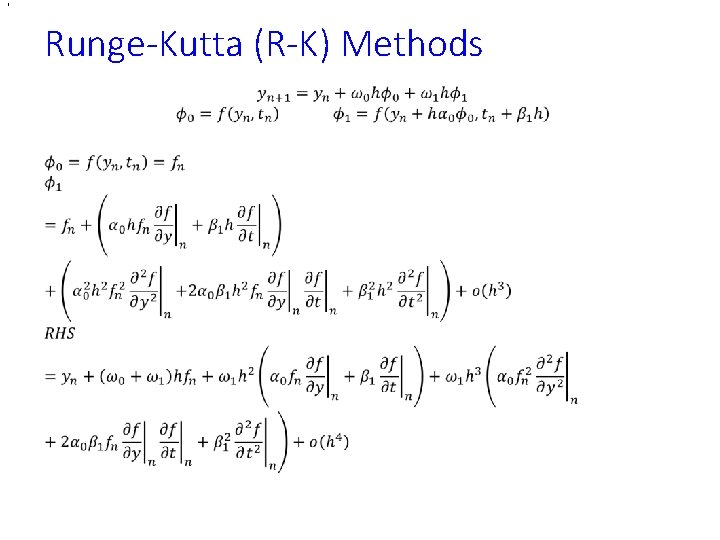
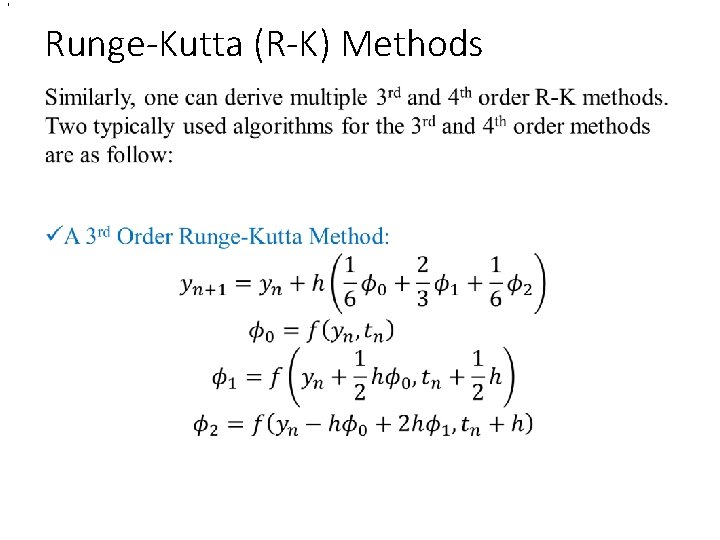
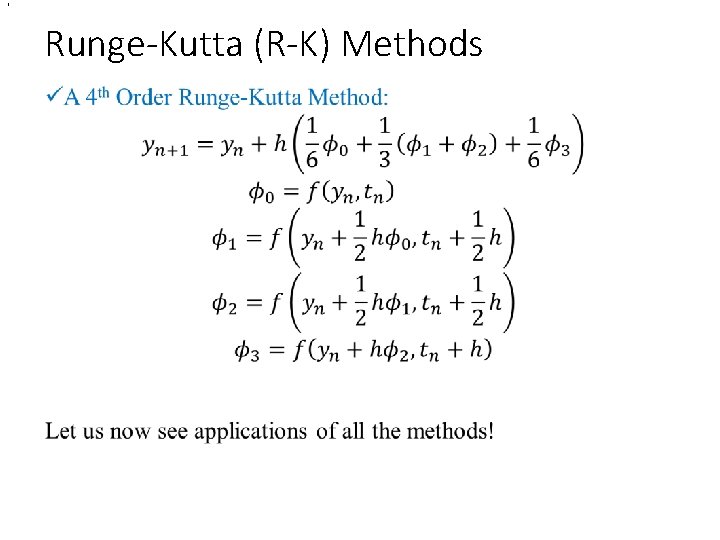
, Runge-Kutta (R-K) Methods •
, Runge-Kutta (R-K) Methods •
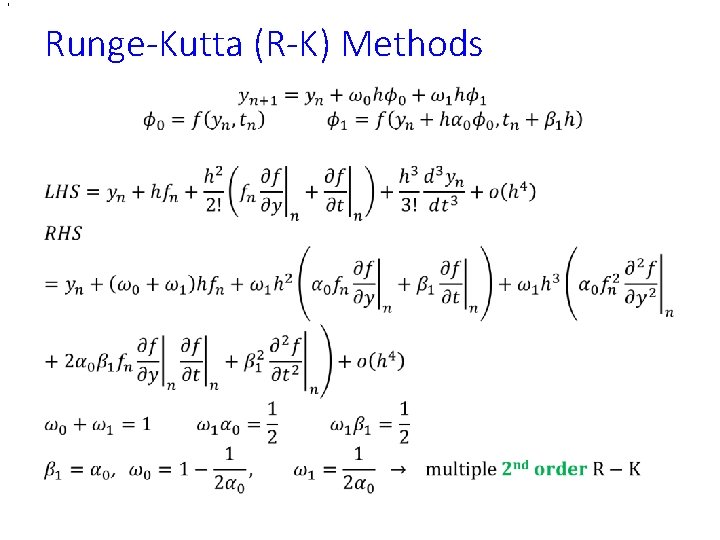
, Runge-Kutta (R-K) Methods •
, Runge-Kutta (R-K) Methods •
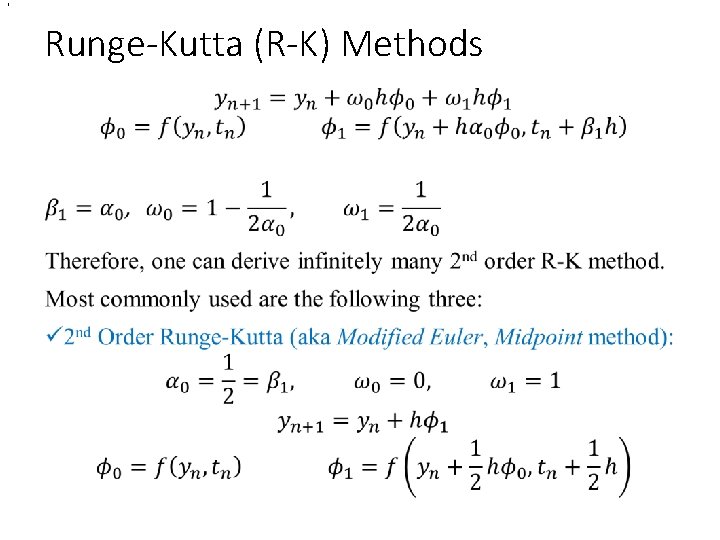
, Runge-Kutta (R-K) Methods •
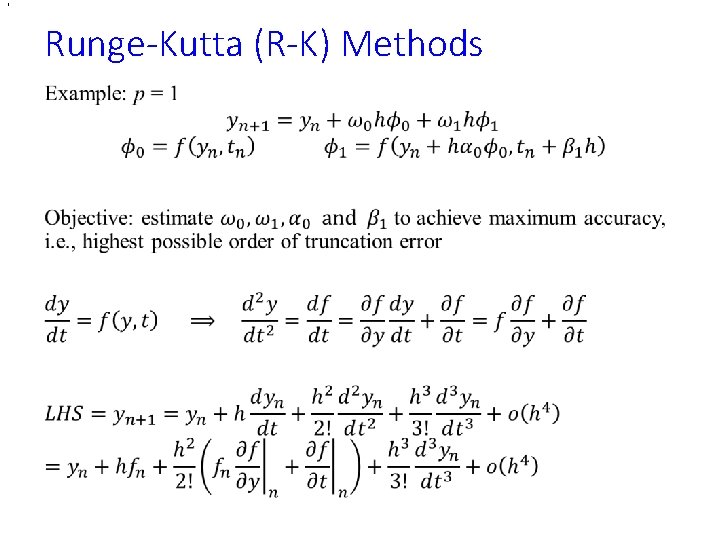
, Runge-Kutta (R-K) Methods •
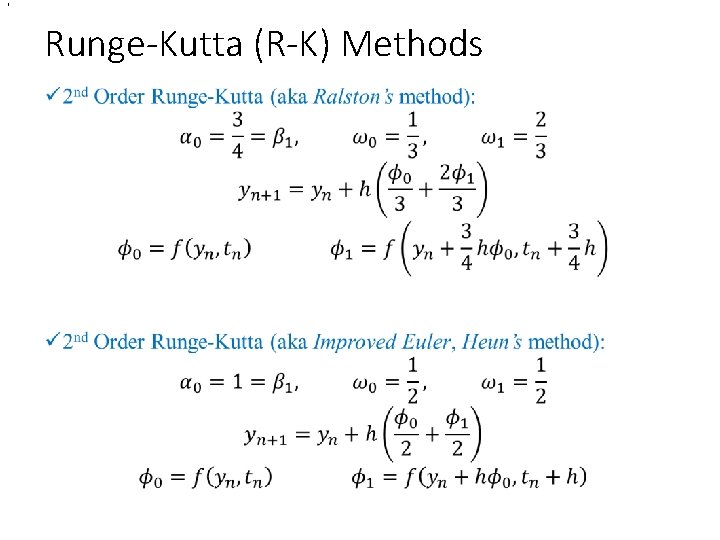
, Runge-Kutta (R-K) Methods •
, Runge-Kutta (R-K) Methods •
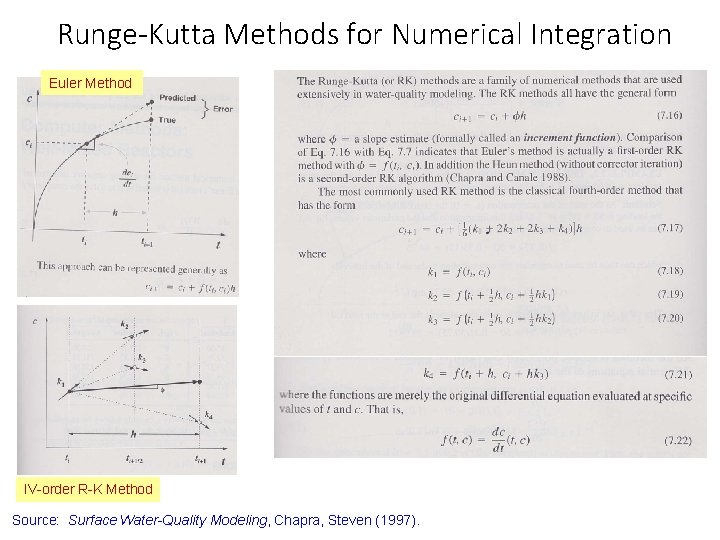
Runge-Kutta Methods for Numerical Integration Euler Method IV-order R-K Method Source: Surface Water-Quality Modeling, Chapra, Steven (1997).
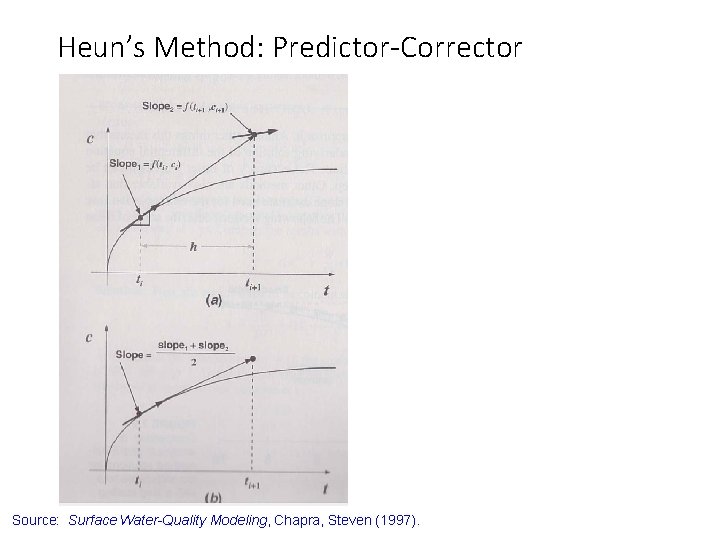
Heun’s Method: Predictor-Corrector Source: Surface Water-Quality Modeling, Chapra, Steven (1997).
Ordinary Differential Equation ü The methods for Initial Value Problems (IVPs): ü Multi-step Methods ü Explicit: Euler Forward, Adams-Bashforth ü Implicit: Euler Backward, Trapezoidal and Adams-Moulton ü Backward Difference Formulae (BDF) ü Runge-Kutta Methods ü Applications, Startup, Combination Methods (Predictor. Corrector) ü Consistency, Stability, Convergence ü Application to System of ODEs ü Boundary Value Problems (BVPs) ü Shooting Method ü Direct Methods
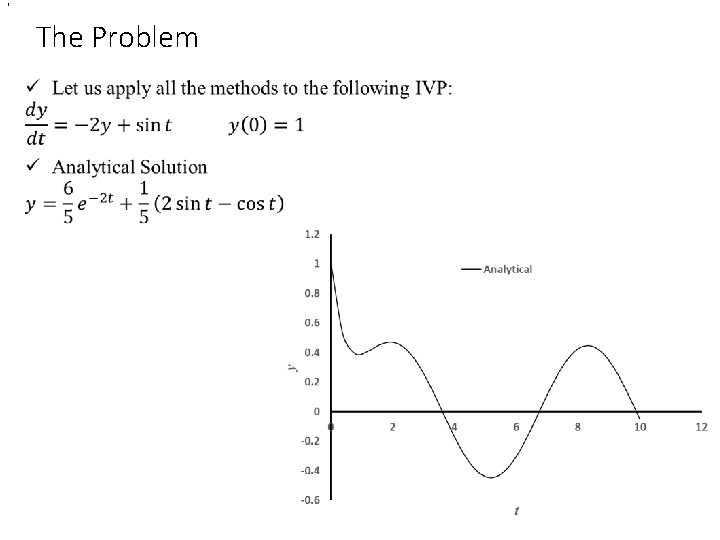
, The Problem •
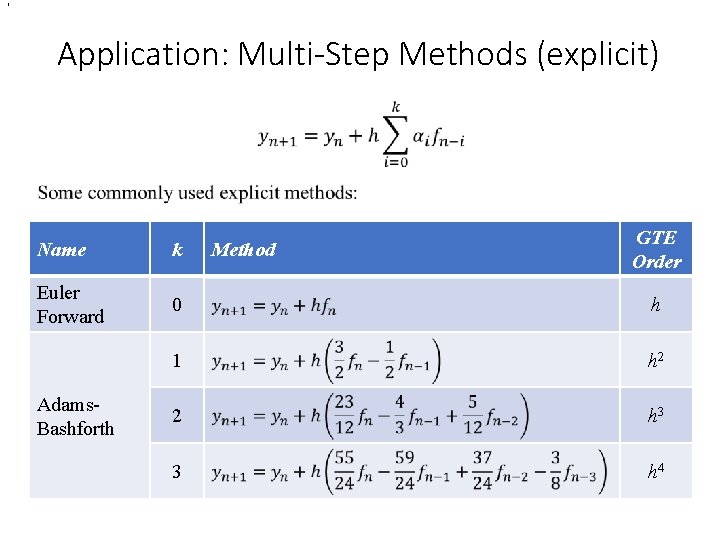
, Application: Multi-Step Methods (explicit) • k Euler Forward 0 h 1 h 2 2 h 3 3 h 4 Adams. Bashforth Method GTE Order Name
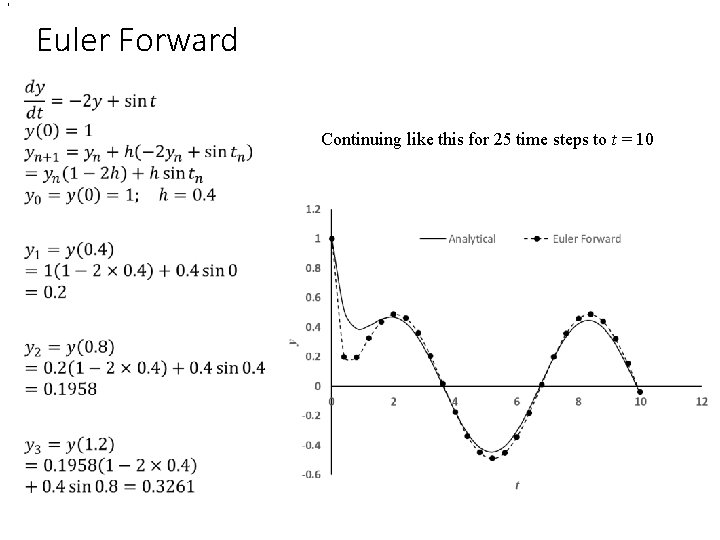
, Euler Forward • Continuing like this for 25 time steps to t = 10
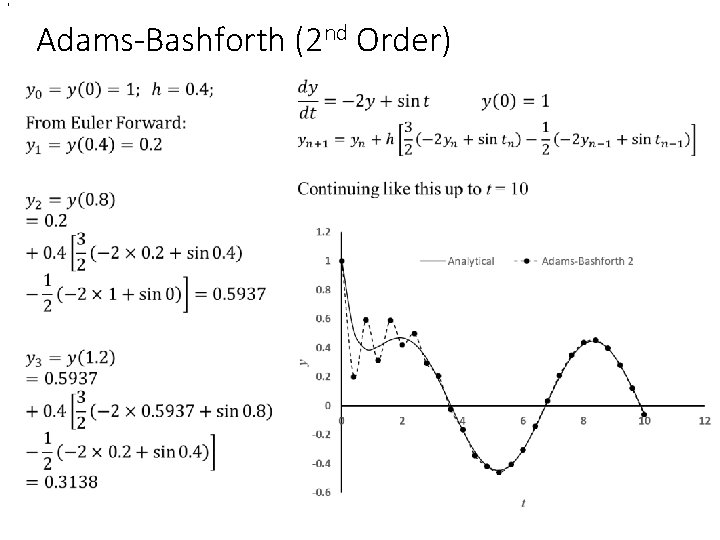
, Adams-Bashforth (2 nd Order) •
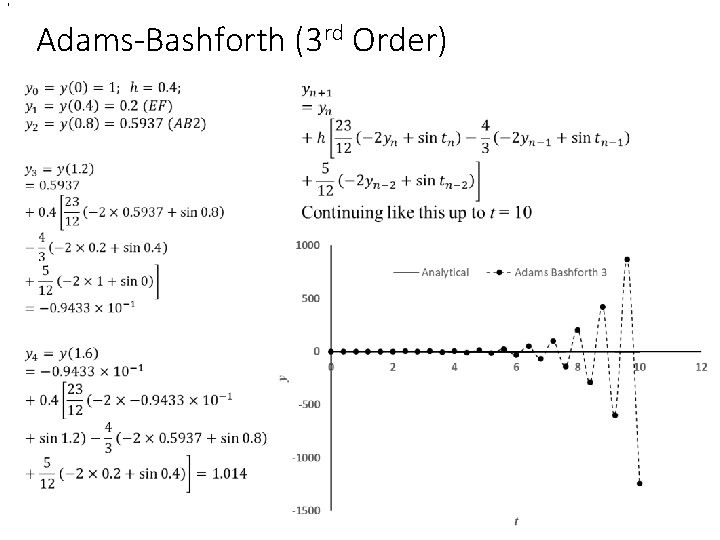
, Adams-Bashforth (3 rd Order) •
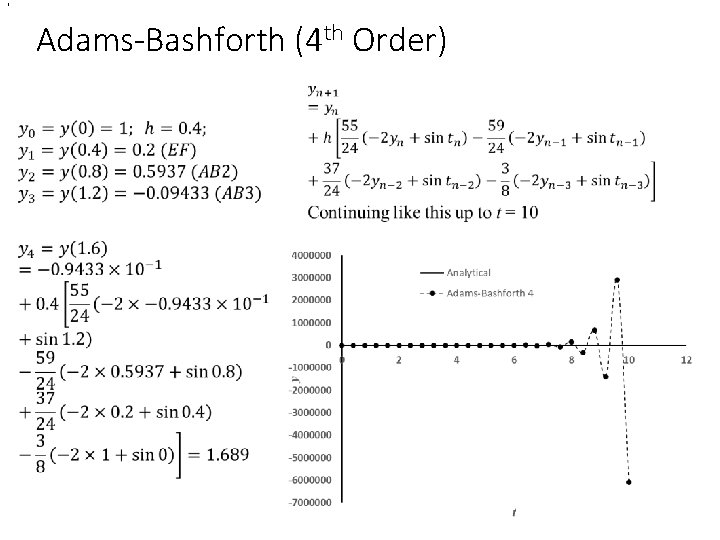
, Adams-Bashforth (4 th Order) •
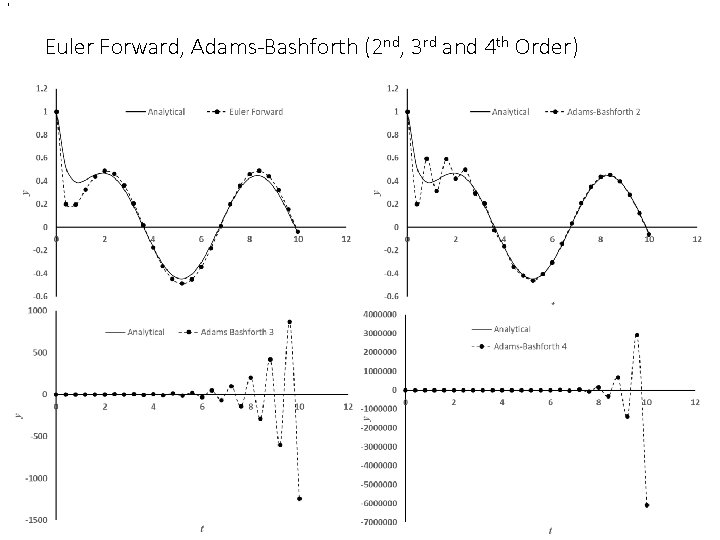
, Euler Forward, Adams-Bashforth (2 nd, 3 rd and 4 th Order)
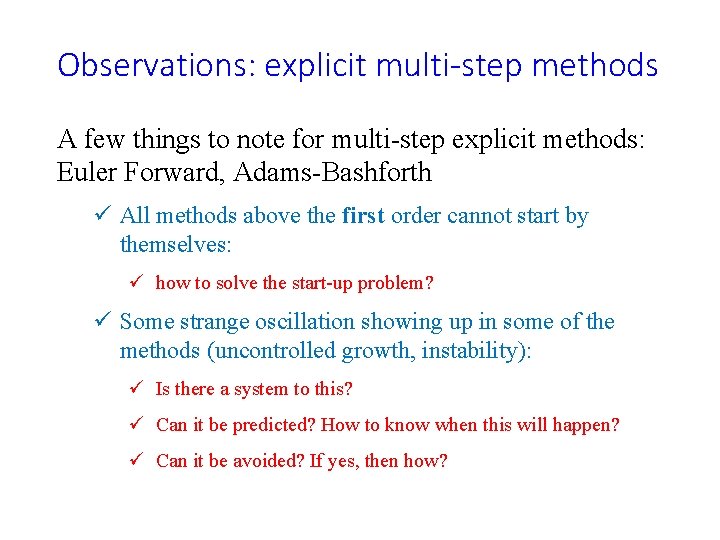
Observations: explicit multi-step methods A few things to note for multi-step explicit methods: Euler Forward, Adams-Bashforth ü All methods above the first order cannot start by themselves: ü how to solve the start-up problem? ü Some strange oscillation showing up in some of the methods (uncontrolled growth, instability): ü Is there a system to this? ü Can it be predicted? How to know when this will happen? ü Can it be avoided? If yes, then how?
, Application: Multi-Step Methods (implicit) • k Euler Backward 0 h Trapezoidal 1 h 2 2 h 3 3 h 4 Adams. Moulton Method GTE Order Name
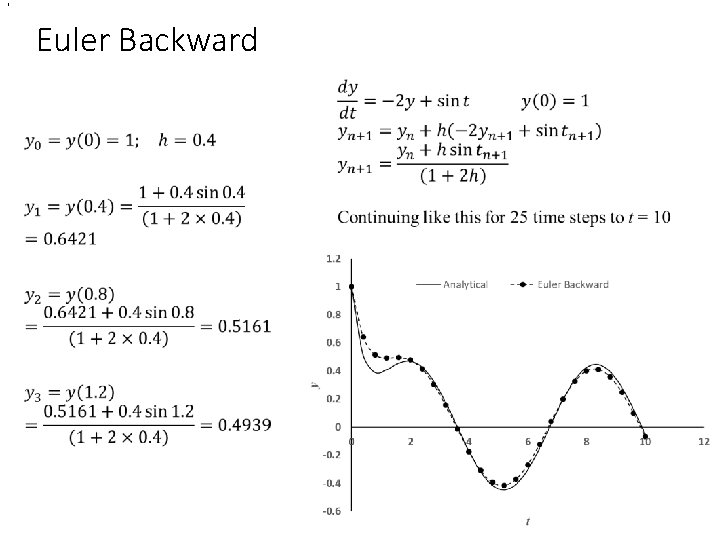
, Euler Backward •
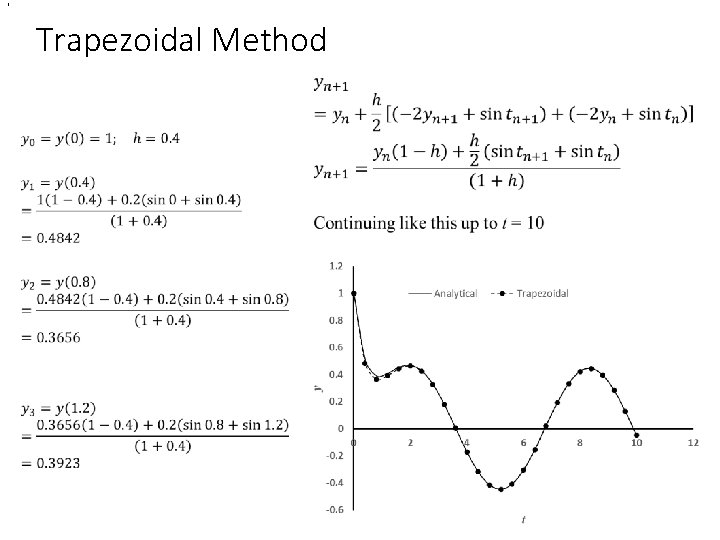
, Trapezoidal Method •
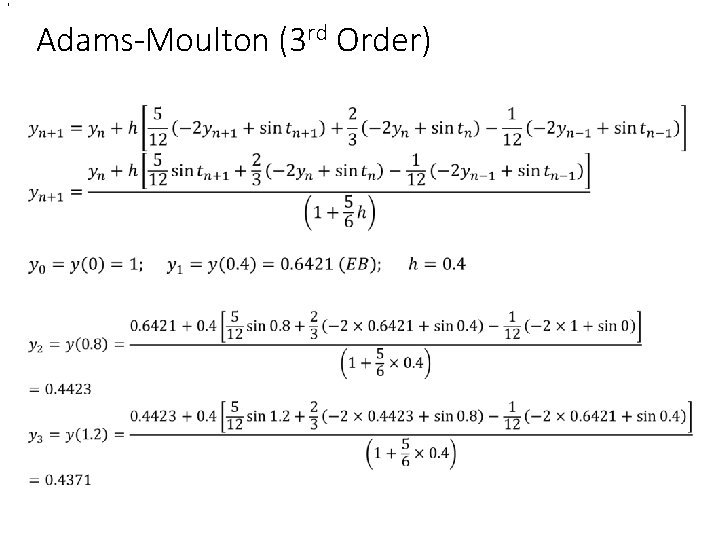
, Adams-Moulton (3 rd Order)
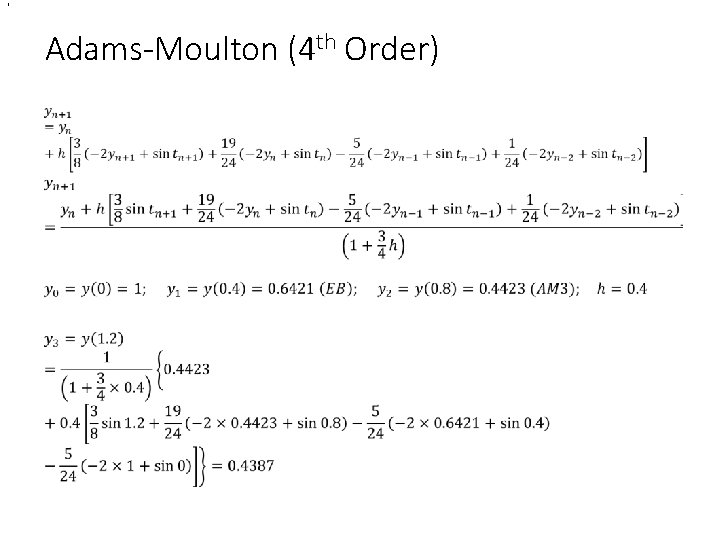
, Adams-Moulton (4 th Order)
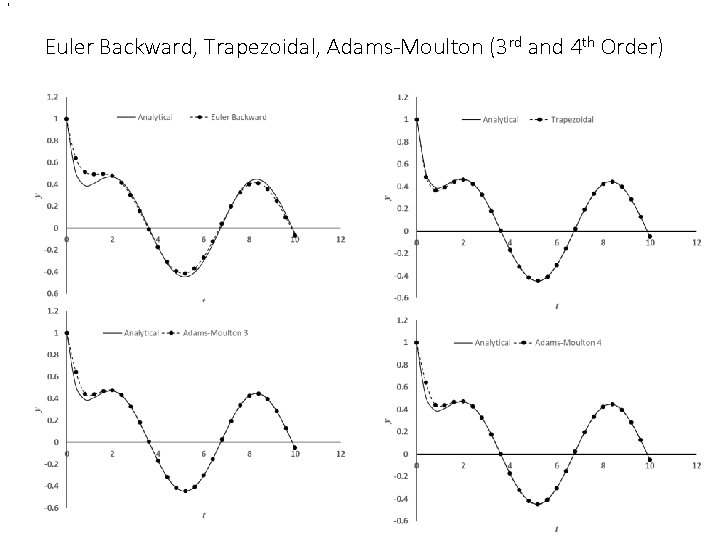
, Euler Backward, Trapezoidal, Adams-Moulton (3 rd and 4 th Order)
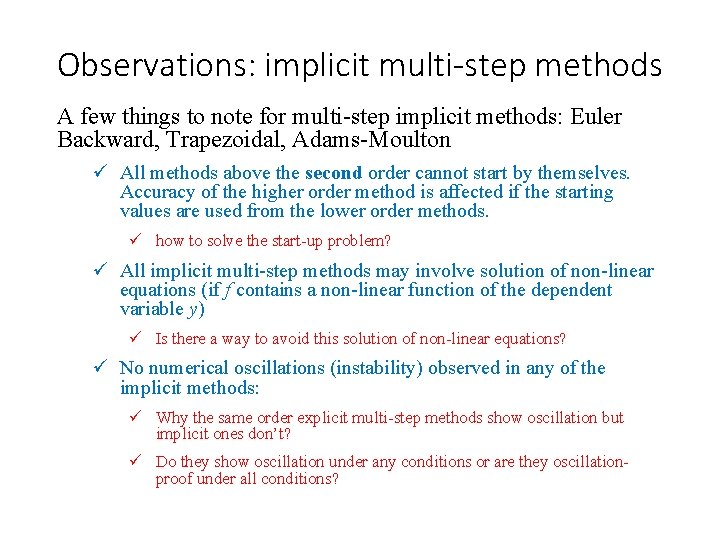
Observations: implicit multi-step methods A few things to note for multi-step implicit methods: Euler Backward, Trapezoidal, Adams-Moulton ü All methods above the second order cannot start by themselves. Accuracy of the higher order method is affected if the starting values are used from the lower order methods. ü how to solve the start-up problem? ü All implicit multi-step methods may involve solution of non-linear equations (if f contains a non-linear function of the dependent variable y) ü Is there a way to avoid this solution of non-linear equations? ü No numerical oscillations (instability) observed in any of the implicit methods: ü Why the same order explicit multi-step methods show oscillation but implicit ones don’t? ü Do they show oscillation under any conditions or are they oscillationproof under all conditions?
, Application: Backward Difference Formulae (BDF) • k Method GTE Order 1 h 2 3 h 3 4 h 4 5 h 5 6 h 6
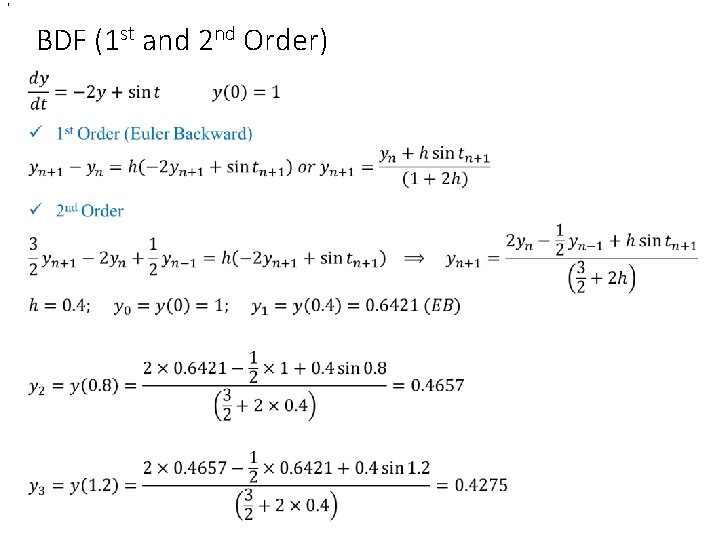
, BDF (1 st and 2 nd Order)
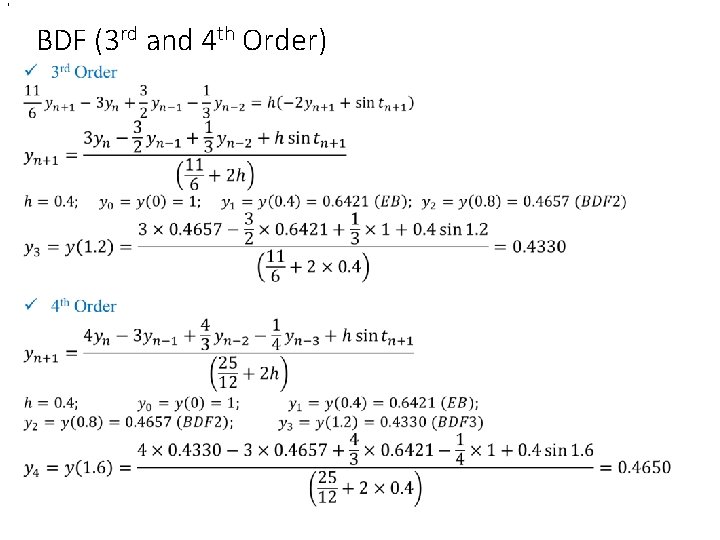
, BDF (3 rd and 4 th Order)
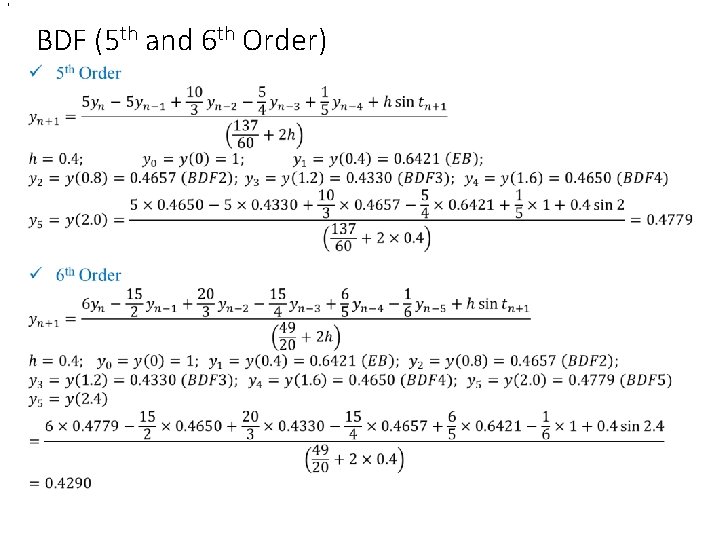
, BDF (5 th and 6 th Order)
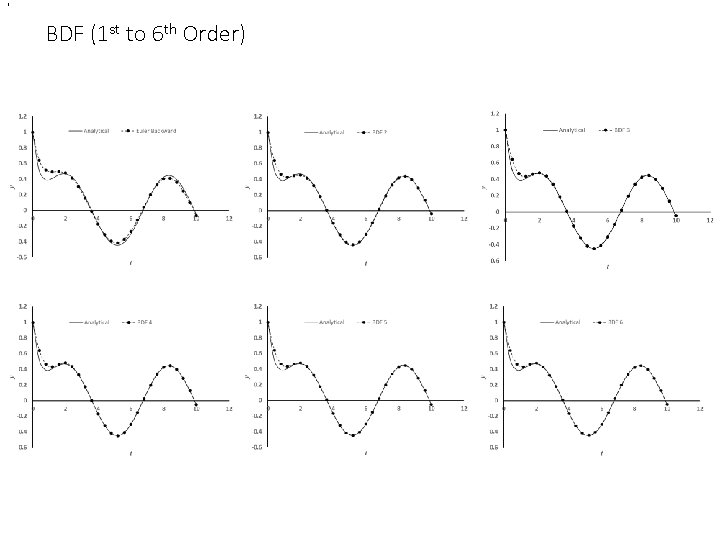
, BDF (1 st to 6 th Order)
Observations: BDF methods A few things to note for the BDF: ü All methods above the first order cannot start by themselves. Accuracy of the higher order method is affected if the starting values are used from the lower order methods. ü how to solve the start-up problem? ü All BDF may involve solution of non-linear equations (if f contains a non-linear function of the dependent variable y) ü Is there a way to avoid this solution of non-linear equations? ü No numerical oscillations (instability) observed in any of the BDFs: ü Why the same order explicit multi-step methods show oscillation but BDFs do not? ü Do they show oscillation under any conditions or are they oscillation-proof under all conditions?
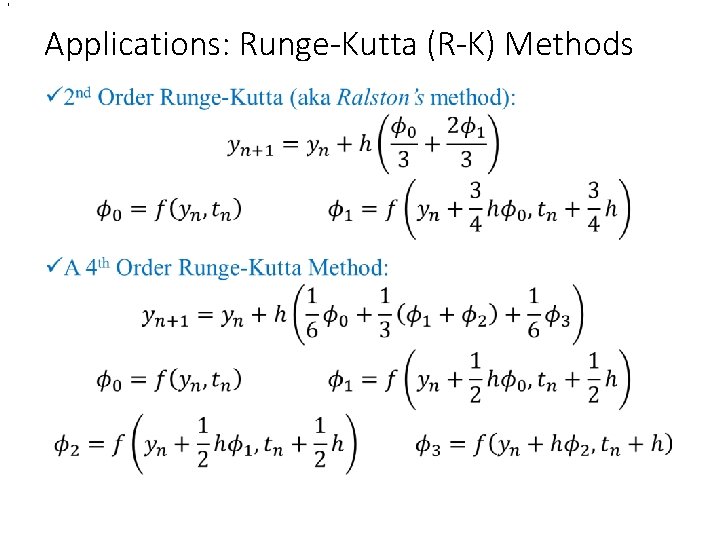
, Applications: Runge-Kutta (R-K) Methods •
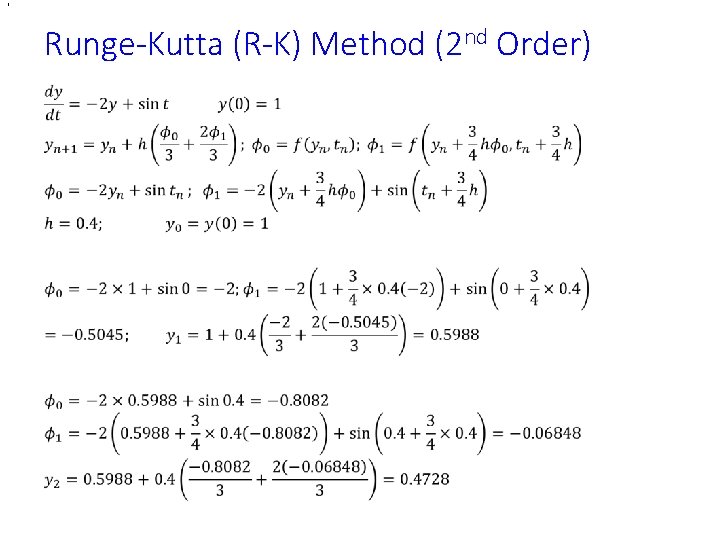
, Runge-Kutta (R-K) Method (2 nd Order) •
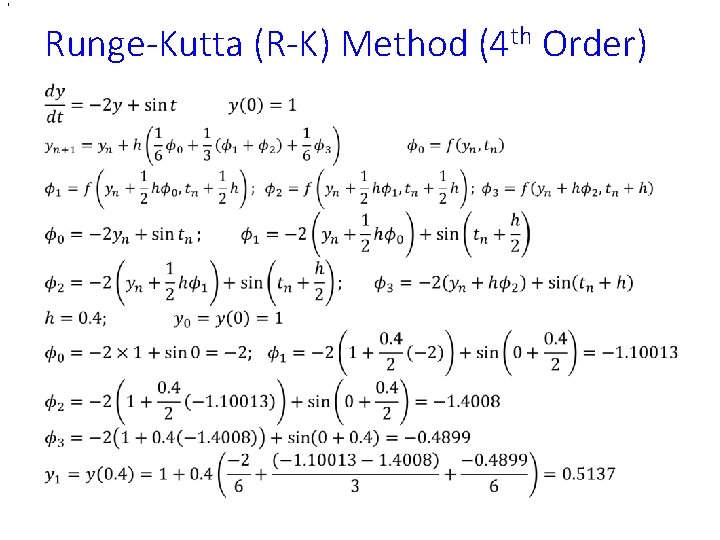
, Runge-Kutta (R-K) Method (4 th Order) •
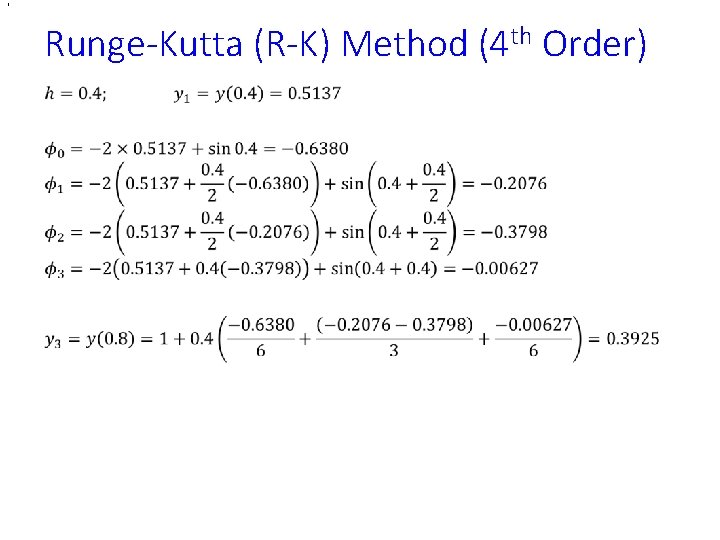
, Runge-Kutta (R-K) Method (4 th Order) •
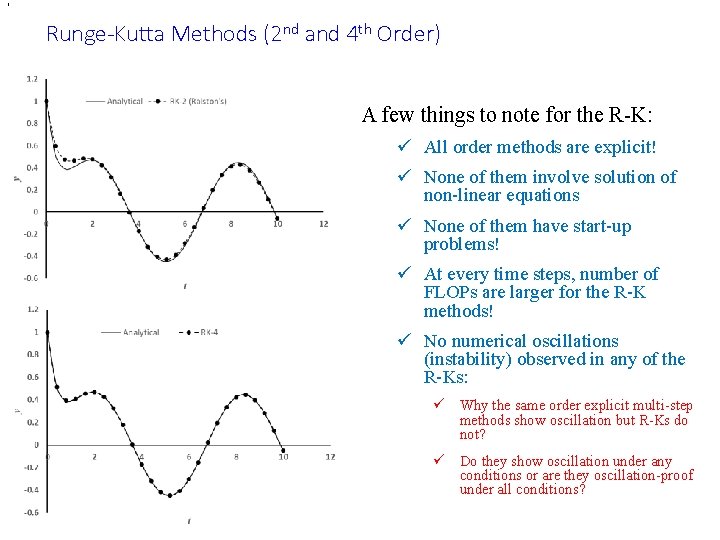
, Runge-Kutta Methods (2 nd and 4 th Order) A few things to note for the R-K: ü All order methods are explicit! ü None of them involve solution of non-linear equations ü None of them have start-up problems! ü At every time steps, number of FLOPs are larger for the R-K methods! ü No numerical oscillations (instability) observed in any of the R-Ks: ü Why the same order explicit multi-step methods show oscillation but R-Ks do not? ü Do they show oscillation under any conditions or are they oscillation-proof under all conditions?
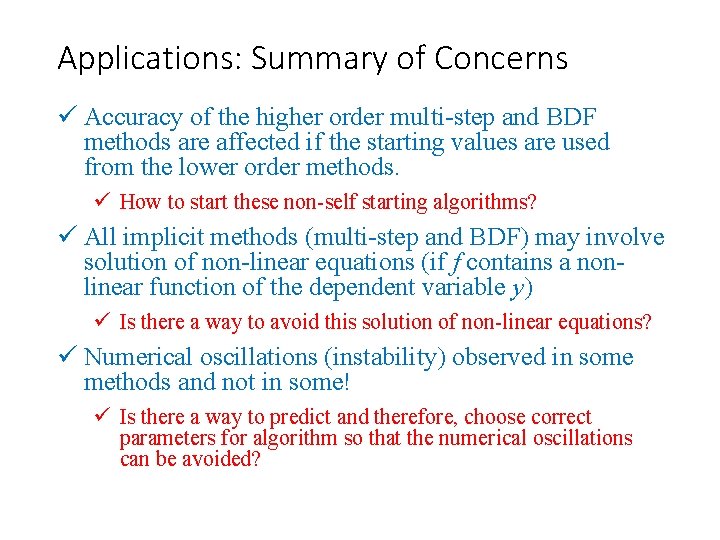
Applications: Summary of Concerns ü Accuracy of the higher order multi-step and BDF methods are affected if the starting values are used from the lower order methods. ü How to start these non-self starting algorithms? ü All implicit methods (multi-step and BDF) may involve solution of non-linear equations (if f contains a nonlinear function of the dependent variable y) ü Is there a way to avoid this solution of non-linear equations? ü Numerical oscillations (instability) observed in some methods and not in some! ü Is there a way to predict and therefore, choose correct parameters for algorithm so that the numerical oscillations can be avoided?