New Ideas in Ocular Surface Disease John A







- Slides: 79
New Ideas in Ocular Surface Disease John A. Mc. Greal Jr. , O. D. Missouri Eye Associates Mc. Greal Educational Institute Excellence in Optometric Education
John A. Mc. Greal Jr. , O. D. Missouri Eye Associates n Mc. Greal Educational Institute n ODExcellence n 11710 Old Ballas Rd. n St. Louis, MO. 63141 n 314. 569. 2020 n 314. 569. 1596 FAX n mcgrealjohn@gmail. com n JAM
DED Revisited – DEWS II Report n Incidence – estimate that nearly 30 million people have DED, underestimated, increasing in prevalence with diets poor in omega-3 s, increased screen time activities/contact lenses/laser and cataract surgery – n Dry eye remains one of the most searched terms on the internet “Given the improving diagnostics and therapeutics, waiving our hands and making conjectures as to the etiology of this disease while throwing the next brand od artificial tears at these patients is no longer acceptable” – Marjan Farid, MD Irvine CA
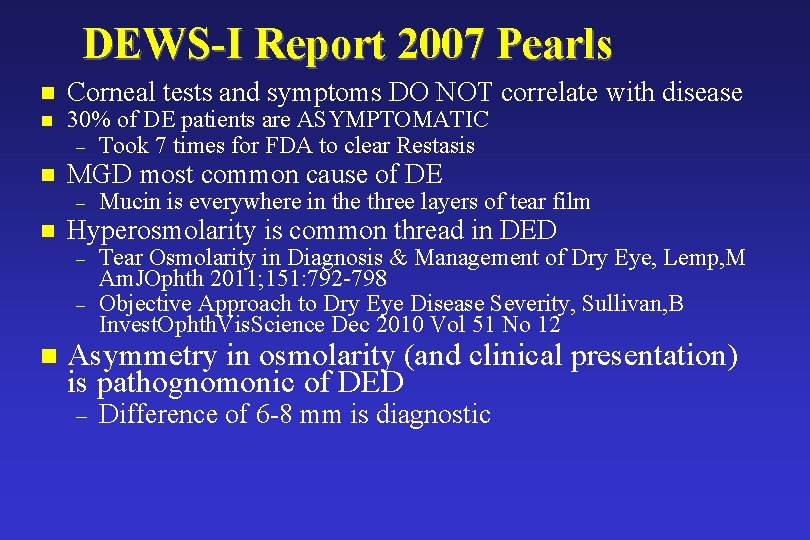
DEWS-I Report 2007 Pearls n n n Corneal tests and symptoms DO NOT correlate with disease 30% of DE patients are ASYMPTOMATIC – Took 7 times for FDA to clear Restasis MGD most common cause of DE – n Hyperosmolarity is common thread in DED – – n Mucin is everywhere in the three layers of tear film Tear Osmolarity in Diagnosis & Management of Dry Eye, Lemp, M Am. JOphth 2011; 151: 792 -798 Objective Approach to Dry Eye Disease Severity, Sullivan, B Invest. Ophth. Vis. Science Dec 2010 Vol 51 No 12 Asymmetry in osmolarity (and clinical presentation) is pathognomonic of DED – Difference of 6 -8 mm is diagnostic
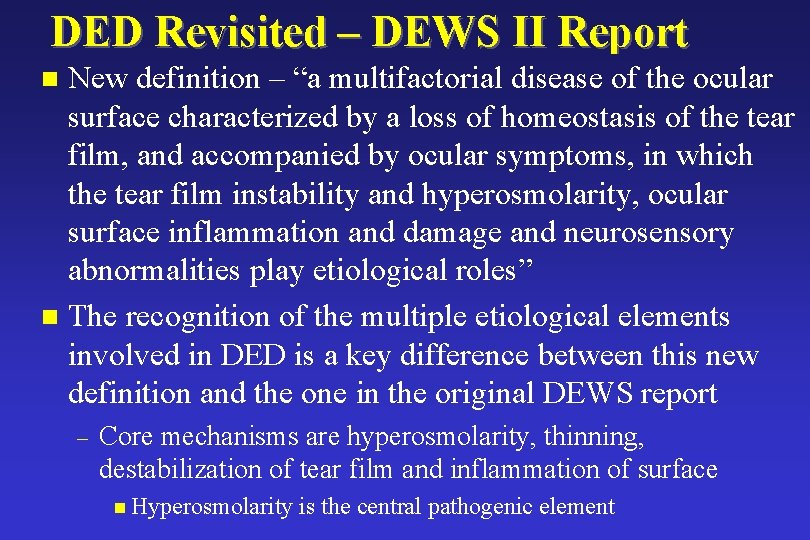
DED Revisited – DEWS II Report New definition – “a multifactorial disease of the ocular surface characterized by a loss of homeostasis of the tear film, and accompanied by ocular symptoms, in which the tear film instability and hyperosmolarity, ocular surface inflammation and damage and neurosensory abnormalities play etiological roles” n The recognition of the multiple etiological elements involved in DED is a key difference between this new definition and the one in the original DEWS report n – Core mechanisms are hyperosmolarity, thinning, destabilization of tear film and inflammation of surface n Hyperosmolarity is the central pathogenic element
DED Revisited – DEWS II Report n Classification scheme – – n Symptomatic with signs Symptomatic without signs Asymptomatic without signs Initial diagnosis of DED can be made with symptoms (DEQ-5>6 or OSDI >13) and one positive test out of three – – – TBUT Osmolarity Ocular surface staining
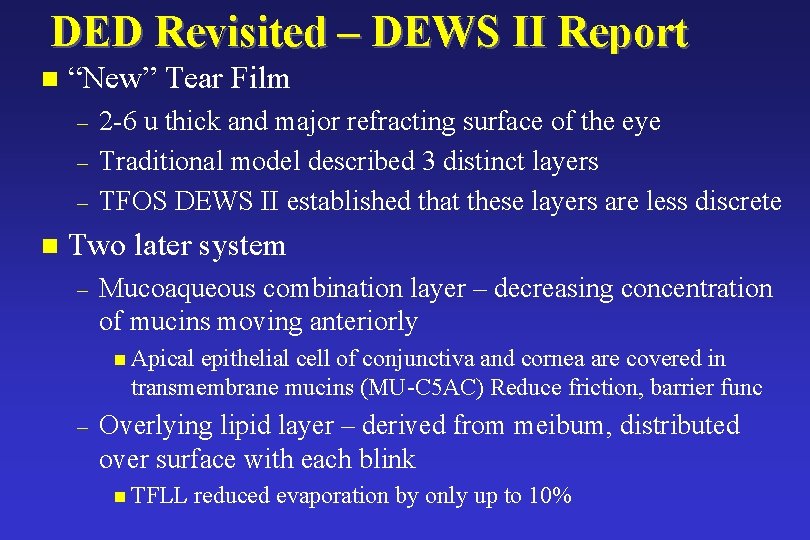
DED Revisited – DEWS II Report n “New” Tear Film – – – n 2 -6 u thick and major refracting surface of the eye Traditional model described 3 distinct layers TFOS DEWS II established that these layers are less discrete Two later system – Mucoaqueous combination layer – decreasing concentration of mucins moving anteriorly n Apical epithelial cell of conjunctiva and cornea are covered in transmembrane mucins (MU-C 5 AC) Reduce friction, barrier func – Overlying lipid layer – derived from meibum, distributed over surface with each blink n TFLL reduced evaporation by only up to 10%
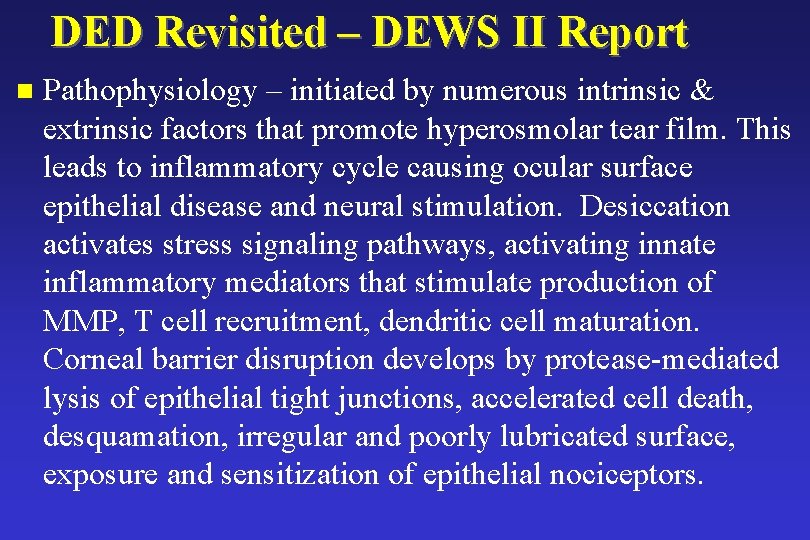
DED Revisited – DEWS II Report n Pathophysiology – initiated by numerous intrinsic & extrinsic factors that promote hyperosmolar tear film. This leads to inflammatory cycle causing ocular surface epithelial disease and neural stimulation. Desiccation activates stress signaling pathways, activating innate inflammatory mediators that stimulate production of MMP, T cell recruitment, dendritic cell maturation. Corneal barrier disruption develops by protease-mediated lysis of epithelial tight junctions, accelerated cell death, desquamation, irregular and poorly lubricated surface, exposure and sensitization of epithelial nociceptors.
DED Revisited – DEWS II Report n Pathophysiology – conjunctival goblet cell dysfunction and death are promoted by T helper 1 cytokine interferon gamma. These epithelial changes further destabilize the tear film, amplify inflammation, and create a vicious cycle. Next to the intestine, the conjunctival epithelium has the second highest concentration of mucous producing goblet cells such as killer cell, dendritic cells, macrophages, and CD 4 and CD 8 T cells that function in antimicrobial defense but may participate in dry eye pathogenesis
DED Revisited – DEWS II Report n Pathophysiology – hyperosmolarity is at the core of DED and is primarily driven by tear film breakup – Increased expression of inflammatory mediators, recruitment of inflammatory cells, further inflammation, apoptosis of cornea and conjunctival epithelial cells, decreased surface glycocalyx, decreased goblet cell density n. A n “vicious circle of inflammation” Lacrimal functional unit – – Lacrimal and accessory lacrimal glands – aqueous tear film Conjunctival goblet cells – production of mucin Meibomian glands – production of meibum Disrupt any of these components – instability / hyperosm
DED Revisited – DEWS II Report n Pathophysiology – tear homeostasis is achieved by reflex arc of the LFU – – – Afferent limb provided by trigeminal innervation of cornea/conjunctiva Sensory drive provided by parasymapathetic secretomotor innervation Sensory drive for secretion of each component is stimulated by corneal thermoreceptors n Sense cold and hyperosmolarity n When stimulated reflexive increase in lacrimation, blink rate, and ocular discomfort
DED Revisited – DEWS II Report n New definition – DED can be classified into two primary categories – – n ADDE & EDE exist in a continuum, often overlap – n Majority of DED atients have the combination type disease In DED it is COMMON that signs do not correspond with patient reported symptoms – n Aqueous deficient dry eye (ADDE) Evaporative dry eye (EDE) The absence of symptoms or overt clinical signs does not exclude the diagnosis of DED A validated symptom questionnaire is a useful tool
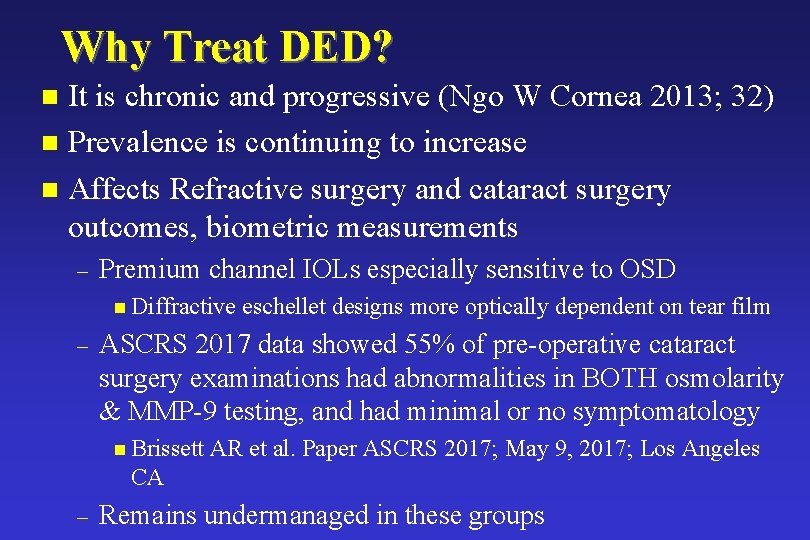
Why Treat DED? It is chronic and progressive (Ngo W Cornea 2013; 32) n Prevalence is continuing to increase n Affects Refractive surgery and cataract surgery outcomes, biometric measurements n – Premium channel IOLs especially sensitive to OSD n Diffractive – eschellet designs more optically dependent on tear film ASCRS 2017 data showed 55% of pre-operative cataract surgery examinations had abnormalities in BOTH osmolarity & MMP-9 testing, and had minimal or no symptomatology n Brissett AR et al. Paper ASCRS 2017; May 9, 2017; Los Angeles CA – Remains undermanaged in these groups
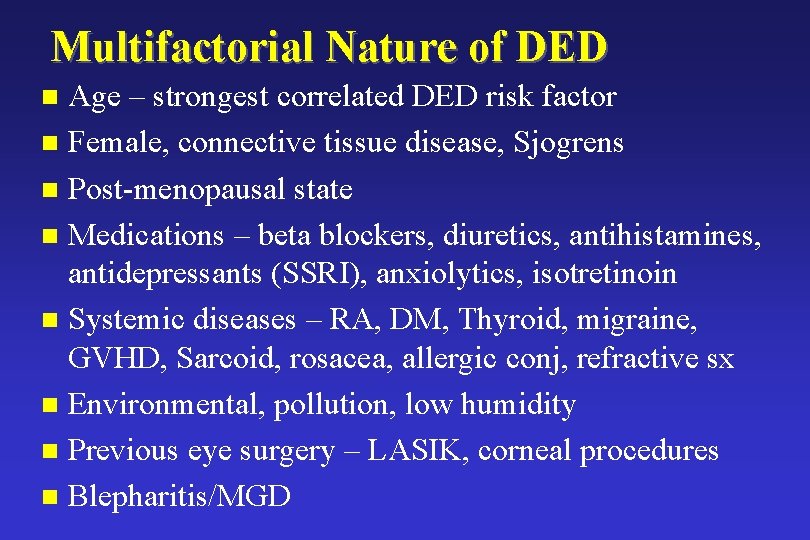
Multifactorial Nature of DED Age – strongest correlated DED risk factor n Female, connective tissue disease, Sjogrens n Post-menopausal state n Medications – beta blockers, diuretics, antihistamines, antidepressants (SSRI), anxiolytics, isotretinoin n Systemic diseases – RA, DM, Thyroid, migraine, GVHD, Sarcoid, rosacea, allergic conj, refractive sx n Environmental, pollution, low humidity n Previous eye surgery – LASIK, corneal procedures n Blepharitis/MGD n
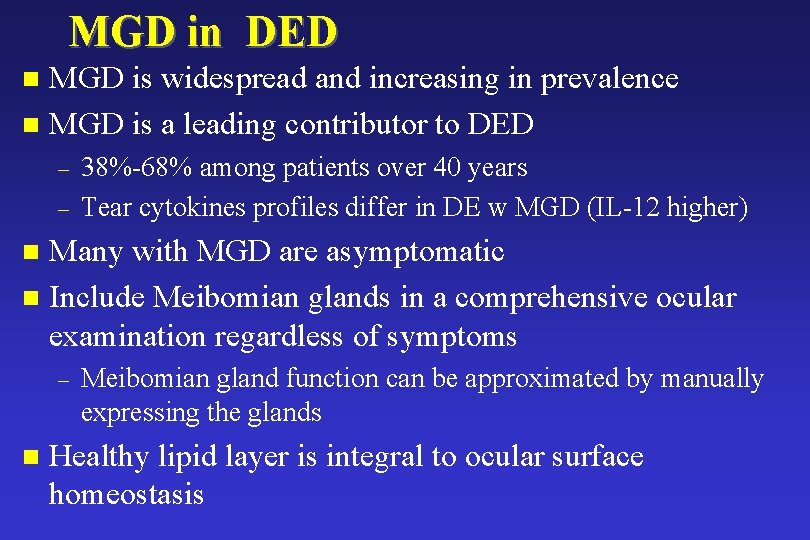
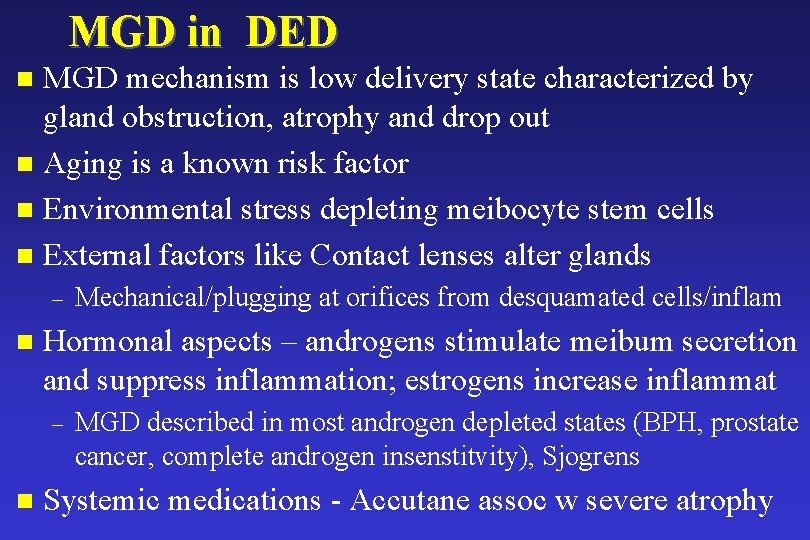
MGD in DED MGD is widespread and increasing in prevalence n MGD is a leading contributor to DED n – – 38%-68% among patients over 40 years Tear cytokines profiles differ in DE w MGD (IL-12 higher) Many with MGD are asymptomatic n Include Meibomian glands in a comprehensive ocular examination regardless of symptoms n – n Meibomian gland function can be approximated by manually expressing the glands Healthy lipid layer is integral to ocular surface homeostasis
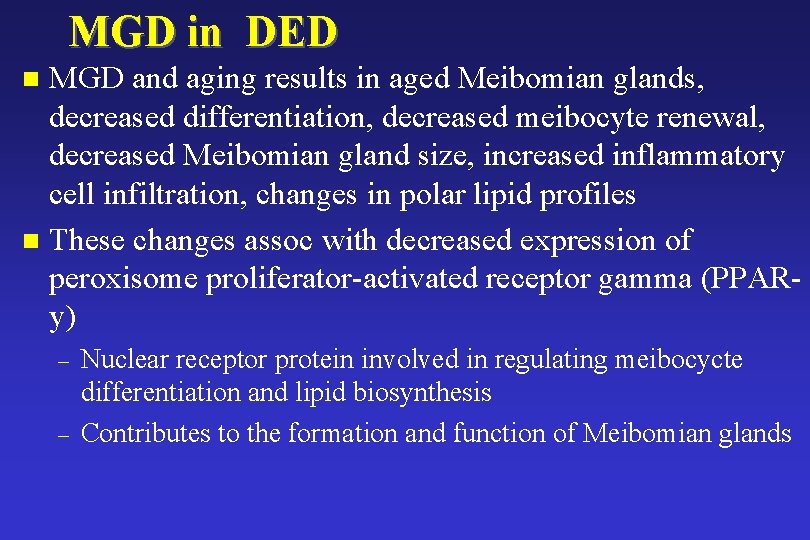
MGD in DED MGD and aging results in aged Meibomian glands, decreased differentiation, decreased meibocyte renewal, decreased Meibomian gland size, increased inflammatory cell infiltration, changes in polar lipid profiles n These changes assoc with decreased expression of peroxisome proliferator-activated receptor gamma (PPARy) n – – Nuclear receptor protein involved in regulating meibocycte differentiation and lipid biosynthesis Contributes to the formation and function of Meibomian glands
MGD in DED MGD mechanism is low delivery state characterized by gland obstruction, atrophy and drop out n Aging is a known risk factor n Environmental stress depleting meibocyte stem cells n External factors like Contact lenses alter glands n – n Hormonal aspects – androgens stimulate meibum secretion and suppress inflammation; estrogens increase inflammat – n Mechanical/plugging at orifices from desquamated cells/inflam MGD described in most androgen depleted states (BPH, prostate cancer, complete androgen insenstitvity), Sjogrens Systemic medications - Accutane assoc w severe atrophy
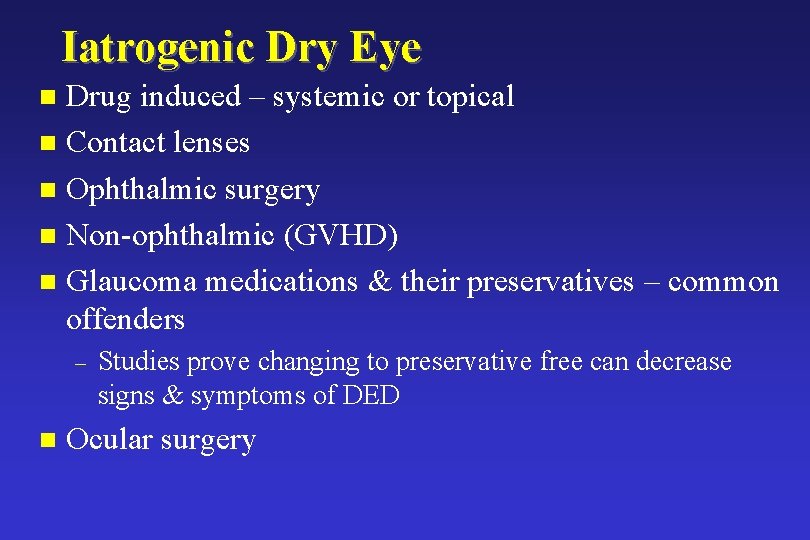
Iatrogenic Dry Eye Drug induced – systemic or topical n Contact lenses n Ophthalmic surgery n Non-ophthalmic (GVHD) n Glaucoma medications & their preservatives – common offenders n – n Studies prove changing to preservative free can decrease signs & symptoms of DED Ocular surgery
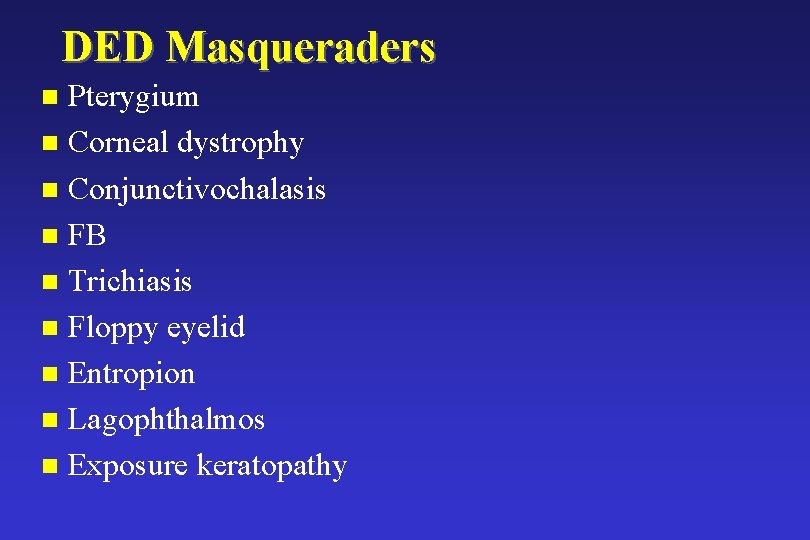
DED Masqueraders Pterygium n Corneal dystrophy n Conjunctivochalasis n FB n Trichiasis n Floppy eyelid n Entropion n Lagophthalmos n Exposure keratopathy n
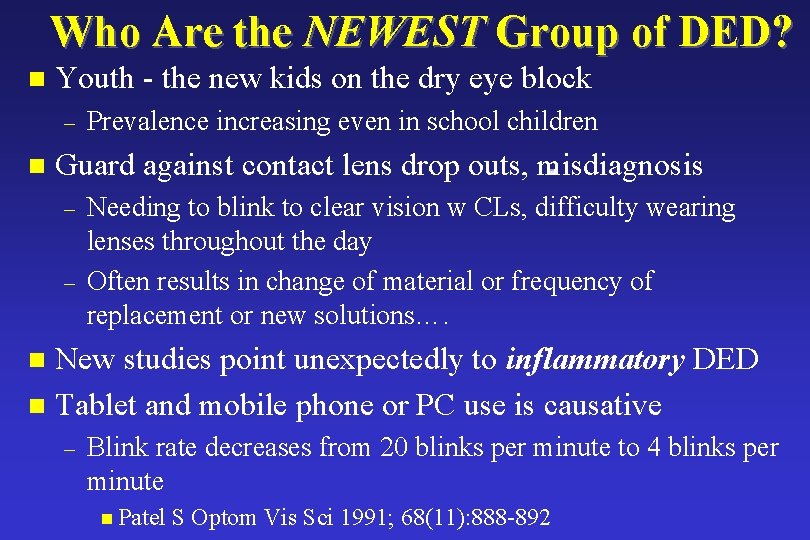
Who Are the NEWEST Group of DED? n Youth - the new kids on the dry eye block – n Prevalence increasing even in school children Guard against contact lens drop outs, misdiagnosis – – Needing to blink to clear vision w CLs, difficulty wearing lenses throughout the day Often results in change of material or frequency of replacement or new solutions…. New studies point unexpectedly to inflammatory DED n Tablet and mobile phone or PC use is causative n – Blink rate decreases from 20 blinks per minute to 4 blinks per minute n Patel S Optom Vis Sci 1991; 68(11): 888 -892
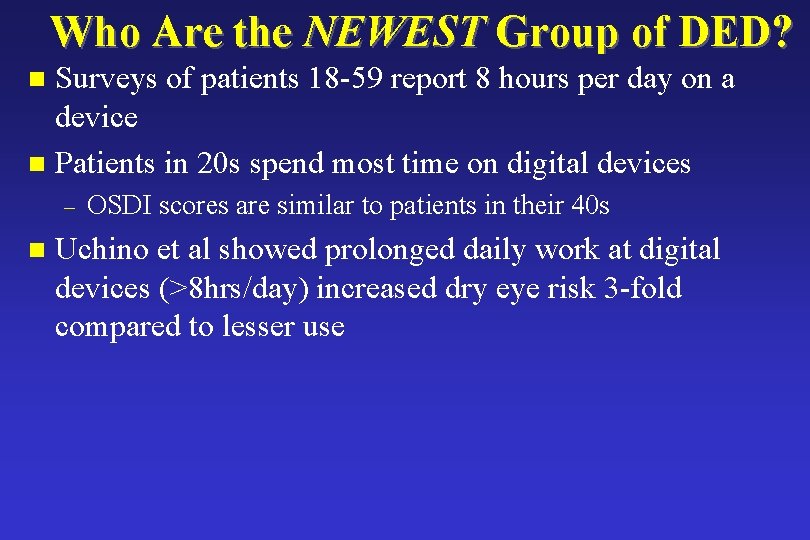
Who Are the NEWEST Group of DED? Surveys of patients 18 -59 report 8 hours per day on a device n Patients in 20 s spend most time on digital devices n – n OSDI scores are similar to patients in their 40 s Uchino et al showed prolonged daily work at digital devices (>8 hrs/day) increased dry eye risk 3 -fold compared to lesser use
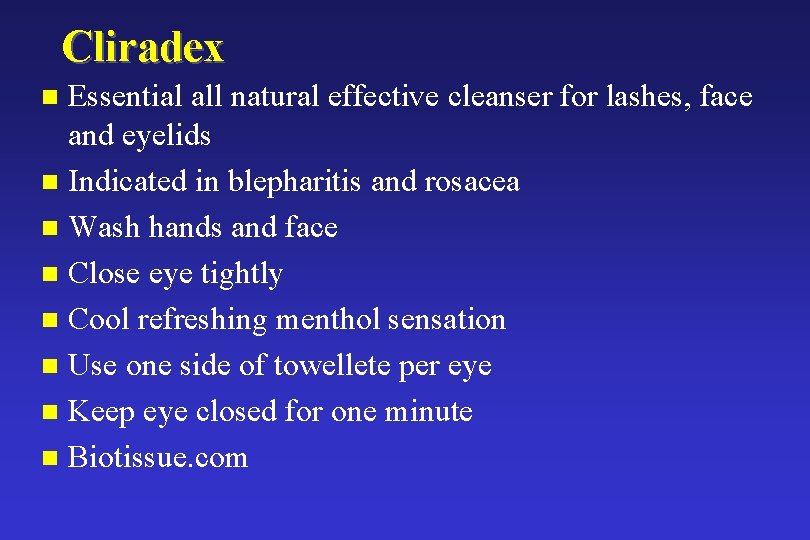
Cliradex Essential all natural effective cleanser for lashes, face and eyelids n Indicated in blepharitis and rosacea n Wash hands and face n Close eye tightly n Cool refreshing menthol sensation n Use one side of towellete per eye n Keep eye closed for one minute n Biotissue. com n
Cliradex Preservative freeessential oil n 4 -terpinol organic compound n Melalenca aternifloria – natural tea tree oil n Box – 24 individually wrapped towelettes per carton n Cases of 20 cartons n On-line purchase n Biotissue. com n
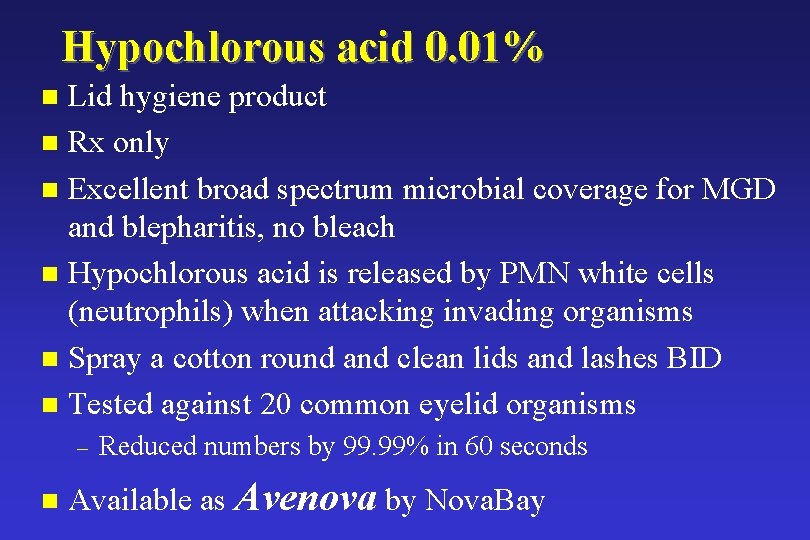
Hypochlorous acid 0. 01% Lid hygiene product n Rx only n Excellent broad spectrum microbial coverage for MGD and blepharitis, no bleach n Hypochlorous acid is released by PMN white cells (neutrophils) when attacking invading organisms n Spray a cotton round and clean lids and lashes BID n Tested against 20 common eyelid organisms n – n Reduced numbers by 99. 99% in 60 seconds Available as Avenova by Nova. Bay
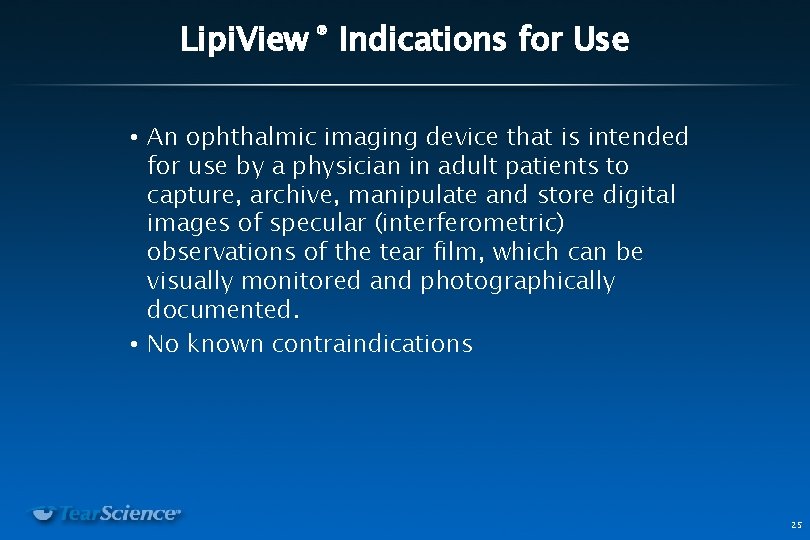
Lipi. View ® Indications for Use • An ophthalmic imaging device that is intended for use by a physician in adult patients to capture, archive, manipulate and store digital images of specular (interferometric) observations of the tear film, which can be visually monitored and photographically documented. • No known contraindications 25
Theramal Pulsation - Lipi. Flow® The Lipi. Flow® System is intended for the application of localized heat and pressure therapy in adult patients with chronic cystic conditions of the eyelids, including meibomian gland dysfunction (MGD), also known as evaporative dry eye or lipid deficiency dry eye. Shows improvements in patients for up to three years, however effects do wear away with time Interventional study comparing single session of thermal pulsation with warm compresses twice daily for 3 months found by month 4 both groups showed improved symptoms & signs without any difference between the two groups 26
Mi. Bo. Thermal. Flo Ultrathermal Therapeutic Medical Device n Touch screen / LCD display (12 in x 5 in) n Chronic dry eye treatment, 98% patient satisfaction n Tip temp 108 degrees (manual) n Heat element is 6 w thermoelectric n Timer is 1 -16 minutes (average 12 min) n No pain or down time, warm message n Painpointmedical. com 855. 642. 6356 n
i. Lux Device for MGD Identify and treat blocked Meibomian glands n Hand held instrument and disposable tip n – n Compresses eyelids allowing visualization of MG through a magnifier – – n Compression force controlled via thumb operated lever Instrument shows force and warns if too high Proprietory light energy source applied to eyelids – n Tip has outer & inner pads, biocompatible silicone Raises temperature to melting point of meibum (39 -41 C) in 1 min, after melting a message is applied to express www. tearfilm. com
Moist Heat Eye Compresses Treat blocked Meibomian glands and dry eye n Compresses eyelids, opens oil glands, allows oil to flow n – – Washable / reusable / never needs water / antibacterial Midi. Beads Moist Heat Technology n Microwave and apply n Pods designed for eye conformity n Hygienic eyelid sheets keep lashes clean and protect compresses from makeup and residue n www. bruder. com
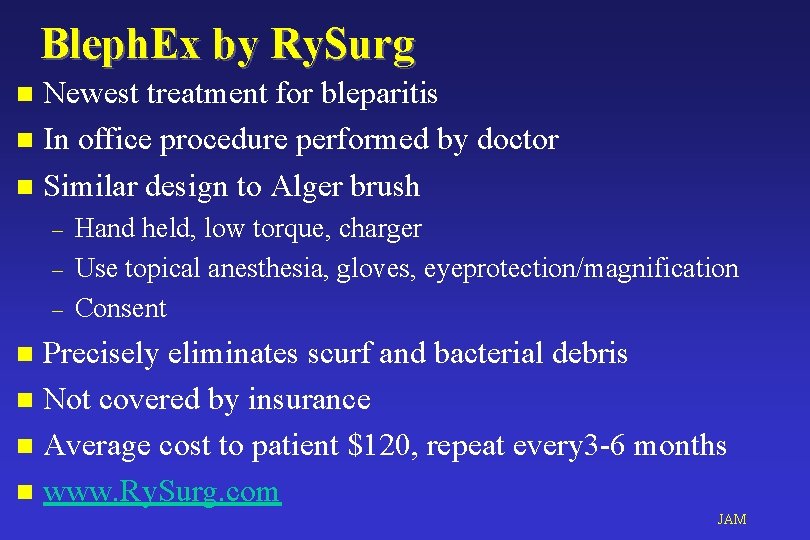
Bleph. Ex by Ry. Surg Newest treatment for bleparitis n In office procedure performed by doctor n Similar design to Alger brush n – – – Hand held, low torque, charger Use topical anesthesia, gloves, eyeprotection/magnification Consent Precisely eliminates scurf and bacterial debris n Not covered by insurance n Average cost to patient $120, repeat every 3 -6 months n www. Ry. Surg. com n JAM
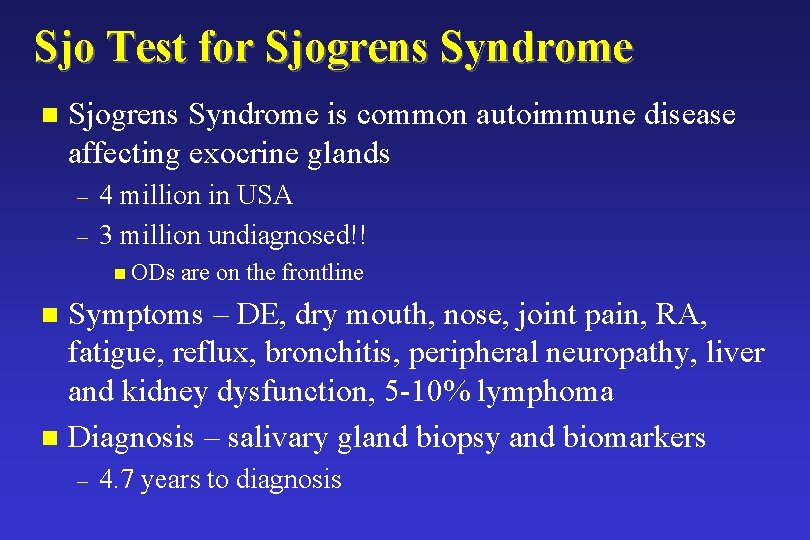
Sjo Test for Sjogrens Syndrome n Sjogrens Syndrome is common autoimmune disease affecting exocrine glands – – 4 million in USA 3 million undiagnosed!! n ODs are on the frontline Symptoms – DE, dry mouth, nose, joint pain, RA, fatigue, reflux, bronchitis, peripheral neuropathy, liver and kidney dysfunction, 5 -10% lymphoma n Diagnosis – salivary gland biopsy and biomarkers n – 4. 7 years to diagnosis
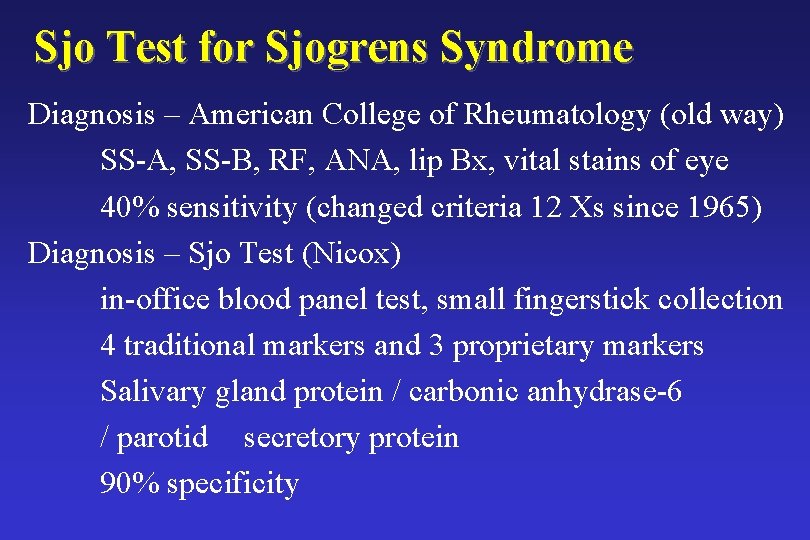
Sjo Test for Sjogrens Syndrome Diagnosis – American College of Rheumatology (old way) SS-A, SS-B, RF, ANA, lip Bx, vital stains of eye 40% sensitivity (changed criteria 12 Xs since 1965) Diagnosis – Sjo Test (Nicox) in-office blood panel test, small fingerstick collection 4 traditional markers and 3 proprietary markers Salivary gland protein / carbonic anhydrase-6 / parotid secretory protein 90% specificity
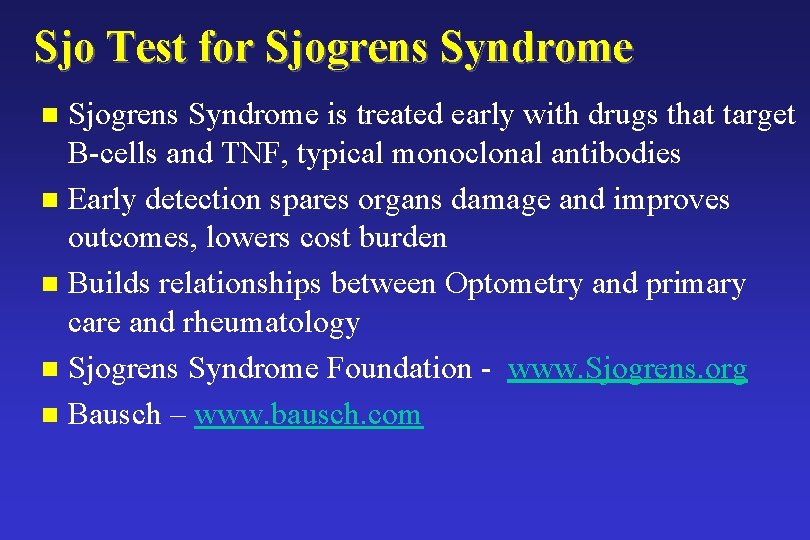
Sjo Test for Sjogrens Syndrome is treated early with drugs that target B-cells and TNF, typical monoclonal antibodies n Early detection spares organs damage and improves outcomes, lowers cost burden n Builds relationships between Optometry and primary care and rheumatology n Sjogrens Syndrome Foundation - www. Sjogrens. org n Bausch – www. bausch. com n
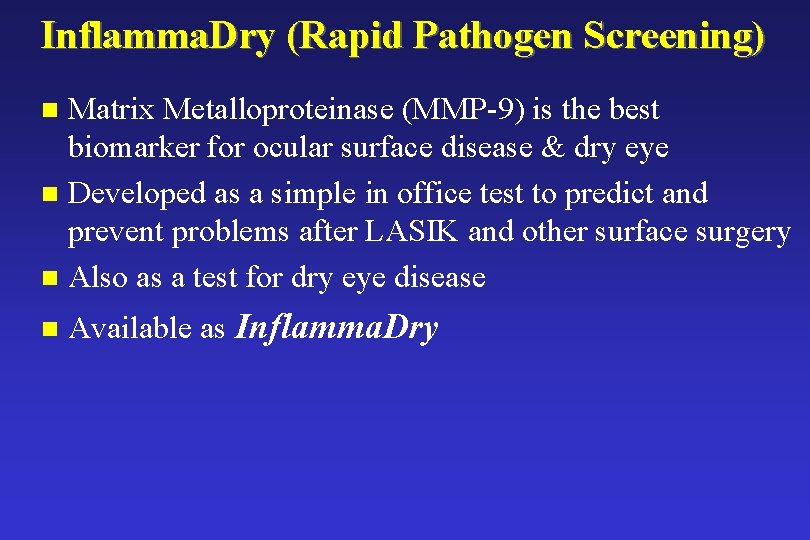
Inflamma. Dry (Rapid Pathogen Screening) Matrix Metalloproteinase (MMP-9) is the best biomarker for ocular surface disease & dry eye n Developed as a simple in office test to predict and prevent problems after LASIK and other surface surgery n Also as a test for dry eye disease n n Available as Inflamma. Dry
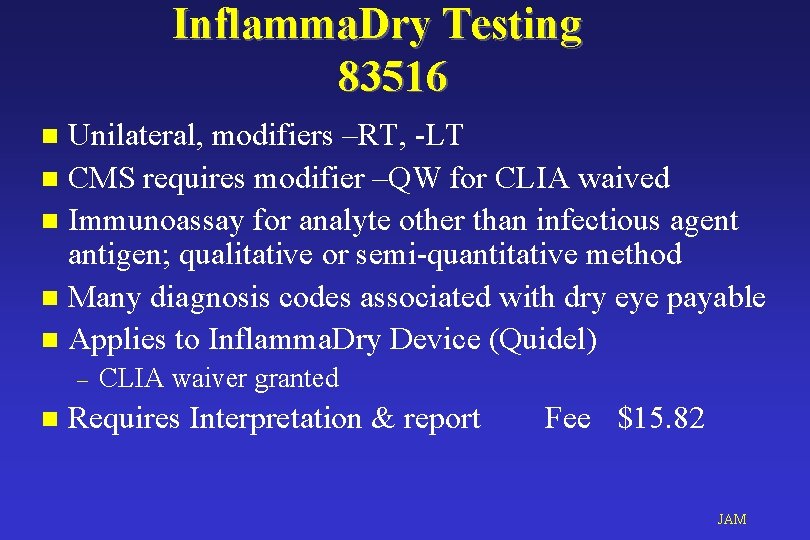
Inflamma. Dry Testing 83516 Unilateral, modifiers –RT, -LT n CMS requires modifier –QW for CLIA waived n Immunoassay for analyte other than infectious agent antigen; qualitative or semi-quantitative method n Many diagnosis codes associated with dry eye payable n Applies to Inflamma. Dry Device (Quidel) n – n CLIA waiver granted Requires Interpretation & report Fee $15. 82 JAM
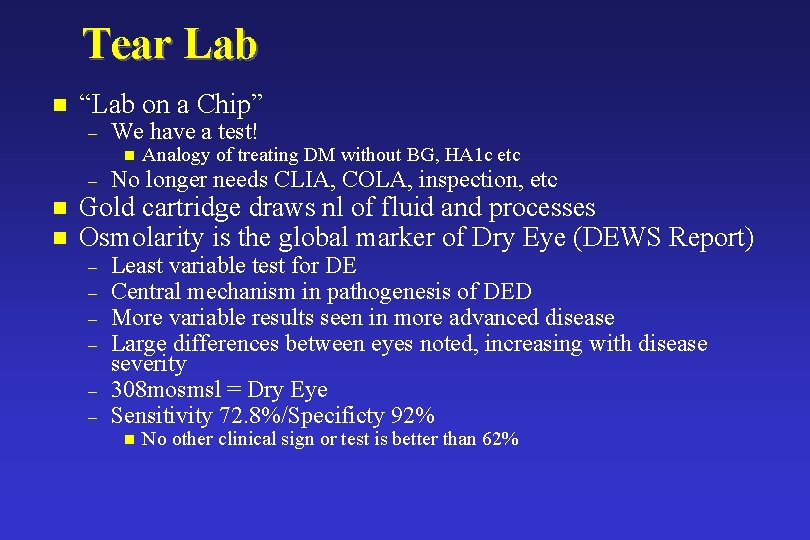
Tear Lab n “Lab on a Chip” – We have a test! n – n n Analogy of treating DM without BG, HA 1 c etc No longer needs CLIA, COLA, inspection, etc Gold cartridge draws nl of fluid and processes Osmolarity is the global marker of Dry Eye (DEWS Report) – – – Least variable test for DE Central mechanism in pathogenesis of DED More variable results seen in more advanced disease Large differences between eyes noted, increasing with disease severity 308 mosmsl = Dry Eye Sensitivity 72. 8%/Specificty 92% n No other clinical sign or test is better than 62%
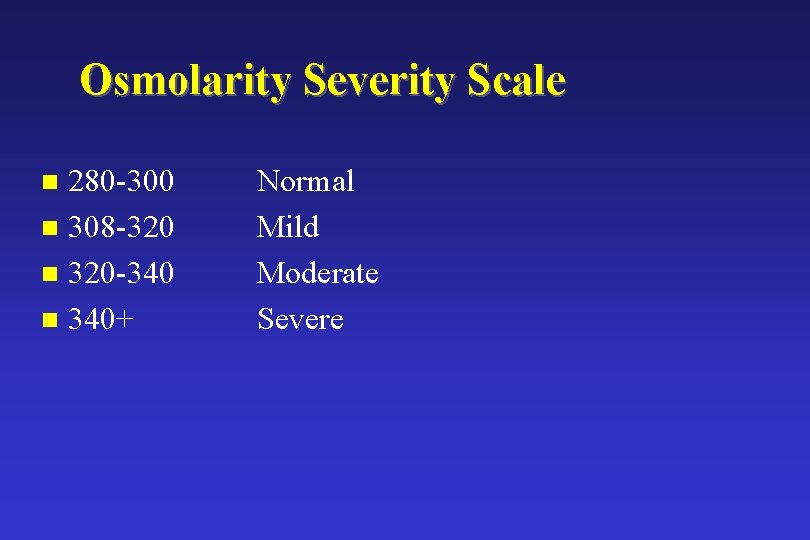
Osmolarity Severity Scale 280 -300 n 308 -320 n 320 -340 n 340+ n Normal Mild Moderate Severe
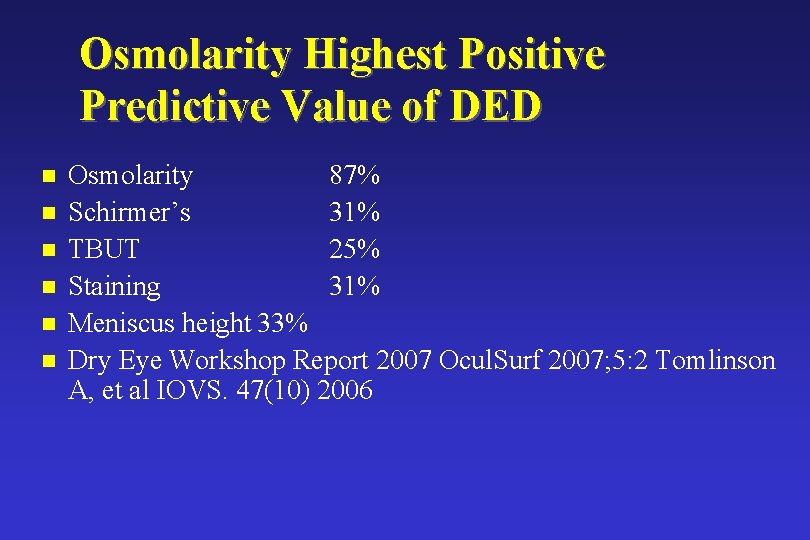
Osmolarity Highest Positive Predictive Value of DED n n n Osmolarity 87% Schirmer’s 31% TBUT 25% Staining 31% Meniscus height 33% Dry Eye Workshop Report 2007 Ocul. Surf 2007; 5: 2 Tomlinson A, et al IOVS. 47(10) 2006
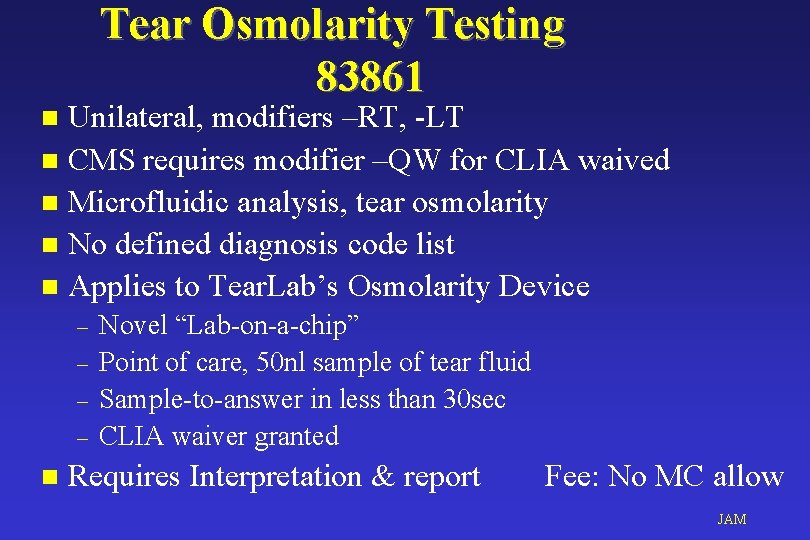
Tear Osmolarity Testing 83861 Unilateral, modifiers –RT, -LT n CMS requires modifier –QW for CLIA waived n Microfluidic analysis, tear osmolarity n No defined diagnosis code list n Applies to Tear. Lab’s Osmolarity Device n – – n Novel “Lab-on-a-chip” Point of care, 50 nl sample of tear fluid Sample-to-answer in less than 30 sec CLIA waiver granted Requires Interpretation & report Fee: No MC allow JAM
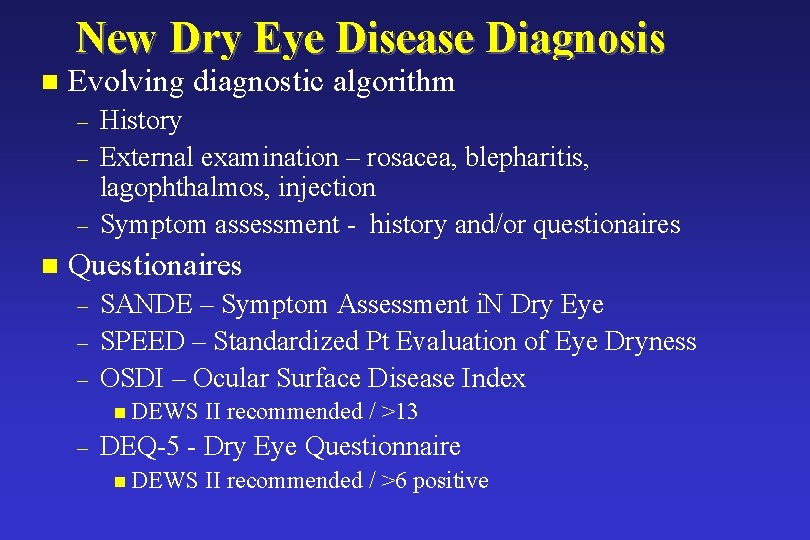
New Dry Eye Disease Diagnosis n Evolving diagnostic algorithm – – – n History External examination – rosacea, blepharitis, lagophthalmos, injection Symptom assessment - history and/or questionaires Questionaires – – – SANDE – Symptom Assessment i. N Dry Eye SPEED – Standardized Pt Evaluation of Eye Dryness OSDI – Ocular Surface Disease Index n DEWS – II recommended / >13 DEQ-5 - Dry Eye Questionnaire n DEWS II recommended / >6 positive
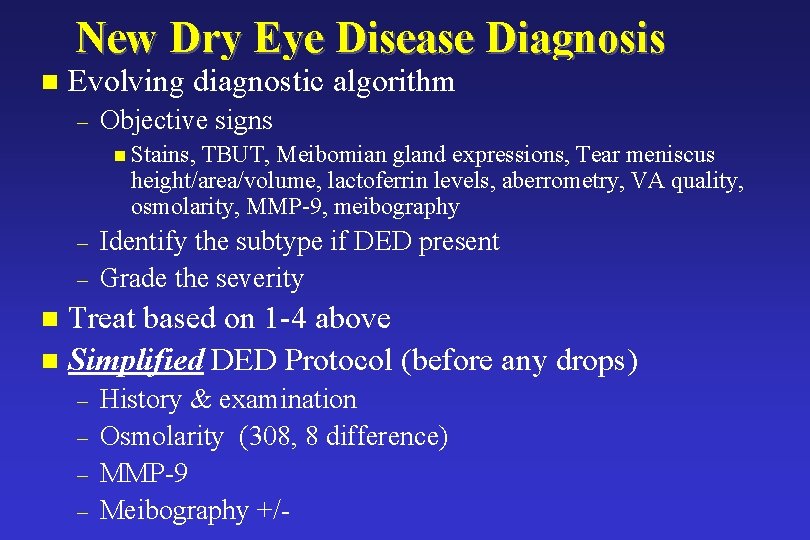
New Dry Eye Disease Diagnosis n Evolving diagnostic algorithm – Objective signs n Stains, TBUT, Meibomian gland expressions, Tear meniscus height/area/volume, lactoferrin levels, aberrometry, VA quality, osmolarity, MMP-9, meibography – – Identify the subtype if DED present Grade the severity Treat based on 1 -4 above n Simplified DED Protocol (before any drops) n – – History & examination Osmolarity (308, 8 difference) MMP-9 Meibography +/-
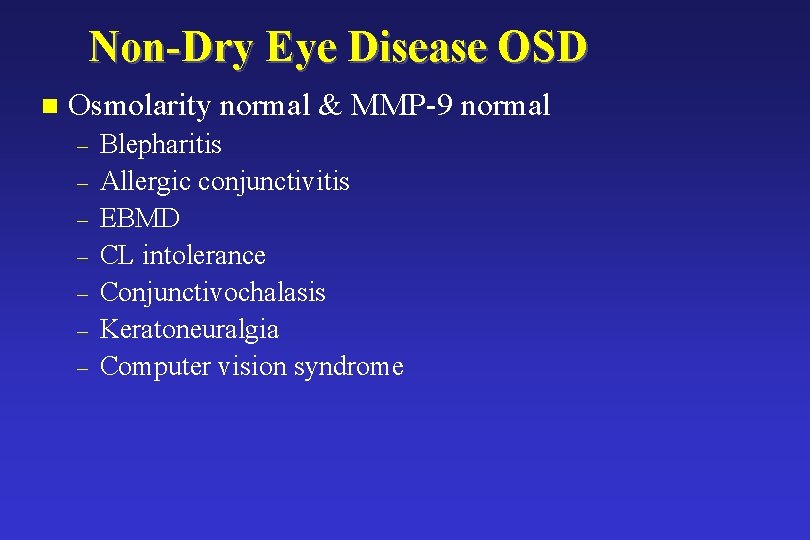
Non-Dry Eye Disease OSD n Osmolarity normal & MMP-9 normal – – – – Blepharitis Allergic conjunctivitis EBMD CL intolerance Conjunctivochalasis Keratoneuralgia Computer vision syndrome
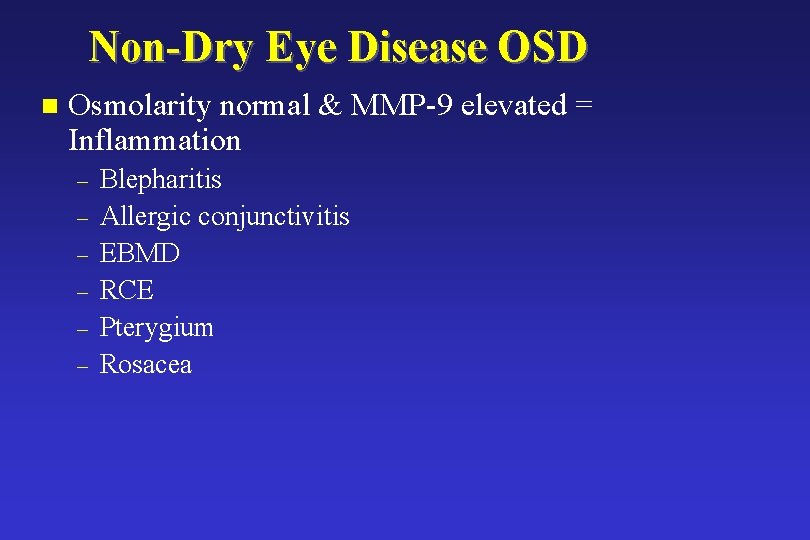
Non-Dry Eye Disease OSD n Osmolarity normal & MMP-9 elevated = Inflammation – – – Blepharitis Allergic conjunctivitis EBMD RCE Pterygium Rosacea
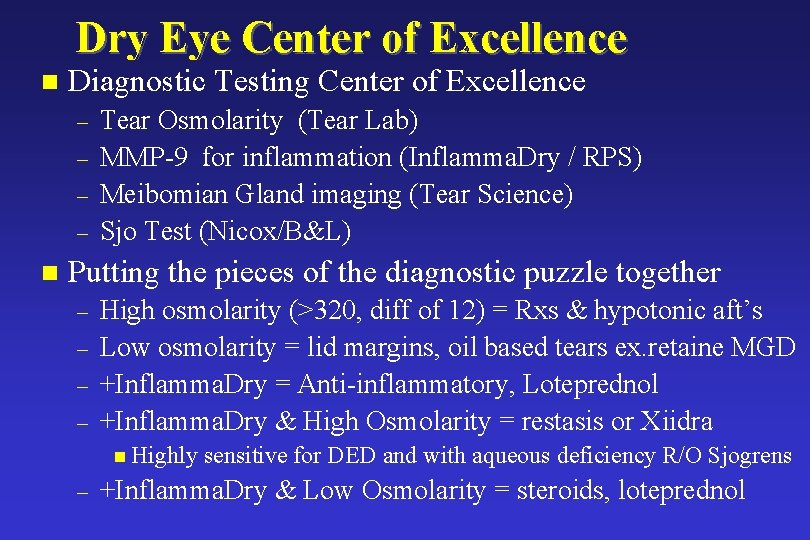
Dry Eye Center of Excellence n Diagnostic Testing Center of Excellence – – n Tear Osmolarity (Tear Lab) MMP-9 for inflammation (Inflamma. Dry / RPS) Meibomian Gland imaging (Tear Science) Sjo Test (Nicox/B&L) Putting the pieces of the diagnostic puzzle together – – High osmolarity (>320, diff of 12) = Rxs & hypotonic aft’s Low osmolarity = lid margins, oil based tears ex. retaine MGD +Inflamma. Dry = Anti-inflammatory, Loteprednol +Inflamma. Dry & High Osmolarity = restasis or Xiidra n Highly – sensitive for DED and with aqueous deficiency R/O Sjogrens +Inflamma. Dry & Low Osmolarity = steroids, loteprednol
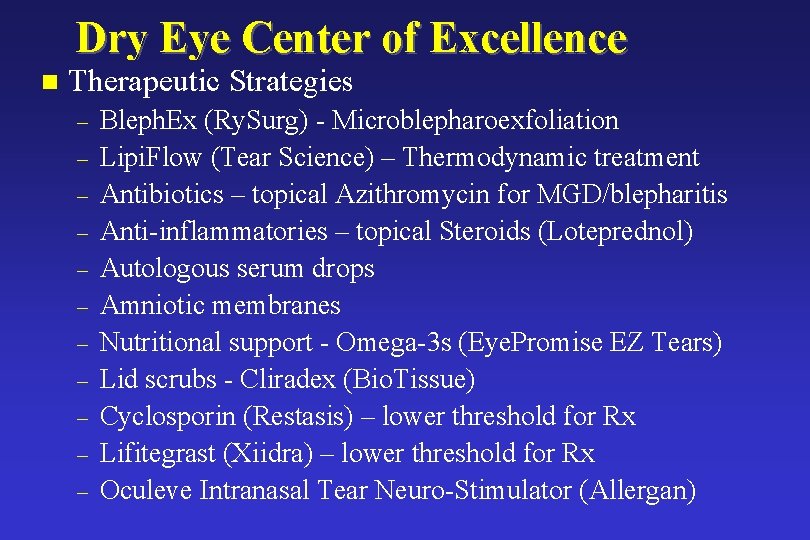
Dry Eye Center of Excellence n Therapeutic Strategies – – – Bleph. Ex (Ry. Surg) - Microblepharoexfoliation Lipi. Flow (Tear Science) – Thermodynamic treatment Antibiotics – topical Azithromycin for MGD/blepharitis Anti-inflammatories – topical Steroids (Loteprednol) Autologous serum drops Amniotic membranes Nutritional support - Omega-3 s (Eye. Promise EZ Tears) Lid scrubs - Cliradex (Bio. Tissue) Cyclosporin (Restasis) – lower threshold for Rx Lifitegrast (Xiidra) – lower threshold for Rx Oculeve Intranasal Tear Neuro-Stimulator (Allergan)
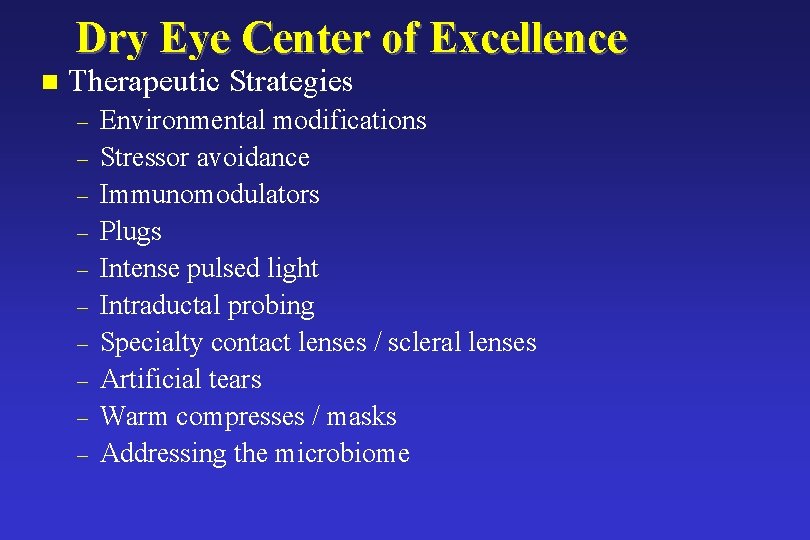
Dry Eye Center of Excellence n Therapeutic Strategies – – – – – Environmental modifications Stressor avoidance Immunomodulators Plugs Intense pulsed light Intraductal probing Specialty contact lenses / scleral lenses Artificial tears Warm compresses / masks Addressing the microbiome
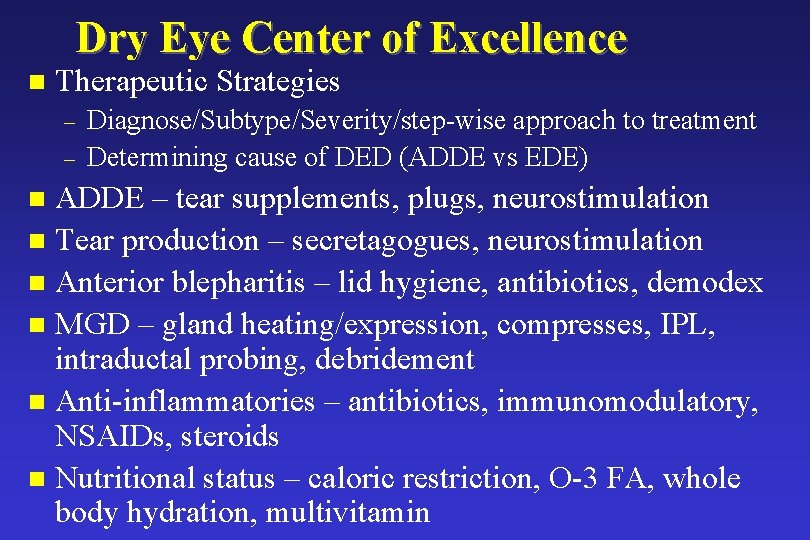
Dry Eye Center of Excellence n Therapeutic Strategies – – Diagnose/Subtype/Severity/step-wise approach to treatment Determining cause of DED (ADDE vs EDE) ADDE – tear supplements, plugs, neurostimulation n Tear production – secretagogues, neurostimulation n Anterior blepharitis – lid hygiene, antibiotics, demodex n MGD – gland heating/expression, compresses, IPL, intraductal probing, debridement n Anti-inflammatories – antibiotics, immunomodulatory, NSAIDs, steroids n Nutritional status – caloric restriction, O-3 FA, whole body hydration, multivitamin n
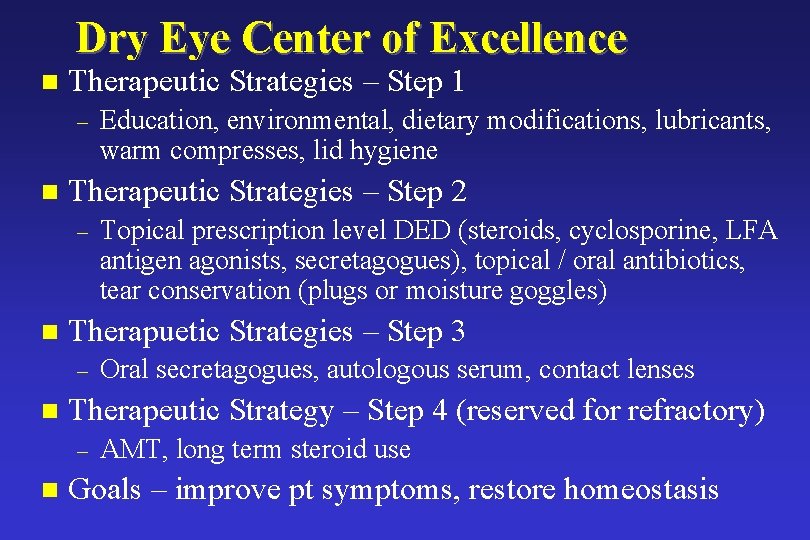
Dry Eye Center of Excellence n Therapeutic Strategies – Step 1 – n Therapeutic Strategies – Step 2 – n Oral secretagogues, autologous serum, contact lenses Therapeutic Strategy – Step 4 (reserved for refractory) – n Topical prescription level DED (steroids, cyclosporine, LFA antigen agonists, secretagogues), topical / oral antibiotics, tear conservation (plugs or moisture goggles) Therapuetic Strategies – Step 3 – n Education, environmental, dietary modifications, lubricants, warm compresses, lid hygiene AMT, long term steroid use Goals – improve pt symptoms, restore homeostasis
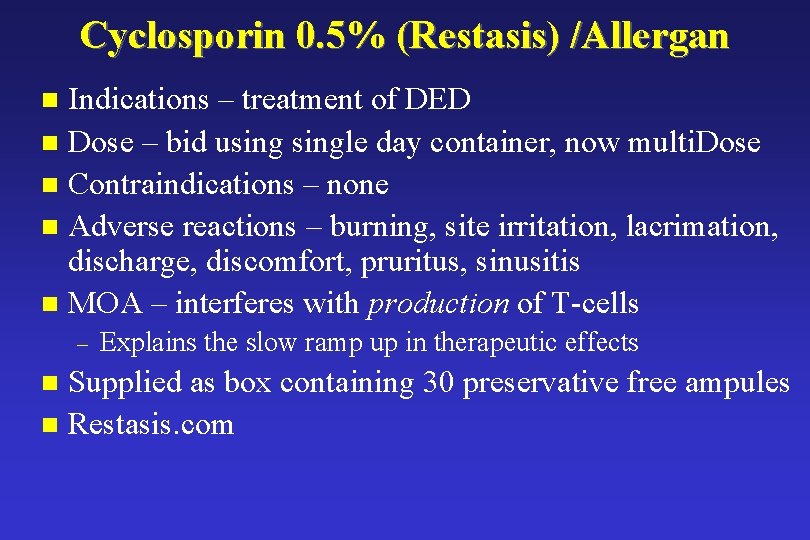
Cyclosporin 0. 5% (Restasis) /Allergan Indications – treatment of DED n Dose – bid usingle day container, now multi. Dose n Contraindications – none n Adverse reactions – burning, site irritation, lacrimation, discharge, discomfort, pruritus, sinusitis n MOA – interferes with production of T-cells n – Explains the slow ramp up in therapeutic effects Supplied as box containing 30 preservative free ampules n Restasis. com n
Lifitegrast/SARCode Biosciences Brisbane CA n T cell modulator similar to cyclosporin but FASTER – Starts in 2 weeks!! Lymphocyte function-associated antigen (LFA-1) inhibitor of intracellular adhesion molecules (ICAM-1) n Prevents binding of T-cell mediated inflammation (LFA -1 to its partner I-CAM-1) n Stops activation of T-cells, migration of T-cells, recruitment of T-cells, and prevents release of cytokines n Works on active T lymphocytes n Cyclosporin works on the production of T lymphocytes which takes 100 -110 days to complete a cycle of inflammation; Lifitigrast works on circulating T cells n
Lifitegrast 5% (Xiidra) /Shire Indications – treatment of the signs & symptoms of DE n Dose – bid usingle dose container n Contraindications – none n Adverse reactions – site irritation, HA, lacrimation, discharge, discomfort, pruritus, sinusitis, dysgeusia (unusual taste sensation); no data on pregnancy or lacrimation or pediatric use (<17) n Supplied as foil pouch containing 5 single use containers; room temperature n Speculation (Pflugfelder) that Lifitigrast potential to block afferent and efferent arms of inflammatory cycle n Xiidra-ECP. com n
True. Tear Neurostimulator (Allergan) User controlled Nasal neuro-stimulator increases lacrimal tear production by stimulating trigeminal fibers n Prescription device, drug free, drop free device, quick n Well tolerated, mild side effects n Electric charger, disposable tips (change daily) n “Dose” – at least twice daily, more if needed, no longer than 3 minutes per application, no retreatment sooner than 1 hr n n Friedman NJ “A non randomized open label study to evaluate the effect of nasal stimulation on tear production in subjects with dry eye disease” Clin Ophthalmol. 2016; 10: 795 -804
True. Tear Neurostimulator (Allergan) n AE – lightheaded, itchy nose, nosebleeds, nasal pain (10%), sore eye, sinus pain, nasal ulcer, chronic nosebleeds – most less than 1% Contraindications – cardiac pacemaker, defibrillators, cochlear implants, hemophilia, no use in bath/shower, driving, within 3 ft of microwave therapy, flammable anesthetics, not proven in aqueous deficient dry eye n Results of trials in 2 sites, N=48, F 81%, >22 yo, shirmer <10, Staining score 2/4 n – Treated Av Shirmer – 25 / Sham – 9. 2
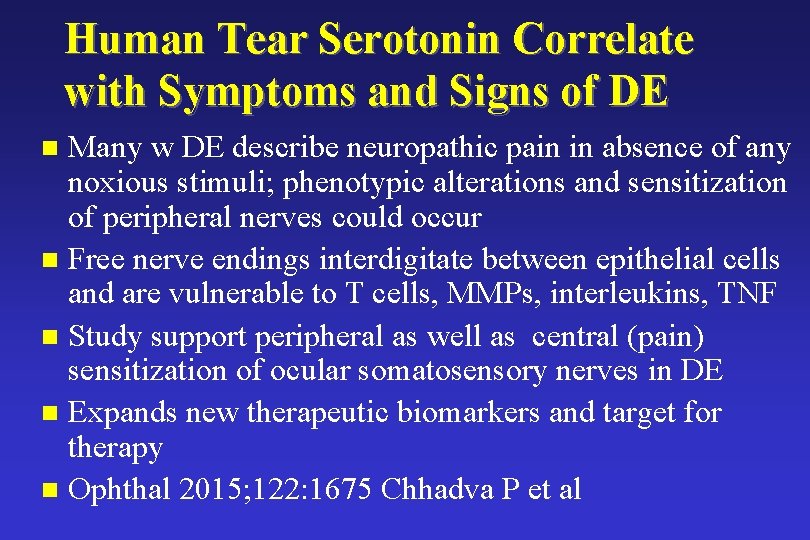
Human Tear Serotonin Correlate with Symptoms and Signs of DE Many w DE describe neuropathic pain in absence of any noxious stimuli; phenotypic alterations and sensitization of peripheral nerves could occur n Free nerve endings interdigitate between epithelial cells and are vulnerable to T cells, MMPs, interleukins, TNF n Study support peripheral as well as central (pain) sensitization of ocular somatosensory nerves in DE n Expands new therapeutic biomarkers and target for therapy n Ophthal 2015; 122: 1675 Chhadva P et al n
Allergic Conjunctivitis n Diagnostic Testing – Doctor’s Allergy Formula – – – No needle proprietary allergy testing in office point-of-care Panel of 60 antigens, specific to each region in the country n No – – – food allergens 15 minutes for results FDA approved, covered by Medicare & major medical Discontinue topical & oral antihistamines, nasal sprays etc for 5 days Must have doctor in office during testing Must have Epi-PEN and Benadryl on hand Bausch & Lomb Diagnostics Division Danielle. meert@Bausch. com
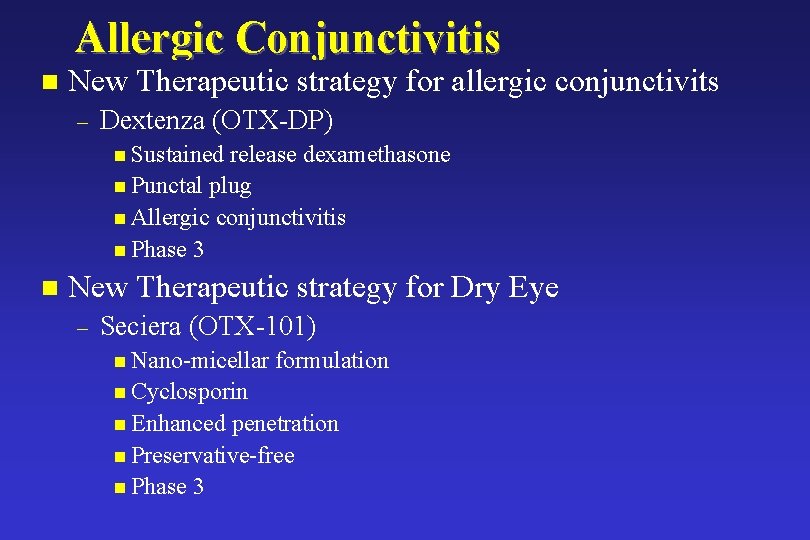
Allergic Conjunctivitis n New Therapeutic strategy for allergic conjunctivits – Dextenza (OTX-DP) n Sustained release dexamethasone n Punctal plug n Allergic conjunctivitis n Phase 3 n New Therapeutic strategy for Dry Eye – Seciera (OTX-101) n Nano-micellar formulation n Cyclosporin n Enhanced penetration n Preservative-free n Phase 3
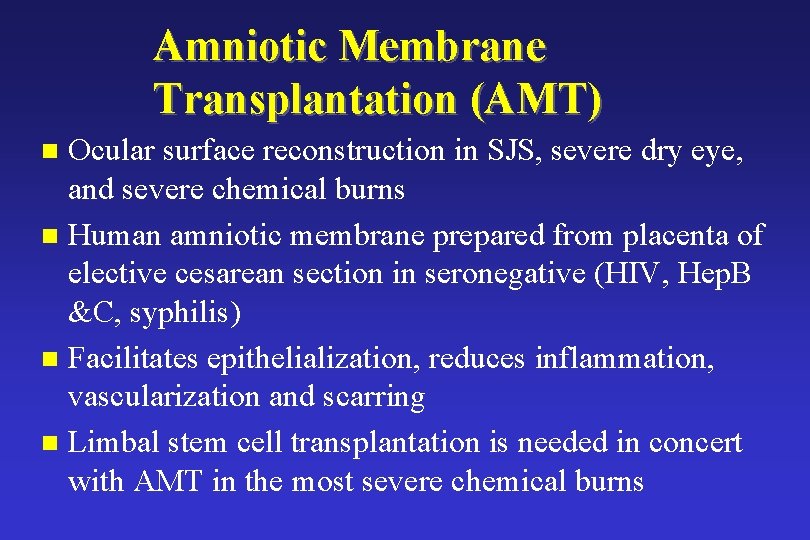
Amniotic Membrane Transplantation (AMT) Ocular surface reconstruction in SJS, severe dry eye, and severe chemical burns n Human amniotic membrane prepared from placenta of elective cesarean section in seronegative (HIV, Hep. B &C, syphilis) n Facilitates epithelialization, reduces inflammation, vascularization and scarring n Limbal stem cell transplantation is needed in concert with AMT in the most severe chemical burns n
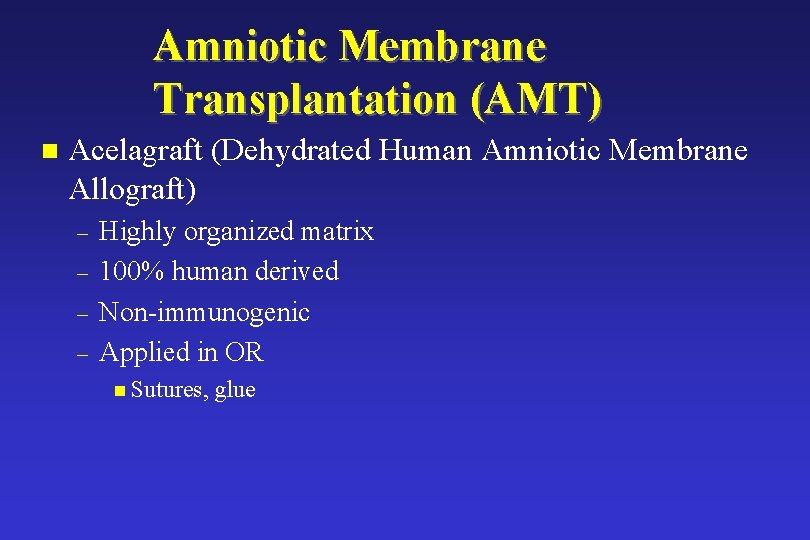
Amniotic Membrane Transplantation (AMT) n Acelagraft (Dehydrated Human Amniotic Membrane Allograft) – – Highly organized matrix 100% human derived Non-immunogenic Applied in OR n Sutures, glue
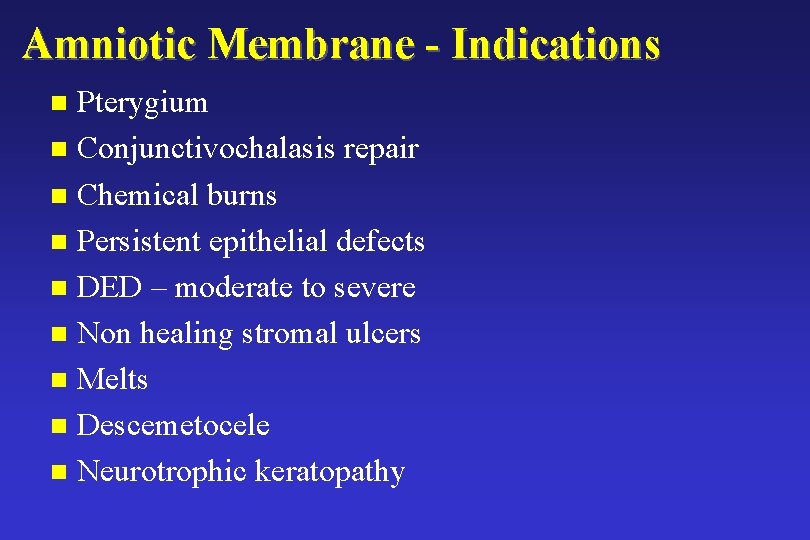
Amniotic Membrane - Indications Pterygium n Conjunctivochalasis repair n Chemical burns n Persistent epithelial defects n DED – moderate to severe n Non healing stromal ulcers n Melts n Descemetocele n Neurotrophic keratopathy n
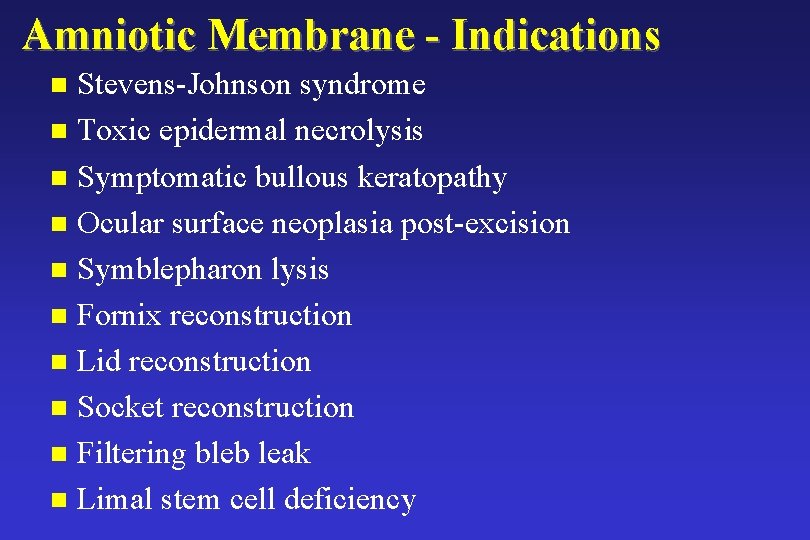
Amniotic Membrane - Indications Stevens-Johnson syndrome n Toxic epidermal necrolysis n Symptomatic bullous keratopathy n Ocular surface neoplasia post-excision n Symblepharon lysis n Fornix reconstruction n Lid reconstruction n Socket reconstruction n Filtering bleb leak n Limal stem cell deficiency n
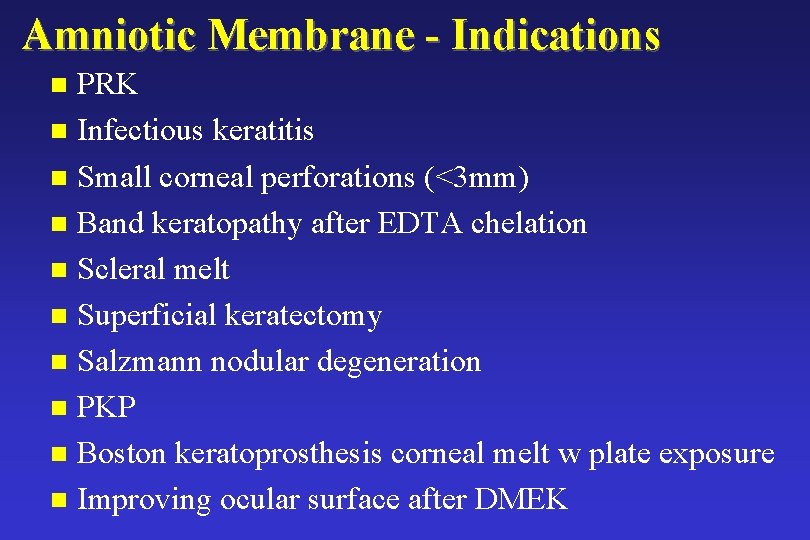
Amniotic Membrane - Indications PRK n Infectious keratitis n Small corneal perforations (<3 mm) n Band keratopathy after EDTA chelation n Scleral melt n Superficial keratectomy n Salzmann nodular degeneration n PKP n Boston keratoprosthesis corneal melt w plate exposure n Improving ocular surface after DMEK n
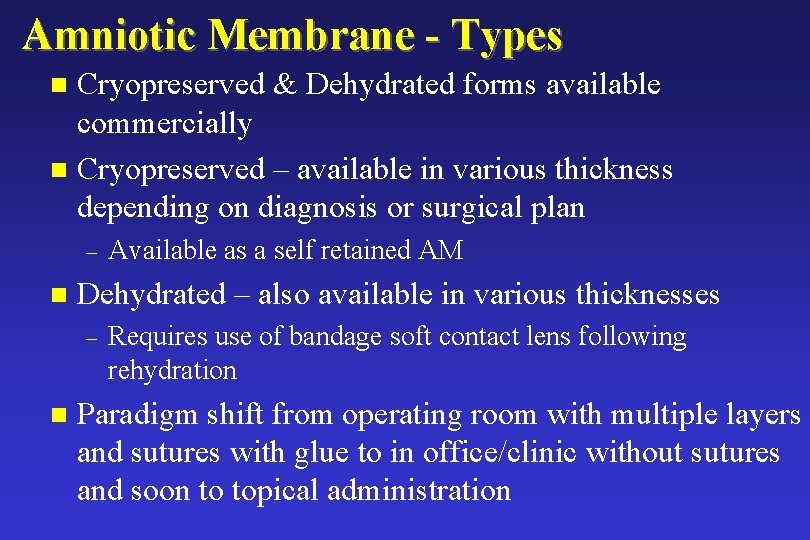
Amniotic Membrane - Types Cryopreserved & Dehydrated forms available commercially n Cryopreserved – available in various thickness depending on diagnosis or surgical plan n – n Dehydrated – also available in various thicknesses – n Available as a self retained AM Requires use of bandage soft contact lens following rehydration Paradigm shift from operating room with multiple layers and sutures with glue to in office/clinic without sutures and soon to topical administration
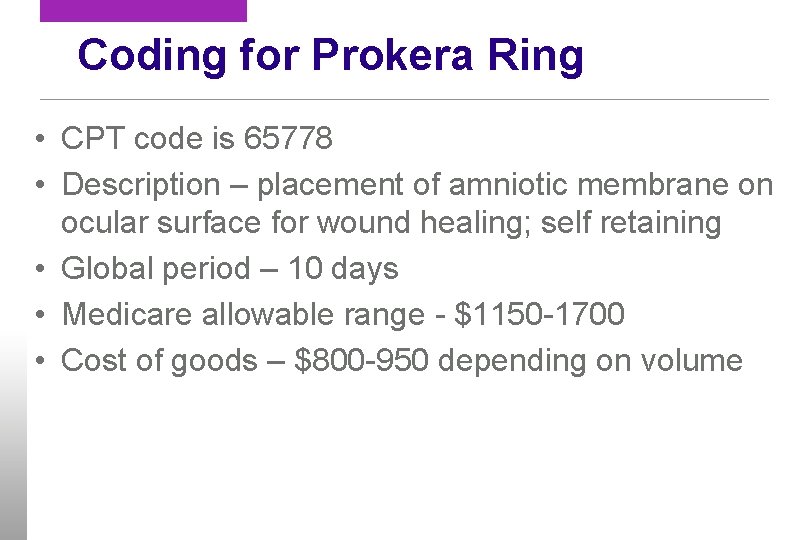
Coding for Prokera Ring • CPT code is 65778 • Description – placement of amniotic membrane on ocular surface for wound healing; self retaining • Global period – 10 days • Medicare allowable range - $1150 -1700 • Cost of goods – $800 -950 depending on volume JAM
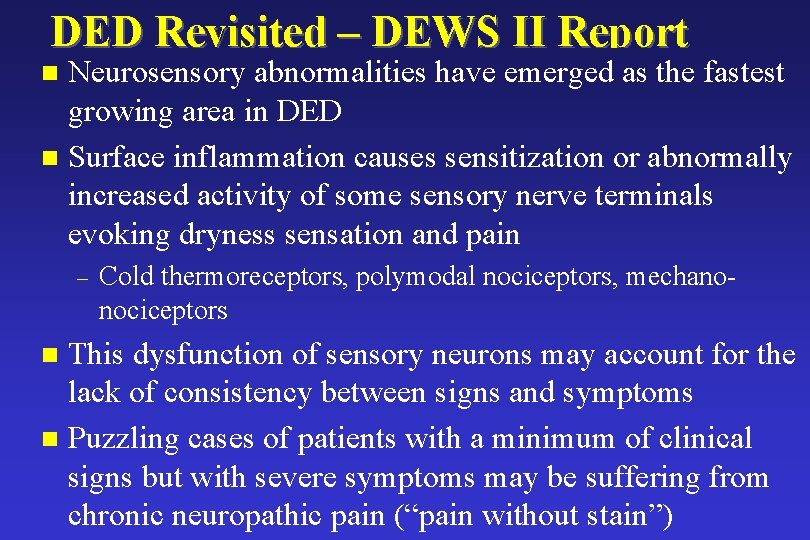
DED Revisited – DEWS II Report Neurosensory abnormalities have emerged as the fastest growing area in DED n Surface inflammation causes sensitization or abnormally increased activity of some sensory nerve terminals evoking dryness sensation and pain n – Cold thermoreceptors, polymodal nociceptors, mechanonociceptors This dysfunction of sensory neurons may account for the lack of consistency between signs and symptoms n Puzzling cases of patients with a minimum of clinical signs but with severe symptoms may be suffering from chronic neuropathic pain (“pain without stain”) n
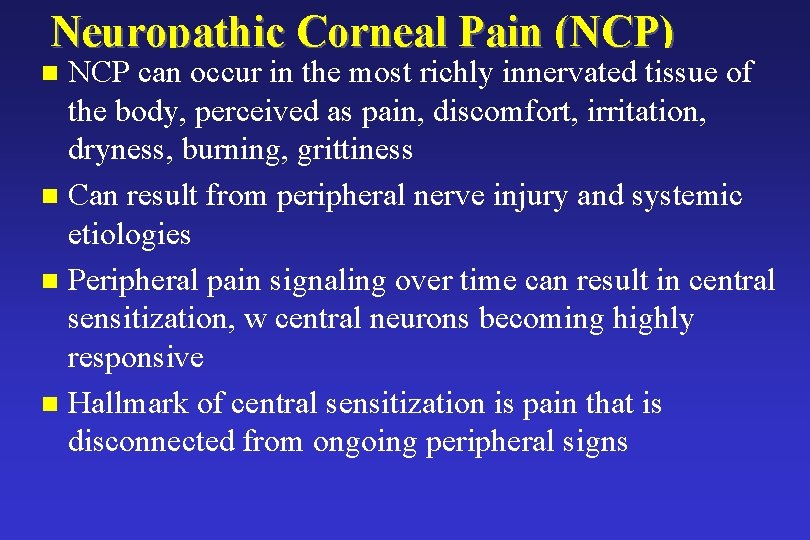
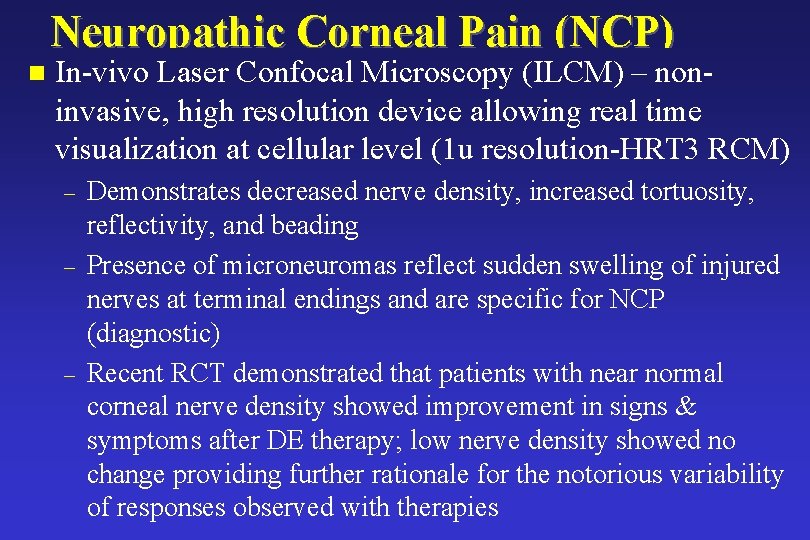
Neuropathic Corneal Pain (NCP) NCP can occur in the most richly innervated tissue of the body, perceived as pain, discomfort, irritation, dryness, burning, grittiness n Can result from peripheral nerve injury and systemic etiologies n Peripheral pain signaling over time can result in central sensitization, w central neurons becoming highly responsive n Hallmark of central sensitization is pain that is disconnected from ongoing peripheral signs n
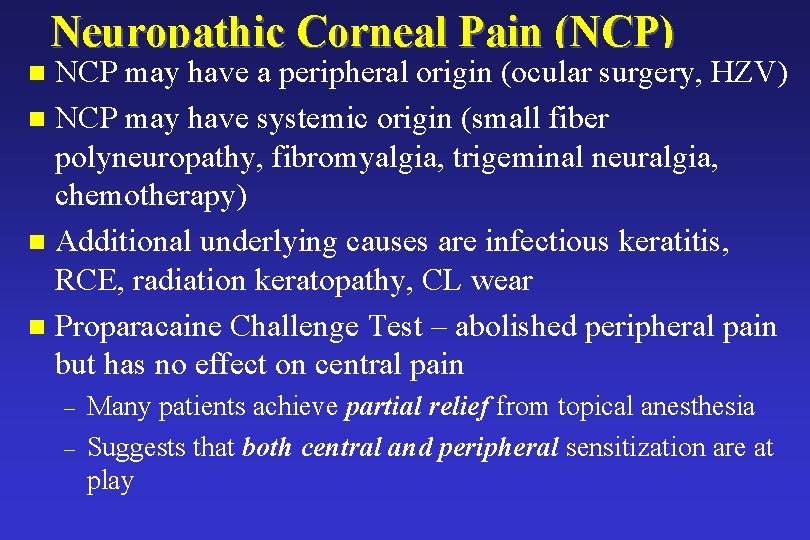
Neuropathic Corneal Pain (NCP) NCP may have a peripheral origin (ocular surgery, HZV) n NCP may have systemic origin (small fiber polyneuropathy, fibromyalgia, trigeminal neuralgia, chemotherapy) n Additional underlying causes are infectious keratitis, RCE, radiation keratopathy, CL wear n Proparacaine Challenge Test – abolished peripheral pain but has no effect on central pain n – – Many patients achieve partial relief from topical anesthesia Suggests that both central and peripheral sensitization are at play
Neuropathic Corneal Pain (NCP) n In-vivo Laser Confocal Microscopy (ILCM) – noninvasive, high resolution device allowing real time visualization at cellular level (1 u resolution-HRT 3 RCM) – – – Demonstrates decreased nerve density, increased tortuosity, reflectivity, and beading Presence of microneuromas reflect sudden swelling of injured nerves at terminal endings and are specific for NCP (diagnostic) Recent RCT demonstrated that patients with near normal corneal nerve density showed improvement in signs & symptoms after DE therapy; low nerve density showed no change providing further rationale for the notorious variability of responses observed with therapies
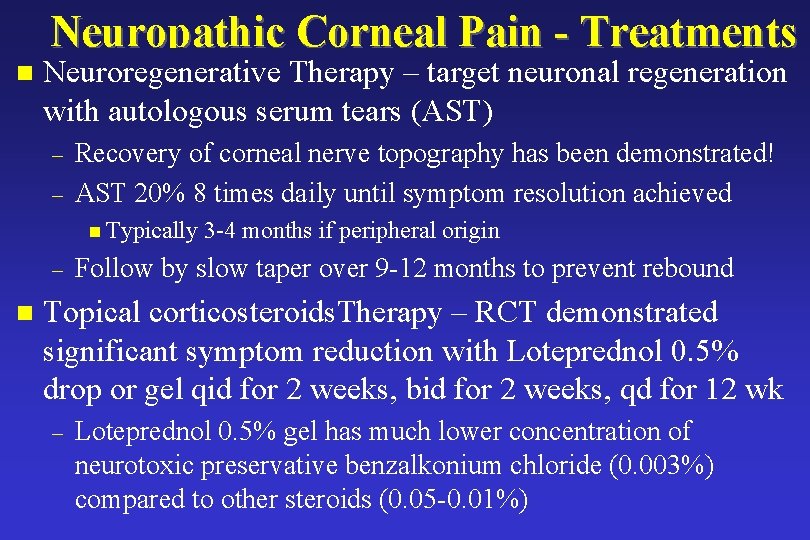
Neuropathic Corneal Pain - Treatments n Neuroregenerative Therapy – target neuronal regeneration with autologous serum tears (AST) – – Recovery of corneal nerve topography has been demonstrated! AST 20% 8 times daily until symptom resolution achieved n Typically – n 3 -4 months if peripheral origin Follow by slow taper over 9 -12 months to prevent rebound Topical corticosteroids. Therapy – RCT demonstrated significant symptom reduction with Loteprednol 0. 5% drop or gel qid for 2 weeks, bid for 2 weeks, qd for 12 wk – Loteprednol 0. 5% gel has much lower concentration of neurotoxic preservative benzalkonium chloride (0. 003%) compared to other steroids (0. 05 -0. 01%)
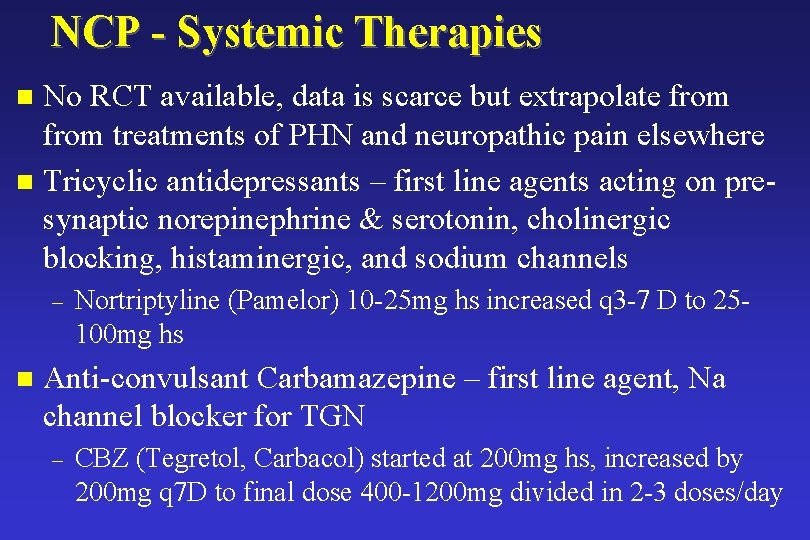
NCP - Systemic Therapies No RCT available, data is scarce but extrapolate from treatments of PHN and neuropathic pain elsewhere n Tricyclic antidepressants – first line agents acting on presynaptic norepinephrine & serotonin, cholinergic blocking, histaminergic, and sodium channels n – n Nortriptyline (Pamelor) 10 -25 mg hs increased q 3 -7 D to 25100 mg hs Anti-convulsant Carbamazepine – first line agent, Na channel blocker for TGN – CBZ (Tegretol, Carbacol) started at 200 mg hs, increased by 200 mg q 7 D to final dose 400 -1200 mg divided in 2 -3 doses/day
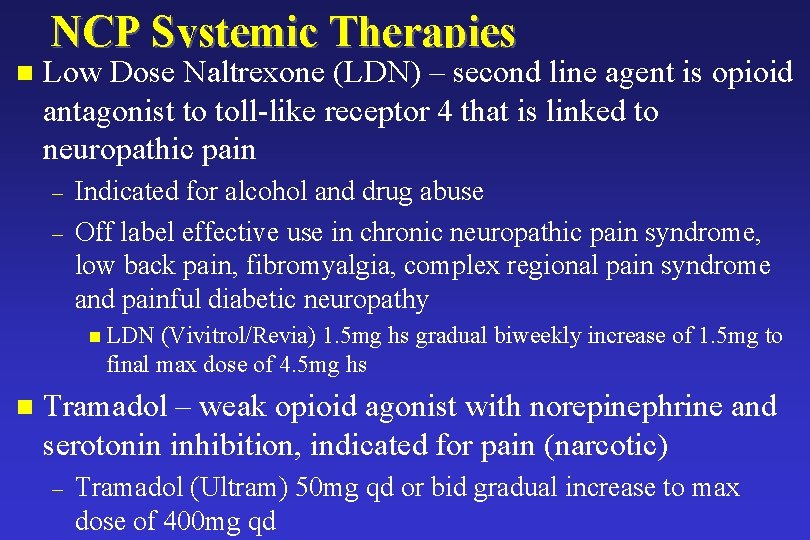
NCP Systemic Therapies n Low Dose Naltrexone (LDN) – second line agent is opioid antagonist to toll-like receptor 4 that is linked to neuropathic pain – – Indicated for alcohol and drug abuse Off label effective use in chronic neuropathic pain syndrome, low back pain, fibromyalgia, complex regional pain syndrome and painful diabetic neuropathy n LDN (Vivitrol/Revia) 1. 5 mg hs gradual biweekly increase of 1. 5 mg to final max dose of 4. 5 mg hs n Tramadol – weak opioid agonist with norepinephrine and serotonin inhibition, indicated for pain (narcotic) – Tramadol (Ultram) 50 mg qd or bid gradual increase to max dose of 400 mg qd
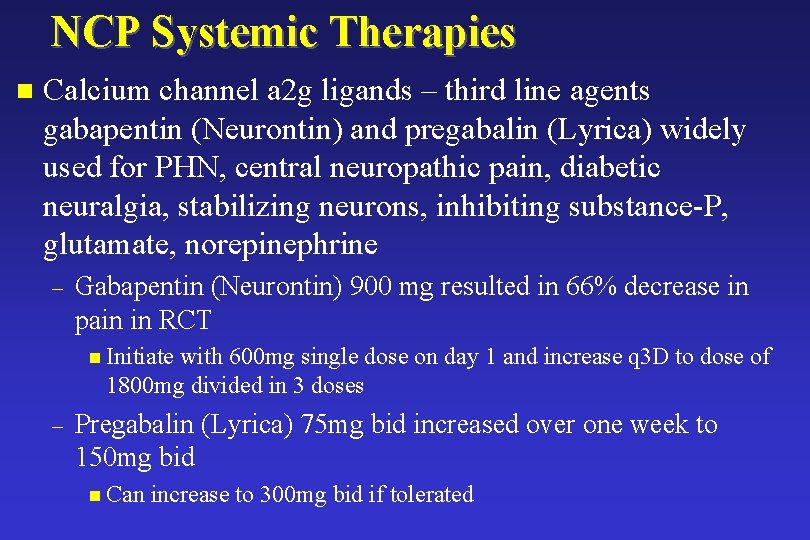
NCP Systemic Therapies n Calcium channel a 2 g ligands – third line agents gabapentin (Neurontin) and pregabalin (Lyrica) widely used for PHN, central neuropathic pain, diabetic neuralgia, stabilizing neurons, inhibiting substance-P, glutamate, norepinephrine – Gabapentin (Neurontin) 900 mg resulted in 66% decrease in pain in RCT n Initiate with 600 mg single dose on day 1 and increase q 3 D to dose of 1800 mg divided in 3 doses – Pregabalin (Lyrica) 75 mg bid increased over one week to 150 mg bid n Can increase to 300 mg bid if tolerated
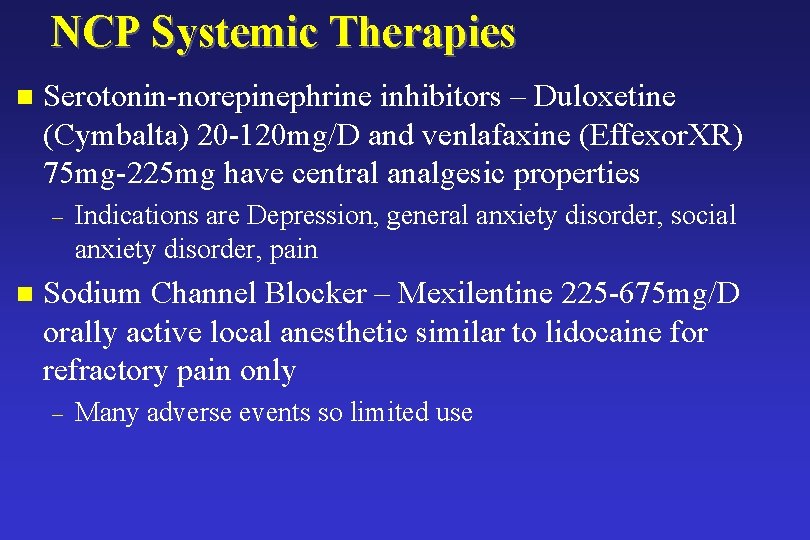
NCP Systemic Therapies n Serotonin-norepinephrine inhibitors – Duloxetine (Cymbalta) 20 -120 mg/D and venlafaxine (Effexor. XR) 75 mg-225 mg have central analgesic properties – n Indications are Depression, general anxiety disorder, social anxiety disorder, pain Sodium Channel Blocker – Mexilentine 225 -675 mg/D orally active local anesthetic similar to lidocaine for refractory pain only – Many adverse events so limited use
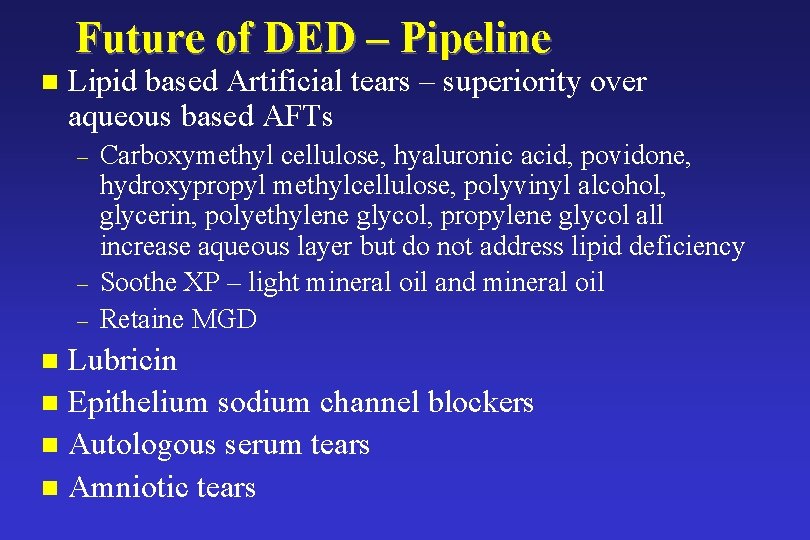
Future of DED – Pipeline n Lipid based Artificial tears – superiority over aqueous based AFTs – – – Carboxymethyl cellulose, hyaluronic acid, povidone, hydroxypropyl methylcellulose, polyvinyl alcohol, glycerin, polyethylene glycol, propylene glycol all increase aqueous layer but do not address lipid deficiency Soothe XP – light mineral oil and mineral oil Retaine MGD Lubricin n Epithelium sodium channel blockers n Autologous serum tears n Amniotic tears n
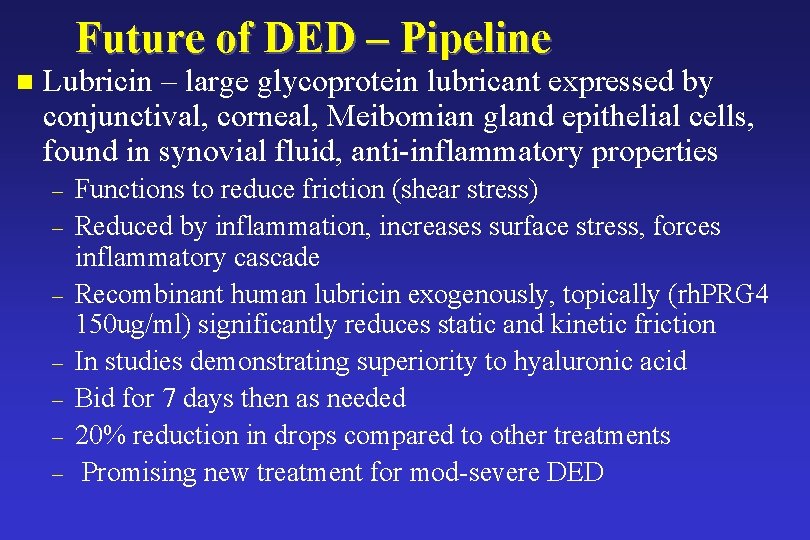
Future of DED – Pipeline n Lubricin – large glycoprotein lubricant expressed by conjunctival, corneal, Meibomian gland epithelial cells, found in synovial fluid, anti-inflammatory properties – – – – Functions to reduce friction (shear stress) Reduced by inflammation, increases surface stress, forces inflammatory cascade Recombinant human lubricin exogenously, topically (rh. PRG 4 150 ug/ml) significantly reduces static and kinetic friction In studies demonstrating superiority to hyaluronic acid Bid for 7 days then as needed 20% reduction in drops compared to other treatments Promising new treatment for mod-severe DED
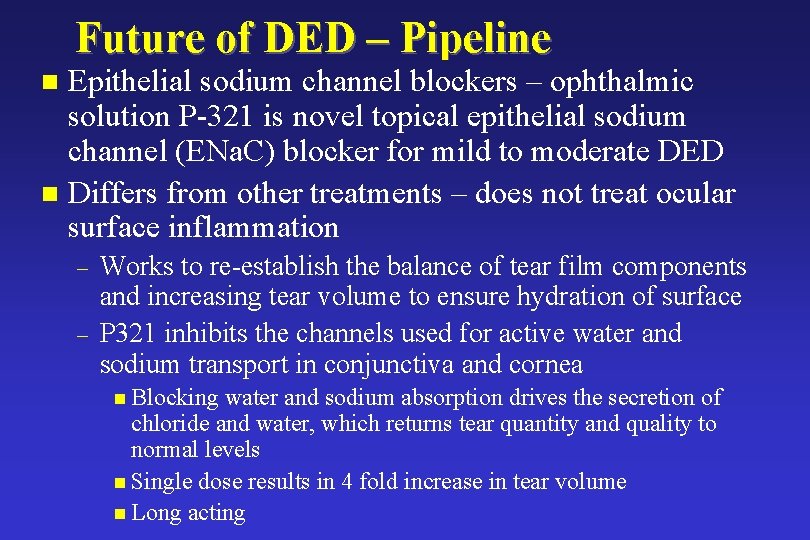
Future of DED – Pipeline Epithelial sodium channel blockers – ophthalmic solution P-321 is novel topical epithelial sodium channel (ENa. C) blocker for mild to moderate DED n Differs from other treatments – does not treat ocular surface inflammation n – – Works to re-establish the balance of tear film components and increasing tear volume to ensure hydration of surface P 321 inhibits the channels used for active water and sodium transport in conjunctiva and cornea n Blocking water and sodium absorption drives the secretion of chloride and water, which returns tear quantity and quality to normal levels n Single dose results in 4 fold increase in tear volume n Long acting
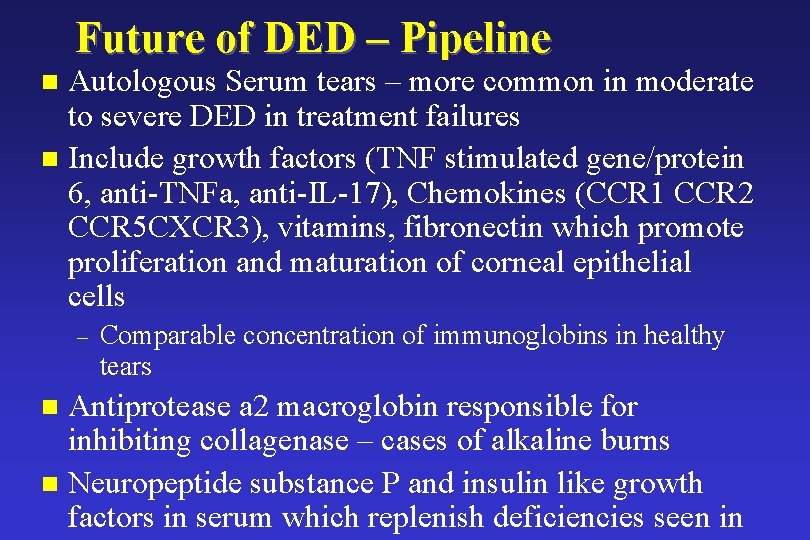
Future of DED – Pipeline Autologous Serum tears – more common in moderate to severe DED in treatment failures n Include growth factors (TNF stimulated gene/protein 6, anti-TNFa, anti-IL-17), Chemokines (CCR 1 CCR 2 CCR 5 CXCR 3), vitamins, fibronectin which promote proliferation and maturation of corneal epithelial cells n – Comparable concentration of immunoglobins in healthy tears Antiprotease a 2 macroglobin responsible for inhibiting collagenase – cases of alkaline burns n Neuropeptide substance P and insulin like growth factors in serum which replenish deficiencies seen in n
Future of DED – Pipeline n Amniotic tears / Human amniotic fluid (HAF) – topical suspension elicits same healing affects as AMT – n Anti-inflammatory, antiangiogenic & anti-scarring effects derived without the discomfort and visual impairment of available AMT grafts Contact lenses – two type are used and helpful!! – – Soft bandage lenses effective in providing relief (daily or extended wear) with antibiotic prophylaxis in refractory cases Scleral lenses are the most effective in severe DED (92%) n Fluid filled / Vault the cornea / Rest on the limbus / Provide constant lubrication n Use remains limited by availability / cost and provider awareness of benefit n Downside – require more training to use, not all are candidates
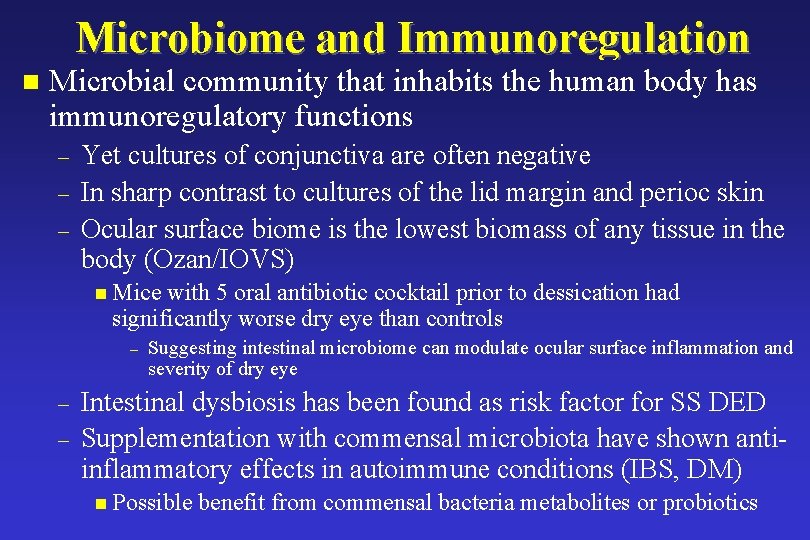
Microbiome and Immunoregulation n Microbial community that inhabits the human body has immunoregulatory functions – – – Yet cultures of conjunctiva are often negative In sharp contrast to cultures of the lid margin and perioc skin Ocular surface biome is the lowest biomass of any tissue in the body (Ozan/IOVS) n Mice with 5 oral antibiotic cocktail prior to dessication had significantly worse dry eye than controls – – – Suggesting intestinal microbiome can modulate ocular surface inflammation and severity of dry eye Intestinal dysbiosis has been found as risk factor for SS DED Supplementation with commensal microbiota have shown antiinflammatory effects in autoimmune conditions (IBS, DM) n Possible benefit from commensal bacteria metabolites or probiotics
Thank you Mc. Greal Educational Institute Missouri Eye Associates Excellence in Optometric Education