Modeling excess heat in Ni H Peter Hagelstein






- Slides: 39
Modeling excess heat in Ni. H Peter Hagelstein 1 and Irfan Chaudhary 2 1 Massachusetts Institute of Technology 2 University of Engineering and Technology, Lahore
Ni. H
Before looking at expts… • Excess heat seen in Ni. H experiments • Effect first reported in electrolysis experiments by Mills and Kneizys (1991) • Excess heat in gas loading experiments reported by Piantelli et al (1994) • Ni. H is not Pd. D • Differences are important
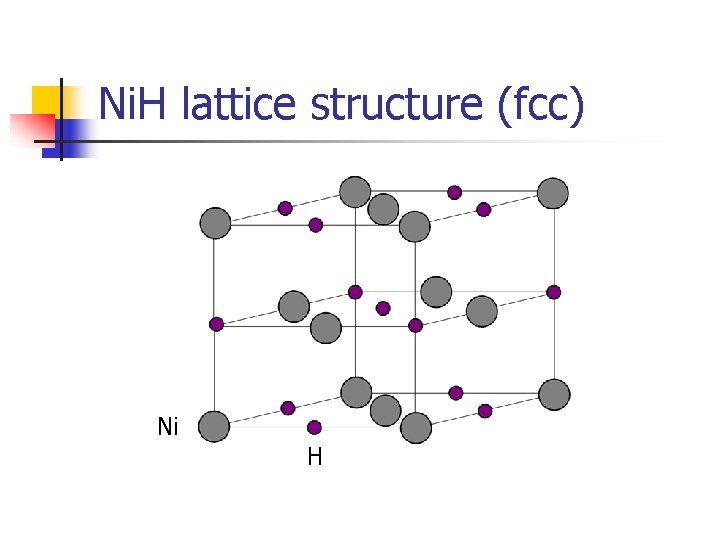
Ni. H lattice structure (fcc) Ni H
Phase diagram Note: 400 Mpa = 3948 atm
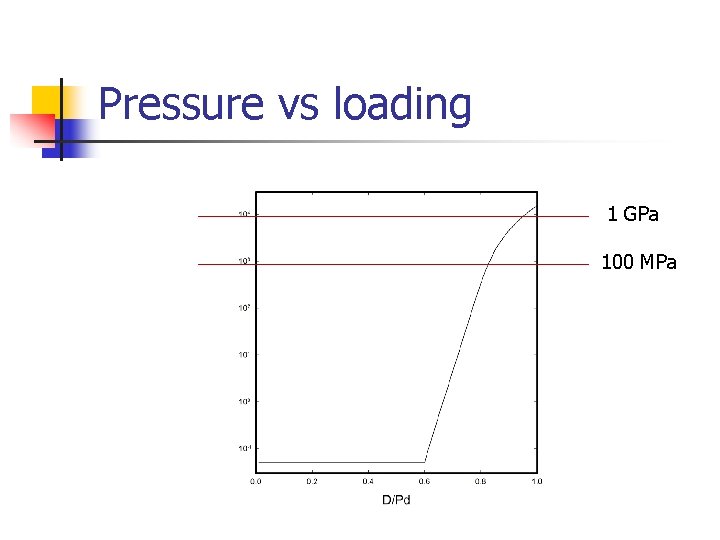
Pressure vs loading 1 GPa 100 MPa
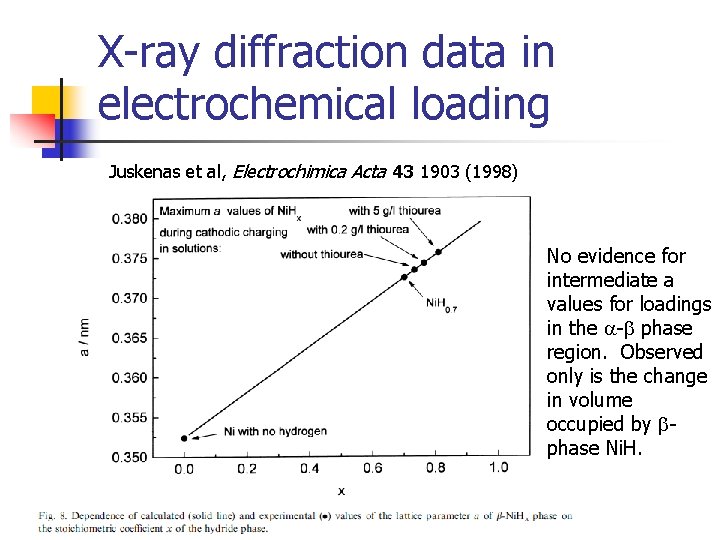
X-ray diffraction data in electrochemical loading Juskenas et al, Electrochimica Acta 43 1903 (1998) No evidence for intermediate a values for loadings in the a-b phase region. Observed only is the change in volume occupied by bphase Ni. H.
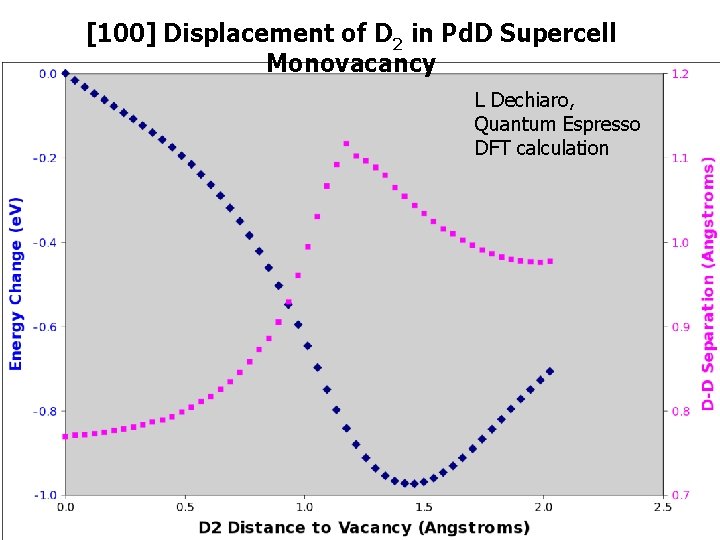
Recall electron density near vacancy in Pd…
[100] Displacement of D 2 in Pd. D Supercell Monovacancy L Dechiaro, Quantum Espresso DFT calculation
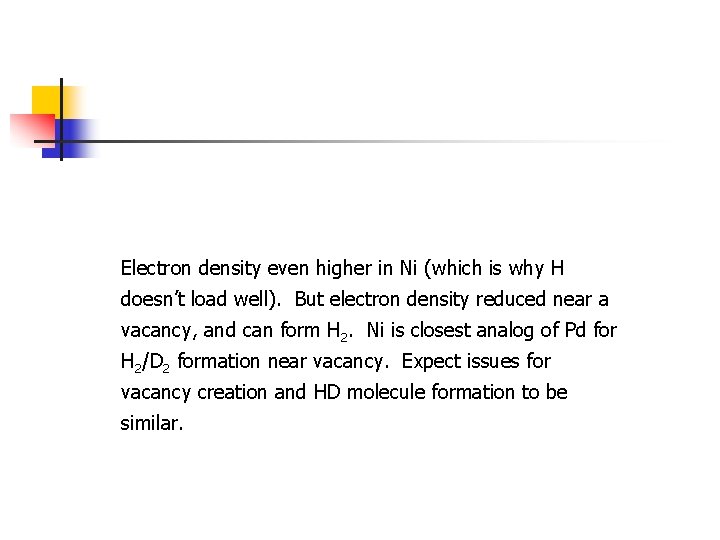
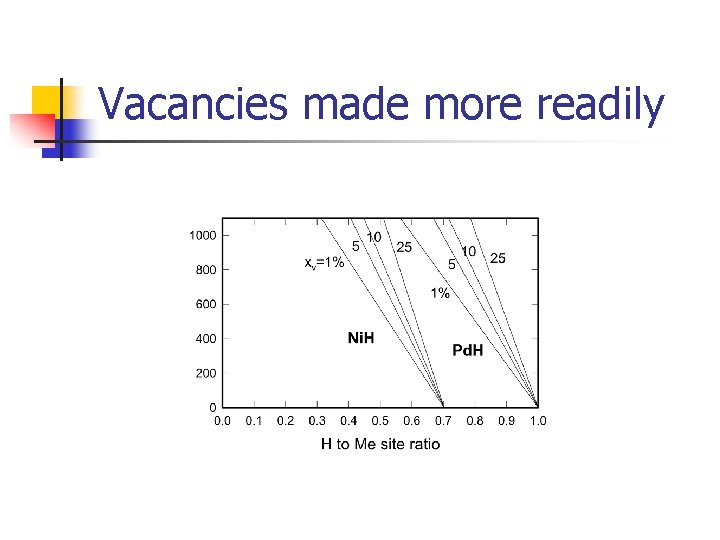
Electron density even higher in Ni (which is why H doesn’t load well). But electron density reduced near a vacancy, and can form H 2. Ni is closest analog of Pd for H 2/D 2 formation near vacancy. Expect issues for vacancy creation and HD molecule formation to be similar.
Vacancies made more readily
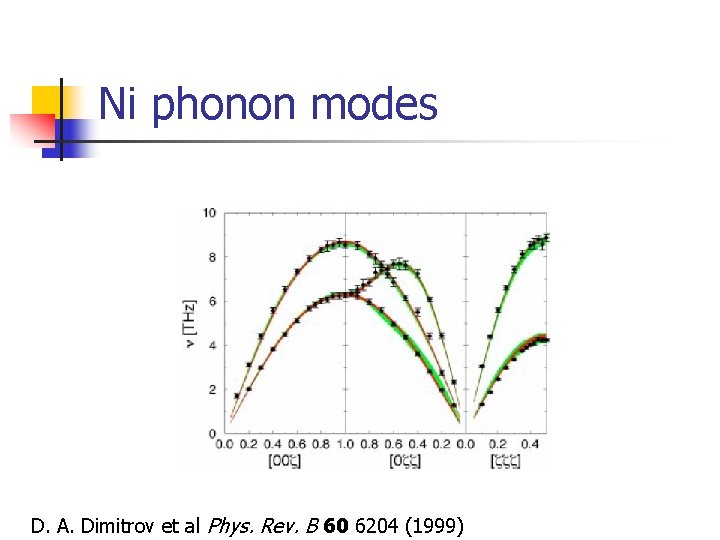
Ni phonon modes D. A. Dimitrov et al Phys. Rev. B 60 6204 (1999)
Issues with the development of optical phonon modes in gas loading since H concentration is low
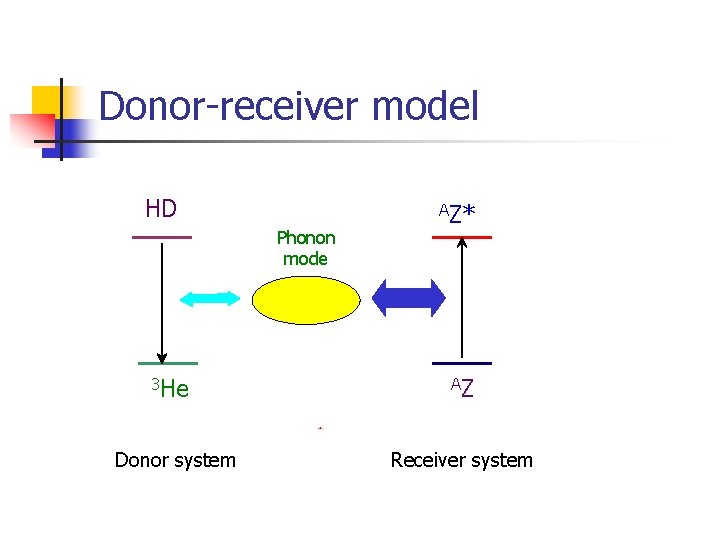
Donor-receiver model HD Phonon mode 3 He Donor system AZ* AZ Receiver system
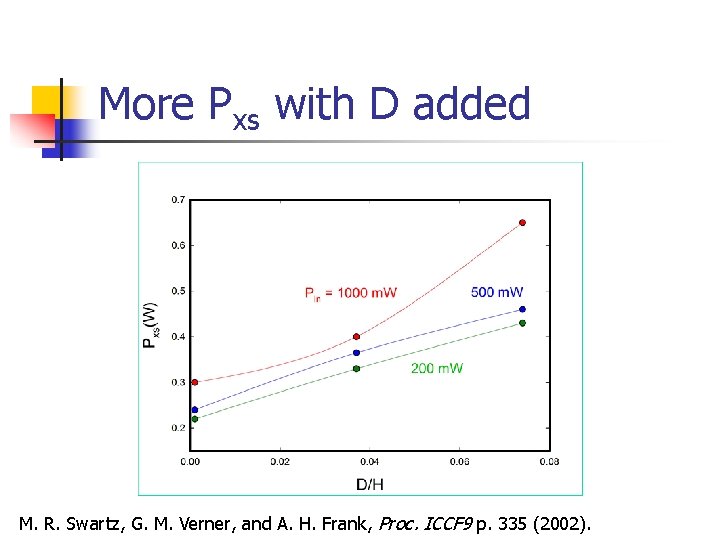
More Pxs with D added M. R. Swartz, G. M. Verner, and A. H. Frank, Proc. ICCF 9 p. 335 (2002).
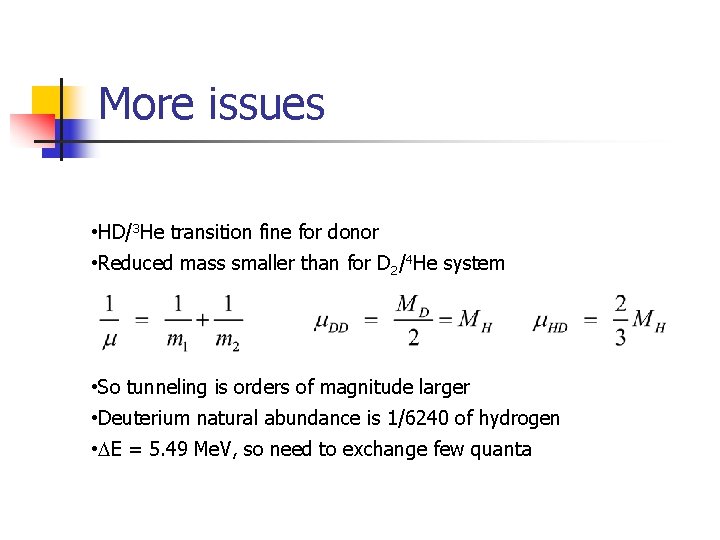
More issues • HD/3 He transition fine for donor • Reduced mass smaller than for D 2/4 He system • So tunneling is orders of magnitude larger • Deuterium natural abundance is 1/6240 of hydrogen • DE = 5. 49 Me. V, so need to exchange few quanta
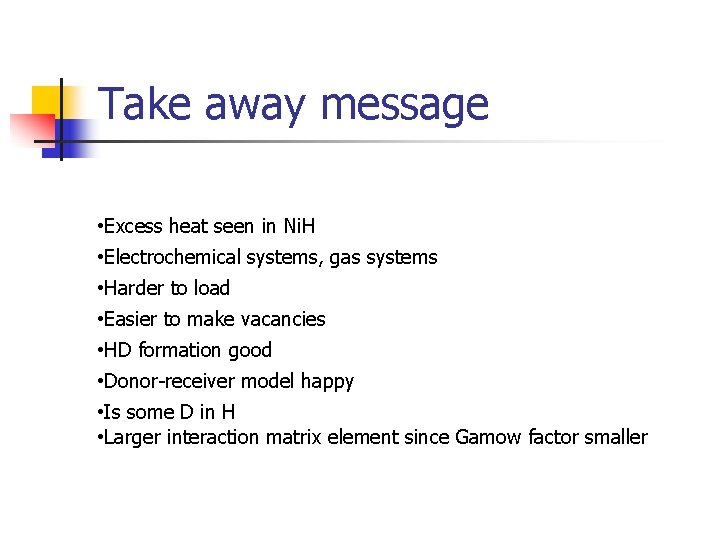
Take away message • Excess heat seen in Ni. H • Electrochemical systems, gas systems • Harder to load • Easier to make vacancies • HD formation good • Donor-receiver model happy • Is some D in H • Larger interaction matrix element since Gamow factor smaller
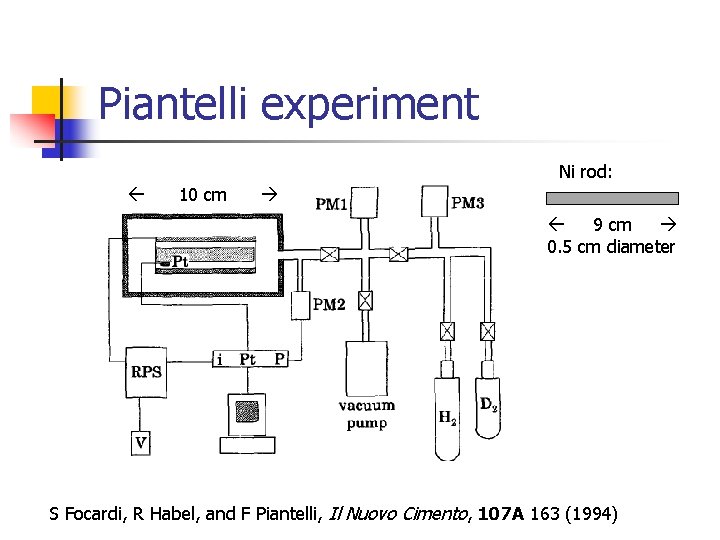
Piantelli experiment
Piantelli experiment Ni rod: 10 cm 9 cm 0. 5 cm diameter S Focardi, R Habel, and F Piantelli, Il Nuovo Cimento, 107 A 163 (1994)
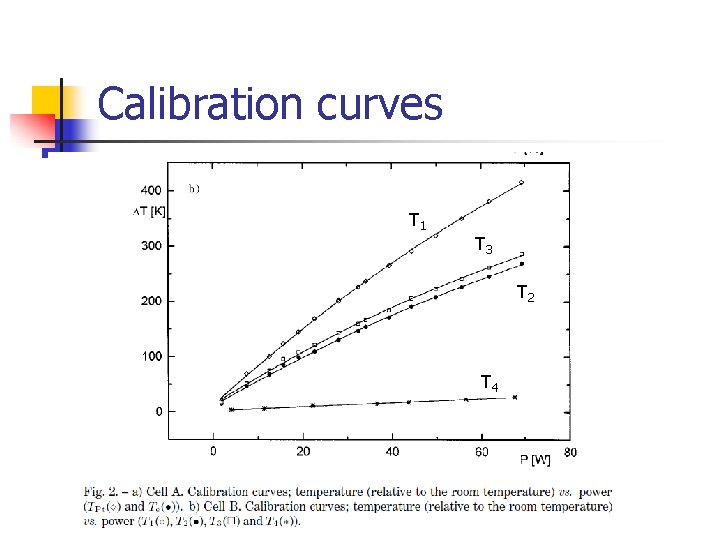
Calibration
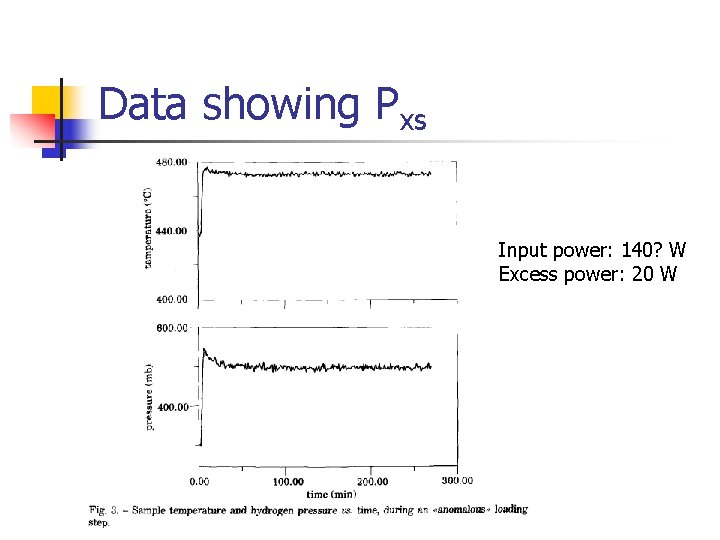
Data showing Pxs Input power: 140? W Excess power: 20 W
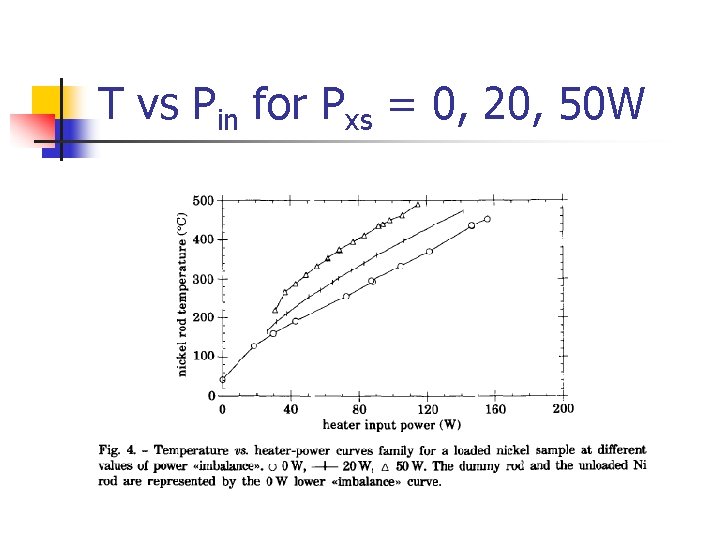
T vs Pin for Pxs = 0, 20, 50 W
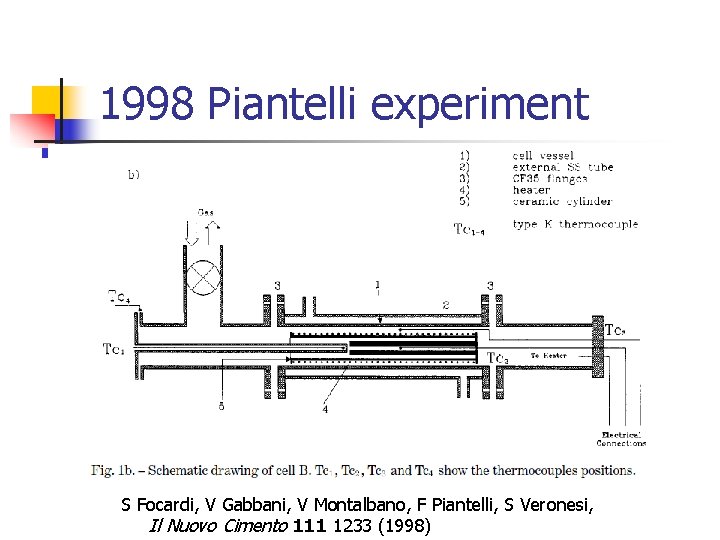
1998 Piantelli experiment S Focardi, V Gabbani, V Montalbano, F Piantelli, S Veronesi, Il Nuovo Cimento 111 1233 (1998)
Calibration curves T 1 T 3 T 2 T 4
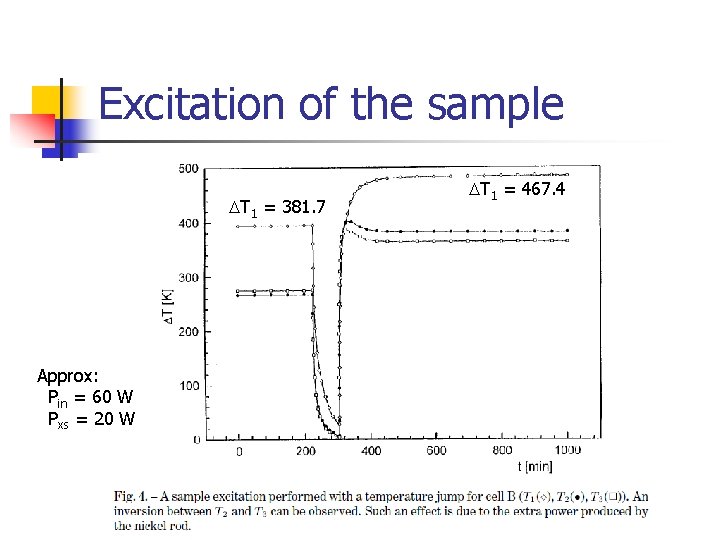
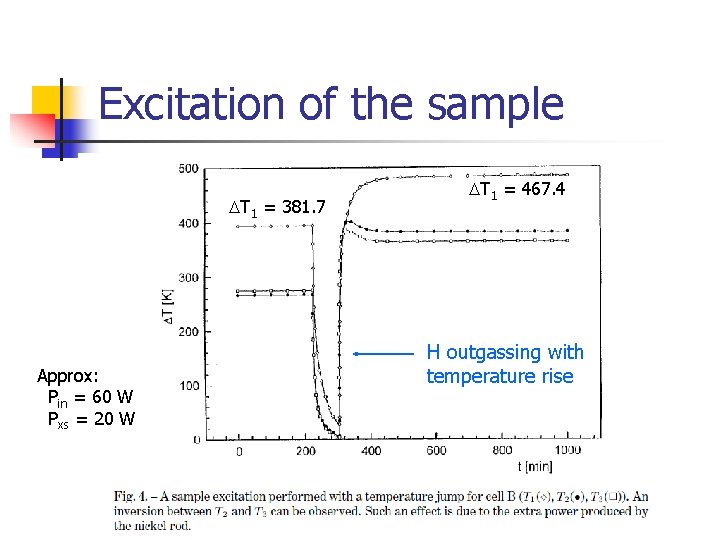
Excitation of the sample DT 1 = 381. 7 Approx: Pin = 60 W Pxs = 20 W DT 1 = 467. 4
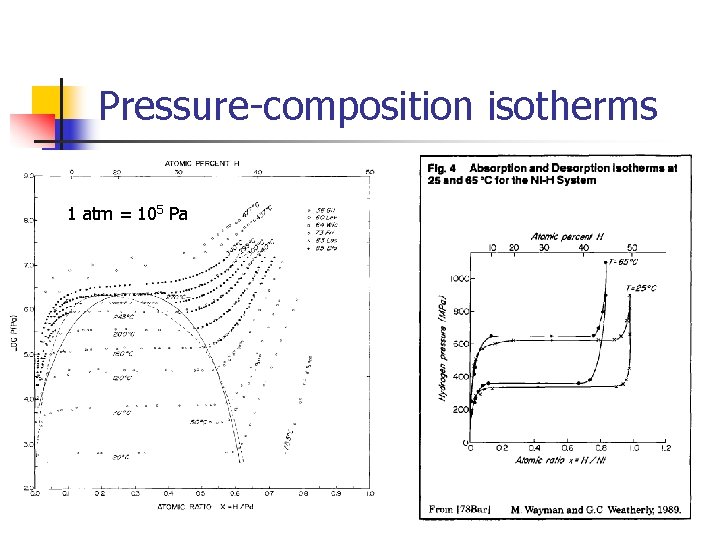
Pressure-composition isotherms • Ni. H is like Pd. H… 1 atm = 105 Pa
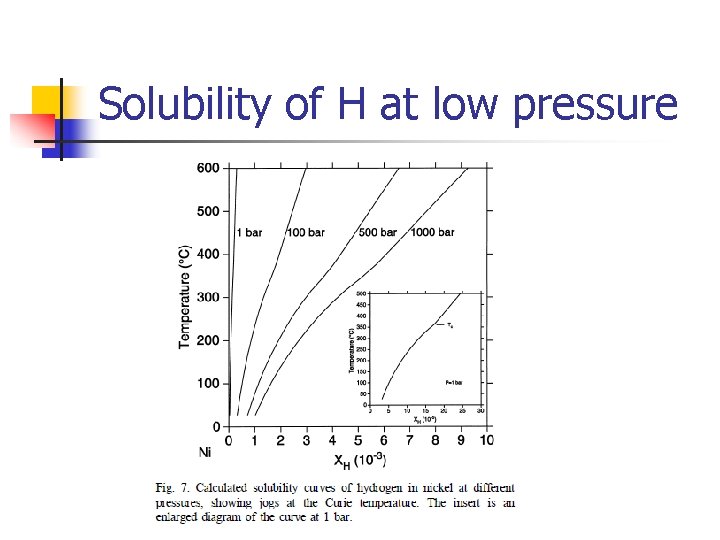
Solubility of H at low pressure
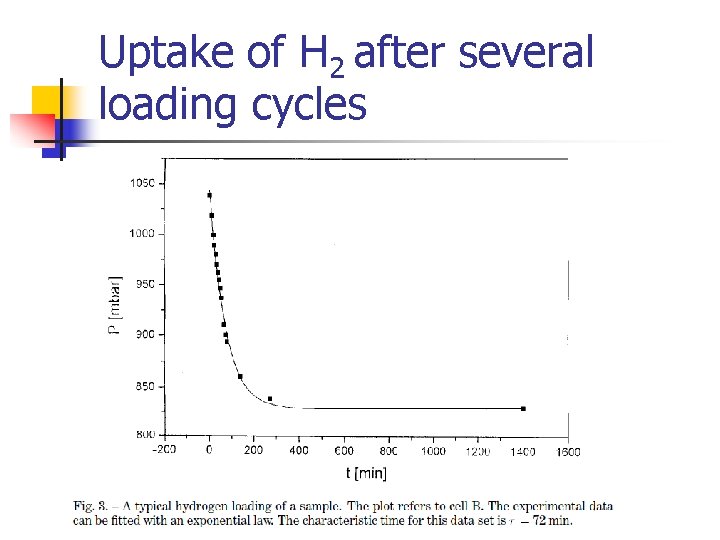
Uptake of H 2 after several loading cycles
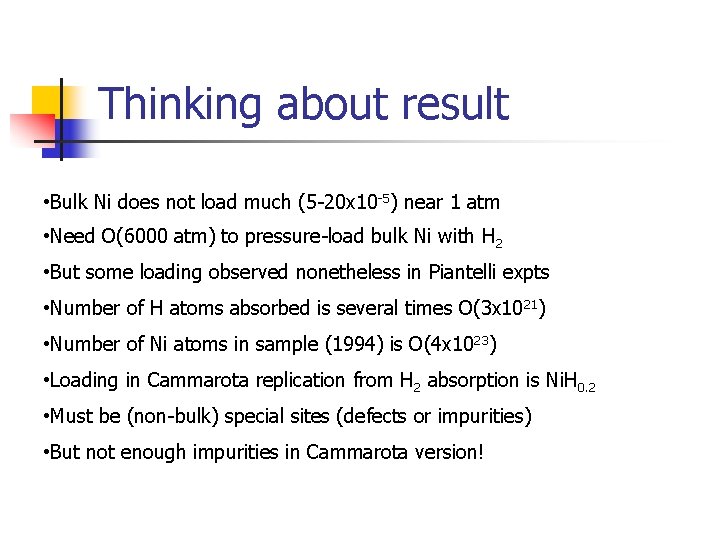
Thinking about result • Bulk Ni does not load much (5 -20 x 10 -5) near 1 atm • Need O(6000 atm) to pressure-load bulk Ni with H 2 • But some loading observed nonetheless in Piantelli expts • Number of H atoms absorbed is several times O(3 x 10²¹) • Number of Ni atoms in sample (1994) is O(4 x 10²³) • Loading in Cammarota replication from H 2 absorption is Ni. H 0. 2 • Must be (non-bulk) special sites (defects or impurities) • But not enough impurities in Cammarota version!
X-ray diffraction data in electrochemical loading Juskenas et al, Electrochimica Acta 43 1903 (1998) No evidence for intermediate a values for loadings in the a-b phase region. Observed only is the change in volume occupied by bphase Ni. H.
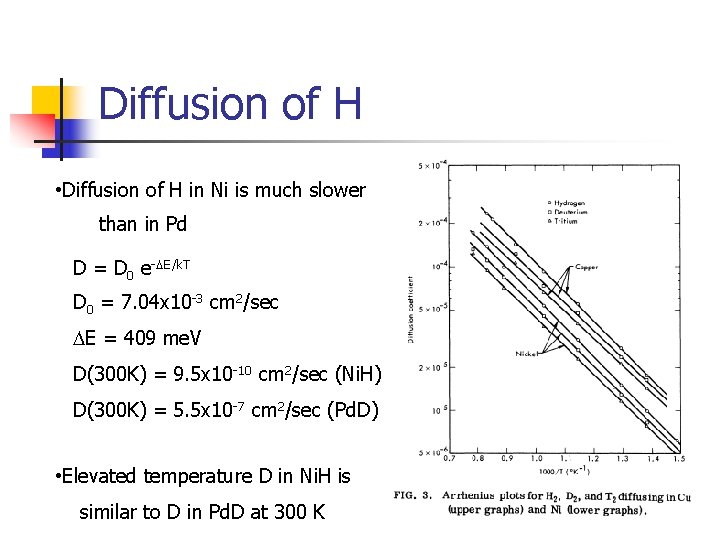
Diffusion of H • Diffusion of H in Ni is much slower than in Pd D = D 0 e-DE/k. T D 0 = 7. 04 x 10 -3 cm 2/sec DE = 409 me. V D(300 K) = 9. 5 x 10 -10 cm 2/sec (Ni. H) D(300 K) = 5. 5 x 10 -7 cm 2/sec (Pd. D) • Elevated temperature D in Ni. H is similar to D in Pd. D at 300 K
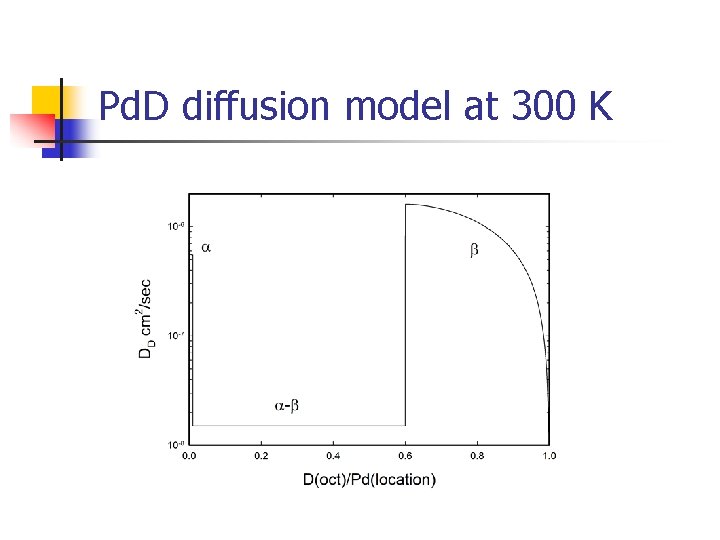
Pd. D diffusion model at 300 K
Excitation of the sample DT 1 = 381. 7 Approx: Pin = 60 W Pxs = 20 W DT 1 = 467. 4 H outgassing with temperature rise
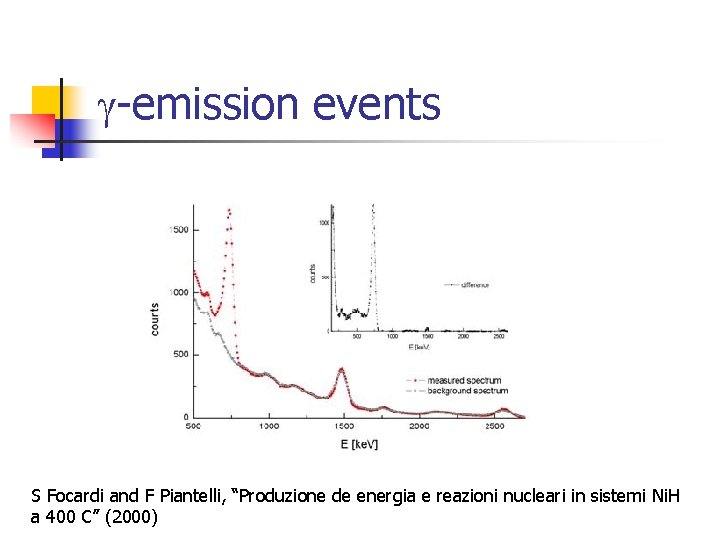
g-emission events S Focardi and F Piantelli, “Produzione de energia e reazioni nucleari in sistemi Ni. H a 400 C” (2000)
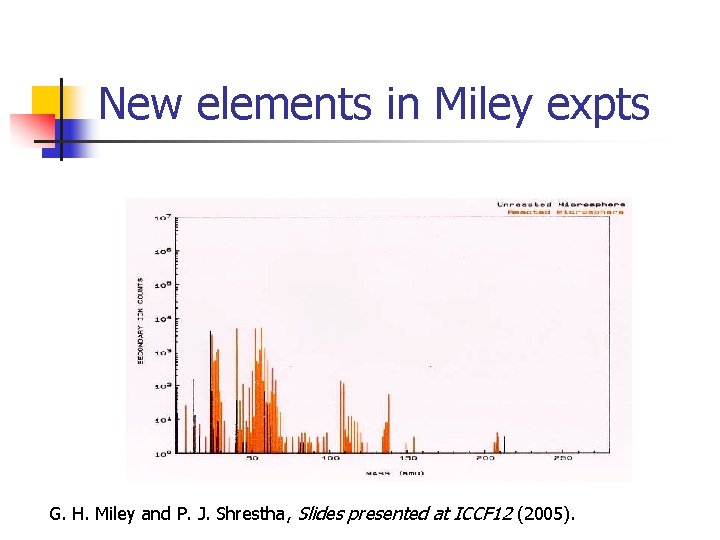
New elements in Miley expts G. H. Miley and P. J. Shrestha, Slides presented at ICCF 12 (2005).
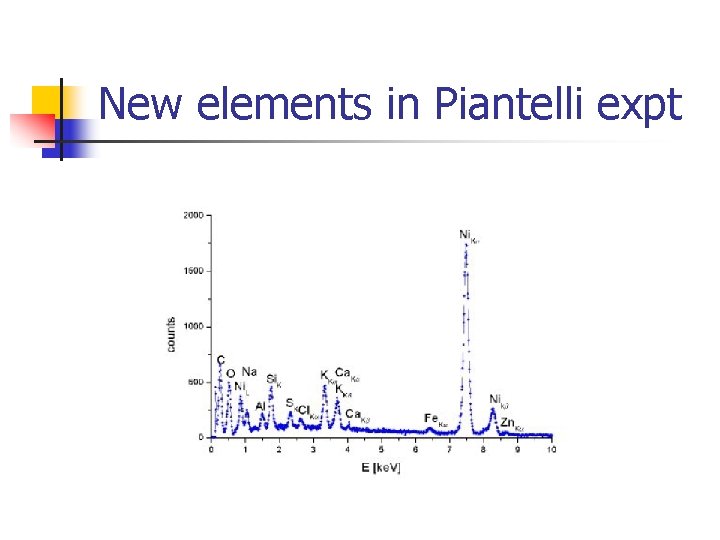
New elements in Piantelli expt
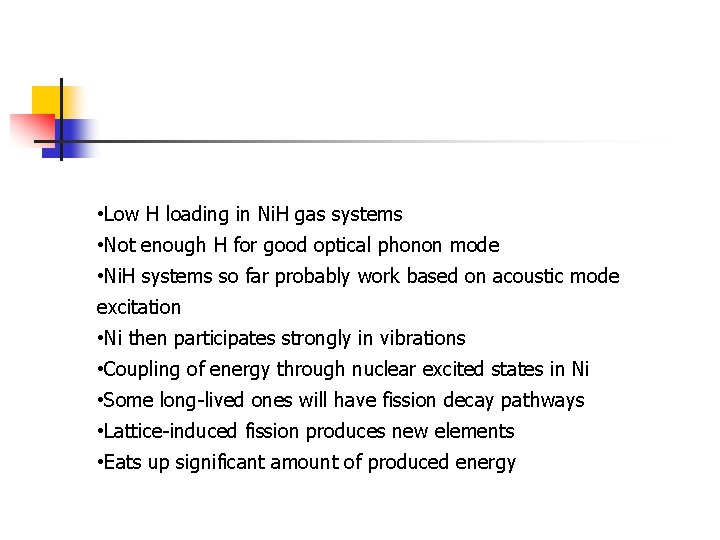
• Low H loading in Ni. H gas systems • Not enough H for good optical phonon mode • Ni. H systems so far probably work based on acoustic mode excitation • Ni then participates strongly in vibrations • Coupling of energy through nuclear excited states in Ni • Some long-lived ones will have fission decay pathways • Lattice-induced fission produces new elements • Eats up significant amount of produced energy
Wish list for Santa • Measurements of 3 He in gas phase • And correlation with energy (is Q-value 5. 5 Me. V? ) • Quantitative assay of Ni disintegration products • More experiments with HD/3 He branch in Pd codep expts • Two-laser experiments in Ni to shed light on acoustic mode operation • Like to have Ni. X alloy with lower electron density
Take away message • Ni. H excess heat discovered by Mills and Kneizys (1991) • Gas loaded excess heat by Piantelli group (1994) • H doesn’t load well in Ni • Indirect evidence for vacancy generation in Piantelli experiment • Excess power stimulated by H flux • High temperature operation favors 3 He diffusion • Excess heat stays on after flux initiation (consistent with nuclear energy going into acoustic phonon modes • Acoustic mode operation connected with transmutation