
Body Temperature Hydration and Aging F 1038 Daniel
Body Temperature, Hydration and Aging (F 1038) Daniel Richardson, Emeritus Professor of Physiology, Univ of Kentucky 1056 West Johnson Blvd Tonto Village Payson, AZ 85541 Email – danrichardson 0510@gmail. com Class dates: Tuesday Oct 15 and Thursday Oct 17: 10: 00 -11: 30 Copy of full Presentation in web site: danielray. site Under presentations click on file: body temp and water regulation. pdf
The Arizona Republic, Sept 16, 2019 “Humans are much more adapt at battling the cold instead of the heat. ” At a body temp of 98 deg F, are you more comfortable at: 123 deg F(25 deg above body temp)? or 73 deg F (25 deg below body temp)?
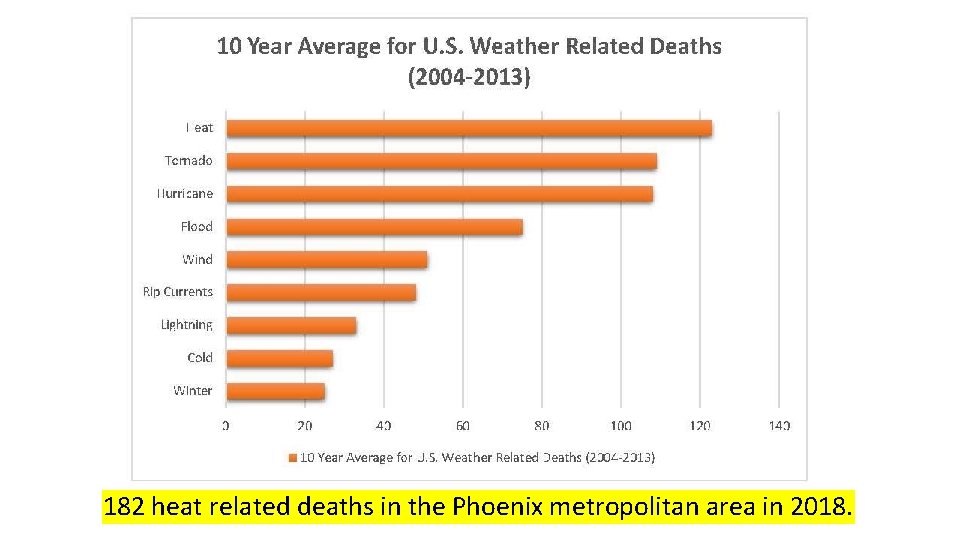
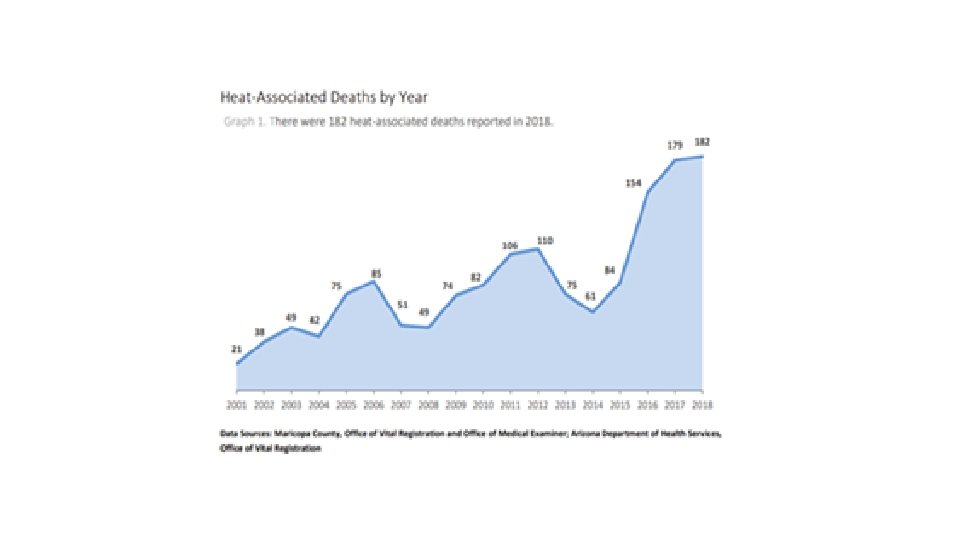
182 heat related deaths in the Phoenix metropolitan area in 2018.
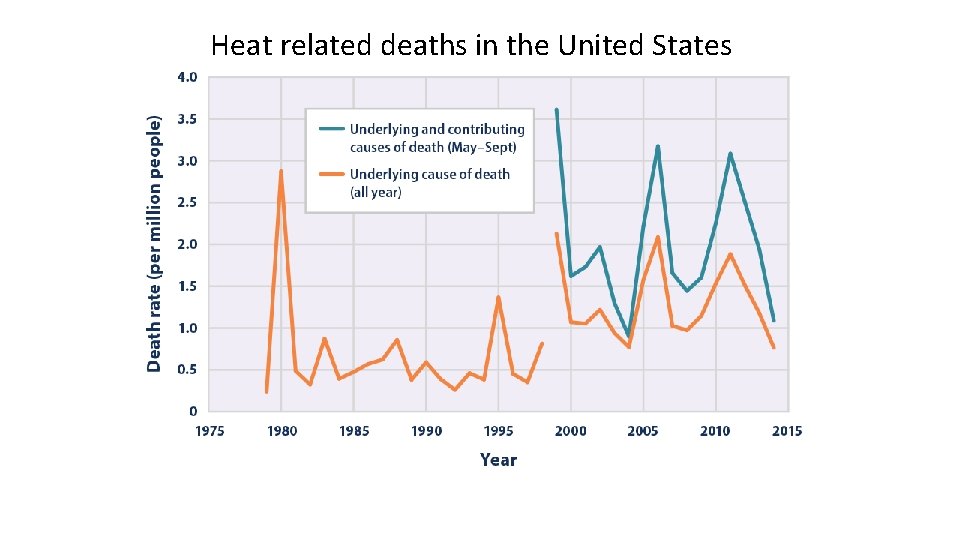
Heat related deaths in the United States
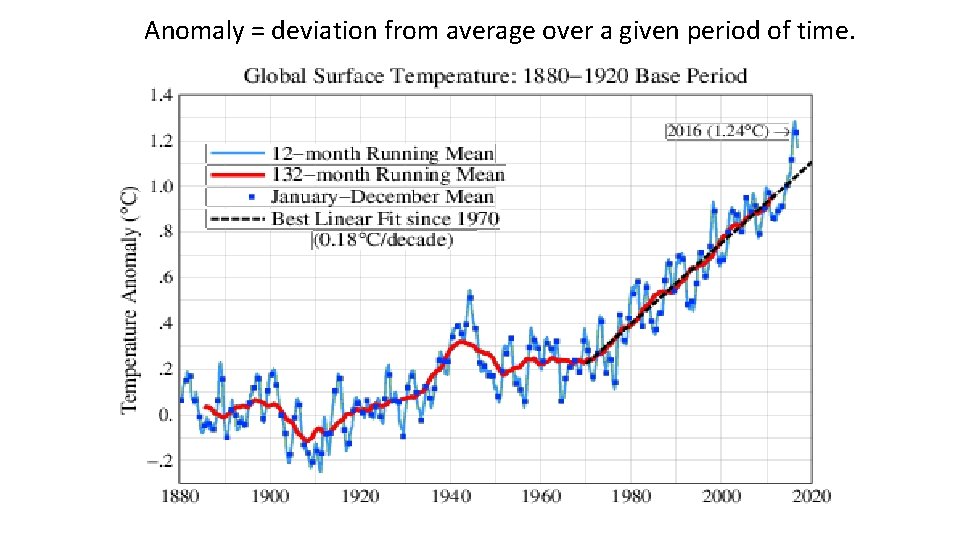
Anomaly = deviation from average over a given period of time.
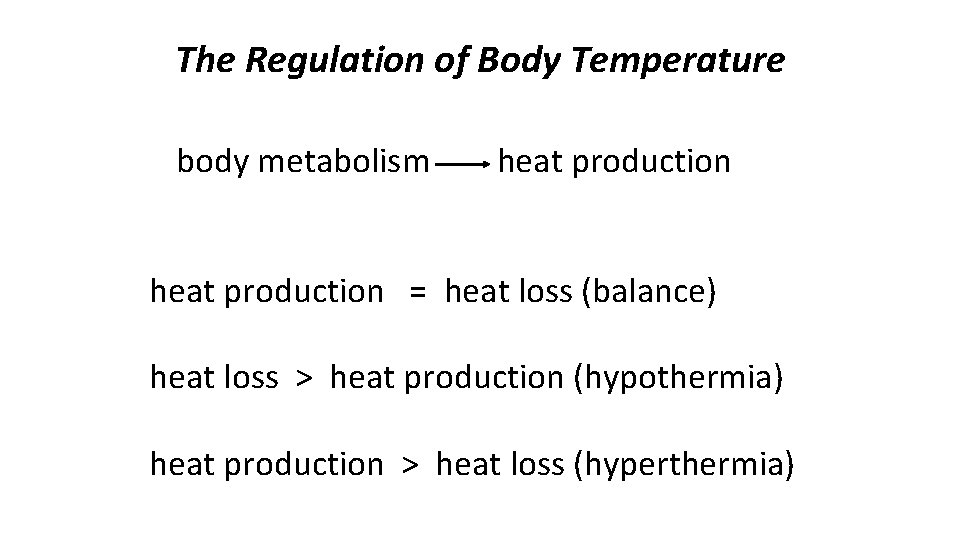
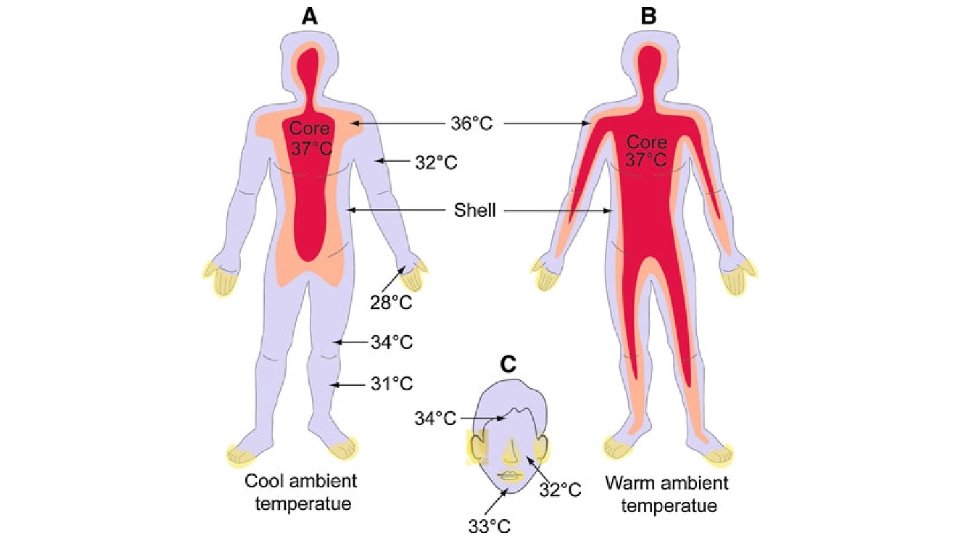
The Regulation of Body Temperature body metabolism heat production = heat loss (balance) heat loss > heat production (hypothermia) heat production > heat loss (hyperthermia)
Which of the following is the best answer? Sweating occurs when: The body needs to loose heat. Sweat glands contract.
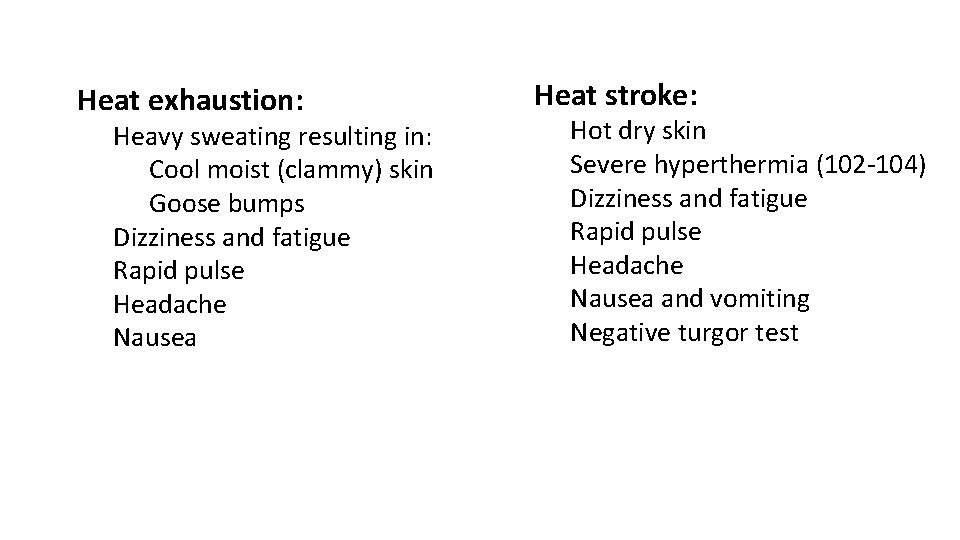
Heat exhaustion: Heavy sweating resulting in: Cool moist (clammy) skin Goose bumps Dizziness and fatigue Rapid pulse Headache Nausea Heat stroke: Hot dry skin Severe hyperthermia (102 -104) Dizziness and fatigue Rapid pulse Headache Nausea and vomiting Negative turgor test
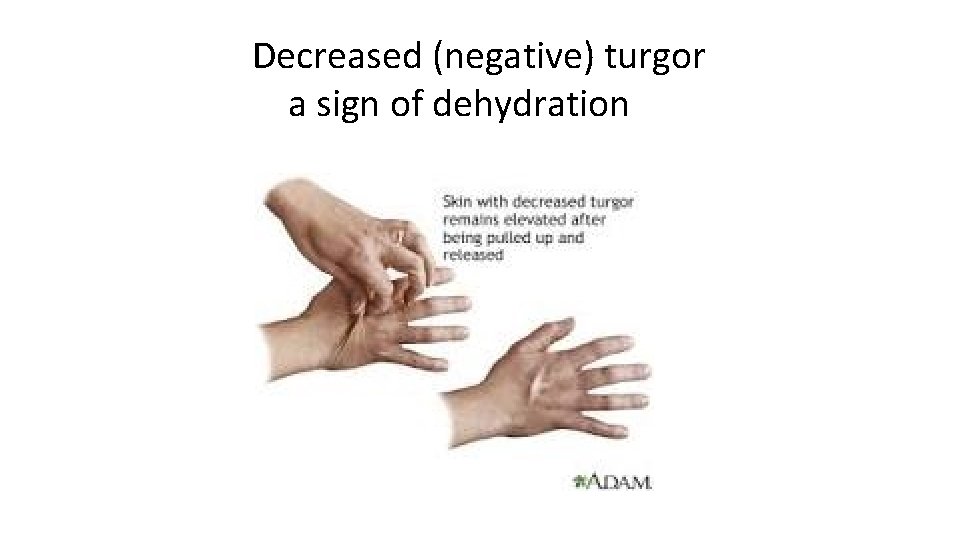
Decreased (negative) turgor a sign of dehydration
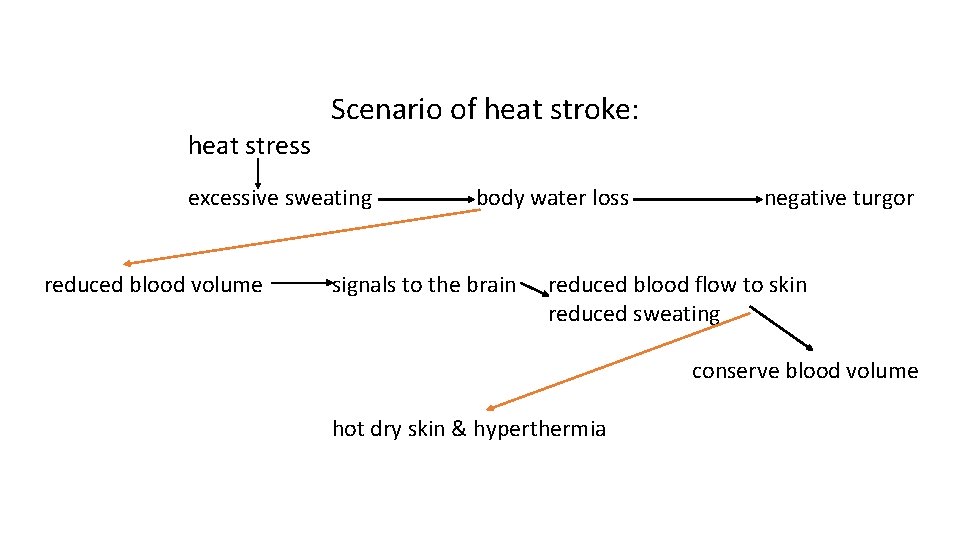
heat stress Scenario of heat stroke: excessive sweating reduced blood volume body water loss signals to the brain negative turgor reduced blood flow to skin reduced sweating conserve blood volume hot dry skin & hyperthermia
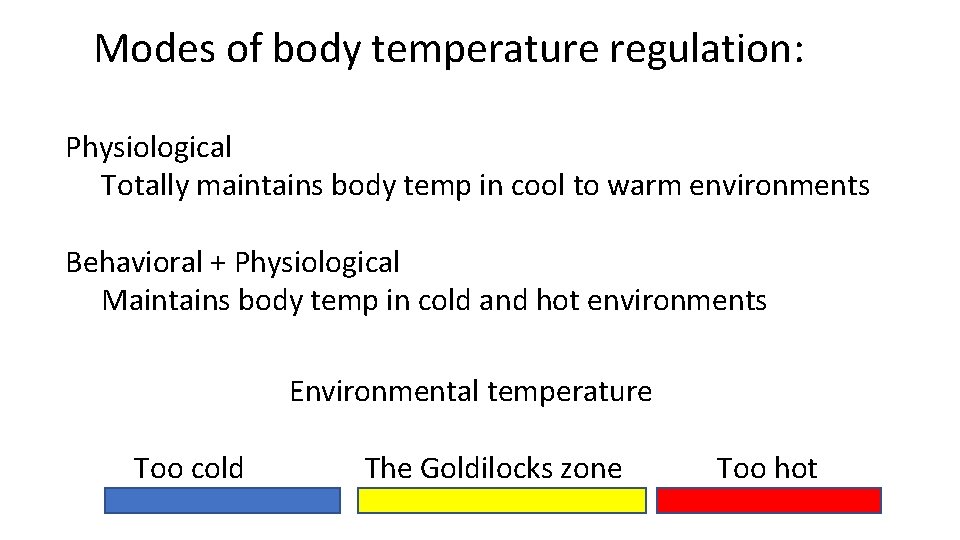
Modes of body temperature regulation: Physiological Totally maintains body temp in cool to warm environments Behavioral + Physiological Maintains body temp in cold and hot environments Environmental temperature Too cold The Goldilocks zone Too hot
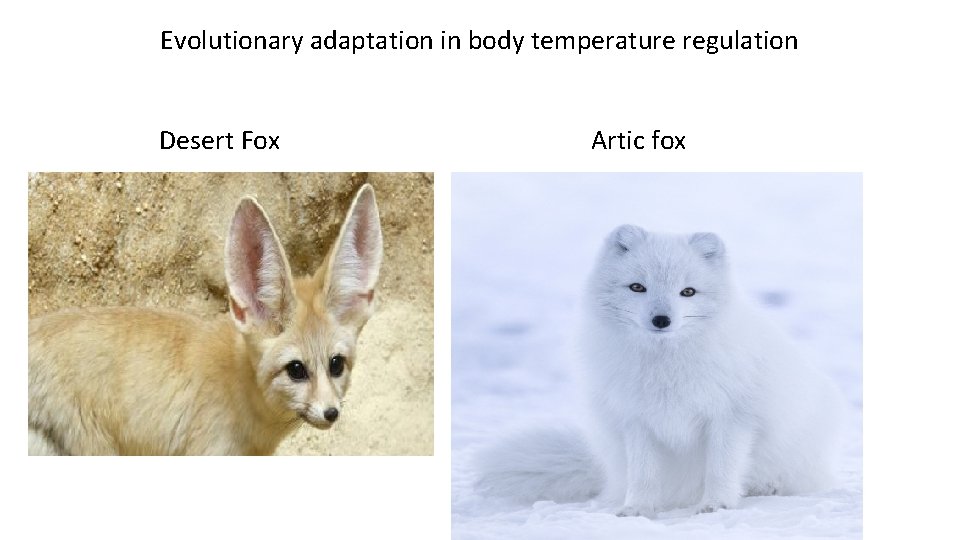
Evolutionary adaptation in body temperature regulation Desert Fox Artic fox
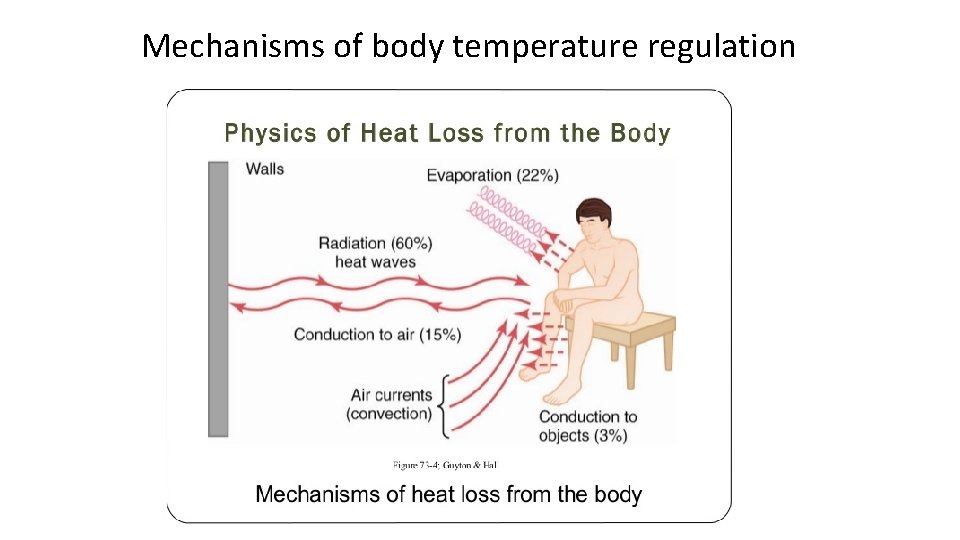
Mechanisms of body temperature regulation
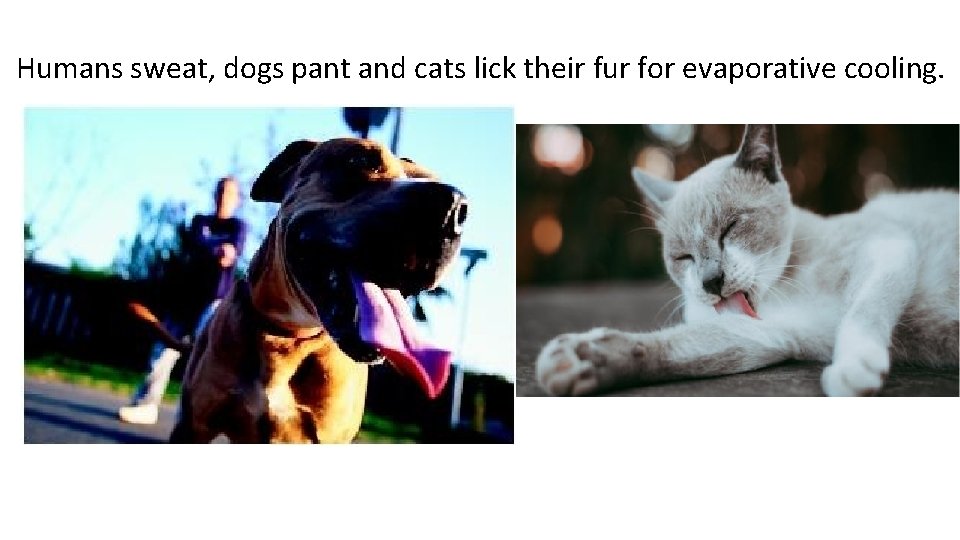
Humans sweat, dogs pant and cats lick their fur for evaporative cooling.
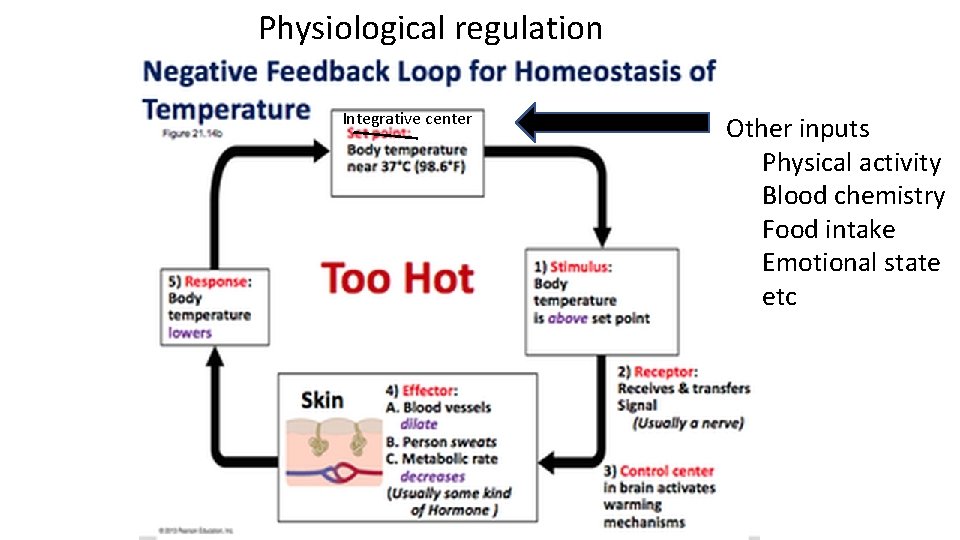
Physiological regulation Integrative center Other inputs Physical activity Blood chemistry Food intake Emotional state etc
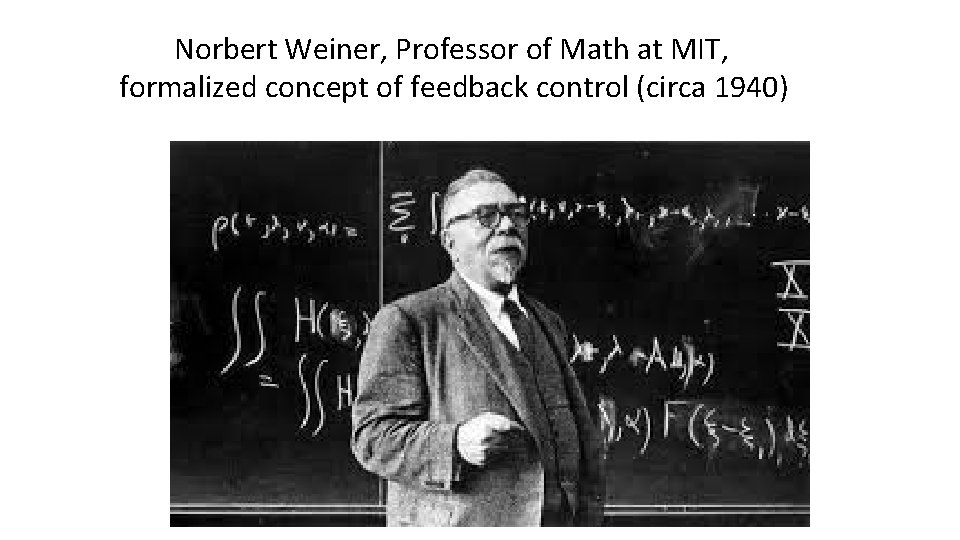
Norbert Weiner, Professor of Math at MIT, formalized concept of feedback control (circa 1940)
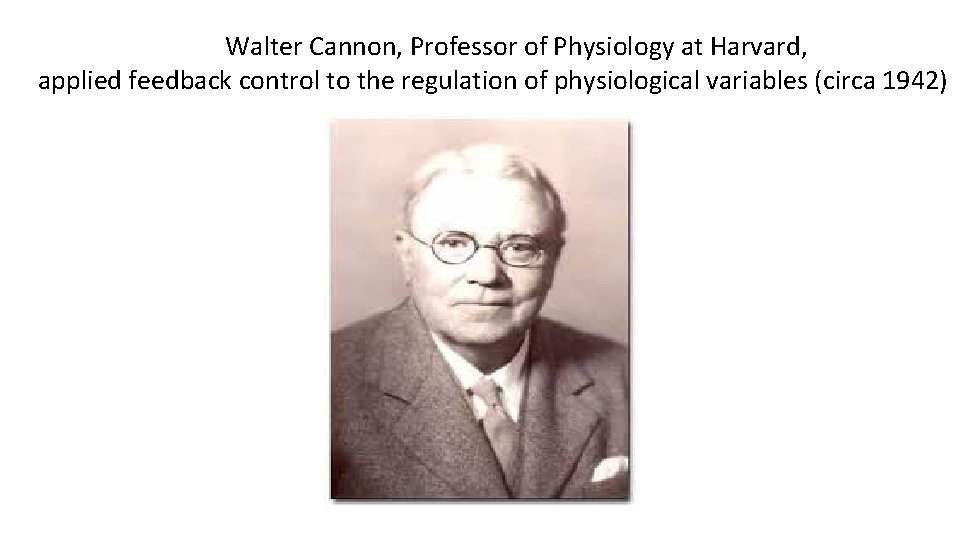
Walter Cannon, Professor of Physiology at Harvard, applied feedback control to the regulation of physiological variables (circa 1942)
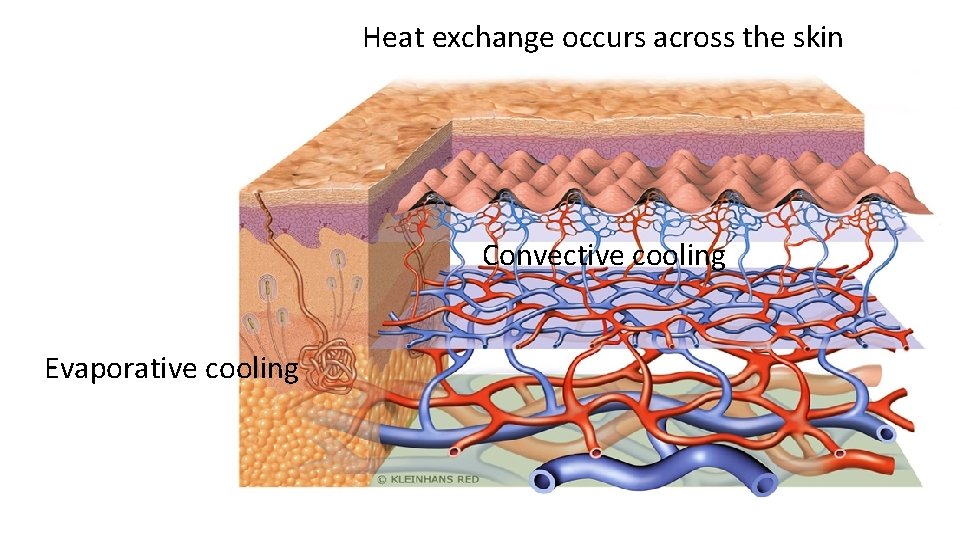
Heat exchange occurs across the skin Convective cooling Evaporative cooling
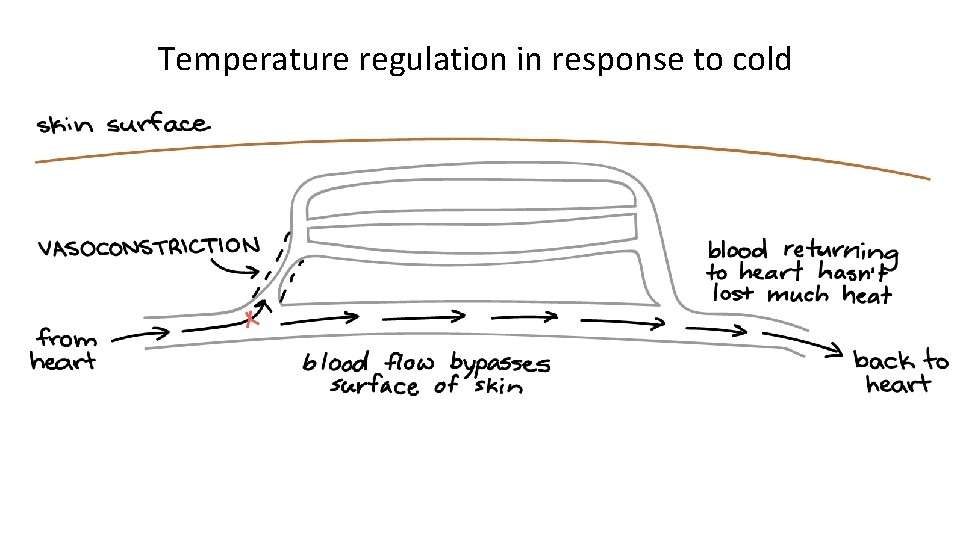
Temperature regulation in response to cold
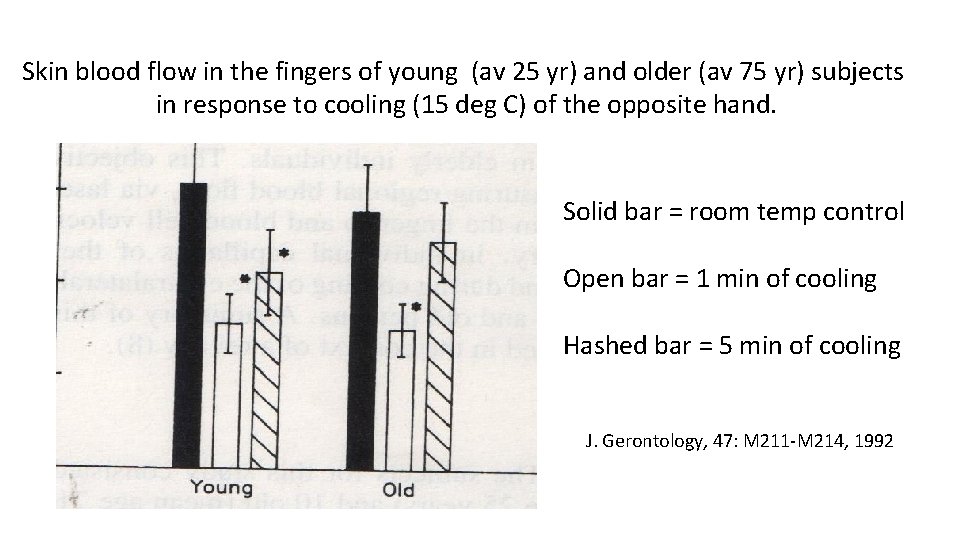
Skin blood flow in the fingers of young (av 25 yr) and older (av 75 yr) subjects in response to cooling (15 deg C) of the opposite hand. Solid bar = room temp control Open bar = 1 min of cooling Hashed bar = 5 min of cooling J. Gerontology, 47: M 211 -M 214, 1992
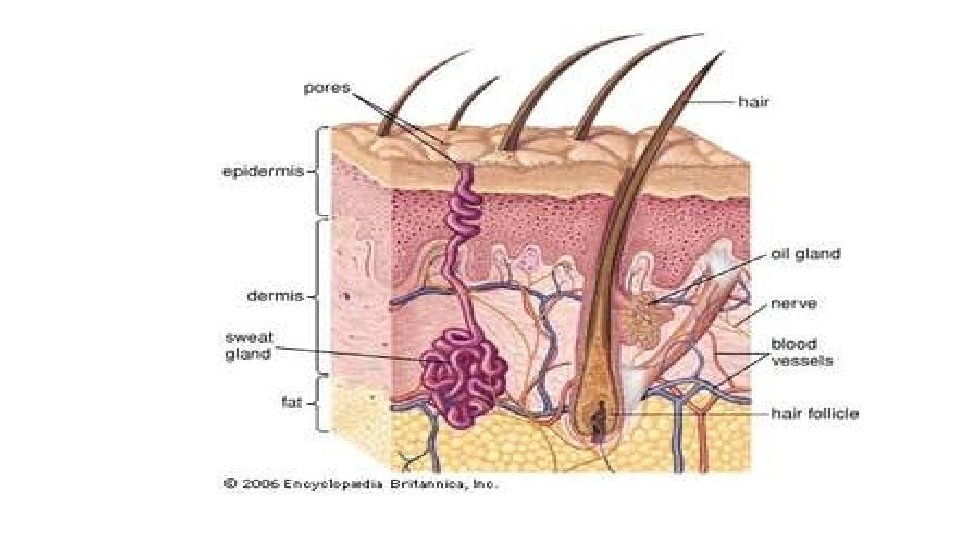
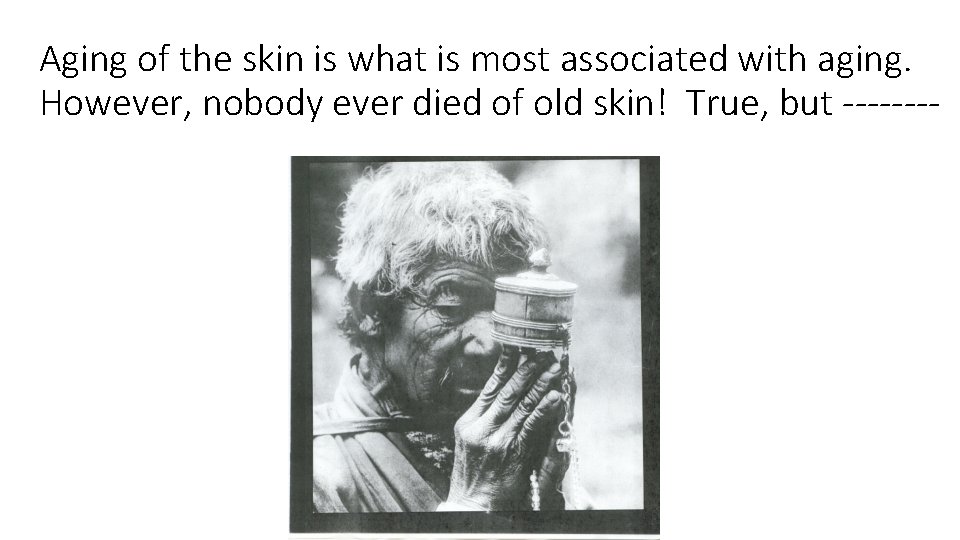
Aging of the skin is what is most associated with aging. However, nobody ever died of old skin! True, but ----
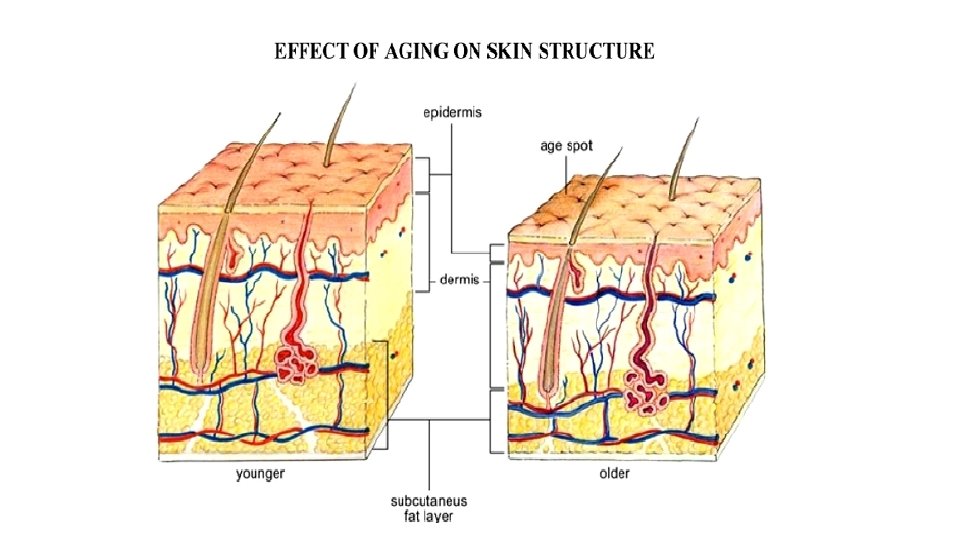
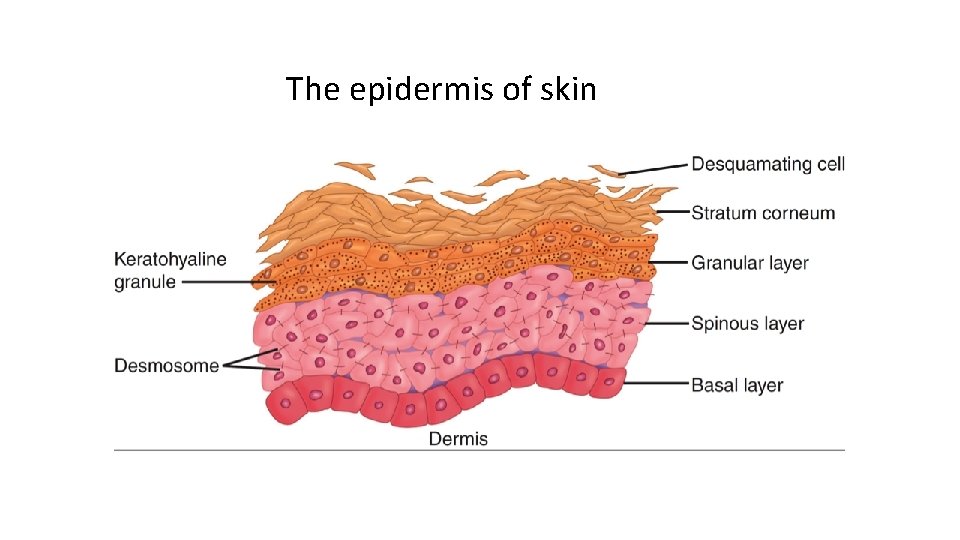
The epidermis of skin
Layers of the epidermis Basal Cells – undergo cell division (mitosis) Blood supplied from subepidermal vascular plexus Spinous layer – formed as basal cells migrate up Loose connection to blood supply Begin to loose mitotic activity Become loosely connected via desmosomes Start to produce keratin
Layers of the epidermis: Continued Keratinocytes – full blown keratin producing cells Store provitamin D 3 Converted to Vit D 3 via UV rays Conversion ability decreases with age Secrete thymopoietin A hormone involved in formation of immune T cells Decreases with age Contributes to age related immune dysfunction Cornified cells – dead keratinocytes Total loss of cell to cell connections Upper most cells flake away: Process called exfoliation
Decrease in thickness of epidermis with age: Due to decrease in metabolism of basal cells Results in decrease in epidermis turnover Exfoliation exceeds formation of new basal cells Thinning of the epidermis: Results in sub-epidermal blood vessels being closer to the surface Assists in convective cooling in warm environments Exacerbates heat loss in cold environments
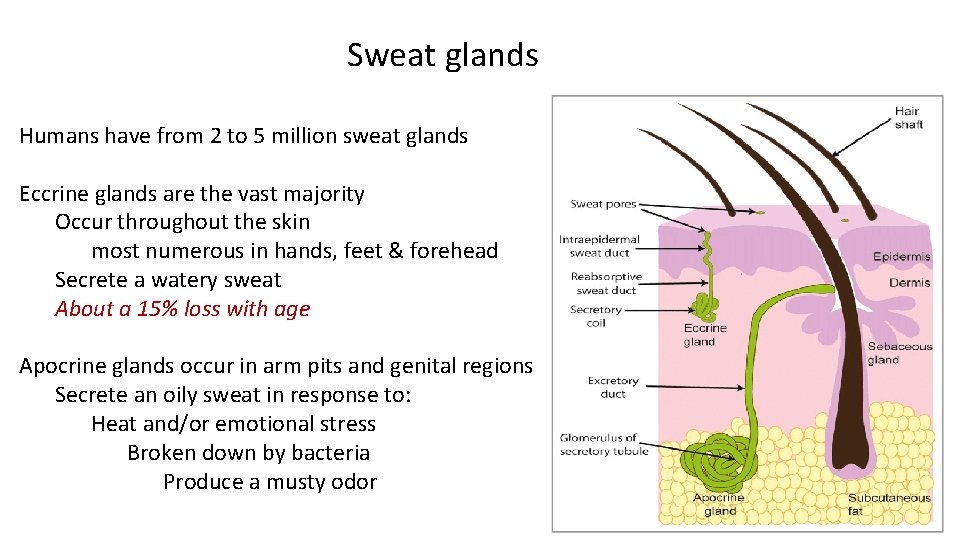
Sweat glands Humans have from 2 to 5 million sweat glands Eccrine glands are the vast majority Occur throughout the skin most numerous in hands, feet & forehead Secrete a watery sweat About a 15% loss with age Apocrine glands occur in arm pits and genital regions Secrete an oily sweat in response to: Heat and/or emotional stress Broken down by bacteria Produce a musty odor
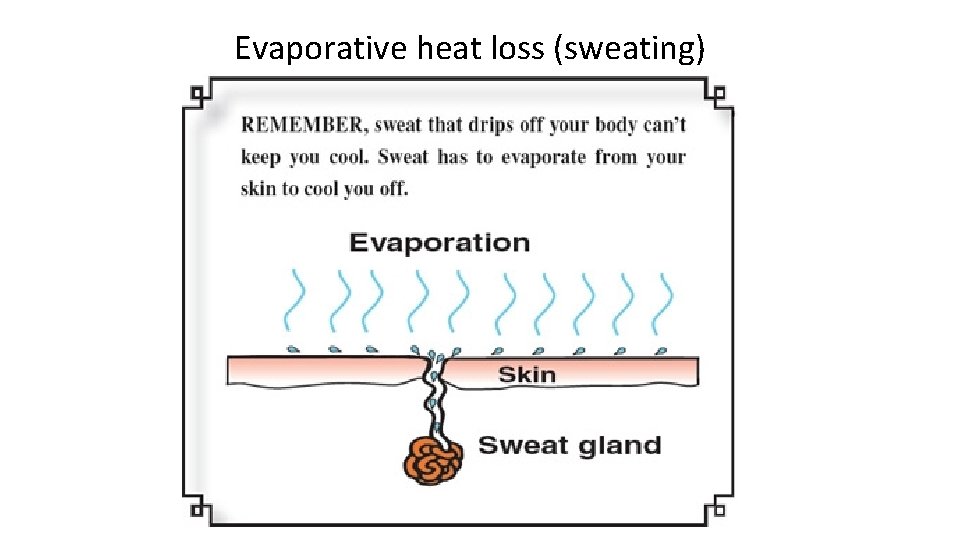
Evaporative heat loss (sweating)
How sweating works to take away body heat: Sweat glands secrete water onto surface of the skin The water then draws heat from blood near surface of the skin Causes the water to evaporate Displaces heat from the body to the environment The evaporation of sweat is inhibited by high humidity
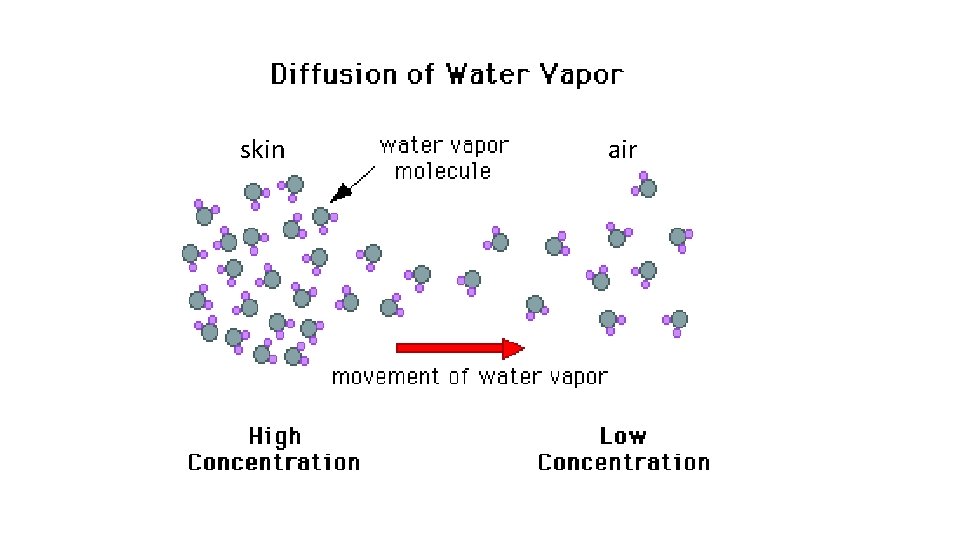
skin air
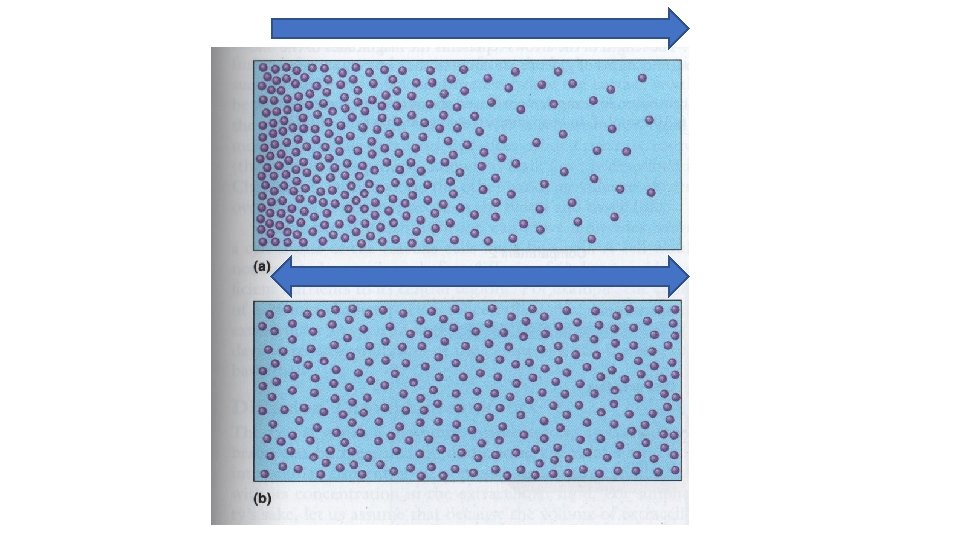
Evaporation is assisted by wind currents (convective cooling) more rapid removal of water vapor from surface of skin
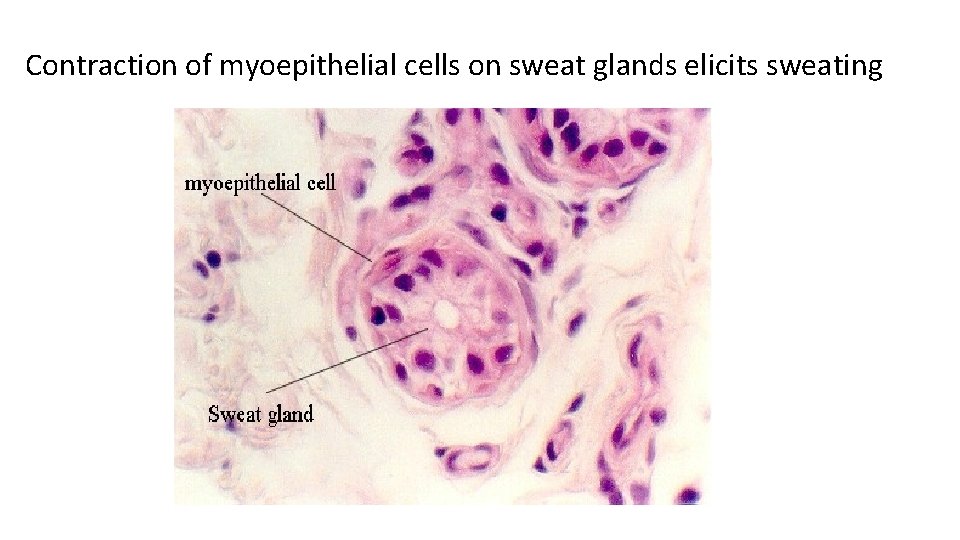
Contraction of myoepithelial cells on sweat glands elicits sweating
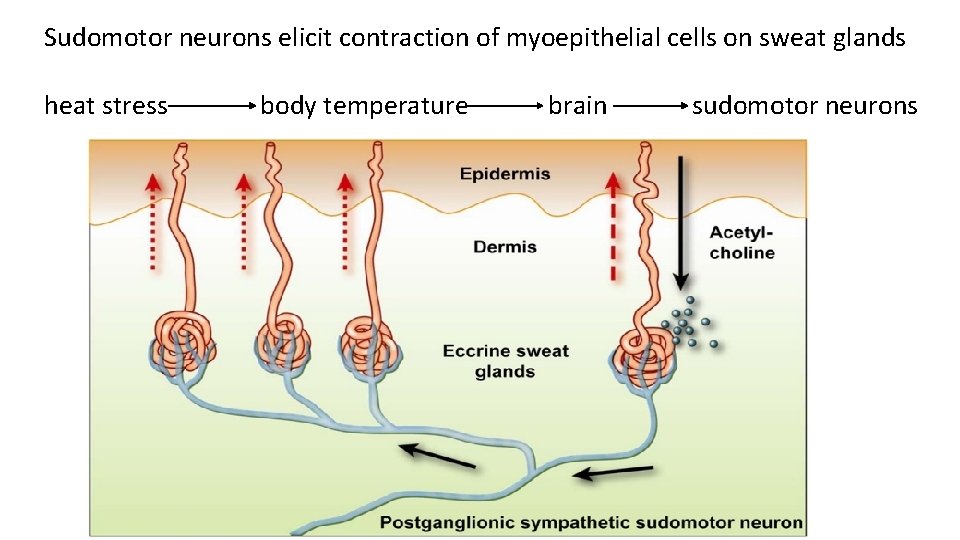
Sudomotor neurons elicit contraction of myoepithelial cells on sweat glands heat stress body temperature brain sudomotor neurons
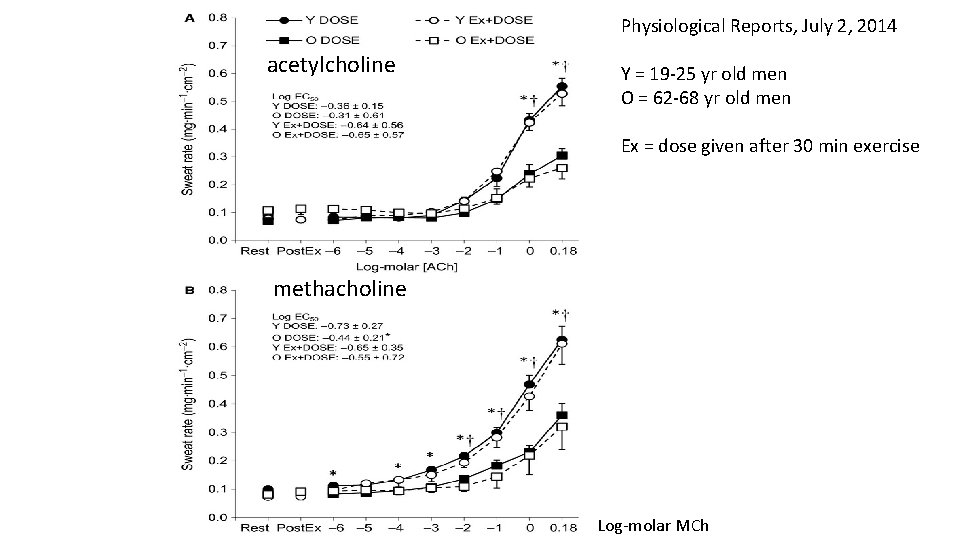
Physiological Reports, July 2, 2014 acetylcholine Y = 19 -25 yr old men O = 62 -68 yr old men Ex = dose given after 30 min exercise methacholine Log-molar MCh
Contributors to a lower sweat gland response with age: Decreased number of eccrine glands Decrease in response of eccrine glands to stimulation Lower total body water Lower blood volume
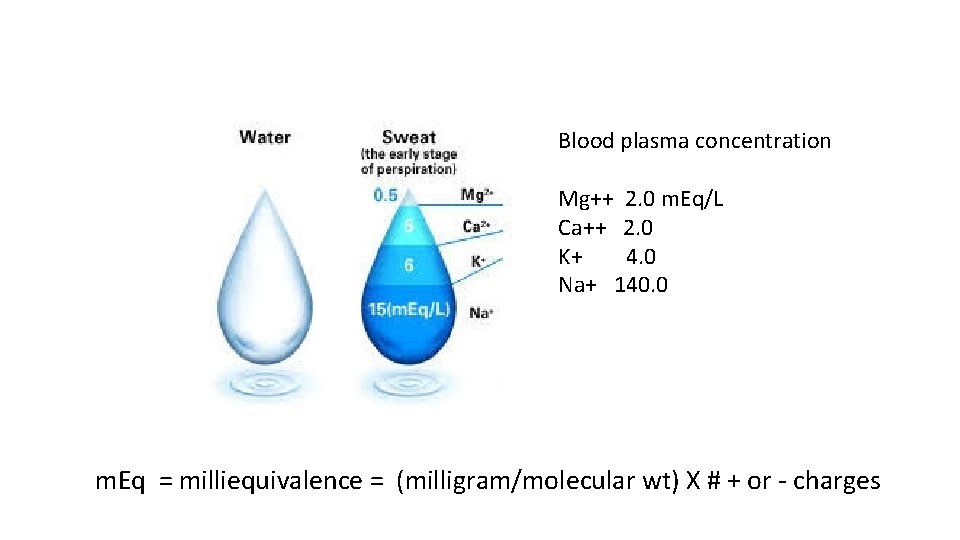
Blood plasma concentration Mg++ 2. 0 m. Eq/L Ca++ 2. 0 K+ 4. 0 Na+ 140. 0 m. Eq = milliequivalence = (milligram/molecular wt) X # + or - charges
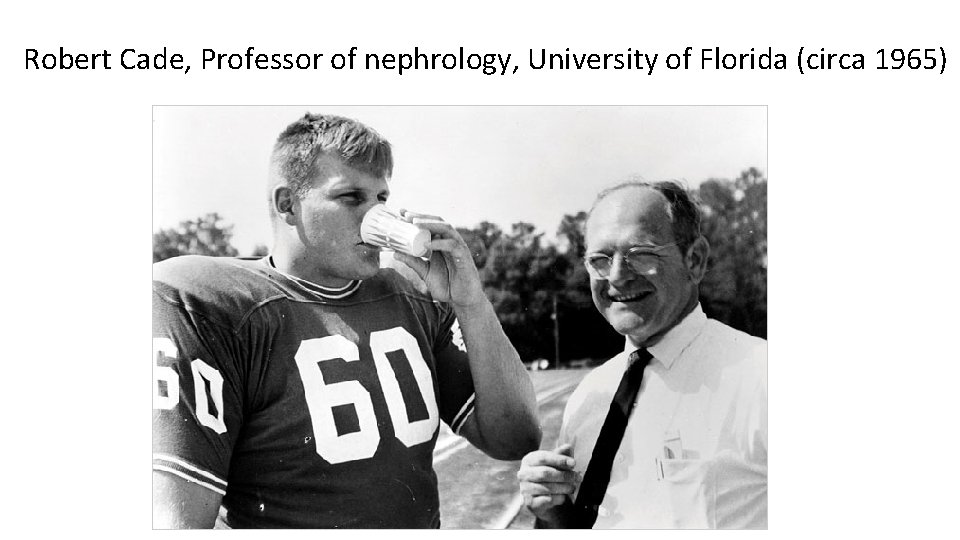
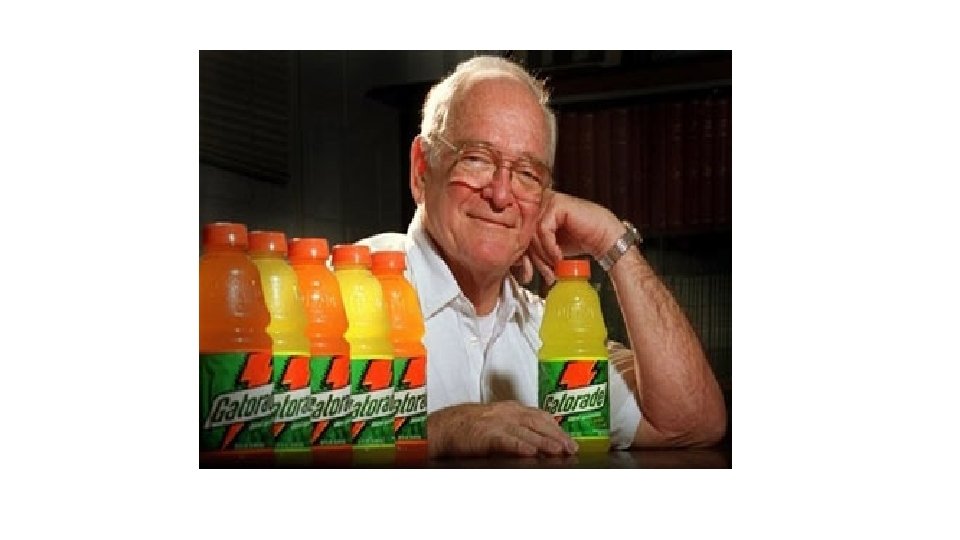
Robert Cade, Professor of nephrology, University of Florida (circa 1965)
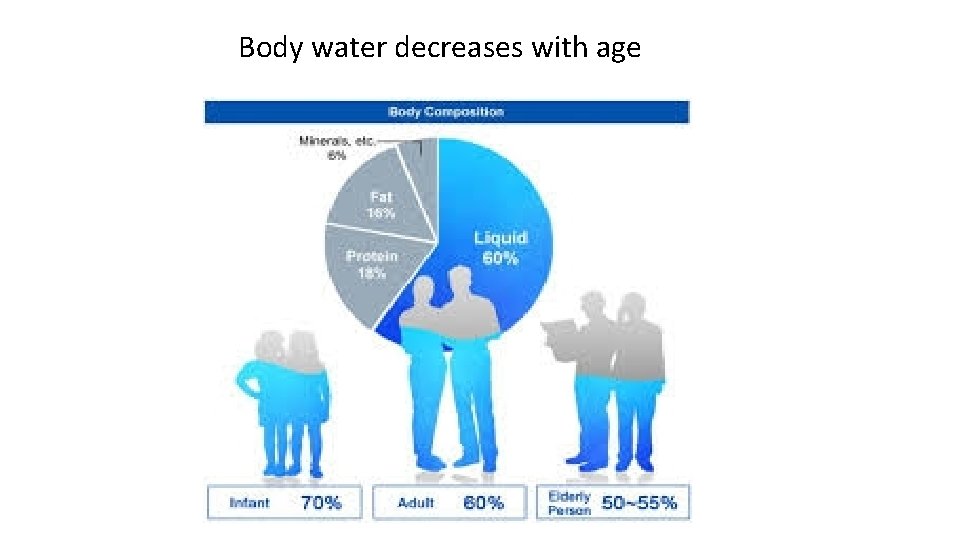
Body water decreases with age
Contributors to lower body water with age Medical Anatomical Behavioral Physiological
Medical Increased use of diuretics for BP control Anatomical As we age our percent body fat increases while percent muscle tissue decreases: Fat holds less water than muscle: Accordingly, percent body water decreases with age.
Behavioral Less water consumption Reduced sensation of thirst (behavioral/physiological) Desire to reduce daily urine volume urinary incontinence difficulty in toiletry Social isolation Reduced food intake Lower body metabolism (behavioral/physiological) Social isolation
Physiological Reduced blood volume 21% lower plasma volume* 28% lower red blood cell volume* Reduced renal (kidney) function * 25 yr vs 66 yr men - J. Applied Physiology 76: 1994
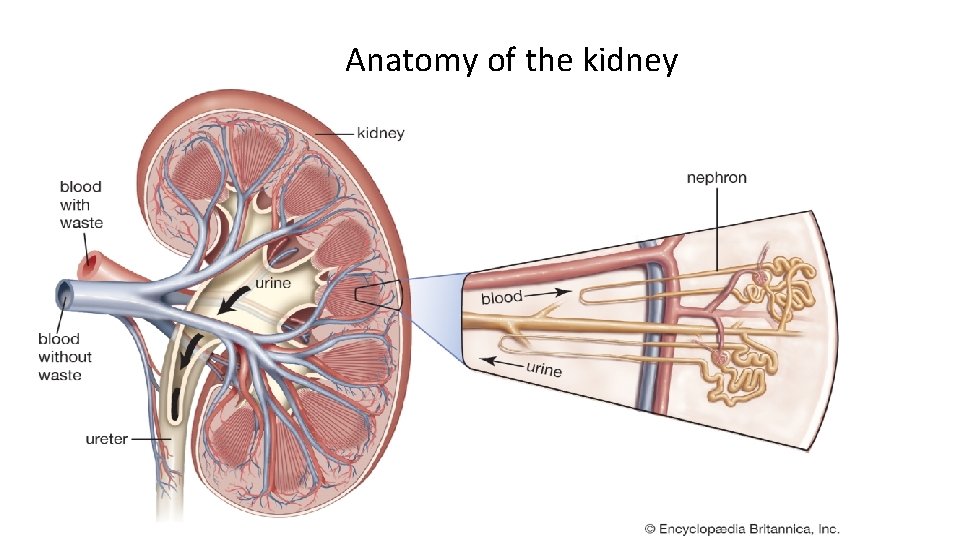
Anatomy of the kidney
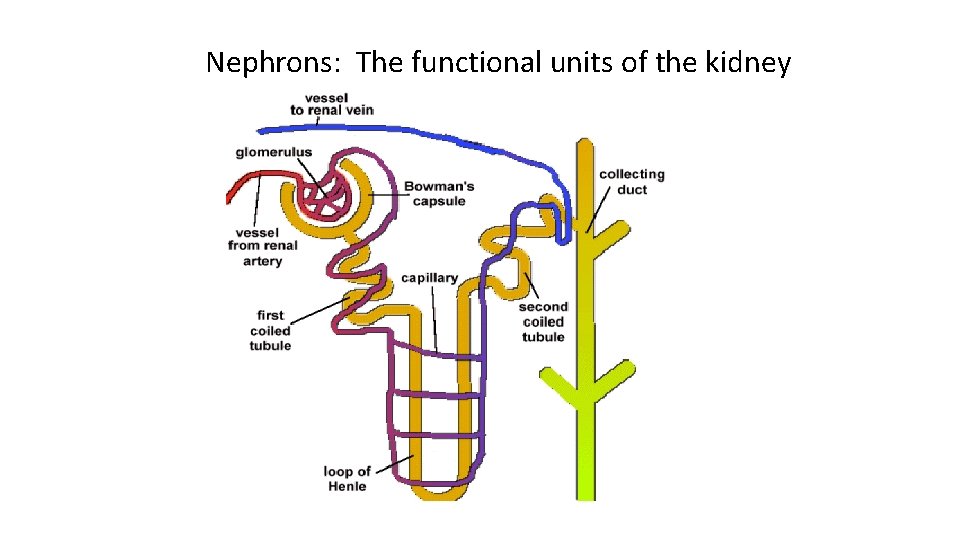
Nephrons: The functional units of the kidney
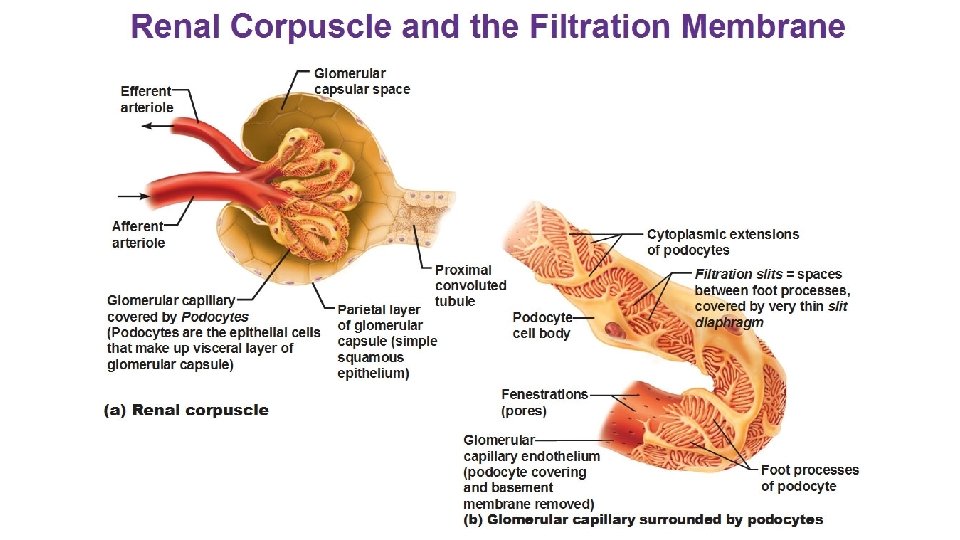
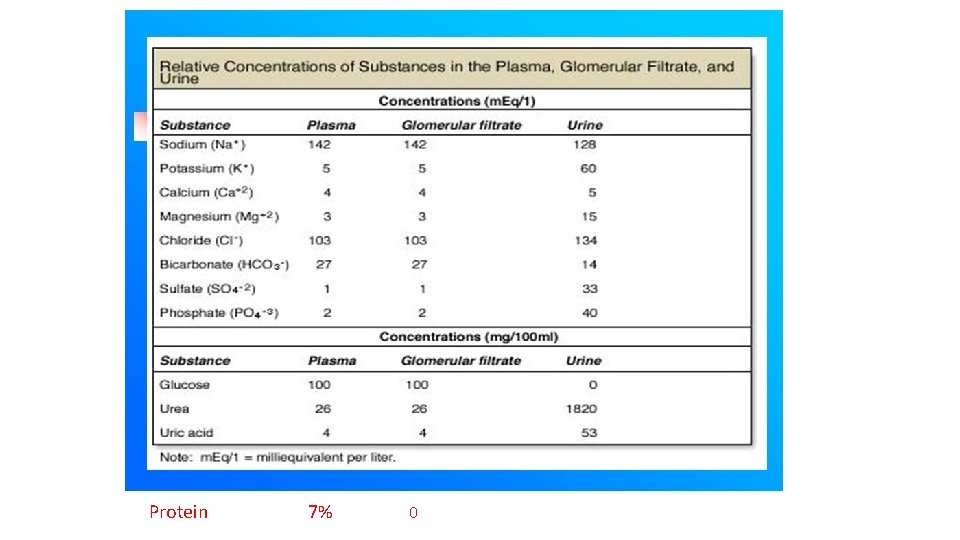
Protein 7% 0
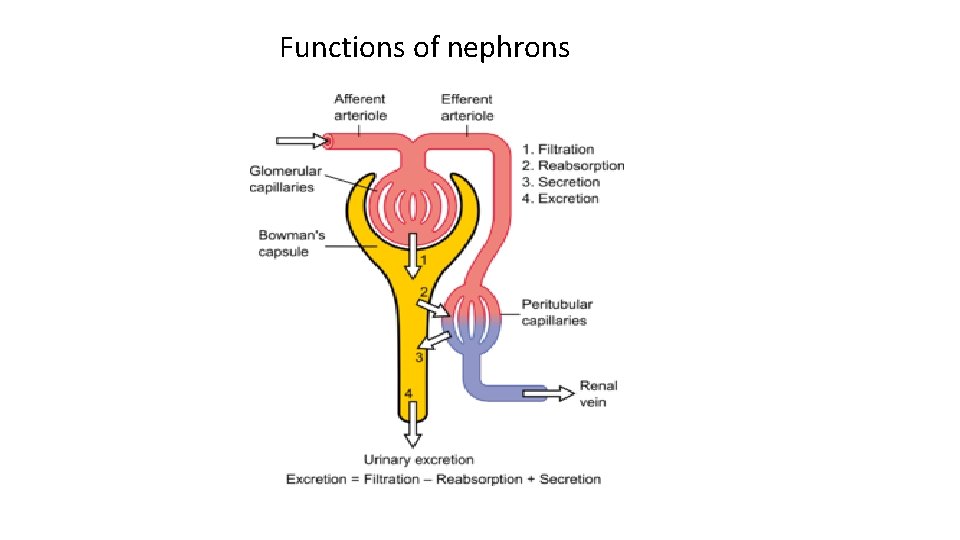
Functions of nephrons
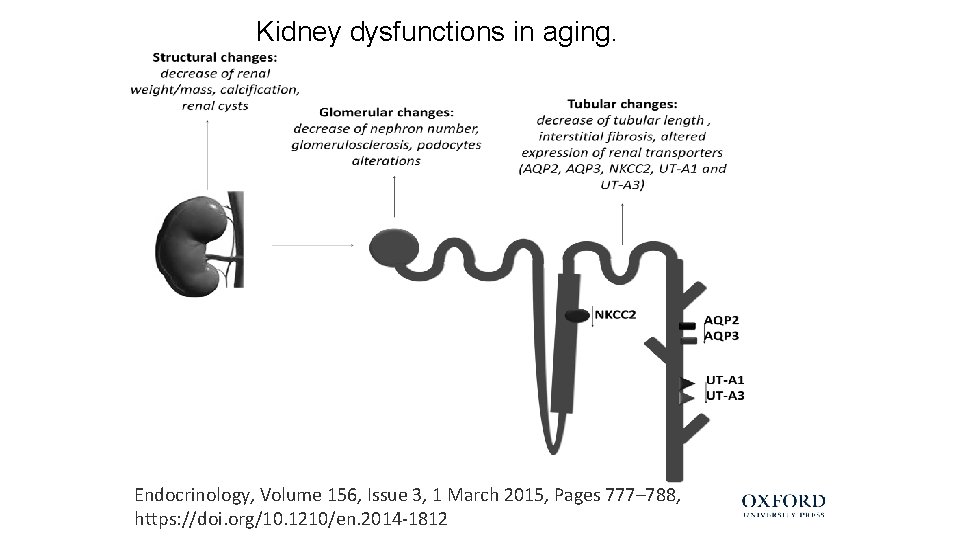
Kidney dysfunctions in aging. Endocrinology, Volume 156, Issue 3, 1 March 2015, Pages 777– 788, https: //doi. org/10. 1210/en. 2014 -1812
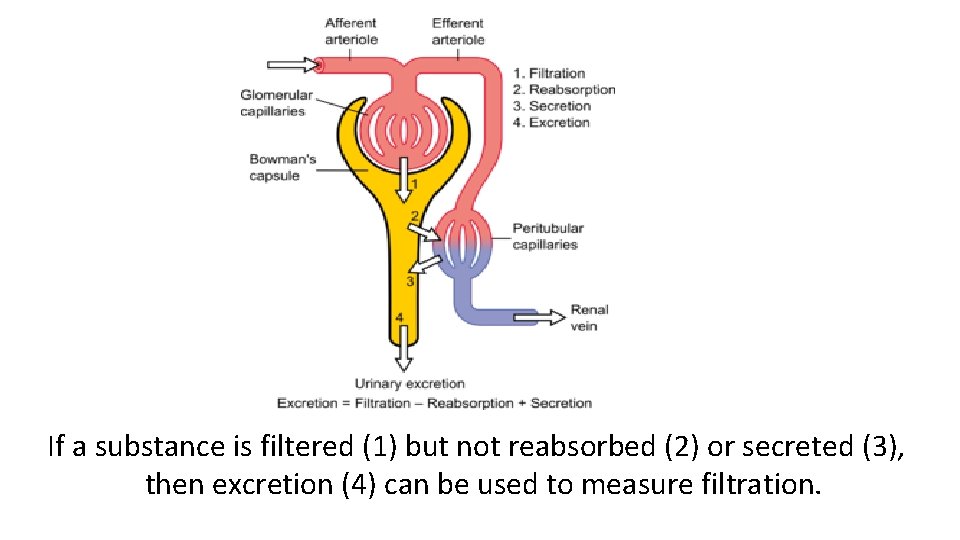
If a substance is filtered (1) but not reabsorbed (2) or secreted (3), then excretion (4) can be used to measure filtration.
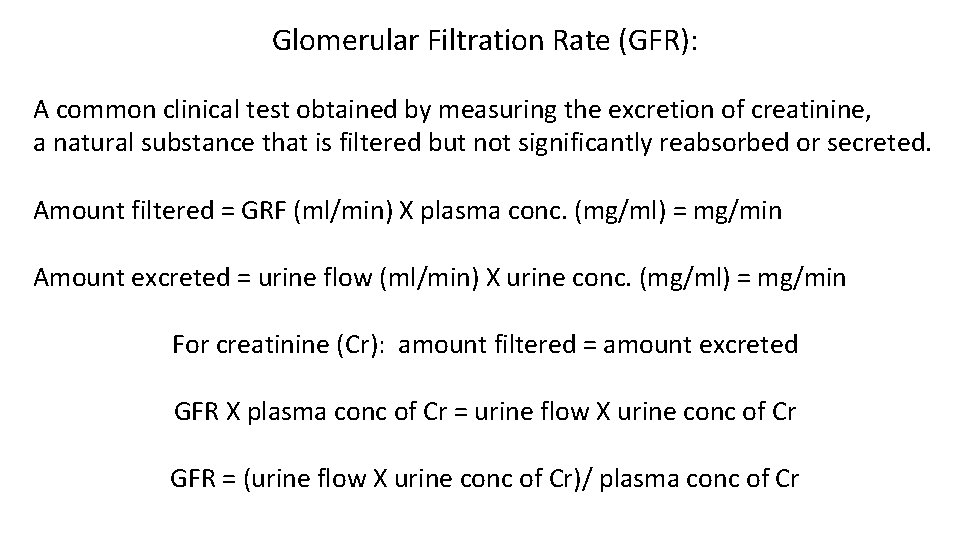
Glomerular Filtration Rate (GFR): A common clinical test obtained by measuring the excretion of creatinine, a natural substance that is filtered but not significantly reabsorbed or secreted. Amount filtered = GRF (ml/min) X plasma conc. (mg/ml) = mg/min Amount excreted = urine flow (ml/min) X urine conc. (mg/ml) = mg/min For creatinine (Cr): amount filtered = amount excreted GFR X plasma conc of Cr = urine flow X urine conc of Cr GFR = (urine flow X urine conc of Cr)/ plasma conc of Cr
GFR as measured by substances that are filtered only is also a measurement of the virtual volume of blood plasma from which the substance was removed. This is known as clearance GFR as measured by creatinine is a close approximation of clearance GFR as measured by inulin, a synthetic, is an accurate measurement of clearance
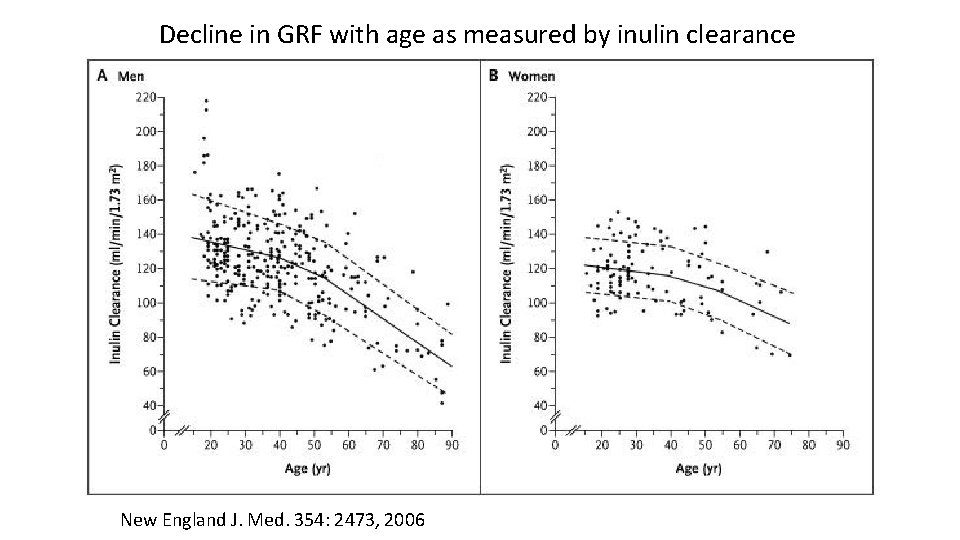
Decline in GRF with age as measured by inulin clearance New England J. Med. 354: 2473, 2006
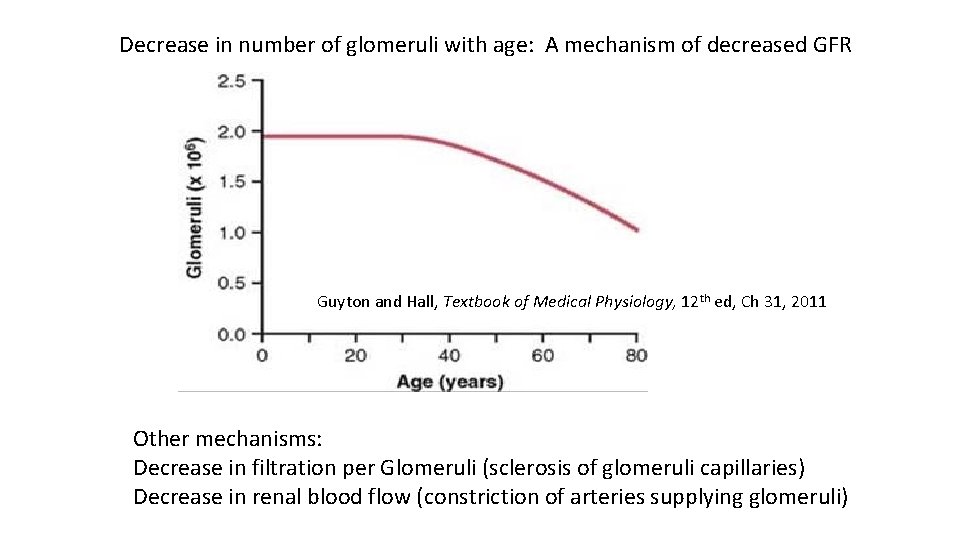
Decrease in number of glomeruli with age: A mechanism of decreased GFR Guyton and Hall, Textbook of Medical Physiology, 12 th ed, Ch 31, 2011 Other mechanisms: Decrease in filtration per Glomeruli (sclerosis of glomeruli capillaries) Decrease in renal blood flow (constriction of arteries supplying glomeruli)
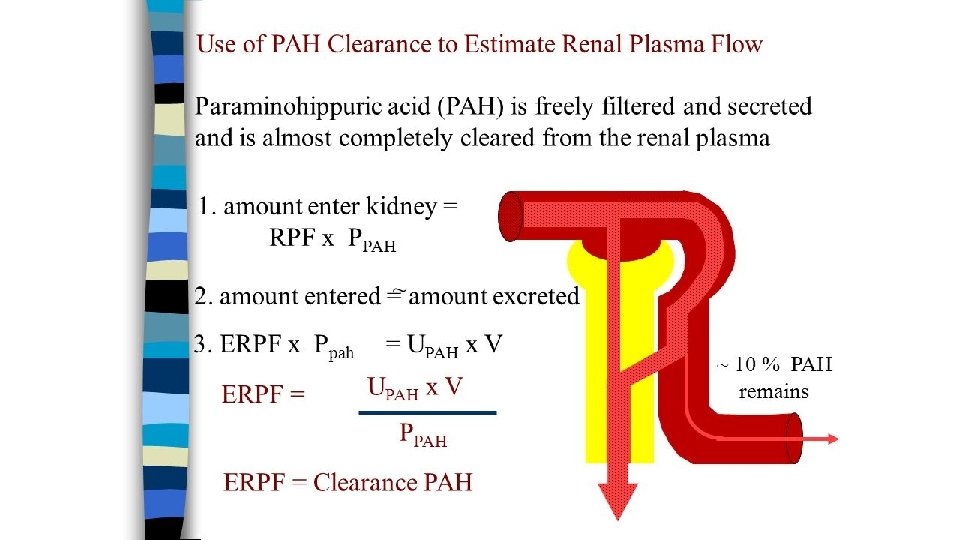
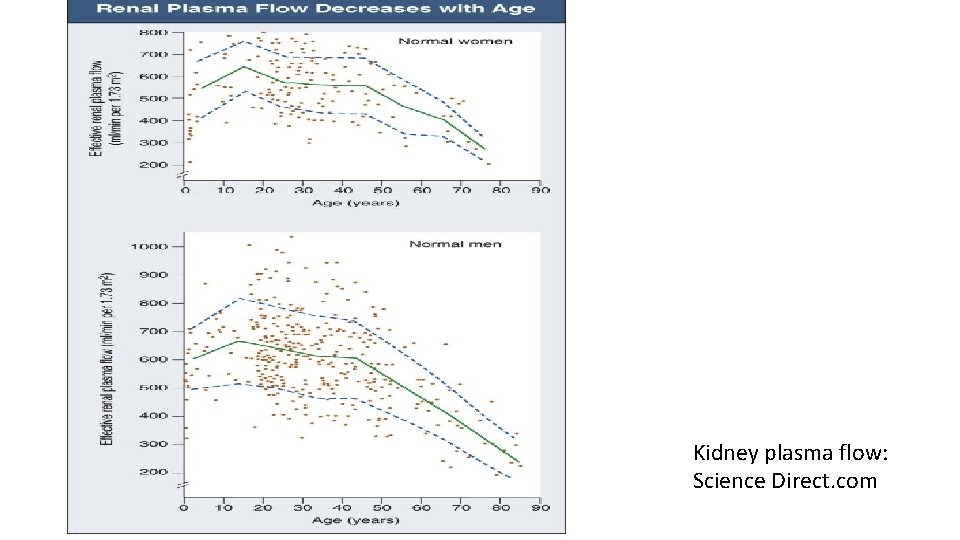
Kidney plasma flow: Science Direct. com
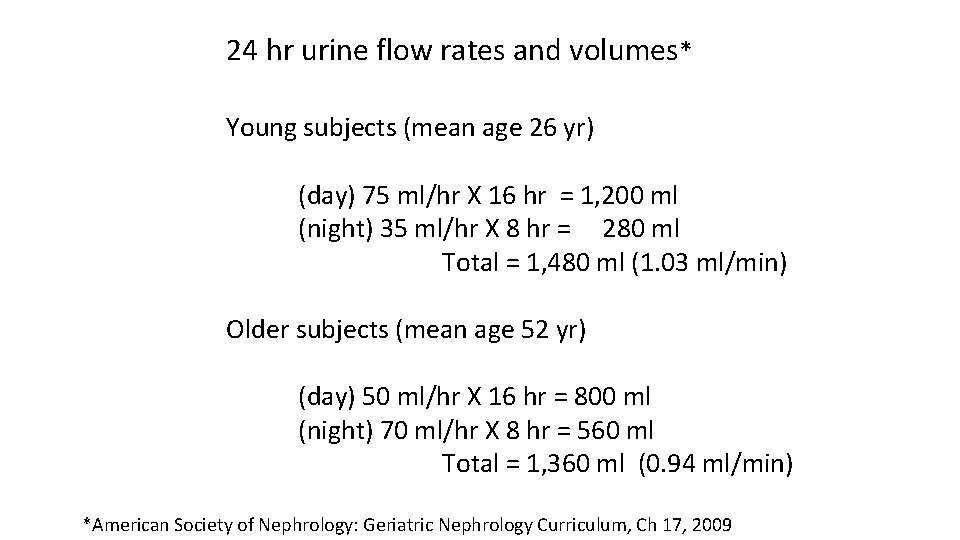
24 hr urine flow rates and volumes* Young subjects (mean age 26 yr) (day) 75 ml/hr X 16 hr = 1, 200 ml (night) 35 ml/hr X 8 hr = 280 ml Total = 1, 480 ml (1. 03 ml/min) Older subjects (mean age 52 yr) (day) 50 ml/hr X 16 hr = 800 ml (night) 70 ml/hr X 8 hr = 560 ml Total = 1, 360 ml (0. 94 ml/min) *American Society of Nephrology: Geriatric Nephrology Curriculum, Ch 17, 2009
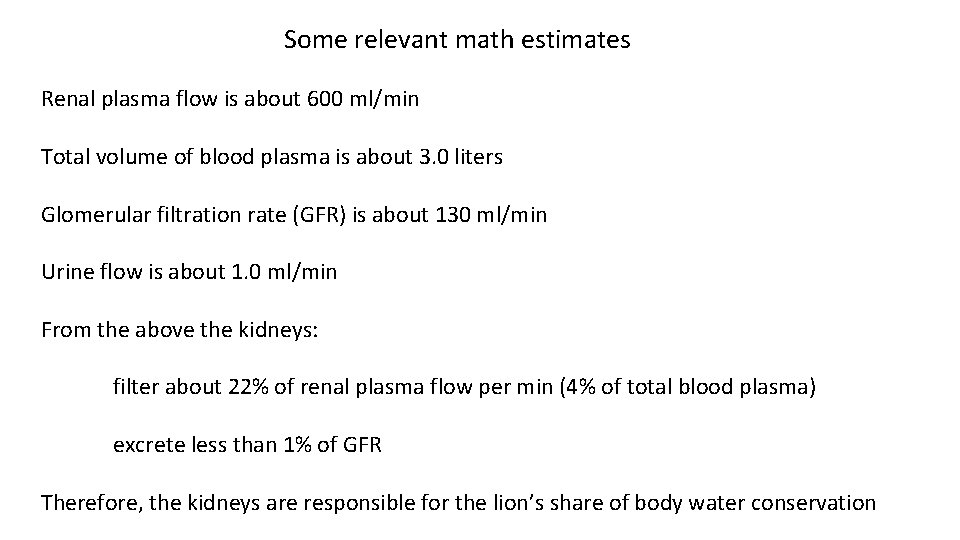
Some relevant math estimates Renal plasma flow is about 600 ml/min Total volume of blood plasma is about 3. 0 liters Glomerular filtration rate (GFR) is about 130 ml/min Urine flow is about 1. 0 ml/min From the above the kidneys: filter about 22% of renal plasma flow per min (4% of total blood plasma) excrete less than 1% of GFR Therefore, the kidneys are responsible for the lion’s share of body water conservation
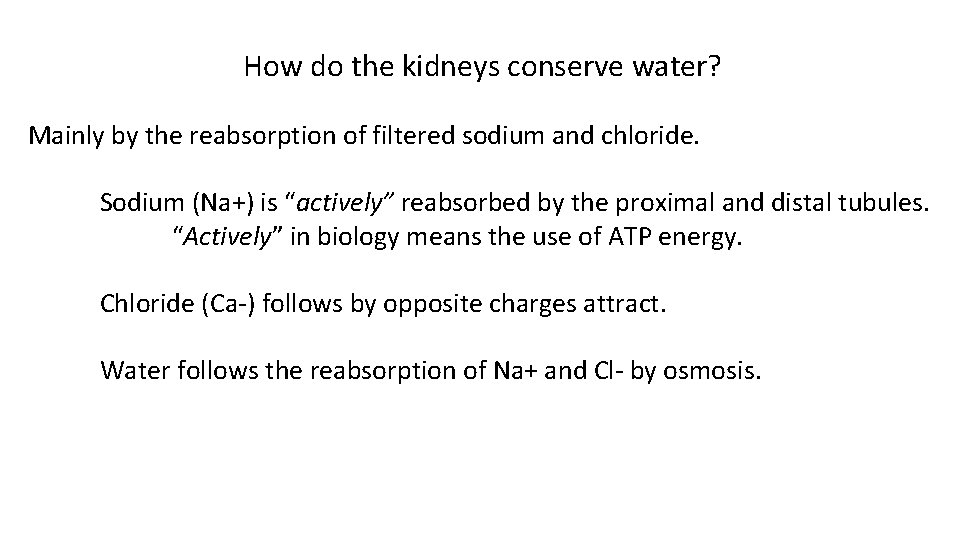
How do the kidneys conserve water? Mainly by the reabsorption of filtered sodium and chloride. Sodium (Na+) is “actively” reabsorbed by the proximal and distal tubules. “Actively” in biology means the use of ATP energy. Chloride (Ca-) follows by opposite charges attract. Water follows the reabsorption of Na+ and Cl- by osmosis.
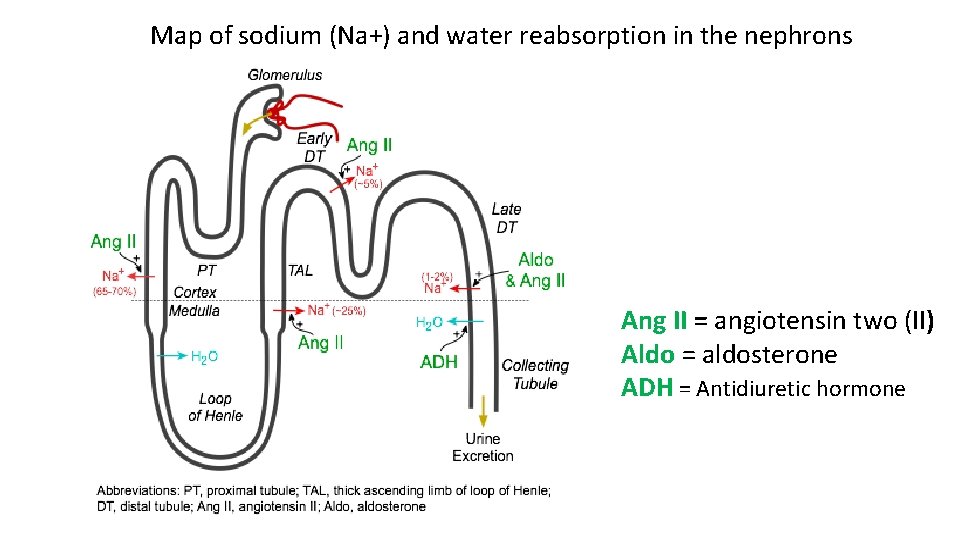
Map of sodium (Na+) and water reabsorption in the nephrons Ang II = angiotensin two (II) Aldo = aldosterone ADH = Antidiuretic hormone
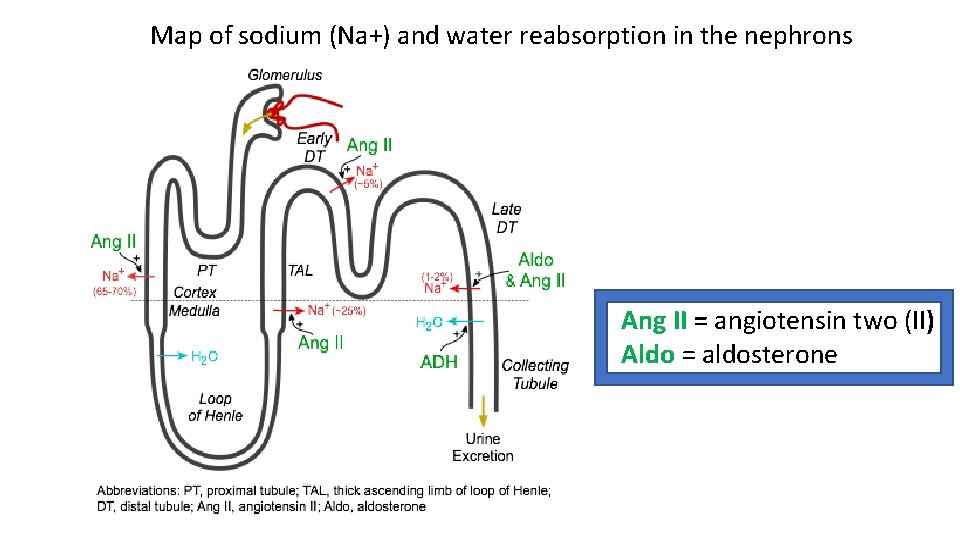
Map of sodium (Na+) and water reabsorption in the nephrons Ang II = angiotensin two (II) Aldo = aldosterone
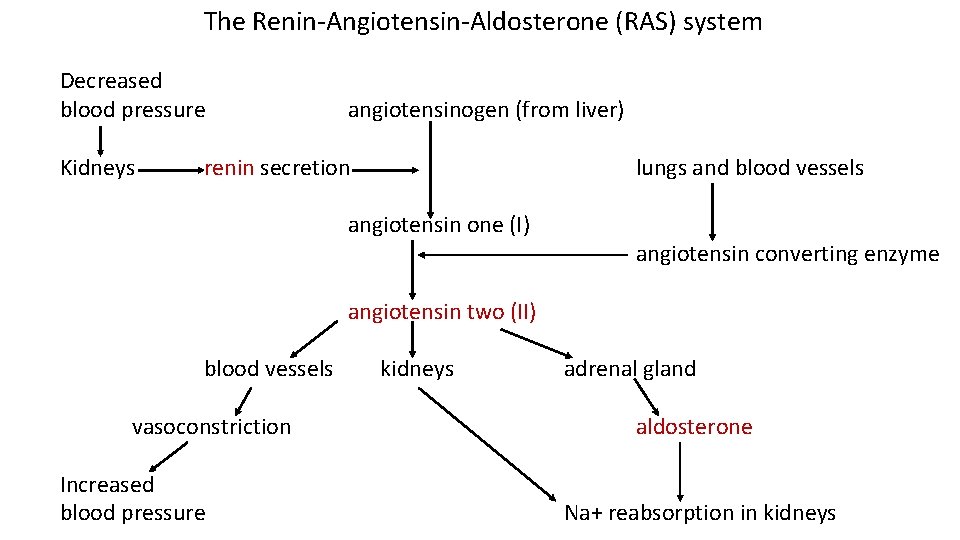
The Renin-Angiotensin-Aldosterone (RAS) system Decreased blood pressure Kidneys angiotensinogen (from liver) renin secretion lungs and blood vessels angiotensin one (I) angiotensin converting enzyme angiotensin two (II) blood vessels vasoconstriction Increased blood pressure kidneys adrenal gland aldosterone Na+ reabsorption in kidneys
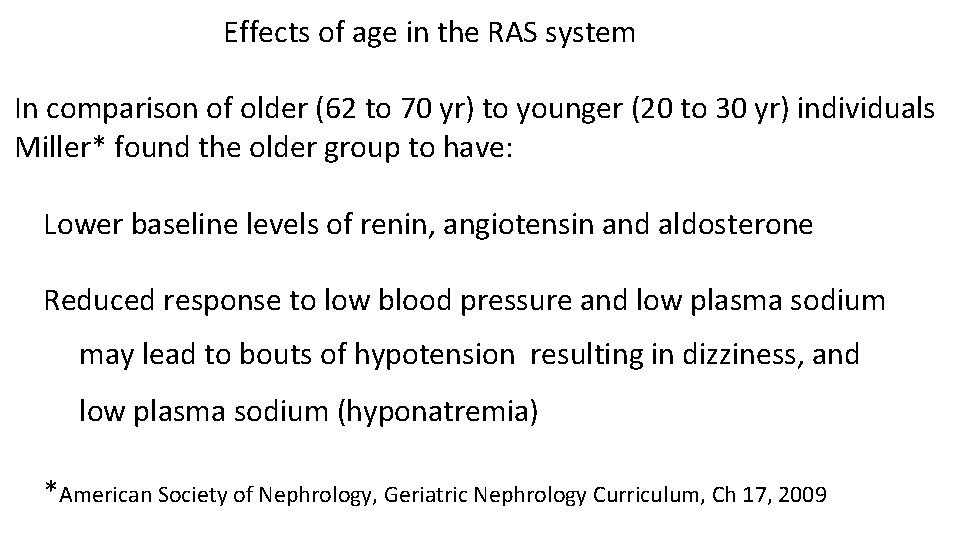
Effects of age in the RAS system In comparison of older (62 to 70 yr) to younger (20 to 30 yr) individuals Miller* found the older group to have: Lower baseline levels of renin, angiotensin and aldosterone Reduced response to low blood pressure and low plasma sodium may lead to bouts of hypotension resulting in dizziness, and low plasma sodium (hyponatremia) *American Society of Nephrology, Geriatric Nephrology Curriculum, Ch 17, 2009

Map of sodium (Na+) and water reabsorption in the nephrons ADH = Antidiuretic hormone
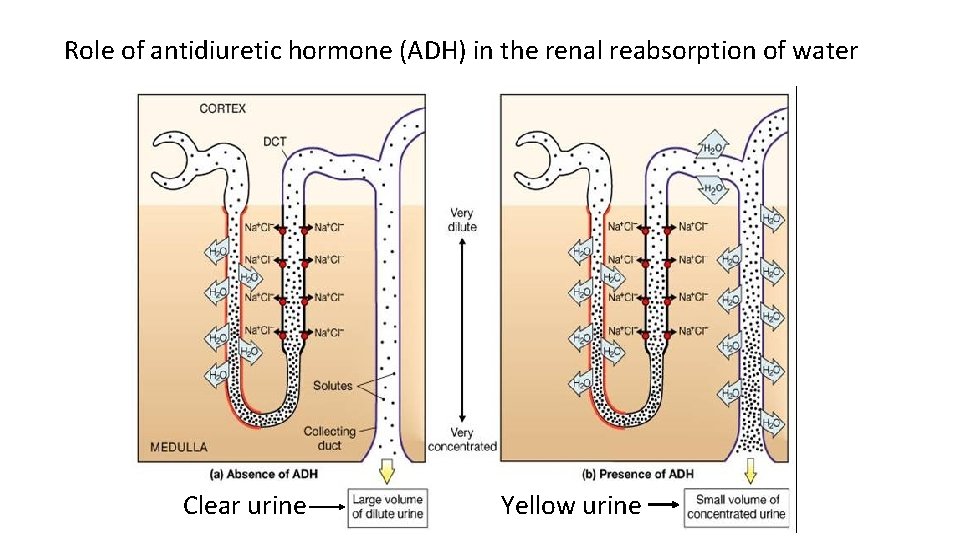
Role of antidiuretic hormone (ADH) in the renal reabsorption of water Clear urine Yellow urine
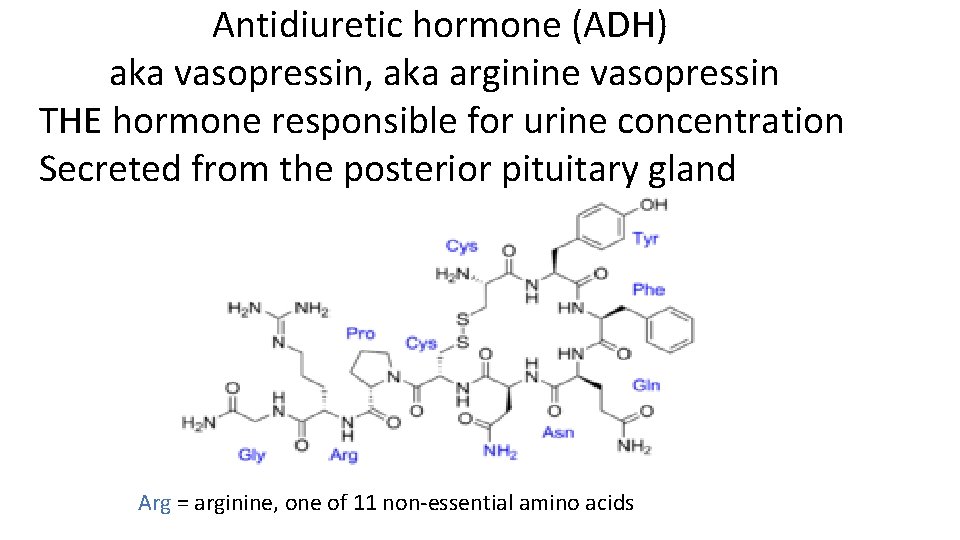
Antidiuretic hormone (ADH) aka vasopressin, aka arginine vasopressin THE hormone responsible for urine concentration Secreted from the posterior pituitary gland Arg = arginine, one of 11 non-essential amino acids
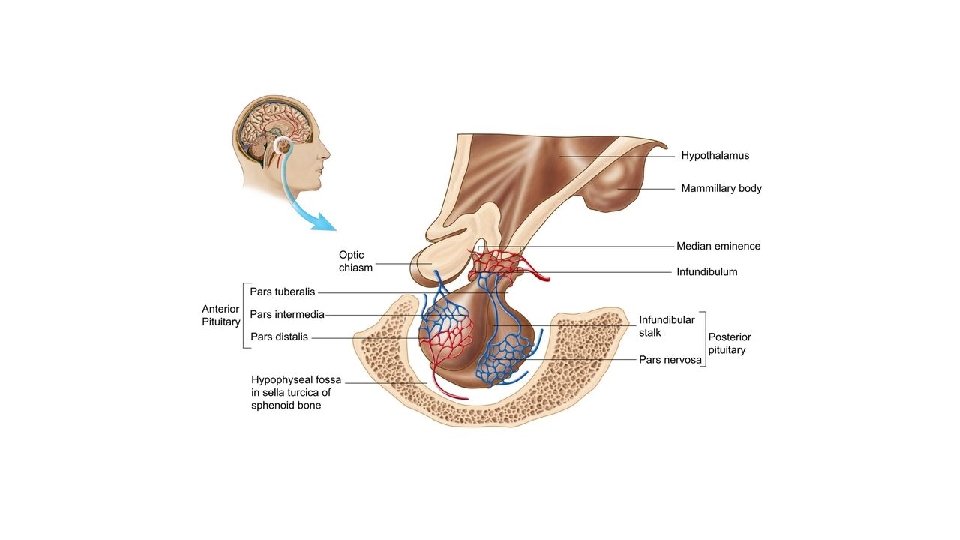
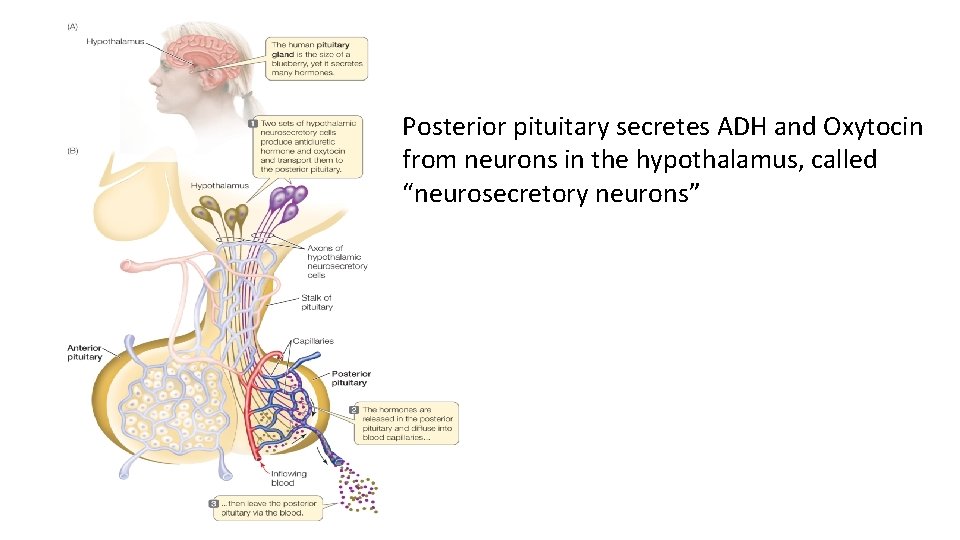
Posterior pituitary secretes ADH and Oxytocin from neurons in the hypothalamus, called “neurosecretory neurons”
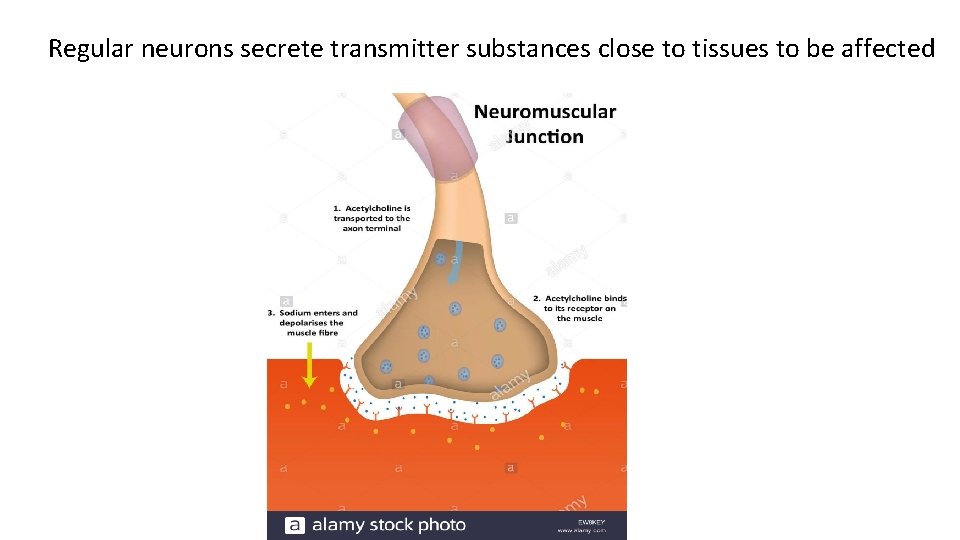
Regular neurons secrete transmitter substances close to tissues to be affected
Factors influencing the secretion of ADH Stimulants: Decrease in blood volume in the thorax dehydration standing up (orthostasis) Increase in plasma sodium concentration dehydration excessive salt consumption Angiotensin II Inhibitors: Increase in blood volume in the thorax sitting or laying down water submersion shifts blood to the thorax (pee in the pool phenomenon) consumption of alcohol and caffeine (one oz of Jack Daniels = several oz of pee) Balance of stimulation and inhibition influenced by circadian rhythms (e. g. sleep-wake cycle)
Altered renal effects of ADH in aging* An increase in ADH secretion which is offset by a more pronounced decrease in the renal effects of ADH. leads to a decrease in ability of kidneys to concentrate urine. Inhibits ability of elderly to conserve water * Endocrinology Vol 156: pp 777 -788, 2015
24 hr urine flow rates and volumes* Young subjects (mean age 26 yr) (day) 75 ml/hr X 16 hr = 1, 200 ml (night) 35 ml/hr X 8 hr = 280 ml Total = 1, 480 ml (1. 03 ml/min) Older subjects (mean age 52 yr) (day) 50 ml/hr X 16 hr = 800 ml (night) 70 ml/hr X 8 hr = 560 ml Total = 1, 360 ml (0. 94 ml/min) *American Society of Nephrology: Geriatric Nephrology Curriculum, Ch 17, 2009
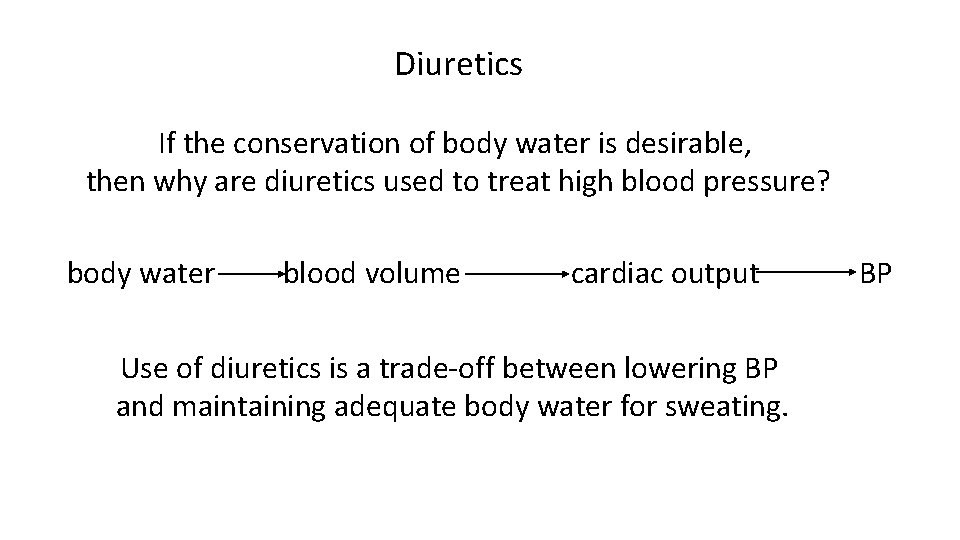
Diuretics If the conservation of body water is desirable, then why are diuretics used to treat high blood pressure? body water blood volume cardiac output Use of diuretics is a trade-off between lowering BP and maintaining adequate body water for sweating. BP
Actions of frequently used diuretics Hydrochlorothiazide Inhibits distal tubular Na+ reabsorption independent of Ang II Angiotensin converting enzyme (ACE) inhibitors Inhibits conversion of Ang I to Ang II used as a vasodilator as well as a diuretic action inhibits Na+ reabsorption
Conivaptan, a not so frequently used diuretic Inhibits Antidiuretic Hormone (ADH) Given iv under supervised clinical conditions Elicits diuresis W/O loss of sodium
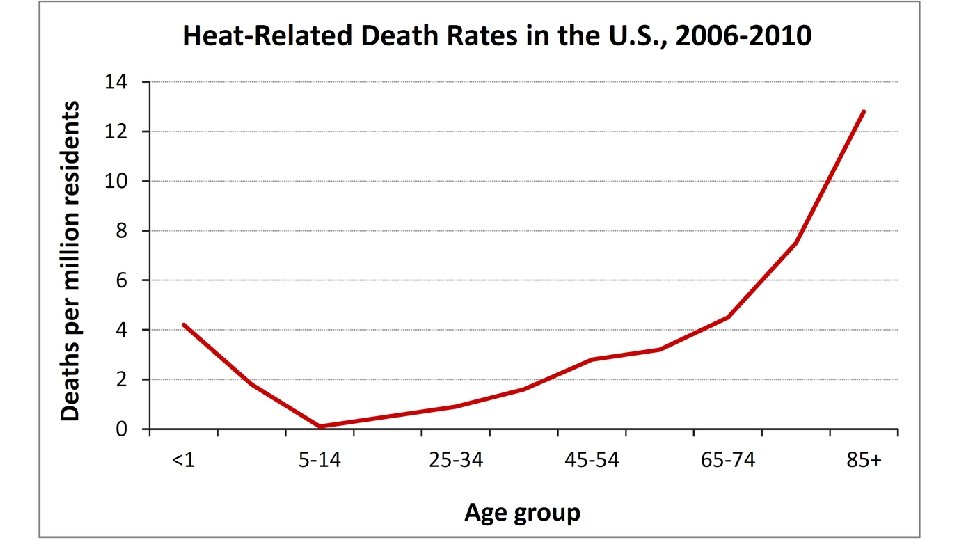
Summary The most numerous weather related deaths in the US are due to heat The incidence of heat related death increases with advancing age A rise in heat related death for the general population since 2000 Correlates with the rise in global temperature Heat Exhaustion shifts to heat stroke when sweating ceases Body temperature rapidly rises
Summary: Continued The body always produces heat Continually from metabolism Periodically from physical activity For body temperature stability heat production must = heat loss There are three general mechanisms of heat loss from the body Radiation, Convection, Evaporation (sweating)
Summary: Continued Heat loss by evaporation is decreased with age: reduced number of sweat glands and their response to stimuli lower total body water lower blood volume Heat loss by convection is increased with age: cutaneous blood vessels closer to surface of skin due to thinning of epidermis
Summary: Continued Lower total body water with age: Increased % body fat which holds less water Lower blood volume Altered kidney function Reduced GFR and renal blood flow Increase in nocturnal urine Reduced response of Renin-Angiotensin-Aldosterone Reduced effects of antidiuretic hormone (ADH)
Diuretics that work by inhibiting renal Na+ reabsorption hydrochlorothiazide angiotensin converting enzyme (ACE) inhibitors
- Slides: 85