Introduction To Plastics Materials CORPORATE TRAINING AND PLANNING
- Slides: 113
Introduction To Plastics Materials CORPORATE TRAINING AND PLANNING
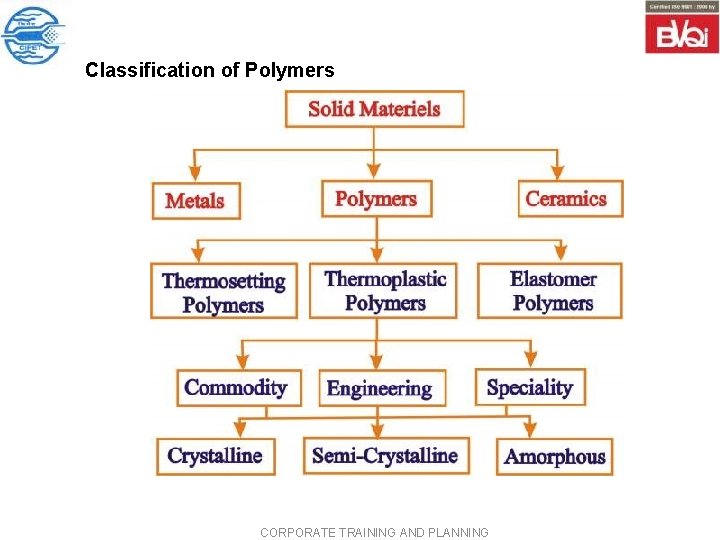
Classification of Polymers CORPORATE TRAINING AND PLANNING
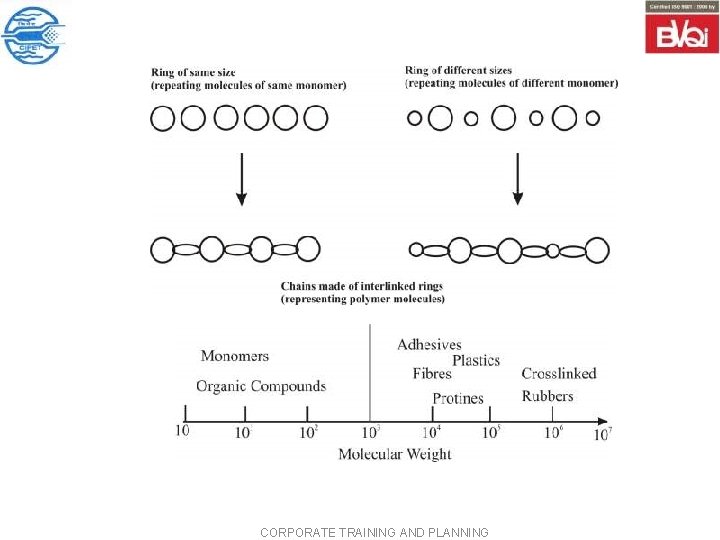
POLYMER “The polymer (poly- many; mer-unit or parts) is a high molecular weight compound, formed by the combination of small molecules of low molecular weight”. OR “Polymers having long chain macromolecules, which are built up by the linking together of a large number of small molecules, called monomer”. CORPORATE TRAINING AND PLANNING
Basic Terms of Polymers • Polymerization: “The process by which, monomer combine to form polymers is known as polymerization”. Degree of Polymerization (DP): “The numbers of repeating unit present in it call degree of polymerization (DP)”. Addition Polymerization: : ‘When molecules just add on to form the polymer, the process is called ‘addition polymerization’ In ‘addition polymerisation’ the molecular weight of the polymer is roughly equal, to that of all the molecules, which combine to form the polymer. Ex; Polyethylene, polypropylene CORPORATE TRAINING AND PLANNING
Condensation Polymerization: When, however, molecules do not just add on but also undergo some reaction in forming the polymer, the process is called ‘condensation polymerisation’ • The molecular weight of polymer is lesser by the weight of simple molecules eliminated during the condensation process • The condensation takes place between the two reactive functional groups, like the carbonyl group (of an acid) and hydroxyl group (of an alcohol) to form polyesters. Ex. Nylon, PET CORPORATE TRAINING AND PLANNING
CORPORATE TRAINING AND PLANNING
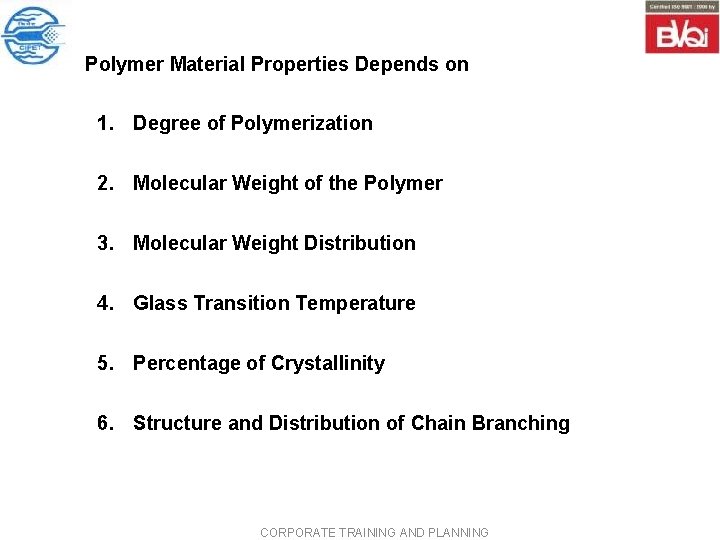
Polymer Material Properties Depends on 1. Degree of Polymerization 2. Molecular Weight of the Polymer 3. Molecular Weight Distribution 4. Glass Transition Temperature 5. Percentage of Crystallinity 6. Structure and Distribution of Chain Branching CORPORATE TRAINING AND PLANNING
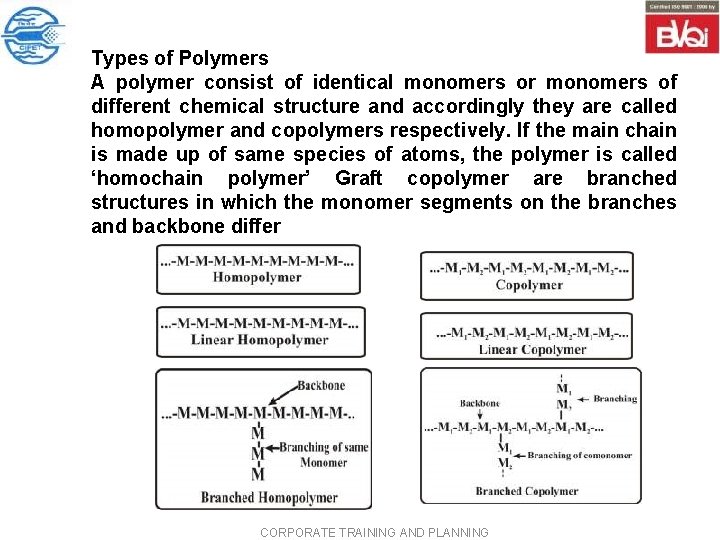
Types of Polymers A polymer consist of identical monomers or monomers of different chemical structure and accordingly they are called homopolymer and copolymers respectively. If the main chain is made up of same species of atoms, the polymer is called ‘homochain polymer’ Graft copolymer are branched structures in which the monomer segments on the branches and backbone differ CORPORATE TRAINING AND PLANNING
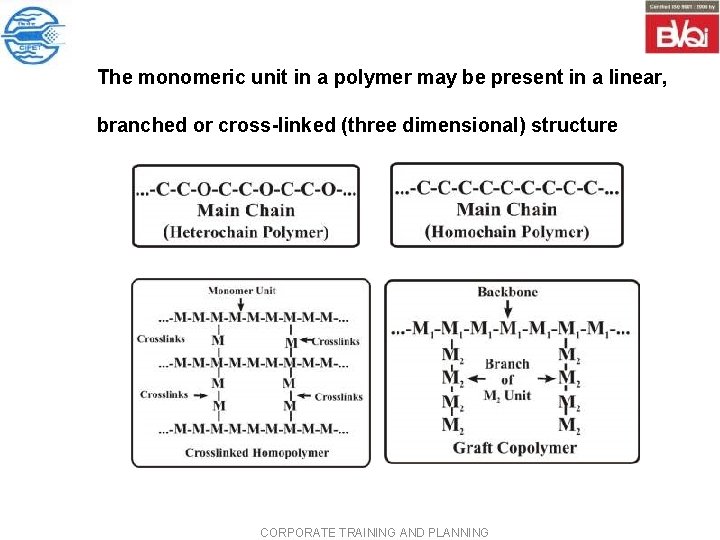
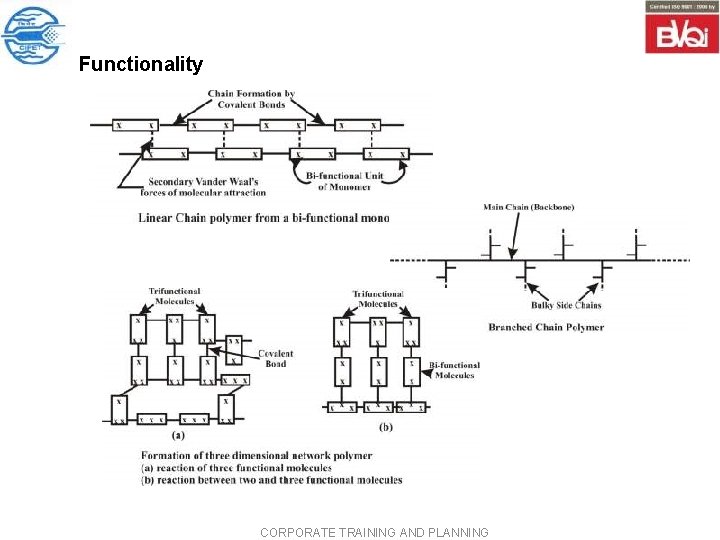
The monomeric unit in a polymer may be present in a linear, branched or cross linked (three dimensional) structure CORPORATE TRAINING AND PLANNING
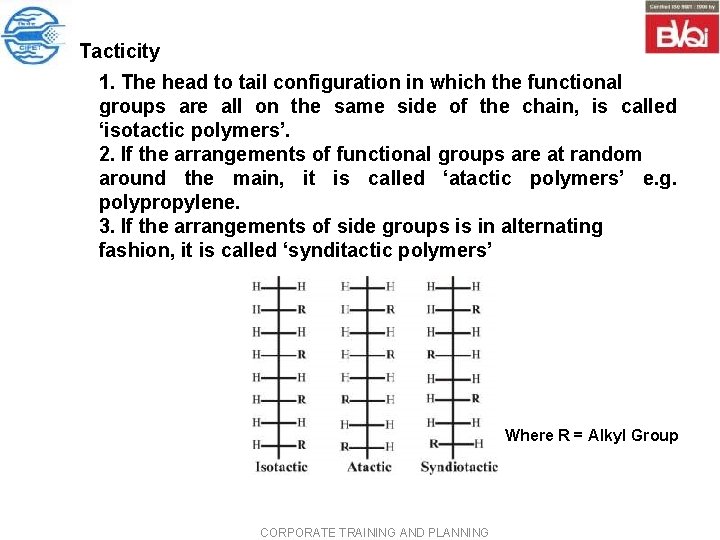
Tacticity 1. The head to tail configuration in which the functional groups are all on the same side of the chain, is called ‘isotactic polymers’. 2. If the arrangements of functional groups are at random around the main, it is called ‘atactic polymers’ e. g. polypropylene. 3. If the arrangements of side groups is in alternating fashion, it is called ‘synditactic polymers’ Where R = Alkyl Group CORPORATE TRAINING AND PLANNING
Functionality CORPORATE TRAINING AND PLANNING
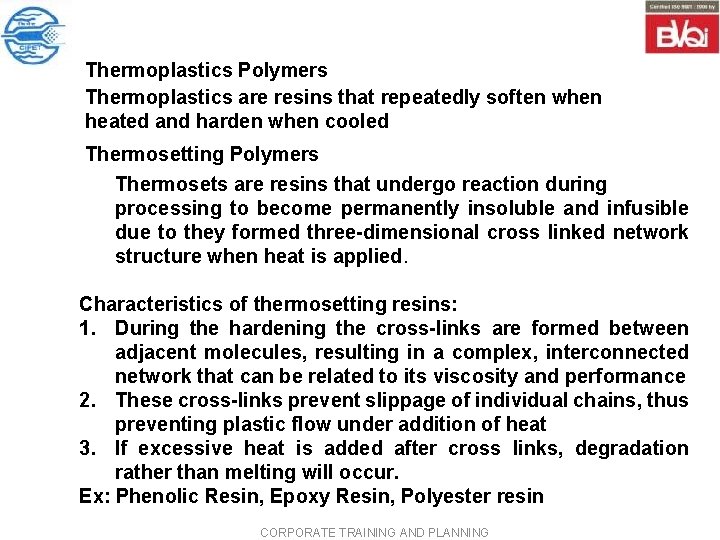
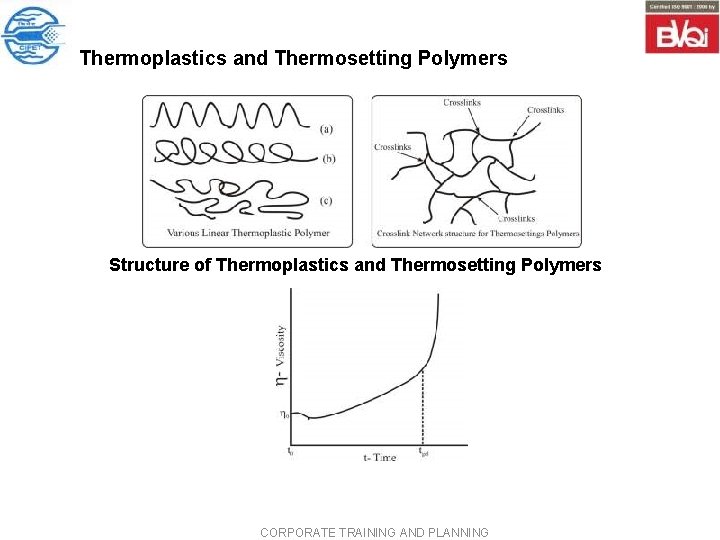
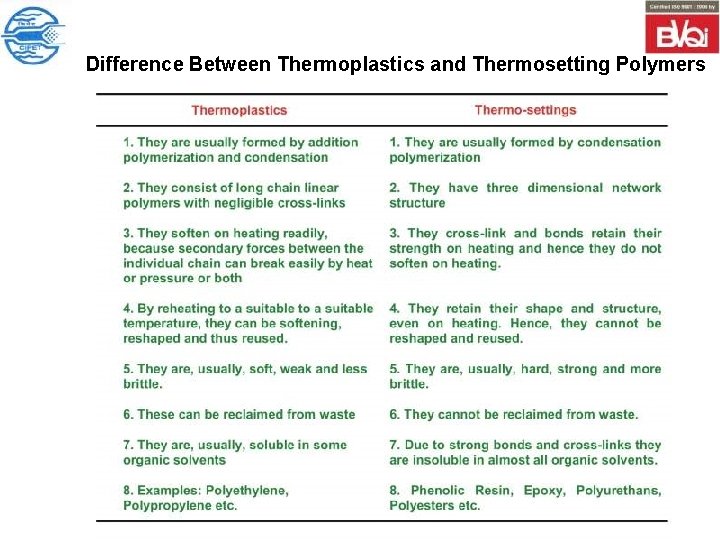
Thermoplastics Polymers Thermoplastics are resins that repeatedly soften when heated and harden when cooled Thermosetting Polymers Thermosets are resins that undergo reaction during processing to become permanently insoluble and infusible due to they formed three dimensional cross linked network structure when heat is applied. Characteristics of thermosetting resins: 1. During the hardening the cross links are formed between adjacent molecules, resulting in a complex, interconnected network that can be related to its viscosity and performance 2. These cross links prevent slippage of individual chains, thus preventing plastic flow under addition of heat 3. If excessive heat is added after cross links, degradation rather than melting will occur. Ex: Phenolic Resin, Epoxy Resin, Polyester resin CORPORATE TRAINING AND PLANNING
Thermoplastics and Thermosetting Polymers Structure of Thermoplastics and Thermosetting Polymers CORPORATE TRAINING AND PLANNING
Difference Between Thermoplastics and Thermosetting Polymers CORPORATE TRAINING AND PLANNING
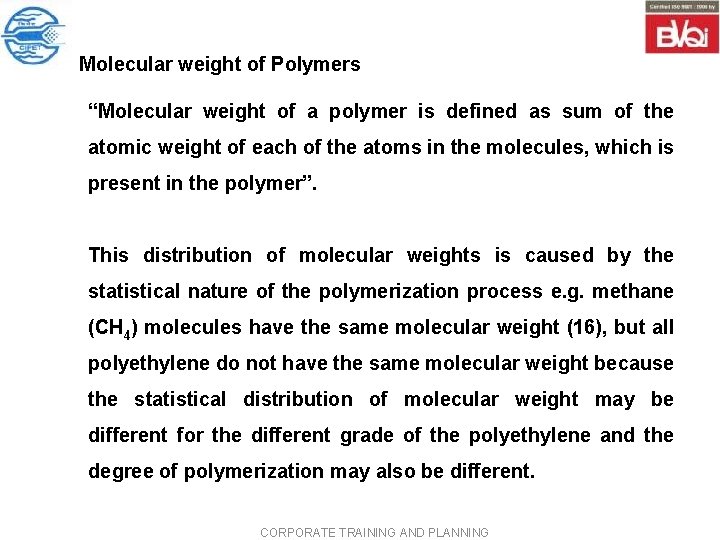
Molecular weight of Polymers “Molecular weight of a polymer is defined as sum of the atomic weight of each of the atoms in the molecules, which is present in the polymer”. This distribution of molecular weights is caused by the statistical nature of the polymerization process e. g. methane (CH 4) molecules have the same molecular weight (16), but all polyethylene do not have the same molecular weight because the statistical distribution of molecular weight may be different for the different grade of the polyethylene and the degree of polymerization may also be different. CORPORATE TRAINING AND PLANNING
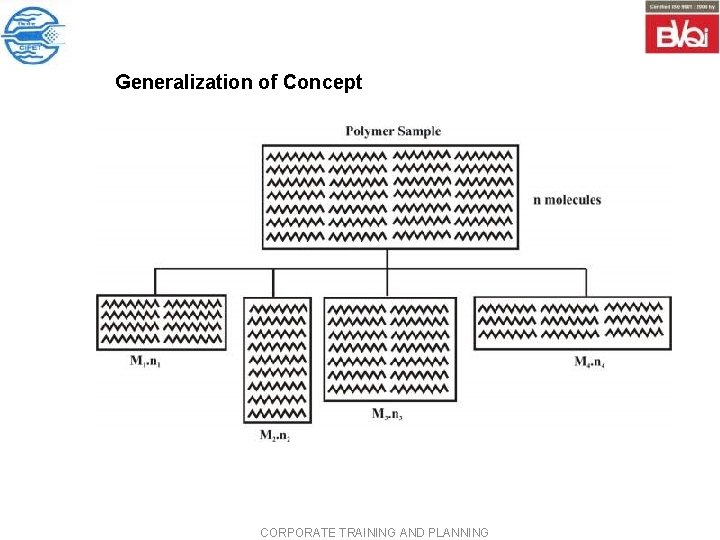
Generalization of Concept CORPORATE TRAINING AND PLANNING
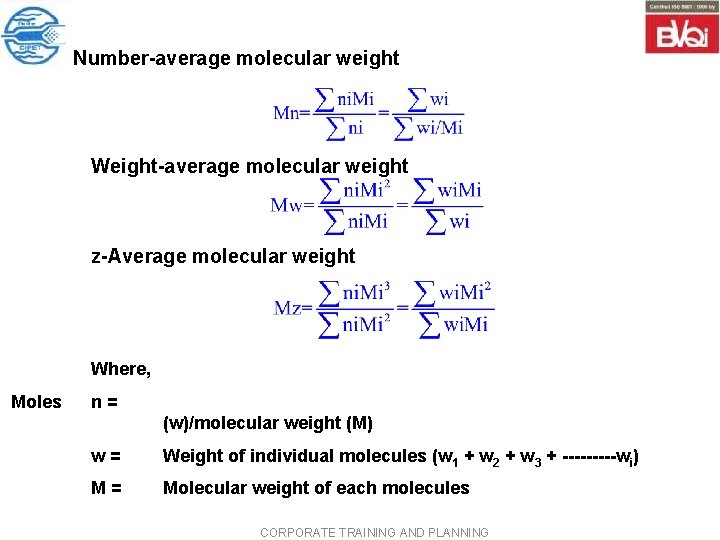
Number average molecular weight Weight average molecular weight z Average molecular weight Where, Moles n = (w)/molecular weight (M) w = Weight of individual molecules (w 1 + w 2 + w 3 + wi) M = Molecular weight of each molecules CORPORATE TRAINING AND PLANNING
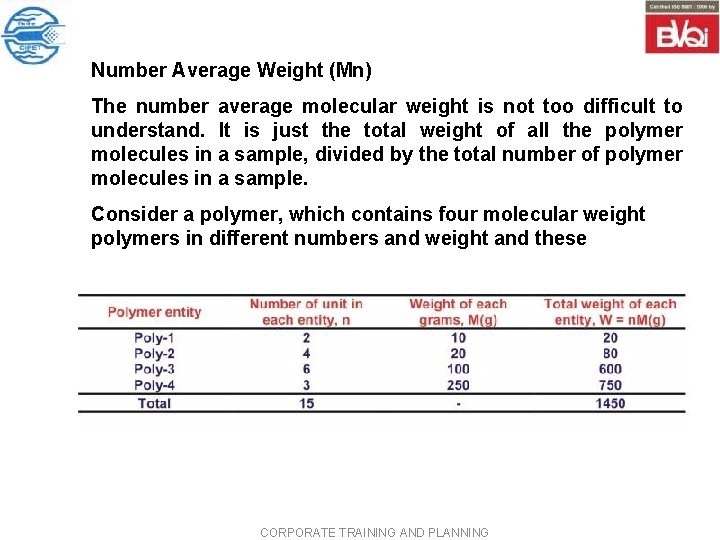
Number Average Weight (Mn) The number average molecular weight is not too difficult to understand. It is just the total weight of all the polymer molecules in a sample, divided by the total number of polymer molecules in a sample. Consider a polymer, which contains four molecular weight polymers in different numbers and weight and these CORPORATE TRAINING AND PLANNING
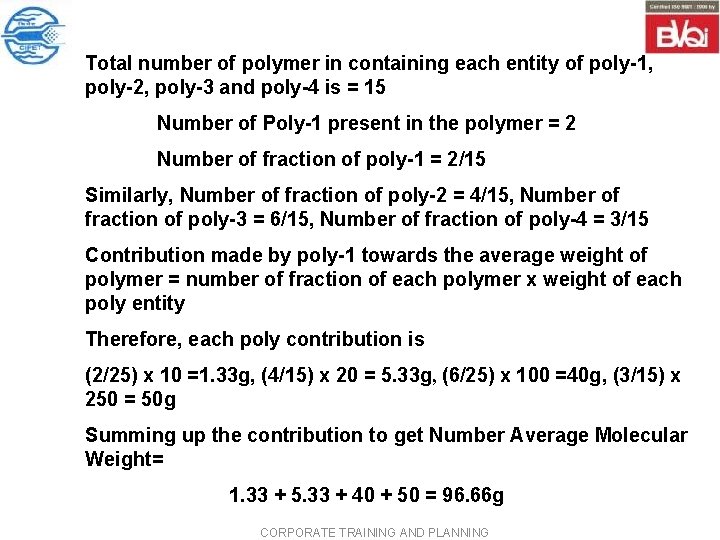
Total number of polymer in containing each entity of poly 1, poly 2, poly 3 and poly 4 is = 15 Number of Poly 1 present in the polymer = 2 Number of fraction of poly 1 = 2/15 Similarly, Number of fraction of poly 2 = 4/15, Number of fraction of poly 3 = 6/15, Number of fraction of poly 4 = 3/15 Contribution made by poly 1 towards the average weight of polymer = number of fraction of each polymer x weight of each poly entity Therefore, each poly contribution is (2/25) x 10 =1. 33 g, (4/15) x 20 = 5. 33 g, (6/25) x 100 =40 g, (3/15) x 250 = 50 g Summing up the contribution to get Number Average Molecular Weight= 1. 33 + 5. 33 + 40 + 50 = 96. 66 g CORPORATE TRAINING AND PLANNING
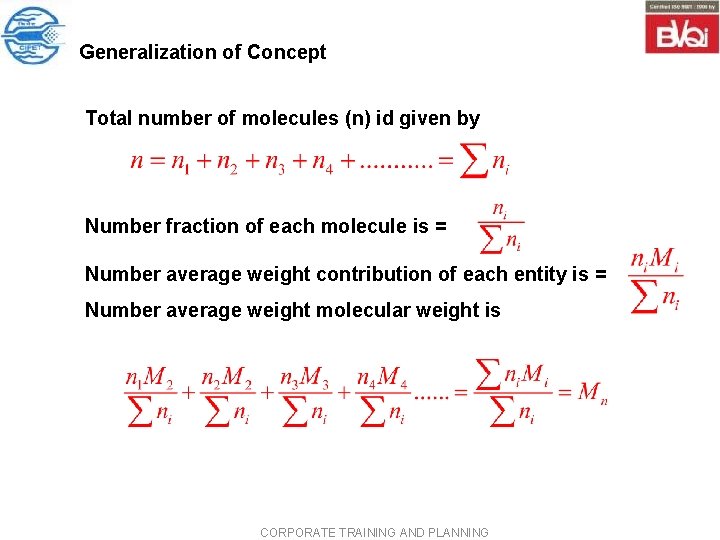
Generalization of Concept Total number of molecules (n) id given by Number fraction of each molecule is = Number average weight contribution of each entity is = Number average weight molecular weight is CORPORATE TRAINING AND PLANNING
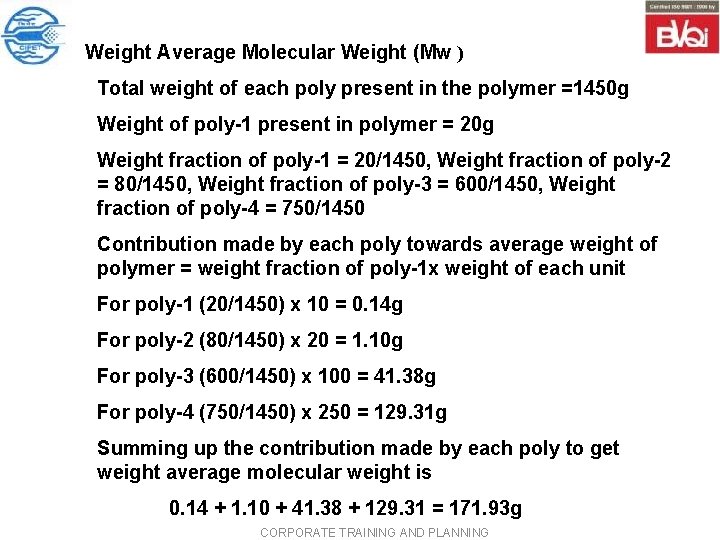
Weight Average Molecular Weight (Mw ) Total weight of each poly present in the polymer =1450 g Weight of poly 1 present in polymer = 20 g Weight fraction of poly 1 = 20/1450, Weight fraction of poly 2 = 80/1450, Weight fraction of poly 3 = 600/1450, Weight fraction of poly 4 = 750/1450 Contribution made by each poly towards average weight of polymer = weight fraction of poly 1 x weight of each unit For poly 1 (20/1450) x 10 = 0. 14 g For poly 2 (80/1450) x 20 = 1. 10 g For poly 3 (600/1450) x 100 = 41. 38 g For poly 4 (750/1450) x 250 = 129. 31 g Summing up the contribution made by each poly to get weight average molecular weight is 0. 14 + 1. 10 + 41. 38 + 129. 31 = 171. 93 g CORPORATE TRAINING AND PLANNING
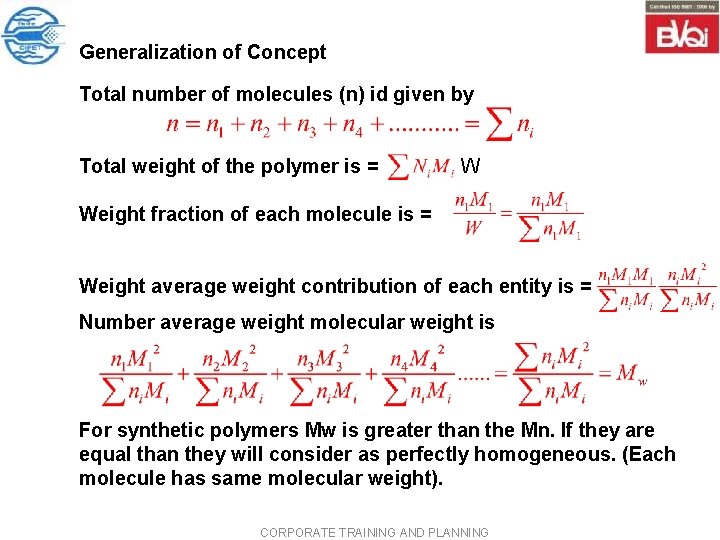
Generalization of Concept Total number of molecules (n) id given by Total weight of the polymer is = W Weight fraction of each molecule is = Weight average weight contribution of each entity is = Number average weight molecular weight is For synthetic polymers Mw is greater than the Mn. If they are equal than they will consider as perfectly homogeneous. (Each molecule has same molecular weight). CORPORATE TRAINING AND PLANNING
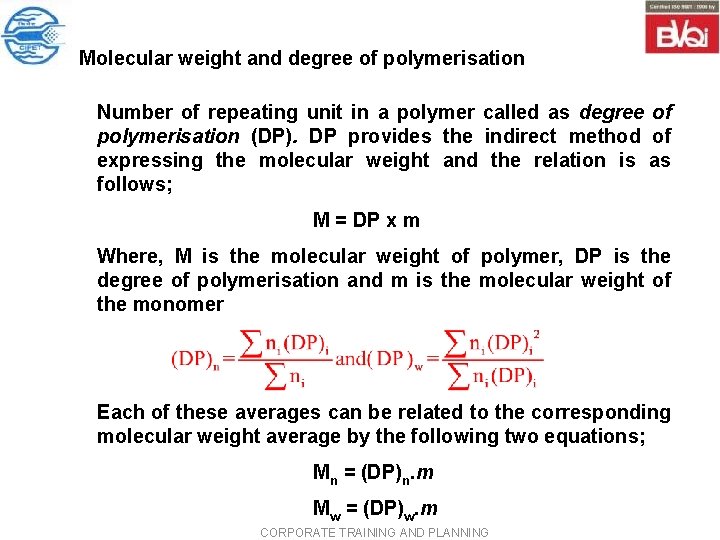
Molecular weight and degree of polymerisation Number of repeating unit in a polymer called as degree of polymerisation (DP). DP provides the indirect method of expressing the molecular weight and the relation is as follows; M = DP x m Where, M is the molecular weight of polymer, DP is the degree of polymerisation and m is the molecular weight of the monomer Each of these averages can be related to the corresponding molecular weight average by the following two equations; Mn = (DP)n. m Mw = (DP)w. m CORPORATE TRAINING AND PLANNING
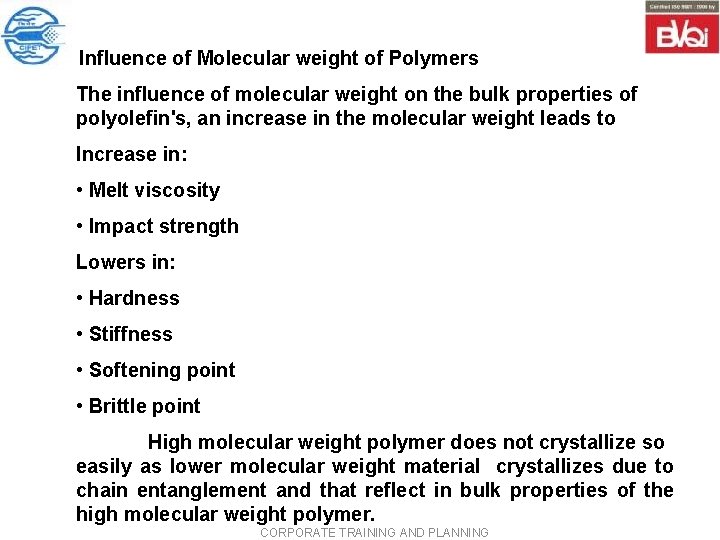
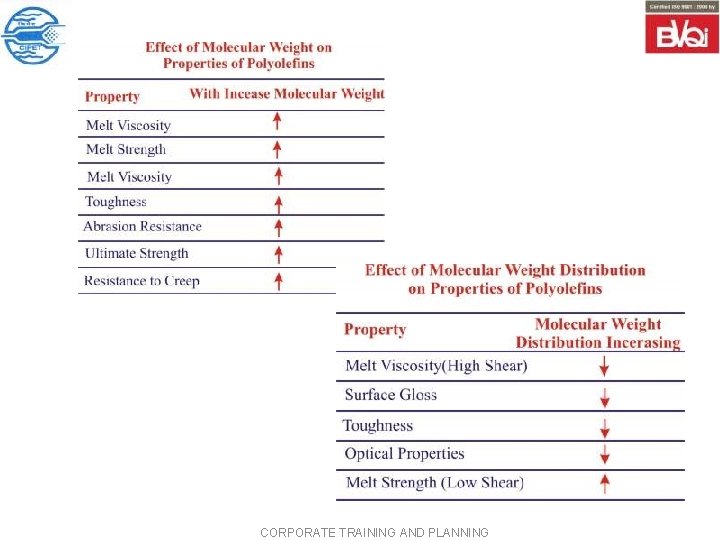
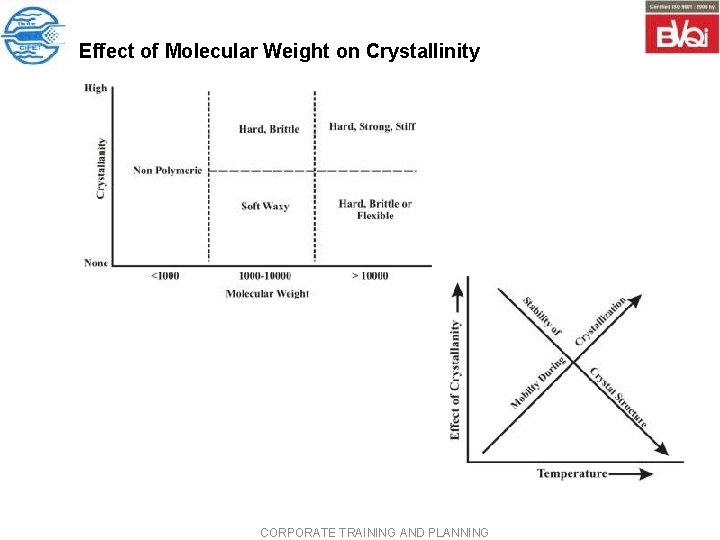
Influence of Molecular weight of Polymers The influence of molecular weight on the bulk properties of polyolefin's, an increase in the molecular weight leads to Increase in: • Melt viscosity • Impact strength Lowers in: • Hardness • Stiffness • Softening point • Brittle point High molecular weight polymer does not crystallize so easily as lower molecular weight material crystallizes due to chain entanglement and that reflect in bulk properties of the high molecular weight polymer. CORPORATE TRAINING AND PLANNING
CORPORATE TRAINING AND PLANNING
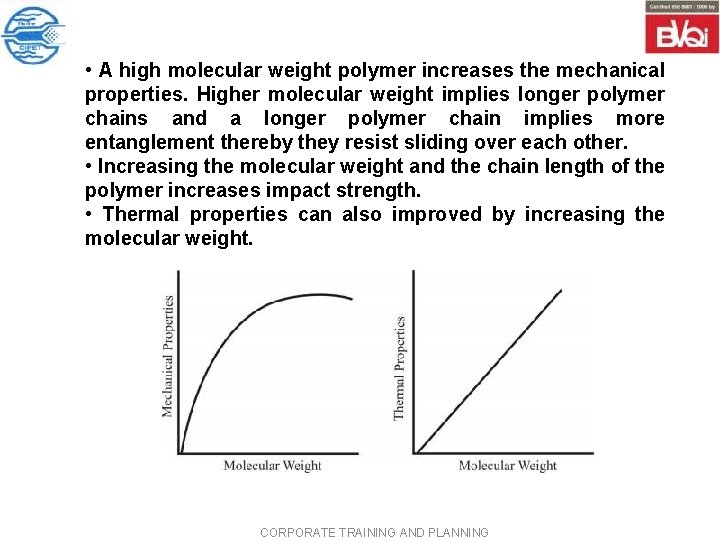
• A high molecular weight polymer increases the mechanical properties. Higher molecular weight implies longer polymer chains and a longer polymer chain implies more entanglement thereby they resist sliding over each other. • Increasing the molecular weight and the chain length of the polymer increases impact strength. • Thermal properties can also improved by increasing the molecular weight. CORPORATE TRAINING AND PLANNING
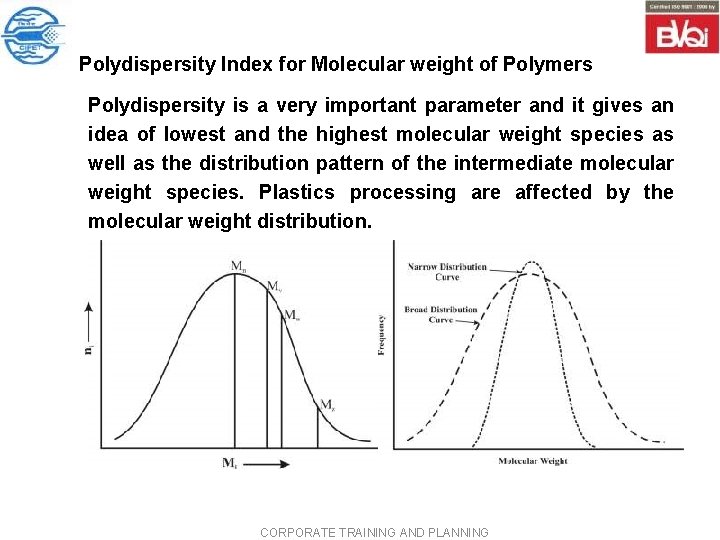
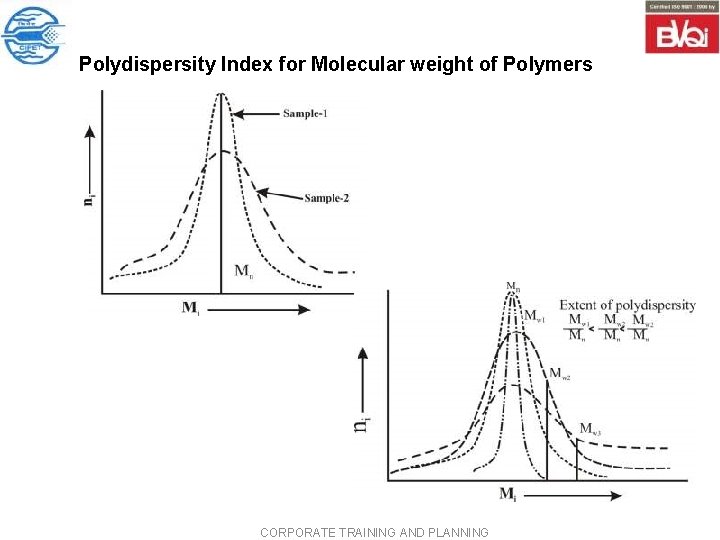
Polydispersity Index for Molecular weight of Polymers Polydispersity is a very important parameter and it gives an idea of lowest and the highest molecular weight species as well as the distribution pattern of the intermediate molecular weight species. Plastics processing are affected by the molecular weight distribution. CORPORATE TRAINING AND PLANNING
Polydispersity Index for Molecular weight of Polymers CORPORATE TRAINING AND PLANNING
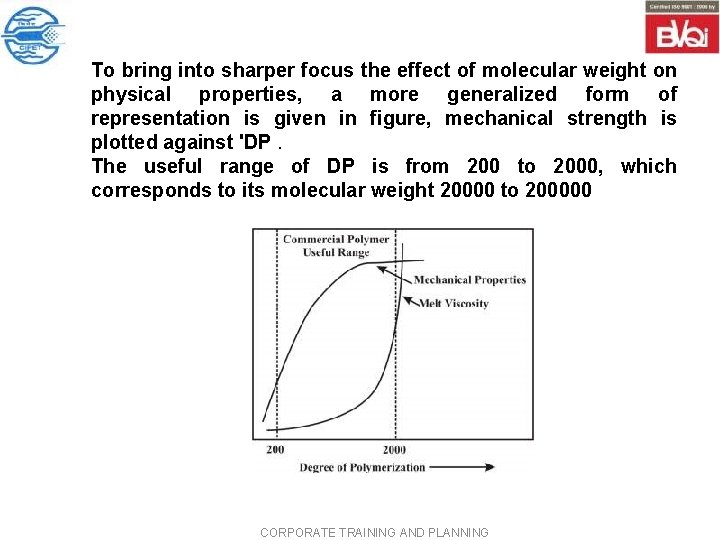
To bring into sharper focus the effect of molecular weight on physical properties, a more generalized form of representation is given in figure, mechanical strength is plotted against 'DP. The useful range of DP is from 200 to 2000, which corresponds to its molecular weight 20000 to 200000 CORPORATE TRAINING AND PLANNING
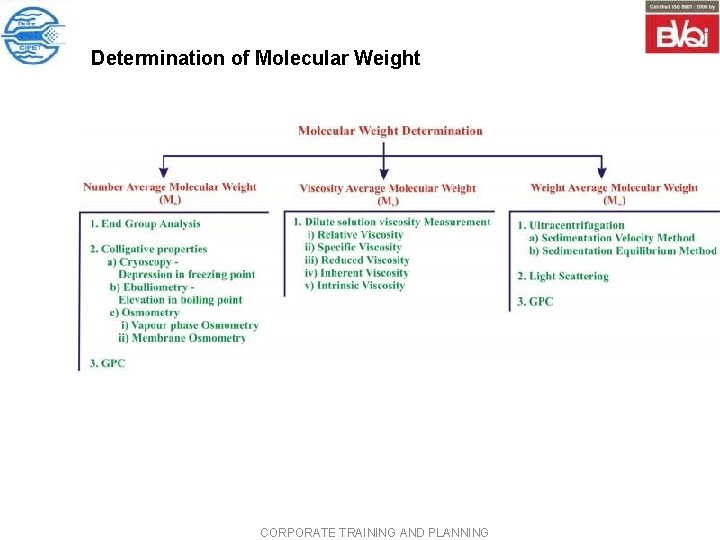
Determination of Molecular Weight CORPORATE TRAINING AND PLANNING
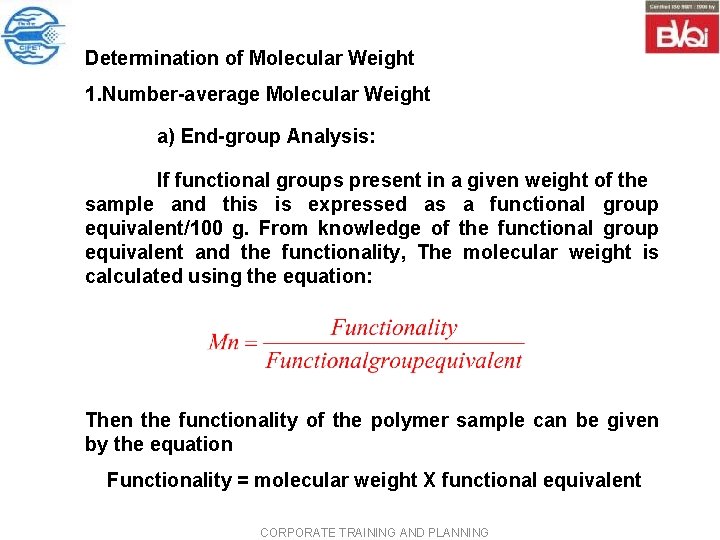
Determination of Molecular Weight 1. Number average Molecular Weight a) End group Analysis: If functional groups present in a given weight of the sample and this is expressed as a functional group equivalent/100 g. From knowledge of the functional group equivalent and the functionality, The molecular weight is calculated using the equation: Then the functionality of the polymer sample can be given by the equation Functionality = molecular weight X functional equivalent CORPORATE TRAINING AND PLANNING
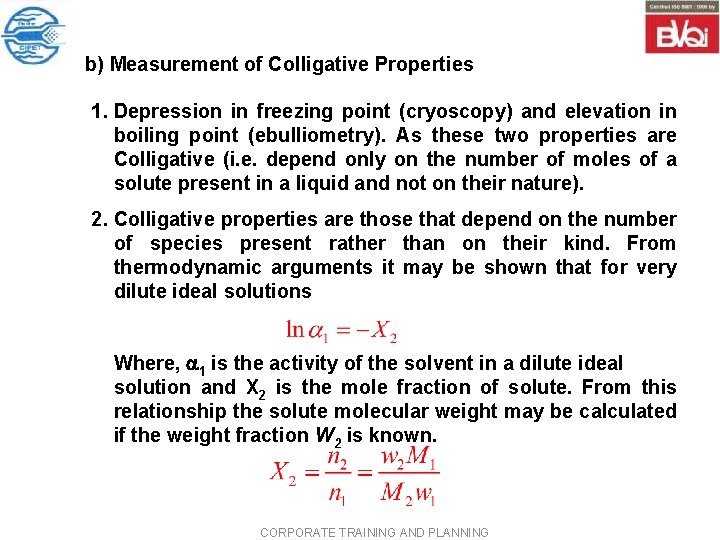
b) Measurement of Colligative Properties 1. Depression in freezing point (cryoscopy) and elevation in boiling point (ebulliometry). As these two properties are Colligative (i. e. depend only on the number of moles of a solute present in a liquid and not on their nature). 2. Colligative properties are those that depend on the number of species present rather than on their kind. From thermodynamic arguments it may be shown that for very dilute ideal solutions Where, 1 is the activity of the solvent in a dilute ideal solution and X 2 is the mole fraction of solute. From this relationship the solute molecular weight may be calculated if the weight fraction W 2 is known. CORPORATE TRAINING AND PLANNING
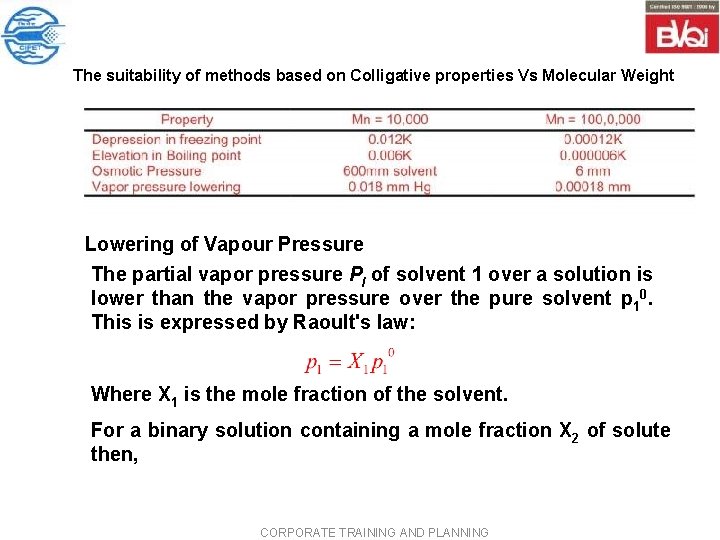
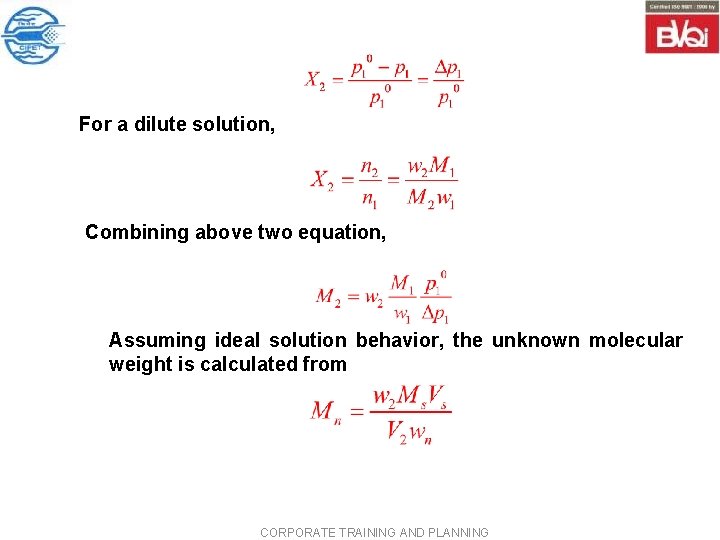
The suitability of methods based on Colligative properties Vs Molecular Weight Lowering of Vapour Pressure The partial vapor pressure PI of solvent 1 over a solution is lower than the vapor pressure over the pure solvent p 10. This is expressed by Raoult's law: Where X 1 is the mole fraction of the solvent. For a binary solution containing a mole fraction X 2 of solute then, CORPORATE TRAINING AND PLANNING
For a dilute solution, Combining above two equation, Assuming ideal solution behavior, the unknown molecular weight is calculated from CORPORATE TRAINING AND PLANNING
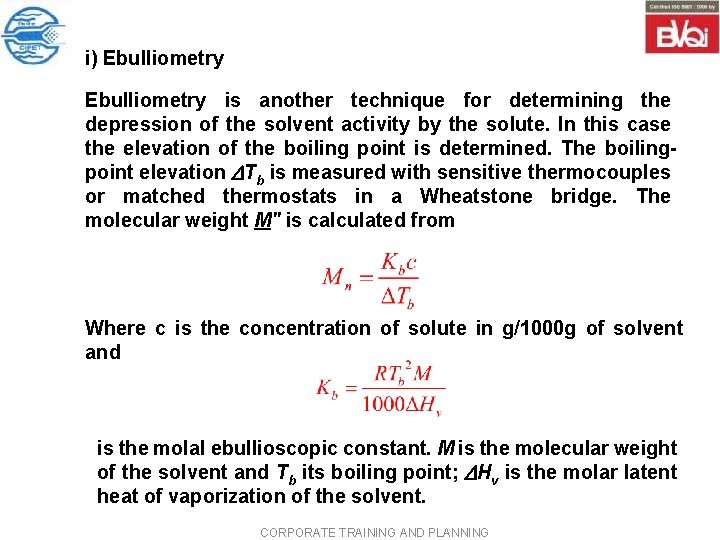
i) Ebulliometry is another technique for determining the depression of the solvent activity by the solute. In this case the elevation of the boiling point is determined. The boiling point elevation Tb is measured with sensitive thermocouples or matched thermostats in a Wheatstone bridge. The molecular weight M" is calculated from Where c is the concentration of solute in g/1000 g of solvent and is the molal ebullioscopic constant. M is the molecular weight of the solvent and Tb its boiling point; Hv is the molar latent heat of vaporization of the solvent. CORPORATE TRAINING AND PLANNING
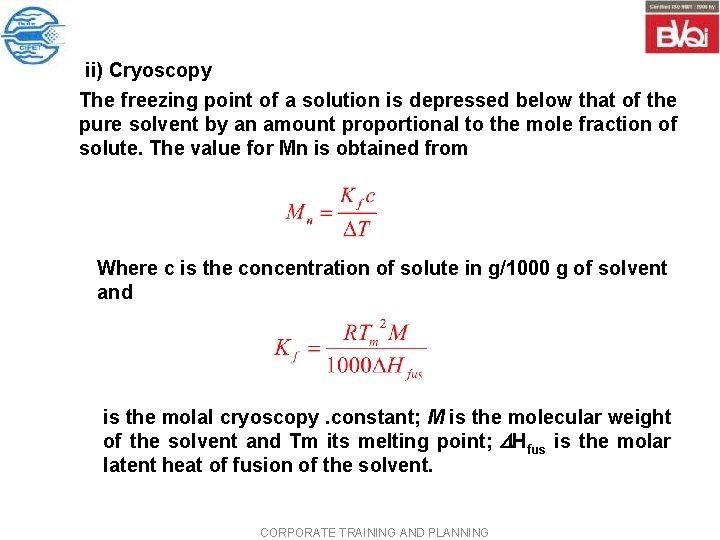
ii) Cryoscopy The freezing point of a solution is depressed below that of the pure solvent by an amount proportional to the mole fraction of solute. The value for Mn is obtained from Where c is the concentration of solute in g/1000 g of solvent and is the molal cryoscopy. constant; M is the molecular weight of the solvent and Tm its melting point; Hfus is the molar latent heat of fusion of the solvent. CORPORATE TRAINING AND PLANNING
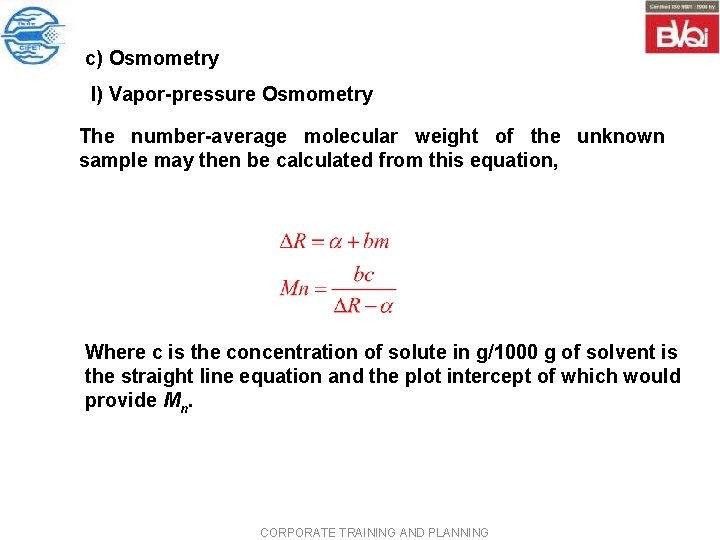
c) Osmometry I) Vapor pressure Osmometry The number average molecular weight of the unknown sample may then be calculated from this equation, Where c is the concentration of solute in g/1000 g of solvent is the straight line equation and the plot intercept of which would provide Mn. CORPORATE TRAINING AND PLANNING
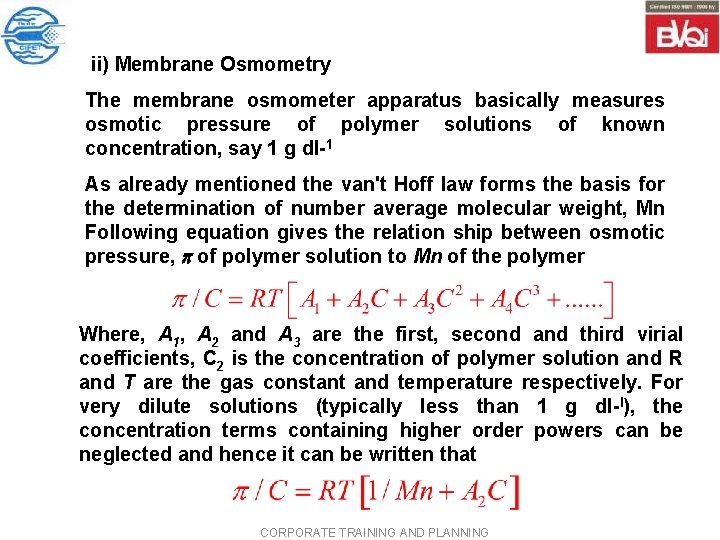
ii) Membrane Osmometry The membrane osmometer apparatus basically measures osmotic pressure of polymer solutions of known concentration, say 1 g dl 1 As already mentioned the van't Hoff law forms the basis for the determination of number average molecular weight, Mn Following equation gives the relation ship between osmotic pressure, of polymer solution to Mn of the polymer Where, A 1, A 2 and A 3 are the first, second and third virial coefficients, C 2 is the concentration of polymer solution and R and T are the gas constant and temperature respectively. For very dilute solutions (typically less than 1 g dl I), the concentration terms containing higher order powers can be neglected and hence it can be written that CORPORATE TRAINING AND PLANNING
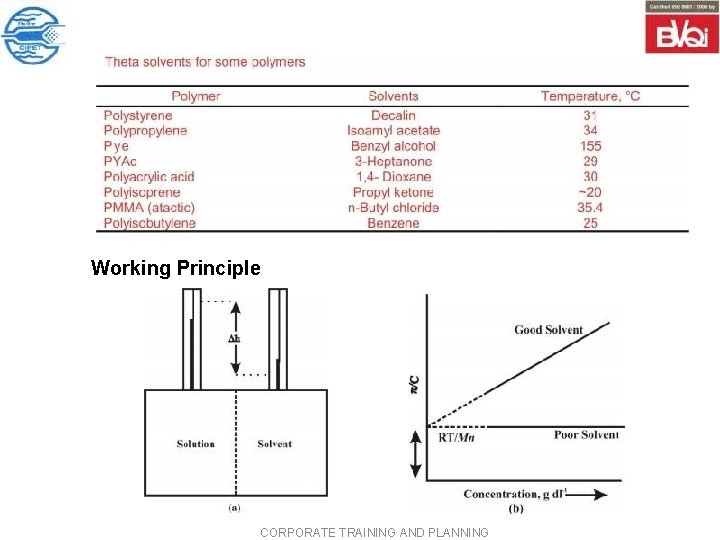
Working Principle CORPORATE TRAINING AND PLANNING
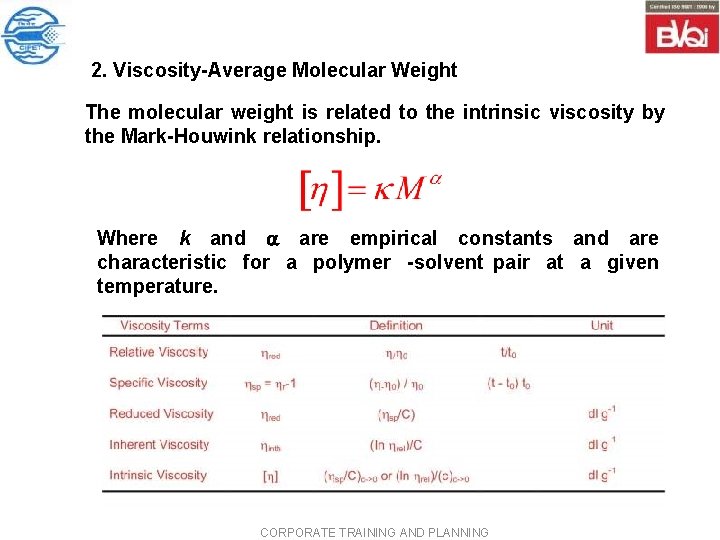
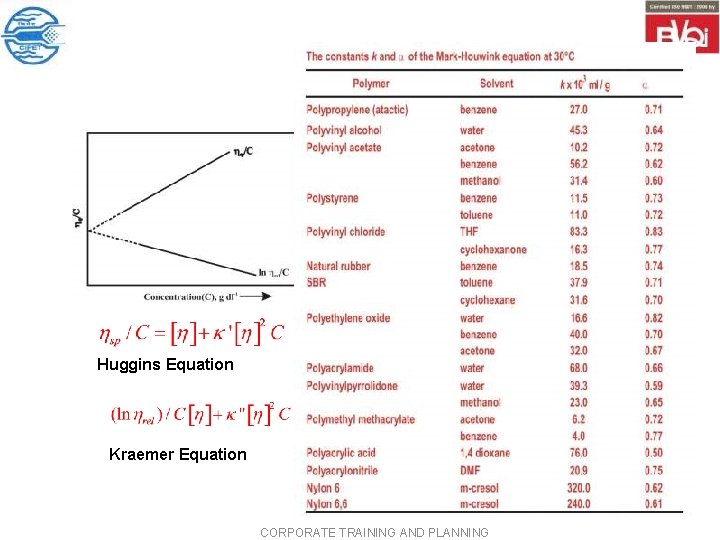
2. Viscosity Average Molecular Weight The molecular weight is related to the intrinsic viscosity by the Mark Houwink relationship. Where k and are empirical constants and are characteristic for a polymer solvent pair at a given temperature. CORPORATE TRAINING AND PLANNING
Huggins Equation Kraemer Equation CORPORATE TRAINING AND PLANNING
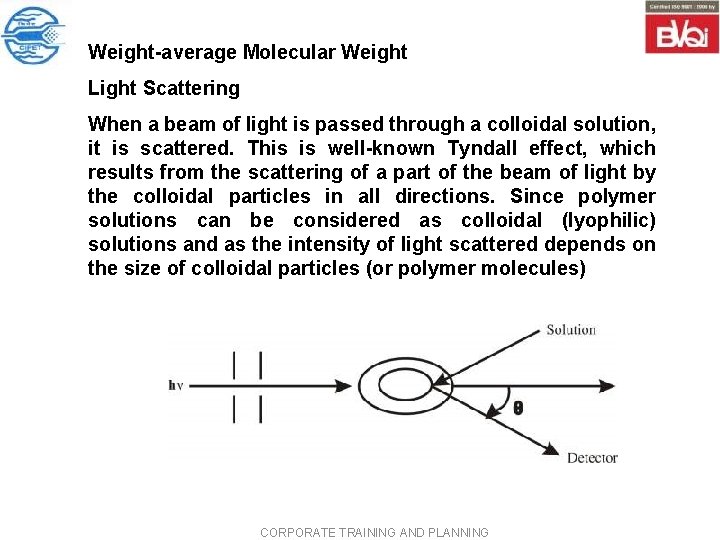
Weight average Molecular Weight Light Scattering When a beam of light is passed through a colloidal solution, it is scattered. This is well known Tyndall effect, which results from the scattering of a part of the beam of light by the colloidal particles in all directions. Since polymer solutions can be considered as colloidal (lyophilic) solutions and as the intensity of light scattered depends on the size of colloidal particles (or polymer molecules) CORPORATE TRAINING AND PLANNING
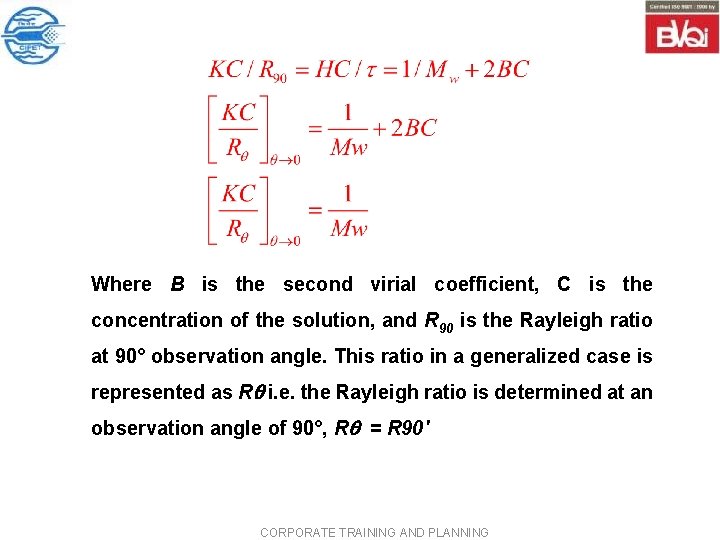
Where B is the second virial coefficient, C is the concentration of the solution, and R 90 is the Rayleigh ratio at 90° observation angle. This ratio in a generalized case is represented as R i. e. the Rayleigh ratio is determined at an observation angle of 90°, R = R 90' CORPORATE TRAINING AND PLANNING
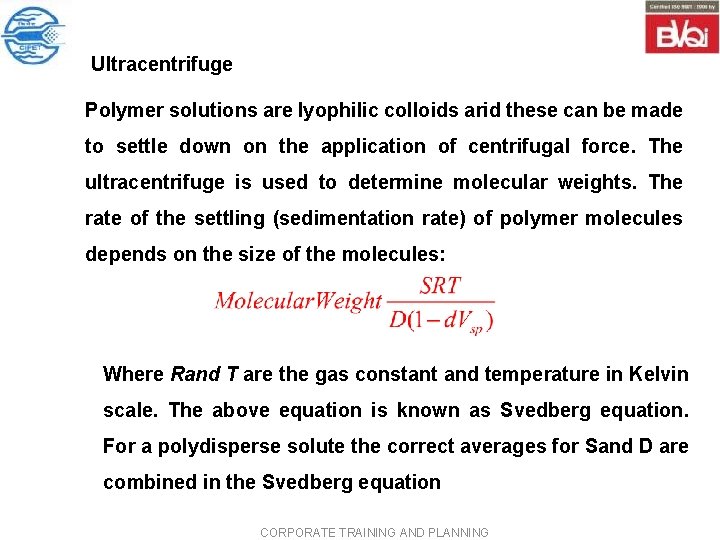
Ultracentrifuge Polymer solutions are lyophilic colloids arid these can be made to settle down on the application of centrifugal force. The ultracentrifuge is used to determine molecular weights. The rate of the settling (sedimentation rate) of polymer molecules depends on the size of the molecules: Where Rand T are the gas constant and temperature in Kelvin scale. The above equation is known as Svedberg equation. For a polydisperse solute the correct averages for Sand D are combined in the Svedberg equation CORPORATE TRAINING AND PLANNING
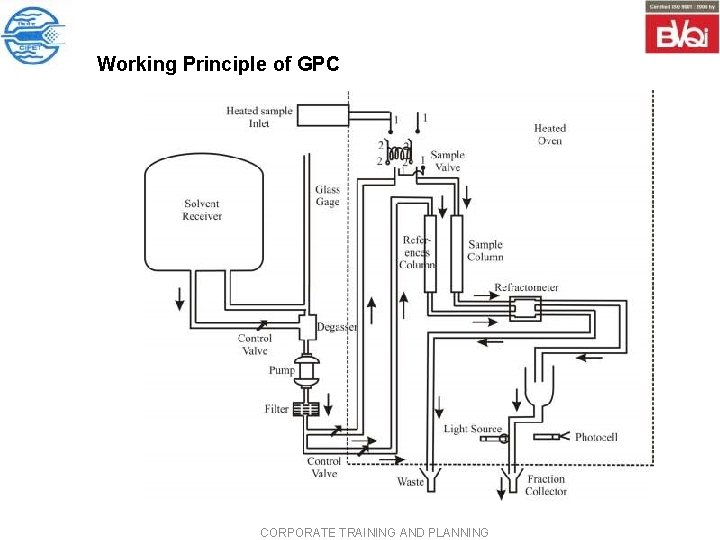
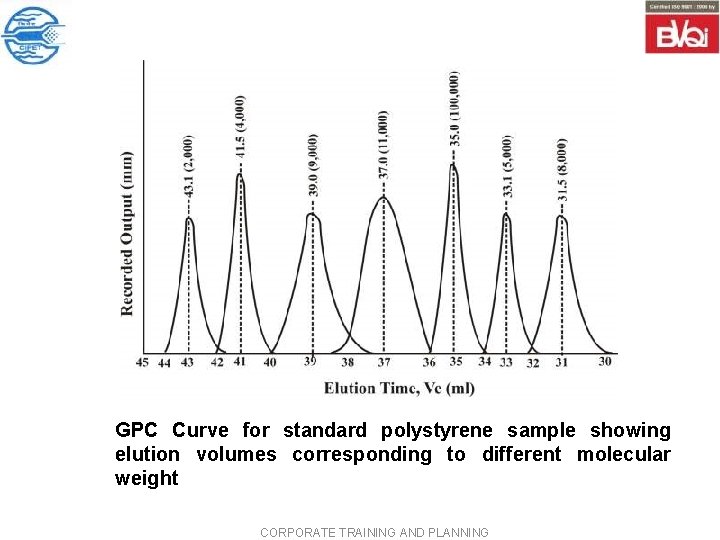
Gel Permeation Chromatography (GPC) • The basic principle underlying the separation of different' fractions of a polydispersed sample is based on the size of individual polymer molecules that explore the pore system of the column material. • Large molecules are excluded from small pores and can only diffuse into a restricted part of the pore system within the beads while smaller ones would enter into the pores of the bead. • Thus large molecules would have less residence time and would emerge first. CORPORATE TRAINING AND PLANNING
Working Principle of GPC CORPORATE TRAINING AND PLANNING
GPC Curve for standard polystyrene sample showing elution volumes corresponding to different molecular weight CORPORATE TRAINING AND PLANNING
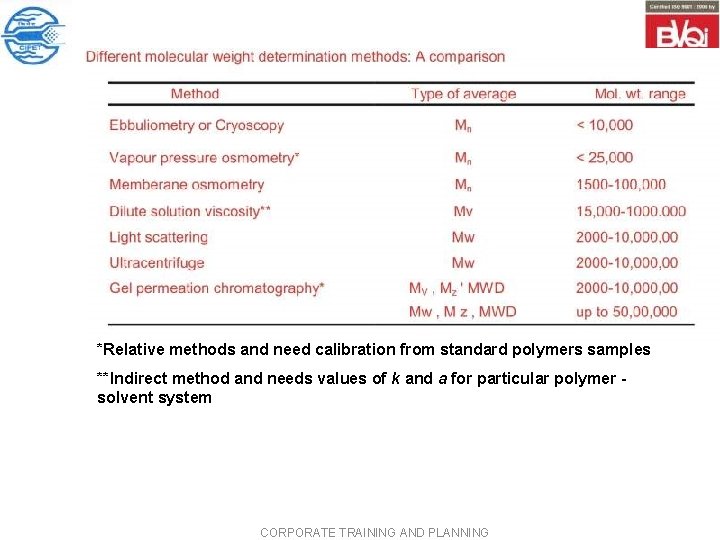
*Relative methods and need calibration from standard polymers samples **Indirect method and needs values of k and a for particular polymer solvent system CORPORATE TRAINING AND PLANNING
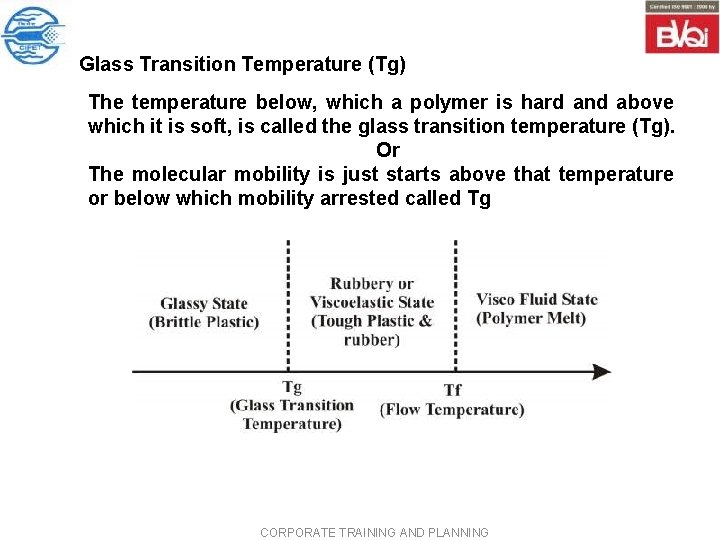
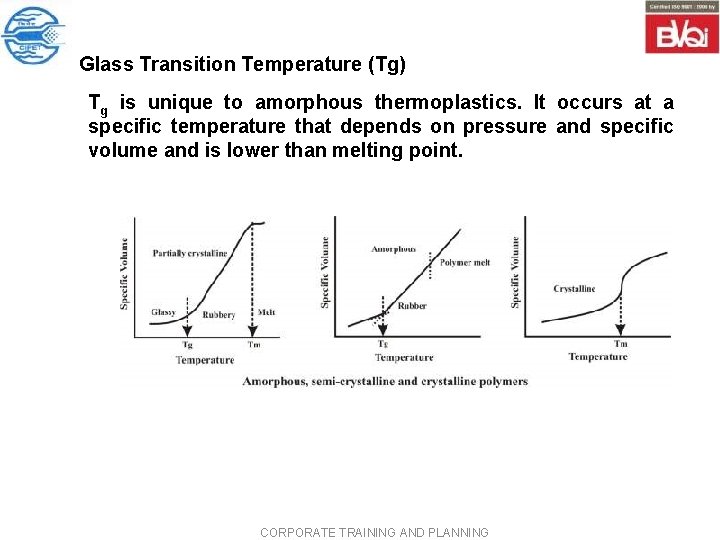
Glass Transition Temperature (Tg) The temperature below, which a polymer is hard and above which it is soft, is called the glass transition temperature (Tg). Or The molecular mobility is just starts above that temperature or below which mobility arrested called Tg CORPORATE TRAINING AND PLANNING
Glass Transition Temperature (Tg) Tg is unique to amorphous thermoplastics. It occurs at a specific temperature that depends on pressure and specific volume and is lower than melting point. CORPORATE TRAINING AND PLANNING
Tg • The glass transition temperature is a measure of evaluating the flexibility of polymer molecules and the type of response the polymeric material would exhibit to mechanical stress. • The glass transition temperature depends on the structure and polarity of a polymer, which affects both chain flexibility and intermolecular interaction. • Since non polar polymers have lower potential energy barrier for rotation, their chain remains flexible and they have low Tg. Chains based on aliphatic C C bond and C O bond are quite flexible, on the other hand introduction of ring structure into main chain has a marked stiffening effect which results in higher Tg of such polymer. CORPORATE TRAINING AND PLANNING
Glass Transition Temperature (Tg) • Rotation about a single C C bond is also impended by the substitutions of attached hydrogen atoms by methyl or other attached to the main chain carbon atom can influence the Tg. • Inclusion of double bonds will stiffen the chain at the point of inclusion but at the same time decrease the flexibility of adjacent bond. The net effect may therefore be to reduce the glass transition temperature. • The presence of polar groups or atoms will result in high glass transition temperature. Hydrogen bonding has a similar effect to that of a polar group. CORPORATE TRAINING AND PLANNING
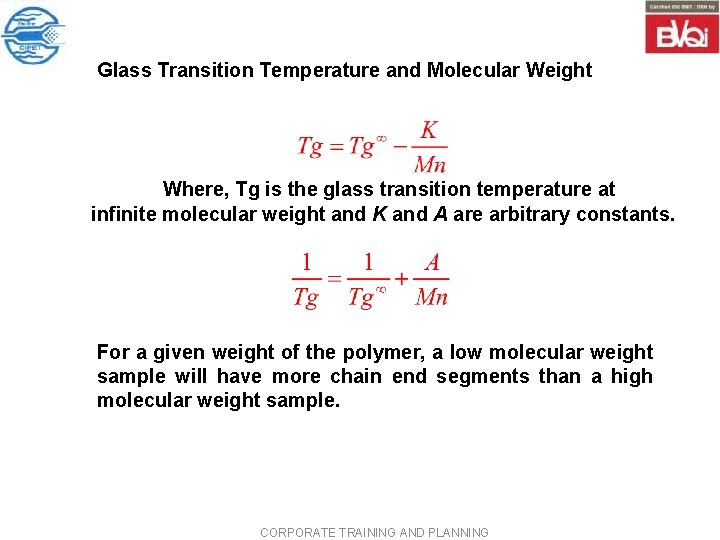
Glass Transition Temperature and Molecular Weight Where, Tg is the glass transition temperature at infinite molecular weight and K and A are arbitrary constants. For a given weight of the polymer, a low molecular weight sample will have more chain end segments than a high molecular weight sample. CORPORATE TRAINING AND PLANNING
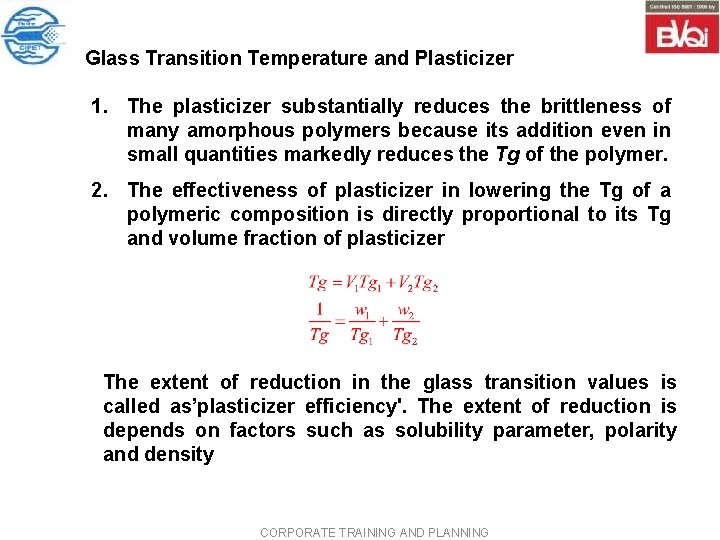
Glass Transition Temperature and Plasticizer 1. The plasticizer substantially reduces the brittleness of many amorphous polymers because its addition even in small quantities markedly reduces the Tg of the polymer. 2. The effectiveness of plasticizer in lowering the Tg of a polymeric composition is directly proportional to its Tg and volume fraction of plasticizer The extent of reduction in the glass transition values is called as’plasticizer efficiency'. The extent of reduction is depends on factors such as solubility parameter, polarity and density CORPORATE TRAINING AND PLANNING
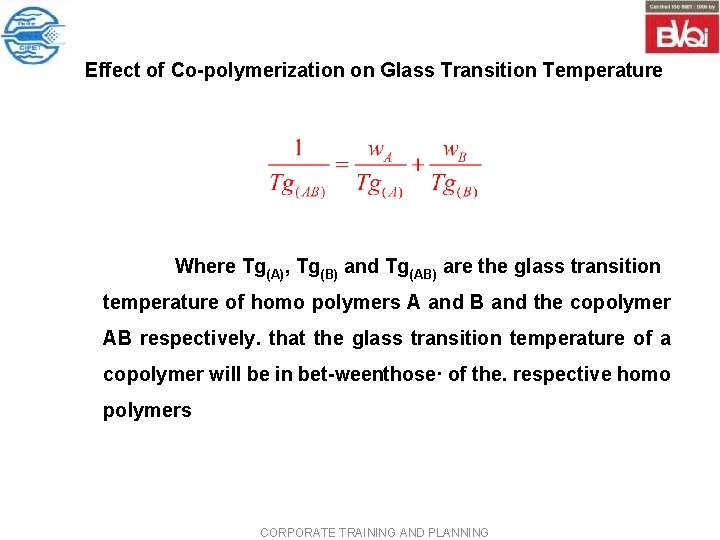
Effect of Co polymerization on Glass Transition Temperature Where Tg(A), Tg(B) and Tg(AB) are the glass transition temperature of homo polymers A and B and the copolymer AB respectively. that the glass transition temperature of a copolymer will be in bet ween those· of the. respective homo polymers CORPORATE TRAINING AND PLANNING
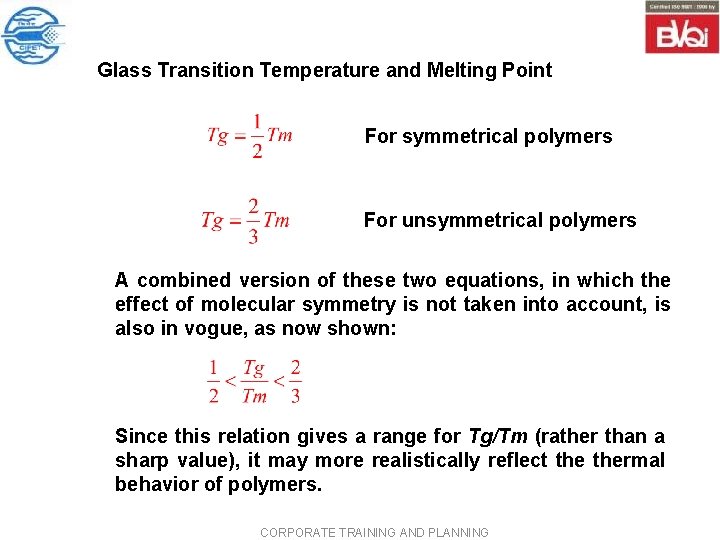
Glass Transition Temperature and Melting Point For symmetrical polymers For unsymmetrical polymers A combined version of these two equations, in which the effect of molecular symmetry is not taken into account, is also in vogue, as now shown: Since this relation gives a range for Tg/Tm (rather than a sharp value), it may more realistically reflect thermal behavior of polymers. CORPORATE TRAINING AND PLANNING
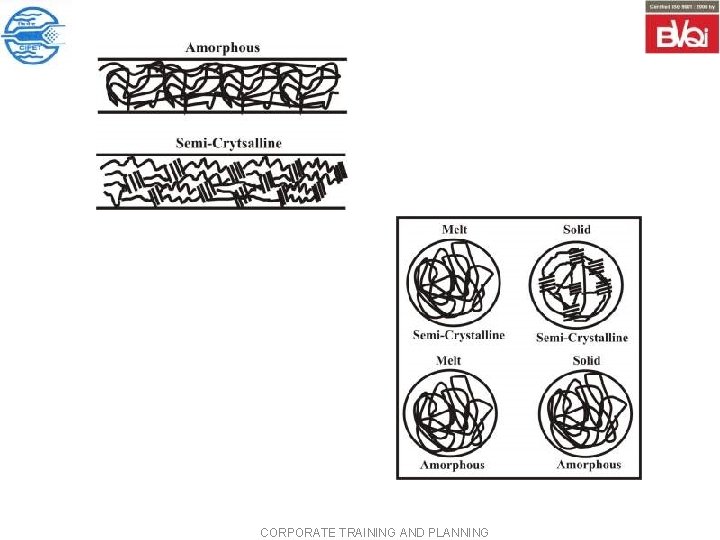
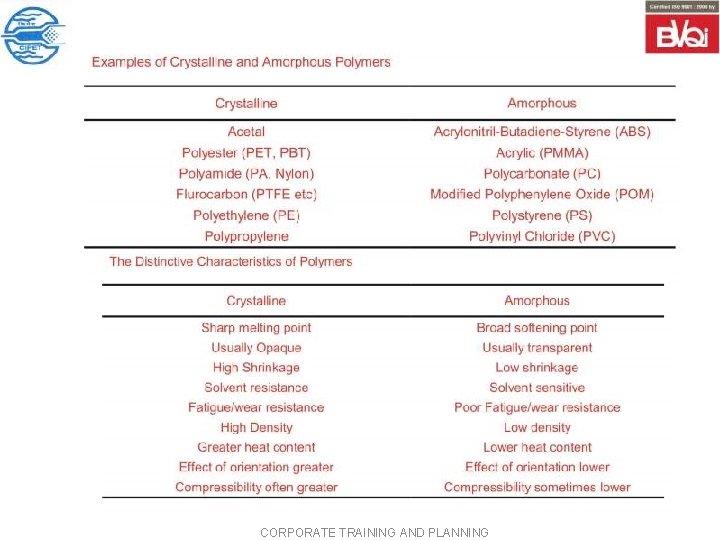
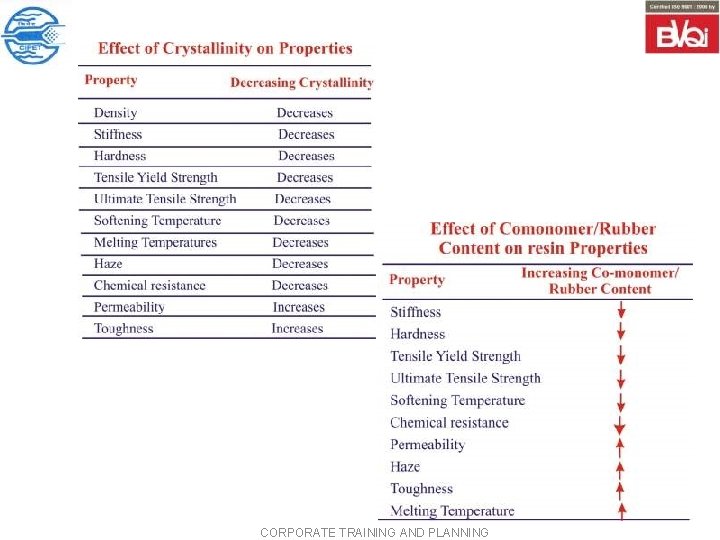
Crystallinity in Polymers A small region of a macromolecules materials in which portions of large molecules are arranged in regular way, is called crystalline. 1. Crystallization imparts a denser packing of molecules, thereby increasing the intermolecular forces of attraction. 2. This accounts for a higher and sharper softening point, greater rigidity and strength and greater density. A completely crystalline polymer tends to acquire brittleness. Amorphous Polymers An ‘amorphous polymers’ is characterized by completely random arrangement of molecules of polymer chain. While a crystalline region (called crystallites) embedded in amorphous random matrix. e. g. Polystyrene, polyvinyl acetate and polymethyl methacrylate (all are having bulky side groups attached at random to the main carbon chain) are typically amorphous. CORPORATE TRAINING AND PLANNING
CORPORATE TRAINING AND PLANNING
CORPORATE TRAINING AND PLANNING
Crystalline and Amorphous Polymers • Relatively short chains organize themselves into crystalline structures more readily than longer molecules. Therefore, the degree of polymerization (DP) is an important factor in determining the crystallinity of a polymer. • Polymers with a high DP have difficulty organizing into layers because they tend to become tangled. • As symmetrical molecules approaches within a critical distance, crystal begins to form in the areas where they are most densely packed. • A crystallized area is stiffer and stronger. A non crystalline (amorphous) are more flexible. CORPORATE TRAINING AND PLANNING
Crystalline and Amorphous Polymers • An increasing crystalline in polypropylene increased in creep, heat and stress cracking as well as increased in mould shrinkage. • Crystallization tendency decreases by co polymerization, because it lowers the structural symmetry, so by controlling the extent of co polymerization, the relative extent of crystallize. • The amorphous region can be adjusted to get required hardens, rigidity, heat resistance and flexibility. • A crystallize or any amorphous polymer can also be made flexible and plastics by adding plasticizer. • The plasticizer neutralization of intermolecular forces of attraction between macromolecules. CORPORATE TRAINING AND PLANNING
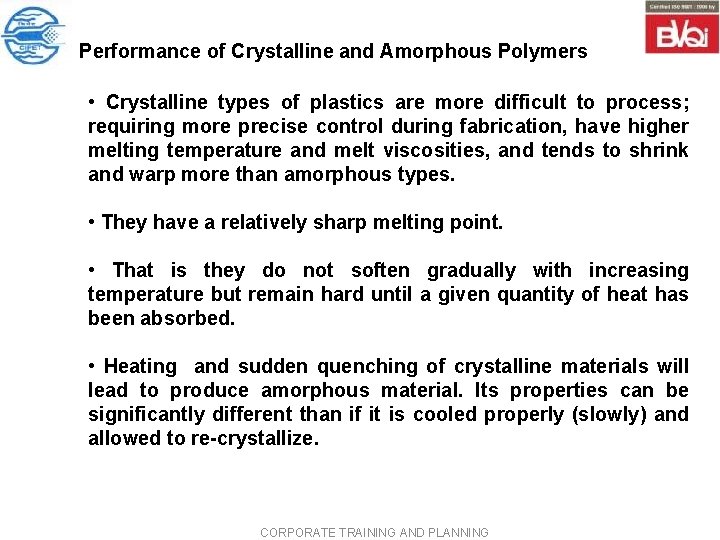
Performance of Crystalline and Amorphous Polymers • Crystalline types of plastics are more difficult to process; requiring more precise control during fabrication, have higher melting temperature and melt viscosities, and tends to shrink and warp more than amorphous types. • They have a relatively sharp melting point. • That is they do not soften gradually with increasing temperature but remain hard until a given quantity of heat has been absorbed. • Heating and sudden quenching of crystalline materials will lead to produce amorphous material. Its properties can be significantly different than if it is cooled properly (slowly) and allowed to re crystallize. CORPORATE TRAINING AND PLANNING
CORPORATE TRAINING AND PLANNING
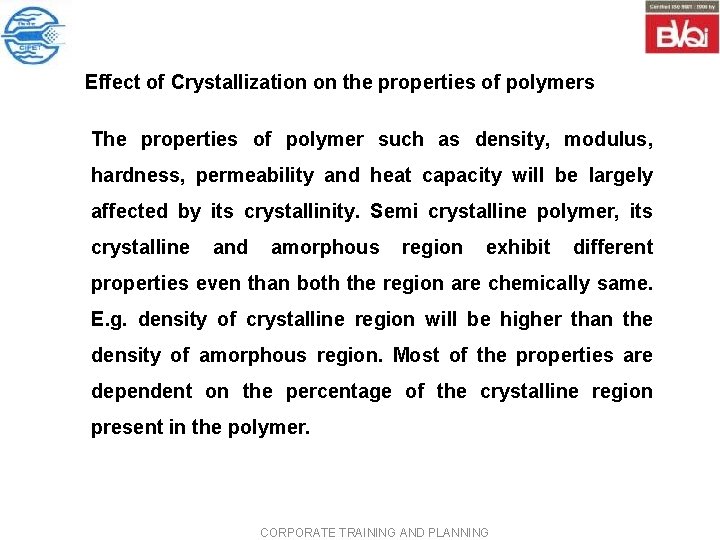
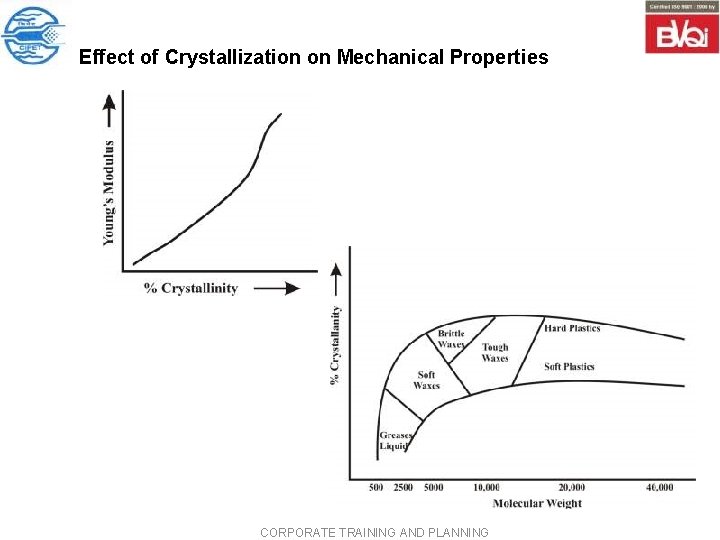
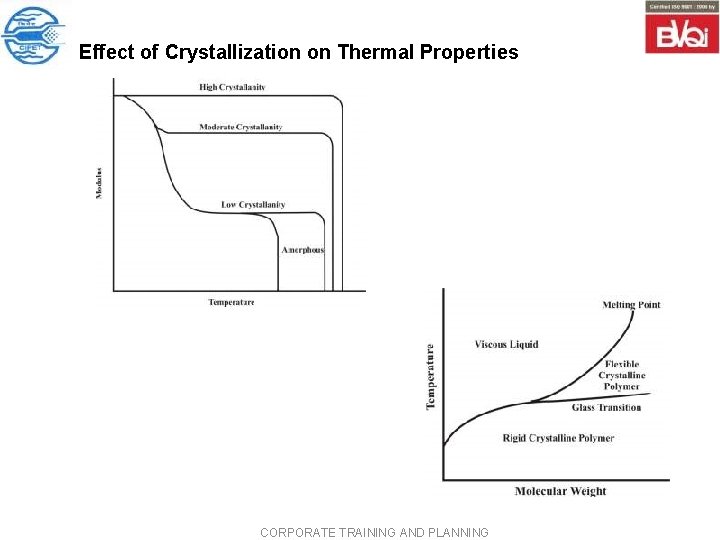
Effect of Crystallization on the properties of polymers The properties of polymer such as density, modulus, hardness, permeability and heat capacity will be largely affected by its crystallinity. Semi crystalline polymer, its crystalline and amorphous region exhibit different properties even than both the region are chemically same. E. g. density of crystalline region will be higher than the density of amorphous region. Most of the properties are dependent on the percentage of the crystalline region present in the polymer. CORPORATE TRAINING AND PLANNING
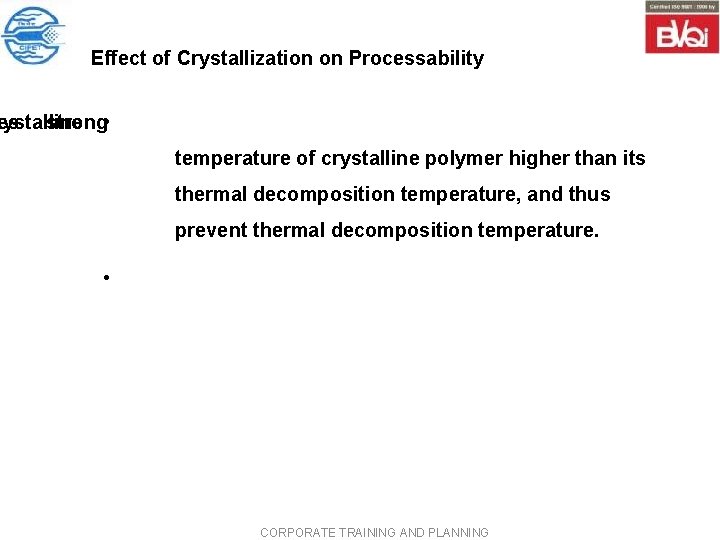
Effect of Crystallization on Processability rystalline es strong • temperature of crystalline polymer higher than its thermal decomposition temperature, and thus prevent thermal decomposition temperature. • CORPORATE TRAINING AND PLANNING
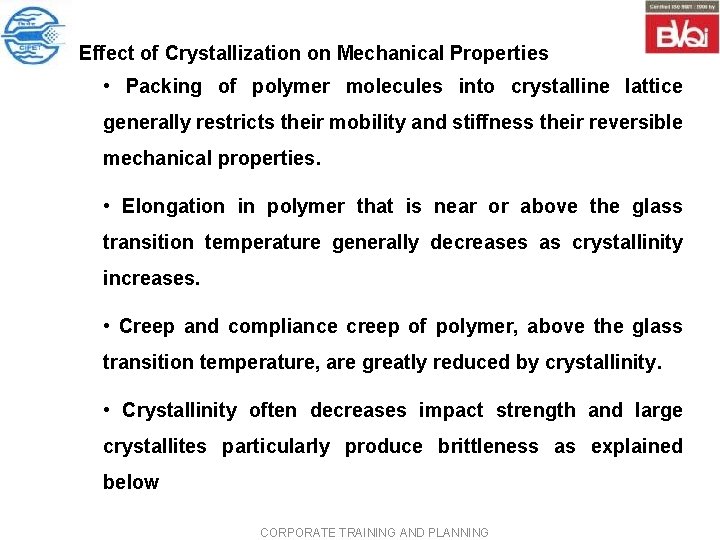
Effect of Crystallization on Mechanical Properties • Packing of polymer molecules into crystalline lattice generally restricts their mobility and stiffness their reversible mechanical properties. • Elongation in polymer that is near or above the glass transition temperature generally decreases as crystallinity increases. • Creep and compliance creep of polymer, above the glass transition temperature, are greatly reduced by crystallinity. • Crystallinity often decreases impact strength and large crystallites particularly produce brittleness as explained below CORPORATE TRAINING AND PLANNING
Effect of Crystallization on Mechanical Properties CORPORATE TRAINING AND PLANNING
Effect of Crystallization on Thermal Properties CORPORATE TRAINING AND PLANNING
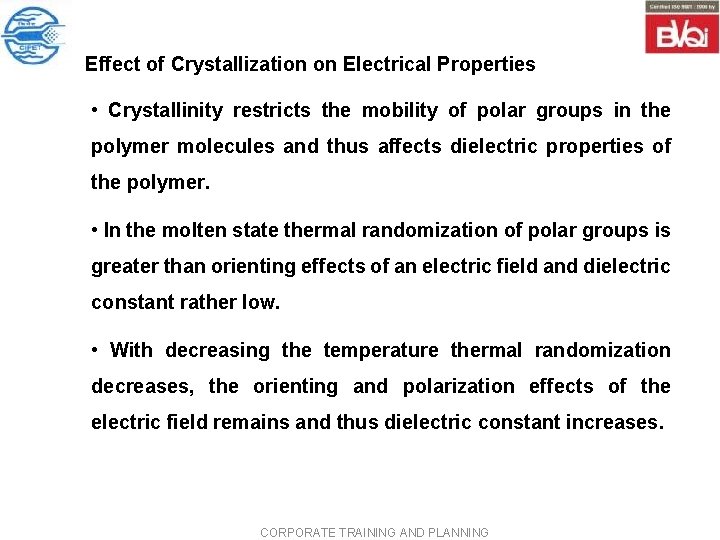
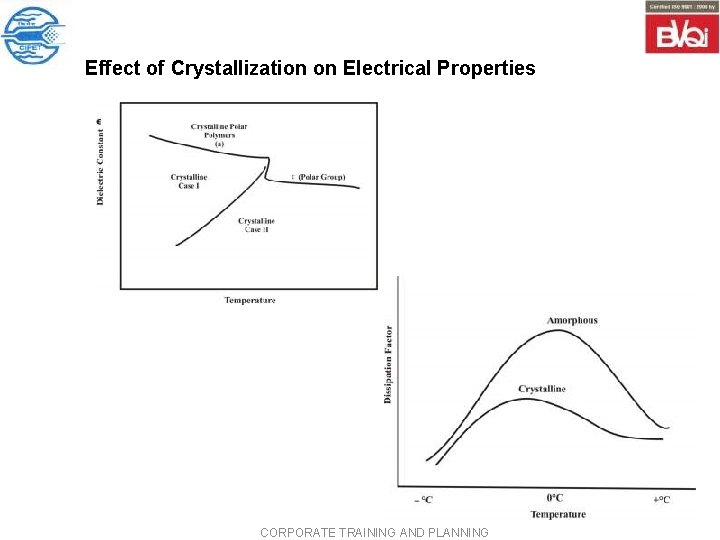
Effect of Crystallization on Electrical Properties • Crystallinity restricts the mobility of polar groups in the polymer molecules and thus affects dielectric properties of the polymer. • In the molten state thermal randomization of polar groups is greater than orienting effects of an electric field and dielectric constant rather low. • With decreasing the temperature thermal randomization decreases, the orienting and polarization effects of the electric field remains and thus dielectric constant increases. CORPORATE TRAINING AND PLANNING
Effect of Crystallization on Electrical Properties CORPORATE TRAINING AND PLANNING
Effect of Crystallization on Optical Properties • Crystallinity increases the density of the polymer, which decreases the speed of light passing through it and thus increases the refractive index • When crystals are larger than the wavelength of visible light about 400 700 mµ lights passes through many successive crystalline and amorphous area is scattered and clarity of the polymer decreased. • Large single crystal scatters light at wide angels and thus causes haze. CORPORATE TRAINING AND PLANNING
Effect of Crystallization on Chemical Properties • The tigtly packed regular structure of crystalline polymers is so stable that it is impossible to break the lattice using chemicals • Liner amorphous polymers dissolve easily in a range of organic solvents • Crystalline polymers are usually insoluble and can be dissolved only under limited condition in few specific solvents • Crystalline polymers can be dissolve above their melting point where sufficient thermal energy has already been supplied to separate the polymer molecules from the tight crystalline structure. CORPORATE TRAINING AND PLANNING
Effect of Molecular Weight on Crystallinity CORPORATE TRAINING AND PLANNING
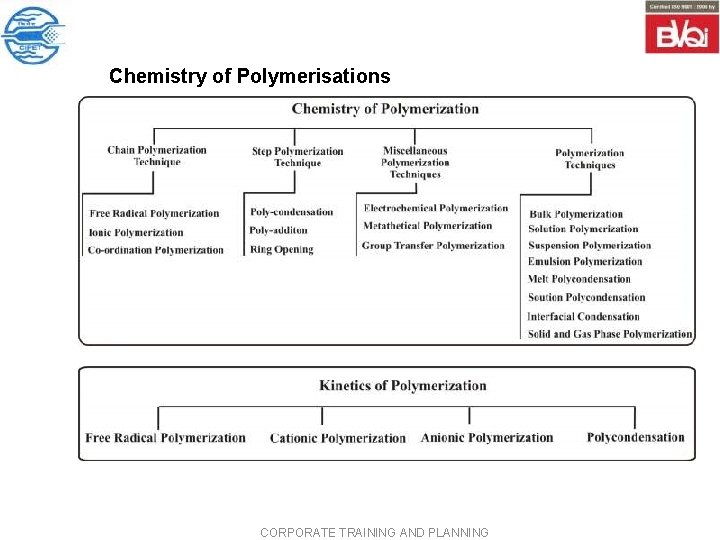
Chemistry of Polymerisations CORPORATE TRAINING AND PLANNING
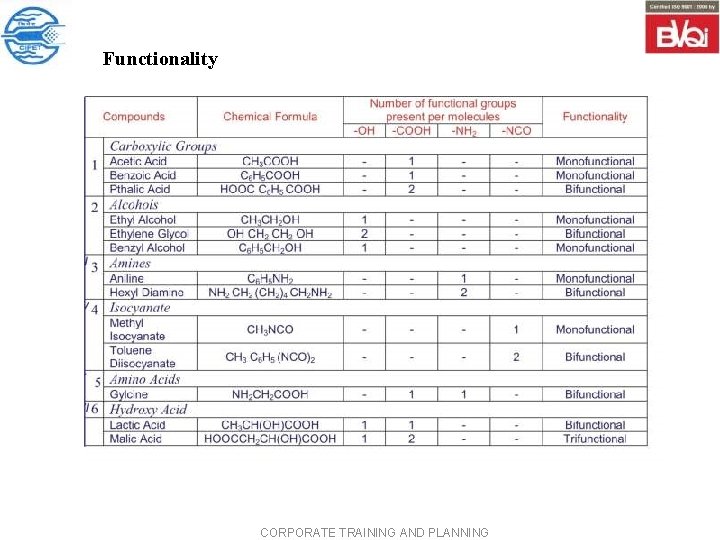
Functionality CORPORATE TRAINING AND PLANNING
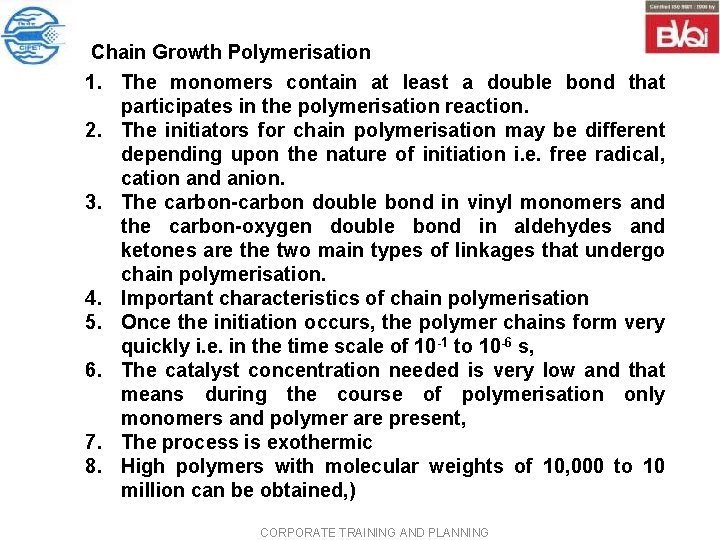
Chain Growth Polymerisation 1. The monomers contain at least a double bond that participates in the polymerisation reaction. 2. The initiators for chain polymerisation may be different depending upon the nature of initiation i. e. free radical, cation and anion. 3. The carbon double bond in vinyl monomers and the carbon oxygen double bond in aldehydes and ketones are the two main types of linkages that undergo chain polymerisation. 4. Important characteristics of chain polymerisation 5. Once the initiation occurs, the polymer chains form very quickly i. e. in the time scale of 10 1 to 10 6 s, 6. The catalyst concentration needed is very low and that means during the course of polymerisation only monomers and polymer are present, 7. The process is exothermic 8. High polymers with molecular weights of 10, 000 to 10 million can be obtained, ) CORPORATE TRAINING AND PLANNING
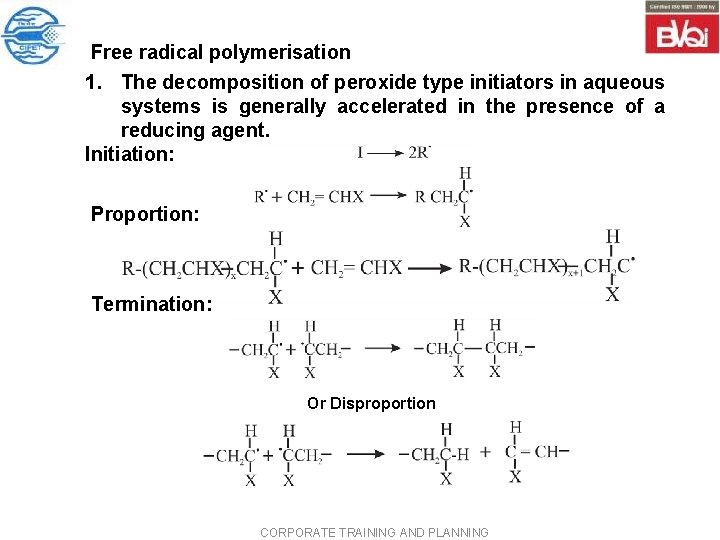
Free radical polymerisation 1. The decomposition of peroxide type initiators in aqueous systems is generally accelerated in the presence of a reducing agent. Initiation: Proportion: Termination: Or Disproportion CORPORATE TRAINING AND PLANNING
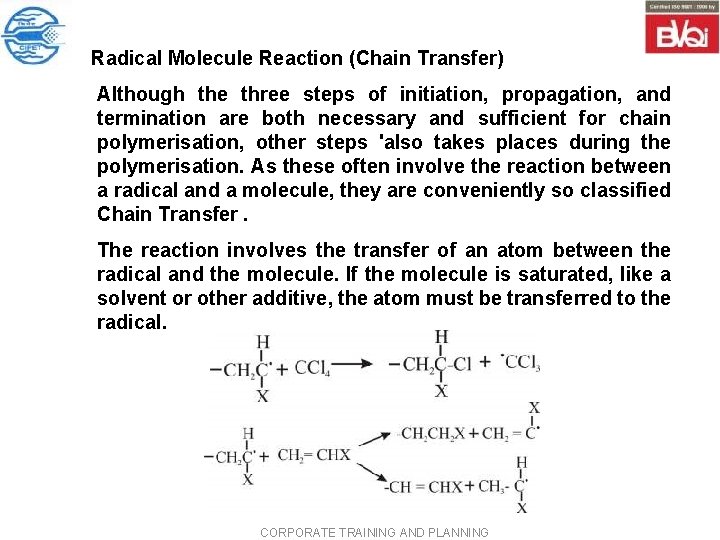
Radical Molecule Reaction (Chain Transfer) Although the three steps of initiation, propagation, and termination are both necessary and sufficient for chain polymerisation, other steps 'also takes places during the polymerisation. As these often involve the reaction between a radical and a molecule, they are conveniently so classified Chain Transfer. The reaction involves the transfer of an atom between the radical and the molecule. If the molecule is saturated, like a solvent or other additive, the atom must be transferred to the radical. CORPORATE TRAINING AND PLANNING
The major effect of chain transfer to a saturated small molecule (solvent, initiator, or deliberately added chain transfer agent) is the formation of additional polymer molecules for each radical chain initiated. Transfer to polymer and transfer to monomer with subsequent polymerization of the double bond lead to the formation of branched molecules. The latter reaction has a pronounced effect on molecular weight distribution and is important in the production of graft copolymers. The efficiency of compounds as chain transfer agents varies widely with molecular structure. Aromatic hydrocarbons are rather unreactive unless they have benzylic hydrogens. Aliphatic hydrocarbons become more reactive when substituted with halogens. Carbon tetrachloride and carbon tetrabromide are quite reactive. The reactivity of various polymer radicals to transfer varies widely. CORPORATE TRAINING AND PLANNING
Inhibition and Retardation A retarder is defined as a substance that can react with a radical to form products incapable of adding monomer. It both reduces the concentration of radicals and shortens their average lifetime and thus the length the polymer chain. In the simplest case, the retarder may be a free radical, such as triphenylmethyl or diphenylpicrylhydrazyl, which is too unreactive to initiate a polymer chain. The mechanism of retardation is simply the combination or disproportionation of radicals. Inhibitors are useful in determining initiation rates; since their reaction with radicals is so rapid that the decomposition of inhibitor is independent of its concentration but gives directly the rate of generation of radicals. As a result, the length of the induction period before polymerization starts is directly proportional to the number of inhibitor molecules initially present. to one radical. CORPORATE TRAINING AND PLANNING
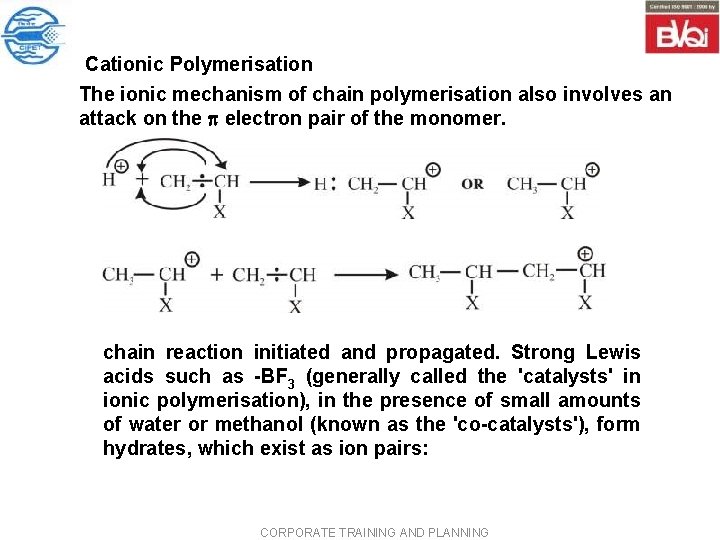
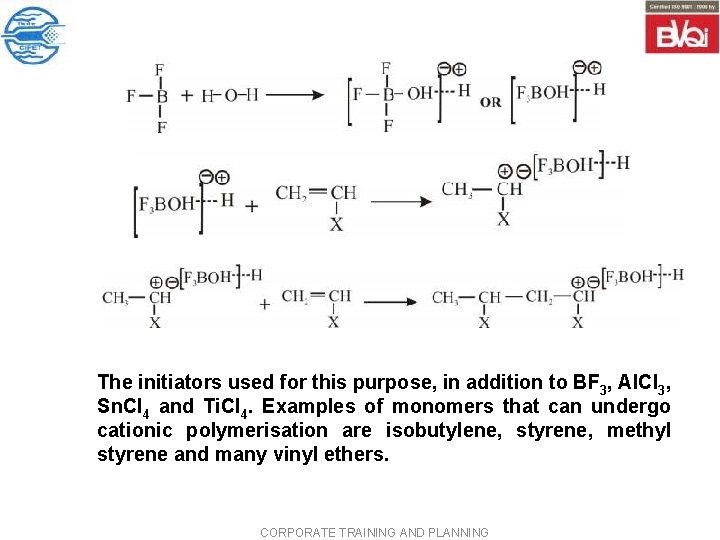
Cationic Polymerisation The ionic mechanism of chain polymerisation also involves an attack on the electron pair of the monomer. chain reaction initiated and propagated. Strong Lewis acids such as BF 3 (generally called the 'catalysts' in ionic polymerisation), in the presence of small amounts of water or methanol (known as the 'co catalysts'), form hydrates, which exist as ion pairs: CORPORATE TRAINING AND PLANNING
The initiators used for this purpose, in addition to BF 3, Al. Cl 3, Sn. CI 4 and Ti. CI 4. Examples of monomers that can undergo cationic polymerisation are isobutylene, styrene, methyl styrene and many vinyl ethers. CORPORATE TRAINING AND PLANNING
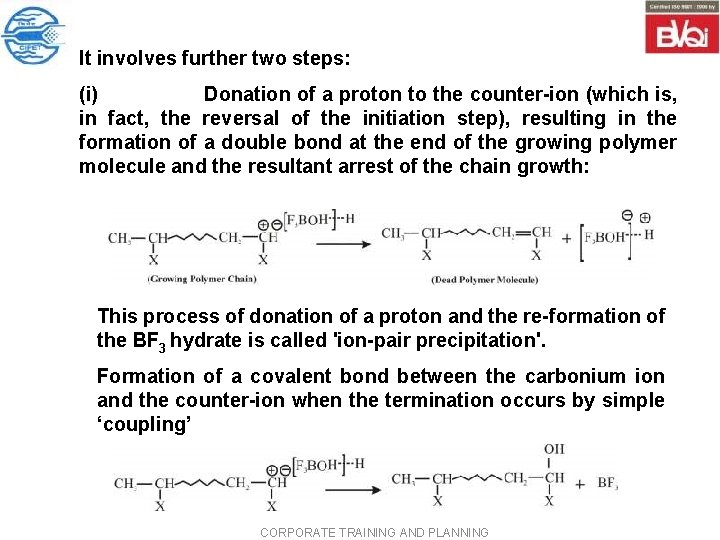
It involves further two steps: (i) Donation of a proton to the counter ion (which is, in fact, the reversal of the initiation step), resulting in the formation of a double bond at the end of the growing polymer molecule and the resultant arrest of the chain growth: This process of donation of a proton and the re formation of the BF 3 hydrate is called 'ion pair precipitation'. Formation of a covalent bond between the carbonium ion and the counter ion when the termination occurs by simple ‘coupling’ CORPORATE TRAINING AND PLANNING
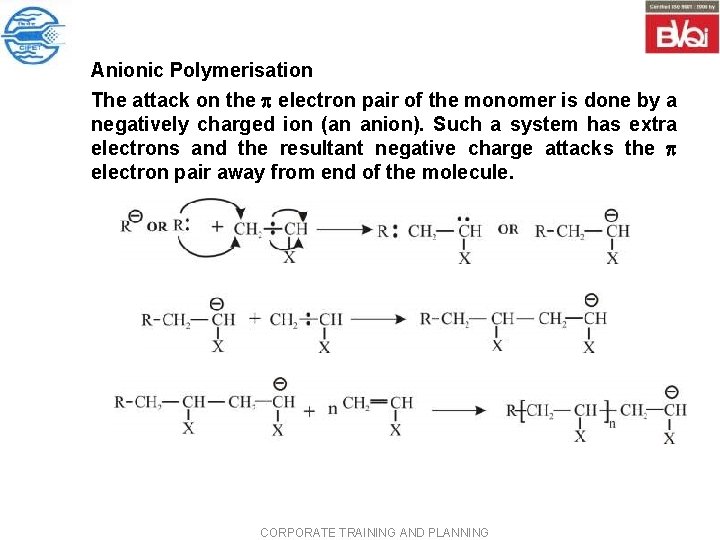
Anionic Polymerisation The attack on the electron pair of the monomer is done by a negatively charged ion (an anion). Such a system has extra electrons and the resultant negative charge attacks the electron pair away from end of the molecule. CORPORATE TRAINING AND PLANNING
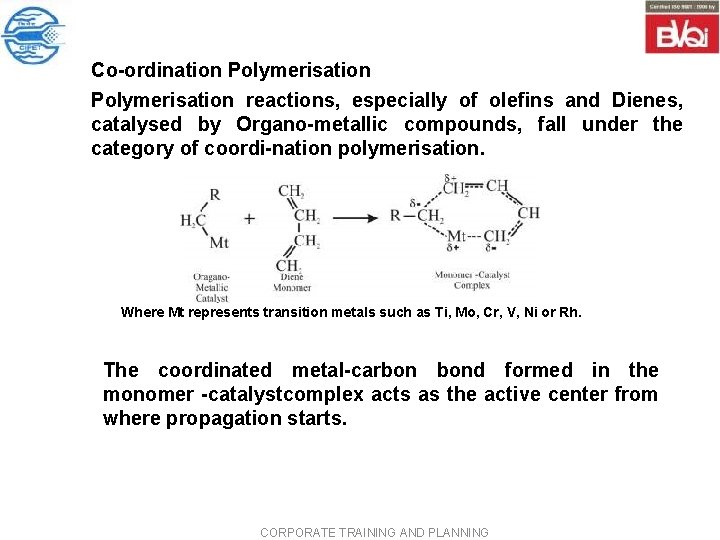
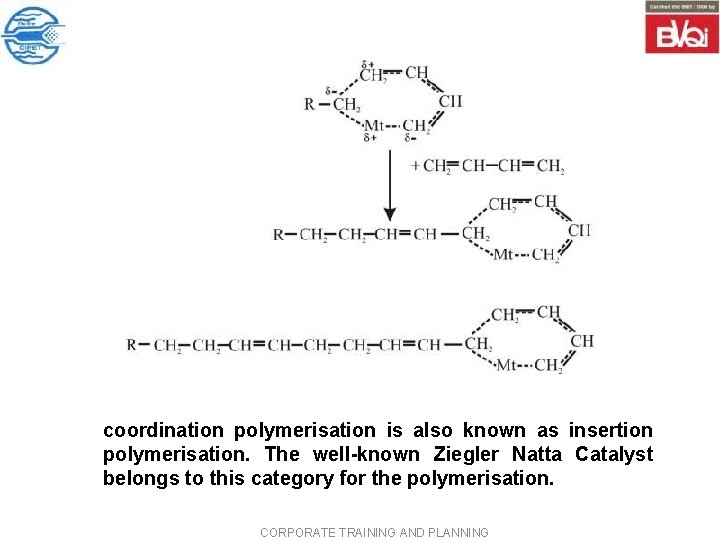
Co ordination Polymerisation reactions, especially of olefins and Dienes, catalysed by Organo metallic compounds, fall under the category of coordi nation polymerisation. Where Mt represents transition metals such as Ti, Mo, Cr, V, Ni or Rh. The coordinated metal carbon bond formed in the monomer catalyst complex acts as the active center from where propagation starts. CORPORATE TRAINING AND PLANNING
coordination polymerisation is also known as insertion polymerisation. The well known Ziegler Natta Catalyst belongs to this category for the polymerisation. CORPORATE TRAINING AND PLANNING
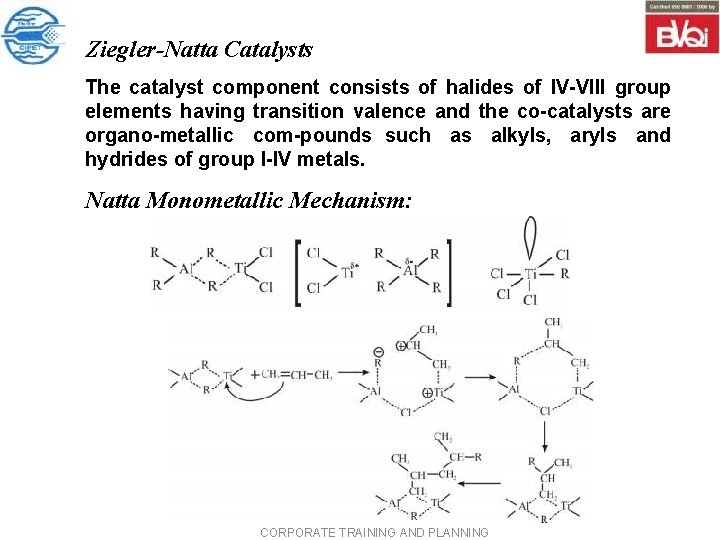
Ziegler-Natta Catalysts The catalyst component consists of halides of IV VIII group elements having transition valence and the co catalysts are organo metallic com pounds such as alkyls, aryls and hydrides of group I IV metals. Natta Monometallic Mechanism: CORPORATE TRAINING AND PLANNING
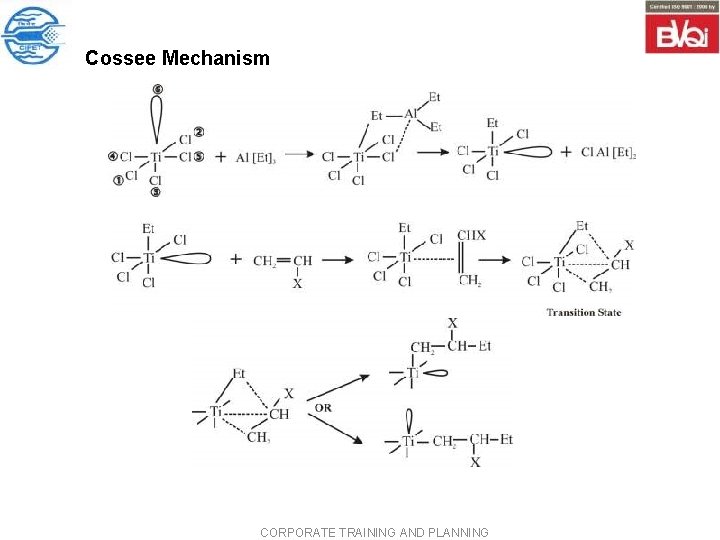
Cossee Mechanism CORPORATE TRAINING AND PLANNING
Step Polymerization • The polymer build up proceeds through a reaction between functional groups of the monomers. • The reaction takes place in a step wise manner (i. e. , one after another), and the polymer build up is, therefore, slow (unlike in chain polymerisation where the chain growth is very rapid). • Although many known reactions with organic functional groups can be made use of in step polymerisation, condensation, addition, ring opening, amidation and ester interchange reactions are the most commonly used ones. In step polymerisation reactions are accompanied by the elimination of small molecules. CORPORATE TRAINING AND PLANNING
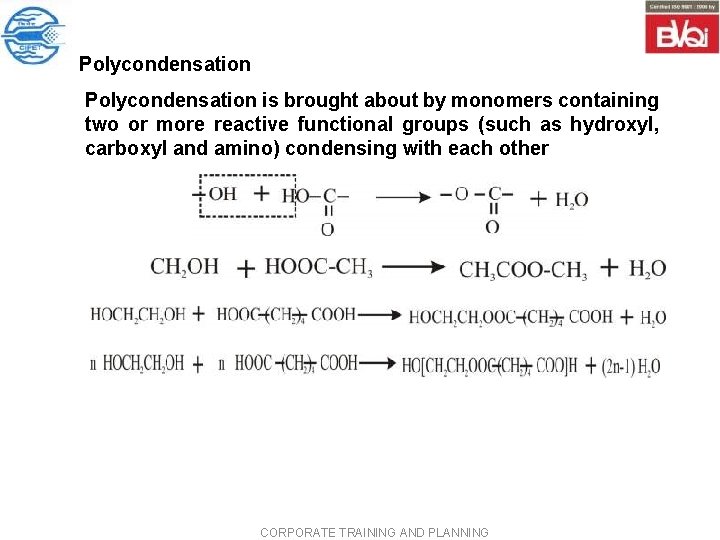
Polycondensation is brought about by monomers containing two or more reactive functional groups (such as hydroxyl, carboxyl and amino) condensing with each other CORPORATE TRAINING AND PLANNING
For polycondensation the monomer should have: • CORPORATE TRAINING AND PLANNING
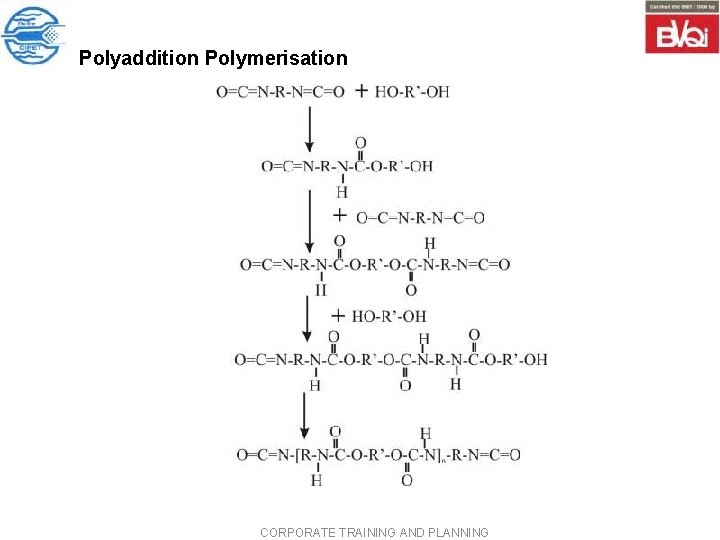
Polyaddition Polymerisation CORPORATE TRAINING AND PLANNING
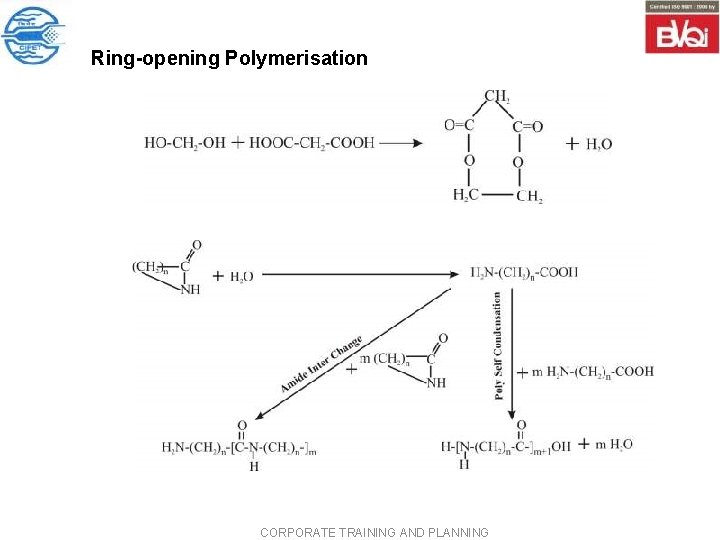
Ring opening Polymerisation CORPORATE TRAINING AND PLANNING
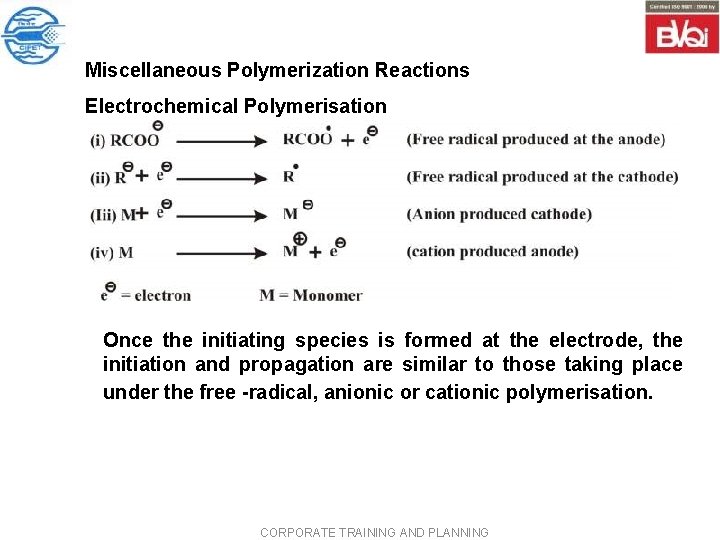
Miscellaneous Polymerization Reactions Electrochemical Polymerisation Once the initiating species is formed at the electrode, the initiation and propagation are similar to those taking place under the free radical, anionic or cationic polymerisation. CORPORATE TRAINING AND PLANNING
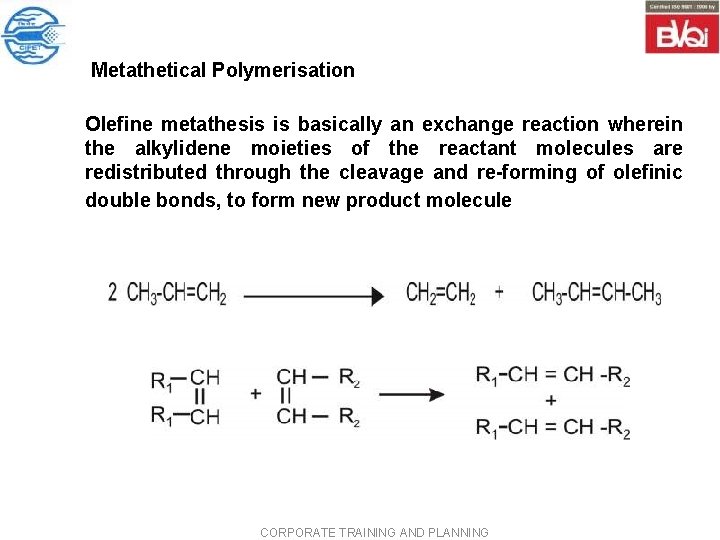
Metathetical Polymerisation Olefine metathesis is basically an exchange reaction wherein the alky. Iidene moieties of the reactant molecules are redistributed through the cleavage and re forming of olefinic double bonds, to form new product molecule CORPORATE TRAINING AND PLANNING
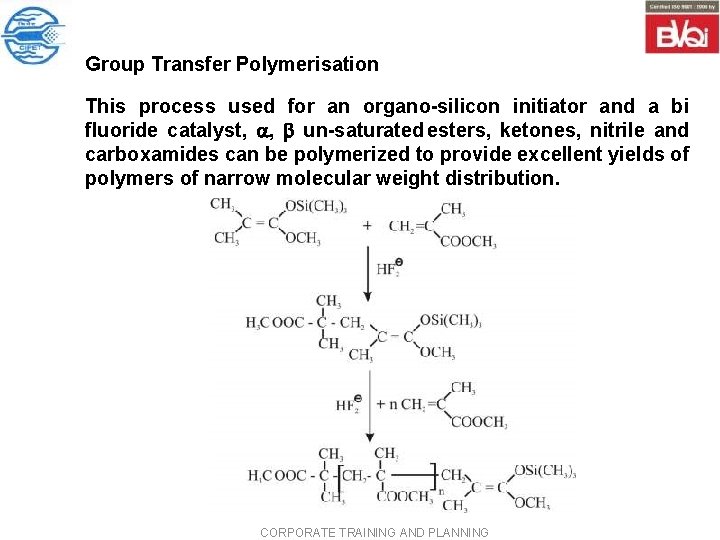
Group Transfer Polymerisation This process used for an organo silicon initiator and a bi fluoride catalyst, , un saturated esters, ketones, nitrile and carboxamides can be polymerized to provide excellent yields of polymers of narrow molecular weight distribution. CORPORATE TRAINING AND PLANNING
Polymerisation Techniques Bulk Polymerisation a. The monomer is taken in the liquid state and the initiator is dis solved in the monomer. The chain transfer agent, whenever used to control the molecular weight, is also dissolved in the monomer it self. b. The whole system is, therefore, in a homogeneous phase. The reaction mass is heated or exposed to a radiation source for initia ting the polymerisation and is kept under agitation for proper mass and heat transfers. c. As the polymerisation proceeds, the viscosity of the medium increases and mixing becomes progressively difficult, leading to products with very broad molecular weight distribution. CORPORATE TRAINING AND PLANNING
The major Disadvantages are: 1. The medium gets viscous, the diffusibility of the growing polymer chains becomes restricted, the probability of chain collision becomes less, termination becomes difficult, active radical sites accumulate and the rate of polymerisation increases enormously. 2. This whole phenomenon is called 'auto acceleration' and, sometimes, the uncontrolled exothermic reaction can lead to an explosion. Some advantages: 3. Bulk polymerisation, however, is quite simple and the product obtained has a high purity since, except the initiator and the chain transfer agent, no other additive that could contaminate the product is used. The polymer obtained can also be used as such since no isolation from other components is involved. 4. Ex: vinyl chloride to get PVC resin CORPORATE TRAINING AND PLANNING
Solution Polymerisation a. In solution polymerisation, the monomer is dissolved in a suitable inert solvent along with the chain transfer agent. b. The free radical initiator is also dissolved in the solvent medium, while the ionic and coordination catalysts, can either be dissolved or suspended. c. The presence of the inert solvent medium helps to control viscosity increase and promote a proper heat transfer. The major disadvantage of the solution polymerisation technique is: 1. The selected solvent cannot be completely ruled out and hence, it is difficult to get very high molecular weight products. CORPORATE TRAINING AND PLANNING
2. The polymer formed will also have to be isolated from the solution either by evapora tion of the solvent or by precipitation in a non solvent, and removal of their final traces is always extremely difficult. 3. Solution polymerisation techniques, nevertheless, can advantageously be used where the polymer is used in its solution form, as in the case of certain adhesives and coating compositions, or in systems where the polymer formed is insoluble in its monomer or solvent and precipitates out as a slurry and is amenable for easy isolation. 4. Poly acrylonitrile by free radical polymerisation and that of polyisobuty lene by cationic polymerisation, use the solution technique. Block co polymers are also made exclusively by this technique CORPORATE TRAINING AND PLANNING
Suspension Polymerisation · Only water insoluble monomers can be polymerised by this tech nique. The initiators are monomer soluble. · The monomer is suspended in water, in the form of fine droplets, which are stabilized and prevented from coalescing by using suitable water soluble protective colloids, surface active agents and by stirring. · The size of the monomer droplets formed depends on the monomer to water ratio, the type and concentration of the stabilizing agents and also on the type and speed of agitation employed. · Since each monomer droplet is isolated and independent of the other droplets, it can be visualized to act as an independent bulk polymerisation nucleus. · The continuous aqueous phase separating the monomer droplets acts as an efficient heat transfer medium and, hence, the exothermic is well controlled. CORPORATE TRAINING AND PLANNING
Advantages 1. Since water is used as the heat transfer medium, the process is also economical as compared to solution polymerisation. 2. As the entire bulk of the monomer is divided into innumerable any droplets control on the kinetic chain length of the polymer formed is also quite 'good, resulting in a fairly narrow 'molecular weight distribution of the product. 3. Polymerisation proceeds to 100% conversion and the product is obtained as spherical beads or pearls. (For this reason, this technique is also known as bead or pearl polymerisation). 4. Isolation of the product becomes easy as this involves only filtration of the beads and removal of the surface active agents and protective colloids by water washing. 5. The water washed and dried product can be used as such for moulding purposes or can be dissolved in a suitable medium for use as adhesives and coatings. CORPORATE TRAINING AND PLANNING
Emulsion Polymerisation 1. As in the case of suspension polymerisation, in emulsion polymerisation too, the monomer is dispersed in the aqueous phase not as discrete droplets, but as a uniform emulsion. 2. The emulsion is stabilized by surface active agents (surfactants), protective colloids and also by certain buffers. The surfactants can be anionic (alkali salts of fatty acids and of aryl and alkyl sulfonic acids), cationic (alkyl amine hydrochlorides and alkyl ammonium halides) or non ionic (alkyl glycosides and saccharose esters of fatty acids). 3. Surfactants serve the purpose of lowering the surface tension at the monomer water interface and facilitate emulsification of the monomer in water. CORPORATE TRAINING AND PLANNING
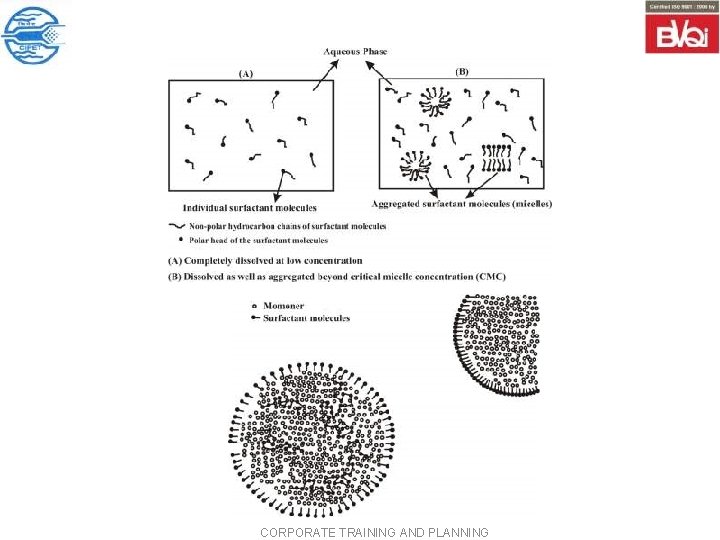
1. Owing to their low solubility, surfactants get fully dissolved or molecularly dispersed only at low concentrations. Beyond a particular concentration, the excess quantity does not get molecularly dispersed, out forms molecular aggregates known as 'micelles', and an equilibrium is set up between the dissolved surfactant molecules and the aggregated ones. • 2. The highest concentration, wherein all the molecules are in a dispersed state, or the concentration beyond which only micelle formation is possible, is known as the 'critical micelle concentration' (CMC). • 3. Emulsifier molecules are made of two parts: a long non polar hydro carbon' chain to which is attached a polar group such as COONa, S 03 Na, NH 2 HCl or NBr. • 4. In micelle formation, the emulsifier molecules aggregate in such a way that the polar end of the mole cules align themselves outward and. the hydrocarbon ends come close to each other at the interior. CORPORATE TRAINING AND PLANNING
CORPORATE TRAINING AND PLANNING
5. Due to the close proximity of the hydrocarbon ends of all emulsifier molecules, the interior of the micelle acts as a hydrocarbon phase where the monomer can be so. Iubilize. When the mono mer is added and agitated, emulsification takes place. • 6. The resultant emulsion is a complex system a molecular solution of the emulsifier in water is the continuous phase wherein the monomer drop lets and micelles (having the so. Iubilize monomer at their interior) are uniformly dispersed. • 7. If the monomer is slightly soluble in water, then the aqueous emulsifier solution phase will also dissolved in it. CORPORATE TRAINING AND PLANNING
Melt Polycondensation 1. This technique is used for the polymerisation of monomers, which have at least one solid component, and do not decompose around their melting points. 2. The temperatures involved in melt polycondensation are rather high and, hence, the reaction has to be carried out in an inert atmosphere of N 2 or CO 2 to avoid such side reactions as can lead to oxidation, decarboxylation, degradation etc. 3. The reaction is carried out under reduced pressure to facilitate removal of the byproduct, which becomes essential if a high molecular weight product is aimed at. 4. Removal of the by product becomes extremely difficult at later stages of the reaction, as there is considerable increase in the viscosity of the medium, like in bulk polymerisation. 5. Ex: polyethylene tereph thalate, nylon 6, 6 CORPORATE TRAINING AND PLANNING
Solution Polycondensation 1. The reactants are taken as a solution in a suitable inert solvent. The reaction can be carried out at comparatively lower temperatures during which heat and mass transfer processes are easier than in the melt technique. 2. The solvent can also serve as an entrapping agent for the byproduct formed and hence, the removal of the byproduct becomes easy. Owing to the presence of the solvent phase, however, the kinetic probability of chain growth is low and this leads to a reduced rate and a low degree of polymerisation. Many of the liquid polyester resins based on glycols and unsa turated dicarboxylic acid are prepared by this technique using high boiling aromatic hydrocarbons as solvent with which the water (byproduct) forms an azeotrope and, hence, can be removed easily. CORPORATE TRAINING AND PLANNING
Interfacial Condensation 1. Polymerisation is allowed to proceed at the inter face between an aqueous and an organic medium. Reactants having highly reactive functional groups, which can readily react at ambient temperatures to form condensation products, are suited to this technique. 2. The polymer formation at the interface is a diffusion controlled process, very high molecular weight products can be achieved by this technique. 3. The two solutions are very thoroughly agitated so as to form an emulsion wherein the interface surface/volume ratio is increased tremendously and, hence, both the rate and degree of polymerisation become very high 4. Preparation of fully aromatic polyarnides from tereph tholoyl chloride and paraphenylene diamine is a typical example: CORPORATE TRAINING AND PLANNING
1. The diamine is dissolved in water and the acid chloride in chloroform or carbon tetrachloride. When the two solutions are brought in contact with each other, at the interface, the diamine molecules diffuse into the organic phase and react with the acid chloride, resulting in the formation of a polymer, which precipitates out immediately. 2. The byproduct formed (HCI) diffuses back into the aqueous phase and gets dissolved. The precipitate is formed at the interface in the form of a thin film and, when removed from the system, exposes a fresh surface of the acid chloride to the organic phase resulting in the formation of the fresh quantity of the poly mer. 3. As the polymer is formed, it precipitates out and, under the influence of high speed agitation, forms slurry. The polymer is isolated from the slurry and washed free of adherent reactants. CORPORATE TRAINING AND PLANNING
Solid and Gas Phase Polymerisation Solid phase polymerisation is mostly restricted to chain· poly merisation. Also, since such polymerisation is restricted to low temperatures, thermal activation of the reaction is quite difficult and, hence, the photo or radiation activation technique is resorted to. CORPORATE TRAINING AND PLANNING
Gas phase polymerisation is known in the case of very few olefinic monomers. The disadvantage of the system is that it has a very poor heat transfer. The two methods used in the gas phase polymerisation are: (i) spraying the catalyst (usually Zeigler Natta type) into the gaseous monomer and (ii) feeding the gaseous mono mer into a fluidised bed made up of the catalyst particles. In both the cases, the polymer is obtained as a free flowing powder. Poly merisation of ethylene and p xylene can be cited as examples for gas phase polymerisation. CORPORATE TRAINING AND PLANNING
Thank You CORPORATE TRAINING AND PLANNING