CORPORATE GOVERNANCE ECONOMIC ENTRENCHMENT and GROWTH Randall Morck




- Slides: 21
“CORPORATE GOVERNANCE, ECONOMIC ENTRENCHMENT, and GROWTH” Randall Morck, Daniel Wolfenzon, and Bernard Yeung Journal of Economic Literature September 2005, v. XLIII, #3
Outside the US and the UK • Large corporations usually have controlling owners – Who are usually very wealthy families – Who control corporations without making commensurate capital investment • Achieved through • Pyramid control structures • Cross-shareholding • Super-voting rights
Economic growth depends on the distribution of control over capital assets • If political influence depends on what one controls, rather than what one owns: political influence is amplified relative to actual wealth • This influence can create problems and distort public policy regarding • Agency problems • Misallocation of resources • Rates of innovation • Property rights protection • Capital markets • And other institutions
Starting point • A countries per capita GDP grows faster if • Self-made billionaire wealth is a greater portion of GDP than the wealth of inherited billionaires
The Methodology
First • Discuss empirical findings that suggest a link between economic growth – and the “hands” in which control over corporate control is concentrated
Second • Review literature on – Corporate ownership – Pyramidal groups – Family control Showing many economies entrust governance of large parts of their corporate sectors to tiny elites of extremely wealthy families
Third • Discuss issues associated with concentrated corporate governance and –How these might affect economic performance
Fourth • Evaluate the link between Concentrated Corporate control on the one hand • Overall capital allocation • Capital market development • Creative destruction • Macroeconomic growth
Fifth • Discuss entrenchment as a political economy problem, and the determinants of entrenchment – Investment opportunities – Societal tradition – Initial endowments • Examine the relationship between economic entrenchment and openness
Determinants of Economic Entrenchment • “Economic entrenchment is a self sustaining, stable equilibrium that seems to characterize some, but not all oligarchic capitalist economies” • “the stark divergence between high and low income economies appears to result from the latter becoming trapped in weak property rights regimes characterized by economic entrenchment”
“WHAT DETERMINES WHETHER OR NOT ANY PARTICULAR COUNTRY FALLS INTO AN ECONOMIC ENTRENCHMENT TRAP {IS} A FUNDAMENTAL ECONOMIC PROBLEM”
“Tropics, Germs, and Crops: How Endowments Influence Economic Development” William Easterly and Ross Levine Journal of Monetary Economics 2003, 50(1) 3 -39 • Endowments hypothesis • Institutions hypothesis • Public policy hypothesis
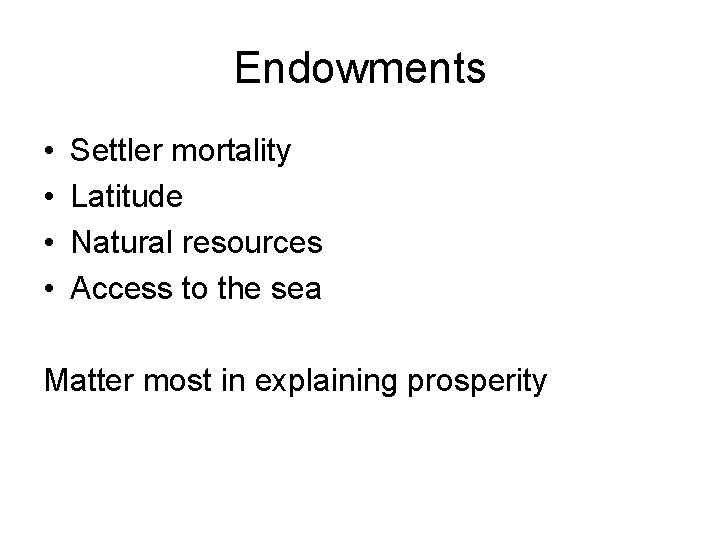
Endowments • • Settler mortality Latitude Natural resources Access to the sea Matter most in explaining prosperity
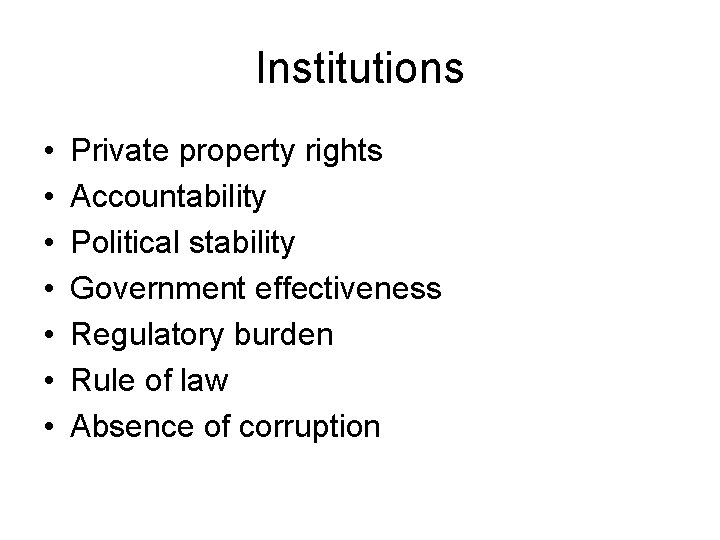
Institutions • • Private property rights Accountability Political stability Government effectiveness Regulatory burden Rule of law Absence of corruption
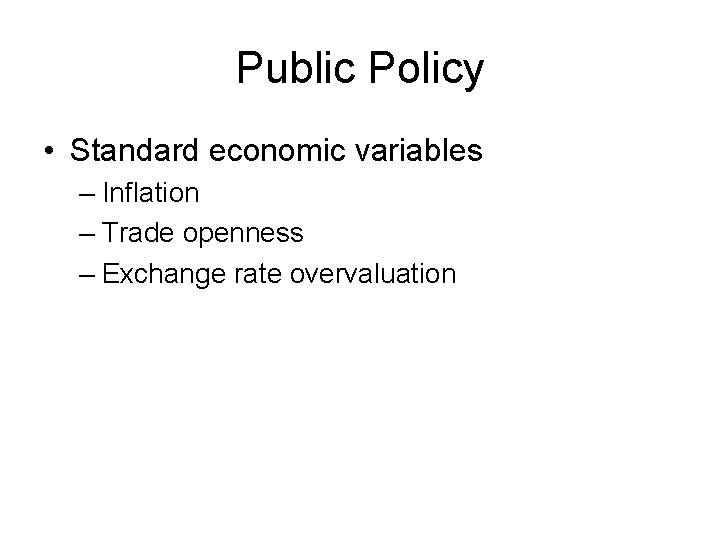
Public Policy • Standard economic variables – Inflation – Trade openness – Exchange rate overvaluation
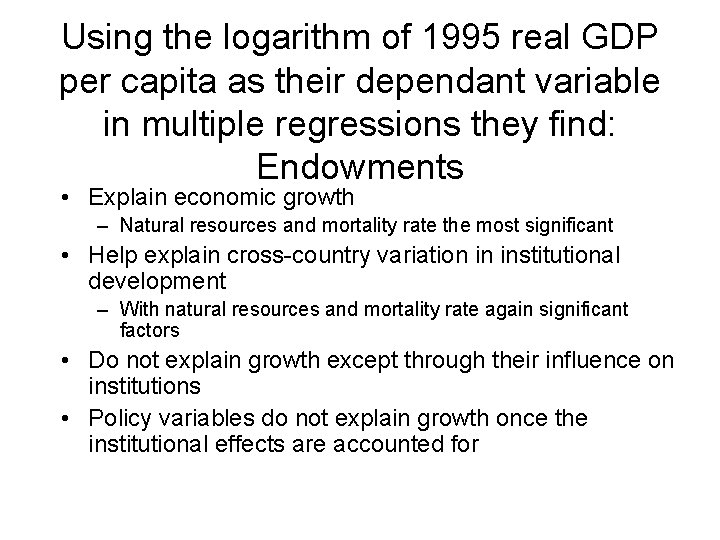
Using the logarithm of 1995 real GDP per capita as their dependant variable in multiple regressions they find: Endowments • Explain economic growth – Natural resources and mortality rate the most significant • Help explain cross-country variation in institutional development – With natural resources and mortality rate again significant factors • Do not explain growth except through their influence on institutions • Policy variables do not explain growth once the institutional effects are accounted for
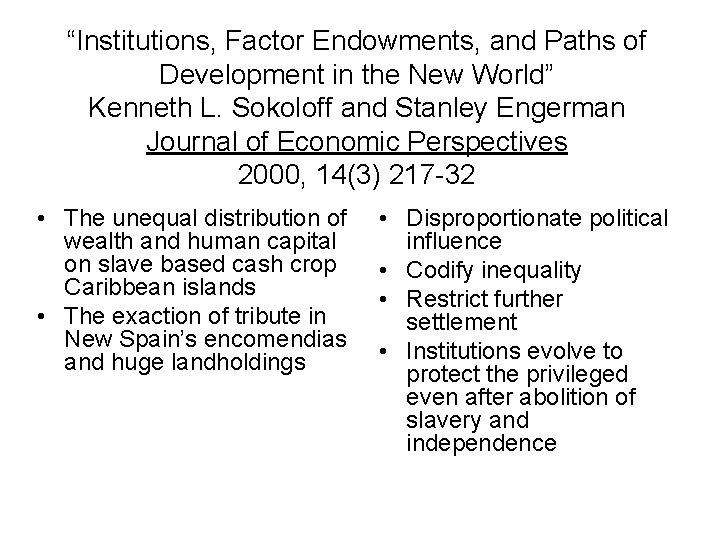
“Institutions, Factor Endowments, and Paths of Development in the New World” Kenneth L. Sokoloff and Stanley Engerman Journal of Economic Perspectives 2000, 14(3) 217 -32 • The unequal distribution of wealth and human capital on slave based cash crop Caribbean islands • The exaction of tribute in New Spain’s encomendias and huge landholdings • Disproportionate political influence • Codify inequality • Restrict further settlement • Institutions evolve to protect the privileged even after abolition of slavery and independence
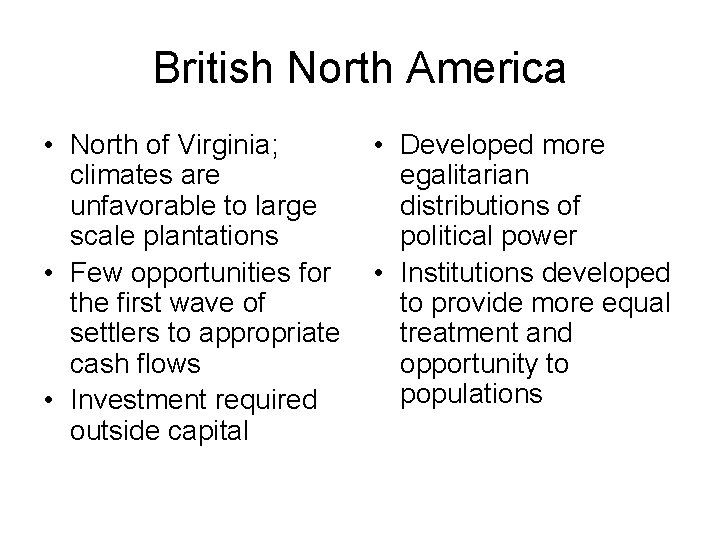
British North America • North of Virginia; climates are unfavorable to large scale plantations • Few opportunities for the first wave of settlers to appropriate cash flows • Investment required outside capital • Developed more egalitarian distributions of political power • Institutions developed to provide more equal treatment and opportunity to populations
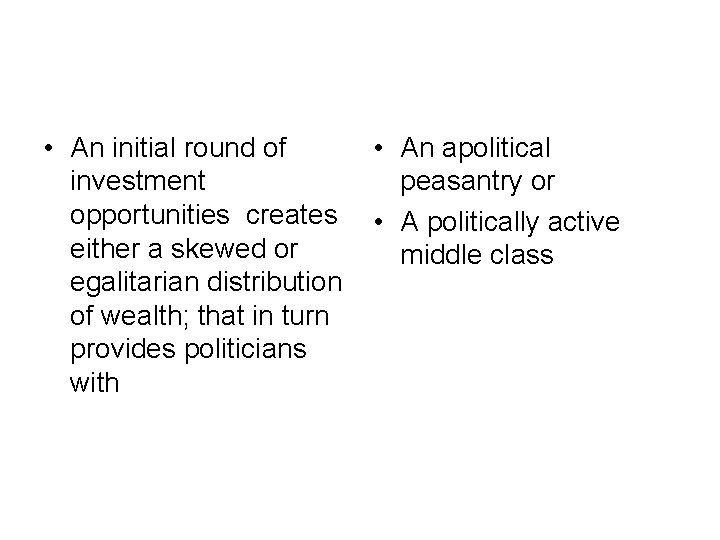
• An initial round of investment opportunities creates either a skewed or egalitarian distribution of wealth; that in turn provides politicians with • An apolitical peasantry or • A politically active middle class