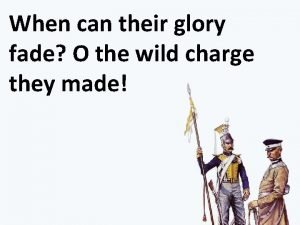
INSIDE THE MIND OF A DIRECTOR FADE IN
- Slides: 32
INSIDE THE MIND OF A DIRECTOR
FADE IN Used at the beginning of a screenplay - signifies start of film.
THE SHOT A single, uninterrupted piece of film. Can vary in length.
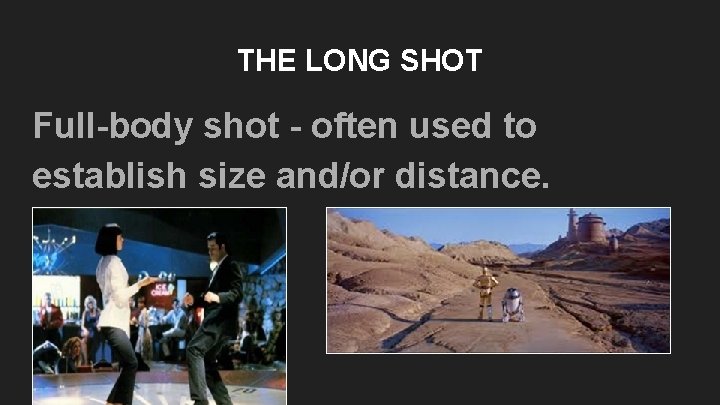
THE LONG SHOT Full-body shot - often used to establish size and/or distance.
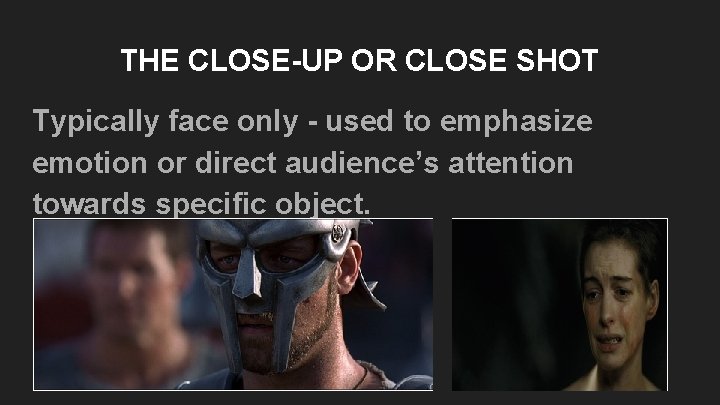
THE CLOSE-UP OR CLOSE SHOT Typically face only - used to emphasize emotion or direct audience’s attention towards specific object.
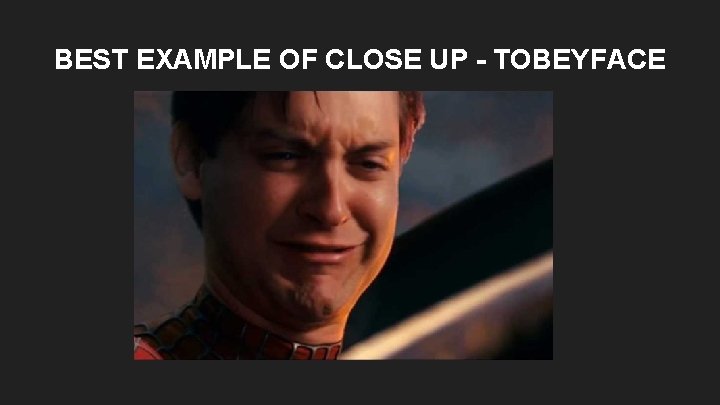
BEST EXAMPLE OF CLOSE UP - TOBEYFACE
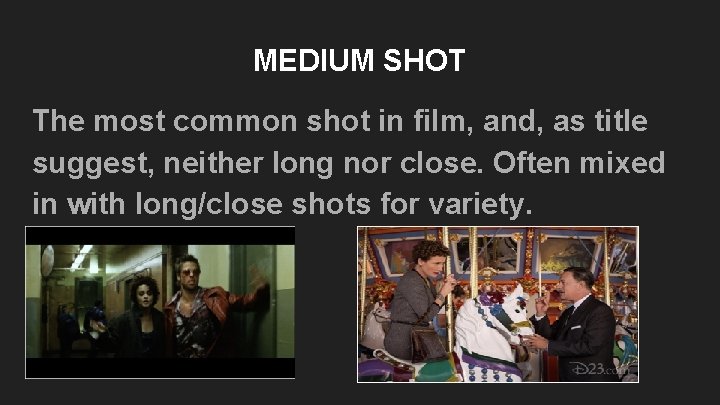
MEDIUM SHOT The most common shot in film, and, as title suggest, neither long nor close. Often mixed in with long/close shots for variety.
SOFT FOCUS When an image is ever-so-slightly out of focus - often times used to suggest uncertainty
RACK FOCUS When director forces viewers to direct their attention to where he/she wants them to look (ex: man in background and phone rings then shot focuses on phone).
DEEP FOCUS Allows for objects in both foreground and background to remain in focus.
LOW ANGLE A shot taken from an extremely low angle - often used to depict power / control
HIGH ANGLE A shot taken from an extremely high angle - often used to express weakness in whatever shot is looking upon.
EYE LEVEL No immediate significance; similar to medium shot.
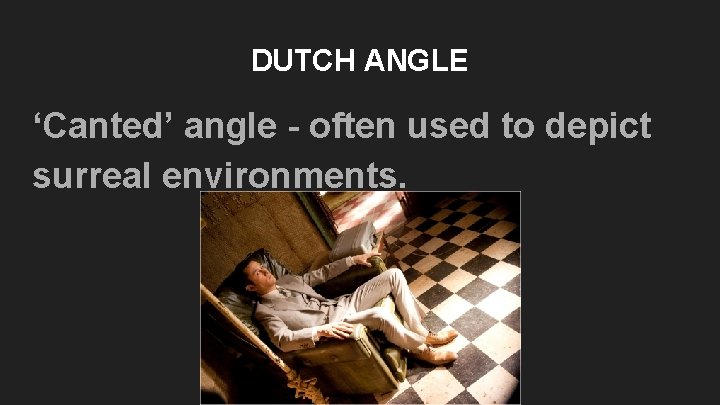
DUTCH ANGLE ‘Canted’ angle - often used to depict surreal environments.
PAN When camera pivots across horizontal axis but DOES NOT actually move.
TILT Similar to pan except instead of pivoting left and right, it moves up and down. Often used for the “male gaze. ”
ZOOM When camera closes-in on something.
TRACKING OR DOLLY When camera actually does move.
LOW-KEY LIGHTING Minimal lighting.
HIGH-KEY LIGHTING Mega-light. Often seen in movies with positive, ‘happy-go-lucky’ tones.
NEUTRAL LIGHTING Average lighting.
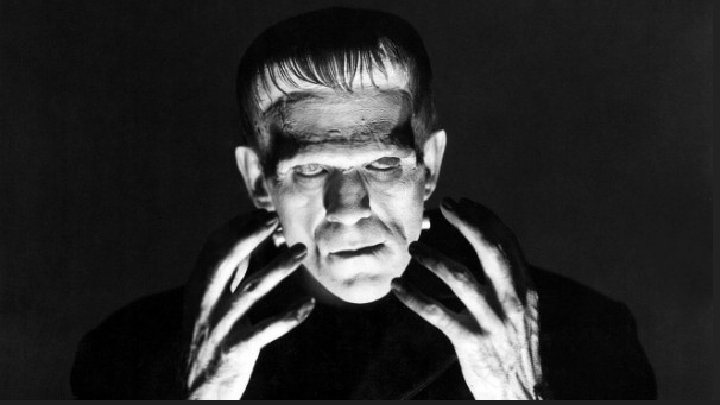
BOTTOM / SIDE LIGHTING Often times used to create characters that are evil, morally ambiguous, hiding something, etc.
FRONT LIGHTING This one is often times referred to as the ‘halo effect. ’ Used on honest characters with nothing to hide many female characters in film.
DIEGETIC SOUND Sound in a film that a character can hear (dog barking, car horn, doorbell, etc. )
NON-DIEGETIC SOUND Sound that a character doesn’t hear (ex. film soundtrack).
INTERNAL DIEGETIC If only ONE character can hear these sounds.
FADE On-screen image slowly fades away to black for a certain amount of time.
DISSOLVE Image slowly begins to fade-out but instead of going to black, it is replaced by another image that fades in.
CROSSCUT Swift cuts between two shots - back and forth, back and forth. Also known as an INTERCUT.
FLASHBACK / FORWARD Jumping to the past or future in a film.
EYE-LINE MATCH A ‘point-of-view’ shot.