Heavy Ion Physics Lecture 2 Thomas K Hemmick
- Slides: 70
Heavy Ion Physics Lecture 2 Thomas K Hemmick Stony Brook University
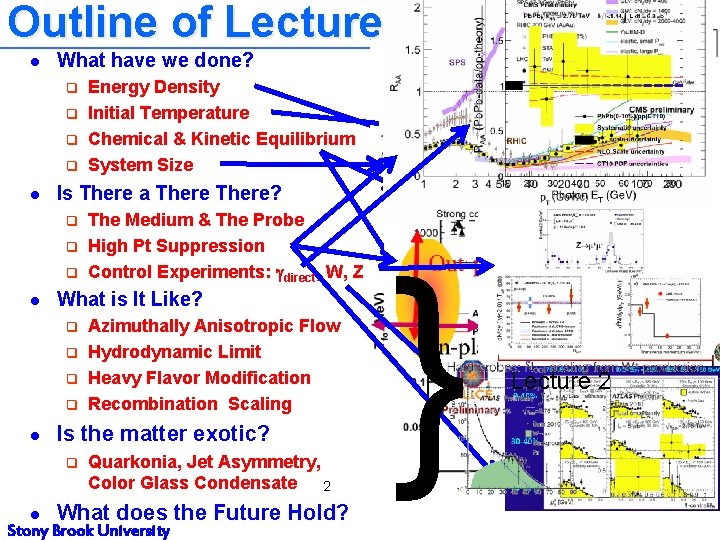
Outline of Lectures l What have we done? q q l Is There a There? q q q l q q q Azimuthally Anisotropic Flow Hydrodynamic Limit Heavy Flavor Modification Recombination Scaling Is the matter exotic? q l The Medium & The Probe High Pt Suppression Control Experiments: gdirect, W, Z What is It Like? q l Energy Density Initial Temperature Chemical & Kinetic Equilibrium System Size Quarkonia, Jet Asymmetry, Color Glass Condensate 2 What does the Future Hold? Stony Brook University } Lecture 2 Thomas K Hemmick
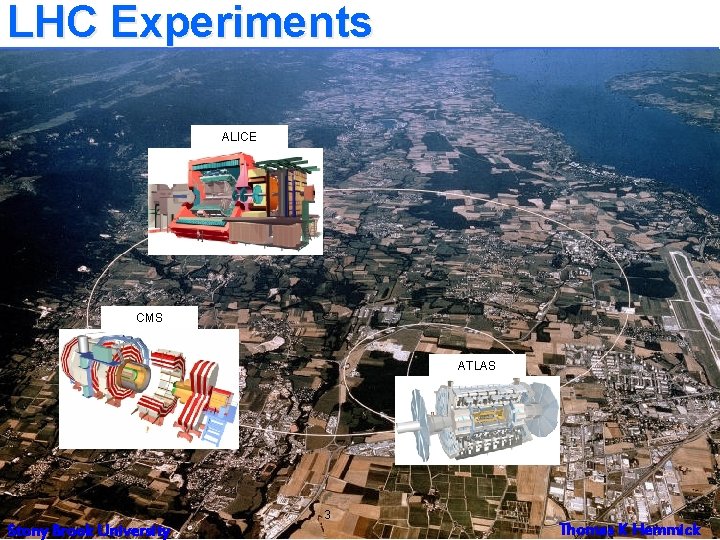
LHC Experiments ALICE CMS ATLAS Stony Brook University 3 Thomas K Hemmick
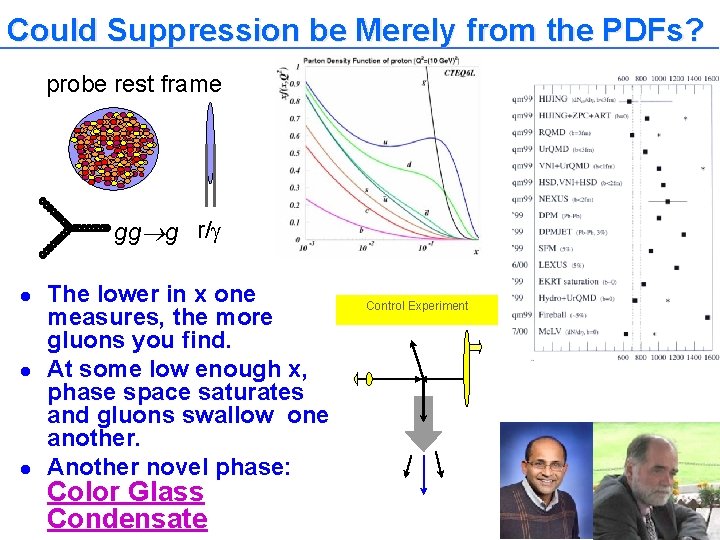
Could Suppression be Merely from the PDFs? probe rest frame gg g r/ l l l The lower in x one measures, the more gluons you find. At some low enough x, phase space saturates and gluons swallow one another. Another novel phase: Color Glass Condensate Control Experiment 4
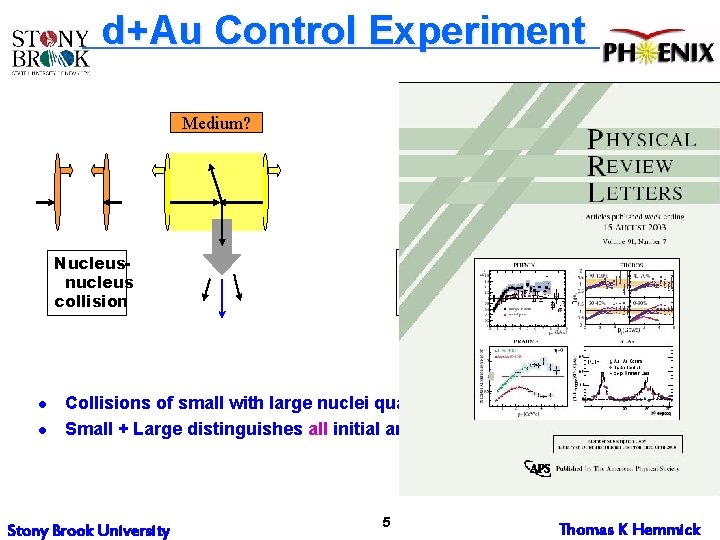
d+Au Control Experiment Medium? No Medium! Proton/deuteron nucleus collision Nucleusnucleus collision l l Collisions of small with large nuclei quantify all cold nuclear effects. Small + Large distinguishes all initial and final state effects. Stony Brook University 5 Thomas K Hemmick
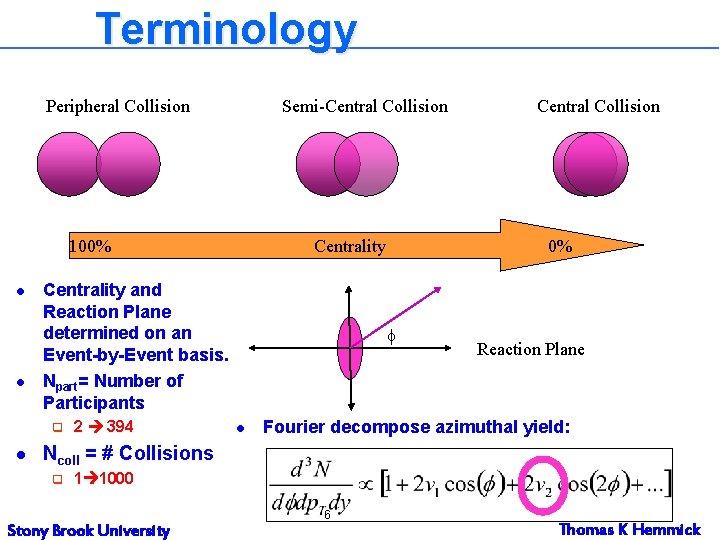
Terminology Peripheral Collision Semi-Central Collision 100% l l Centrality and Reaction Plane determined on an Event-by-Event basis. Npart= Number of Participants q l Centrality 2 394 0% f l Central Collision Reaction Plane Fourier decompose azimuthal yield: Ncoll = # Collisions q 1 1000 Stony Brook University 6 Thomas K Hemmick
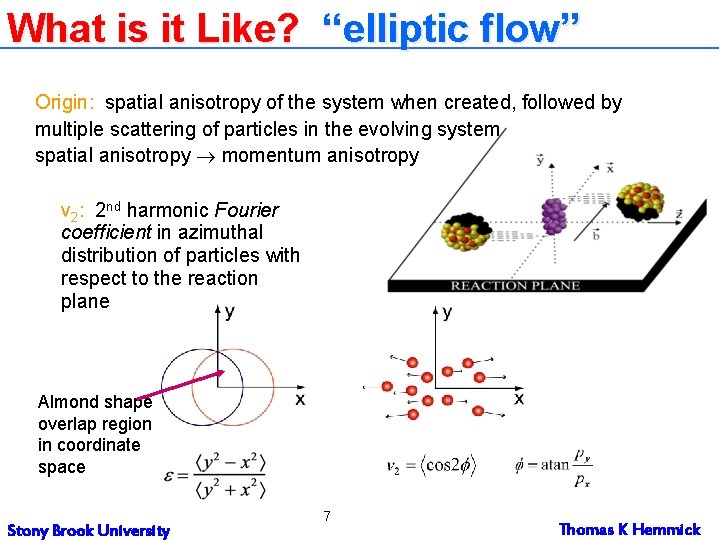
What is it Like? “elliptic flow” Origin: spatial anisotropy of the system when created, followed by multiple scattering of particles in the evolving system spatial anisotropy momentum anisotropy v 2: 2 nd harmonic Fourier coefficient in azimuthal distribution of particles with respect to the reaction plane Almond shape overlap region in coordinate space Stony Brook University 7 Thomas K Hemmick
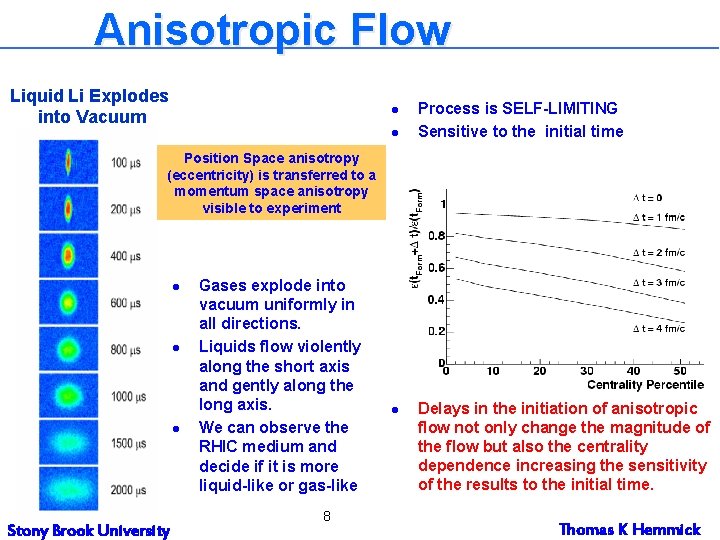
Anisotropic Flow Liquid Li Explodes into Vacuum l l Process is SELF-LIMITING Sensitive to the initial time Position Space anisotropy (eccentricity) is transferred to a momentum space anisotropy visible to experiment l l l Stony Brook University Gases explode into vacuum uniformly in all directions. Liquids flow violently along the short axis and gently along the long axis. We can observe the RHIC medium and decide if it is more liquid-like or gas-like 8 l Delays in the initiation of anisotropic flow not only change the magnitude of the flow but also the centrality dependence increasing the sensitivity of the results to the initial time. Thomas K Hemmick
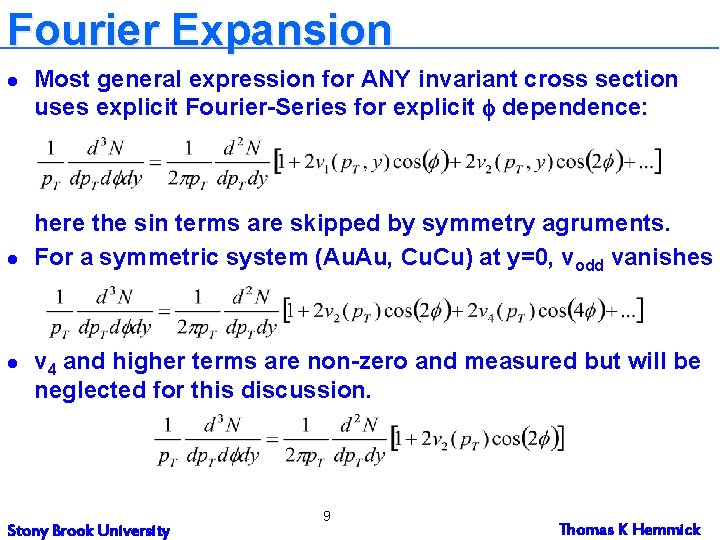
Fourier Expansion l l l Most general expression for ANY invariant cross section uses explicit Fourier-Series for explicit f dependence: here the sin terms are skipped by symmetry agruments. For a symmetric system (Au. Au, Cu. Cu) at y=0, vodd vanishes v 4 and higher terms are non-zero and measured but will be neglected for this discussion. Stony Brook University 9 Thomas K Hemmick
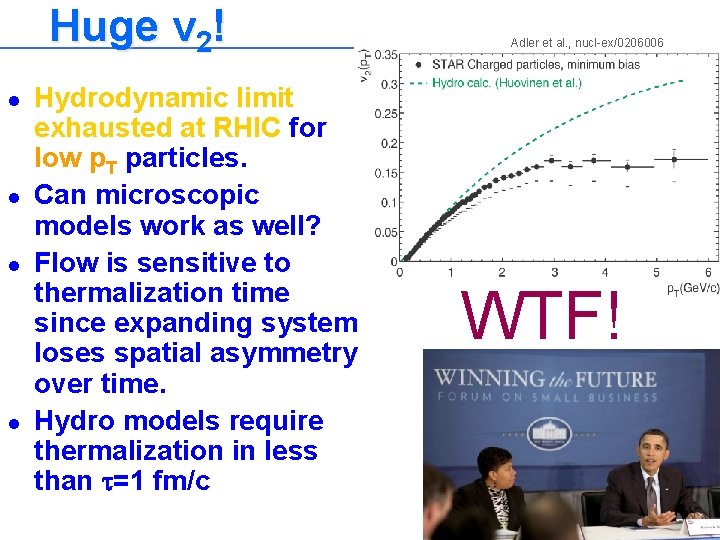
Huge v 2! l l Hydrodynamic limit exhausted at RHIC for low p. T particles. Can microscopic models work as well? Flow is sensitive to thermalization time since expanding system loses spatial asymmetry over time. Hydro models require thermalization in less than t=1 fm/c Adler et al. , nucl-ex/0206006 WTF! 10
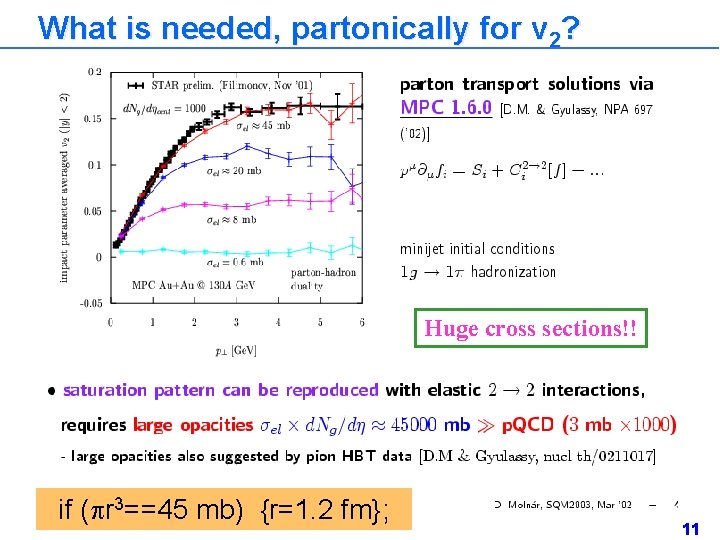
What is needed, partonically for v 2? Huge cross sections!! if ( r 3==45 mb) {r=1. 2 fm}; 11
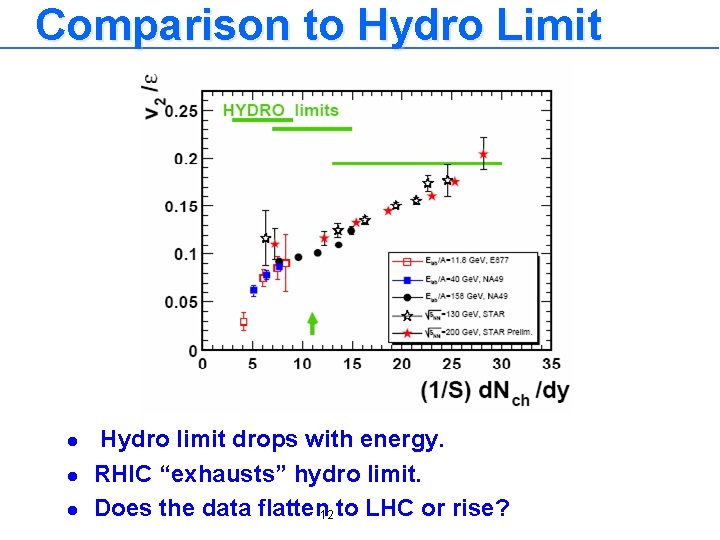
Comparison to Hydro Limit l l l Hydro limit drops with energy. RHIC “exhausts” hydro limit. Does the data flatten to LHC or rise? 12
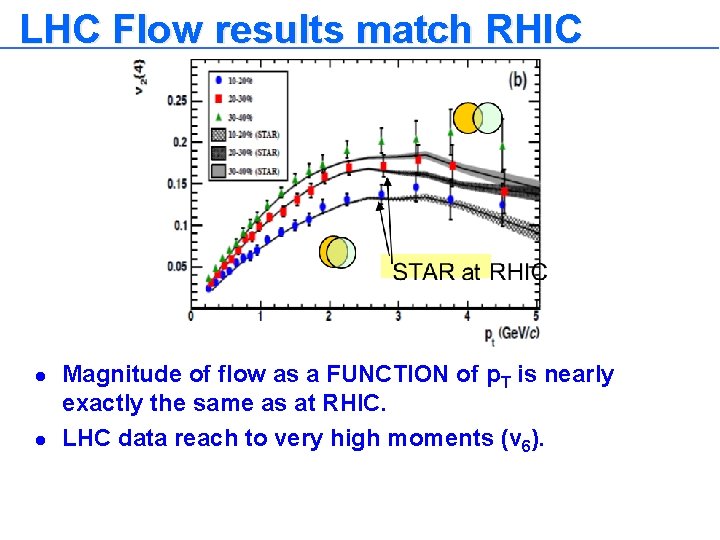
LHC Flow results match RHIC l l Magnitude of flow as a FUNCTION of p. T is nearly exactly the same as at RHIC. LHC data reach to very high moments (v 6).
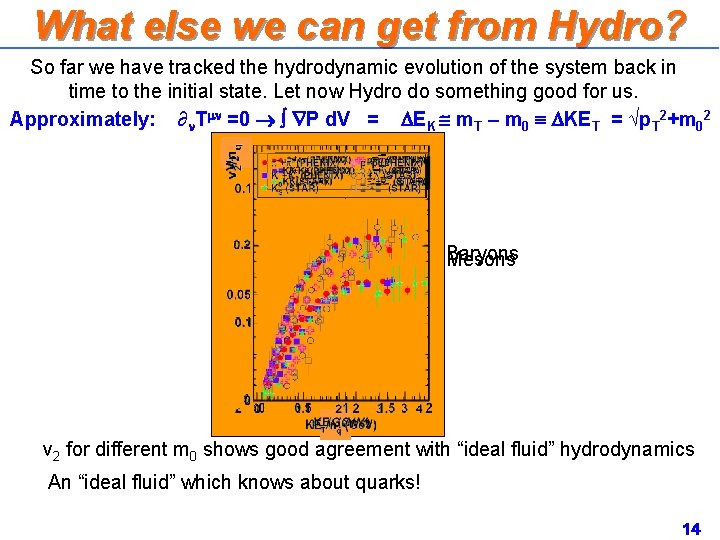
What else we can get from Hydro? So far we have tracked the hydrodynamic evolution of the system back in time to the initial state. Let now Hydro do something good for us. Approximately: ∂n. Tmn =0 P d. V = DEK m. T – m 0 DKET = √p. T 2+m 02 Baryons Mesons v 2 for different m 0 shows good agreement with “ideal fluid” hydrodynamics An “ideal fluid” which knows about quarks! 14
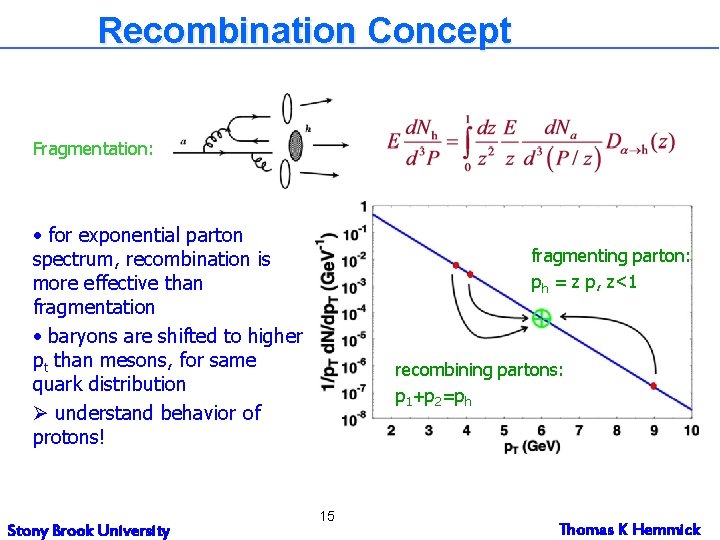
Recombination Concept Fragmentation: • for exponential parton spectrum, recombination is more effective than fragmentation • baryons are shifted to higher pt than mesons, for same quark distribution Ø understand behavior of protons! Stony Brook University fragmenting parton: ph = z p, z<1 recombining partons: p 1+p 2=ph 15 Thomas K Hemmick
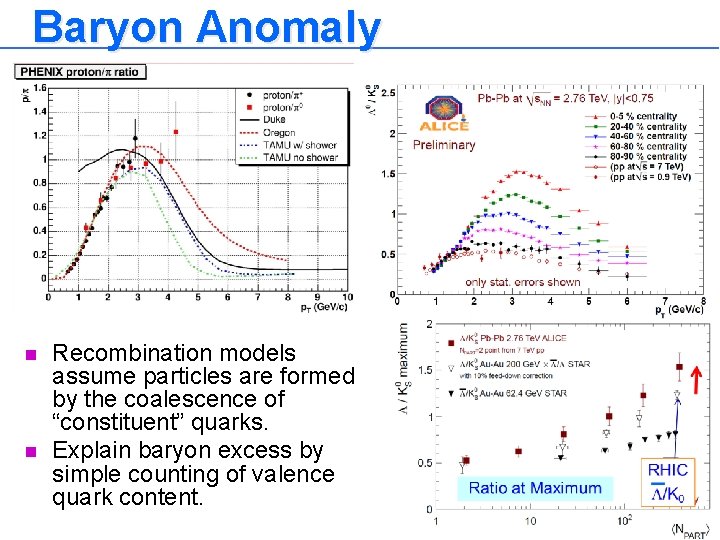
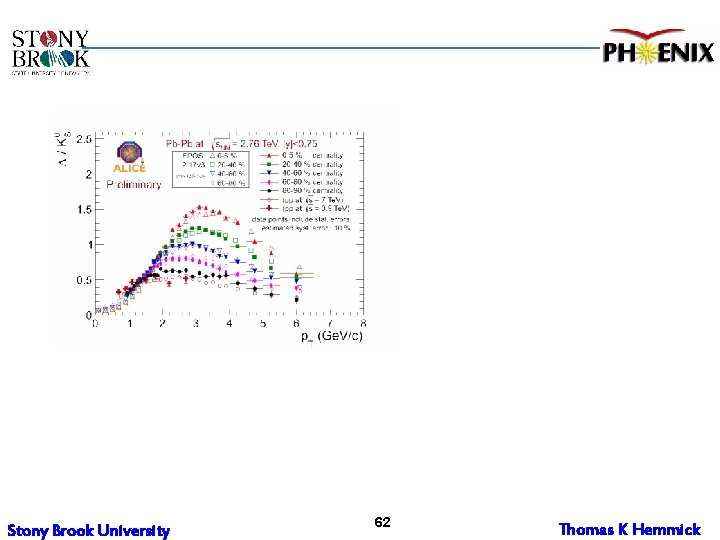
Baryon Anomaly n n Recombination models assume particles are formed by the coalescence of “constituent” quarks. Explain baryon excess by simple counting of valence quark content. 16
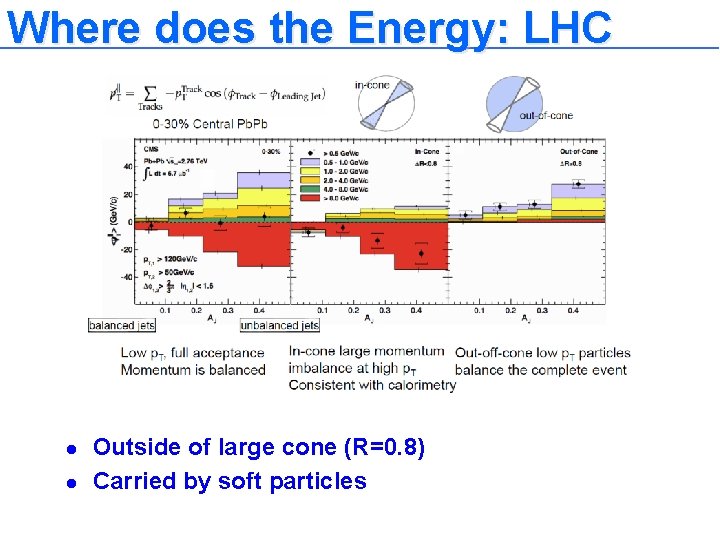
Where does the Energy: LHC l l Outside of large cone (R=0. 8) Carried by soft particles
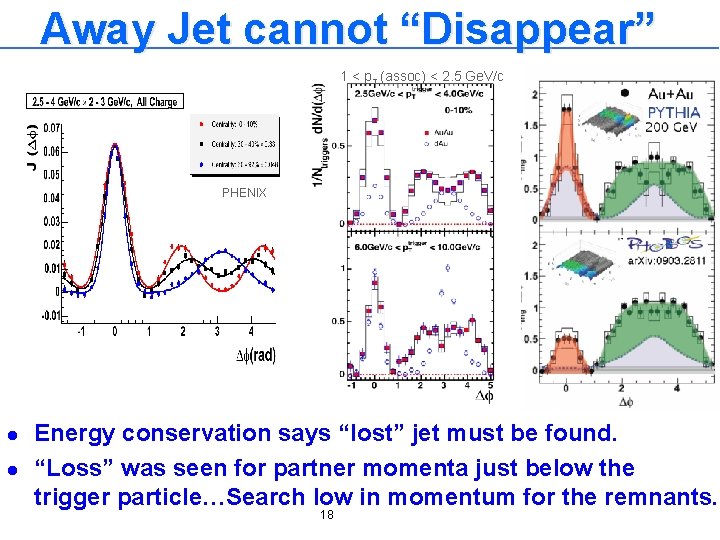
Away Jet cannot “Disappear” 1 < p. T (assoc) < 2. 5 Ge. V/c PHENIX STAR l l Energy conservation says “lost” jet must be found. “Loss” was seen for partner momenta just below the trigger particle…Search low in momentum for the remnants. 18
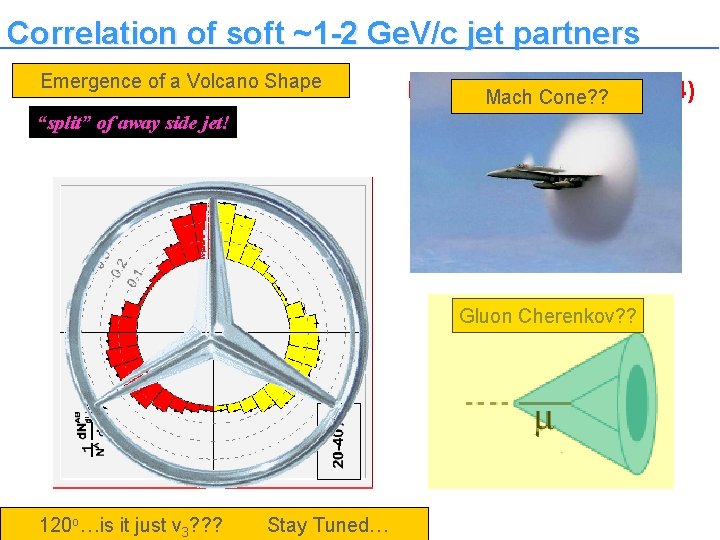
Correlation of soft ~1 -2 Ge. V/c jet partners Emergence of a Volcano Shape PHENIX (nuclex/0507004) Mach Cone? ? “split” of away side jet! Gluon Cherenkov? ? 120 o…is it just v 3? ? ? 19 Stay Tuned…
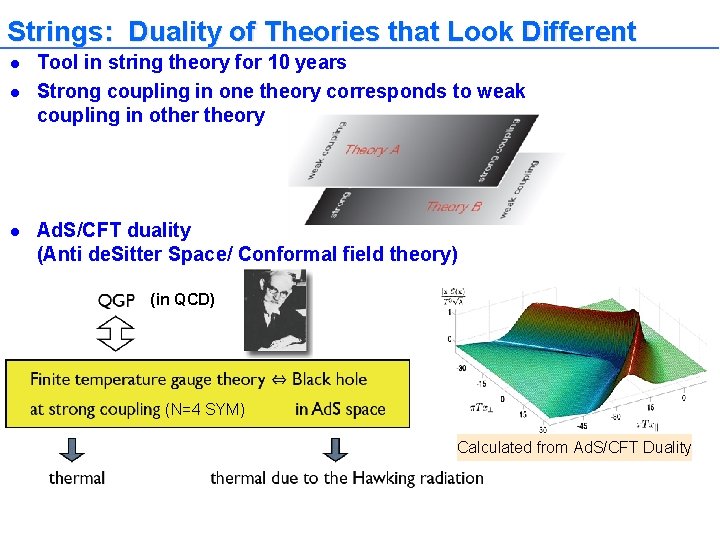
Strings: Duality of Theories that Look Different l l l Tool in string theory for 10 years Strong coupling in one theory corresponds to weak coupling in other theory Ad. S/CFT duality (Anti de. Sitter Space/ Conformal field theory) (in QCD) (N=4 SYM) Calculated from Ad. S/CFT Duality
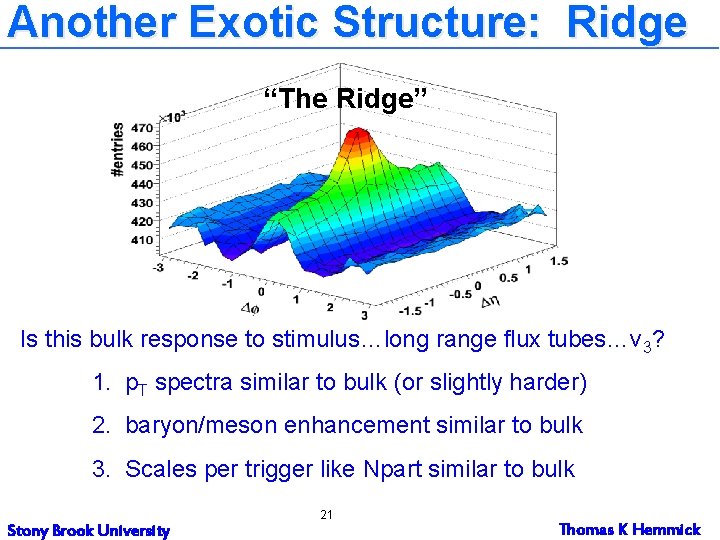
Another Exotic Structure: Ridge “The Ridge” Is this bulk response to stimulus…long range flux tubes…v 3? 1. p. T spectra similar to bulk (or slightly harder) 2. baryon/meson enhancement similar to bulk 3. Scales per trigger like Npart similar to bulk Stony Brook University 21 Thomas K Hemmick
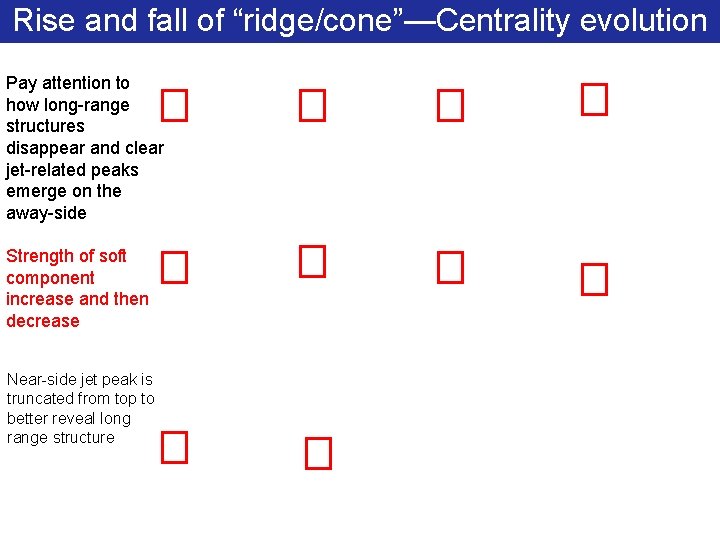
Rise and fall of “ridge/cone”—Centrality evolution Pay attention to how long-range structures disappear and clear jet-related peaks emerge on the away-side Strength of soft component increase and then decrease Near-side jet peak is truncated from top to better reveal long range structure
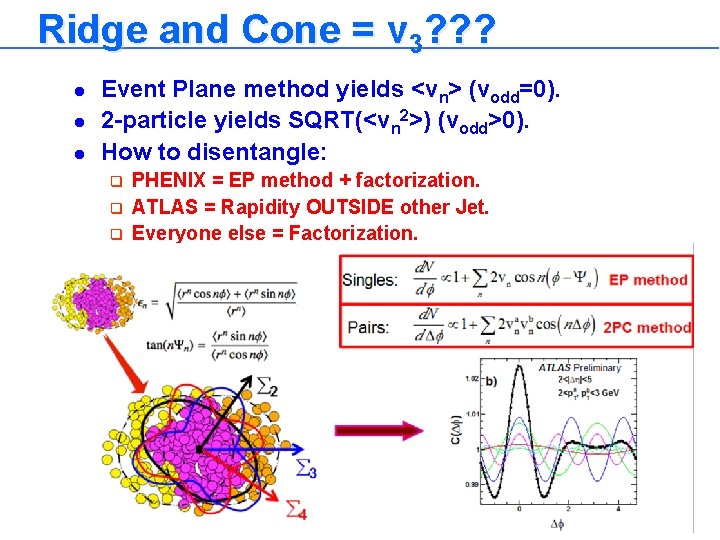
Ridge and Cone = v 3? ? ? l l l Event Plane method yields <vn> (vodd=0). 2 -particle yields SQRT(<vn 2>) (vodd>0). How to disentangle: q q q PHENIX = EP method + factorization. ATLAS = Rapidity OUTSIDE other Jet. Everyone else = Factorization.
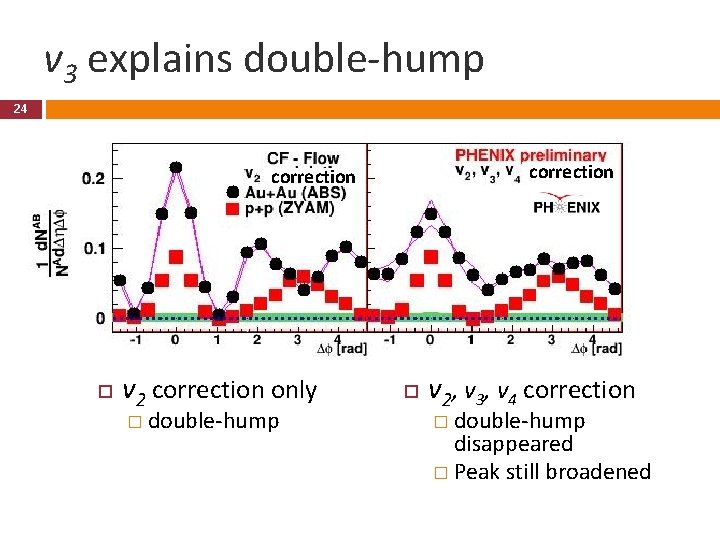
v 3 explains double-hump 24 correction v 2 correction only � double-hump v 2, v 3, v 4 correction � double-hump disappeared � Peak still broadened
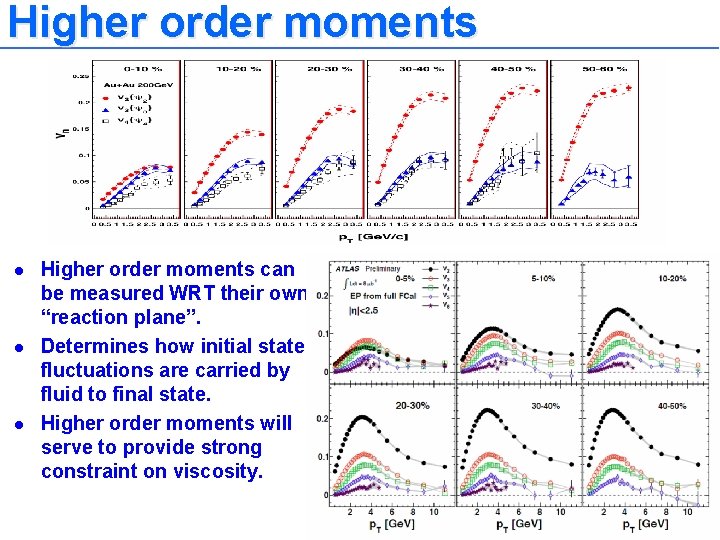
Higher order moments l l l Higher order moments can be measured WRT their own “reaction plane”. Determines how initial state fluctuations are carried by fluid to final state. Higher order moments will serve to provide strong constraint on viscosity. 25 Thomas Hemmick
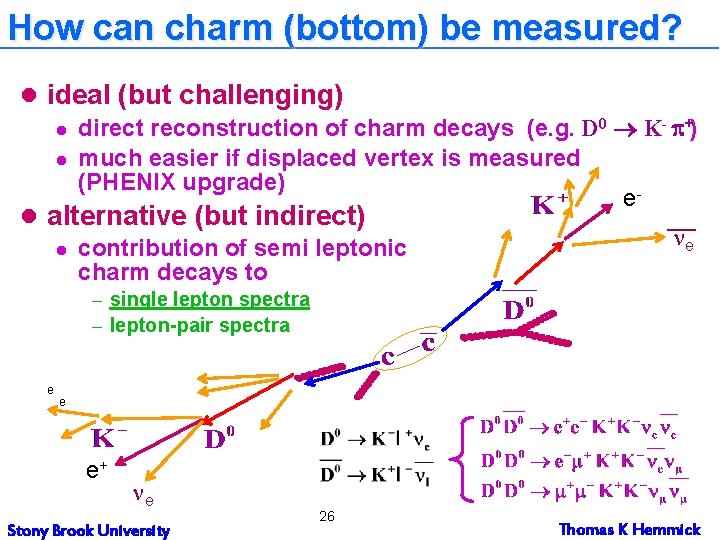
How can charm (bottom) be measured? l ideal (but challenging) l direct reconstruction of charm decays (e. g. ) D 0 K- p+ l much easier if displaced vertex is measured (PHENIX upgrade) el alternative (but indirect) ne l contribution of semi leptonic charm decays to – single lepton spectra – lepton-pair spectra e e e+ ne Stony Brook University 26 Thomas K Hemmick
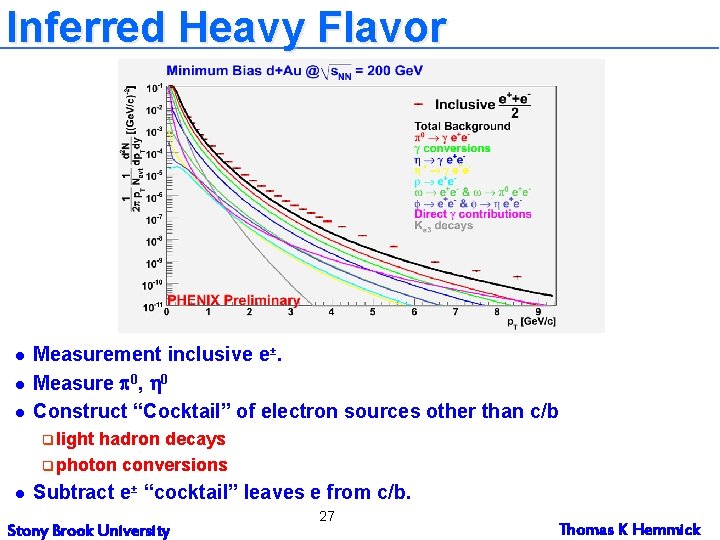
Inferred Heavy Flavor l l l Measurement inclusive e±. Measure p 0, h 0 Construct “Cocktail” of electron sources other than c/b q light hadron decays q photon conversions l Subtract e± “cocktail” leaves e from c/b. Stony Brook University 27 Thomas K Hemmick
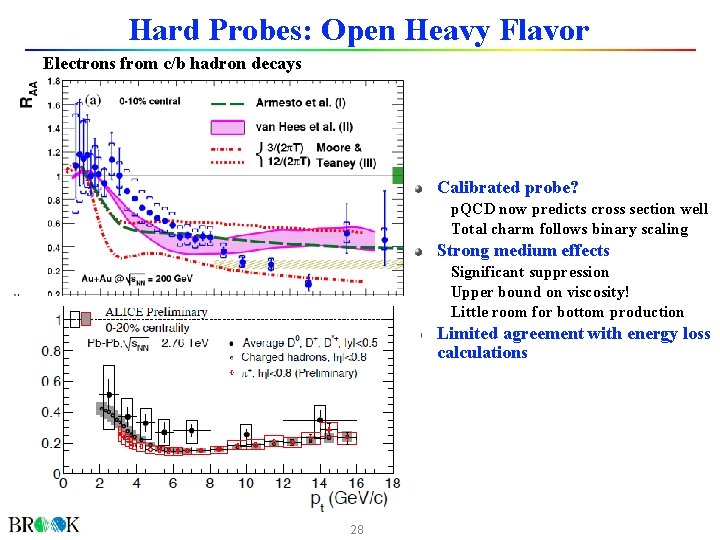
Hard Probes: Open Heavy Flavor Electrons from c/b hadron decays Calibrated probe? p. QCD now predicts cross section well Total charm follows binary scaling Strong medium effects Significant suppression Upper bound on viscosity! Little room for bottom production Limited agreement with energy loss calculations 28
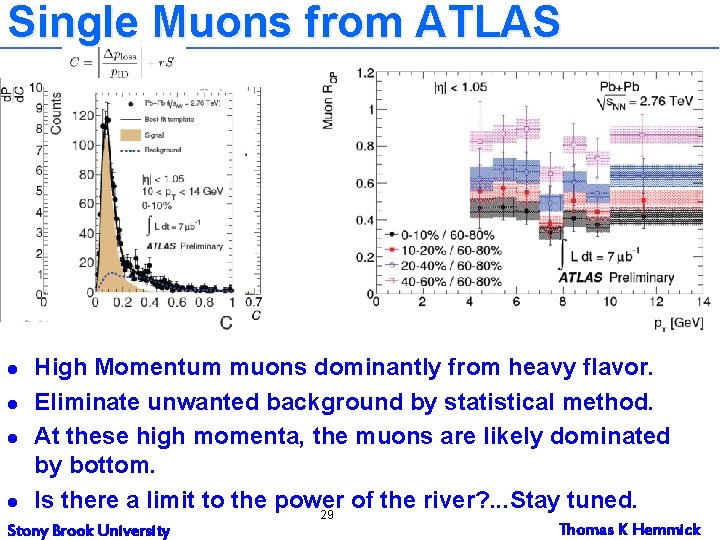
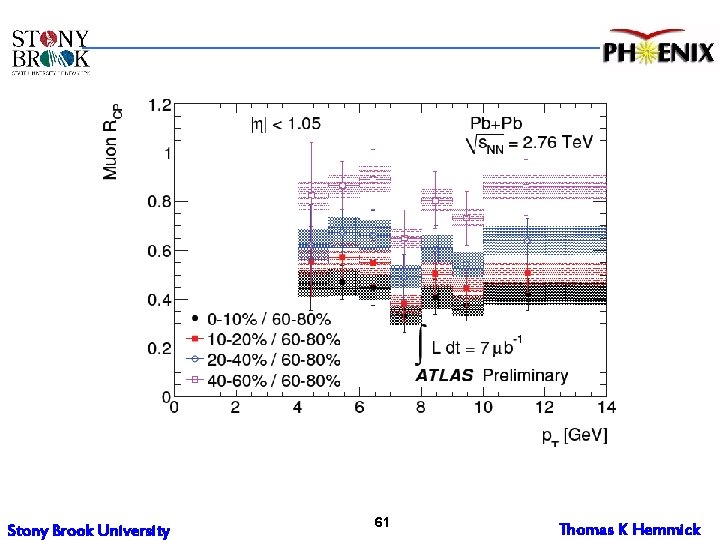
Single Muons from ATLAS l l High Momentum muons dominantly from heavy flavor. Eliminate unwanted background by statistical method. At these high momenta, the muons are likely dominated by bottom. Is there a limit to the power of the river? . . . Stay tuned. 29 Stony Brook University Thomas K Hemmick
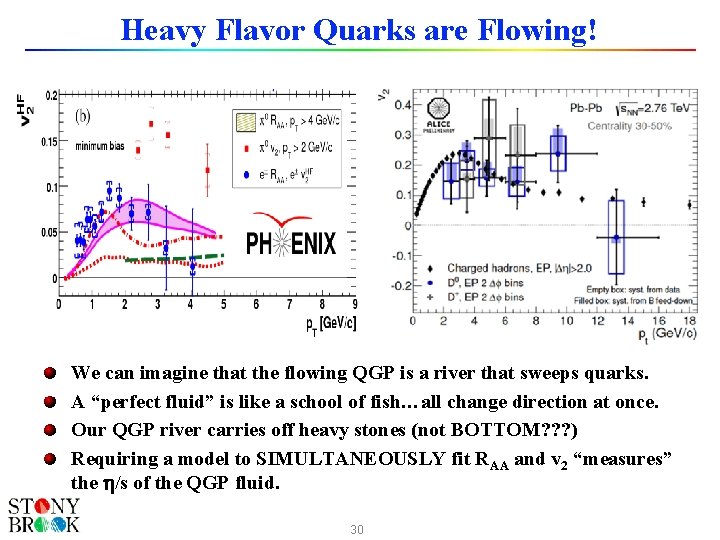
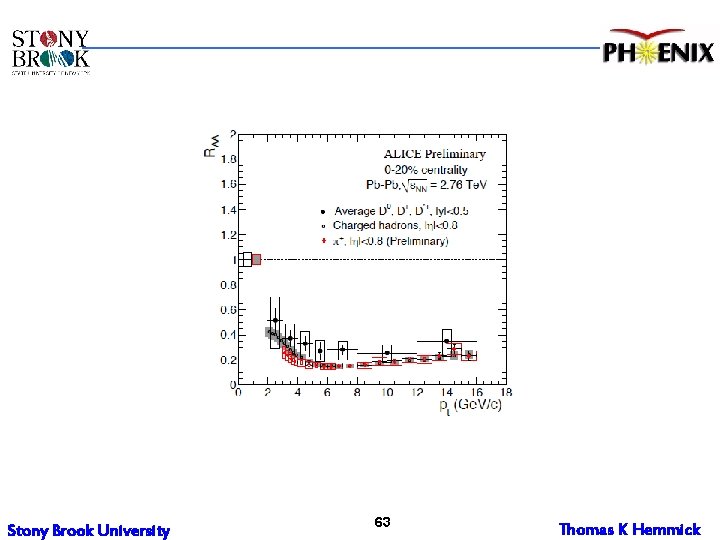
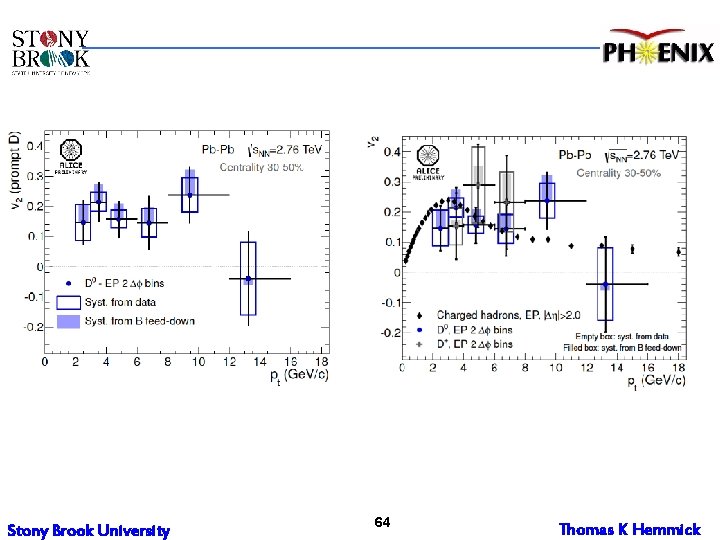
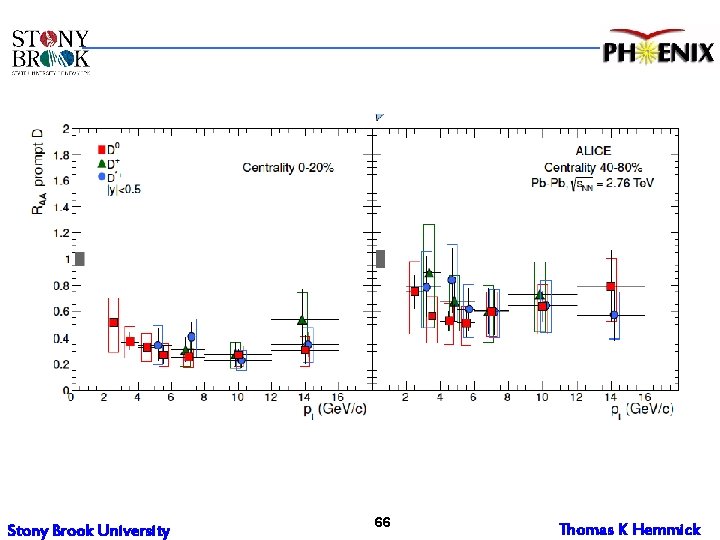
Heavy Flavor Quarks are Flowing! We can imagine that the flowing QGP is a river that sweeps quarks. A “perfect fluid” is like a school of fish…all change direction at once. Our QGP river carries off heavy stones (not BOTTOM? ? ? ) Requiring a model to SIMULTANEOUSLY fit RAA and v 2 “measures” the h/s of the QGP fluid. 30
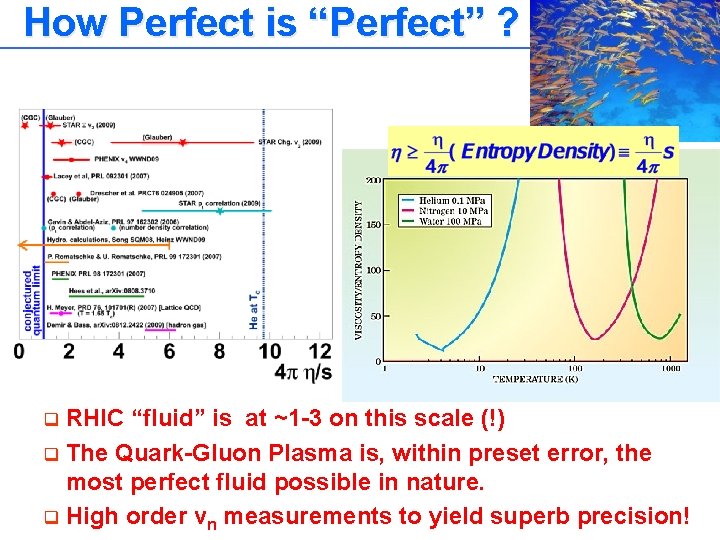
How Perfect is “Perfect” ? RHIC “fluid” is at ~1 -3 on this scale (!) q The Quark-Gluon Plasma is, within preset error, the most perfect fluid possible in nature. 31 q High order vn measurements to yield superb precision! q
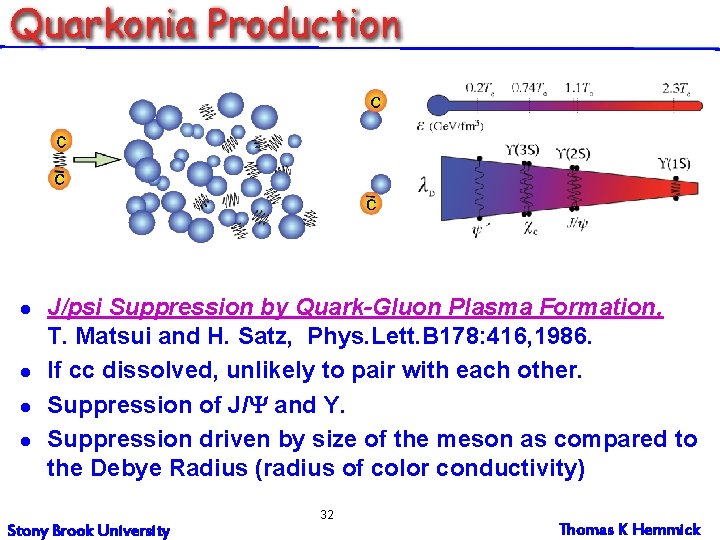
l l J/psi Suppression by Quark-Gluon Plasma Formation, T. Matsui and H. Satz, Phys. Lett. B 178: 416, 1986. If cc dissolved, unlikely to pair with each other. Suppression of J/Y and Y. Suppression driven by size of the meson as compared to the Debye Radius (radius of color conductivity) Stony Brook University 32 Thomas K Hemmick
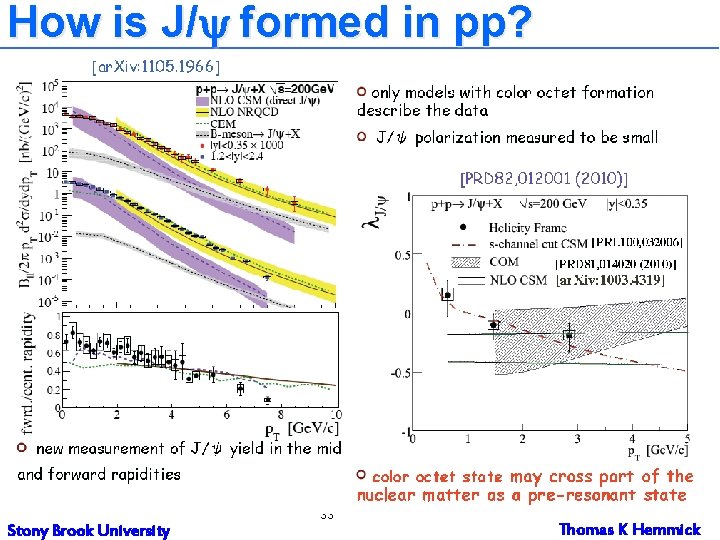
How is J/y formed in pp? Stony Brook University 33 Thomas K Hemmick
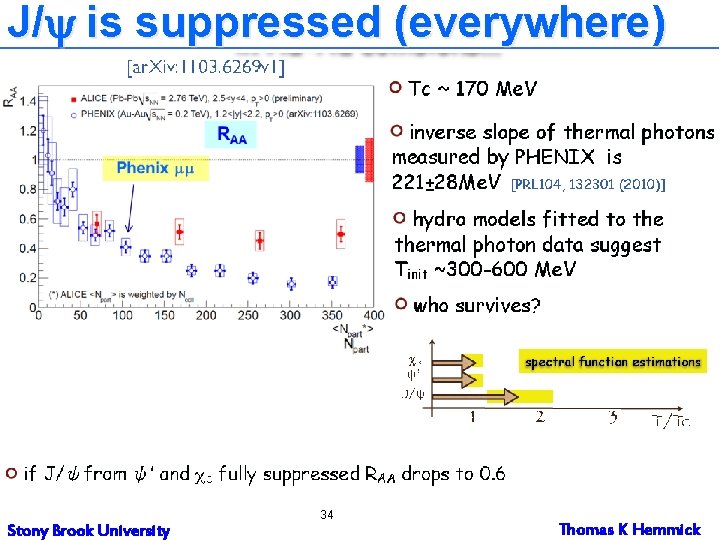
J/y is suppressed (everywhere) Stony Brook University 34 Thomas K Hemmick
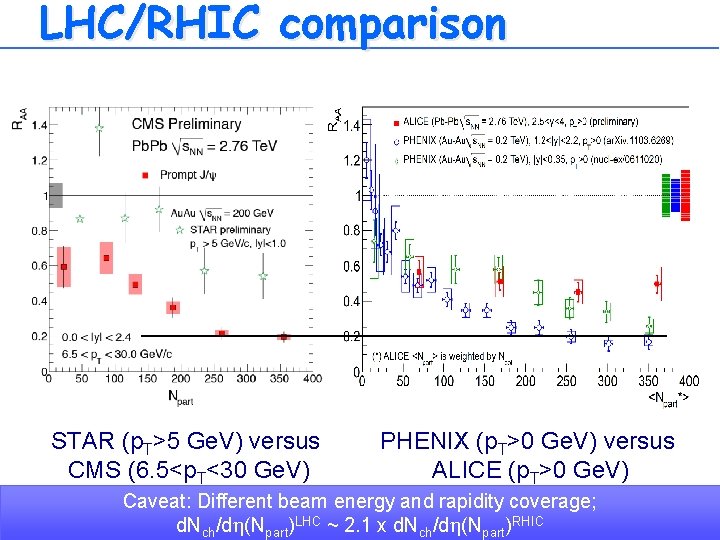
LHC/RHIC comparison STAR (p. T>5 Ge. V) versus CMS (6. 5<p. T<30 Ge. V) PHENIX (p. T>0 Ge. V) versus ALICE (p. T>0 Ge. V) Caveat: Different beam energy and rapidity coverage; 35/~182. 1 x d. N /dh(N )RHIC d. Nch/dh(Npart)LHC ch part
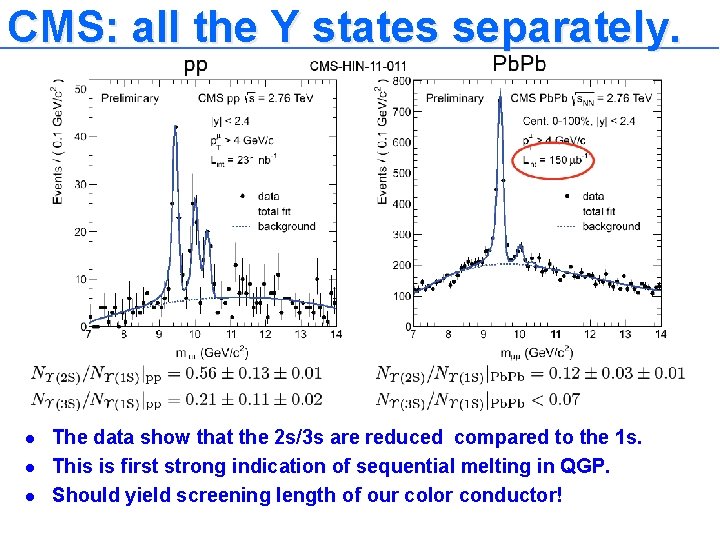
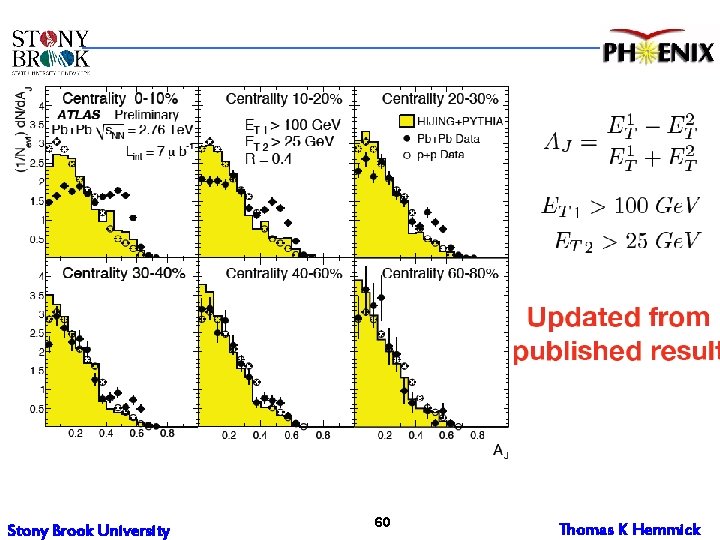
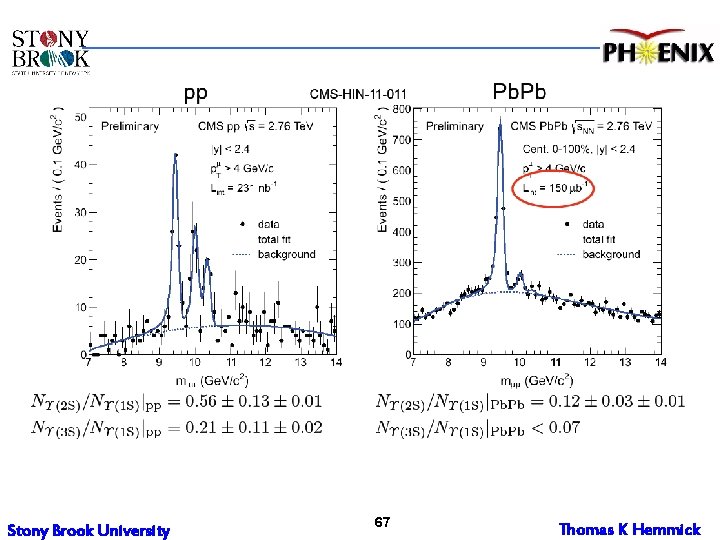
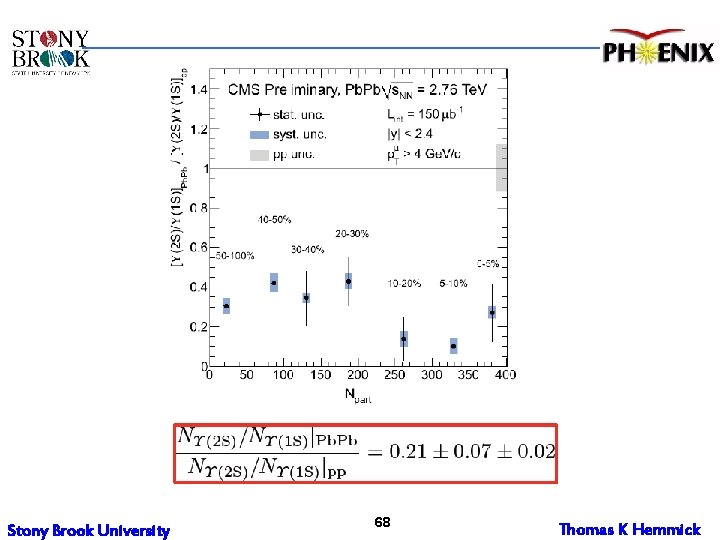
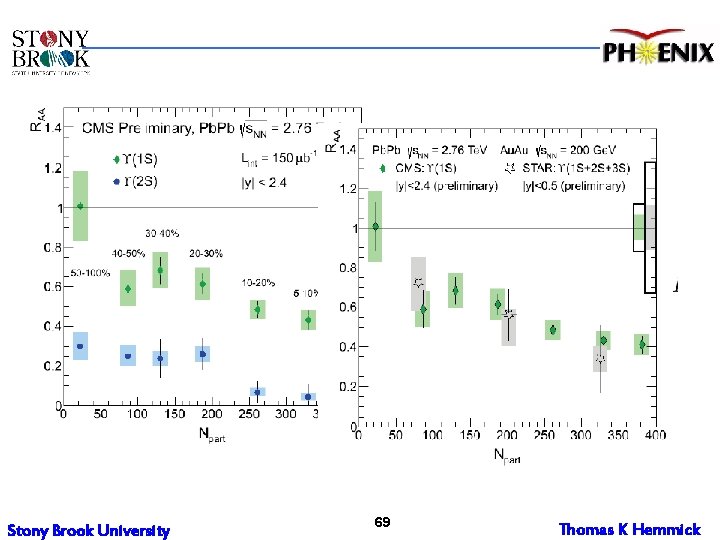
CMS: all the Y states separately. l l l The data show that the 2 s/3 s are reduced compared to the 1 s. This is first strong indication of sequential melting in QGP. Should yield screening length of our color conductor!
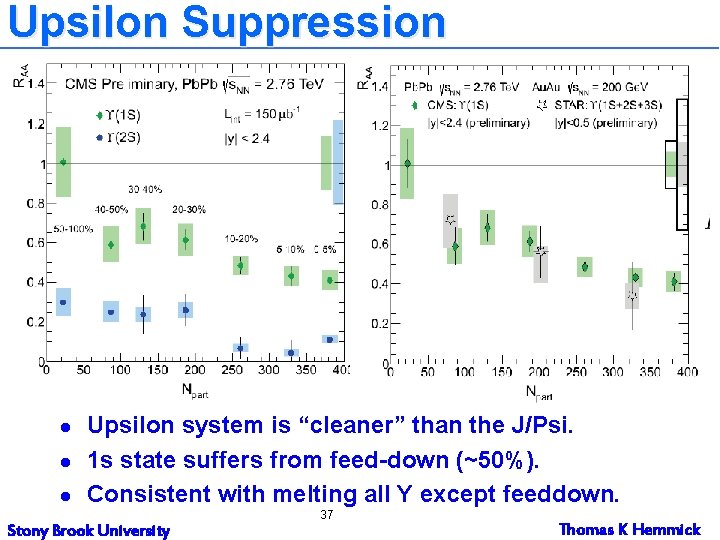
Upsilon Suppression l l l Upsilon system is “cleaner” than the J/Psi. 1 s state suffers from feed-down (~50%). Consistent with melting all Y except feeddown. Stony Brook University 37 Thomas K Hemmick
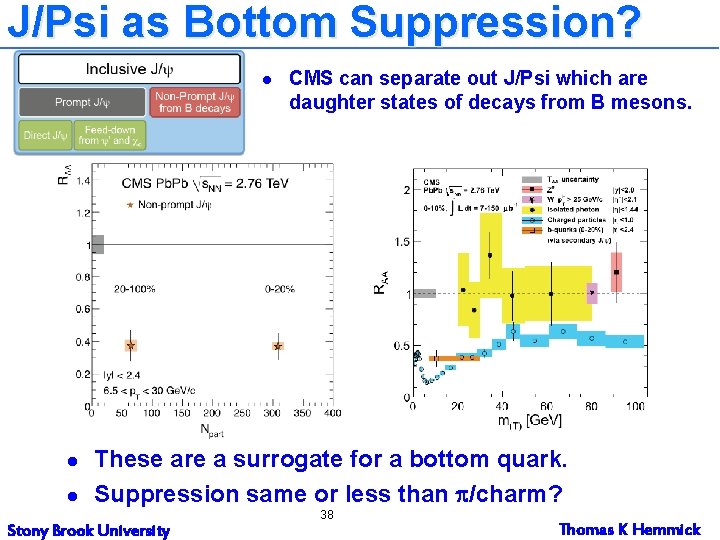
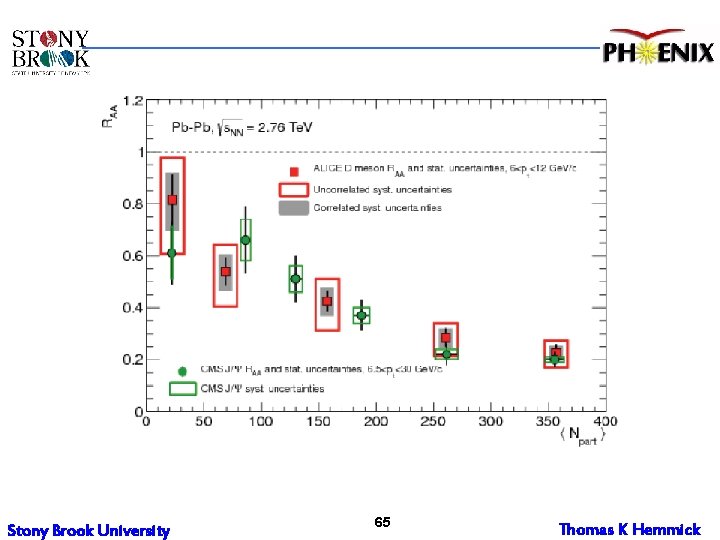
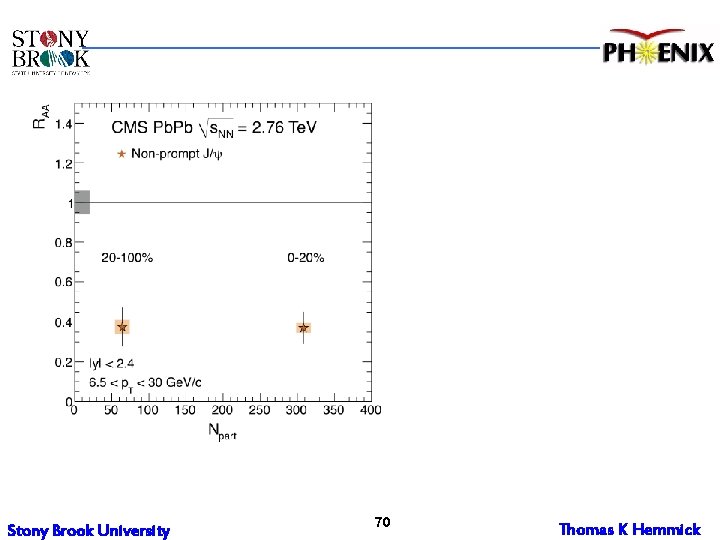
J/Psi as Bottom Suppression? l l l CMS can separate out J/Psi which are daughter states of decays from B mesons. These are a surrogate for a bottom quark. Suppression same or less than p/charm? Stony Brook University 38 Thomas K Hemmick
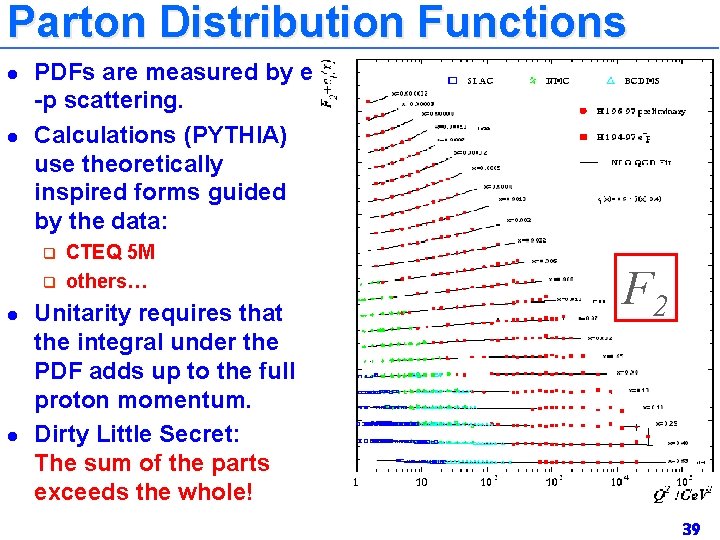
Parton Distribution Functions l l PDFs are measured by e -p scattering. Calculations (PYTHIA) use theoretically inspired forms guided by the data: q q l l CTEQ 5 M others… Unitarity requires that the integral under the PDF adds up to the full proton momentum. Dirty Little Secret: The sum of the parts exceeds the whole! F 2 39
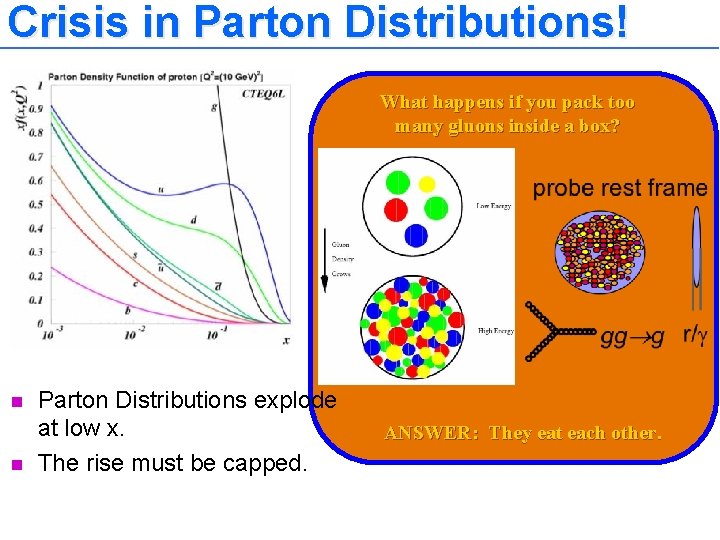
Crisis in Parton Distributions! What happens if you pack too many gluons inside a box? n n Parton Distributions explode at low x. The rise must be capped. 40 ANSWER: They eat each other.
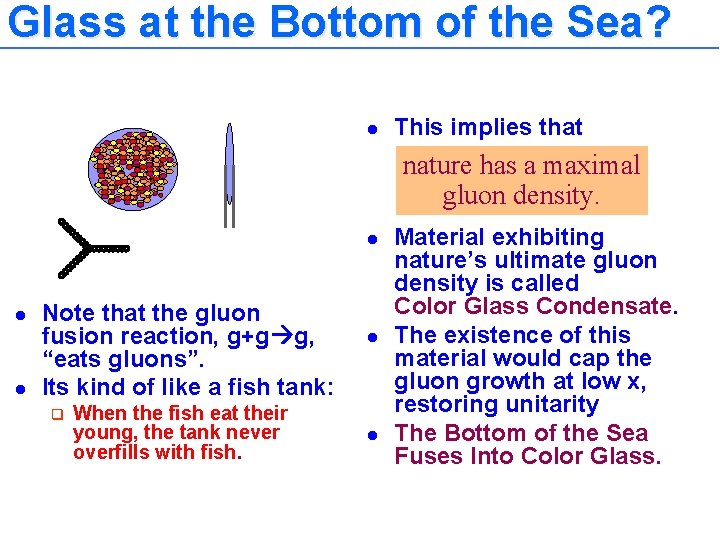
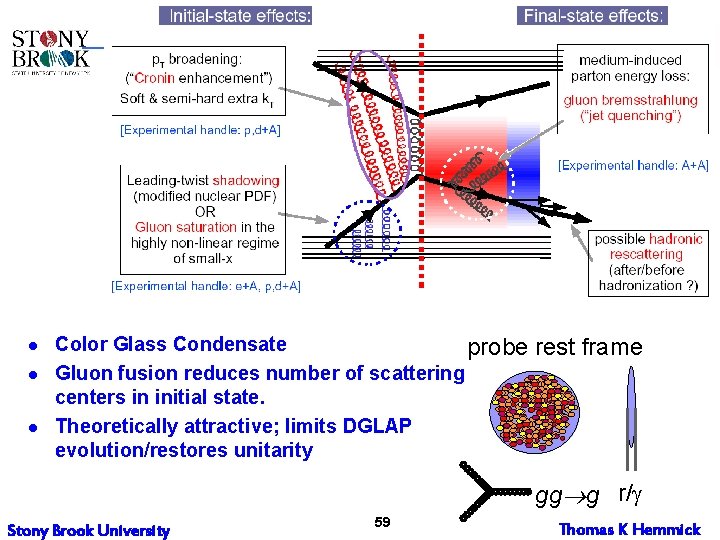
Glass at the Bottom of the Sea? probe rest frame l This implies that nature has a maximal gluon density. gg g r/ l l Note that the gluon fusion reaction, g+g g, “eats gluons”. Its kind of like a fish tank: q When the fish eat their young, the tank never overfills with fish. l l l Material exhibiting nature’s ultimate gluon density is called Color Glass Condensate. The existence of this material would cap the gluon growth at low x, restoring unitarity The Bottom of the Sea Fuses Into Color Glass.
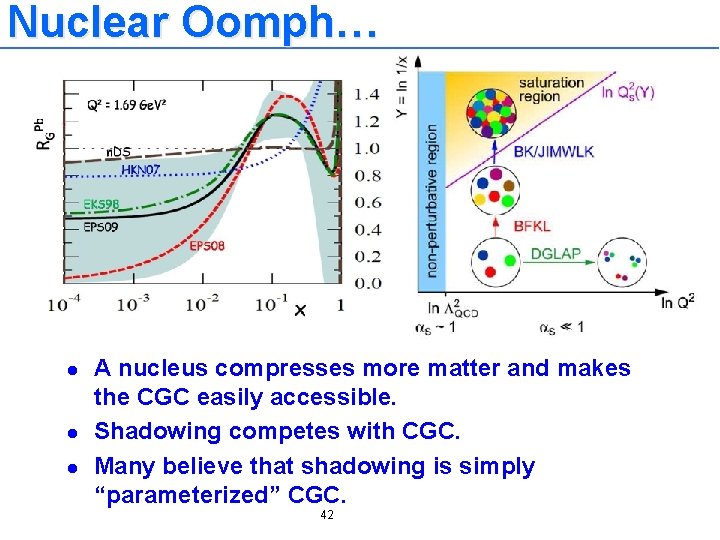
Nuclear Oomph… l l l A nucleus compresses more matter and makes the CGC easily accessible. Shadowing competes with CGC. Many believe that shadowing is simply “parameterized” CGC. 42
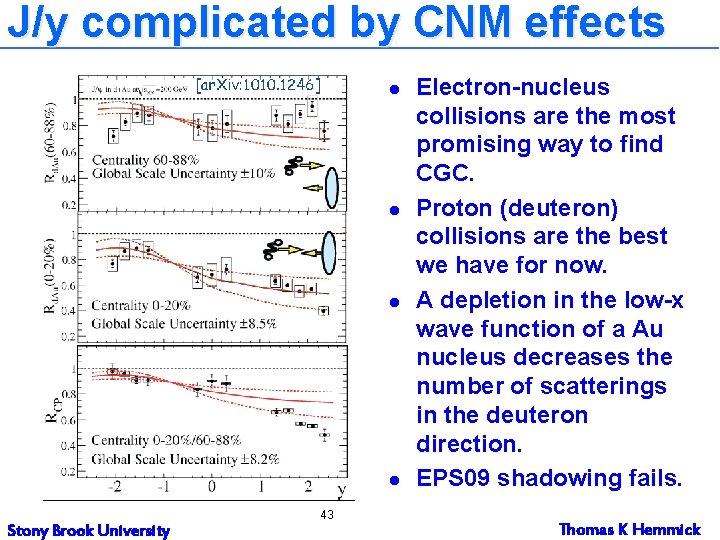
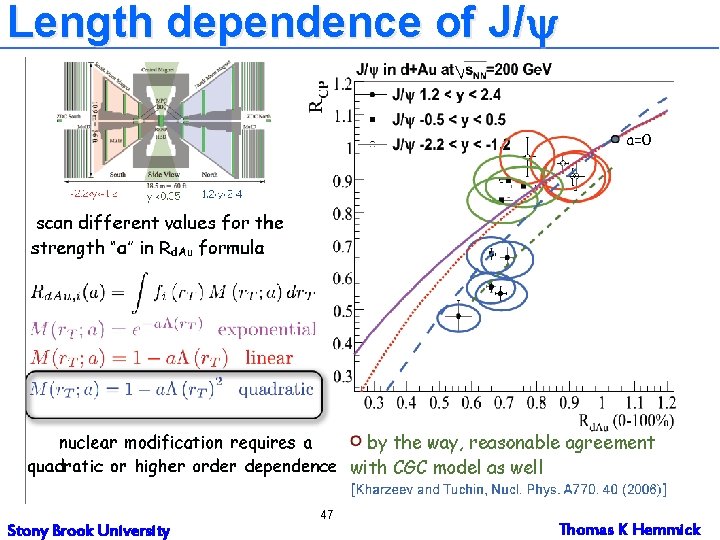
J/y complicated by CNM effects l l Stony Brook University 43 Electron-nucleus collisions are the most promising way to find CGC. Proton (deuteron) collisions are the best we have for now. A depletion in the low-x wave function of a Au nucleus decreases the number of scatterings in the deuteron direction. EPS 09 shadowing fails. Thomas K Hemmick
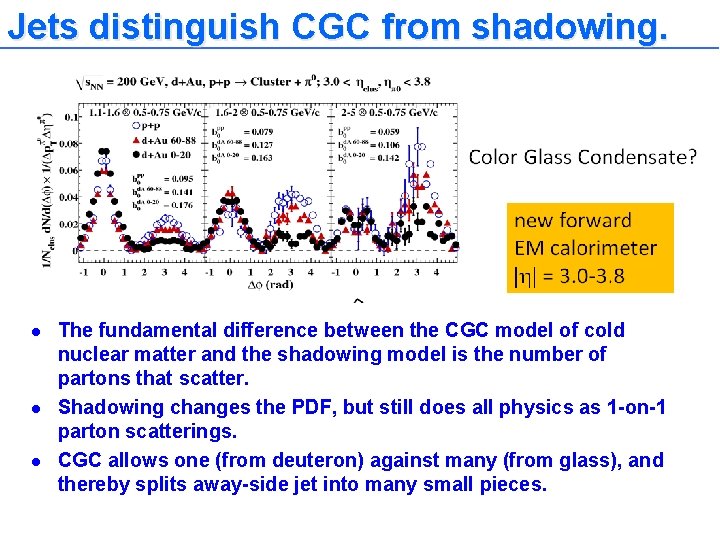
Jets distinguish CGC from shadowing. l l l The fundamental difference between the CGC model of cold nuclear matter and the shadowing model is the number of partons that scatter. Shadowing changes the PDF, but still does all physics as 1 -on-1 parton scatterings. CGC allows one (from deuteron) against many (from glass), and thereby splits away-side jet into many small pieces.
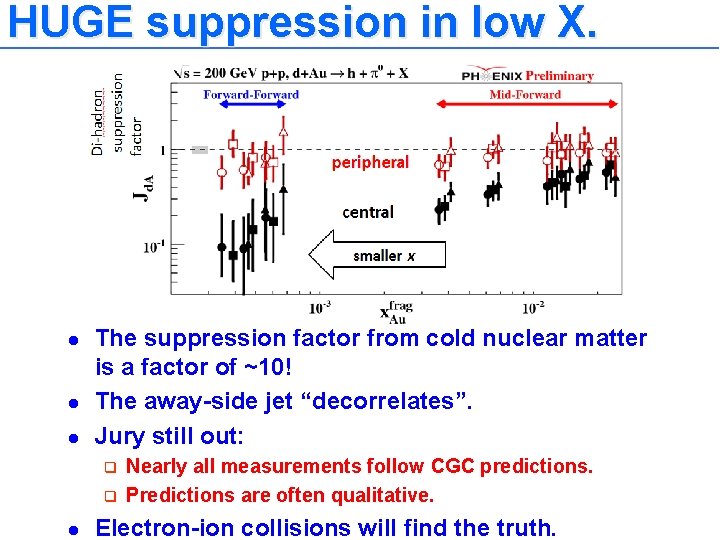
HUGE suppression in low X. l l l The suppression factor from cold nuclear matter is a factor of ~10! The away-side jet “decorrelates”. Jury still out: q q l Nearly all measurements follow CGC predictions. Predictions are often qualitative. Electron-ion collisions will find the truth.
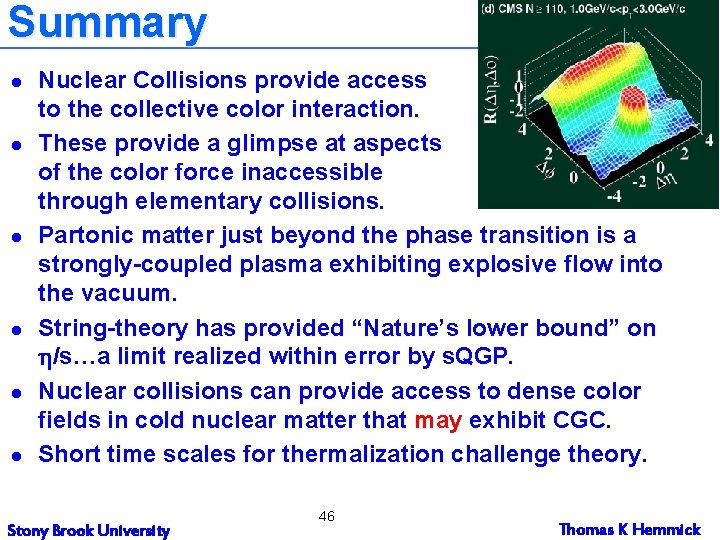
Summary l l l Nuclear Collisions provide access to the collective color interaction. These provide a glimpse at aspects of the color force inaccessible through elementary collisions. Partonic matter just beyond the phase transition is a strongly-coupled plasma exhibiting explosive flow into the vacuum. String-theory has provided “Nature’s lower bound” on h/s…a limit realized within error by s. QGP. Nuclear collisions can provide access to dense color fields in cold nuclear matter that may exhibit CGC. Short time scales for thermalization challenge theory. Stony Brook University 46 Thomas K Hemmick
Length dependence of J/y Stony Brook University 47 Thomas K Hemmick
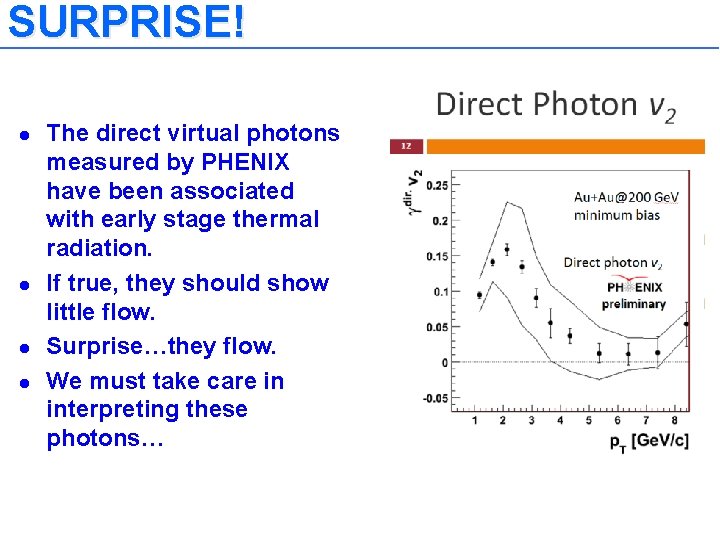
SURPRISE! l l The direct virtual photons measured by PHENIX have been associated with early stage thermal radiation. If true, they should show little flow. Surprise…they flow. We must take care in interpreting these photons…
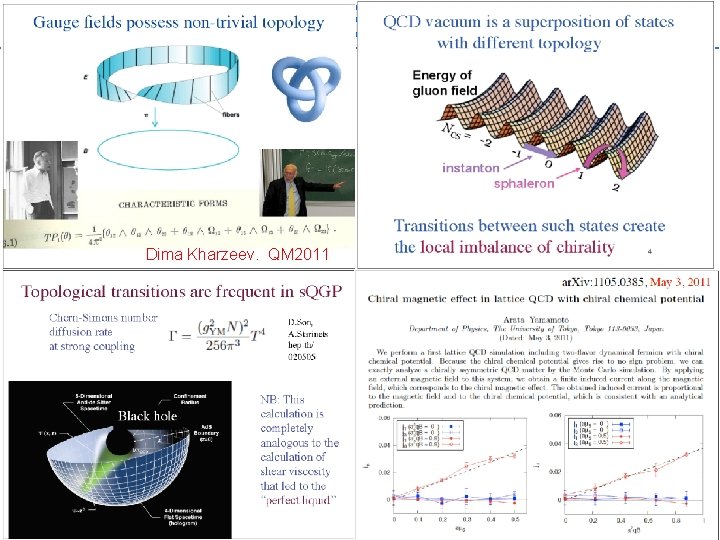
Chiral Magnetic Effect Dima Kharzeev. QM 2011 Stony Brook University 49 Thomas K Hemmick
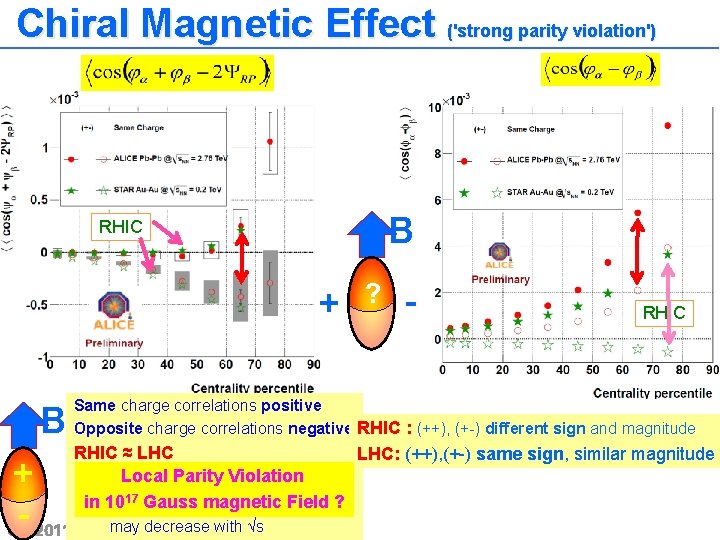
Chiral Magnetic Effect ('strong parity violation') B RHIC + B ? - RHIC Same charge correlations positive Opposite charge correlations negative RHIC : (++), (+-) different sign and magnitude RHIC ≈ LHC: (++), (+-) same sign, similar magnitude Local Parity Violation somewhat unexpected 17 Gauss magnetic Field ? in 10 should decrease with Nch + may decrease with √s QM 2011 J. Schukraft 50
Backup Slides Stony Brook University 51 Thomas K Hemmick
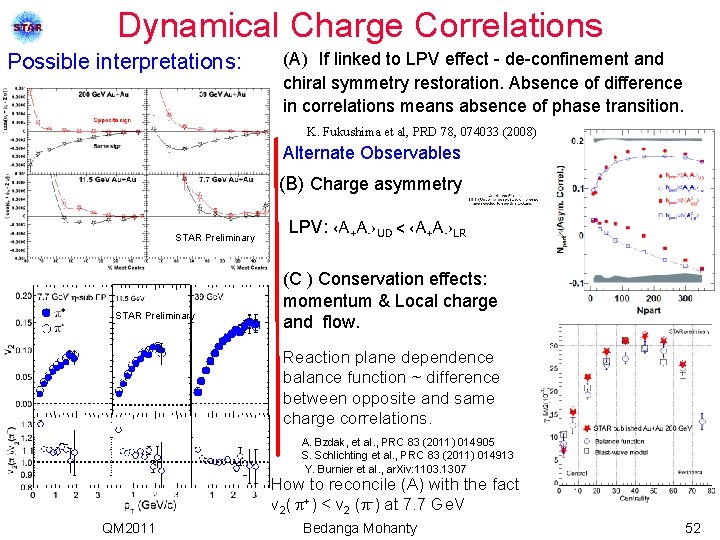
Dynamical Charge Correlations Possible interpretations: (A) If linked to LPV effect - de-confinement and chiral symmetry restoration. Absence of difference in correlations means absence of phase transition. K. Fukushima et al, PRD 78, 074033 (2008) Alternate Observables (B) Charge asymmetry STAR Preliminary LPV: ‹A+A-›UD < ‹A+A-›LR (C ) Conservation effects: momentum & Local charge and flow. Reaction plane dependence balance function ~ difference between opposite and same charge correlations. A. Bzdak, et al. , PRC 83 (2011) 014905 S. Schlichting et al. , PRC 83 (2011) 014913 Y. Burnier et al. , ar. Xiv: 1103. 1307 How to reconcile (A) with the fact v 2( +) < v 2 ( -) at 7. 7 Ge. V QM 2011 Bedanga Mohanty 52
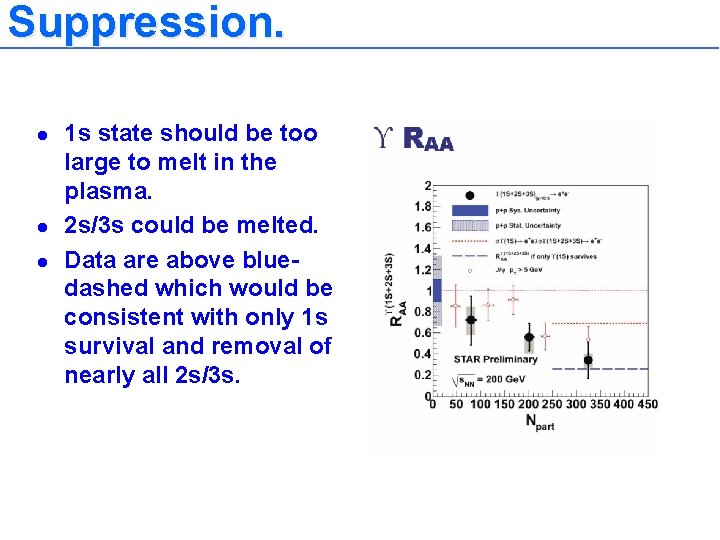
Suppression. l l l 1 s state should be too large to melt in the plasma. 2 s/3 s could be melted. Data are above bluedashed which would be consistent with only 1 s survival and removal of nearly all 2 s/3 s.
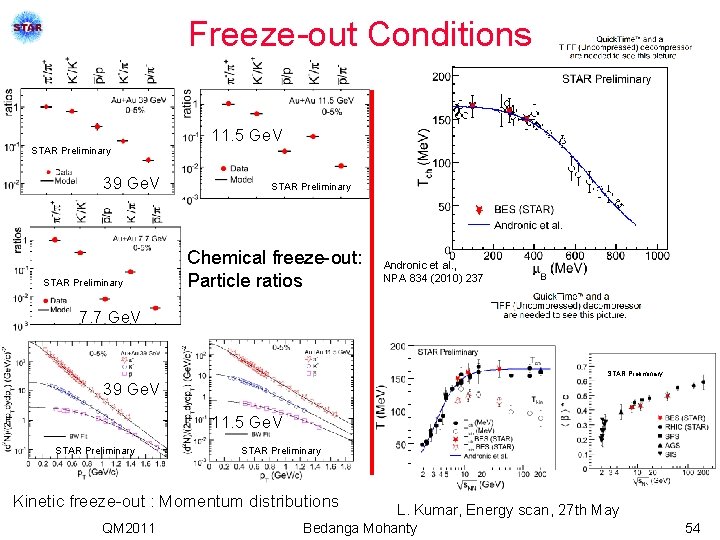
Freeze-out Conditions 11. 5 Ge. V STAR Preliminary 39 Ge. V STAR Preliminary Chemical freeze-out: Particle ratios Andronic et al. , NPA 834 (2010) 237 7. 7 Ge. V STAR Preliminary 39 Ge. V 11. 5 Ge. V STAR Preliminary Kinetic freeze-out : Momentum distributions QM 2011 L. Kumar, Energy scan, 27 th May Bedanga Mohanty 54
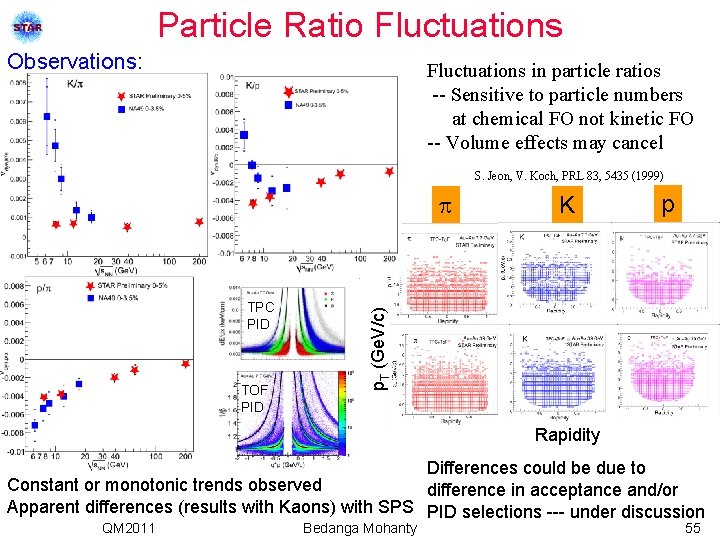
Particle Ratio Fluctuations Observations: Fluctuations in particle ratios -- Sensitive to particle numbers at chemical FO not kinetic FO -- Volume effects may cancel S. Jeon, V. Koch, PRL 83, 5435 (1999) TPC PID TOF PID K p p. T (Ge. V/c) Rapidity Differences could be due to Constant or monotonic trends observed difference in acceptance and/or Apparent differences (results with Kaons) with SPS PID selections --- under discussion QM 2011 Bedanga Mohanty 55
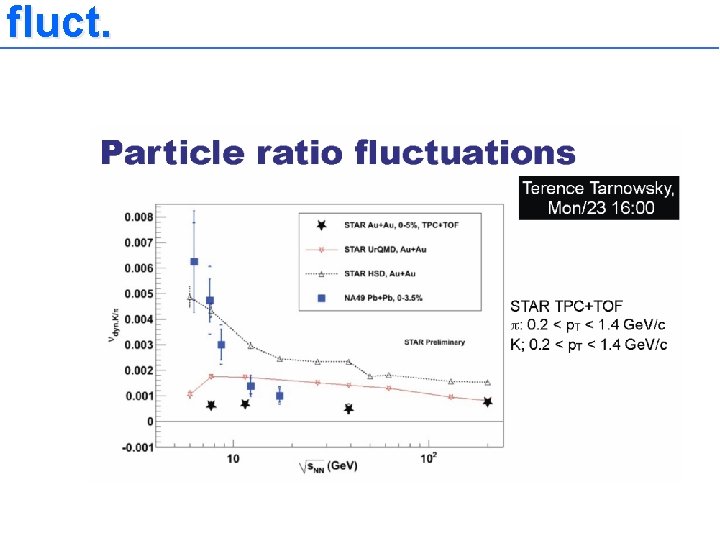
fluct.
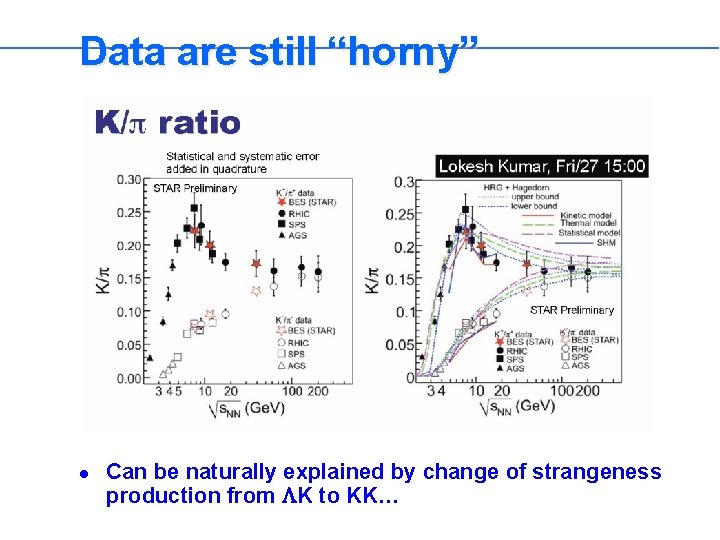
Data are still “horny” l Can be naturally explained by change of strangeness production from LK to KK…
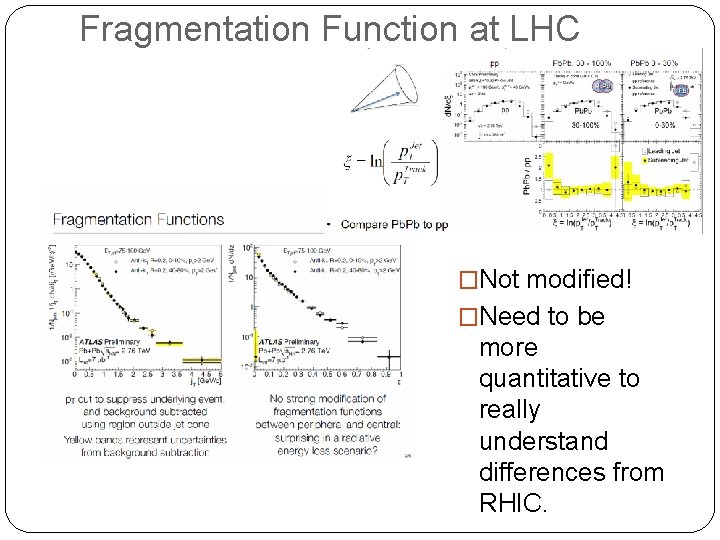
Fragmentation Function at LHC �Not modified! �Need to be more quantitative to really understand differences from RHIC.
l l l Color Glass Condensate probe Gluon fusion reduces number of scattering centers in initial state. Theoretically attractive; limits DGLAP evolution/restores unitarity rest frame gg g r/ Stony Brook University 59 Thomas K Hemmick
Stony Brook University 60 Thomas K Hemmick
Stony Brook University 61 Thomas K Hemmick
Stony Brook University 62 Thomas K Hemmick
Stony Brook University 63 Thomas K Hemmick
Stony Brook University 64 Thomas K Hemmick
Stony Brook University 65 Thomas K Hemmick
Stony Brook University 66 Thomas K Hemmick
Stony Brook University 67 Thomas K Hemmick
Stony Brook University 68 Thomas K Hemmick
Stony Brook University 69 Thomas K Hemmick
Stony Brook University 70 Thomas K Hemmick