Percentage Expressing a Change Calculator Worksheet A In
- Slides: 18
Percentage – Expressing a Change – Calculator – Worksheet A In this activity students in pairs/groups compete to accurately estimate a percentage change before calculating it. There are 3 types of worksheet in 3 sizes.
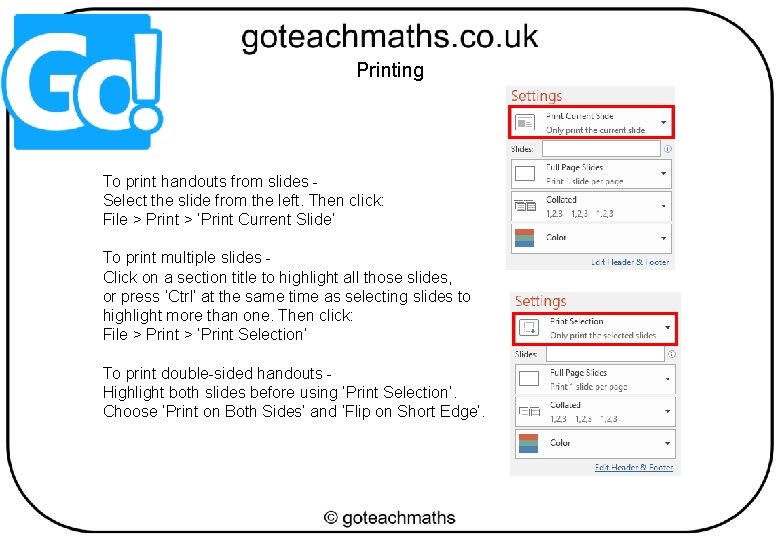
Printing To print handouts from slides Select the slide from the left. Then click: File > Print > ‘Print Current Slide’ To print multiple slides Click on a section title to highlight all those slides, or press ‘Ctrl’ at the same time as selecting slides to highlight more than one. Then click: File > Print > ‘Print Selection’ To print double-sided handouts Highlight both slides before using ‘Print Selection’. Choose ‘Print on Both Sides’ and ‘Flip on Short Edge’.
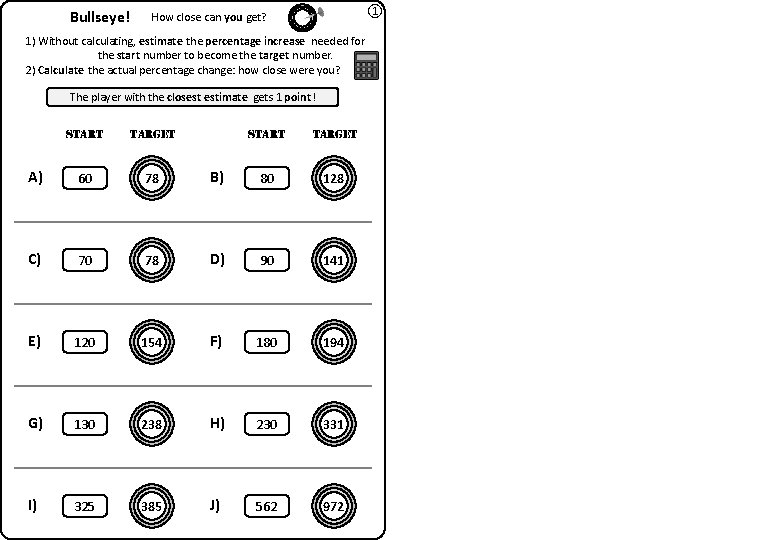
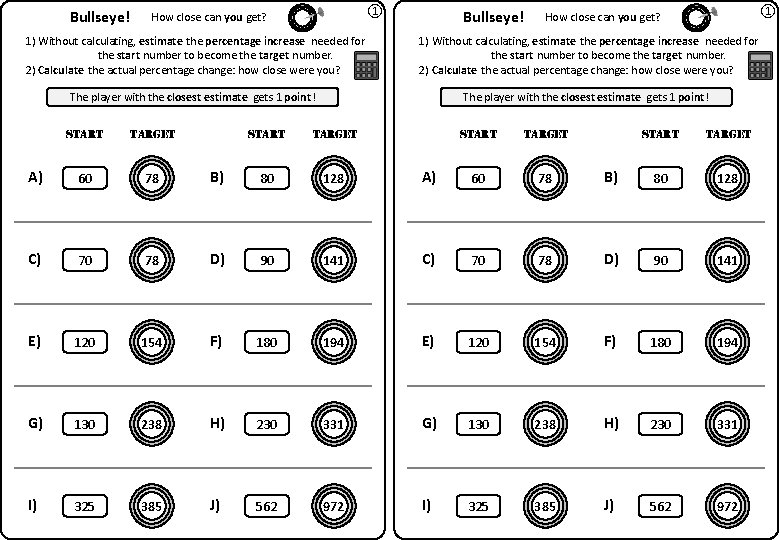
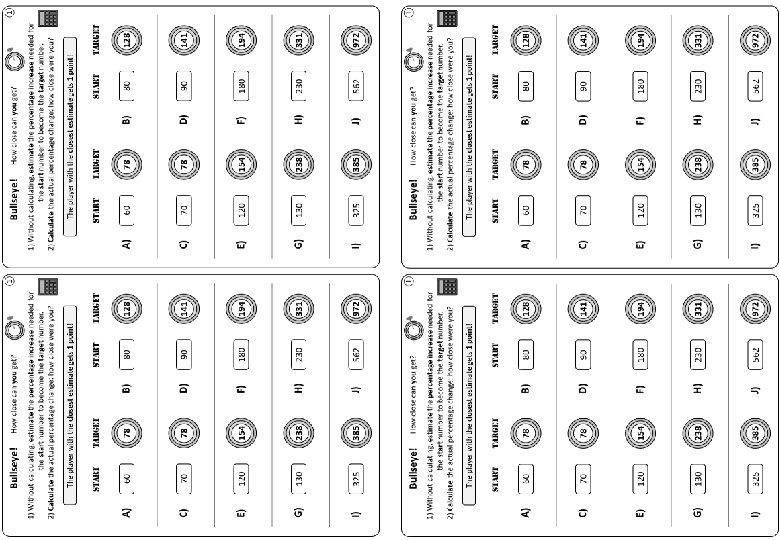
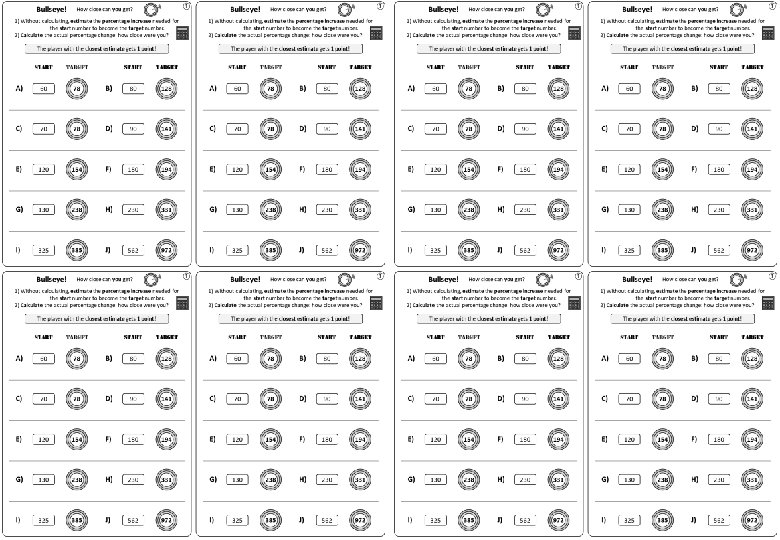
Bullseye! ① How close can you get? 1) Without calculating, estimate the percentage increase needed for the start number to become the target number. 2) Calculate the actual percentage change: how close were you? The player with the closest estimate gets 1 point! Start target A) 60 78 B) 80 128 C) 70 78 D) 90 141 E) 120 154 F) 180 194 G) 130 238 H) 230 331 I) 325 385 J) 562 972
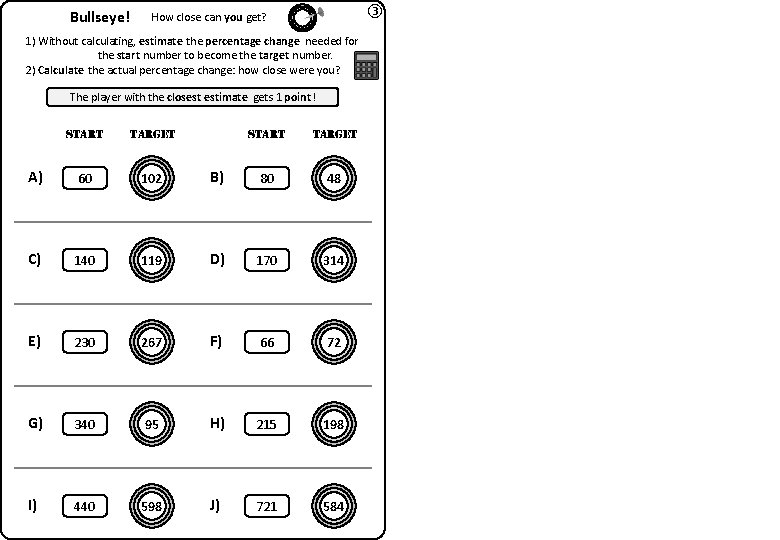
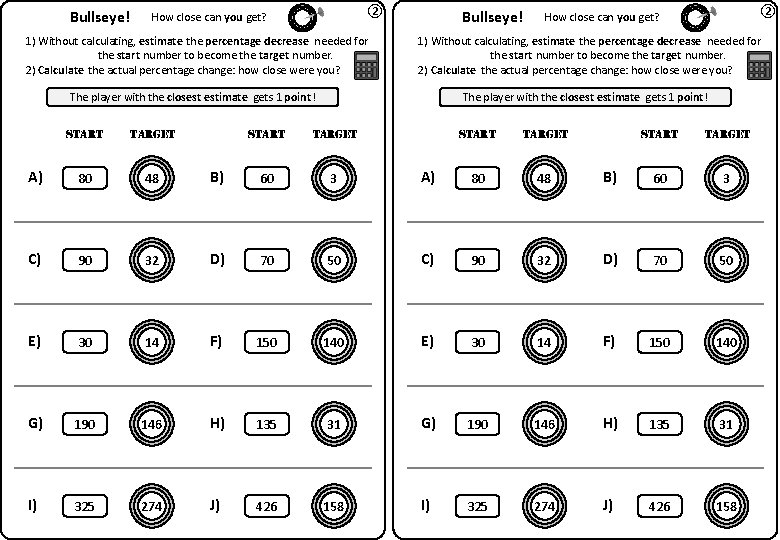
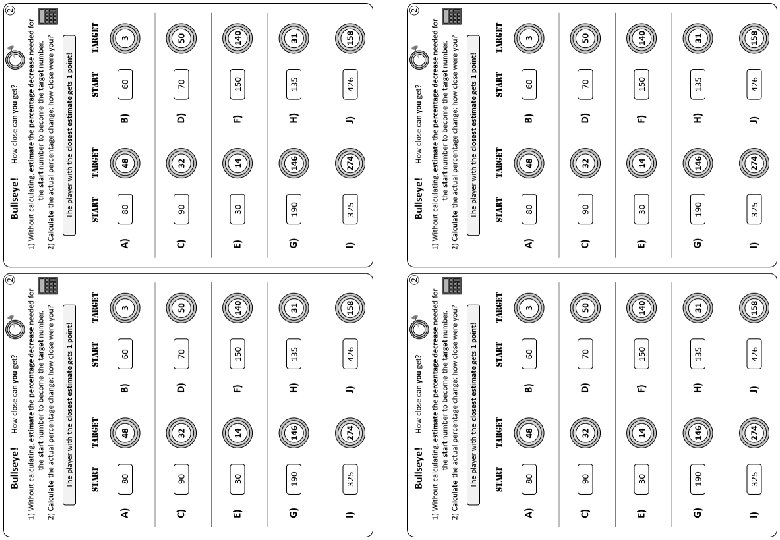
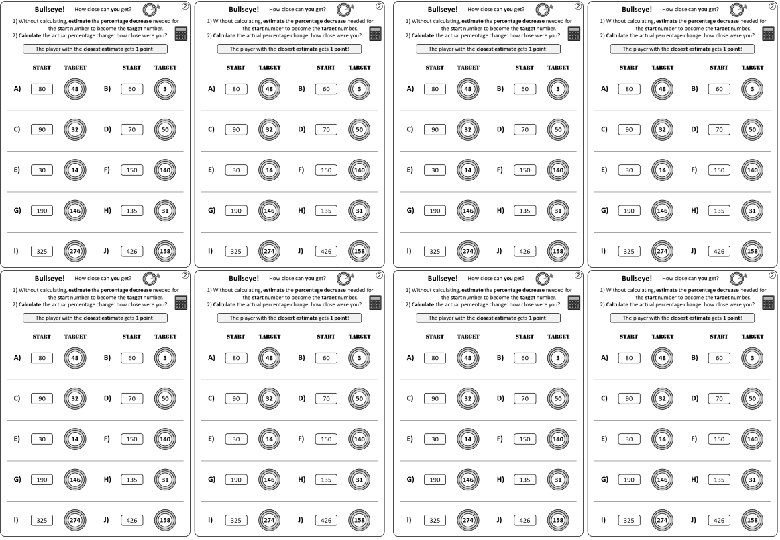
Bullseye! ② How close can you get? 1) Without calculating, estimate the percentage decrease needed for the start number to become the target number. 2) Calculate the actual percentage change: how close were you? The player with the closest estimate gets 1 point! Start target A) 80 48 B) 60 3 C) 90 32 D) 70 50 E) 30 14 F) 150 140 G) 190 146 H) 135 31 I) 325 274 J) 426 158
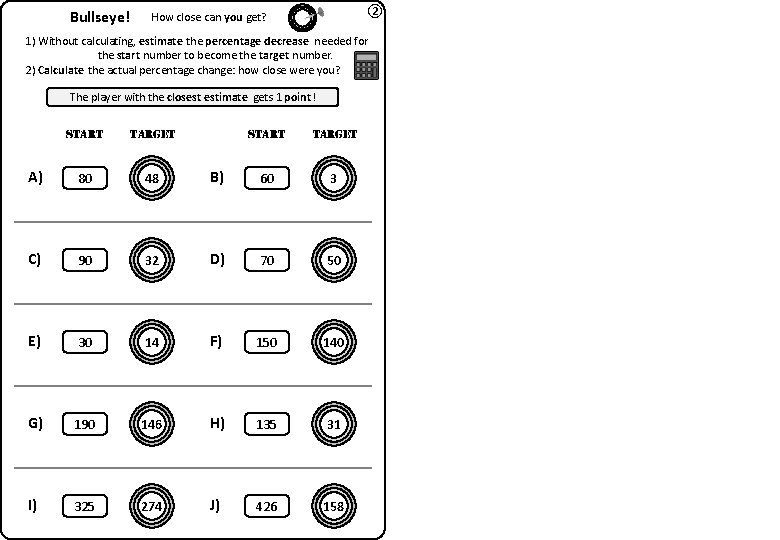
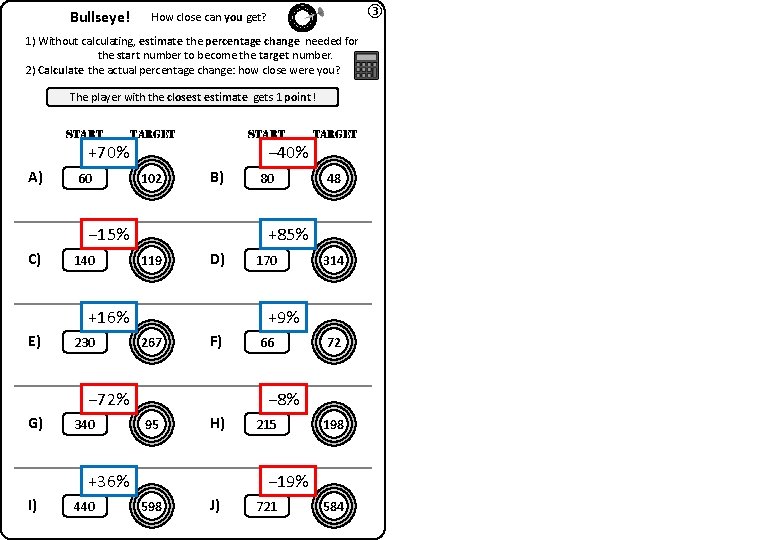
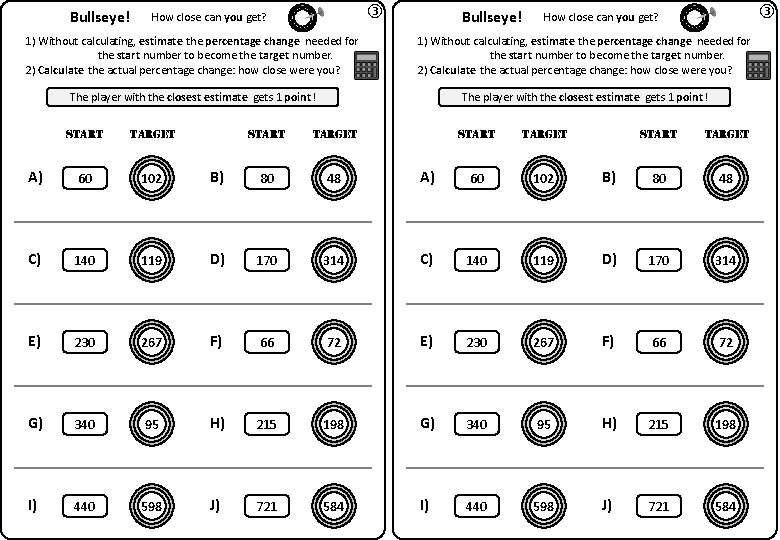
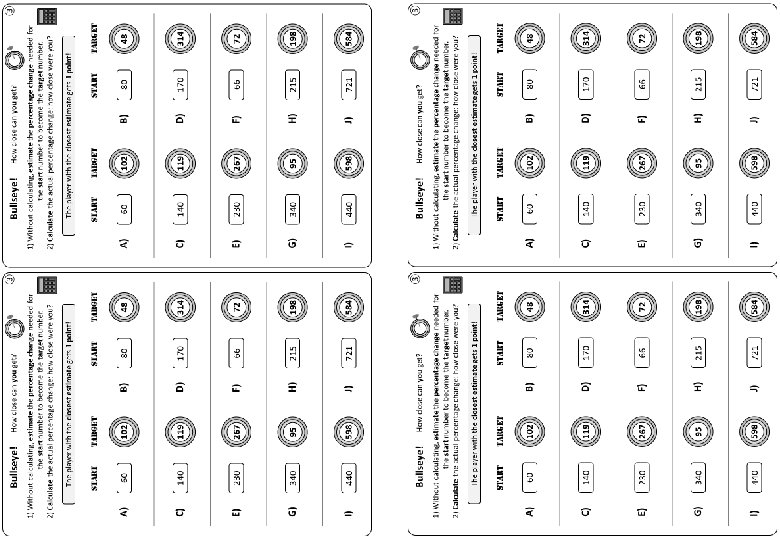
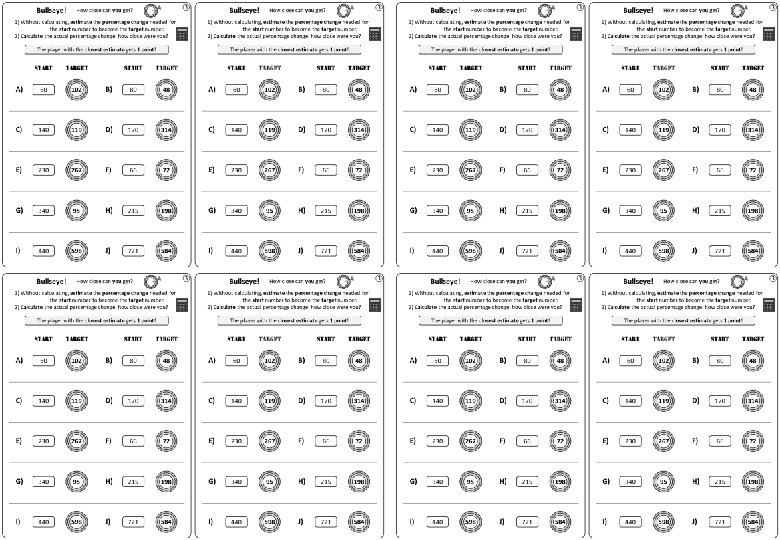
Bullseye! ③ How close can you get? 1) Without calculating, estimate the percentage change needed for the start number to become the target number. 2) Calculate the actual percentage change: how close were you? The player with the closest estimate gets 1 point! Start target A) 60 102 B) 80 48 C) 140 119 D) 170 314 E) 230 267 F) 66 72 G) 340 95 H) 215 198 I) 440 598 J) 721 584
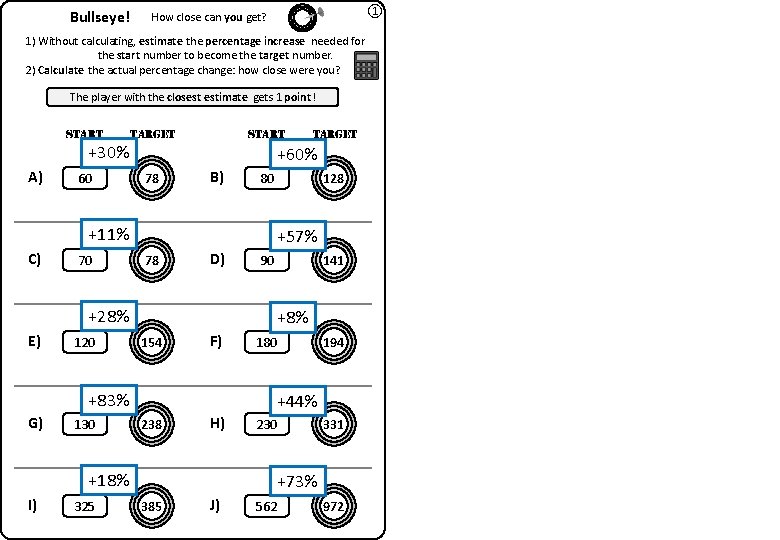
Bullseye! ① How close can you get? 1) Without calculating, estimate the percentage increase needed for the start number to become the target number. 2) Calculate the actual percentage change: how close were you? The player with the closest estimate gets 1 point! Start target Start +30% A) 60 +60% 78 B) 70 +57% 78 D) +28% E) 120 130 154 F) 325 180 194 +44% 238 H) +18% I) 141 90 +8% +83% G) 128 80 +11% C) target 230 331 +73% 385 J) 562 972
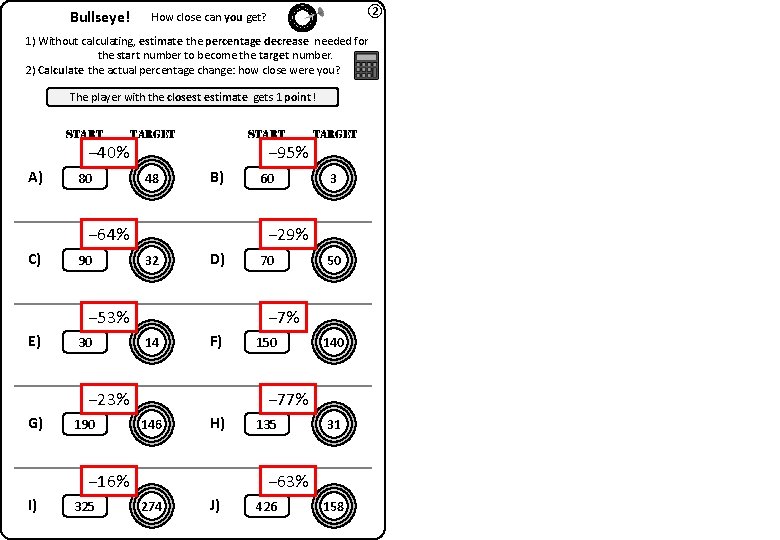
Bullseye! ② How close can you get? 1) Without calculating, estimate the percentage decrease needed for the start number to become the target number. 2) Calculate the actual percentage change: how close were you? The player with the closest estimate gets 1 point! Start target Start − 40% A) 80 − 95% 48 B) − 64% C) 90 30 32 D) 190 14 F) 325 70 50 140 − 77% 146 H) − 16% I) 3 − 7% − 23% G) 60 − 29% − 53% E) target 135 31 − 63% 274 J) 426 158
Bullseye! ③ How close can you get? 1) Without calculating, estimate the percentage change needed for the start number to become the target number. 2) Calculate the actual percentage change: how close were you? The player with the closest estimate gets 1 point! Start target Start +70% A) 60 − 40% 102 B) − 15% C) 140 230 119 D) 340 267 F) 440 170 314 66 72 − 8% 95 H) +36% I) 48 +9% − 72% G) 80 +85% +16% E) target 215 198 − 19% 598 J) 721 584
Bullseye! ① How close can you get? 1) Without calculating, estimate the percentage increase needed for the start number to become the target number. 2) Calculate the actual percentage change: how close were you? The player with the closest estimate gets 1 point! Start target A) 60 78 C) 70 E) Start target B) 80 128 A) 60 78 B) 80 128 78 D) 90 141 C) 70 78 D) 90 141 120 154 F) 180 194 E) 120 154 F) 180 194 G) 130 238 H) 230 331 I) 325 385 J) 562 972
Bullseye! ② How close can you get? 1) Without calculating, estimate the percentage decrease needed for the start number to become the target number. 2) Calculate the actual percentage change: how close were you? The player with the closest estimate gets 1 point! Start target A) 80 48 C) 90 E) Start target B) 60 3 A) 80 48 B) 60 3 32 D) 70 50 C) 90 32 D) 70 50 30 14 F) 150 140 E) 30 14 F) 150 140 G) 190 146 H) 135 31 I) 325 274 J) 426 158
Bullseye! ③ How close can you get? 1) Without calculating, estimate the percentage change needed for the start number to become the target number. 2) Calculate the actual percentage change: how close were you? The player with the closest estimate gets 1 point! Start target A) 60 102 C) 140 E) Start target B) 80 48 A) 60 102 B) 80 48 119 D) 170 314 C) 140 119 D) 170 314 230 267 F) 66 72 E) 230 267 F) 66 72 G) 340 95 H) 215 198 I) 440 598 J) 721 584
Questions? Comments? Suggestions? …or have you found a mistake!? Any feedback would be appreciated . Please feel free to email: tom@goteachmaths. co. uk