
Introduction Books Articles Online Resources Course Web Site

Introduction Books, Articles & Online Resources Course Web Site
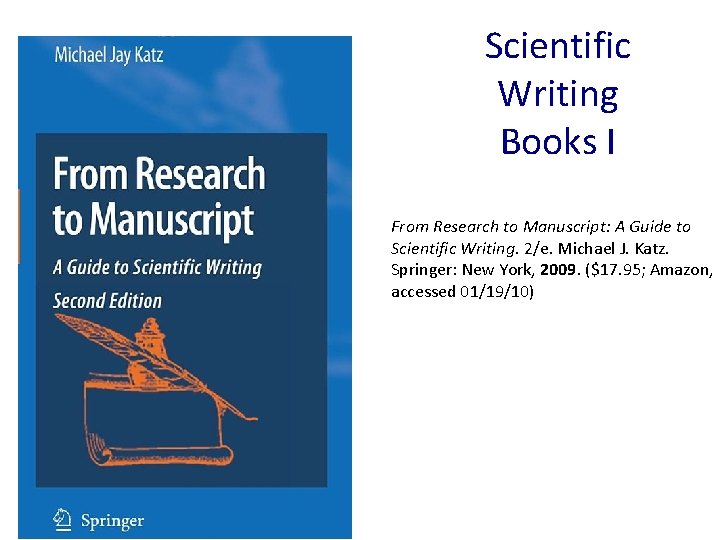
Scientific Writing Books I From Research to Manuscript: A Guide to Scientific Writing. 2/e. Michael J. Katz. Springer: New York, 2009. ($17. 95; Amazon, accessed 01/19/10)
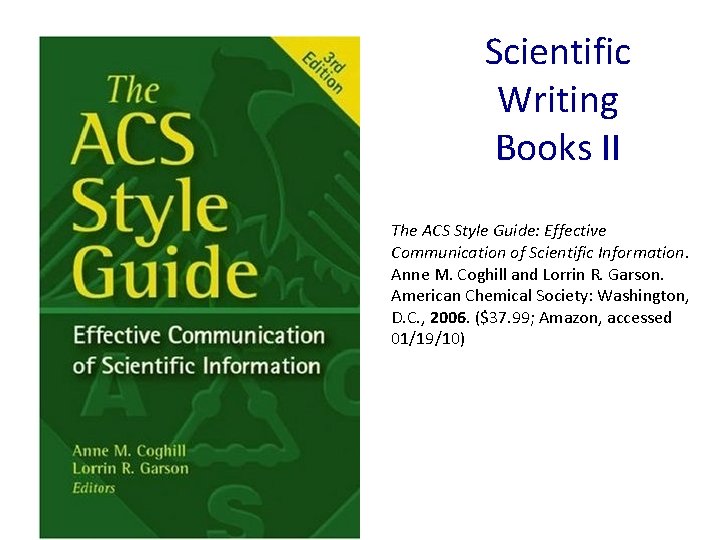
Scientific Writing Books II The ACS Style Guide: Effective Communication of Scientific Information. Anne M. Coghill and Lorrin R. Garson. American Chemical Society: Washington, D. C. , 2006. ($37. 99; Amazon, accessed 01/19/10)
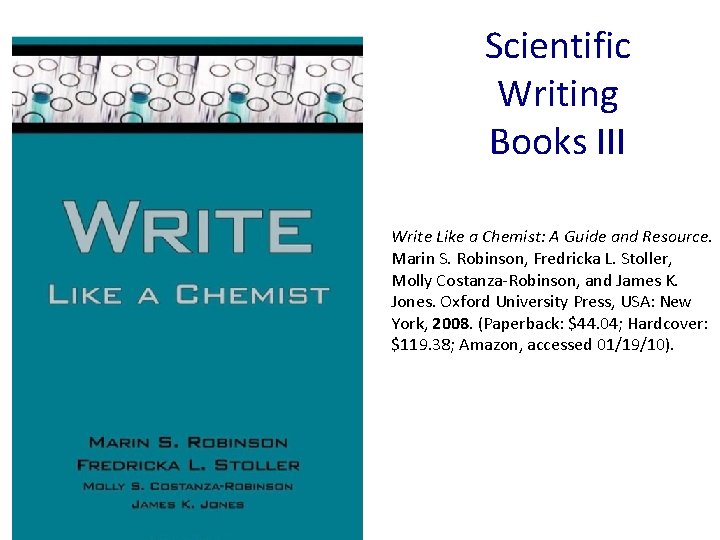
Scientific Writing Books III Write Like a Chemist: A Guide and Resource. Marin S. Robinson, Fredricka L. Stoller, Molly Costanza-Robinson, and James K. Jones. Oxford University Press, USA: New York, 2008. (Paperback: $44. 04; Hardcover: $119. 38; Amazon, accessed 01/19/10).
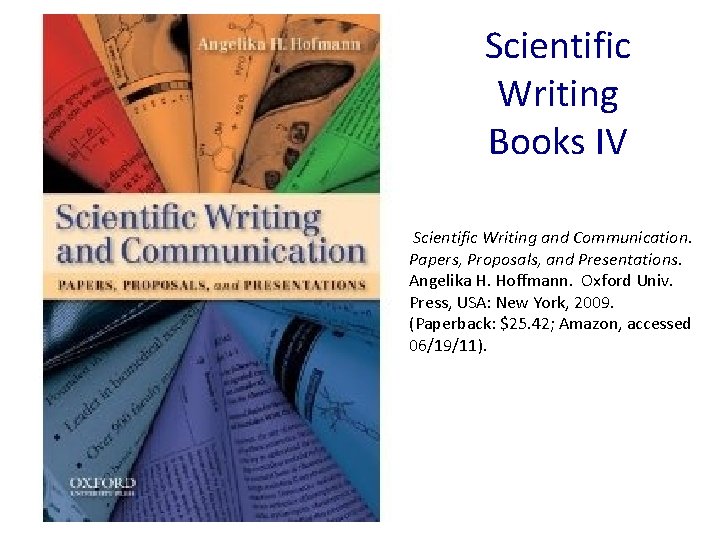
Scientific Writing Books IV Scientific Writing and Communication. Papers, Proposals, and Presentations. Angelika H. Hoffmann. Oxford Univ. Press, USA: New York, 2009. (Paperback: $25. 42; Amazon, accessed 06/19/11).
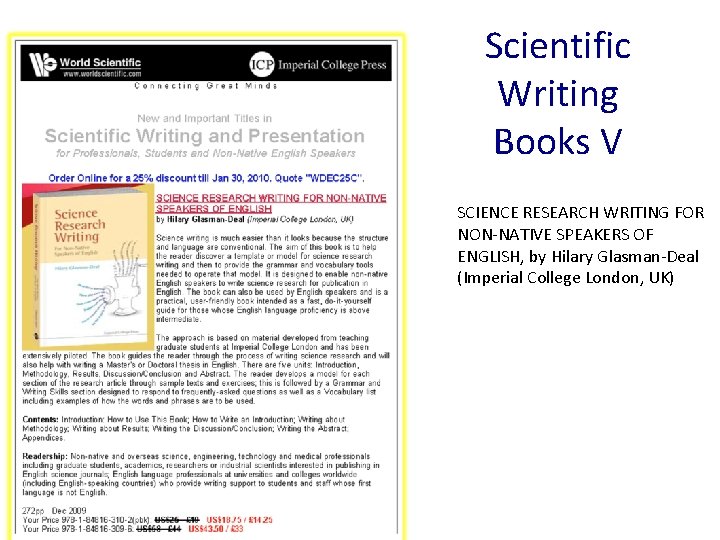
Scientific Writing Books V SCIENCE RESEARCH WRITING FOR NON-NATIVE SPEAKERS OF ENGLISH, by Hilary Glasman-Deal (Imperial College London, UK)
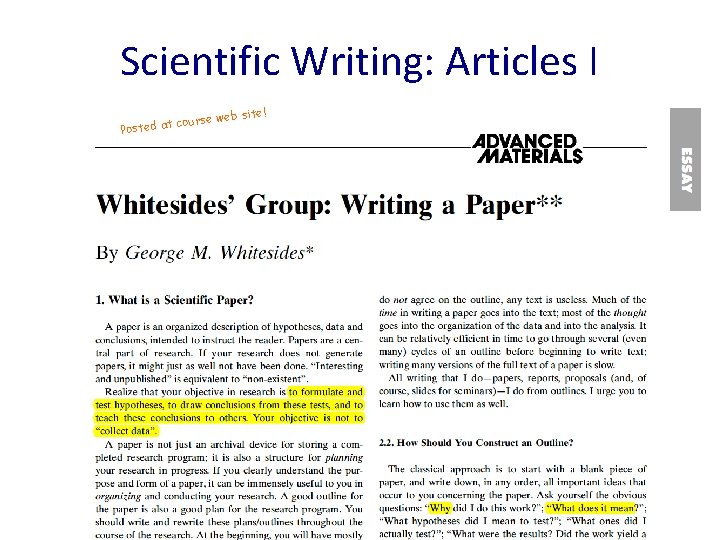
Scientific Writing: Articles I urse web co Posted at site!
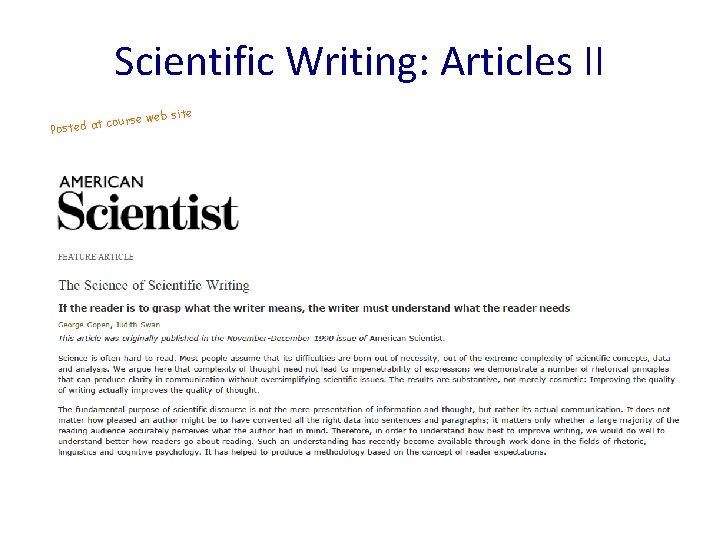
Scientific Writing: Articles II urse web co Posted at site
Chapter 1 Mind-Mapping & Outlining Science’s Standard Sequence (SSS)
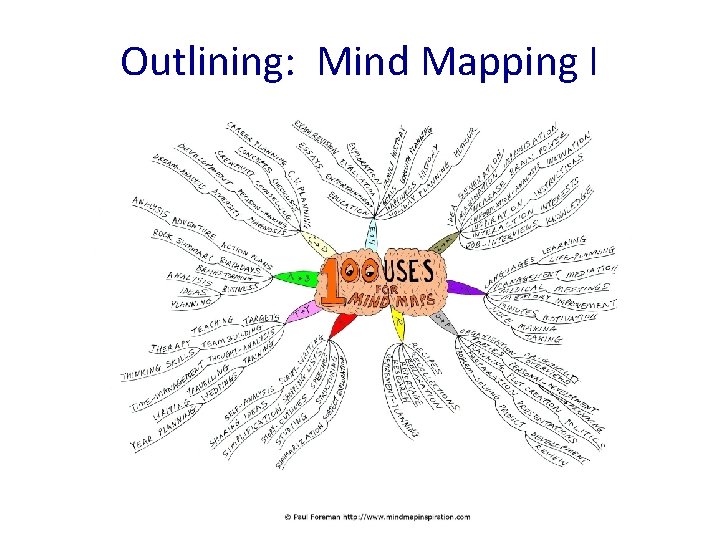
Outlining: Mind Mapping I
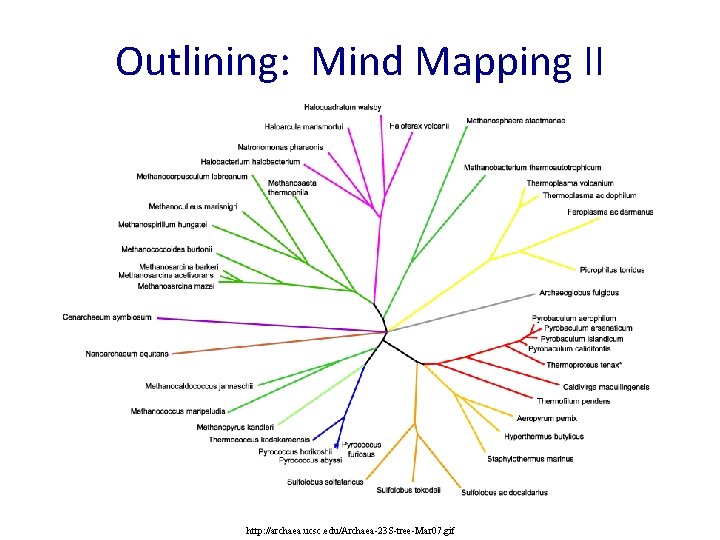
Outlining: Mind Mapping II http: //archaea. ucsc. edu/Archaea-23 S-tree-Mar 07. gif
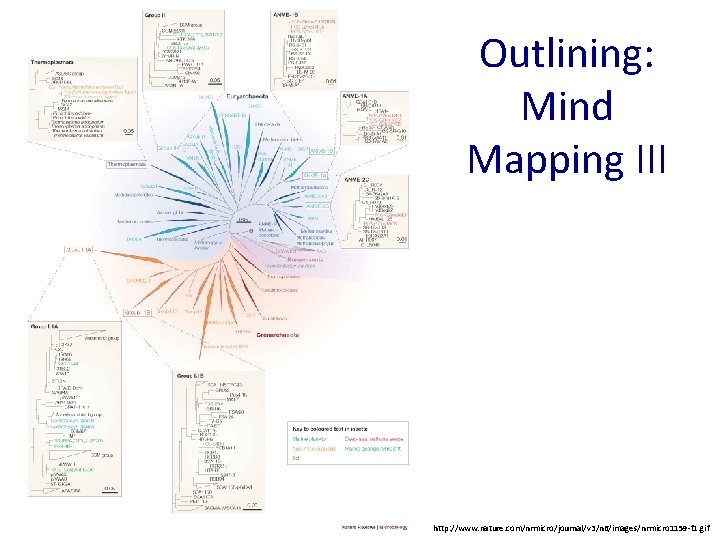
Outlining: Mind Mapping III http: //www. nature. com/nrmicro/journal/v 3/n 6/images/nrmicro 1159 -f 1. gif
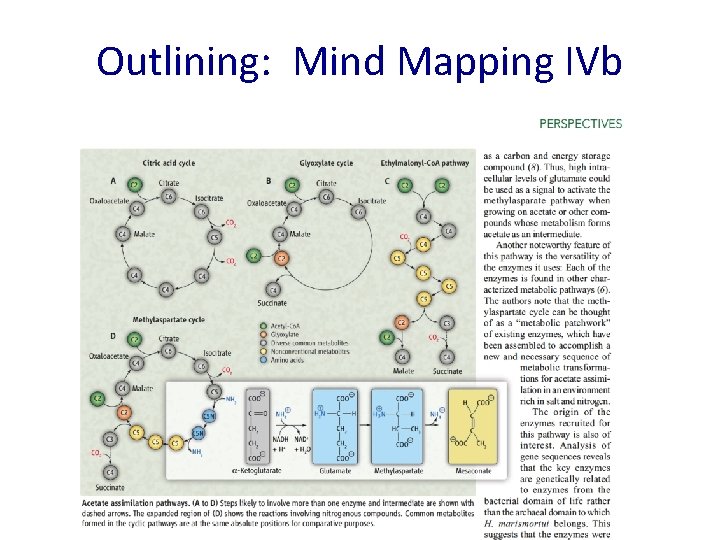
Outlining: Mind Mapping IVb
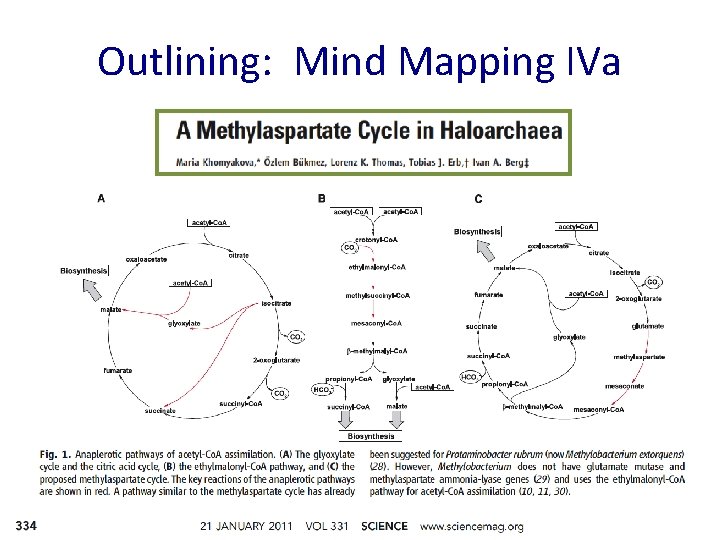
Outlining: Mind Mapping IVa
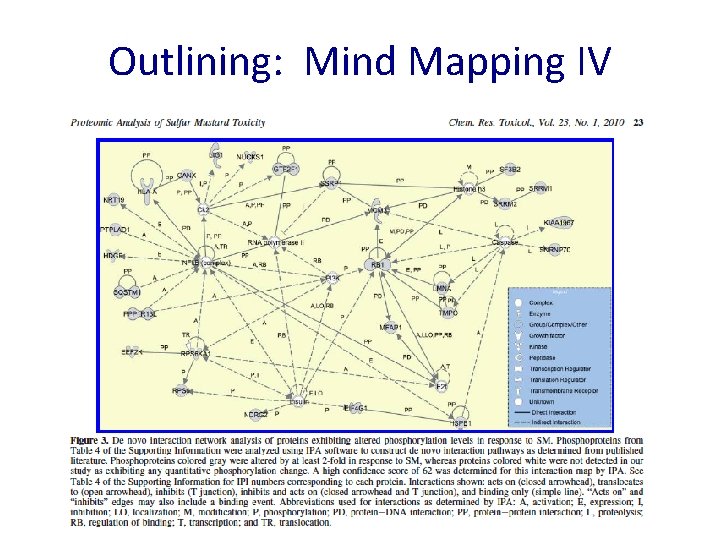
Outlining: Mind Mapping IV
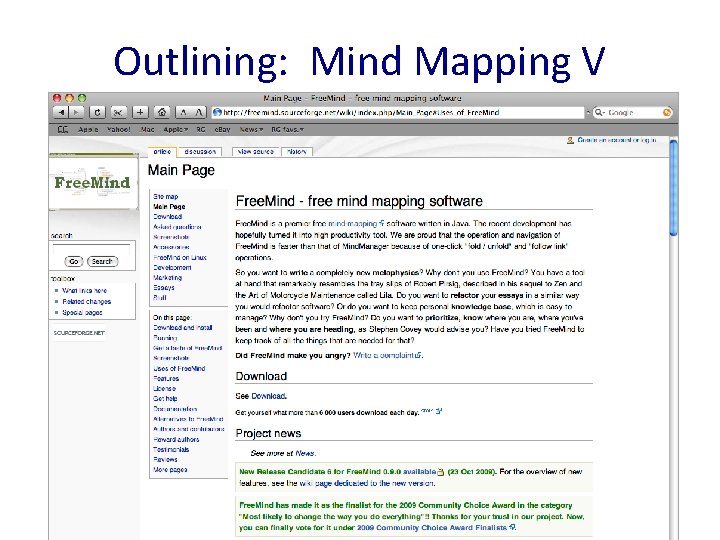
Outlining: Mind Mapping V
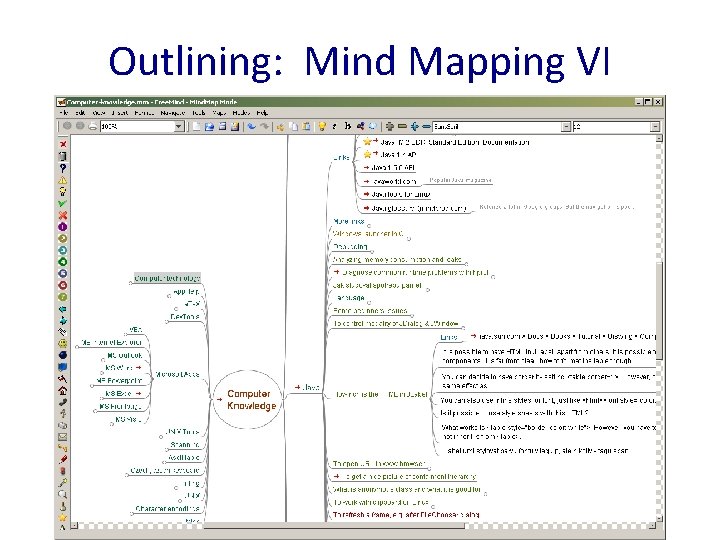
Outlining: Mind Mapping VI
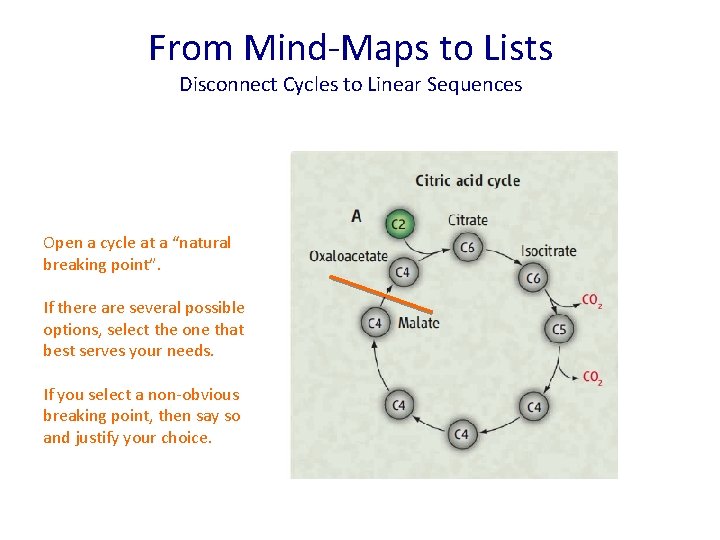
From Mind-Maps to Lists Disconnect Cycles to Linear Sequences Open a cycle at a “natural breaking point”. If there are several possible options, select the one that best serves your needs. If you select a non-obvious breaking point, then say so and justify your choice.
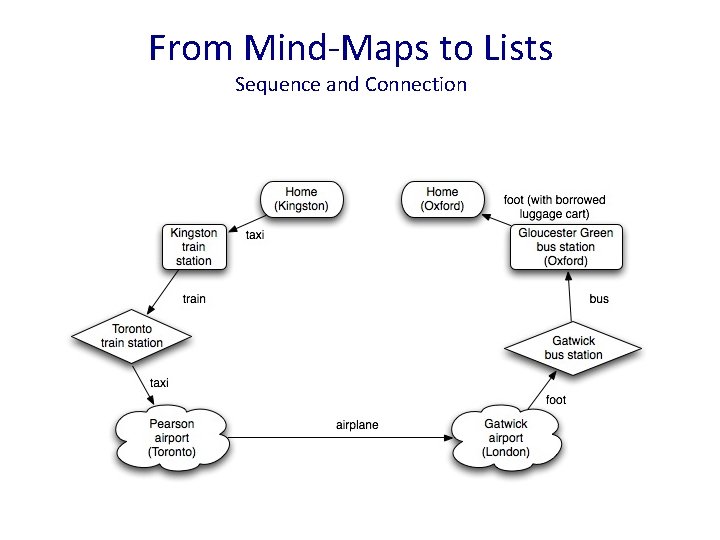
From Mind-Maps to Lists Sequence and Connection
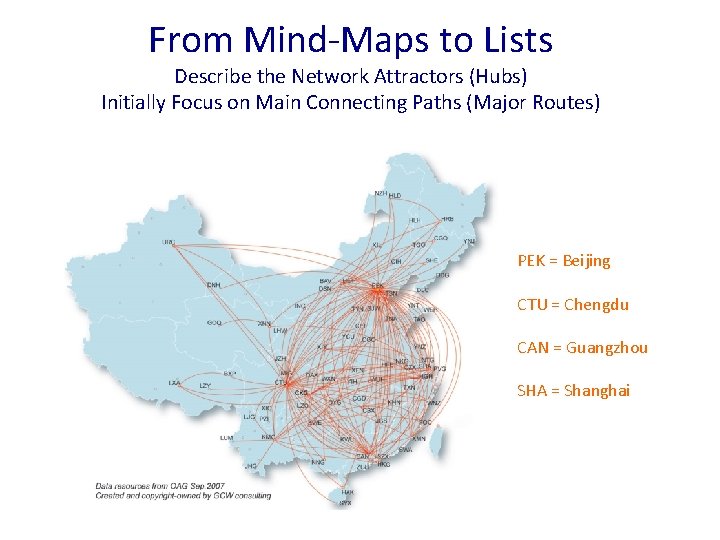
From Mind-Maps to Lists Describe the Network Attractors (Hubs) Initially Focus on Main Connecting Paths (Major Routes) PEK = Beijing CTU = Chengdu CAN = Guangzhou SHA = Shanghai
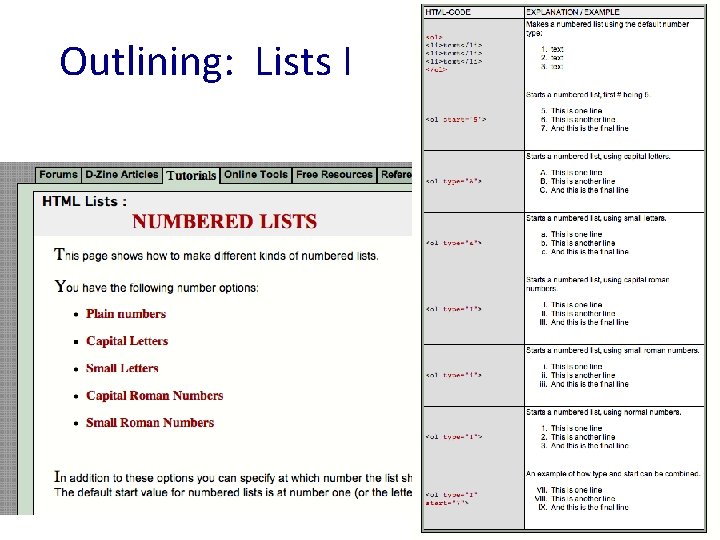
Outlining: Lists I
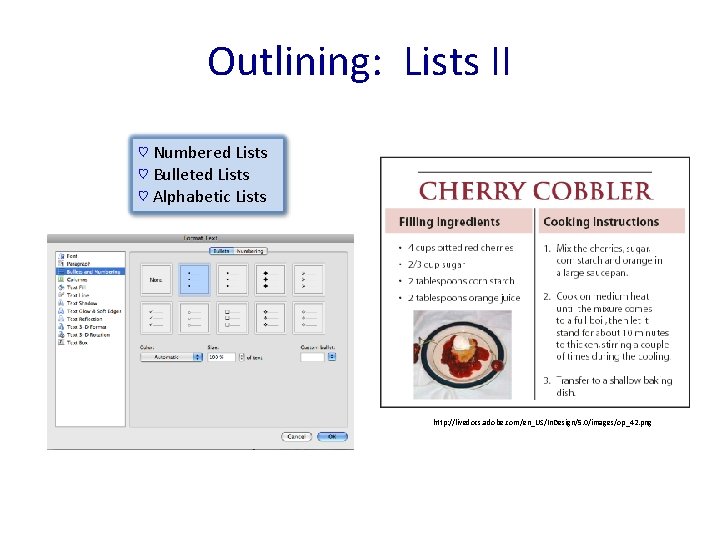
Outlining: Lists II ♡ Numbered Lists ♡ Bulleted Lists ♡ Alphabetic Lists http: //livedocs. adobe. com/en_US/In. Design/5. 0/images/op_42. png
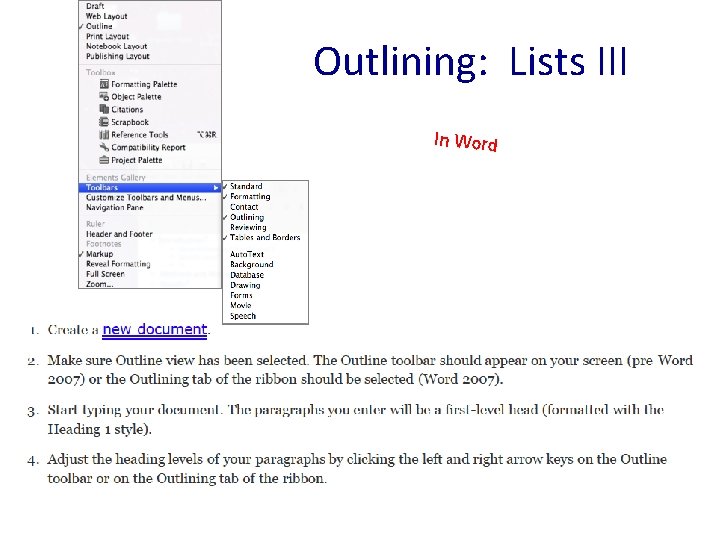
Outlining: Lists III In Word
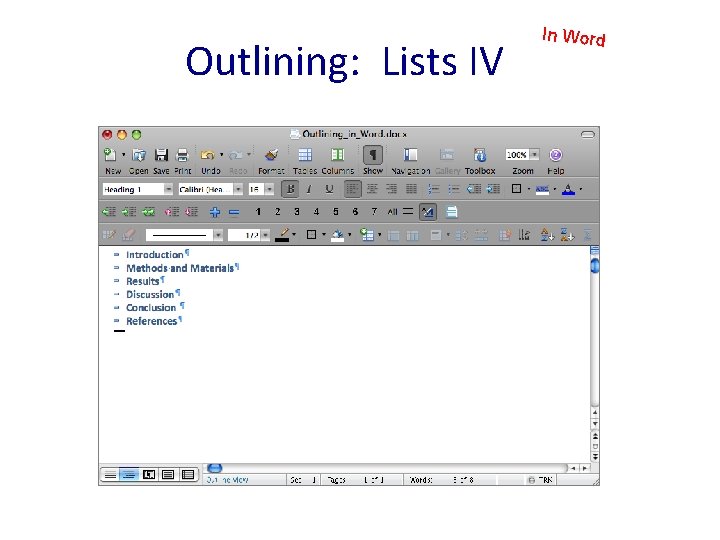
Outlining: Lists IV In Word
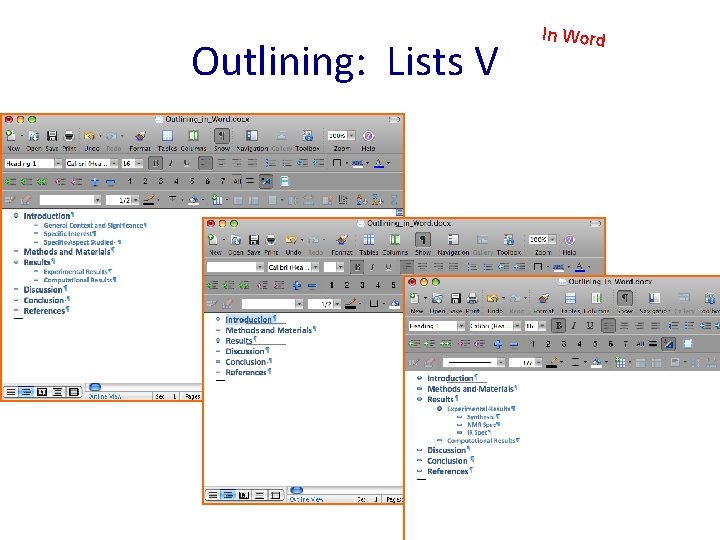
Outlining: Lists V In Word
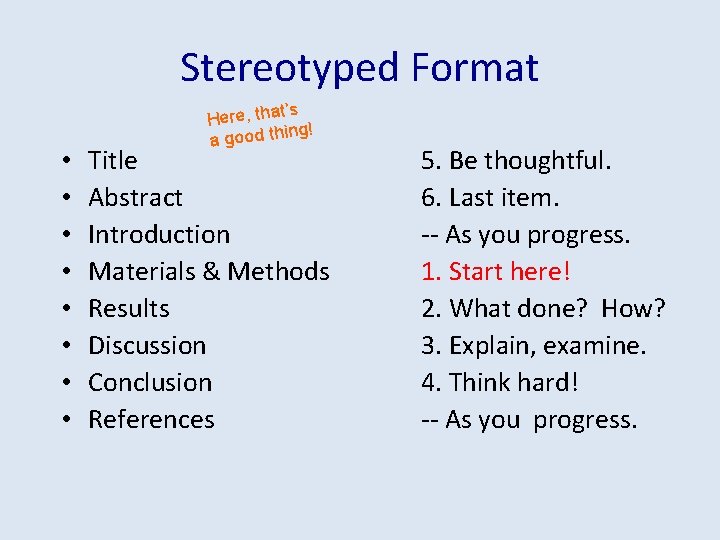
Stereotyped Format • • t’s Here, tha ing! a good th Title Abstract Introduction Materials & Methods Results Discussion Conclusion References 5. Be thoughtful. 6. Last item. -- As you progress. 1. Start here! 2. What done? How? 3. Explain, examine. 4. Think hard! -- As you progress.
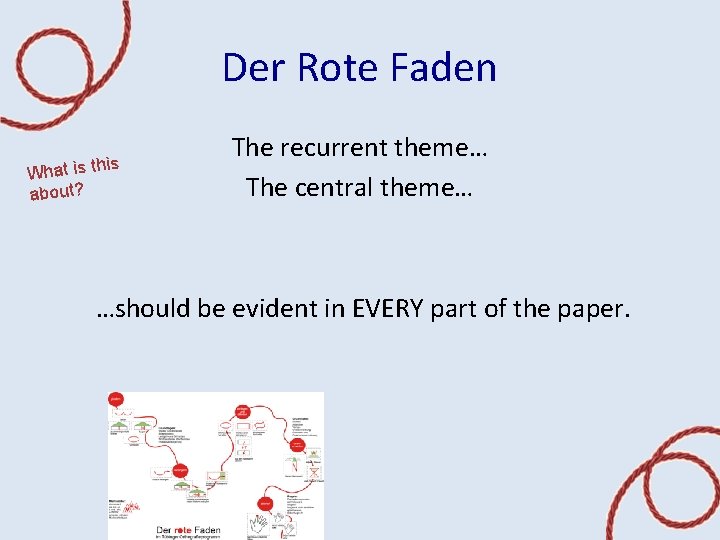
Der Rote Faden is What is th about? The recurrent theme… The central theme… …should be evident in EVERY part of the paper.

Chapter 1 Words, Numbers & Names
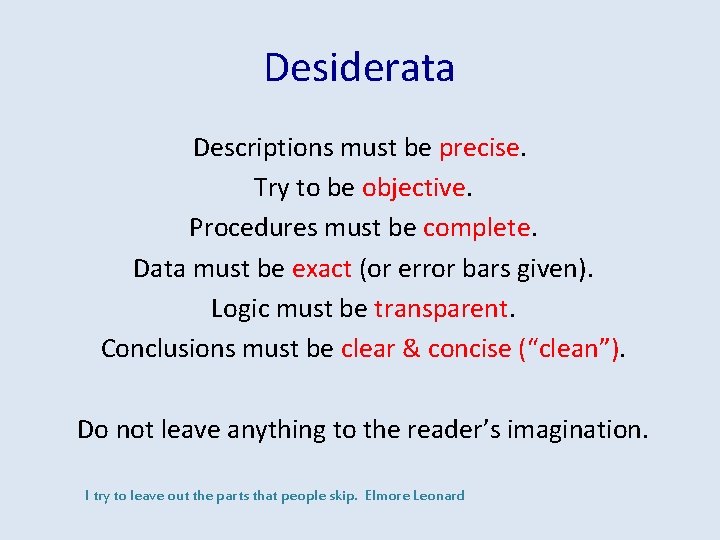
Desiderata Descriptions must be precise. Try to be objective. Procedures must be complete. Data must be exact (or error bars given). Logic must be transparent. Conclusions must be clear & concise (“clean”). Do not leave anything to the reader’s imagination. I try to leave out the parts that people skip. Elmore Leonard
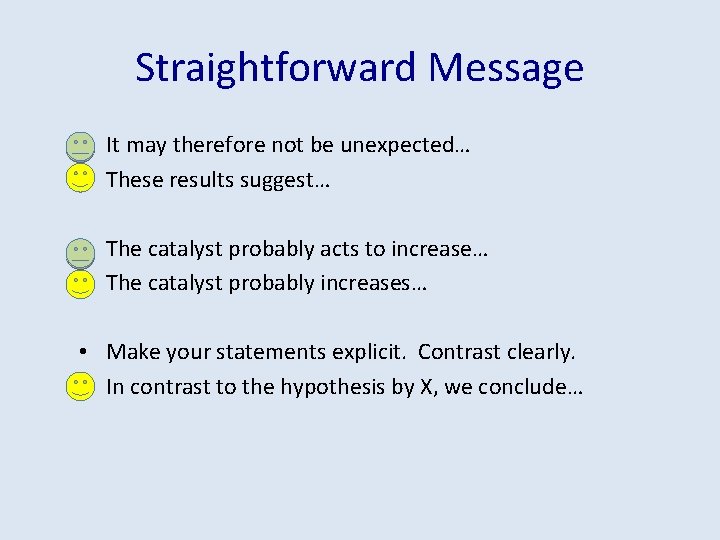
Straightforward Message • It may therefore not be unexpected… • These results suggest… • The catalyst probably acts to increase… • The catalyst probably increases… • Make your statements explicit. Contrast clearly. • In contrast to the hypothesis by X, we conclude…
Avoid Vagueness • Avoid relative terms such as: a lot, somewhat, … • Use “very” very rarely. • Avoid emotional judgments such as: beautiful, disappointing, miraculously, … (BUT some of these terms are fine as rhetorical devices, i. e. , certainly, of course, remarkable, obviously, …) • Avoid “filler words” such as: indeed, in fact, in a sense… (BUT some of these terms are fine as rhetorical devices, • Avoid casual language such as: bottom line, seat of the pants, cutting edge, …
Write with Precision: Numbers • Use numbers! – Not “tall”, but “greater than 2 meters” – Not “heavy”, but “greater than 10 kg” – Not “brief”, but “less than 1 millisecond” • Use criteria-based scales. – Grade Scale, performance. – Richter Scale, earthquakes. – Mankoski Scale, pain.
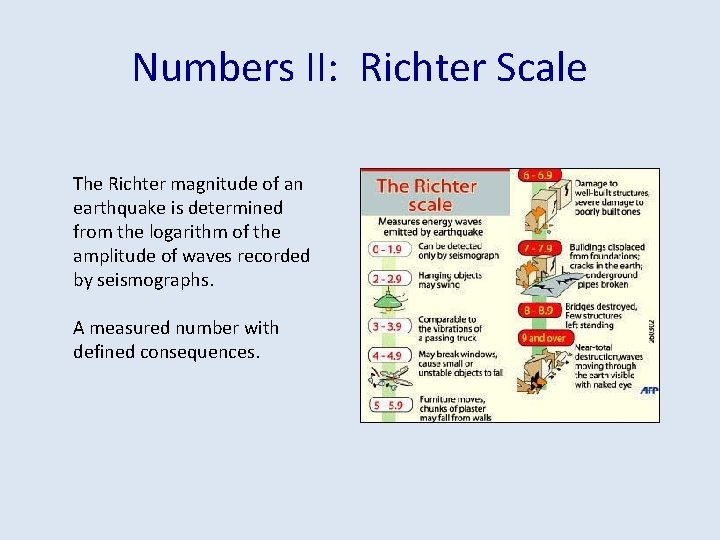
Numbers II: Richter Scale The Richter magnitude of an earthquake is determined from the logarithm of the amplitude of waves recorded by seismographs. A measured number with defined consequences.
Numbers III: Mankoski Pain Scale Andrea Mankoski Pain Scale (1995) Numbers characterize well-defined and distinguishable consequence of subjective property. 0 - Pain Free 1 - Very minor annoyance - occasional minor twinges. No medication needed. 2 - Minor Annoyance - occasional strong twinges. No medication needed. 3 - Annoying enough to be distracting. Mild painkillers take care of it. (Aspirin, Ibuprofen. ) 4 - Can be ignored if you are really involved in your work, but still distracting. Mild painkillers remove pain for 3 -4 hours. 5 - Can't be ignored for more than 30 minutes. Mild painkillers ameliorate pain for 3 -4 hours. 6 - Can't be ignored for any length of time, but you can still go to work and participate in social activities. Stronger painkillers (Codeine, narcotics) reduce pain for 3 -4 hours. 7 - Makes it difficult to concentrate, interferes with sleep. You can still function with effort. Stronger painkillers are only partially effective. 8 - Physical activity severely limited. You can read and converse with effort. Nausea and dizziness set in as factors of pain. 9 - Unable to speak. Crying out or moaning uncontrollably - near delirium. 10 - Unconscious. Pain makes you pass out.
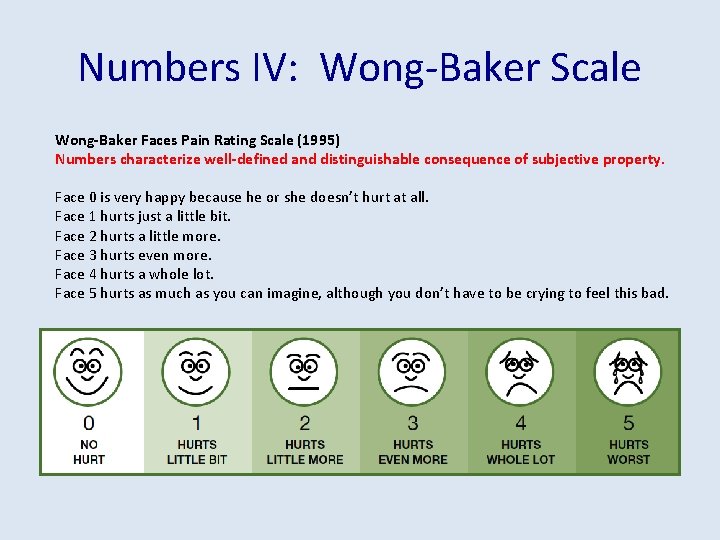
Numbers IV: Wong-Baker Scale Wong-Baker Faces Pain Rating Scale (1995) Numbers characterize well-defined and distinguishable consequence of subjective property. Face 0 is very happy because he or she doesn’t hurt at all. Face 1 hurts just a little bit. Face 2 hurts a little more. Face 3 hurts even more. Face 4 hurts a whole lot. Face 5 hurts as much as you can imagine, although you don’t have to be crying to feel this bad.
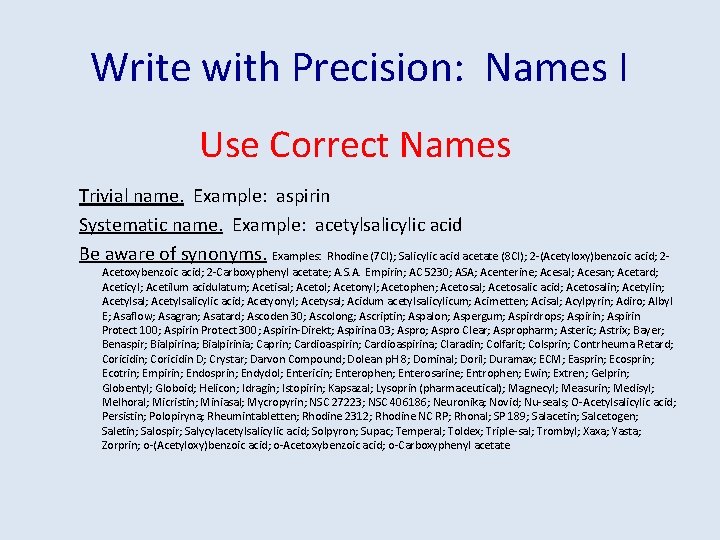
Write with Precision: Names I Use Correct Names Trivial name. Example: aspirin Systematic name. Example: acetylsalicylic acid Be aware of synonyms. Examples: Rhodine (7 CI); Salicylic acid acetate (8 CI); 2 -(Acetyloxy)benzoic acid; 2 - Acetoxybenzoic acid; 2 -Carboxyphenyl acetate; A. S. A. Empirin; AC 5230; ASA; Acenterine; Acesal; Acesan; Acetard; Aceticyl; Acetilum acidulatum; Acetisal; Acetonyl; Acetophen; Acetosalic acid; Acetosalin; Acetylsal; Acetylsalicylic acid; Acetyonyl; Acetysal; Acidum acetylsalicylicum; Acimetten; Acisal; Acylpyrin; Adiro; Albyl E; Asaflow; Asagran; Asatard; Ascoden 30; Ascolong; Ascriptin; Aspalon; Aspergum; Aspirdrops; Aspirin Protect 100; Aspirin Protect 300; Aspirin-Direkt; Aspirina 03; Aspro Clear; Aspropharm; Asteric; Astrix; Bayer; Benaspir; Bialpirina; Bialpirinia; Caprin; Cardioaspirina; Claradin; Colfarit; Colsprin; Contrheuma Retard; Coricidin D; Crystar; Darvon Compound; Dolean p. H 8; Dominal; Doril; Duramax; ECM; Easprin; Ecotrin; Empirin; Endosprin; Endydol; Entericin; Enterophen; Enterosarine; Entrophen; Ewin; Extren; Gelprin; Globentyl; Globoid; Helicon; Idragin; Istopirin; Kapsazal; Lysoprin (pharmaceutical); Magnecyl; Measurin; Medisyl; Melhoral; Micristin; Miniasal; Mycropyrin; NSC 27223; NSC 406186; Neuronika; Novid; Nu-seals; O-Acetylsalicylic acid; Persistin; Polopiryna; Rheumintabletten; Rhodine 2312; Rhodine NC RP; Rhonal; SP 189; Salacetin; Salcetogen; Saletin; Salospir; Salycylacetylsalicylic acid; Solpyron; Supac; Temperal; Toldex; Triple-sal; Trombyl; Xaxa; Yasta; Zorprin; o-(Acetyloxy)benzoic acid; o-Acetoxybenzoic acid; o-Carboxyphenyl acetate
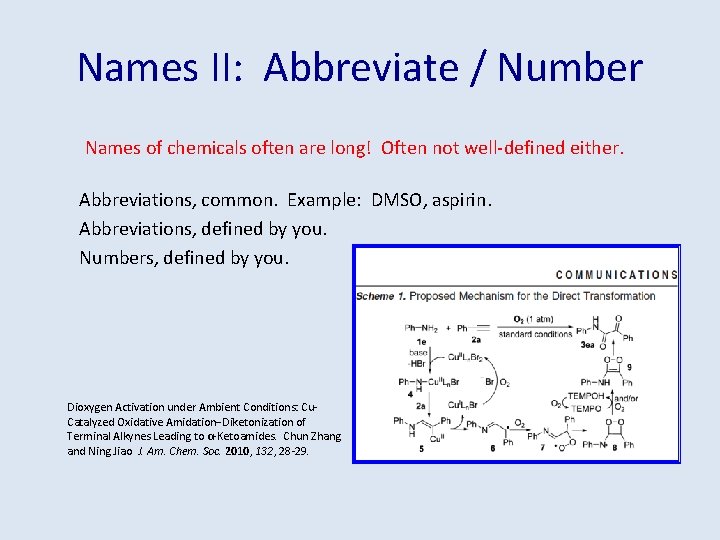
Names II: Abbreviate / Number Names of chemicals often are long! Often not well-defined either. Abbreviations, common. Example: DMSO, aspirin. Abbreviations, defined by you. Numbers, defined by you. Dioxygen Activation under Ambient Conditions: Cu. Catalyzed Oxidative Amidation−Diketonization of Terminal Alkynes Leading to α-Ketoamides. Chun Zhang and Ning Jiao J. Am. Chem. Soc. 2010, 132, 28 -29.
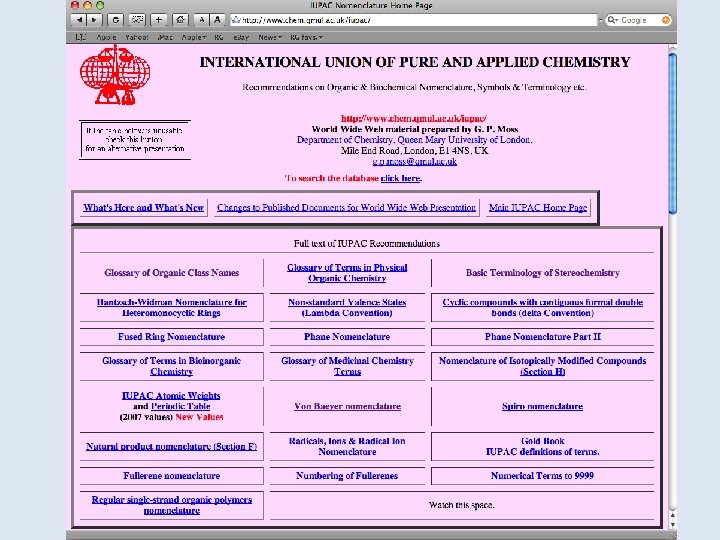
Names III: IUPAC
Past and Present Tense Use PRESENT TENSE for statements which are true now (and have been true in the past as well): – Life is good. – Clouds contain water. – Everything is made out of atoms. Use PAST TENSE to describe events that have occurred in the past and are no longer happening: – The experiment was performed. – The catalyst was added.
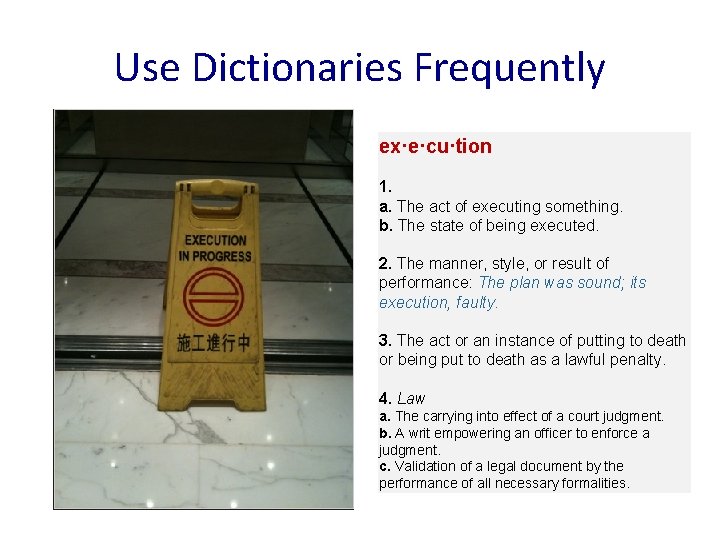
Use Dictionaries Frequently ex·e·cu·tion 1. a. The act of executing something. b. The state of being executed. 2. The manner, style, or result of performance: The plan was sound; its execution, faulty. 3. The act or an instance of putting to death or being put to death as a lawful penalty. 4. Law a. The carrying into effect of a court judgment. b. A writ empowering an officer to enforce a judgment. c. Validation of a legal document by the performance of all necessary formalities.

Chapter 1 Writing a Paragraph
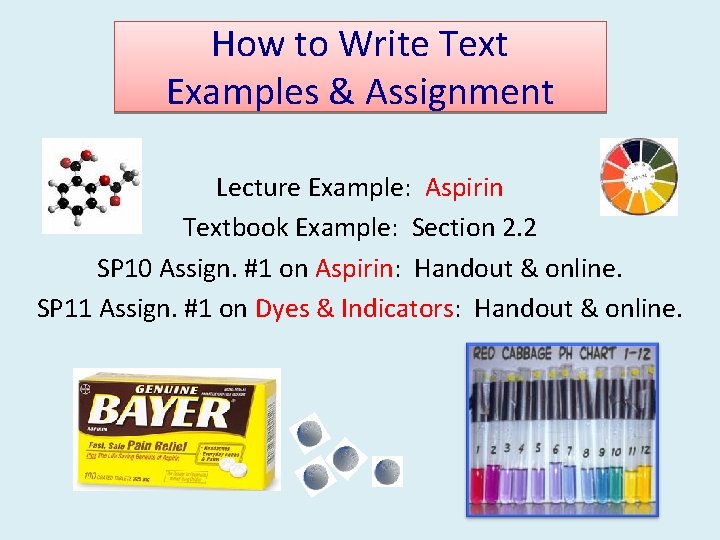
How to Write Text Examples & Assignment Lecture Example: Aspirin Textbook Example: Section 2. 2 SP 10 Assign. #1 on Aspirin: Handout & online. SP 11 Assign. #1 on Dyes & Indicators: Handout & online.
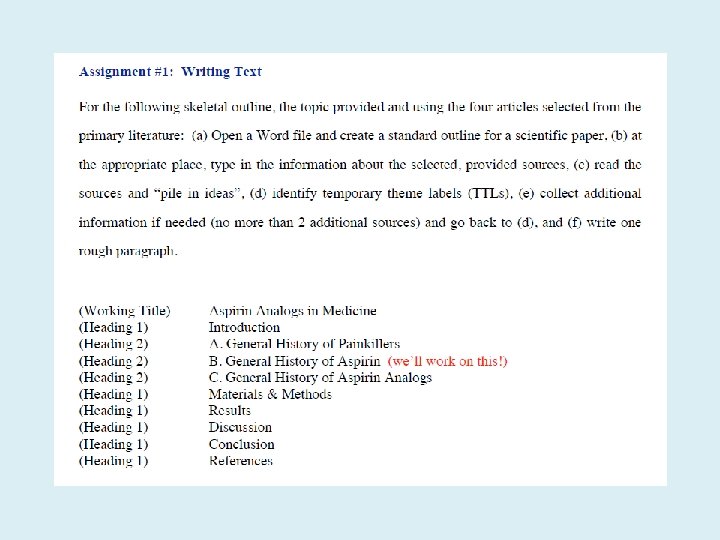
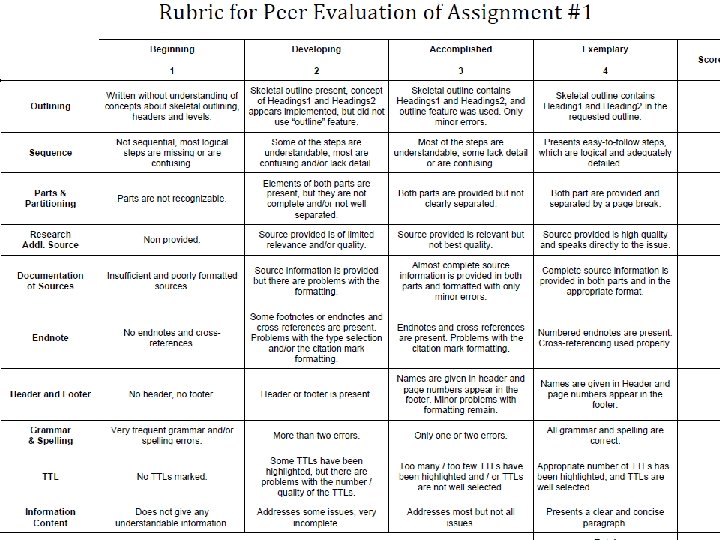
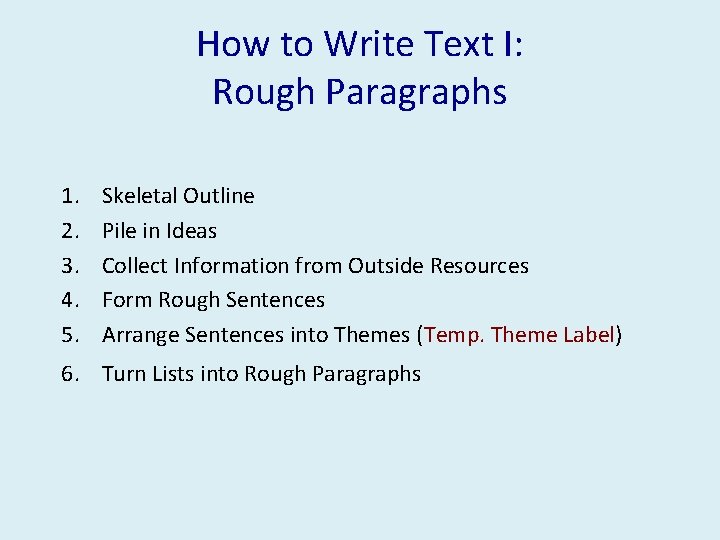
How to Write Text I: Rough Paragraphs 1. 2. 3. 4. 5. Skeletal Outline Pile in Ideas Collect Information from Outside Resources Form Rough Sentences Arrange Sentences into Themes (Temp. Theme Label) 6. Turn Lists into Rough Paragraphs
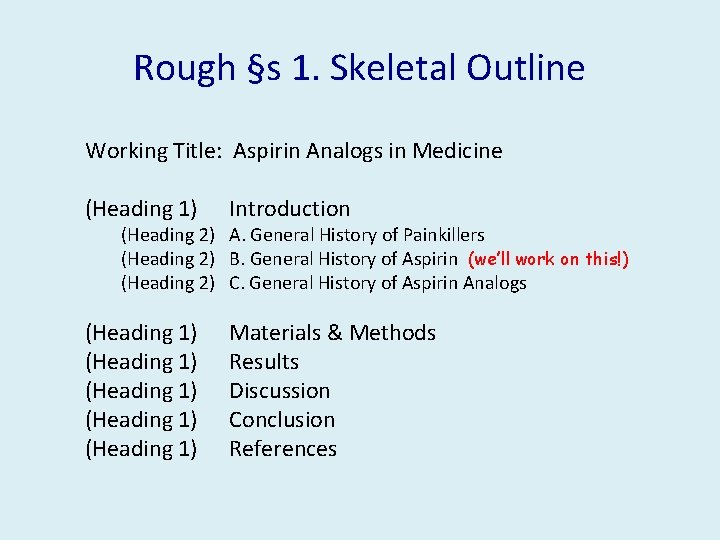
Rough §s 1. Skeletal Outline Working Title: Aspirin Analogs in Medicine (Heading 1) Introduction (Heading 1) (Heading 1) Materials & Methods Results Discussion Conclusion References (Heading 2) A. General History of Painkillers (Heading 2) B. General History of Aspirin (we’ll work on this!) (Heading 2) C. General History of Aspirin Analogs
Rough §s 2. Pile in Initial Ideas Working Title: Aspirin Analogs in Medicine (Heading 1) Introduction (Heading 2) A. General History of Painkillers (Heading 2) B. General History of Aspirin White Tablets Made by Bayer Pain Reliever, Painkiller Antipyretic (lowers fever) COX Inhibitor 1. Brainstorm and list “initial keywords” Write a list of “initial keywords”. “Initial ideas” provide keywords for your search for information.
Rough §s 3. Get Information Ref. A. Aspirin and Other Non-Steroidal Anti-Inflammatory Drugs as Cyclooxygenase State of the Art, Barriers and Perspectives. Avram, S. ; Duda-Seiman, D. M. ; Svab, I. ; Mancas, S. ; Duda-Seiman, C. ; Mihailescu, D. F. Current Computer-Aided Drug Design 2009, 5, 1 -12. Ref. B. Mechanistic Insights into Cyclooxygenase Irreversible Inactivation by Aspirin. Tosco, P. ; Lazzarato, L. Chem. Med. Chem 2009, 4, 939 -945. Ref. C. Aspirin. An ab Initio Quantum-Mechanical Study of Conformational Preferences and of Neighboring Group Interactions. Glaser, R. J. Org. Chem. 2001, 66, 771 -779. Ref. D. Synthesis of aspirin : a general chemistry experiment. Olmsted, John, III J. Chem. Educ. 1998, 75, 1261 -1263. 2. Search using “initial keywords” (We will learn later about “searching”. )
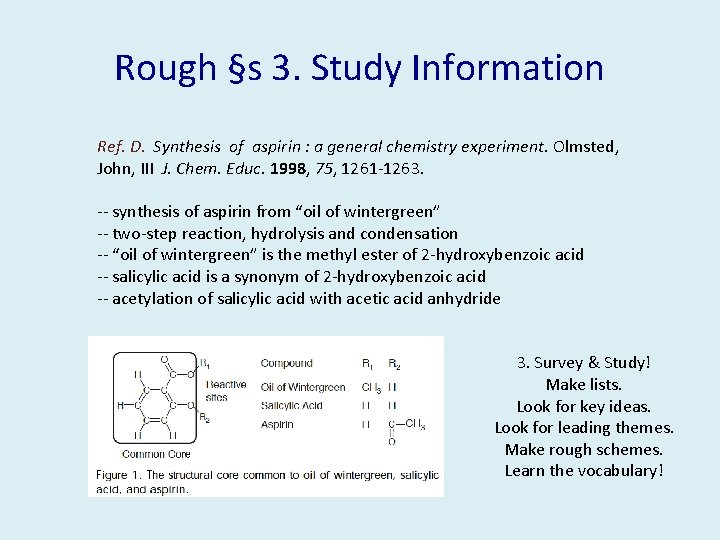
Rough §s 3. Study Information Ref. D. Synthesis of aspirin : a general chemistry experiment. Olmsted, John, III J. Chem. Educ. 1998, 75, 1261 -1263. -- synthesis of aspirin from “oil of wintergreen” -- two-step reaction, hydrolysis and condensation -- “oil of wintergreen” is the methyl ester of 2 -hydroxybenzoic acid -- salicylic acid is a synonym of 2 -hydroxybenzoic acid -- acetylation of salicylic acid with acetic acid anhydride 3. Survey & Study! Make lists. Look for key ideas. Look for leading themes. Make rough schemes. Learn the vocabulary!
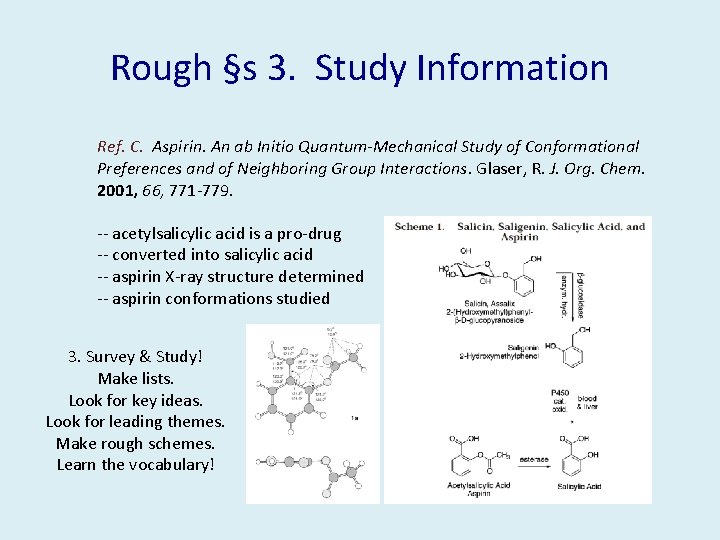
Rough §s 3. Study Information Ref. C. Aspirin. An ab Initio Quantum-Mechanical Study of Conformational Preferences and of Neighboring Group Interactions. Glaser, R. J. Org. Chem. 2001, 66, 771 -779. -- acetylsalicylic acid is a pro-drug -- converted into salicylic acid -- aspirin X-ray structure determined -- aspirin conformations studied 3. Survey & Study! Make lists. Look for key ideas. Look for leading themes. Make rough schemes. Learn the vocabulary!
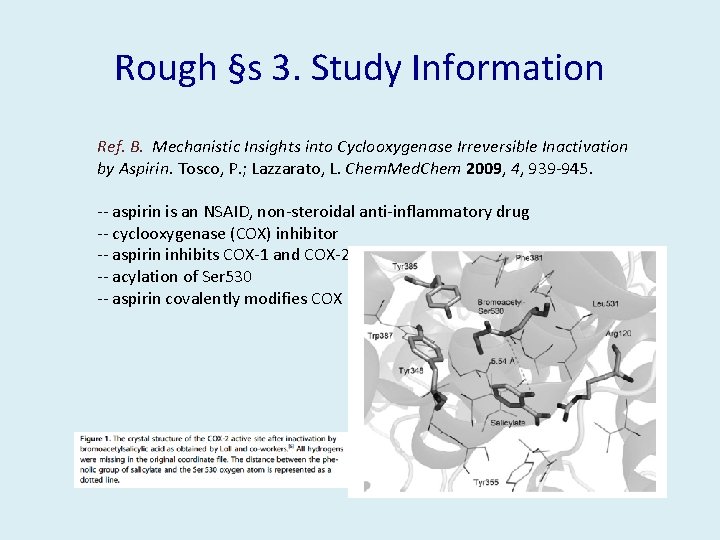
Rough §s 3. Study Information Ref. B. Mechanistic Insights into Cyclooxygenase Irreversible Inactivation by Aspirin. Tosco, P. ; Lazzarato, L. Chem. Med. Chem 2009, 4, 939 -945. -- aspirin is an NSAID, non-steroidal anti-inflammatory drug -- cyclooxygenase (COX) inhibitor -- aspirin inhibits COX-1 and COX-2 -- acylation of Ser 530 -- aspirin covalently modifies COX
Rough §s 4. Rough Sentences 4. Collect & Gather. Ref. B. -- Aspirin is a non-steroidal anti-inflammatory drug (NSAID). -- Aspirin inhibits both isoforms of cyclooxygenase. -- Bromoacetylsalicyclic acid covalently modifies COX-1 and COX-2 by acylation of Ser 530. Ref. C. -- Acetylsalicylic functions as a pro-drug for salicylic acid. -- The structure of aspirin has been studied with experimental and theoretical methods. Ref. D -- Aspirin is made by acetylation of salicylic acid (2 -hydroxybenzoic acid).
Rough §s 5. Create TTL = Temporary Theme Label Think of TTLs as the true keywords! Are there steroidal anti-inflammatory drugs? Ref. B. -- Aspirin is a non-steroidal anti-inflammatory drug (NSAID). -- Aspirin inhibits both isoforms of cyclooxygenase. -- Bromoacetylsalicyclic acid covalently modifies COX-1 and COX-2 by acylation of Ser 530. (Transesterification!) What does COX have to do with pain? Ref. C. -- Acetylsalicylic functions as a pro-drug for salicylic acid. -- The structure of aspirin has been studied with experimental and theoretical methods. Why acetylation? Ref. D -- Aspirin is made by acetylation of salicylic acid (2 -hydroxybenzoic acid).
Rough §s 6. Rough Paragraphs 6. Source-to-Reference Inversion! -- Aspirin is a non-steroidal anti-inflammatory drug (NSAID) [Ref. B] -- Aspirin inhibits both isoforms of cyclooxygenase. [Ref. B] -- Bromoacetylsalicyclic acid covalently modifies COX-1 and COX-2 by acylation of Ser 530. [Ref. B] -- Acetylsalicylic functions as a pro-drug for salicylic acid. [Ref. C] -- The structure of aspirin has been studied with experimental and theoretical methods. [Ref. C] -- Aspirin is made by acetylation of salicylic acid (2 -hydroxybenzoic acid). [Ref. D] 7. Construct the logical flow and rearrange rough sentences accordingly.
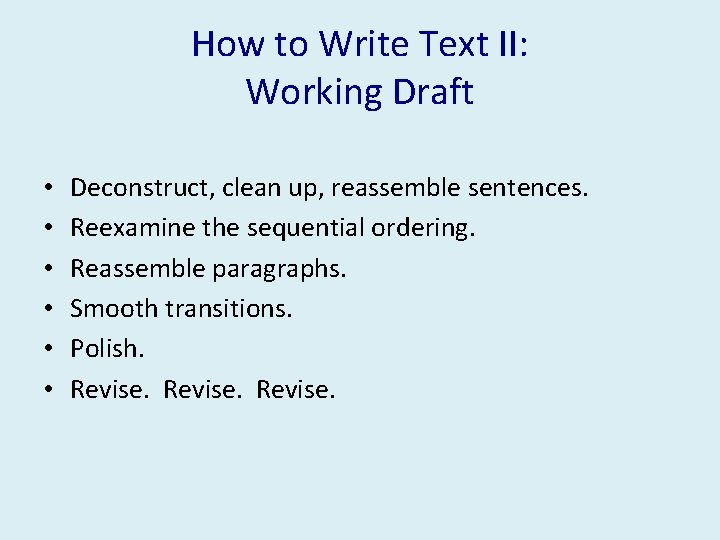
How to Write Text II: Working Draft • • • Deconstruct, clean up, reassemble sentences. Reexamine the sequential ordering. Reassemble paragraphs. Smooth transitions. Polish. Revise.
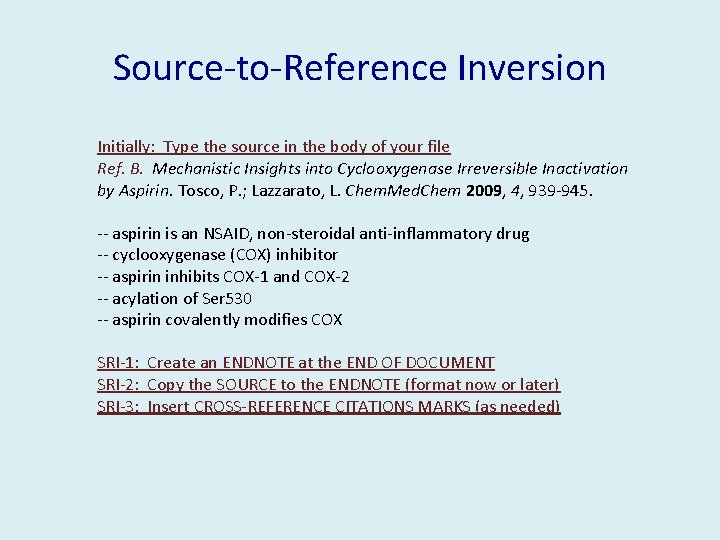
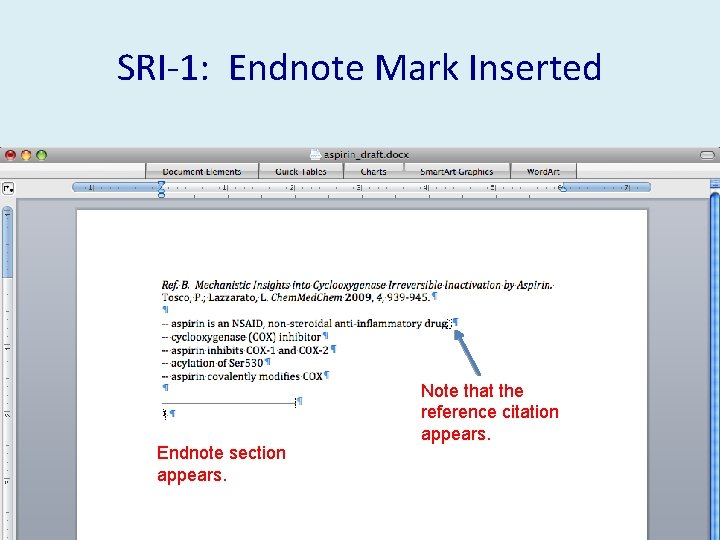
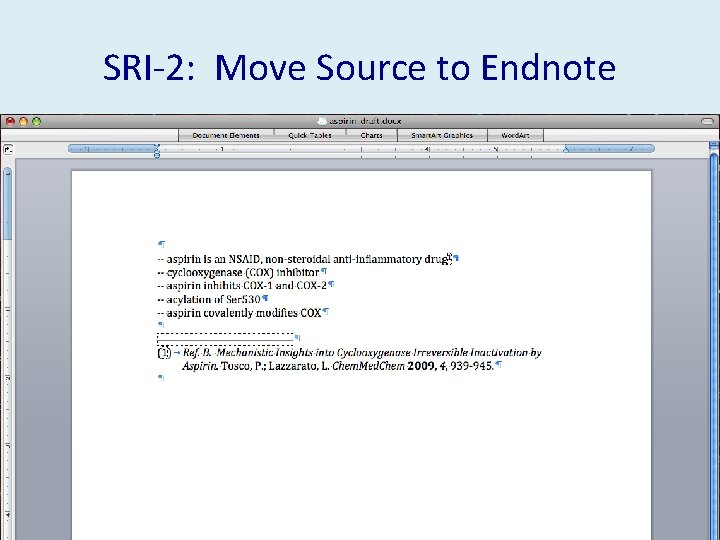
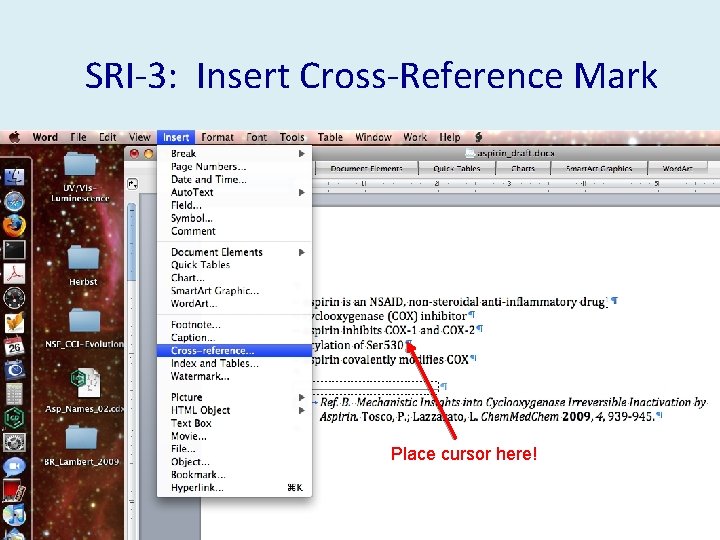
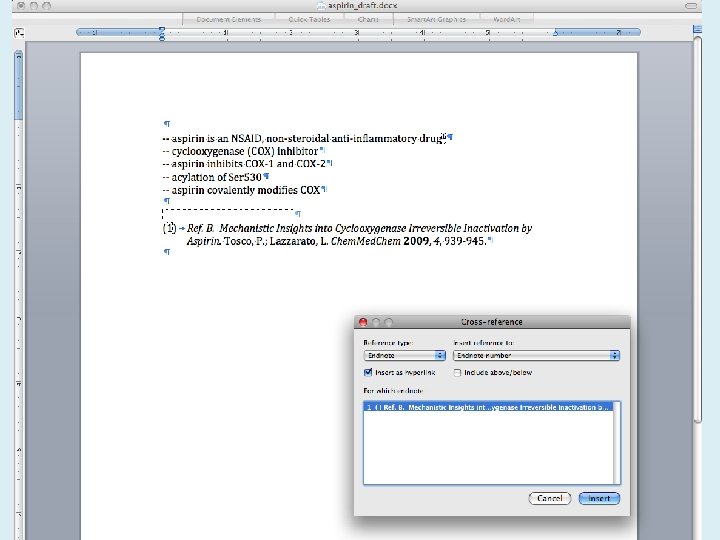
Source-to-Reference Inversion Initially: Type the source in the body of your file Ref. B. Mechanistic Insights into Cyclooxygenase Irreversible Inactivation by Aspirin. Tosco, P. ; Lazzarato, L. Chem. Med. Chem 2009, 4, 939 -945. -- aspirin is an NSAID, non-steroidal anti-inflammatory drug -- cyclooxygenase (COX) inhibitor -- aspirin inhibits COX-1 and COX-2 -- acylation of Ser 530 -- aspirin covalently modifies COX SRI-1: Create an ENDNOTE at the END OF DOCUMENT SRI-2: Copy the SOURCE to the ENDNOTE (format now or later) SRI-3: Insert CROSS-REFERENCE CITATIONS MARKS (as needed)
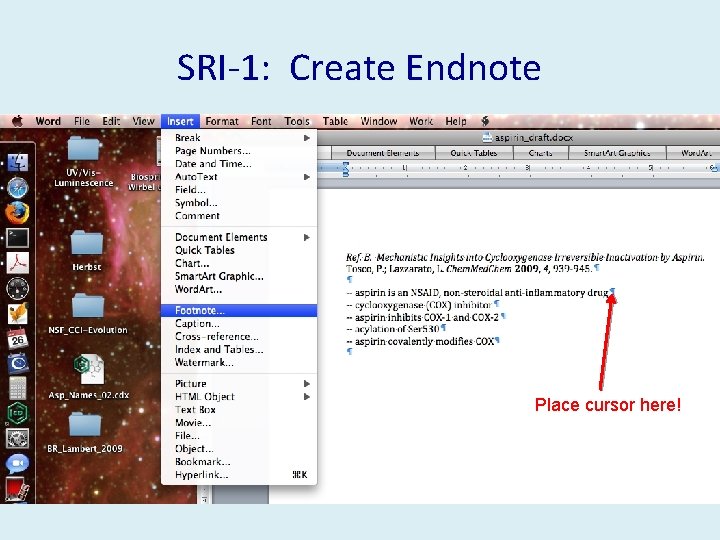
SRI-1: Create Endnote Place cursor here!
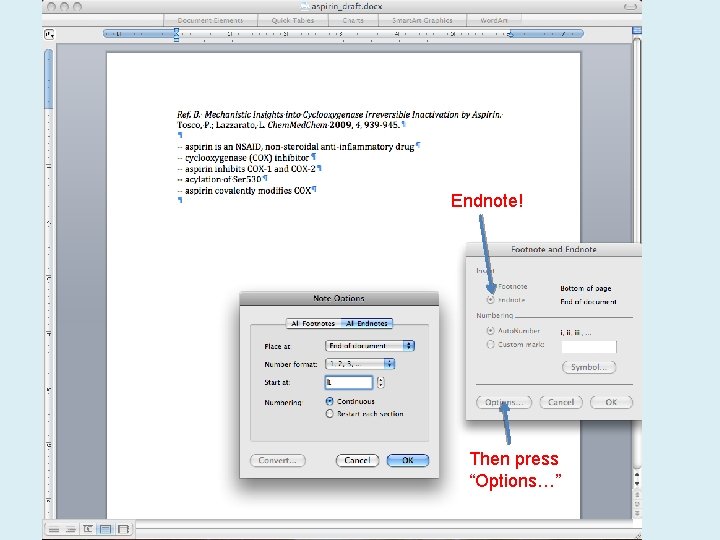
SRI-1: Create Endnote! Then press “Options…”
SRI-1: Endnote Mark Inserted Endnote section appears. Note that the reference citation appears.
SRI-2: Move Source to Endnote
SRI-3: Insert Cross-Reference Mark Place cursor here!
SRI-3: Insert Cross-Reference Mark
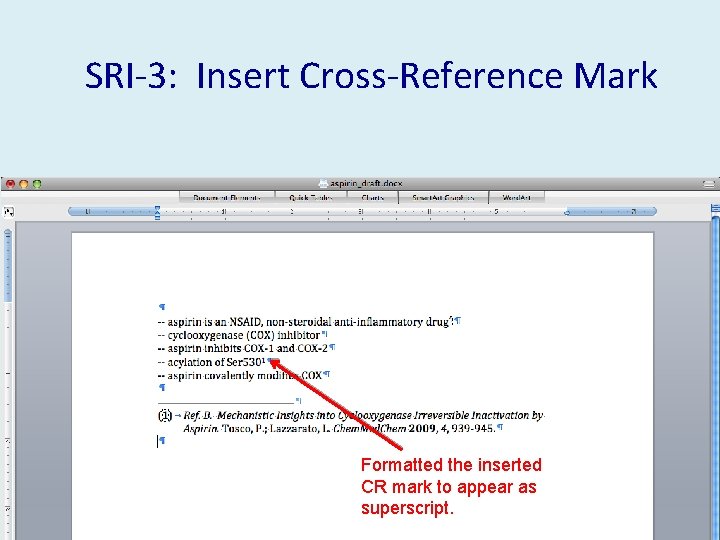
SRI-3: Insert Cross-Reference Mark Formatted the inserted CR mark to appear as superscript.
Colorimetric Chemical Indicators Colorimetric Titration A titration in which the end point is marked by a color change. The end point usually is characterized by a huge change of a concentration (several magnitudes). Chemical Indicator (Yes, No) In chemical analysis, a substance that changes color within a certain definite range of p. H, oxidation potential, complex concentration, or in any way renders visible the completion of a chemical reaction. Chemical Sensor (Yes, No. If yes, how much? ) A chemical system designed to respond to chemical stimuli such as proton concentration, concentration of molecules with a specific functional groups, or concentration of a specific molecule, and to respond in a way that is proportional to the concentration of the chemical stimulus.
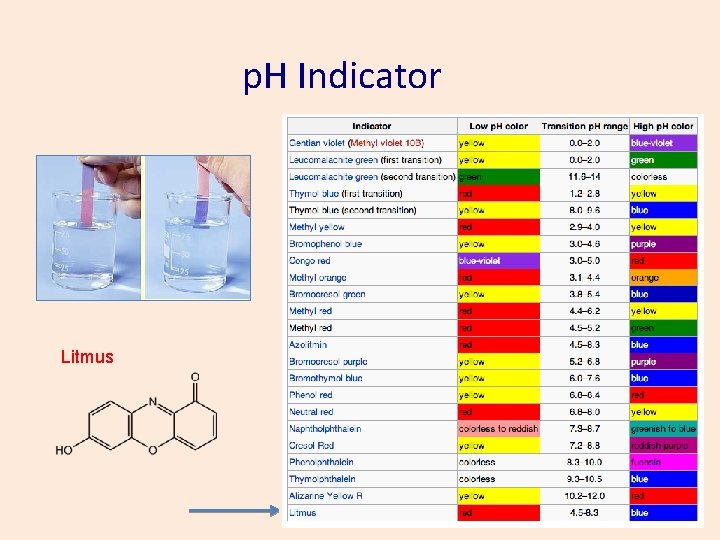
p. H Indicator Litmus
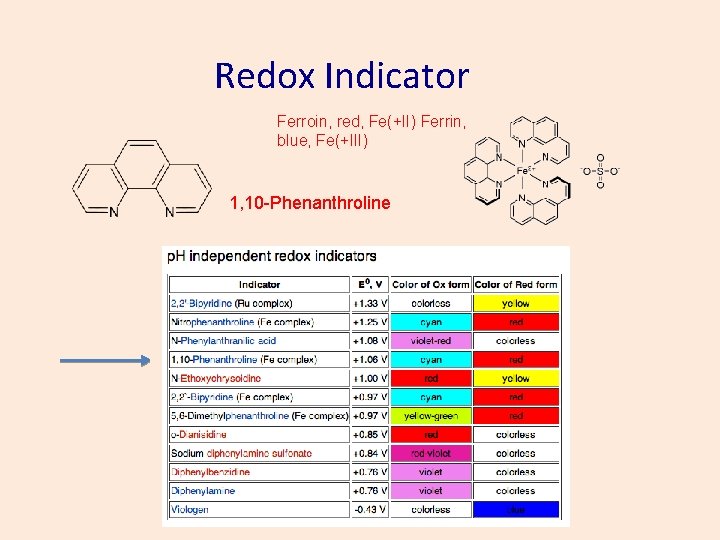
Redox Indicator Ferroin, red, Fe(+II) Ferrin, blue, Fe(+III) 1, 10 -Phenanthroline
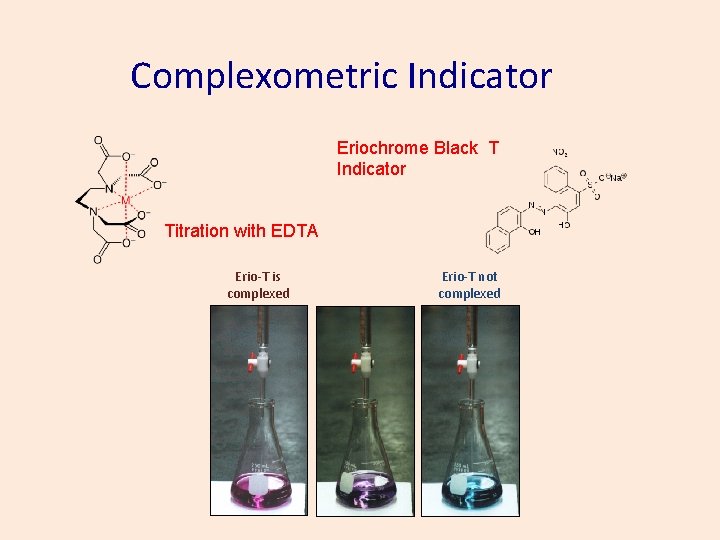
Complexometric Indicator Eriochrome Black T Indicator Titration with EDTA Erio-T is complexed Erio-T not complexed
- Slides: 68