Gynekologicko porodnick klinika Lkask fakulty MU a FN
- Slides: 33
Gynekologicko - porodnická klinika Lékařské fakulty MU a FN Brno přednosta: Prof. MUDr. Pavel Ventruba, Dr. Sc. , MBA Emergency Conditions in Obstetrics and Gynecology P. Janků, L. Hruban General Medicine Obstetrics and Gynecology Seminary 2015 – Autumn semester
Some of acute conditions in obstetrics bleeding in pregnancy n postpartal haemorrhagy n eclampsia n fetal hypoxia n embolism n – amniotic fluid – trombosis – air embolism
Bleeding in pregnancy Most important condition in pregnancy n Ist trimester – ectopic pregnancy – abortion n IInd trimester – abortion n IIIrd trimester – – – n placenta praevia vasa praevia placental abruption Postpartal haemorrhagy
Ectopic pregnancy most common cause of maternal death in Ist trimester n incidence 10 -20/1000 pregnancies n incidence is increased 3 times due to a sexually tranmitted agent n
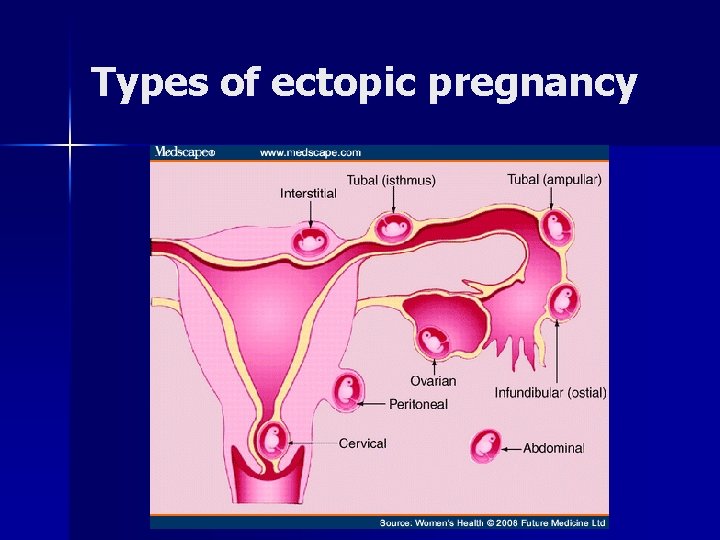
Types of ectopic pregnancy
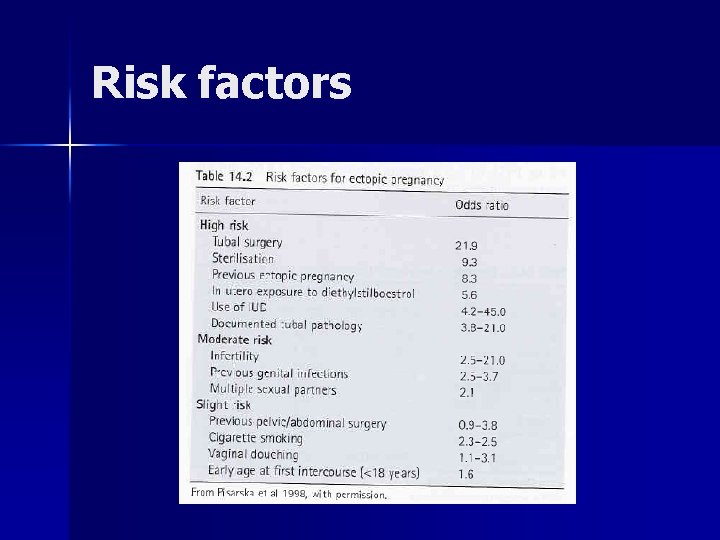
Risk factors
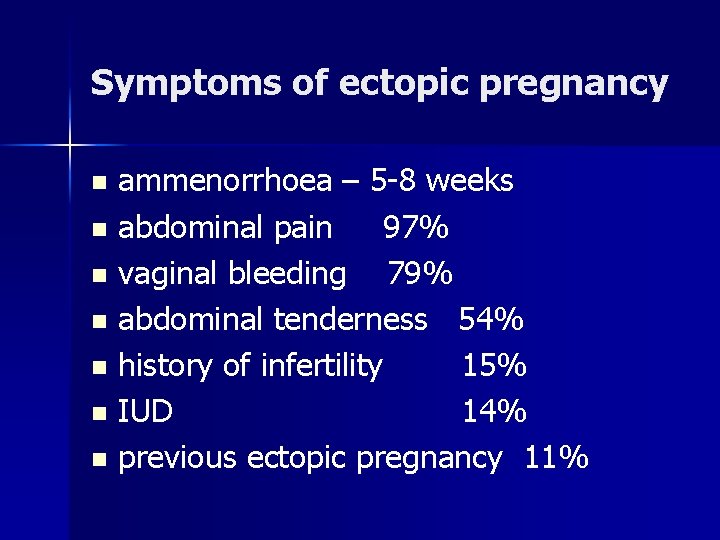
Symptoms of ectopic pregnancy ammenorrhoea – 5 -8 weeks n abdominal pain 97% n vaginal bleeding 79% n abdominal tenderness 54% n history of infertility 15% n IUD 14% n previous ectopic pregnancy 11% n
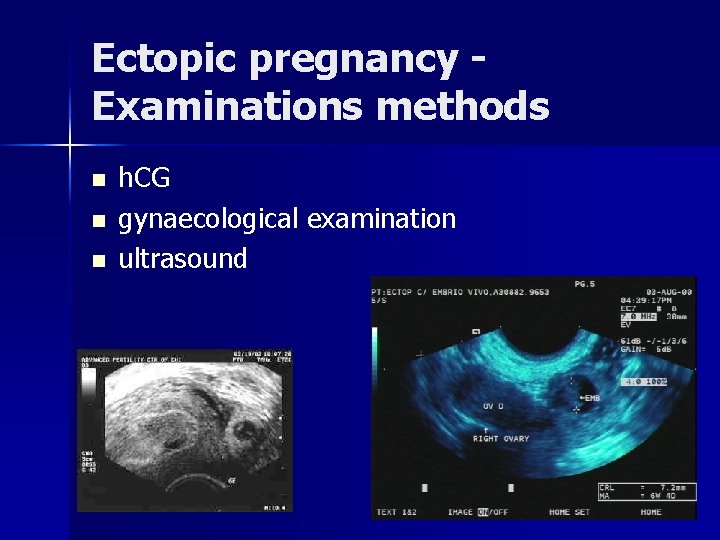
Ectopic pregnancy Examinations methods n n n h. CG gynaecological examination ultrasound
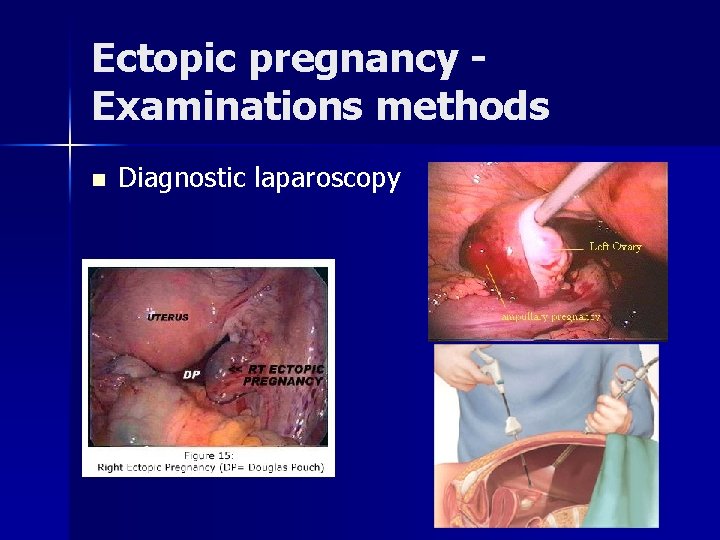
Ectopic pregnancy Examinations methods n Diagnostic laparoscopy
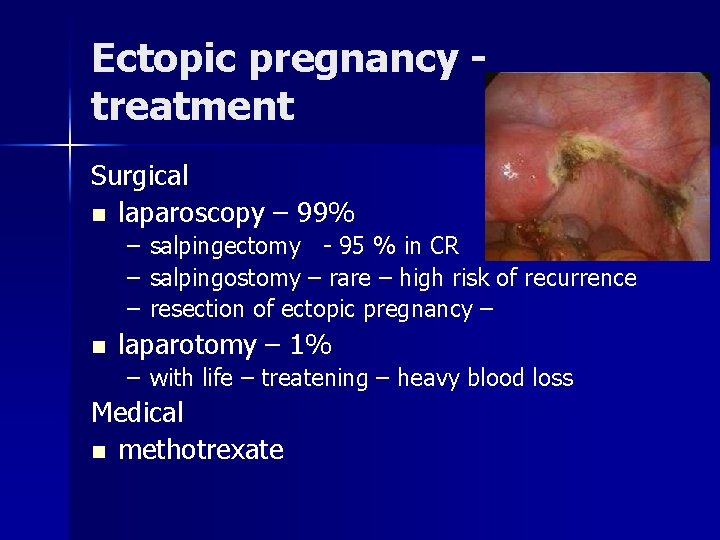
Ectopic pregnancy treatment Surgical n laparoscopy – 99% – salpingectomy - 95 % in CR – salpingostomy – rare – high risk of recurrence – resection of ectopic pregnancy – n laparotomy – 1% – with life – treatening – heavy blood loss Medical n methotrexate
Abortion n n n 25 % of women lose a pregnancy at some time in their reproductive lives up to 24 weeks of gestation reccurent abortion or miscarriage – loss of 3 or more early gestations 12 – 15 % of all clinically recognised pregnancies fail spontaneously 40% of all pregnancy 95% in Ist trimester
Abortion - etiology n genetic factors 50% – chromosomal abnormalities n n infection anatomical abnormality of uterus cervical incompetence social end enviromental factors – alcohol, toxic agents, smoking n n alloimmune factors endocrine dysfunction – luteal phase defect n autoimmune factors – antiphospholipid syndrom n inherited thrombophilia
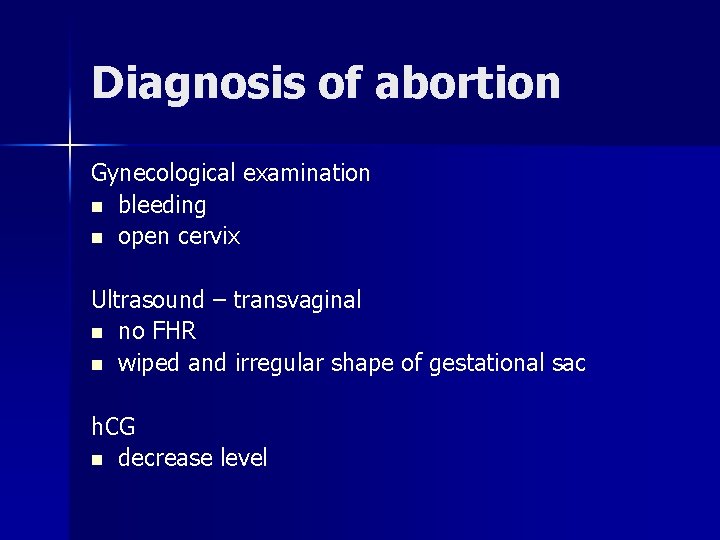
Diagnosis of abortion Gynecological examination n bleeding n open cervix Ultrasound – transvaginal n no FHR n wiped and irregular shape of gestational sac h. CG n decrease level
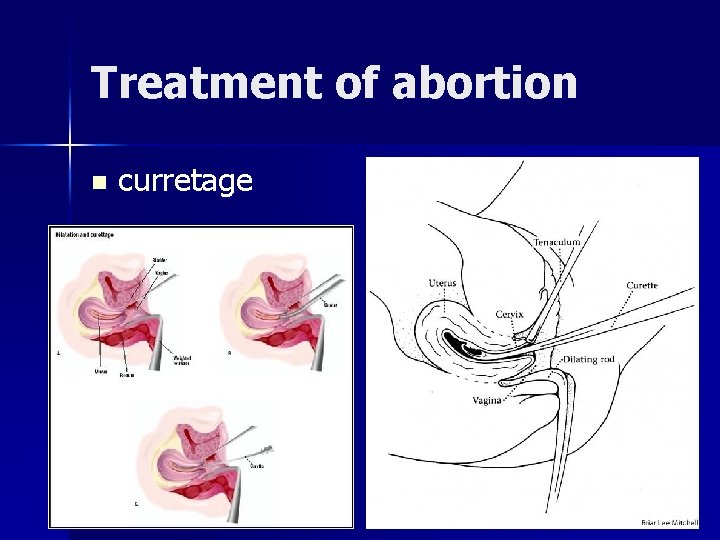
Treatment of abortion n curretage
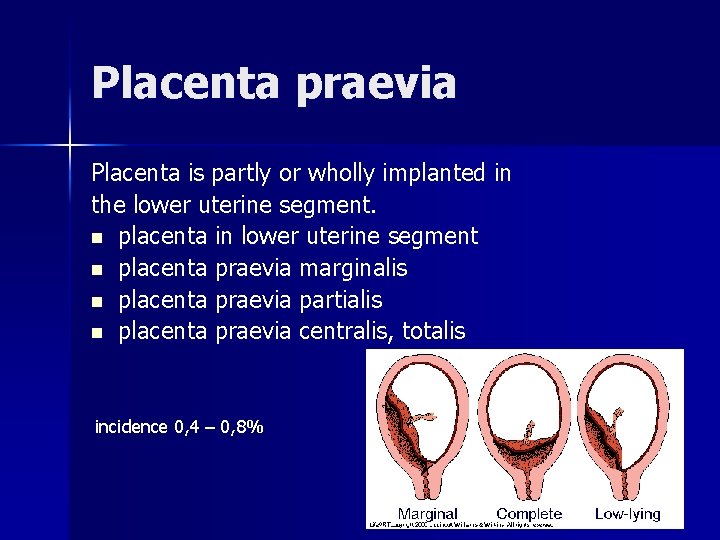
Placenta praevia Placenta is partly or wholly implanted in the lower uterine segment. n placenta in lower uterine segment n placenta praevia marginalis n placenta praevia partialis n placenta praevia centralis, totalis incidence 0, 4 – 0, 8%
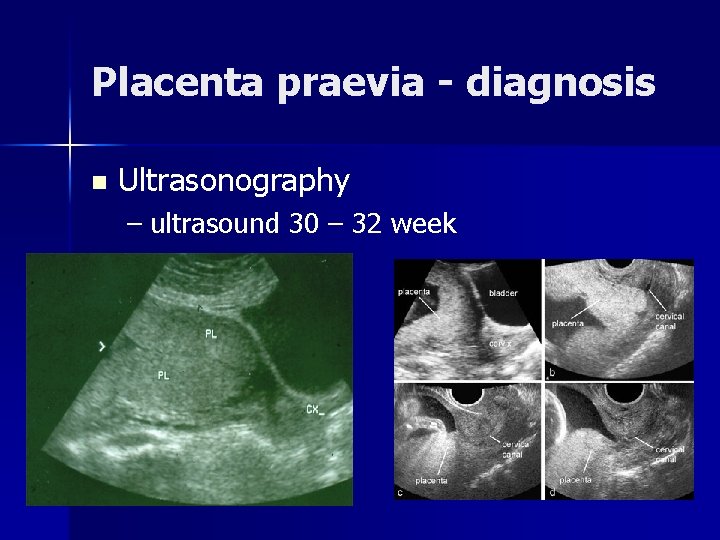
Placenta praevia - diagnosis n Ultrasonography – ultrasound 30 – 32 week
Placenta praevia - diagnosis Symptoms n bleeding in the 3 rd trimester n abnormaly located and inserted placenta separates from the decidua n bleeding results from the exposed uterine vessels from the lower uterine segment which is thin n lower segment has poor contractility and the bleeding can be sever
Placenta praevia – clinical management n n n expectant management hospitalisation 32 – 37 week caesarean section 38 week – placenta praevia caesarean section for heavy bleeding tocolytics are contraindicated vaginal delivery – low uterine segment placenta, placenta praevia marginalis
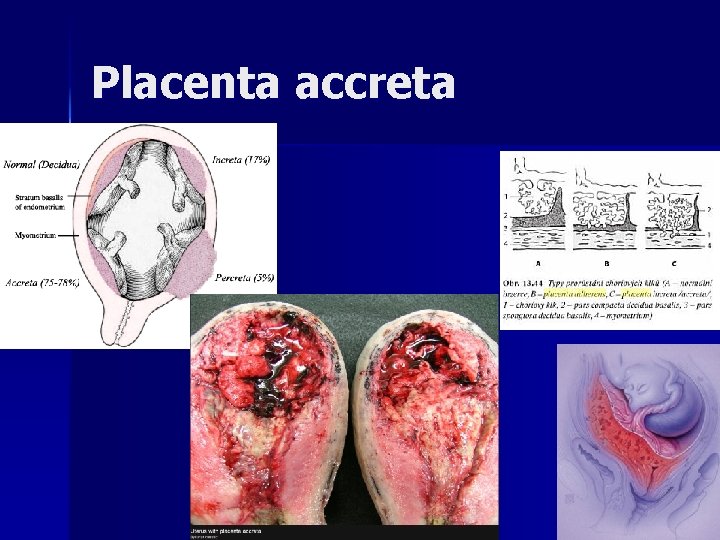
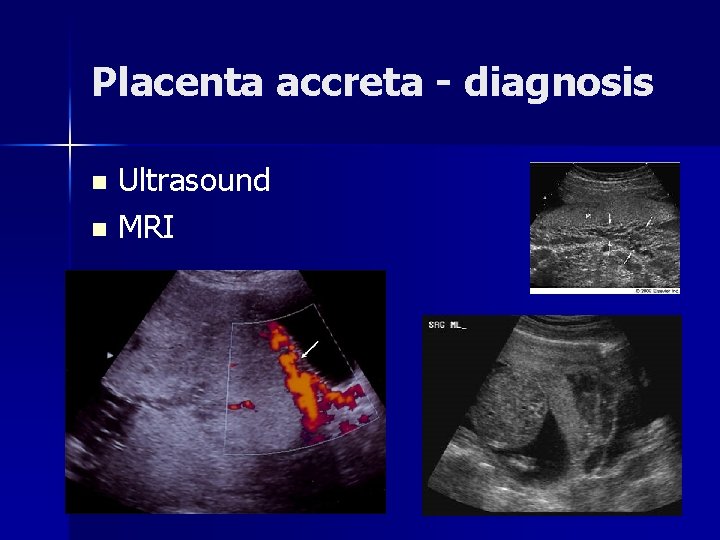
Placenta accreta n n n n placenta is abnormally adherent to the uterine wall placenta adherens - grows into the decidua basalis placenta acreta – grows on the uterine muscles placenta increta – invade uterine muscles placenta percreta – penetrate through uterus 1: 2500 deliveries placenta praevia 10%
Placenta accreta
Placenta accreta - diagnosis Ultrasound n MRI n
Placenta accreta - management n n 90% women with placenta percreta will lose more than 3000 ml of blood during operation the diagnosis is made mostly during the caesarean section or labour hysterectomy may be necessary by increta and percreta pelvic arterial embolisation could be an alternative
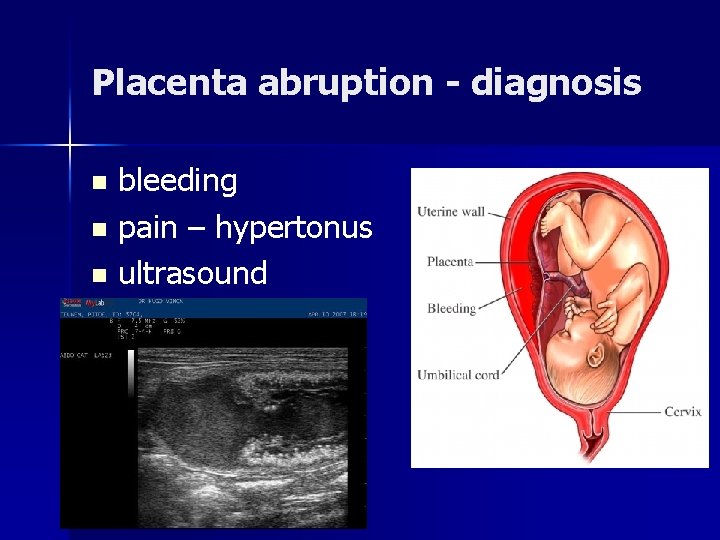
Placental abruption incidence 1 % n placental attachment to the uterus is disrupted by haemorrhage n etiology n – abdominal trauma – uterine decompression – prolonged rupture of the membranes – unkonwn
Placenta abruption - diagnosis bleeding n pain – hypertonus n ultrasound n
Placental abruption management n expectant management – abruption very minor – gestation very preterm n caesarean section – immediately by heavy bleeding – immediately 32 week above
Postpartum haemorrhage uterine atony or hypotony n retained placenta n lower genital tract trauma n uterine rupture n
Uterine atony uterus contractions and retraction fails to occur n uterus remains soft , boggy and relaxed n causes – unknown or retained placenta n 80% of PPH n
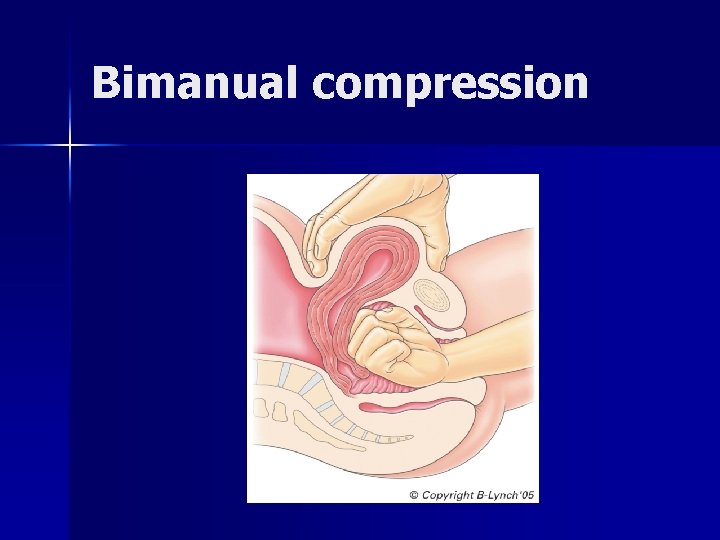
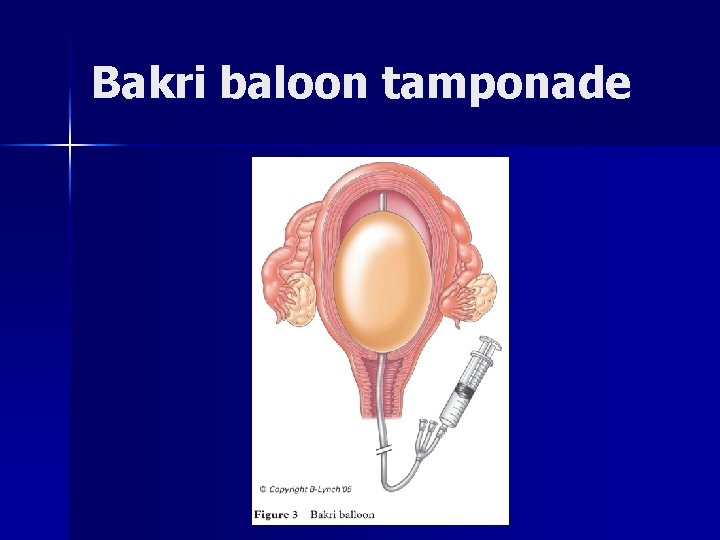
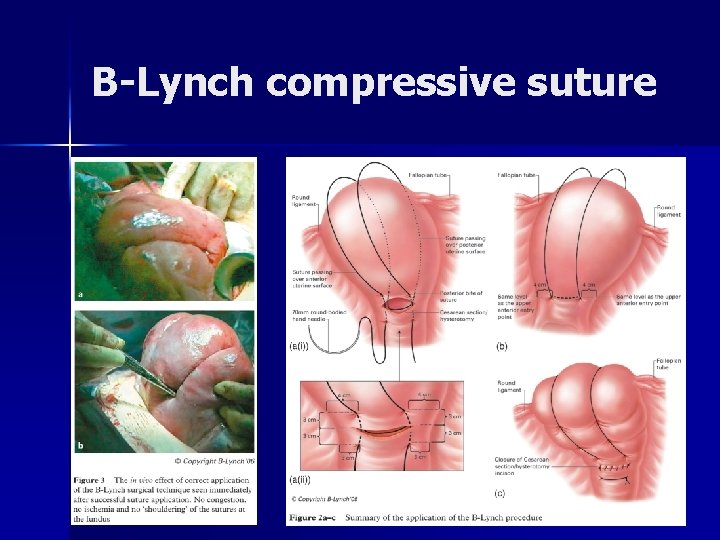
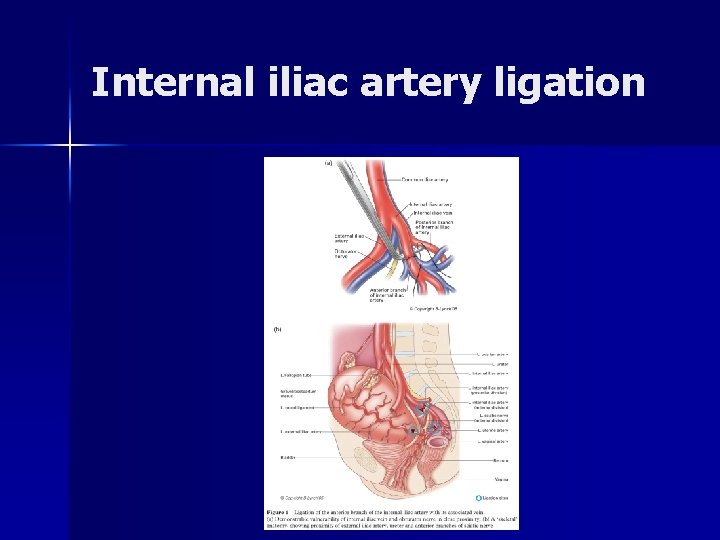
Uterine atony - management n uterotonics n compression of uterus curretage tamponade – Bakri baloon cathetr B - lynch compressive suture embolisation of pelvic vessels ligation of internal iliac vessels hysterectomy n n n – oxytocin, PGE, MEM, carbetocin
Bimanual compression
Bakri baloon tamponade
B-Lynch compressive suture
Internal iliac artery ligation
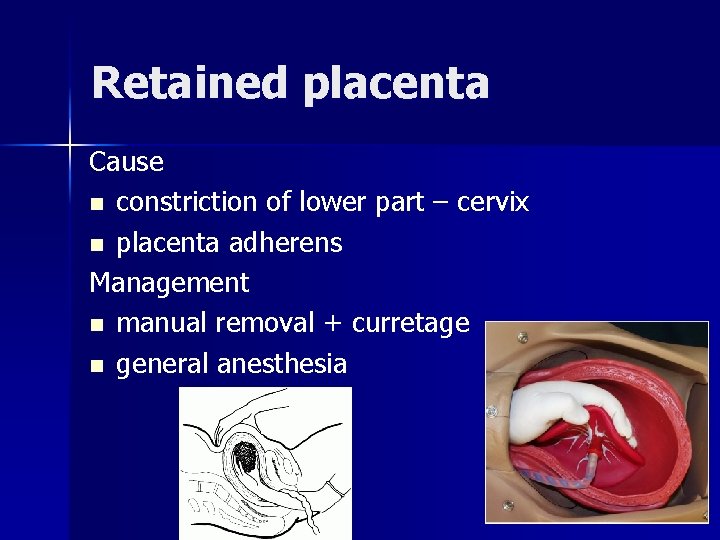
Retained placenta Cause n constriction of lower part – cervix n placenta adherens Management n manual removal + curretage n general anesthesia