Domain of Nursing The specific domain of nursing

- Slides: 29
Domain of Nursing The specific domain of nursing is – People’s unique responses to and experience of health, illness, frailty, disability and health-related life events in whatever environment or circumstances they find themselves. – People’s responses may be physiological, psychological, social, cultural or spiritual, and are often a combination of all of these. – The term “people” includes individuals of all ages, families and communities, throughout the entire life span.
Scope of Nursing • The focus of nursing – Is the whole person and the human response rather than a particular aspect of the person or a particular pathological condition. • Scope of Nursing – – Nurses provide care for three types of clients: Individuals Families Communities. • Nursing practice involves four areas: – – Promoting health and wellness Preventing illness Restoring health Care of the dying.
Regulation of Nursing Legal regulation Laws Civil Law: Private parties sue one another Criminal Law: The government files a lawsuit against a person Administrative Law: Institutional rules, polices, procedures, Or Organizational policies Professional Regulation Nurse's practice act
Ethical regulation Value Base: Ethical values which respect the dignity, autonomy and uniqueness of human beings, acceptance of personal accountability for decisions and actions. Codes of ethics. .
Partners of Nurses • Nurses work with – Patients – Relatives (families) – Other members of a health team. • Where appropriate nurses will – Lead the team – Coordinate care – Delegate responsibilities – Supervise the work of others – At other times they will participate under the leadership of others.
Roles of Professional Nurse • Caregiver – Providing direct care to the ill person, such as administering medications, baths, and specific procedures and treatments. • Clinical Decision Maker – Performing diagnostic and assessment procedures, such as measuring blood pressure and examining feces for occult blood in order to plan care accordingly
Teacher • Teaching clients about recovery activities, such as exercises that will accelerate recovery after a stroke. Consultant • Consulting with other health care professionals about client problems.
Roles of Professional Nurse(Cont. ) • Patient Advocate – Educating clients about their rights, and how to attain them. • Case Manager – Providing ongoing support and expertise through comprehensive assessment, planning, implementation and overall evaluation of individual patient needs
Rehabilitator • Rehabilitating clients to their optimal functional level following physical or mental illness, injury, or chemical addiction. Comforter • Involves comforting and caring for people of all ages on health-disease continuum. it includes helping clients live as comfortably as possible until death
Settings for Nursing • In the past, the acute care hospital was the main practice setting open to most nurses. • Today many nurses work in hospitals, but increasingly they work in clients homes, community agencies, ambulatory clinics, long-term care, health maintenance organization (HMOs), and nursing practice centers.
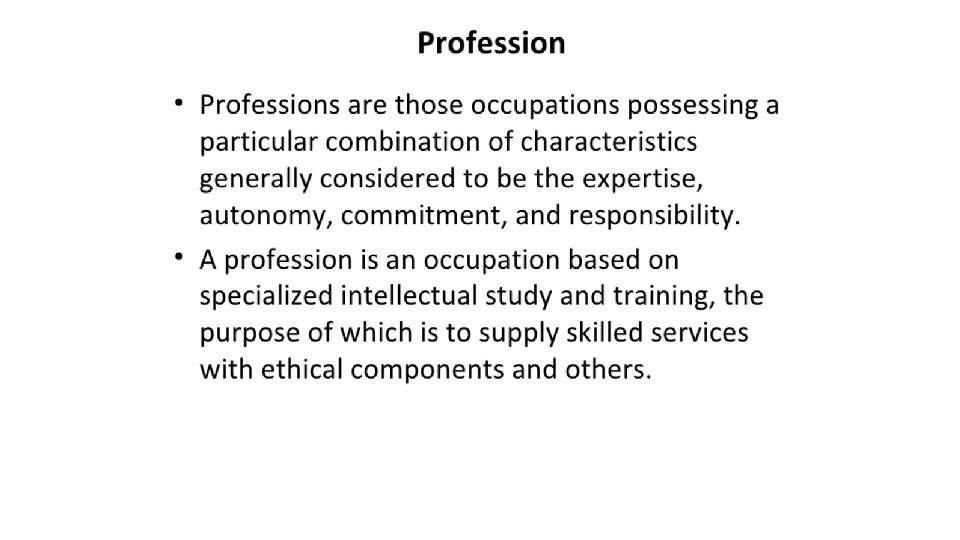
Nursing as a Practice Profession • Is nursing a profession? • What is a profession?
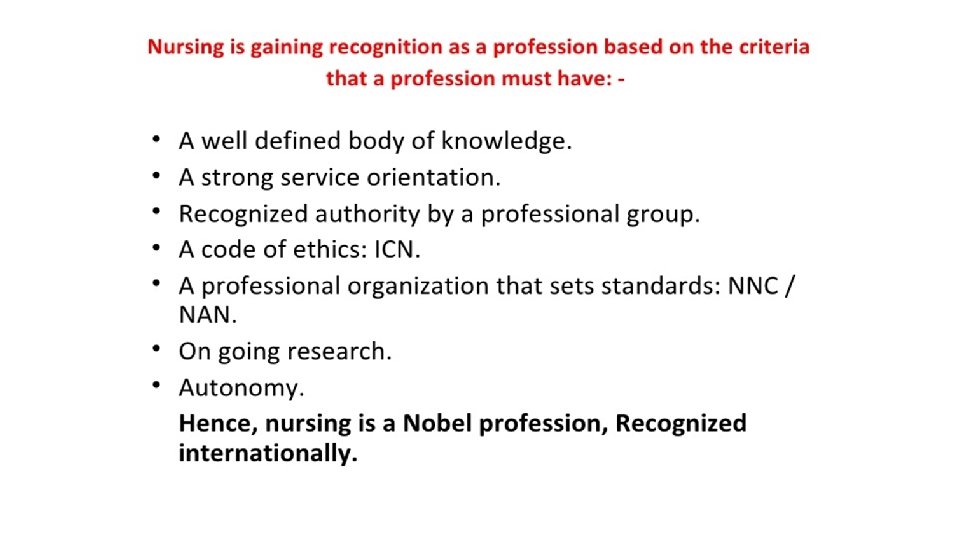
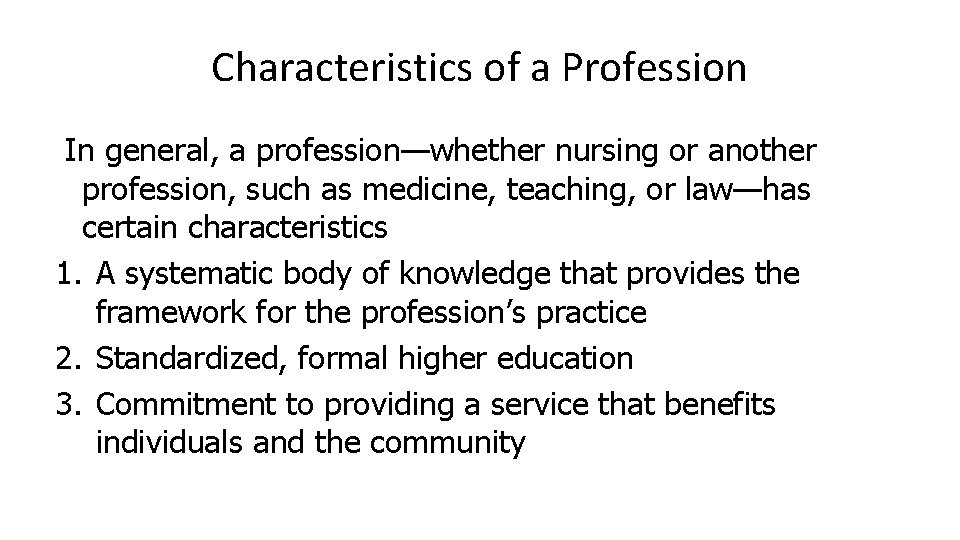
Characteristics of a Profession In general, a profession—whether nursing or another profession, such as medicine, teaching, or law—has certain characteristics 1. A systematic body of knowledge that provides the framework for the profession’s practice 2. Standardized, formal higher education 3. Commitment to providing a service that benefits individuals and the community
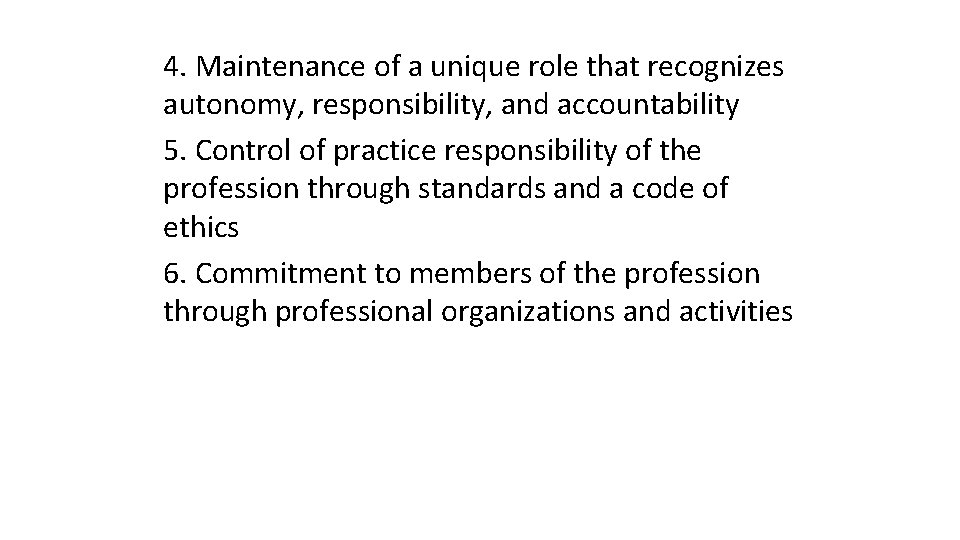
4. Maintenance of a unique role that recognizes autonomy, responsibility, and accountability 5. Control of practice responsibility of the profession through standards and a code of ethics 6. Commitment to members of the profession through professional organizations and activities
Evolution of a Professionalization • Practitioners perform full-time work in the discipline • Determine work standards, identify a body of knowledge and establish educational programs • Promote organization into effective occupational associations (licensure/certification) • Establish codes of ethics
Barriers to Professionalism • • • Variability in educational preparation Gender issues Historical influences External conflicts Internal conflicts
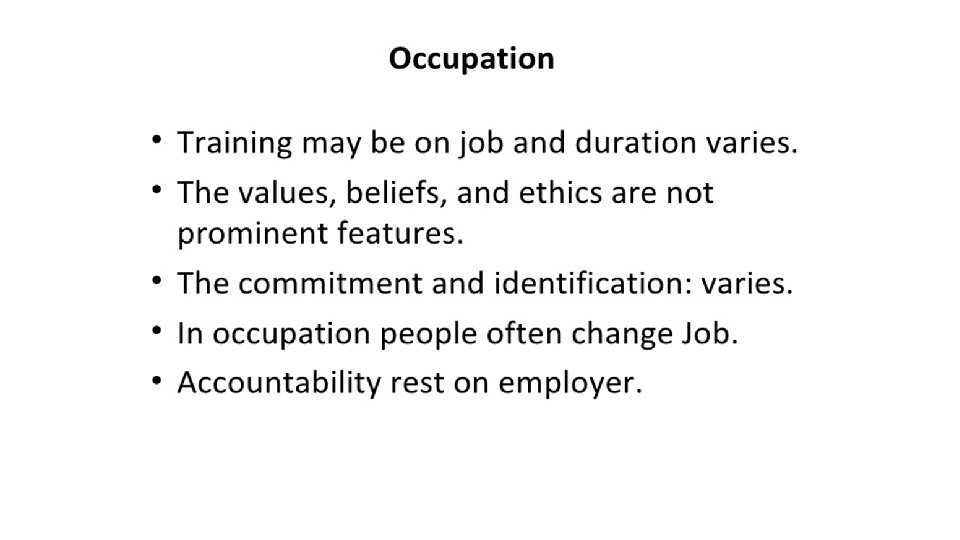
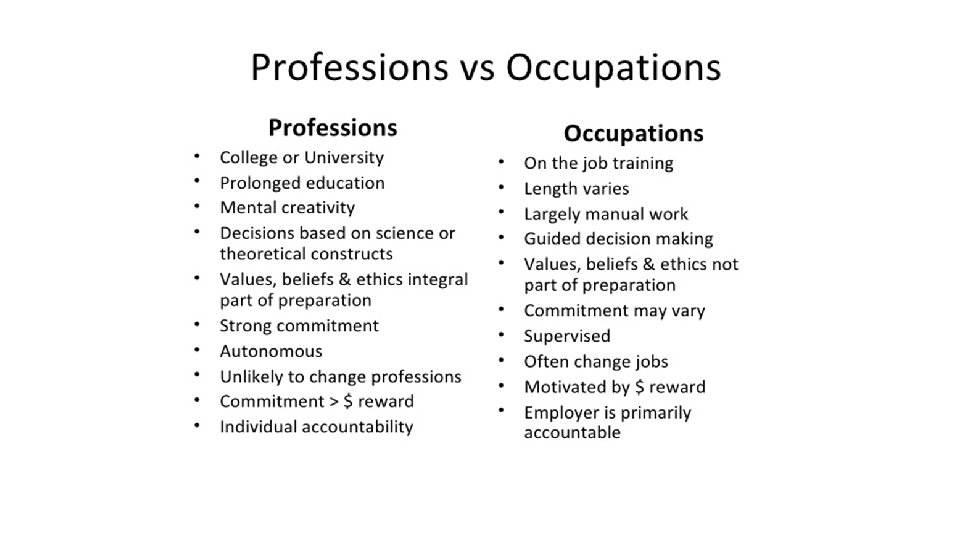
What about Nursing? ? ? • Is nursing • A profession? or • An occupation?
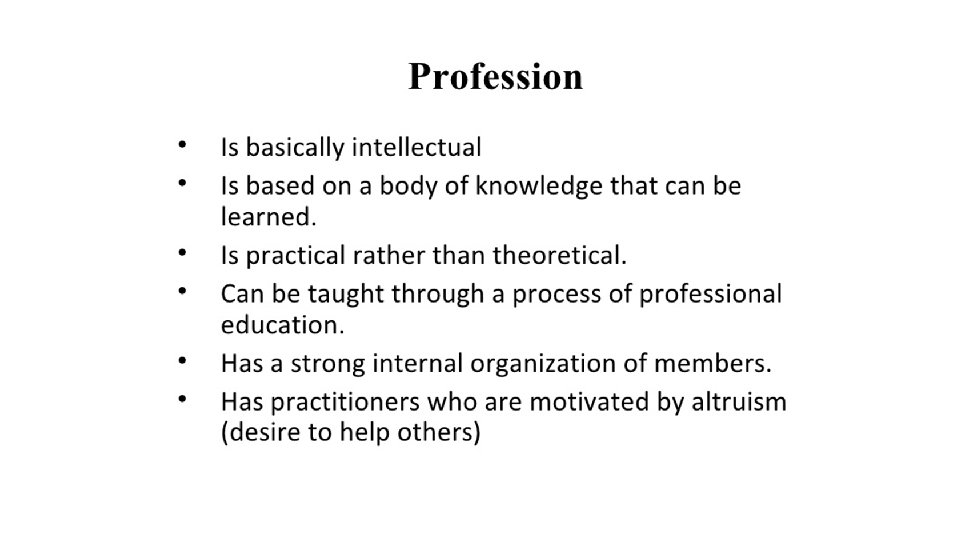
Nursing knowledge • • Specialized knowledge Expands knowledge by scientific method Institutions of higher education Services vital to human and social welfare Autonomously forms professional policy Intellectual and personal qualities Compensation = freedom, professional growth and economic security
Nursing Service • • Service is vital to humanity and society Knowledge continually enlarged through research Individual accountability Educated in institutions of higher education
• • Autonomy Motivated by altruism Code of ethics Association = high standards of practice
Commitment • Nurses Social Policy Statement – 2003 • Code of Ethics for Nurses – American Nurses Association - 2001
Autonomy • The quality or state of being self-governing; especially: the right of self-government • Self-directing freedom and especially moral independence • Guided by a code of ethics that regulates relationships between professional and client
• Common culture, norms and values between members • Clear standard of educational preparation for entry into practice • Members value service above personal gain • Compensation for member
Thank you