Depression in LongTerm Care Annette Carron DO CMD

- Slides: 63
Depression in Long-Term Care • • Annette Carron, DO, CMD, FACOI, FAAHPM Director Geriatrics and Palliative Care Botsford Hospital Slide 1
OBJECTIVES Know and understand: • Incidence and morbidity of depressive disorders among older adults • Signs and symptoms of depression • Standard of care for management for older adults with depression in long-term care – understand the American Medical Directors Association Clinical Practice Guideline (AMDA CPG) for treating depression in longterm care Slide 2
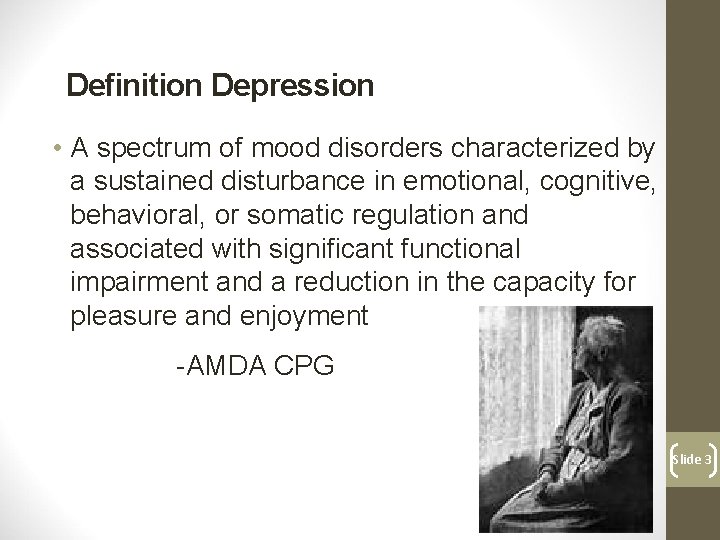
Definition Depression • A spectrum of mood disorders characterized by a sustained disturbance in emotional, cognitive, behavioral, or somatic regulation and associated with significant functional impairment and a reduction in the capacity for pleasure and enjoyment -AMDA CPG Slide 3
EPIDEMIOLOGY AMONG OLDER ADULTS Minor depression is common • 15% of older persons overall • 50% long-term care • Causes use of health services, excess disability, poor health outcomes, including mortality Slide 4
EPIDEMIOLOGY AMONG OLDER ADULTS • Major depression is not common • 1%– 2% of physically healthy community dwellers • 12 -16% in long-term care • Elders less likely to recognize or endorse depressed mood Side 5
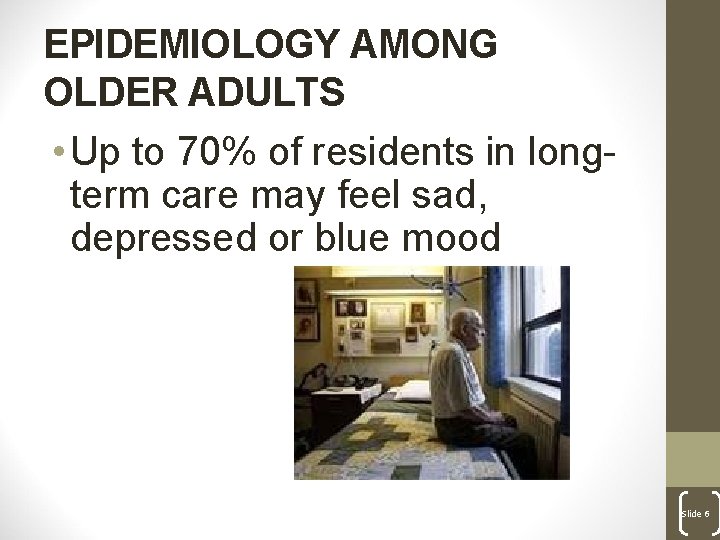
EPIDEMIOLOGY AMONG OLDER ADULTS • Up to 70% of residents in longterm care may feel sad, depressed or blue mood Slide 6
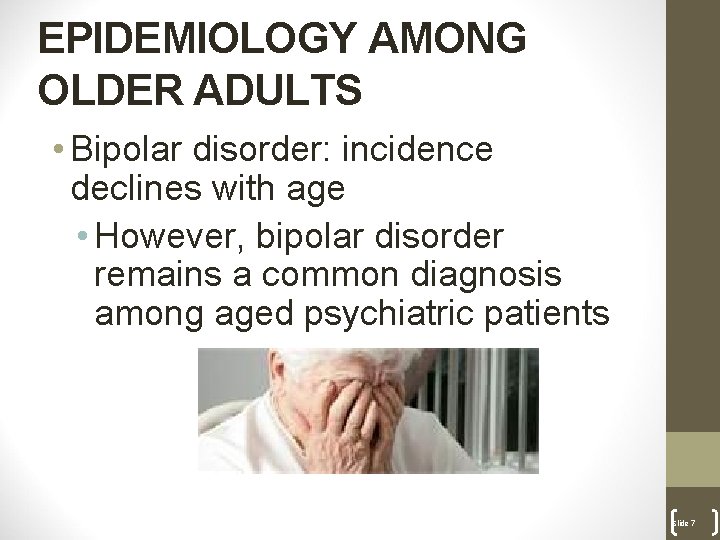
EPIDEMIOLOGY AMONG OLDER ADULTS • Bipolar disorder: incidence declines with age • However, bipolar disorder remains a common diagnosis among aged psychiatric patients Slide 7
AMDA Clinical Practice Guideline for Depression in Long-Term Care • Standard of Care • Stepwise Approach • Panel of Experts reviewing medical literature Slide 8
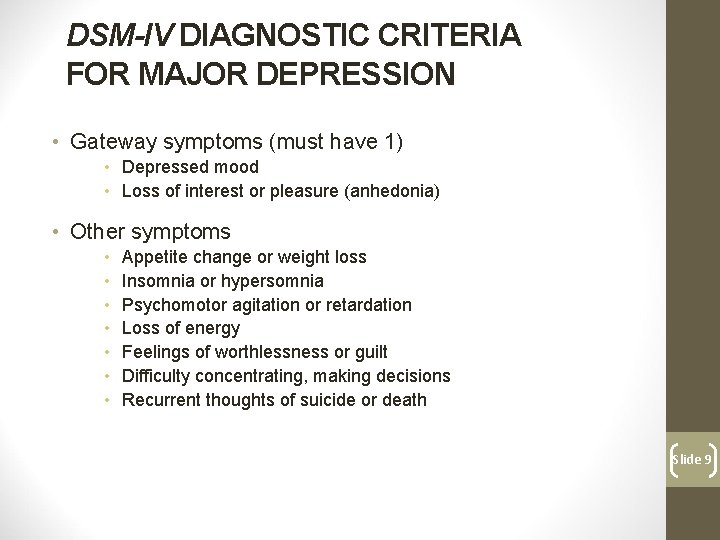
DSM-IV DIAGNOSTIC CRITERIA FOR MAJOR DEPRESSION • Gateway symptoms (must have 1) • Depressed mood • Loss of interest or pleasure (anhedonia) • Other symptoms • • Appetite change or weight loss Insomnia or hypersomnia Psychomotor agitation or retardation Loss of energy Feelings of worthlessness or guilt Difficulty concentrating, making decisions Recurrent thoughts of suicide or death Slide 9
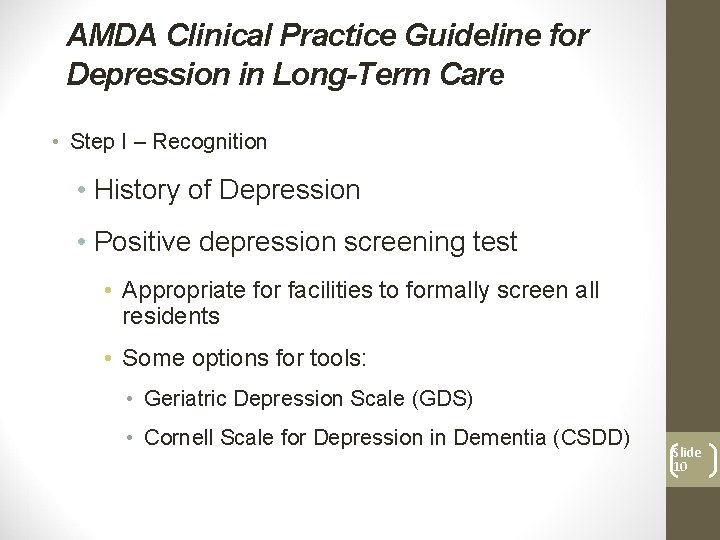
AMDA Clinical Practice Guideline for Depression in Long-Term Care • Step I – Recognition • History of Depression • Positive depression screening test • Appropriate for facilities to formally screen all residents • Some options for tools: • Geriatric Depression Scale (GDS) • Cornell Scale for Depression in Dementia (CSDD) Slide 10
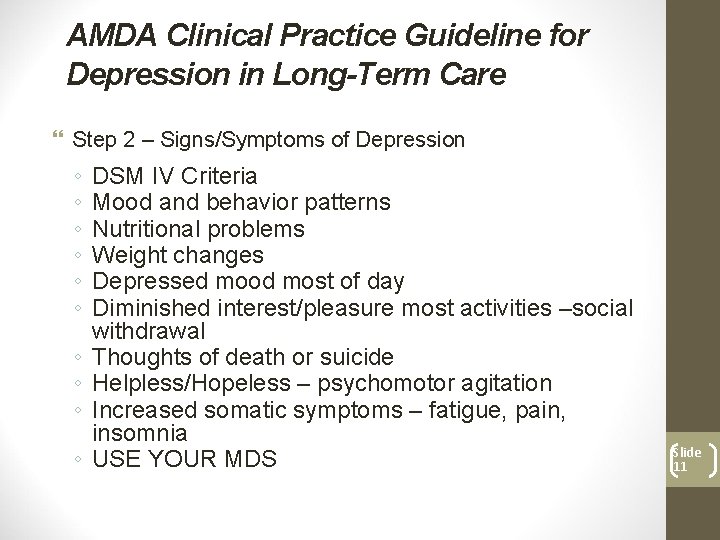
AMDA Clinical Practice Guideline for Depression in Long-Term Care Step 2 – Signs/Symptoms of Depression ◦ ◦ ◦ ◦ ◦ DSM IV Criteria Mood and behavior patterns Nutritional problems Weight changes Depressed mood most of day Diminished interest/pleasure most activities –social withdrawal Thoughts of death or suicide Helpless/Hopeless – psychomotor agitation Increased somatic symptoms – fatigue, pain, insomnia USE YOUR MDS Slide 11
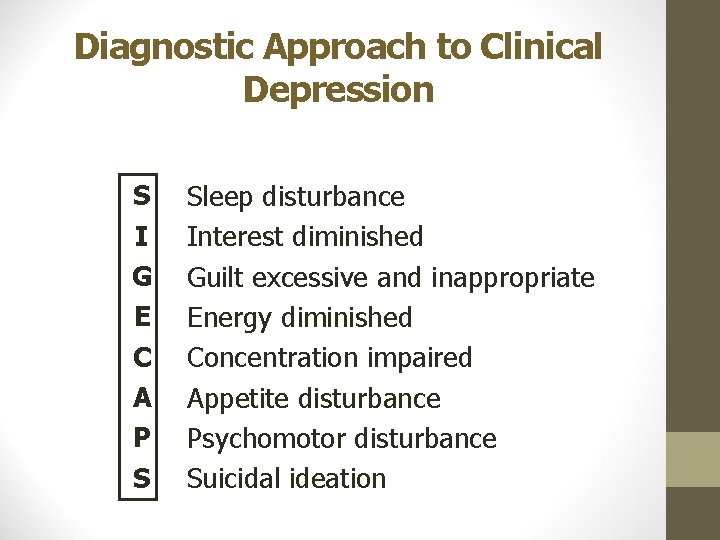
Diagnostic Approach to Clinical Depression S I G E C A P S Sleep disturbance Interest diminished Guilt excessive and inappropriate Energy diminished Concentration impaired Appetite disturbance Psychomotor disturbance Suicidal ideation
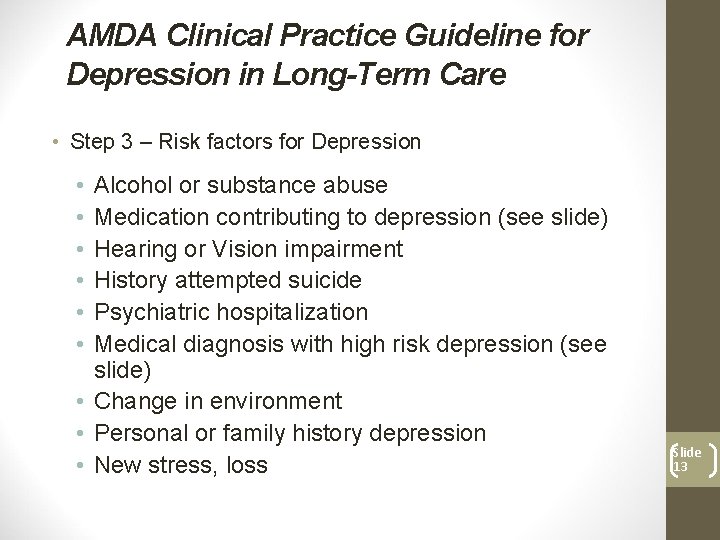
AMDA Clinical Practice Guideline for Depression in Long-Term Care • Step 3 – Risk factors for Depression • • • Alcohol or substance abuse Medication contributing to depression (see slide) Hearing or Vision impairment History attempted suicide Psychiatric hospitalization Medical diagnosis with high risk depression (see slide) • Change in environment • Personal or family history depression • New stress, loss Slide 13
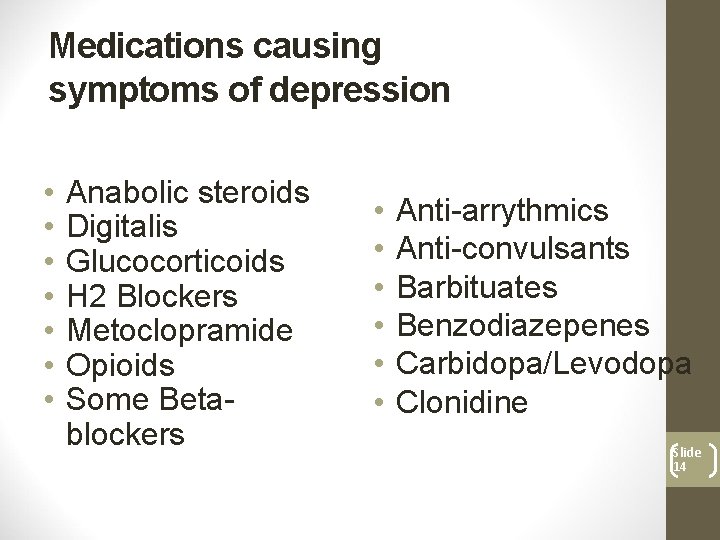
Medications causing symptoms of depression • • Anabolic steroids Digitalis Glucocorticoids H 2 Blockers Metoclopramide Opioids Some Betablockers • • • Anti-arrythmics Anti-convulsants Barbituates Benzodiazepenes Carbidopa/Levodopa Clonidine Slide 14
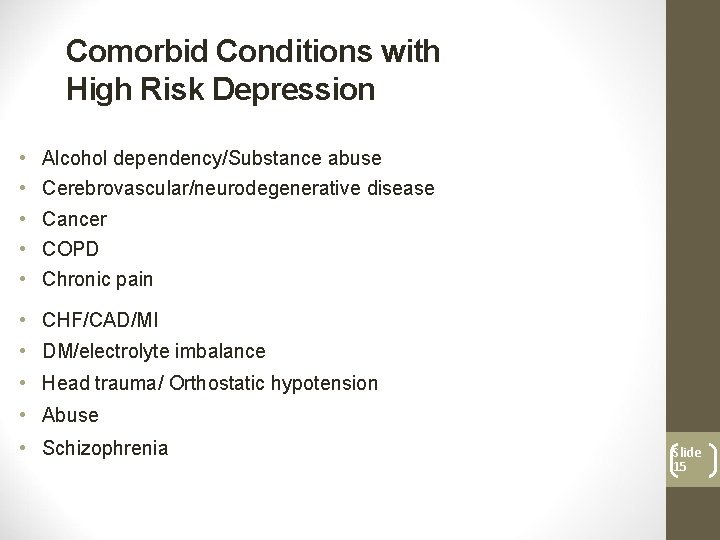
Comorbid Conditions with High Risk Depression • • • Alcohol dependency/Substance abuse Cerebrovascular/neurodegenerative disease Cancer COPD Chronic pain • CHF/CAD/MI • DM/electrolyte imbalance • Head trauma/ Orthostatic hypotension • Abuse • Schizophrenia Slide 15
AMDA Clinical Practice Guideline for Depression in Long-Term Care • Step 4 – Has the patient had a persistently depressed mood or loss of interest or pleasure for at least 2 weeks? Slide 16
AMDA Clinical Practice Guideline for Depression in Long-Term Care • Step 5 – Consider medical work-up • H&P • Basic labs, serum drug levels, thyroid • Consider other testing based on patient condition • Medical work-up may not be indication in some patients (i. e. terminal patients) MAKE NOTE IF WORK-UP NOT DONE Slide 17
AMDA Clinical Practice Guideline for Depression in Long-Term Care • Step 6 – Review Medications • Step 7 – Review medical conditions and optimize treatment • Step 8 – Do depressive symptoms improve with treatment medical conditions? • May still need to treat both conditions Slide 18
AMDA Clinical Practice Guideline for Depression in Long-Term Care • Step 9 – Clarify the diagnosis • Mild episode of major depression • Moderate episode of major depression • Severe episode of major depression with psychotic features • Minor depression disorder • Bipolar Type II • Dysthymic disorder • Adjustment disorder with depressed mood or with mixed anxiety and depressed mood Slide 19
AMDA Clinical Practice Guideline for Depression in Long-Term Care • Step 10 – Is additional psychiatric support needed? • Low threshold in LTC to consult psychiatry, especially with significant behavior issues, suicidal ideation, psychosis Slide 20
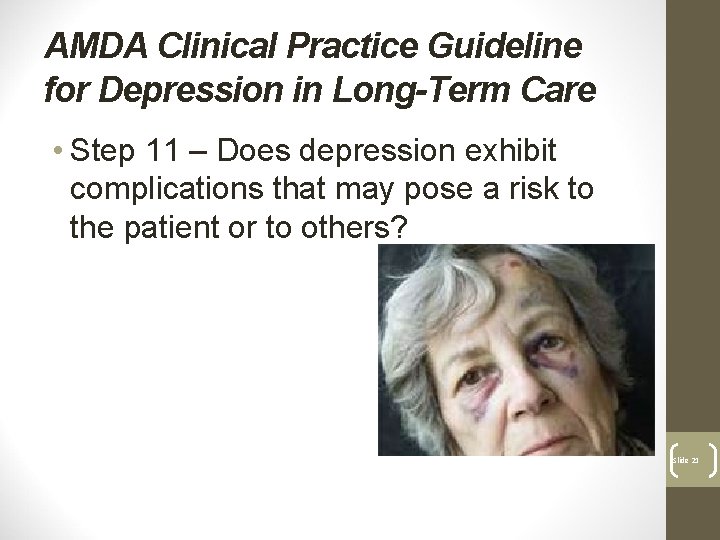
AMDA Clinical Practice Guideline for Depression in Long-Term Care • Step 11 – Does depression exhibit complications that may pose a risk to the patient or to others? Slide 21
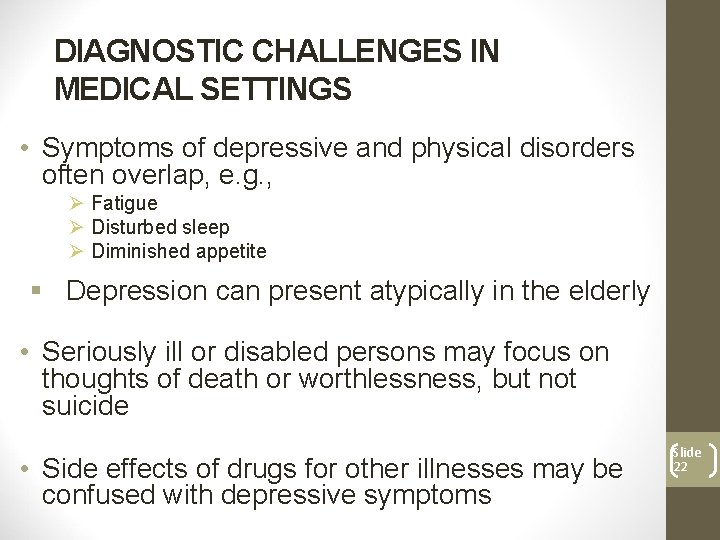
DIAGNOSTIC CHALLENGES IN MEDICAL SETTINGS • Symptoms of depressive and physical disorders often overlap, e. g. , Ø Fatigue Ø Disturbed sleep Ø Diminished appetite § Depression can present atypically in the elderly • Seriously ill or disabled persons may focus on thoughts of death or worthlessness, but not suicide • Side effects of drugs for other illnesses may be confused with depressive symptoms Slide 22
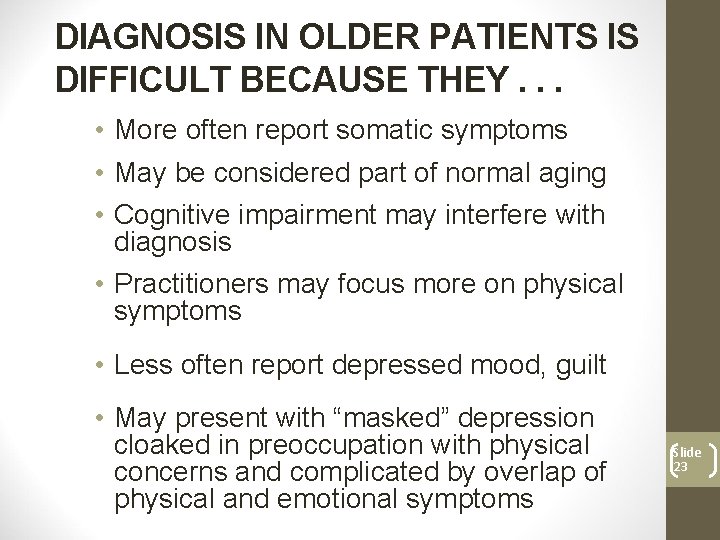
DIAGNOSIS IN OLDER PATIENTS IS DIFFICULT BECAUSE THEY. . . • More often report somatic symptoms • May be considered part of normal aging • Cognitive impairment may interfere with diagnosis • Practitioners may focus more on physical symptoms • Less often report depressed mood, guilt • May present with “masked” depression cloaked in preoccupation with physical concerns and complicated by overlap of physical and emotional symptoms Slide 23
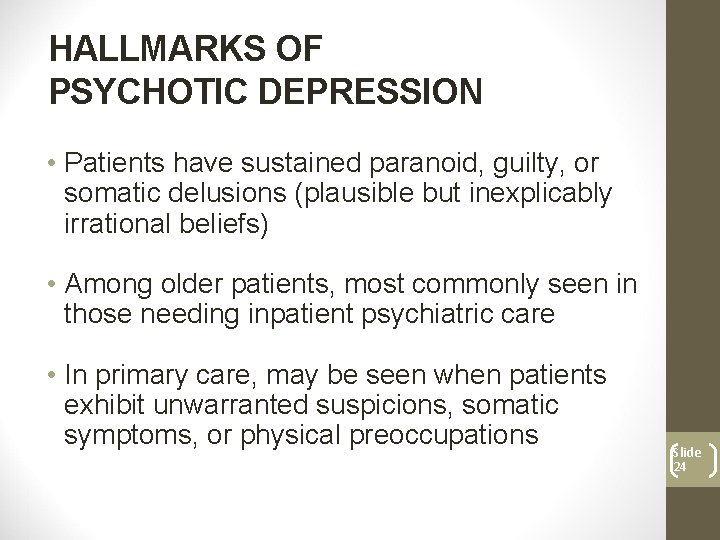
HALLMARKS OF PSYCHOTIC DEPRESSION • Patients have sustained paranoid, guilty, or somatic delusions (plausible but inexplicably irrational beliefs) • Among older patients, most commonly seen in those needing inpatient psychiatric care • In primary care, may be seen when patients exhibit unwarranted suspicions, somatic symptoms, or physical preoccupations Slide 24
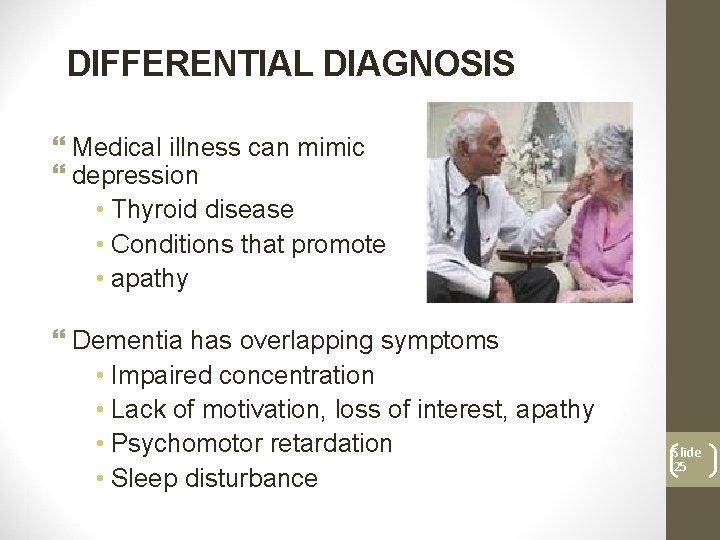
DIFFERENTIAL DIAGNOSIS Medical illness can mimic depression • Thyroid disease • Conditions that promote • apathy Dementia has overlapping symptoms • Impaired concentration • Lack of motivation, loss of interest, apathy • Psychomotor retardation • Sleep disturbance Slide 25
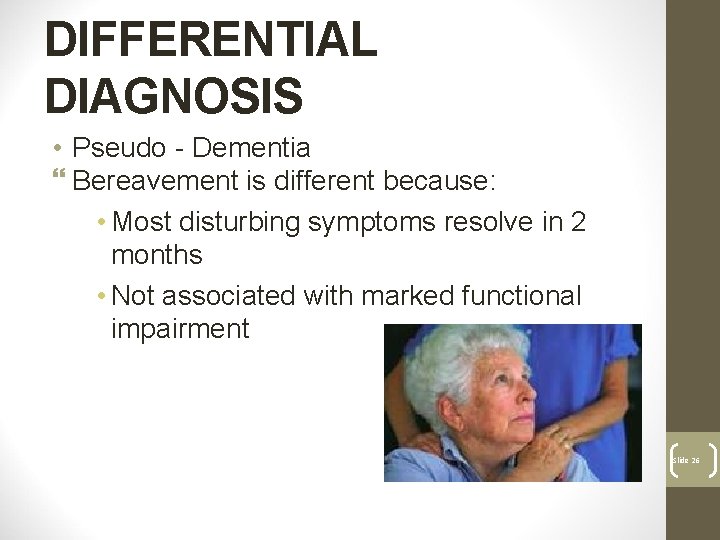
DIFFERENTIAL DIAGNOSIS • Pseudo - Dementia Bereavement is different because: • Most disturbing symptoms resolve in 2 months • Not associated with marked functional impairment Slide 26
CLINICAL COURSE IN MAJOR DEPRESSION • Often slow onset, recurrence, partial recovery, and chronicity. . . disability use of health care resources morbidity and mortality suicide Slide 27
OLDER ADULTS AND SUICIDE • Older age associated with increasing risk of suicide • One fourth of all suicides occur in persons 65 • Risk factors: depression, physical illness, living alone, male gender, alcoholism • Violent suicides (e. g. firearms, hanging) are more common than non-violent methods among older adults, despite the potential for drug overdosing Slide 28
STEPS IN TREATING DEPRESSION • Acute—reverse current episode • Continuation—prevent a relapse Ø Continue for 6 months • Prophylaxis or maintenance—prevent future recurrence Ø Continue for 3 years or longer Slide 29
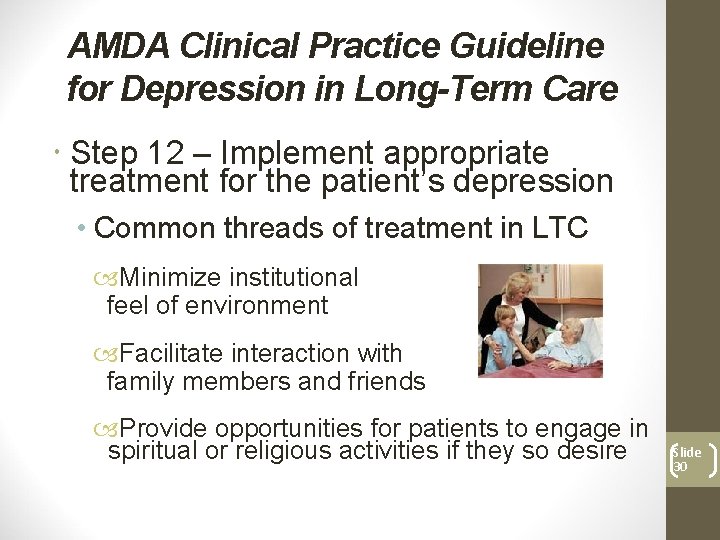
AMDA Clinical Practice Guideline for Depression in Long-Term Care Step 12 – Implement appropriate treatment for the patient’s depression • Common threads of treatment in LTC Minimize institutional feel of environment Facilitate interaction with family members and friends Provide opportunities for patients to engage in spiritual or religious activities if they so desire Slide 30
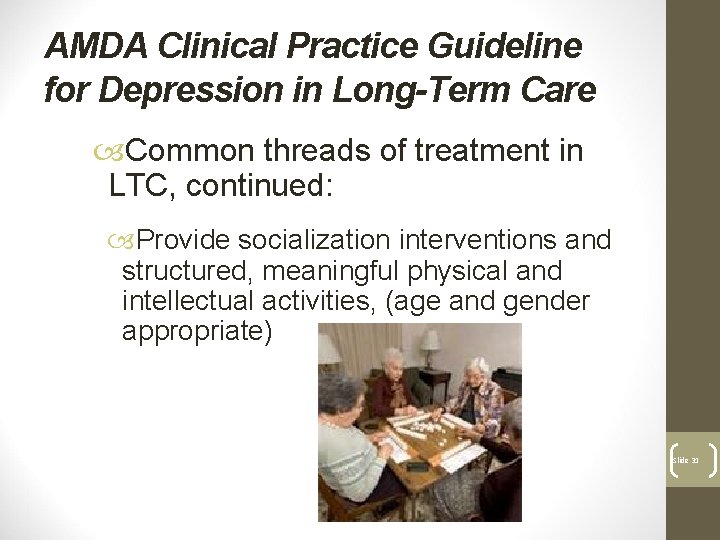
AMDA Clinical Practice Guideline for Depression in Long-Term Care Common threads of treatment in LTC, continued: Provide socialization interventions and structured, meaningful physical and intellectual activities, (age and gender appropriate) Slide 31
AMDA Clinical Practice Guideline for Depression in Long-Term Care Common threads of treatment in LTC, continued: INTERDISCIPLINARY INCLUDE FAMILY/DECISION MAKER Complete Psychotropic paperwork Slide 32
TYPES OF THERAPY FOR DEPRESSION • Psychotherapy • Pharmacotherapy • Electroconvulsive therapy (ECT) Slide 33
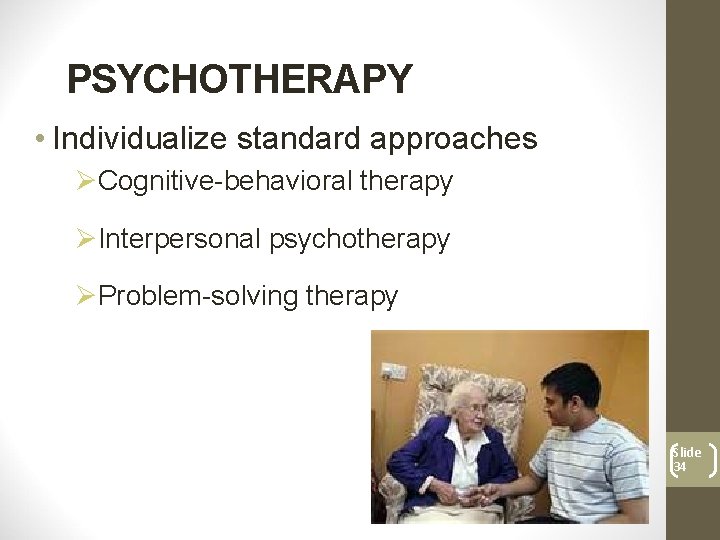
PSYCHOTHERAPY • Individualize standard approaches ØCognitive-behavioral therapy ØInterpersonal psychotherapy ØProblem-solving therapy Slide 34
PSYCHOTHERAPY, Continued • Combine with an antidepressant (has been shown to extend remission after recovery) • Watch for depressive syndromes in caregivers, who might benefit from therapy • Psychosocial interventions – bereavement groups, family counseling Slide 35
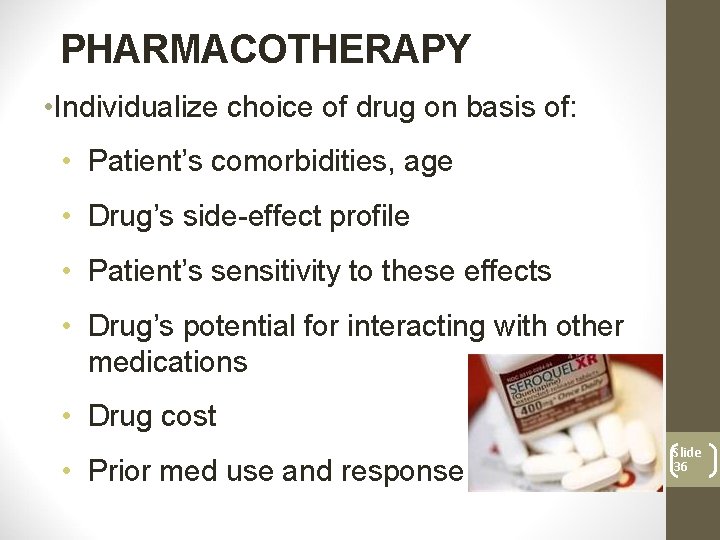
PHARMACOTHERAPY • Individualize choice of drug on basis of: • Patient’s comorbidities, age • Drug’s side-effect profile • Patient’s sensitivity to these effects • Drug’s potential for interacting with other medications • Drug cost • Prior med use and response Slide 36
ANTIDEPRESSANTS • Tricyclic antidepressants (TCAs) • Selective serotonin-reuptake inhibitors (SSRIs) • Others: bupropion, venlafaxine, duloxetine, nefazodone, mirtazapine, MAOIs, methylphenidate Slide 37
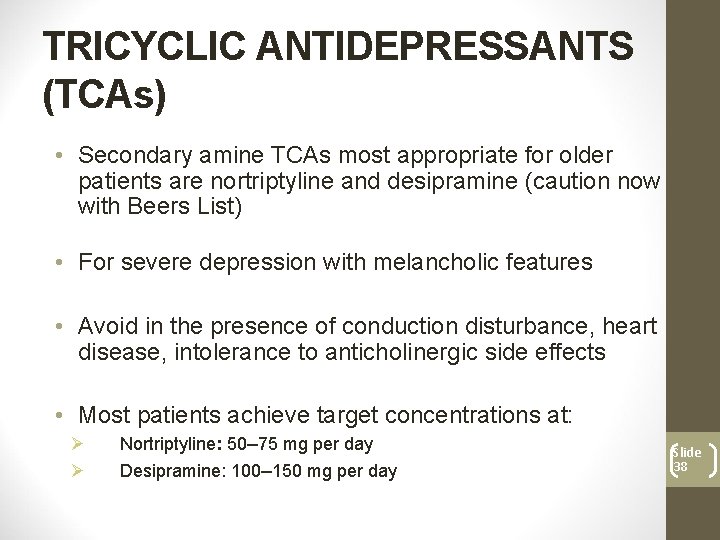
TRICYCLIC ANTIDEPRESSANTS (TCAs) • Secondary amine TCAs most appropriate for older patients are nortriptyline and desipramine (caution now with Beers List) • For severe depression with melancholic features • Avoid in the presence of conduction disturbance, heart disease, intolerance to anticholinergic side effects • Most patients achieve target concentrations at: Ø Ø Nortriptyline: 50– 75 mg per day Desipramine: 100– 150 mg per day Slide 38
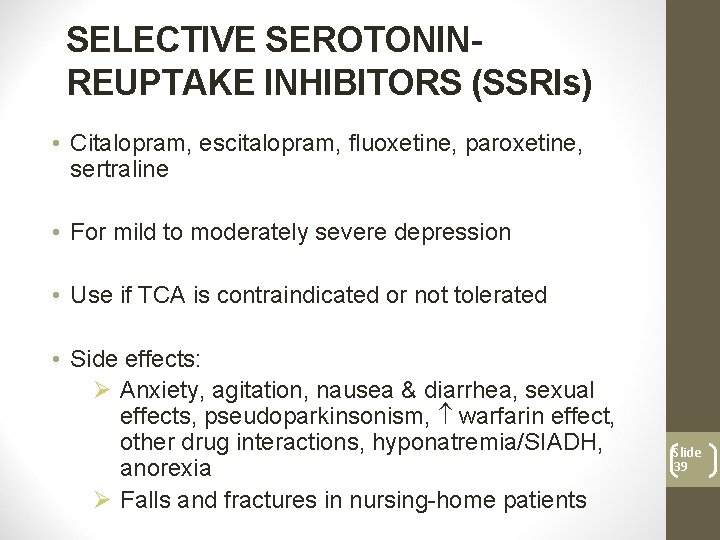
SELECTIVE SEROTONINREUPTAKE INHIBITORS (SSRIs) • Citalopram, escitalopram, fluoxetine, paroxetine, sertraline • For mild to moderately severe depression • Use if TCA is contraindicated or not tolerated • Side effects: Ø Anxiety, agitation, nausea & diarrhea, sexual effects, pseudoparkinsonism, warfarin effect, other drug interactions, hyponatremia/SIADH, anorexia Ø Falls and fractures in nursing-home patients Slide 39
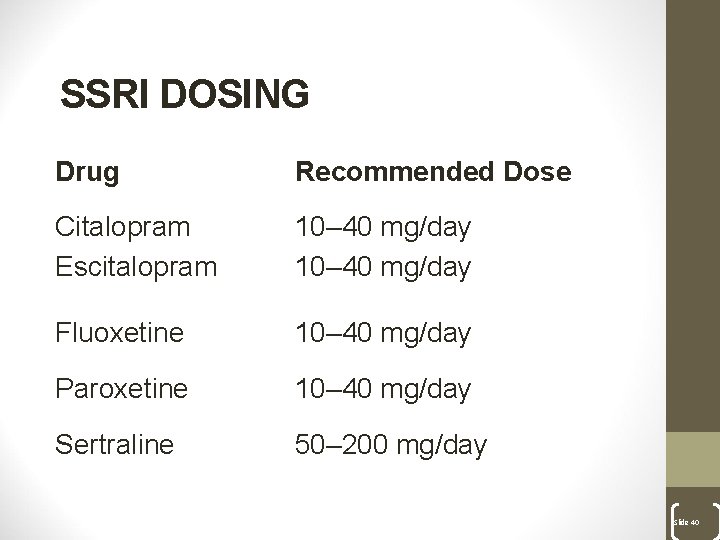
SSRI DOSING Drug Recommended Dose Citalopram Escitalopram 10– 40 mg/day Fluoxetine 10– 40 mg/day Paroxetine 10– 40 mg/day Sertraline 50– 200 mg/day Slide 40
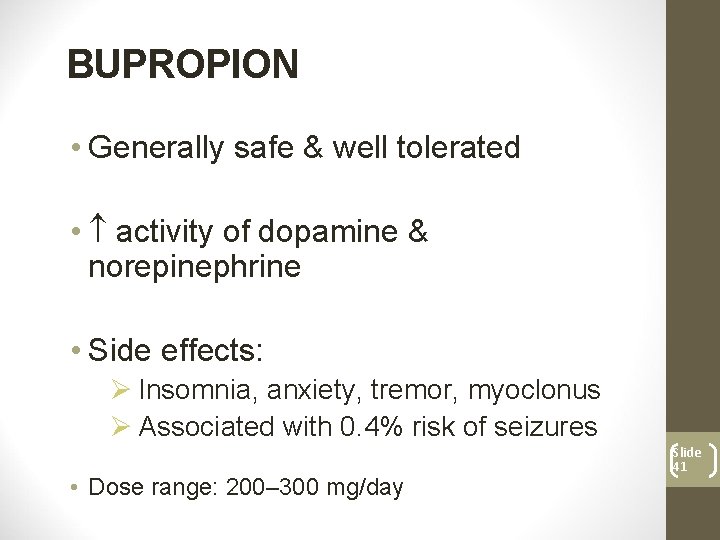
BUPROPION • Generally safe & well tolerated • activity of dopamine & norepinephrine • Side effects: Ø Insomnia, anxiety, tremor, myoclonus Ø Associated with 0. 4% risk of seizures • Dose range: 200– 300 mg/day Slide 41
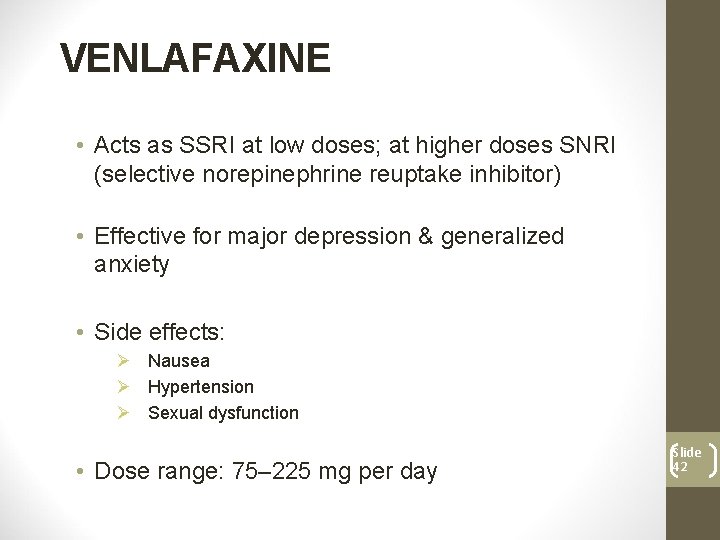
VENLAFAXINE • Acts as SSRI at low doses; at higher doses SNRI (selective norepinephrine reuptake inhibitor) • Effective for major depression & generalized anxiety • Side effects: Ø Nausea Ø Hypertension Ø Sexual dysfunction • Dose range: 75– 225 mg per day Slide 42
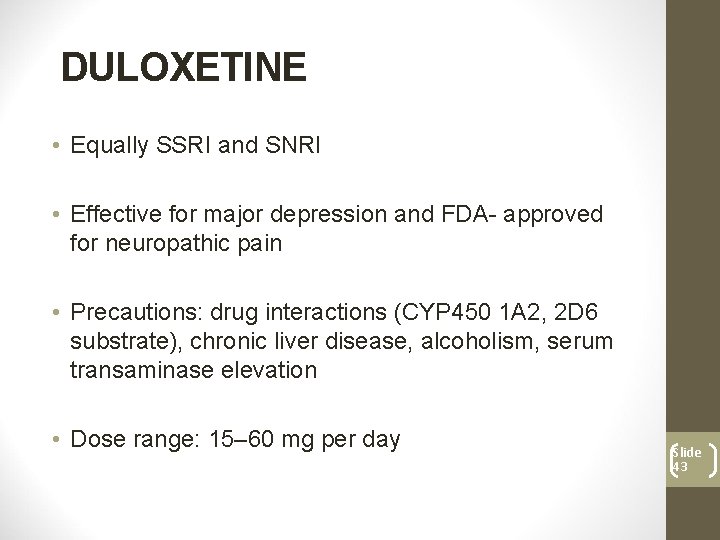
DULOXETINE • Equally SSRI and SNRI • Effective for major depression and FDA- approved for neuropathic pain • Precautions: drug interactions (CYP 450 1 A 2, 2 D 6 substrate), chronic liver disease, alcoholism, serum transaminase elevation • Dose range: 15– 60 mg per day Slide 43
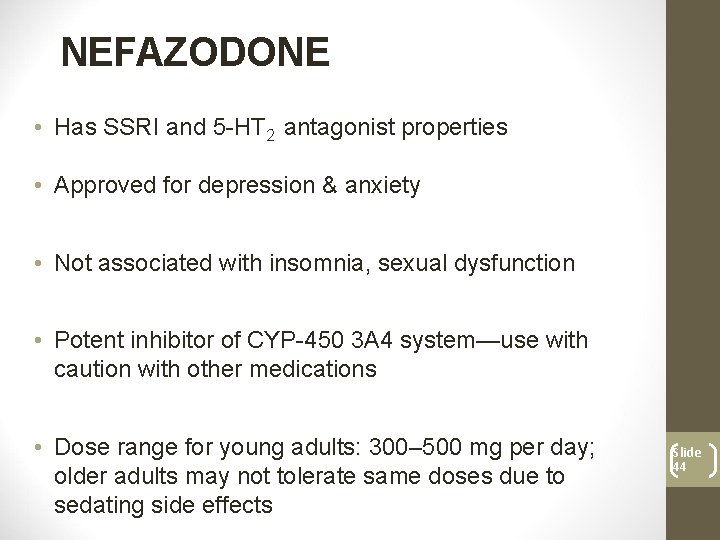
NEFAZODONE • Has SSRI and 5 -HT 2 antagonist properties • Approved for depression & anxiety • Not associated with insomnia, sexual dysfunction • Potent inhibitor of CYP-450 3 A 4 system—use with caution with other medications • Dose range for young adults: 300– 500 mg per day; older adults may not tolerate same doses due to sedating side effects Slide 44
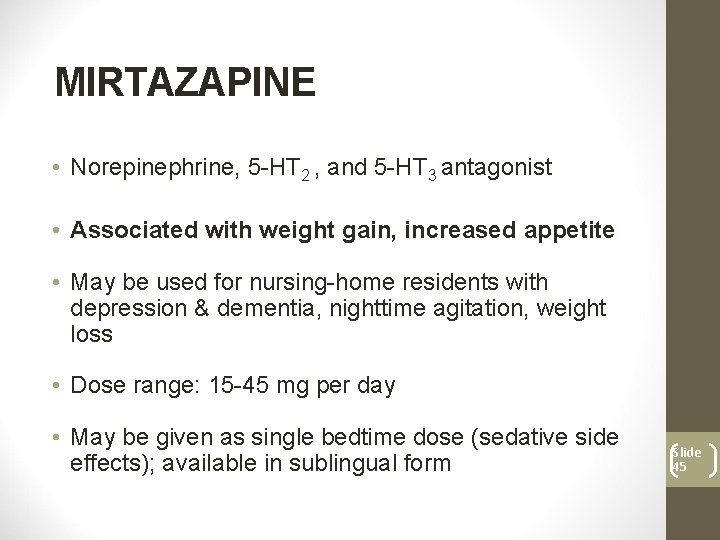
MIRTAZAPINE • Norepinephrine, 5 -HT 2 , and 5 -HT 3 antagonist • Associated with weight gain, increased appetite • May be used for nursing-home residents with depression & dementia, nighttime agitation, weight loss • Dose range: 15 -45 mg per day • May be given as single bedtime dose (sedative side effects); available in sublingual form Slide 45
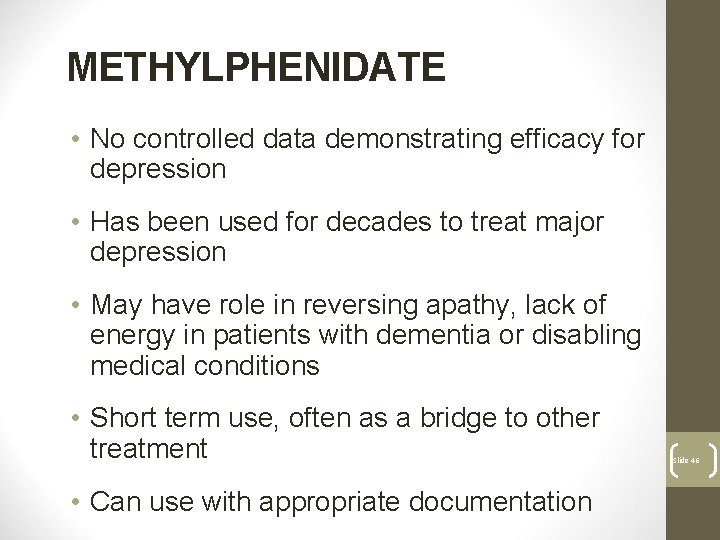
METHYLPHENIDATE • No controlled data demonstrating efficacy for depression • Has been used for decades to treat major depression • May have role in reversing apathy, lack of energy in patients with dementia or disabling medical conditions • Short term use, often as a bridge to other treatment • Can use with appropriate documentation Slide 46
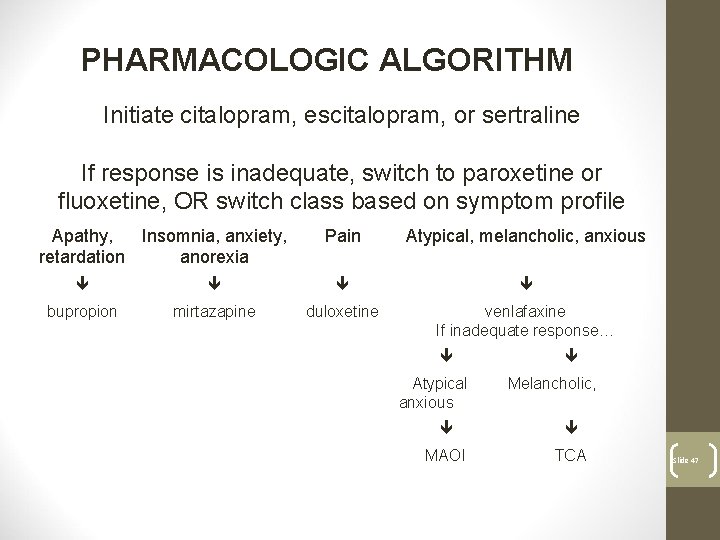
PHARMACOLOGIC ALGORITHM Initiate citalopram, escitalopram, or sertraline If response is inadequate, switch to paroxetine or fluoxetine, OR switch class based on symptom profile Apathy, Insomnia, anxiety, retardation anorexia Pain Atypical, melancholic, anxious bupropion mirtazapine duloxetine venlafaxine If inadequate response… Atypical anxious Melancholic, MAOI TCA Slide 47
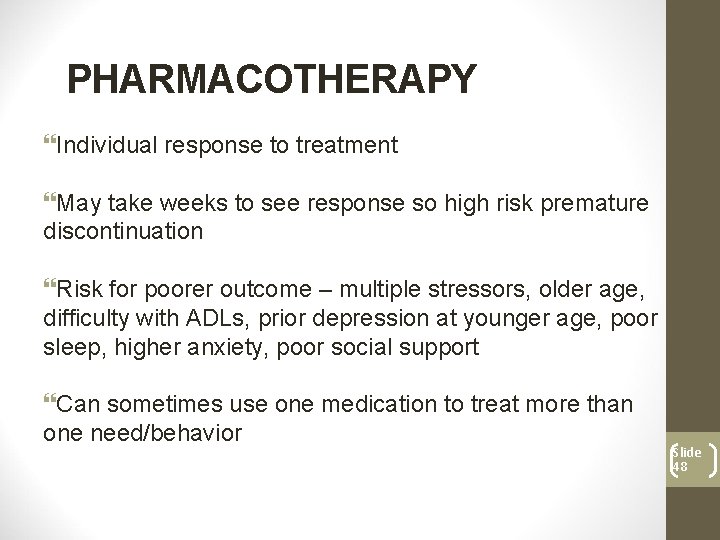
PHARMACOTHERAPY Individual response to treatment May take weeks to see response so high risk premature discontinuation Risk for poorer outcome – multiple stressors, older age, difficulty with ADLs, prior depression at younger age, poor sleep, higher anxiety, poor social support Can sometimes use one medication to treat more than one need/behavior Slide 48
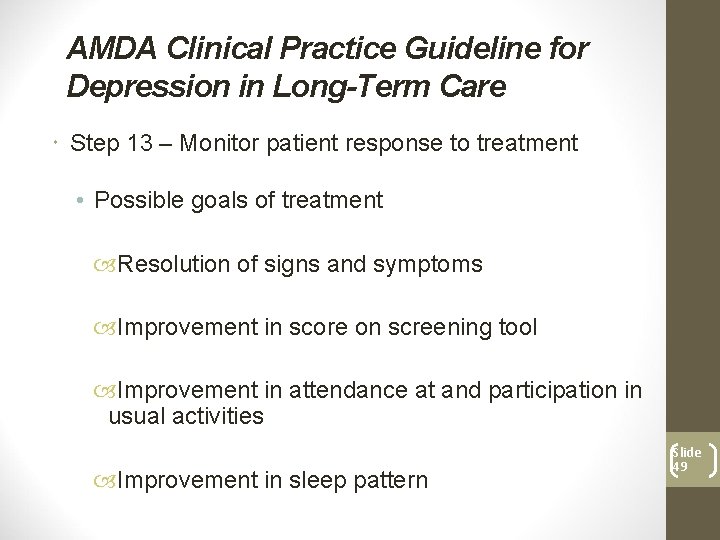
AMDA Clinical Practice Guideline for Depression in Long-Term Care Step 13 – Monitor patient response to treatment • Possible goals of treatment Resolution of signs and symptoms Improvement in score on screening tool Improvement in attendance at and participation in usual activities Improvement in sleep pattern Slide 49
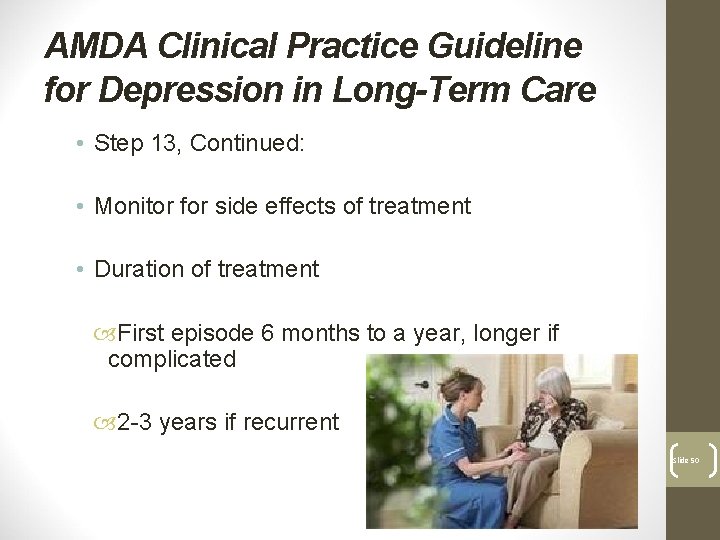
AMDA Clinical Practice Guideline for Depression in Long-Term Care • Step 13, Continued: • Monitor for side effects of treatment • Duration of treatment First episode 6 months to a year, longer if complicated 2 -3 years if recurrent Slide 50
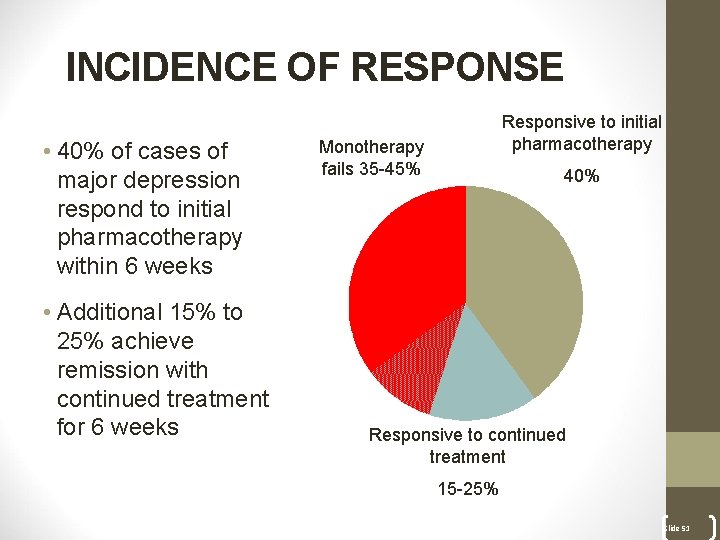
INCIDENCE OF RESPONSE • 40% of cases of major depression respond to initial pharmacotherapy within 6 weeks • Additional 15% to 25% achieve remission with continued treatment for 6 weeks Responsive to initial pharmacotherapy Monotherapy fails 35 -45% 40% Responsive to continued treatment 15 -25% Slide 51
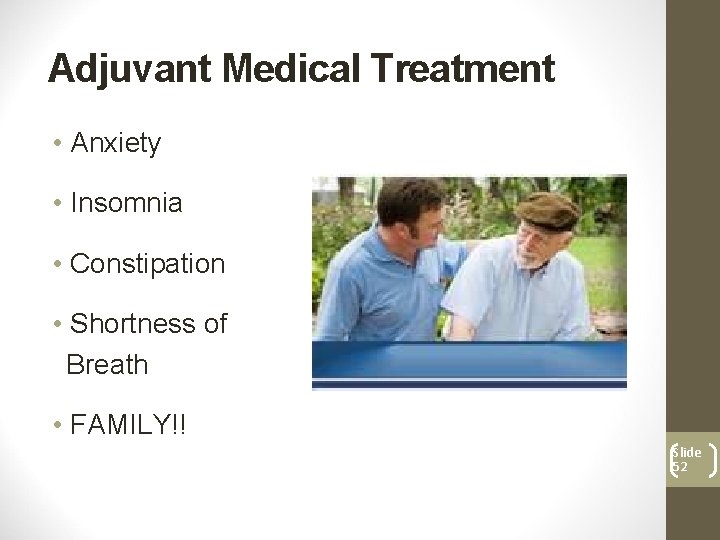
Adjuvant Medical Treatment • Anxiety • Insomnia • Constipation • Shortness of Breath • FAMILY!! Slide 52
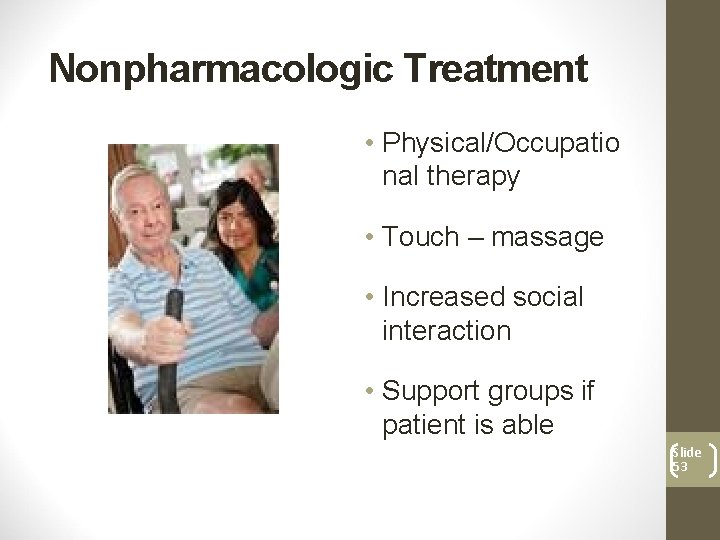
Nonpharmacologic Treatment • Physical/Occupatio nal therapy • Touch – massage • Increased social interaction • Support groups if patient is able Slide 53
MANAGING NONRESPONSE • The most common prescribing error is failure to increase the dose to the recommended level within the first 2 weeks of treatment • When monotherapy fails: Ø Consider switch to another drug class Ø Combine lithium carbonate, methylphenidate, or triiodothyronine with secondary amine TCA Ø Add psychotherapy Ø Consult a geriatric psychiatrist Slide 54
REASONS TO USE ECT (Electroconvulsive Therapy) • Effective for treatment of major depression & mania; response rates exceed 70% in older adults • First-line treatment for patients at serious risk for suicide, lifethreatening poor intake • Standard for psychotic depression in older adults; response rates 80% Slide 55
SUMMARY • In older adults, depression is Ø Common (especially “minor” depression) Ø Associated with morbidity Ø Difficult to diagnose because of atypical presentation, more somatic concerns, overlap with symptoms of other illnesses • Differential diagnosis: medical illnesses, dementia, bereavement Slide 56
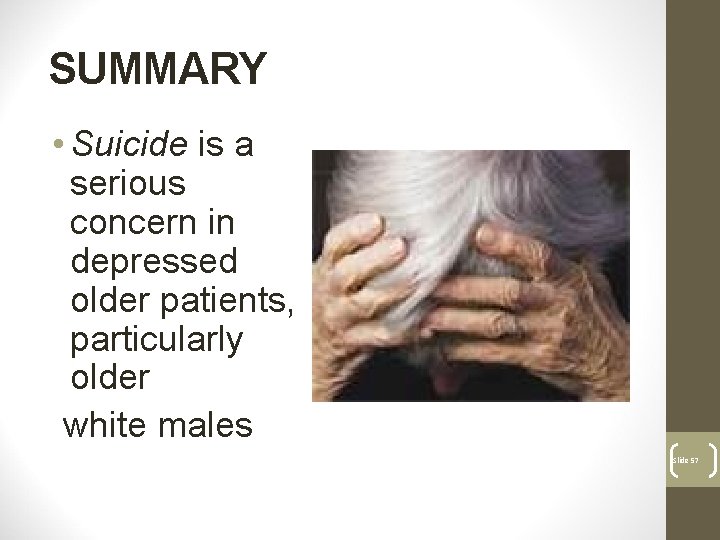
SUMMARY • Suicide is a serious concern in depressed older patients, particularly older white males Slide 57
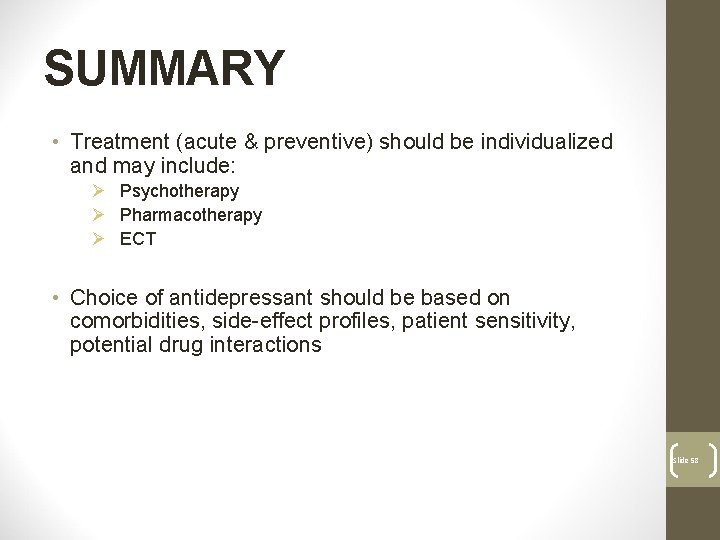
SUMMARY • Treatment (acute & preventive) should be individualized and may include: Ø Psychotherapy Ø Pharmacotherapy Ø ECT • Choice of antidepressant should be based on comorbidities, side-effect profiles, patient sensitivity, potential drug interactions Slide 58
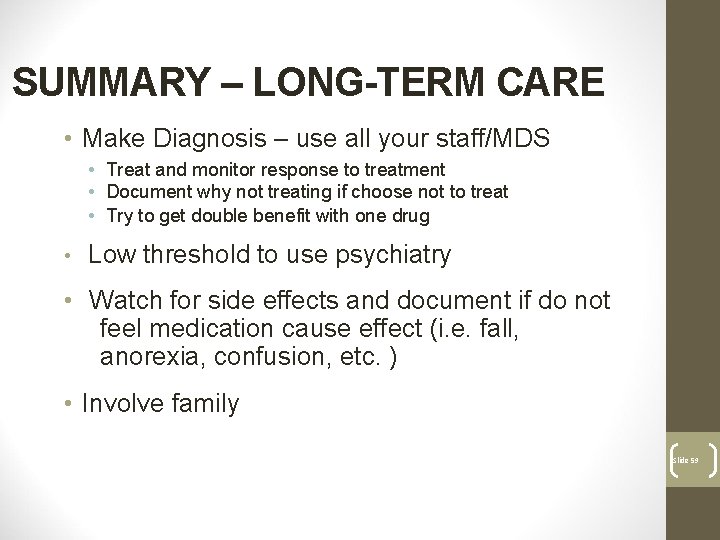
SUMMARY – LONG-TERM CARE • Make Diagnosis – use all your staff/MDS • Treat and monitor response to treatment • Document why not treating if choose not to treat • Try to get double benefit with one drug • Low threshold to use psychiatry • Watch for side effects and document if do not feel medication cause effect (i. e. fall, anorexia, confusion, etc. ) • Involve family Slide 59
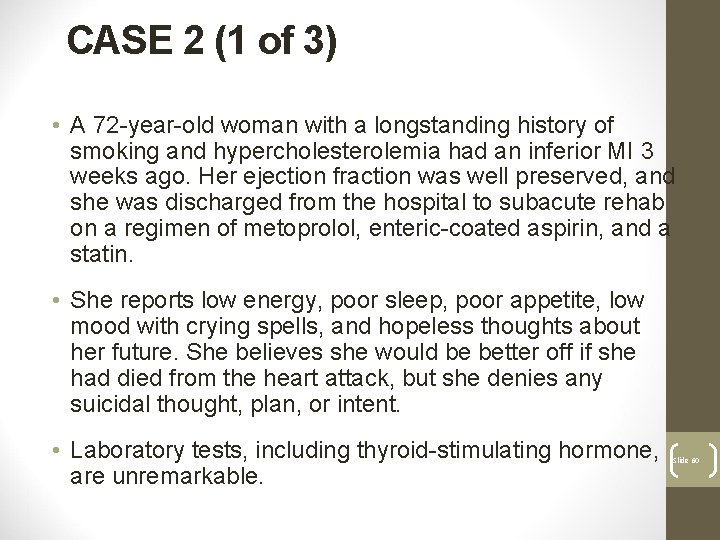
CASE 2 (1 of 3) • A 72 -year-old woman with a longstanding history of smoking and hypercholesterolemia had an inferior MI 3 weeks ago. Her ejection fraction was well preserved, and she was discharged from the hospital to subacute rehab on a regimen of metoprolol, enteric-coated aspirin, and a statin. • She reports low energy, poor sleep, poor appetite, low mood with crying spells, and hopeless thoughts about her future. She believes she would be better off if she had died from the heart attack, but she denies any suicidal thought, plan, or intent. • Laboratory tests, including thyroid-stimulating hormone, are unremarkable. Slide 60
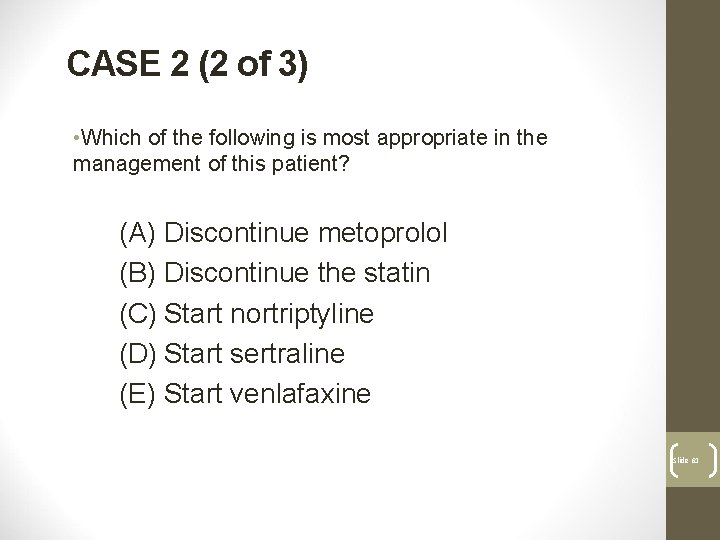
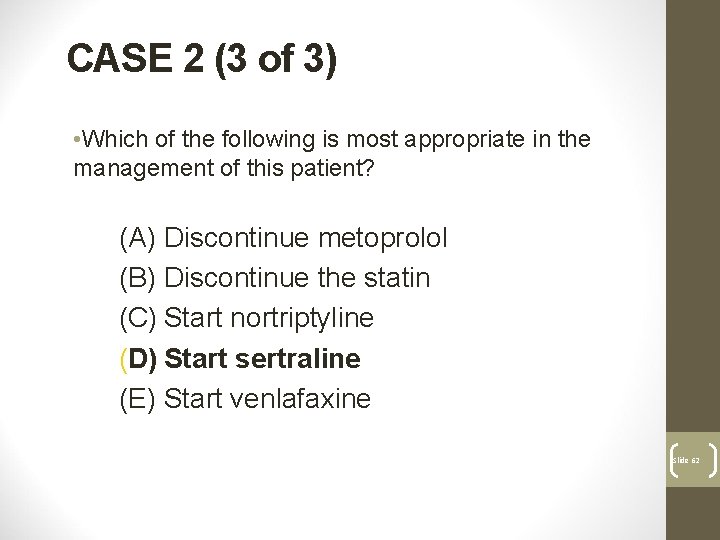
CASE 2 (2 of 3) • Which of the following is most appropriate in the management of this patient? (A) Discontinue metoprolol (B) Discontinue the statin (C) Start nortriptyline (D) Start sertraline (E) Start venlafaxine Slide 61
CASE 2 (3 of 3) • Which of the following is most appropriate in the management of this patient? (A) Discontinue metoprolol (B) Discontinue the statin (C) Start nortriptyline (D) Start sertraline (E) Start venlafaxine Slide 62
Slide 63