CERN System of Accelerators Lecture 2 Frank Zimmermann



- Slides: 66
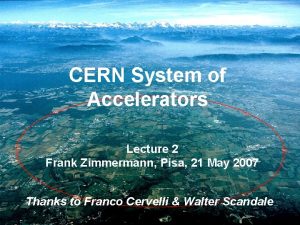
CERN System of Accelerators Lecture 2 Frank Zimmermann, Pisa, 21 May 2007 Thanks to Franco Cervelli & Walter Scandale
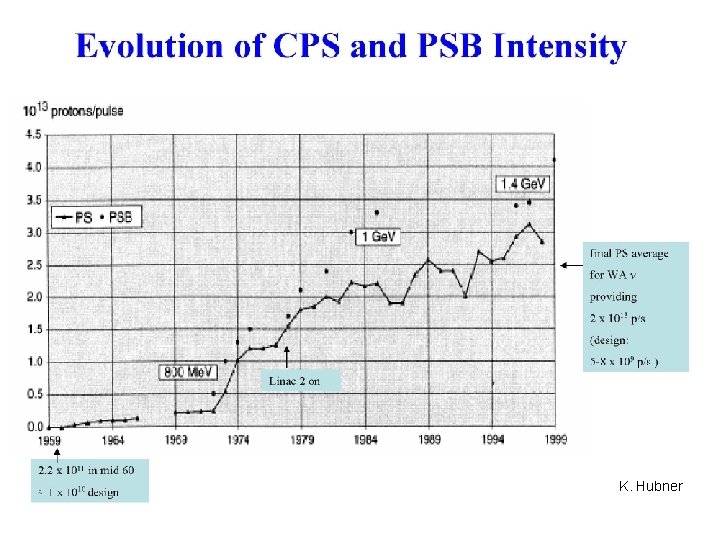
K. Hubner “first strong-focusing ring” “first hadron collider” “first proton-antiproton collider” “highest energy e+e- & pp colllisions”
K. Hubner
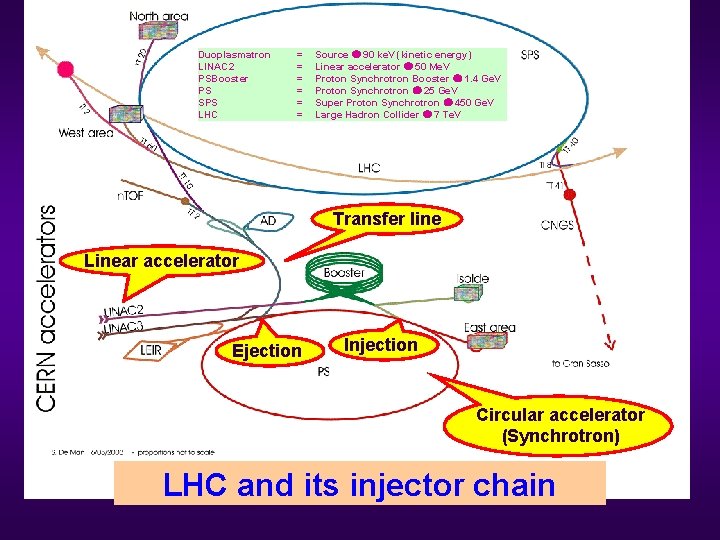
Duoplasmatron LINAC 2 PSBooster PS SPS LHC = = = Source 90 ke. V (kinetic energy) Linear accelerator 50 Me. V Proton Synchrotron Booster 1. 4 Ge. V Proton Synchrotron 25 Ge. V Super Proton Synchrotron 450 Ge. V Large Hadron Collider 7 Te. V Transfer line Linear accelerator Ejection Injection Circular accelerator (Synchrotron) LHC and its injector chain
LHC requirements M. Benedikt
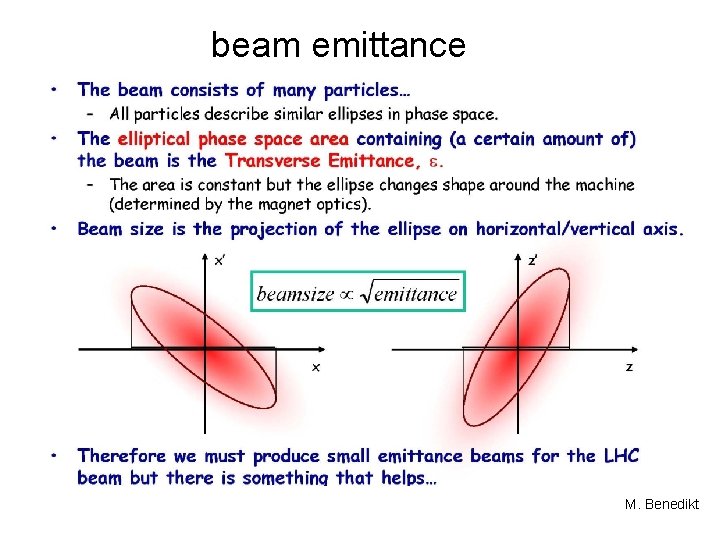
beam emittance M. Benedikt
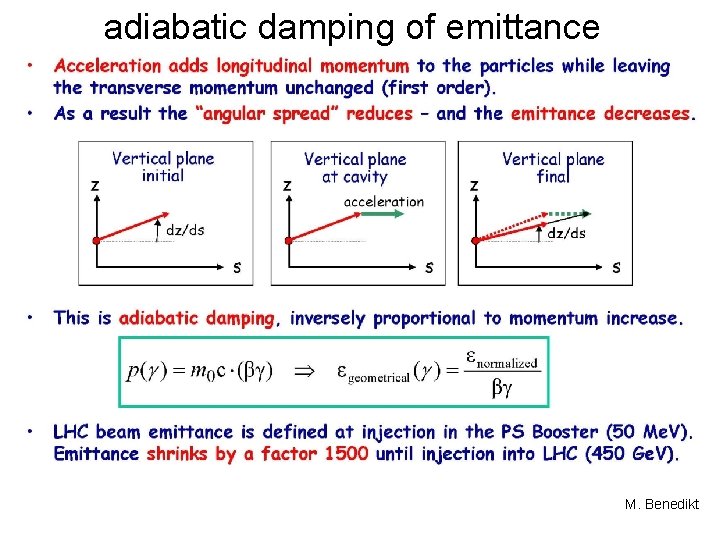
adiabatic damping of emittance M. Benedikt
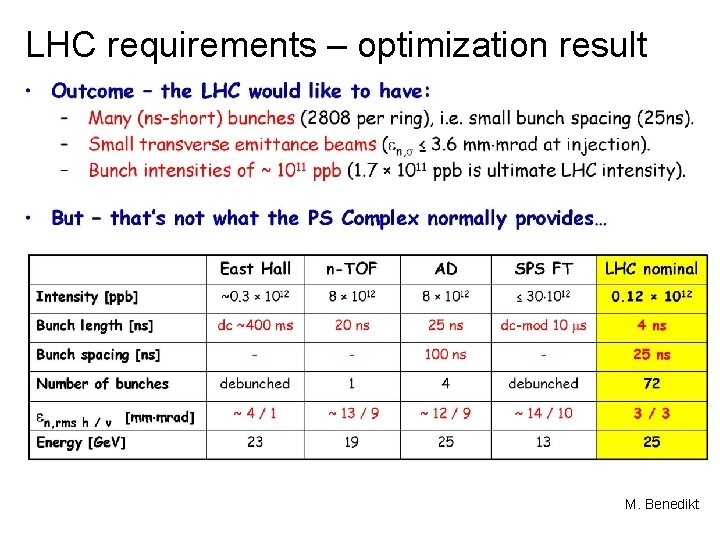
LHC requirements – optimization result M. Benedikt
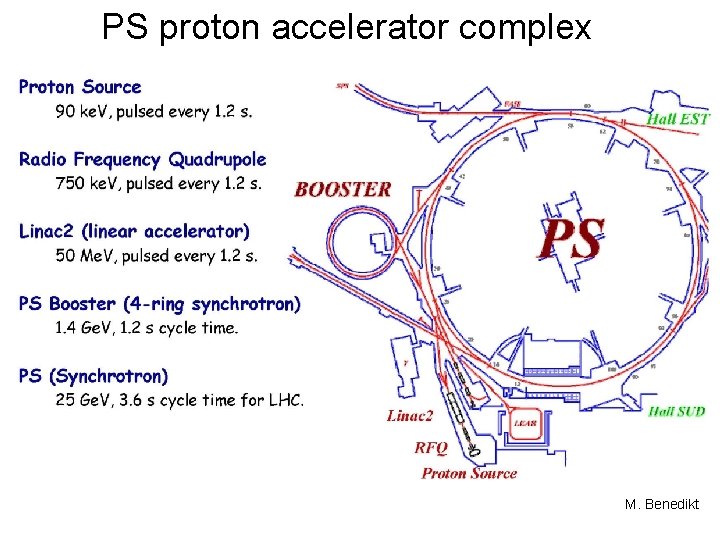
PS proton accelerator complex M. Benedikt
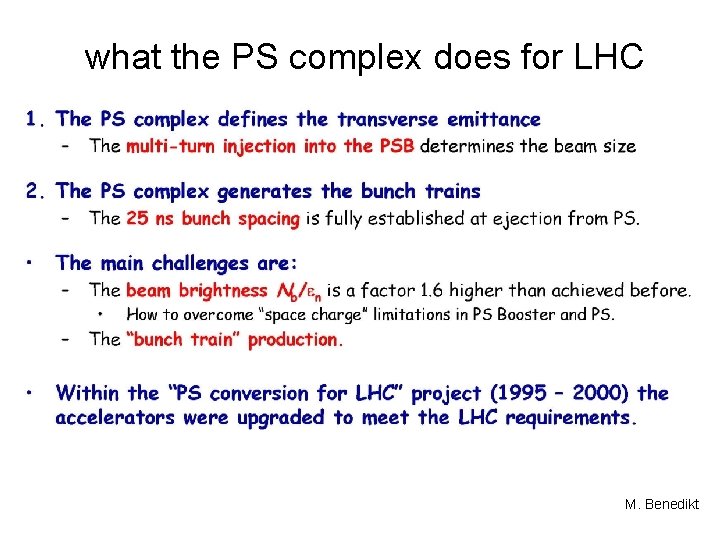
what the PS complex does for LHC M. Benedikt
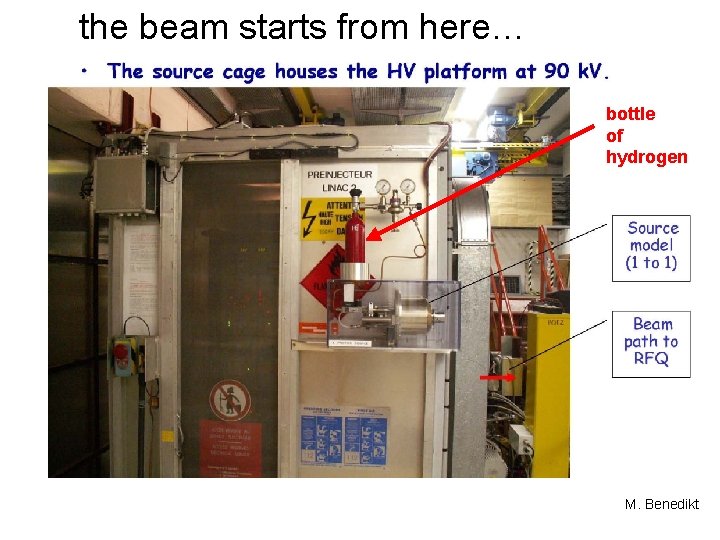
the beam starts from here… bottle of hydrogen M. Benedikt
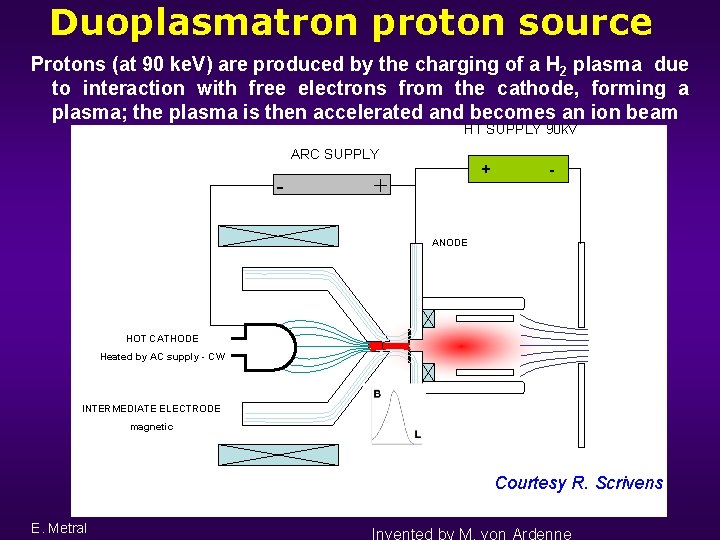
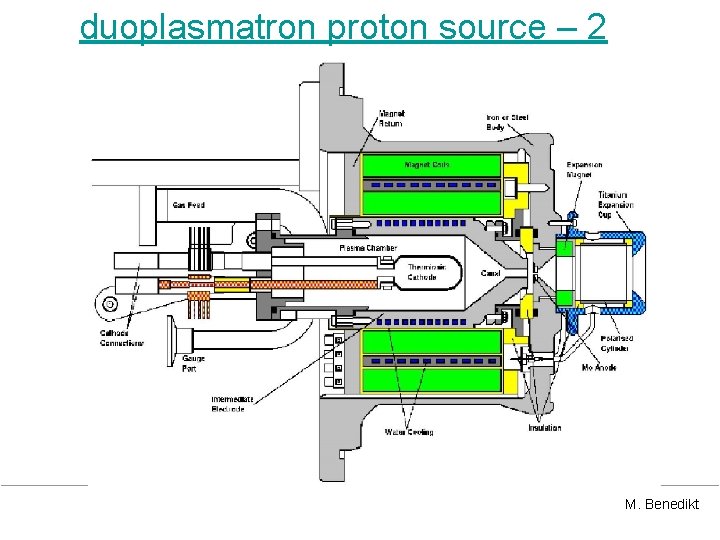
Duoplasmatron proton source Protons (at 90 ke. V) are produced by the charging of a H 2 plasma due to interaction with free electrons from the cathode, forming a plasma; the plasma is then accelerated and becomes an ion beam HT SUPPLY 90 k. V ARC SUPPLY - + + - ANODE HOT CATHODE Heated by AC supply - CW INTERMEDIATE ELECTRODE magnetic Courtesy R. Scrivens E. Metral Invented by M. von Ardenne
duoplasmatron proton source – 2 M. Benedikt
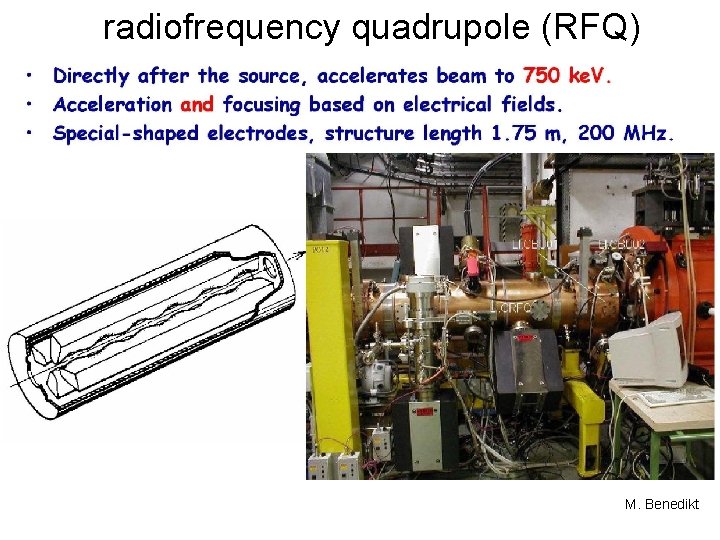
radiofrequency quadrupole (RFQ) M. Benedikt
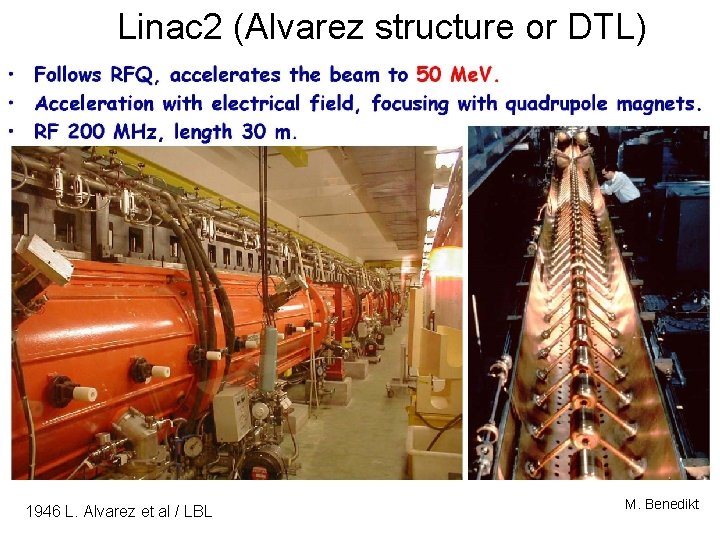
Linac 2 (Alvarez structure or DTL) 1946 L. Alvarez et al / LBL M. Benedikt
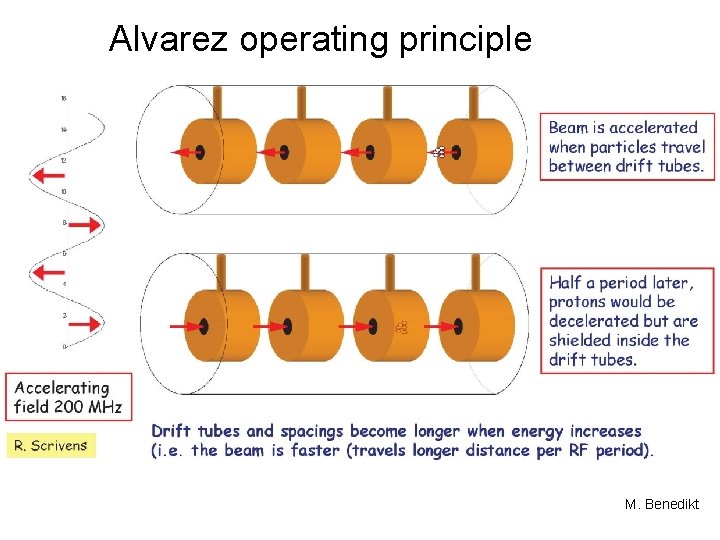
Alvarez operating principle M. Benedikt
PS Booster M. Benedikt
Space Charge M. Benedikt
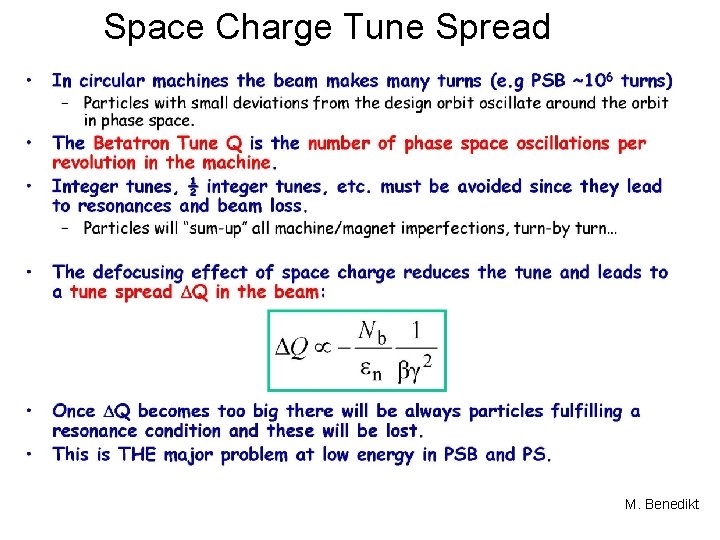
Space Charge Tune Spread M. Benedikt
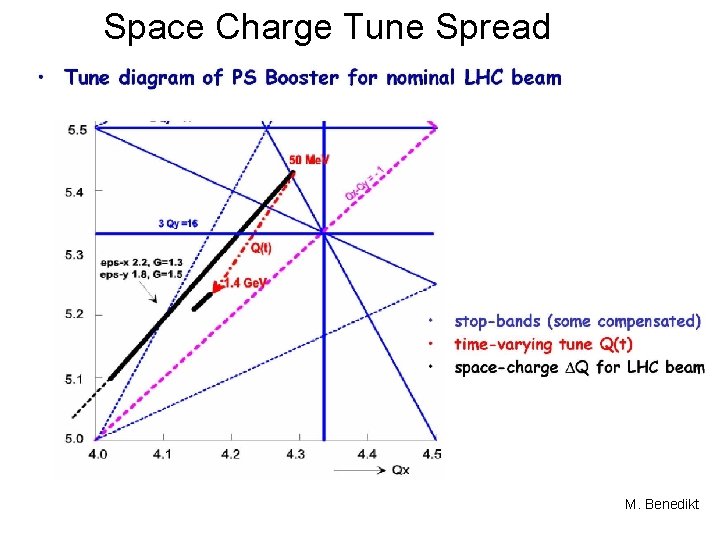
Space Charge Tune Spread M. Benedikt
How to beat space charge in the PSB M. Benedikt
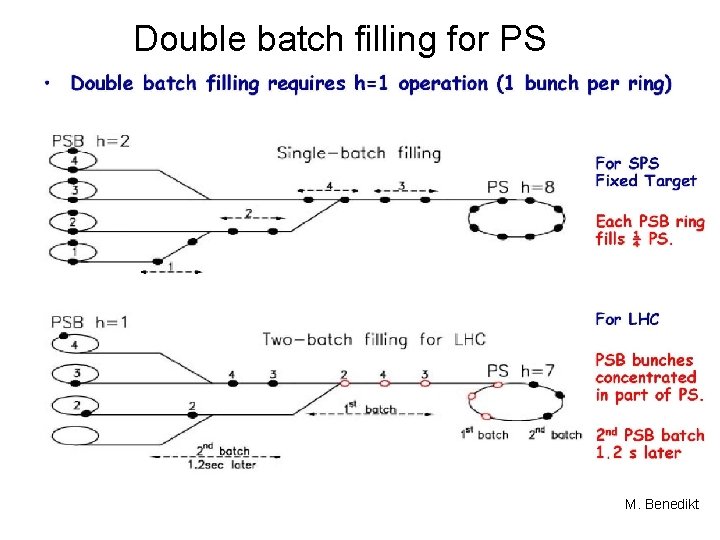
Double batch filling for PS M. Benedikt
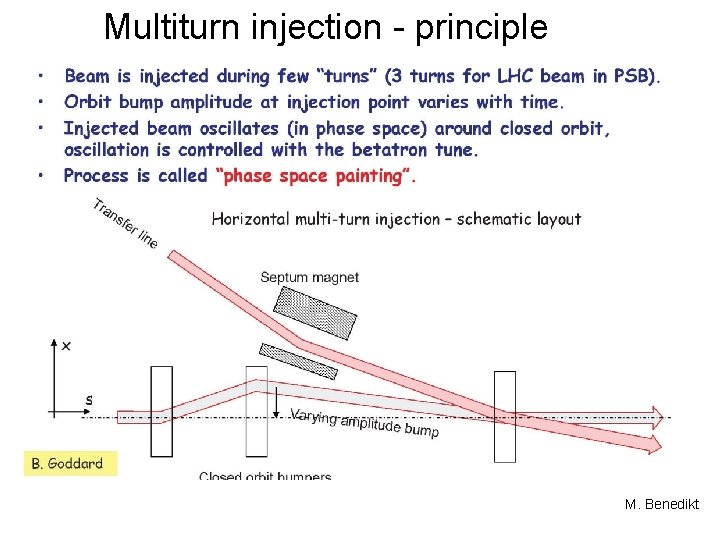
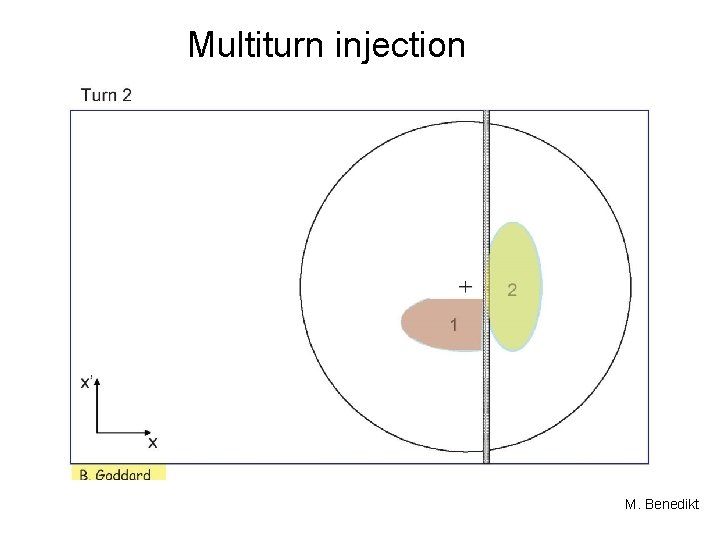
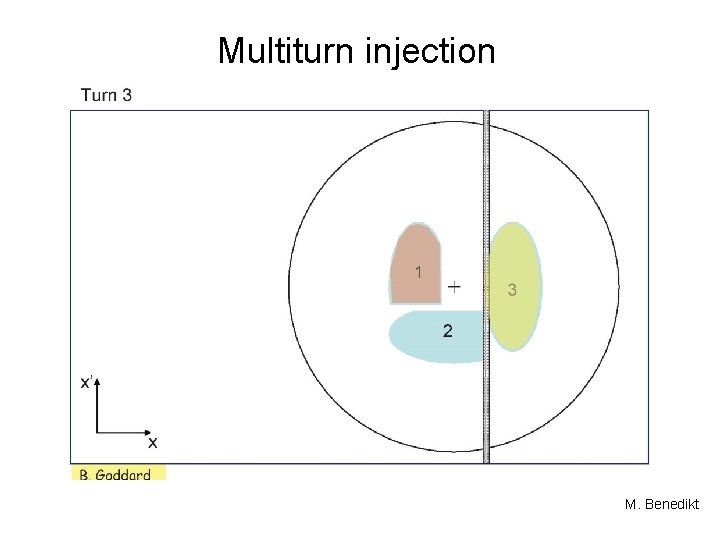
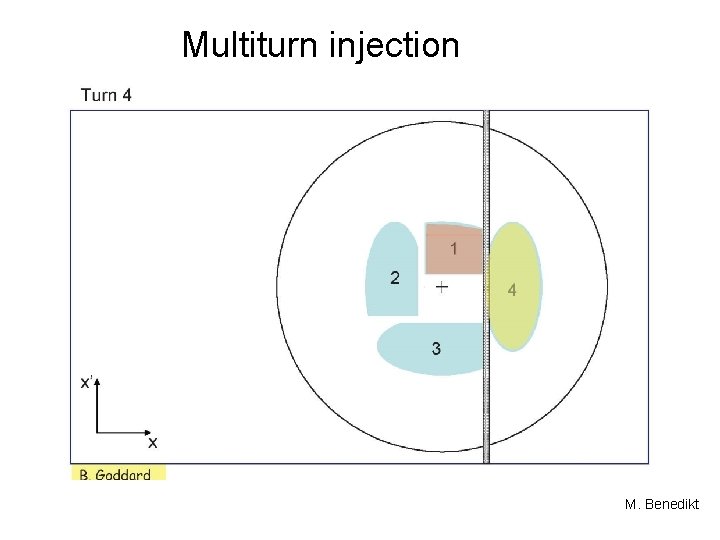
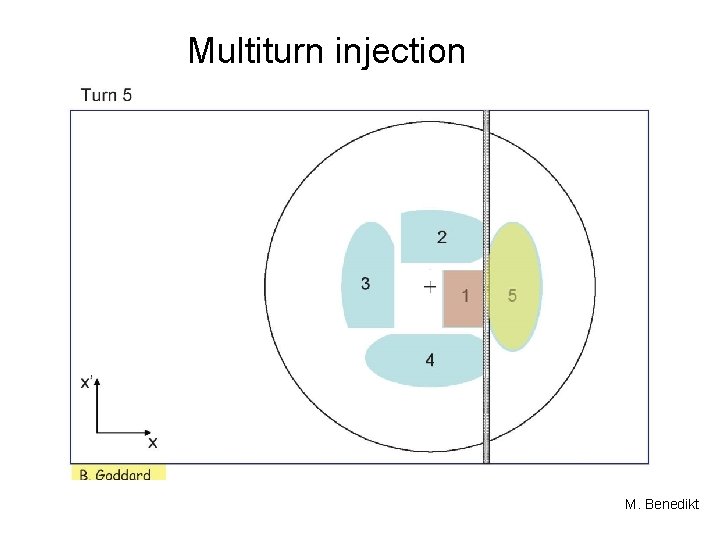
Multiturn injection - principle M. Benedikt
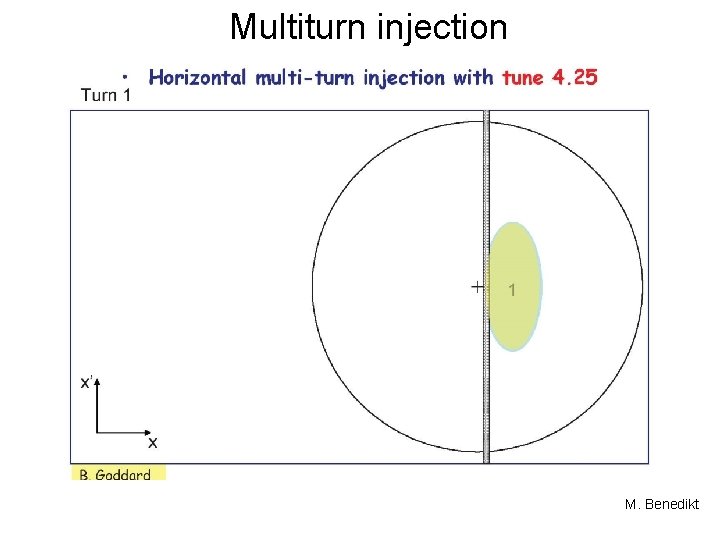
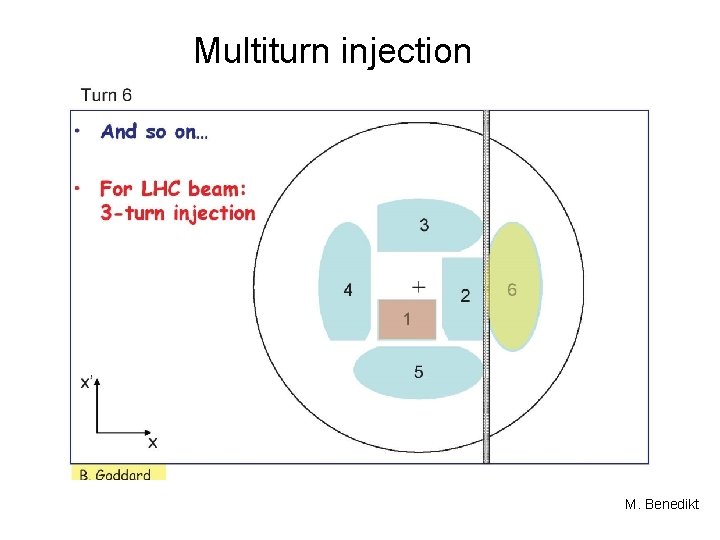
Multiturn injection M. Benedikt
Multiturn injection M. Benedikt
Multiturn injection M. Benedikt
Multiturn injection M. Benedikt
Multiturn injection M. Benedikt
Multiturn injection M. Benedikt
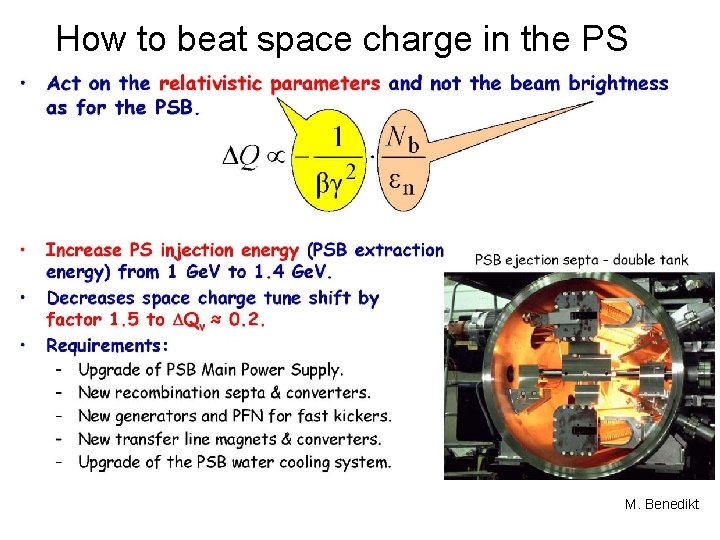
How to beat space charge in the PS M. Benedikt
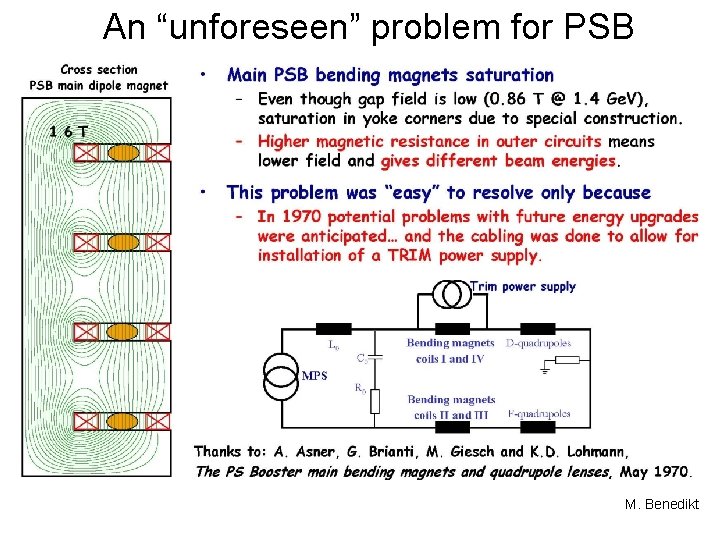
An “unforeseen” problem for PSB M. Benedikt
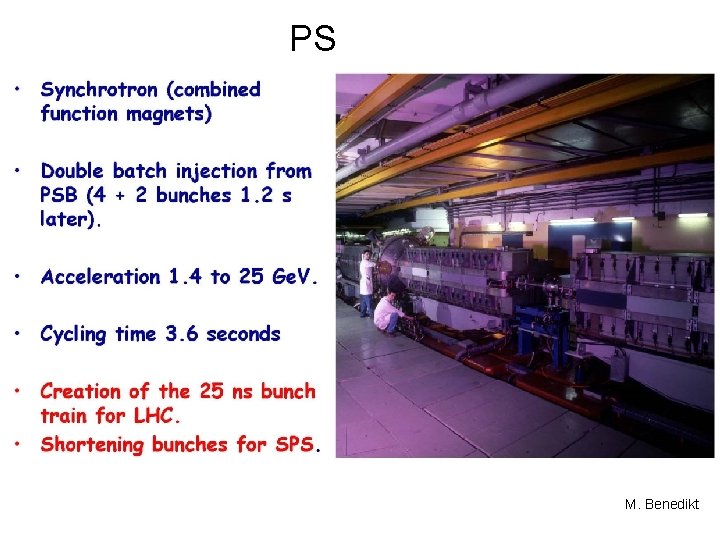
PS M. Benedikt
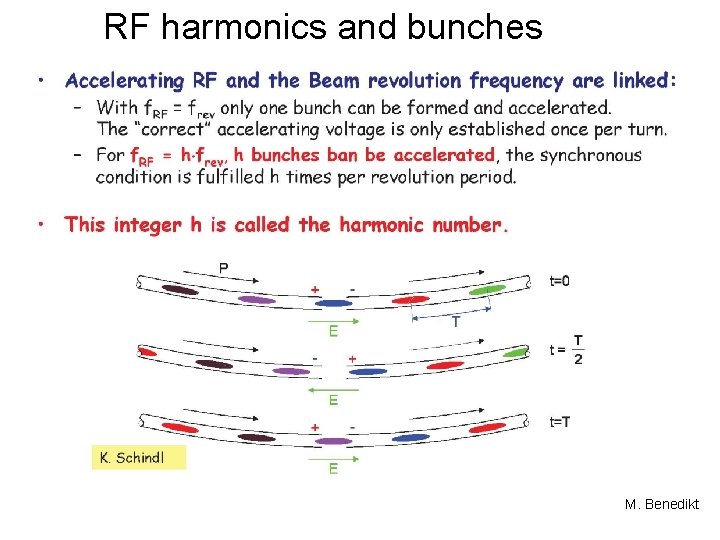
RF harmonics and bunches M. Benedikt
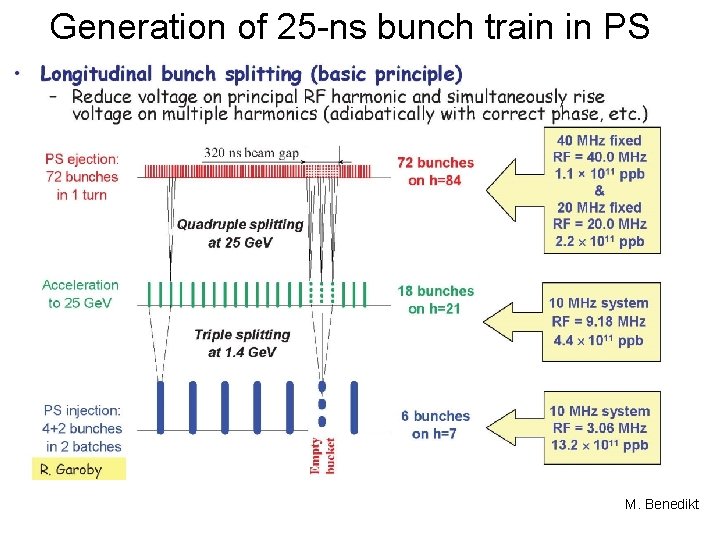
Generation of 25 -ns bunch train in PS M. Benedikt
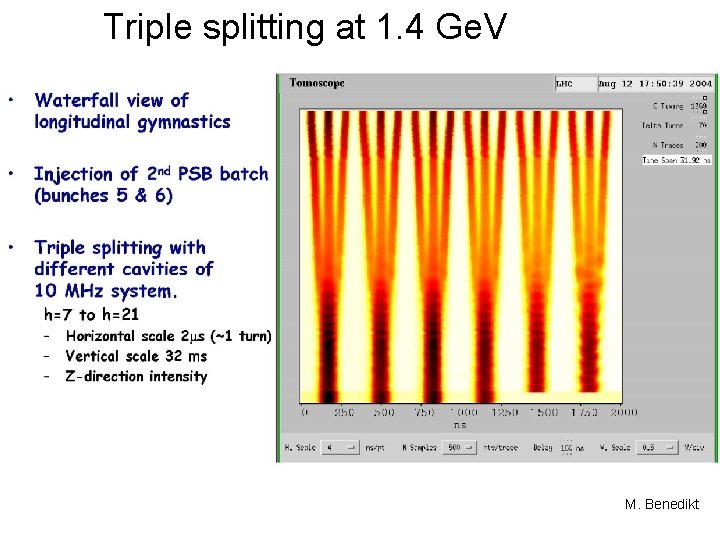
Triple splitting at 1. 4 Ge. V M. Benedikt
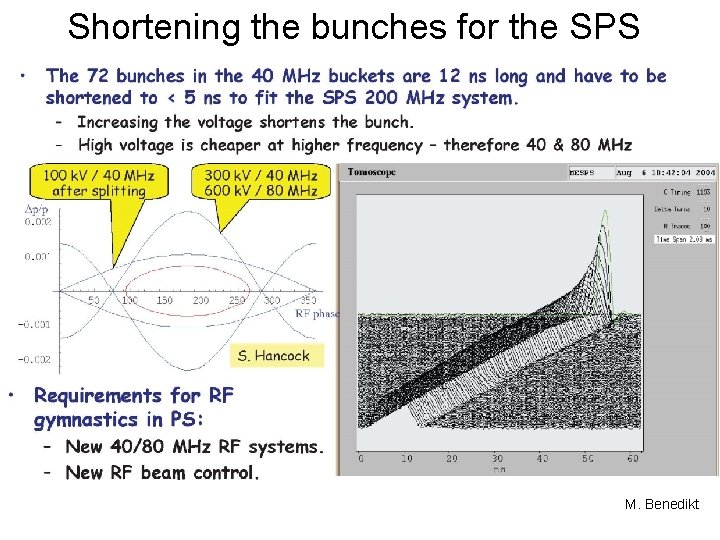
Shortening the bunches for the SPS M. Benedikt
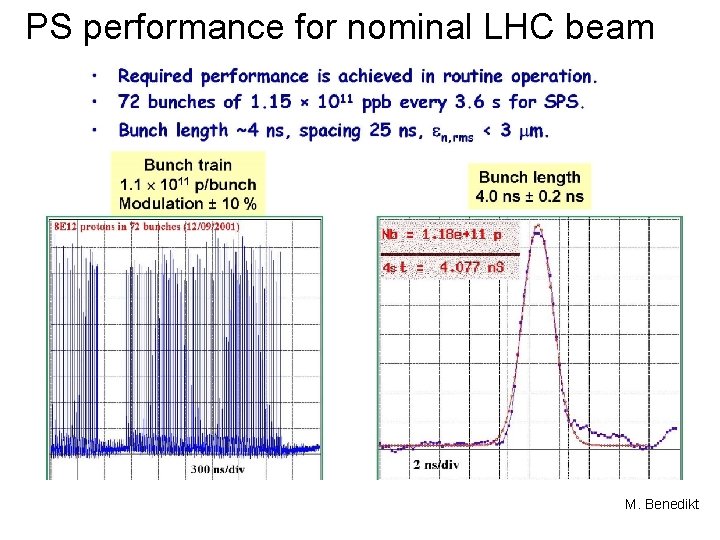
PS performance for nominal LHC beam M. Benedikt
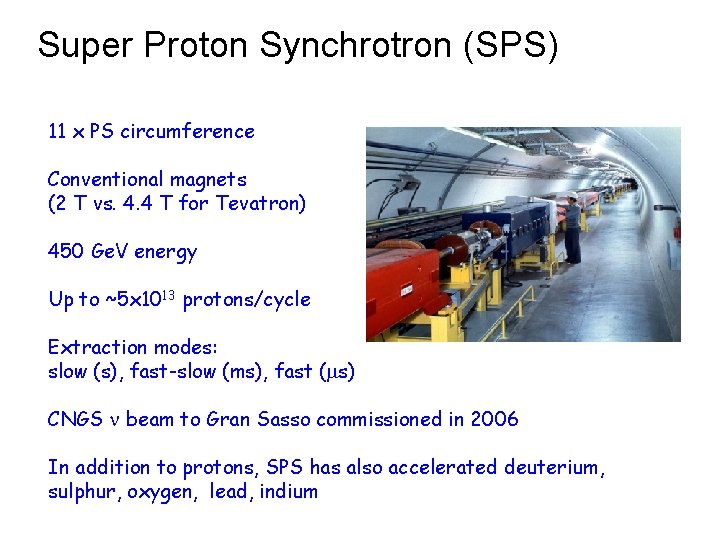
Super Proton Synchrotron (SPS) 11 x PS circumference Conventional magnets (2 T vs. 4. 4 T for Tevatron) 450 Ge. V energy Up to ~5 x 10¹³ protons/cycle Extraction modes: slow (s), fast-slow (ms), fast (ms) CNGS n beam to Gran Sasso commissioned in 2006 In addition to protons, SPS has also accelerated deuterium, sulphur, oxygen, lead, indium
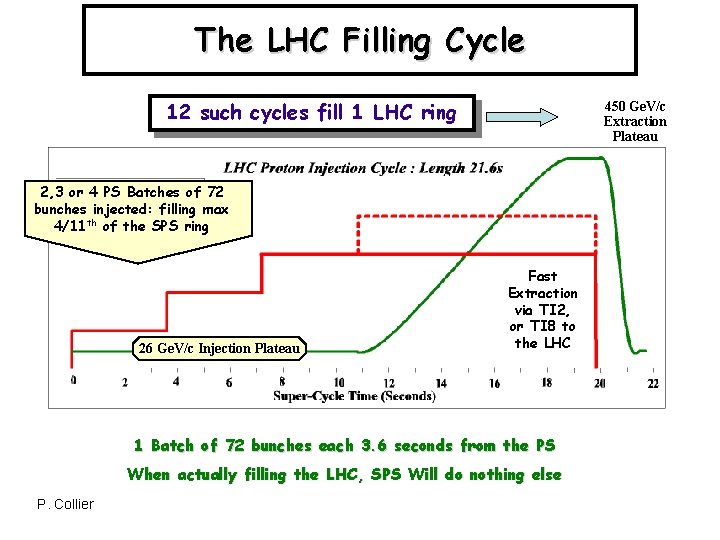
The LHC Filling Cycle 12 such cycles fill 1 LHC ring 450 Ge. V/c Extraction Plateau 2, 3 or 4 PS Batches of 72 bunches injected: filling max 4/11 th of the SPS ring 26 Ge. V/c Injection Plateau Fast Extraction via TI 2, or TI 8 to the LHC 1 Batch of 72 bunches each 3. 6 seconds from the PS When actually filling the LHC, SPS Will do nothing else P. Collier
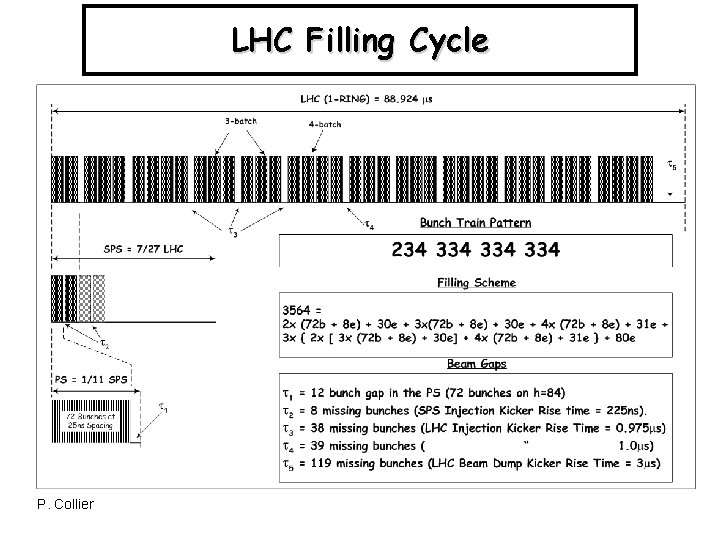
LHC Filling Cycle P. Collier
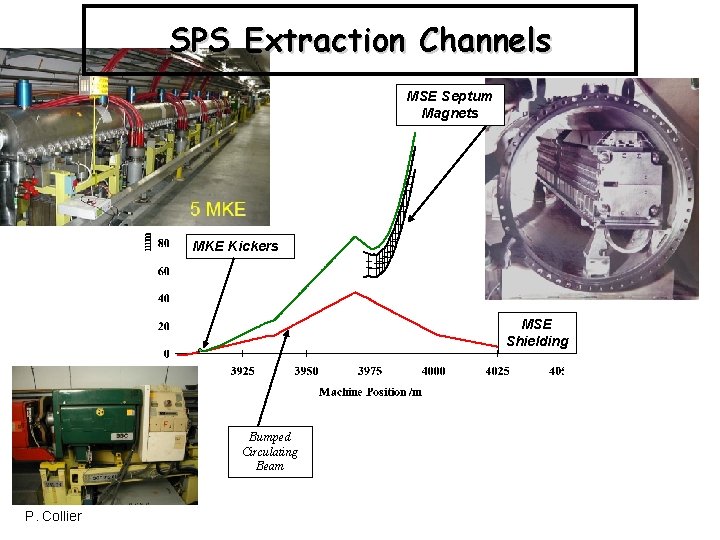
SPS Extraction Channels MSE Septum Magnets MKE Kickers MSE Shielding Bumped Circulating Beam P. Collier
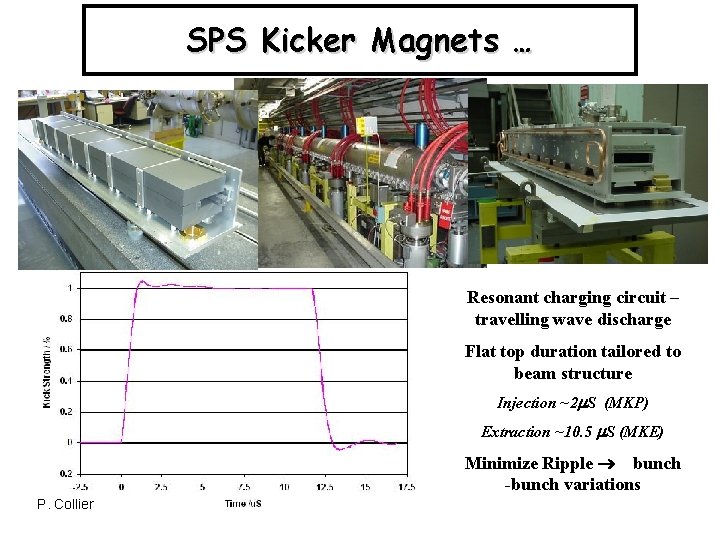
SPS Kicker Magnets … Resonant charging circuit – travelling wave discharge Flat top duration tailored to beam structure Injection ~2 m. S (MKP) Extraction ~10. 5 m. S (MKE) Minimize Ripple bunch -bunch variations P. Collier
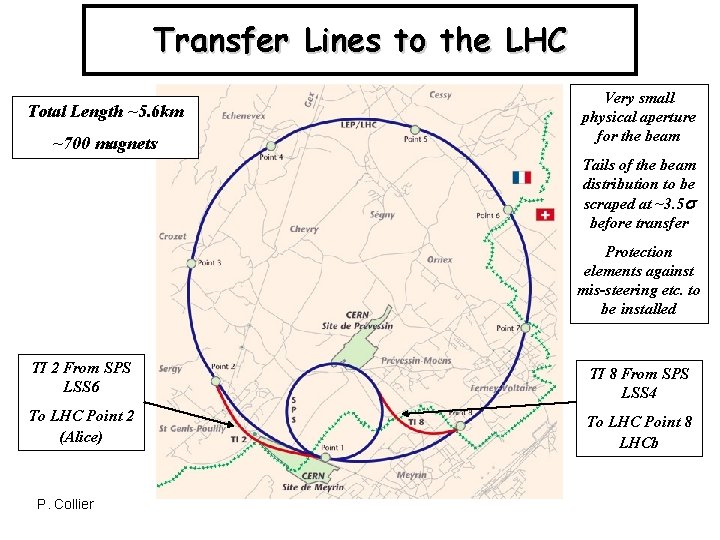
Transfer Lines to the LHC Total Length ~5. 6 km ~700 magnets Very small physical aperture for the beam Tails of the beam distribution to be scraped at ~3. 5 s before transfer Protection elements against mis-steering etc. to be installed TI 2 From SPS LSS 6 TI 8 From SPS LSS 4 To LHC Point 2 (Alice) To LHC Point 8 LHCb P. Collier
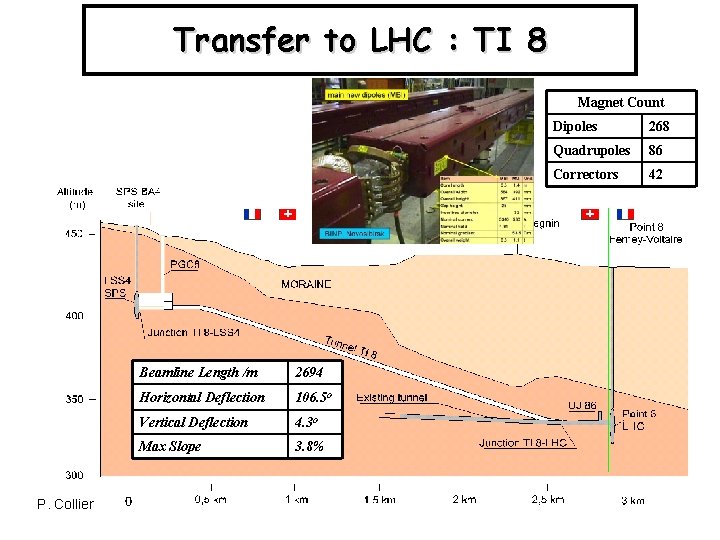
Transfer to LHC : TI 8 Magnet Count P. Collier Beamline Length /m 2694 Horizontal Deflection 106. 5 o Vertical Deflection 4. 3 o Max Slope 3. 8% Dipoles 268 Quadrupoles 86 Correctors 42
TI 8: Civil Engineering Layout Co-existing with CNGS TI 8 P. Collier
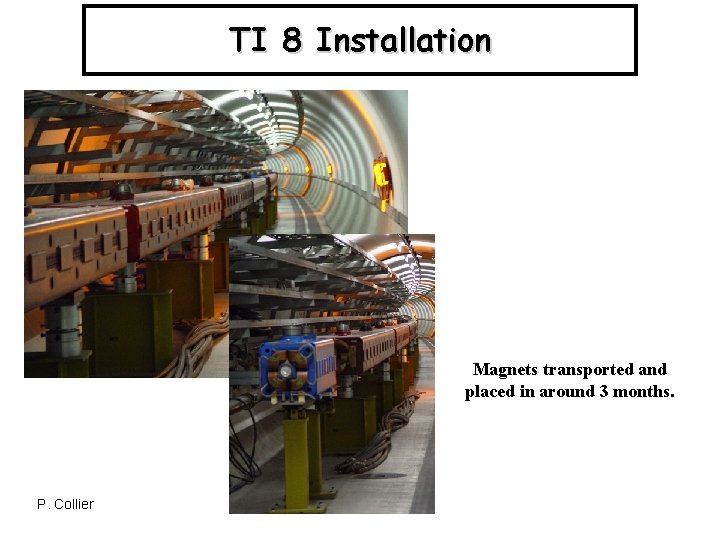
TI 8 Installation Magnets transported and placed in around 3 months. P. Collier
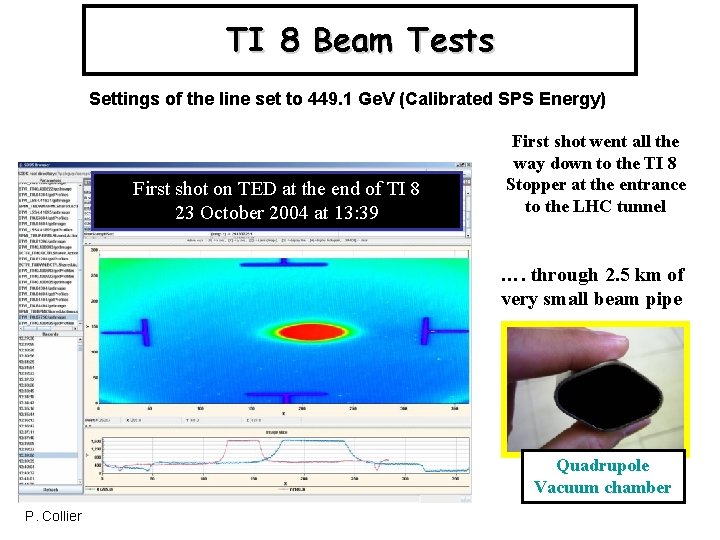
TI 8 Beam Tests Settings of the line set to 449. 1 Ge. V (Calibrated SPS Energy) First shot on TED at the end of TI 8 23 October 2004 at 13: 39 First shot went all the way down to the TI 8 Stopper at the entrance to the LHC tunnel …. through 2. 5 km of very small beam pipe Quadrupole Vacuum chamber P. Collier
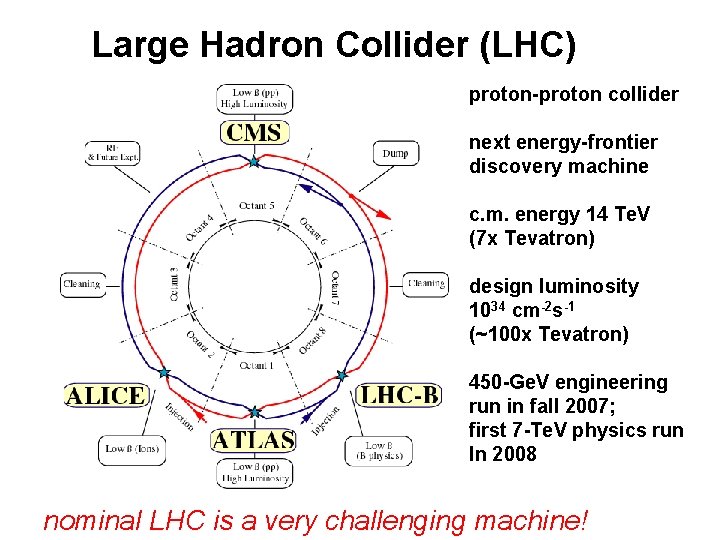
Large Hadron Collider (LHC) proton-proton collider next energy-frontier discovery machine c. m. energy 14 Te. V (7 x Tevatron) design luminosity 1034 cm-2 s-1 (~100 x Tevatron) 450 -Ge. V engineering run in fall 2007; first 7 -Te. V physics run In 2008 nominal LHC is a very challenging machine!
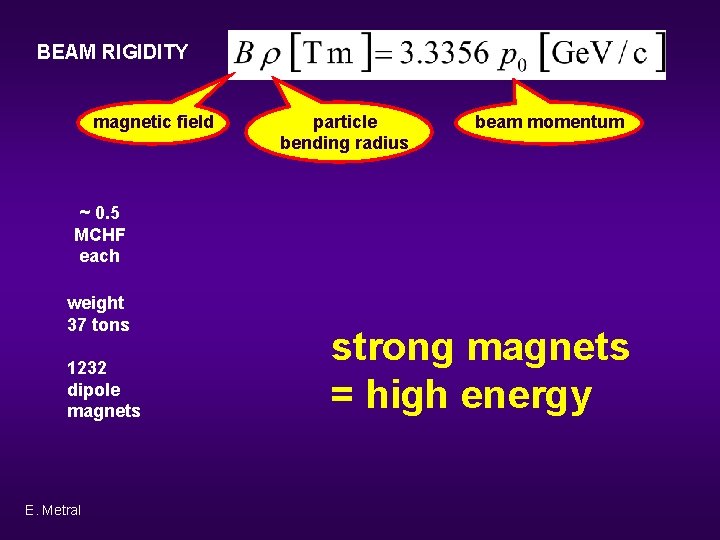
BEAM RIGIDITY magnetic field particle bending radius beam momentum ~ 0. 5 MCHF each weight 37 tons 1232 dipole magnets E. Metral strong magnets = high energy
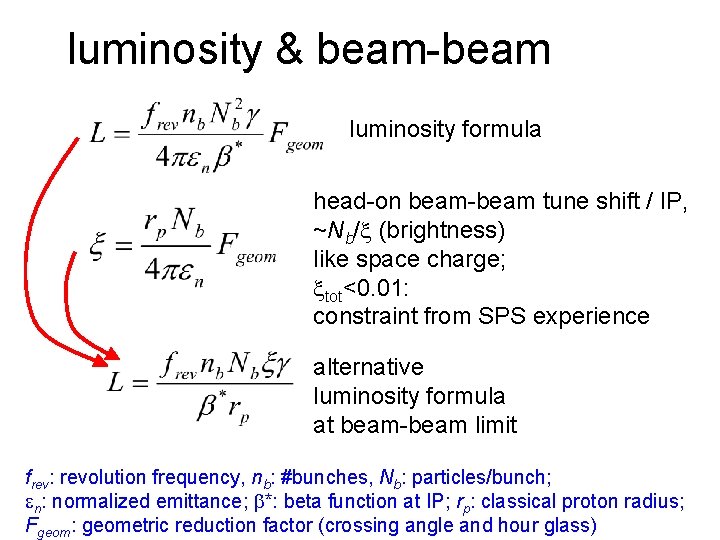
luminosity & beam-beam luminosity formula head-on beam-beam tune shift / IP, ~Nb/x (brightness) like space charge; xtot<0. 01: constraint from SPS experience alternative luminosity formula at beam-beam limit frev: revolution frequency, nb: #bunches, Nb: particles/bunch; en: normalized emittance; b*: beta function at IP; rp: classical proton radius; Fgeom: geometric reduction factor (crossing angle and hour glass)
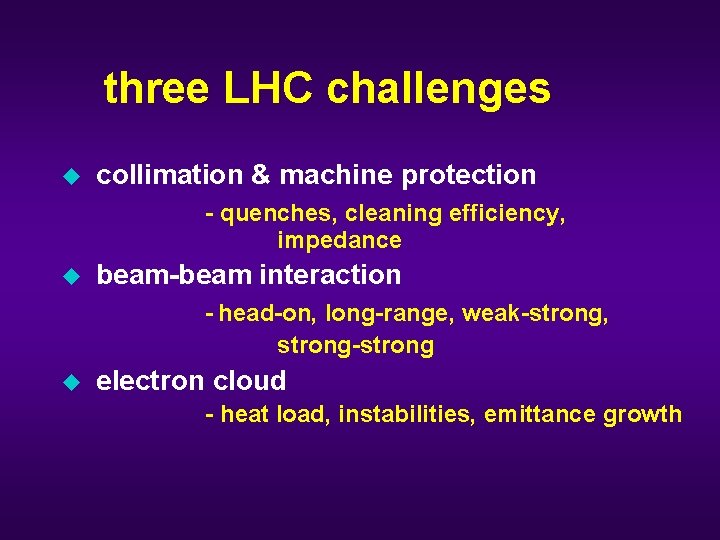
three LHC challenges u collimation & machine protection - quenches, cleaning efficiency, impedance u beam-beam interaction - head-on, long-range, weak-strong, strong-strong u electron cloud - heat load, instabilities, emittance growth
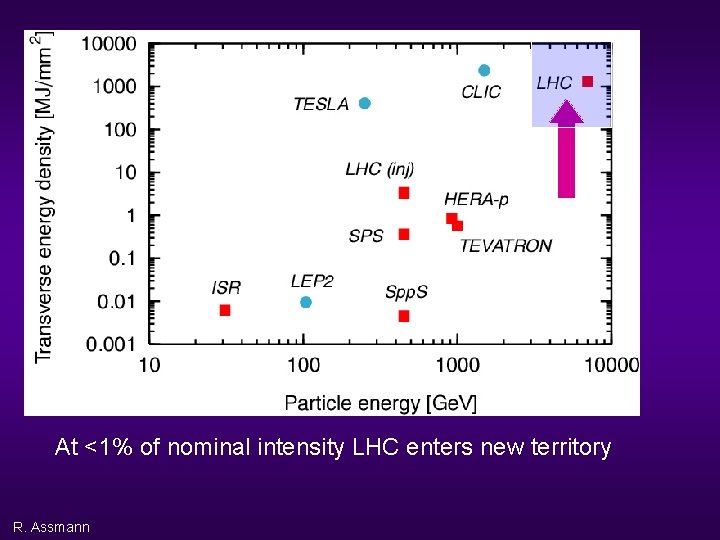
At <1% of nominal intensity LHC enters new territory R. Assmann
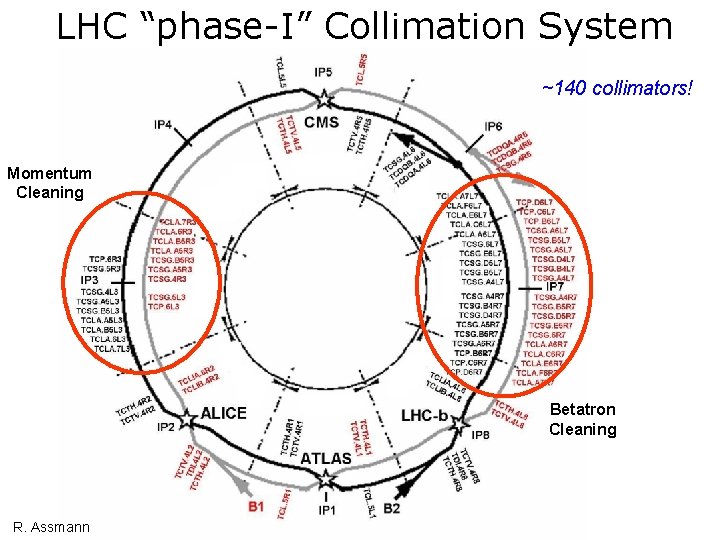
LHC “phase-I” Collimation System ~140 collimators! Momentum Cleaning Betatron Cleaning R. Assmann
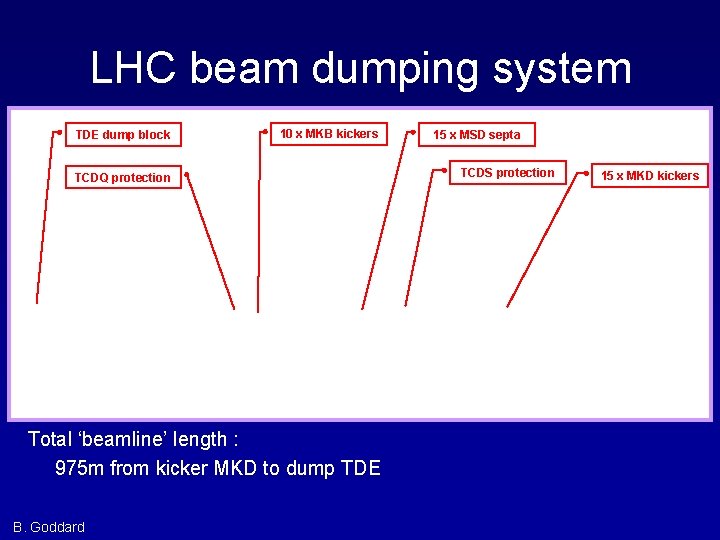
LHC beam dumping system TDE dump block 10 x MKB kickers TCDQ protection Total ‘beamline’ length : 975 m from kicker MKD to dump TDE B. Goddard 15 x MSD septa TCDS protection 15 x MKD kickers
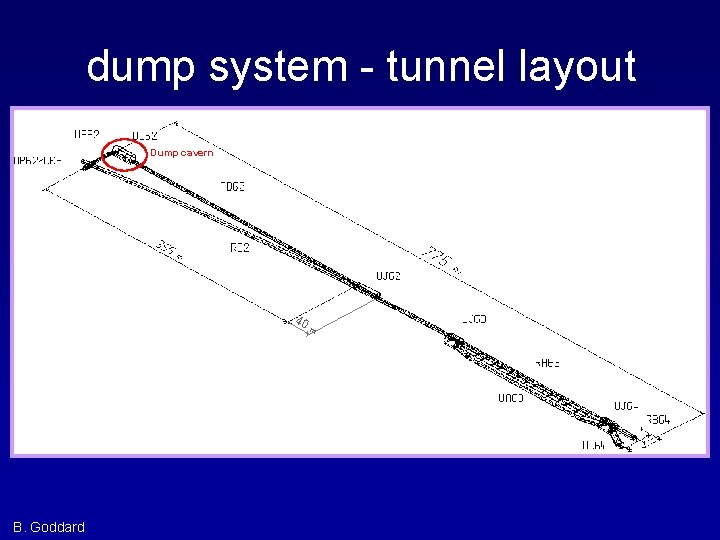
dump system - tunnel layout Dump cavern 40 m Total ‘beamline’ length : 975 m from kicker MKD to dump block TDE B. Goddard
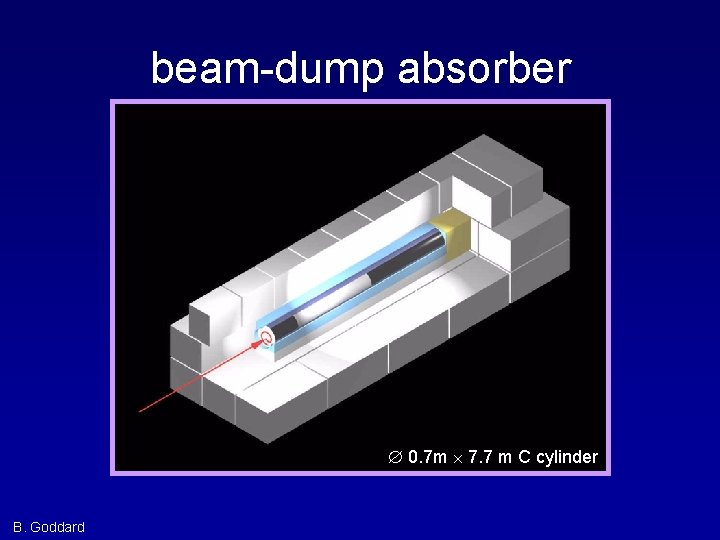
beam-dump absorber 0. 7 m 7. 7 m C cylinder B. Goddard
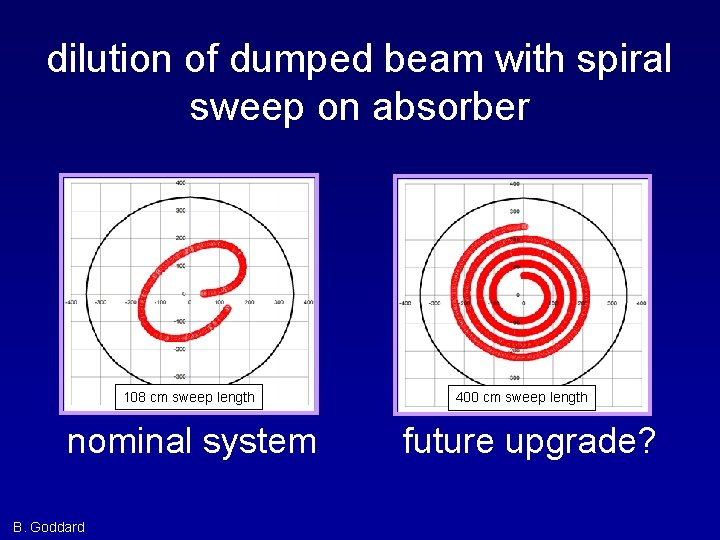
dilution of dumped beam with spiral sweep on absorber 108 cm sweep length nominal system B. Goddard 400 cm sweep length future upgrade?
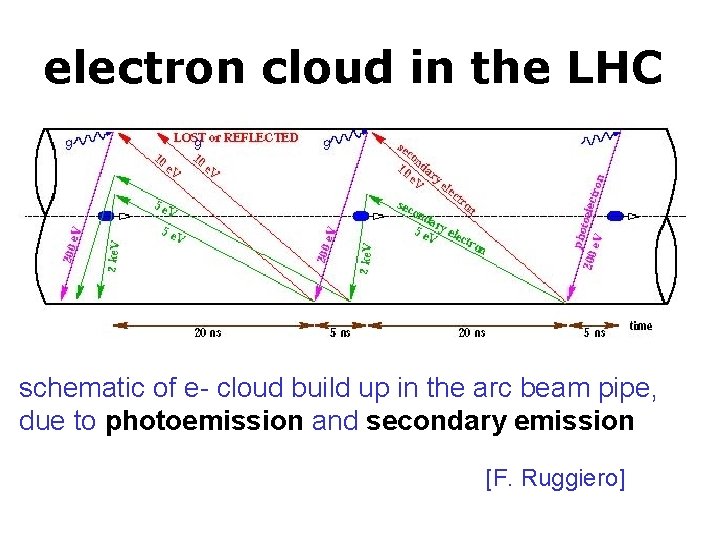
electron cloud in the LHC schematic of e- cloud build up in the arc beam pipe, due to photoemission and secondary emission [F. Ruggiero]
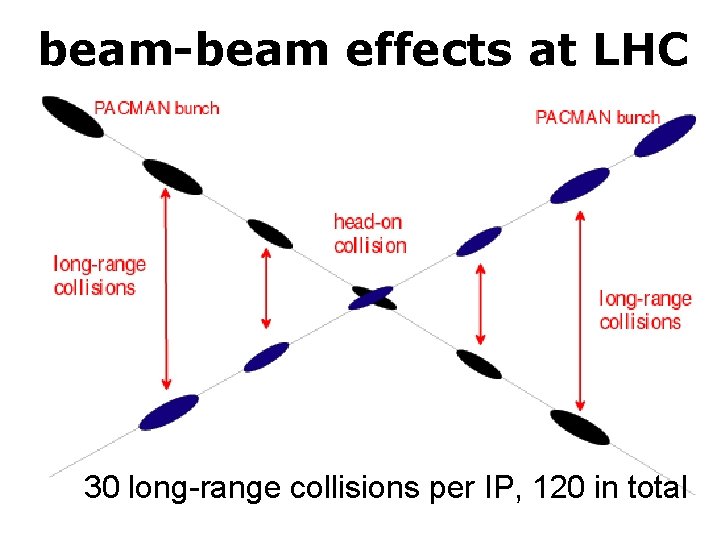
beam-beam effects at LHC 30 long-range collisions per IP, 120 in total
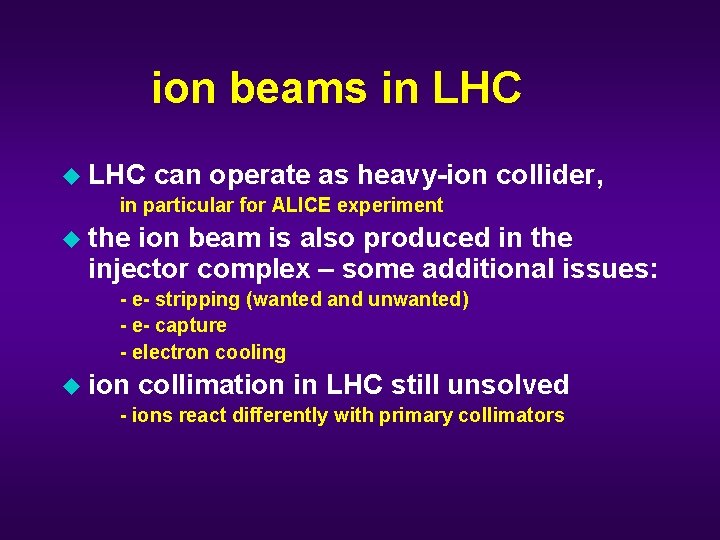
ion beams in LHC u LHC can operate as heavy-ion collider, in particular for ALICE experiment u the ion beam is also produced in the injector complex – some additional issues: - e- stripping (wanted and unwanted) - e- capture - electron cooling u ion collimation in LHC still unsolved - ions react differently with primary collimators
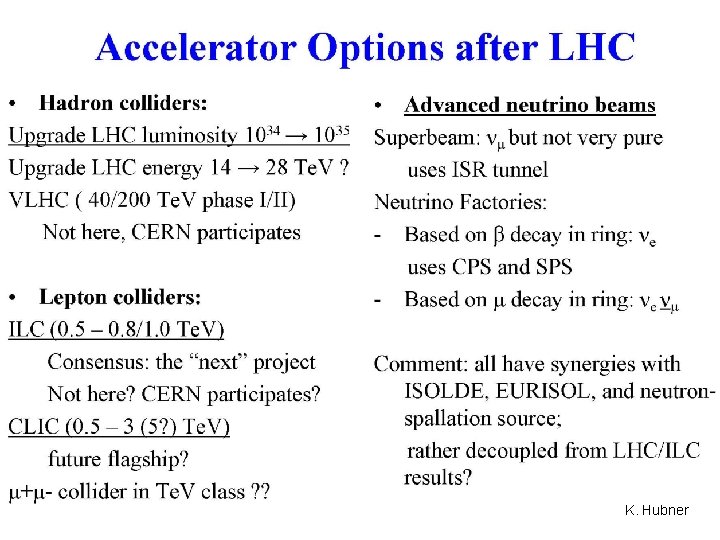
K. Hubner
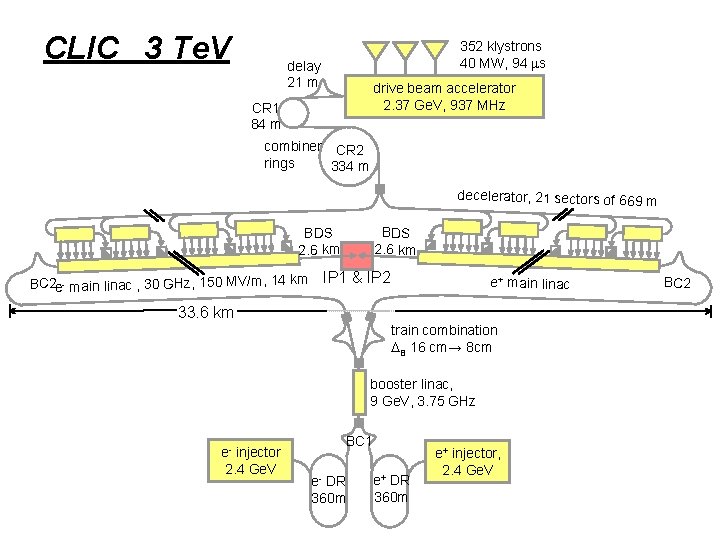
CLIC 3 Te. V 352 klystrons 40 MW, 94 ms delay 21 m drive beam accelerator 2. 37 Ge. V, 937 MHz CR 1 84 m combiner CR 2 rings 334 m decelerator, 21 sectors of 669 m BDS 2. 6 km BC 2 e- main linac , 30 GHz, 150 MV/m, 14 km IP 1 & IP 2 e+ main linac 33. 6 km train combination DB 16 cm→ 8 cm booster linac, 9 Ge. V, 3. 75 GHz e- injector 2. 4 Ge. V BC 1 e- DR 360 m e+ injector, 2. 4 Ge. V BC 2
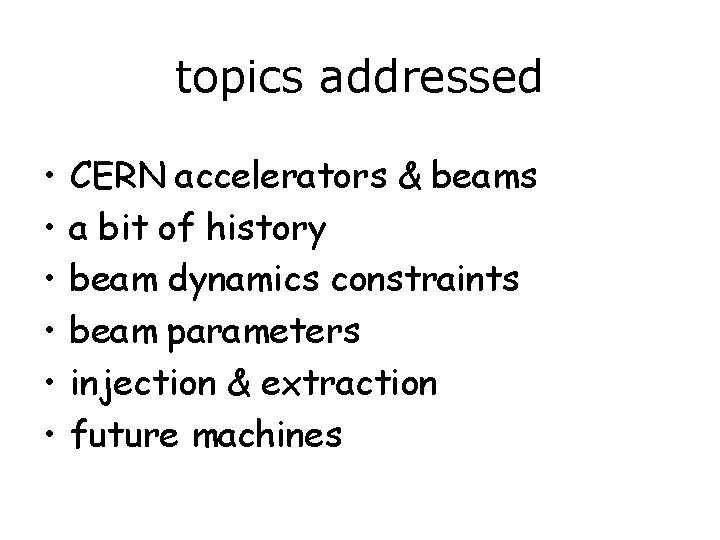
topics addressed • • • CERN accelerators & beams a bit of history beam dynamics constraints beam parameters injection & extraction future machines
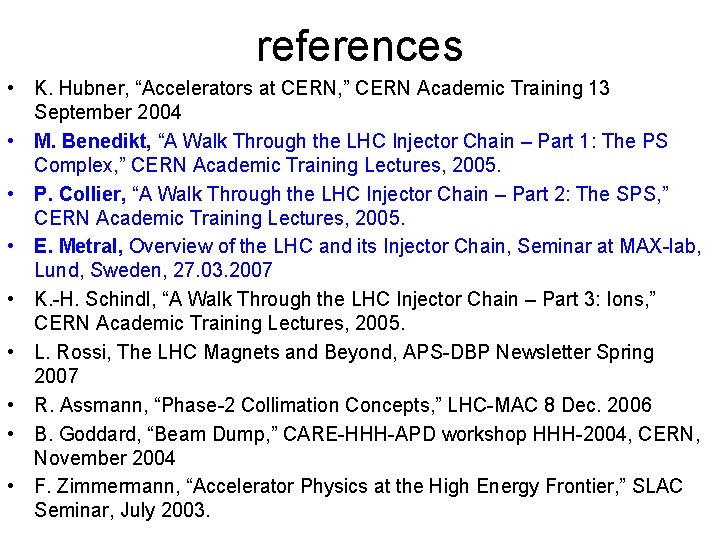
references • K. Hubner, “Accelerators at CERN, ” CERN Academic Training 13 September 2004 • M. Benedikt, “A Walk Through the LHC Injector Chain – Part 1: The PS Complex, ” CERN Academic Training Lectures, 2005. • P. Collier, “A Walk Through the LHC Injector Chain – Part 2: The SPS, ” CERN Academic Training Lectures, 2005. • E. Metral, Overview of the LHC and its Injector Chain, Seminar at MAX-lab, Lund, Sweden, 27. 03. 2007 • K. -H. Schindl, “A Walk Through the LHC Injector Chain – Part 3: Ions, ” CERN Academic Training Lectures, 2005. • L. Rossi, The LHC Magnets and Beyond, APS-DBP Newsletter Spring 2007 • R. Assmann, “Phase-2 Collimation Concepts, ” LHC-MAC 8 Dec. 2006 • B. Goddard, “Beam Dump, ” CARE-HHH-APD workshop HHH-2004, CERN, November 2004 • F. Zimmermann, “Accelerator Physics at the High Energy Frontier, ” SLAC Seminar, July 2003.
I will post these talks near the top of my home http: //wwwslap. cern. ch/~frankz If you have any questions, you can always send me email frank. zimmermann@cern. ch