A Computer Science www apluscompsci com The heap



- Slides: 28
© A+ Computer Science - www. apluscompsci. com
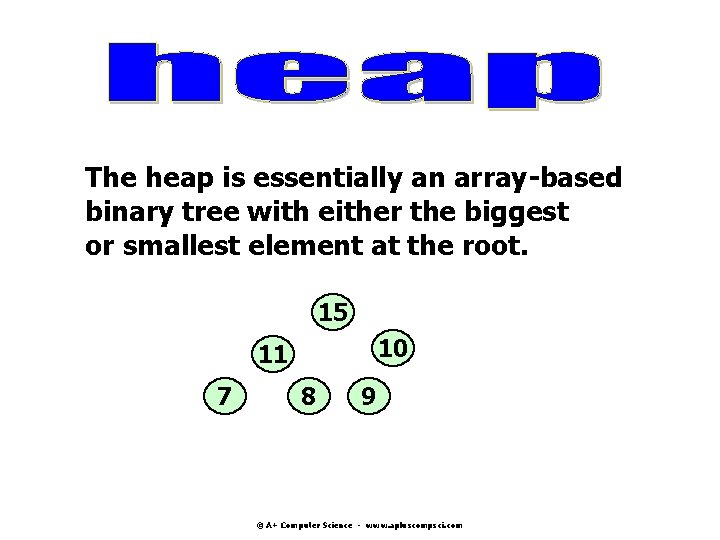
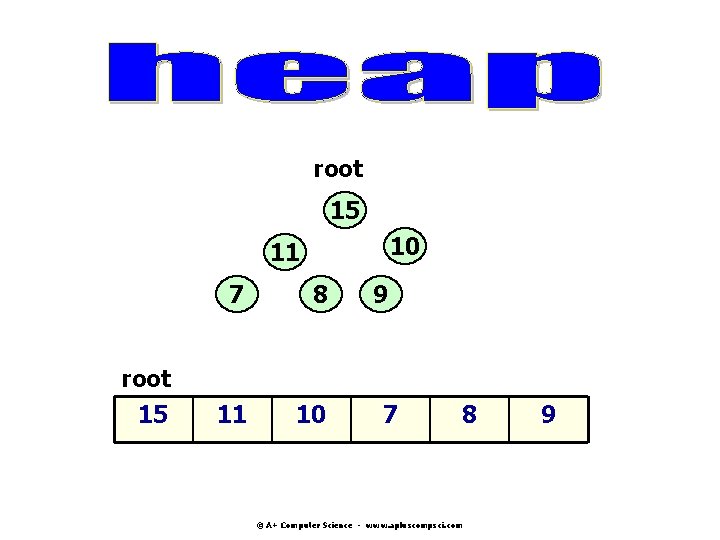
The heap is essentially an array-based binary tree with either the biggest or smallest element at the root. 15 10 11 7 8 9 © A+ Computer Science - www. apluscompsci. com
Every parent in a Heap will always be smaller or larger than both of its children. This rule will hold true for every level of the heap. © A+ Computer Science - www. apluscompsci. com
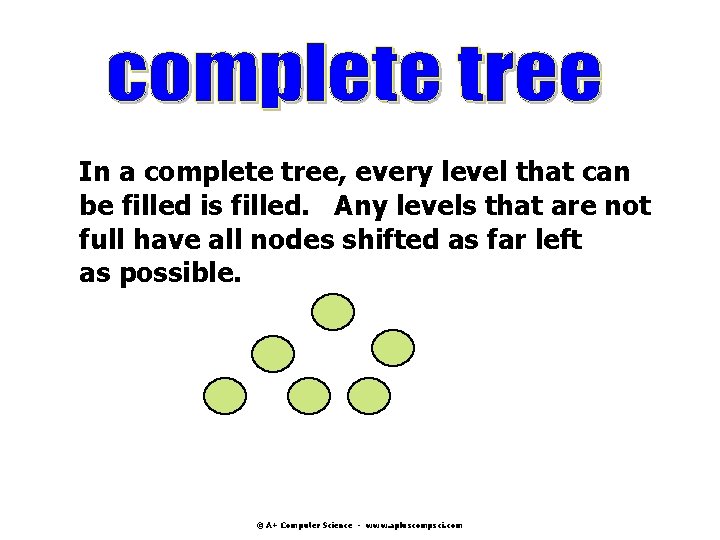
In a complete tree, every level that can be filled is filled. Any levels that are not full have all nodes shifted as far left as possible. © A+ Computer Science - www. apluscompsci. com
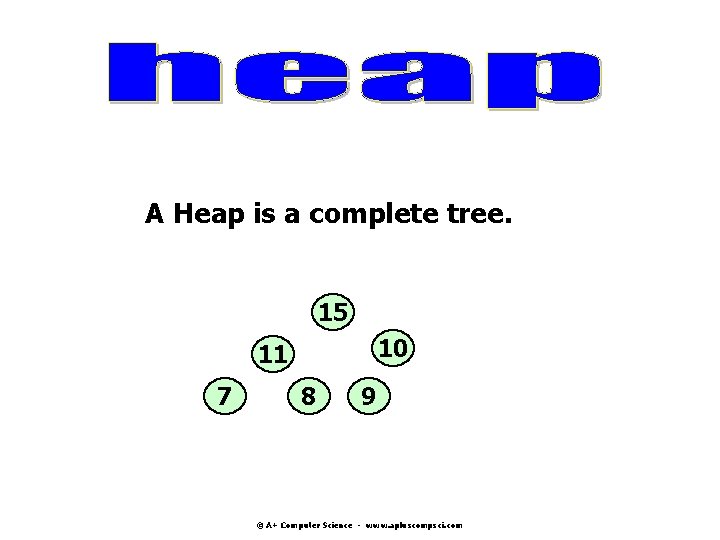
A Heap is a complete tree. 15 10 11 7 8 9 © A+ Computer Science - www. apluscompsci. com
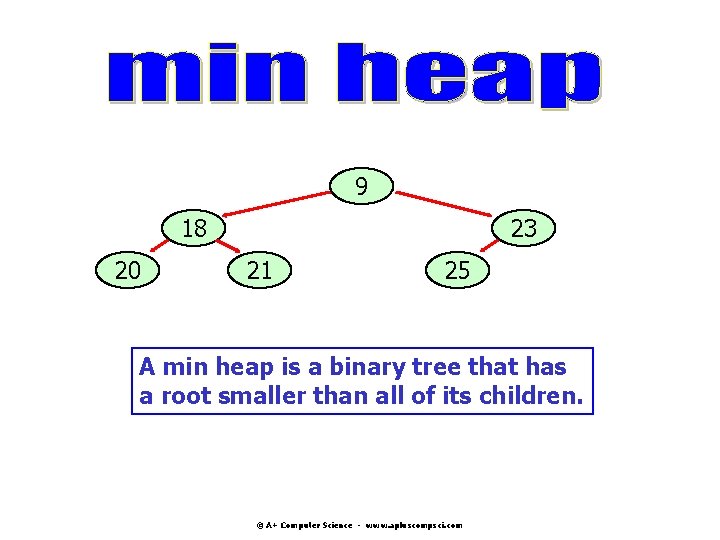
9 18 20 23 21 25 A min heap is a binary tree that has a root smaller than all of its children. © A+ Computer Science - www. apluscompsci. com
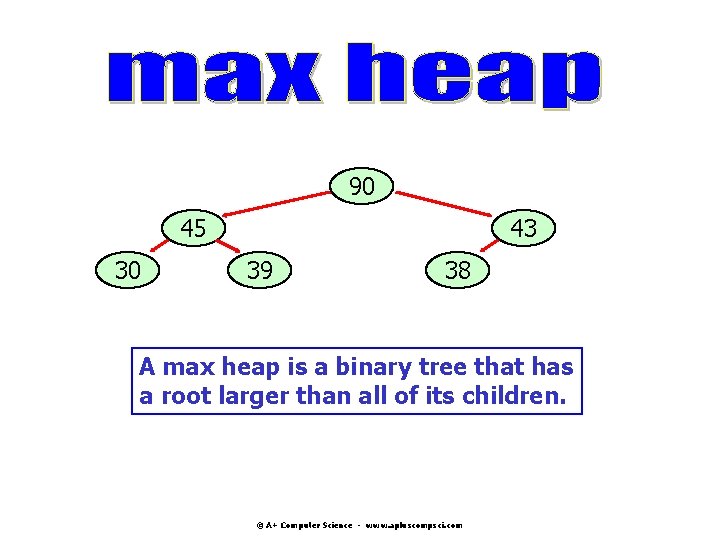
90 45 30 43 39 38 A max heap is a binary tree that has a root larger than all of its children. © A+ Computer Science - www. apluscompsci. com
root 15 10 11 root 15 7 8 11 10 9 7 8 © A+ Computer Science - www. apluscompsci. com 9
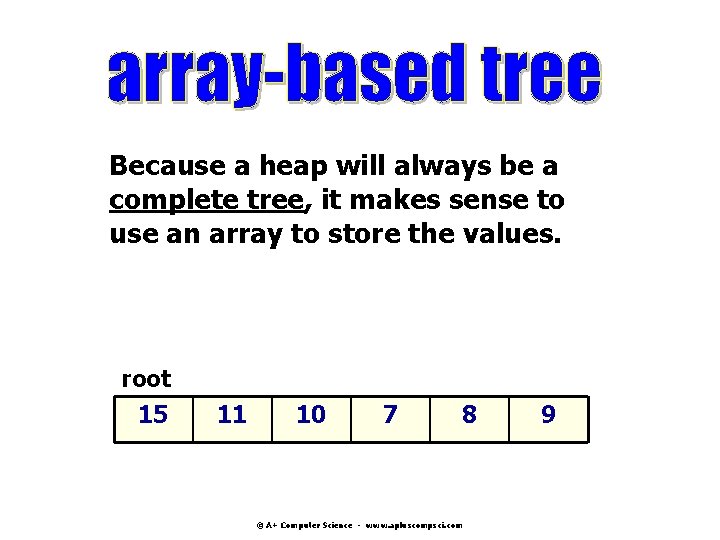
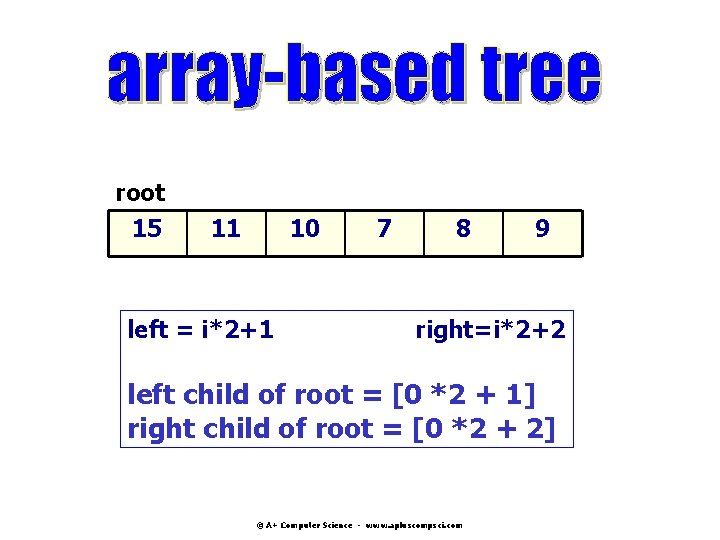
Because a heap will always be a complete tree, it makes sense to use an array to store the values. root 15 11 10 7 8 © A+ Computer Science - www. apluscompsci. com 9
root 15 11 10 left = i*2+1 7 8 9 right=i*2+2 left child of root = [0 *2 + 1] right child of root = [0 *2 + 2] © A+ Computer Science - www. apluscompsci. com
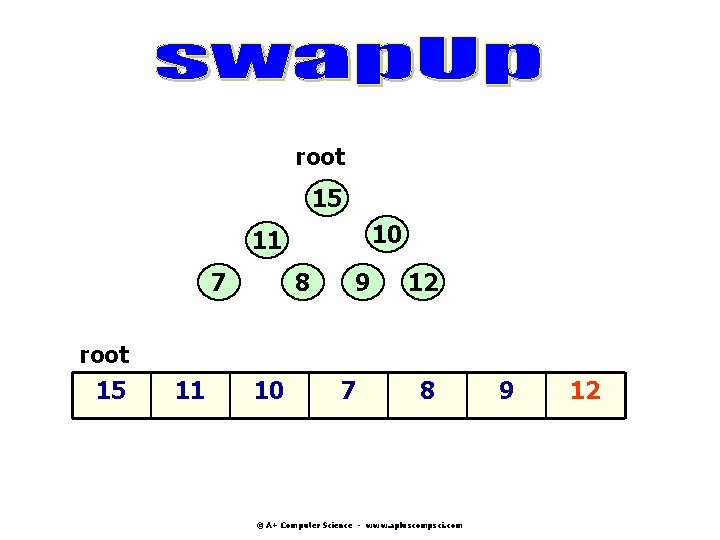
The easiest way to add a new item to a heap implemented with an array is to add the new value at the end of the array and then move the new item up the tree as far as it needs to go. add will use swap. Up to restructure the tree so that it remains a heap. © A+ Computer Science - www. apluscompsci. com
root 15 10 11 7 root 15 11 8 10 9 7 12 8 © A+ Computer Science - www. apluscompsci. com 9 12
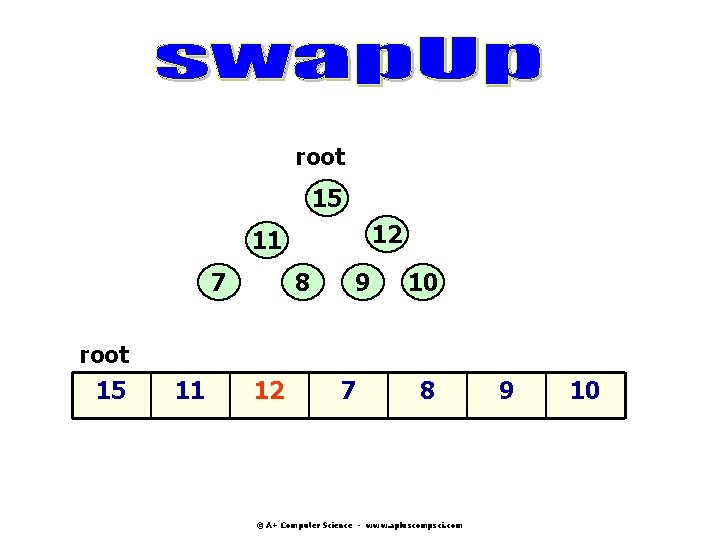
root 15 12 11 7 root 15 11 8 12 9 7 10 8 © A+ Computer Science - www. apluscompsci. com 9 10
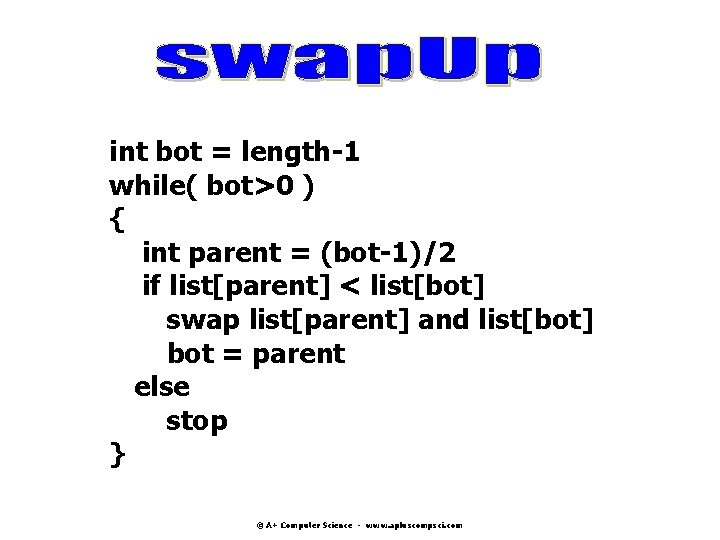
int bot = length-1 while( bot>0 ) { int parent = (bot-1)/2 if list[parent] < list[bot] swap list[parent] and list[bot] bot = parent else stop } © A+ Computer Science - www. apluscompsci. com
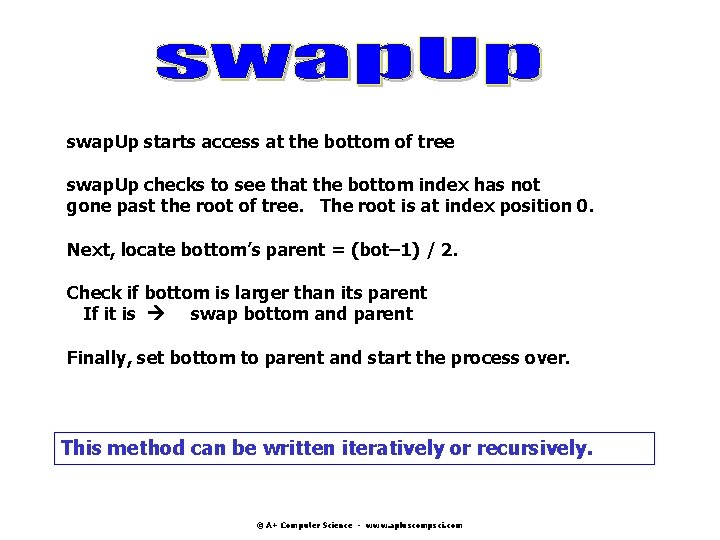
swap. Up starts access at the bottom of tree swap. Up checks to see that the bottom index has not gone past the root of tree. The root is at index position 0. Next, locate bottom’s parent = (bot– 1) / 2. Check if bottom is larger than its parent If it is swap bottom and parent Finally, set bottom to parent and start the process over. This method can be written iteratively or recursively. © A+ Computer Science - www. apluscompsci. com
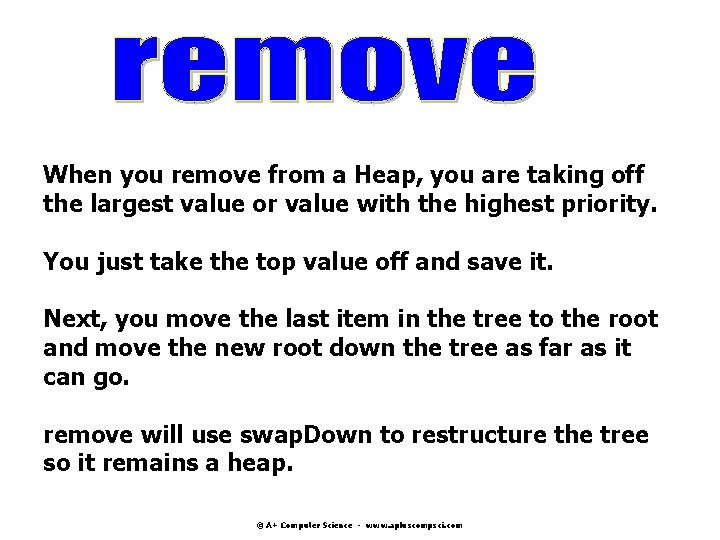
When you remove from a Heap, you are taking off the largest value or value with the highest priority. You just take the top value off and save it. Next, you move the last item in the tree to the root and move the new root down the tree as far as it can go. remove will use swap. Down to restructure the tree so it remains a heap. © A+ Computer Science - www. apluscompsci. com
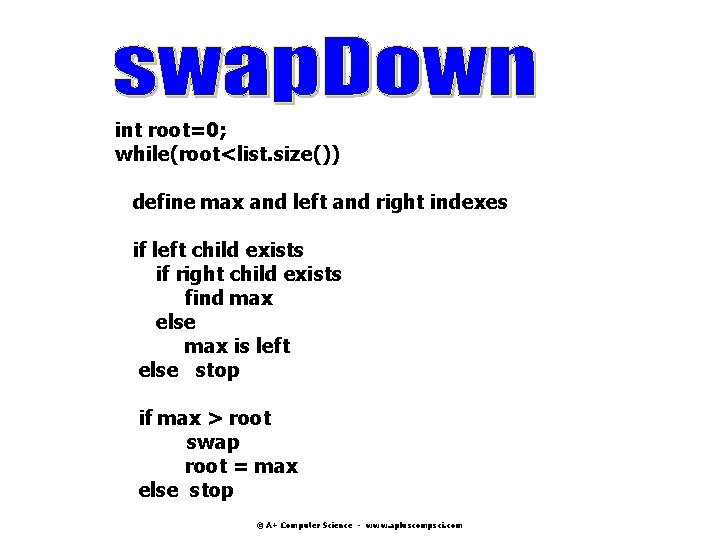
int root=0; while(root<list. size()) define max and left and right indexes if left child exists if right child exists find max else max is left else stop if max > root swap root = max else stop © A+ Computer Science - www. apluscompsci. com
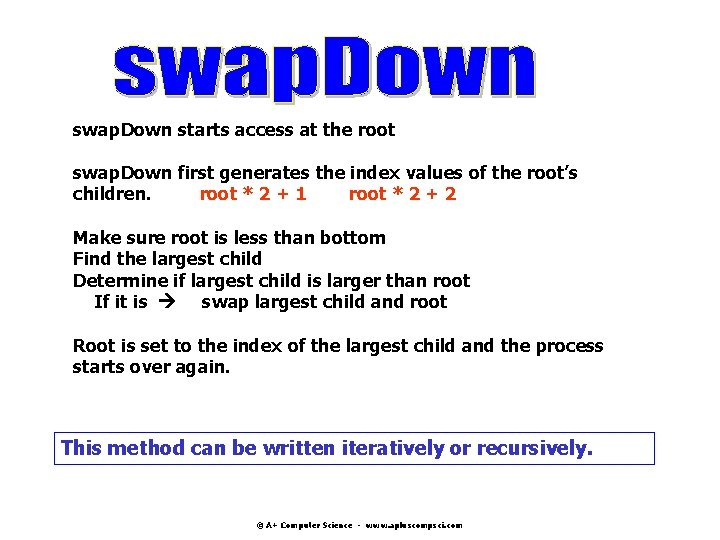
swap. Down starts access at the root swap. Down first generates the index values of the root’s children. root * 2 + 1 root * 2 + 2 Make sure root is less than bottom Find the largest child Determine if largest child is larger than root If it is swap largest child and root Root is set to the index of the largest child and the process starts over again. This method can be written iteratively or recursively. © A+ Computer Science - www. apluscompsci. com
© A+ Computer Science - www. apluscompsci. com
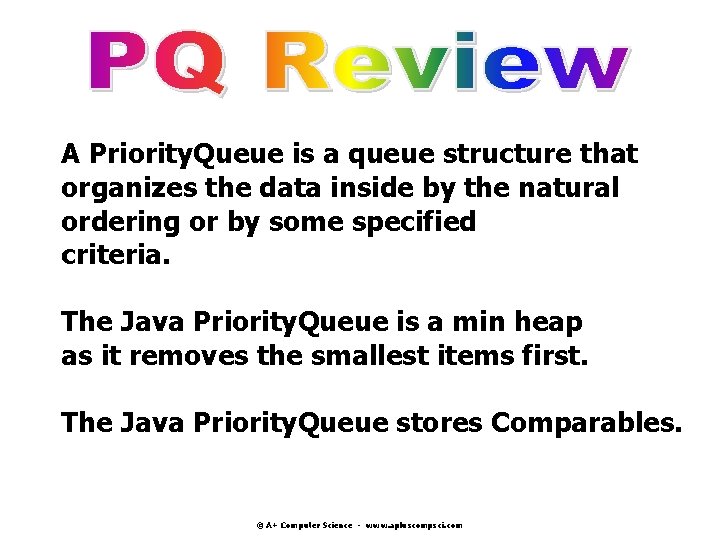
A Priority. Queue is a queue structure that organizes the data inside by the natural ordering or by some specified criteria. The Java Priority. Queue is a min heap as it removes the smallest items first. The Java Priority. Queue stores Comparables. © A+ Computer Science - www. apluscompsci. com
© A+ Computer Science - www. apluscompsci. com
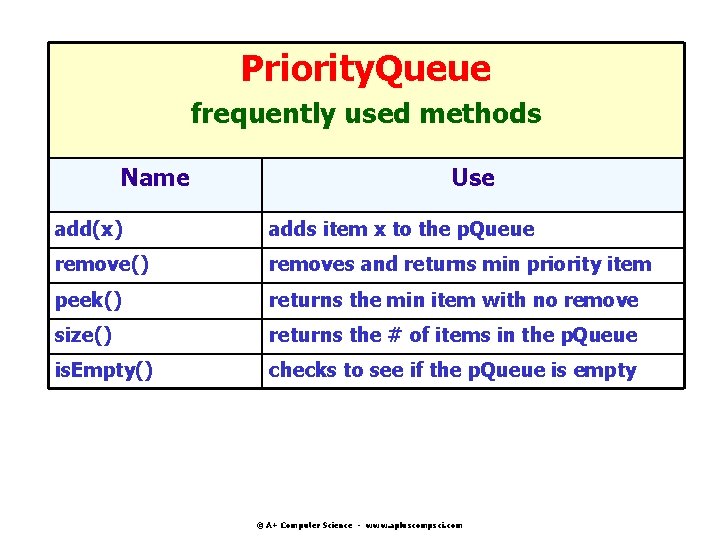
Priority. Queue frequently used methods Name Use add(x) adds item x to the p. Queue remove() removes and returns min priority item peek() returns the min item with no remove size() returns the # of items in the p. Queue is. Empty() checks to see if the p. Queue is empty © A+ Computer Science - www. apluscompsci. com
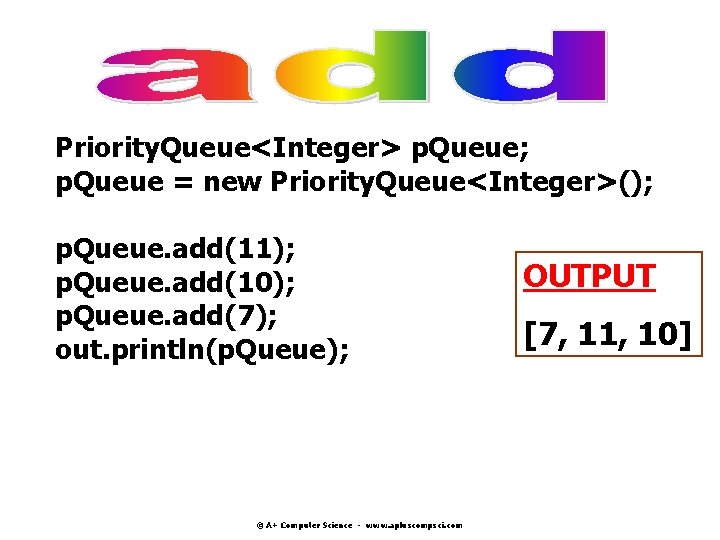
Priority. Queue<Integer> p. Queue; p. Queue = new Priority. Queue<Integer>(); p. Queue. add(11); p. Queue. add(10); p. Queue. add(7); out. println(p. Queue); © A+ Computer Science - www. apluscompsci. com OUTPUT [7, 11, 10]
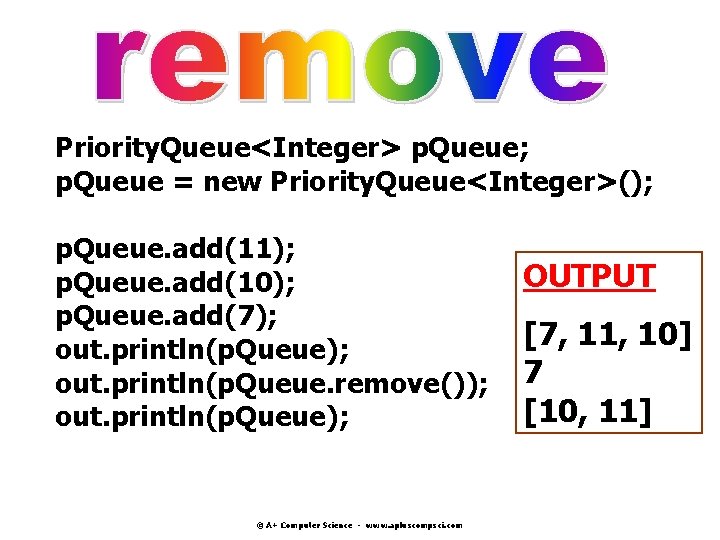
Priority. Queue<Integer> p. Queue; p. Queue = new Priority. Queue<Integer>(); p. Queue. add(11); p. Queue. add(10); p. Queue. add(7); out. println(p. Queue. remove()); out. println(p. Queue); © A+ Computer Science - www. apluscompsci. com OUTPUT [7, 11, 10] 7 [10, 11]
© A+ Computer Science - www. apluscompsci. com
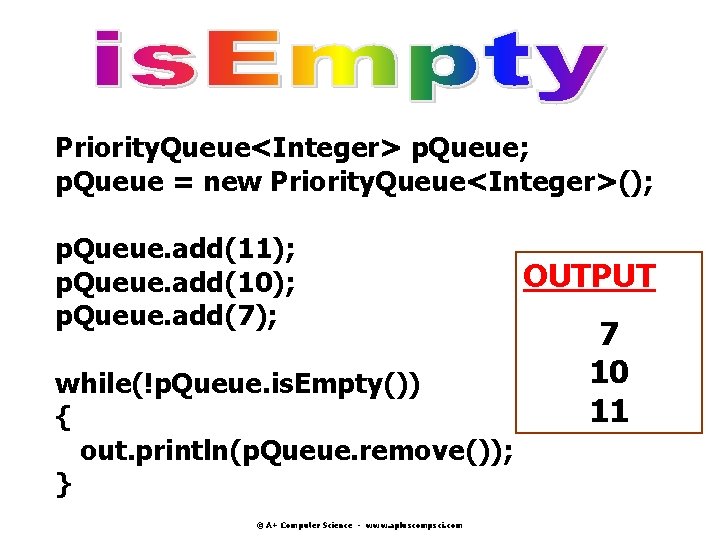
Priority. Queue<Integer> p. Queue; p. Queue = new Priority. Queue<Integer>(); p. Queue. add(11); p. Queue. add(10); p. Queue. add(7); while(!p. Queue. is. Empty()) { out. println(p. Queue. remove()); } © A+ Computer Science - www. apluscompsci. com OUTPUT 7 10 11
© A+ Computer Science - www. apluscompsci. com
© A+ Computer Science - www. apluscompsci. com