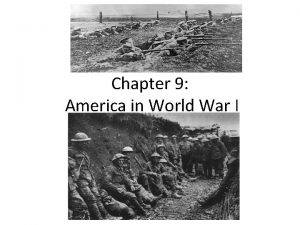
1914 1918 The World at War Chapter 10



























- Slides: 103
1914 -1918: The World at War Chapter 10
Causes of the Great War
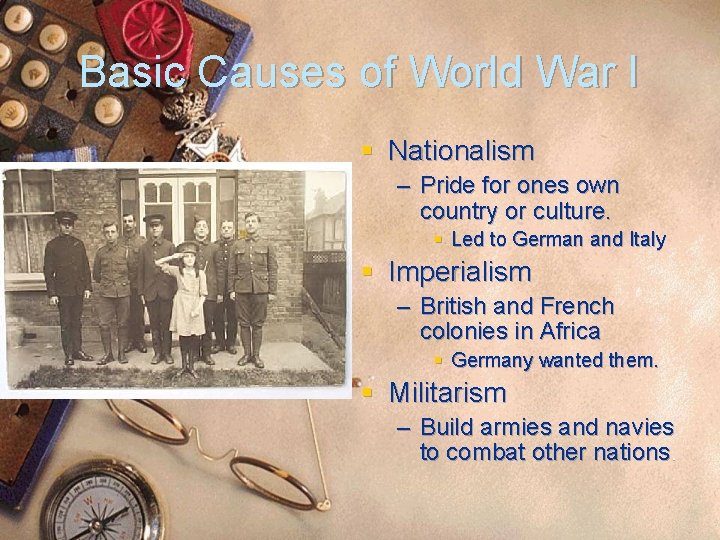
Basic Causes of World War I § Nationalism – Pride for ones own country or culture. § Led to German and Italy § Imperialism – British and French colonies in Africa § Germany wanted them. § Militarism – Build armies and navies to combat other nations.
1. NATIONALISM - pride/devotion for your country or culture § France and Germany fight for leadership § Russia (protector of the Slavic people) § Russia and Austria-Hungary rivals for influence over Serbia § Ethnic groups hoped to create nations of their own – Ex. Poles, Czechs
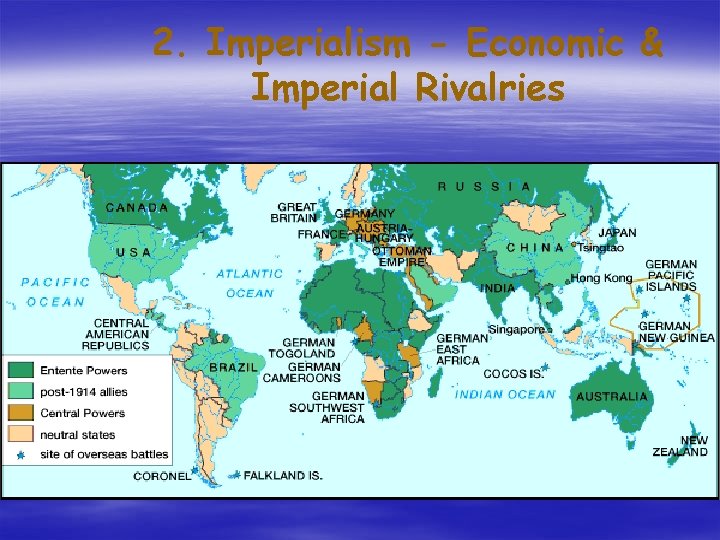
2. Imperialism - Economic & Imperial Rivalries
Competition for colonies. § Provide markets to sell goods § Provide needed raw materials/resources § Added prestige to the imperialist nation (nationalism) § GERMANY INDUSTRIALIZES AND COMPETES WITH FRANCE AND GB
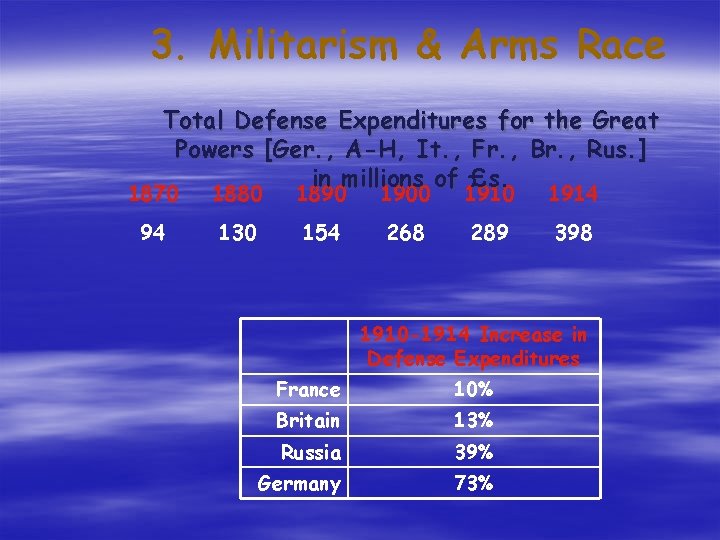
3. Militarism & Arms Race Total Defense Expenditures for the Great Powers [Ger. , A-H, It. , Fr. , Br. , Rus. ] in millions of £s. 1870 1880 1890 1900 1914 94 130 154 268 289 398 1910 -1914 Increase in Defense Expenditures France 10% Britain 13% Russia 39% Germany 73%
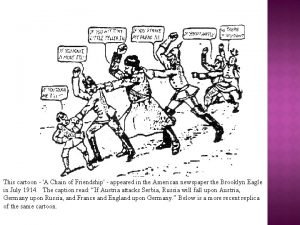
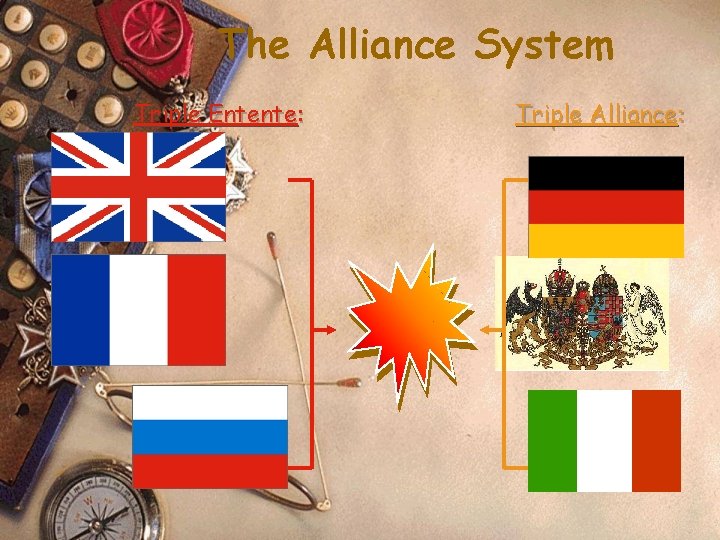
4. Alliances § Triple Alliance – Germany – Austria Hungary – Italy § Triple Entente – Britain – France – Russia
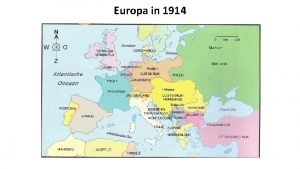
The Alliance System Triple Entente: Triple Alliance:
The “Spark”
Archduke Franz Ferdinand § Austria § Black Hand – Bosnian terrorist group § Wanted a independent Bosnia § Visit to Sarajevo – Capital of Austro. Hungary § Assassinated – Gavrilo Princip § The war is on!
WAR § Austria-Hungary declares war on Serbs – Russia promised to protect the Serbs and mobilize its troops. § Germany sees this as an act of aggression and declares war on Russia. § Germany declares war on France to protect their back door. § Germany invades Belgium – Great Britain pledged to defend Belgium and declares war on Germany. § War has Begun!
Two Armed Camps! Allied Powers: Central Powers:
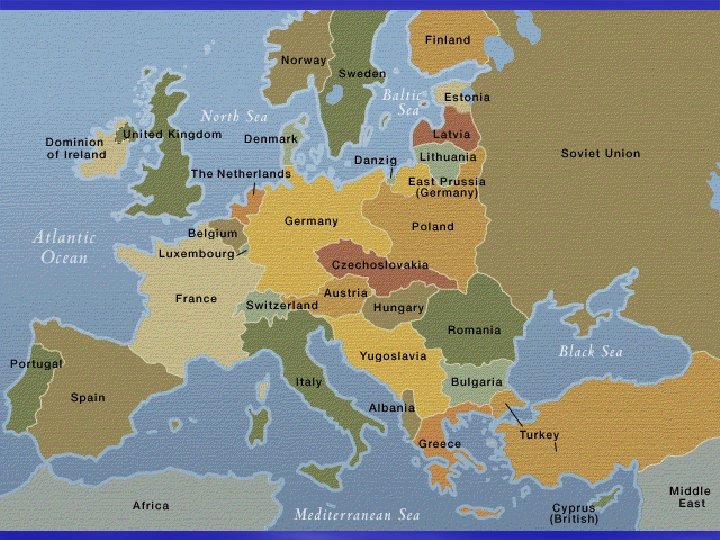
The Great Powers of Europe § Central Powers – – – Germany Austria-Hungary Ottoman Empire § Allied Powers – – – Great Britain France Russia § Italy joined the allied powers because of disagreements.
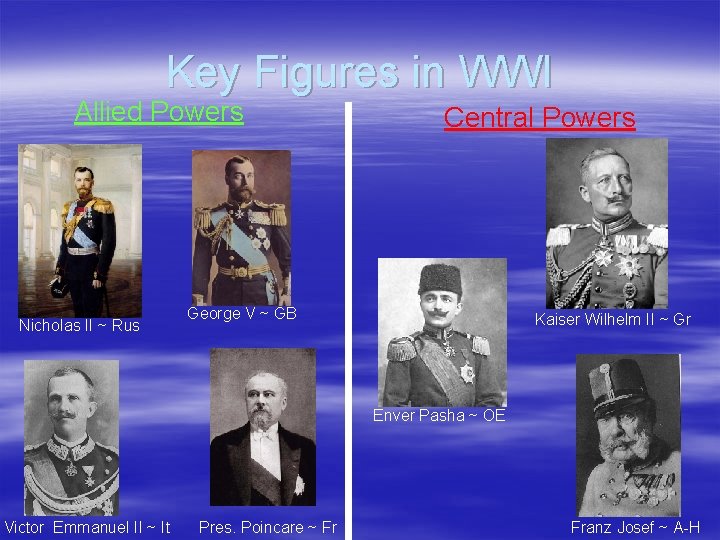
Key Figures in WWI Allied Powers Nicholas II ~ Rus Central Powers George V ~ GB Kaiser Wilhelm II ~ Gr Enver Pasha ~ OE Victor Emmanuel II ~ It Pres. Poincare ~ Fr Franz Josef ~ A-H
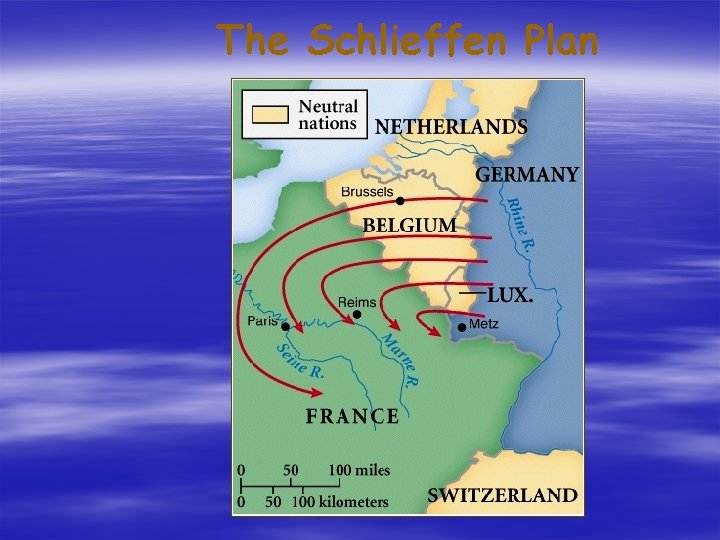
The Schlieffen Plan
Germany invades neutral Belgium § Aug. 4, 1914 – use Schlieffen Plan § Attack Belgium, holding action against Russia – after France falls they can put two armies against Russia § Great Britain joins War against Germany
German Atrocities in Belgium
New Technology of the War § Uniforms – Germans – Gray uniforms used as camouflage – French – dressed in old ceremonial uniform. Left them with little camouflage
New Technology of the War § Machine Gun – Could set up in 4 seconds – Could fire 600 bullets a minute Water Cooled Vickers ~ British MG Maschinengewehr ~ German MG
New Technology of the War § Artillery British Mark I Howitzer 420 mm Big Bertha ~ Germany 400 mm Rail Howitzer ~ French
1 st Battle of the Marne § § Germans only 25 miles from Paris French counterattack Sept. 7, 1914 2 million men fight over 125 mile battlefield 5 days – 250, 000 lost – Germans pushed back § Gave Russia time to mobilize
The Plans falls Apart § The Battle of the Marne
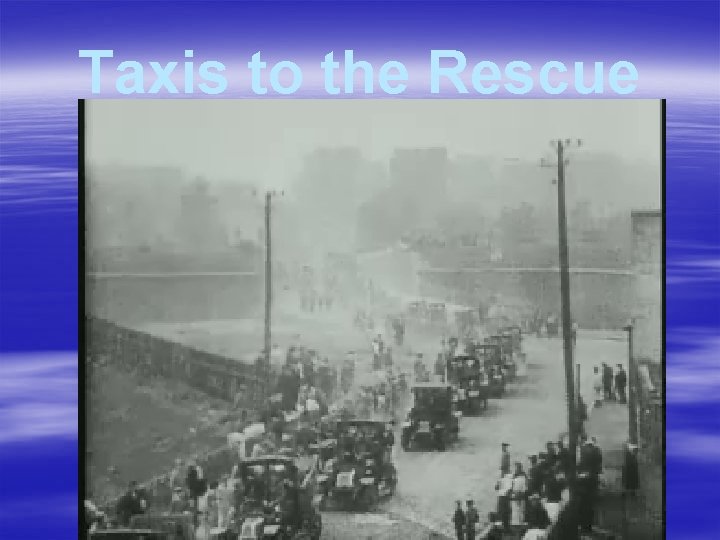
Taxis to the Rescue
Trench Warfare stalemate “No Man’s Land”
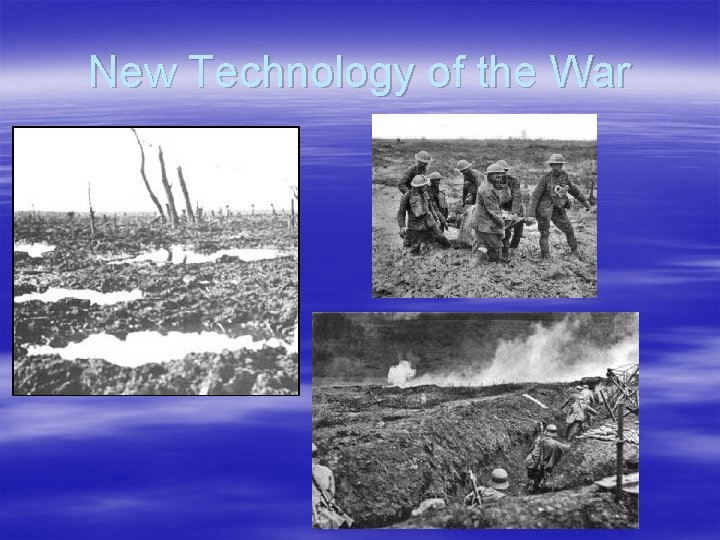
New Technology of the War § Trench Warfare
Trench Warfare
Trench Foot – YUCK!!!
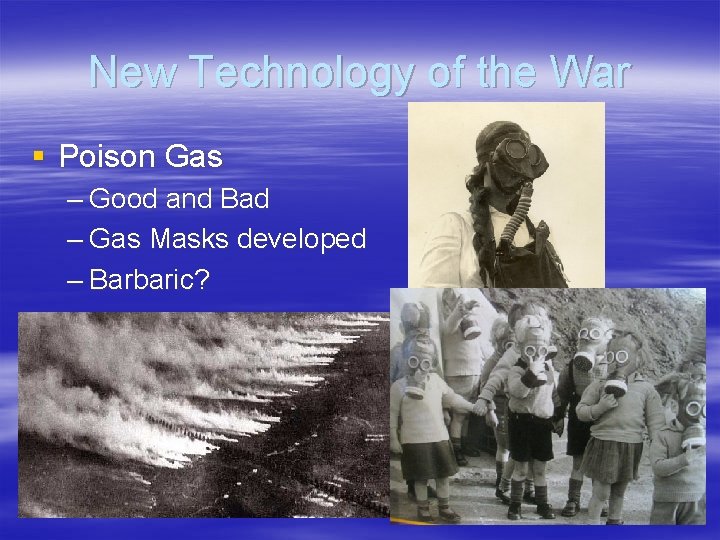
New Technology of the War § Poison Gas – Good and Bad – Gas Masks developed – Barbaric?
New Technology of the War
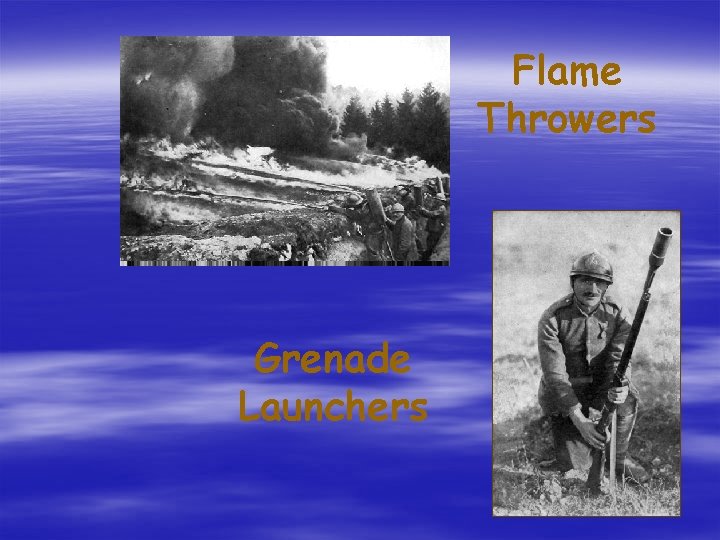
Flame Throwers Grenade Launchers
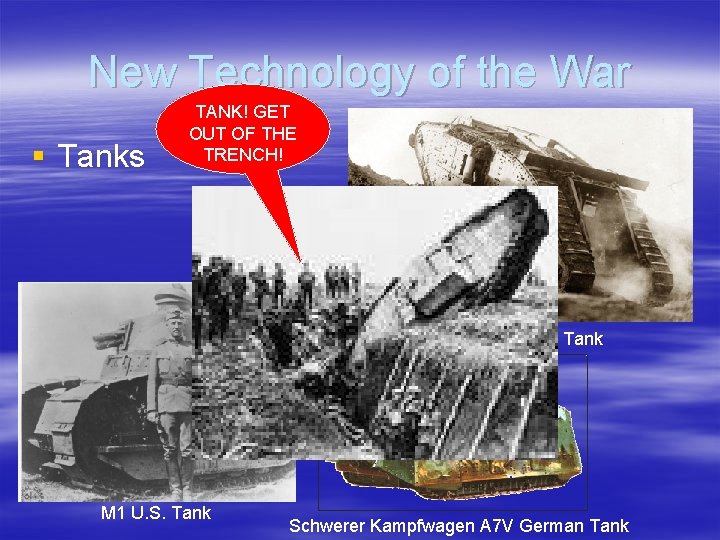
New Technology of the War § Tanks TANK! GET OUT OF THE TRENCH! British Mark IV Tank M 1 U. S. Tank Schwerer Kampfwagen A 7 V German Tank
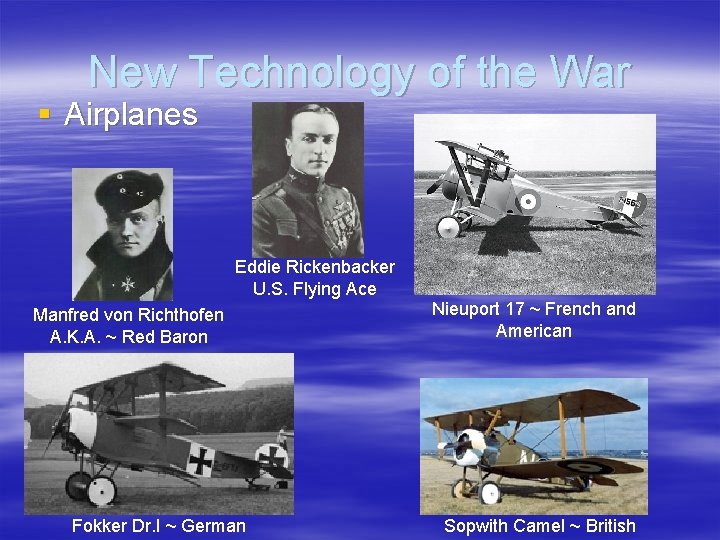
New Technology of the War § Airplanes Eddie Rickenbacker U. S. Flying Ace Manfred von Richthofen A. K. A. ~ Red Baron Fokker Dr. I ~ German Nieuport 17 ~ French and American Sopwith Camel ~ British
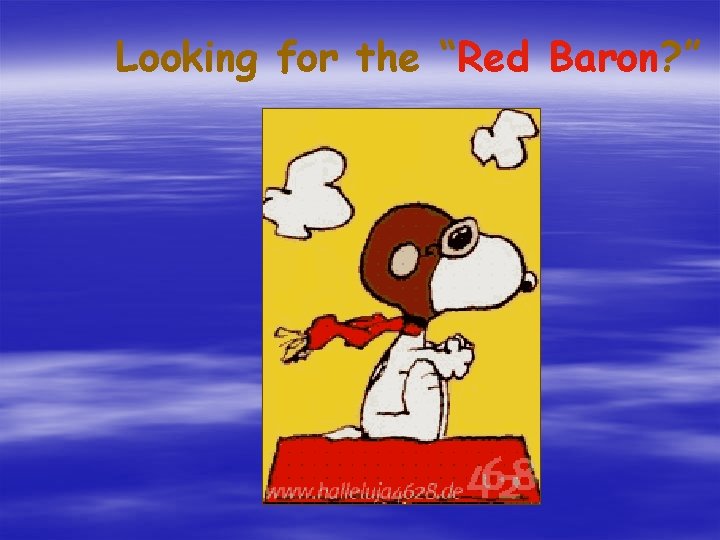
Looking for the “Red Baron? ”
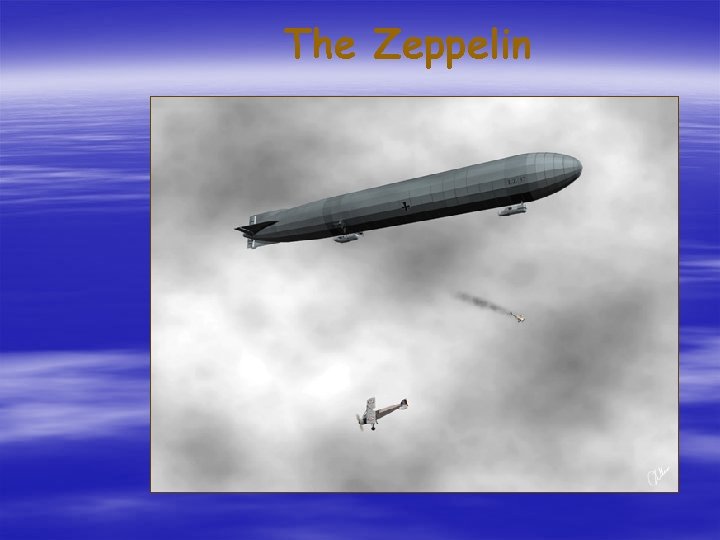
The Zeppelin
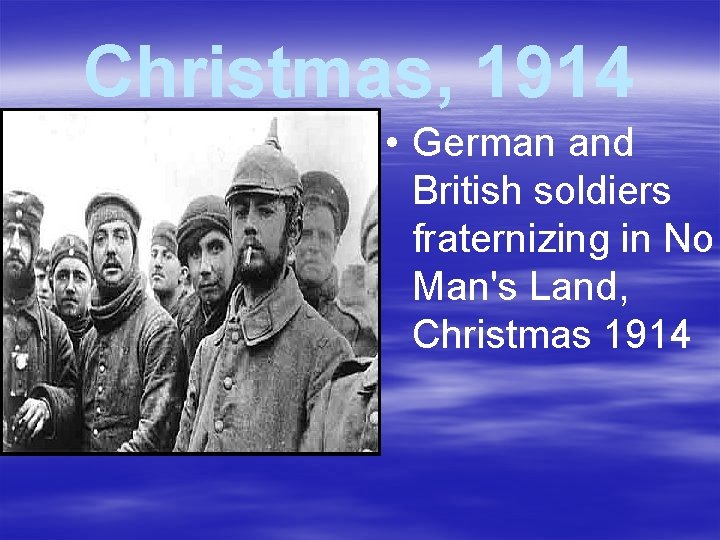
Christmas, 1914 • German and British soldiers fraternizing in No Man's Land, Christmas 1914
The Western Front § Verdun – German Offensive § Somme – UK & French
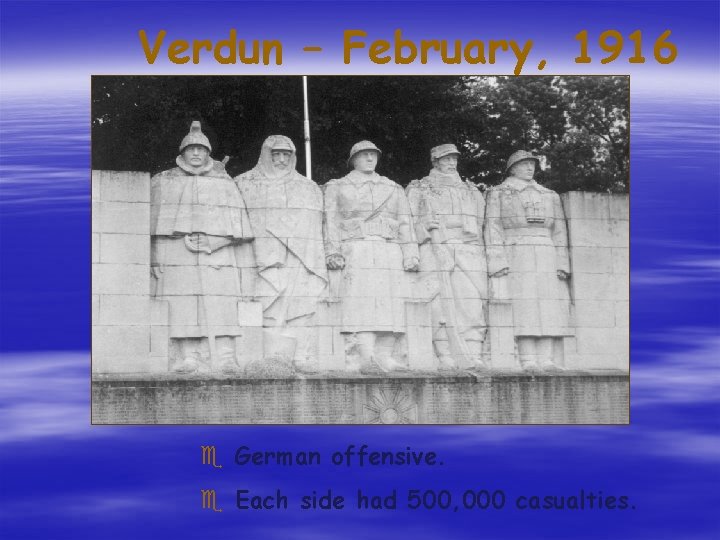
Verdun – February, 1916 e German offensive. e Each side had 500, 000 casualties.
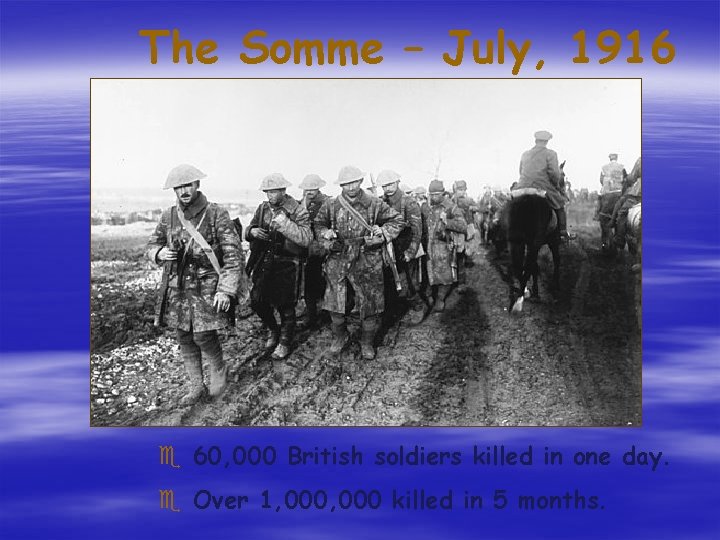
The Somme – July, 1916 e 60, 000 British soldiers killed in one day. e Over 1, 000 killed in 5 months.
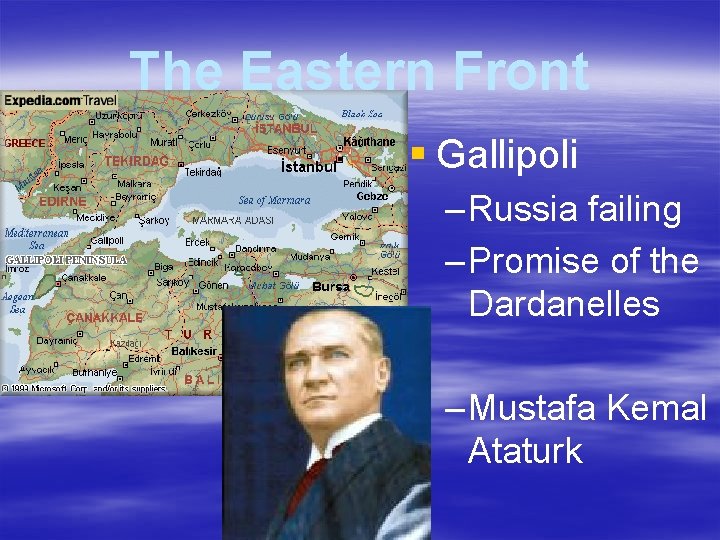
The Eastern Front § Gallipoli – Russia failing – Promise of the Dardanelles – Mustafa Kemal Ataturk
War Crimes in Armenia § Ottoman Turks fear Armenian support of Russia (Christian V Islam) § The solution: men, women and children marched into the desert till dead from exposure and dehydration § 1915 -1918 § 1. 5 Million Dead
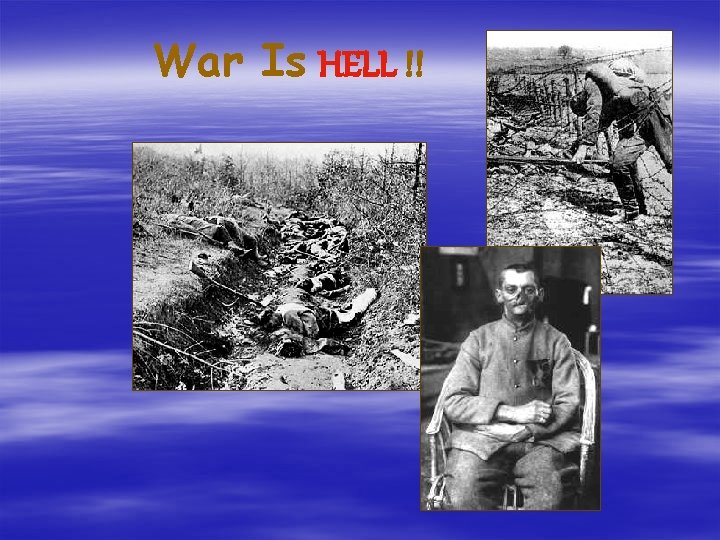
War Is HELL !!
Sacrifices in War
The United States in WWI
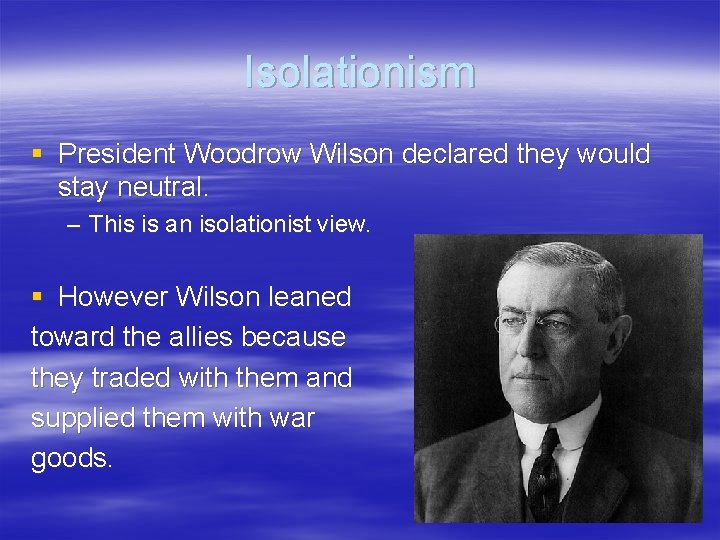
Isolationism § President Woodrow Wilson declared they would stay neutral. – This is an isolationist view. § However Wilson leaned toward the allies because they traded with them and supplied them with war goods.
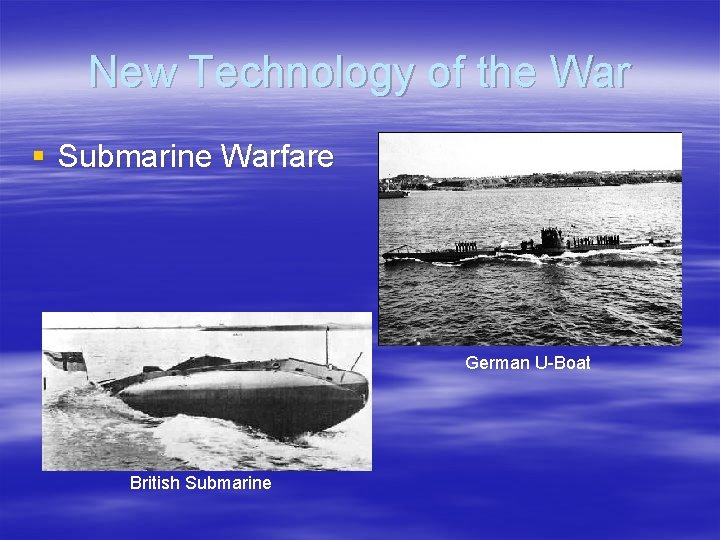
New Technology of the War § Submarine Warfare German U-Boat British Submarine
U-Boats
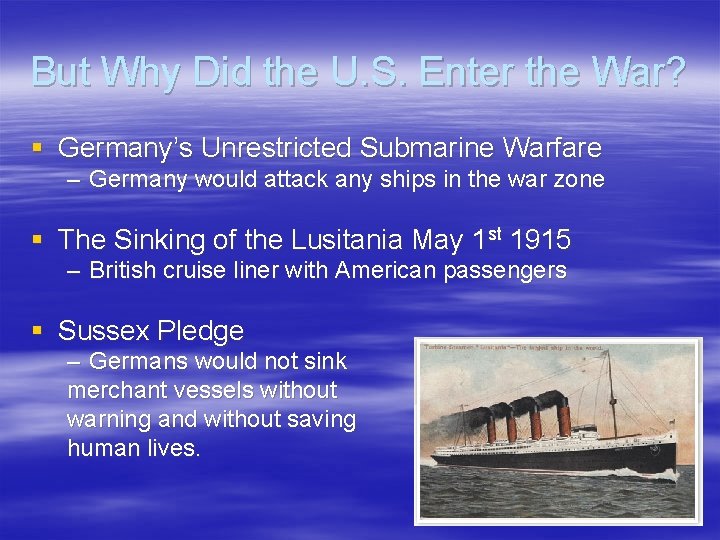
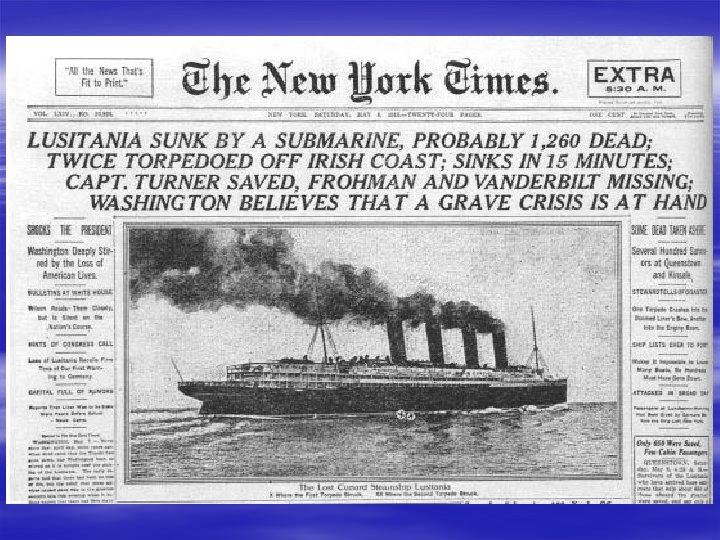
But Why Did the U. S. Enter the War? § Germany’s Unrestricted Submarine Warfare – Germany would attack any ships in the war zone § The Sinking of the Lusitania May 1 st 1915 – British cruise liner with American passengers § Sussex Pledge – Germans would not sink merchant vessels without warning and without saving human lives.
But Why Did the U. S. Enter the War? § Sussex Pledge 1915 § Germans would not sink merchant vessels without warning and without saving human lives. § Germany resorts back to unrestricted submarine warfare 1917 – U. S. ends diplomatic ties with Germany.
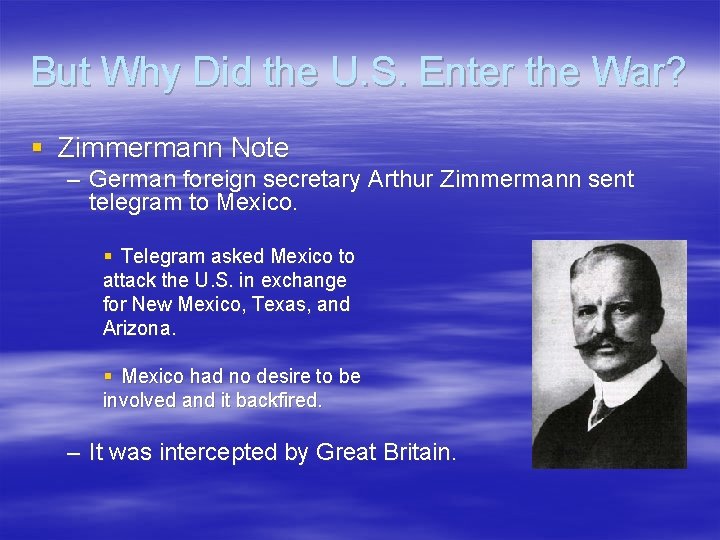
But Why Did the U. S. Enter the War? § Zimmermann Note – German foreign secretary Arthur Zimmermann sent telegram to Mexico. § Telegram asked Mexico to attack the U. S. in exchange for New Mexico, Texas, and Arizona. § Mexico had no desire to be involved and it backfired. – It was intercepted by Great Britain.
America Prepares For War
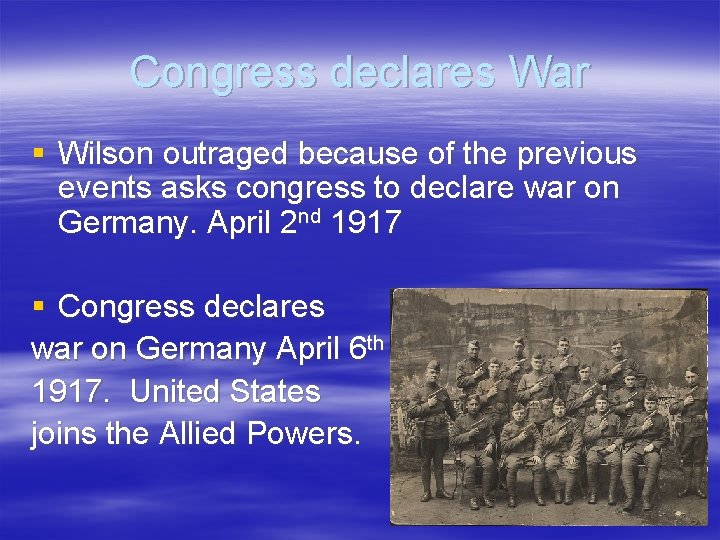
Congress declares War § Wilson outraged because of the previous events asks congress to declare war on Germany. April 2 nd 1917 § Congress declares war on Germany April 6 th 1917. United States joins the Allied Powers.
World War I The Home Front Chapter 10 Section 2
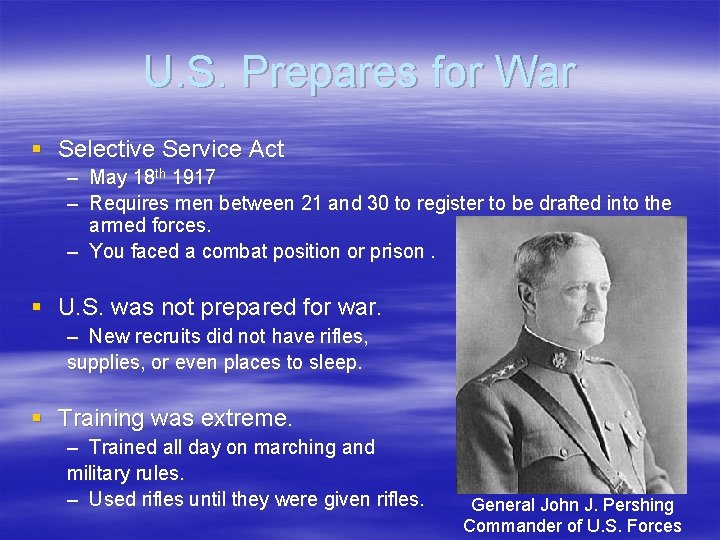
U. S. Prepares for War § Selective Service Act – May 18 th 1917 – Requires men between 21 and 30 to register to be drafted into the armed forces. – You faced a combat position or prison. § U. S. was not prepared for war. – New recruits did not have rifles, supplies, or even places to sleep. § Training was extreme. – Trained all day on marching and military rules. – Used rifles until they were given rifles. General John J. Pershing Commander of U. S. Forces
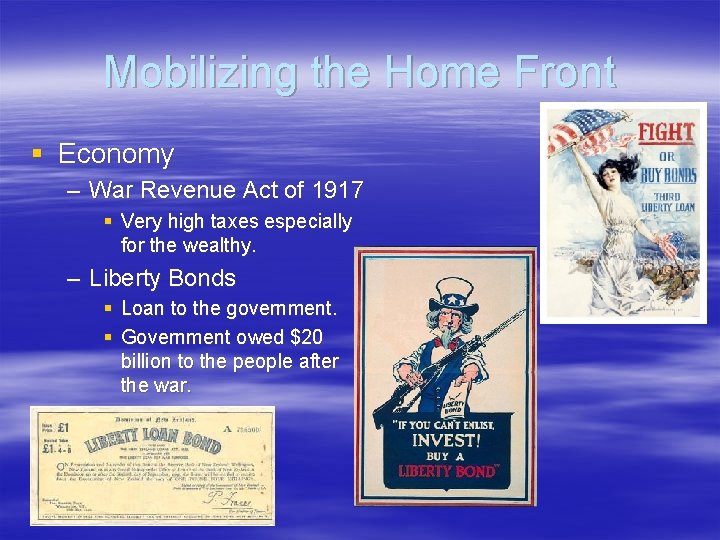
Mobilizing the Home Front § Economy – War Revenue Act of 1917 § Very high taxes especially for the wealthy. – Liberty Bonds § Loan to the government. § Government owed $20 billion to the people after the war.
Mobilizing the Home Front § Regulations – Industry § War Industries Board – Couldn’t use steel, copper, cement, or rubber without their approval. – Food § Herbert Hoover led the food administration – – Food can win the War Victory gardens Meatless Mondays and wheatless Wednesdays Eighteenth Amendment § Prohibition – Fuel § Fuel Administration – Set prices for fuel to make sure military needs were met.
Mobilizing the Home Front § Workers – Pay and hours went up but so did the cost of living. – Increased production meant less safety precautions. – National War Labor Board § Judged disputes between management and workers to prevent strikes. – Women § Went to work on railroads, docks, and factories. Jobs usually held by men. § After the war women left these jobs by choice and by force from employers who wanted men.
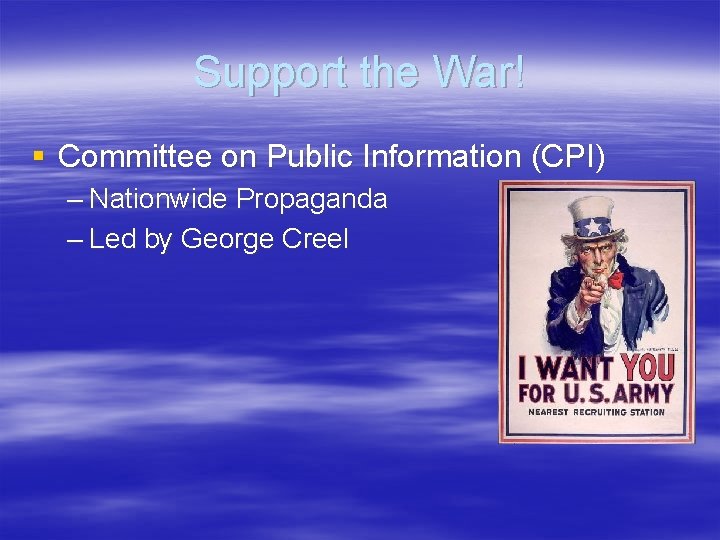
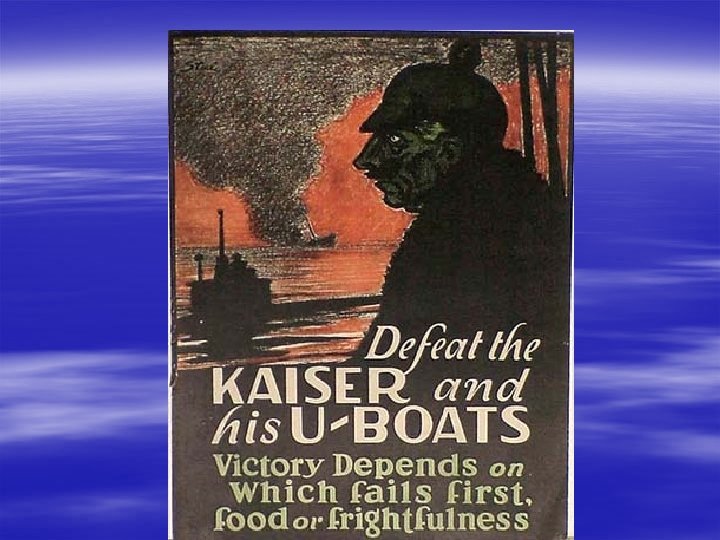
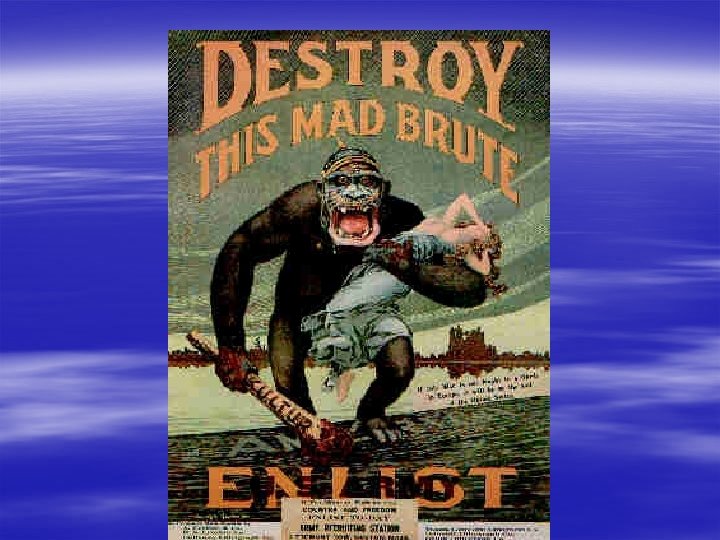
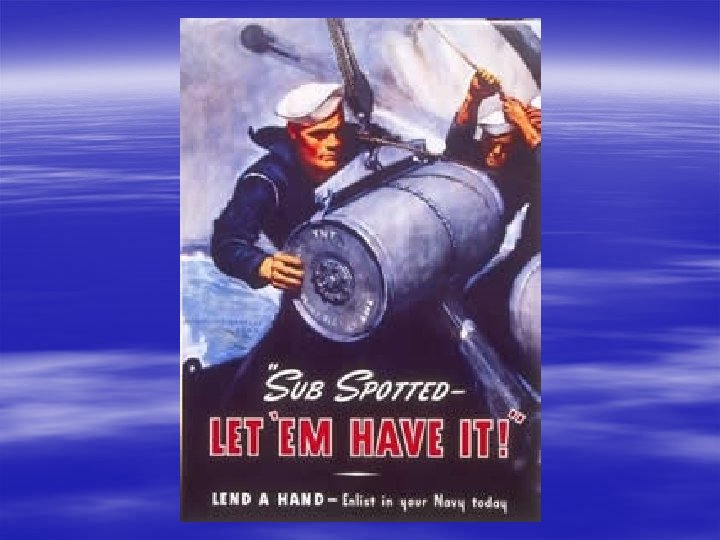
Support the War! § Committee on Public Information (CPI) – Nationwide Propaganda – Led by George Creel
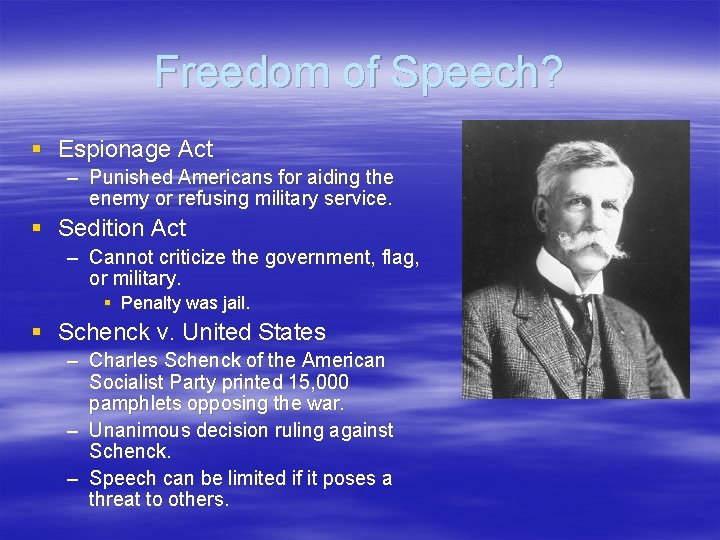
Freedom of Speech? § Espionage Act – Punished Americans for aiding the enemy or refusing military service. § Sedition Act – Cannot criticize the government, flag, or military. § Penalty was jail. § Schenck v. United States – Charles Schenck of the American Socialist Party printed 15, 000 pamphlets opposing the war. – Unanimous decision ruling against Schenck. – Speech can be limited if it poses a threat to others.
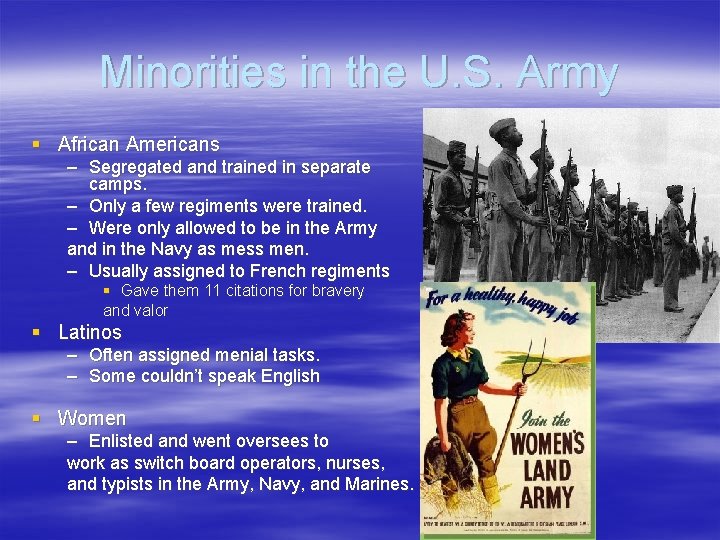
Minorities in the U. S. Army § African Americans – Segregated and trained in separate camps. – Only a few regiments were trained. – Were only allowed to be in the Army and in the Navy as mess men. – Usually assigned to French regiments § Gave them 11 citations for bravery and valor § Latinos – Often assigned menial tasks. – Some couldn’t speak English § Women – Enlisted and went oversees to work as switch board operators, nurses, and typists in the Army, Navy, and Marines.
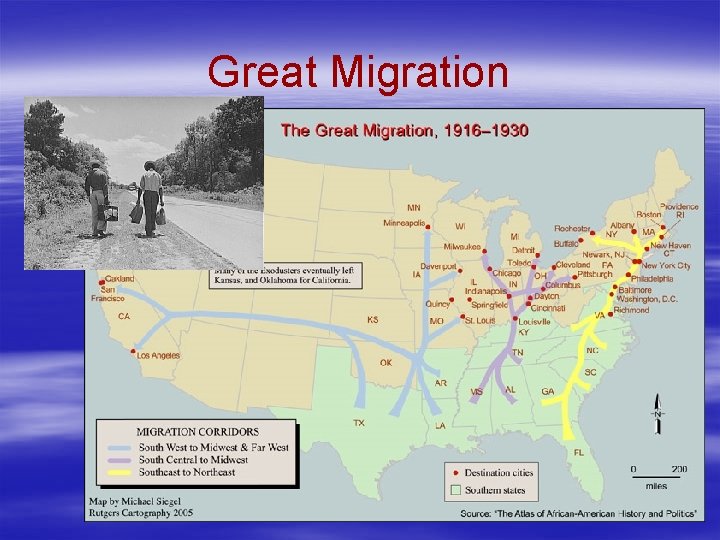
Great Migration
Wilson, War, and Peace Chapter 10 Section 3
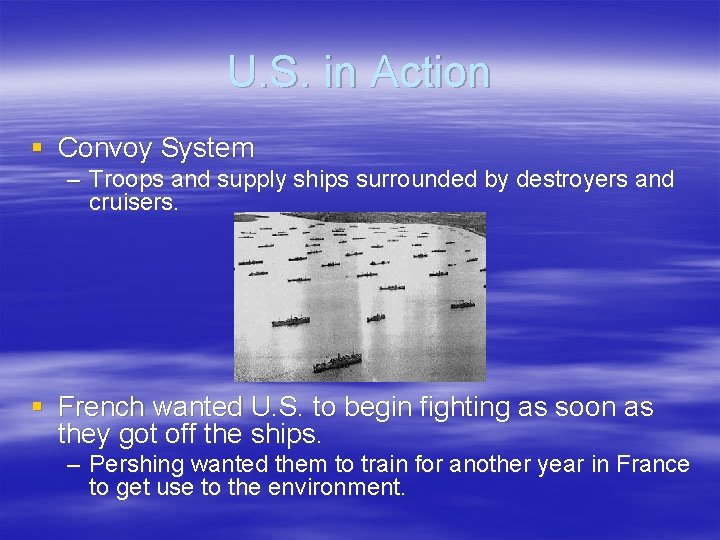
U. S. in Action § Convoy System – Troops and supply ships surrounded by destroyers and cruisers. § French wanted U. S. to begin fighting as soon as they got off the ships. – Pershing wanted them to train for another year in France to get use to the environment.
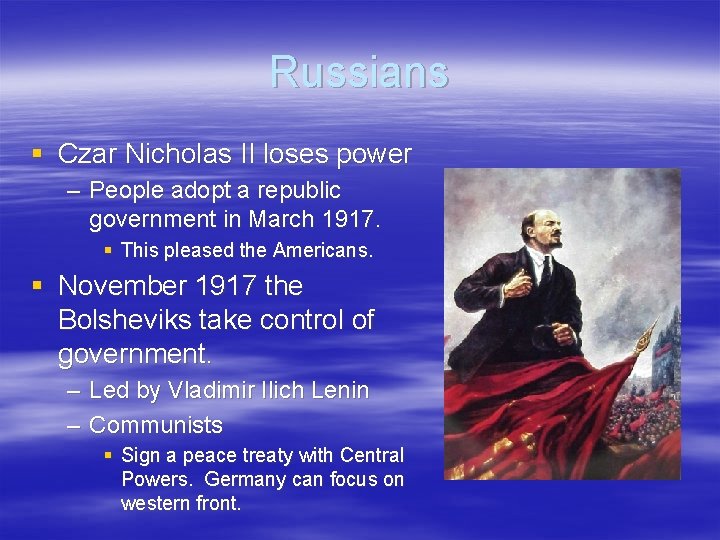
Russians § Czar Nicholas II loses power – People adopt a republic government in March 1917. § This pleased the Americans. § November 1917 the Bolsheviks take control of government. – Led by Vladimir Ilich Lenin – Communists § Sign a peace treaty with Central Powers. Germany can focus on western front.
Key Battles Involving Americans § 1. § 2. § 3. § 4.
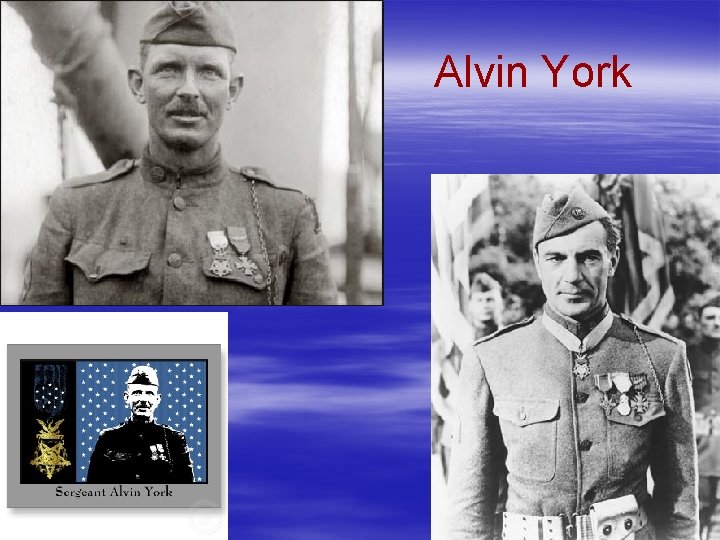
Alvin York
The Allies fight back § With the help of the Americans in 1918 the allies fought back and pushed the Germans back into Belgium and Germany. § Central Powers were failing – Germany’s economy was crippled. § Food and supplies were depleted. – Austria-Hungary fell into revolution. – Central Powers troops did not want to fight anymore.
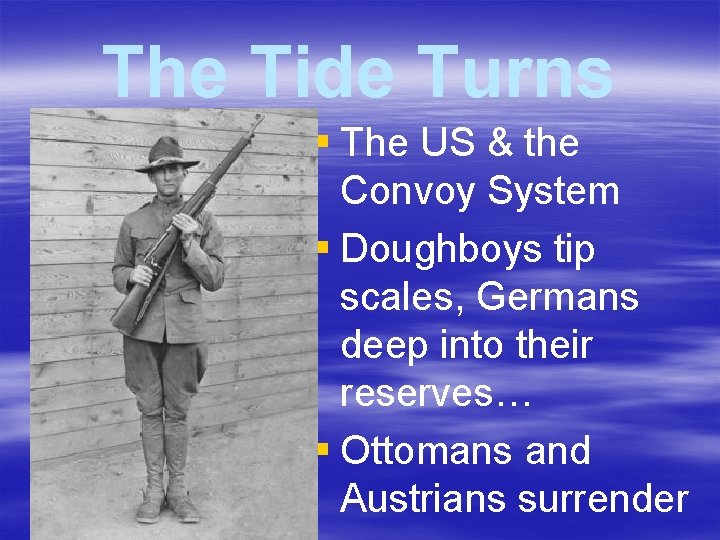
The Tide Turns § The US & the Convoy System § Doughboys tip scales, Germans deep into their reserves… § Ottomans and Austrians surrender
War Ends § November 1918 – Austria-Hungary signed a peace treaty with the Allies § November 7 th – Germany begins peace negotiation § November 11 th – Armistice went into effect. – What holiday today?
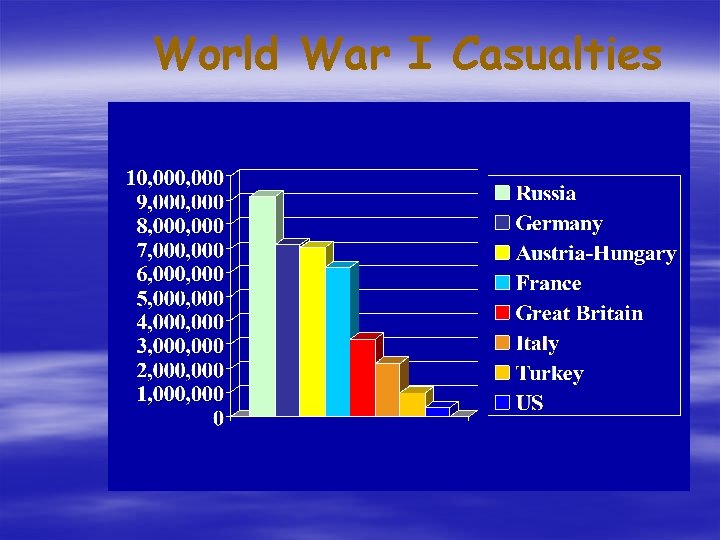
World War I Casualties
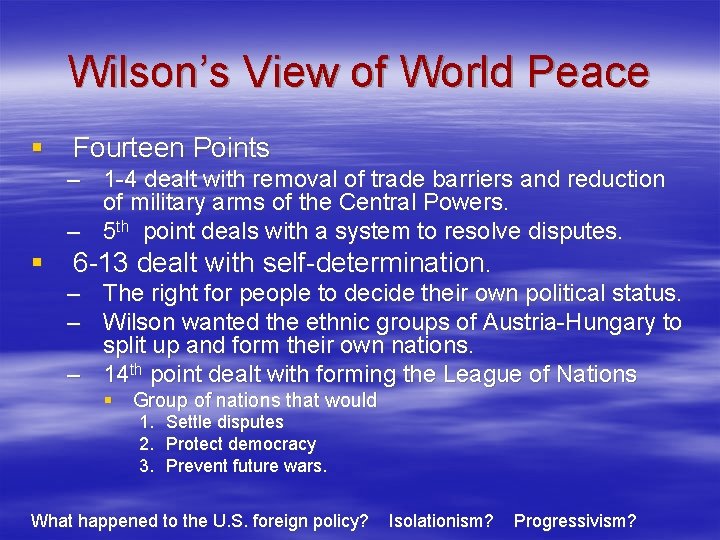
Wilson’s View of World Peace § Fourteen Points – 1 -4 dealt with removal of trade barriers and reduction of military arms of the Central Powers. – 5 th point deals with a system to resolve disputes. § 6 -13 dealt with self-determination. – The right for people to decide their own political status. – Wilson wanted the ethnic groups of Austria-Hungary to split up and form their own nations. – 14 th point dealt with forming the League of Nations § Group of nations that would 1. 2. 3. Settle disputes Protect democracy Prevent future wars. What happened to the U. S. foreign policy? Isolationism? Progressivism?
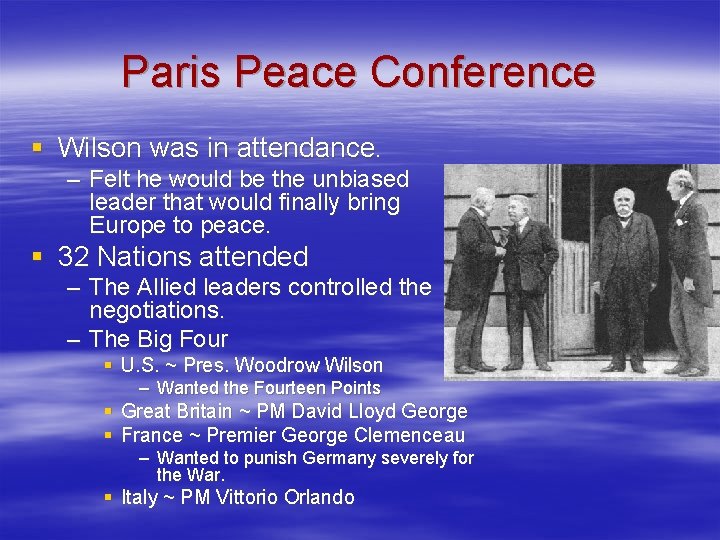
Paris Peace Conference § Wilson was in attendance. – Felt he would be the unbiased leader that would finally bring Europe to peace. § 32 Nations attended – The Allied leaders controlled the negotiations. – The Big Four § U. S. ~ Pres. Woodrow Wilson – Wanted the Fourteen Points § Great Britain ~ PM David Lloyd George § France ~ Premier George Clemenceau – Wanted to punish Germany severely for the War. § Italy ~ PM Vittorio Orlando
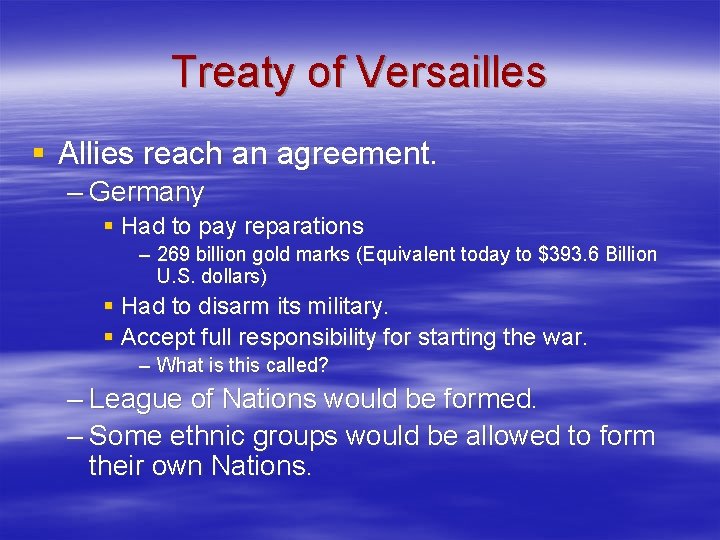
Treaty of Versailles § Allies reach an agreement. – Germany § Had to pay reparations – 269 billion gold marks (Equivalent today to $393. 6 Billion U. S. dollars) § Had to disarm its military. § Accept full responsibility for starting the war. – What is this called? – League of Nations would be formed. – Some ethnic groups would be allowed to form their own Nations.
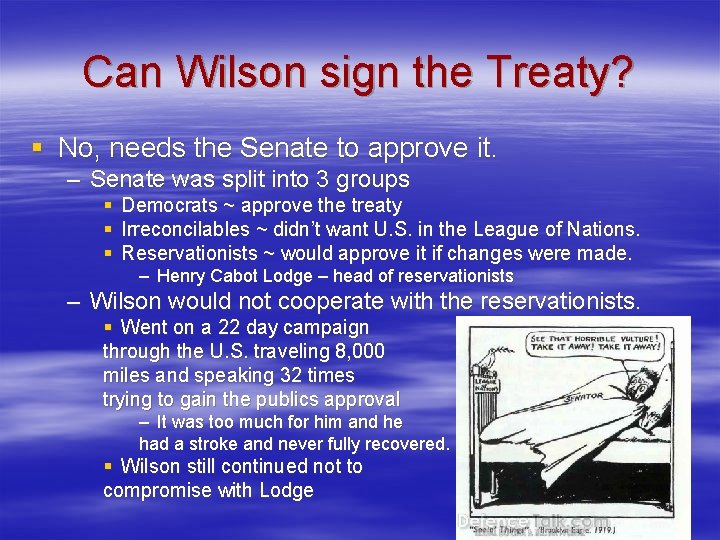
Can Wilson sign the Treaty? § No, needs the Senate to approve it. – Senate was split into 3 groups § § § Democrats ~ approve the treaty Irreconcilables ~ didn’t want U. S. in the League of Nations. Reservationists ~ would approve it if changes were made. – Henry Cabot Lodge – head of reservationists – Wilson would not cooperate with the reservationists. § Went on a 22 day campaign through the U. S. traveling 8, 000 miles and speaking 32 times trying to gain the publics approval – It was too much for him and he had a stroke and never fully recovered. § Wilson still continued not to compromise with Lodge
Does the League of Nations work? § Wilson leaves office in 1921 – Never got the treaty approved by the Senate. § The U. S. signs separate treaties with Austria, Hungary, and Germany having never joined the League of Nations. – Without the U. S. power the League of Nations would never be able to keep the peace.
Effects of the War United States History 10. 4
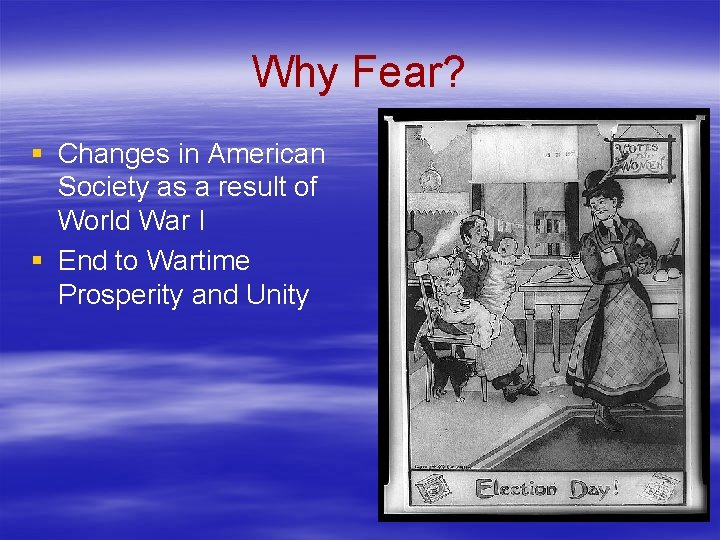
Why Fear? § Changes in American Society as a result of World War I § End to Wartime Prosperity and Unity
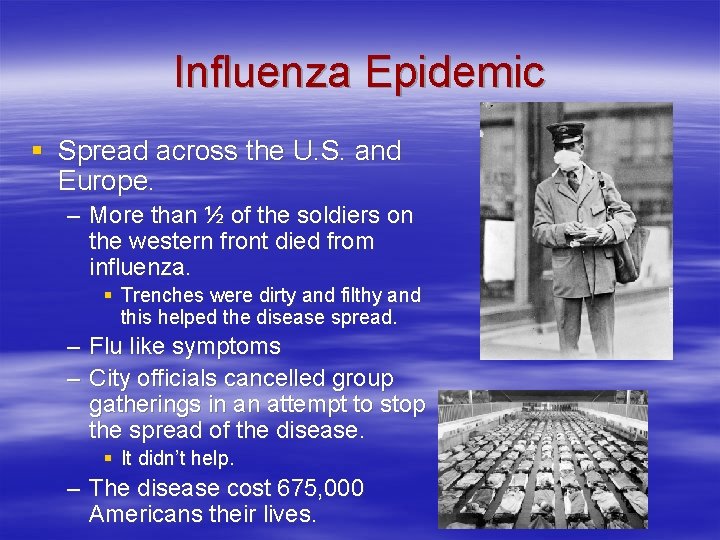
Influenza Epidemic § Spread across the U. S. and Europe. – More than ½ of the soldiers on the western front died from influenza. § Trenches were dirty and filthy and this helped the disease spread. – Flu like symptoms – City officials cancelled group gatherings in an attempt to stop the spread of the disease. § It didn’t help. – The disease cost 675, 000 Americans their lives.
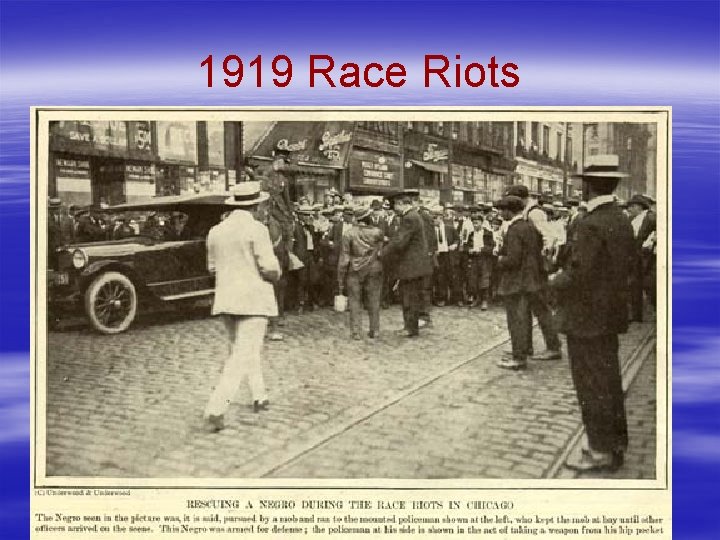
1919 Race Riots
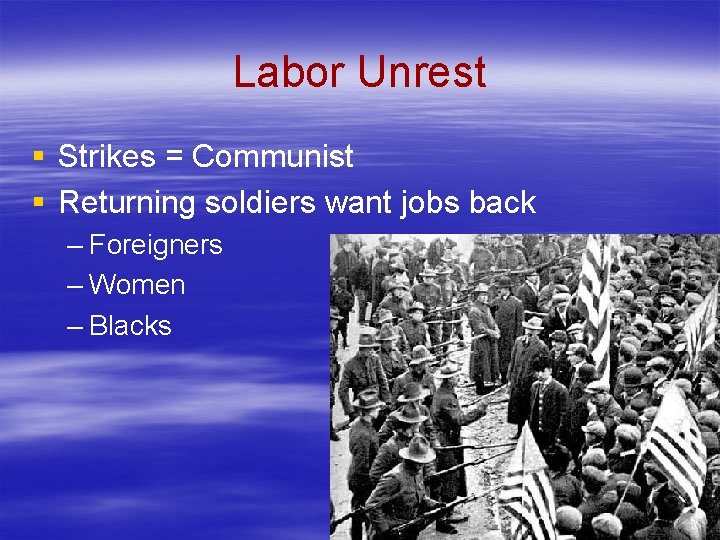
Labor Unrest § Strikes = Communist § Returning soldiers want jobs back – Foreigners – Women – Blacks
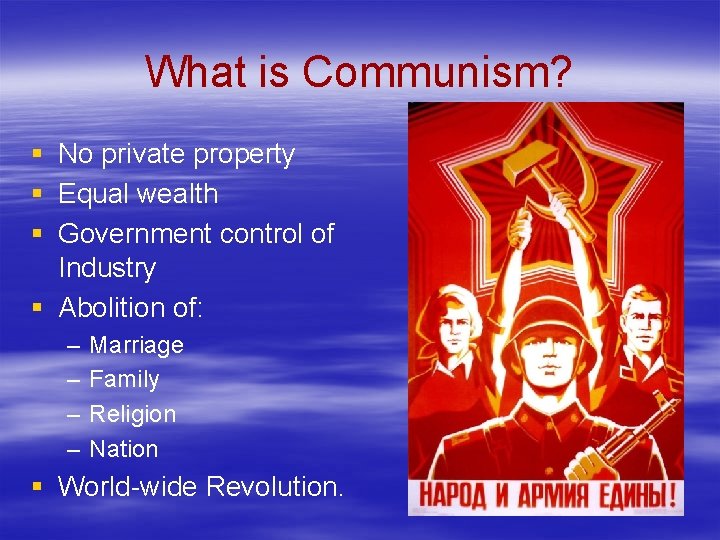
What is Communism? § No private property § Equal wealth § Government control of Industry § Abolition of: – – Marriage Family Religion Nation § World-wide Revolution.
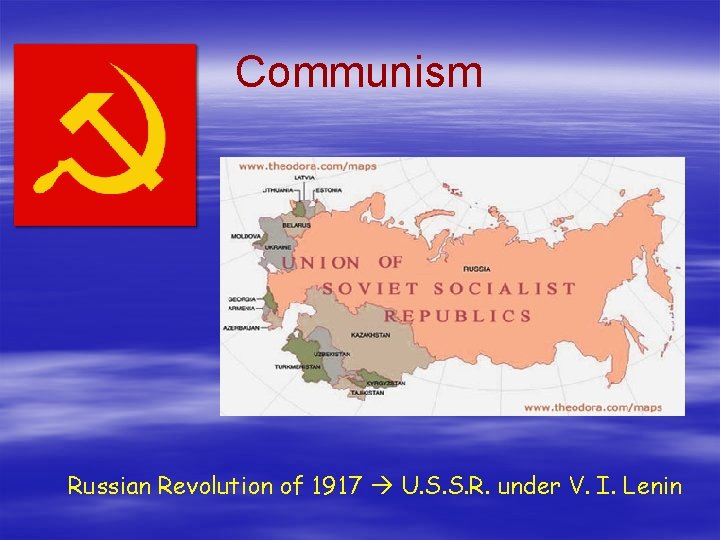
Communism Russian Revolution of 1917 U. S. S. R. under V. I. Lenin
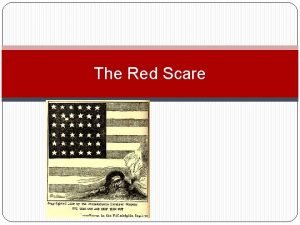
Russian Revolution - 1917 § Bolsheviks, led by V. I. Lenin, seize control of Russia and establish the Soviet Union. § Red Scare – panic over the spread of communism sweeps through the U. S.
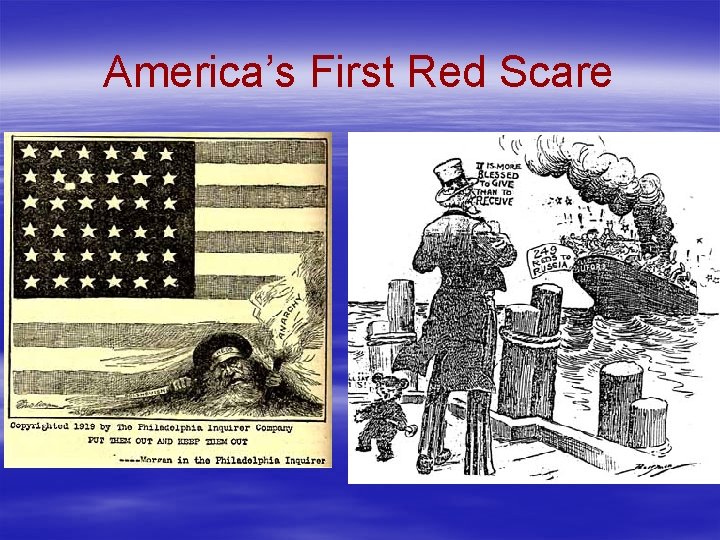
America’s First Red Scare
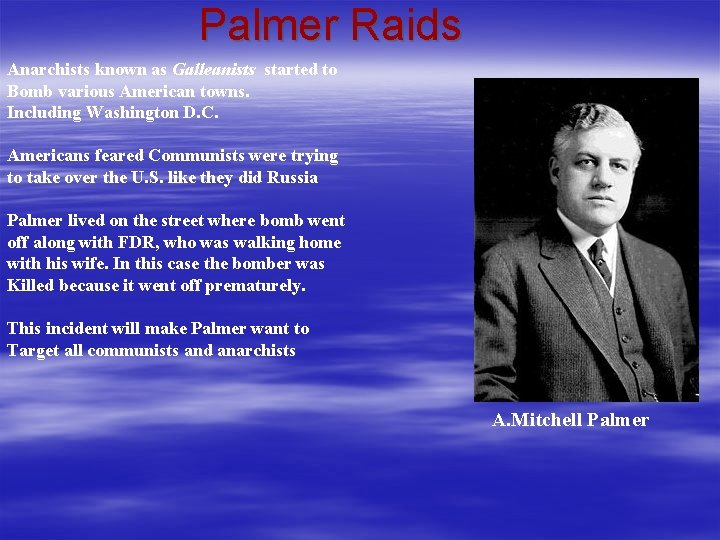
Palmer Raids Anarchists known as Galleanists started to Bomb various American towns. Including Washington D. C. Americans feared Communists were trying to take over the U. S. like they did Russia Palmer lived on the street where bomb went off along with FDR, who was walking home with his wife. In this case the bomber was Killed because it went off prematurely. This incident will make Palmer want to Target all communists and anarchists A. Mitchell Palmer
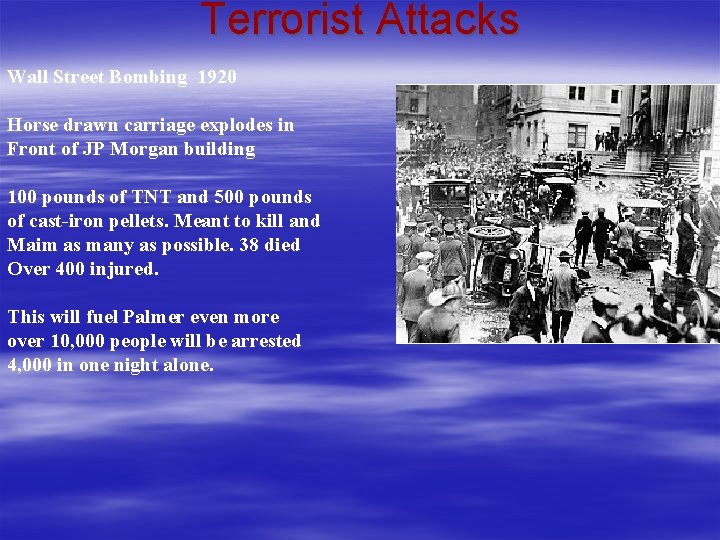
Terrorist Attacks Wall Street Bombing 1920 Horse drawn carriage explodes in Front of JP Morgan building 100 pounds of TNT and 500 pounds of cast-iron pellets. Meant to kill and Maim as many as possible. 38 died Over 400 injured. This will fuel Palmer even more over 10, 000 people will be arrested 4, 000 in one night alone.
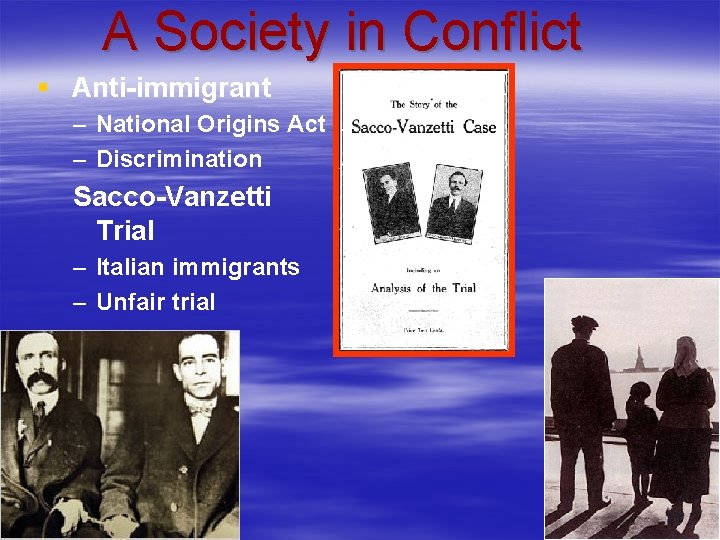
A Society in Conflict § Anti-immigrant – National Origins Act – Discrimination Sacco-Vanzetti Trial – Italian immigrants – Unfair trial
The Ku Klux Klan Great increase In power Anti-black Anti-immigrant Anti-Semitic Anti-Catholic Anti-women’s suffrage Anti-bootleggers 1915 “It is like writing history with lightning. And my only regret is that it is all so terribly true” – Woodrow Wilson
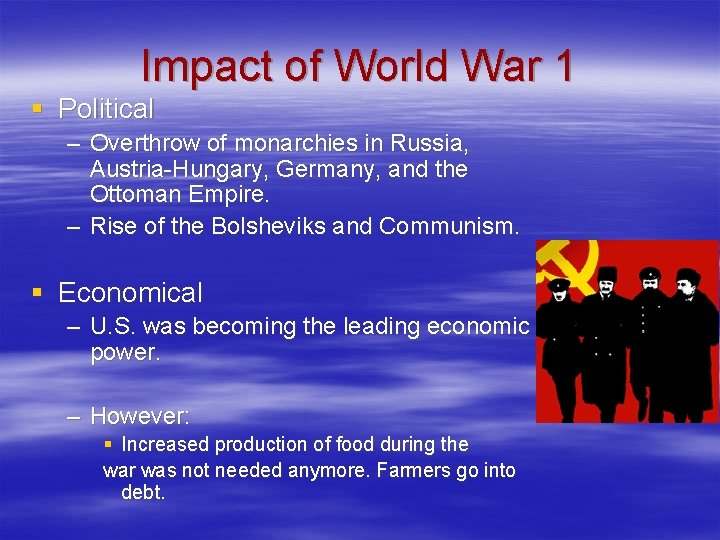
Impact of World War 1 § Political – Overthrow of monarchies in Russia, Austria-Hungary, Germany, and the Ottoman Empire. – Rise of the Bolsheviks and Communism. § Economical – U. S. was becoming the leading economic power. – However: § Increased production of food during the war was not needed anymore. Farmers go into debt.
Impact of World War 1 § Social – Women’s rights § Passage of the 19 th amendment ~ 1919 § Europe – An entire generation of young men were killed. – France was in shambles – Great Britain and Germany were in severe debt. § People thought this was the war to end all wars. Obviously it wasn’t.
Impact of World War 1 Each Symbol equals 100, 000 deaths