What is the directionality of the onset of
- Slides: 32
What is the directionality of the onset of comorbid substance use and other psychiatric disorders APA 2007 Developmental Model To Explain Onset And Directionality Of Comorbid Disorders Monique Ernst, M. D. , Ph. D. Emotional Development and Affective Neuroscience National Institute of Mental Health NIH / DHHS
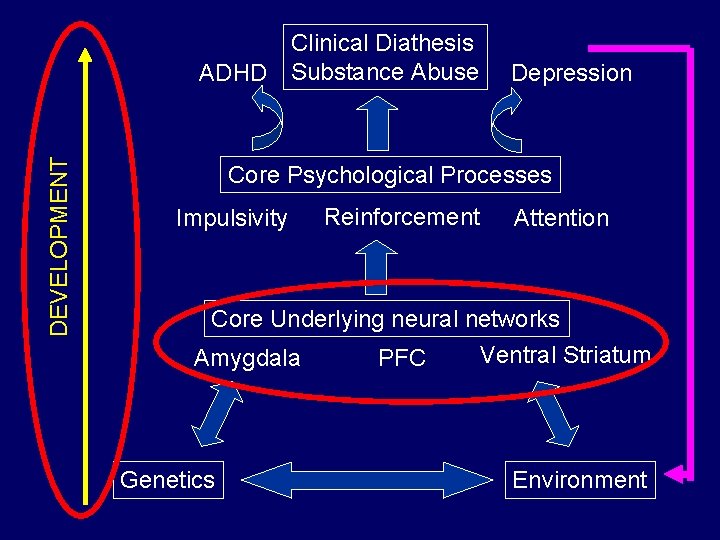
DEVELOPMENT Clinical Diathesis ADHD Substance Abuse Depression Core Psychological Processes Impulsivity Reinforcement Attention Core Underlying neural networks Ventral Striatum Amygdala PFC Genetics Environment
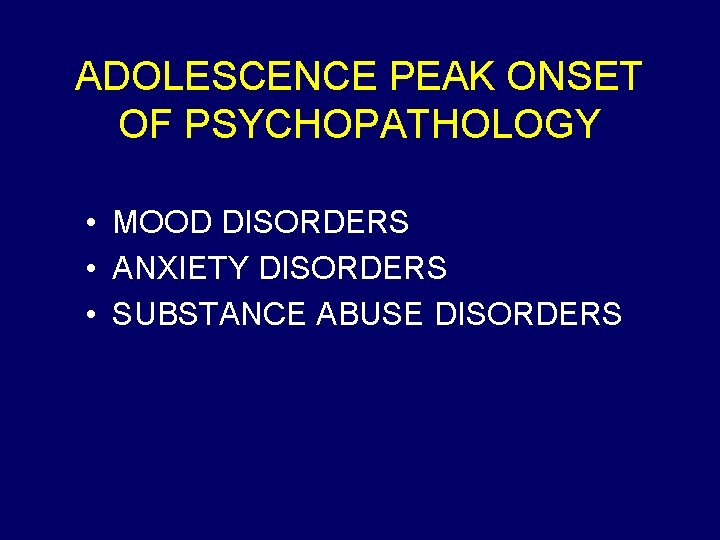
ADOLESCENCE PEAK ONSET OF PSYCHOPATHOLOGY • MOOD DISORDERS • ANXIETY DISORDERS • SUBSTANCE ABUSE DISORDERS
ADOLESCENCE: UNIQUE COGNITIVE/AFFECTIVE ARCHITECTURE COGNITIVE IMPULSIVITY RISK SEEKING AFFECTIVE INTENSITY
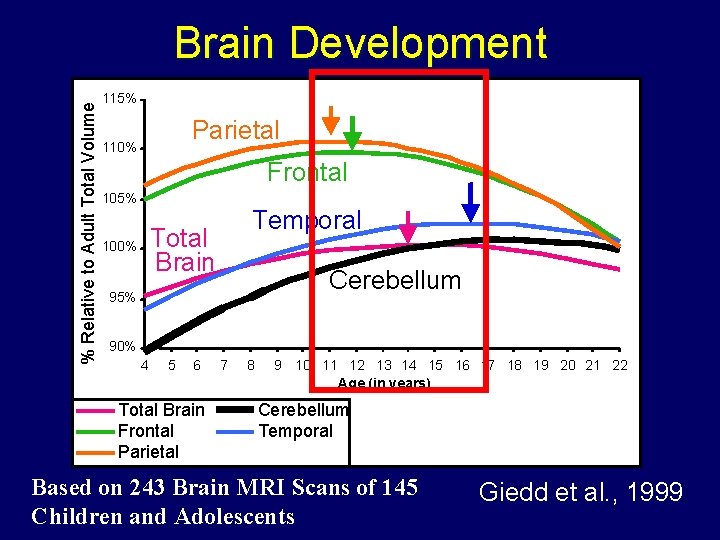
% Relative to Adult Total Volume Brain Development 115% Parietal 110% Frontal 105% Temporal Total Brain 100% Cerebellum 95% 90% 4 5 6 Total Brain Frontal Parietal 7 8 9 10 11 12 13 14 15 16 17 18 19 20 21 22 Age (in years) Cerebellum Temporal Based on 243 Brain MRI Scans of 145 Children and Adolescents Giedd et al. , 1999
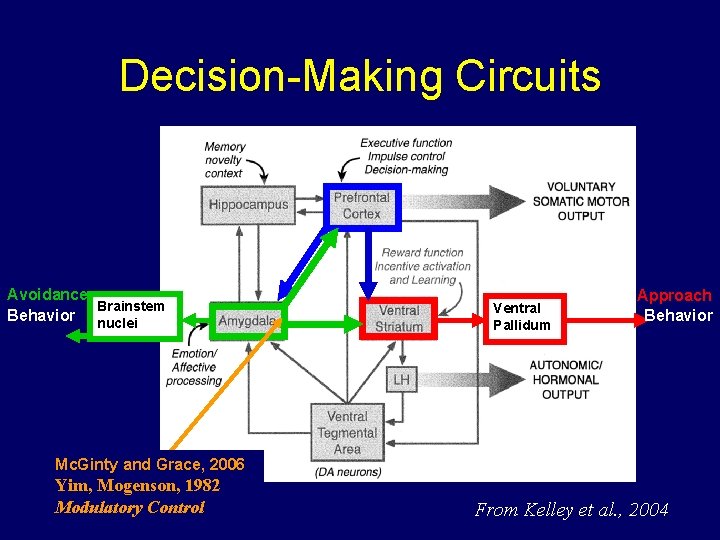
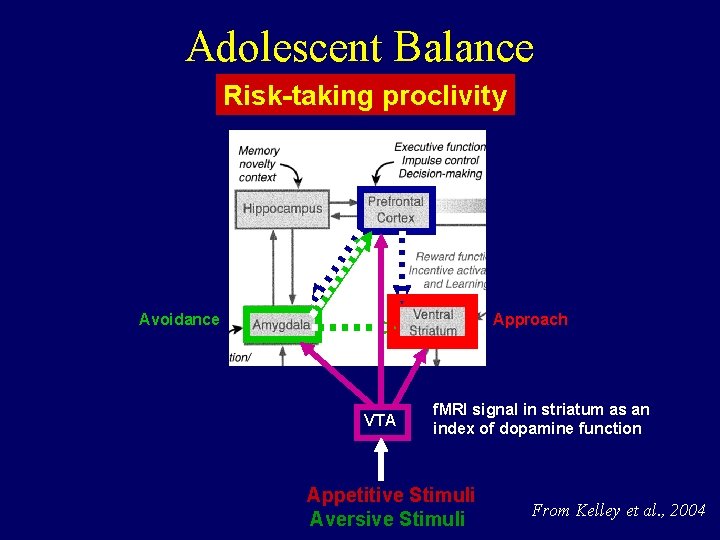
Decision-Making Circuits Avoidance Brainstem Behavior nuclei Ventral Pallidum Approach Behavior Mc. Ginty and Grace, 2006 Yim, Mogenson, 1982 Modulatory Control From Kelley et al. , 2004
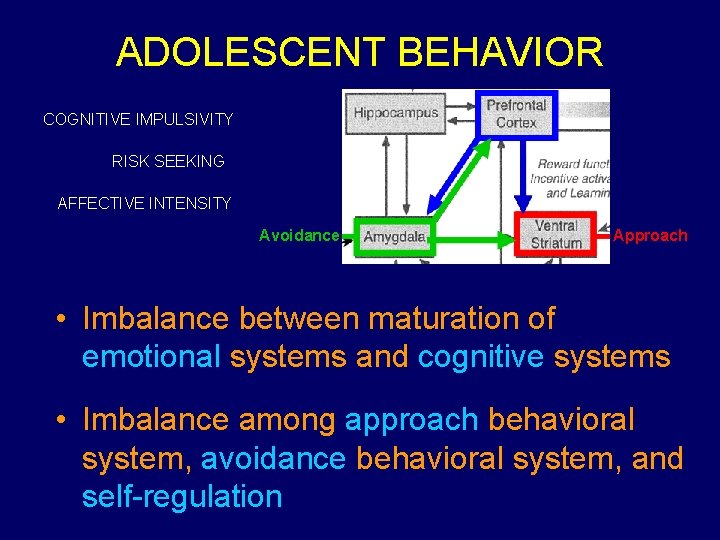
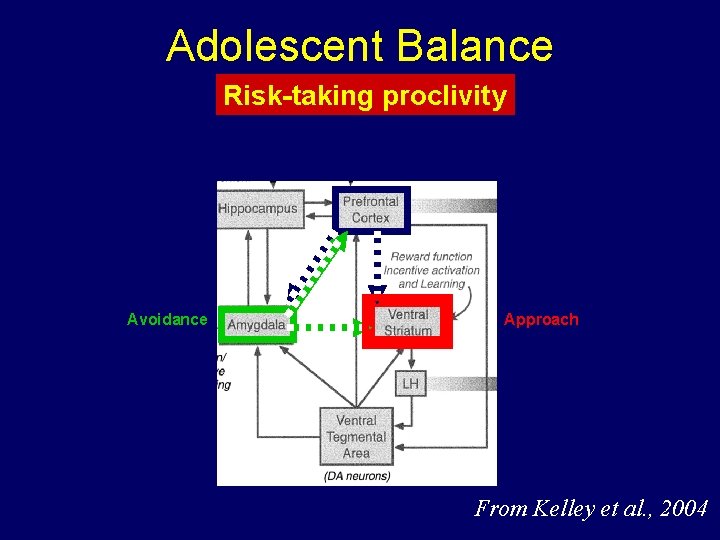
ADOLESCENT BEHAVIOR COGNITIVE IMPULSIVITY RISK SEEKING AFFECTIVE INTENSITY Avoidance Approach • Imbalance between maturation of emotional systems and cognitive systems • Imbalance among approach behavioral system, avoidance behavioral system, and self-regulation
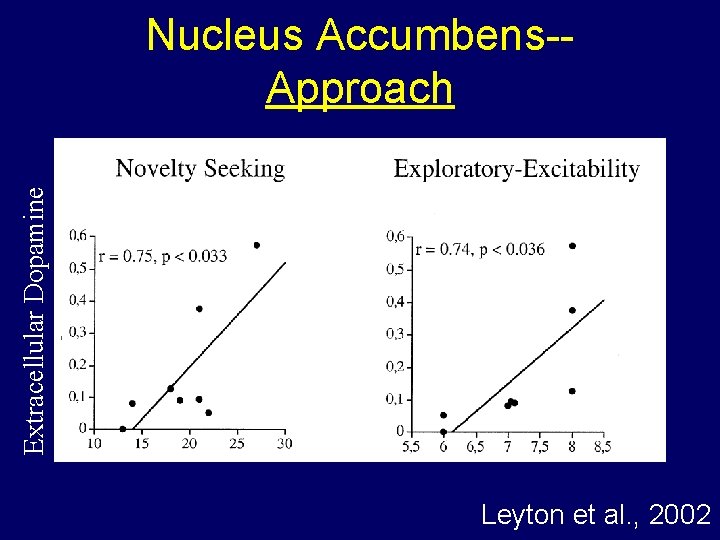
NUCLEUS ACCUMBENS (Ventral Striatum) • Involved in responses to appetitive stimuli and approach behavior • Indexed by changes in dopamine release in the striatum
Extracellular Dopamine Nucleus Accumbens-Approach Leyton et al. , 2002
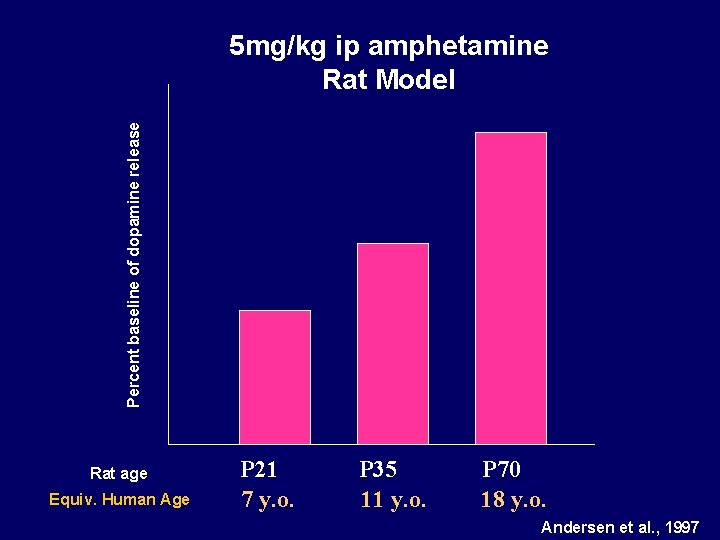
Percent baseline of dopamine release 5 mg/kg ip amphetamine Rat Model Rat age Equiv. Human Age P 21 7 y. o. P 35 11 y. o. P 70 18 y. o. Andersen et al. , 1997
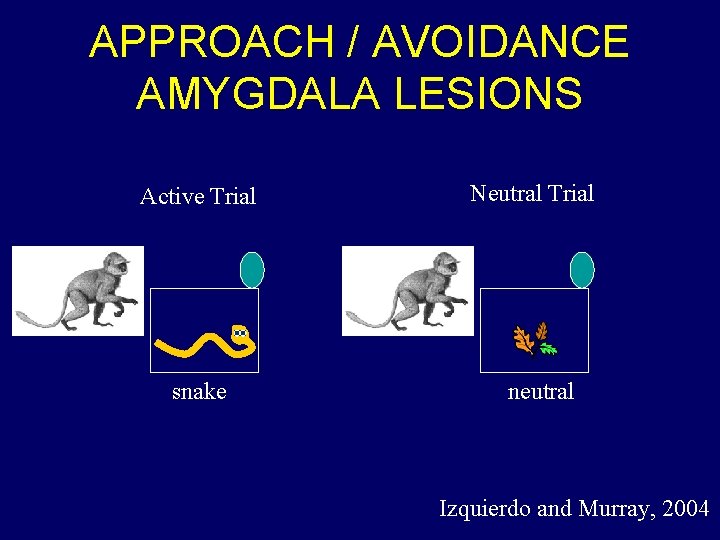
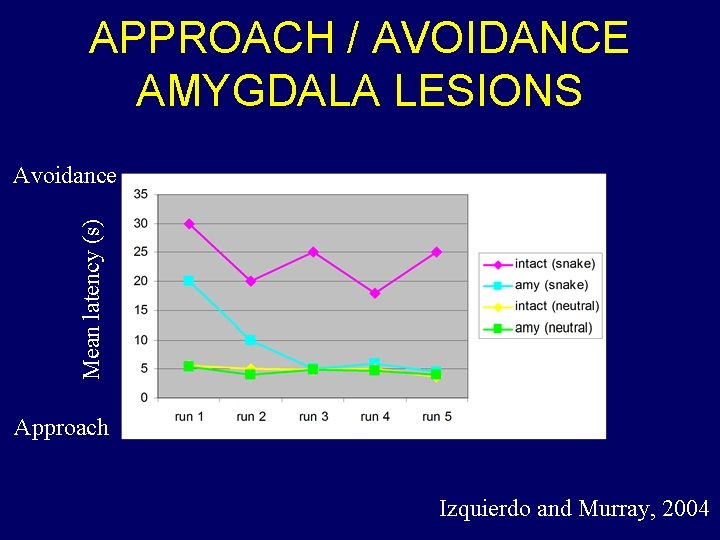
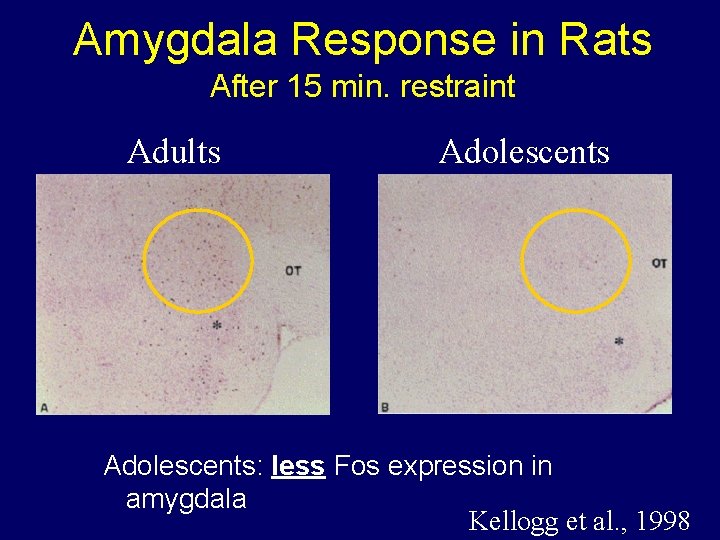
AMYGDALA • Involved in responses to aversive stimuli and avoidance behavior: Amygdala lesions • Developmental changes: Early gene expression in response to stress
APPROACH / AVOIDANCE AMYGDALA LESIONS Active Trial snake Neutral Trial neutral Izquierdo and Murray, 2004
APPROACH / AVOIDANCE AMYGDALA LESIONS Mean latency (s) Avoidance Approach Izquierdo and Murray, 2004
Amygdala Response in Rats After 15 min. restraint Adults Adolescents: less Fos expression in amygdala Kellogg et al. , 1998
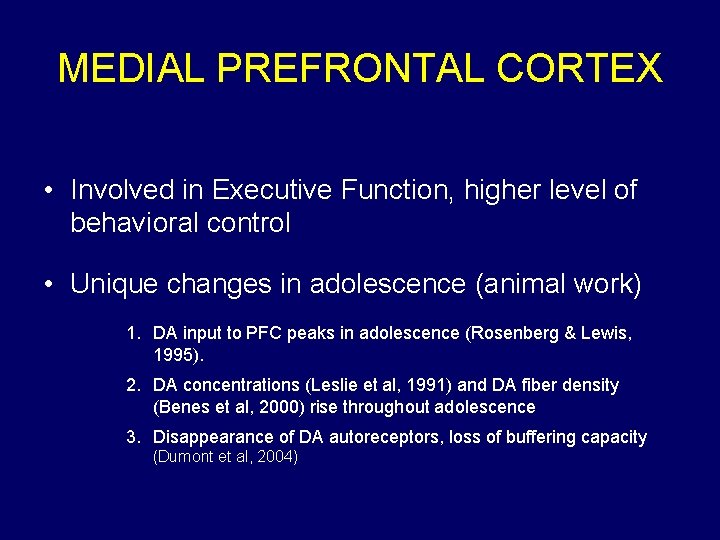
MEDIAL PREFRONTAL CORTEX • Involved in Executive Function, higher level of behavioral control • Unique changes in adolescence (animal work) 1. DA input to PFC peaks in adolescence (Rosenberg & Lewis, 1995). 2. DA concentrations (Leslie et al, 1991) and DA fiber density (Benes et al, 2000) rise throughout adolescence 3. Disappearance of DA autoreceptors, loss of buffering capacity (Dumont et al, 2004)
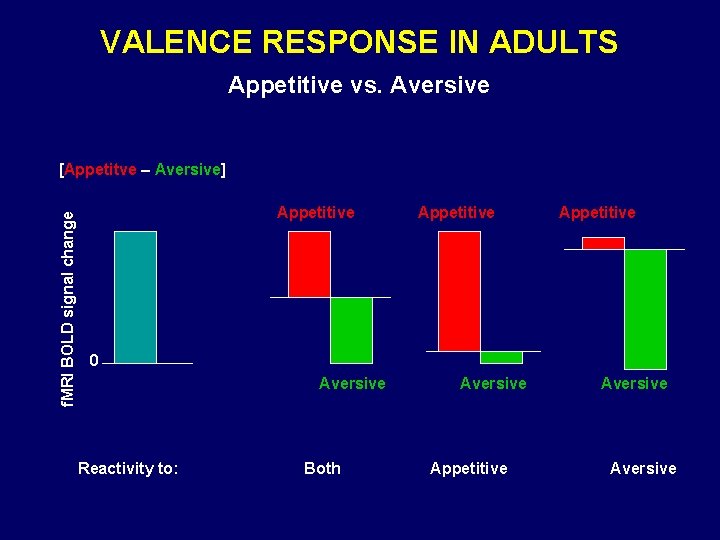
VALENCE RESPONSE IN ADULTS Appetitive vs. Aversive f. MRI BOLD signal change [Appetitve – Aversive] Appetitive 0 Aversive Reactivity to: Both Aversive Appetitive Aversive
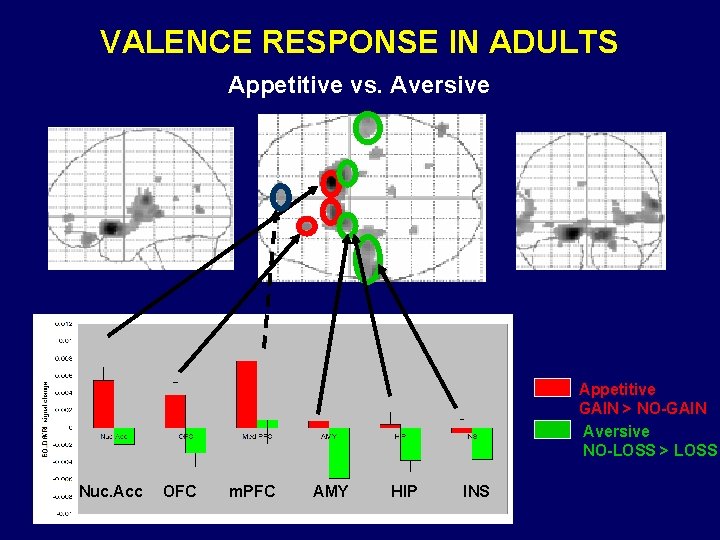
VALENCE RESPONSE IN ADULTS Appetitive vs. Aversive Appetitive GAIN > NO-GAIN Aversive NO-LOSS > LOSS Nuc. Acc OFC m. PFC AMY HIP INS
Adolescent Balance Risk-taking proclivity Avoidance Approach From Kelley et al. , 2004
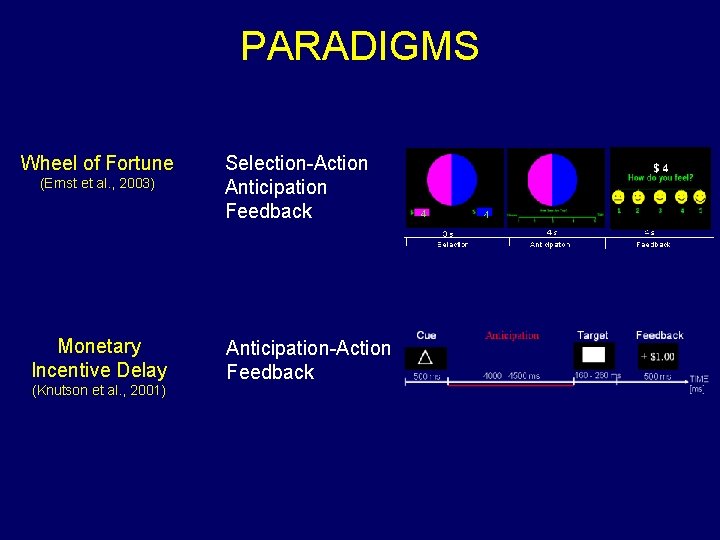
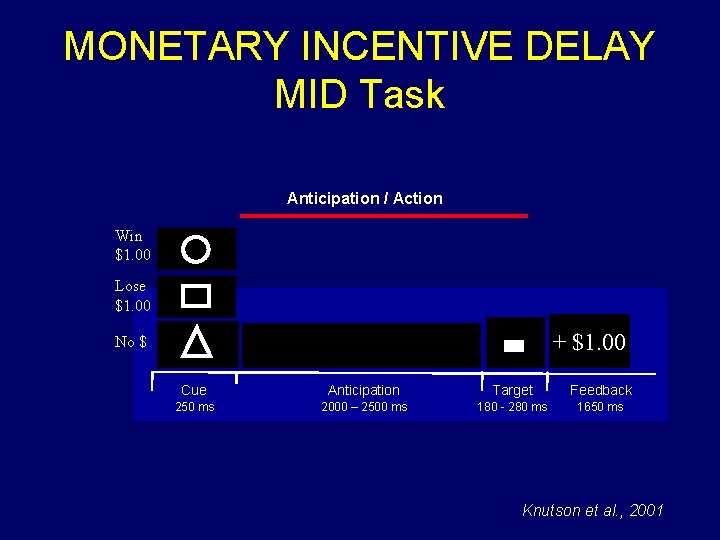
PARADIGMS Wheel of Fortune (Ernst et al. , 2003) Monetary Incentive Delay (Knutson et al. , 2001) Selection-Action Anticipation Feedback Anticipation-Action Feedback
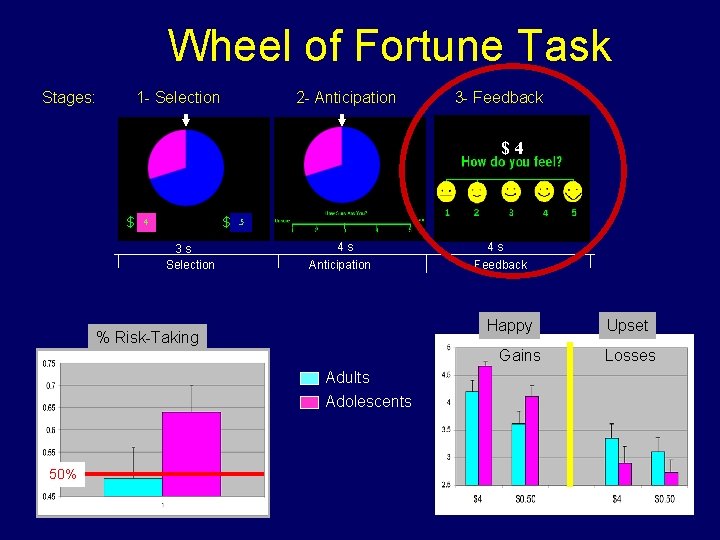
Wheel of Fortune Task Stages: 1 - Selection 2 - Anticipation 3 - Feedback $4 $ $ 4 3 s Selection . 5 4 s Anticipation 4 s Feedback Happy % Risk-Taking Gains Adults Adolescents 50% Upset Losses
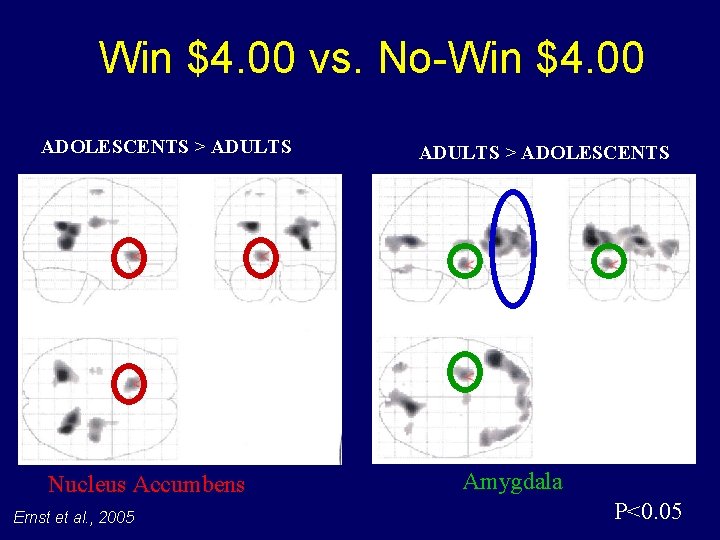
Win $4. 00 vs. No-Win $4. 00 ADOLESCENTS > ADULTS Nucleus Accumbens Ernst et al. , 2005 ADULTS > ADOLESCENTS Amygdala P<0. 05
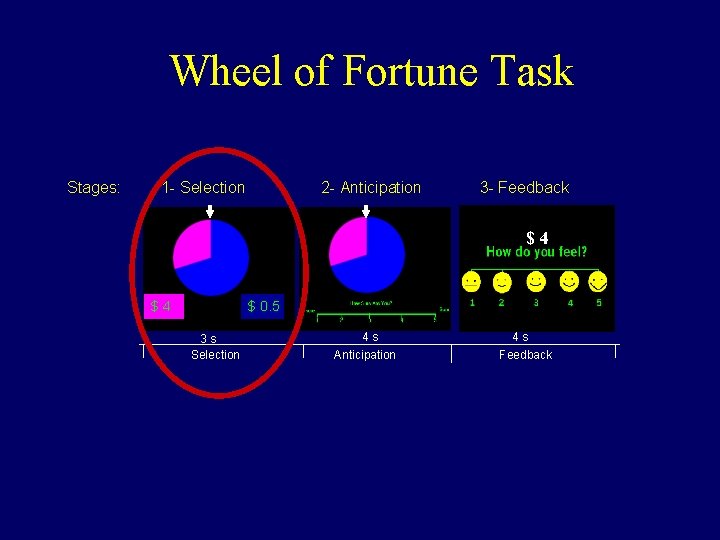
Wheel of Fortune Task Stages: 1 - Selection 2 - Anticipation 3 - Feedback $4 $4 $ 0. 5 3 s Selection 4 s Anticipation 4 s Feedback
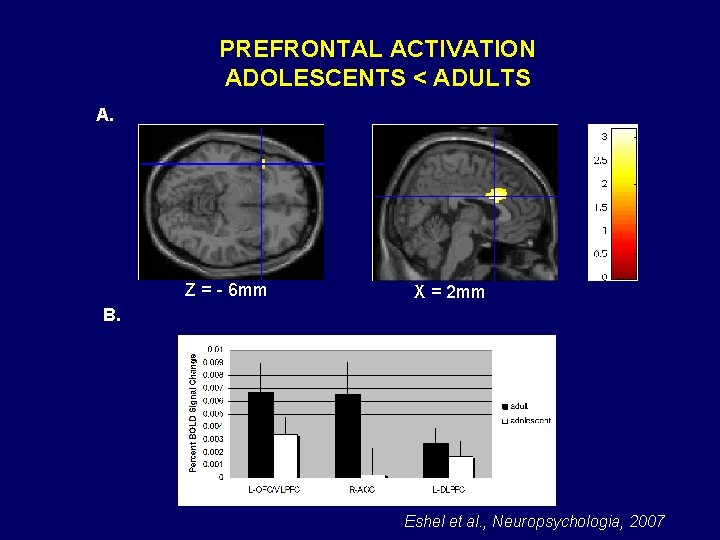
PREFRONTAL ACTIVATION ADOLESCENTS < ADULTS A. Z = - 6 mm X = 2 mm B. Eshel et al. , Neuropsychologia, 2007
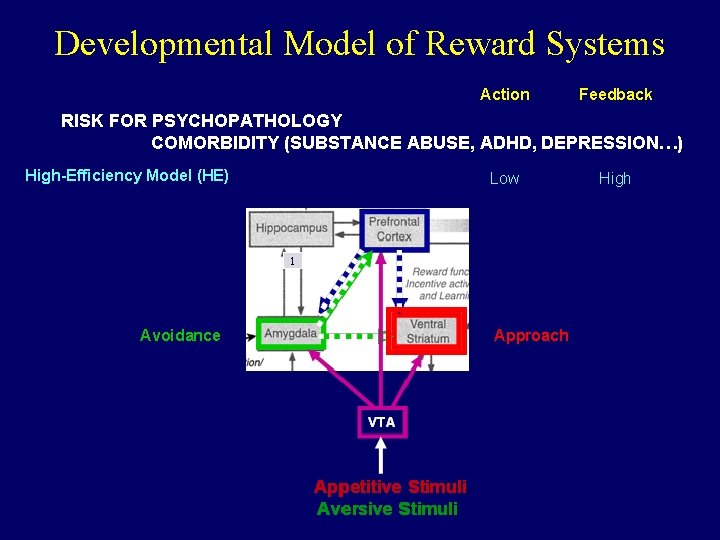
Adolescent Balance Risk-taking proclivity Avoidance Approach VTA f. MRI signal in striatum as an index of dopamine function Appetitive Stimuli Aversive Stimuli From Kelley et al. , 2004
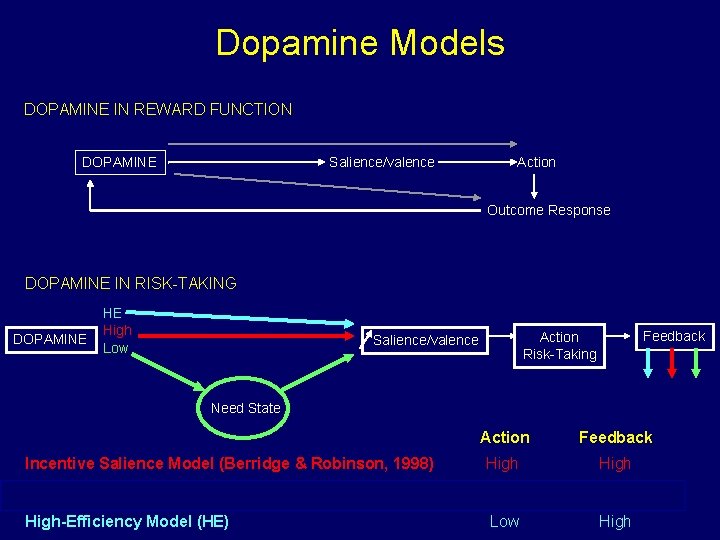
Dopamine Models DOPAMINE IN REWARD FUNCTION DOPAMINE Salience/valence Action Outcome Response DOPAMINE IN RISK-TAKING DOPAMINE HE High Low Feedback Action Risk-Taking Salience/valence Need State Action Feedback High Reward Deficiency Model (Blum et al. , 1995; Gardner, 1999) Low Low High Incentive Salience Model (Berridge & Robinson, 1998) High-Efficiency Model (HE)
MONETARY INCENTIVE DELAY MID Task Anticipation / Action Win $1. 00 Lose $1. 00 No $ Anticipation-Action Feedback + $1. 00 Cue Anticipation Target Feedback 250 ms 2000 – 2500 ms 180 - 280 ms 1650 ms Knutson et al. , 2001
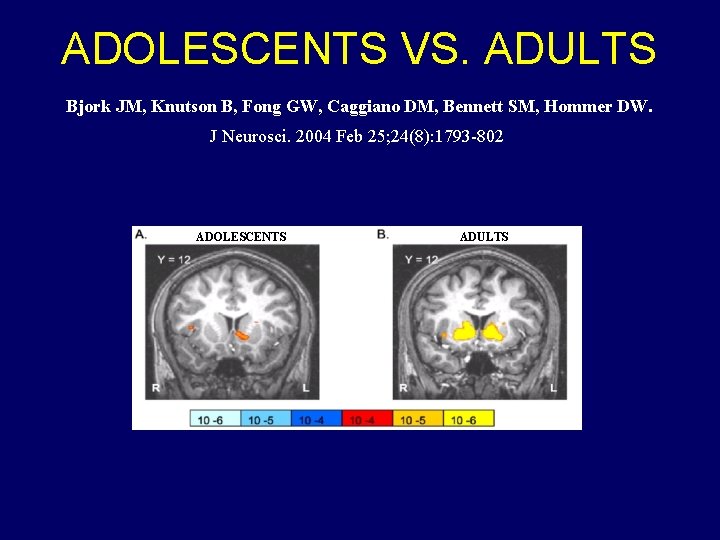
ADOLESCENTS VS. ADULTS Bjork JM, Knutson B, Fong GW, Caggiano DM, Bennett SM, Hommer DW. J Neurosci. 2004 Feb 25; 24(8): 1793 -802 ADOLESCENTS ADULTS
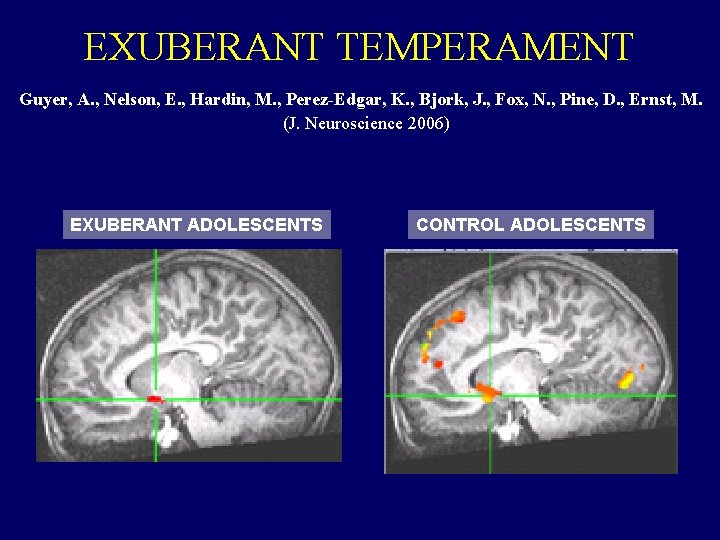
EXUBERANT TEMPERAMENT Guyer, A. , Nelson, E. , Hardin, M. , Perez-Edgar, K. , Bjork, J. , Fox, N. , Pine, D. , Ernst, M. (J. Neuroscience 2006) EXUBERANT ADOLESCENTS CONTROL ADOLESCENTS
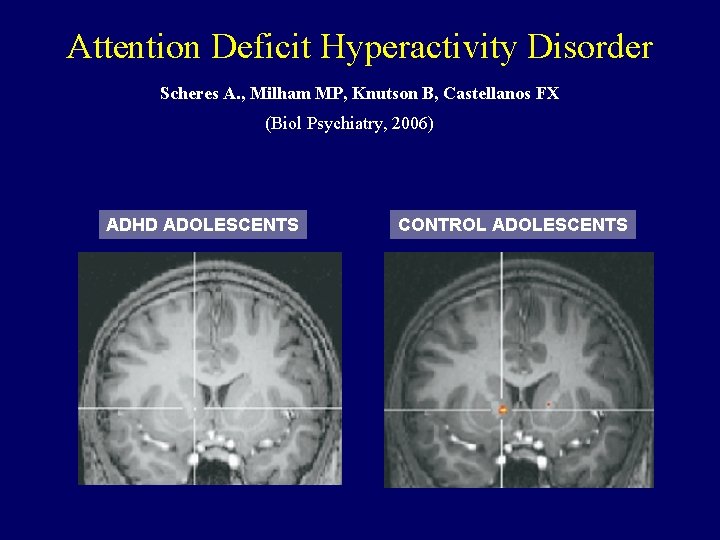
Attention Deficit Hyperactivity Disorder Scheres A. , Milham MP, Knutson B, Castellanos FX (Biol Psychiatry, 2006) ADHD ADOLESCENTS CONTROL ADOLESCENTS
Developmental Model of Reward Systems Incentive Model (Berridge & Robinson, 1998) RISKSalience FOR PSYCHOPATHOLOGY Action Feedback High COMORBIDITY ABUSE, DEPRESSION…) Reward Deficiency Model (Blum et(SUBSTANCE al. , 1995; Gardner, 1999) ADHD, Low High-Efficiency Model (HE) Avoidance Low Approach High
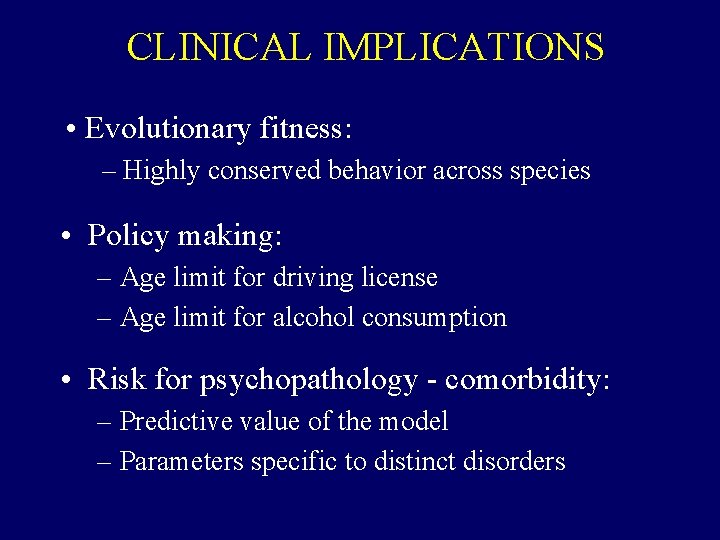
CLINICAL IMPLICATIONS • Evolutionary fitness: – Highly conserved behavior across species • Policy making: – Age limit for driving license – Age limit for alcohol consumption • Risk for psychopathology - comorbidity: – Predictive value of the model – Parameters specific to distinct disorders
THANKS NIMH Daniel Pine Eric Nelson James Blair Neir Eshel Michael Hardin Amanda Guyer Ellen Leibenluft University of Maryland NIAAA Nathan Fox Koraly Perez. Edgar James Bjork Daniel Hommer