
Insulin Therapy Initiation and Optimiztion Dr Shahjada Selim




- Slides: 59
Insulin Therapy: Initiation and Optimiztion Dr Shahjada Selim Assistant Professor Department of Endocrinology Bangabandhu Sheikh Mujib Medical University, Dhaka Email: selimshahjada@gmail. com, info@shahjadaselim. com
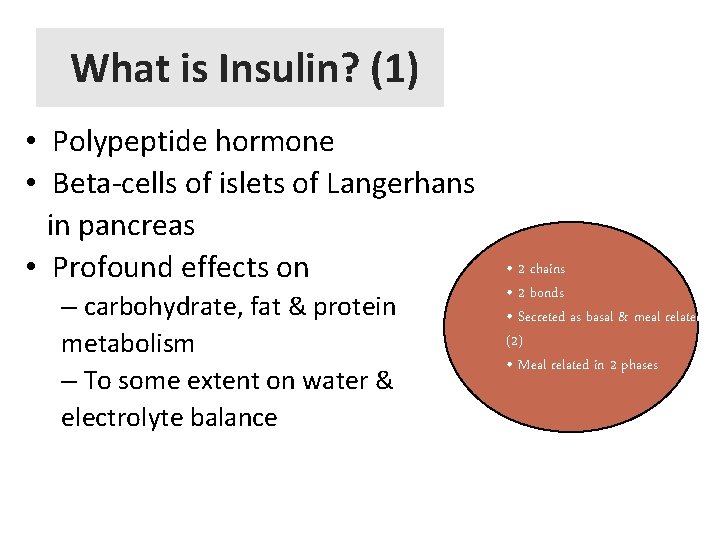
What is Insulin? (1) • Polypeptide hormone • Beta-cells of islets of Langerhans in pancreas • Profound effects on – carbohydrate, fat & protein metabolism – To some extent on water & electrolyte balance • 2 chains • 2 bonds • Secreted as basal & meal related (2) • Meal related in 2 phases
Insulin structure Insulin is a peptide hormone Composed of 51 amino acids and has a molecular weight of 5808 Da.
Insulin Structure A - Chain S GLY 1 ILE 2 VAL 3 GLU GLN CYS THR SER ILE 4 5 6 7 8 9 10 B - Chain ASN TYR CYS SER LEU TYR GLN LEU GLU 19 18 17 15 16 14 12 11 13 VAL 2 ASN 3 GLN HIS LEU CYS GLY SER HIS LEU VAL GLU ALA 4 5 6 7 8 9 10 14 11 12 13 CYS 20 ASN 21 ALA S S S PHE 1 S S PHE GLY PHE LEU TYR LEU VAL CYS GLY GLU ARG 25 24 23 22 15 16 21 20 17 18 19 TYR THR 26 27 PRO 28 LYS 29 THR 30
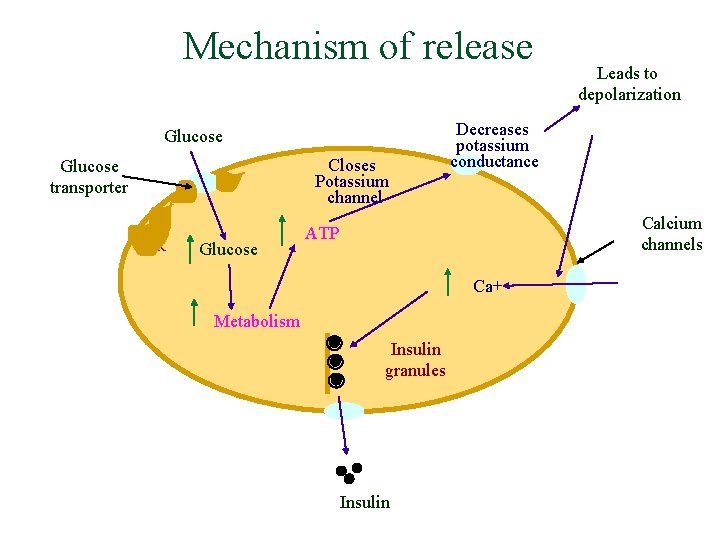
Mechanism of release Glucose Closes Potassium channel Glucose transporter R Glucose Leads to depolarization Decreases potassium conductance Calcium channels ATP Ca+ Metabolism Insulin granules Insulin
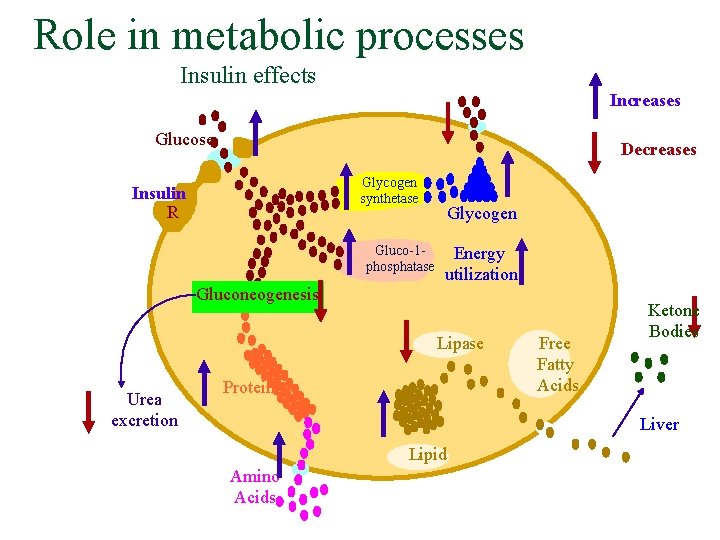
Role in metabolic processes Insulin effects Increases Glucose Decreases Glycogen synthetase Insulin R Gluco-1 phosphatase Glycogen Energy utilization Gluconeogenesis Lipase Urea excretion Protein Free Fatty Acids Ketone Bodies Liver Lipid Amino Acids
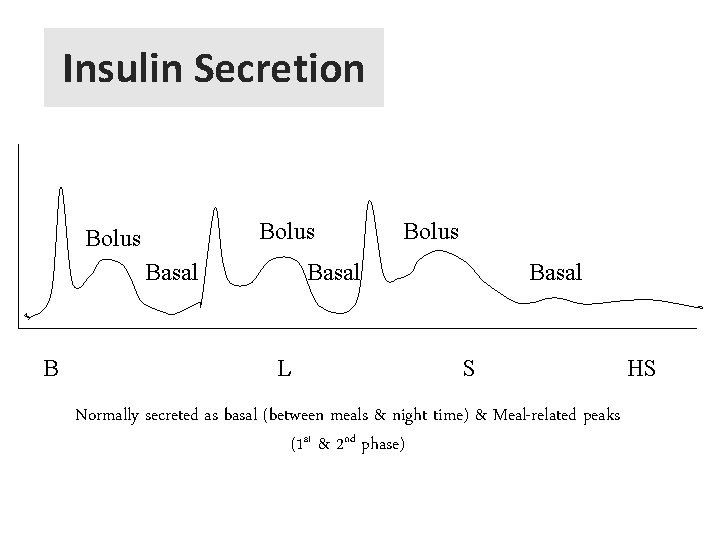
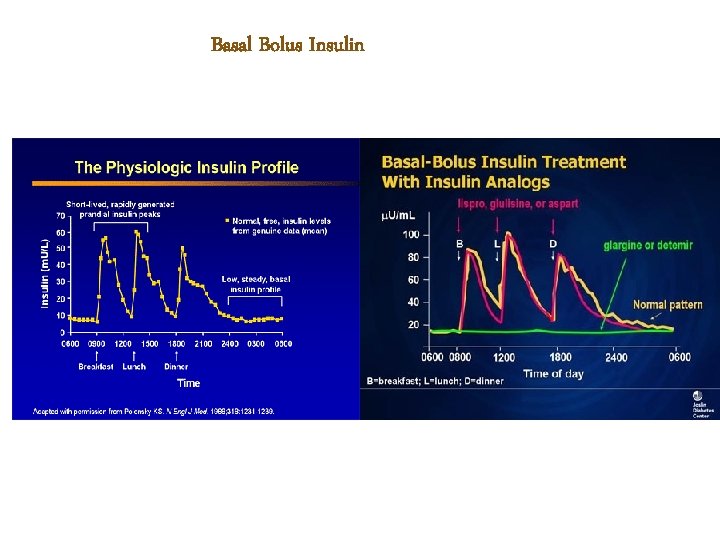
Insulin Secretion Bolus Basal B Basal L Bolus Basal S HS Normally secreted as basal (between meals & night time) & Meal-related peaks (1 st & 2 nd phase)
Insulin is produced by beta cells in the islets of Langerhans, which release insuln in two phases: Ø The first phase release is triggered in response to rising or increased blood glucose levels. Ø The second phase is a sustained, slow release of newly formed vesicles triggered independently of sugar. § Beta cells in the islets of Langerhans take up as much as 60%-80% of all the cells.
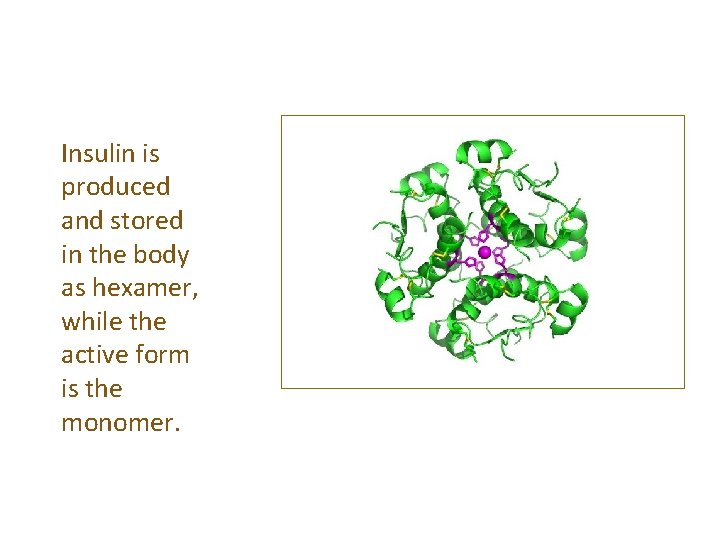
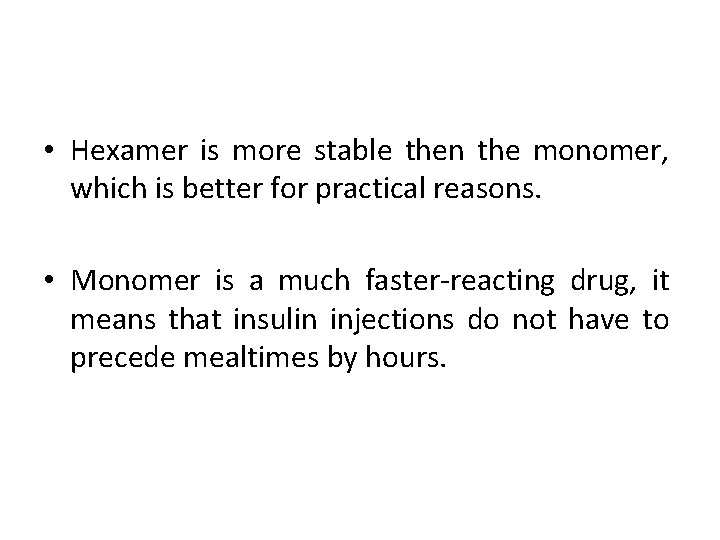
Insulin is produced and stored in the body as hexamer, while the active form is the monomer.
• Hexamer is more stable then the monomer, which is better for practical reasons. • Monomer is a much faster-reacting drug, it means that insulin injections do not have to precede mealtimes by hours.
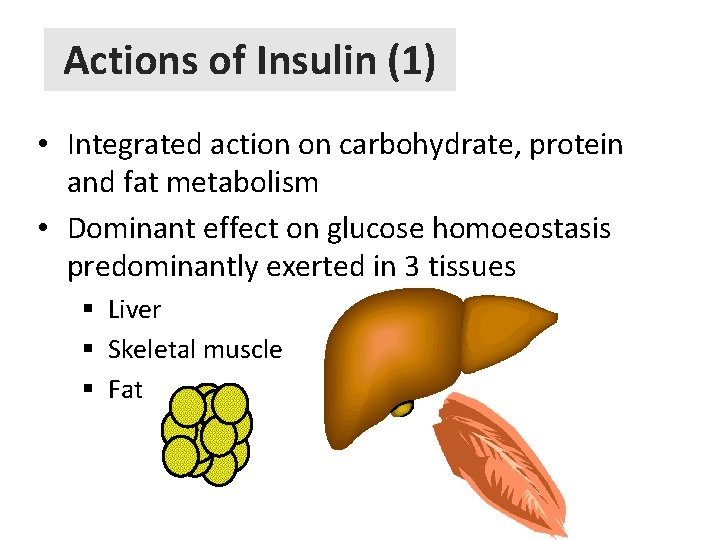
Actions of Insulin (1) • Integrated action on carbohydrate, protein and fat metabolism • Dominant effect on glucose homoeostasis predominantly exerted in 3 tissues § Liver § Skeletal muscle § Fat
Actions of Insulin (2) In Liver • Inhibition of glycogenolysis & gluconeogenesis • Stimulation of glycogenesis & storage In skeletal muscle & adipocytes • Stimulation of glucose uptake, utilization & storage • Increases glucose transport • Activation/inactivation of enzymes responsible for storage & metabolism of glucose
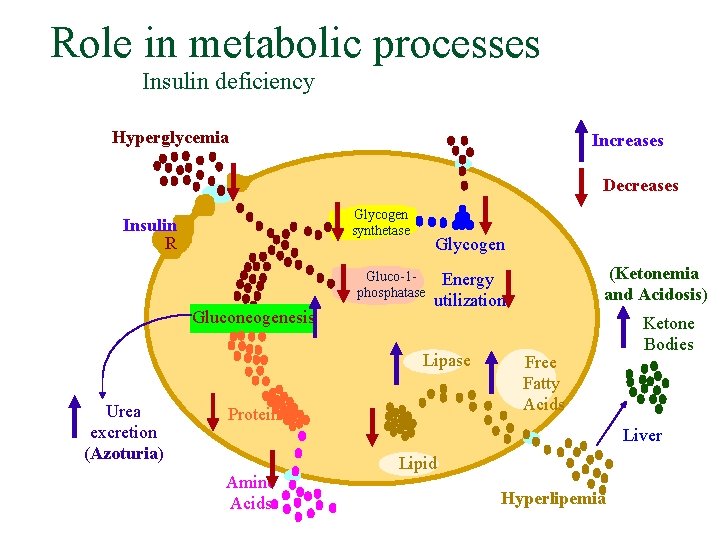
Role in metabolic processes Insulin deficiency Hyperglycemia Increases Decreases Glycogen synthetase Insulin R Glycogen Gluco-1 phosphatase Gluconeogenesis Lipase Urea excretion (Azoturia) (Ketonemia and Acidosis) Energy utilization Protein Free Fatty Acids Ketone Bodies Liver Amino Acids Lipid Hyperlipemia
Effect of insulin deficiency • Insulin deficiency results in • Elevated plasma glucose -Hyperglycemia • Elevated plasma lipid - Hypertriglyceridemia • Altered protein metabolism - Metabolic & Immune defects • Insulin replacement in diabetes tends to restore normalcy.
Insulin: The Definitive Therapy for Diabetes • DM – Impaired insulin secretion (insulin deficiency) – Impaired insulin action (insulin resistance) • Insulin can overcome both the defects • Hence: Insulin-the definitive therapy for all types of diabetes Insulin- a valuable therapeutic tool for early intervention, to attain and maintain target levels of blood glucose control.
Discovery of insulin (1) “One of the greatest milestones in history of medicine”.
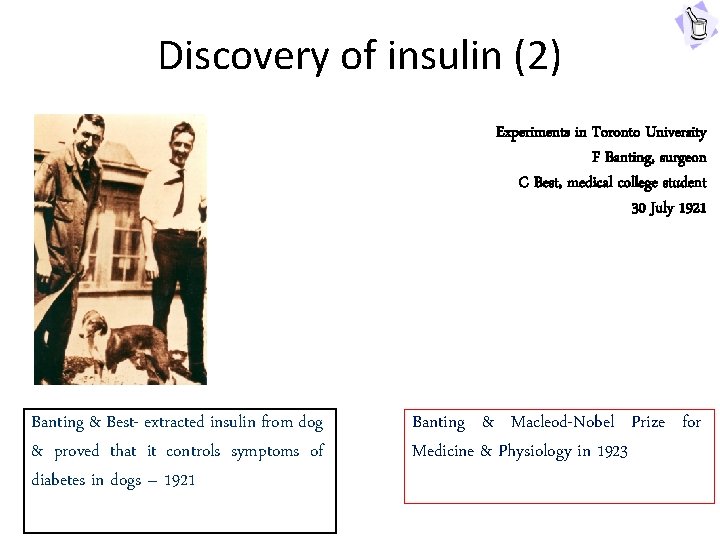
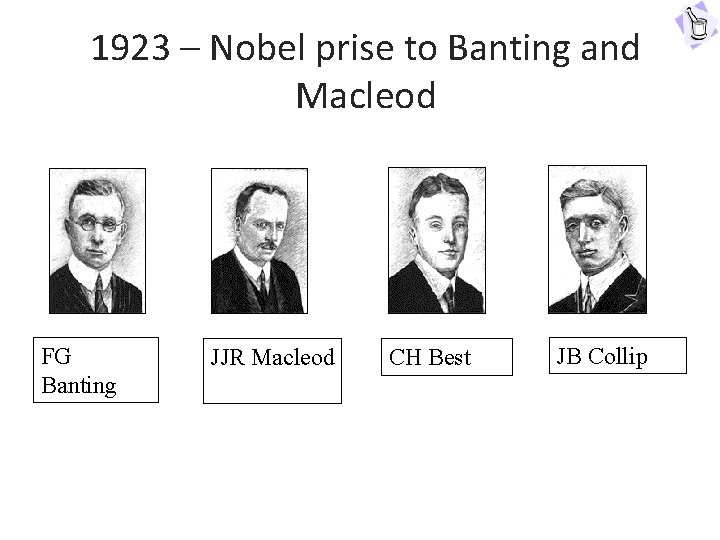
Discovery of insulin (2) Experiments in Toronto University F Banting, surgeon C Best, medical college student 30 July 1921 Banting & Best- extracted insulin from dog & proved that it controls symptoms of diabetes in dogs – 1921 Banting & Macleod-Nobel Prize for Medicine & Physiology in 1923
1923 – Nobel prise to Banting and Macleod FG Banting JJR Macleod CH Best JB Collip
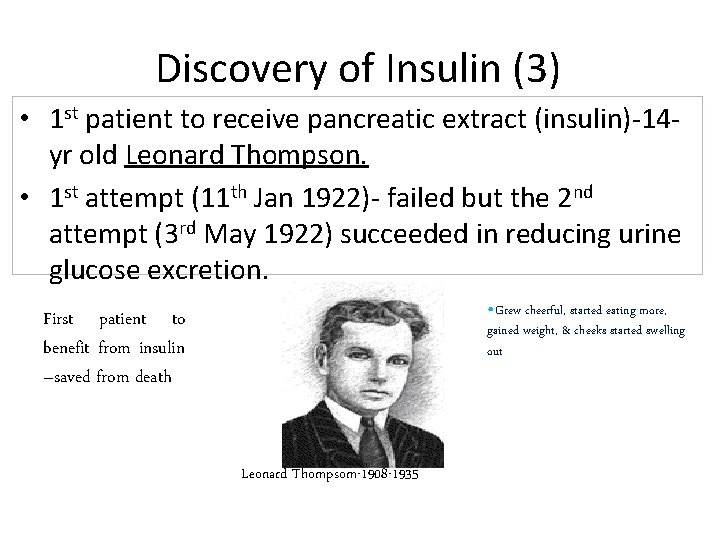
Discovery of Insulin (3) • 1 st patient to receive pancreatic extract (insulin)-14 yr old Leonard Thompson. • 1 st attempt (11 th Jan 1922)- failed but the 2 nd attempt (3 rd May 1922) succeeded in reducing urine glucose excretion. • Grew cheerful, started eating more, First patient to benefit from insulin –saved from death gained weight, & cheeks started swelling out Leonard Thompsom-1908 -1935
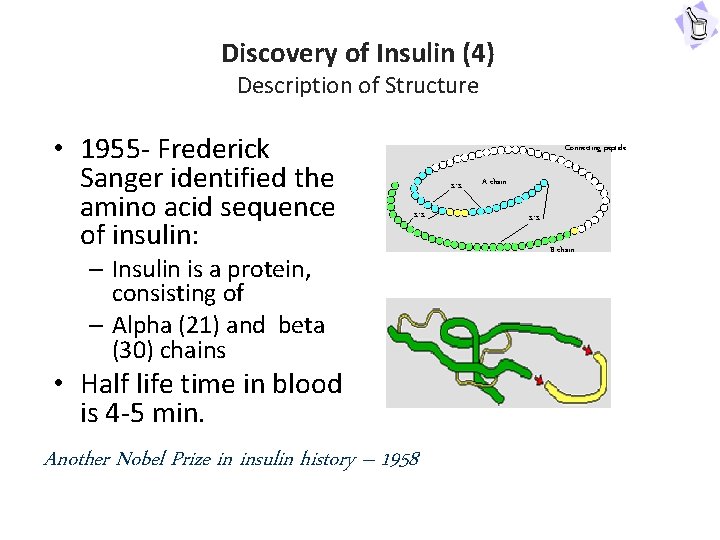
Discovery of Insulin (4) Description of Structure • 1955 - Frederick Sanger identified the amino acid sequence of insulin: – Insulin is a protein, consisting of – Alpha (21) and beta (30) chains Connecting peptide s-s • Half life time in blood is 4 -5 min. Another Nobel Prize in insulin history – 1958 A-chain s-s B-chain
Manufacture of Insulin (1) • 1923 -Eli Lilly started manufacturing Insulin • 1923 - Novo started manufacturing • ‘Most developments in insulin therapy have originated from the laboratories of Novo-Nordisk’ • • • NPH insulin highly purified insulin monocomponent insulin semisynthetic insulin biosynthetic human insulin Insulin analogues: Insulin Aspart, Premixed analogue & Insulin Detemir
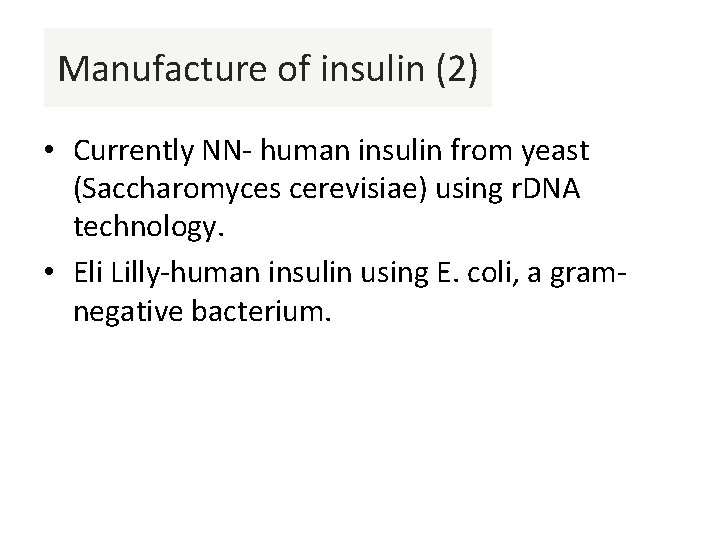
Manufacture of insulin (2) • Currently NN- human insulin from yeast (Saccharomyces cerevisiae) using r. DNA technology. • Eli Lilly-human insulin using E. coli, a gramnegative bacterium.
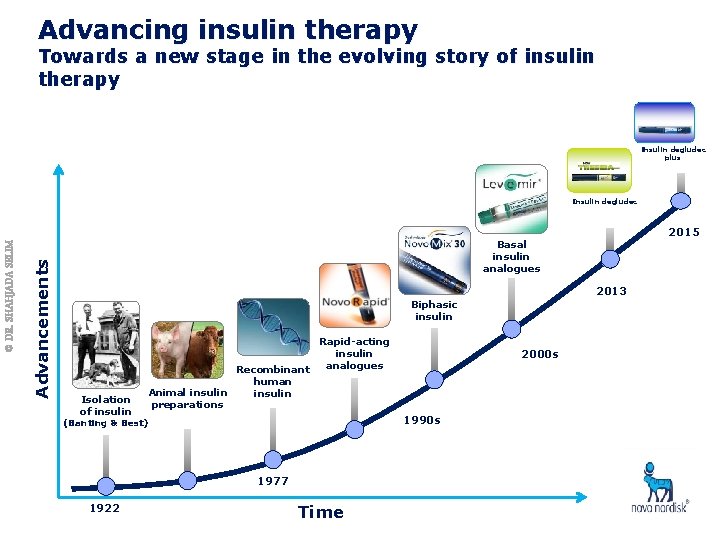
Advancing insulin therapy Towards a new stage in the evolving story of insulin therapy Insulin degludec plus Advancements © DR. SHAHJADA SELIM Insulin degludec 2015 Basal insulin analogues 2013 Biphasic insulin Isolation of insulin Rapid-acting insulin analogues Recombinant human Animal insulin preparations 1990 s (Banting & Best) 1977 1922 2000 s Time
Types of insulin Type of Insulin & Brand Names Onset Peak Duration Role in Blood Sugar Management Rapid-Acting Lispro Aspart Glulisine 15 -30 min. 30 -90 min 3 -5 hours Covers insulin needs for meals eaten at the same 10 -20 min. 40 -50 min. 3 -5 hours time as the injection. 20 -30 min. 30 -90 min. 1 -2½ hours Short-Acting Regular Covers insulin needs for 30 min- 60 2 -5 hours 5 -8 hours meals eaten within 30 -60 minutes Intermediate-Acting NPH (N) Covers insulin needs for 1 -2 hours 4 -12 hours 18 -24 hours about half the day or overnight.
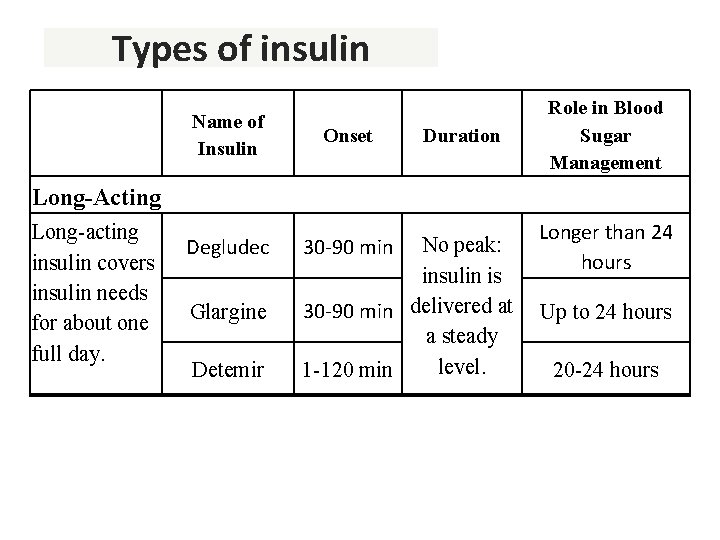
Types of insulin Name of Insulin Onset Duration Role in Blood Sugar Management Long-Acting Long-acting insulin covers insulin needs for about one full day. Degludec Glargine Detemir Longer than 24 hours No peak: insulin is 30 -90 min delivered at Up to 24 hours a steady level. 1 -120 min 20 -24 hours 30 -90 min
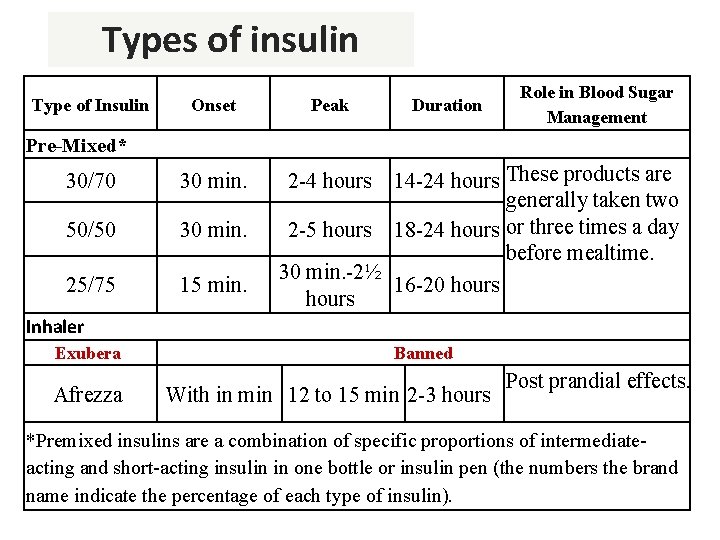
Types of insulin Type of Insulin Onset Peak Duration Role in Blood Sugar Management Pre-Mixed* 30/70 30 min. 50/50 30 min. 25/75 15 min. 14 -24 hours These products are generally taken two 2 -5 hours 18 -24 hours or three times a day before mealtime. 30 min. -2½ 16 -20 hours 2 -4 hours Inhaler Exubera Afrezza Banned With in min 12 to 15 min 2 -3 hours Post prandial effects. *Premixed insulins are a combination of specific proportions of intermediateacting and short-acting insulin in one bottle or insulin pen (the numbers the brand name indicate the percentage of each type of insulin).
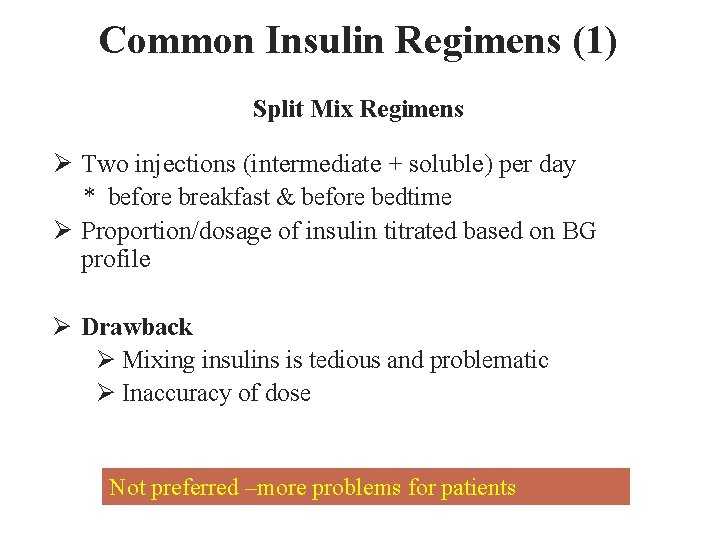
Common Insulin Regimens (1) Split Mix Regimens Ø Two injections (intermediate + soluble) per day * before breakfast & before bedtime Ø Proportion/dosage of insulin titrated based on BG profile Ø Drawback Ø Mixing insulins is tedious and problematic Ø Inaccuracy of dose Not preferred –more problems for patients
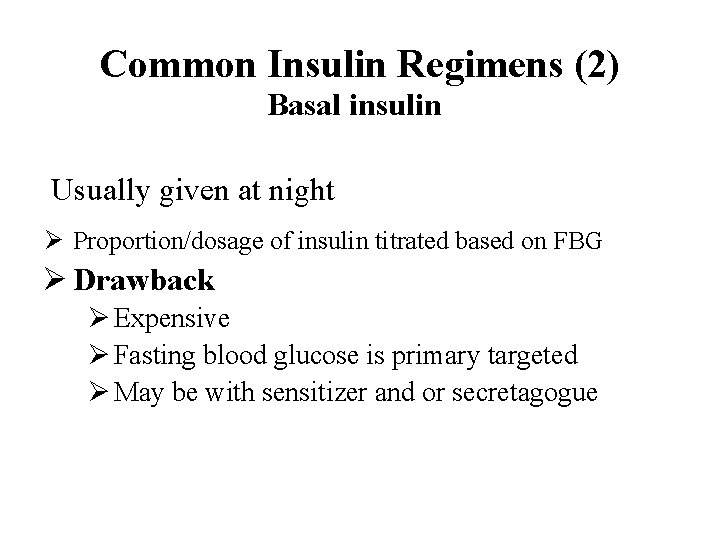
Common Insulin Regimens (2) Basal insulin Usually given at night Ø Proportion/dosage of insulin titrated based on FBG Ø Drawback Ø Expensive Ø Fasting blood glucose is primary targeted Ø May be with sensitizer and or secretagogue
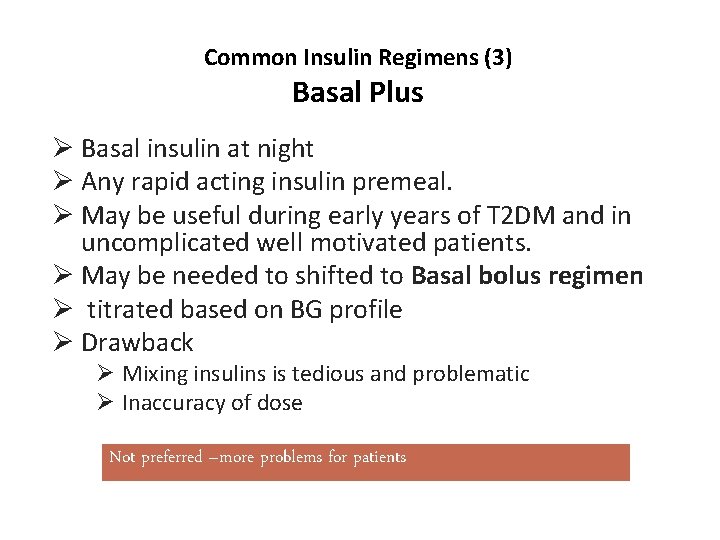
Common Insulin Regimens (3) Basal Plus Ø Basal insulin at night Ø Any rapid acting insulin premeal. Ø May be useful during early years of T 2 DM and in uncomplicated well motivated patients. Ø May be needed to shifted to Basal bolus regimen Ø titrated based on BG profile Ø Drawback Ø Mixing insulins is tedious and problematic Ø Inaccuracy of dose Not preferred –more problems for patients
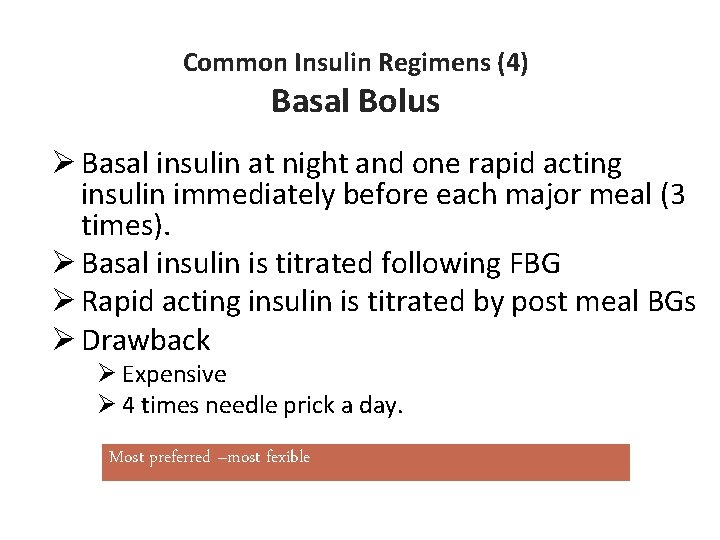
Common Insulin Regimens (4) Basal Bolus Ø Basal insulin at night and one rapid acting insulin immediately before each major meal (3 times). Ø Basal insulin is titrated following FBG Ø Rapid acting insulin is titrated by post meal BGs Ø Drawback Ø Expensive Ø 4 times needle prick a day. Most preferred –most fexible
Basal Bolus Insulin
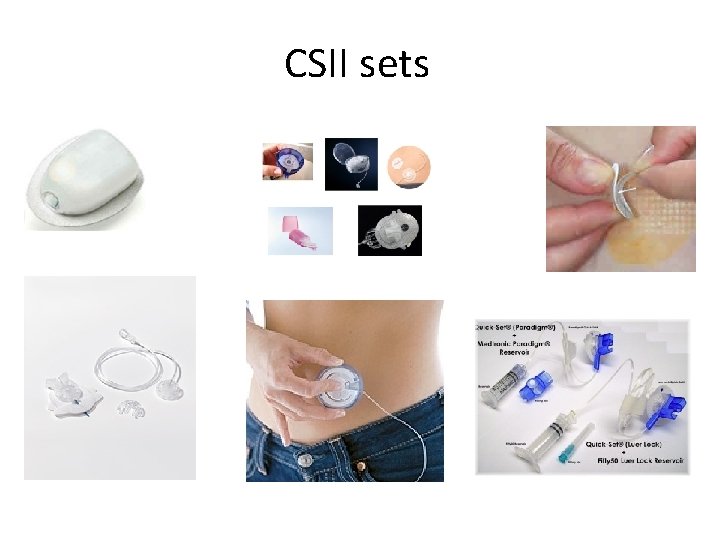
Common Insulin Regimens (5) Continuous subcutaneous insulin infusion (CSII): Recommended for adults and children 12 years and older with T 2 DM provided: §To achieve target Hb. A 1 c levels with MDIs result in the person experiencing disabling hypoglycaemia or § Hb. A 1 c levels have remained high (8. 5% or above) on MDI therapy despite a high level of care.
CSII sets
Indications of insulin Continuous Use * Type 1 Diabetes * Type 2 Diabetes with OAD failure - Primary - Secondary Intermittent Use Life-saving in T 1 DM * Type 2 diabetes during Essential in T 2 DM - major surgery - pregnancy, labour and delivery - myocardial infarction - acute infections - Hypergycemic emergencies: DKA & HHS * GDM
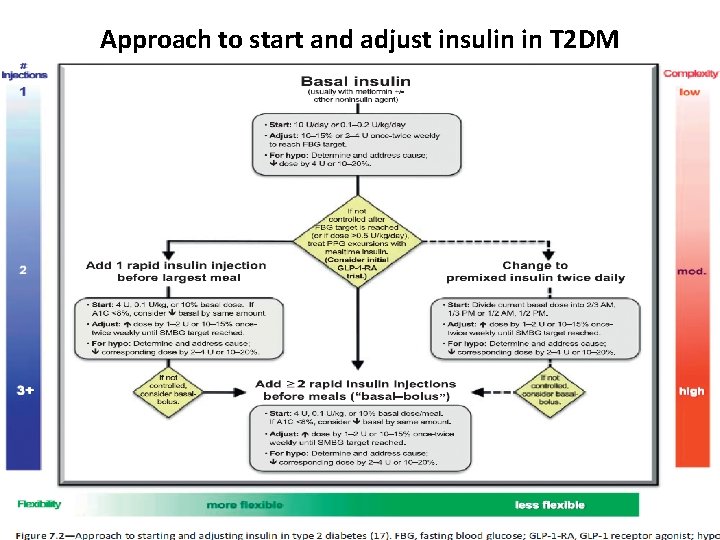
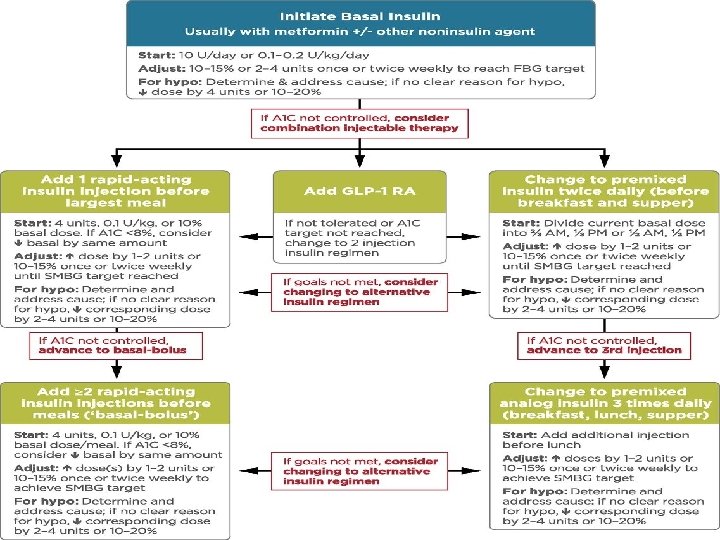
Approach to start and adjust insulin in T 2 DM
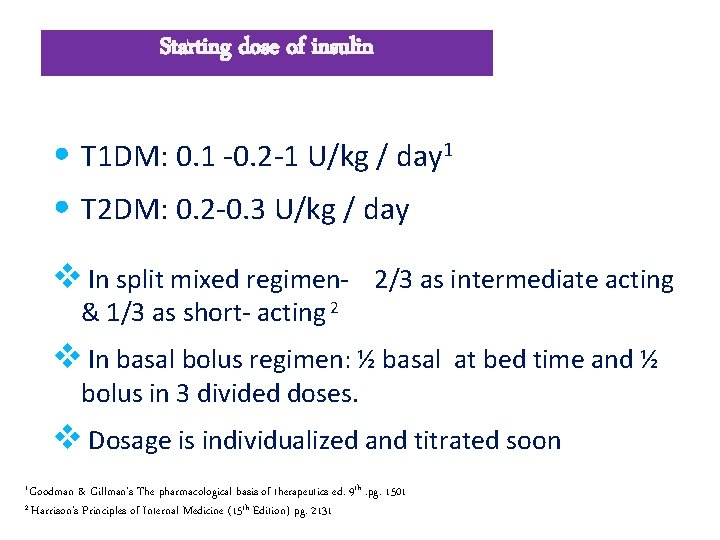
Starting dose of insulin • T 1 DM: 0. 1 -0. 2 -1 U/kg / day 1 • T 2 DM: 0. 2 -0. 3 U/kg / day v In split mixed regimen- 2/3 as intermediate acting & 1/3 as short- acting 2 v In basal bolus regimen: ½ basal at bed time and ½ bolus in 3 divided doses. v Dosage is individualized and titrated soon 1 Goodman & Gillman’s The pharmacological basis of therapeutics ed. 9 th. pg. 1501 2 Harrison’s Principles of Internal Medicine (15 th Edition) pg. 2131
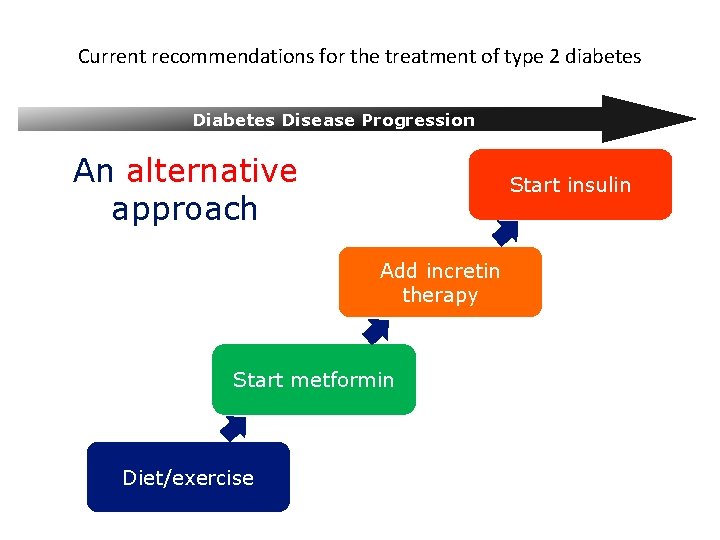
Current recommendations for the treatment of type 2 diabetes Disease Progression An alternative approach Start insulin Add incretin therapy Start metformin Diet/exercise
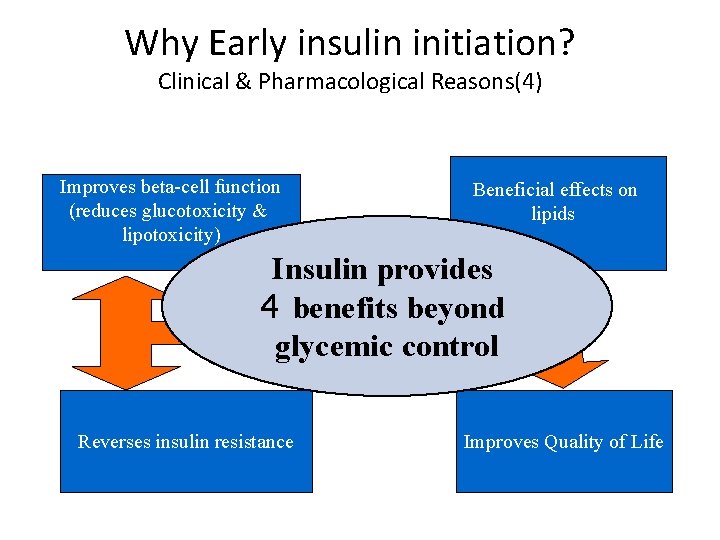
Why Early insulin initiation? Clinical & Pharmacological Reasons(4) Improves beta-cell function (reduces glucotoxicity & lipotoxicity) Beneficial effects on lipids Insulin provides 4 benefits beyond Insulin glycemic control Reverses insulin resistance Improves Quality of Life
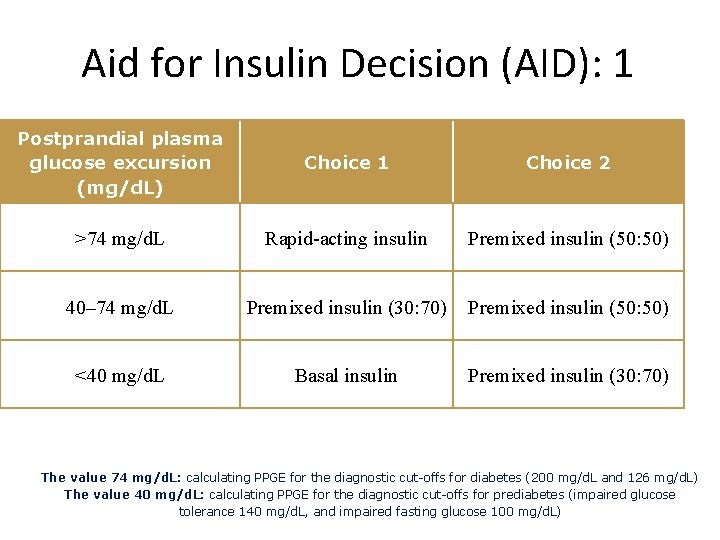
Aid for Insulin Decision (AID): 1 Postprandial plasma glucose excursion (mg/d. L) Choice 1 Choice 2 >74 mg/d. L Rapid-acting insulin Premixed insulin (50: 50) 40– 74 mg/d. L Premixed insulin (30: 70) Premixed insulin (50: 50) <40 mg/d. L Basal insulin Premixed insulin (30: 70) The value 74 mg/d. L: calculating PPGE for the diagnostic cut-offs for diabetes (200 mg/d. L and 126 mg/d. L) The value 40 mg/d. L: calculating PPGE for the diagnostic cut-offs for prediabetes (impaired glucose tolerance 140 mg/d. L, and impaired fasting glucose 100 mg/d. L)
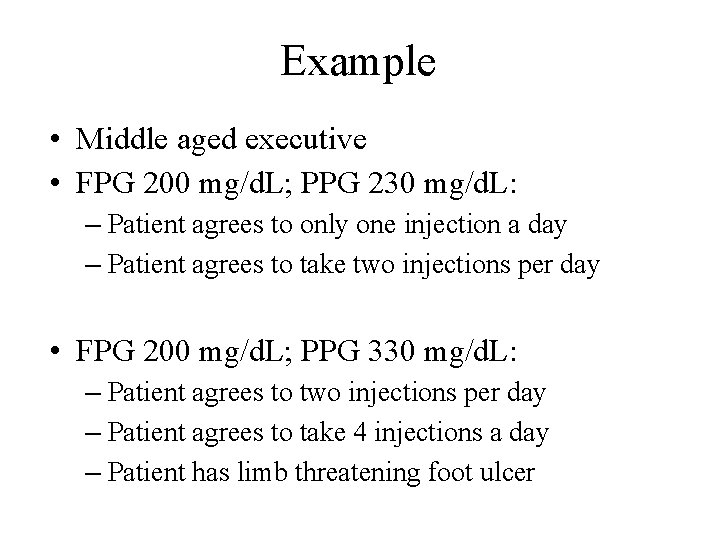
Example • Middle aged executive • FPG 200 mg/d. L; PPG 230 mg/d. L: – Patient agrees to only one injection a day – Patient agrees to take two injections per day • FPG 200 mg/d. L; PPG 330 mg/d. L: – Patient agrees to two injections per day – Patient agrees to take 4 injections a day – Patient has limb threatening foot ulcer
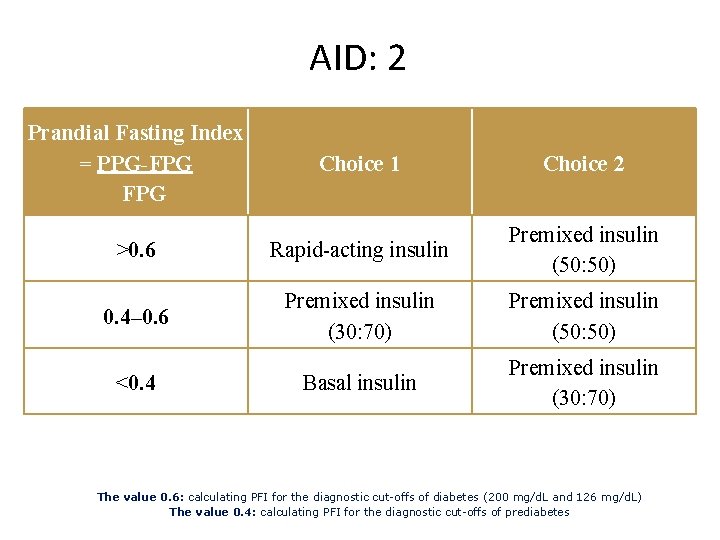
AID: 2 Prandial Fasting Index = PPG-FPG Choice 1 Choice 2 >0. 6 Rapid-acting insulin Premixed insulin (50: 50) 0. 4– 0. 6 Premixed insulin (30: 70) Premixed insulin (50: 50) Basal insulin Premixed insulin (30: 70) <0. 4 The value 0. 6: calculating PFI for the diagnostic cut-offs of diabetes (200 mg/d. L and 126 mg/d. L) The value 0. 4: calculating PFI for the diagnostic cut-offs of prediabetes
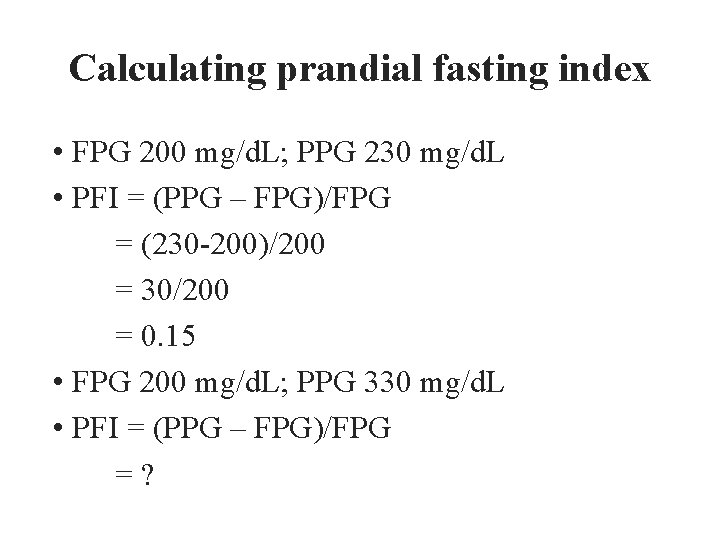
Calculating prandial fasting index • FPG 200 mg/d. L; PPG 230 mg/d. L • PFI = (PPG – FPG)/FPG = (230 -200)/200 = 30/200 = 0. 15 • FPG 200 mg/d. L; PPG 330 mg/d. L • PFI = (PPG – FPG)/FPG = ?
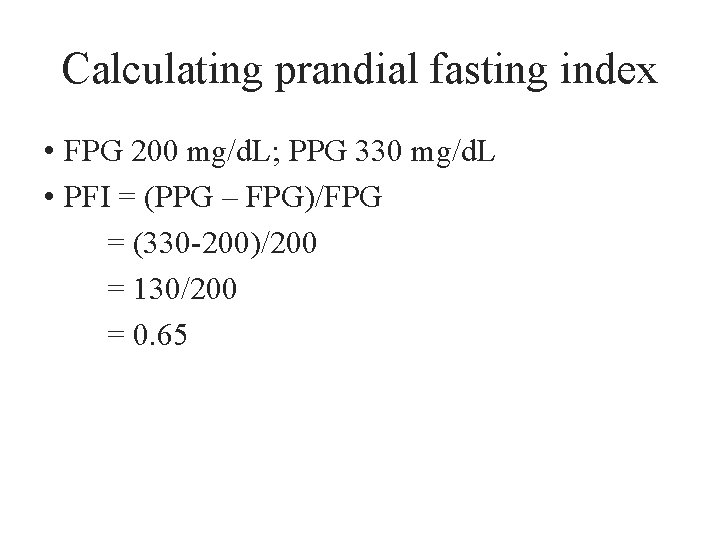
Calculating prandial fasting index • FPG 200 mg/d. L; PPG 330 mg/d. L • PFI = (PPG – FPG)/FPG = (330 -200)/200 = 130/200 = 0. 65
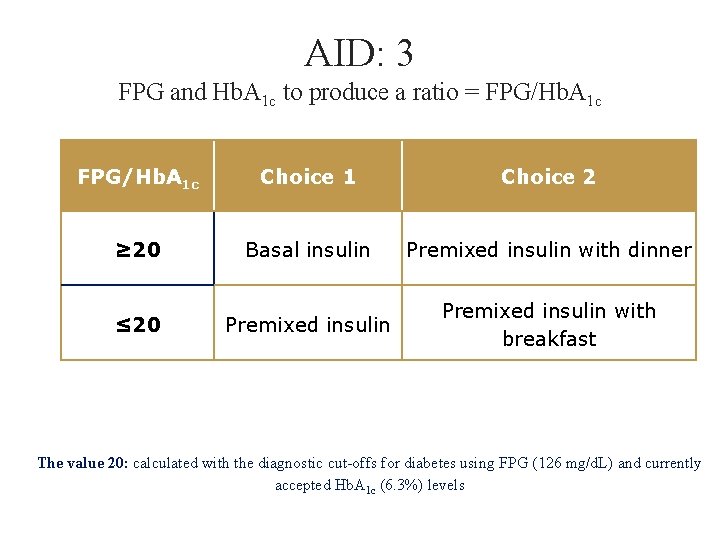
AID: 3 FPG and Hb. A 1 c to produce a ratio = FPG/Hb. A 1 c Choice 1 Choice 2 ≥ 20 Basal insulin Premixed insulin with dinner ≤ 20 Premixed insulin with breakfast The value 20: calculated with the diagnostic cut-offs for diabetes using FPG (126 mg/d. L) and currently accepted Hb. A 1 c (6. 3%) levels
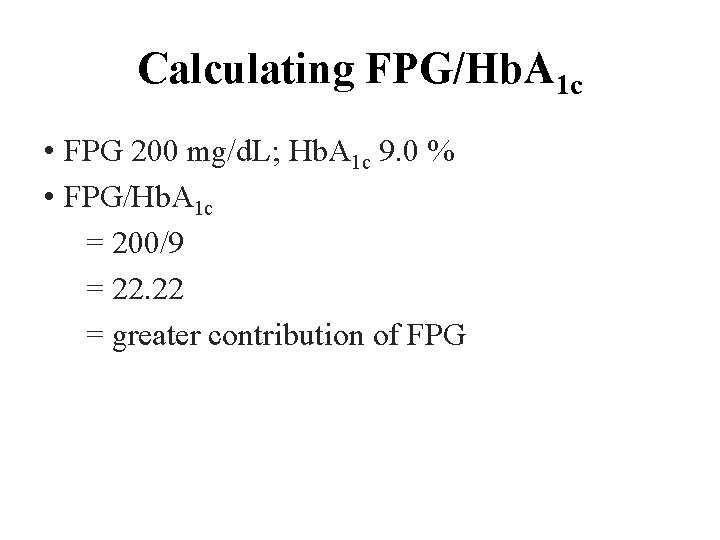
Calculating FPG/Hb. A 1 c • FPG 200 mg/d. L; Hb. A 1 c 9. 0 % • FPG/Hb. A 1 c = 200/9 = 22. 22 = greater contribution of FPG
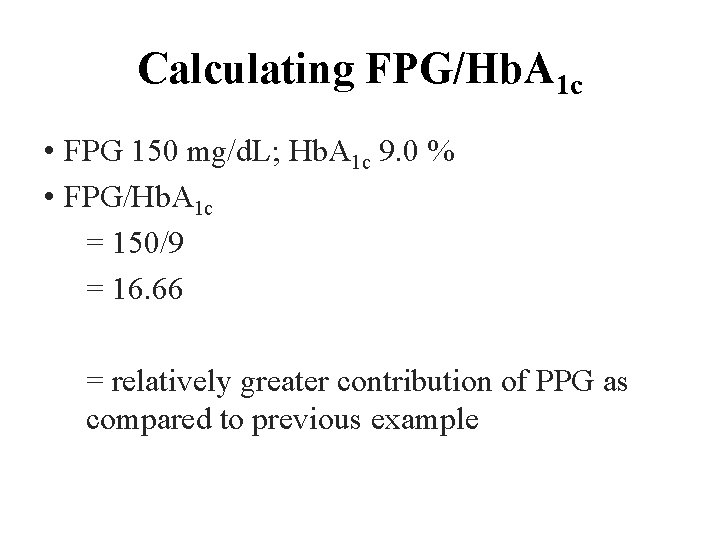
Calculating FPG/Hb. A 1 c • FPG 150 mg/d. L; Hb. A 1 c 9. 0 % • FPG/Hb. A 1 c = 150/9 = 16. 66 = relatively greater contribution of PPG as compared to previous example
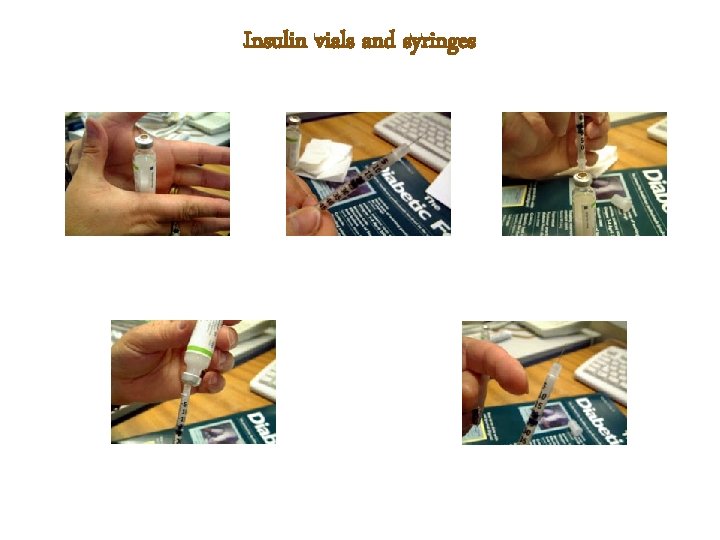
Insulin vials and syringes
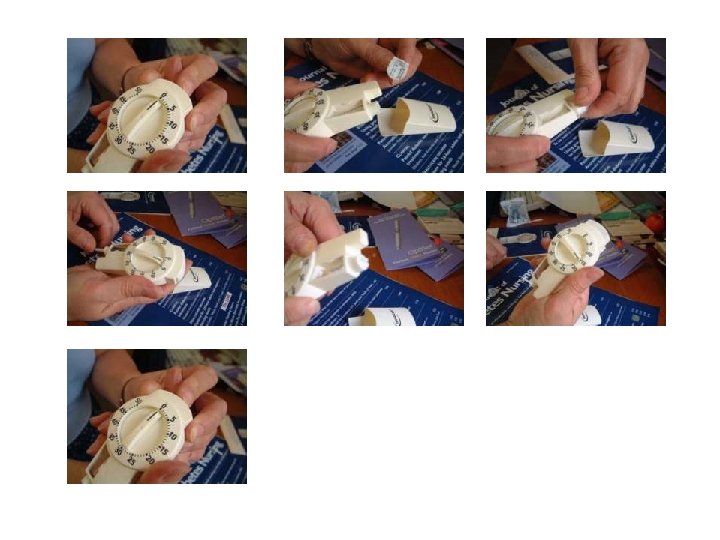
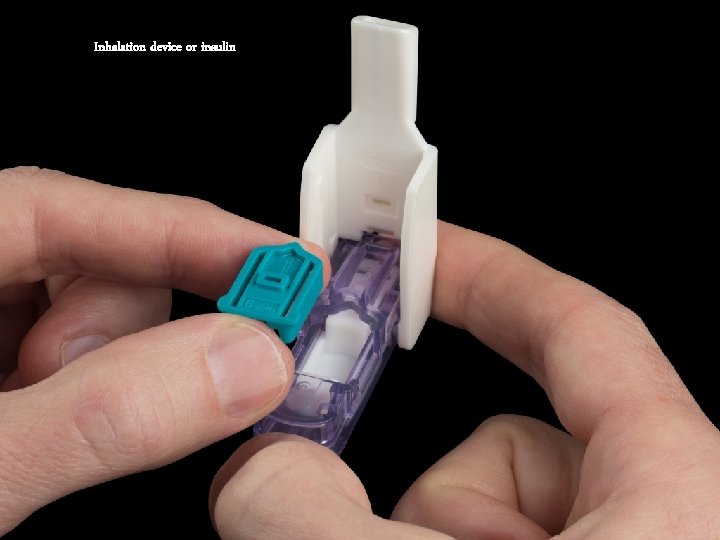
Inhalation device or insulin
Insulin administration Sites • Abdomen (fastest absorption & most preferred) (Intermediate) • Buttocks • Upper arm • Thigh-lateral & anterior aspects (slowest) • Rotate the site of injection around a selected area
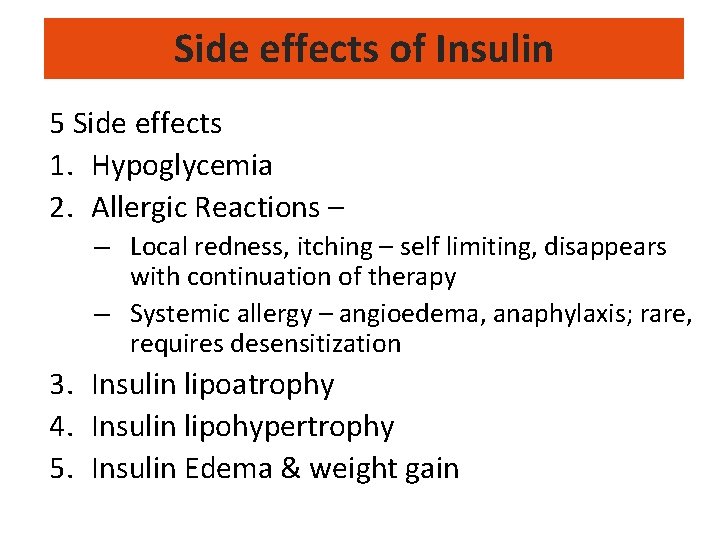
Side effects of Insulin 5 Side effects 1. Hypoglycemia 2. Allergic Reactions – – Local redness, itching – self limiting, disappears with continuation of therapy – Systemic allergy – angioedema, anaphylaxis; rare, requires desensitization 3. Insulin lipoatrophy 4. Insulin lipohypertrophy 5. Insulin Edema & weight gain
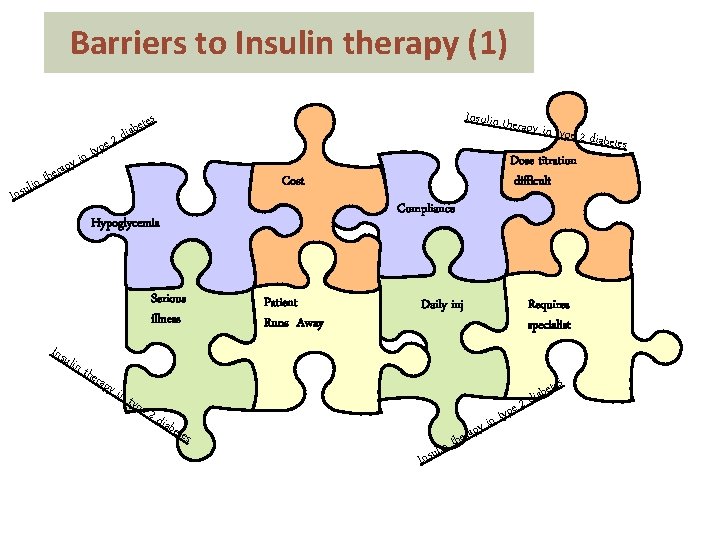
Barriers to Insulin therapy (1) in l Insu apy r e h t pe 2 in ty Insulin the tes id abe Compliance Serious illness lin t her apy in t ype 2 d e 2 diabete Dose titration difficult Cost Hypoglycemia Insu rapy in typ Patient Runs Away Daily inj iabe tes Insu l apy r e h in t Requires specialist pe y t in tes abe 2 di s
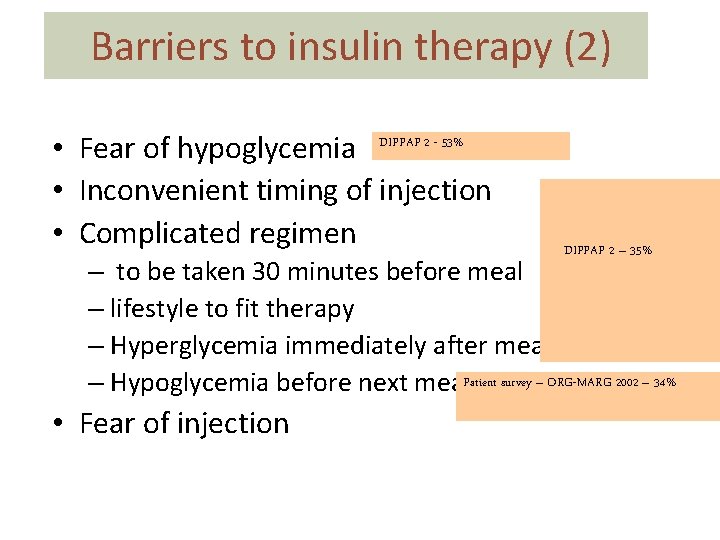
Barriers to insulin therapy (2) • Fear of hypoglycemia DIPPAP 2 - 53% • Inconvenient timing of injection • Complicated regimen DIPPAP 2 – 35% – to be taken 30 minutes before meal – lifestyle to fit therapy – Hyperglycemia immediately after meal – Hypoglycemia before next meal. Patient survey – ORG-MARG 2002 – 34% • Fear of injection
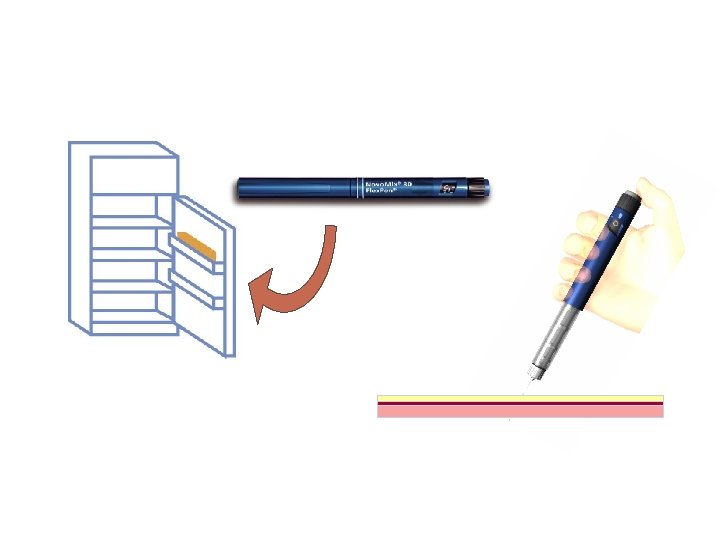
Storage of Insulin (1) • Vials, Penfills & Pens not in use stored between 2° & 8°C • Storage in or near freezing compartment is to be avoided (more important-suspensions) • Too high temp- gradual decrease in biological potency • In use stored at room temperature (25°C) up to 6 wks (Vials) & up to 4 wks (Penfills & Devices) • Pens/ Penfills- in use- should not be kept in refrigerator
Storage of Insulin (2) Storage of patient supplies of insulin in warm climates is not an important practical issue, & should not interfere with supplies of vital insulin to pts. in developing countries.
Thanks. THANKS to all Thank you