
Diabetes Medications What to prescribe Rose M Flinchum
Diabetes Medications: What to prescribe? Rose M. Flinchum, MSEd. , MS, CNS, RN, ACNS-BC, BC-ADM, CDE Inpatient Diabetes CNS / Certified Diabetes Educator Outpatient DSMES Quality Coordinator
Diabetes in our Practices 2015 Statistics 30. 3 million Americans; 9. 4% of the population 23. 1 million were diagnosed; 7. 2 million were undiagnosed 25. 2% of seniors (diagnosed/undiagnosed) 34% of residents in nursing facilities 38% to 40% of hospital inpatients American Diabetes Association, 2017 CDC National Diabetes Statistics Report, 2017 Swanson, Potter, Kongable, Cook. Endocrine Practice, 2017
Categories of Medications Oral Medications Injectable Medications Biguanides GLP-1 Receptor Agonists (GLP 1 s) Sulfonylureas (SUs) Meglitinide Derivatives Alpha-glucosidase Inhibitors (AGIs) Thiazolidinediones (TZDs) Dipeptidyl Peptidase Inhibitors (DPP-4 s) SGLT-2 Inhibitors Amylin-mimetic Insulin (Injectable) Rapid Acting Short Acting Intermediate Acting Long Acting U 100, U 200, U 300, U 500 Insulin / GLP-1 Combinations Bile Acid Sequestrant Dopamine Receptor Agonist Inhaled Insulin Rapid acting

Algorithms: ADA, 2018 Type 1 Insulin Multiple daily injections or insulin pump therapy Amylin-mimetic may be added Type 2 Metformin, unless contraindicated/not tolerated A 1 c >9%: Consider dual therapy A 1 c >10%, BG > 300, symptomatic: Consider insulin therapy Without ASCVD and not at goal within 3 months: Add another agent With ASCVD: Incorporate empagliflozin or liraglutide A

Algorithms: AACE, 2018 Type 1 Insulin Multiple daily injections or insulin pump therapy; Amylin-mimetic may be added Type 2 A 1 c <7. 5%: Monotherapy (metformin/other) A 1 c >7. 5%, Dual therapy (includes basal insulin option) If not at goal within 3 months: Proceed to Triple Therapy If not at goal within 3 months: Proceed to or intensify insulin therapy
Take into Consideration… Drug’s indications / FDA approved uses Drug’s mechanism of action Is it addressing the individual’s problem/needs? Type 1: Absolute insulin deficiency Type 2: “Ominous Octet” to “Egregious Eleven”
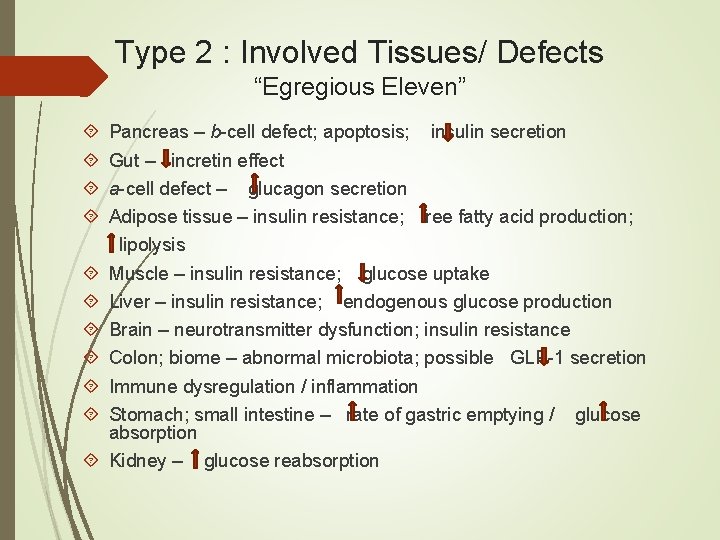
Type 2 : Involved Tissues/ Defects “Egregious Eleven” Pancreas – b-cell defect; apoptosis; insulin secretion Gut – incretin effect a-cell defect – glucagon secretion Adipose tissue – insulin resistance; free fatty acid production; lipolysis Muscle – insulin resistance; glucose uptake Liver – insulin resistance; endogenous glucose production Brain – neurotransmitter dysfunction; insulin resistance Colon; biome – abnormal microbiota; possible GLP-1 secretion Immune dysregulation / inflammation Stomach; small intestine – rate of gastric emptying / glucose absorption Kidney – glucose reabsorption
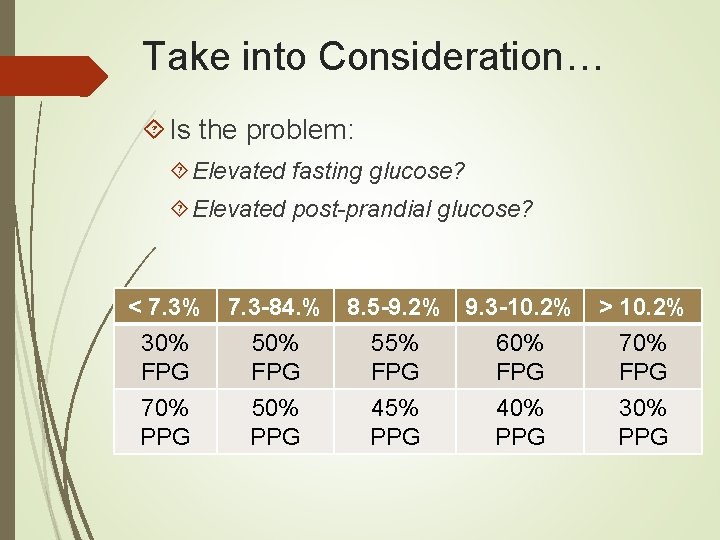
Take into Consideration… Is the problem: Elevated fasting glucose? Elevated post-prandial glucose? < 7. 3% 30% FPG 70% PPG 7. 3 -84. % 8. 5 -9. 2% 9. 3 -10. 2% > 10. 2% 50% FPG 50% PPG 55% FPG 45% PPG 60% FPG 40% PPG 70% FPG 30% PPG
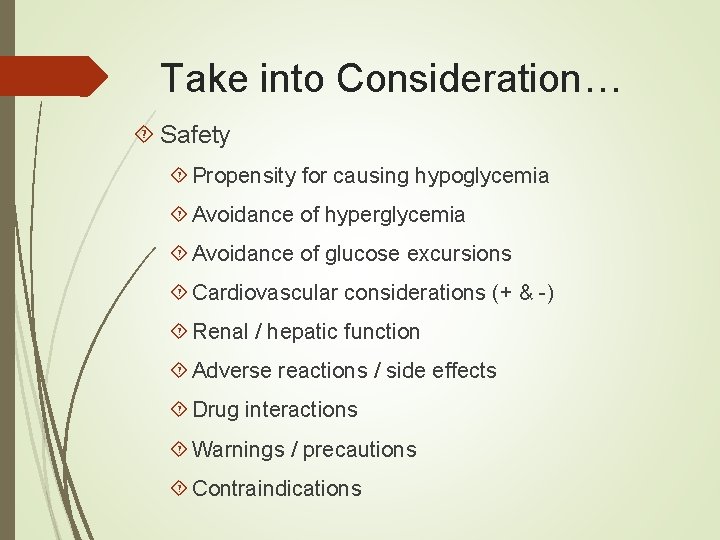
Take into Consideration… Safety Propensity for causing hypoglycemia Avoidance of hyperglycemia Avoidance of glucose excursions Cardiovascular considerations (+ & -) Renal / hepatic function Adverse reactions / side effects Drug interactions Warnings / precautions Contraindications
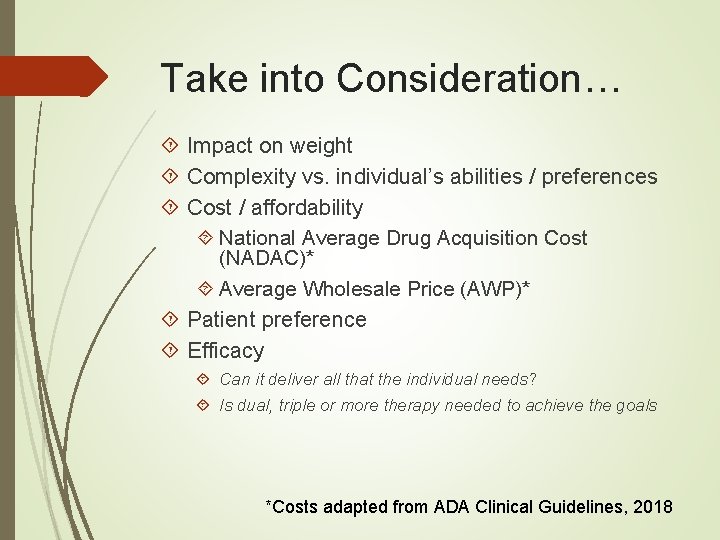
Take into Consideration… Impact on weight Complexity vs. individual’s abilities / preferences Cost / affordability National Average Drug Acquisition Cost (NADAC)* Average Wholesale Price (AWP)* Patient preference Efficacy Can it deliver all that the individual needs? Is dual, triple or more therapy needed to achieve the goals *Costs adapted from ADA Clinical Guidelines, 2018
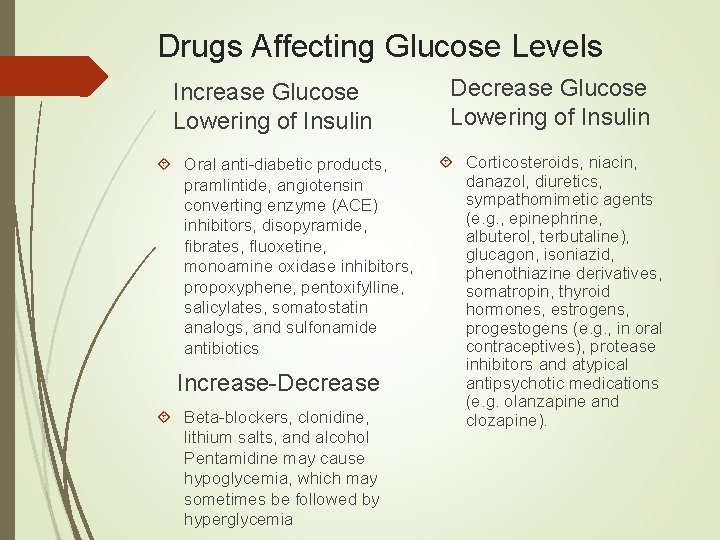
Drugs Affecting Glucose Levels Increase Glucose Lowering of Insulin Oral anti-diabetic products, pramlintide, angiotensin converting enzyme (ACE) inhibitors, disopyramide, fibrates, fluoxetine, monoamine oxidase inhibitors, propoxyphene, pentoxifylline, salicylates, somatostatin analogs, and sulfonamide antibiotics Increase-Decrease Beta-blockers, clonidine, lithium salts, and alcohol Pentamidine may cause hypoglycemia, which may sometimes be followed by hyperglycemia Decrease Glucose Lowering of Insulin Corticosteroids, niacin, danazol, diuretics, sympathomimetic agents (e. g. , epinephrine, albuterol, terbutaline), glucagon, isoniazid, phenothiazine derivatives, somatropin, thyroid hormones, estrogens, progestogens (e. g. , in oral contraceptives), protease inhibitors and atypical antipsychotic medications (e. g. olanzapine and clozapine).
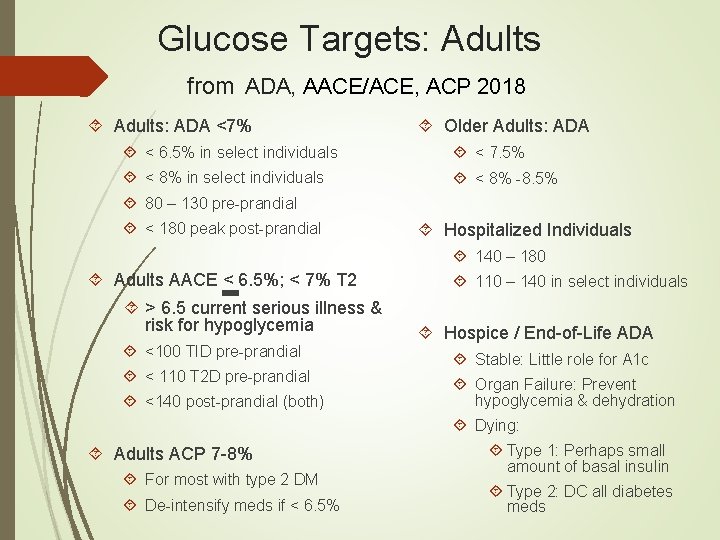
Glucose Targets: Adults from ADA, AACE/ACE, ACP 2018 Adults: ADA <7% Older Adults: ADA < 6. 5% in select individuals < 7. 5% < 8% in select individuals < 8% -8. 5% 80 – 130 pre-prandial < 180 peak post-prandial Hospitalized Individuals 140 – 180 Adults AACE < 6. 5%; < 7% T 2 > 6. 5 current serious illness & risk for hypoglycemia <100 TID pre-prandial < 110 T 2 D pre-prandial <140 post-prandial (both) 110 – 140 in select individuals Hospice / End-of-Life ADA Stable: Little role for A 1 c Organ Failure: Prevent hypoglycemia & dehydration Dying: Adults ACP 7 -8% For most with type 2 DM De-intensify meds if < 6. 5% Type 1: Perhaps small amount of basal insulin Type 2: DC all diabetes meds
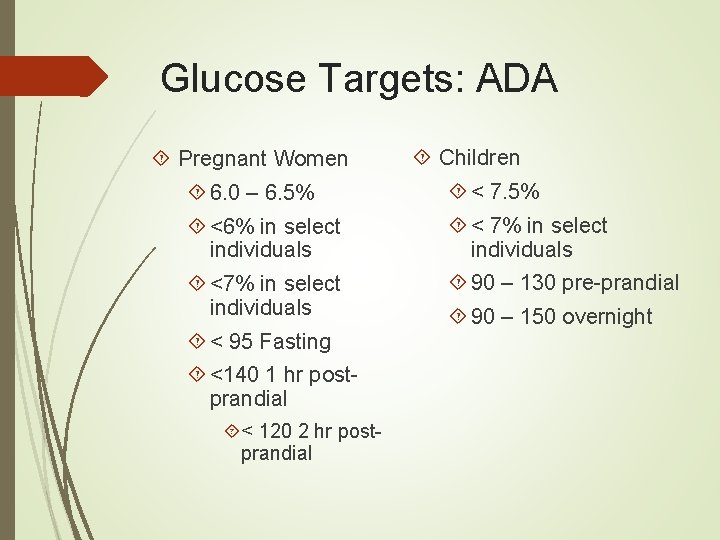
Glucose Targets: ADA Pregnant Women Children 6. 0 – 6. 5% < 7. 5% <6% in select individuals < 7% in select individuals <7% in select individuals 90 – 130 pre-prandial < 95 Fasting <140 1 hr postprandial < 120 2 hr postprandial 90 – 150 overnight
Oral Diabetes Medications
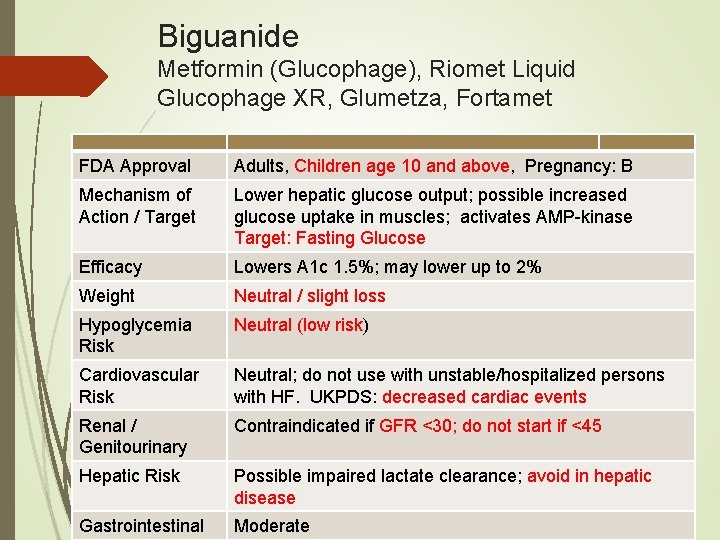
Biguanide Metformin (Glucophage), Riomet Liquid Glucophage XR, Glumetza, Fortamet FDA Approval Adults, Children age 10 and above, Pregnancy: B Mechanism of Action / Target Lower hepatic glucose output; possible increased glucose uptake in muscles; activates AMP-kinase Target: Fasting Glucose Efficacy Lowers A 1 c 1. 5%; may lower up to 2% Weight Neutral / slight loss Hypoglycemia Risk Neutral (low risk) Cardiovascular Risk Neutral; do not use with unstable/hospitalized persons with HF. UKPDS: decreased cardiac events Renal / Genitourinary Contraindicated if GFR <30; do not start if <45 Hepatic Risk Possible impaired lactate clearance; avoid in hepatic disease Gastrointestinal Moderate
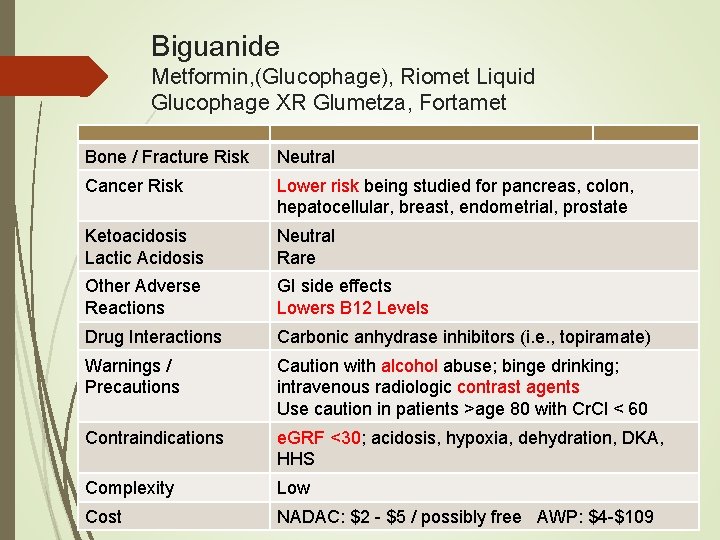
Biguanide Metformin, (Glucophage), Riomet Liquid Glucophage XR Glumetza, Fortamet Bone / Fracture Risk Neutral Cancer Risk Lower risk being studied for pancreas, colon, hepatocellular, breast, endometrial, prostate Ketoacidosis Lactic Acidosis Neutral Rare Other Adverse Reactions GI side effects Lowers B 12 Levels Drug Interactions Carbonic anhydrase inhibitors (i. e. , topiramate) Warnings / Precautions Caution with alcohol abuse; binge drinking; intravenous radiologic contrast agents Use caution in patients >age 80 with Cr. Cl < 60 Contraindications e. GRF <30; acidosis, hypoxia, dehydration, DKA, HHS Complexity Low Cost NADAC: $2 - $5 / possibly free AWP: $4 -$109
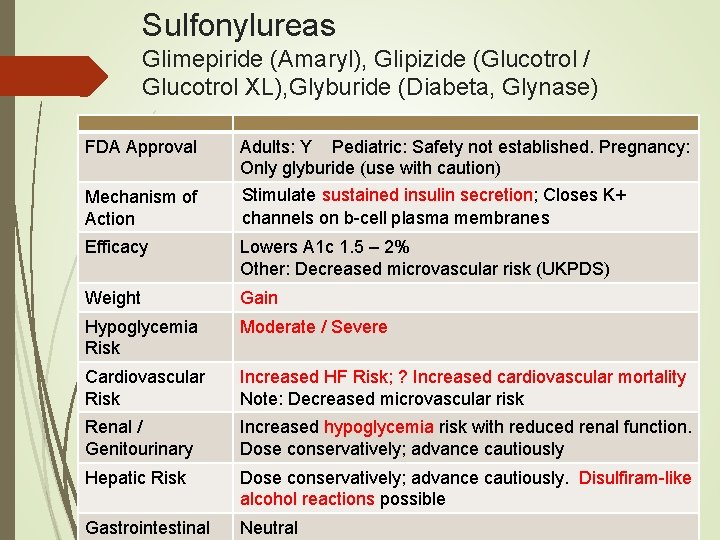
Sulfonylureas Glimepiride (Amaryl), Glipizide (Glucotrol / Glucotrol XL), Glyburide (Diabeta, Glynase) FDA Approval Mechanism of Action Adults: Y Pediatric: Safety not established. Pregnancy: Only glyburide (use with caution) Stimulate sustained insulin secretion; Closes K+ channels on b-cell plasma membranes Efficacy Lowers A 1 c 1. 5 – 2% Other: Decreased microvascular risk (UKPDS) Weight Gain Hypoglycemia Risk Moderate / Severe Cardiovascular Risk Increased HF Risk; ? Increased cardiovascular mortality Note: Decreased microvascular risk Renal / Genitourinary Increased hypoglycemia risk with reduced renal function. Dose conservatively; advance cautiously Hepatic Risk Dose conservatively; advance cautiously. Disulfiram-like alcohol reactions possible Gastrointestinal Neutral

Sulfonylureas Glimepiride (Amaryl), Glipizide (Glucotrol / Glucotrol XL), Glyburide (Micronase, Glynase) Bone / Fracture Risk Neutral Cancer Risk No known increased risk Ketoacidosis Neutral; does not cause Other Adverse Reactions Dermatologic; hematologic, including hemolytic anemia; hyponatremia/SIADH with some agents Drug Interactions NSAIDs, ACE-I, disopyramide, fluoxetine, clarithromycinsome azoles, salicylates, sulfonamides, chloramphenicol, probencid, coumarins, MAO inhibitors, beta blocking agents; oral miconazole? Fluoroquinolones; Rifampin; thiazides, corticosteroids, phenothiazines, INH

Sulfonylureas Glimepiride (Amaryl), Glipizide (Glucotrol / Glucotrol XL), Glyburide (Micronase, Glynase) Warnings / Precautions Hypoglycemia Contraindications Type 1 DM, DKA Glyburide (Beers List; avoid in older adults); Glyburide: Patients treated with bosentan, Patients taking gemfibrozil Ketoacidosis Risk Complexity Low Cost NADAC: $4 -$17/ possible free (glipizide) AWP: $48 - $198
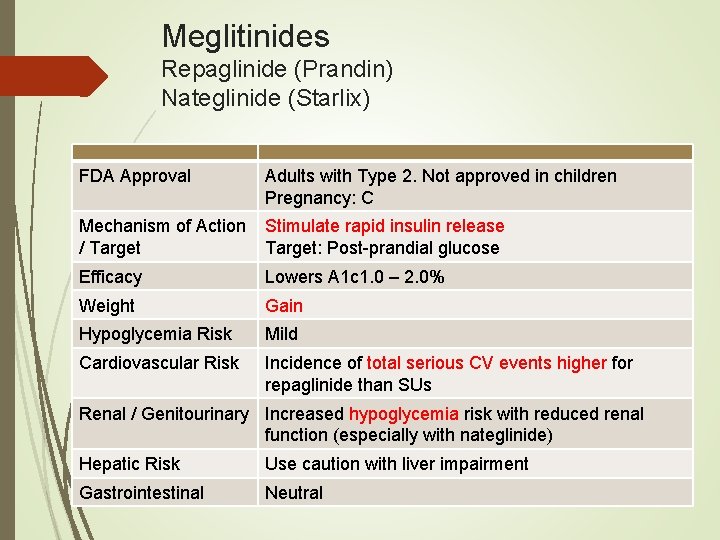
Meglitinides Repaglinide (Prandin) Nateglinide (Starlix) FDA Approval Adults with Type 2. Not approved in children Pregnancy: C Mechanism of Action Stimulate rapid insulin release / Target: Post-prandial glucose Efficacy Lowers A 1 c 1. 0 – 2. 0% Weight Gain Hypoglycemia Risk Mild Cardiovascular Risk Incidence of total serious CV events higher for repaglinide than SUs Renal / Genitourinary Increased hypoglycemia risk with reduced renal function (especially with nateglinide) Hepatic Risk Use caution with liver impairment Gastrointestinal Neutral
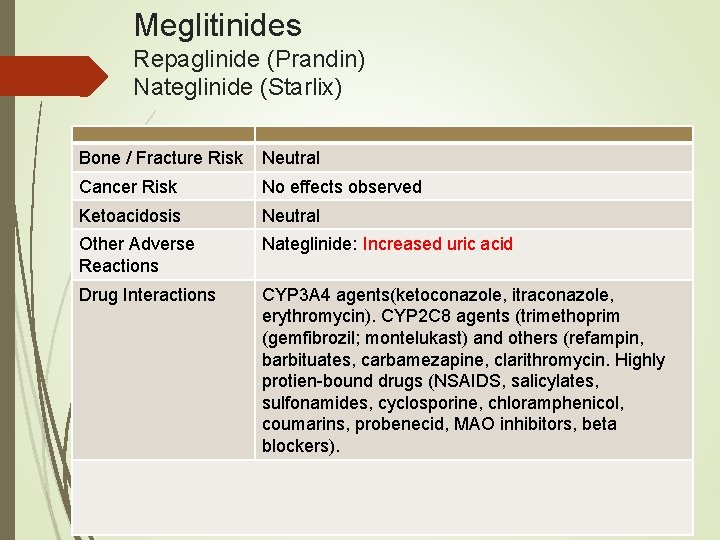
Meglitinides Repaglinide (Prandin) Nateglinide (Starlix) Bone / Fracture Risk Neutral Cancer Risk No effects observed Ketoacidosis Neutral Other Adverse Reactions Nateglinide: Increased uric acid Drug Interactions CYP 3 A 4 agents(ketoconazole, itraconazole, erythromycin). CYP 2 C 8 agents (trimethoprim (gemfibrozil; montelukast) and others (refampin, barbituates, carbamezapine, clarithromycin. Highly protien-bound drugs (NSAIDS, salicylates, sulfonamides, cyclosporine, chloramphenicol, coumarins, probenecid, MAO inhibitors, beta blockers).

Meglitinides Repaglinide (Prandin) Nateglinide (Starlix) Drug Interactions, cont. Thiazides, steroids, phenothiazines, thyroid agents, estrogens, OCAs, phytoin, nicotinic acid, sympathomimetics, Ca channel blockers, isoniazid. Nateglinide: St. John’s Wort, somatostatin, CYP 2 C 9 inhibitors (fluconazole, amiodarone, moconazole, oxandrolone) Warnings / Precautions Hypoglycemia: Use caution in hepatic/renal insufficiency; elderly, debilitated/malnourished persons Contraindications DKA; Type 1 DM, Repaglinide: Do not co-administer with gemfibrozil or use in combination with NPH insulin; Ketoacidosis Risk Complexity Moderate; tid dosing Cost NADAC: $40 - $56 AWP: $122 - $673
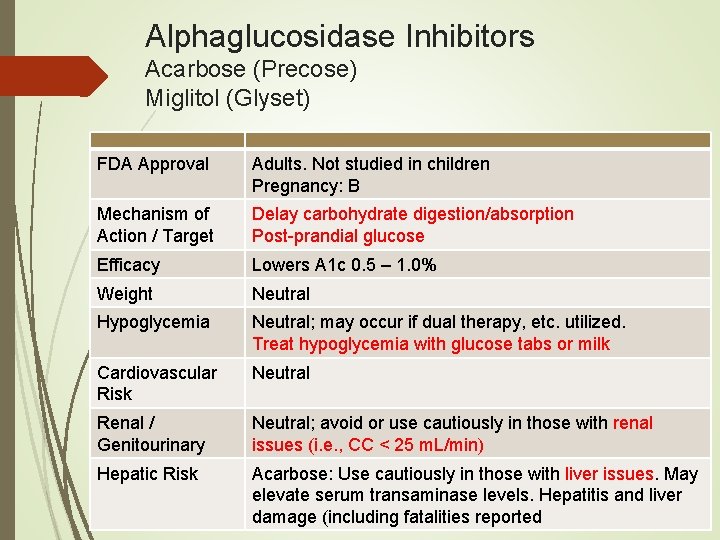
Alphaglucosidase Inhibitors Acarbose (Precose) Miglitol (Glyset) FDA Approval Adults. Not studied in children Pregnancy: B Mechanism of Action / Target Delay carbohydrate digestion/absorption Post-prandial glucose Efficacy Lowers A 1 c 0. 5 – 1. 0% Weight Neutral Hypoglycemia Neutral; may occur if dual therapy, etc. utilized. Treat hypoglycemia with glucose tabs or milk Cardiovascular Risk Neutral Renal / Genitourinary Neutral; avoid or use cautiously in those with renal issues (i. e. , CC < 25 m. L/min) Hepatic Risk Acarbose: Use cautiously in those with liver issues. May elevate serum transaminase levels. Hepatitis and liver damage (including fatalities reported
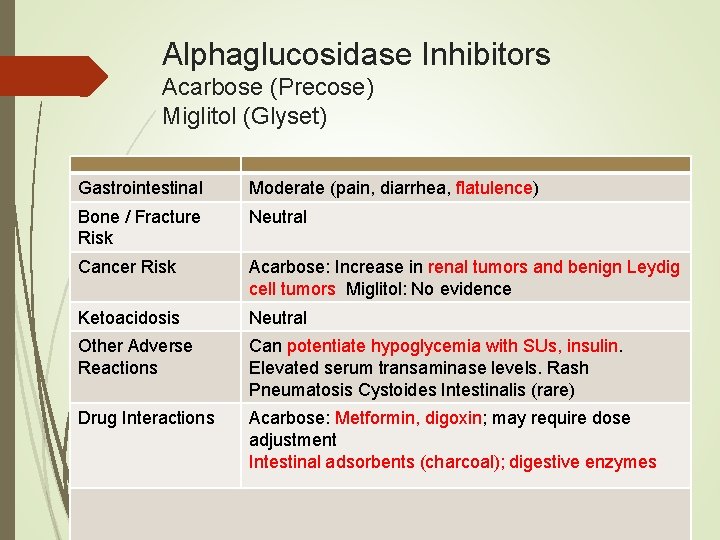
Alphaglucosidase Inhibitors Acarbose (Precose) Miglitol (Glyset) Gastrointestinal Moderate (pain, diarrhea, flatulence) Bone / Fracture Risk Neutral Cancer Risk Acarbose: Increase in renal tumors and benign Leydig cell tumors Miglitol: No evidence Ketoacidosis Neutral Other Adverse Reactions Can potentiate hypoglycemia with SUs, insulin. Elevated serum transaminase levels. Rash Pneumatosis Cystoides Intestinalis (rare) Drug Interactions Acarbose: Metformin, digoxin; may require dose adjustment Intestinal adsorbents (charcoal); digestive enzymes

Alphaglucosidase Inhibitors Acarbose (Precose) Miglitol (Glyset) Warnings / Precautions Hypoglycemia must be treated with oral glucose/dextrose Contraindications DKA, cirrhosis, inflammatory bowel disease and other intestinal, digestive, absorptive conditions Miglitol: Not recommended in significant renal dysfunction Cr. Cl <25 Acarbose: Cirrhosis, Sr. Cr <2 Ketoacidosis Risk Complexity Moderate; tid dosing Cost NADAC: $25 Acarbose AWP: $104 - 241
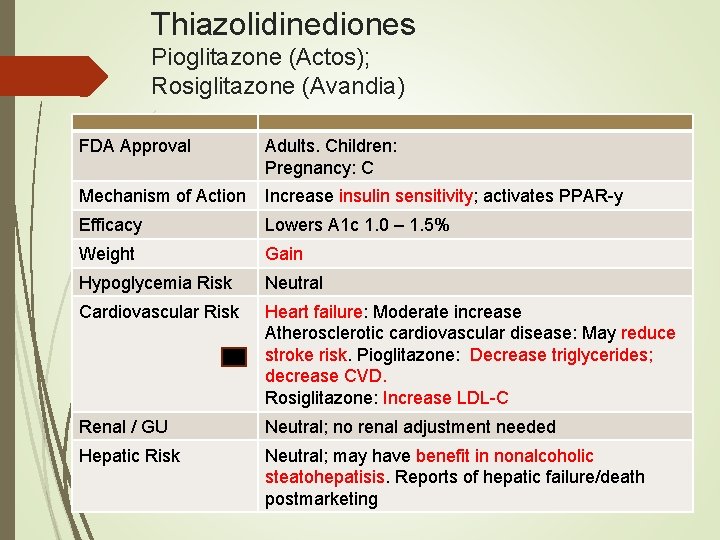
Thiazolidinediones Pioglitazone (Actos); Rosiglitazone (Avandia) FDA Approval Adults. Children: Pregnancy: C Mechanism of Action Increase insulin sensitivity; activates PPAR-y Efficacy Lowers A 1 c 1. 0 – 1. 5% Weight Gain Hypoglycemia Risk Neutral Cardiovascular Risk Heart failure: Moderate increase Atherosclerotic cardiovascular disease: May reduce stroke risk. Pioglitazone: Decrease triglycerides; decrease CVD. Rosiglitazone: Increase LDL-C Renal / GU Neutral; no renal adjustment needed Hepatic Risk Neutral; may have benefit in nonalcoholic steatohepatisis. Reports of hepatic failure/death postmarketing
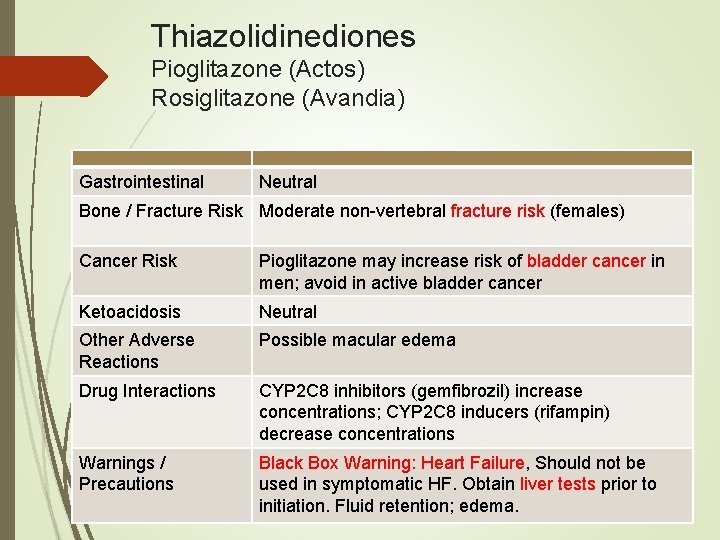
Thiazolidinediones Pioglitazone (Actos) Rosiglitazone (Avandia) Gastrointestinal Neutral Bone / Fracture Risk Moderate non-vertebral fracture risk (females) Cancer Risk Pioglitazone may increase risk of bladder cancer in men; avoid in active bladder cancer Ketoacidosis Neutral Other Adverse Reactions Possible macular edema Drug Interactions CYP 2 C 8 inhibitors (gemfibrozil) increase concentrations; CYP 2 C 8 inducers (rifampin) decrease concentrations Warnings / Precautions Black Box Warning: Heart Failure, Should not be used in symptomatic HF. Obtain liver tests prior to initiation. Fluid retention; edema.

Thiazolidinediones Pioglitazone (Actos) Rosiglitazone (Avandia) Contraindications Symptomatic heart failure; NYHA Class III or IV; Type 1 DM ; DKA. Pio: ALT > 3 X reference with serum total bilirubin > 2 X reference range Rosi: Active liver disease; ALT >2. 5 upper limit) Complexity Low Cost NADAC: $5 - $314/ possibly free (pioglitazone) AWP: $283 - $387
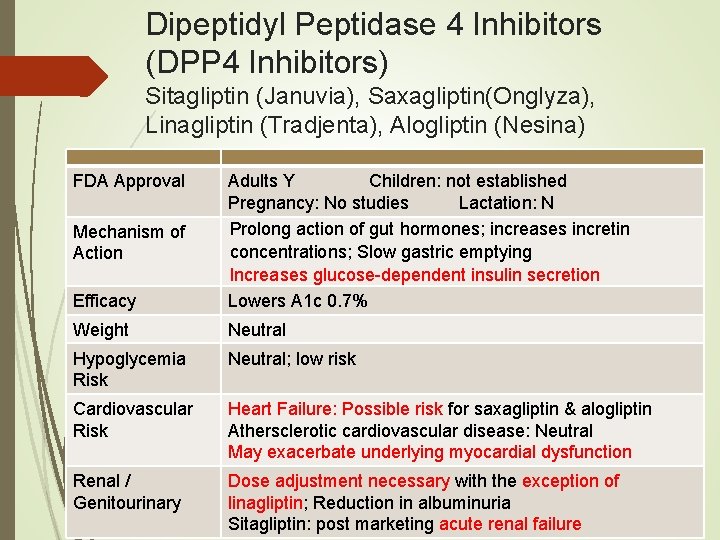
Dipeptidyl Peptidase 4 Inhibitors (DPP 4 Inhibitors) Sitagliptin (Januvia), Saxagliptin(Onglyza), Linagliptin (Tradjenta), Alogliptin (Nesina) FDA Approval Efficacy Adults Y Children: not established Pregnancy: No studies Lactation: N Prolong action of gut hormones; increases incretin concentrations; Slow gastric emptying Increases glucose-dependent insulin secretion Lowers A 1 c 0. 7% Weight Neutral Hypoglycemia Risk Neutral; low risk Cardiovascular Risk Heart Failure: Possible risk for saxagliptin & alogliptin Athersclerotic cardiovascular disease: Neutral May exacerbate underlying myocardial dysfunction Renal / Genitourinary Dose adjustment necessary with the exception of linagliptin; Reduction in albuminuria Sitagliptin: post marketing acute renal failure Mechanism of Action
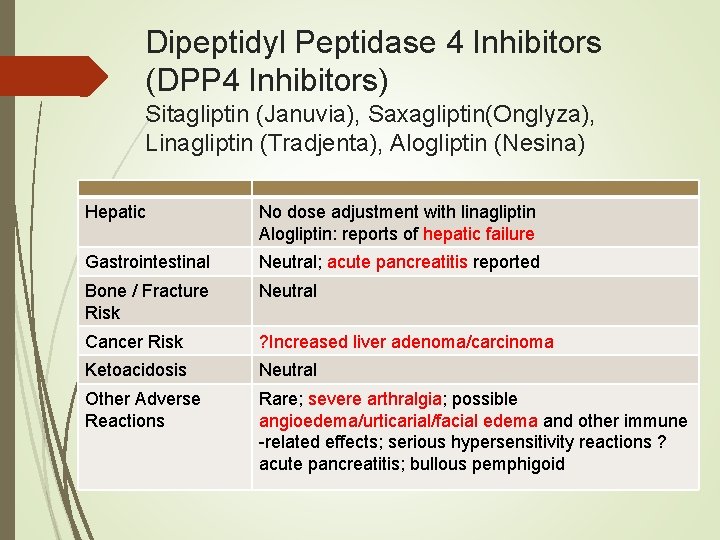
Dipeptidyl Peptidase 4 Inhibitors (DPP 4 Inhibitors) Sitagliptin (Januvia), Saxagliptin(Onglyza), Linagliptin (Tradjenta), Alogliptin (Nesina) Hepatic No dose adjustment with linagliptin Alogliptin: reports of hepatic failure Gastrointestinal Neutral; acute pancreatitis reported Bone / Fracture Risk Neutral Cancer Risk ? Increased liver adenoma/carcinoma Ketoacidosis Neutral Other Adverse Reactions Rare; severe arthralgia; possible angioedema/urticarial/facial edema and other immune -related effects; serious hypersensitivity reactions ? acute pancreatitis; bullous pemphigoid
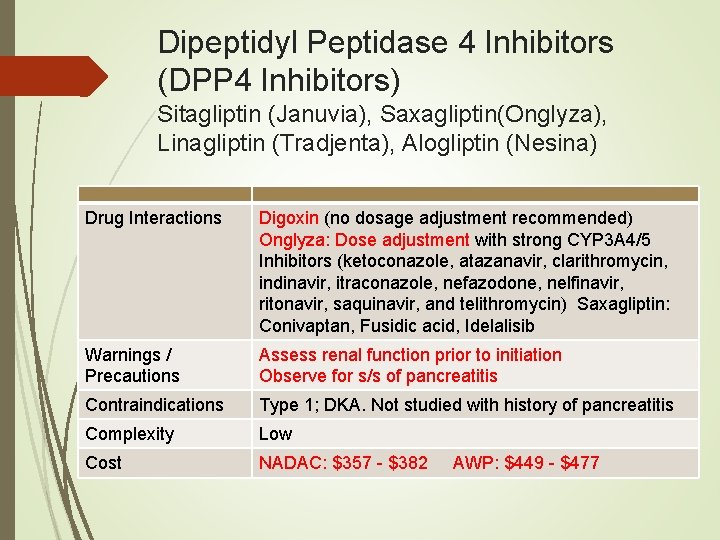
Dipeptidyl Peptidase 4 Inhibitors (DPP 4 Inhibitors) Sitagliptin (Januvia), Saxagliptin(Onglyza), Linagliptin (Tradjenta), Alogliptin (Nesina) Drug Interactions Digoxin (no dosage adjustment recommended) Onglyza: Dose adjustment with strong CYP 3 A 4/5 Inhibitors (ketoconazole, atazanavir, clarithromycin, indinavir, itraconazole, nefazodone, nelfinavir, ritonavir, saquinavir, and telithromycin) Saxagliptin: Conivaptan, Fusidic acid, Idelalisib Warnings / Precautions Assess renal function prior to initiation Observe for s/s of pancreatitis Contraindications Type 1; DKA. Not studied with history of pancreatitis Complexity Low Cost NADAC: $357 - $382 AWP: $449 - $477
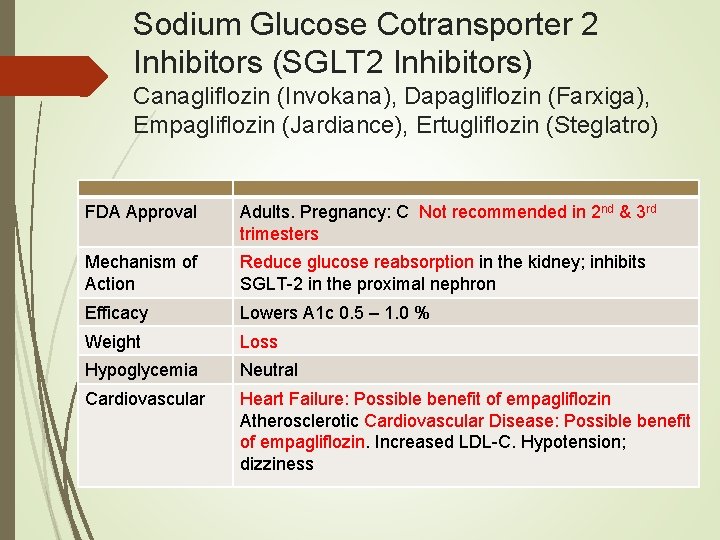
Sodium Glucose Cotransporter 2 Inhibitors (SGLT 2 Inhibitors) Canagliflozin (Invokana), Dapagliflozin (Farxiga), Empagliflozin (Jardiance), Ertugliflozin (Steglatro) FDA Approval Adults. Pregnancy: C Not recommended in 2 nd & 3 rd trimesters Mechanism of Action Reduce glucose reabsorption in the kidney; inhibits SGLT-2 in the proximal nephron Efficacy Lowers A 1 c 0. 5 – 1. 0 % Weight Loss Hypoglycemia Neutral Cardiovascular Heart Failure: Possible benefit of empagliflozin Atherosclerotic Cardiovascular Disease: Possible benefit of empagliflozin. Increased LDL-C. Hypotension; dizziness
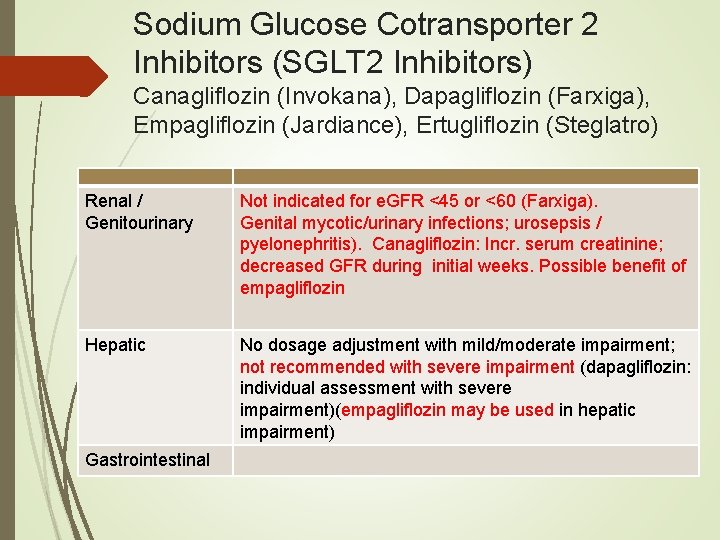
Sodium Glucose Cotransporter 2 Inhibitors (SGLT 2 Inhibitors) Canagliflozin (Invokana), Dapagliflozin (Farxiga), Empagliflozin (Jardiance), Ertugliflozin (Steglatro) Renal / Genitourinary Not indicated for e. GFR <45 or <60 (Farxiga). Genital mycotic/urinary infections; urosepsis / pyelonephritis). Canagliflozin: Incr. serum creatinine; decreased GFR during initial weeks. Possible benefit of empagliflozin Hepatic No dosage adjustment with mild/moderate impairment; not recommended with severe impairment (dapagliflozin: individual assessment with severe impairment)(empagliflozin may be used in hepatic impairment) Gastrointestinal
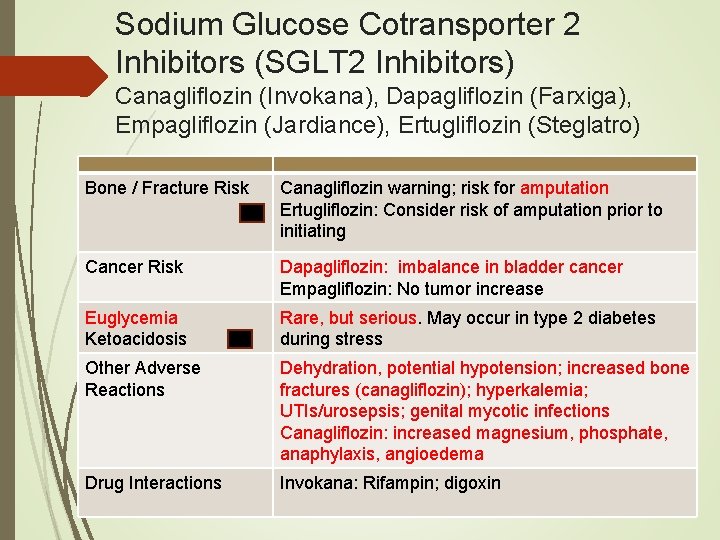
Sodium Glucose Cotransporter 2 Inhibitors (SGLT 2 Inhibitors) Canagliflozin (Invokana), Dapagliflozin (Farxiga), Empagliflozin (Jardiance), Ertugliflozin (Steglatro) Bone / Fracture Risk Canagliflozin warning; risk for amputation Ertugliflozin: Consider risk of amputation prior to initiating Cancer Risk Dapagliflozin: imbalance in bladder cancer Empagliflozin: No tumor increase Euglycemia Ketoacidosis Rare, but serious. May occur in type 2 diabetes during stress Other Adverse Reactions Dehydration, potential hypotension; increased bone fractures (canagliflozin); hyperkalemia; UTIs/urosepsis; genital mycotic infections Canagliflozin: increased magnesium, phosphate, anaphylaxis, angioedema Drug Interactions Invokana: Rifampin; digoxin
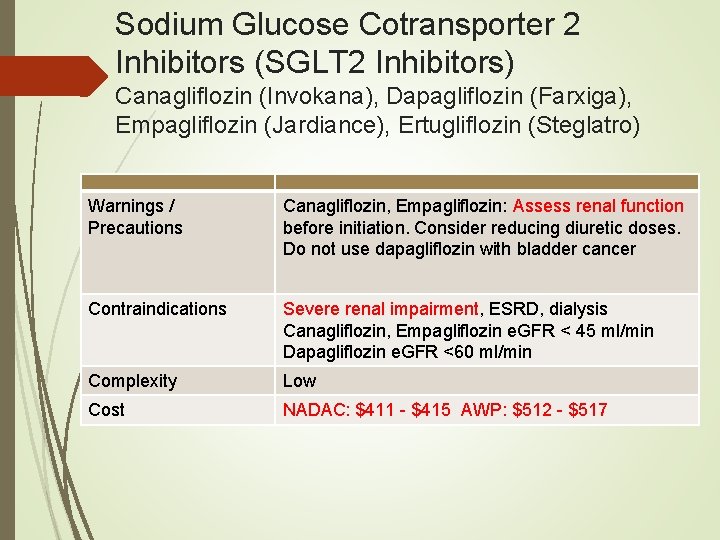
Sodium Glucose Cotransporter 2 Inhibitors (SGLT 2 Inhibitors) Canagliflozin (Invokana), Dapagliflozin (Farxiga), Empagliflozin (Jardiance), Ertugliflozin (Steglatro) Warnings / Precautions Canagliflozin, Empagliflozin: Assess renal function before initiation. Consider reducing diuretic doses. Do not use dapagliflozin with bladder cancer Contraindications Severe renal impairment, ESRD, dialysis Canagliflozin, Empagliflozin e. GFR < 45 ml/min Dapagliflozin e. GFR <60 ml/min Complexity Low Cost NADAC: $411 - $415 AWP: $512 - $517
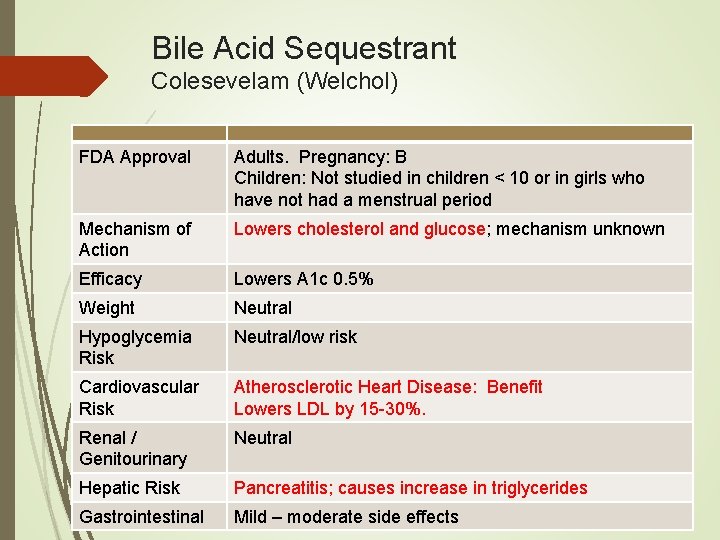
Bile Acid Sequestrant Colesevelam (Welchol) FDA Approval Adults. Pregnancy: B Children: Not studied in children < 10 or in girls who have not had a menstrual period Mechanism of Action Lowers cholesterol and glucose; mechanism unknown Efficacy Lowers A 1 c 0. 5% Weight Neutral Hypoglycemia Risk Neutral/low risk Cardiovascular Risk Atherosclerotic Heart Disease: Benefit Lowers LDL by 15 -30%. Renal / Genitourinary Neutral Hepatic Risk Pancreatitis; causes increase in triglycerides Gastrointestinal Mild – moderate side effects
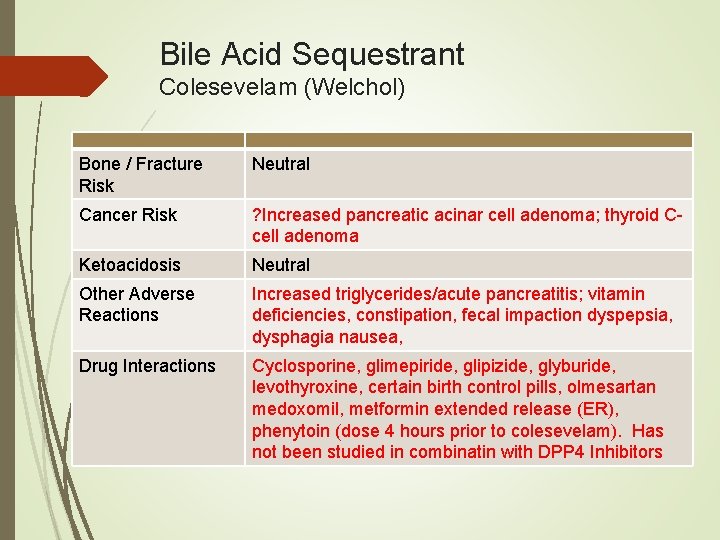
Bile Acid Sequestrant Colesevelam (Welchol) Bone / Fracture Risk Neutral Cancer Risk ? Increased pancreatic acinar cell adenoma; thyroid Ccell adenoma Ketoacidosis Neutral Other Adverse Reactions Increased triglycerides/acute pancreatitis; vitamin deficiencies, constipation, fecal impaction dyspepsia, dysphagia nausea, Drug Interactions Cyclosporine, glimepiride, glipizide, glyburide, levothyroxine, certain birth control pills, olmesartan medoxomil, metformin extended release (ER), phenytoin (dose 4 hours prior to colesevelam). Has not been studied in combinatin with DPP 4 Inhibitors
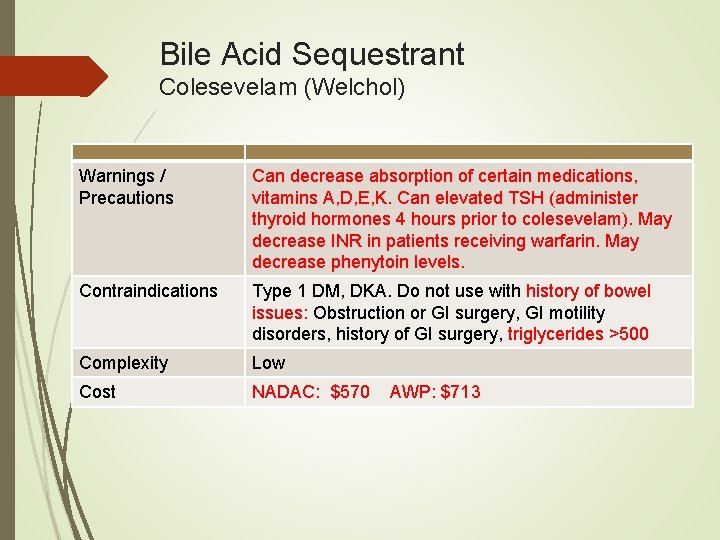
Bile Acid Sequestrant Colesevelam (Welchol) Warnings / Precautions Can decrease absorption of certain medications, vitamins A, D, E, K. Can elevated TSH (administer thyroid hormones 4 hours prior to colesevelam). May decrease INR in patients receiving warfarin. May decrease phenytoin levels. Contraindications Type 1 DM, DKA. Do not use with history of bowel issues: Obstruction or GI surgery, GI motility disorders, history of GI surgery, triglycerides >500 Complexity Low Cost NADAC: $570 AWP: $713
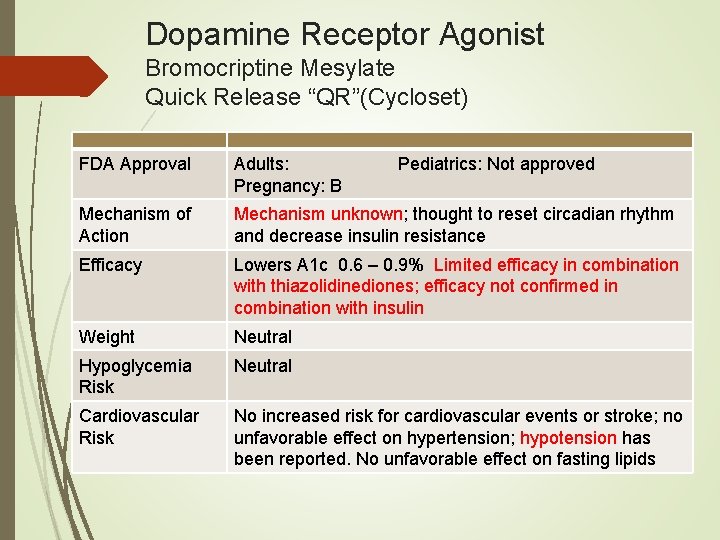
Dopamine Receptor Agonist Bromocriptine Mesylate Quick Release “QR”(Cycloset) FDA Approval Adults: Pediatrics: Not approved Pregnancy: B Mechanism of Action Mechanism unknown; thought to reset circadian rhythm and decrease insulin resistance Efficacy Lowers A 1 c 0. 6 – 0. 9% Limited efficacy in combination with thiazolidinediones; efficacy not confirmed in combination with insulin Weight Neutral Hypoglycemia Risk Neutral Cardiovascular Risk No increased risk for cardiovascular events or stroke; no unfavorable effect on hypertension; hypotension has been reported. No unfavorable effect on fasting lipids
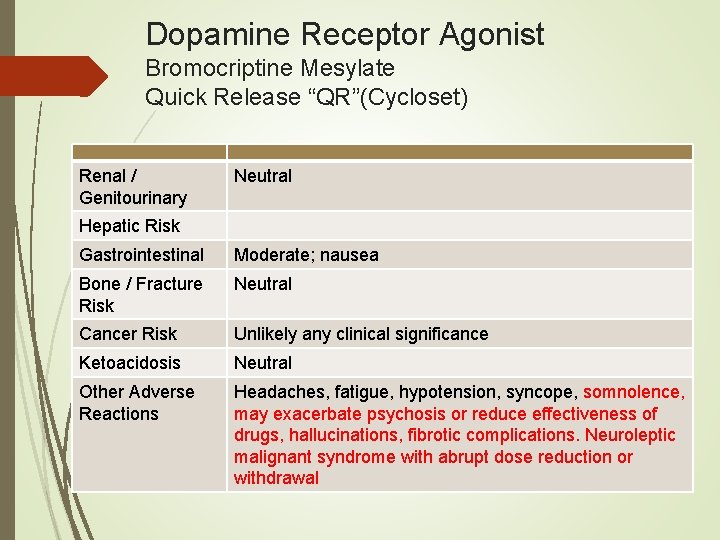
Dopamine Receptor Agonist Bromocriptine Mesylate Quick Release “QR”(Cycloset) Renal / Genitourinary Neutral Hepatic Risk Gastrointestinal Moderate; nausea Bone / Fracture Risk Neutral Cancer Risk Unlikely any clinical significance Ketoacidosis Neutral Other Adverse Reactions Headaches, fatigue, hypotension, syncope, somnolence, may exacerbate psychosis or reduce effectiveness of drugs, hallucinations, fibrotic complications. Neuroleptic malignant syndrome with abrupt dose reduction or withdrawal
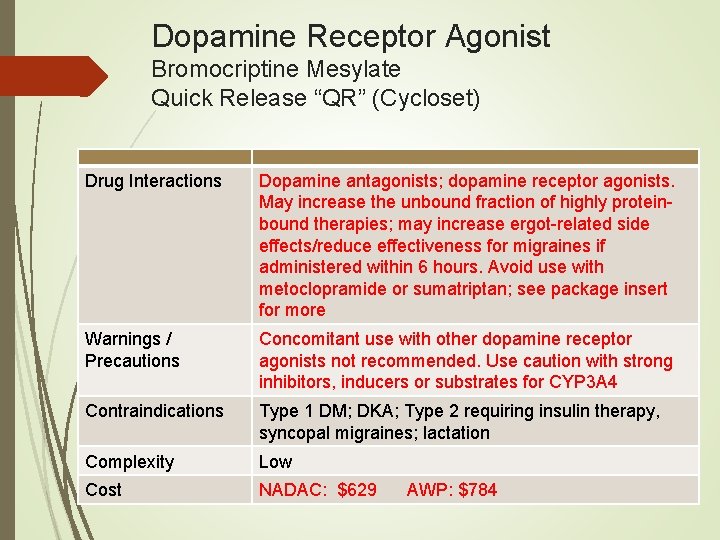
Dopamine Receptor Agonist Bromocriptine Mesylate Quick Release “QR” (Cycloset) Drug Interactions Dopamine antagonists; dopamine receptor agonists. May increase the unbound fraction of highly proteinbound therapies; may increase ergot-related side effects/reduce effectiveness for migraines if administered within 6 hours. Avoid use with metoclopramide or sumatriptan; see package insert for more Warnings / Precautions Concomitant use with other dopamine receptor agonists not recommended. Use caution with strong inhibitors, inducers or substrates for CYP 3 A 4 Contraindications Type 1 DM; DKA; Type 2 requiring insulin therapy, syncopal migraines; lactation Complexity Low Cost NADAC: $629 AWP: $784
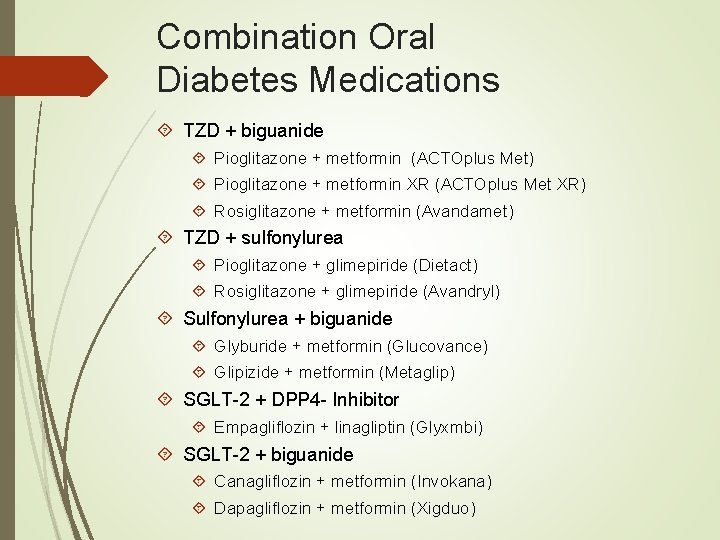
Combination Oral Diabetes Medications TZD + biguanide Pioglitazone + metformin (ACTOplus Met) Pioglitazone + metformin XR (ACTOplus Met XR) Rosiglitazone + metformin (Avandamet) TZD + sulfonylurea Pioglitazone + glimepiride (Dietact) Rosiglitazone + glimepiride (Avandryl) Sulfonylurea + biguanide Glyburide + metformin (Glucovance) Glipizide + metformin (Metaglip) SGLT-2 + DPP 4 - Inhibitor Empagliflozin + linagliptin (Glyxmbi) SGLT-2 + biguanide Canagliflozin + metformin (Invokana) Dapagliflozin + metformin (Xigduo)
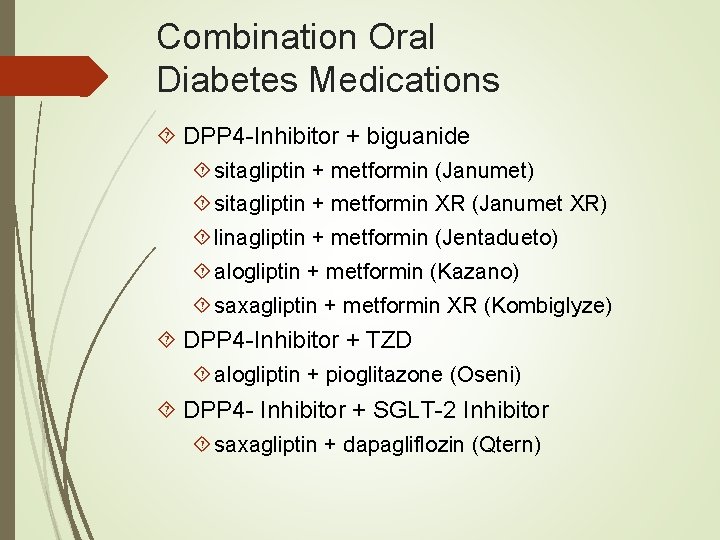
Combination Oral Diabetes Medications DPP 4 -Inhibitor + biguanide sitagliptin + metformin (Janumet) sitagliptin + metformin XR (Janumet XR) linagliptin + metformin (Jentadueto) alogliptin + metformin (Kazano) saxagliptin + metformin XR (Kombiglyze) DPP 4 -Inhibitor + TZD alogliptin + pioglitazone (Oseni) DPP 4 - Inhibitor + SGLT-2 Inhibitor saxagliptin + dapagliflozin (Qtern)
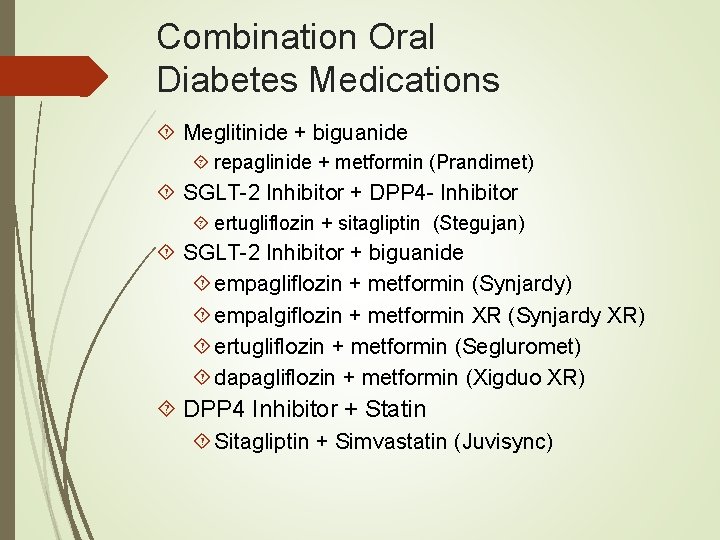
Combination Oral Diabetes Medications Meglitinide + biguanide repaglinide + metformin (Prandimet) SGLT-2 Inhibitor + DPP 4 - Inhibitor ertugliflozin + sitagliptin (Stegujan) SGLT-2 Inhibitor + biguanide empagliflozin + metformin (Synjardy) empalgiflozin + metformin XR (Synjardy XR) ertugliflozin + metformin (Segluromet) dapagliflozin + metformin (Xigduo XR) DPP 4 Inhibitor + Statin Sitagliptin + Simvastatin (Juvisync)
Non-Insulin Injectable Medications and Insulin
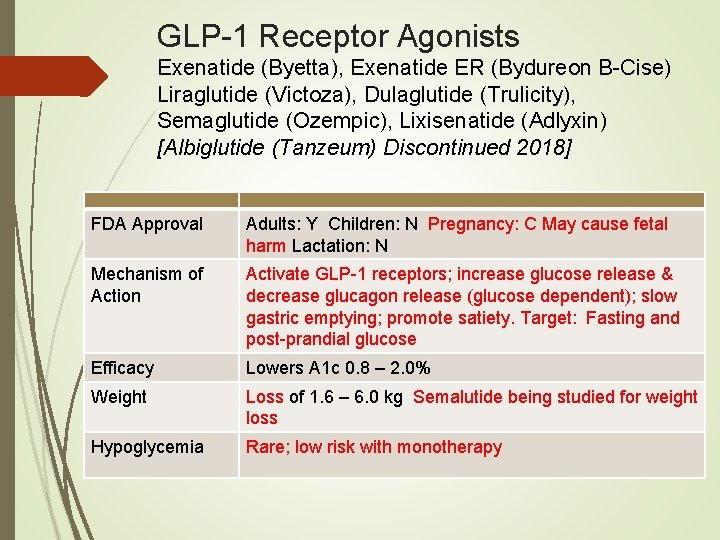
GLP-1 Receptor Agonists Exenatide (Byetta), Exenatide ER (Bydureon B-Cise) Liraglutide (Victoza), Dulaglutide (Trulicity), Semaglutide (Ozempic), Lixisenatide (Adlyxin) [Albiglutide (Tanzeum) Discontinued 2018] FDA Approval Adults: Y Children: N Pregnancy: C May cause fetal harm Lactation: N Mechanism of Action Activate GLP-1 receptors; increase glucose release & decrease glucagon release (glucose dependent); slow gastric emptying; promote satiety. Target: Fasting and post-prandial glucose Efficacy Lowers A 1 c 0. 8 – 2. 0% Weight Loss of 1. 6 – 6. 0 kg Semalutide being studied for weight loss Hypoglycemia Rare; low risk with monotherapy
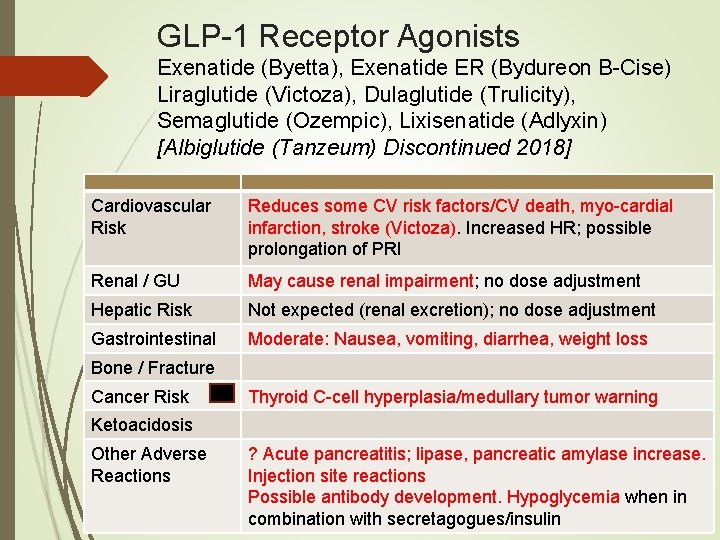
GLP-1 Receptor Agonists Exenatide (Byetta), Exenatide ER (Bydureon B-Cise) Liraglutide (Victoza), Dulaglutide (Trulicity), Semaglutide (Ozempic), Lixisenatide (Adlyxin) [Albiglutide (Tanzeum) Discontinued 2018] Cardiovascular Risk Reduces some CV risk factors/CV death, myo-cardial infarction, stroke (Victoza). Increased HR; possible prolongation of PRI Renal / GU May cause renal impairment; no dose adjustment Hepatic Risk Not expected (renal excretion); no dose adjustment Gastrointestinal Moderate: Nausea, vomiting, diarrhea, weight loss Bone / Fracture Cancer Risk Thyroid C-cell hyperplasia/medullary tumor warning Ketoacidosis Other Adverse Reactions ? Acute pancreatitis; lipase, pancreatic amylase increase. Injection site reactions Possible antibody development. Hypoglycemia when in combination with secretagogues/insulin
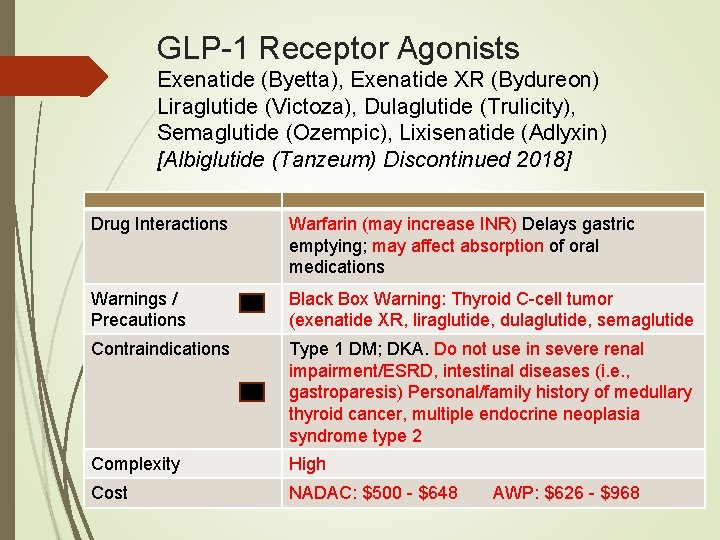
GLP-1 Receptor Agonists Exenatide (Byetta), Exenatide XR (Bydureon) Liraglutide (Victoza), Dulaglutide (Trulicity), Semaglutide (Ozempic), Lixisenatide (Adlyxin) [Albiglutide (Tanzeum) Discontinued 2018] Drug Interactions Warfarin (may increase INR) Delays gastric emptying; may affect absorption of oral medications Warnings / Precautions Black Box Warning: Thyroid C-cell tumor (exenatide XR, liraglutide, dulaglutide, semaglutide Contraindications Type 1 DM; DKA. Do not use in severe renal impairment/ESRD, intestinal diseases (i. e. , gastroparesis) Personal/family history of medullary thyroid cancer, multiple endocrine neoplasia syndrome type 2 Complexity High Cost NADAC: $500 - $648 AWP: $626 - $968
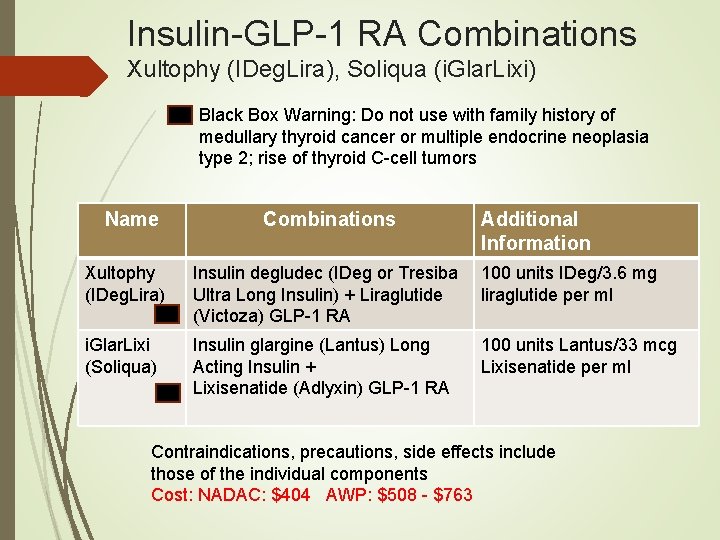
Insulin-GLP-1 RA Combinations Xultophy (IDeg. Lira), Soliqua (i. Glar. Lixi) Black Box Warning: Do not use with family history of medullary thyroid cancer or multiple endocrine neoplasia type 2; rise of thyroid C-cell tumors Name Combinations Additional Information Xultophy (IDeg. Lira) Insulin degludec (IDeg or Tresiba Ultra Long Insulin) + Liraglutide (Victoza) GLP-1 RA 100 units IDeg/3. 6 mg liraglutide per ml i. Glar. Lixi (Soliqua) Insulin glargine (Lantus) Long Acting Insulin + Lixisenatide (Adlyxin) GLP-1 RA 100 units Lantus/33 mcg Lixisenatide per ml Contraindications, precautions, side effects include those of the individual components Cost: NADAC: $404 AWP: $508 - $763
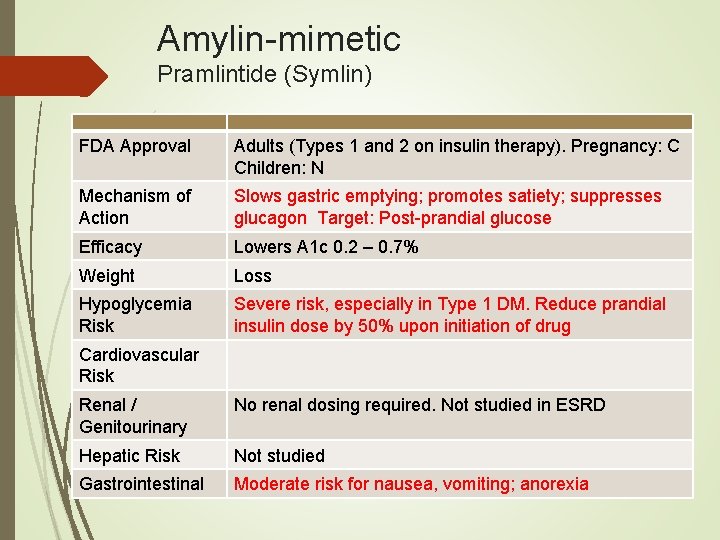
Amylin-mimetic Pramlintide (Symlin) FDA Approval Adults (Types 1 and 2 on insulin therapy). Pregnancy: C Children: N Mechanism of Action Slows gastric emptying; promotes satiety; suppresses glucagon Target: Post-prandial glucose Efficacy Lowers A 1 c 0. 2 – 0. 7% Weight Loss Hypoglycemia Risk Severe risk, especially in Type 1 DM. Reduce prandial insulin dose by 50% upon initiation of drug Cardiovascular Risk Renal / Genitourinary No renal dosing required. Not studied in ESRD Hepatic Risk Not studied Gastrointestinal Moderate risk for nausea, vomiting; anorexia
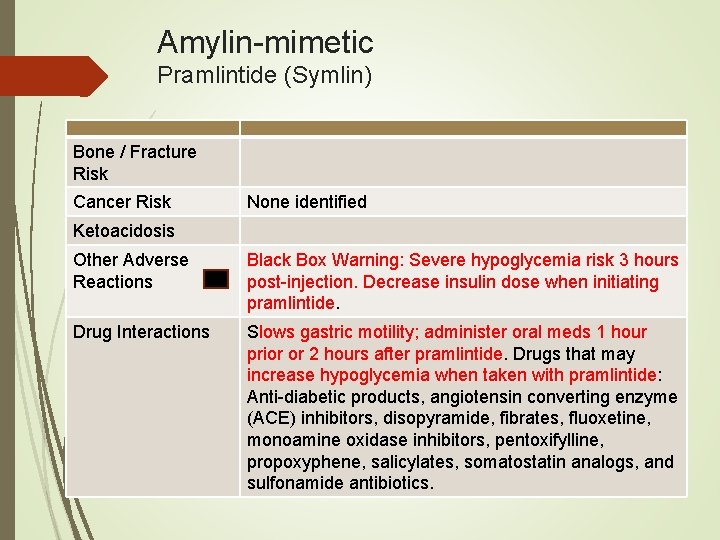
Amylin-mimetic Pramlintide (Symlin) Bone / Fracture Risk Cancer Risk None identified Ketoacidosis Other Adverse Reactions Black Box Warning: Severe hypoglycemia risk 3 hours post-injection. Decrease insulin dose when initiating pramlintide. Drug Interactions Slows gastric motility; administer oral meds 1 hour prior or 2 hours after pramlintide. Drugs that may increase hypoglycemia when taken with pramlintide: Anti-diabetic products, angiotensin converting enzyme (ACE) inhibitors, disopyramide, fibrates, fluoxetine, monoamine oxidase inhibitors, pentoxifylline, propoxyphene, salicylates, somatostatin analogs, and sulfonamide antibiotics.
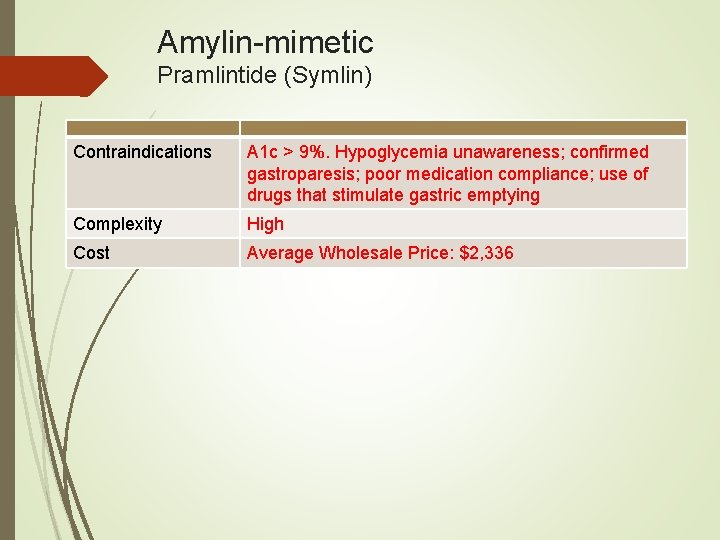
Amylin-mimetic Pramlintide (Symlin) Contraindications A 1 c > 9%. Hypoglycemia unawareness; confirmed gastroparesis; poor medication compliance; use of drugs that stimulate gastric emptying Complexity High Cost Average Wholesale Price: $2, 336
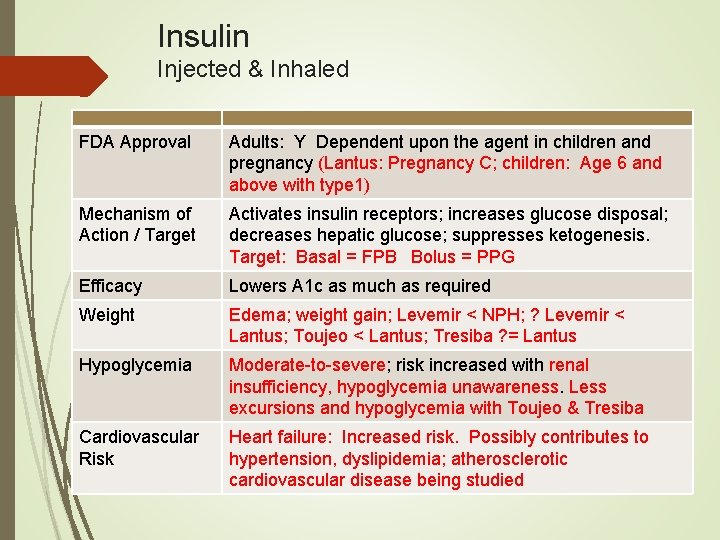
Insulin Injected & Inhaled FDA Approval Adults: Y Dependent upon the agent in children and pregnancy (Lantus: Pregnancy C; children: Age 6 and above with type 1) Mechanism of Action / Target Activates insulin receptors; increases glucose disposal; decreases hepatic glucose; suppresses ketogenesis. Target: Basal = FPB Bolus = PPG Efficacy Lowers A 1 c as much as required Weight Edema; weight gain; Levemir < NPH; ? Levemir < Lantus; Toujeo < Lantus; Tresiba ? = Lantus Hypoglycemia Moderate-to-severe; risk increased with renal insufficiency, hypoglycemia unawareness. Less excursions and hypoglycemia with Toujeo & Tresiba Cardiovascular Risk Heart failure: Increased risk. Possibly contributes to hypertension, dyslipidemia; atherosclerotic cardiovascular disease being studied
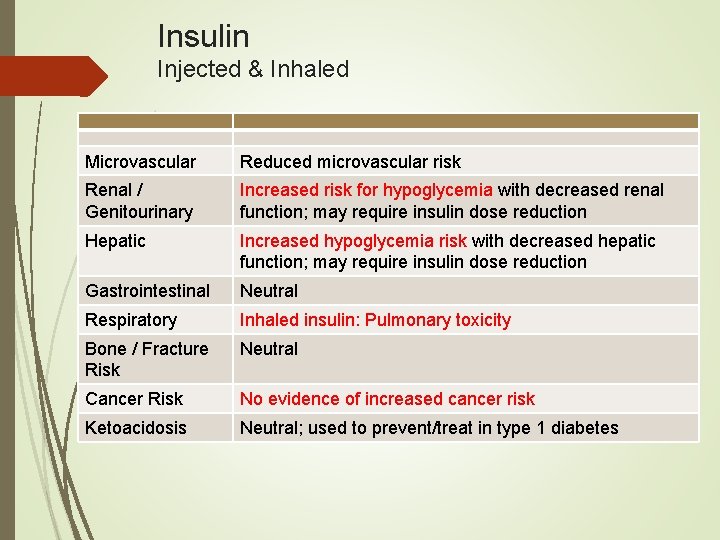
Insulin Injected & Inhaled Microvascular Reduced microvascular risk Renal / Genitourinary Increased risk for hypoglycemia with decreased renal function; may require insulin dose reduction Hepatic Increased hypoglycemia risk with decreased hepatic function; may require insulin dose reduction Gastrointestinal Neutral Respiratory Inhaled insulin: Pulmonary toxicity Bone / Fracture Risk Neutral Cancer Risk No evidence of increased cancer risk Ketoacidosis Neutral; used to prevent/treat in type 1 diabetes
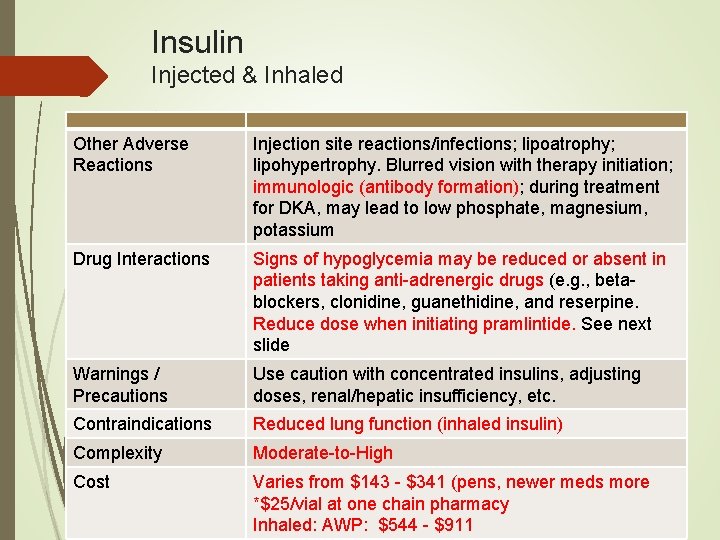
Insulin Injected & Inhaled Other Adverse Reactions Injection site reactions/infections; lipoatrophy; lipohypertrophy. Blurred vision with therapy initiation; immunologic (antibody formation); during treatment for DKA, may lead to low phosphate, magnesium, potassium Drug Interactions Signs of hypoglycemia may be reduced or absent in patients taking anti-adrenergic drugs (e. g. , betablockers, clonidine, guanethidine, and reserpine. Reduce dose when initiating pramlintide. See next slide Warnings / Precautions Use caution with concentrated insulins, adjusting doses, renal/hepatic insufficiency, etc. Contraindications Reduced lung function (inhaled insulin) Complexity Moderate-to-High Cost Varies from $143 - $341 (pens, newer meds more *$25/vial at one chain pharmacy Inhaled: AWP: $544 - $911
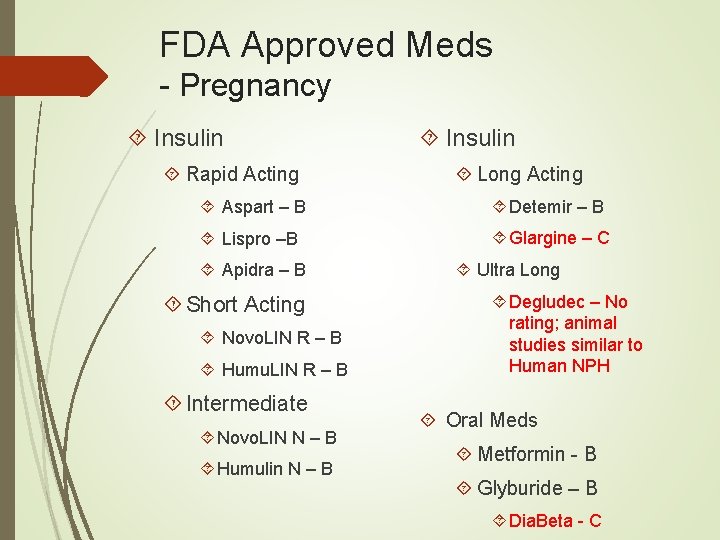
FDA Approved Meds - Pregnancy Insulin Rapid Acting Insulin Long Acting Aspart – B Detemir – B Lispro –B Glargine – C Apidra – B Short Acting Novo. LIN R – B Humu. LIN R – B Intermediate Novo. LIN N – B Humulin N – B Ultra Long Degludec – No rating; animal studies similar to Human NPH Oral Meds Metformin - B Glyburide – B Dia. Beta - C
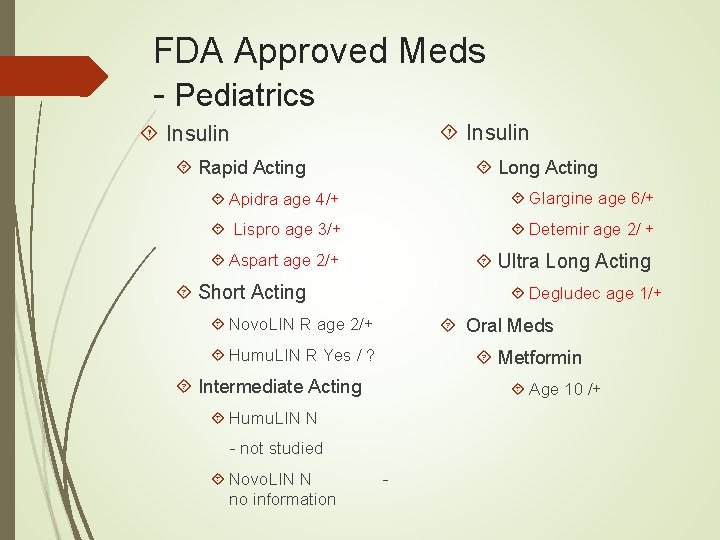
FDA Approved Meds - Pediatrics Insulin Rapid Acting Insulin Long Acting Apidra age 4/+ Glargine age 6/+ Lispro age 3/+ Detemir age 2/ + Aspart age 2/+ Short Acting Novo. LIN R age 2/+ Humu. LIN R Yes / ? Intermediate Acting Humu. LIN N - not studied Novo. LIN N - no information Ultra Long Acting Degludec age 1/+ Oral Meds Metformin Age 10 /+
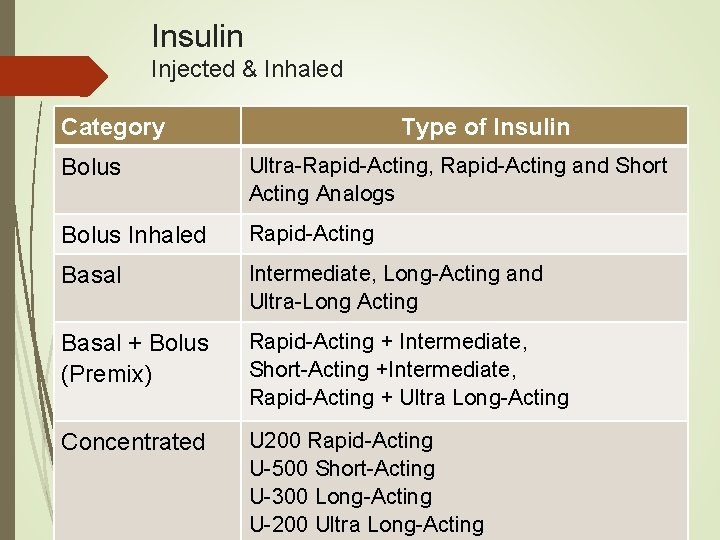
Insulin Injected & Inhaled Category Type of Insulin Bolus Ultra-Rapid-Acting, Rapid-Acting and Short Acting Analogs Bolus Inhaled Rapid-Acting Basal Intermediate, Long-Acting and Ultra-Long Acting Basal + Bolus (Premix) Rapid-Acting + Intermediate, Short-Acting +Intermediate, Rapid-Acting + Ultra Long-Acting Concentrated U 200 Rapid-Acting U-500 Short-Acting U-300 Long-Acting U-200 Ultra Long-Acting
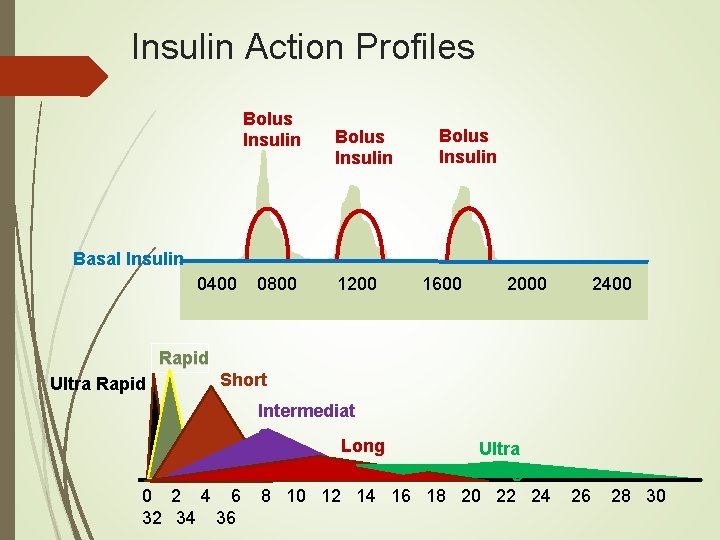
Insulin Action Profiles Bolus Insulin Basal Insulin 0400 0800 1200 1600 2000 2400 Rapid Ultra Rapid Short Intermediat e Long Ultra Long 0 2 4 6 8 10 12 14 16 18 20 22 24 26 28 30 32 34 36
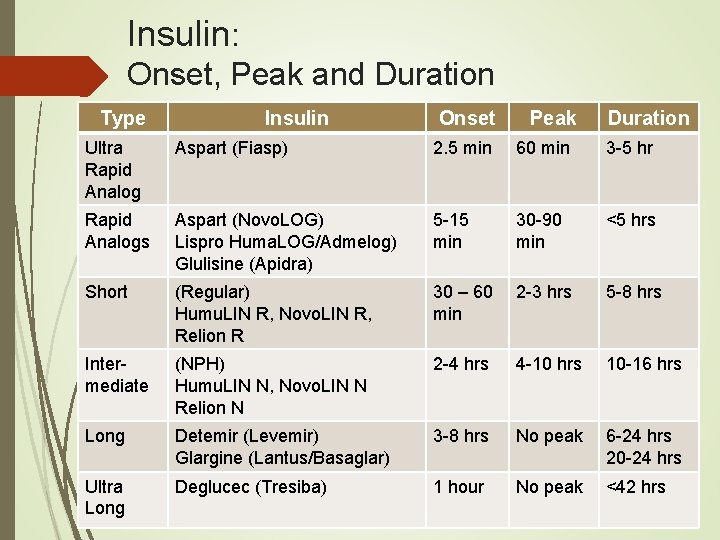
Insulin: Onset, Peak and Duration Type Insulin Onset Peak Duration Ultra Rapid Analog Aspart (Fiasp) 2. 5 min 60 min 3 -5 hr Rapid Analogs Aspart (Novo. LOG) Lispro Huma. LOG/Admelog) Glulisine (Apidra) 5 -15 min 30 -90 min <5 hrs Short (Regular) Humu. LIN R, Novo. LIN R, Relion R 30 – 60 2 -3 hrs min 5 -8 hrs Intermediate (NPH) Humu. LIN N, Novo. LIN N Relion N 2 -4 hrs 4 -10 hrs 10 -16 hrs Long Detemir (Levemir) Glargine (Lantus/Basaglar) 3 -8 hrs No peak 6 -24 hrs 20 -24 hrs Ultra Long Deglucec (Tresiba) 1 hour No peak <42 hrs

Insulin: Onset, Peak and Duration Type Insulin Onset Peak Duration Premix: (NPH + Regular) Intermediate + Humu. LIN 70/30 short Novo. LIN 70/30 Relion 70/30 30 -60 min Dual Peaks 10 -16 hrs Premix: (NPH + Rapid Ana. LOG) Intermediate + Huma. LOG 75/25 rapid Novo. LOG 70/30 5 -15 min Dual Peaks 10 -16 hrs Premix; Ultra Long + rapid 5 -15 min Dual Peaks 24 hrs (Degludec + Aspart) Ryzodeg Mix 70/30
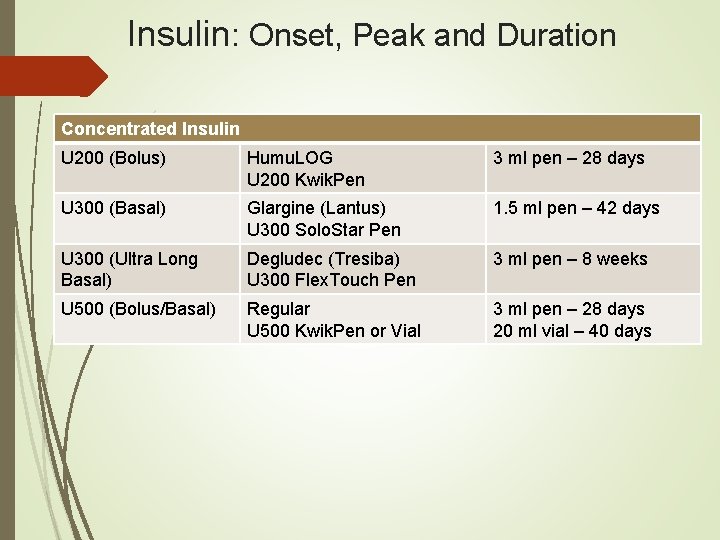
Insulin: Onset, Peak and Duration Concentrated Insulin U 200 (Bolus) Humu. LOG U 200 Kwik. Pen 3 ml pen – 28 days U 300 (Basal) Glargine (Lantus) U 300 Solo. Star Pen 1. 5 ml pen – 42 days U 300 (Ultra Long Basal) Degludec (Tresiba) U 300 Flex. Touch Pen 3 ml pen – 8 weeks U 500 (Bolus/Basal) Regular U 500 Kwik. Pen or Vial 3 ml pen – 28 days 20 ml vial – 40 days

Inhaled Insulin: Onset, Peak and Duration Type Rapid Acting Insulin Regular human insulin (Afrezza) Onset 15 min Peak 1 hour Duration 3 hours Doses: 4, 8, 12 unit cartridges; take before meals • Assess lung function at baseline, 6 months, then yearly • May need dose reduction if combined to DPP 4 or GLP-1 therapies • May require dose reduction in renal, hepatic impairment • Pregnancy: C Children: Not studied Black Box Warning: Do not use in patients With asthma, COPD or chronic lung disease (see product insert for detailed information)
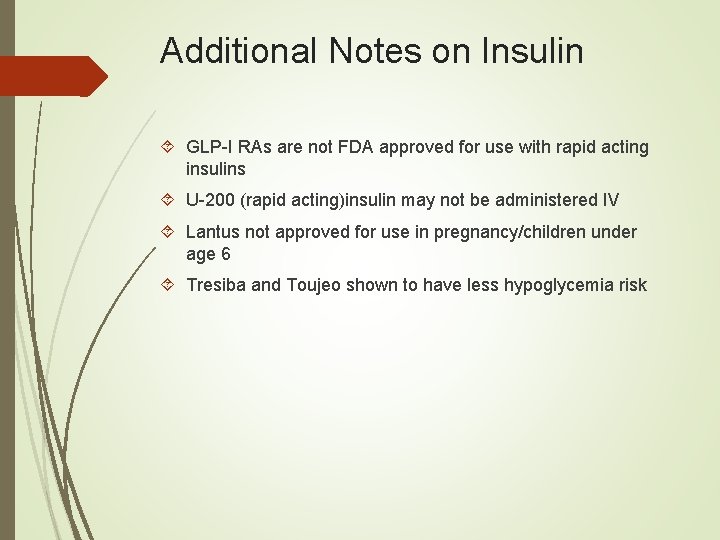
Additional Notes on Insulin GLP-I RAs are not FDA approved for use with rapid acting insulins U-200 (rapid acting)insulin may not be administered IV Lantus not approved for use in pregnancy/children under age 6 Tresiba and Toujeo shown to have less hypoglycemia risk
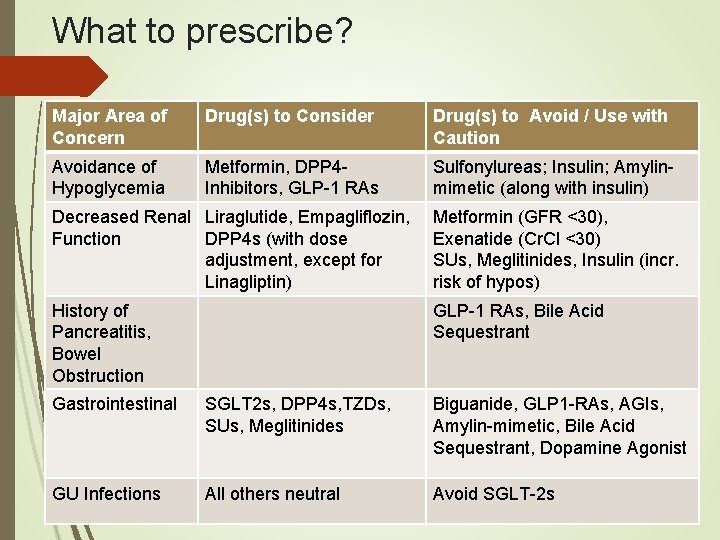
What to prescribe? Major Area of Concern Drug(s) to Consider Drug(s) to Avoid / Use with Caution Avoidance of Hypoglycemia Metformin, DPP 4 Inhibitors, GLP-1 RAs Sulfonylureas; Insulin; Amylinmimetic (along with insulin) Decreased Renal Liraglutide, Empagliflozin, Metformin (GFR <30), Function DPP 4 s (with dose Exenatide (Cr. Cl <30) adjustment, except for SUs, Meglitinides, Insulin (incr. Linagliptin) risk of hypos) History of Pancreatitis, Bowel Obstruction GLP-1 RAs, Bile Acid Sequestrant Gastrointestinal SGLT 2 s, DPP 4 s, TZDs, SUs, Meglitinides Biguanide, GLP 1 -RAs, AGIs, Amylin-mimetic, Bile Acid Sequestrant, Dopamine Agonist GU Infections All others neutral Avoid SGLT-2 s
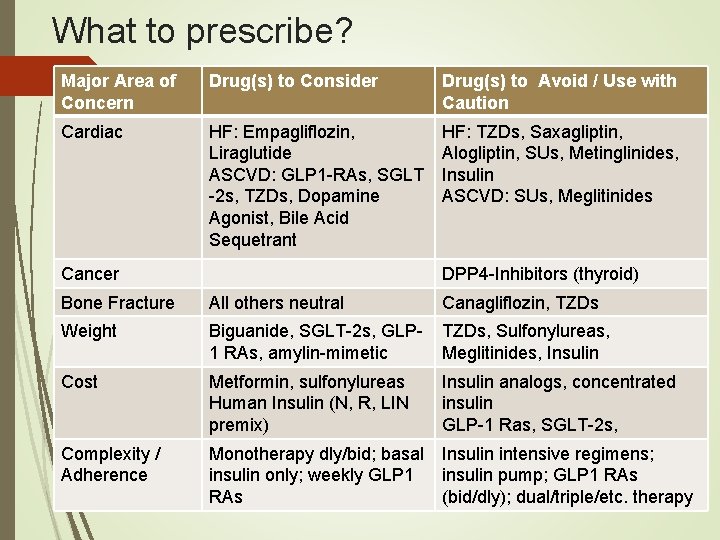
What to prescribe? Major Area of Concern Drug(s) to Consider Drug(s) to Avoid / Use with Caution Cardiac HF: Empagliflozin, Liraglutide ASCVD: GLP 1 -RAs, SGLT -2 s, TZDs, Dopamine Agonist, Bile Acid Sequetrant HF: TZDs, Saxagliptin, Alogliptin, SUs, Metinglinides, Insulin ASCVD: SUs, Meglitinides Cancer DPP 4 -Inhibitors (thyroid) Bone Fracture All others neutral Canagliflozin, TZDs Weight Biguanide, SGLT-2 s, GLP 1 RAs, amylin-mimetic TZDs, Sulfonylureas, Meglitinides, Insulin Cost Metformin, sulfonylureas Human Insulin (N, R, LIN premix) Insulin analogs, concentrated insulin GLP-1 Ras, SGLT-2 s, Complexity / Adherence Monotherapy dly/bid; basal Insulin intensive regimens; insulin only; weekly GLP 1 insulin pump; GLP 1 RAs (bid/dly); dual/triple/etc. therapy
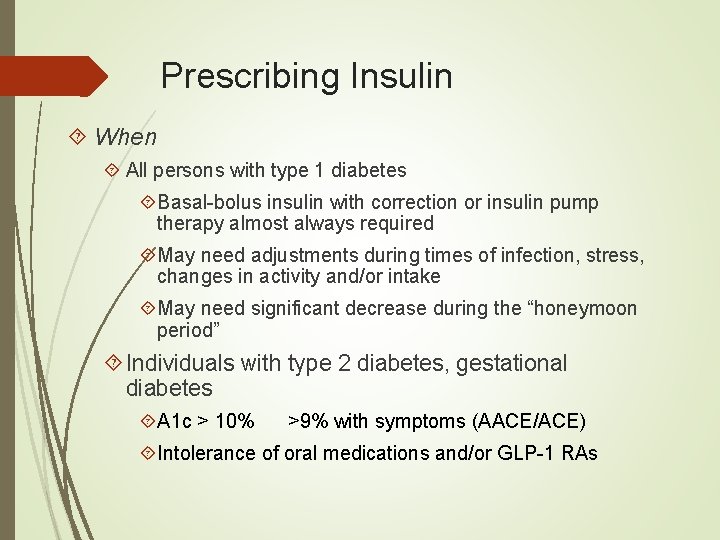
Prescribing Insulin When All persons with type 1 diabetes Basal-bolus insulin with correction or insulin pump therapy almost always required May need adjustments during times of infection, stress, changes in activity and/or intake May need significant decrease during the “honeymoon period” Individuals with type 2 diabetes, gestational diabetes A 1 c > 10% >9% with symptoms (AACE/ACE) Intolerance of oral medications and/or GLP-1 RAs
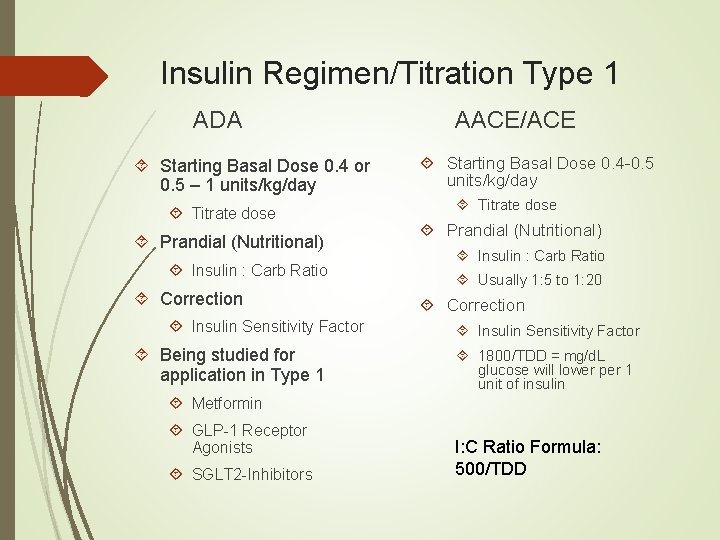
Insulin Regimen/Titration Type 1 ADA Starting Basal Dose 0. 4 or 0. 5 – 1 units/kg/day Titrate dose Prandial (Nutritional) Insulin : Carb Ratio Correction Insulin Sensitivity Factor Being studied for application in Type 1 AACE/ACE Starting Basal Dose 0. 4 -0. 5 units/kg/day Titrate dose Prandial (Nutritional) Insulin : Carb Ratio Usually 1: 5 to 1: 20 Correction Insulin Sensitivity Factor 1800/TDD = mg/d. L glucose will lower per 1 unit of insulin Metformin GLP-1 Receptor Agonists SGLT 2 -Inhibitors I: C Ratio Formula: 500/TDD
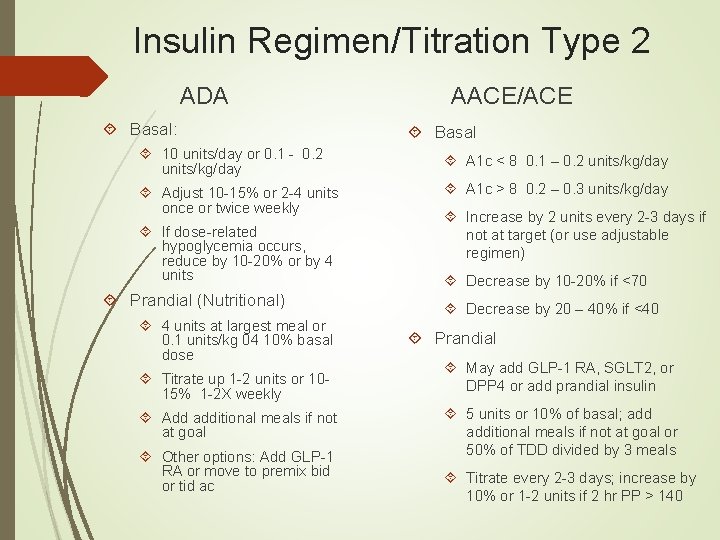
Insulin Regimen/Titration Type 2 ADA Basal: AACE/ACE Basal 10 units/day or 0. 1 - 0. 2 units/kg/day A 1 c < 8 0. 1 – 0. 2 units/kg/day Adjust 10 -15% or 2 -4 units once or twice weekly A 1 c > 8 0. 2 – 0. 3 units/kg/day If dose-related hypoglycemia occurs, reduce by 10 -20% or by 4 units Prandial (Nutritional) 4 units at largest meal or 0. 1 units/kg 04 10% basal dose Titrate up 1 -2 units or 1015% 1 -2 X weekly Add additional meals if not at goal Other options: Add GLP-1 RA or move to premix bid or tid ac Increase by 2 units every 2 -3 days if not at target (or use adjustable regimen) Decrease by 10 -20% if <70 Decrease by 20 – 40% if <40 Prandial May add GLP-1 RA, SGLT 2, or DPP 4 or add prandial insulin 5 units or 10% of basal; additional meals if not at goal or 50% of TDD divided by 3 meals Titrate every 2 -3 days; increase by 10% or 1 -2 units if 2 hr PP > 140
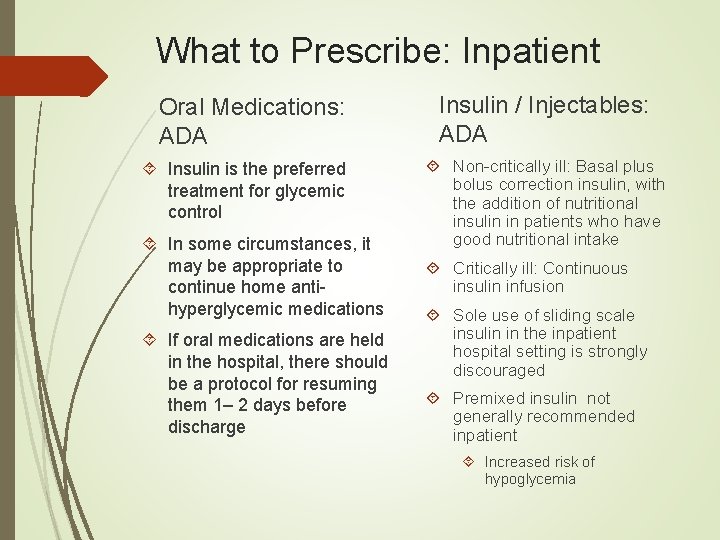
What to Prescribe: Inpatient Oral Medications: ADA Insulin is the preferred treatment for glycemic control In some circumstances, it may be appropriate to continue home antihyperglycemic medications If oral medications are held in the hospital, there should be a protocol for resuming them 1– 2 days before discharge Insulin / Injectables: ADA Non-critically ill: Basal plus bolus correction insulin, with the addition of nutritional insulin in patients who have good nutritional intake Critically ill: Continuous insulin infusion Sole use of sliding scale insulin in the inpatient hospital setting is strongly discouraged Premixed insulin not generally recommended inpatient Increased risk of hypoglycemia
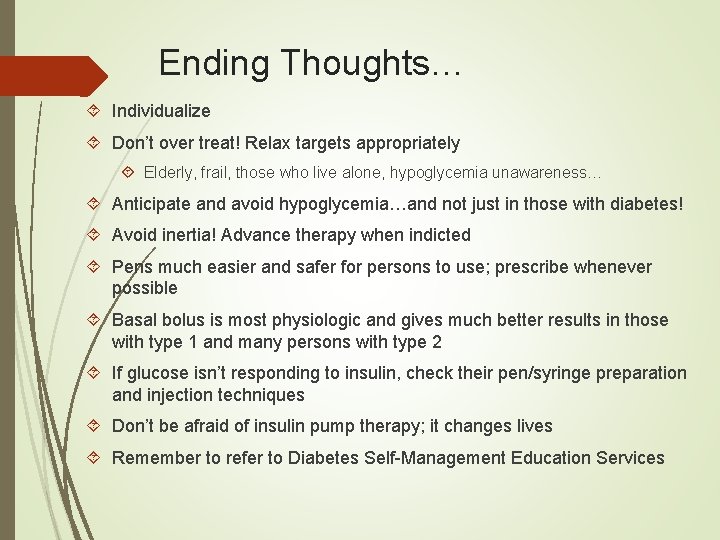
Ending Thoughts… Individualize Don’t over treat! Relax targets appropriately Elderly, frail, those who live alone, hypoglycemia unawareness… Anticipate and avoid hypoglycemia…and not just in those with diabetes! Avoid inertia! Advance therapy when indicted Pens much easier and safer for persons to use; prescribe whenever possible Basal bolus is most physiologic and gives much better results in those with type 1 and many persons with type 2 If glucose isn’t responding to insulin, check their pen/syringe preparation and injection techniques Don’t be afraid of insulin pump therapy; it changes lives Remember to refer to Diabetes Self-Management Education Services
Thank You! Rose M. Flinchum Office: 219. 326. 1234 Ext. 7162 Cell: 219. 973. 9401 r. flinchum@lph. org
References American Association of Clinical Endocrinologists. (2018). Glycemic management in type 2 diabetes. Retrieved from http: //outpatient. aace. com/type-2 -diabetes/treatment. American Association of Clinical Endocrinologist. (2018). AACE Diabetes Resource Center Treatment of Type 1 Diabetes. Retrieved from http: //outpatient. aace. com/type 1 -diabetes/treatment American Diabetes Association (2017). Statistics about diabetes. Retrieved from: http: //www. diabetes. org/diabetes-basics/statistics/ American Diabetes Association (2018). Standards of Medical Care in Diabetes - 2018. Older adults. Diabetes Care. 41 (Supplement 1) S 119 – S 125. Retrieved from https: //doi. org/10. 2337/dc 18 -S 011 American Diabetes Association (2018). Standards of Medical Care in Diabetes - 2018. Children and adolescents. Diabetes Care. 41(Supplement 1): S 126 -S 136. Retrieved from https: //doi. org/10. 2337/dc 18 -S 012 American Diabetes Association (2018). Standards of Medical Care in Diabetes – 2018. Glycemic targets. 41(Supplement 1): S 55 -S 64. https: //doi. org/10. 2337/dc 18 -S 006
References American Diabetes Association (2018). Standards of Medical Care in Diabetes - 2018. Management of in diabetes pregnancy. Diabetes Care(Supplement 1): S 137 -S 143. Retrieved from https: //doi. org/10. 2337/dc 18 -S 013 American Diabetes Association (2018). Standards of Medical Care in Diabetes – 2018. Pharmacologic approaches to glycemic treatment. Diabetes Care (Supplement 1): S 73 -S 85. Retrieved from https: //doi. org/10. 2337/dc 18 - S 008 Burke, S. (2017). Updates to managing diabetes in the long-term care setting. Medscape Education Diabetes and Endocrinology. Accessed at https: //www. medscape. org/viewarticle/876732 Bzowyckyj, A. , Cornell, S. (2016). Eleven things every clinician should know about the “egregious eleven. ” i. Forum. Rx. Retrieved from http: //iforumrx. org/node/348 Centers for Disease Control and Prevention (2017). National diabetes statistics report, 2017. Retrieved from: https: //www. cdc. gov/diabetes/pdfs/data/statistics/national-diabetes-statistics-report. pdf
References Garber, A. , Abrahamson, A. , Barzilay, J. , Blonde, L. , Bloomgarden, Z. , Bush, M. … and Umpierrez, G. (2018). Consensus statement by the American association of clinical endocrinologists and American college of endocrinology on the comprehensive type 2 diabetes management algorithm – 2018 executive summary. Endocrine Practice. Retrieved from https: //www. aace. com/sites/all/files/diabetes-algorithm-executive-summary. pdf. Doi: 10. 4158/CS-2017 -0153 Indiana University Physicians. (20170. Adult diabetes practice guidelines pharmaceutical management 8 th edition. Mc. Culloch, D. , & Munshi, M. (2017). Treatment of type 2 diabetes mellitus in the older patient. Up-to-Date. Retrieved from http: //www. uptodate. com/contents/treatment-of-type-2 -diabetes-mellitus-in-theolder-patient. algorithms,
References Munshi, M. , Florez, H. Huang, E. , Kalyani, R. Mupanomunda, M. , Pandya, N. , …Haas, L. (2016). Diabetes in long term care and skilled nursing facilities: A position statement of the American Diabetes Association. Diabetes Care. 39 (2). 309 -318. https: //doi. org/10. 2337/dc 15 -2512 Qaseem A, Wilt TJ, Kansagara D, Horwitch C, Barry MJ, Forciea MA, et al. Hemoglobin A 1 c targets for glycemic control with pharmacologic therapy for nonpregnant adults with type 2 diabetes mellitus: A guidance statement update from the american college of physicians. Ann Intern Med. [Epub ahead of print 6 March 2018] doi: 10. 7326/M 17 -0939 Swanson, C. , Potter, D. , Kongable, G. , and Cook, C. Update on inpatient glycemic control in hospitals in the United States. (2017). Endocrine Practice. 17(6), 853 -861.
References United States Department of Health and Human Services Administration, U. S. Food & Drug Administration. (2018) Drugs@fda: fda approved drug products. Accessed March 24, 2018 from https: //www. accessdata. fda. gov/scripts/cder/daf/
- Slides: 77