Todays Goals 1 To understand Gestalt concepts and




- Slides: 89
Today’s Goals 1. To understand Gestalt concepts and principles, such as figure-ground, continuity, similarity, proximity, closure, 2. To understand binocular and monocular depth cues and apply monocular depth cues. HOMEWORK: Prepare for unit exam/midterm.
Today’s Goals 1. To apply Gestalt concepts and principles, such as figure-ground, continuity, similarity, proximity, closure. 2. To explain binocular and monocular depth cues and apply monocular depth cues. HOMEWORK: 1. Prepare for quiz on perception. 2. Read pages 291 -303. Complete assignment posted on my website
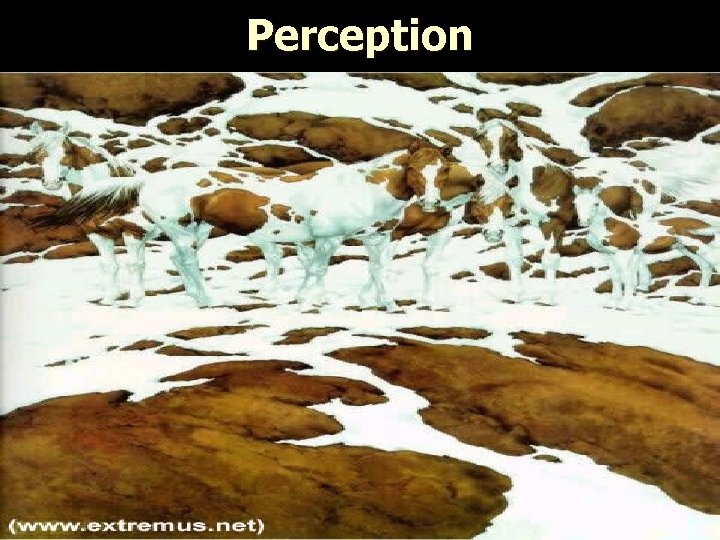
Perception
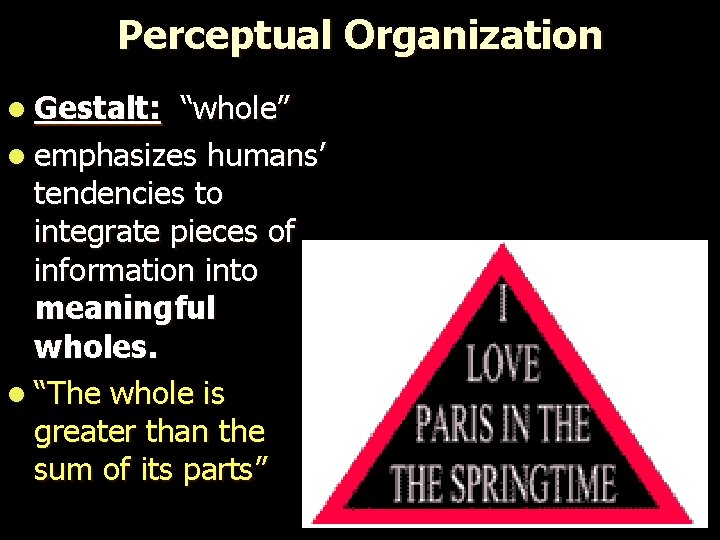
Perceptual Organization l Gestalt: “whole” l emphasizes humans’ tendencies to integrate pieces of information into meaningful wholes. l “The whole is greater than the sum of its parts”
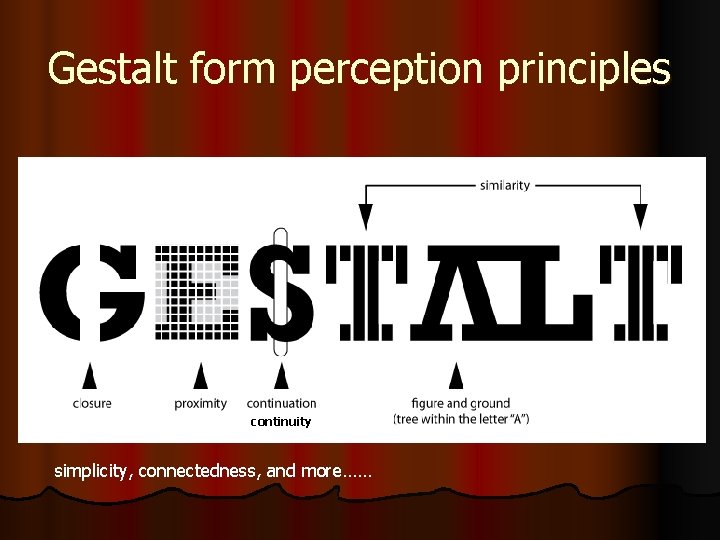
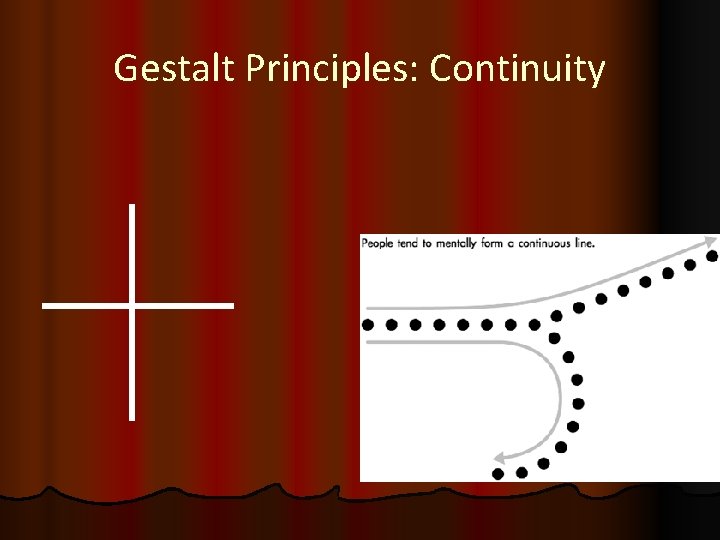
Gestalt form perception principles continuity simplicity, connectedness, and more……
Perception l Visual Capture: tendency for vision to dominate the other senses. l http: //www. youtube. com/watch? v=f z. Xi 5 b. Cik. Cc (Brain Games, part 2: 4: 15 through Mc. Gurk)
Phi phenomenon - illusion created when two or more adjacent lights blink on and off in succession, creating the perception of movement (lighted signs, illusions) http: //www. youtube. com/watch? v=R_CN 5 k. Y_Fe. Y (Brain Games part 1, 13: 13) http: //www. youtube. com/watch? v=gur_IGV 7 F 8 (Pink Dots)
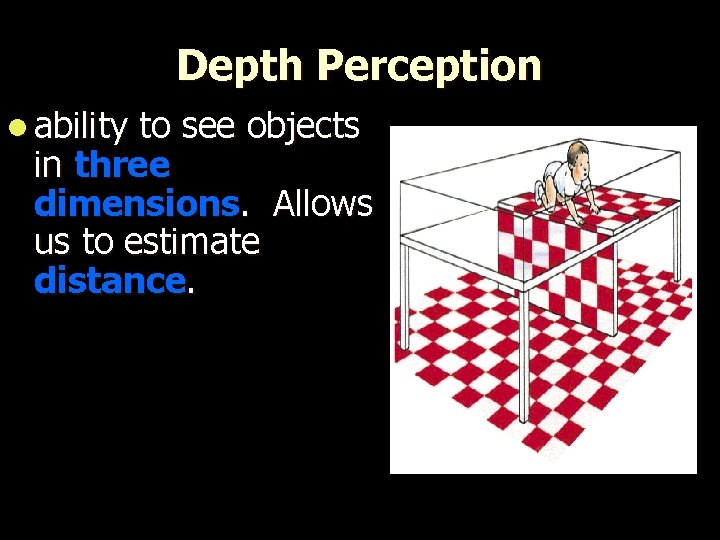
Depth Perception l ability to see objects in three dimensions. Allows us to estimate distance.
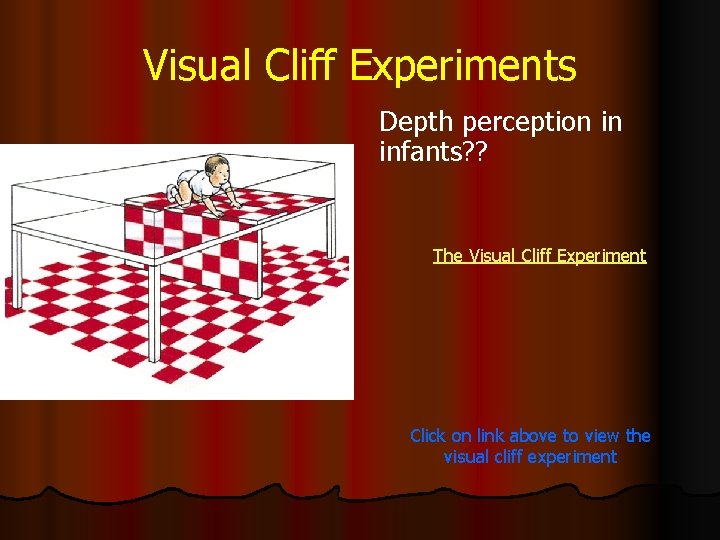
Visual Cliff Experiments Depth perception in infants? ? The Visual Cliff Experiment Click on link above to view the visual cliff experiment
Depth Cues l Binocular vs. monocular depth cues
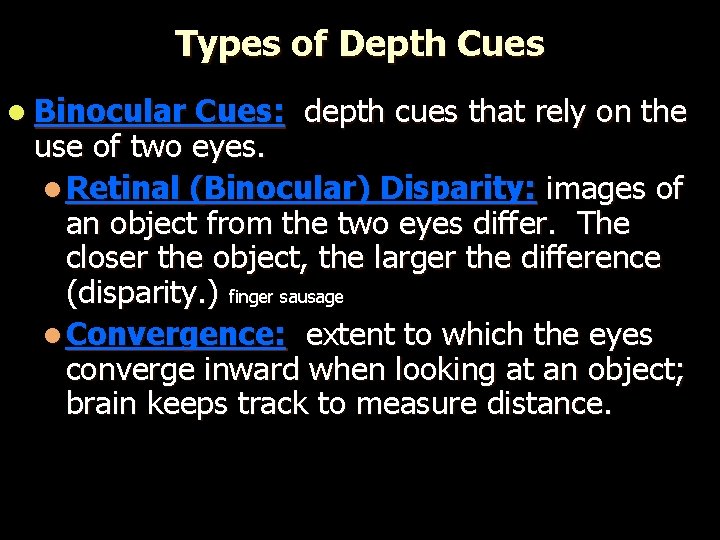
Types of Depth Cues l Binocular Cues: depth cues that rely on the use of two eyes. l Retinal (Binocular) Disparity: images of an object from the two eyes differ. The closer the object, the larger the difference (disparity. ) finger sausage l Convergence: extent to which the eyes converge inward when looking at an object; brain keeps track to measure distance.
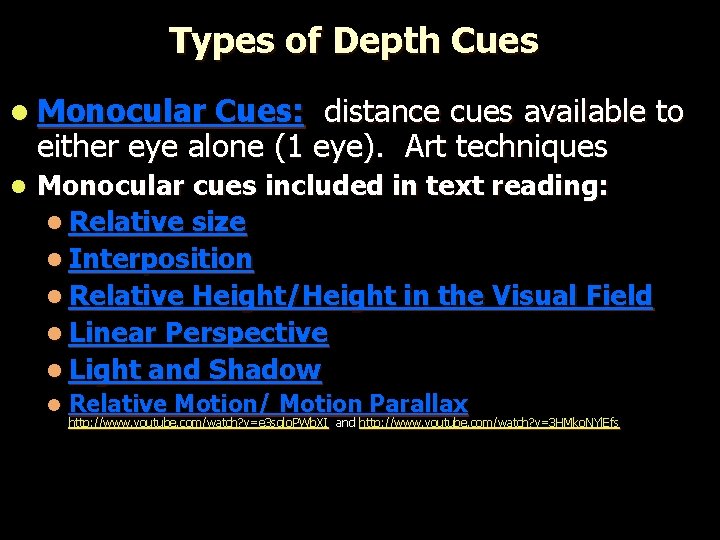
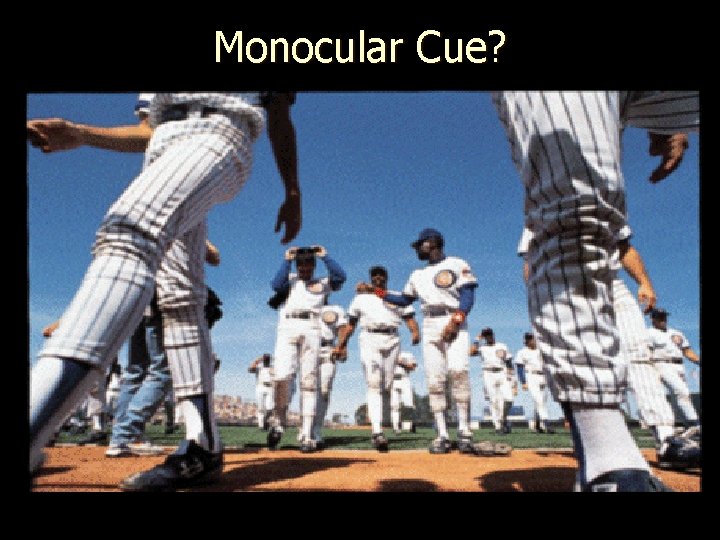
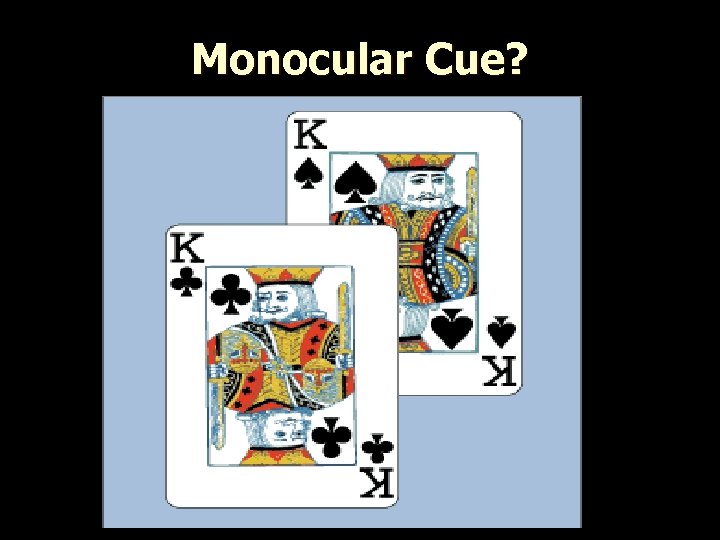
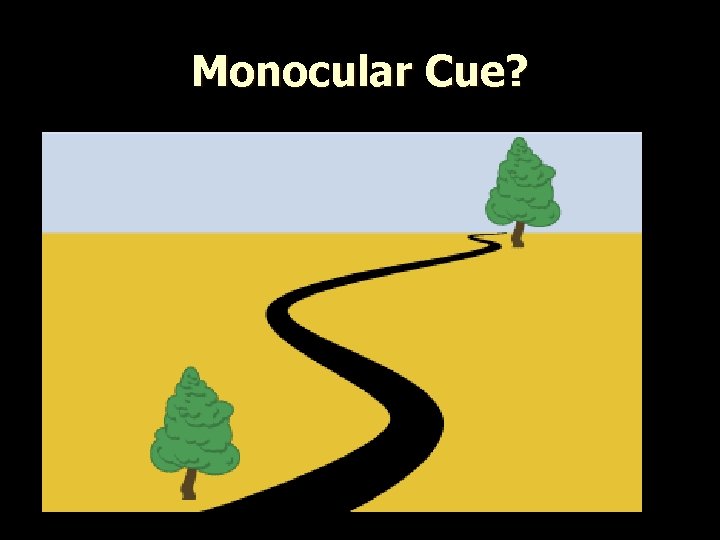
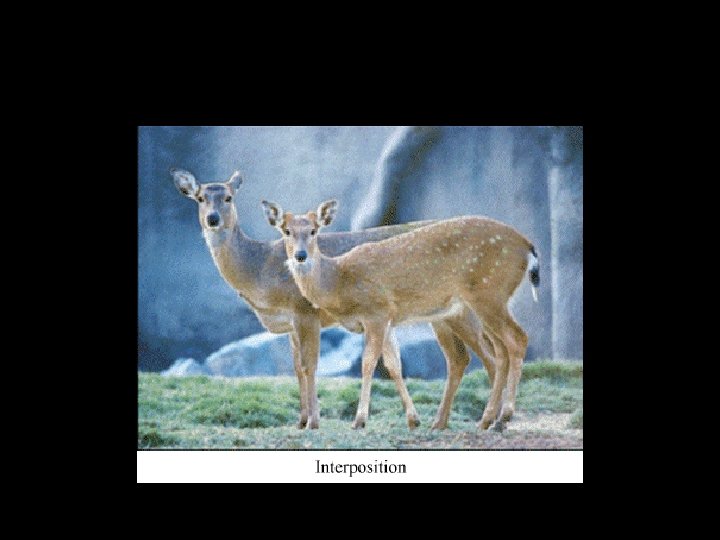
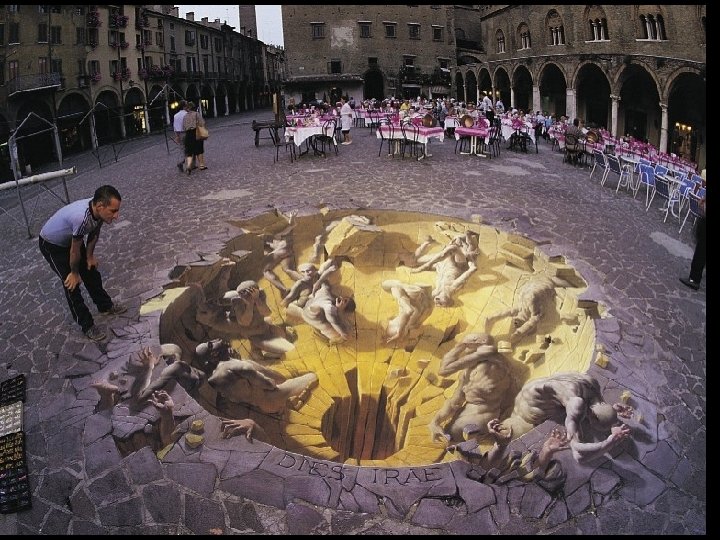
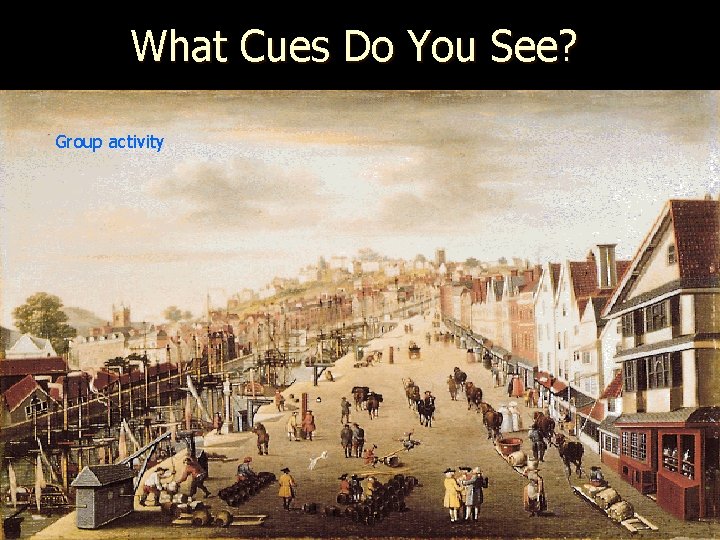
Types of Depth Cues l Monocular Cues: distance cues available to either eye alone (1 eye). Art techniques l Monocular cues included in text reading: l Relative size l Interposition l Relative Height/Height in the Visual Field l Linear Perspective l Light and Shadow l Relative Motion/ Motion Parallax http: //www. youtube. com/watch? v=e 3 sqlo. PWb. XI and http: //www. youtube. com/watch? v=3 HMko. NYl. Efs
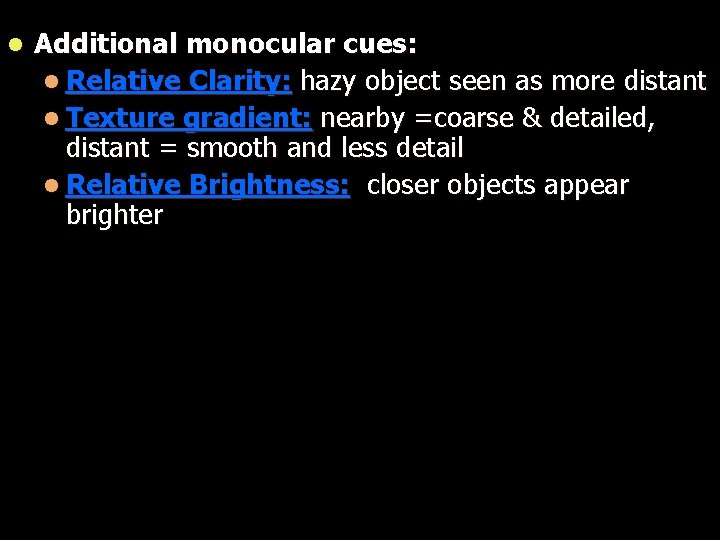
l Additional monocular cues: l Relative Clarity: hazy object seen as more distant l Texture gradient: nearby =coarse & detailed, distant = smooth and less detail l Relative Brightness: closer objects appear brighter
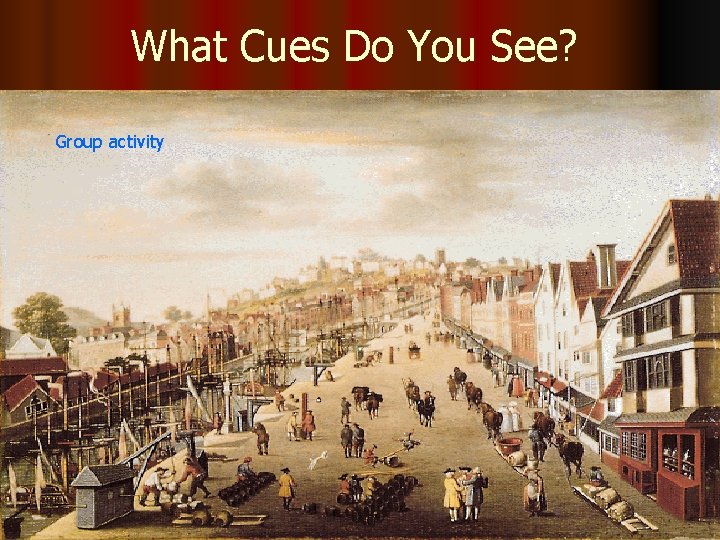
What Cues Do You See? Group activity
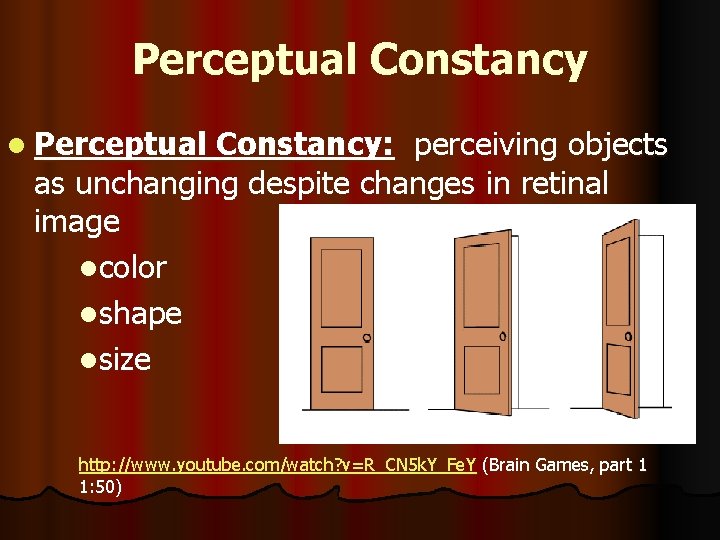
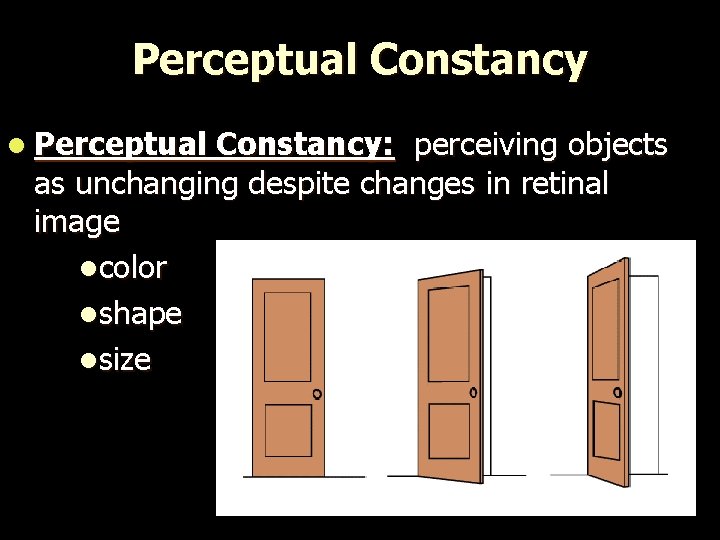
Perceptual Constancy l Perceptual Constancy: perceiving objects as unchanging despite changes in retinal image lcolor lshape lsize http: //www. youtube. com/watch? v=R_CN 5 k. Y_Fe. Y (Brain Games, part 1 1: 50)
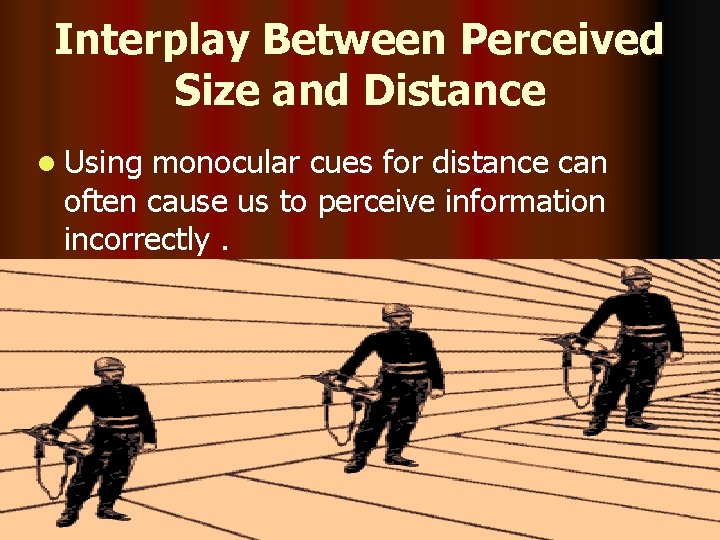
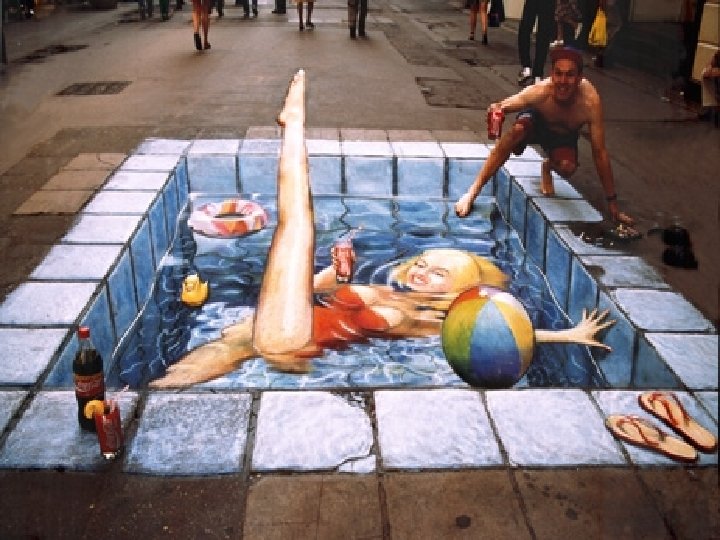
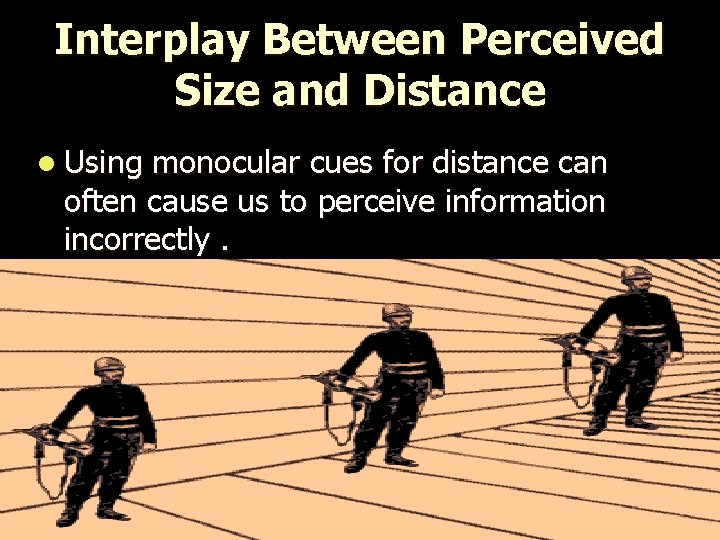
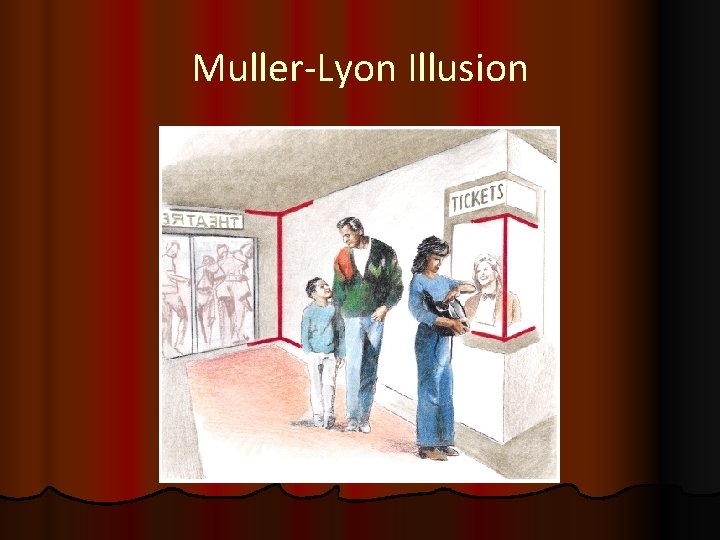
Interplay Between Perceived Size and Distance l Using monocular cues for distance can often cause us to perceive information incorrectly.
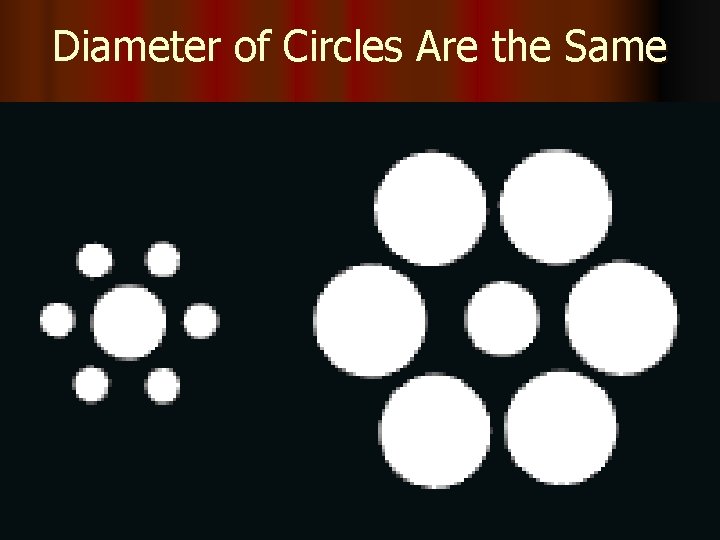
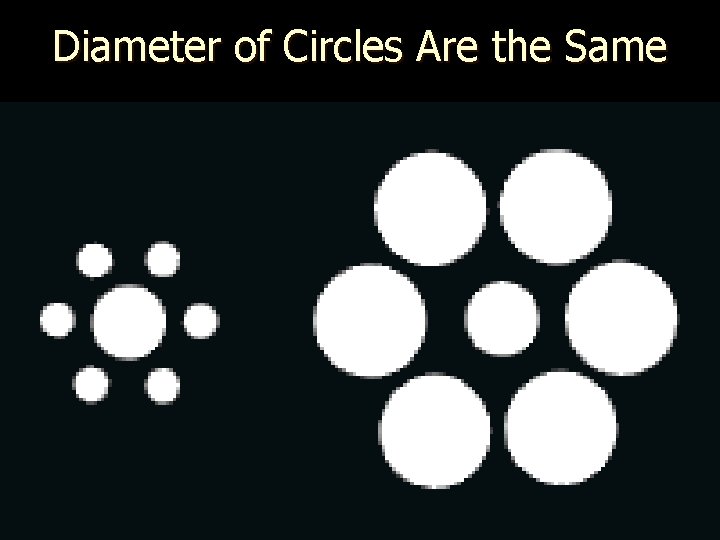
Diameter of Circles Are the Same
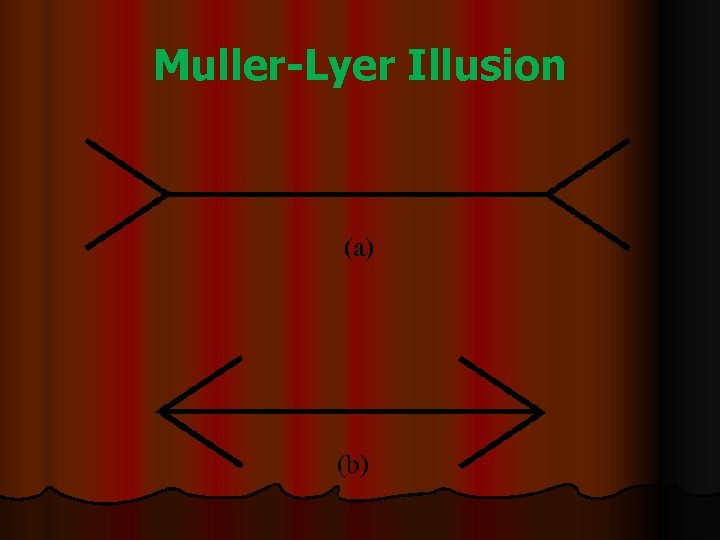
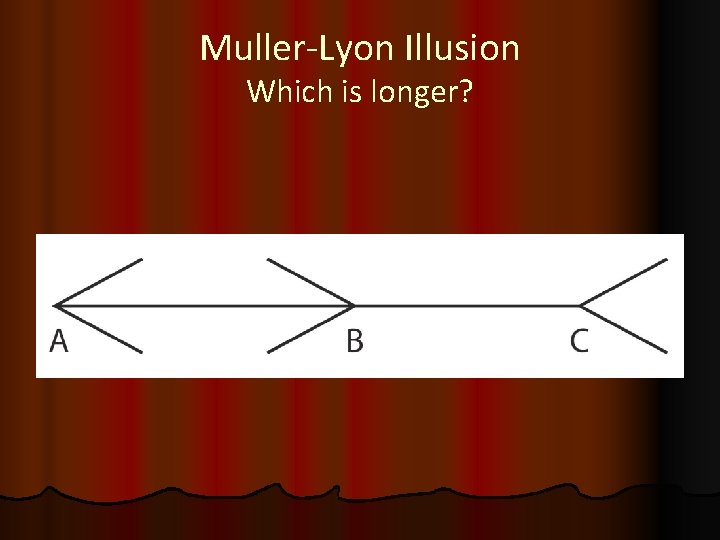
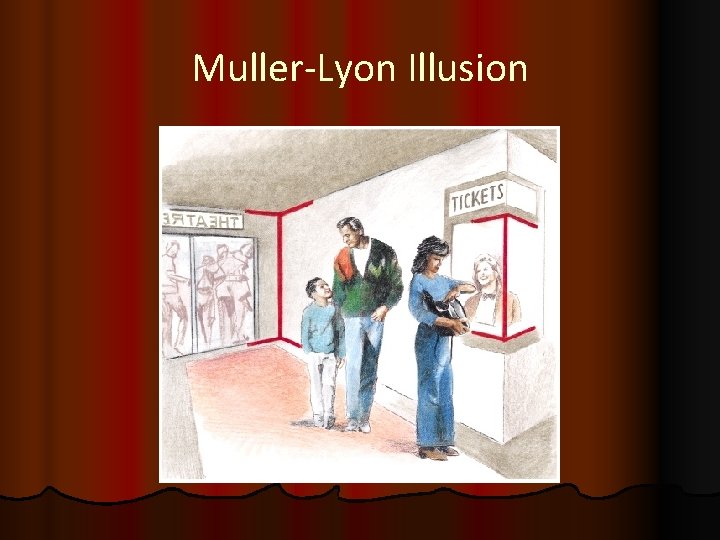
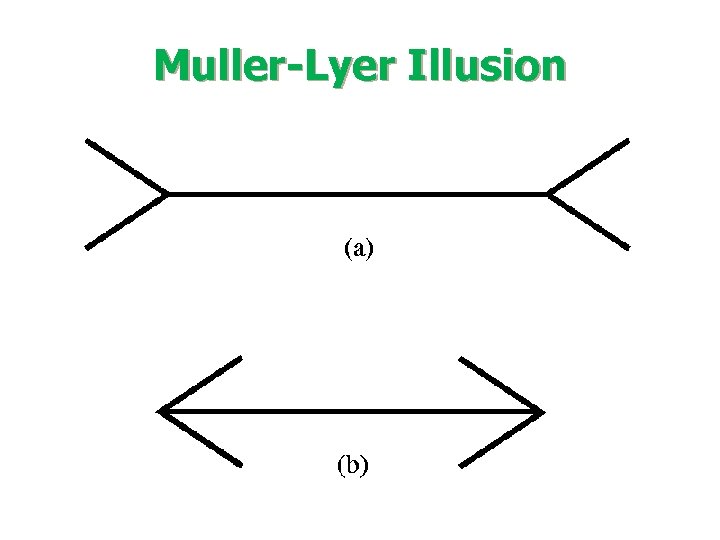
Muller-Lyer Illusion
Monocular Cue?
Monocular Cue?
Monocular Cue? l
What Cues Do You See? Group activity
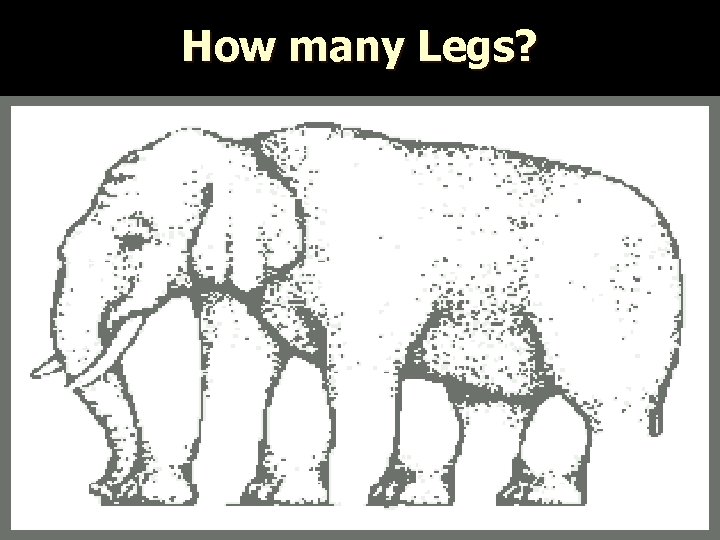
How many Legs?
Perceptual Constancy l Perceptual Constancy: perceiving objects as unchanging despite changes in retinal image lcolor lshape lsize
Interplay Between Perceived Size and Distance l Using monocular cues for distance can often cause us to perceive information incorrectly.
Diameter of Circles Are the Same
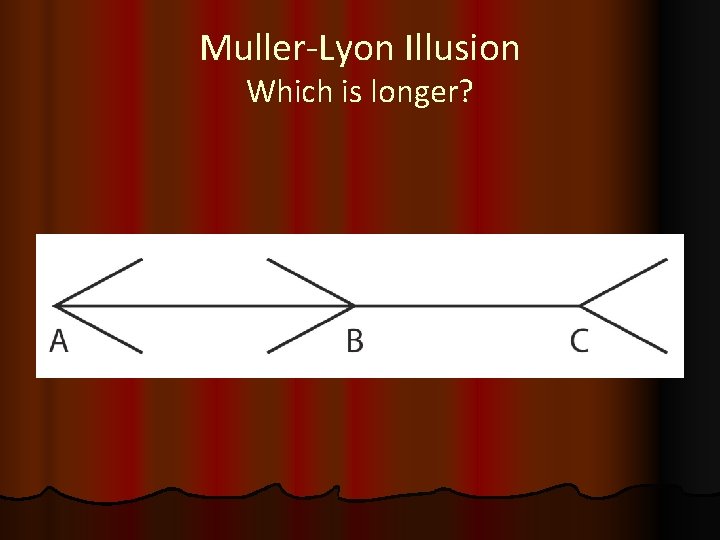
Muller-Lyon Illusion Which is longer?
Muller-Lyon Illusion
Muller-Lyer Illusion
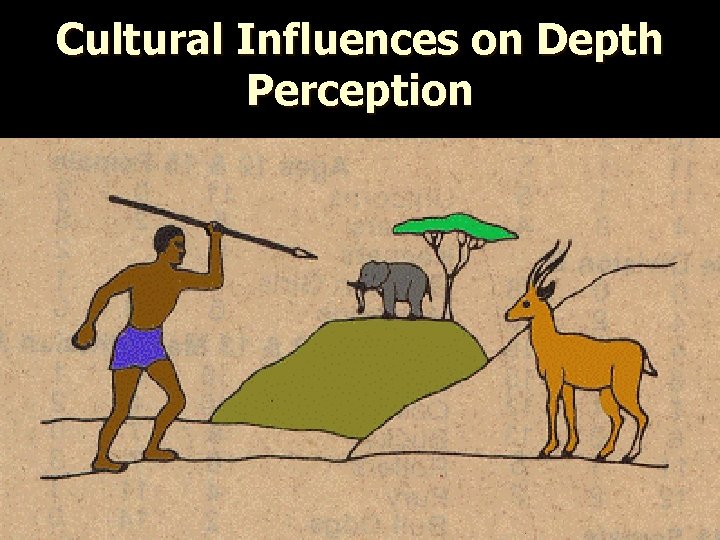
Cultural Influences on Depth Perception l
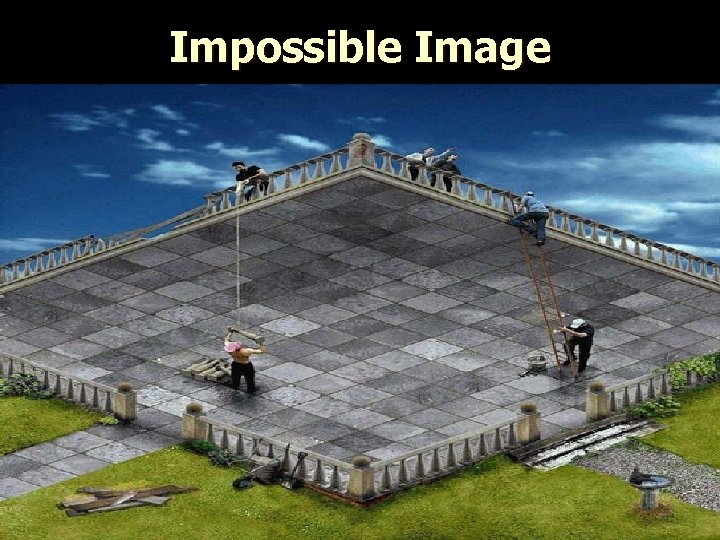
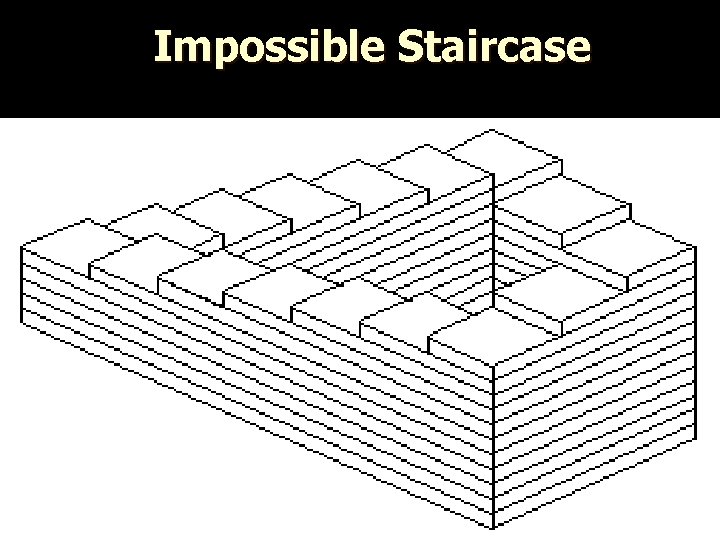
Impossible Image
Impossible Staircase
Day 2
Sensory Deprivation and Perception l Blind Person Example l. Some aspects of perception might be innate l. Others involve experiences l Critical period for development of sensation and perception
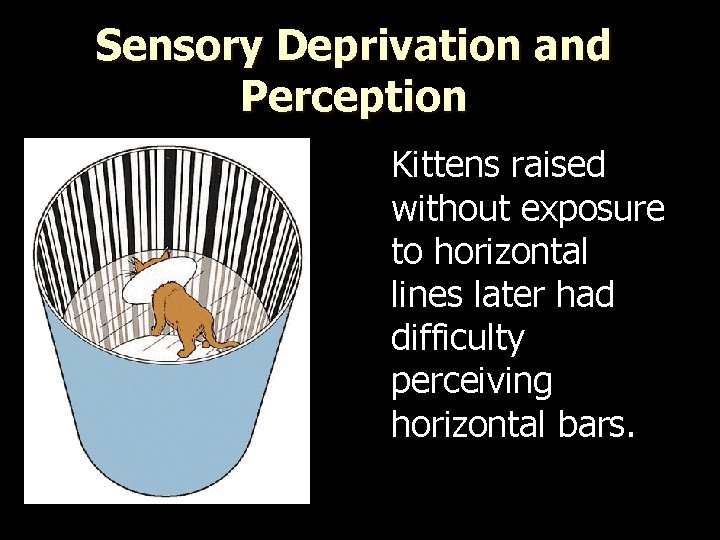
Sensory Deprivation and Perception Kittens raised without exposure to horizontal lines later had difficulty perceiving horizontal bars.
Perceptual Adaptation l(vision) ability to adjust to an artificially displaced visual field lprism glasses
http: //jeffmilner. com/backmasking. htm
Today’s Goals l To understand how our experiences and expectations influence perception. l To understand the importance of perceptual constancies. l To understand major visual illusions. HW: Study for perception quiz/midterm exam.
Perceptual Constancy l The ability to perceive an object as the same even as the illumination and retinal image changes. l Shape l Size l Color
PERCEPTION GAMES!! Numbers Word game Punctuate the following: TIME FLIES I CANT THEYRE TOO FAST What do these letters spell? FOLK CROAK SOAK
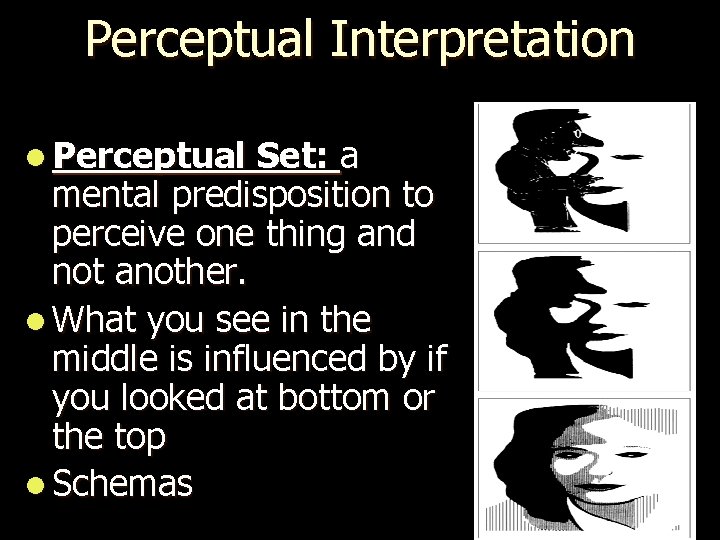
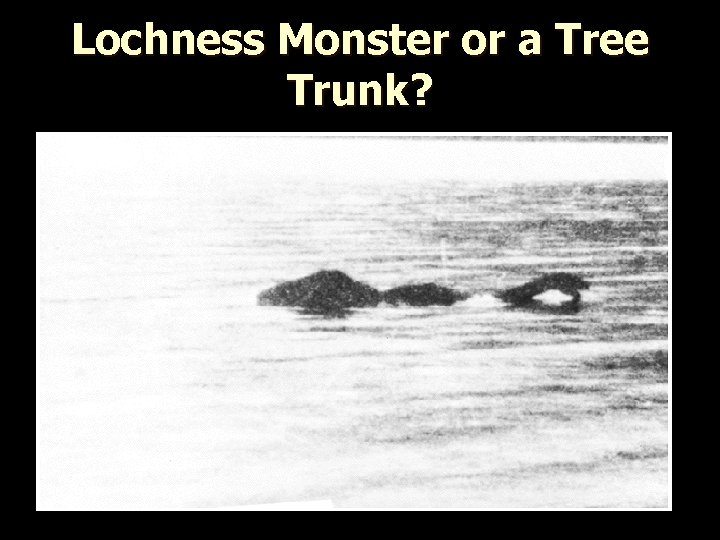
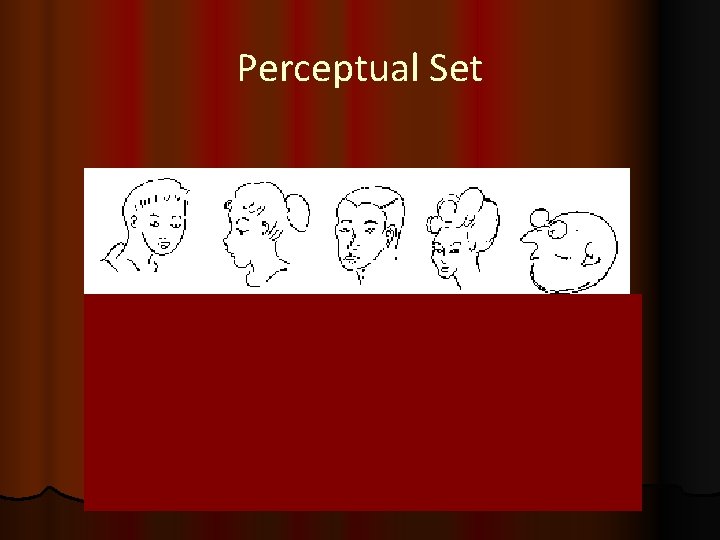
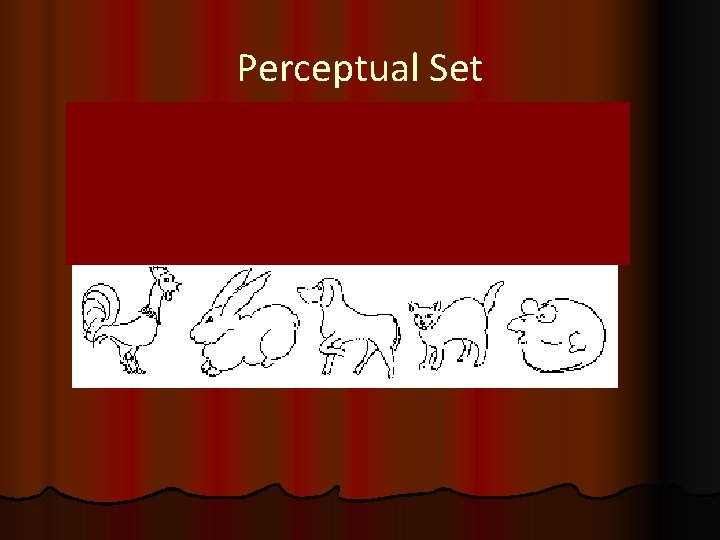
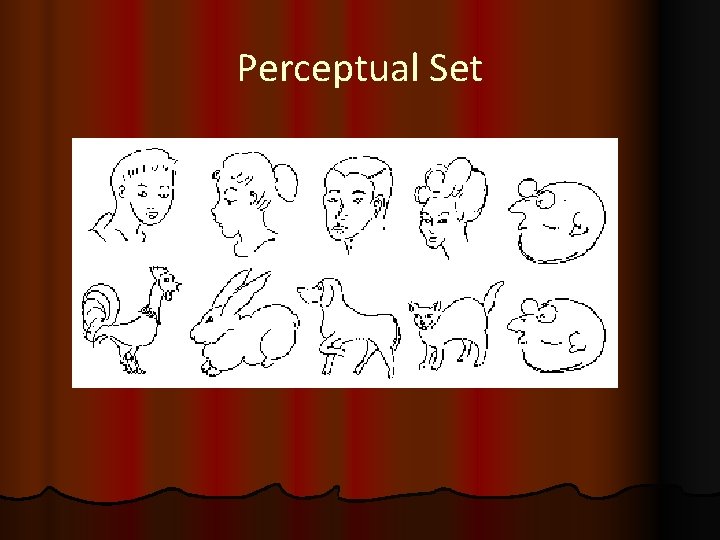
Perceptual Interpretation l Perceptual Set: a mental predisposition to perceive one thing and not another. l What you see in the middle is influenced by if you looked at bottom or the top l Schemas
Lochness Monster or a Tree Trunk?
Perceptual Set
Perceptual Set
Perceptual Set
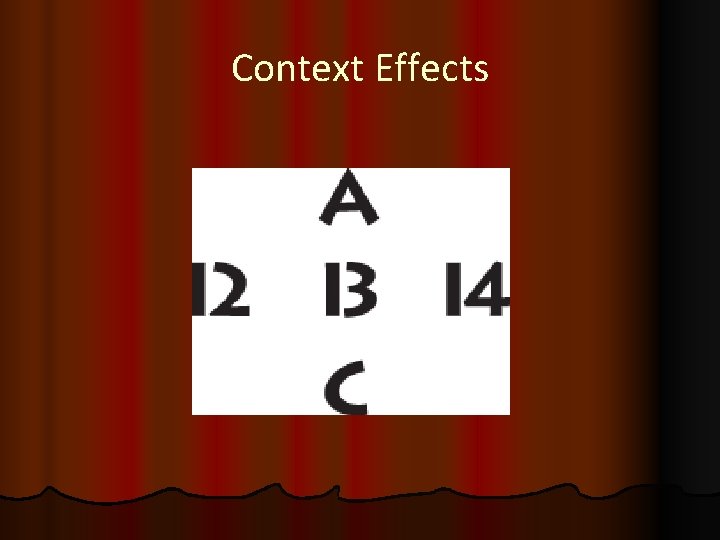
Context Effects
Perceptual Set Affects Other Senses l Perceptual Set also affects other senses like audition. l Ex: eel is on the wagon vs. eel is on the orange. l CONTEXT MATTERS! l Rat Man l Lyrics
Muller-Lyon Illusion Which is longer?
Muller-Lyon Illusion
ATTENTION Today’s goal: To understand the role of attention in perception. HW: 1. STUDY FOR MIDTERM!!!! 2. Read pages 291 -304 of text. TAKE NOTES on concepts, terms, people in notebook.
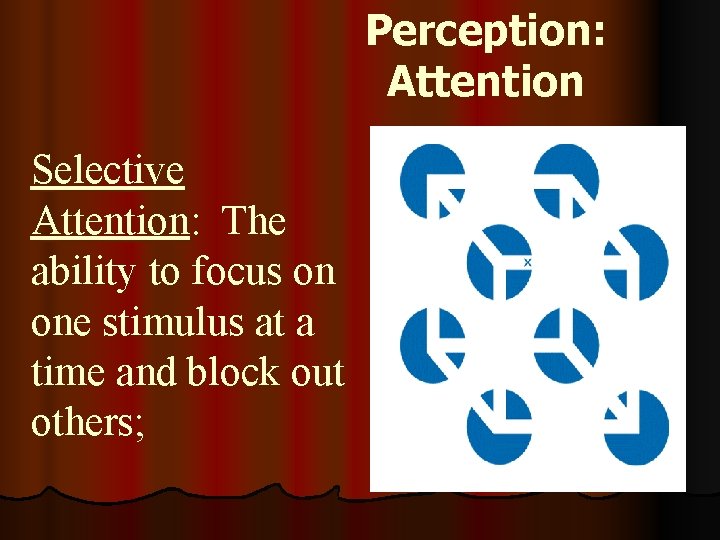
Perception: Attention Selective Attention: The ability to focus on one stimulus at a time and block out others;
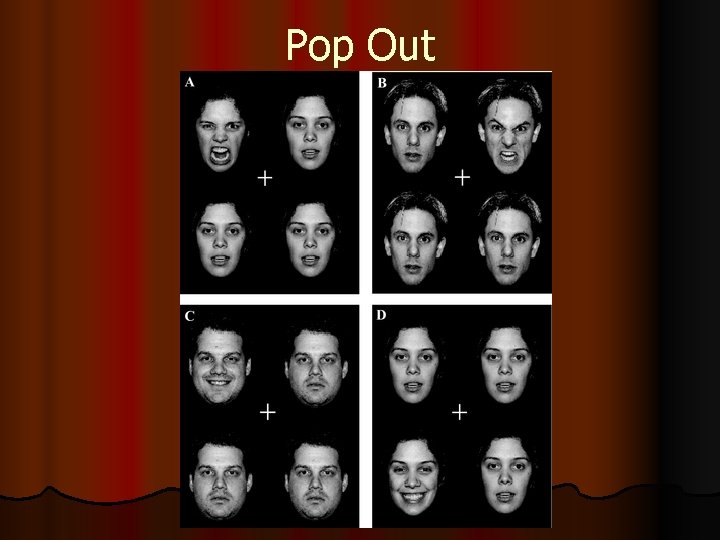
Selective Attention: Allows us to function in a world filled with many stimuli; reduces sensory overload • Pop out: stimuli that are so powerful or distinct that they draw our eye and demand our attention
Pop Out
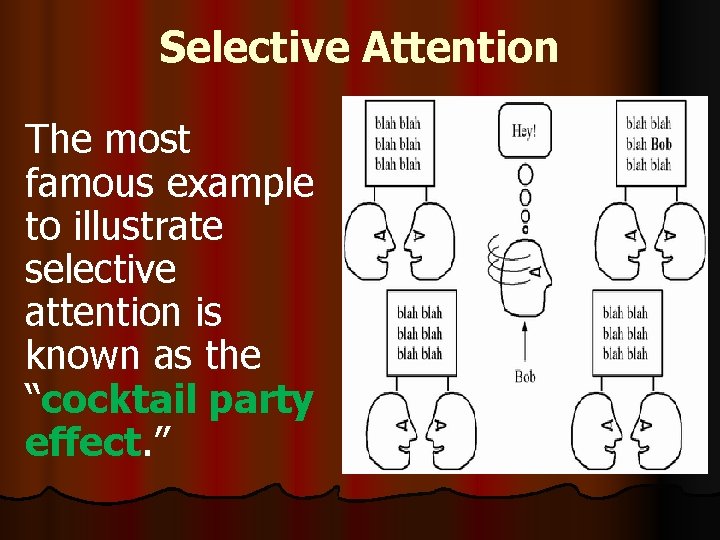
Selective Attention The most famous example to illustrate selective attention is known as the “cocktail party effect. ”
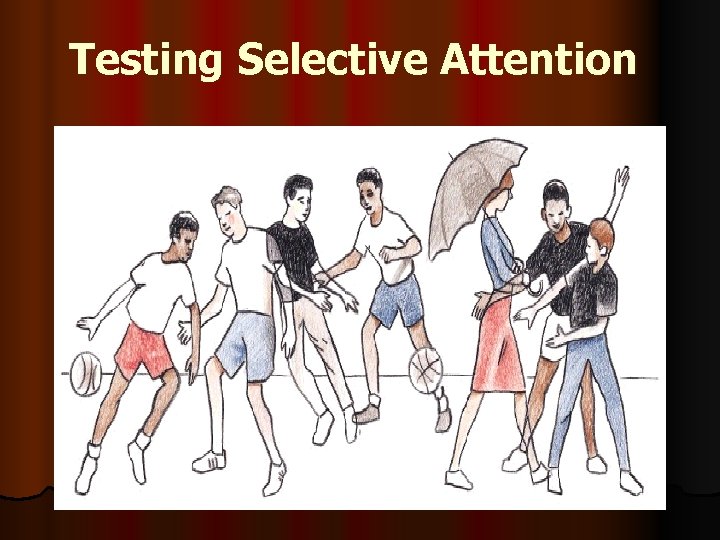
Testing Selective Attention
Selective Inattention l Inattentional blindness l Change blindness l Choice blindness
Choice Blindness
Attention DVD
l http: //www. psychologie. tu- dresden. de/i 1/kaw/diverses%20 Material/w ww. illusionworks. com/html/color_aftereffe ct. html 64
l http: //www. michaelbach. de/ot/ l http: //www. psychologie. tu- dresden. de/i 1/kaw/diverses%20 Material/w ww. illusionworks. com/html/motion_afteref fect. html 65
Perception and the Human Factor l Human Factors Psychologists- explore how people and machines interact and how machines and environments can be adapted to human behaviors
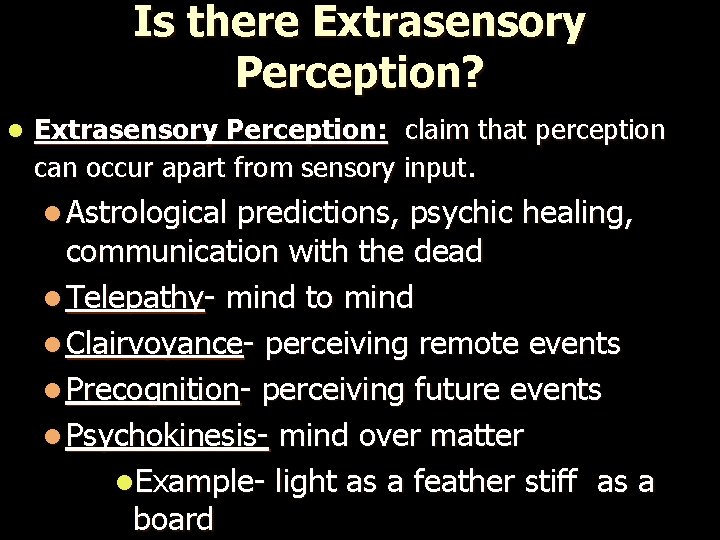
Is there Extrasensory Perception? l Extrasensory Perception: claim that perception can occur apart from sensory input. l Astrological predictions, psychic healing, communication with the dead l Telepathy- mind to mind l Clairvoyance- perceiving remote events l Precognition- perceiving future events l Psychokinesis- mind over matter l. Example- light as a feather stiff as a board
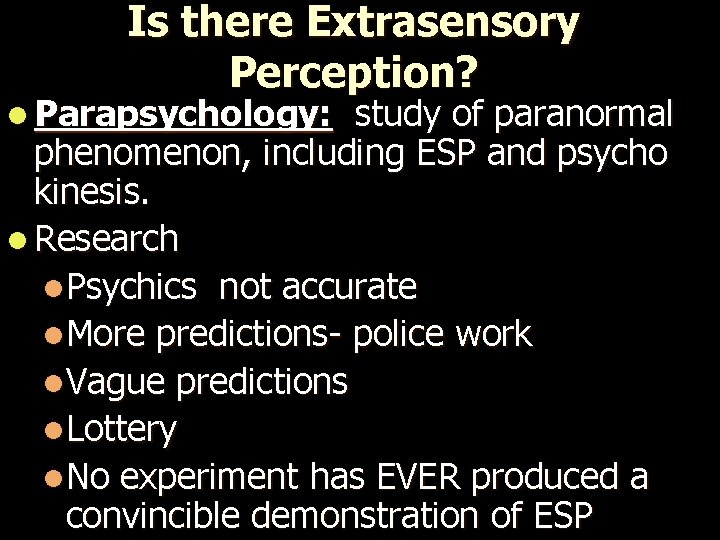
Is there Extrasensory Perception? l Parapsychology: study of paranormal phenomenon, including ESP and psycho kinesis. l Research l. Psychics not accurate l. More predictions- police work l. Vague predictions l. Lottery l. No experiment has EVER produced a convincible demonstration of ESP
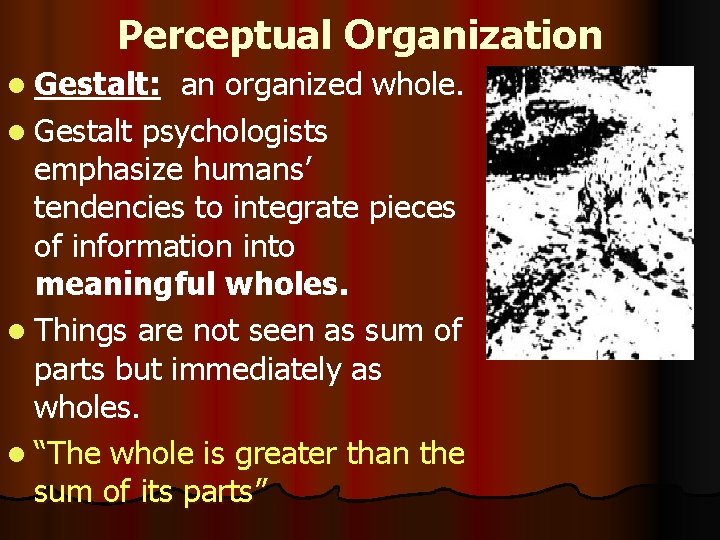
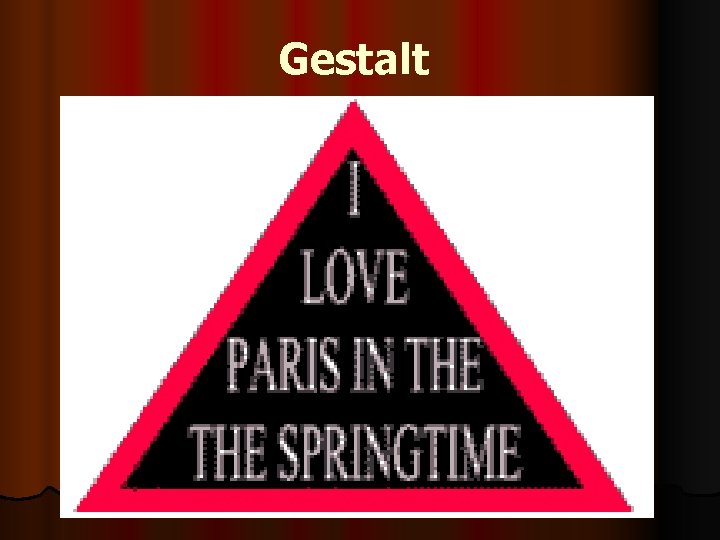
Perceptual Organization l Gestalt: an organized whole. l Gestalt psychologists emphasize humans’ tendencies to integrate pieces of information into meaningful wholes. l Things are not seen as sum of parts but immediately as wholes. l “The whole is greater than the sum of its parts”
Gestalt
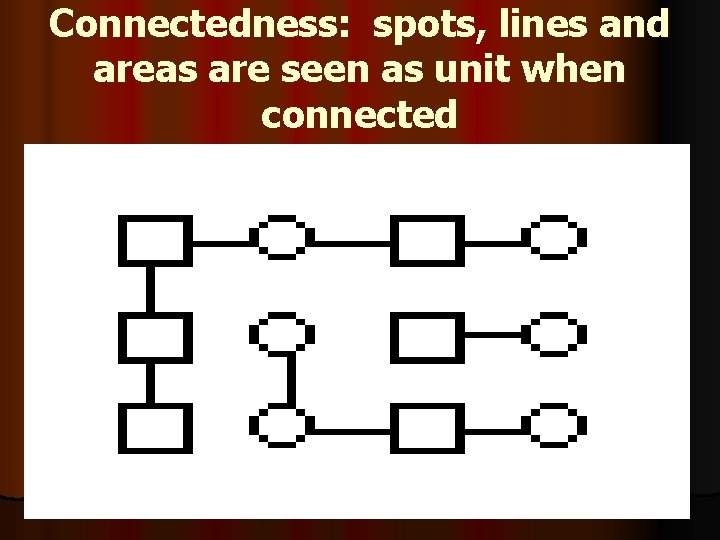
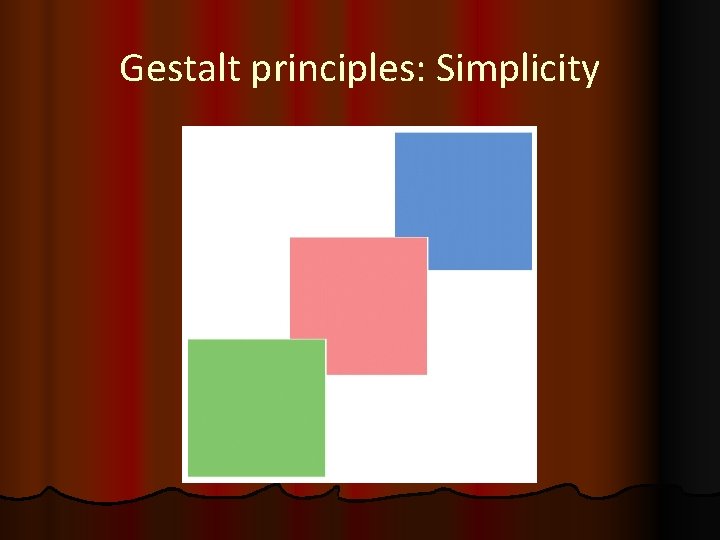
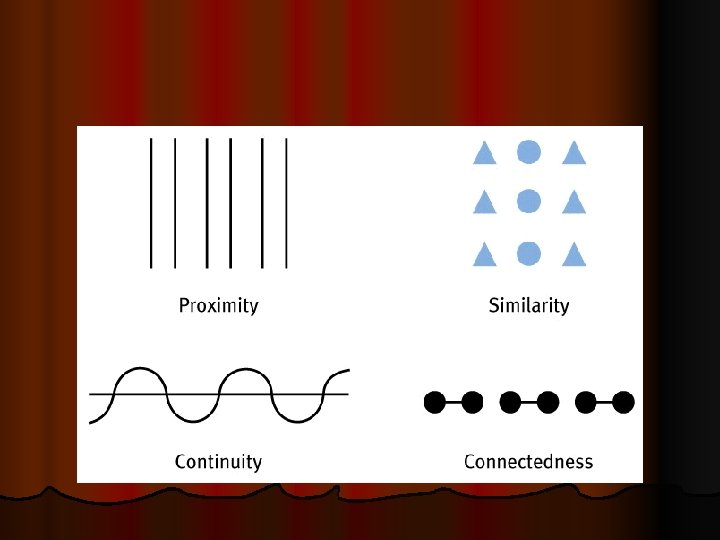
Gestalt Psychology l Grouping: the perceptual tendency to organize stimuli into coherent groups l Some Grouping Principles: l Proximity l Similarity l Continuity l Closure l Connectedness l Simplicity
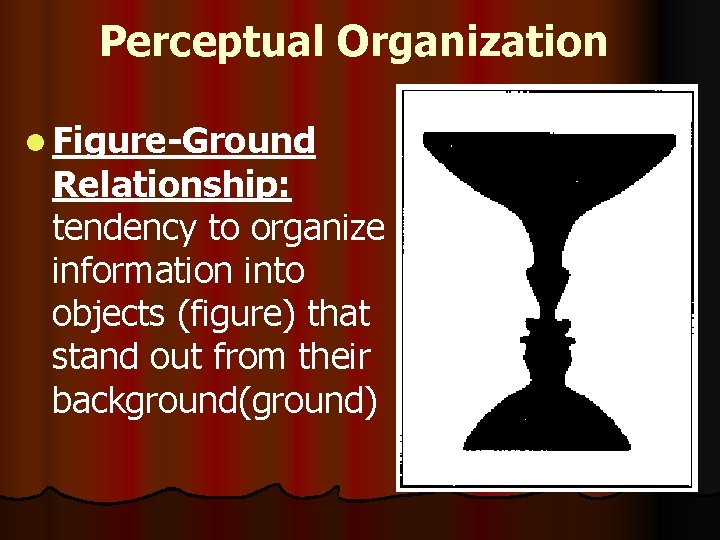
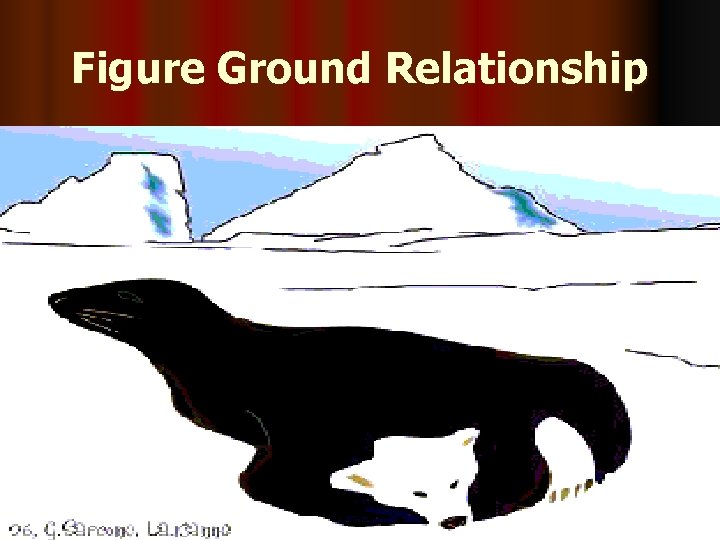
Perceptual Organization l Figure-Ground Relationship: tendency to organize information into objects (figure) that stand out from their background(ground)
Figure Ground Relationship
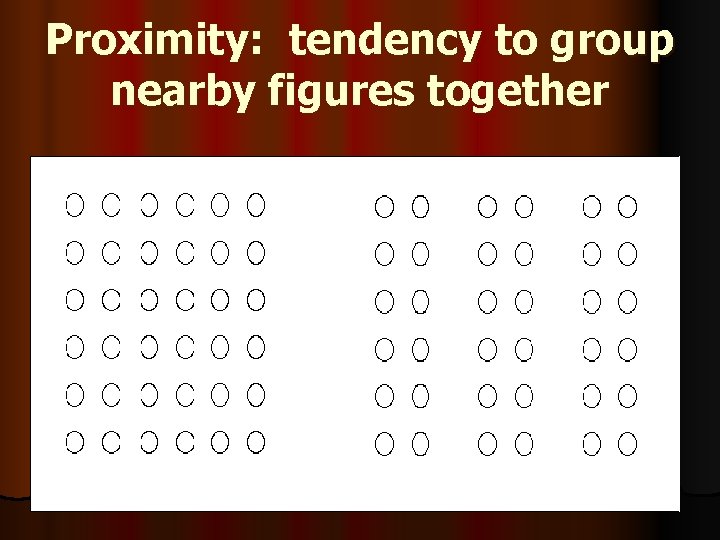
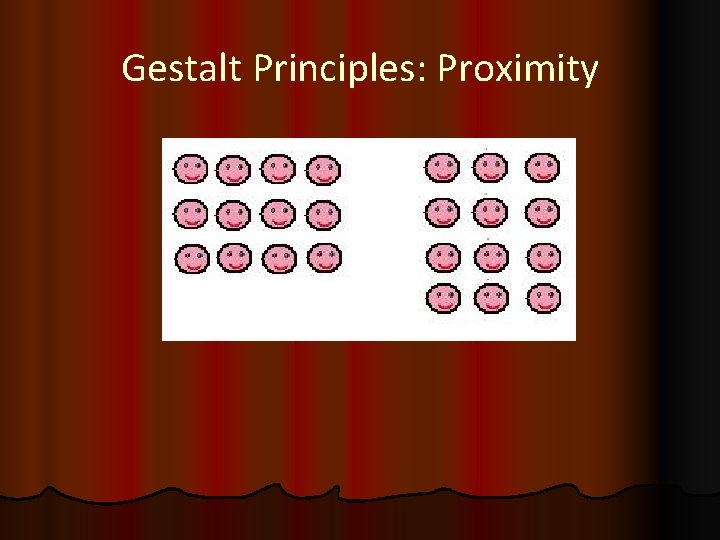
Proximity: tendency to group nearby figures together
Gestalt Principles: Proximity
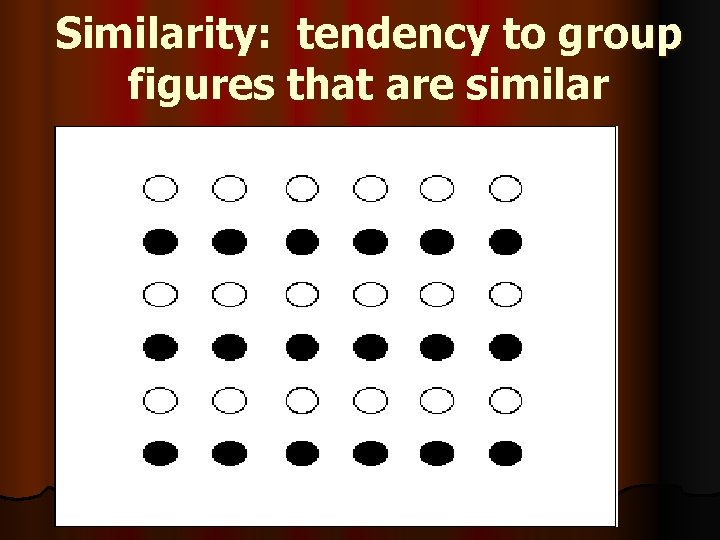
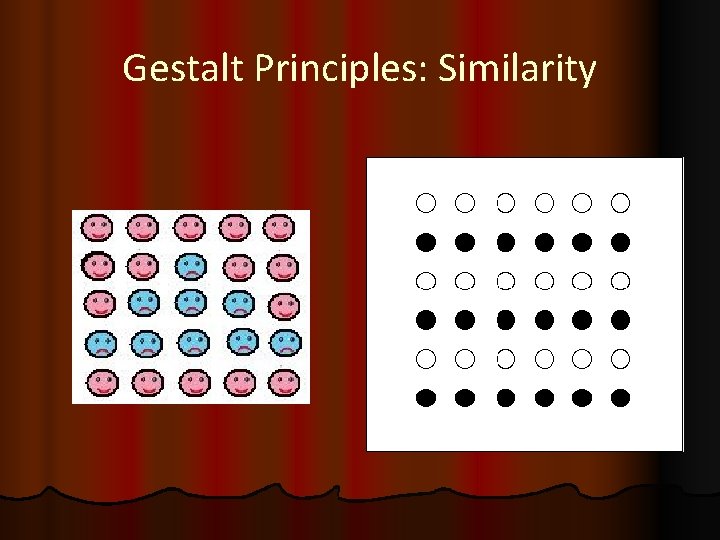
Similarity: tendency to group figures that are similar
Gestalt Principles: Similarity
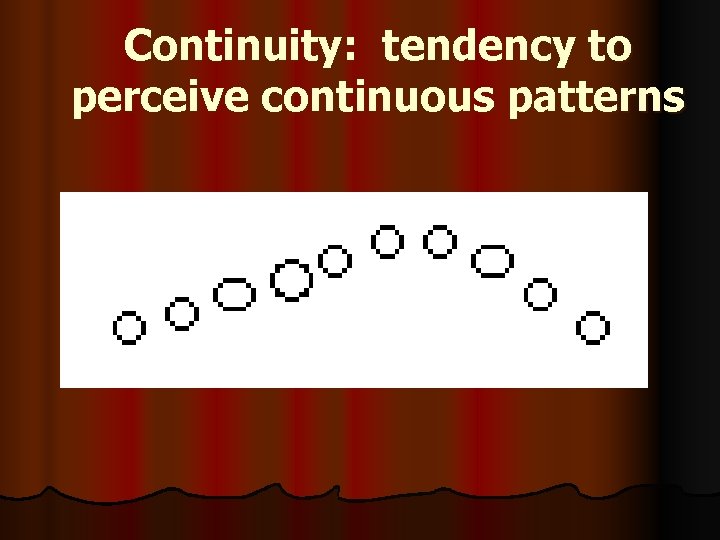
Continuity: tendency to perceive continuous patterns
Gestalt Principles: Continuity
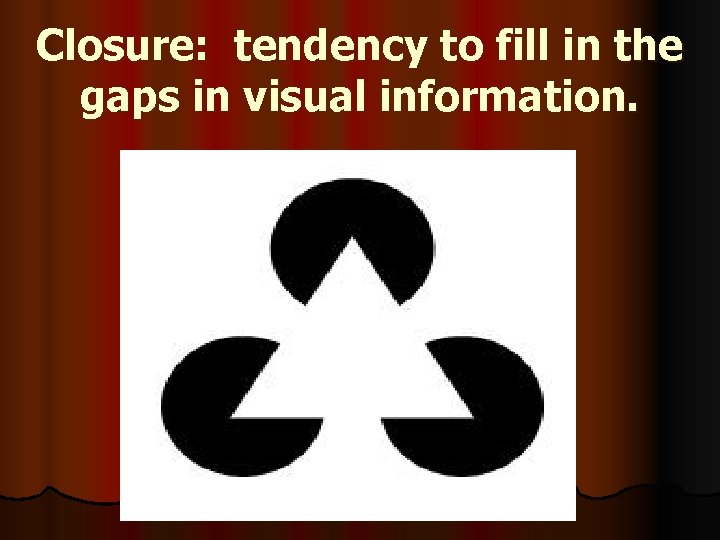
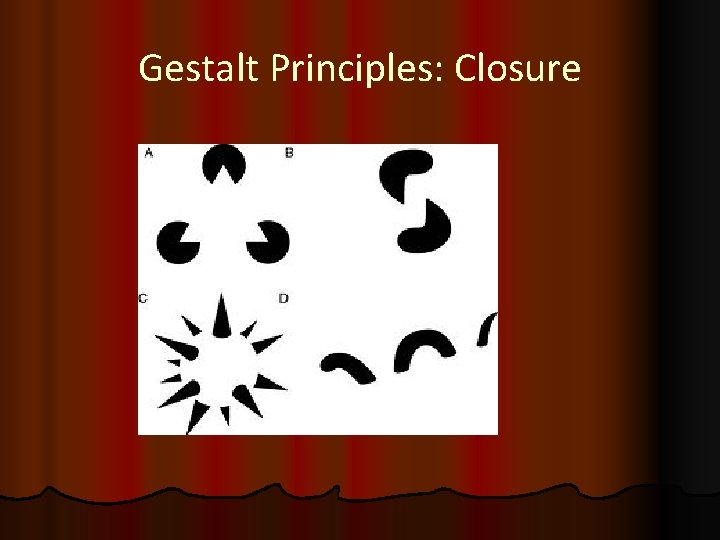
Closure: tendency to fill in the gaps in visual information.
Gestalt Principles: Closure
Connectedness: spots, lines and areas are seen as unit when connected
Gestalt principles: Simplicity
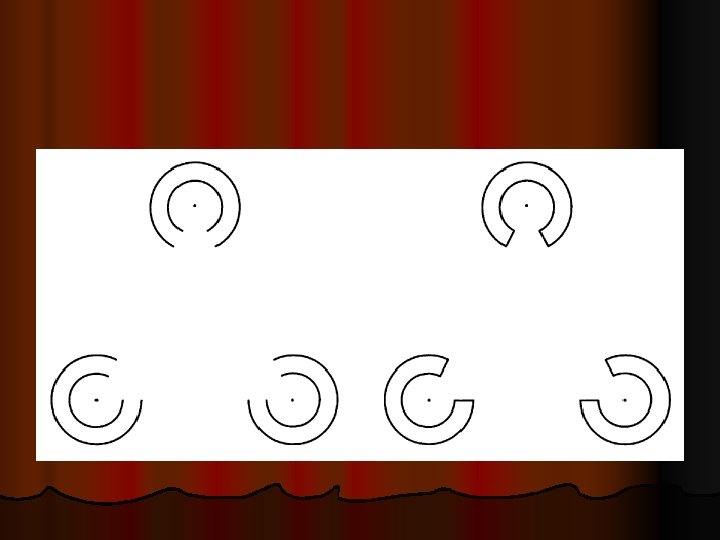
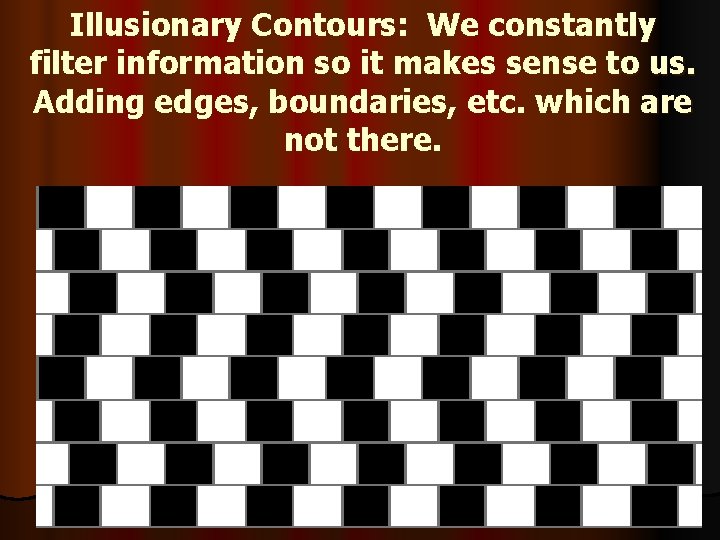
Illusionary Contours: We constantly filter information so it makes sense to us. Adding edges, boundaries, etc. which are not there.
Types of Depth Cues l Monocular Cues: distance cues that are available to either eye alone (1 eye). Art techniques l Monocular Cues Includes: l x. Relative size: smaller image is more distant l x. Interposition: closer object blocks distant object l Relative Clarity : hazy object seen as more distant l Texture gradient: nearby =coarse & detailed, distant = smooth and less detail l x. Relative Height/Height in the Visual Field: higher objects seen as more distant
l x. Relative Motion/ Motion Parallax : closer objects seem to move faster & in opposite direction; distant objects move in the same direction http: //www. youtube. com/watch? v=e 3 sqlo. PWb. XI and http: //www. youtube. com/watch? v=3 HMko. NYl. Efs l x. Linear Perspective: parallel lines converge with distance l Relative Brightness: closer objects appear brighter l x. Light and Shadow: nearby objects reflect more light to our eyes; dimmer of 2 objects seems farther away.