
PHYSICS 11 TODAYS OBJECTIVE To learn about the
PHYSICS 11 TODAY’S OBJECTIVE: • To learn about the meaning of precision/accuracy in science • To learn about the difference
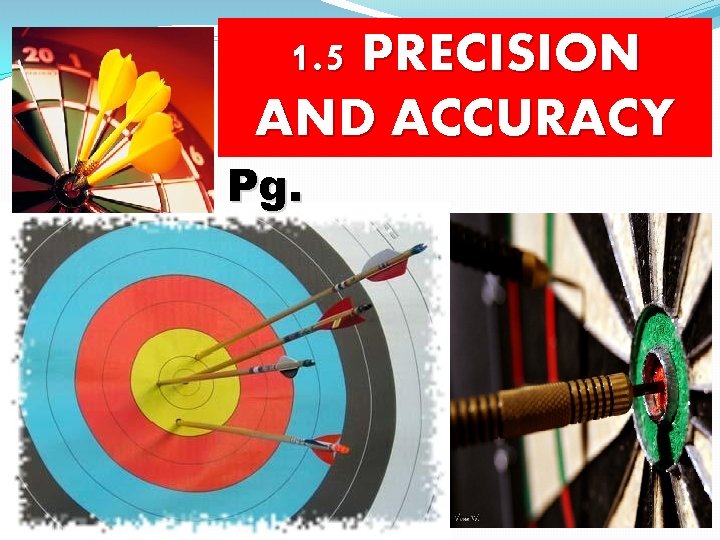
1. 5 PRECISION AND ACCURACY Pg.
Precision and accuracy In everyday language: it means the same thing In science: precision and accuracy have different meanings REMEMBER!! We can never make a perfect measurement! The best we can do is to come as close as possible within the limitations of the measuring instruments.
Precision and accuracy Accuracy: is how close a measured value is to the actual (true) value Precision: is how close the measured values are to each other or how well the measurement can be repeated
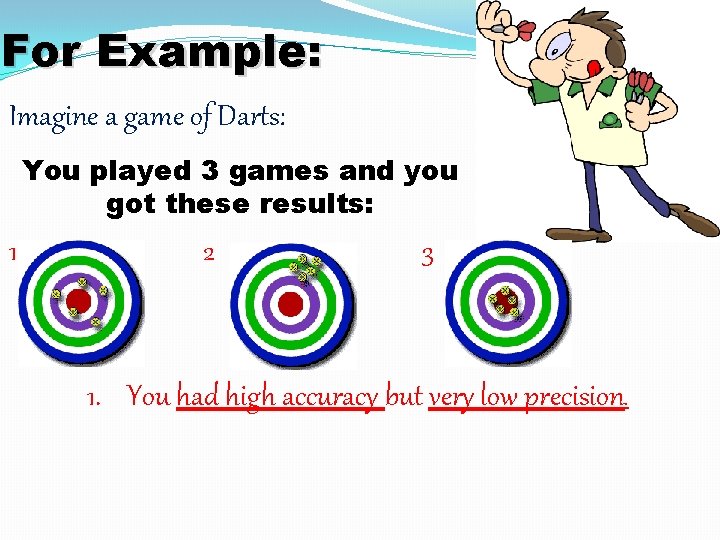
For Example: Imagine a game of Darts: You played 3 games and you got these results: 1 2 3 1. You had high accuracy but very low precision.

For Example: Imagine a game of Darts: You played 3 games and you got these results: 1 2 1. 3 You had high accuracy but very low precision. Why?
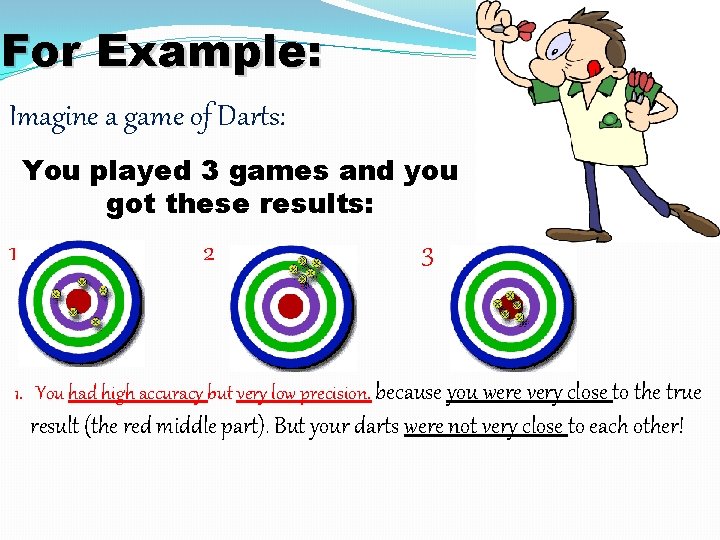
For Example: Imagine a game of Darts: You played 3 games and you got these results: 1 2 3 1. You had high accuracy but very low precision. because you were very close to the true result (the red middle part). But your darts were not very close to each other!
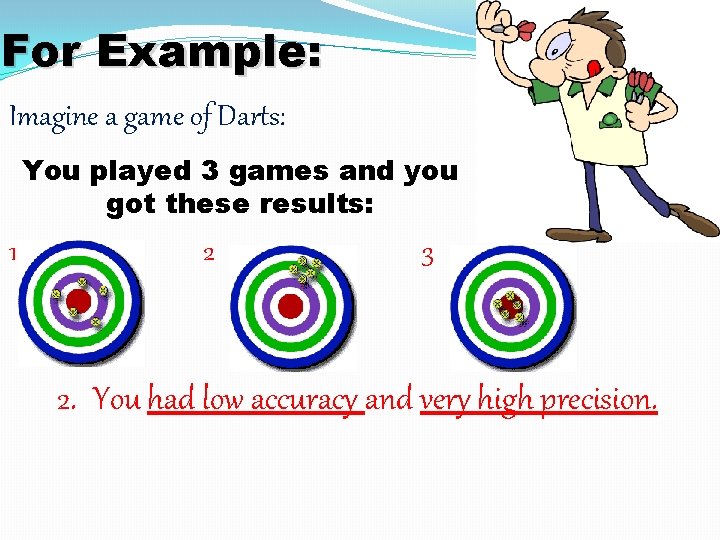
For Example: Imagine a game of Darts: You played 3 games and you got these results: 1 2 3 2. You had low accuracy and very high precision.
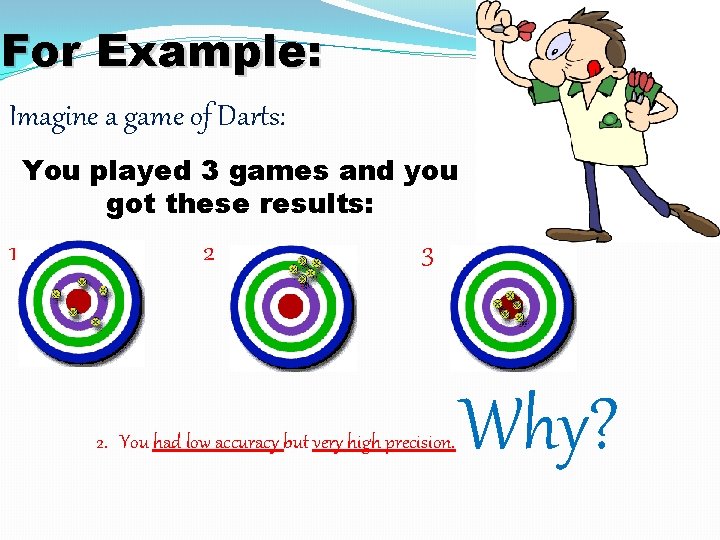
For Example: Imagine a game of Darts: You played 3 games and you got these results: 1 2 3 2. You had low accuracy but very high precision. Why?
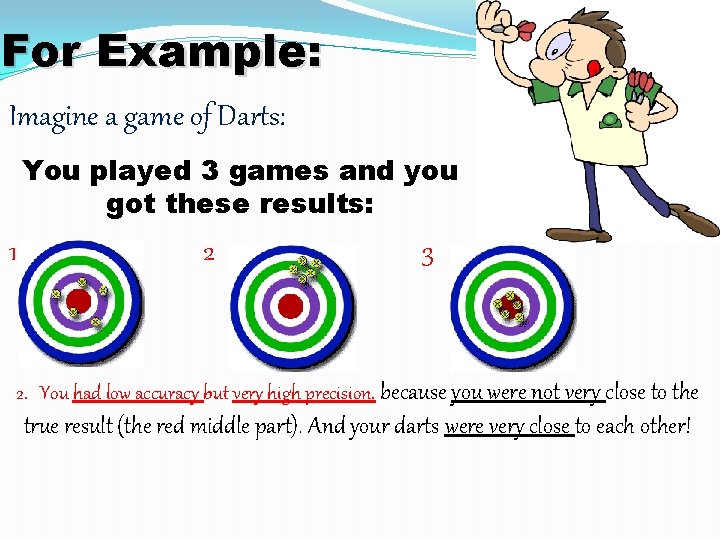
For Example: Imagine a game of Darts: You played 3 games and you got these results: 1 2 3 2. You had low accuracy but very high precision. because you were not very close to the true result (the red middle part). And your darts were very close to each other!
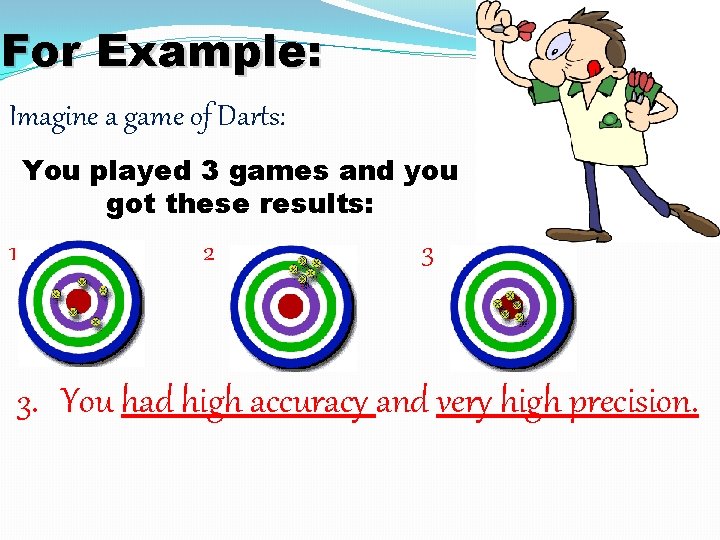
For Example: Imagine a game of Darts: You played 3 games and you got these results: 1 2 3 3. You had high accuracy and very high precision.
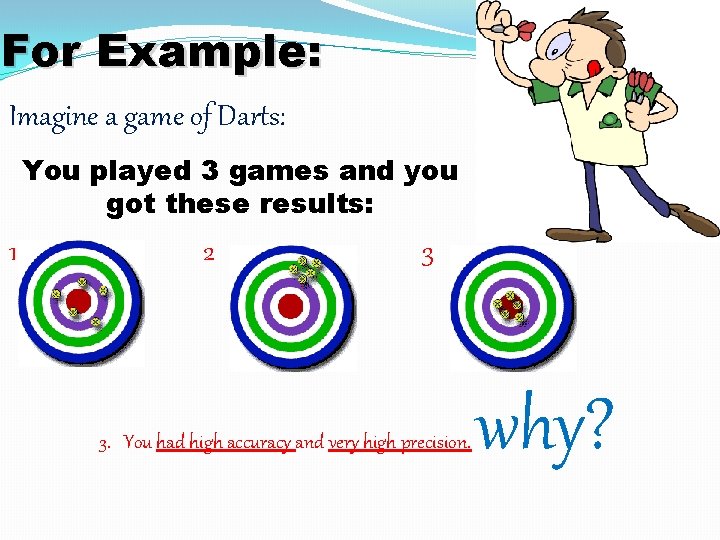
For Example: Imagine a game of Darts: You played 3 games and you got these results: 1 2 3 3. You had high accuracy and very high precision. why?
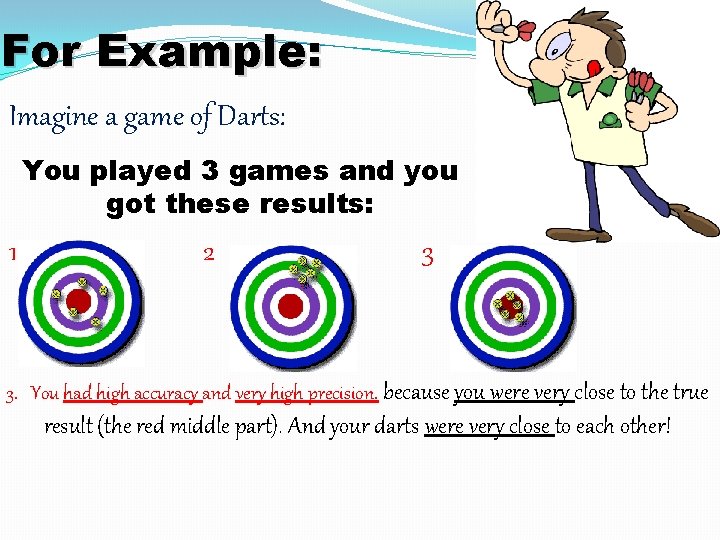
For Example: Imagine a game of Darts: You played 3 games and you got these results: 1 2 3 3. You had high accuracy and very high precision. because you were very close to the true result (the red middle part). And your darts were very close to each other!
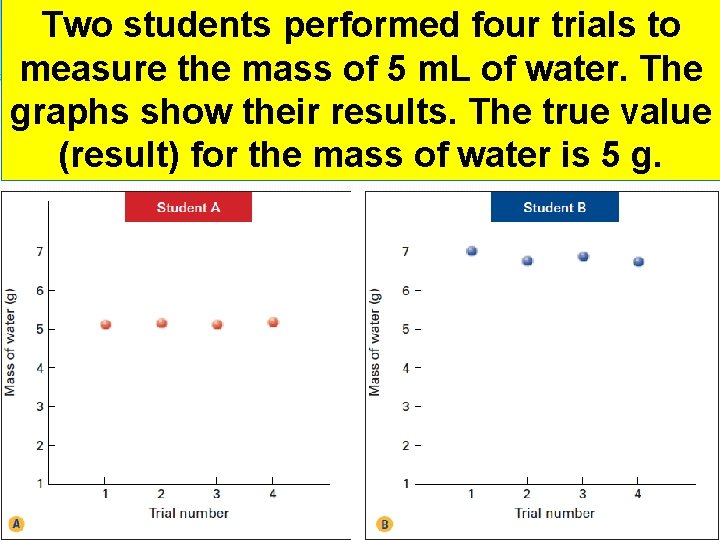
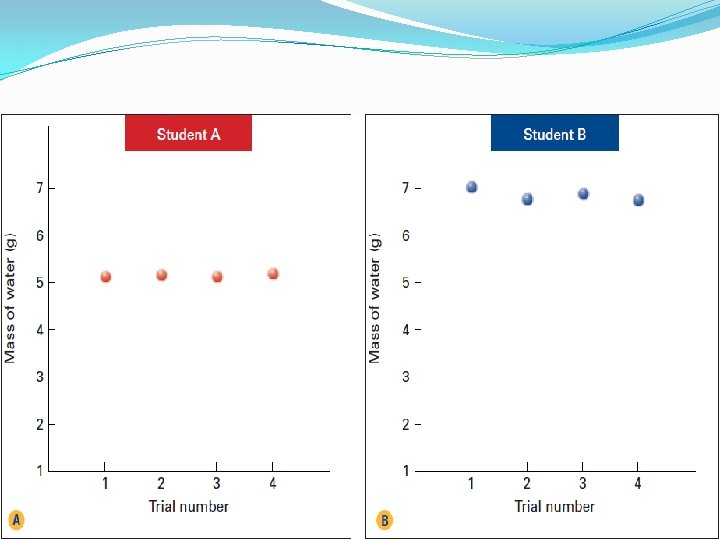
Two students performed four trials to measure the mass of 5 m. L of water. The graphs show their results. The true value (result) for the mass of water is 5 g.
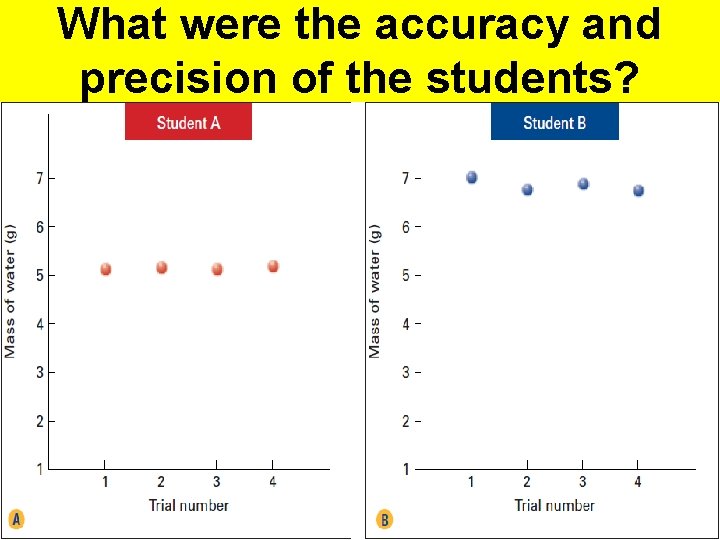
What were the accuracy and precision of the students?
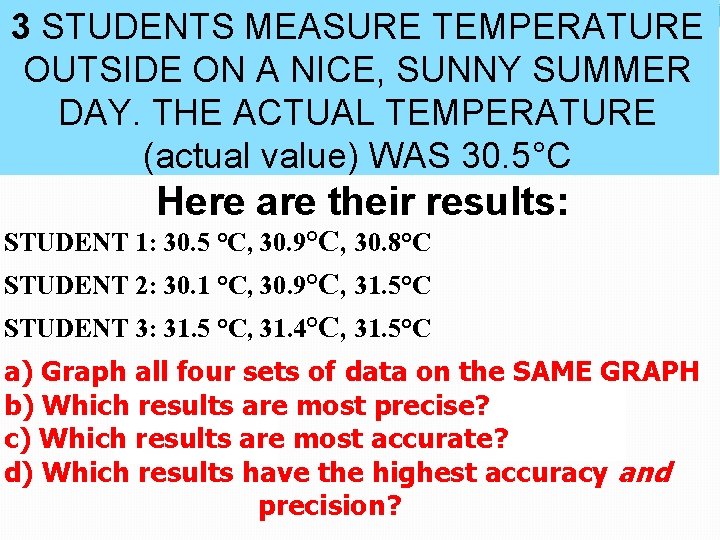
3 STUDENTS MEASURE TEMPERATURE OUTSIDE ON A NICE, SUNNY SUMMER DAY. THE ACTUAL TEMPERATURE (actual value) WAS 30. 5°C Here are their results: STUDENT 1: 30. 5 °C, 30. 9°C, 30. 8°C STUDENT 2: 30. 1 °C, 30. 9°C, 31. 5°C STUDENT 3: 31. 5 °C, 31. 4°C, 31. 5°C a) Graph all four sets of data on the SAME GRAPH b) Which results are most precise? c) Which results are most accurate? d) Which results have the highest accuracy and precision?
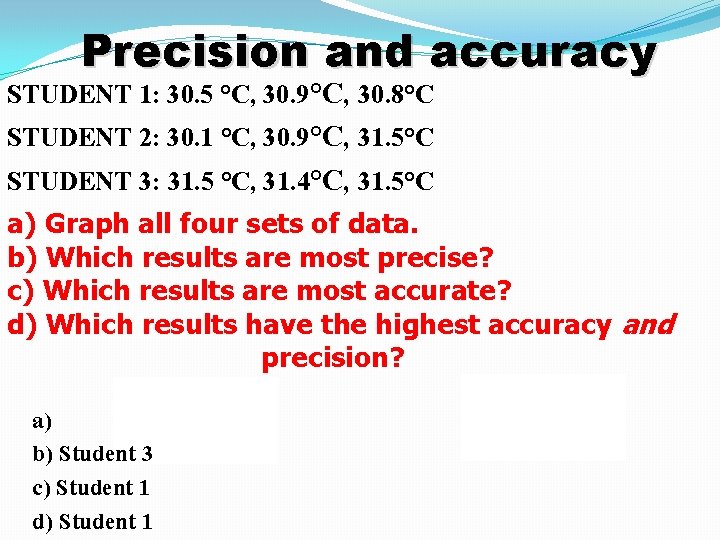
Precision and accuracy STUDENT 1: 30. 5 °C, 30. 9°C, 30. 8°C STUDENT 2: 30. 1 °C, 30. 9°C, 31. 5°C STUDENT 3: 31. 5 °C, 31. 4°C, 31. 5°C a) Graph all four sets of data. b) Which results are most precise? c) Which results are most accurate? d) Which results have the highest accuracy and precision? a) b) Student 3 c) Student 1 d) Student 1
- Slides: 18