Thermal Models 1 Introduction Hadrons Quarks AA 2

- Slides: 36
Thermal Models: 1) Introduction: Hadrons, Quarks, A+A 2) Statistical Mechanics of the HG (chemical potentials) 3) Hadron Matter QGP 4) Chemical Freeze-Out (hadron multiplicities) 5) Thermal Freeze-Out (hadron spectra) 6) Exact Charge Conservation: GCE CE MCE 1
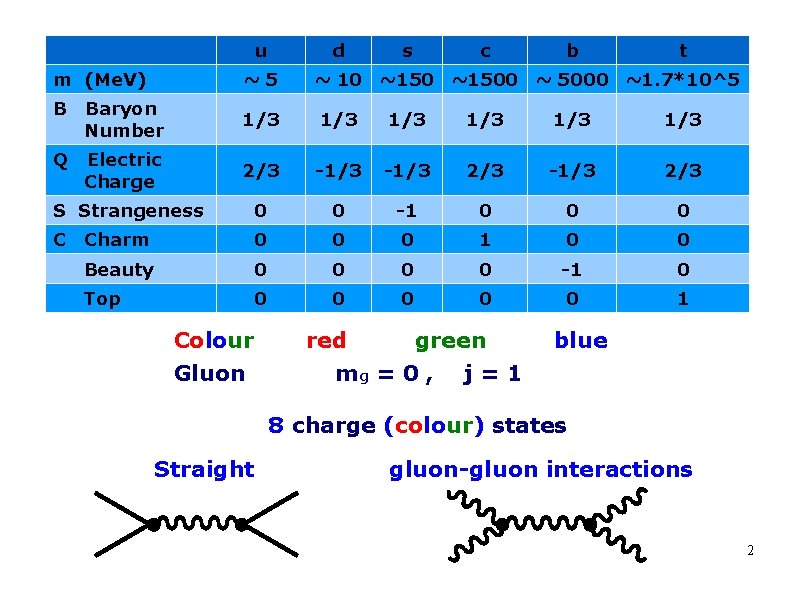
u m (Me. V) d s c b t ~5 ~ 10 ~1500 ~ 5000 ~1. 7*10^5 B Baryon Number 1/3 1/3 1/3 Q Electric Charge 2/3 -1/3 2/3 S Strangeness 0 0 -1 0 0 0 C Charm 0 0 0 1 0 0 Beauty 0 0 -1 0 Top 0 0 0 1 Colour Gluon red green mg = 0 , j = 1 blue 8 charge (colour) states Straight gluon-gluon interactions 2
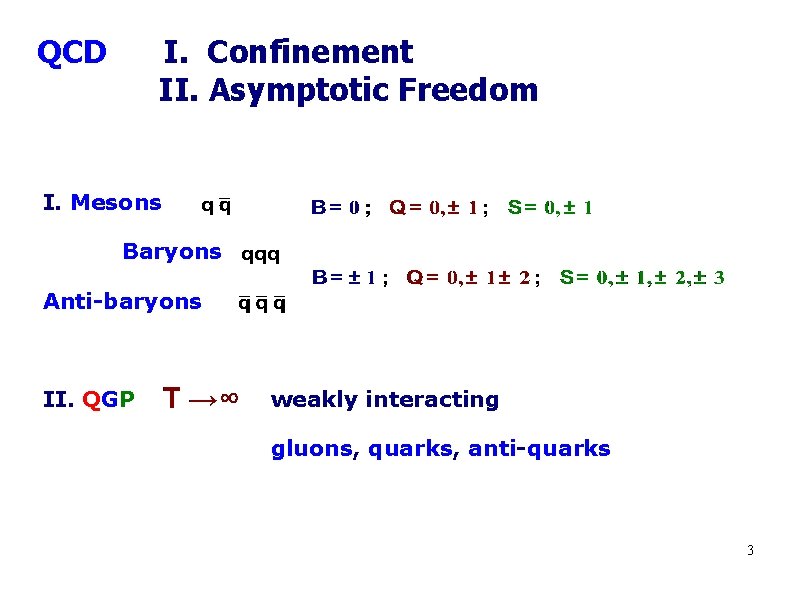
QCD I. Confinement II. Asymptotic Freedom I. Mesons Baryons Anti-baryons II. QGP weakly interacting gluons, quarks, anti-quarks 3
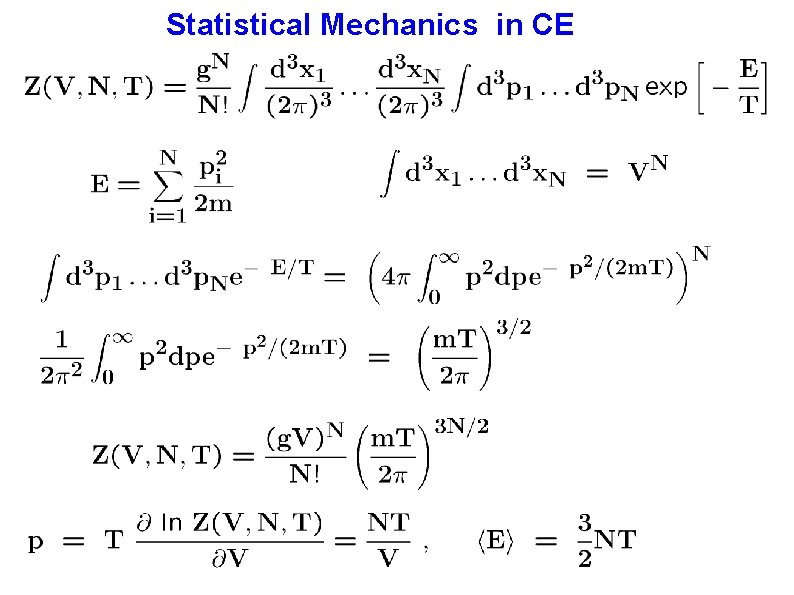
Statistical Mechanics in CE
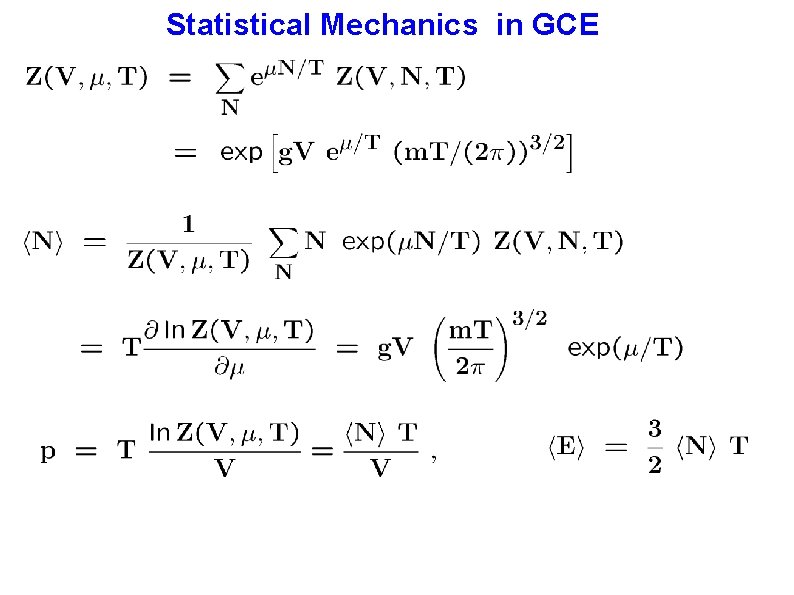
Statistical Mechanics in GCE
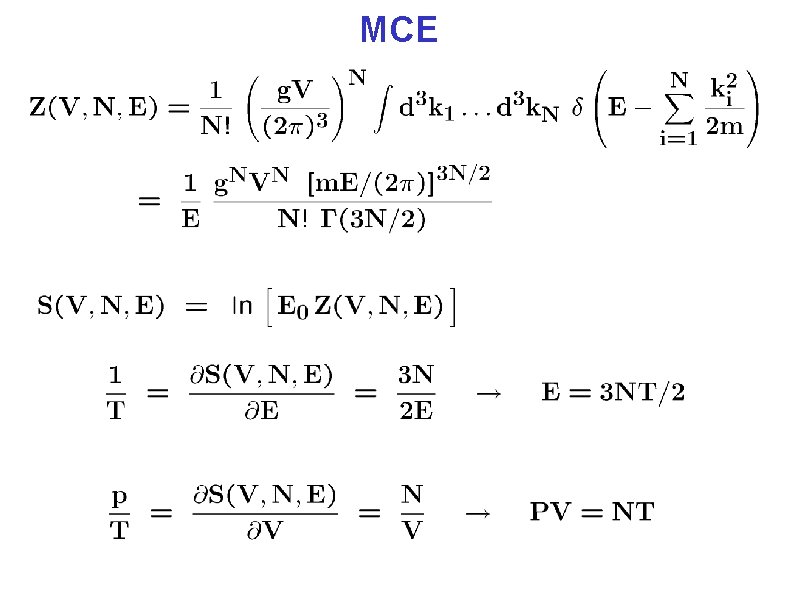
MCE
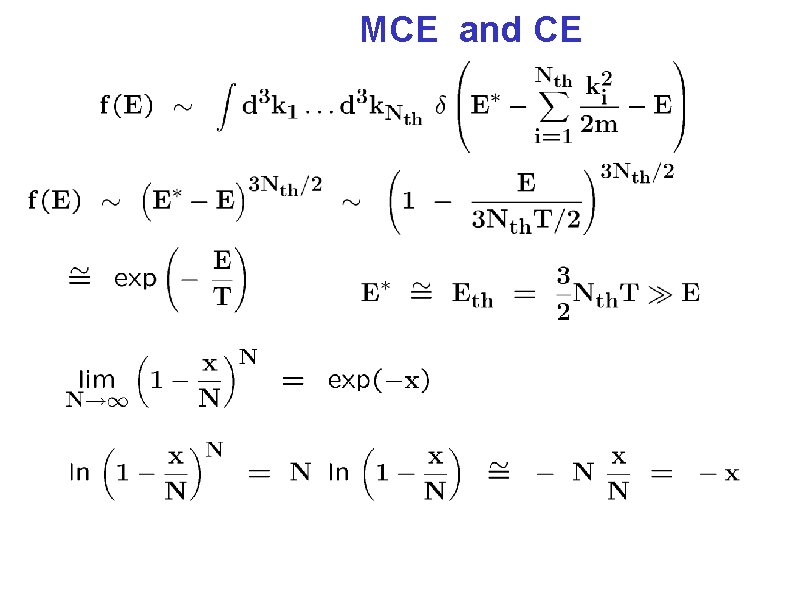
MCE and CE
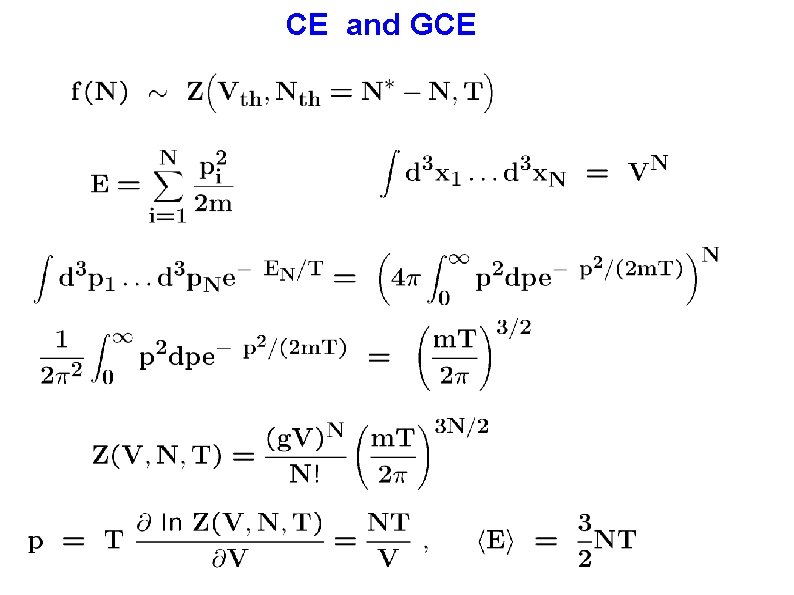
CE and GCE
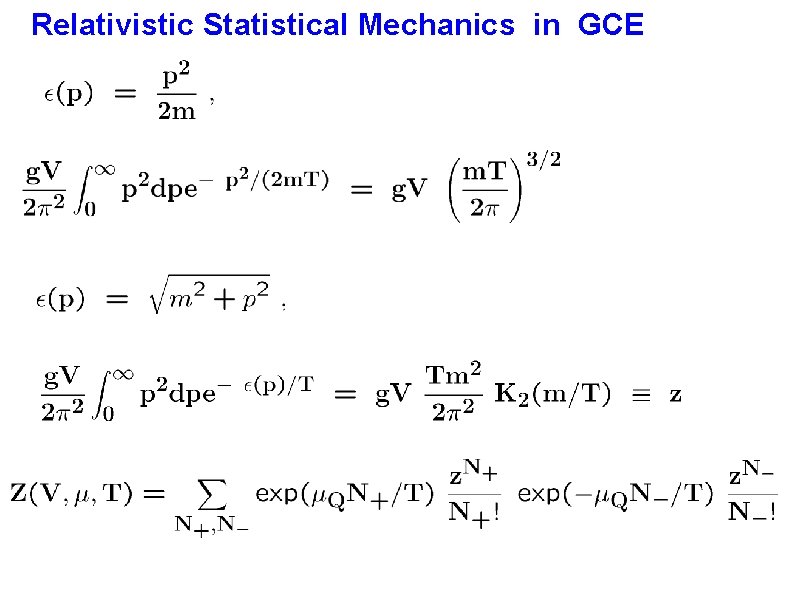
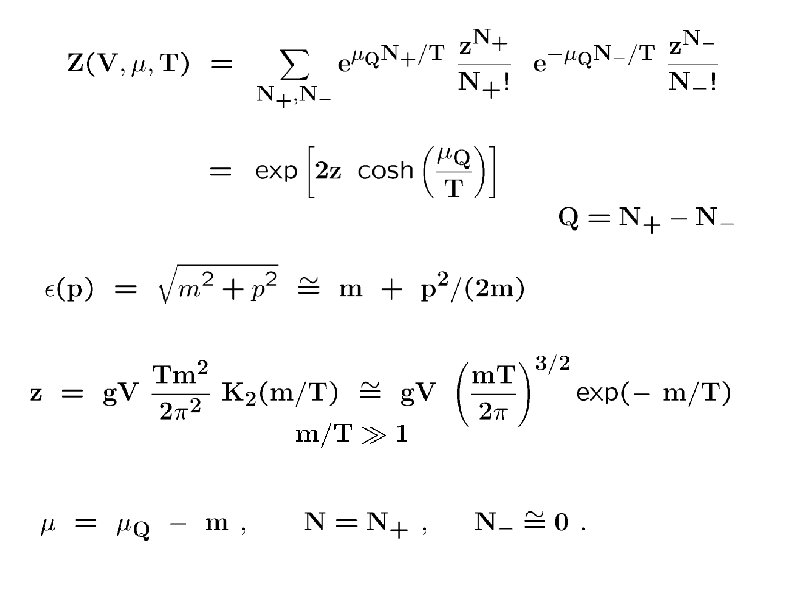
Relativistic Statistical Mechanics in GCE
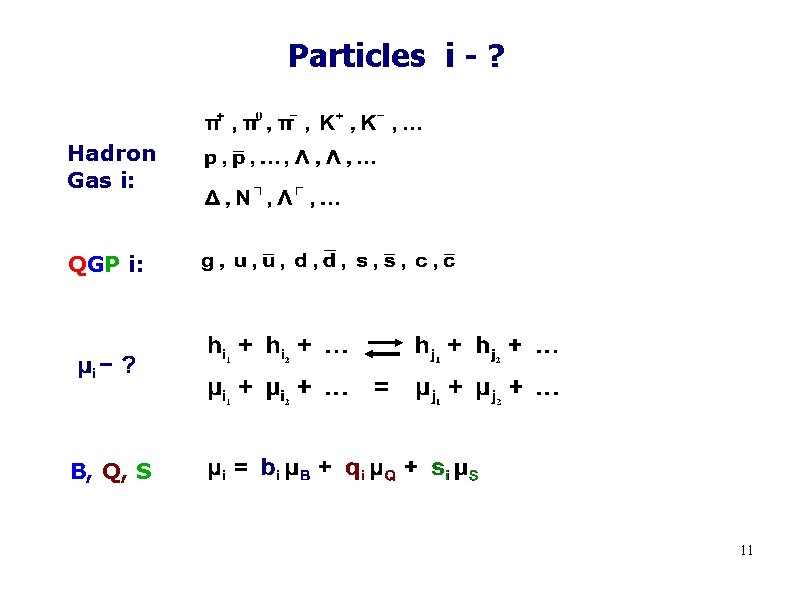
Particles i - ? Hadron Gas i: QGP i: B, Q, S 11
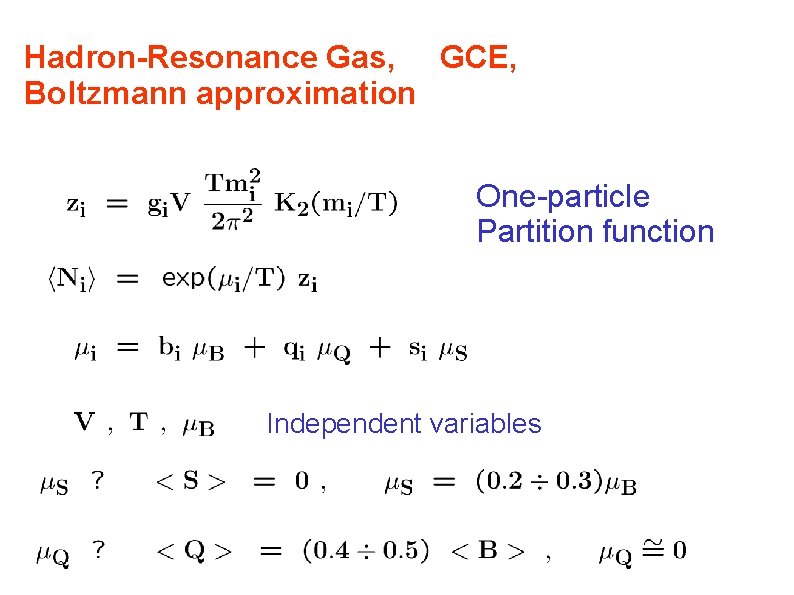
Hadron-Resonance Gas, GCE, Boltzmann approximation One-particle Partition function Independent variables
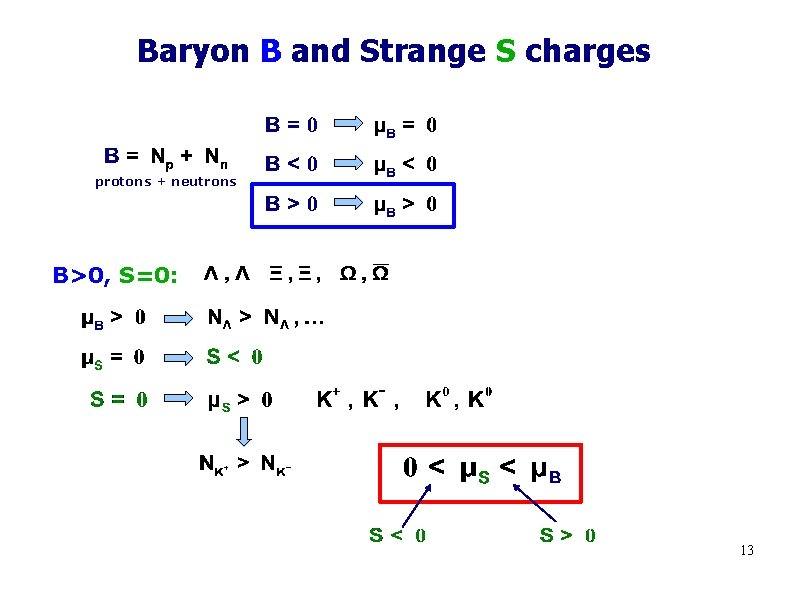
Baryon B and Strange S charges protons + neutrons B>0, S=0: 13
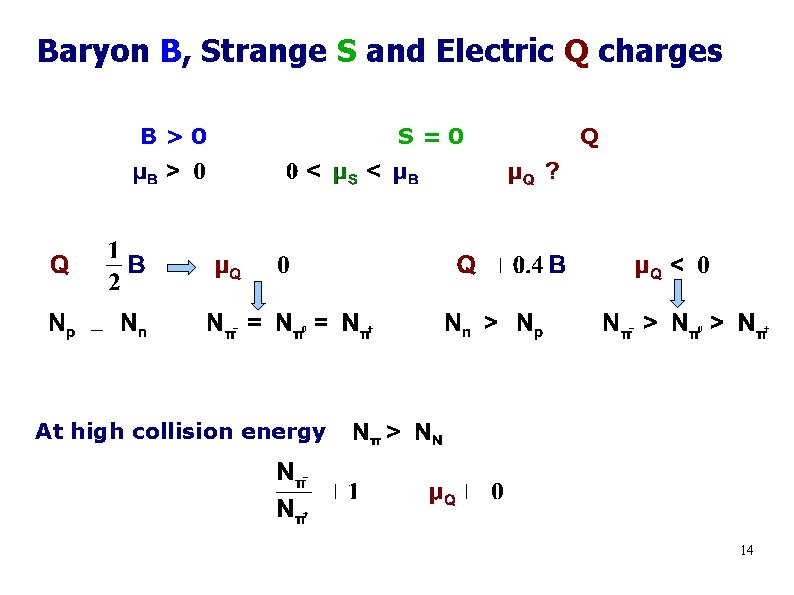
Baryon B, Strange S and Electric Q charges B>0 S=0 Q At high collision energy 14
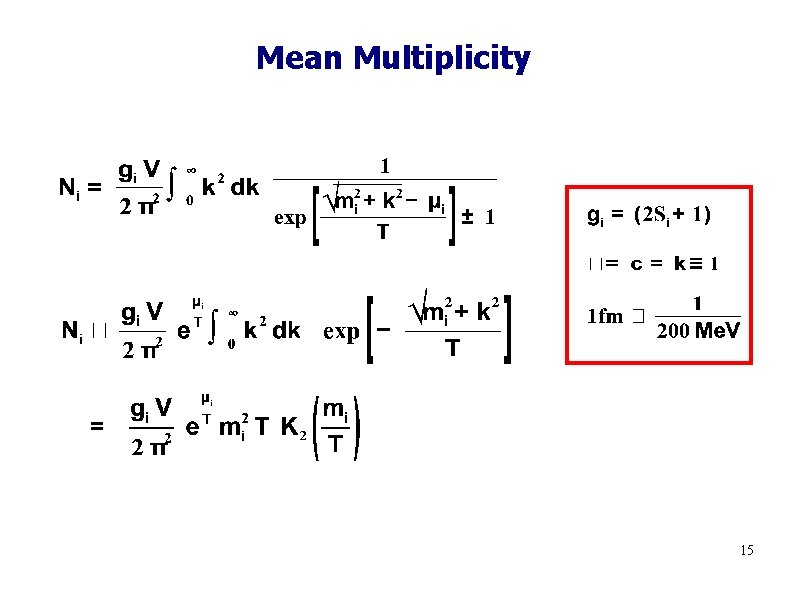
Mean Multiplicity 15
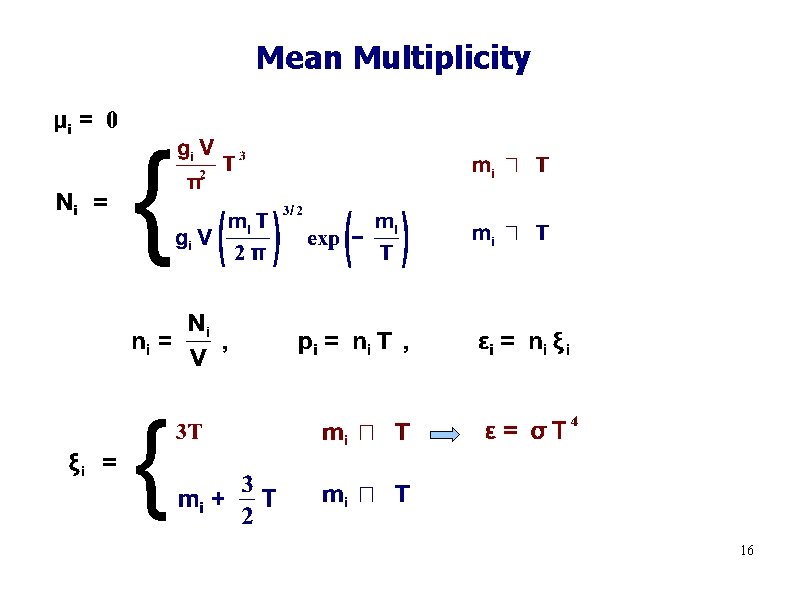
Mean Multiplicity 16
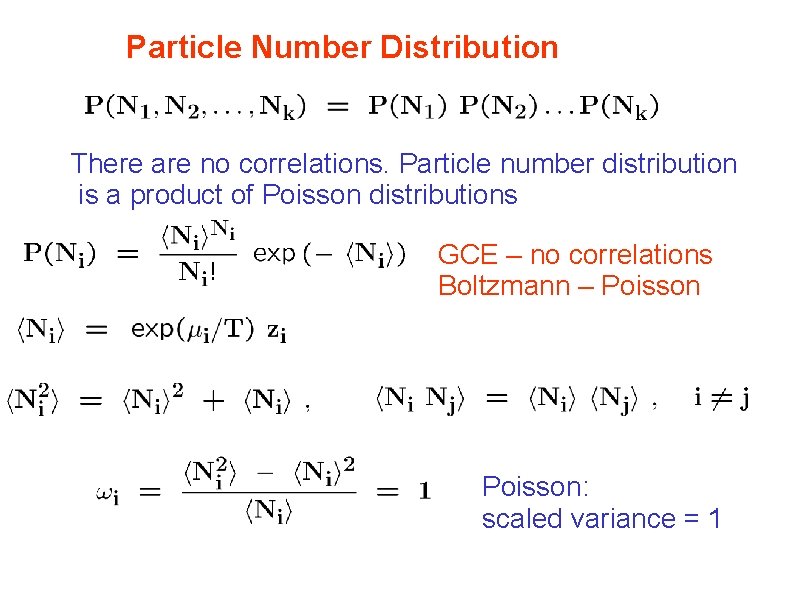
Particle Number Distribution There are no correlations. Particle number distribution is a product of Poisson distributions GCE – no correlations Boltzmann – Poisson: scaled variance = 1
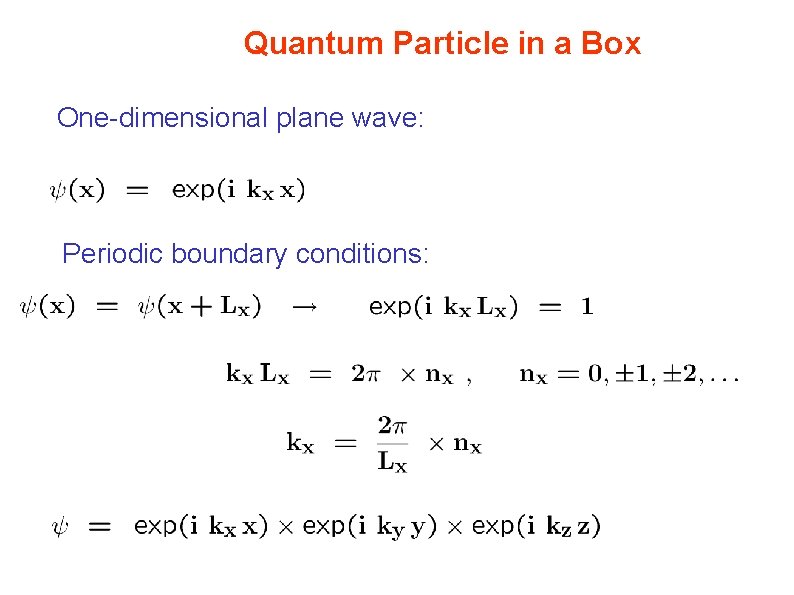
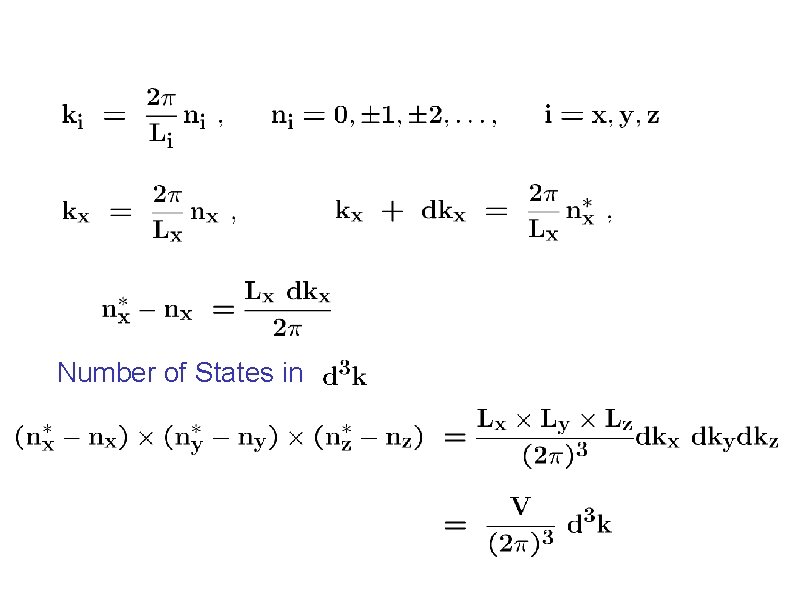
Quantum Particle in a Box One-dimensional plane wave: Periodic boundary conditions:
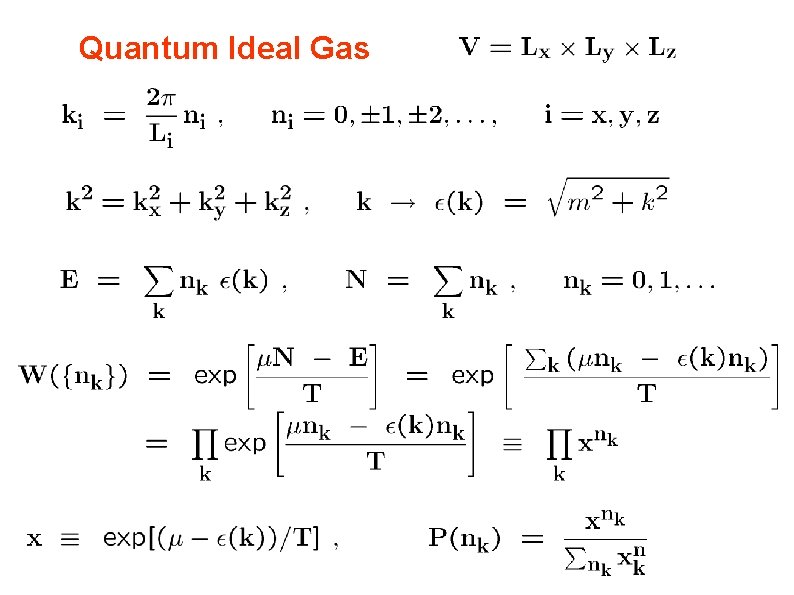
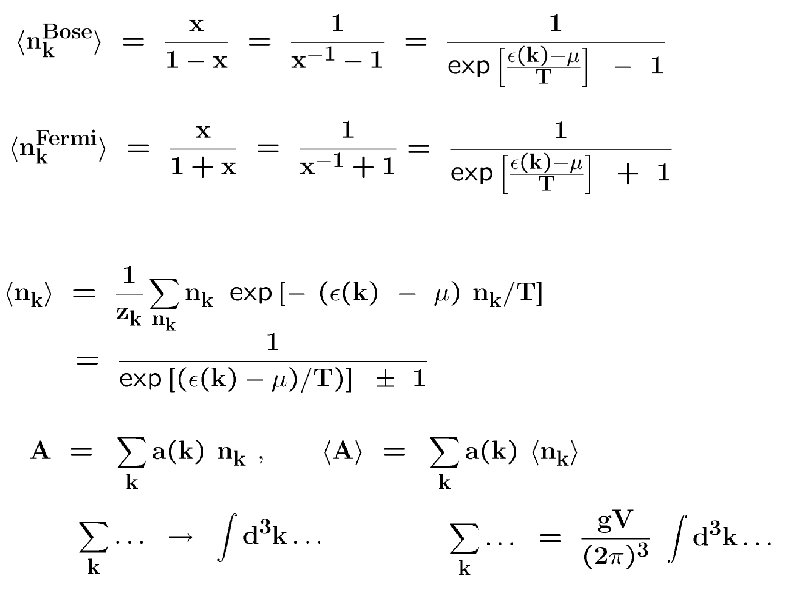
Quantum Ideal Gas
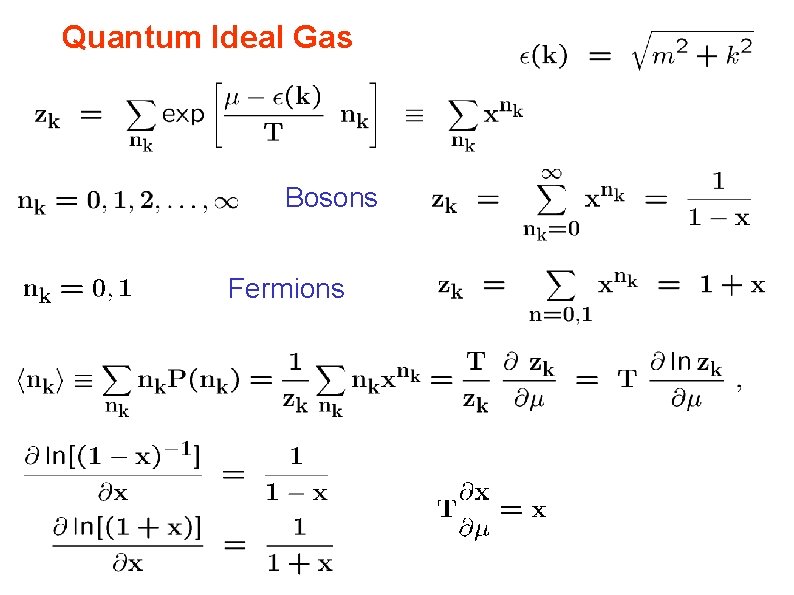
Quantum Ideal Gas Bosons Fermions
Number of States in
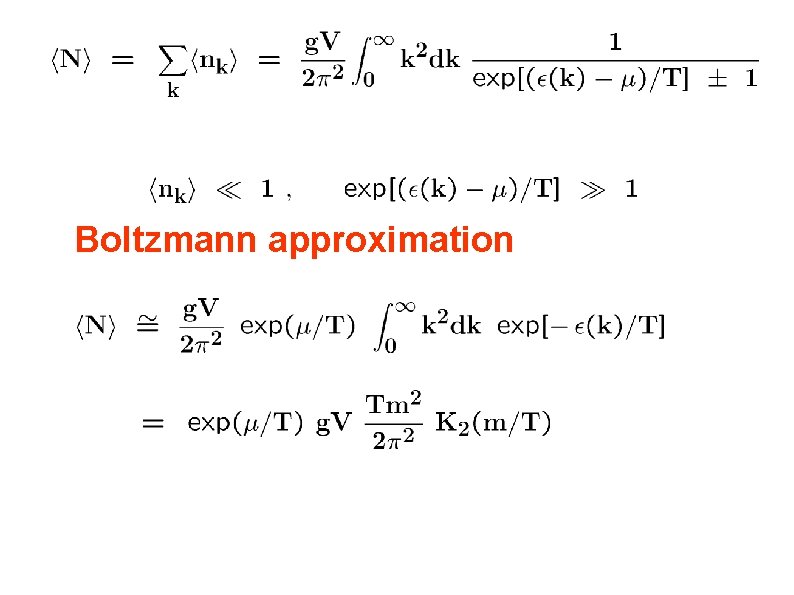
Boltzmann approximation
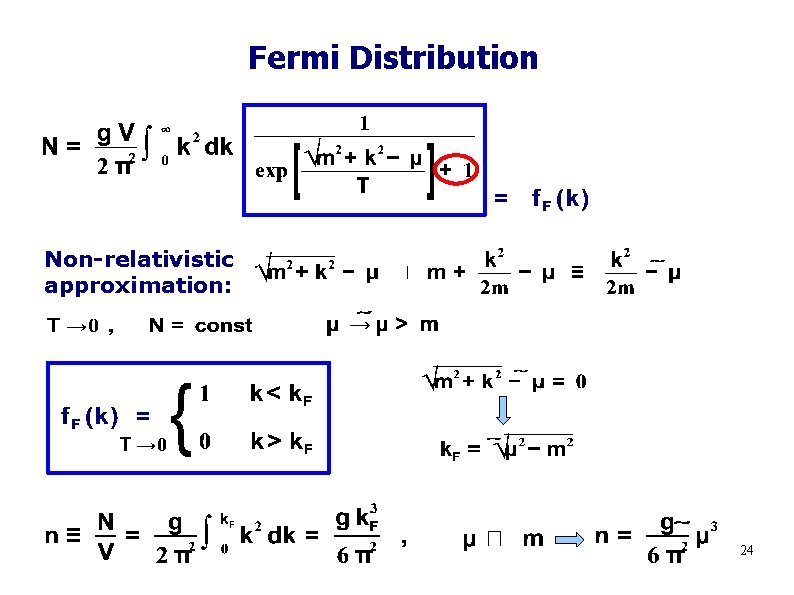
Fermi Distribution Non-relativistic approximation: 24
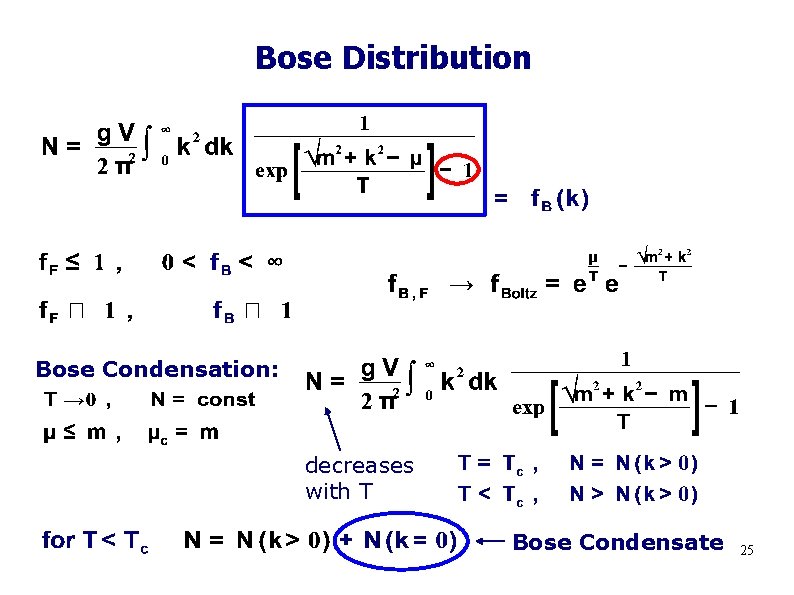
Bose Distribution Bose Condensation: decreases with T Bose Condensate 25
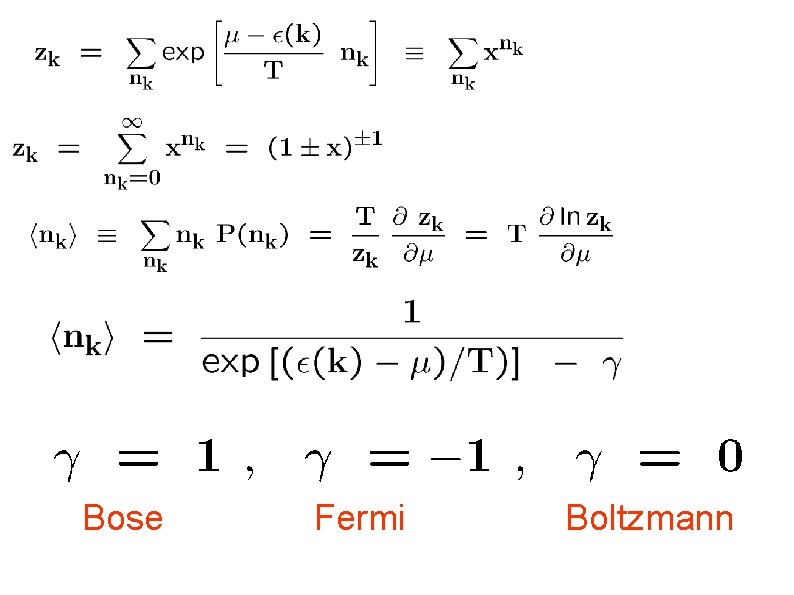
Bose Fermi Boltzmann
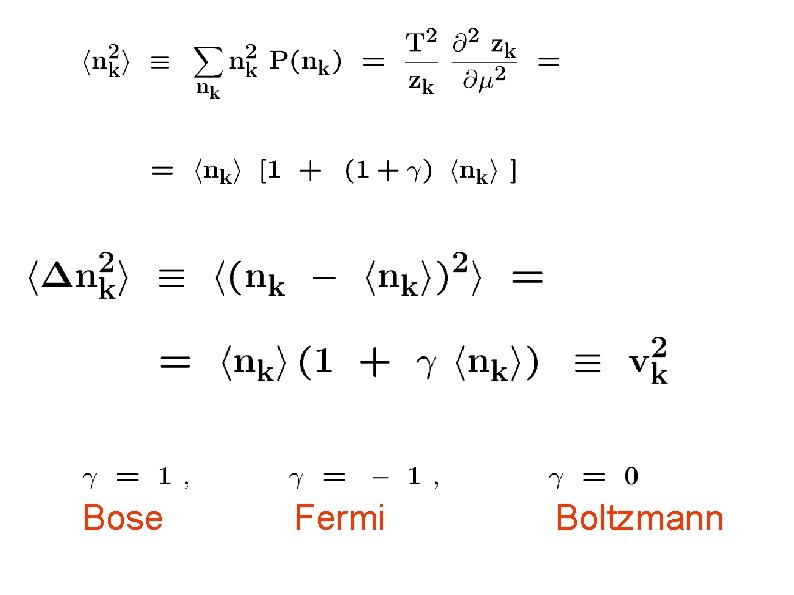
Bose Fermi Boltzmann
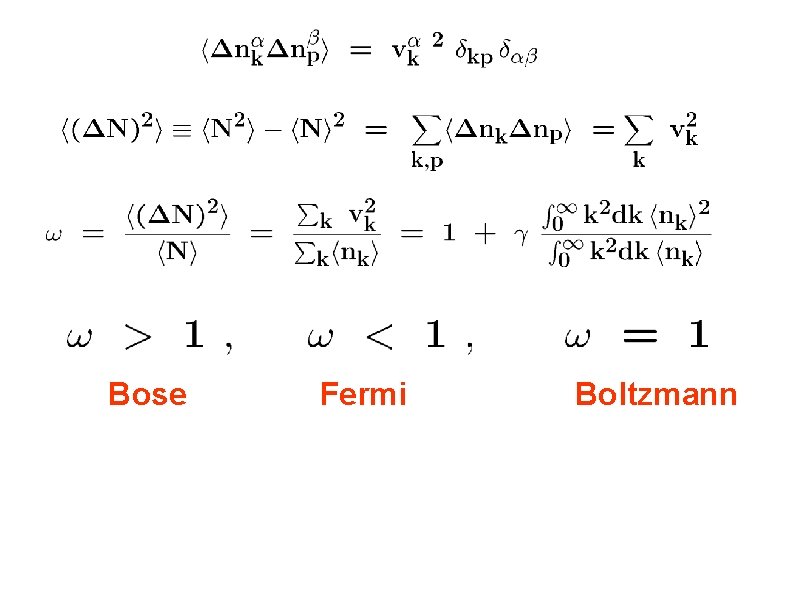
Bose Fermi Boltzmann
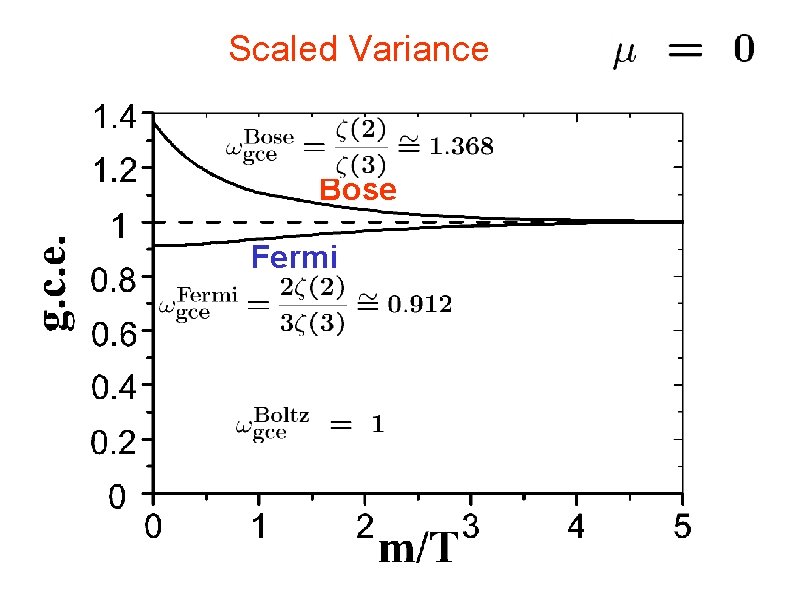
Scaled Variance Bose Fermi
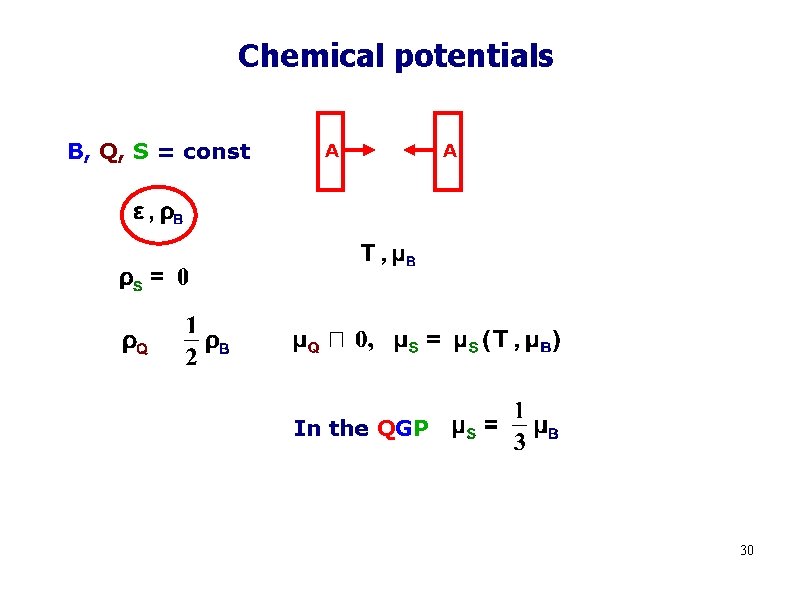
Chemical potentials B, Q, S = const A A In the QGP 30
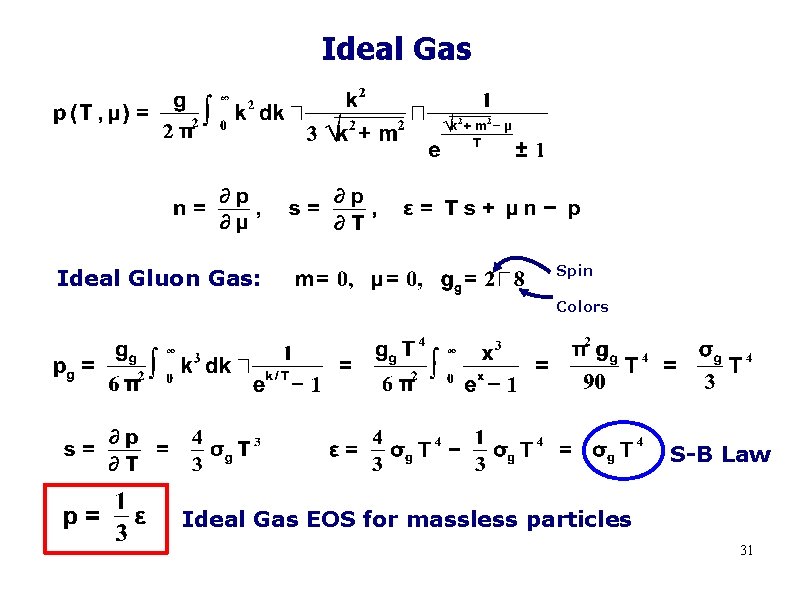
Ideal Gas Ideal Gluon Gas: Spin Colors S-B Law Ideal Gas EOS for massless particles 31
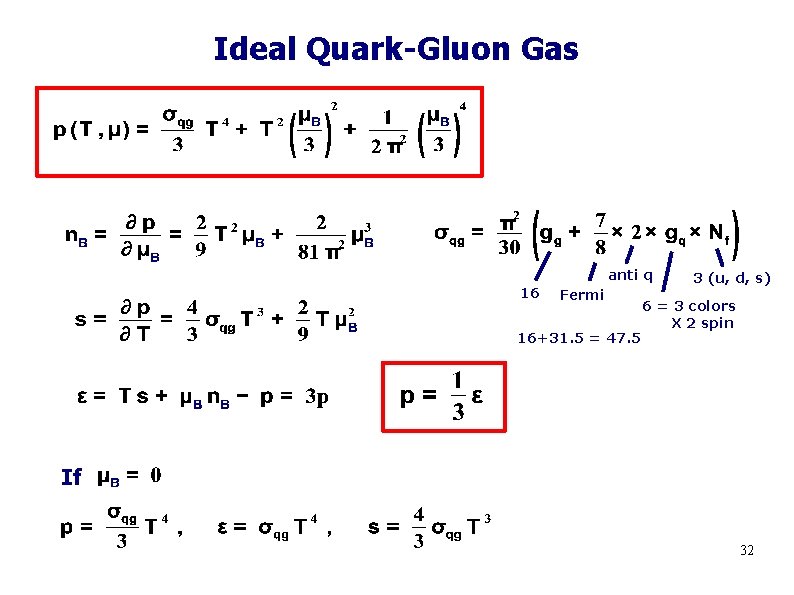
Ideal Quark-Gluon Gas anti q 16 Fermi 16+31. 5 = 47. 5 3 (u, d, s) 6 = 3 colors X 2 spin If 32
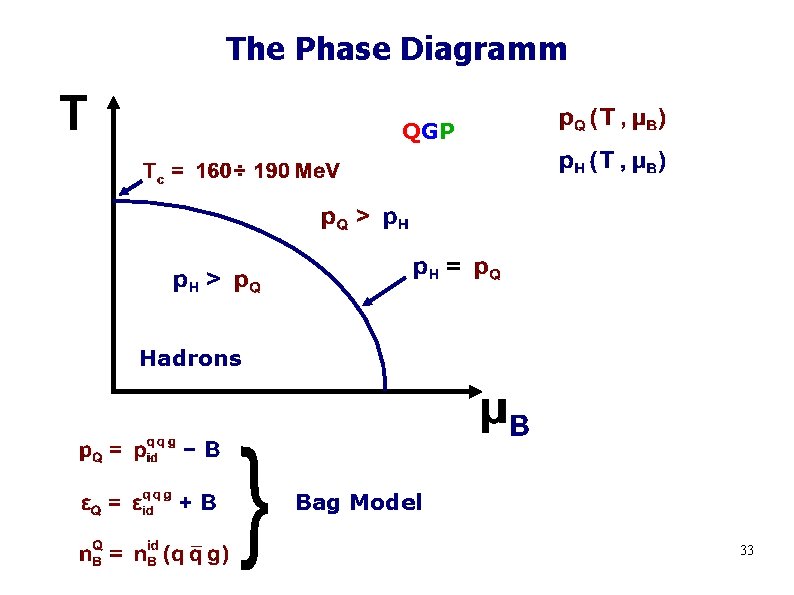
The Phase Diagramm QGP Hadrons Bag Model 33
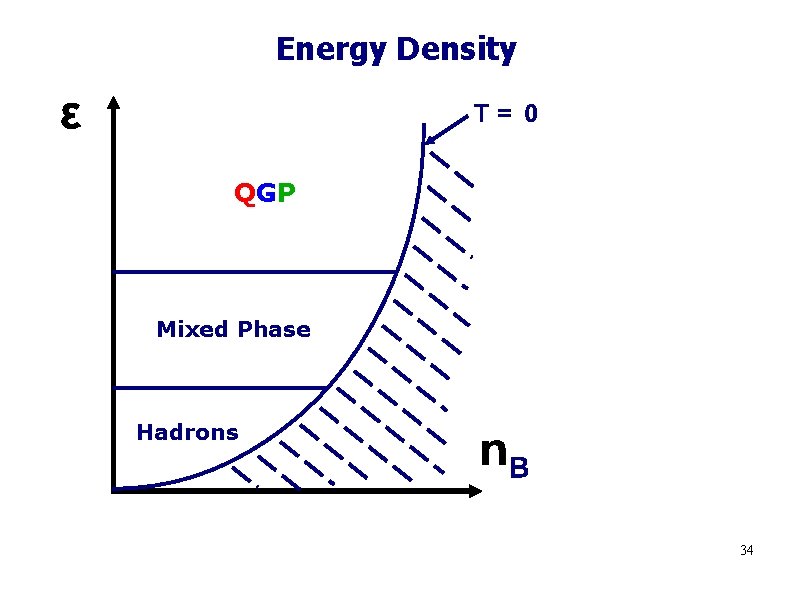
Energy Density QGP Mixed Phase Hadrons 34
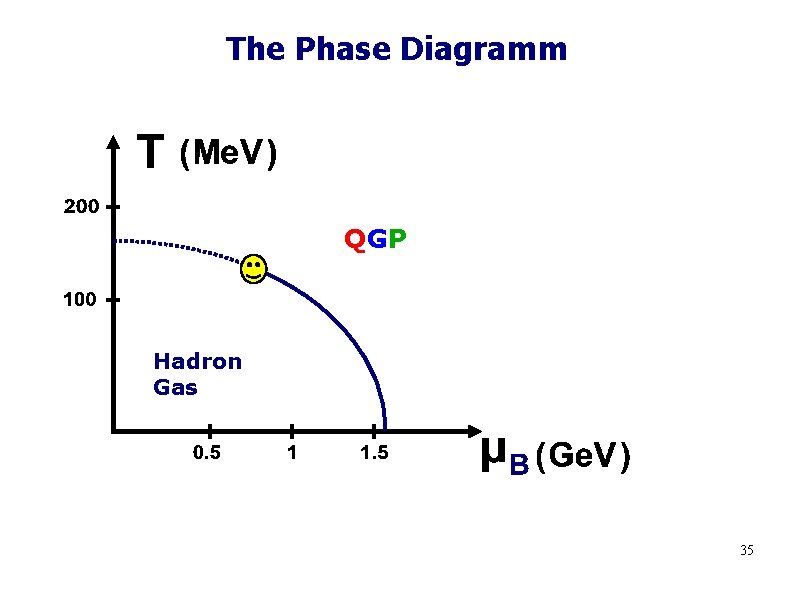
The Phase Diagramm QGP Hadron Gas 35
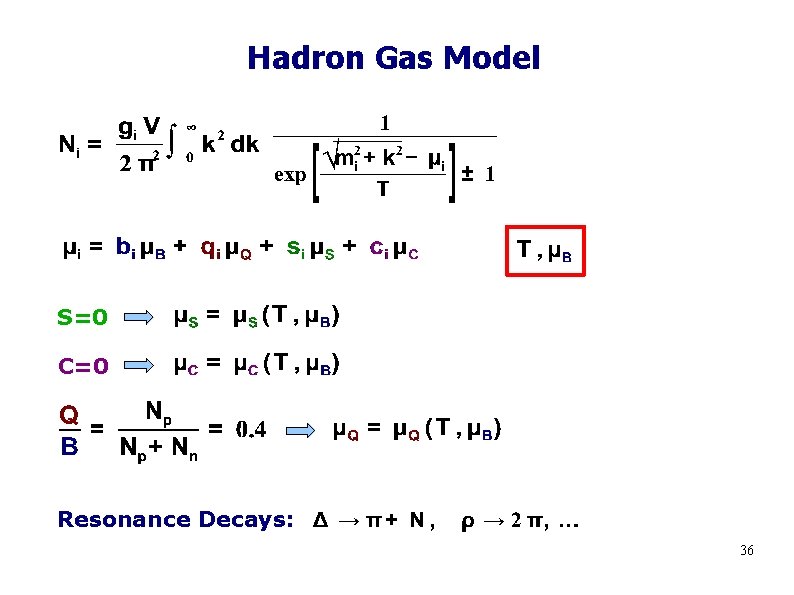
Hadron Gas Model S=0 C=0 Resonance Decays: 36