
Thermalling Skills 1 Larry Suter Air Sailing Thermal
- Slides: 40
Thermalling Skills -1 Larry Suter Air Sailing Thermal Camp June 6, 2016
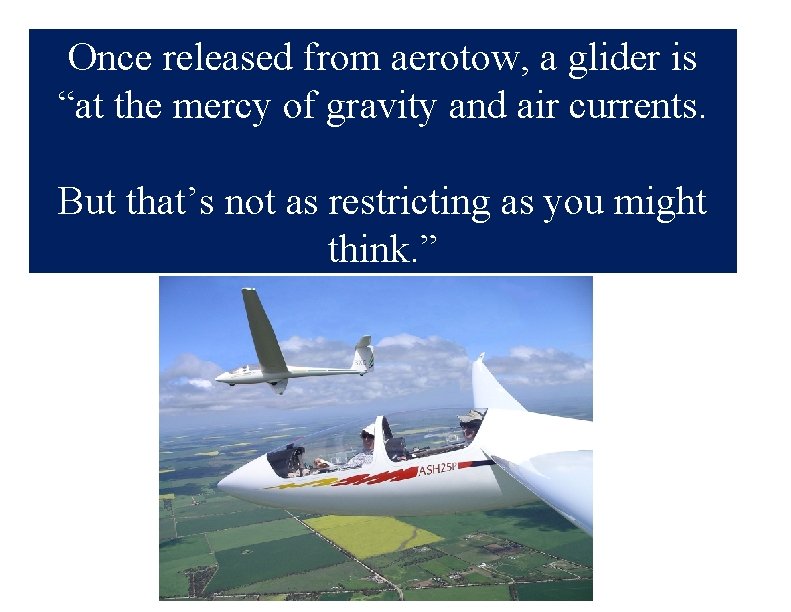
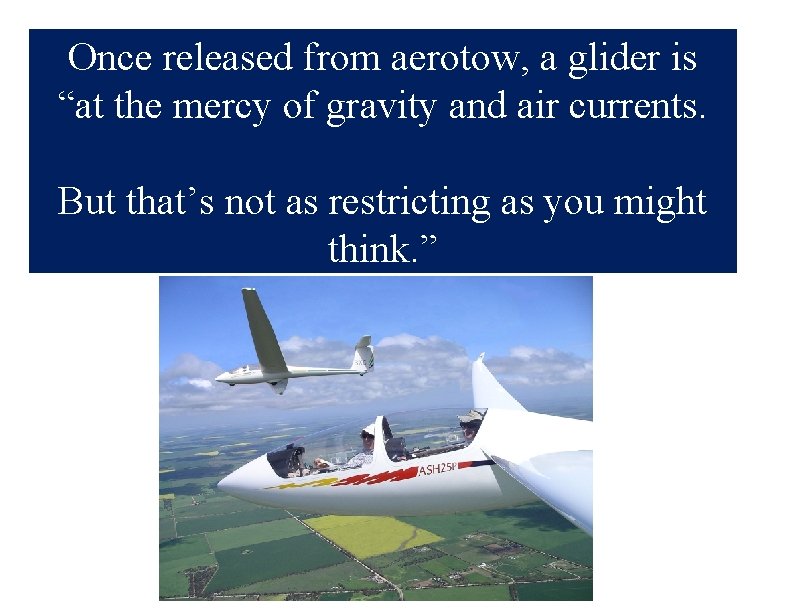
Once released from aerotow, a glider is “at the mercy of gravity and air currents. But that’s not as restricting as you might think. ”
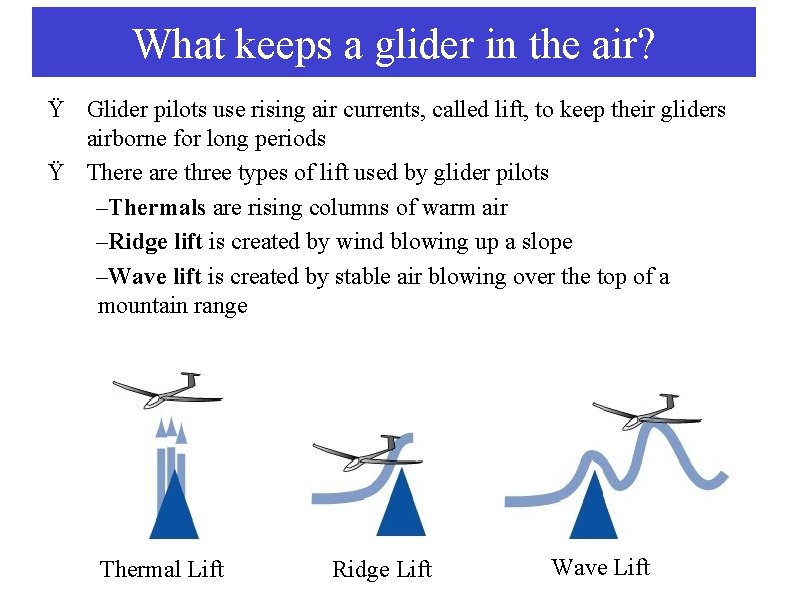
What keeps a glider in the air? Ÿ Glider pilots use rising air currents, called lift, to keep their gliders airborne for long periods Ÿ There are three types of lift used by glider pilots –Thermals are rising columns of warm air –Ridge lift is created by wind blowing up a slope –Wave lift is created by stable air blowing over the top of a mountain range Thermal Lift Ridge Lift Wave Lift
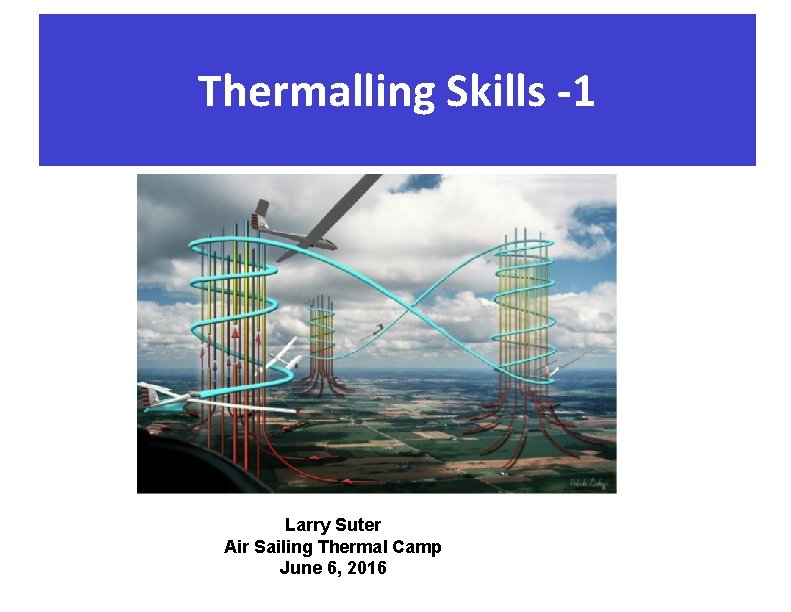
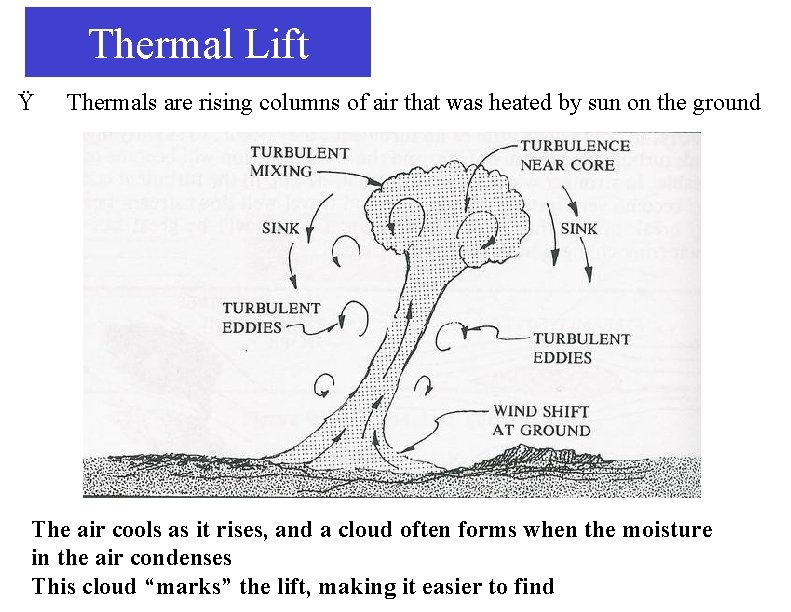
Thermal Lift Ÿ Thermals are rising columns of air that was heated by sun on the ground The air cools as it rises, and a cloud often forms when the moisture in the air condenses This cloud “marks” the lift, making it easier to find
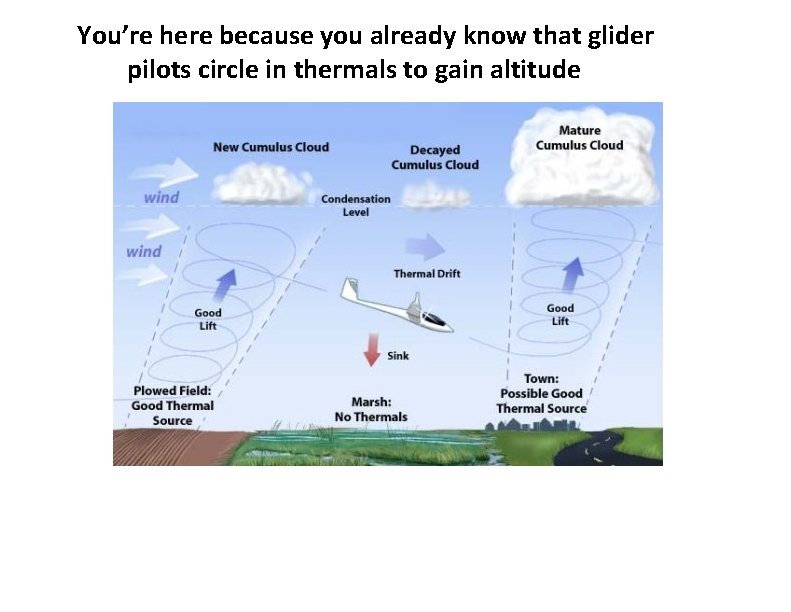
You’re here because you already know that glider Thermal Lift pilots circle in thermals to gain altitude
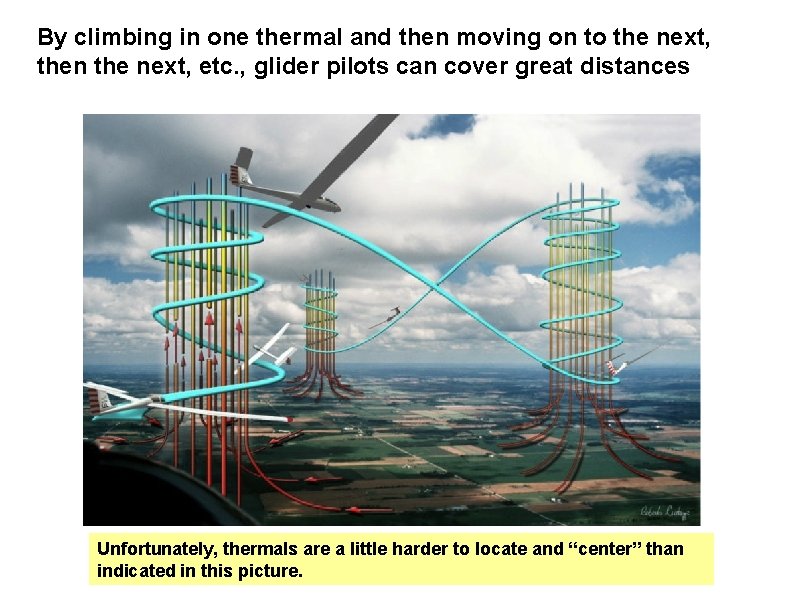
By climbing in one thermal and then moving on to the next, then the next, etc. , glider pilots can cover great distances Unfortunately, thermals are a little harder to locate and “center” than indicated in this picture.
The fundamental questions of thermalling are: 1. Where should I be looking to find a thermal? 2. Is this a thermal? 3. When should I begin turning? 4. Which way should I turn? 5. How do I go about “centering” thermal (be in strong lift the entire circle)?
The fundamental questions of thermalling are: 1. Where should I be looking to find a thermal? 2. Is this a thermal? 3. When should I begin turning? 4. Which way should I turn? 5. How do I go about “centering” thermal (be in strong lift the entire circle)? In this talk, we’ll attempt to answer questions 2 -5
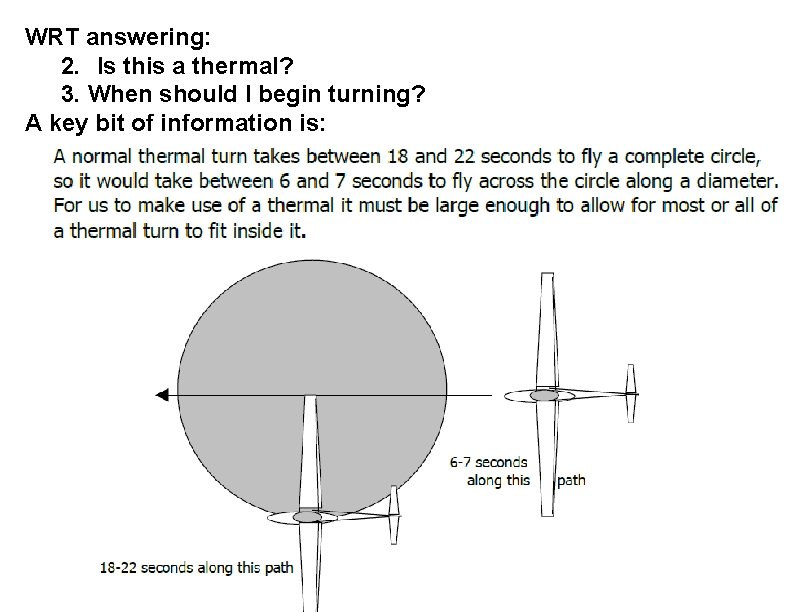
WRT answering: 2. Is this a thermal? 3. When should I begin turning? A key bit of information is:
2. Is this a thermal? The first indicator of a nearby thermal is often increased sink. Next, a positive G-force is felt, which may be subtle or obvious, depending on thermal strength. The “seat-of-the-pants” indication of lift is the quickest, and is faster than any variometer, which has a lag. Note the trend of the variometer needle (should be an upswing) or the audio variometer going from the drone to excited beeping.
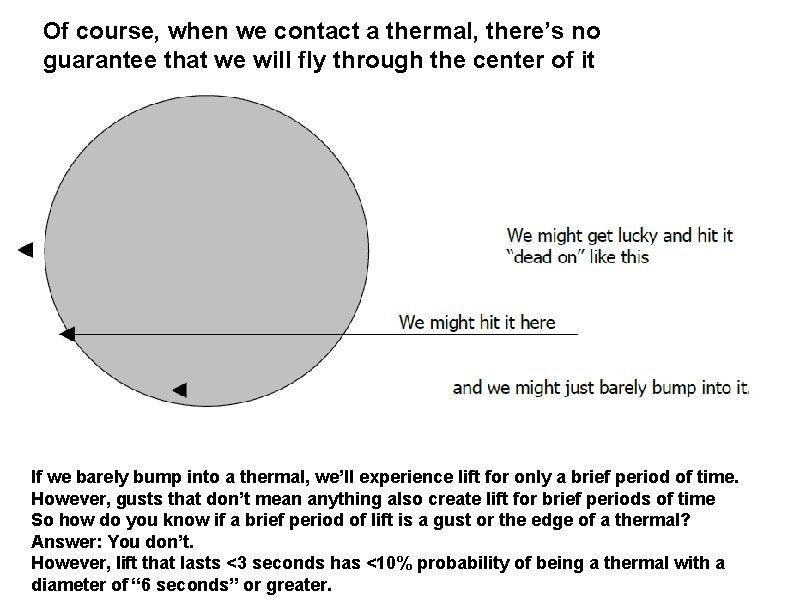
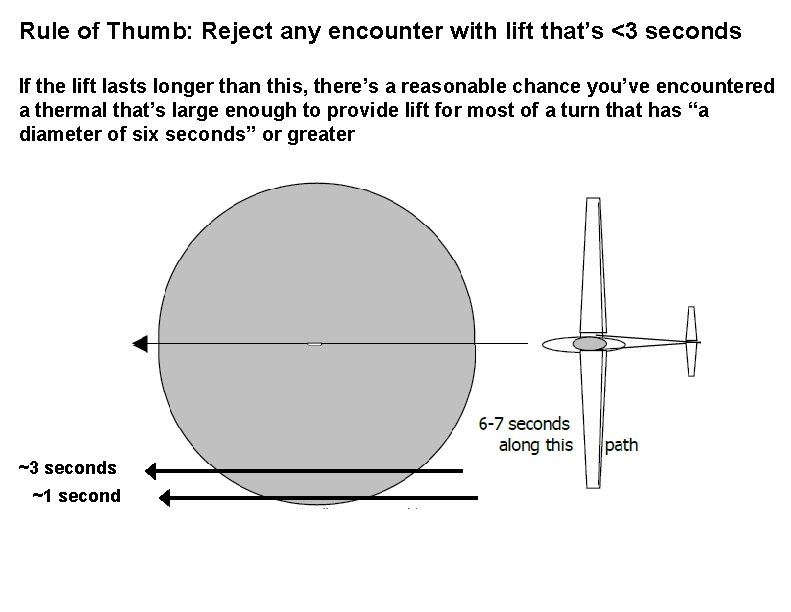
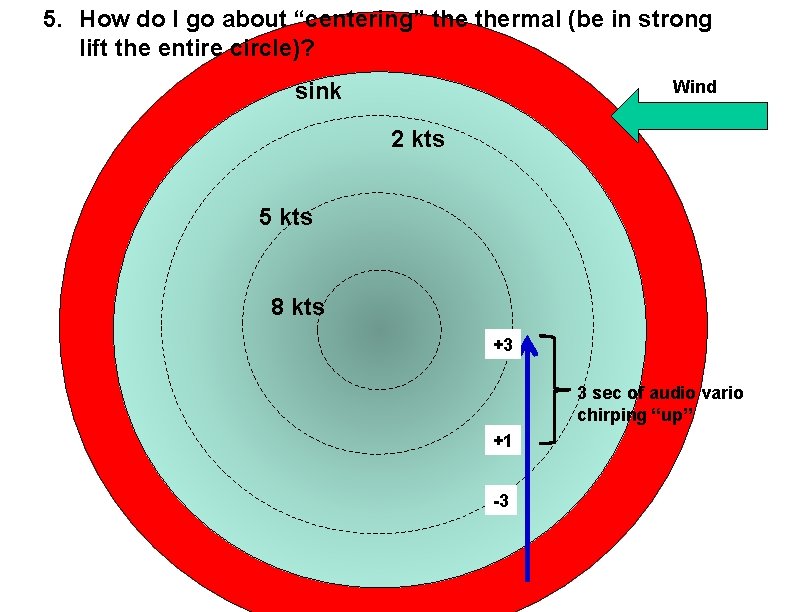
Of course, when we contact a thermal, there’s no guarantee that we will fly through the center of it If we barely bump into a thermal, we’ll experience lift for only a brief period of time. However, gusts that don’t mean anything also create lift for brief periods of time So how do you know if a brief period of lift is a gust or the edge of a thermal? Answer: You don’t. However, lift that lasts <3 seconds has <10% probability of being a thermal with a diameter of “ 6 seconds” or greater.
Rule of Thumb: Reject any encounter with lift that’s <3 seconds If the lift lasts longer than this, there’s a reasonable chance you’ve encountered a thermal that’s large enough to provide lift for most of a turn that has “a diameter of six seconds” or greater ~3 seconds ~1 second
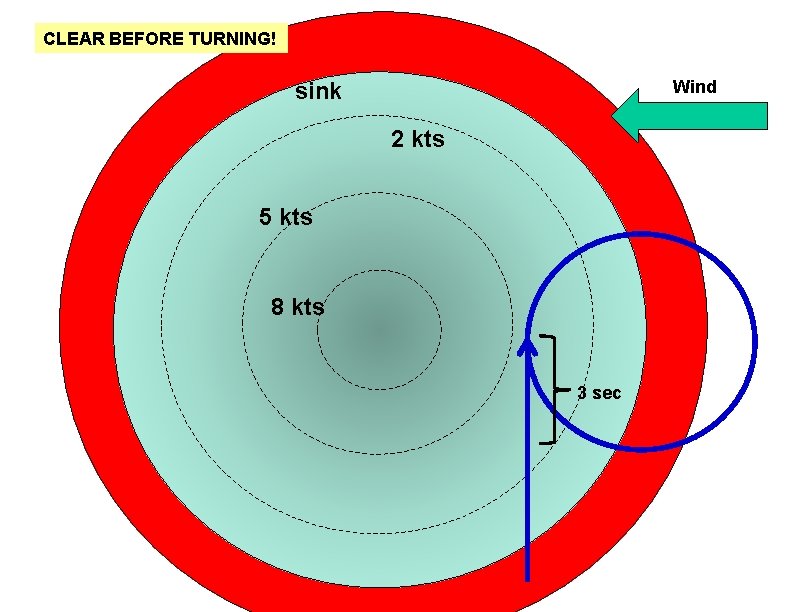
The first indicator of a nearby thermal is often increased sink. Next, a positive G-force is felt, which may be subtle or obvious, depending on thermal strength. The “seat-of-the-pants” indication of lift is the quickest, and is faster than any variometer, which has a small lag. Note the trend of the variometer needle (should be an upswing) or the audio variometer going from the drone to excited beeping. And now you’ve been in this lift for three seconds • • • 1. Is this a thermal? - Most likely! 2. When should I begin turning? Today’s answer: At three seconds!!!!!!! You must be decisive in soaring “Turn briskly and positively into thermal” Be sure to clear the area before turning!!!! But wait a minute…. . 3. Which way should I turn?
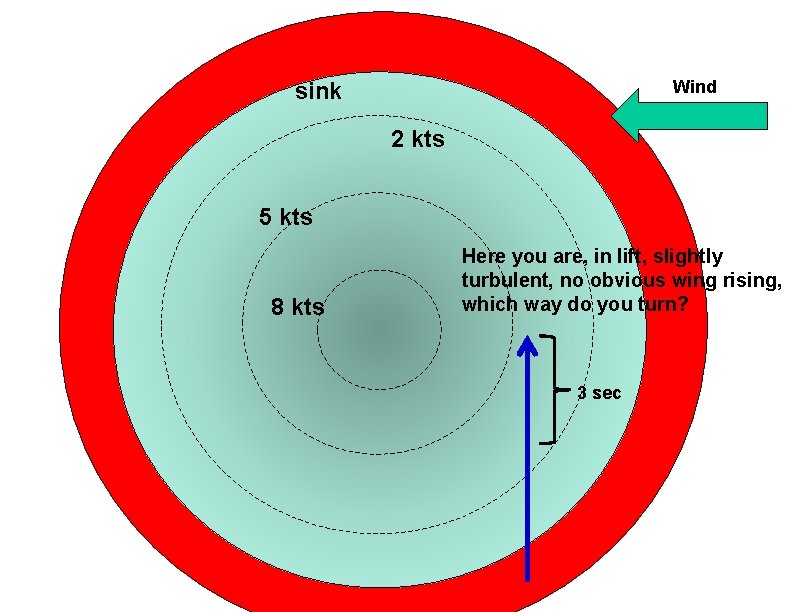
Which way should I turn? Many new soaring pilots seem to spend too much time and attention on deciding which way to turn upon finding a thermal. Most instructors will tell you that it isn’t at all uncommon to fly completely through thermal before the decision has been made! This is unnecessary since the decision is easy and you’ve had three whole seconds to mull it over
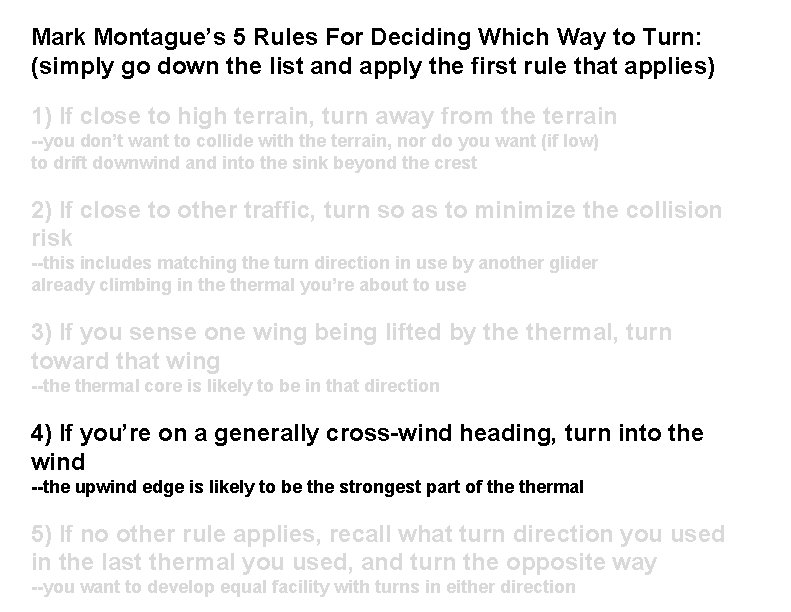
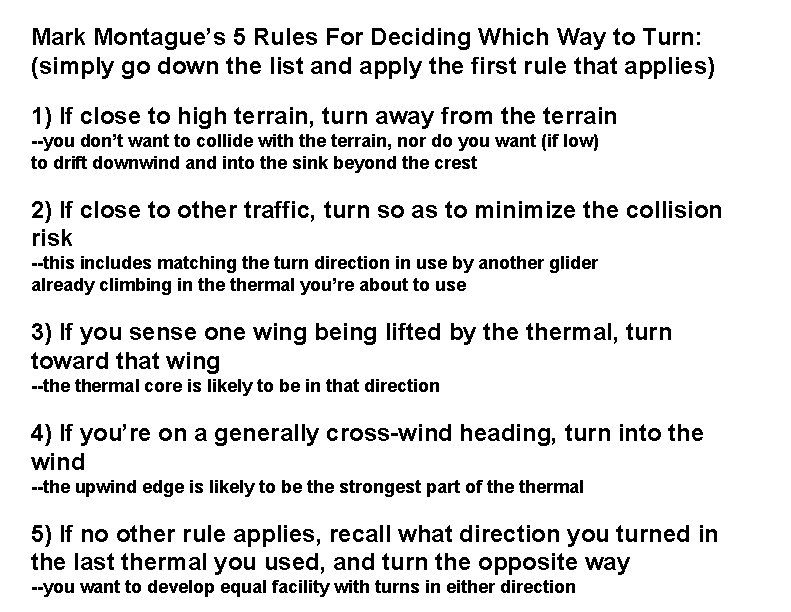
Mark Montague’s 5 Rules For Deciding Which Way to Turn: (simply go down the list and apply the first rule that applies) 1) If close to high terrain, turn away from the terrain --you don’t want to collide with the terrain, nor do you want (if low) to drift downwind and into the sink beyond the crest 2) If close to other traffic, turn so as to minimize the collision risk --this includes matching the turn direction in use by another glider already climbing in thermal you’re about to use 3) If you sense one wing being lifted by thermal, turn toward that wing --the thermal core is likely to be in that direction 4) If you’re on a generally cross-wind heading, turn into the wind --the upwind edge is likely to be the strongest part of thermal 5) If no other rule applies, recall what direction you turned in the last thermal you used, and turn the opposite way --you want to develop equal facility with turns in either direction
5. How do I go about “centering” thermal (be in strong lift the entire circle)? Wind sink 2 kts 5 kts 8 kts +3 3 sec of audio vario chirping “up” +1 -3
Wind sink 2 kts 5 kts 8 kts Here you are, in lift, slightly turbulent, no obvious wing rising, which way do you turn? 3 sec
Mark Montague’s 5 Rules For Deciding Which Way to Turn: (simply go down the list and apply the first rule that applies) 1) If close to high terrain, turn away from the terrain --you don’t want to collide with the terrain, nor do you want (if low) to drift downwind and into the sink beyond the crest 2) If close to other traffic, turn so as to minimize the collision risk --this includes matching the turn direction in use by another glider already climbing in thermal you’re about to use 3) If you sense one wing being lifted by thermal, turn toward that wing --the thermal core is likely to be in that direction 4) If you’re on a generally cross-wind heading, turn into the wind --the upwind edge is likely to be the strongest part of thermal 5) If no other rule applies, recall what turn direction you used in the last thermal you used, and turn the opposite way --you want to develop equal facility with turns in either direction
CLEAR BEFORE TURNING! Wind sink 2 kts 5 kts 8 kts 3 sec
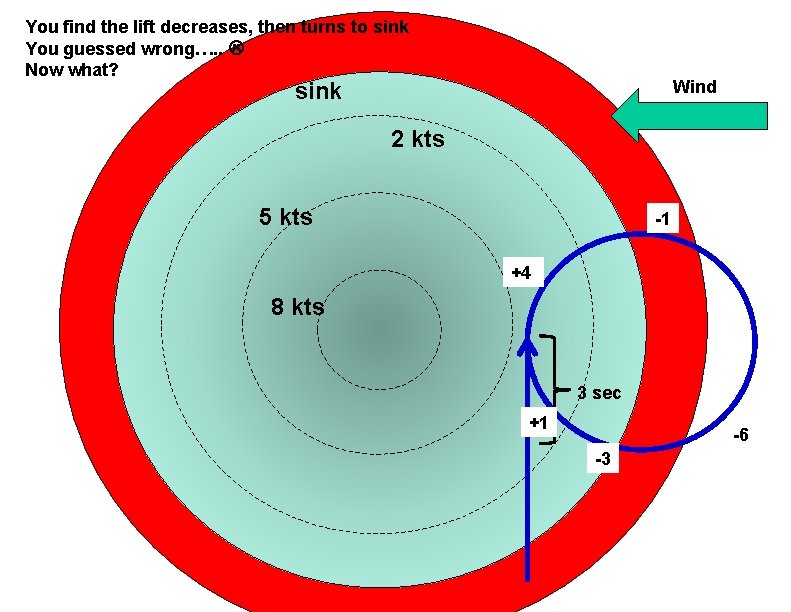
You find the lift decreases, then turns to sink You guessed wrong…. . Now what? Wind sink 2 kts 5 kts -1 +4 8 kts 3 sec +1 -6 -3
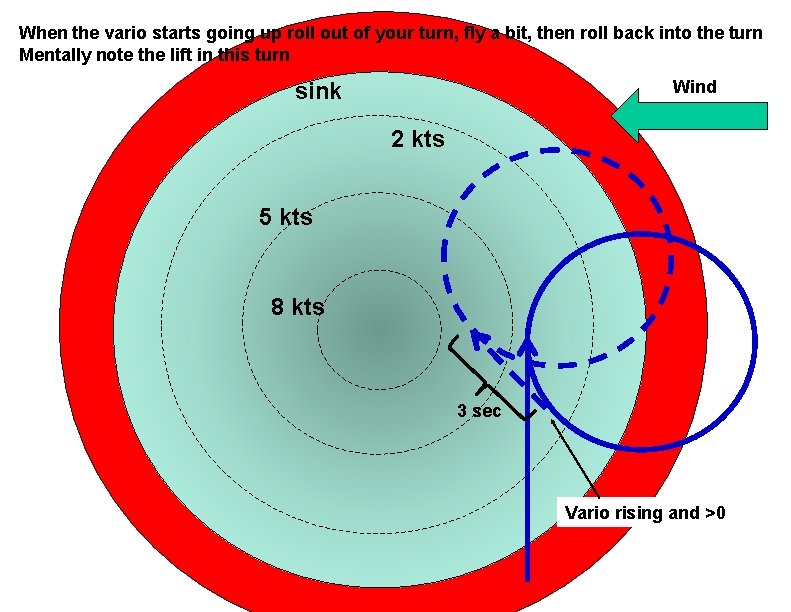
When the vario starts going up roll out of your turn, fly a bit, then roll back into the turn Mentally note the lift in this turn Wind sink 2 kts 5 kts 8 kts 3 sec Vario rising and >0
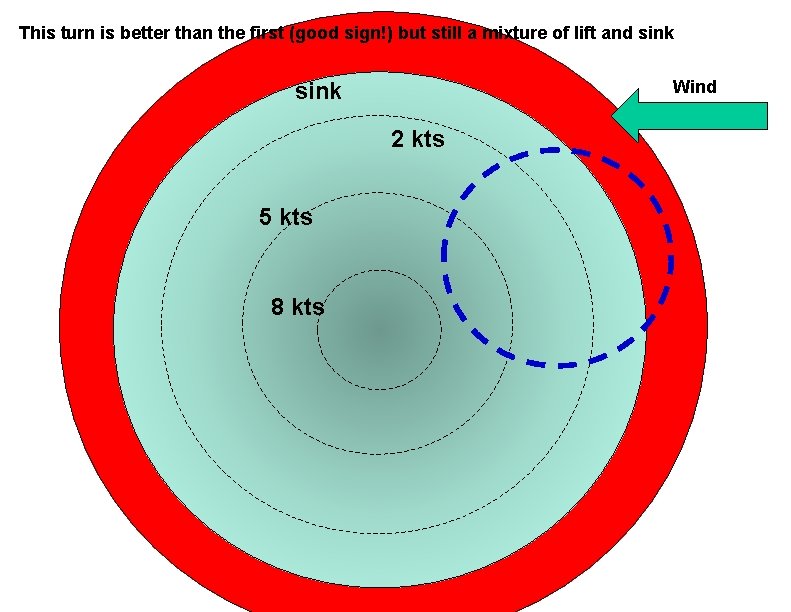
This turn is better than the first (good sign!) but still a mixture of lift and sink Wind sink 2 kts 5 kts 8 kts
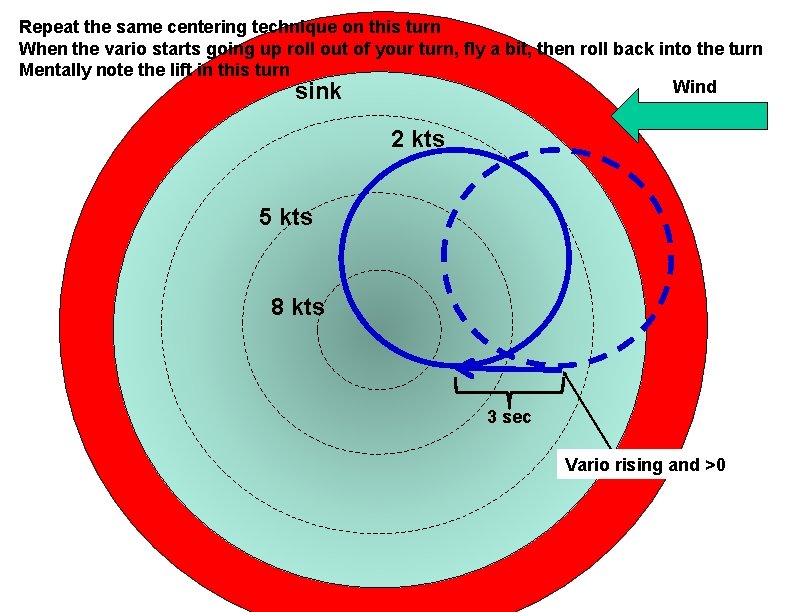
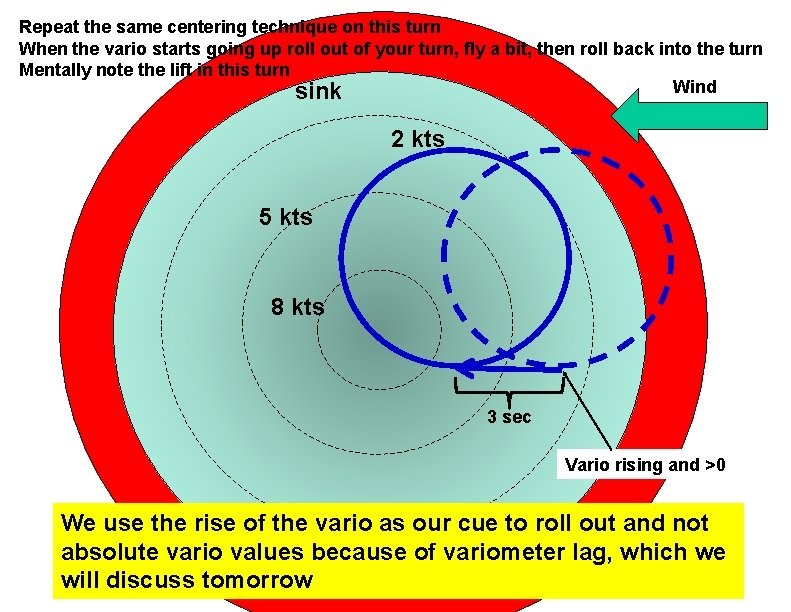
Repeat the same centering technique on this turn When the vario starts going up roll out of your turn, fly a bit, then roll back into the turn Mentally note the lift in this turn Wind sink 2 kts 5 kts 8 kts 3 sec Vario rising and >0
Repeat the same centering technique on this turn When the vario starts going up roll out of your turn, fly a bit, then roll back into the turn Mentally note the lift in this turn Wind sink 2 kts 5 kts 8 kts 3 sec Vario rising and >0 We use the rise of the vario as our cue to roll out and not absolute vario values because of variometer lag, which we will discuss tomorrow
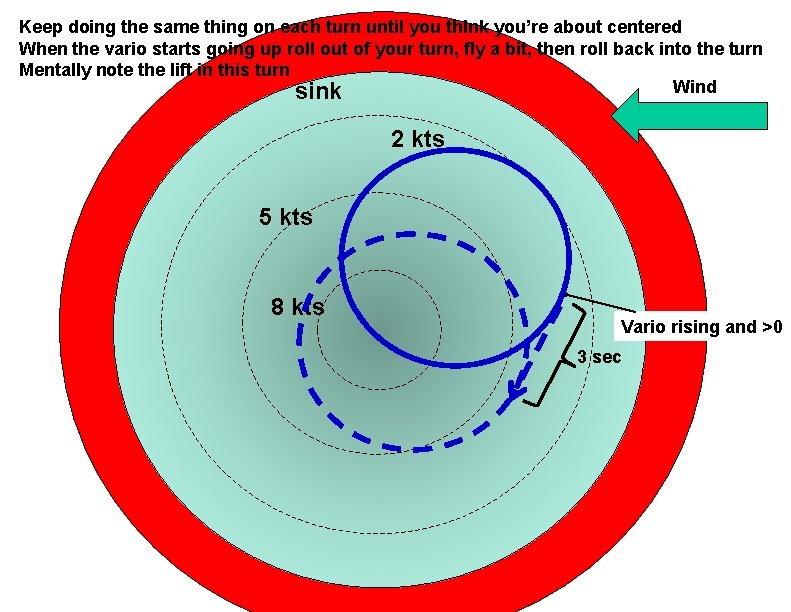
Keep doing the same thing on each turn until you think you’re about centered When the vario starts going up roll out of your turn, fly a bit, then roll back into the turn Mentally note the lift in this turn Wind sink 2 kts 5 kts 8 kts Vario rising and >0 3 sec
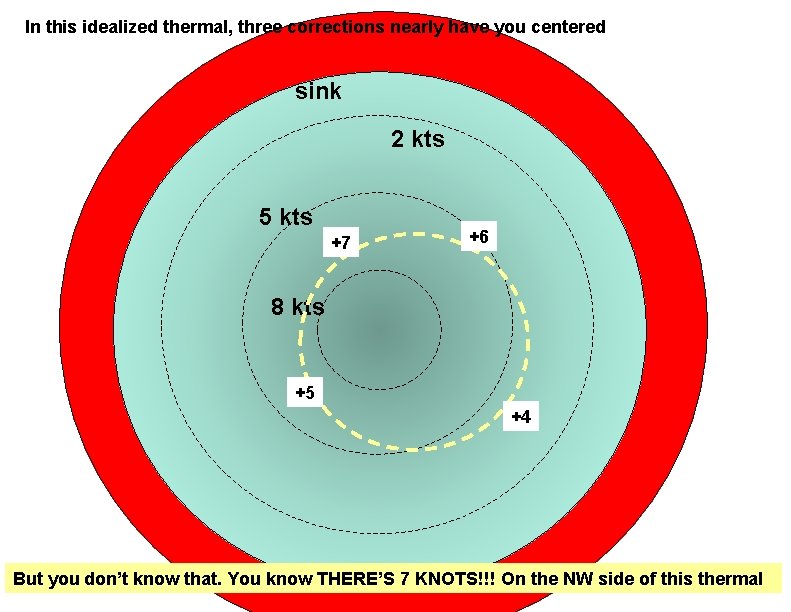
In this idealized thermal, three corrections nearly have you centered sink 2 kts 5 kts +7 +6 8 kts +5 +4 But you don’t know that. You know THERE’S 7 KNOTS!!! On the NW side of this thermal
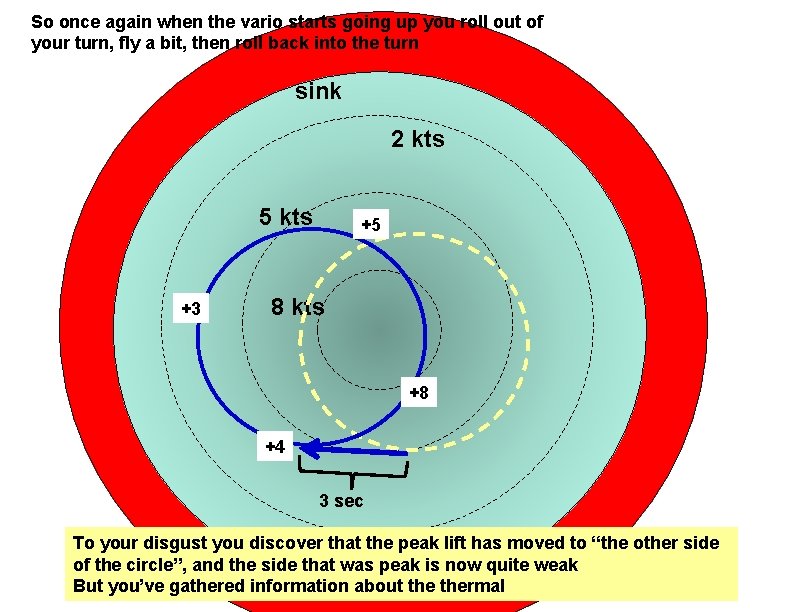
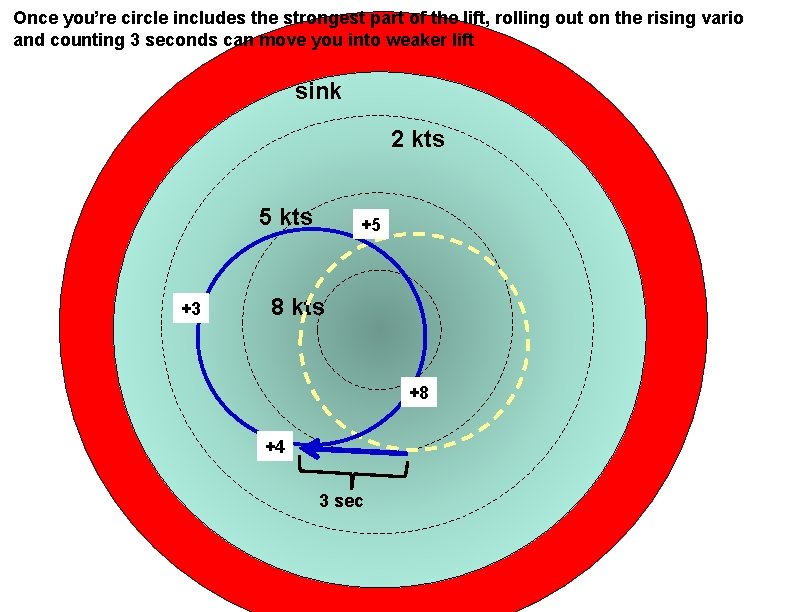
So once again when the vario starts going up you roll out of your turn, fly a bit, then roll back into the turn sink 2 kts 5 kts +3 +5 8 kts +8 +4 3 sec To your disgust you discover that the peak lift has moved to “the other side of the circle”, and the side that was peak is now quite weak But you’ve gathered information about thermal
Once you’re circle includes the strongest part of the lift, rolling out on the rising vario and counting 3 seconds can move you into weaker lift sink 2 kts 5 kts +3 +5 8 kts +8 +4 3 sec
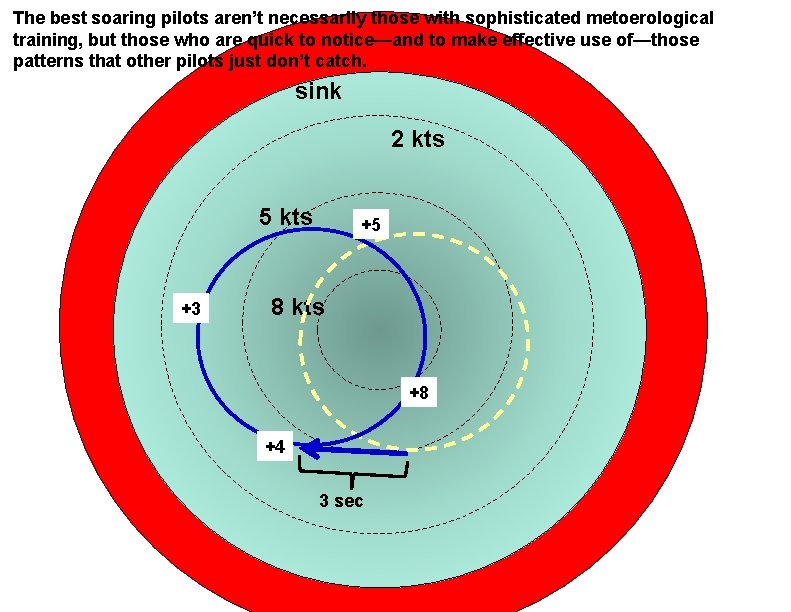
The best soaring pilots aren’t necessarily those with sophisticated metoerological training, but those who are quick to notice—and to make effective use of—those patterns that other pilots just don’t catch. sink 2 kts 5 kts +3 +5 8 kts +8 +4 3 sec
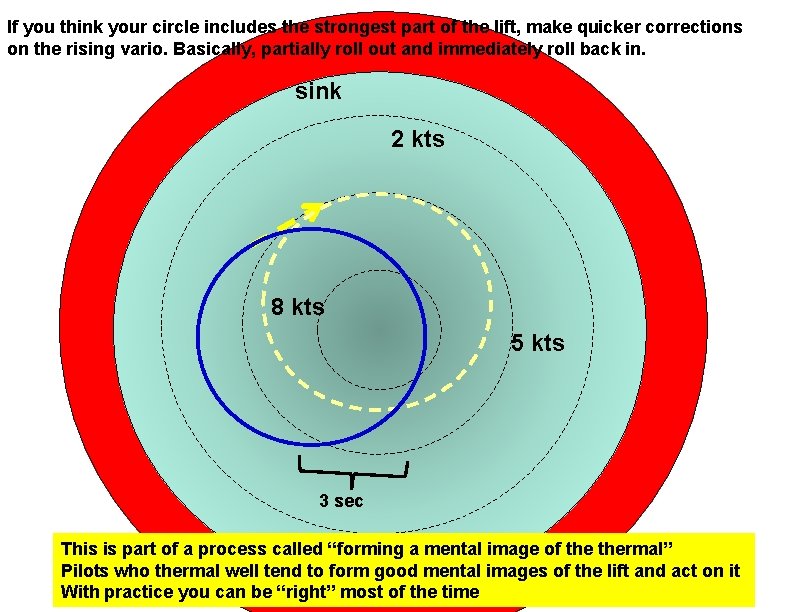
If you think your circle includes the strongest part of the lift, make quicker corrections on the rising vario. Basically, partially roll out and immediately roll back in. sink 2 kts 8 kts 5 kts 3 sec This is part of a process called “forming a mental image of thermal” Pilots who thermal well tend to form good mental images of the lift and act on it With practice you can be “right” most of the time
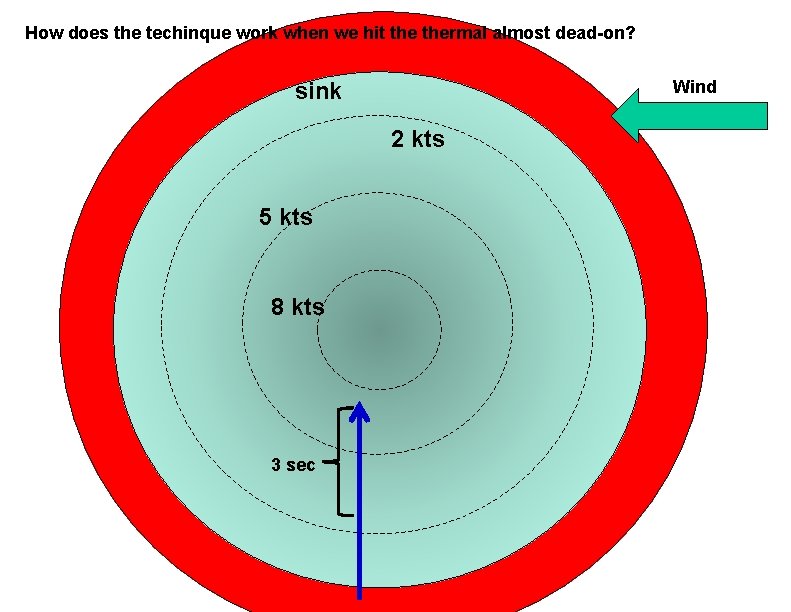
How does the techinque work when we hit thermal almost dead-on? Wind sink 2 kts 5 kts 8 kts 3 sec
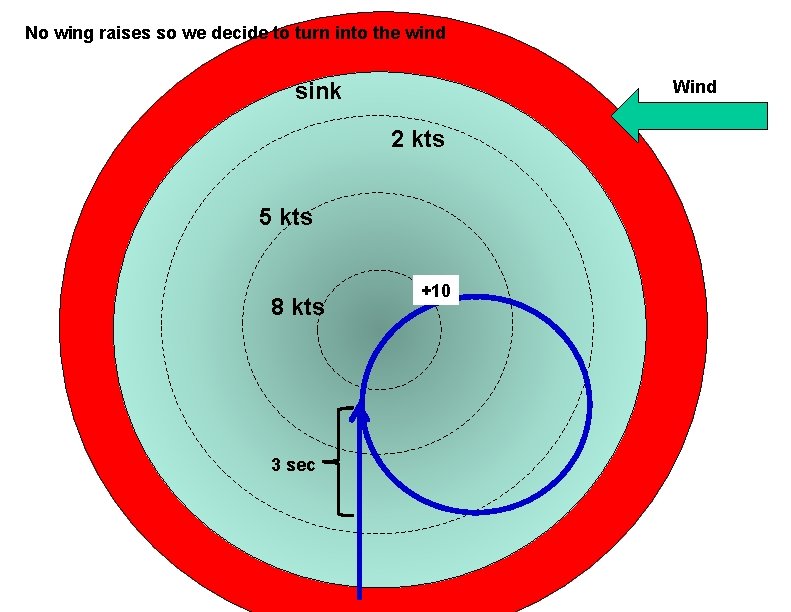
No wing raises so we decide to turn into the wind Wind sink 2 kts 5 kts 8 kts 3 sec +10
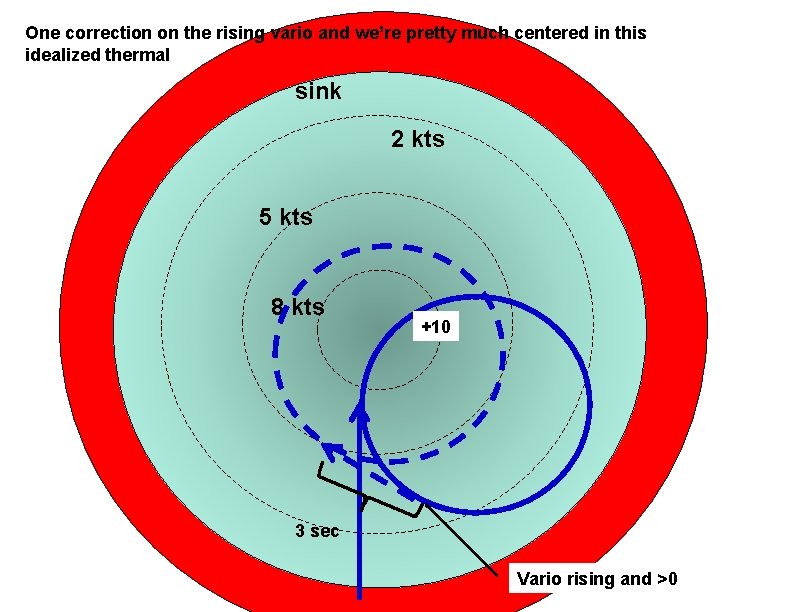
One correction on the rising vario and we’re pretty much centered in this idealized thermal sink 2 kts 5 kts 8 kts +10 3 sec Vario rising and >0
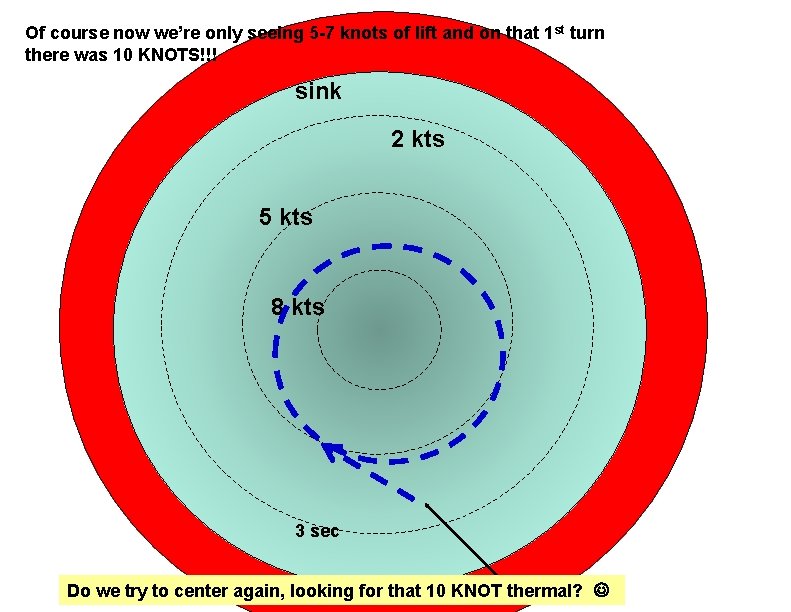
Of course now we’re only seeing 5 -7 knots of lift and on that 1 st turn there was 10 KNOTS!!! sink 2 kts 5 kts 8 kts 3 sec Do we try to center again, looking for that 10 KNOT thermal?
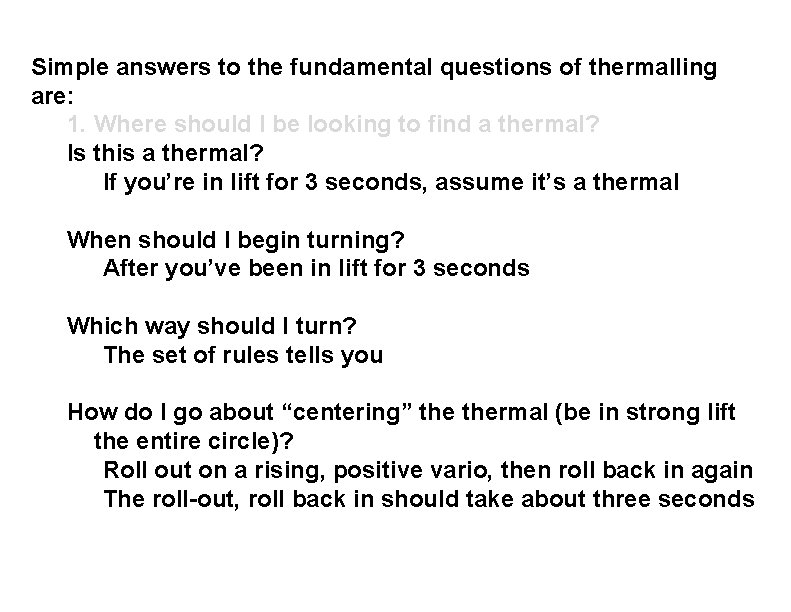
Simple answers to the fundamental questions of thermalling are: 1. Where should I be looking to find a thermal? Is this a thermal? If you’re in lift for 3 seconds, assume it’s a thermal When should I begin turning? After you’ve been in lift for 3 seconds Which way should I turn? The set of rules tells you How do I go about “centering” thermal (be in strong lift the entire circle)? Roll out on a rising, positive vario, then roll back in again The roll-out, roll back in should take about three seconds
Mark Montague’s 5 Rules For Deciding Which Way to Turn: (simply go down the list and apply the first rule that applies) 1) If close to high terrain, turn away from the terrain --you don’t want to collide with the terrain, nor do you want (if low) to drift downwind and into the sink beyond the crest 2) If close to other traffic, turn so as to minimize the collision risk --this includes matching the turn direction in use by another glider already climbing in thermal you’re about to use 3) If you sense one wing being lifted by thermal, turn toward that wing --the thermal core is likely to be in that direction 4) If you’re on a generally cross-wind heading, turn into the wind --the upwind edge is likely to be the strongest part of thermal 5) If no other rule applies, recall what direction you turned in the last thermal you used, and turn the opposite way --you want to develop equal facility with turns in either direction
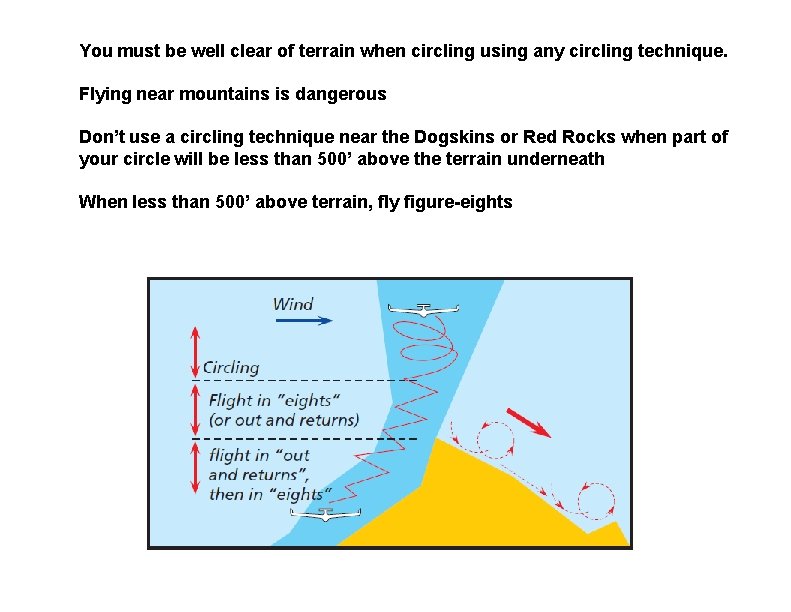
You must be well clear of terrain when circling using any circling technique. Flying near mountains is dangerous Don’t use a circling technique near the Dogskins or Red Rocks when part of your circle will be less than 500’ above the terrain underneath When less than 500’ above terrain, fly figure-eights
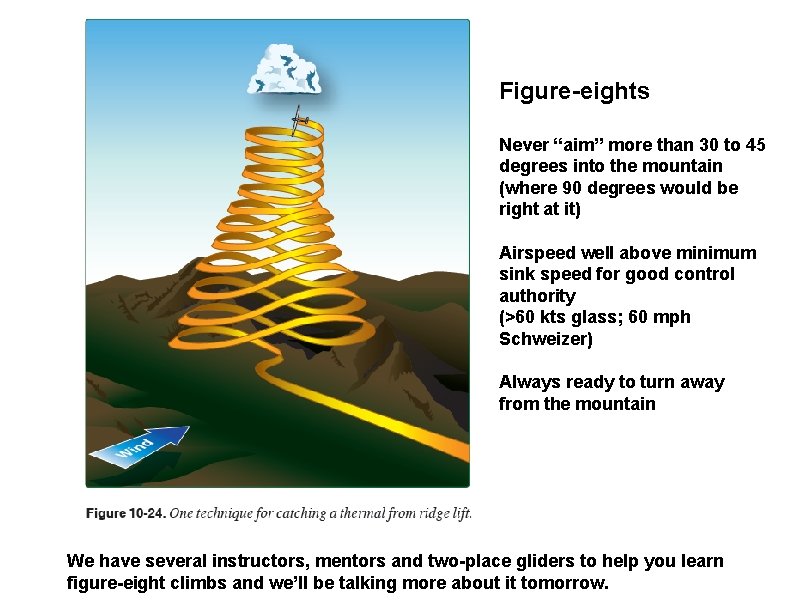
Figure-eights Never “aim” more than 30 to 45 degrees into the mountain (where 90 degrees would be right at it) Airspeed well above minimum sink speed for good control authority (>60 kts glass; 60 mph Schweizer) Always ready to turn away from the mountain We have several instructors, mentors and two-place gliders to help you learn figure-eight climbs and we’ll be talking more about it tomorrow.
Once released from aerotow, a glider is “at the mercy of gravity and air currents. But that’s not as restricting as you might think. ”