Quarks the dreams that stuff is made of
- Slides: 39
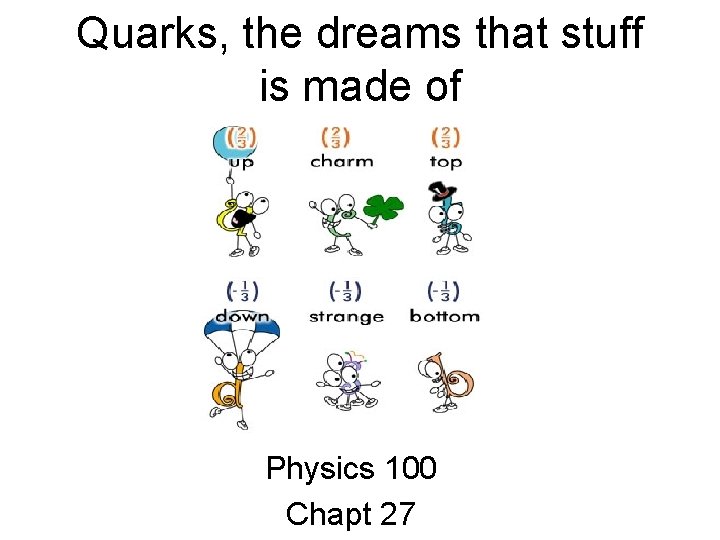
Quarks, the dreams that stuff is made of Physics 100 Chapt 27
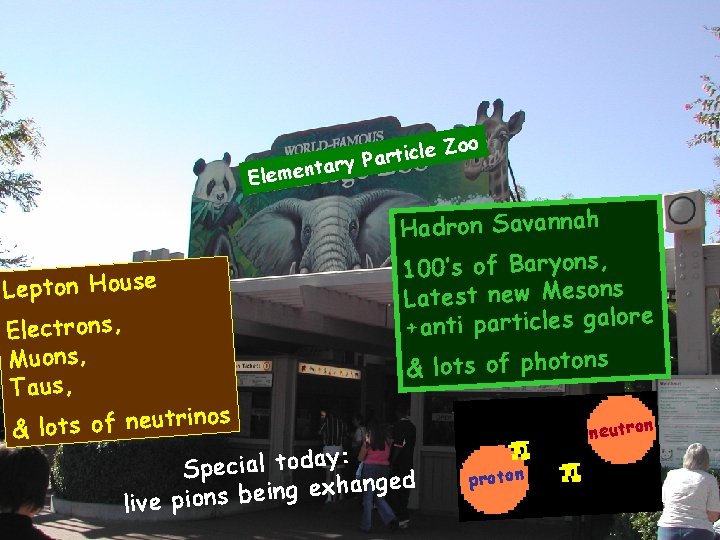
Zoo e l c i t r y Pa r a t n e Elem Lepton House Electrons, Muons, Taus, inos r t u e n f o s t lo & Hadron Savannah 100’s of Baryons, Latest new Mesons e +anti particles galor & lots of photons y: Special toda d e g n a h x e g n i live pions be neutron proton
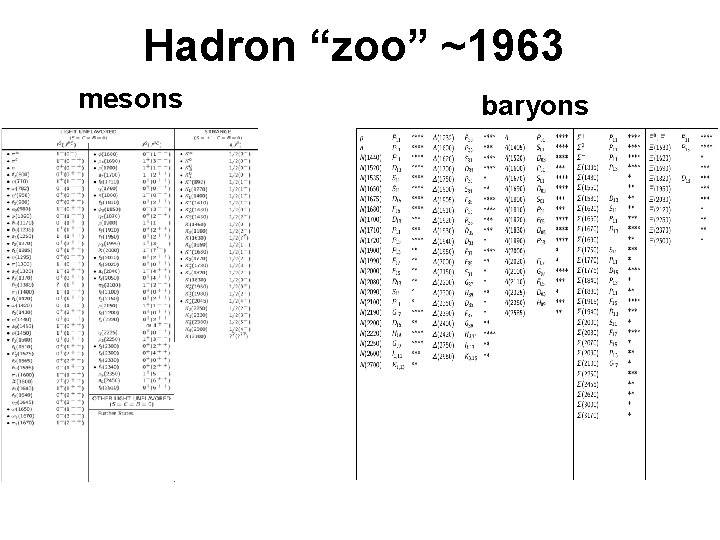
Hadron “zoo” ~1963 mesons baryons
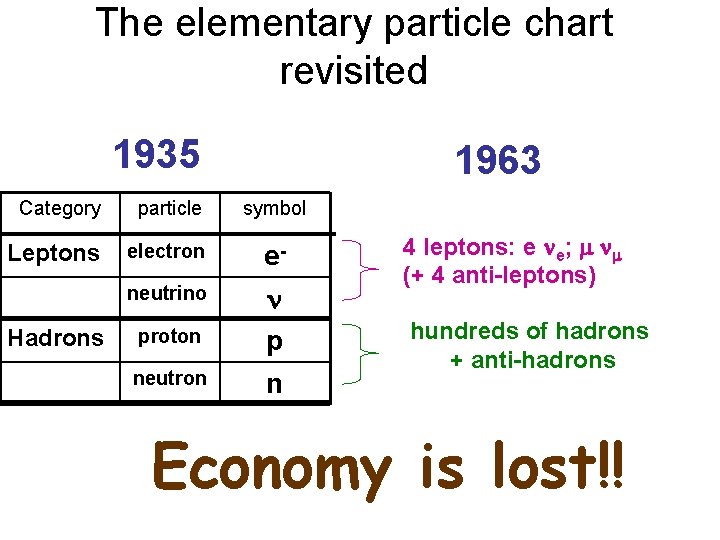
The elementary particle chart revisited 1935 1963 Category particle symbol Leptons electron e- neutrino n proton p neutron n Hadrons 4 leptons: e ne; m nm (+ 4 anti-leptons) hundreds of hadrons + anti-hadrons Economy is lost!!
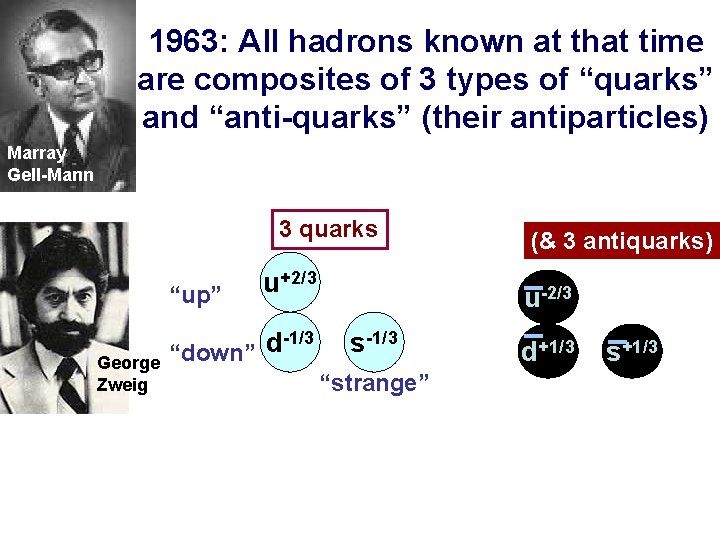
1963: All hadrons known at that time are composites of 3 types of “quarks” and “anti-quarks” (their antiparticles) Marray Gell-Mann 3 quarks “up” George Zweig u+2/3 -1/3 d “down” (& 3 antiquarks) u-2/3 s-1/3 “strange” d+1/3 s+1/3
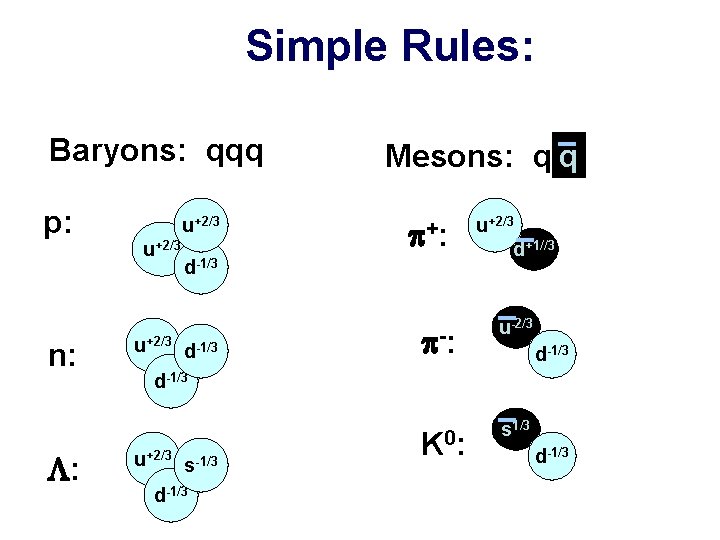
Simple Rules: Baryons: qqq p: n: L: u+2/3 Mesons: q q p+: d-1/3 u+2/3 s-1/3 d-1/3 u+2/3 d+1//3 p -: u-2/3 K 0: s 1/3 d-1/3
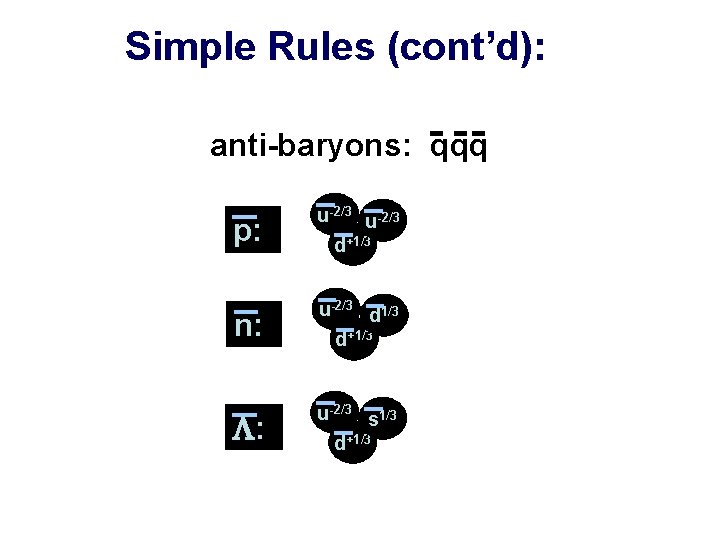
Simple Rules (cont’d): anti-baryons: qqq p: u-2/3 d+1/3 n: u-2/3 d 1/3 d+1/3 L: u-2/3 s 1/3 d+1/3
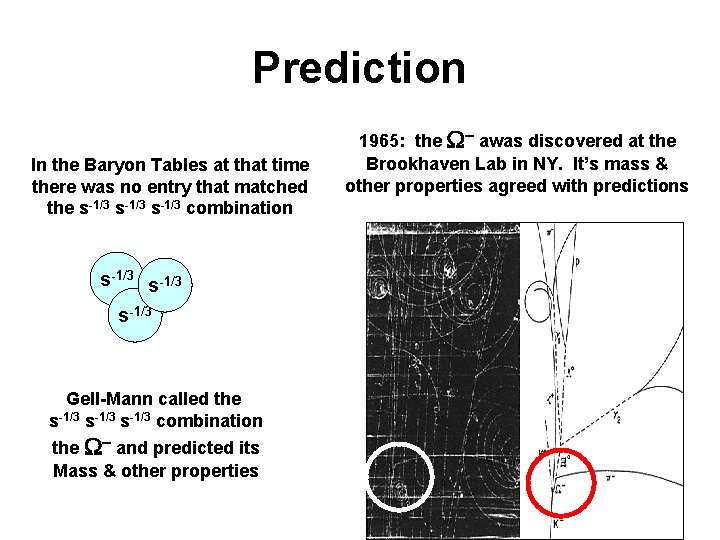
Prediction In the Baryon Tables at that time there was no entry that matched the s-1/3 combination s-1/3 Gell-Mann called the s-1/3 combination the W- and predicted its Mass & other properties 1965: the W- awas discovered at the Brookhaven Lab in NY. It’s mass & other properties agreed with predictions
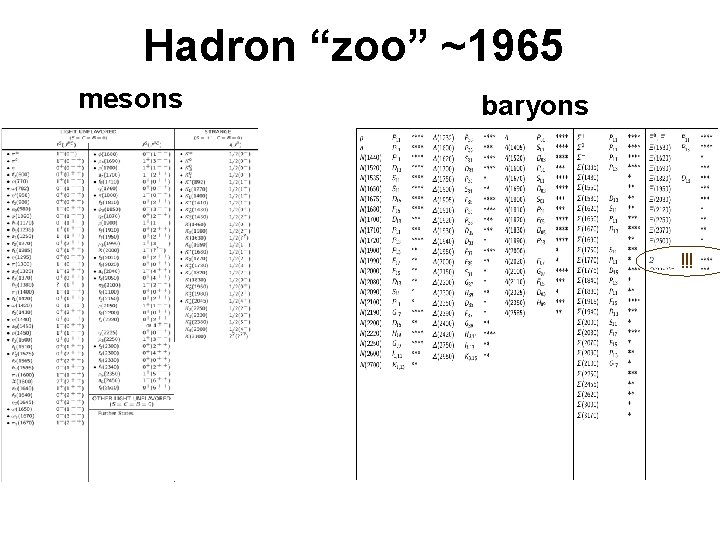
Hadron “zoo” ~1965 mesons baryons !!!
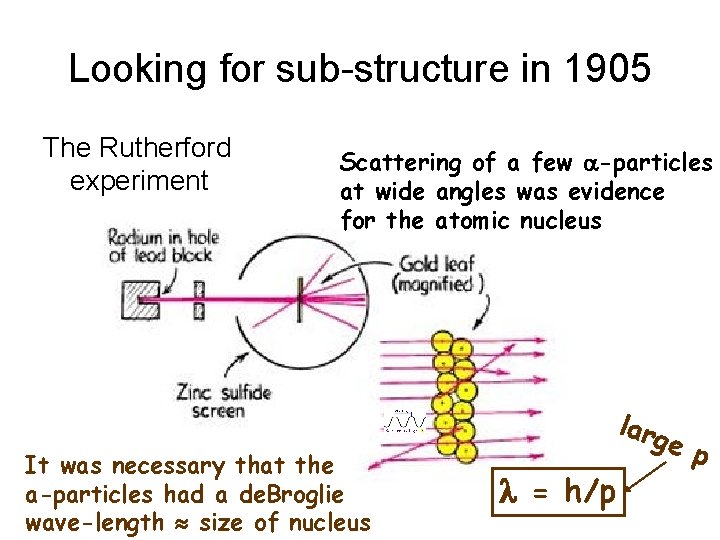
Looking for sub-structure in 1905 The Rutherford experiment Scattering of a few a-particles at wide angles was evidence for the atomic nucleus It was necessary that the a-particles had a de. Broglie wave-length size of nucleus larg l = h/p e p
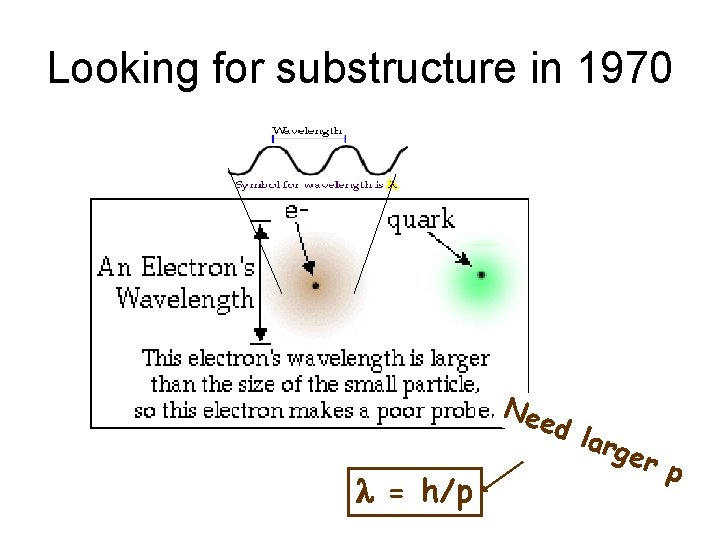
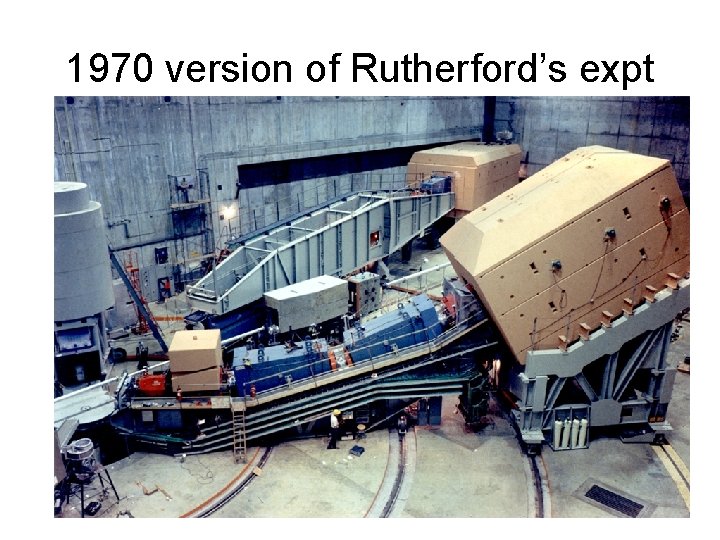
Looking for substructure in 1970 Nee l = h/p d la rge r p
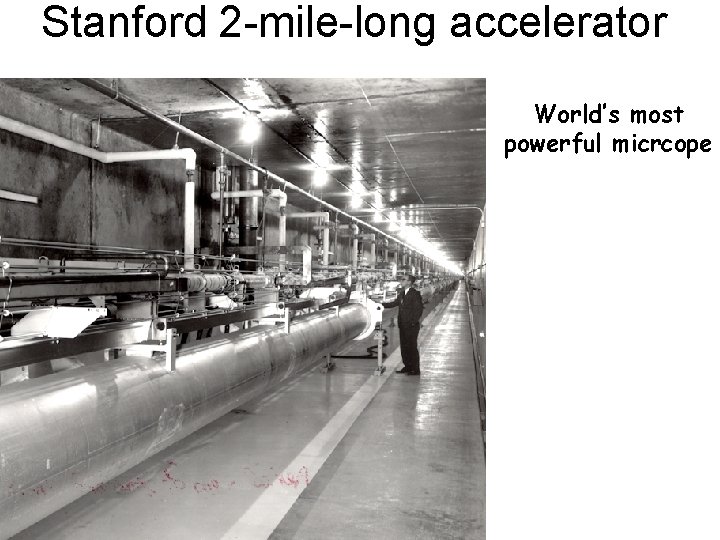
Stanford 2 -mile-long accelerator l=10 -17 m World’s most powerful micrcope
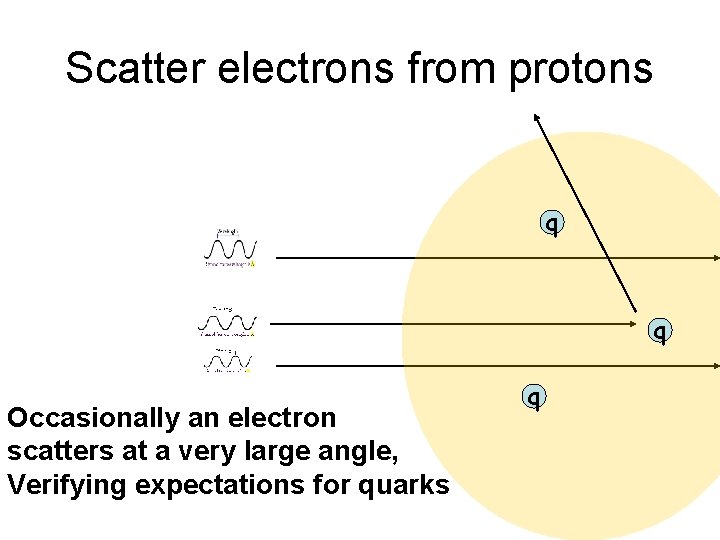
Scatter electrons from protons q q Occasionally an electron scatters at a very large angle, Verifying expectations for quarks q
1970 version of Rutherford’s expt
Quark theory: pros & cons • Pros – Explains zoo of hadrons economically – Verified by high energy electron scattering experiments • Cons – Isolated quarks have never been seen – No explanation for qqq=baryon & qq = meson rule – Problems with Pauli exclusion principle
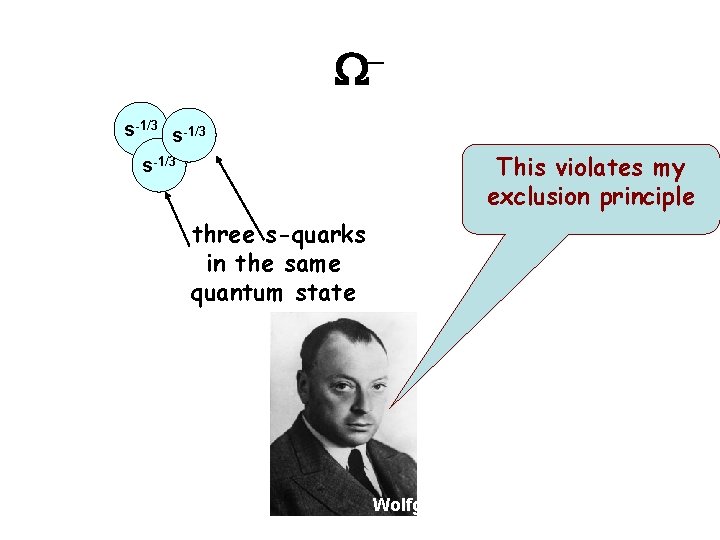
Ws-1/3 This violates my exclusion principle s-1/3 three s-quarks in the same quantum state Wolfgang Pauli
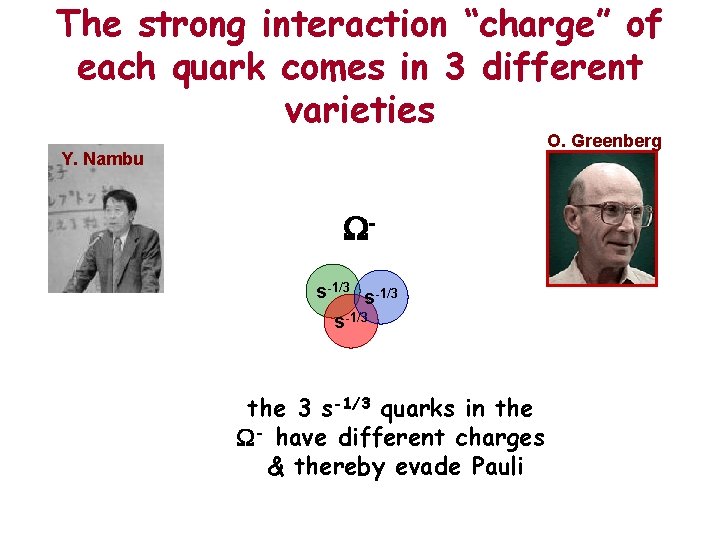
The strong interaction “charge” of each quark comes in 3 different varieties O. Greenberg Y. Nambu Ws-1/3 the 3 s-1/3 quarks in the W- have different charges & thereby evade Pauli
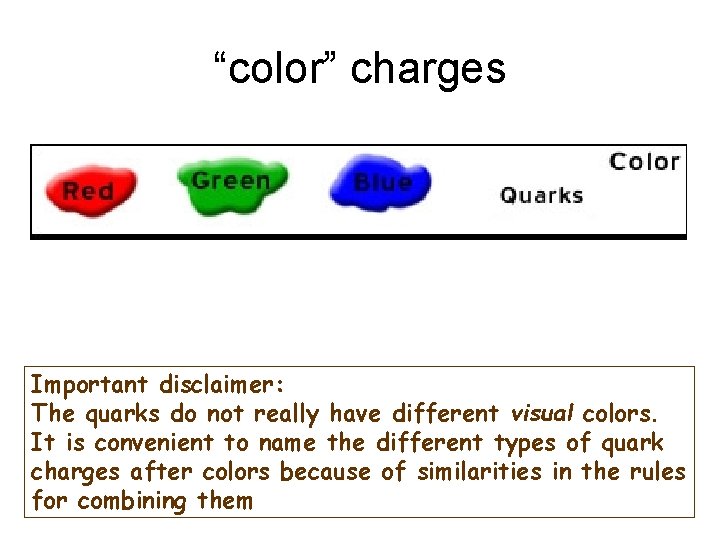
“color” charges Important disclaimer: The quarks do not really have different visual colors. It is convenient to name the different types of quark charges after colors because of similarities in the rules for combining them
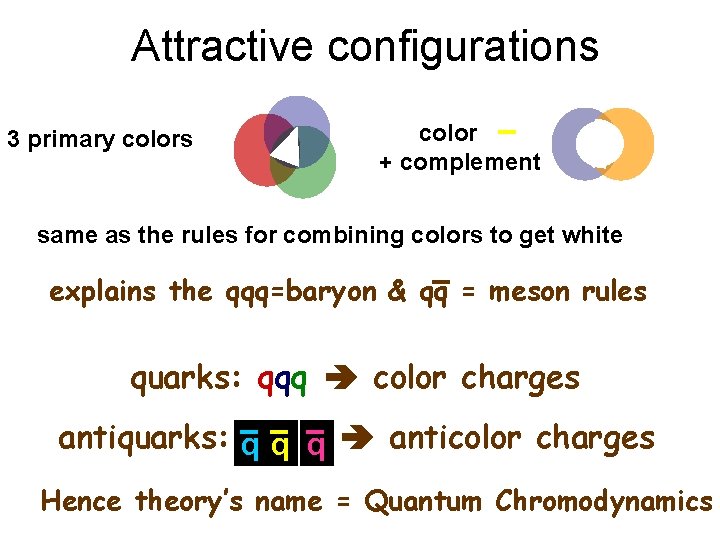
Attractive configurations 3 primary colors color + complement same as the rules for combining colors to get white explains the qqq=baryon & qq = meson rules quarks: qqq color charges antiquarks: q q q anticolor charges Hence theory’s name = Quantum Chromodynamics
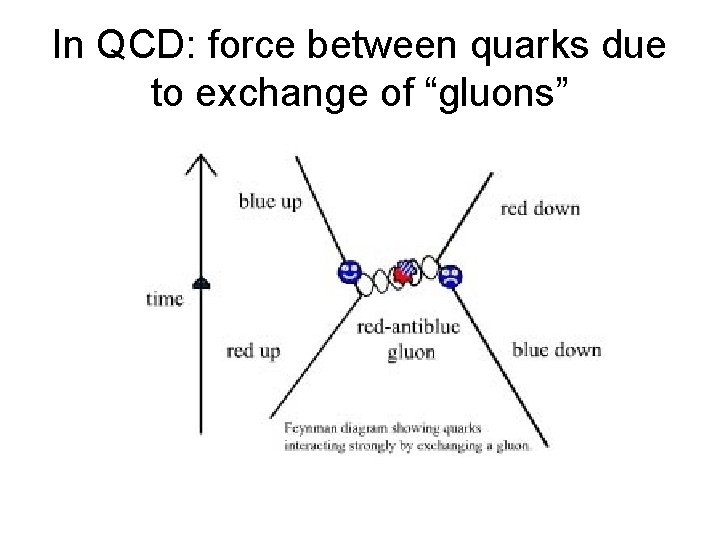
In QCD: force between quarks due to exchange of “gluons”
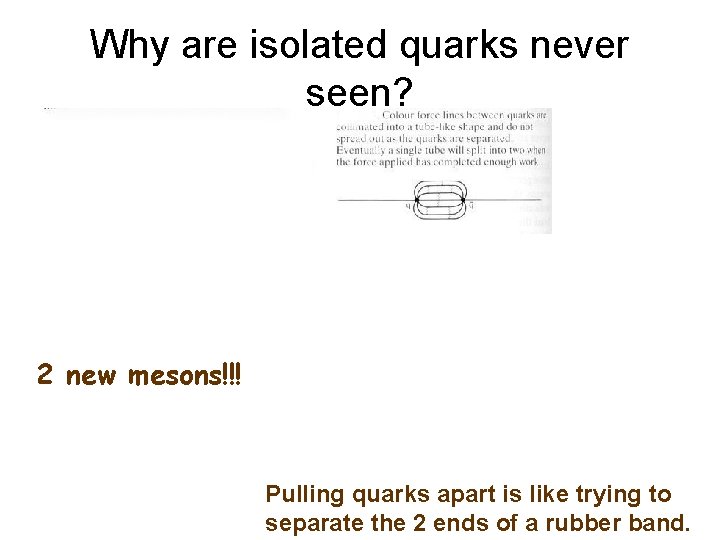
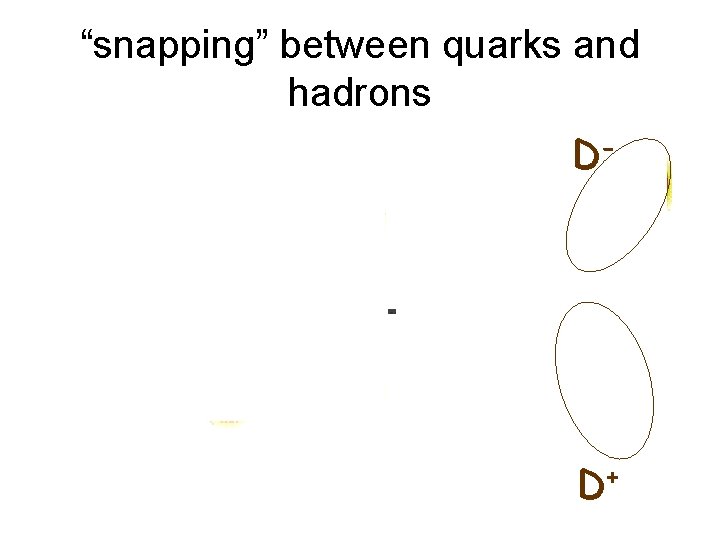
Why are isolated quarks never seen? 2 new mesons!!! Pulling quarks apart is like trying to separate the 2 ends of a rubber band.
“snapping” between quarks and hadrons D- D+
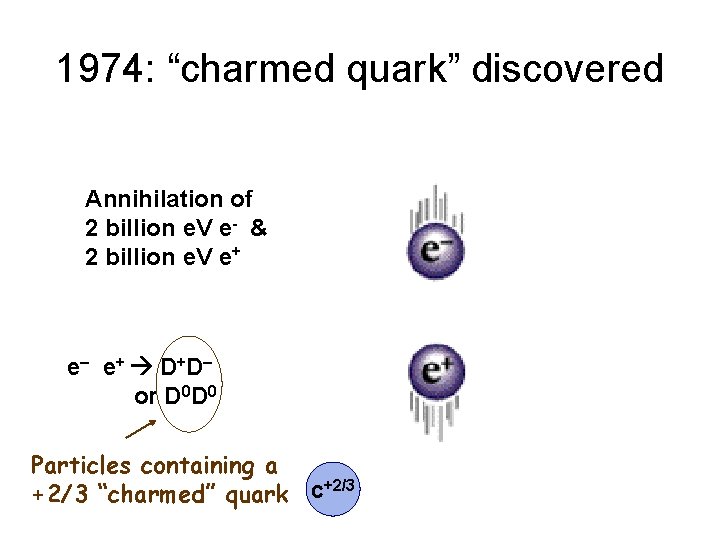
1974: “charmed quark” discovered Annihilation of 2 billion e. V e- & 2 billion e. V e+ e- e + D + Dor D 0 D 0 Particles containing a +2/3 “charmed” quark c+2/3
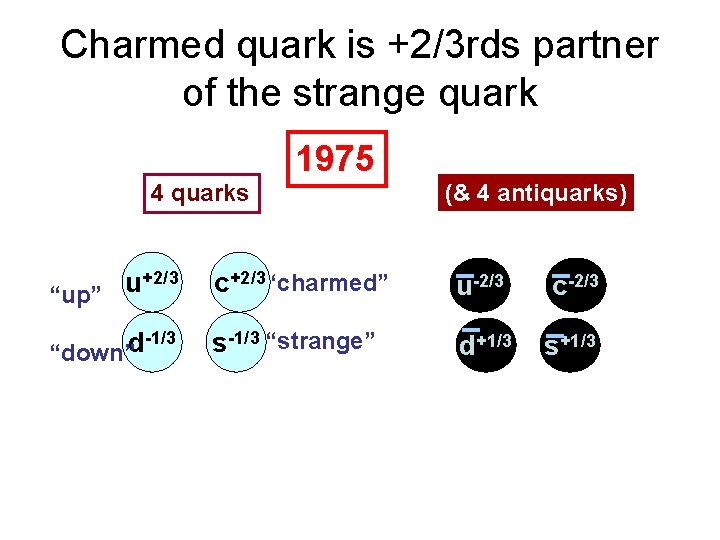
Charmed quark is +2/3 rds partner of the strange quark 1975 4 quarks (& 4 antiquarks) +2/3 u “up” c+2/3“charmed” u-2/3 c-2/3 -1/3 d “down” s-1/3 “strange” d+1/3 s+1/3
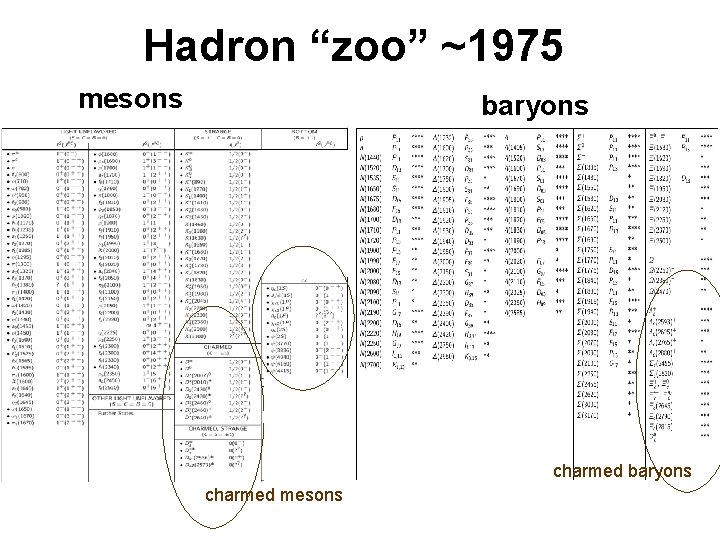
Hadron “zoo” ~1975 mesons baryons charmed mesons
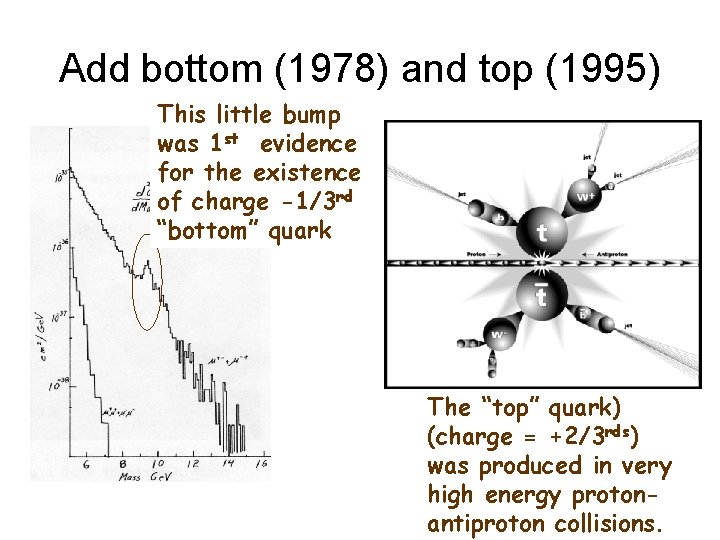
Add bottom (1978) and top (1995) This little bump was 1 st evidence for the existence of charge -1/3 rd “bottom” quark The “top” quark) (charge = +2/3 rds) was produced in very high energy protonantiproton collisions.
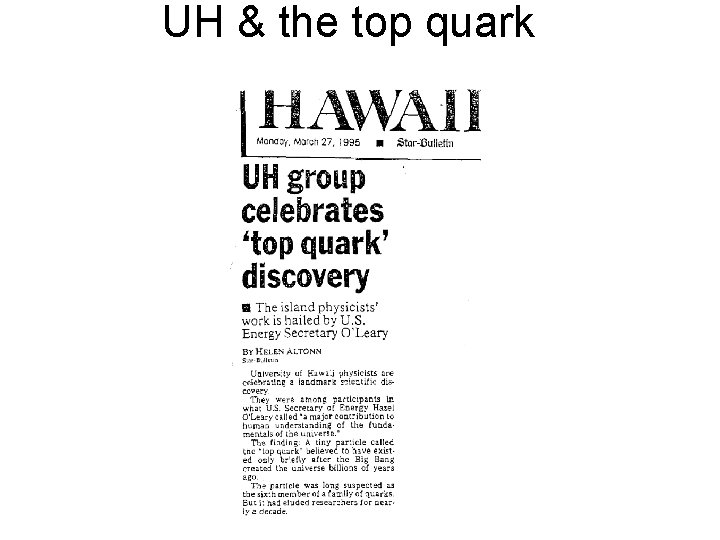
UH & the top quark
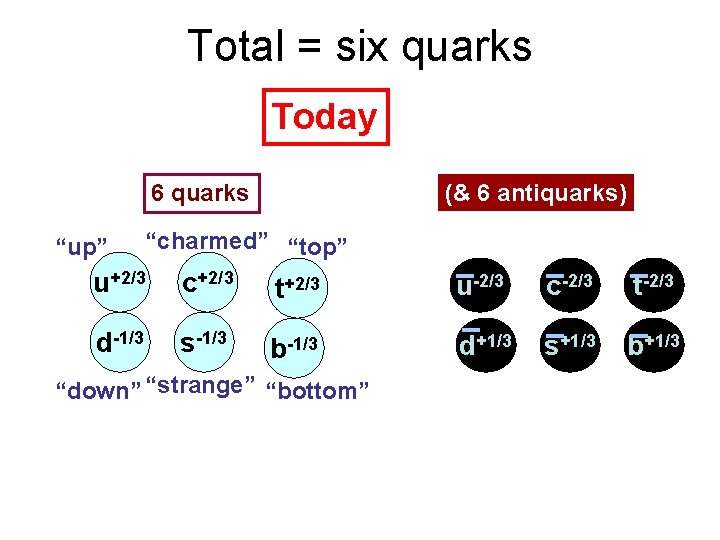
Total = six quarks Today 6 quarks “up” (& 6 antiquarks) “charmed” “top” u+2/3 c+2/3 t+2/3 u-2/3 c-2/3 t-2/3 d-1/3 s-1/3 b-1/3 d+1/3 s+1/3 b+1/3 “down” “strange” “bottom”
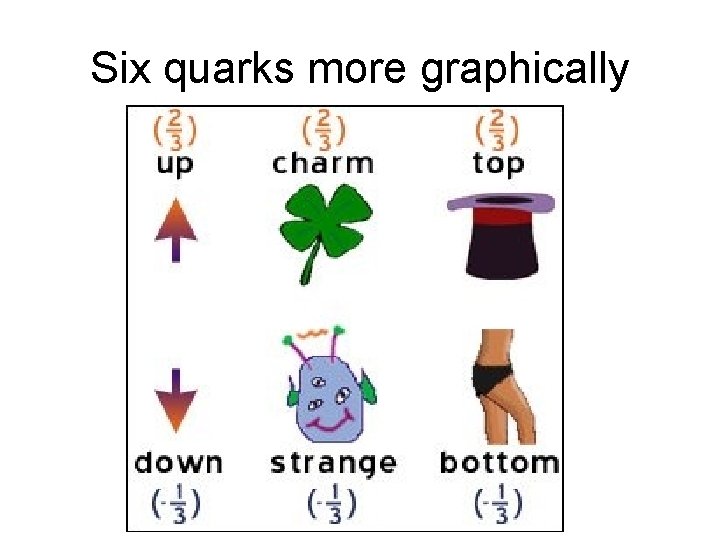
Six quarks more graphically
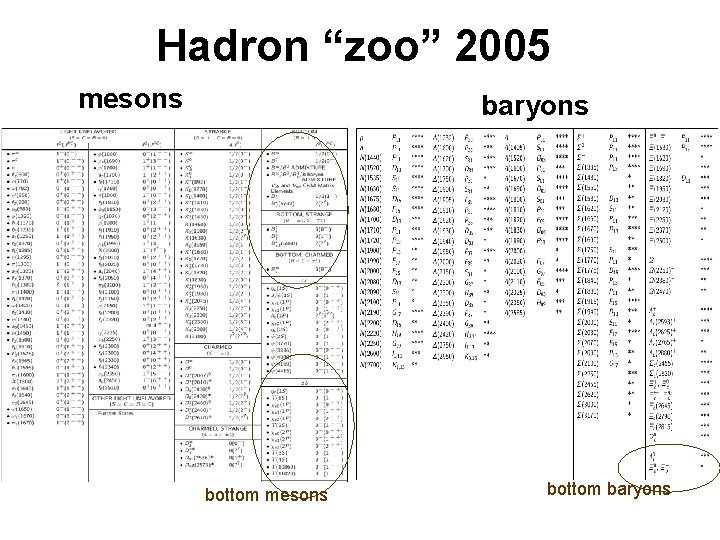
Hadron “zoo” 2005 mesons baryons bottom mesons bottom baryons
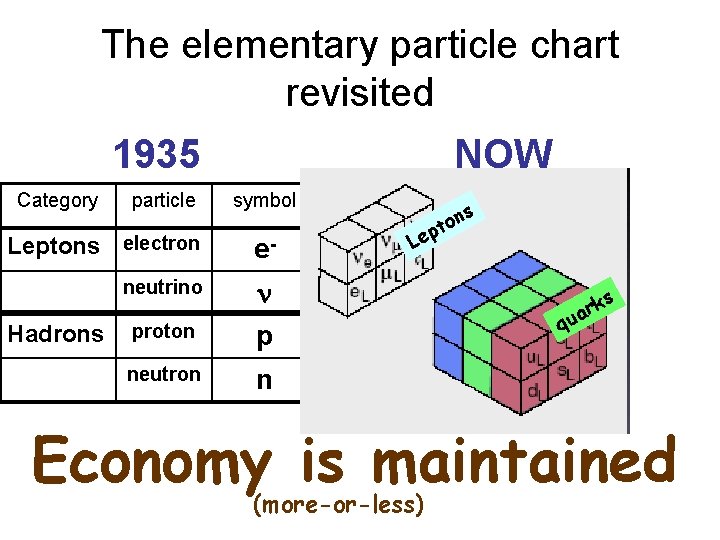
The elementary particle chart revisited 1935 Category particle NOW symbol Leptons electron e- neutrino n Hadrons proton p neutron n s Le n o t p ks r a qu Economy is maintained (more-or-less)
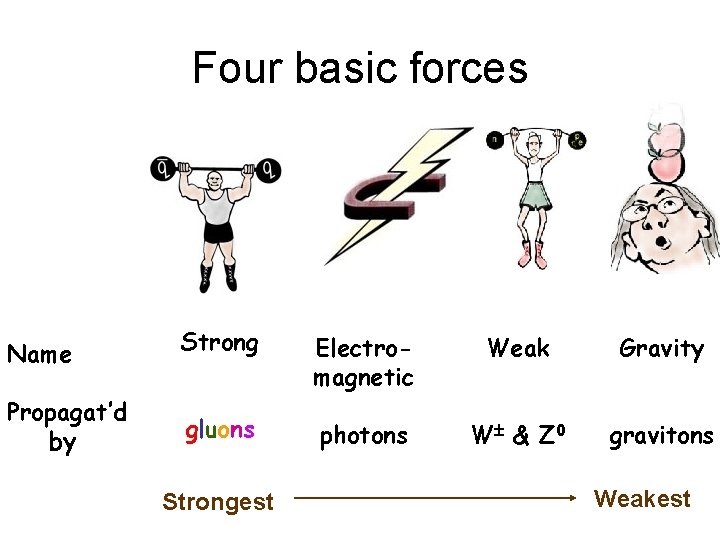
Four basic forces Name Strong Electromagnetic Weak Gravity Propagat’d by gluons photons W & Z 0 gravitons Strongest Weakest
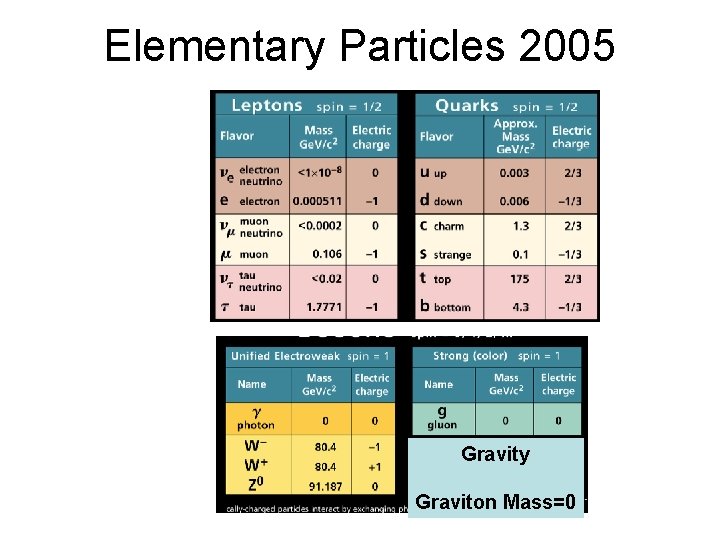
Elementary Particles 2005 Gravity Graviton Mass=0
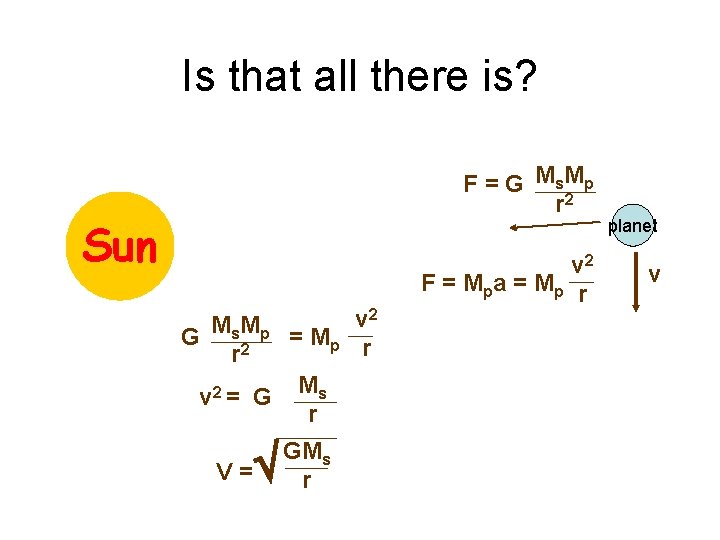
Is that all there is? F = G Ms Mp r 2 Sun p = M G Ms M p r 2 v 2 = G Ms r V= GMs r v 2 F = Mp a = M p r planet v
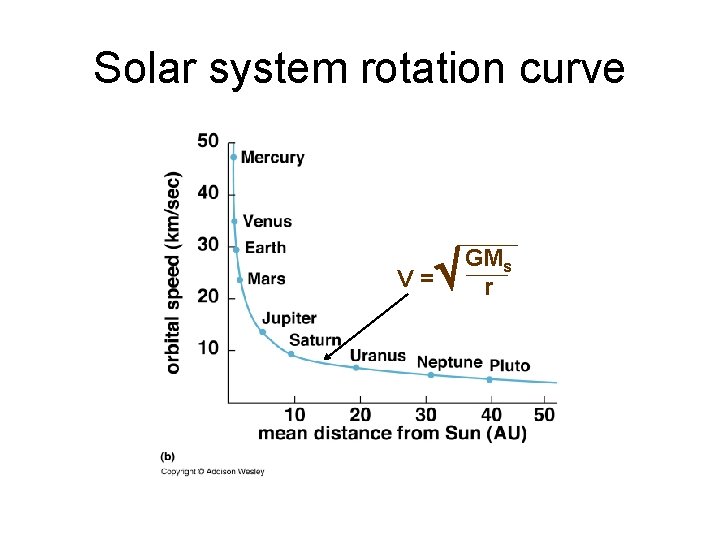
Solar system rotation curve V= GMs r
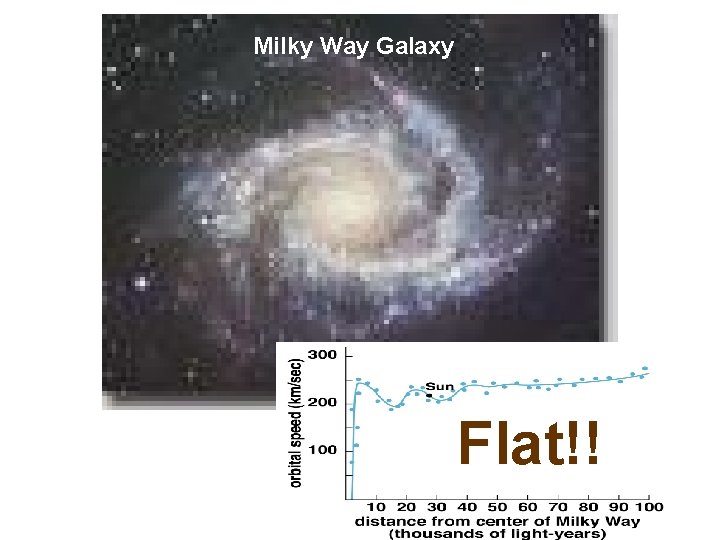
Milky Way Galaxy Flat!!
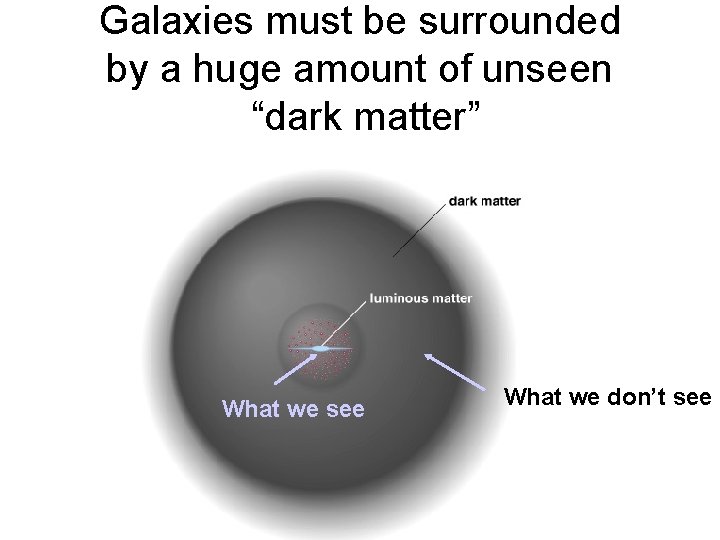
Galaxies must be surrounded by a huge amount of unseen “dark matter” What we see What we don’t see
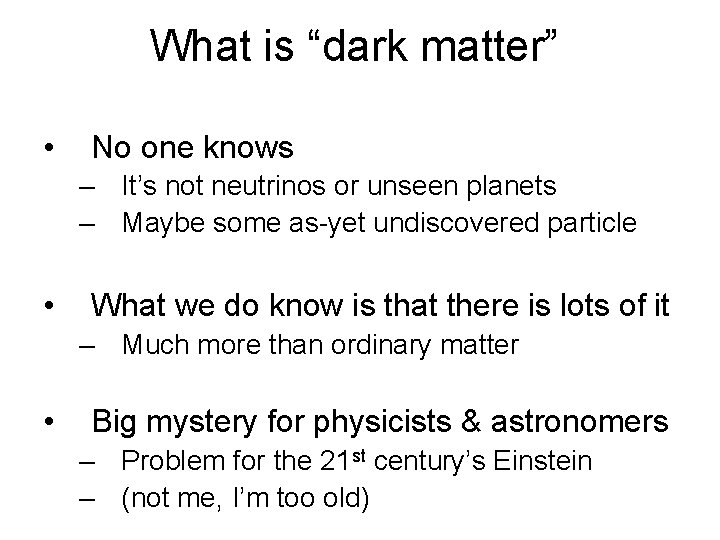
What is “dark matter” • No one knows – It’s not neutrinos or unseen planets – Maybe some as-yet undiscovered particle • What we do know is that there is lots of it – Much more than ordinary matter • Big mystery for physicists & astronomers – Problem for the 21 st century’s Einstein – (not me, I’m too old)
Mahalo & good luck on the final