Stop Shoving Thickened Liquids Down My Throat Dysphagia

- Slides: 81
Stop Shoving Thickened Liquids Down My Throat: Dysphagia in the Aging Population Joy Carter, M. S. , CCC-SLP
Disclosures �GSHA Member �Received a Discount on GSHA registration �I am not affiliated with any of the products, services, or publications mentioned in this presentation.
What is Dysphagia? �Dysphagia is a disorder of swallowing, involving a disruption of anatomy or physiology in any stage of the swallowing process. �Oral Prep Phase �Oral Phase �Pharyngeal Phase �Esophageal phase
What is Dementia? �Dementia is a gradual loss of cognitive function. �Loss of social, emotional, self-care, and motor skills �Many etiologies, few of which are reversible �Diagnostic process is complex and completed by a team of physicians: neuropsychology exam, brain imaging, blood testing and metabolic testing
Dysphagia in the Dementia Population �In the general population, approximately 15% of adults over 60 are affected by dysphagia (Barczi, Sullivan, & Robbins, 2000). �In persons with a dementia diagnosis, the prevalance of dysphagia is as high as 57% (Alagiakrishnan, Bhanji, & Kurian, 2013).
How Does Dysphagia Affect Patients With Dementia? �Weight loss �Dehydration �Aspiration pneumonia
Preventing Dehydration: Frazier Free Water Protocol �Developed at Frazier Rehab Institute, Louisville, KY �How does it work? �Patients on an oral diet may have thin water before and 30 minutes after meals. �Patients must complete oral care before the first meal of the day, and after each meal. �Food and medications are consumed with thickened liquids. �If a patient benefits from compensatory strategies, they are to perform those strategies while drinking thin water. �NPO patients may participate as well, with good oral care.
Frazier Free Water Protocol �Who is a good Candidate? �Residents who understand the purpose and procedures of the protocol and remember to use strategies �MUST train staff on the protocol and oral care �Is it safe and effective? �Water has a neutral p. H, and small amounts of it are rapidly absorbed from the airspaces in the lungs (Effros et al. , 1997).
Frazier Free Water Protocol �Patients using the Free Water Protocol demonstrated increased fluid intake compared to patients who only drank thickened liquids (Bronson-Lowe et al, 2008; Garon, Engle, Ormiston, 2007). �The Free Water Protocol facilitates maximal hydration and increases patient satisfaction.
Aspiration Pneumonia: Why Is Everyone Concerned? �Aspiration pneumonia (APNA) occurs when a person inhales foreign matter into the lungs, causing the alveoli (air sacs) to fill with fluid or pus. �It is the leading cause of death in persons who reside in long-term care facilities (Pace & Mc. Cullough, 2010). �Skilled nursing facilities are concerned that a resident may aspirate and develop APNA, which is costly for the healthcare system.
Predictors of Aspiration Pneumonia �Langmore, et al. (1998) �Dependent (requires total assistance) for feeding �Dependent for oral care �Number of decayed teeth �Tube feeding (all types) �More than one medical diagnosis �Multiple medications �Smoking
Preventing Aspiration Pneumonia: Oral Care Is Important �Makeda and Agaki (2014) found that tube-fed patients who received standard oral care twice per day had 40% fewer hospitalizations and half as many cases of pneumonia than patients who had no specific oral care protocol. �Ashford (2017) insists that “Oral care is not a care. Oral Care should be considered an infection control protocol. ”
What Is Good Oral Care? �Ashford (2017) defines good oral care: �Use a small sponge to remove dried secretions �Use a toothbrush and toothpaste (oral suction as needed) �Rinse with a mouthwash that does not contain alcohol �Yoneyama et al. (2002) found that 9% of nursing home patients developed pneumonia when receiving an oral care protocol, compared to 20% of those who received no oral care protocol.
What is the Hierarchy of Dysphagia Management? � Logemann (1993) advised clinicians to approach compensatory strategies in the following order: �Postural techniques �Techniques to enhance oral sensation �Swallowing Maneuvers �Diet modifications
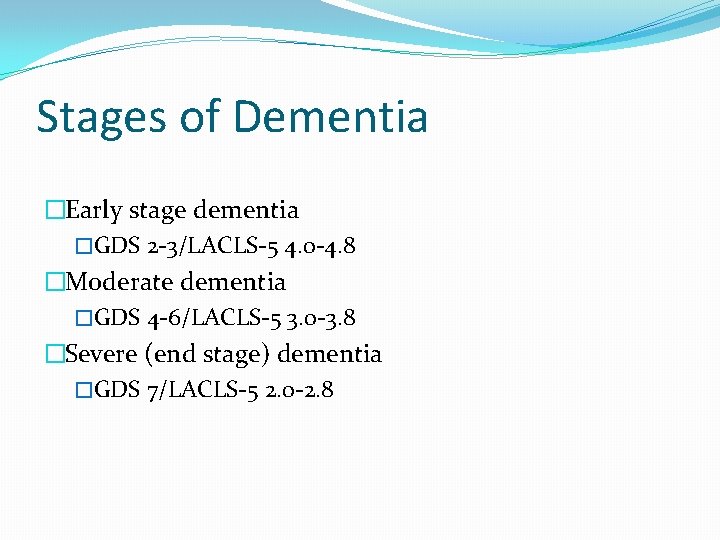
Dysphagia Management: Staging Dementia �Global Deterioration Scale (GDS) ranges from 1=no cognitive decline to 7=severe cognitive decline (Resiburg, et al. 1982). �The Large Allen Cognitive Level Screen-5 (LACLS-5) gives a score of 2. 8 -6. 0, which corresponds to the Allen Cognitive Level Battery (Allen et al. , 2007).
Stages of Dementia �Early stage dementia �GDS 2 -3/LACLS-5 4. 0 -4. 8 �Moderate dementia �GDS 4 -6/LACLS-5 3. 0 -3. 8 �Severe (end stage) dementia �GDS 7/LACLS-5 2. 0 -2. 8
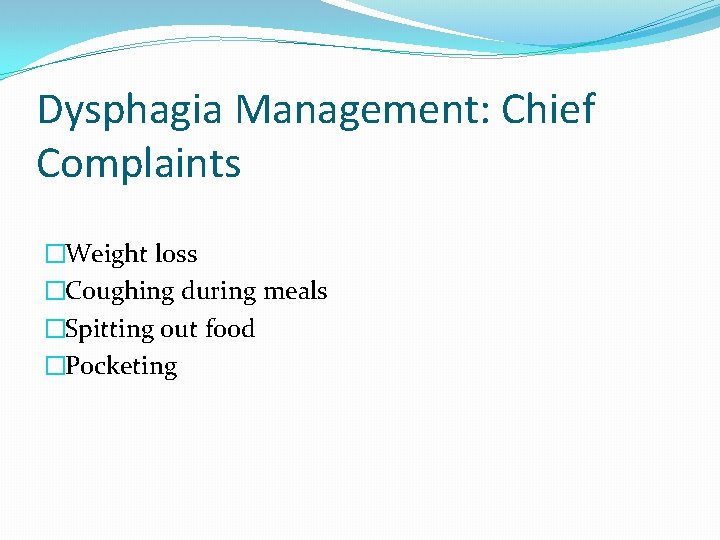
Dysphagia Management: Chief Complaints �Weight loss �Coughing during meals �Spitting out food �Pocketing
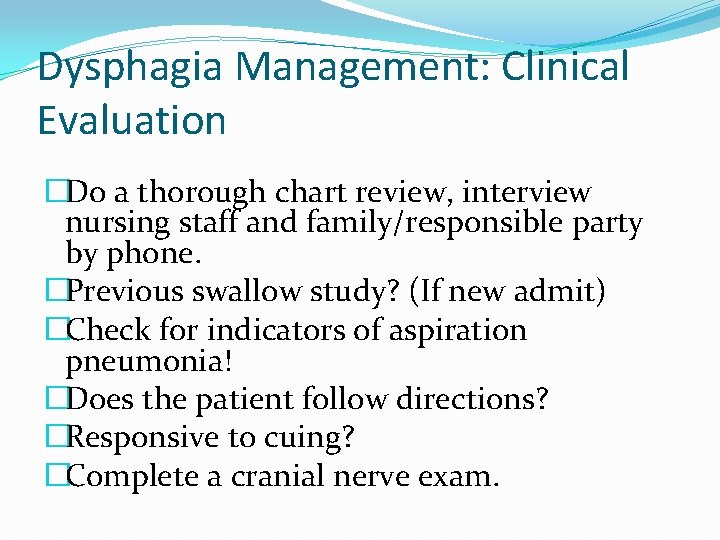
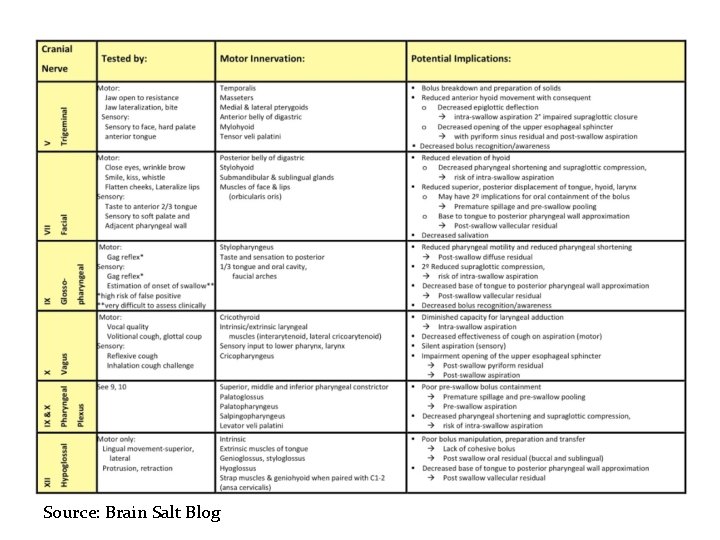
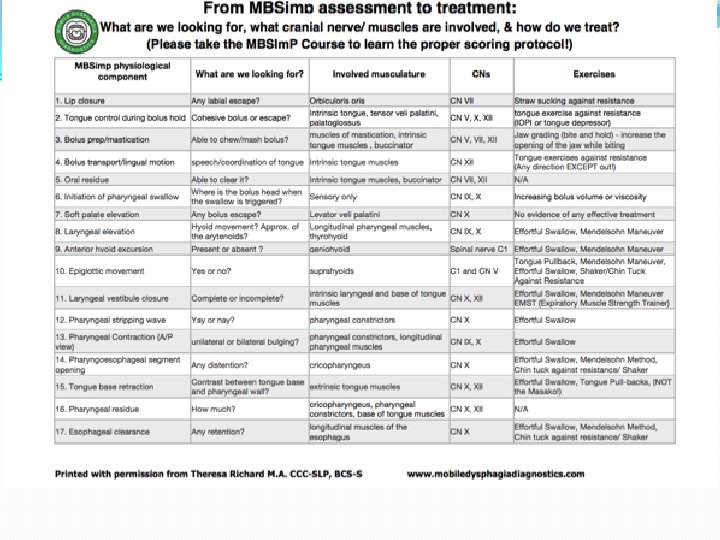
Dysphagia Management: Clinical Evaluation �Do a thorough chart review, interview nursing staff and family/responsible party by phone. �Previous swallow study? (If new admit) �Check for indicators of aspiration pneumonia! �Does the patient follow directions? �Responsive to cuing? �Complete a cranial nerve exam.
Source: Brain Salt Blog
Dysphagia Management: Imaging �Get an instrumental exam to recognize why the patient is coughing. �Signs of dysphagia do not necessarily indicate that aspiration is occurring. �Imaging is to assess the anatomy and physiology of the swallow, not simply to rule out aspiration.
Dysphagia Management: Imaging �For MBSS: �Send a note to the hospital SLP. �Ask for consistencies and strategies that you would like them to try. �Maintain rapport with hospital SLP; if you have questions about the report, do not hesitate to call and ask.
Dysphagia Management: Imaging �A patient DOES NOT need to follow directions to participate in a swallow study, he just needs to eat. �Get a copy of the report before proceeding, so you know which deficits to treat. �Advocate for your patients and for yourself! If you knowingly provide substandard treatment due to lack of instrumental exams, any adverse effects may become your responsibility.
Dysphagia Management: Early Stage Dementia �Patients CAN learn new information �Exercise Programs: note the occurrences that happened during the instrumental exam, and research the anatomy/physiology deficits that caused them. �Swallow Your Pride podcast and Dysphagia Therapy app have great resources for exercise planning.
Early Dementia: Postural Techniques �Make sure that the techniques are indicated during an instrumental. �Chin tuck (down) �Head turn �Posterior head tilt �Some techniques can do more harm then good if not used properly. �Chin tuck may cause aspiration rather than prevent it if the patient has significant residue in the pyriforms (Coyle, 2014). �Contraindicated for weak pharyngeal contraction, reduced tongue control or AP transit, poor labial seal, and significant pharyngeal delay/pyriform spillage (Logemann, 1993; Shanahan et al. , 1993)
Early Dementia: Techniques to Enhance Oral Sensation �Use the results of the cranial nerve exam to determine which sensory deficits to address. �Carbonated beverages are NOT the same as nectar thick liquids, but they do provide increased sensory stimulation to Cranial Nerve V. �Carbonated beverages have been shown to reduce penetration and aspiration when consumed in small amounts (Sdravou & Walshe, 2012).
Early Dementia: Swallowing Maneuvers and Other Strategies �If the patient can follow multi-step directions, consider the supraglottic or super-supraglottic swallow (contraindicated for cardiac diseases). �Effortful swallow �Mendelsohn maneuver �Alternate solids and liquids �Double swallow
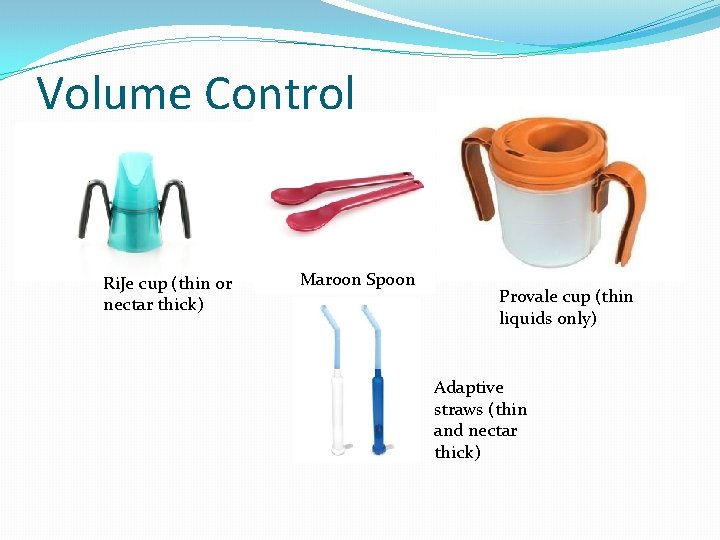
Volume Control Ri. Je cup (thin or nectar thick) Maroon Spoon Provale cup (thin liquids only) Adaptive straws (thin and nectar thick)
Early Dementia: Diet Modification �Explain WHY you recommend a consistency. �Use anatomical diagrams. �Explain why aspiration is not ideal. �Make it clear that the patient has a choice. �Consider patient satisfaction and quality of life.
Why Modified Diets? �Thickened liquids flow at a slower pace than thin liquids, giving a person more time to manipulate the bolus, initiate a swallow, and protect the airway. �Diet levels: National Dysphagia Diet (NDD), International Dysphagia Diet Standardization initiative (IDDSI) �For this presentation: we will use puree, mechanical soft, regular, thin, nectar, and honey.
Diet Modifications: Are They Really Safer? �Logemann et al. (2008) Studied the efficacy of thickened liquids and chin tuck in preventing aspiration in patient with dementia and Parkinson’s disease. �Honey thick liquids were more effective than the chin tuck and nectar thick liquids in preventing aspiration; HOWEVER, over 50% of the dementia patients (with or without Parkinson’s) still aspirated with all three interventions.
Diet Modifications, contd. �A second study by Robbins, et al. (2008) found that while honey thick led to fewer instances of aspiration, patients who did aspirate honey thick had higher rates of aspiration pneumonia after three months. �Patients prescribed thickened liquids also had higher rates of dehydration, UTI, and fever.
Diet Modifications, contd. �Sharpe, Ward, Cichero, Sopade, and Halley (2007) found that thickened liquids do not affect the bioavailability of water. �Thickened liquids do affect the bioavailability of medication (Cichero, 2013). �Thickened liquids often leave residue, which a person can aspirate later. �Aspirating thickened liquids means introducing thickening agents to the lungs.
Considerations for Thickened Liquids �What does the FEES/MBSS say? �Garcia, Chambers, and Molander (2005) proposed that thickened liquids are indicated for patients with: �Reduced oral control of the bolus �Delayed initiation or slow timing of the pharyngeal phase �Reduced airway protection during the swallow (MBSS) �Sensory or cognitive deficits interfering with bolus preparation
Considerations for Thickened Liquids �What is the patient’s cognitive status? �Risk/benefit analysis? �Increased effort is needed to swallow thickened liquids. �Goal: promote optimal nutrition and hydration at the current level of care.
Dysphagia Management: Moderate Dementia �Short attention span �Patients need assistance setting up trays and adaptive equipment. �Patients can complete exercises and postural techniques with increased cuing.
Moderate Dementia: Techniques to Enhance Oral Sensation �Sour bolus �Increased peripheral stimulation of CN V �Improved oral phase, reduced pharyngeal swallow delay, and reduced frequency of aspiration (Corbin. Lewis et al. , 2005; Logemann et al. , 1995). �Sour and salty tastes increased tongue pressures against roof of mouth compared to milder tastes (Pelletier and Dhanaraj, 2006). �Compared to other tastes, a cold, sour bolus significantly shortened pharyngeal transit time in middle aged and elderly patients (Cola et al. , 2010).
Moderate Dementia: Techniques to Enhance Oral Sensation �Thermal tactile stimulation (TTS) �Stimulating the faucial pillars with a cold object increases bicortical activation to improve oral and pharyngeal phases of swallowing (Teismann et al. , 2009). �TTS significantly reduced pharyngeal transit time and pharyngeal delay with fluids and puree paste (Regan et al. , 2010). �Also used to promote bolus awareness �CAVEAT: Long term effects have not been reported; research has mixed results; some patients gag
Moderate Dementia: Swallowing Maneuvers and Other Strategies �Patients cannot do supraglottic swallow, etc. if they cannot follow multi-step directions. �Patients may benefit from adaptive equipment but require cues to use it correctly.
Moderate Dementia: Diet Modifications �Patient education will need to be repeated several times. �Patients at this stage may not voice dissatisfaction with diets, but they will show you!
Dysphagia Management: Severe Dementia �Patients will only respond to tactile cues, if at all. �Caregiver education is the bulk of your job. �Patients at this stage will not benefit from an exercise program, as they cannot follow directions.
Severe Dementia: Postural Techniques �Ensure that positioning is adequate for oral intake. �Consult OT for positioning if adaptive equipment is needed.
Severe Dementia: Techniques to Enhance Oral Sensation �Provide tactile stimulation to lips and tongue to encourage bolus acceptance. �Try sour bolus or temperature changes to elicit a swallow response. �Use a Maroon Spoon if the patient will not open his mouth sufficiently. �Sprinkle sugar on foods to increase intake. �Consult nursing staff and dietician for supplements if weight loss persists.
Severe Dementia: Other Compensatory Strategies �Teach caregivers: �Cyclic ingestion �How to use adaptive equipment �How to alter bolus sizes �How to create positive dining routines �How to provide consistent cues and redirections
Severe Dementia: Diet Modification �May be necessary if the patient cannot use strategies to facilitate consumption of a higher level. �Diet changes are fine, as long as the patient is amenable to the diet and is receiving adequate nutrition and hydration.
Severe Dementia: Diet Modification �If a person refuses the modified diet, explain to the responsible party (RP) again what the swallow impairments are and why you recommend a modified diet. �After receiving thorough education and awareness of all options, it is ultimately the patient/RP’s choice how to proceed.
Dysphagia Management: Family Education �Explain ALL options. �Do not change diets with no explanation. �Explain imaging results with anatomical diagrams and use patient-friendly language. �Do not imply that the patient will aspirate and die if they do not drink thickened liquids. �Document EVERYTHING.
Dysphagia Management: Discharge �Provide written instructions for exercises. �Develop a restorative plan to maintain functional gains. �Complete staff training: �Impromptu In-service �High staff turnover=ongoing education �Make it fun! �Discharge after everyone has been educated and all documentation is signed.
Waiver Your Diet Noncompliance Goodbye �When you make diet recommendations, it is a recommendation. It is NOT the law. �Do not “railroad” patients into making a decision. �Is compliance really a thing? �Waivers may not hold up in court, because the patient does not have equal rights when presented with a waiver (Horner, 2016).
QUALITY OF LIFE �Patients’ level of satisfaction with a diet will directly influence their level of compliance (Colodny, 2005). �Patients with Parkinson’s disease stated that they would rather risk aspiration pneumonia than to drink thickened liquids (Logemann, 2008).
QUALITY OF LIFE, contd. �In a skilled nursing facility, patients are going to consume these diets long-term. �If a patient refuses the recommended diet, something is not working and a different approach is warranted. �Consider long-term implications of thickened liquids. �Optimal nutrition and hydration is a major part of long-term care therapy.
Case Study: Early Stage Dementia Patient A � 90 -year old male, long term SNF resident with dementia, HTN, COPD; CVA 2 years ago that resulted in R hemiparesis �Scored 3 on the GDS/4. 6 on LACLS-5 �Diet is regular/thin �After an episode of consistent coughing during dinner on a Friday, nurse downgraded him to puree/nectar for “safety” and he hated it.
Patient A �He refused thickened liquids all weekend; nurses were worried about dehydration. �Aspiration pneumonia assessment: �Independent for feeding and oral care �No peg tube � 4 medical diagnoses � 8 medications �No teeth; full set of dentures �Smoked for 20 years
Patient A �Clinical evaluation �Significant pocketing of regular and mechanical soft; cleared each with lingual sweeps and liquid washes x 3 �No pocketing with puree �Coughs after drinking thin liquids in 5/5 trials �No coughing with nectar thick liquids �Labial closure is WFL
Patient A �Interview of family/staff �CNA: “He always pockets his food but he clears it out eventually. ” �Nursing reported no signs of COPD exacerbation.
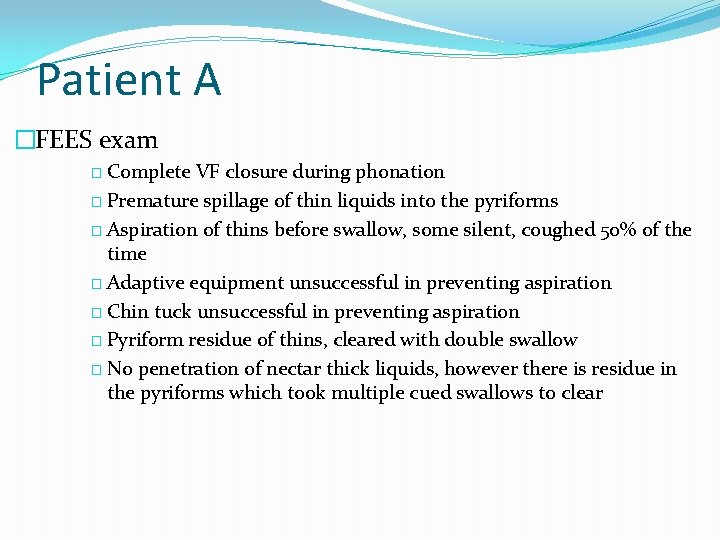
Patient A �FEES exam � Complete VF closure during phonation � Premature spillage of thin liquids into the pyriforms � Aspiration of thins before swallow, some silent, coughed 50% of the time � Adaptive equipment unsuccessful in preventing aspiration � Chin tuck unsuccessful in preventing aspiration � Pyriform residue of thins, cleared with double swallow � No penetration of nectar thick liquids, however there is residue in the pyriforms which took multiple cued swallows to clear
Patient A �FEES Results, contd. � Significant pyriform residue with honey thick liquids, which he then aspirated after the swallow � No penetration, aspiration, or residue with puree � Adequate mastication of mech soft and regular solids (as evidenced by a puree textured bolus being swallowed on the fees) � No penetration, aspiration, or residue of mech soft and regular � FEES recommended regular/nectar liquids
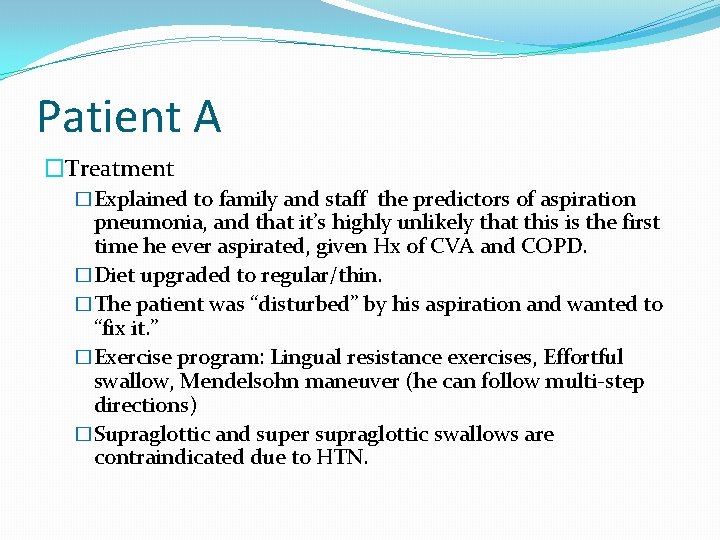
Patient A �Treatment �Explained to family and staff the predictors of aspiration pneumonia, and that it’s highly unlikely that this is the first time he ever aspirated, given Hx of CVA and COPD. �Diet upgraded to regular/thin. �The patient was “disturbed” by his aspiration and wanted to “fix it. ” �Exercise program: Lingual resistance exercises, Effortful swallow, Mendelsohn maneuver (he can follow multi-step directions) �Supraglottic and super supraglottic swallows are contraindicated due to HTN.
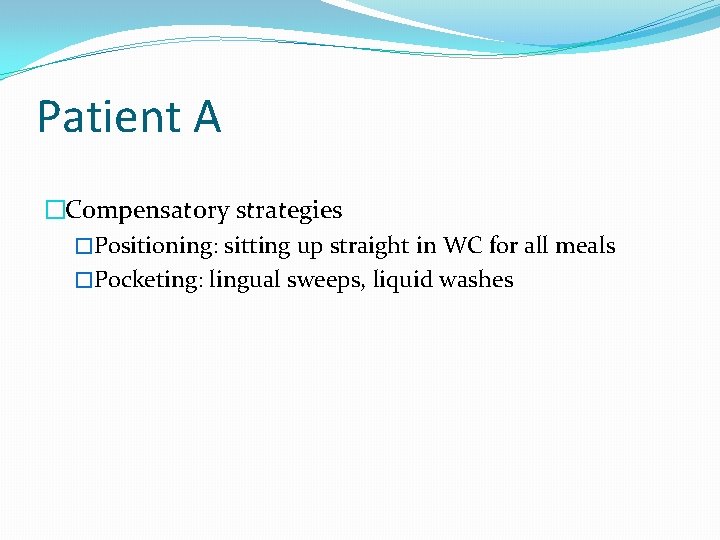
Patient A �Compensatory strategies �Positioning: sitting up straight in WC for all meals �Pocketing: lingual sweeps, liquid washes
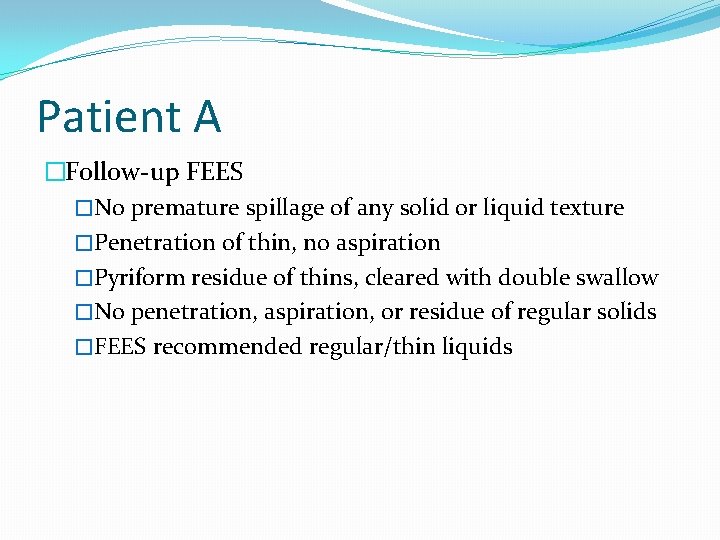
Patient A �Follow-up FEES �No premature spillage of any solid or liquid texture �Penetration of thin, no aspiration �Pyriform residue of thins, cleared with double swallow �No penetration, aspiration, or residue of regular solids �FEES recommended regular/thin liquids
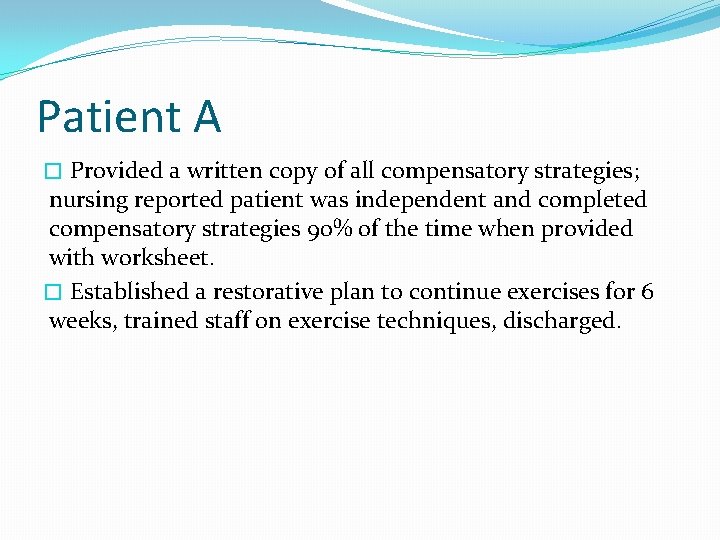
Patient A � Provided a written copy of all compensatory strategies; nursing reported patient was independent and completed compensatory strategies 90% of the time when provided with worksheet. � Established a restorative plan to continue exercises for 6 weeks, trained staff on exercise techniques, discharged.
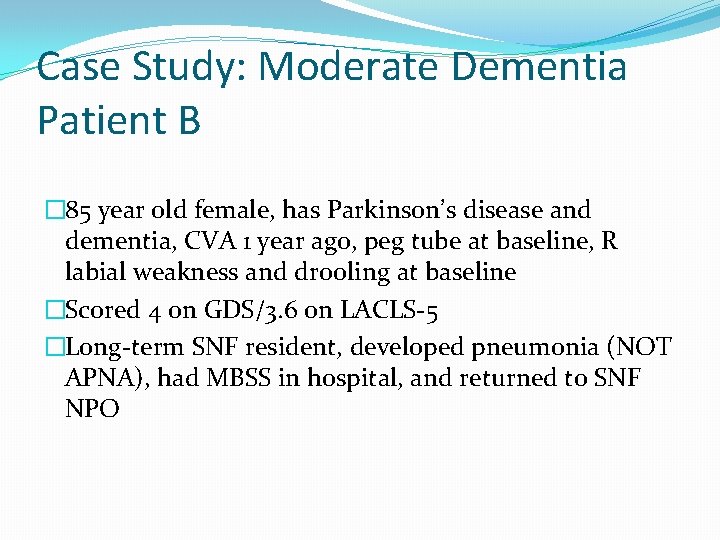
Case Study: Moderate Dementia Patient B � 85 year old female, has Parkinson’s disease and dementia, CVA 1 year ago, peg tube at baseline, R labial weakness and drooling at baseline �Scored 4 on GDS/3. 6 on LACLS-5 �Long-term SNF resident, developed pneumonia (NOT APNA), had MBSS in hospital, and returned to SNF NPO
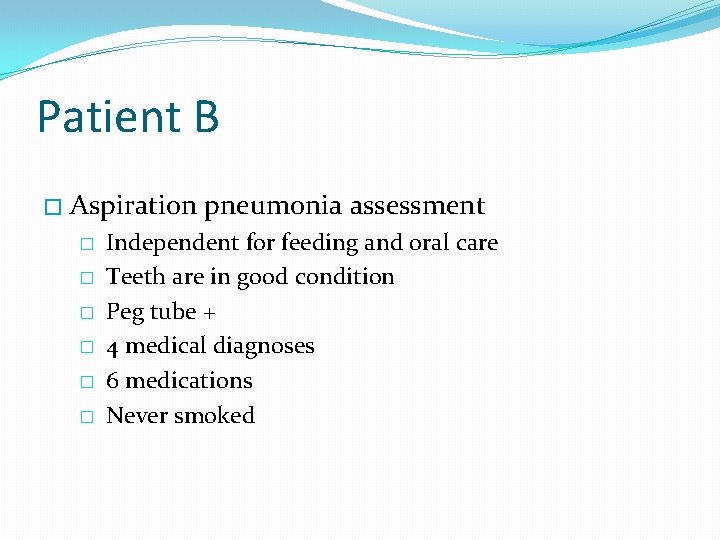
Patient B � Aspiration pneumonia assessment � � � Independent for feeding and oral care Teeth are in good condition Peg tube + 4 medical diagnoses 6 medications Never smoked
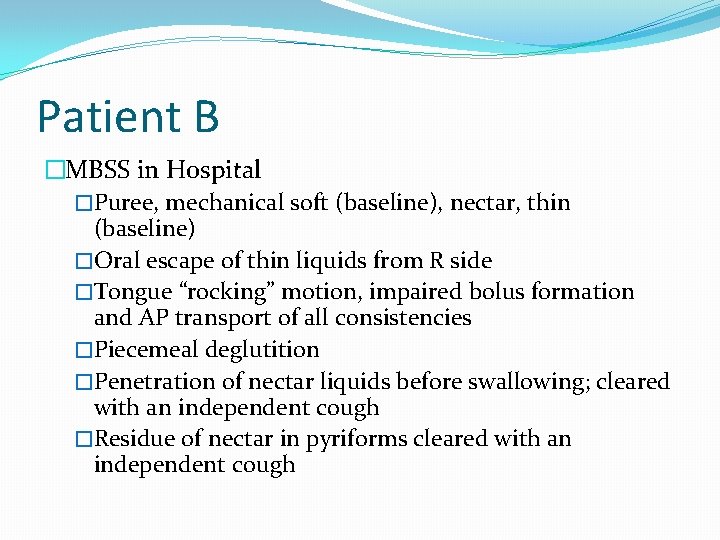
Patient B �MBSS in Hospital �Puree, mechanical soft (baseline), nectar, thin (baseline) �Oral escape of thin liquids from R side �Tongue “rocking” motion, impaired bolus formation and AP transport of all consistencies �Piecemeal deglutition �Penetration of nectar liquids before swallowing; cleared with an independent cough �Residue of nectar in pyriforms cleared with an independent cough
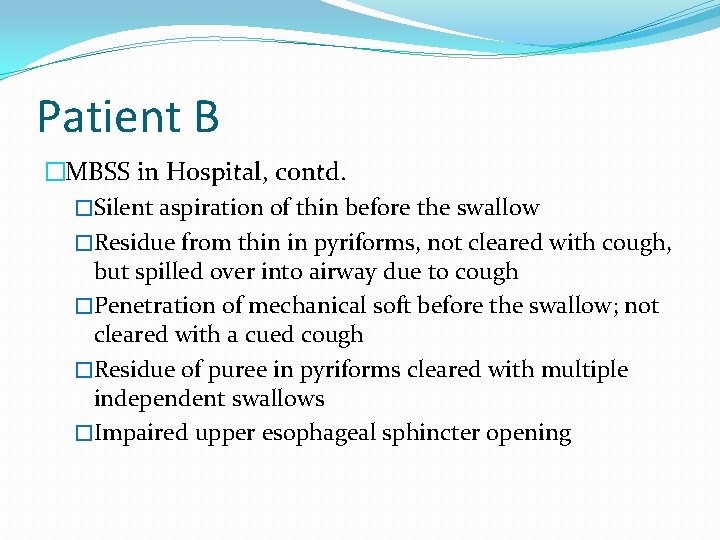
Patient B �MBSS in Hospital, contd. �Silent aspiration of thin before the swallow �Residue from thin in pyriforms, not cleared with cough, but spilled over into airway due to cough �Penetration of mechanical soft before the swallow; not cleared with a cued cough �Residue of puree in pyriforms cleared with multiple independent swallows �Impaired upper esophageal sphincter opening
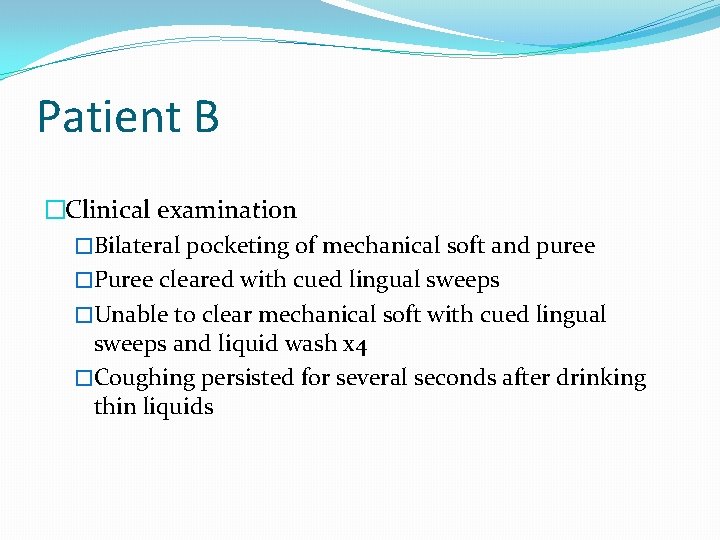
Patient B �Clinical examination �Bilateral pocketing of mechanical soft and puree �Puree cleared with cued lingual sweeps �Unable to clear mechanical soft with cued lingual sweeps and liquid wash x 4 �Coughing persisted for several seconds after drinking thin liquids
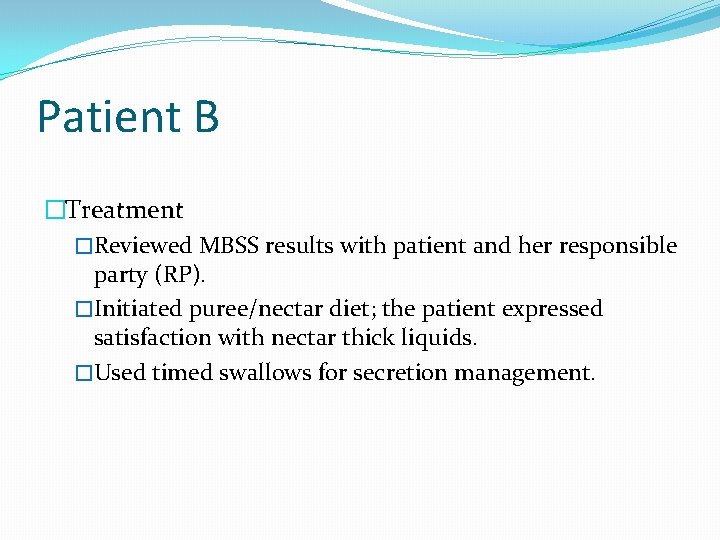
Patient B �Treatment �Reviewed MBSS results with patient and her responsible party (RP). �Initiated puree/nectar diet; the patient expressed satisfaction with nectar thick liquids. �Used timed swallows for secretion management.
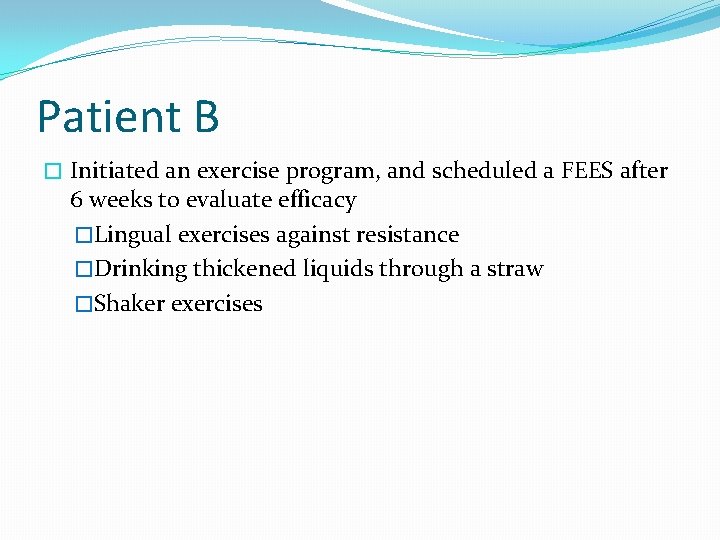
Patient B � Initiated an exercise program, and scheduled a FEES after 6 weeks to evaluate efficacy �Lingual exercises against resistance �Drinking thickened liquids through a straw �Shaker exercises
Patient B �FEES results �Piecemeal deglutition of puree and mechanical soft �No penetration, aspiration, or residue from nectar thick liquids �Aspiration of thin before the swallow, residue of thin in pyriforms after the swallow �Independent coughs were unsuccessful in removing thin liquid residue, and caused residue to spill over into the airway �No penetration, aspiration, or residue from mechanical soft or puree
Patient B �Provale cup and chin tuck did not help with management of thin liquids. �Patient could not follow multi-step directions to complete other maneuvers. �Diet upgraded to mechanical soft/nectar. �Continued all exercises, as impairments with thin liquid management remained. �Instances of coughing (thin liquids) decreased with subsequent trials. �Scheduled a follow-up MBSS (insurance changed and would not pay for FEES); patient/RP declined.
Patient B �Held a care-plan meeting with patient and her RP. �Discussed her performance on the FEES and in subsequent therapy. �Explained that the patient has not lost weight or shown signs of dehydration with her current diet. �Explained that MBSS was warranted to see if her swallowing physiology had improved with further exercises, and if a diet upgrade was warranted.
Patient B �Made patient aware that ultimately, diet was her choice. �Patient and RP declined MBSS and further treatment. �Educated nursing staff to provide cues to swallow saliva, educated staff on providing cues for double swallows, cued coughs, and liquid washes, discharged.
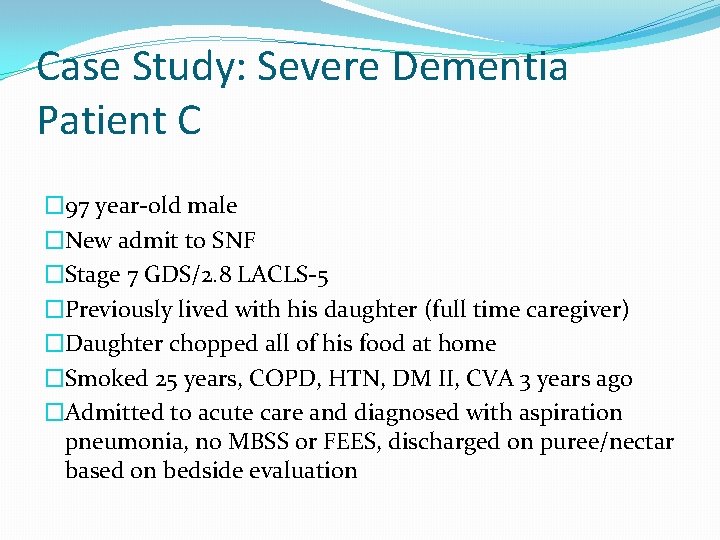
Case Study: Severe Dementia Patient C � 97 year-old male �New admit to SNF �Stage 7 GDS/2. 8 LACLS-5 �Previously lived with his daughter (full time caregiver) �Daughter chopped all of his food at home �Smoked 25 years, COPD, HTN, DM II, CVA 3 years ago �Admitted to acute care and diagnosed with aspiration pneumonia, no MBSS or FEES, discharged on puree/nectar based on bedside evaluation
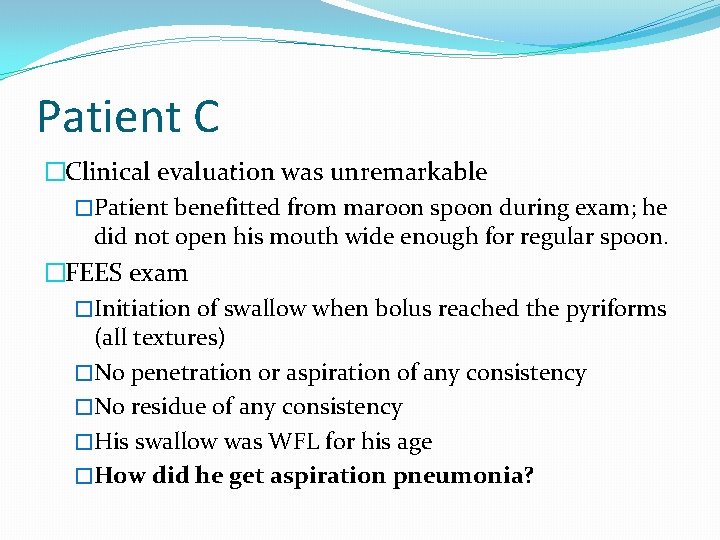
Patient C �Clinical evaluation was unremarkable �Patient benefitted from maroon spoon during exam; he did not open his mouth wide enough for regular spoon. �FEES exam �Initiation of swallow when bolus reached the pyriforms (all textures) �No penetration or aspiration of any consistency �No residue of any consistency �His swallow was WFL for his age �How did he get aspiration pneumonia?
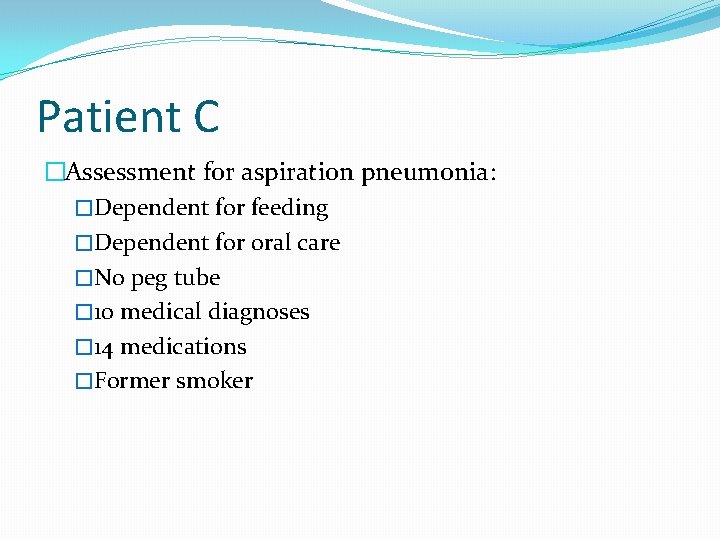
Patient C �Assessment for aspiration pneumonia: �Dependent for feeding �Dependent for oral care �No peg tube � 10 medical diagnoses � 14 medications �Former smoker
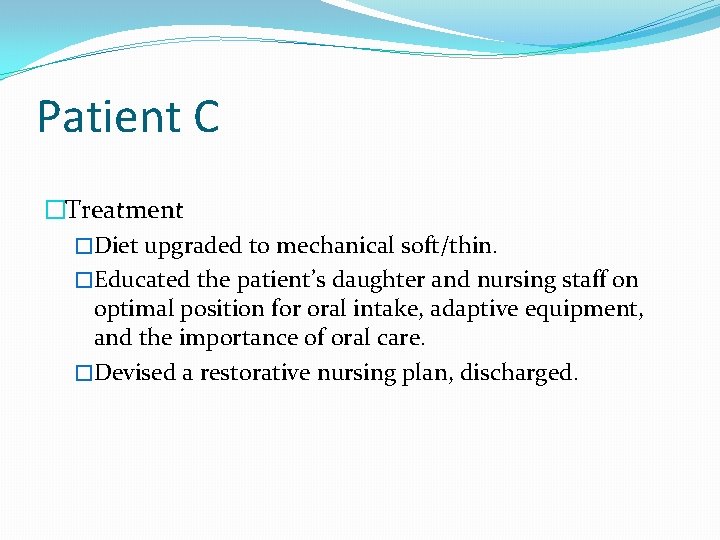
Patient C �Treatment �Diet upgraded to mechanical soft/thin. �Educated the patient’s daughter and nursing staff on optimal position for oral intake, adaptive equipment, and the importance of oral care. �Devised a restorative nursing plan, discharged.
Final Thoughts �Senior citizens have worked hard throughout their lives, and deserve to have enjoyable meals during their retirement, even those in nursing homes, or with dementia. Do not give them substandard treatment by refusing to explore all options. Aunt Wilma deserves better!
Questions? �Contact: �Joy. Carter. SLP@gmail. com
References � Alagiakrishnan, K. , Bhanji, R. A. , & Kurian, M. (2013). Evaluation and management of oropharyngeal dysphagia in different types of dementia: A systematic review. Archives of Gerontology and Geriatrics, 56, 1– 9. � Allen, C. K. , Austin, S. L. , David, S. K. , Earhart, C. A. , Mc. Craith, D. B. , & Riska-Williams, L. (2007). Manual for the Allen Cognitive Level Screen-5 (ACLS-5) and Large Allen Cognitive Level Screen-5 (ACLS-5). Camarillo, CA: ACLS and LACLS Committee. � Ashford, J. (Guest presenter). (2017, September 1). Swallow Your Pride [Audio podcast]. Retrieved from https: //www. mobiledysphagiadiagnostics. com/swallow-your-pride-episode-3/ � Balou, M, Mc. Cullough, GH, Aduli, F. , Brown, D, Stack Jr, BC, Snoddy, P & Guidry, T. (2014). Manometric measures of head rotation and chin tuck in healthy participants. Dysphagia, 29, 2532. � Barczi SR, Sullivan PA, Robbins J. (2000). How should dysphagia care of older adults differ? Establishing optimal practice patterns. Semin Speech Lang. 21, 347– 361. � Bronson-Lowe, C. , Leising, K. , Bronson-Lowe, D. , Lanham, S. , Hayes, S. , Ronquillo, A. & Blake, P. (2008). Effects of a Free Water Protocol for Patientswith Dysphagia (Abstract, Dysphagia Research Society Meeting). Dysphagia, 23, 430. � Cichero, JA. (2013). Thickening agents used for dysphagia management: Effect on bioavailability of water, medication, and feelings of satiety. Nutrition Journal, 12(54). doi: 10. 1186/1475 -2891 -12 -54 � Cola, C. P. , Gatto, A. R. , Silva, R. G. , Spadotto, A. A. , Schelp, A. O. , Aparecida, M. , & Henry, C. A. (2010). The influence of sour taste and cold temperature in pharyngeal transit duration in patients with stroke. Arquivos de Gastroenterologia, 47(1). doi: 10. 1590/S 0004 -280320100004 � Colodny, N. (2005). Dysphagic independent feeders’ justifications for noncompliance with recommendations by a speech-language pathologist. American Journal of Speech-Language Pathology, 14(1), 61– 70.
� Corbin-Lewis, K, Liss, J. M. , & Sciortino, K. L. , 2005, Clinical Anatomy & Physiology of the Swallow Mechanism, Thomson Delmar Learning, Clifton Park, NY. � Coyle, J. L. (2014, April). IIS 5: Dysphagia Interventions: Are We Treating the Bolus, the Patient, or Something Else? Seminar presented at the Healthcare & Business Institute of the American Speech-Language-Hearing Association, Las Vegas, NV. � Effros RM, Darin C, Jacobs ER, Rogers RA, Krenz G, Schneerberger EE. (1997); Water transport and the distribution of aquporin-1 in pulmonary air spaces. Journal of Applied Physiology 83: 1002 -16 � Garcia, J. M. , Chambers, E. , Molander, M. (2005). Thickened liquids: practice patterns of speech language pathologists. American Journal of Speech-Language Pathology, 14, 4 -13. � Garon, B. , Engle, M. , Ormiston, C. (1997). A randomized control study to determine the effects of unlimited oral intake of water in patients with identified aspiration. J Neuro Rehab, 11, 139 -148. � Horner, J. , et al. (2016). Consent, refusal, and waivers in patient centered dysphagia care: Using law ethics and evidence to guide clinical practice. AJSLP, 25(4). � Langmore, SE, et al. (1998). Predictors of aspiration pneumonia: How important is dysphagia? Dysphagia, 13, 69 -81. � Levy, R. (Guest presenter). (2017, November 1). Evidenced-based treatment for every swallowing impairment. Swallow Your Pride [Audio podcast and show notes]. Retrieved from https: //www. mobiledysphagiadiagnostics. com/swallow-your-pride-episode-13/ � Logemann, J. A. (1993). The dysphagia diagnostic procedure as a treatment efficacy trial. Clinics in Communication Disorders, 3(4), 1 -10. � Logemann, J. A. (1993). Manual for the videofluorographic study of swallowing: second edition. Austin, Tx: Pro-Ed.
� Logemann, J. A. , Pauloski, B. R. , Colangelo, L. , Lazarus, C. , Fujiu, M. , Kahrilas, P. J. (1995). Effects of a sour bolus on oropharyngeal swallowing measures in patients with neurogenic dysphagia. Journal of Speech and Hearing Research, 38(3), 556 -63. � Logemann, JA, et al. (2008). A randomized study of three interventions for aspiration of thin liquids in patients with dementia or Parkinson’s disease. Journal of Speech Language Hearing Research, 51(1), 173183. � Makeda, K. & Akagi, J. (2014). Oral care may reduce pneumonia in the tube-fed elderly: A preliminary study. Dysphagia. Advanced online publication. Doi: 10. 1007/s 00455 -014 -9553 -6 � Pace CC, Mc. Cullough GH. (2010). The association between oral microorganisms and aspiration pneumonia in the institutionalized elderly: Review and recommendations. � Pellieter, C. A. , & Dhanaraj, G. E. (2006). The effect of taste and palatability on lingual and swallowing pressure. Dysphagia, 21, 121 -128. � Regan, J. , Walshe, M. , & Tobin, W. O. (2010). Immediate effects of thermal tactile stimulation on timing of swallow in idiopathic Parkinson’s disease. Dysphagia, 25(3), 207 -215. � Robbins, J. et al. (2008). Comparison of two interventions for liquid aspirations on pneumonia incidence a randomized trial. Annals of Internal Medicine, 148(7), 509 -518. � Sdravou, K. , and Washe, M. (2012). Effects of carbonated liquids on oropharyngeal swallowing measures in people with neurogenic dysphagia. Dysphagia, 27, 240 -250. � Shanahan, T. K. , Logemann, J. A. , Rademaker, A. W. , Pauloski, B. R. , Kahrilas, P. J. (1993) Chin-down posture effect on aspiration in dysphagic patients. Arch Phys Med Rehabil 74, 736 -739. � Sharpe K, Ward L, Cichero J, Sopade P, Halley P. (2007). Thickened fluids and water absorption in rats and humans. Dysphagia, 22, 193– 203. DOI: 10. 1007/s 00455 -006 -9072 -1. � Teismann, I. K. , Steinstrater, O. , Warnecke, T. , Suntrup, S. , Ringlestein, E. B. , Pantev, C. , &Dziewas, R. (2009). Tactile thermal oral stimulation increases the cortical representation of swallowing. Bio. Med. Central Neuroscience, 10(71). DOI: 10. 1186/1471 -2202 -10 -71 � Toren, F. (2013, January 26). CN exam. Retrieved from http: //brainslt. blogspot. com/2013/01/cnexam. html � Yoneyama, T. , Yoshida, M. , Ohuri, T. . Sasaki, H. (2002). Oral care reduces pneumonia in older patients in nursing homes. Journal of the American Geriatric Society, 50, 430 -433.