Sport Class Air Racing Formation Warm Up Ground

- Slides: 79
Sport Class Air Racing Formation Warm Up Ground School 0
Sport Class Formation Ground School Overview • Part I: Formation Procedures • Normal Procedures • Safety and Abnormal Procedures • Part II: Area Brief • Stead NCAR/SCARA Ops • SCARA Area Ops • Part III: Flight Profile
SCARA Formation Disclaimer • SCARA Formation Warm Up is TAILORED • Training Charter: • Proficiency in 4 ship formation is required before attending • Specific Procedures To Support Racing 2
PART I Sport Class Air Racing Formation Concepts and Procedures 3
SCARA Formation NORMAL OPERATIONS AND CONCEPTS 4
Familiar Terms & Concepts • • • “The Formation Contract” Lead Wingman Station Keeping Bearing Line Fingertip Echelon Strong Left/Right Line Abreast Route Ops Check • • • Interval Takeoff Rejoin Cross Under Pitchout In-Trail Overshoot/Under-run Blind/Lost Sight Extended Trail Overhead Pattern Break 5
“The Formation Contract” • Flight Lead • • • Brief / Debrief Fly stable platform Control the flight maneuvers Monitor flight Terminate maneuvers if flight safety is compromised • Navigate • Communicate
“The Formation Contract” • Wingman • • Attend/understand briefing Always maintain visual contact Immediately advise lead if you do lose sight Don’t hit flight lead (or anyone else either) Follow briefed formations/positions Maintain listening watch Advise lead if traffic is observed Have exit plan ready
COMMUNICATIONS: • A communication plan will always be briefed • Brief all frequencies if local flying • Initial check-in after engine start is generally on CTAF • During FAST Freq Plan is CTAF-Tactical-CTAF • During PRS Freq plan is GND – Race Control • Frequency change protocol • Use of “Go”: Acknowledge in sequence (“check out”) • Lead will check flight in on new frequency in either case • Sport Class Standard for FAST and PRS – Always use “GO” 8
SCARA CONFIGURATION CHANGES • Directed with Radio Calls • • Respond with Race Number Optional = Pitchout Signal at RTB Optional – Supplement with hand/aircraft signals Executed from Fingertip/Finger Four position • If in other than Fingertip: – – • Lead will regroup in Fingertip then move to a new configuration Lead may brief alternative for specific training events One exception is Moving to Extended Trail – – Pitchout from Echelon to Ext Trail is Standard Radio Call, 3 second interval, 4 calls in with separation » Must be well-briefed by Lead 9
Fuel Management • “Bingo” • Fuel state at which flight must terminate to return with legal minimums or as briefed by the Flight Lead • Day VFR: 30 Minutes Reserve • Generally briefed in ‘Time’ - fuel remaining in minutes in dissimilar aircraft formations • Example report: “Raven 3 is bingo plus 5” • Do not overfly briefed bingo! 10
SCARA Formation ABNORMAL PROCEDURES AND SAFETY 11
Abnormals Overview • • • Collision Avoidance Lost Sight/Breakout Knock It Off May-Day Hard Deck Safety Equipment 12
Safety Collision Avoidance • • • Always keep lead in sight Always closely monitor relative motion and closure Always maintain separation Always consider prop wash and wake turbulence Never move ahead of your lead aircraft Never go “belly up” to your lead aircraft 13
• Breakout • • Lost Sight/Breakout Formation Scenarios For most SCARA procedures, Breakout is Up & Away EXCEPTION: Low and Blind in the chute • Rejoin/Departure Rejoin • • • Fly a predictable path Lead will direct Aircraft behind, stagnate, but stay on rejoin line • Close Formation • • Up and Away Lead will direct lost wingman • Extended Trail • • Fly a predictable path – most likely wings level Lead will direct flight Aircraft behind, remain in formation! Expect rejoin of remaining flight, and then lead direct lost wingman/men 14
Lost Sight/Breakout Race Scenarios • Departure Rejoin • Fly a predictable path • Lead will direct • Aircraft behind, stagnate, but stay on rejoin line • Echelon Enroute • Up and Away • Lead will direct lost wingman • In the Chute • Low and Blind • Stay low, slide back • Lead will direct – expect remain in trail • High and Blind • Up and Away • Lead will direct – expect remain in trail 15
Safety Calls • “Knock It Off” (KIO) • USE IT When a safety issue is developing • For immediate hazards to flight • Impending collision, etc. • In those cases, be directive first • Who can call a KIO? • What do you do if you hear it? 16
Safety Calls Knock it Off • “Knock It Off” • Anyone can call KIO • “Sport 5 Knock It Off, Altitude” • Lead will acknowledge the call and all flight members will mirror his/her call” • “ 22 Knock It Off”…“ 39 Knock It Off”, etc. • Clear your flight path and await lead’s instructions – do not stop flying formation! • Flight will ease maneuvering and increase spacing at KIO call 17
Safety Calls Mayday • “Mayday” • Engine Failure, Critical Systems Failure Structural Failure, Midair • After Mayday call - Lead will Knock It Off and take control • No echoed KIO call for a Mayday • Only essential comms • Clear your flight path and await lead’s instructions • Do not stop flying formation! • Flight will ease maneuvering / increase spacing at KIO call 18
Safety Calls Breakout • “XX Blind, Breaking Out” • Losing sight of Pace, Lead, or any racer/formation for whom a pilot has separation responsibility • After breakout call, fly a predictable path • Lead will direct lost wingman • EXCEPTION: Low and Blind in chute • “XX Blind, Low” 19
Safety The Hard Deck • “Virtual” ground level • Minimum maneuvering altitude • Should be derived from current charts • High enough to allow reasonable chance of bailout or recovery from unusual attitude/aerobatic maneuver as applicable • Must be briefed on every formation mission • Call KIO if penetrated 20
Aircraft / Safety Equipment Reminder • • Dual Controls Intercom system Ability to transmit from rear/right seat Fire Extinguisher • FOR PRS: • Helmet • Gloves • Nomex flight suit 21
BREAK 22
PART II Area Brief and SCARA Formation Warm Up Procedures 23
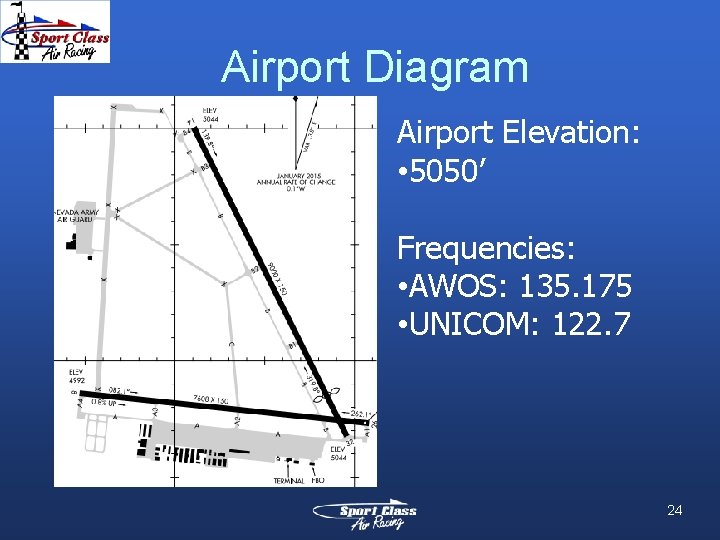
Airport Diagram Airport Elevation: • 5050’ Frequencies: • AWOS: 135. 175 • UNICOM: 122. 7 24
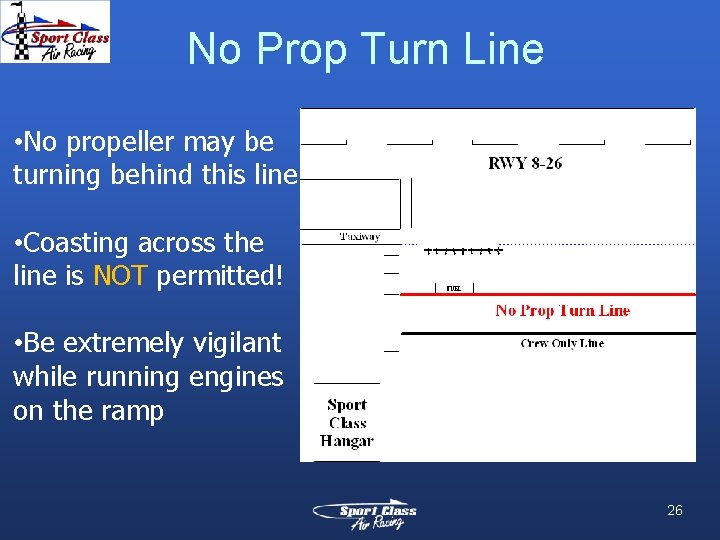
Spot Aircraft • Find tow driver—offer bribe • Spot At least 20 Minutes prior to Take-off • Lead Designates Spot and Start Times • Meet for final brief at Lead’s airplane • “No Prop Turn” line in effect • Do not taxi or coast across it! 25
No Prop Turn Line • No propeller may be turning behind this line • Coasting across the line is NOT permitted! • Be extremely vigilant while running engines on the ramp 26
SCARA Formation DEPARTURE PROCEDURES 27
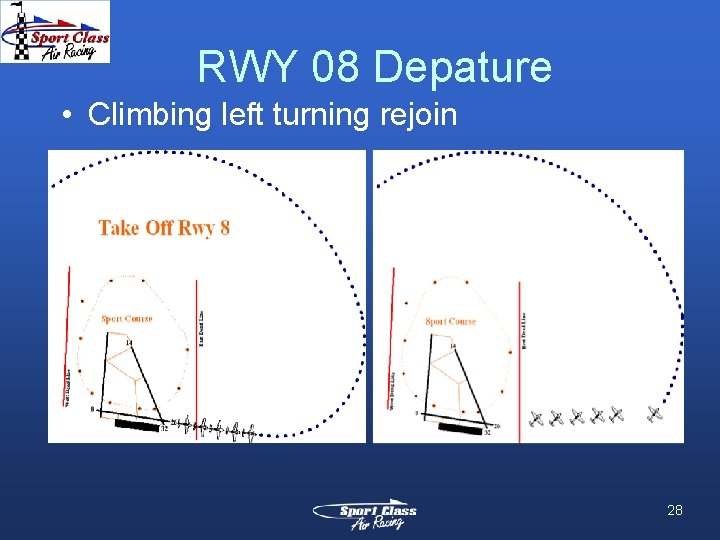
RWY 08 Depature • Climbing left turning rejoin 28
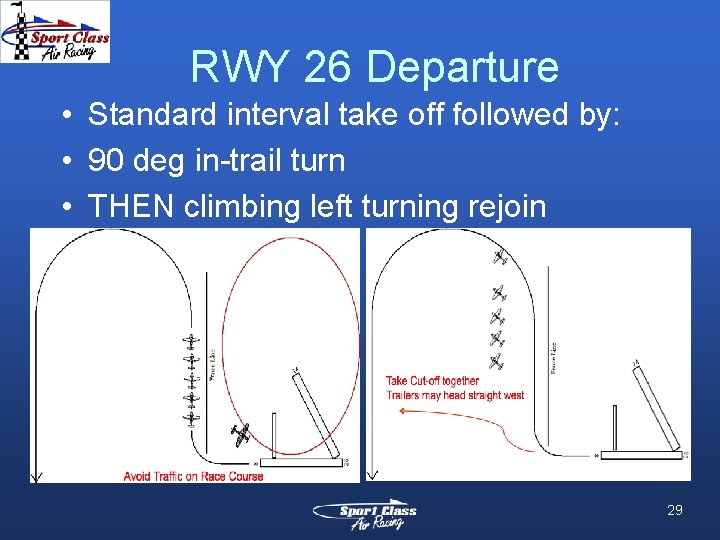
RWY 26 Departure • Standard interval take off followed by: • 90 deg in-trail turn • THEN climbing left turning rejoin 29
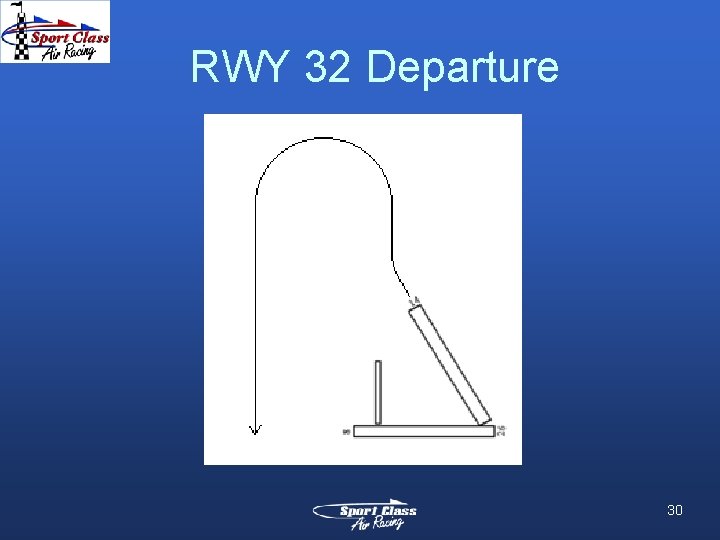
RWY 32 Departure 30
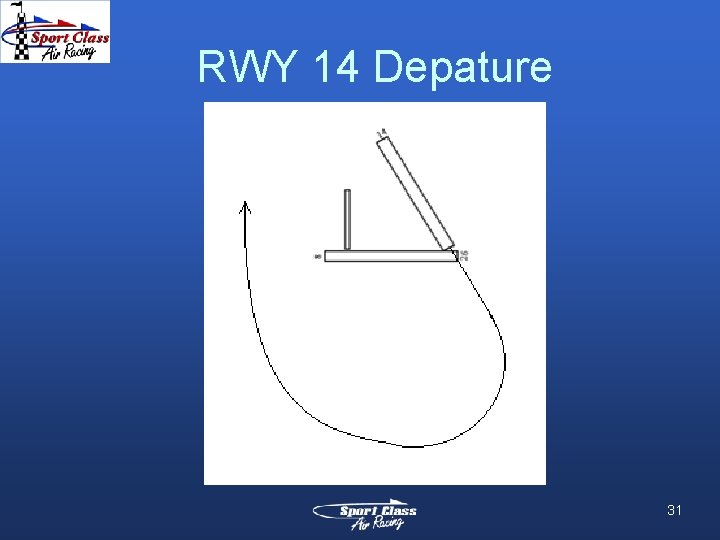
RWY 14 Depature 31
Departure and Recovery WORKING AREAS 32
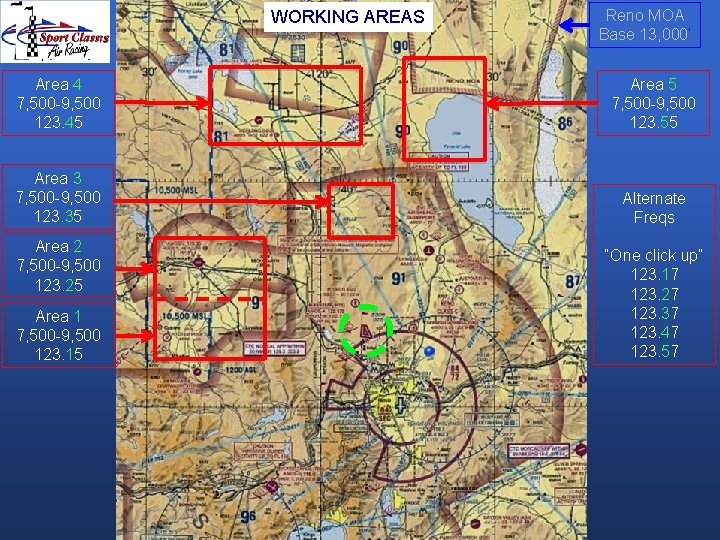
WORKING AREAS Reno MOA Base 13, 000’ Area 4 7, 500 -9, 500 123. 45 Area 5 7, 500 -9, 500 123. 55 Area 3 7, 500 -9, 500 123. 35 Alternate Freqs Area 2 7, 500 -9, 500 123. 25 Area 1 7, 500 -9, 500 123. 15 “One click up” 123. 17 123. 27 123. 37 123. 47 123. 57
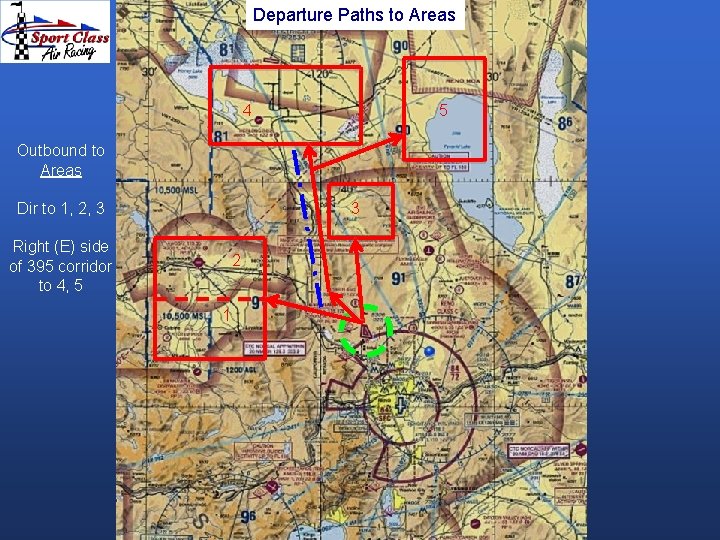
Departure Paths to Areas 4 5 Outbound to Areas Dir to 1, 2, 3 3 Right (E) side of 395 corridor to 4, 5 2 1
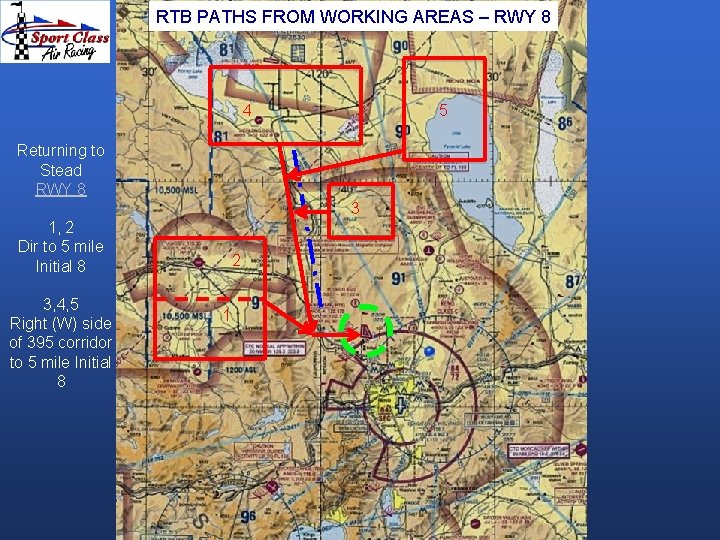
RTB PATHS FROM WORKING AREAS – RWY 8 4 5 Returning to Stead RWY 8 3 1, 2 Dir to 5 mile Initial 8 3, 4, 5 Right (W) side of 395 corridor to 5 mile Initial 8 2 1
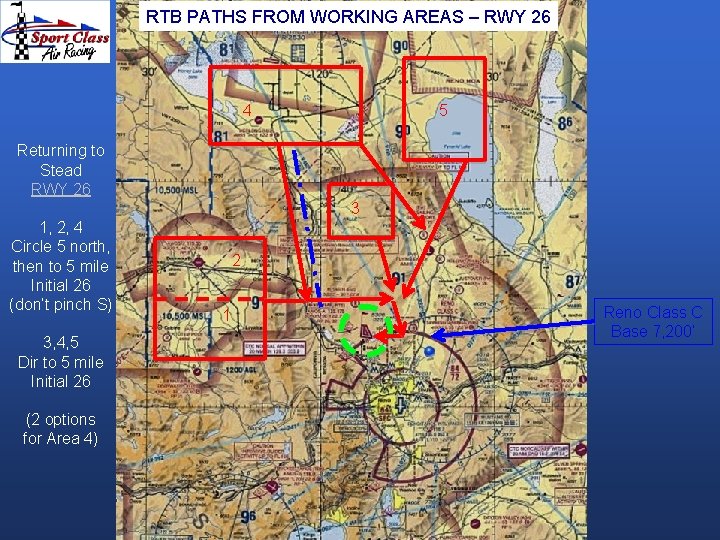
RTB PATHS FROM WORKING AREAS – RWY 26 4 5 Returning to Stead RWY 26 3 1, 2, 4 Circle 5 north, then to 5 mile Initial 26 (don’t pinch S) 3, 4, 5 Dir to 5 mile Initial 26 (2 options for Area 4) 2 1 Reno Class C Base 7, 200’
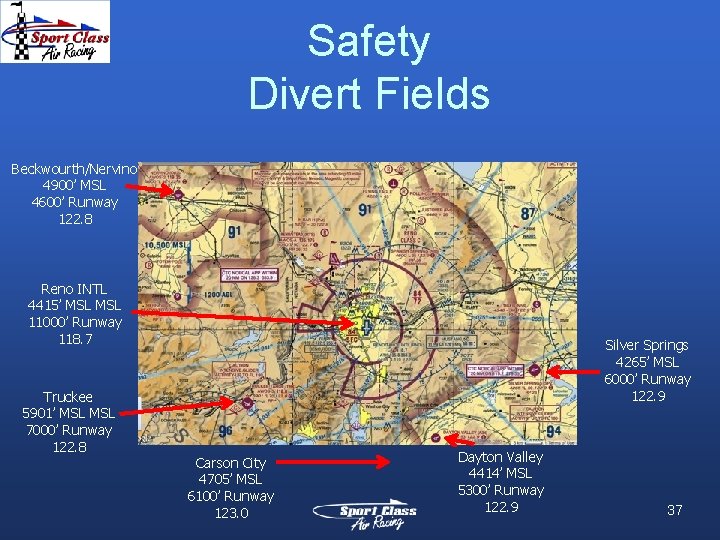
Safety Divert Fields Beckwourth/Nervino 4900’ MSL 4600’ Runway 122. 8 Reno INTL 4415’ MSL 11000’ Runway 118. 7 Truckee 5901’ MSL 7000’ Runway 122. 8 Silver Springs 4265’ MSL 6000’ Runway 122. 9 Carson City 4705’ MSL 6100’ Runway 123. 0 Dayton Valley 4414’ MSL 5300’ Runway 122. 9 37
KRTS Airport & Pattern Integration • Formation Taxiing • Give way when able • Formation Takeoffs • Hold for arrivals or departures • Time the line-up and departure • Formation Arrivals • • Delay entry into Initial Extend Upwind prior to Break “Spin-it” and circle N to re-enter Initial Go-around if necessary • Multiple go-around can get colorful! • Secrets to Success – Communication and Patience!
Recovery Comms • Simplify Radio Calls for the overhead • VFR (GA) pattern aircraft are not familiar with overhead terminology • Race 22 Flight, 10 West, entering straight in overhead 8 • Race 22 Flight, 3 mile initial, runway 8 • Race 22 Flight, overhead, left break 8 • Race 22 Downwind Abeam • Race 22 Base / Gear • Race 22 Cold 39
Recovery Notes Co-existing with Local Traffic • Simple, Clear Comms • Predictable, Consistent Overhead Entries and Patterns • Courtesy to slower and/or training aircraft • When in doubt of traffic interval • Ask for interval’s position • Fly-through (“spin it”) and re-enter, if needed • Heads up for variety of skill levels and experience • Student Training common 40
Runway Exit Plan NO EARLY TURNOFFS! A 3 B
Recovery Ramp Ops • As Briefed: Flight or Single Ship • Follow direction of marshallers • Marshallers will stand to side of aircraft 42
BREAK 43
PART III SCARA Formation Warm Up Flight Profile & Description 44
Flight Briefing • Critical to success of the flight • • Sets the tone for the whole flight Lead will use the Sport Class Briefing Checklist Brief the plan Listen Up / Ask Questions • No one mans up without clear picture of expectations • Fly the plan 45
Flight Briefing • • • Time Hack Establish Mission Objectives Weather & Environmentals Sequence of Events and standards to be used Mission Specifics • Details on how to achieve the training objectives. • Contingencies • Wrap Up & Final Questions 46
Typical Training Profile • Start/Check in • Taxi out • Run up • Interval Takeoff • Takeoff Rejoin • Route Formation • Fingertip Formation • Wing-work (station-keeping) • Cross-unders • Echelon turns • Pitch-out & Rejoins • Extended Trail • RTB • Recovery (overhead) 47
Engine Start • Be ready to start at briefed start time • Ensure area is clear of all but crew • Start when lead starts • If everyone in flight is turning, fire-it-up! • Brief Non-standard Start Requirements • Early Starts for Radials, etc 48
Check-in / Taxi • Pull forward 5 feet when ready to taxi • FWU - Check In on CTAF with Race Number • PRS – Check in on Ground Control • Taxi Sequence • No. 2 taxis first • Lead follows flight – Simulating Pace • Spacing: • BRIEF DISSIMILAR A/C or SPECIAL REQUIREMENTS • In trail: 4 Ship Lengths • Staggered: 2 Ship Lengths • Tail Dragger: Extend & Weave as required 49
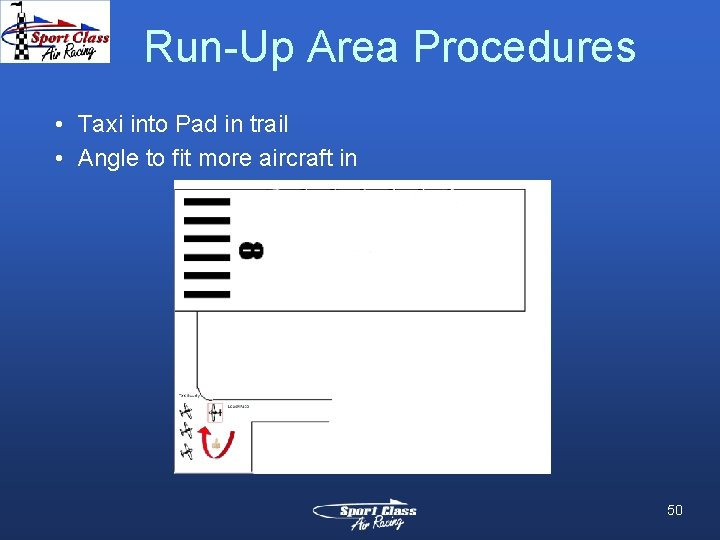
Run-Up Area Procedures • Taxi into Pad in trail • Angle to fit more aircraft in 50
Run-up • All Aircraft do Run-up on their own • No run-up signal required • Wingmen Pass Thumbs-up back to front • First Wingman calls “XX Ready” to Lead • Lead switches flight to Race Control Frequency (“Go”) • Do not auto switch to Race Control • Check-In with Race number • Lead announces Flight’s departure on CTAF • Line-up and Launch using Sport Class procedures 51
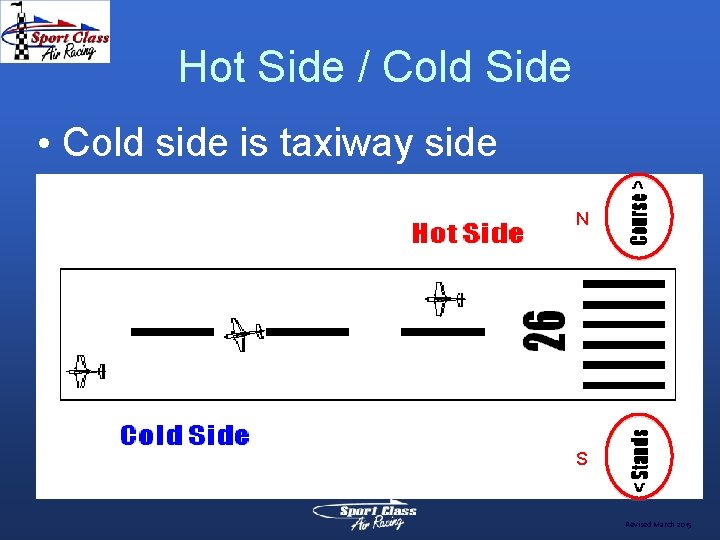
Hot Side / Cold Side • Cold side is taxiway side N S Revised March 2015
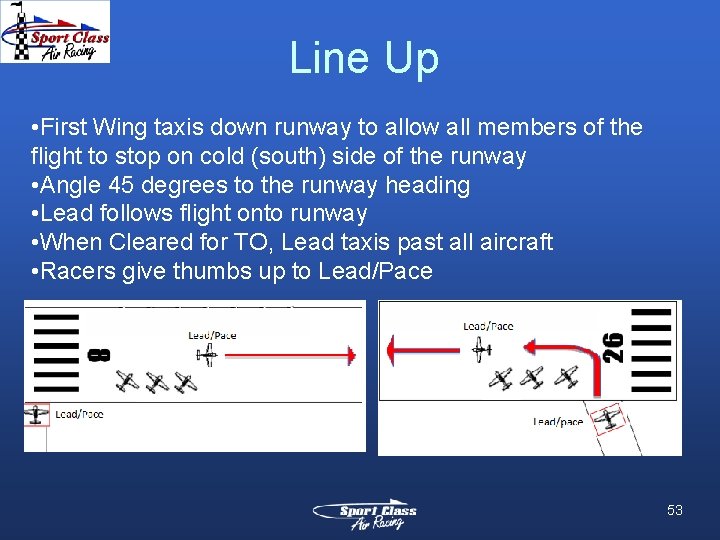
Line Up • First Wing taxis down runway to allow all members of the flight to stop on cold (south) side of the runway • Angle 45 degrees to the runway heading • Lead follows flight onto runway • When Cleared for TO, Lead taxis past all aircraft • Racers give thumbs up to Lead/Pace 53
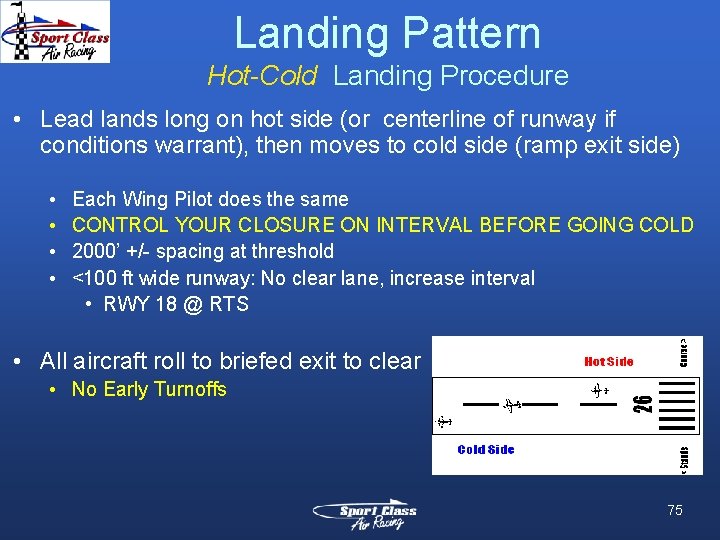
Interval Takeoff • Lead call 60 kts • Racers roll in order when previous racer is 1000 ft down the runway • Last Aircraft call airborne • Takeoff on Hot side, Abort to Cold side • Hot side is away from stands (N side) • Cold side is turnoff side (S side, towards stands) • Control the Aircraft • Call the Abort • Call Cold 54
Takeoff Aborts • • • Aborting Aircraft FLY THE AIRPLANE! Aircraft in control – MOVE to Cold Side Communicate Intentions as soon as practical Aircraft Behind – On the Roll Judgment Call: Continue Takeoff roll on Hot Side Aircraft Behind – Not Rolling Maintain position until abort is clear, then continue take off roll If abort cannot clear, maintain position or taxi back to ramp 55
Rejoins After Interval Takeoff • Standard is a Turning Rejoin • SCARA: ALL Rejoins in Sport Class and PRS will be “Everyone Joins to the Outside of the Turn” Turn • Typical PRS/Race flight will be left rejoin turns • Join to right echelon • Formation Warm Up hops will practice rejoins in both directions • Rejoins discussed in an upcoming slide 56
Route Formation • WHY ROUTE? • Checklists and “Ops Checks” • Better lookout • Signal • Radio Call • Tail Wag or Fishtail (side to side) • Wing Pilots move out to maintain lateral separation. • 2 -4 ship widths for checklists and frequency changes • Turns • Wingman on the inside of the turn: • Fly route welded wing references • Wingman on the outside of the turn: • Fly echelon references to avoid large power req • (Stack Level in turn away) • Use good scan of lead when doing ops checks • To avoid unrecognized closure 57
Ops Checks and Fuel Management • “Ops Check” • All in-flight checks performed in route formation • Check fuel, fuel balance and engine parameters • Report parameters as required. • Fuel State in minutes • Flight Lead radio call and acknowledgment: • “Sport 5 flight Ops Check”… “ 5: 55” • “ 22: 45” “ 2: 55” “ 39: 50” 58
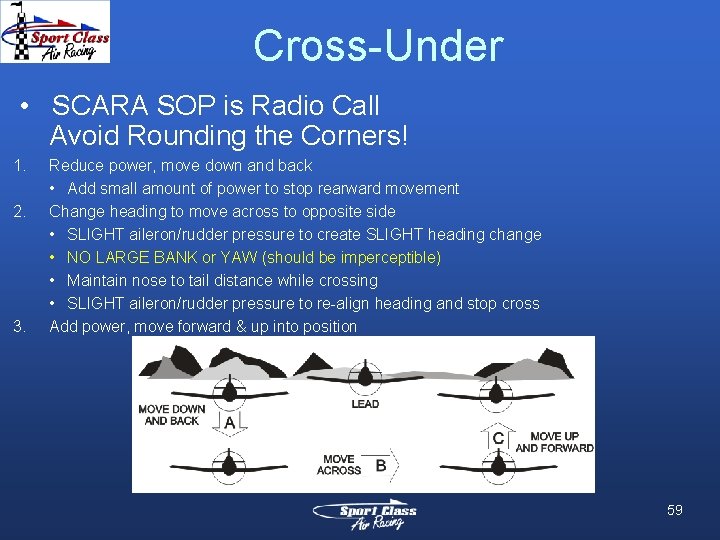
Cross-Under • SCARA SOP is Radio Call Avoid Rounding the Corners! 1. 2. 3. Reduce power, move down and back • Add small amount of power to stop rearward movement Change heading to move across to opposite side • SLIGHT aileron/rudder pressure to create SLIGHT heading change • NO LARGE BANK or YAW (should be imperceptible) • Maintain nose to tail distance while crossing • SLIGHT aileron/rudder pressure to re-align heading and stop cross Add power, move forward & up into position 59
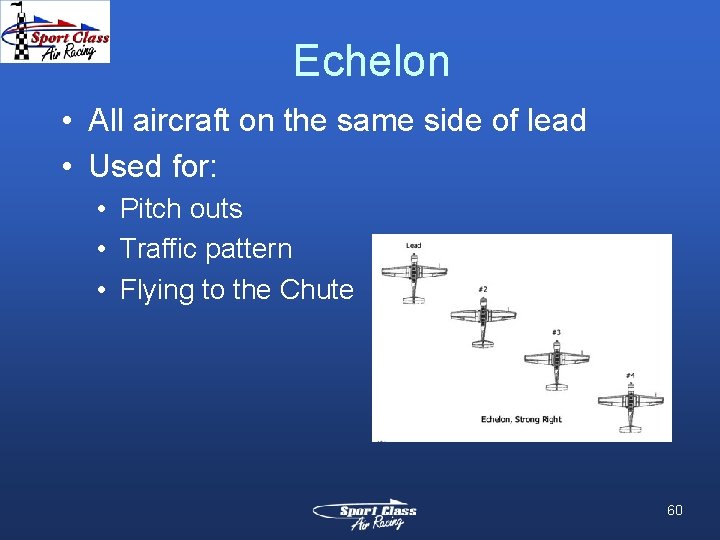
Echelon • All aircraft on the same side of lead • Used for: • Pitch outs • Traffic pattern • Flying to the Chute 60
SCARA Formation PITCH-OUT AND REJOIN 61
Pitch-Out Execution • Always executed from ECHELON • Signaled with RADIO CALL • Level, 60° bank, 2 G, 180° turn • 3 second interval • Match lead’s roll, G and flight path • “ 4’s IN” Call • For Rejoins: Last aircraft calls “in” when wings-level, directly behind preceding aircraft. • At completion of 180° turn (Differs from Extended Trail) 62
Rejoin • • Rejoin is directed by exaggerated wing rock and radio call Lead establishes a steady turn (20 -25 deg nominal) • Wingman turns inside to establish LEAD PURSUIT • “Rejoin line” = 45 deg – vertical stab on outside wing • Once on the rejoin line, modulate bank to fly up the line • Expect to DECREASE bank upon reaching “the line”. • Use BANK ANGLE, not throttle, to control closure (but manage airspeed) • If acute, DECREASE bank (less lead/cutoff, less closure) • If sucked, INCREASE bank (more lead/cutoff, more closure) • Stay LEVEL with lead – it’s an “in plane” maneuver • Lead ON Horizon to slightly above • Going low drives the entire flight low
Overshoot/Under-run • Too much closure or very acute? • OVERSHOOT/UNDER-RUN • • • Decrease AOB and G Lower nose Reduce power Go below, behind and outside Stabilize Mover forward into position • No big plays to catch overshoot! • Never go belly up to lead! 64
Rejoin: Finish • • Fly Bearing Line until positioned to cross • Think: Rejoin to inside, and then cross under • 2 -3 ship-widths Cross smoothly to outside • Requires power as you move outside lead’s radius • No big plays to outside! • Ensure you have other wingmen in sight as you rejoin Too much closure or “smash” – Under-run! NEVER GO BELLY UP TO LEAD Ease AOB and g / Reduce Power Pass below and behind lead and entire flight Move up into position • No big plays back to inside! 65
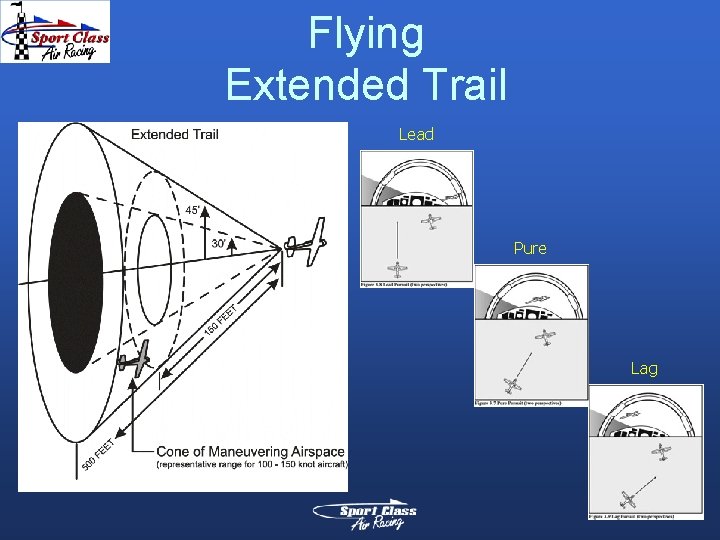
Extended Trail • • Exercise to manage nose to tail with lead/lag • Use pursuit curves, not power to: • Control Nose to Tail • Control Closure • Manage Aspect • Fluid position • 500’ - 1000’ Nose to Tail • No closer than 200 feet or KIO/breakout Evaluated using wingovers, max bank angle 90 degrees Lead may brief and fly greater or lesser angles based on exp Operational Applications: • Rejoins and Landing Interval • Confidence Builder! 66
Entering (Separating to) Extended Trail • Entered from Echelon • • • Flight Lead Brief procedures in detail Use Voice call to initiate Standard 3 second pitchout “ 4’s In” Call For Extended Trail: Last aircraft calls in when achieving the desired spacing and ready for maneuvering Differs from PO/RJ in this respect • (no need to wait for 180° of turn) • Lead begins maneuvering on “ 4’s In” call 67
Flying Extended Trail Lead Pure Lag 68
Rejoin from Extended Trail • Flight Lead flies S&L for short period • • • Large Wingrock Turn for rejoin Standard Rejoin Procedures 69
Line Abreast Formation • • • Flown in the Start Chute Will be practiced in the working area Flown on the 3/9 line (wingtip to wingtip) Lateral Spacing (in/out) is challenging Banking causes spacing difficulties Tendency is to roll where you look (so don’t!)
Lost Sight/Break Out • Lead will pre-brief the formation, timing and technique they will utilize for this exercise • Lead will only give the Breakout call to one Wingman at a time • Lead will initiate the exercise with a call such as, “Sport XX, Breakout”, or “Sport XX, you have Lost Sight, Breakout”, or “Sport XX, you are Blind”, or similar • The Wingman so directed, will initiate an immediate Breakout, as described in the Emergency/Contingency Procedures section of this manual • After the Breakout Wingman recovers the aircraft to straight and level from the Breakout, the Lead will direct the Wingman back into the formation 71
The “Perch” SCARA Formation RECOVERY 72
Overhead Pattern Execution • Lead configures flight in echelon prior to Initial • Normal Radio calls alert wingmen to upcoming pitchout • Lead Signals pitchout and 5 sec interval (only hand signal we use) • Pitchout at 1000’ AGL (6000’ @ RTS) • Fixed Gear A/C - Level pitch to 6000’ DW • RG A/C - Pitch up to 6500’ DW • Sport Class Standard is 5 sec Interval for Landing Pattern • Creates 2000’ +/- interval on downwind • Interval about 90º ahead in approach turn • Know your interval and aircraft ahead of it 73
Landing Pattern Execution • Wing Pilots match aircraft ahead • Speed and configuration…aircraft type differences permitting • Coming Off the Perch • Continuous descending turn to final • Use same turn point off perch • Adjust turn point as needed for aircraft type (speed differential) • Do not descend early on downwind • Don’t chase lead down…forces entire pattern down • Keep interval(s) in sight • Adjust interval as needed with turn (lead/lag) • 90º behind aircraft ahead, 2000’ spacing +/74
Landing Pattern Hot-Cold Landing Procedure • Lead lands long on hot side (or centerline of runway if conditions warrant), then moves to cold side (ramp exit side) • • Each Wing Pilot does the same CONTROL YOUR CLOSURE ON INTERVAL BEFORE GOING COLD 2000’ +/- spacing at threshold <100 ft wide runway: No clear lane, increase interval • RWY 18 @ RTS • All aircraft roll to briefed exit to clear • No Early Turnoffs 75
Taxi In/Shutdown • Lead assembles flight clear of runway, or • Individual Taxi OK – As briefed by lead • CAUTION entering ramp!! • Other Flights and their crew • Do not taxi or coast across No Prop Turn Line 76
Debrief • Lead Pilot directs the debrief • Wingmen get their shot when called • Critique all aspects of flight, as required • Examine the “what, why and how” of the sortie • Wingmen should not leave debrief with unanswered questions or concerns • Remember: Egos checked at the door • Goals: Safety, Mutual Support and Constant Improvement! 77
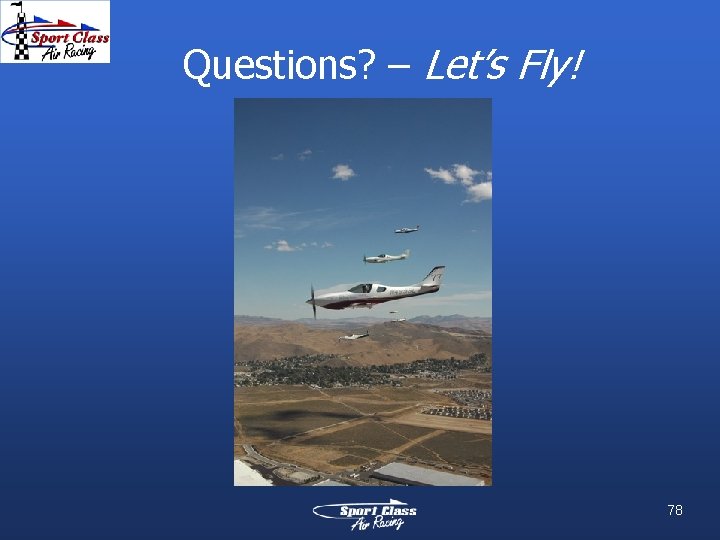
Questions? – Let’s Fly! 78