SEX EDUCATION HEALTH EDUCATION UNIT 2 HIVAIDS 101

- Slides: 67
SEX EDUCATION HEALTH EDUCATION UNIT # 2
HIV/AIDS 101 Objectives: Raise student awareness of various HIV risk factors/behaviors and how students’ personal behaviors may be harmful. Allow students to investigate lifestyle choices to reduce their risk of contracting HIV. Educate students about HIV infection methods and levels of risk.
HIV/AIDS 101 HIGH RISK MEDIUM RISK LOW/NO RISK
TICKET OUT THE DOOR On a half sheet of paper list two ways you can lower your risk of contracting HIV.
HIV/AIDS 101 Agree or Disagree, now tell us why… HIV+ people should be required to tell schools or employers that they have the virus. I would insist on using protection even if a partner didn’t want to. If I were HIV+, I would tell someone before I asked him or her on a date or accepted a date. I would be uncomfortable around a family member or friend who told me they had HIV. Health care workers should have the right to refuse to care for an HIV+ person. Your team plays against a team rumored to have an HIV+ player. You play less aggressively.
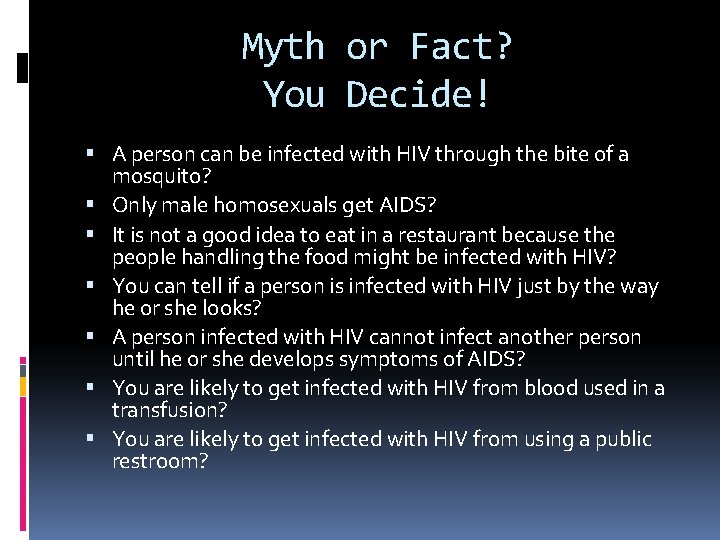
Myth or Fact? You Decide! A person can be infected with HIV through the bite of a mosquito? Only male homosexuals get AIDS? It is not a good idea to eat in a restaurant because the people handling the food might be infected with HIV? You can tell if a person is infected with HIV just by the way he or she looks? A person infected with HIV cannot infect another person until he or she develops symptoms of AIDS? You are likely to get infected with HIV from blood used in a transfusion? You are likely to get infected with HIV from using a public restroom?
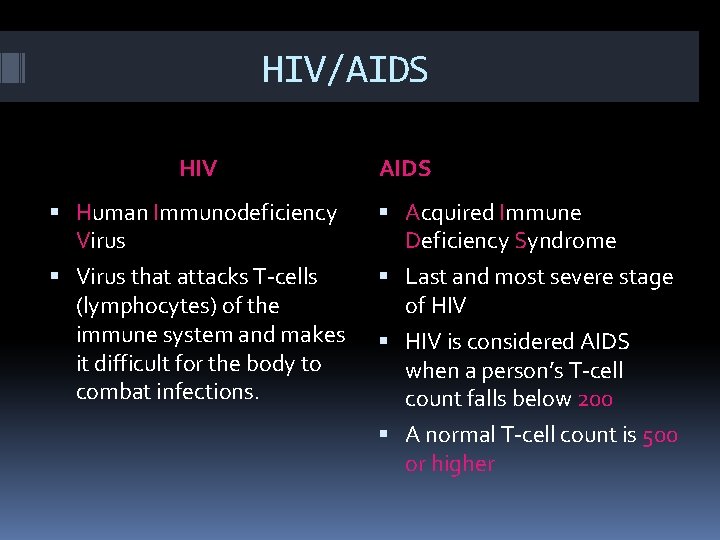
HIV/AIDS HIV AIDS Human Immunodeficiency Virus Acquired Immune Deficiency Syndrome Virus that attacks T-cells (lymphocytes) of the immune system and makes it difficult for the body to combat infections. Last and most severe stage of HIV is considered AIDS when a person’s T-cell count falls below 200 A normal T-cell count is 500 or higher
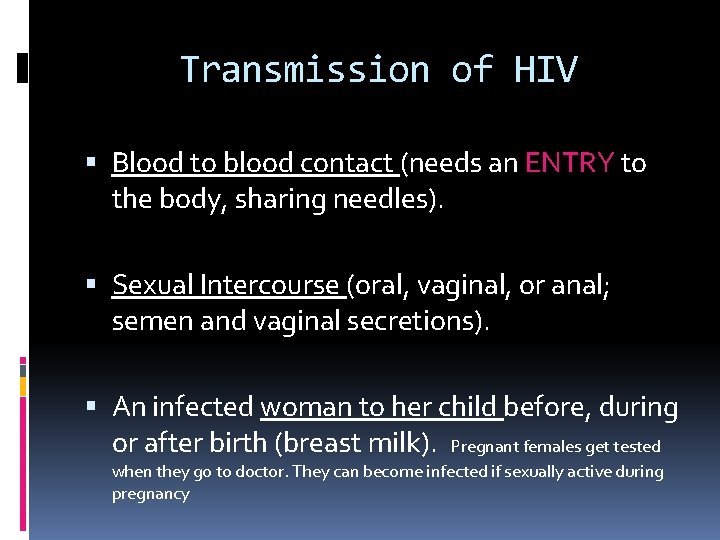
Transmission of HIV Blood to blood contact (needs an ENTRY to the body, sharing needles). Sexual Intercourse (oral, vaginal, or anal; semen and vaginal secretions). An infected woman to her child before, during or after birth (breast milk). Pregnant females get tested when they go to doctor. They can become infected if sexually active during pregnancy
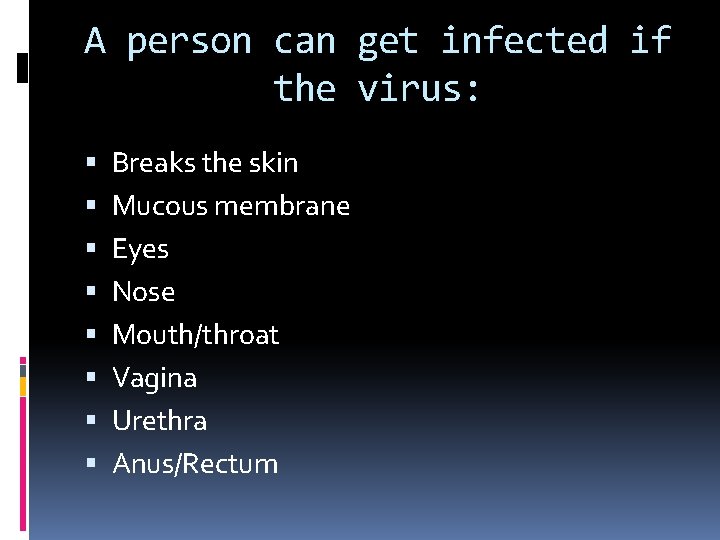
A person can get infected if the virus: Breaks the skin Mucous membrane Eyes Nose Mouth/throat Vagina Urethra Anus/Rectum
Fluids That Will NOT Transmit HIV: Saliva Sweat Tears Urine Feces
HIV PREVENTION Avoiding contact with blood or body fluids Abstinence Mutual monogamy with an uninfected partner Latex condoms (Properly Used) Knowing personal histories Avoiding injection drugs Sharing needles (Piercing / Tattoo) Avoid alcohol and other drugs ( Why? )
SYMPTOMS of HIV: Flu like symptoms Swollen Glands Diarrhea Night Sweats Severe Weight Loss Fatigue Yeast Infections Pneumonia Cancer or NONE AT ALL
Opportunistic Diseases: a disease that will make you sick given the "opportunity" of a damaged or weakened immune system (weakened because of AIDS Examples: • Tuberculosis • Pneumonia • Lung Disease • Cervical Cancer, etc.
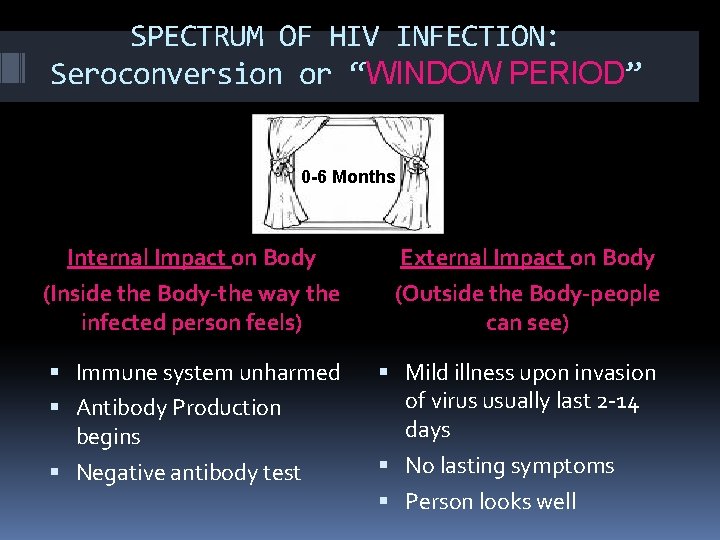
SPECTRUM OF HIV INFECTION: Seroconversion or “WINDOW PERIOD” 0 -6 Months Internal Impact on Body (Inside the Body-the way the infected person feels) External Impact on Body (Outside the Body-people can see) Immune system unharmed Mild illness upon invasion of virus usually last 2 -14 days Antibody Production begins Negative antibody test No lasting symptoms Person looks well
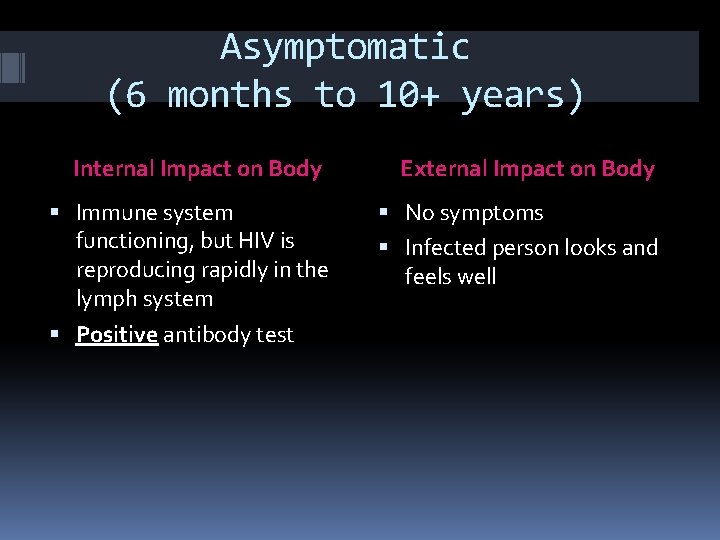
Asymptomatic (6 months to 10+ years) Internal Impact on Body Immune system functioning, but HIV is reproducing rapidly in the lymph system Positive antibody test External Impact on Body No symptoms Infected person looks and feels well
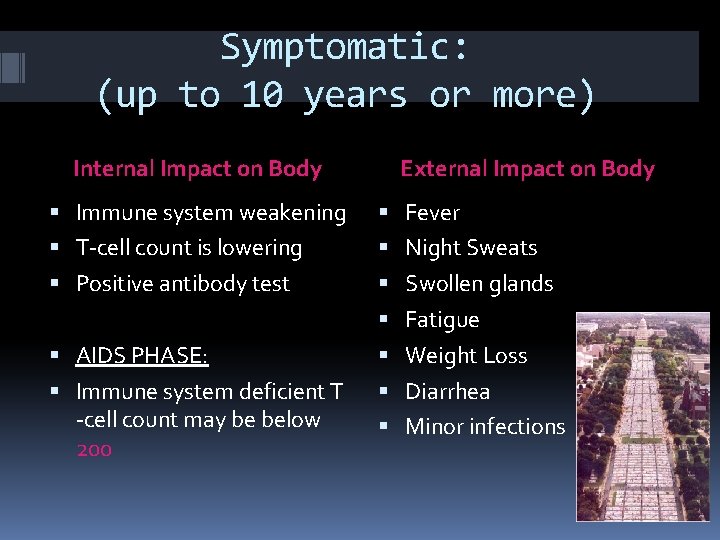
Symptomatic: (up to 10 years or more) Internal Impact on Body External Impact on Body Immune system weakening Fever T-cell count is lowering Night Sweats Positive antibody test Swollen glands Fatigue AIDS PHASE: Weight Loss Immune system deficient T -cell count may be below 200 Diarrhea Minor infections
Sex Education: FEMALE REPRODUCTIVE ORGANS
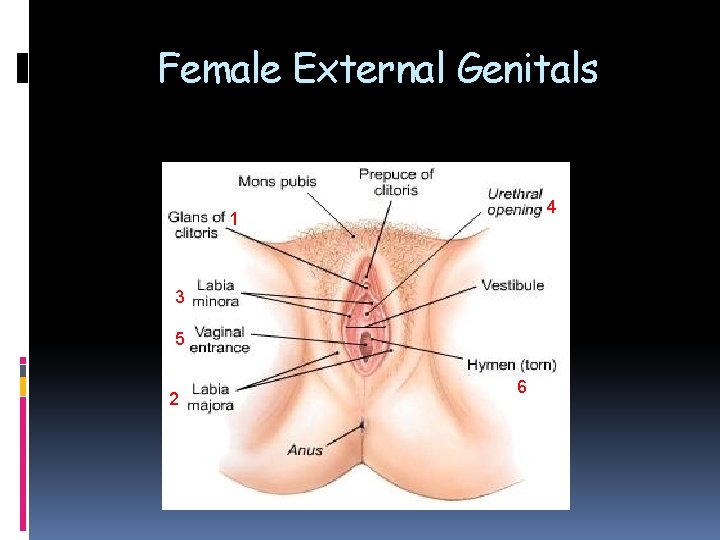
Female External Genitals 4 1 3 5 2 6
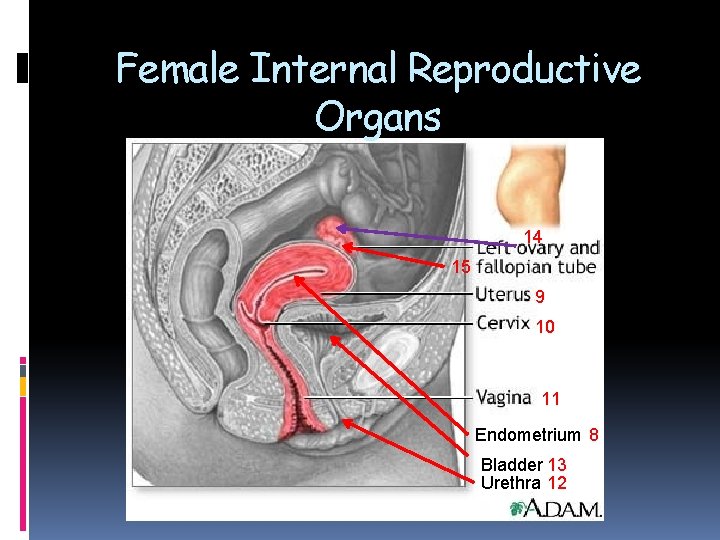
Female Internal Reproductive Organs 14 15 9 10 11 Endometrium 8 Bladder 13 Urethra 12
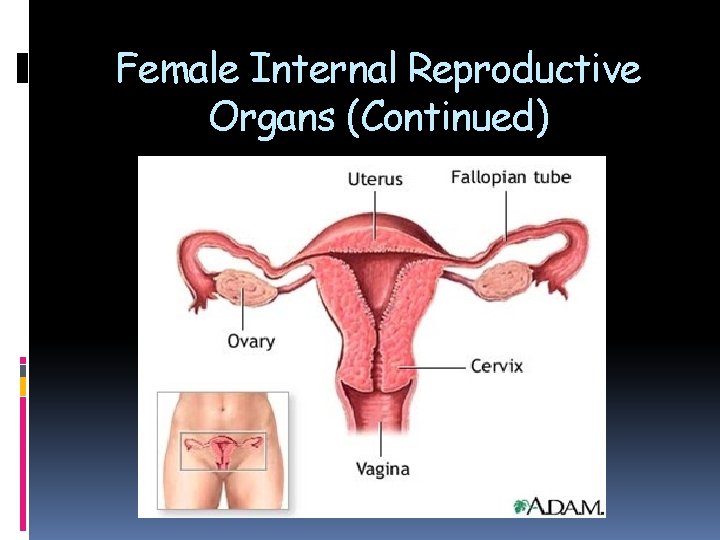
Female Internal Reproductive Organs (Continued)
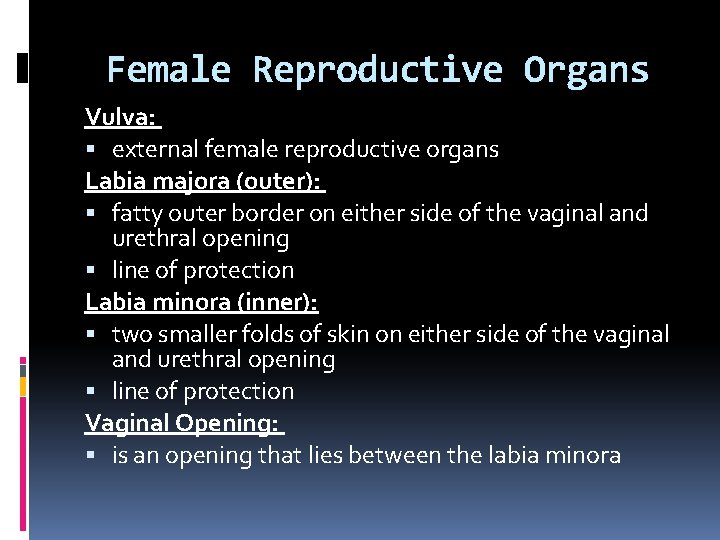
Female Reproductive Organs Vulva: external female reproductive organs Labia majora (outer): fatty outer border on either side of the vaginal and urethral opening line of protection Labia minora (inner): two smaller folds of skin on either side of the vaginal and urethral opening line of protection Vaginal Opening: is an opening that lies between the labia minora
Female Reproductive Organs Hymen: a thin membrane may tear during physical activity Urethra Opening: opening where urine is secreted Clitoris: contains many nerve endings and blood vessels highly sensitive plays a major role in sexual arousal Vagina: elastic, muscle lined tube also called birth canal stretches to allow for birth of baby
Female Reproductive Organs Cervix: opening to the uterus dilates to 10 cm during childbirth gland that secretes mucus to lubricate vagina Uterus: upside down pear shaped hollow muscular organ primary function is to hold and nourish the developing embryo and fetus Endometrium: a thin lining of the uterus provides attachment to the embryo
Female Reproductive Organs Fallopian Tubes: tubes on each side of the uterus that connect the uterus to the ovaries very narrow, lined with hair-like projections(cilia) motions of cilia release ovum(egg) into the fallopian tubes Ovaries: two female sex glands produce mature ovum(egg) produce female hormones: progesterone and estrogen
SEX EDUCATION FEMALE REPRODUCTIVE DISORDERS
Female Reproductive Disorders Pelvic Inflammatory Disease (PID): An infection of the fallopian tubes, ovaries, and the surrounding areas of the Pelvis It can damage the female reproductive organs It is caused by Sexually Transmitted Diseases (STD’s) Toxic Shock Syndrome (TSS): Caused by bacteria that produces a toxin that affects the immune system and liver Symptoms: fever, chills, vomiting, diarrhea, and rashes on the hands and feet Caused by tampons being left inside the vaginal canal too long If caught early: treated by antibiotics Tampons should be kept in no longer than 2 to 4 hours
Female Reproductive Disorders Vaginitis: Inflammation of the vaginal tissue Symptoms: discharge, burning, and itching Treated by: antibiotics Yeast Infections: Caused by fungus Characterized by a thick, white, odorless discharge Symptoms: itching, burning, and painful urination Treated by: over the counter medication Ovarian Cyst: Fluid filled sac on ovary No signs or symptoms Treatment: surgically removed or can disappear on their own
Female Reproductive Disorders Breast Cancer: The most common form of cancer in women Symptoms: change in breast or nipple appearance, a lump or swelling in the breast, a lump in the arm pit, and/or discharge from the nipple Treatment: radiation, chemotherapy, or removal of breast Breast Self Exam: should be performed every month Mammogram: a series of X-Rays of the breast that should be done after the age of 40 Ovarian Cancer: Cancer of the ovaries Symptoms: abdominal pressure, nausea, indigestion, urinary frequency, constipation, diarrhea, abnormal bleeding, weight gain or weight loss, and fatigue Treatment: radiation, chemotherapy Early detection is critical because only 25% of women survive beyond 5 years if the cancer is diagnosed in advanced stages
Female Reproductive Disorders Cancer of the Cervix Detected by Pap Test: a test that uses a cotton swab to collect cells from the cervix, and it detects abnormal cells Females should have Pap Test done yearly from the age of 18 unless sexually active NO Symptoms Treatment: radiation, chemotherapy Uterine Cancer: Cancer of the Uterus Symptom: abnormal bleeding Treatment: radiation, chemotherapy, & hysterectomy
SEX EDUCATION THE MENSTRUAL CYCLE
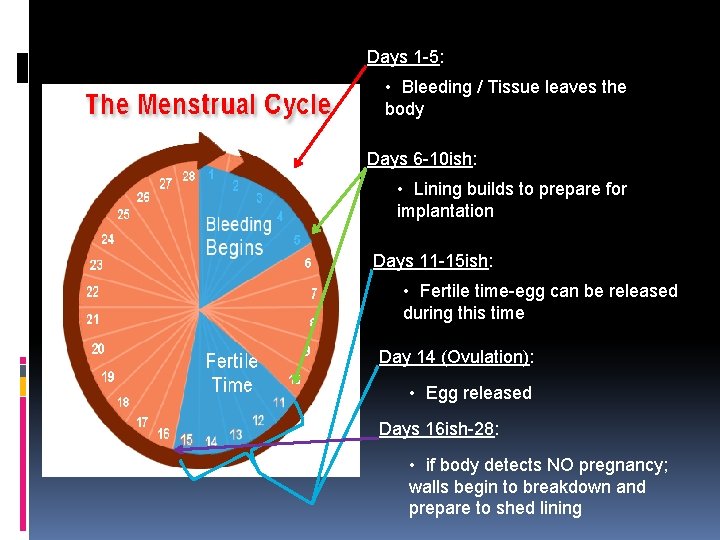
Days 1 -5: • Bleeding / Tissue leaves the body Days 6 -10 ish: • Lining builds to prepare for implantation Days 11 -15 ish: • Fertile time-egg can be released during this time Day 14 (Ovulation): • Egg released Days 16 ish-28: • if body detects NO pregnancy; walls begin to breakdown and prepare to shed lining
The Menstrual Cycle Definition: Menstruation: The process of shedding the uterine lining For most females begins between the ages of 10 and 15 Most cycles will last until the age of 50 A female releases only a few hundred mature eggs from puberty to menopause
The Menstrual Cycle A typical cycle last between 28 and 33 days Hormones signal the release of the mature ovum(egg) around the 14 th day of the cycle The motions of the cilia help release the ovum(egg) into the fallopian tubes The endometrium walls thicken during the cycle to get ready to attach the fertilized ovum If pregnancy does not occur the lining sheds and a woman’s menstrual period begins
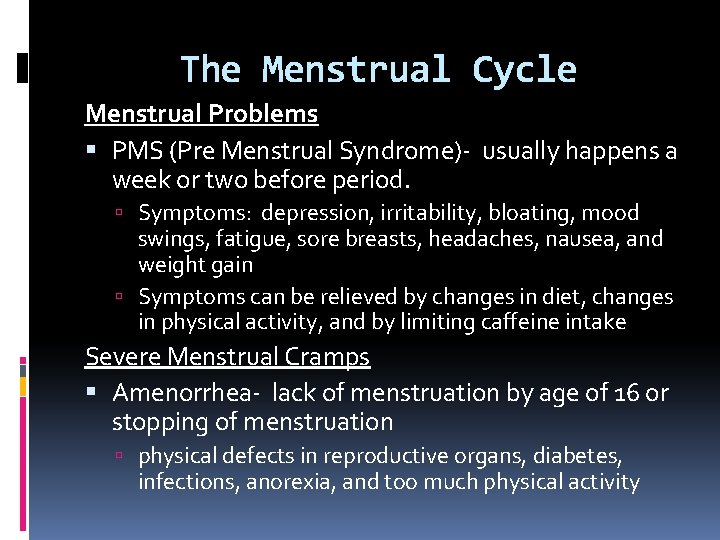
The Menstrual Cycle Menstrual Problems PMS (Pre Menstrual Syndrome)- usually happens a week or two before period. Symptoms: depression, irritability, bloating, mood swings, fatigue, sore breasts, headaches, nausea, and weight gain Symptoms can be relieved by changes in diet, changes in physical activity, and by limiting caffeine intake Severe Menstrual Cramps Amenorrhea- lack of menstruation by age of 16 or stopping of menstruation physical defects in reproductive organs, diabetes, infections, anorexia, and too much physical activity
SEX EDUCATION MALE REPRODUCTIVE SYSTEM
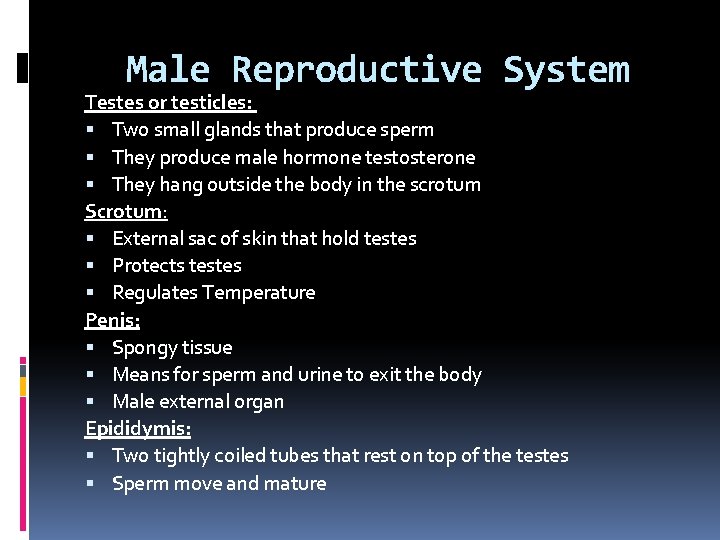
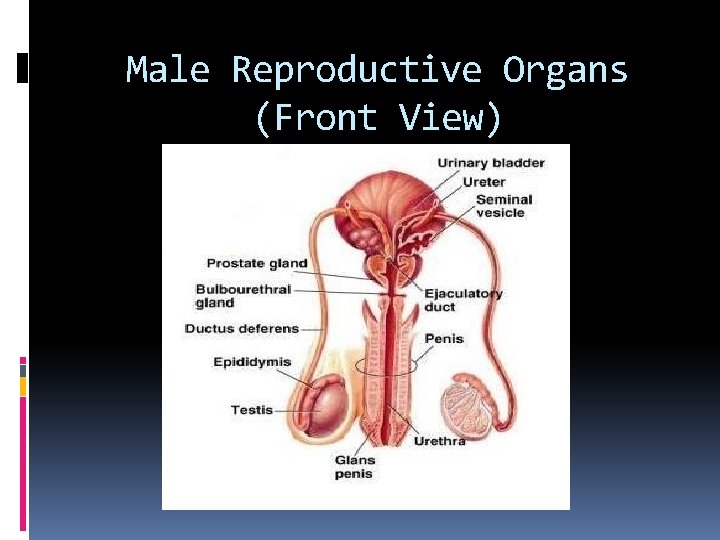
Male Reproductive System Testes or testicles: Two small glands that produce sperm They produce male hormone testosterone They hang outside the body in the scrotum Scrotum: External sac of skin that hold testes Protects testes Regulates Temperature Penis: Spongy tissue Means for sperm and urine to exit the body Male external organ Epididymis: Two tightly coiled tubes that rest on top of the testes Sperm move and mature
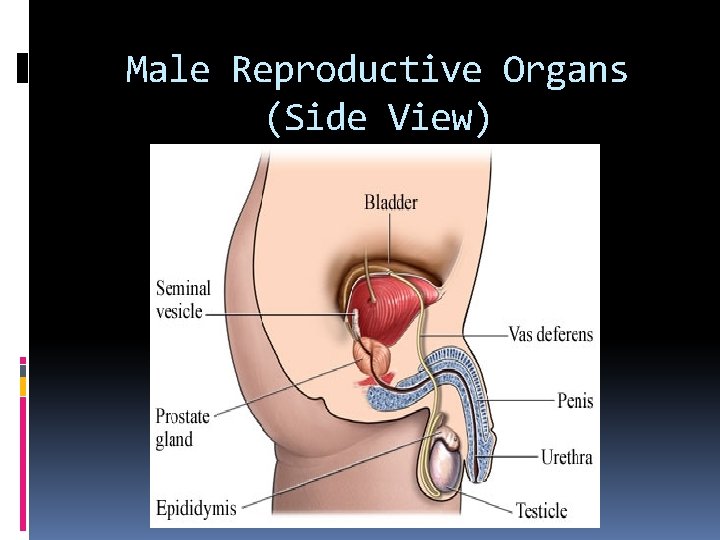
Male Reproductive Organs (Side View)
Male Reproductive Organs (Front View)
Male Reproductive System Vas Deferens: Two long narrow tubes leading out of the epididymis Carry sperm to the urethra Seminal vesicles: Two small organs about the size of a finger located behind the bladder Produce nourishing fluid to give sperm energy to move Prostate Gland: The size and shape of a chestnut Secretes fluid to help move sperm Vas deferens tubes join urethra at prostate gland Urethra: Tube that carries semen and urine through the penis Cowper’s gland: Pea sized glands that connects to the urethra via a tiny duct Secrete thick, clear mucus prior to ejaculation
SEX EDUCATION MALE DISORDERS
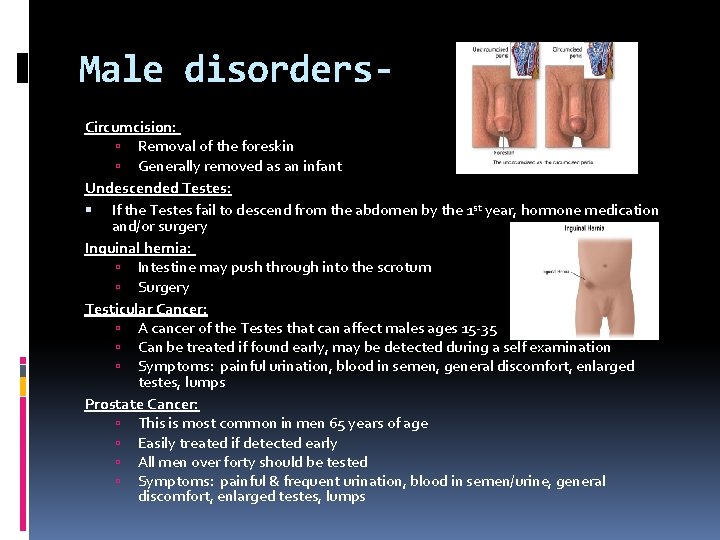
Male disorders. Circumcision: Removal of the foreskin Generally removed as an infant Undescended Testes: If the Testes fail to descend from the abdomen by the 1 st year, hormone medication and/or surgery Inguinal hernia: Intestine may push through into the scrotum Surgery Testicular Cancer: A cancer of the Testes that can affect males ages 15 -35 Can be treated if found early, may be detected during a self examination Symptoms: painful urination, blood in semen, general discomfort, enlarged testes, lumps Prostate Cancer: This is most common in men 65 years of age Easily treated if detected early All men over forty should be tested Symptoms: painful & frequent urination, blood in semen/urine, general discomfort, enlarged testes, lumps
Interesting Facts About the Male DID YOU KNOW…………… 200 million to 600 million sperm cells may be deposited in the vagina by a single ejaculation. Of those 200 – 600 million only a few hundred ever reach the egg. If the sperm does not meet the egg they are either killed by acid, deformed, or they don’t complete the journey. The male testes produce millions of sperm daily. Sperm account for 1/10 of the volume of semen. The journey to the fallopian tube for the sperm cells takes less than an hour following sexual intercourse.
More interesting Facts about the male… Although many sperm cells may reach the egg, in most cases only one will actually fertilize it. The female egg may survive for only twelve to twenty-four hours following ovulation. Sperm may live up to seventy-two hours (three days) within the female reproductive tract. Ejaculation: muscle contractions that push semen through the urethra and out the penis. Nocturnal emissions (Orgasm): normal ejaculation of semen during sleep. There is no average size penis when it is soft – most adult erections are the same size: 5 ½ - 6 inches long. Hole’s Human Anatomy & Physiology Ninth Edition
SEX EDUCATION THE LIFE CYCLE
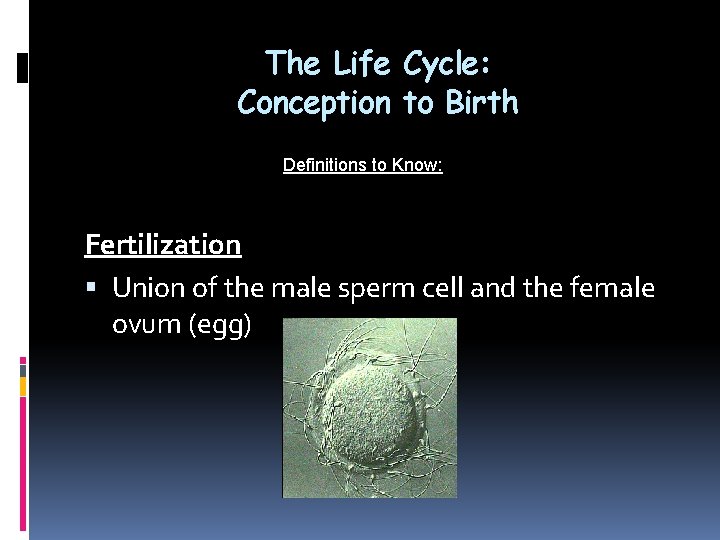
The Life Cycle: Conception to Birth Definitions to Know: Fertilization Union of the male sperm cell and the female ovum (egg)
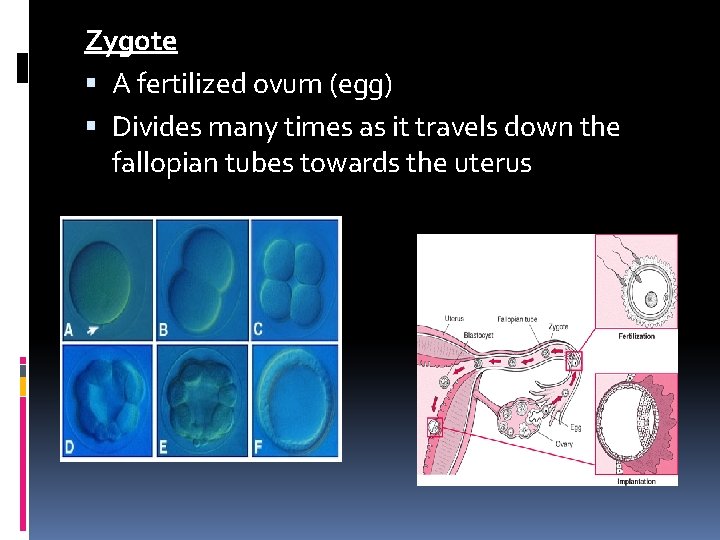
Zygote A fertilized ovum (egg) Divides many times as it travels down the fallopian tubes towards the uterus
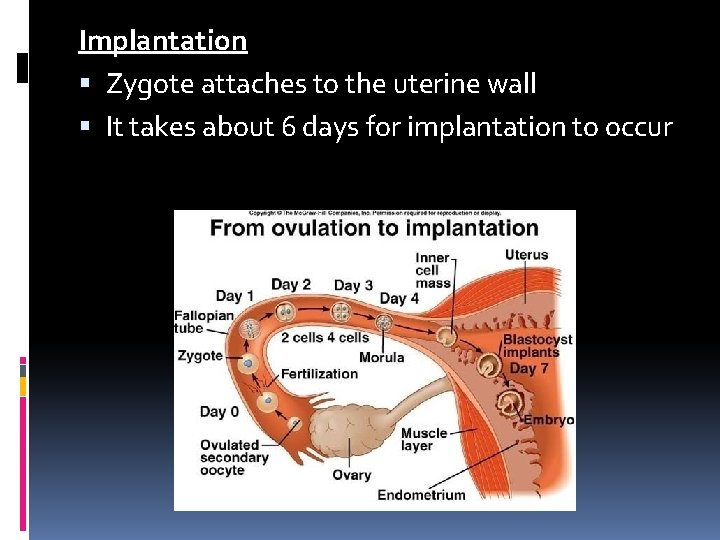
Implantation Zygote attaches to the uterine wall It takes about 6 days for implantation to occur
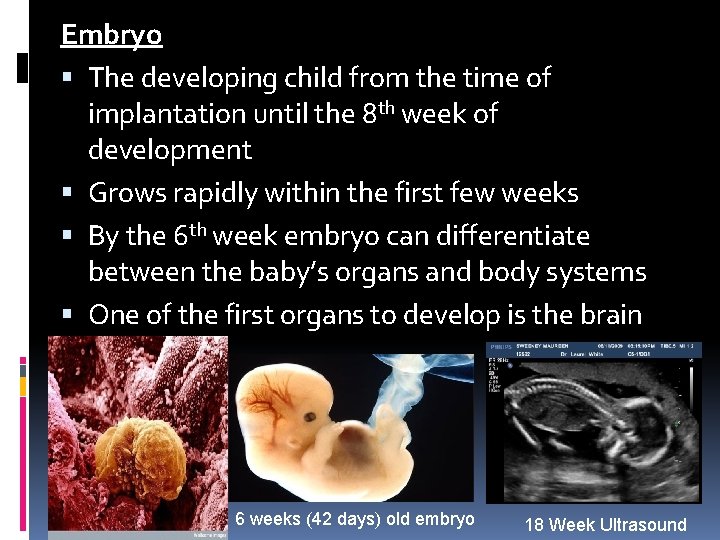
Embryo The developing child from the time of implantation until the 8 th week of development Grows rapidly within the first few weeks By the 6 th week embryo can differentiate between the baby’s organs and body systems One of the first organs to develop is the brain 6 weeks (42 days) old embryo 18 Week Ultrasound
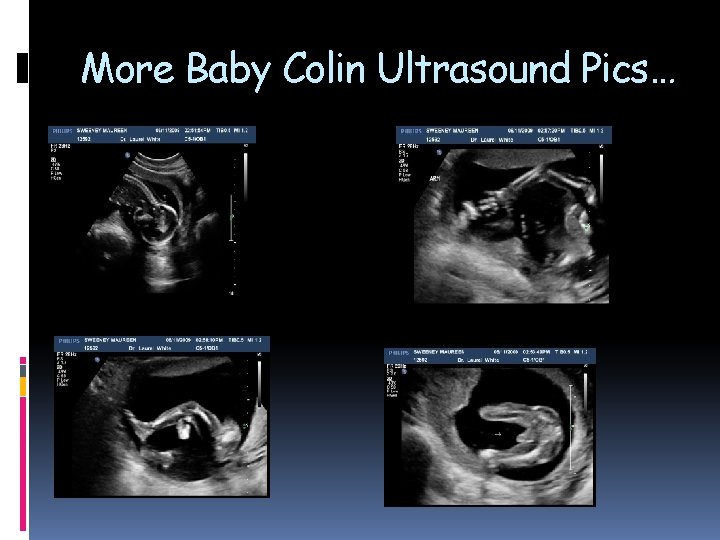
More Baby Colin Ultrasound Pics…
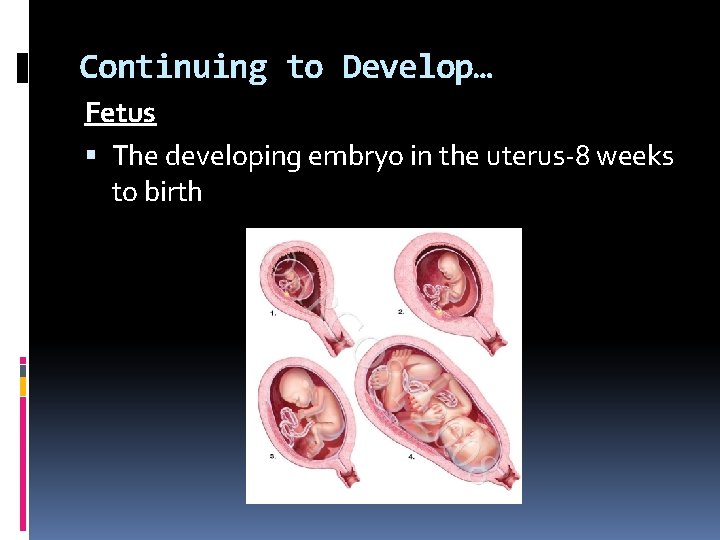
Continuing to Develop… Fetus The developing embryo in the uterus-8 weeks to birth
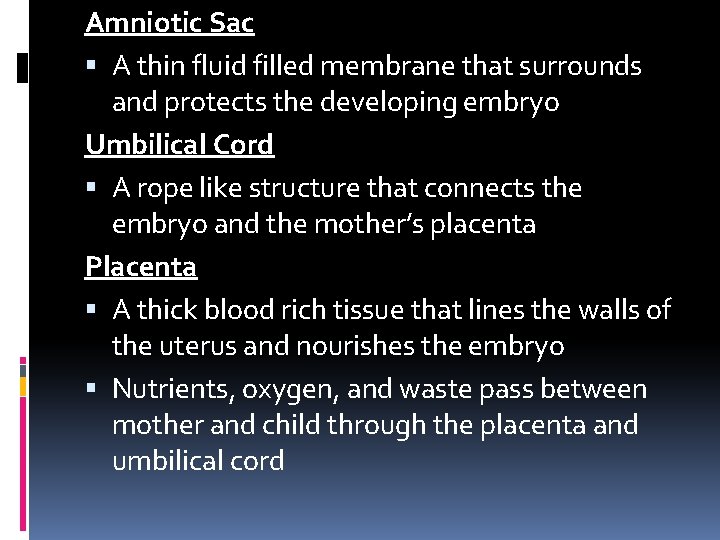
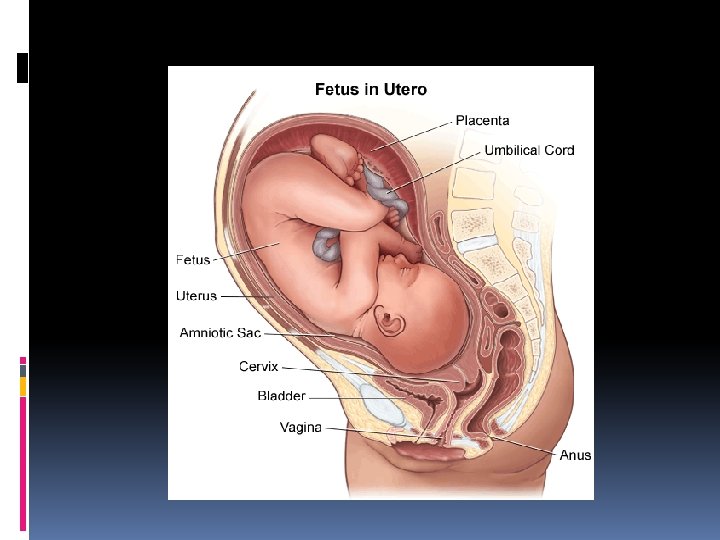
Amniotic Sac A thin fluid filled membrane that surrounds and protects the developing embryo Umbilical Cord A rope like structure that connects the embryo and the mother’s placenta Placenta A thick blood rich tissue that lines the walls of the uterus and nourishes the embryo Nutrients, oxygen, and waste pass between mother and child through the placenta and umbilical cord
The Life Cycle: “It’s Go Time!” Labor: The process of contractions that gradually push the baby out of the uterus and into the birth canal (vagina) to be born
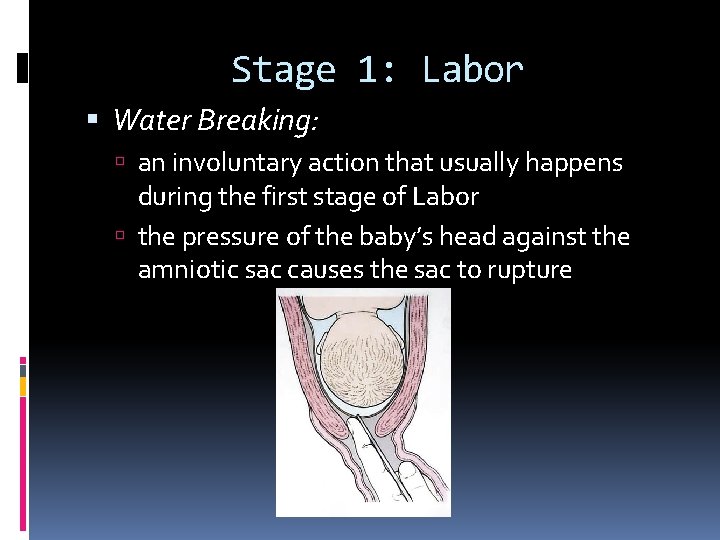
Stage 1: Labor Water Breaking: an involuntary action that usually happens during the first stage of Labor the pressure of the baby’s head against the amniotic sac causes the sac to rupture
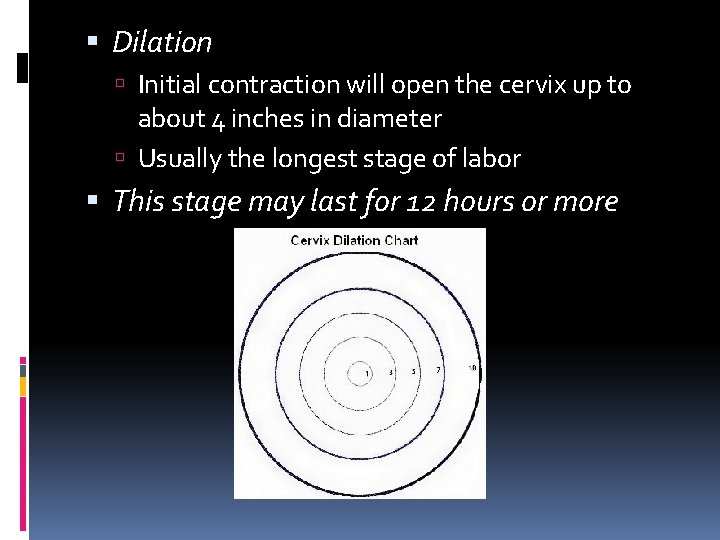
Dilation Initial contraction will open the cervix up to about 4 inches in diameter Usually the longest stage of labor This stage may last for 12 hours or more
Stage 2: Delivery Contractions: when the cervix is fully dilated (10 cm), the mother begins to push Baby is head first Episiotomy- an incision made from the vagina towards the anus to enlarge the opening for delivery of the baby Delivery of the baby
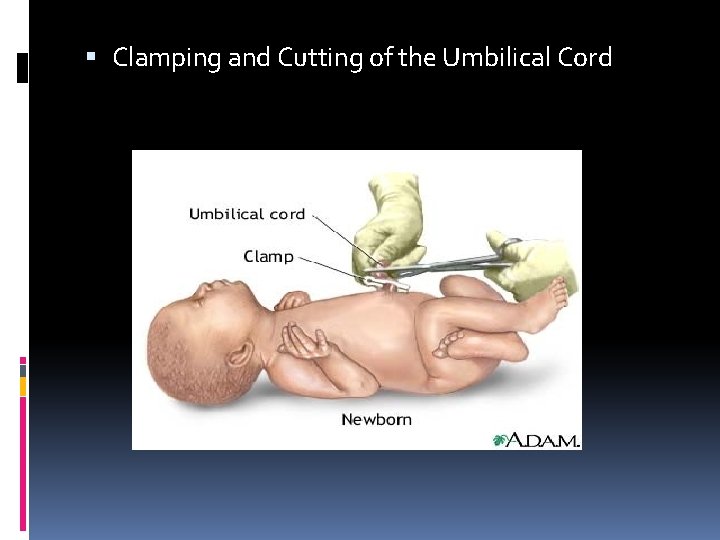
Clamping and Cutting of the Umbilical Cord
Stage 3: The Afterbirth The Delivery of the Placenta Contractions continue Baby cleaned and Tested
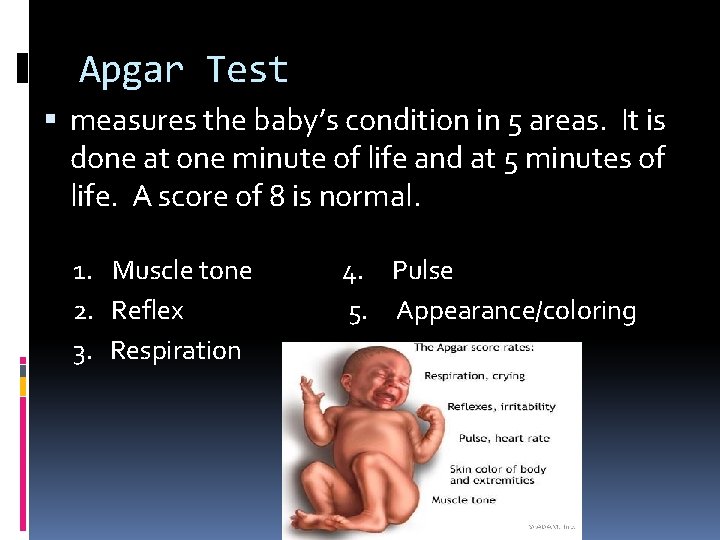
Apgar Test measures the baby’s condition in 5 areas. It is done at one minute of life and at 5 minutes of life. A score of 8 is normal. 1. Muscle tone 4. Pulse 2. Reflex 5. Appearance/coloring 3. Respiration
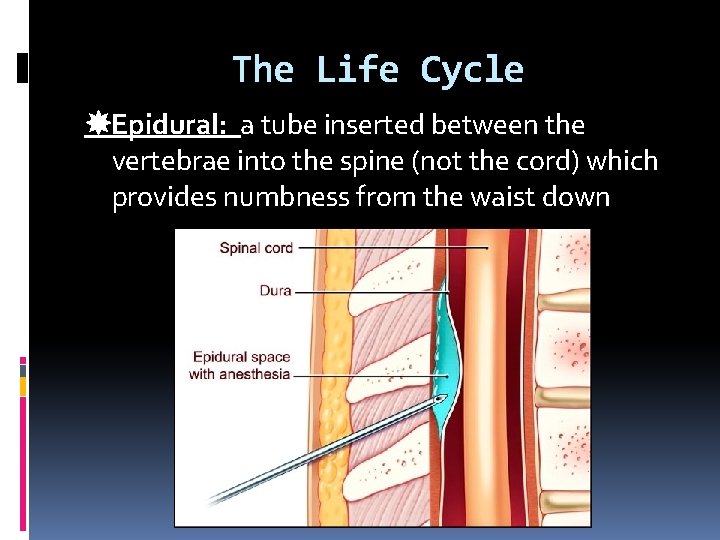
The Life Cycle Epidural: a tube inserted between the vertebrae into the spine (not the cord) which provides numbness from the waist down
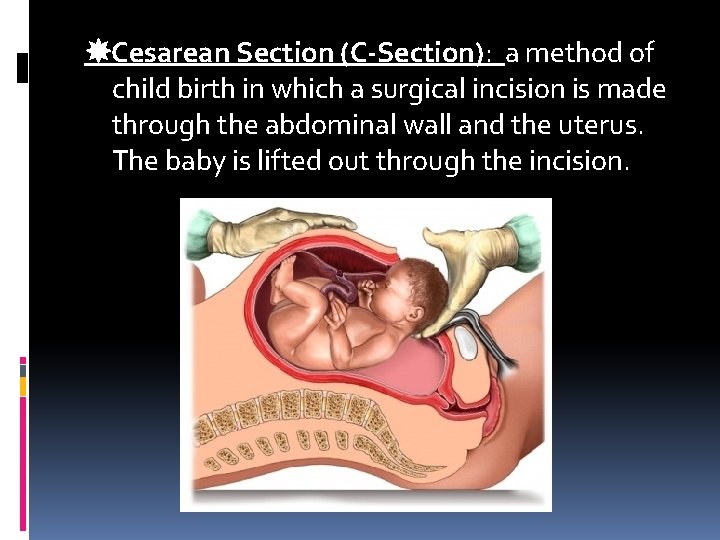
Cesarean Section (C-Section): a method of child birth in which a surgical incision is made through the abdominal wall and the uterus. The baby is lifted out through the incision.
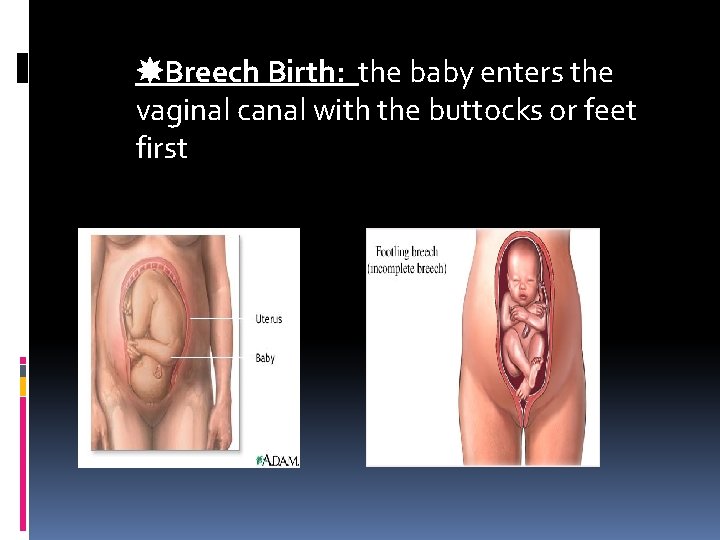
Breech Birth: the baby enters the vaginal canal with the buttocks or feet first
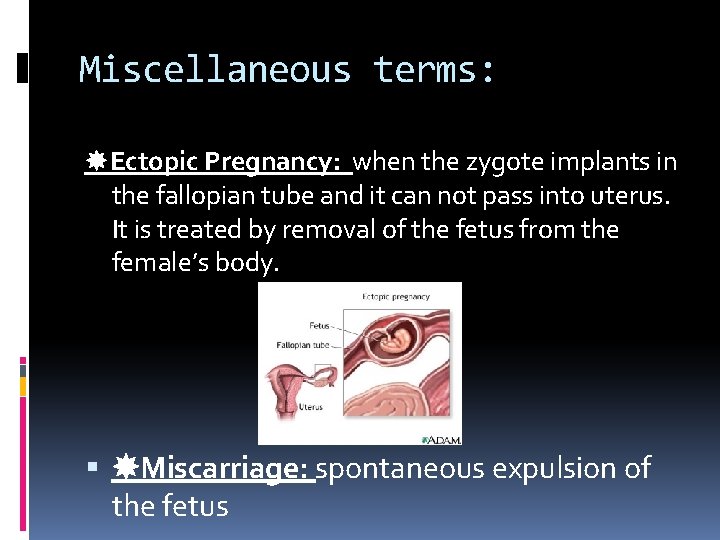
Miscellaneous terms: Ectopic Pregnancy: when the zygote implants in the fallopian tube and it can not pass into uterus. It is treated by removal of the fetus from the female’s body. Miscarriage: spontaneous expulsion of the fetus
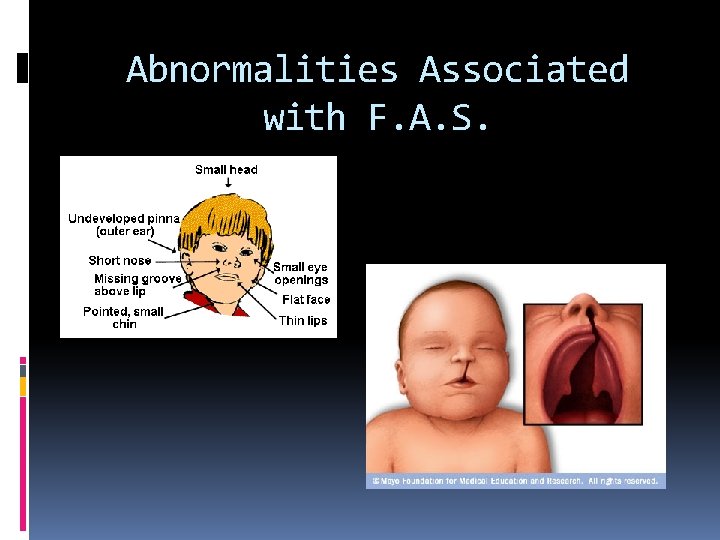
Birth Defects Fetal Alcohol Syndrome (FAS): A condition of physical, mental, and behavioral abnormalities that can result when a pregnant female drinks alcohol Problems include: low birth weight, general weakness, impaired speech, poor coordination, stunted growth, cleft pallet, facial and heart defects, mental retardation, hyperactivity It is not known how much alcohol will cause FAS so… DON’T DRINK AT ALL!
Abnormalities Associated with F. A. S.
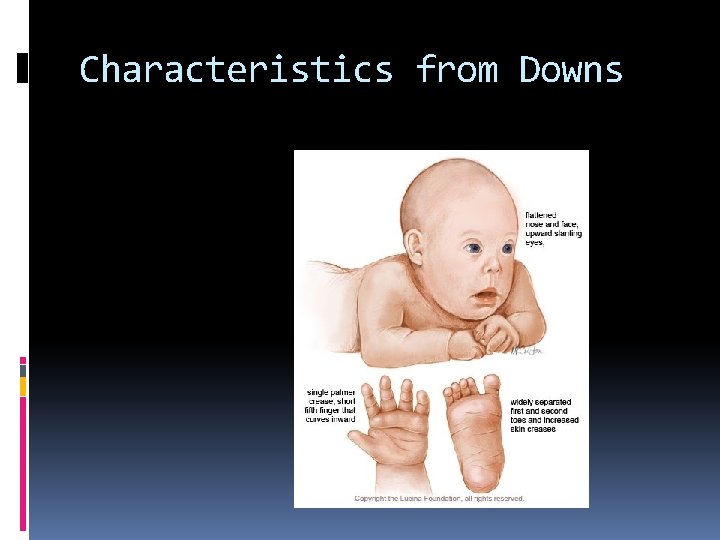
Birth Defects Down Syndrome: A disorder in which a person inherits one extra chromosome giving the person 47 chromosomes instead of the normal 46 Characteristics of Down Syndrome: varying degrees of mental retardation, short stature, round face, with upper eyelids that cover the inner corners of the eyes The abilities of people with down syndrome vary Most people with down syndrome lead very active and meaningful lives
Characteristics from Downs