
AOHS Global Health Unit 3 Lesson 8 Environmental
AOHS Global Health Unit 3, Lesson 8 Environmental Risk Factors Related to Sanitation, Water, and Hygiene Copyright © 2012– 2016 NAF. All rights reserved.
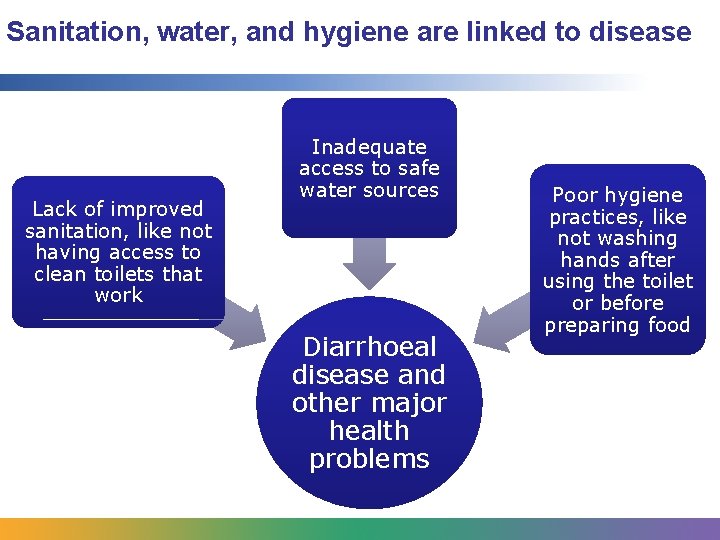
Sanitation, water, and hygiene are linked to disease Lack of improved sanitation, like not having access to clean toilets that work Inadequate access to safe water sources Diarrhoeal disease and other major health problems Poor hygiene practices, like not washing hands after using the toilet or before preparing food
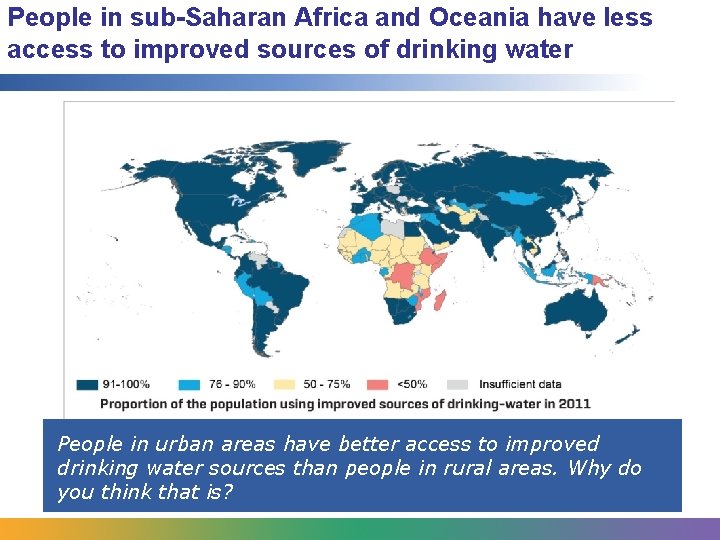
People in sub-Saharan Africa and Oceania have less access to improved sources of drinking water People in urban areas have better access to improved drinking water sources than people in rural areas. Why do you think that is?
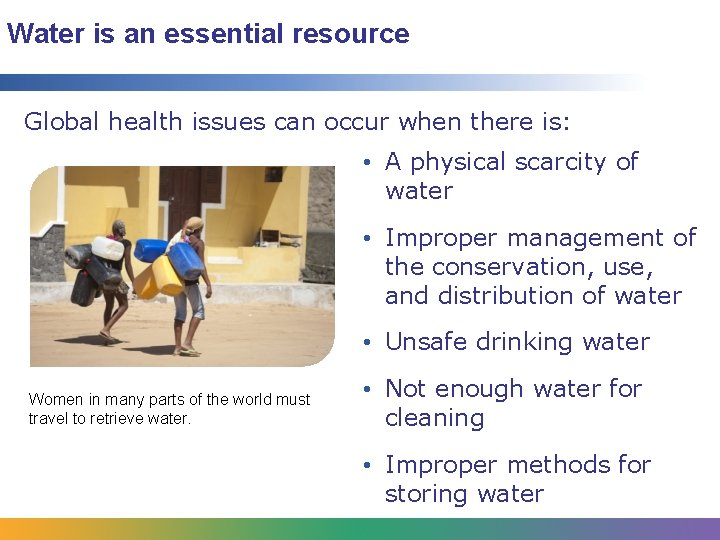
Water is an essential resource Global health issues can occur when there is: • A physical scarcity of water • Improper management of the conservation, use, and distribution of water • Unsafe drinking water Women in many parts of the world must travel to retrieve water. • Not enough water for cleaning • Improper methods for storing water
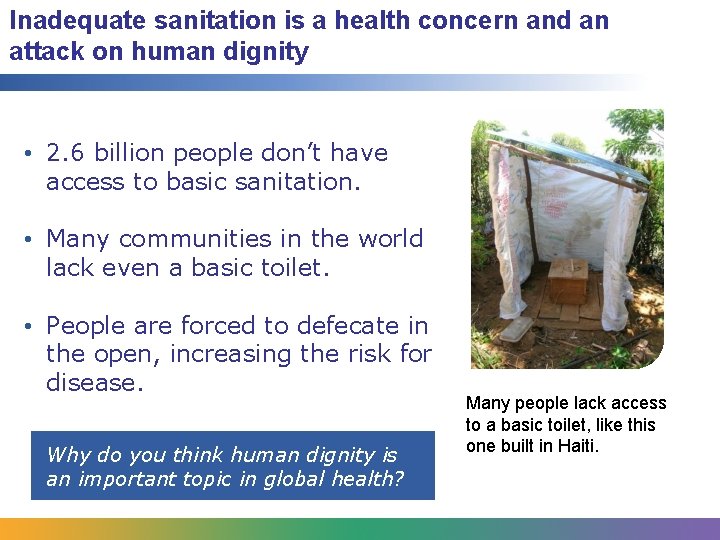
Inadequate sanitation is a health concern and an attack on human dignity • 2. 6 billion people don’t have access to basic sanitation. • Many communities in the world lack even a basic toilet. • People are forced to defecate in the open, increasing the risk for disease. Why do you think human dignity is an important topic in global health? Many people lack access to a basic toilet, like this one built in Haiti.

The Ganges River is one of the most polluted rivers in the world The Ganges River is used by millions of people every day, but it contains toxins that are well over the limits set by India’s government.
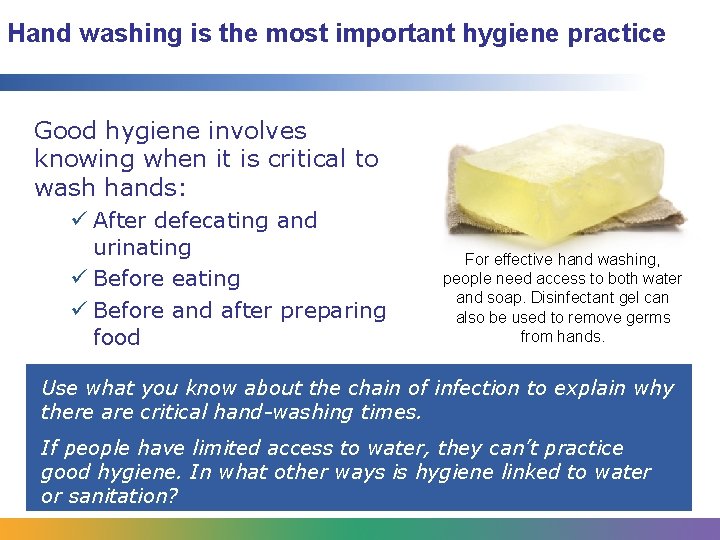
Hand washing is the most important hygiene practice Good hygiene involves knowing when it is critical to wash hands: ü After defecating and urinating ü Before eating ü Before and after preparing food For effective hand washing, people need access to both water and soap. Disinfectant gel can also be used to remove germs from hands. Use what you know about the chain of infection to explain why there are critical hand-washing times. If people have limited access to water, they can’t practice good hygiene. In what other ways is hygiene linked to water or sanitation?
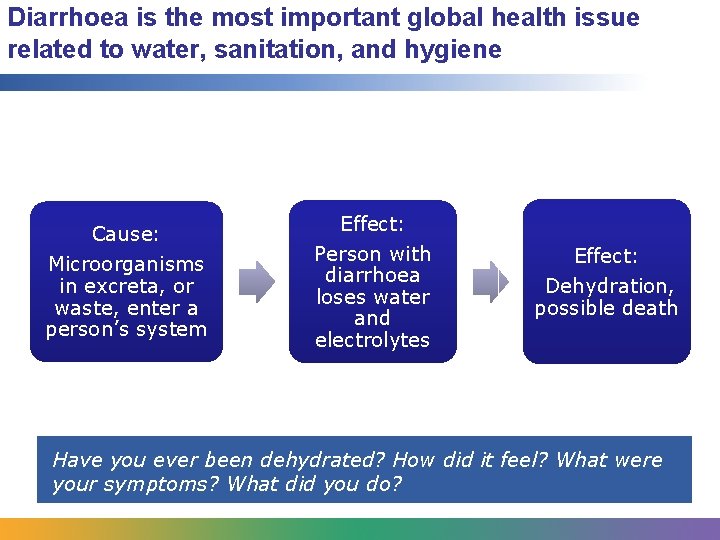
Diarrhoea is the most important global health issue related to water, sanitation, and hygiene Cause: Microorganisms in excreta, or waste, enter a person’s system Effect: Person with diarrhoea loses water and electrolytes Effect: Dehydration, possible death Have you ever been dehydrated? How did it feel? What were your symptoms? What did you do?
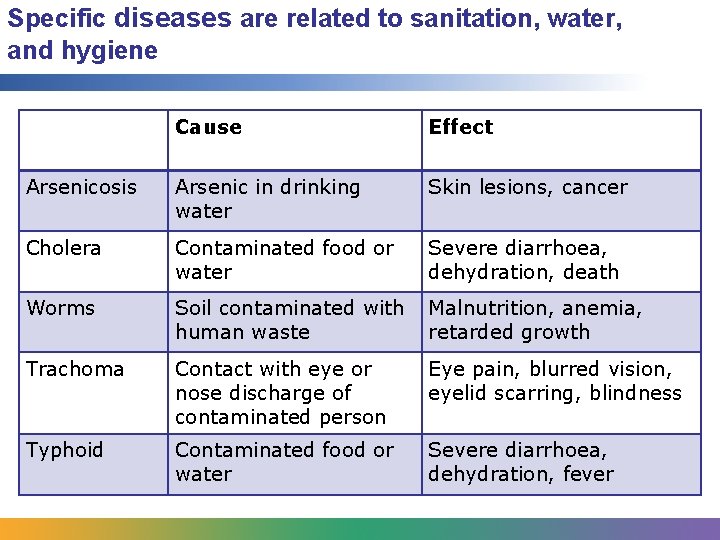
Specific diseases are related to sanitation, water, and hygiene Cause Effect Arsenicosis Arsenic in drinking water Skin lesions, cancer Cholera Contaminated food or water Severe diarrhoea, dehydration, death Worms Soil contaminated with human waste Malnutrition, anemia, retarded growth Trachoma Contact with eye or nose discharge of contaminated person Eye pain, blurred vision, eyelid scarring, blindness Typhoid Contaminated food or water Severe diarrhoea, dehydration, fever
Poor sanitation, water, and hygiene have other repercussions • Women are forced to spend a lot of time getting water. Women’s safety and health may be compromised by going long distances to get water. • If wage earners are ill, they are less productive and the economy suffers over time. • Health systems are overwhelmed. • Children don’t get a complete education. What other repercussions can you think of that may result from poor sanitation, water, and hygiene?
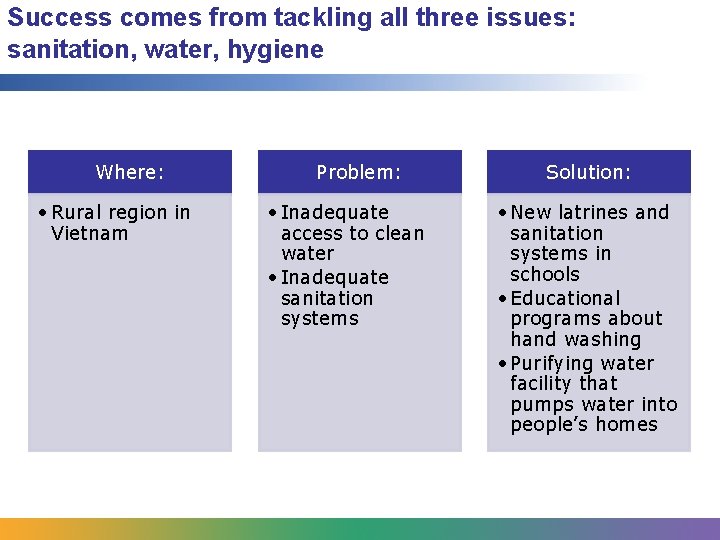
Success comes from tackling all three issues: sanitation, water, hygiene Where: • Rural region in Vietnam Problem: • Inadequate access to clean water • Inadequate sanitation systems Solution: • New latrines and sanitation systems in schools • Educational programs about hand washing • Purifying water facility that pumps water into people’s homes
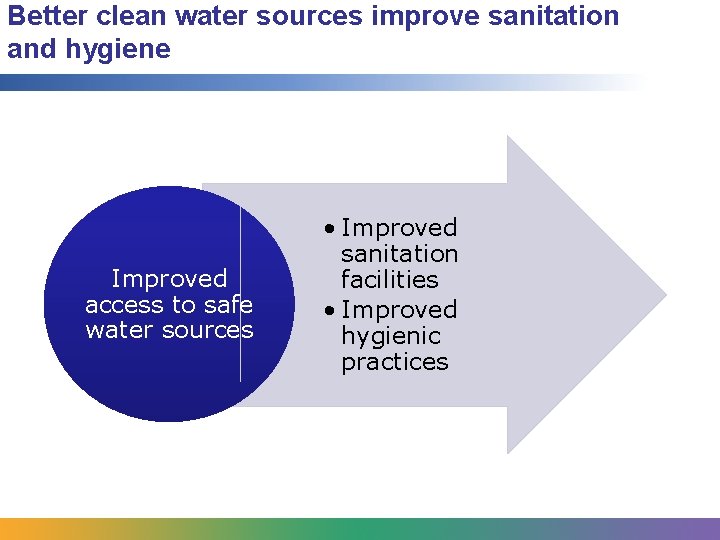
Better clean water sources improve sanitation and hygiene Improved access to safe water sources • Improved sanitation facilities • Improved hygienic practices
- Slides: 12