
RELATIONSHIPS AND SEX EDUCATION WORKSHOP PSHE Ryan Briody
RELATIONSHIPS (AND SEX) EDUCATION WORKSHOP PSHE Ryan Briody – Assistant Headteacher Alamin Miah – PSHE/RSE Lead
New Guidance for Schools The statutory framework for the teaching of Relationships and Sex Education has been updated since the last publication in 2000. This new guidance incorporates the changes that society has gone through in the last 20 years. All schools will need to abide by the new changes.
What Has To Be Covered? The guidance is split into two strands: Relationships and Health Education. Relationships Education: - Families and People Who Care for Me - Caring Friendships - Respectful Relationships - Online Relationships - Being Safe Health Education: - Mental Wellbeing - Internet Safety and Harms - Physical Health and Fitness - Healthy Eating - Drugs, Alcohol and Tobacco - Health and Prevention - Basic First Aid - Changing Adolescent Body These themes are statutory and parents cannot withdraw their child from these lessons.
What Is The Right To Withdraw? Sex Education is not statutory at primary school although many schools choose to teach aspects of sex education. The Department for Education understands that individuals may not feel comfortable with their child learning aspects of the Sex Education curriculum at primary school. As a result, the ability to withdraw a child from these lessons is an option parents may wish to consider. Any parents who wish to withdraw their child must write a letter to the Head teacher stating this.
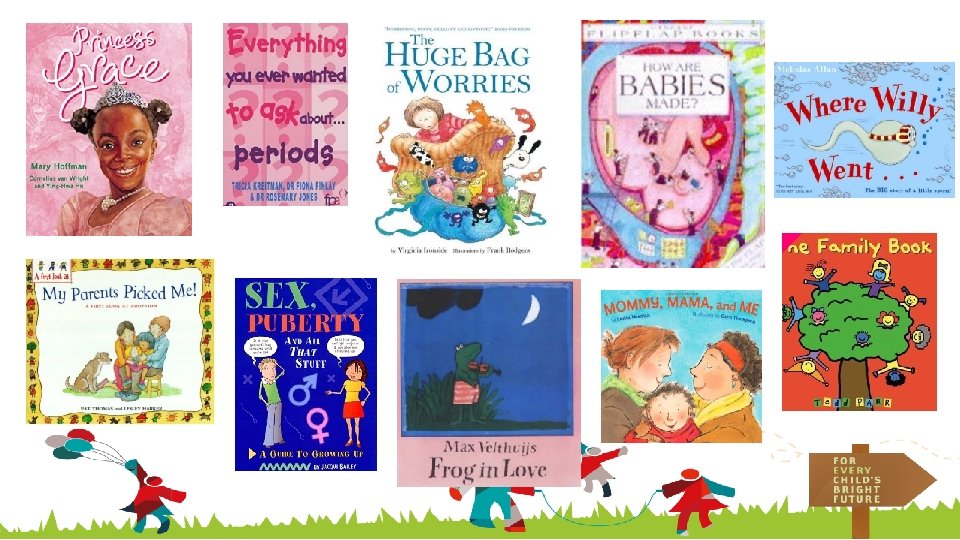
What Age Will Children Learn Sexual Related Content? • In Year 1, the focus is the changes that a child has experienced from birth to where they are now. • In Year 2, children will look at how we change as we grow up. They will look at physical differences between boys and girls and begin to look at necessary vocabulary eg penis, testicles and vagina. • In Year 3, children will learn how babies develop in the womb. They will also learn about gender stereotypes and roles in society. • In Year 4, children will explore how babies are made, the body parts involved and changes it goes through in order to give birth. • In Year 5, children will learn about puberty, the importance of looking after oneself and things they may experience during adolescence. • In Year 6, children will explore how attraction changes the nature of a relationship and how a baby develops from conception.
The Curriculum at Marlborough Our programme of study has been created in order to follow the statutory guidance whilst also taking into consideration the needs of our local community and the strong relationships that we have developed. The statutory guidance has already been incorporated into our PSHE curriculum following feedback and discussions with all relevant stakeholders of the school. In summer term 2, the unit of Changing Me will be taught. This is where the Sex Education will be incorporated.
LGBT+ Inclusive Lessons The guidance states that schools should ensure that all of their teaching is sensitive and age appropriate in approach and content. Schools have the freedom to select the point in which to teach children about LGBT+. This must be fully integrated into the programme of study rather than delivered as a stand-alone unit or lesson. At Marlborough, children will be implicitly taught from Year 1 and explicitly from Year 3.
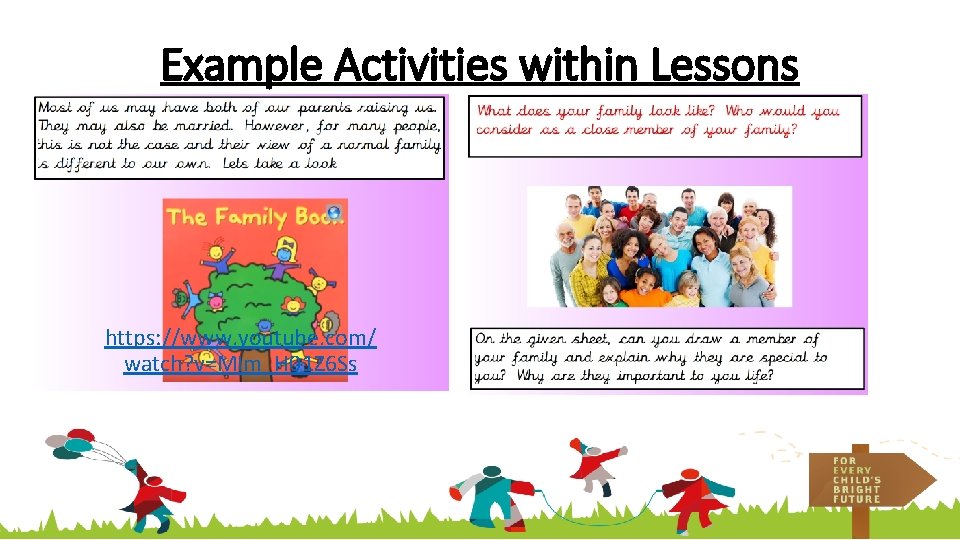
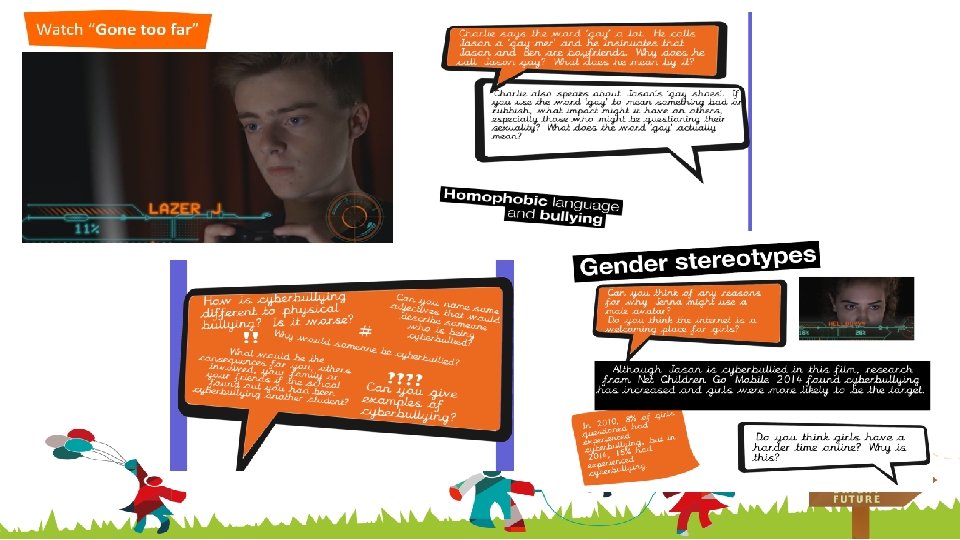
Example Activities within Lessons https: //www. youtube. com/ watch? v=MIm_H 01 Z 6 Ss
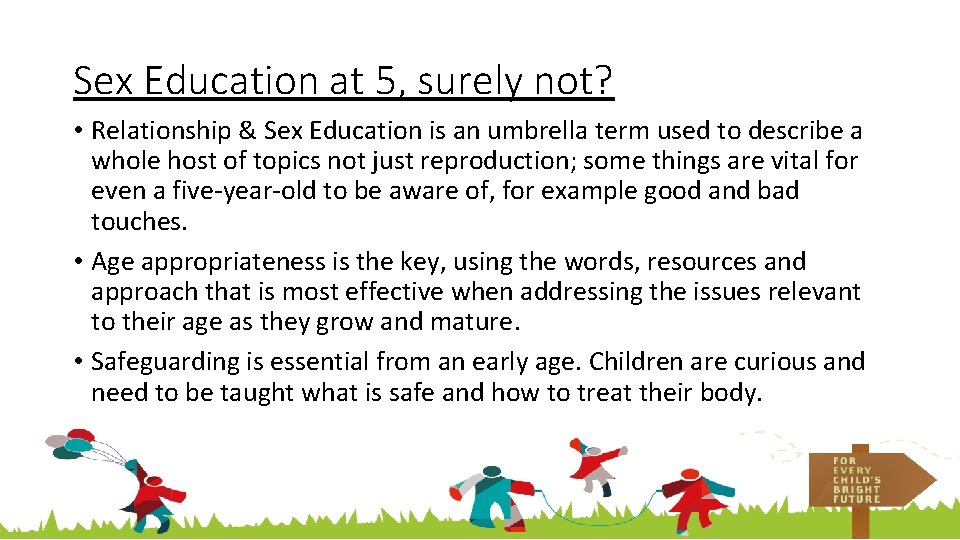
Sex Education at 5, surely not? • Relationship & Sex Education is an umbrella term used to describe a whole host of topics not just reproduction; some things are vital for even a five-year-old to be aware of, for example good and bad touches. • Age appropriateness is the key, using the words, resources and approach that is most effective when addressing the issues relevant to their age as they grow and mature. • Safeguarding is essential from an early age. Children are curious and need to be taught what is safe and how to treat their body.
Relationships and Sex Education is the responsibility of parents, why do they need to learn this at school? • Not all Parents/Carers feel confident or knowledgeable, scared they may say too much or too little plus virtually all parents think it will be covered at school at some point. • As it is not statutory in schools until September 2020 it is sometimes not given the priority it deserves. The key notion behind the changes is that we all need to work together to keep children safe and if they are hearing consistent messages from all, there are less likely to be situations where children are vulnerable.
Won’t Relationships and Sex Education take away my child’s innocence? • Nothing takes away innocence quicker then sexual abuse. • Knowledge about their bodies won’t stop them wanting to fly kites, go sledging or make sand castles. • The world is changing and protecting our children with age appropriate information about risk is vital. • We need to ensure our children become tolerant and respectful members of society through education. • Ignorance is defeated through education. • There is nothing stopping parents still educating their children about their faith and beliefs.
Why do children need to learn the word ‘penis/vagina’? • It is really important that children know the correct scientific names for their genitals. • In the event of them ever being inappropriately touched they have the vocabulary to give exact information. • For example, “they touched my Minnie/tuppence/flower” is very vague as opposed to “they touched my vagina”. • Child abusers prefer uneducated children – those who don’t have the words and knowledge of what’s right and wrong. • Research shows that an educated child is three times more likely to speak out if they are subjected to abuse.
Do we really need Relationships and Sex Education today at this age? • When today’s adults were at school, the world was a very different place: no mobile phones with cameras, no sexting, no easy available access to pornography or strangers via the Internet. • It is imperative that we educate children to be aware of the risks, so they know to come to trusted adults with their questions about their bodies, relationships and sex etc. rather than the internet.
Our family have a strong faith and we don’t want our children to know these things. • At Marlborough, we work with schools and families with a wide range of faiths. We give children and young people, age appropriate factual information, delivered in a calm and gentle way. Unfortunately, abusers do not discriminate by religion or family beliefs, so it is important that all children are given this type of education. With the ease of access to unreliable sources of information on every computer and smart phone, it is important that children know that they can speak to their trusted adults about all topics because if we do not educate them, they will look for the information in places (and from people) that are not reliable sources and that could put them at risk.
Many faiths disagree with this being taught in schools. • The key is that teaching must all be balanced: learning about the sanctity of marriage and the ideal of life long monogamy, for example, should not lead children to a lack of respect for those for whom this is not an ideal nor to towards those for whom it is an ideal which it has not been possible to live out. Traditional Christian views on marriage and sexual relations must be balanced with a respectful understanding that there are other views held in the church, and vice versa. - Arch Deacon of London • RSE should be faithful to the Church's vision of human wholeness whilst recognising the contemporary context in which we live today – Catholic Education Service
Many faiths disagree with this being taught in schools (continued). • RSE should inform young people in an age-appropriate way about these important topics in the context of Britain today, whilst being faithful to Islam’s principles on these topics and vision for humanity, and embraces parents as the primary educators of their children. We urge parents to take an active involvement in the teaching of topics related to relationship, sex and health education to their children and to ensure their children are empowered and feel comfortable to discuss relationship, sex and health issues at home – Muslim Council of Britain • Within our Jewish communities, it is our responsibility to make everyone feel valued, with all the challenges that go with that. This is of relevance to LGBT+ young people who may be particularly vulnerable to harm from others – Chief Rabbi Ephraim Mirvis.
The LGBT+ section of Relationships Education goes against my faith. • All faiths encourage openness and tolerance of those who have different beliefs. • We are not suggesting how to raise your child or giving them information on how to lead a life differently to the one you wish your child to live by, we simply want children to grow up tolerant and understanding of those who are different to them. • As outlined by the Df. E, it is statutory and it must permeate throughout the curriculum and we have ensured that this has been completed in an age appropriate way whilst respecting people of faith.
How do I know that all teachers are on the same page about the approach to RSE education at Marlborough? • Our PSHE lead has been on numerous courses and networking meetings with local Harrow schools and has ensured that our curriculum is in line with the expectations of the government as well as alleviating concerns of our local community. • Our PSHE lead has led staff training sessions to ensure that all teachers are familiar with the curriculum, the expectations and how to approach sensitive aspects of the programme of study.
Thank you! Any further questions? Please complete the feedback forms; they are invaluable to us and how we move forward!
- Slides: 21