Presenters PingTeng Lin Emily Mc Laughlin Cindy Deng
- Slides: 74
Presenters: Ping-Teng Lin Emily Mc. Laughlin Cindy Deng Jason Huang ROYAL BANK OF CANADA Risk Management
Outline Introduction Risk Governance Market Risk Credit Risk Capital Management Derivative Usage Conclusion
Introduction - Industry Structure A Canadian Chartered Bank � Schedule I Bank: Domestic and widely held � One of the Big 6 Banks in Canada Authorized to take deposits and issue loans and credit cards RBC is Canada’s largest bank
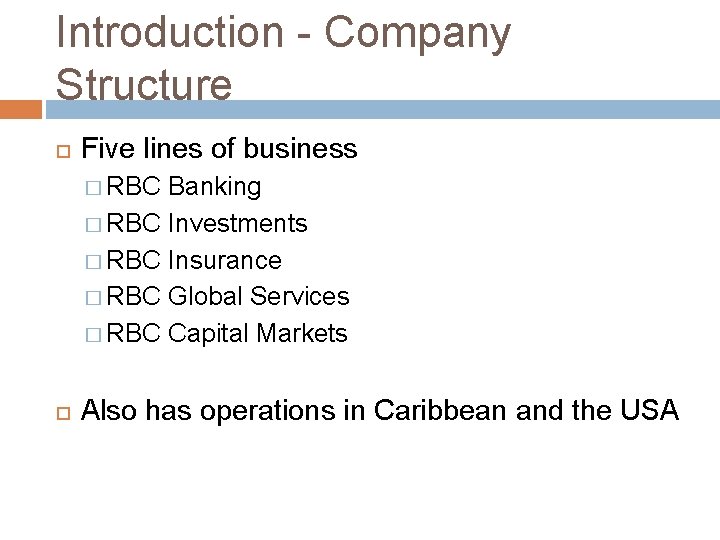
Introduction - Company Structure Five lines of business � RBC Banking � RBC Investments � RBC Insurance � RBC Global Services � RBC Capital Markets Also has operations in Caribbean and the USA
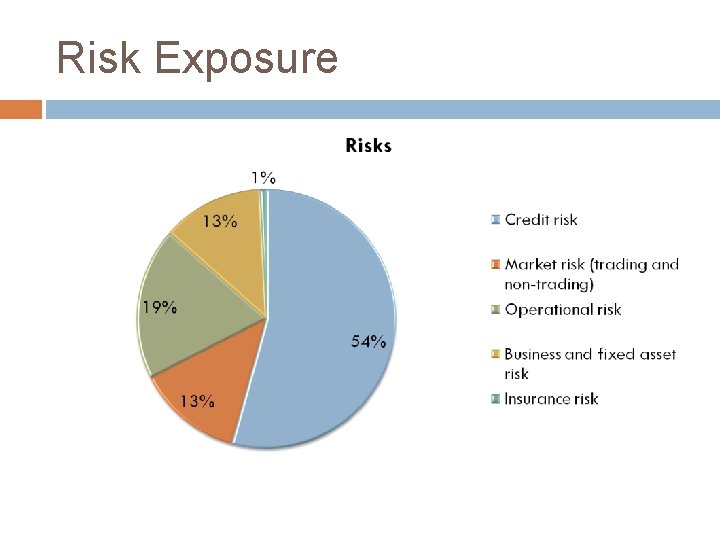
Risk Exposure
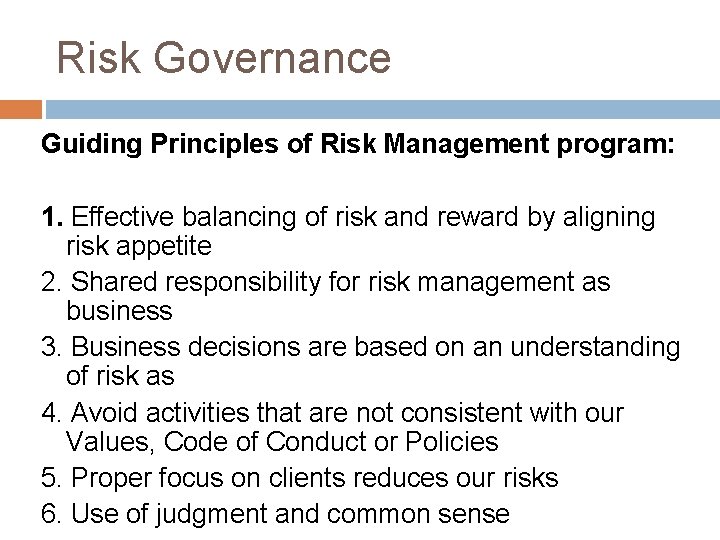
Risk Governance Guiding Principles of Risk Management program: 1. Effective balancing of risk and reward by aligning risk appetite 2. Shared responsibility for risk management as business 3. Business decisions are based on an understanding of risk as 4. Avoid activities that are not consistent with our Values, Code of Conduct or Policies 5. Proper focus on clients reduces our risks 6. Use of judgment and common sense
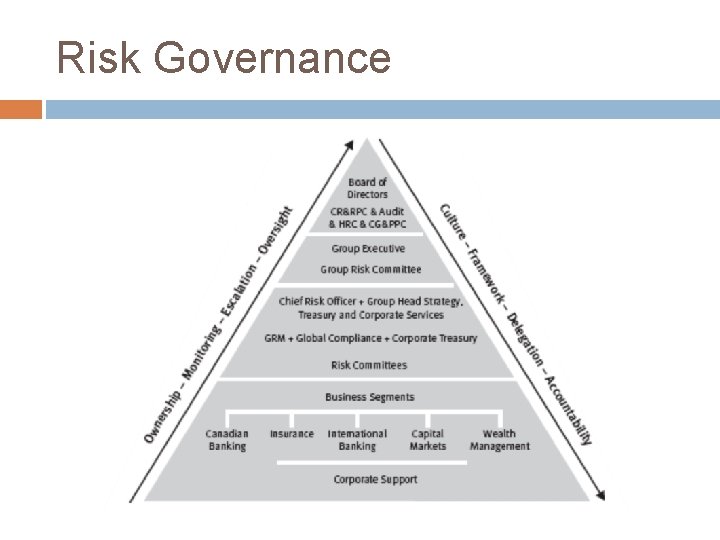
Risk Governance
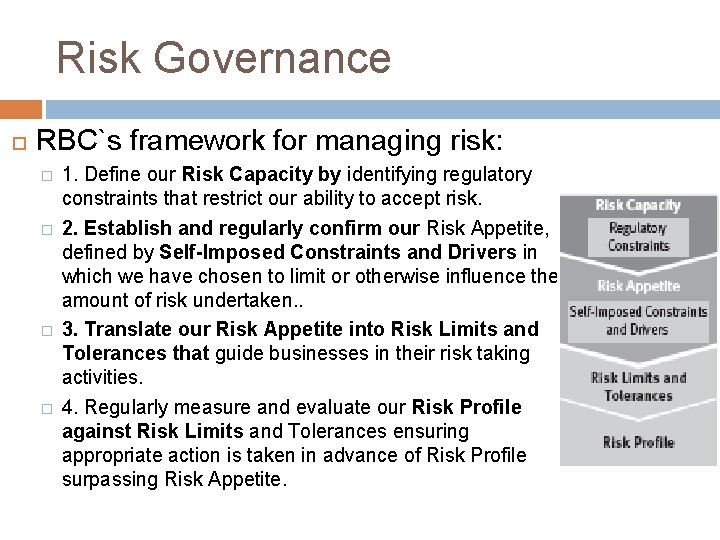
Risk Governance RBC`s framework for managing risk: � � 1. Define our Risk Capacity by identifying regulatory constraints that restrict our ability to accept risk. 2. Establish and regularly confirm our Risk Appetite, defined by Self-Imposed Constraints and Drivers in which we have chosen to limit or otherwise influence the amount of risk undertaken. . 3. Translate our Risk Appetite into Risk Limits and Tolerances that guide businesses in their risk taking activities. 4. Regularly measure and evaluate our Risk Profile against Risk Limits and Tolerances ensuring appropriate action is taken in advance of Risk Profile surpassing Risk Appetite.
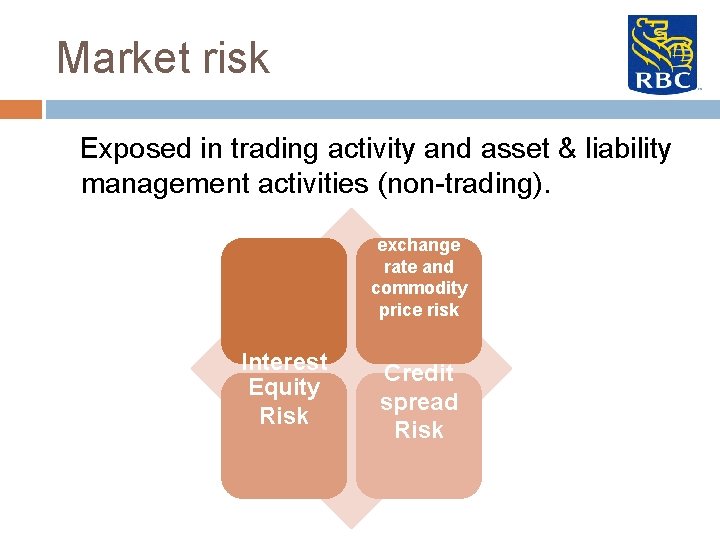
Market risk Exposed in trading activity and asset & liability management activities (non-trading). Foreign exchange rate and commodity price risk Interest Equity rate risk Risk Credit spread Risk
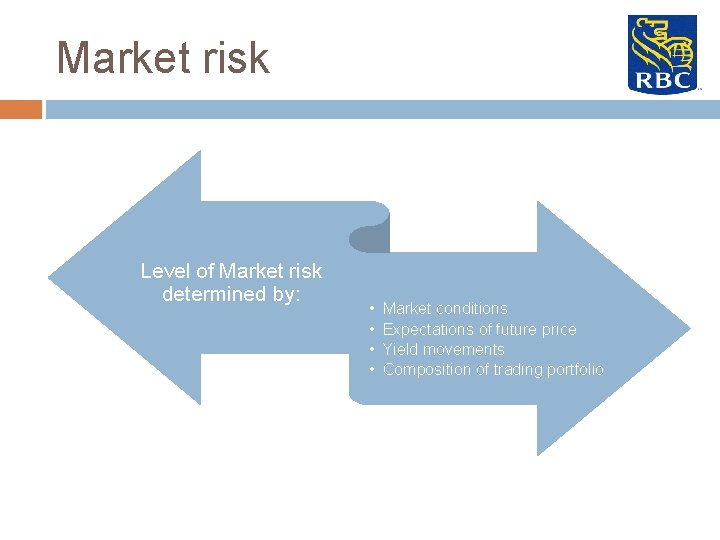
Market risk Level of Market risk determined by: • • Market conditions Expectations of future price Yield movements Composition of trading portfolio
Trading market activities Involves market-making, positioning and arbitrage activities. Market-making : quoting bid and offer prices to other market participants with the intention of generating revenue based on spread and volume. Positioning : managing market risk positions with the expectation of profiting from favorable movements in prices, rates or indices. Arbitrage activities : identifying and profiting from price differentials between markets and products.
Non-Trading market risk (Asset & Liability management) Traditional non-trading banking activities, such as deposit taking and lending, expose to market risk, of which interest rate risk is the largest component.
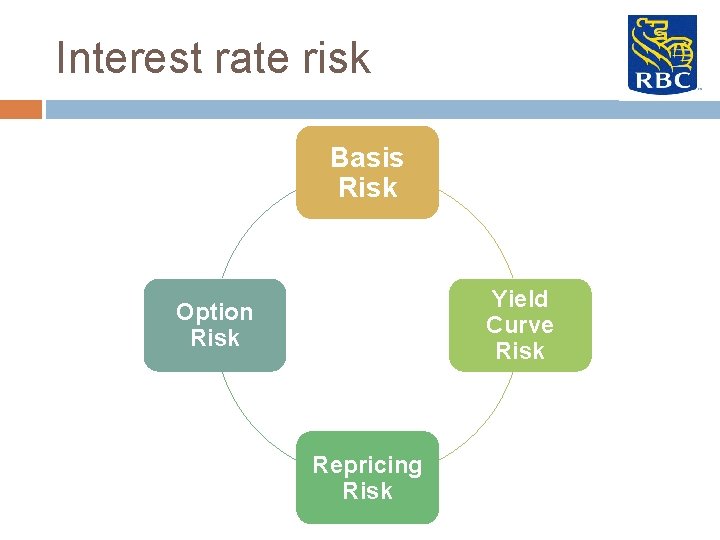
Interest rate risk Basis Risk Yield Curve Risk Option Risk Repricing Risk
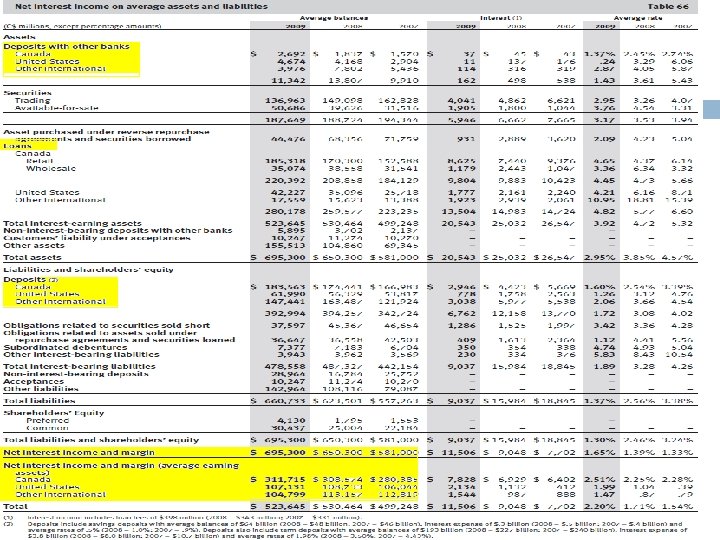
Net interest income
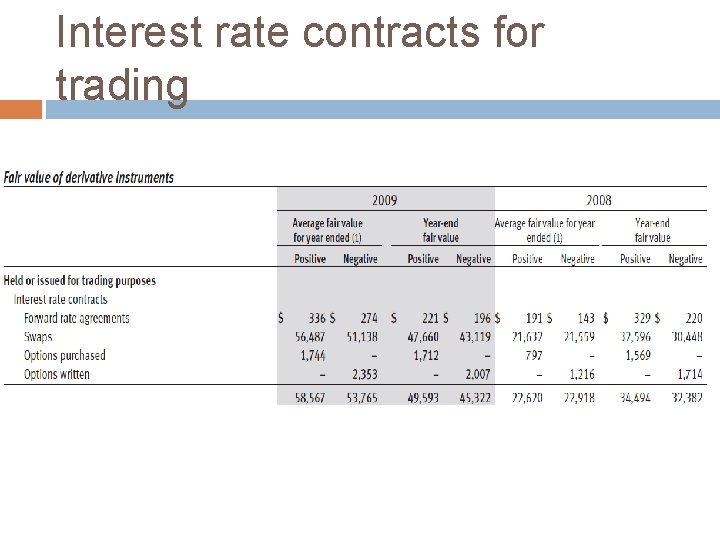
Interest rate contracts for trading
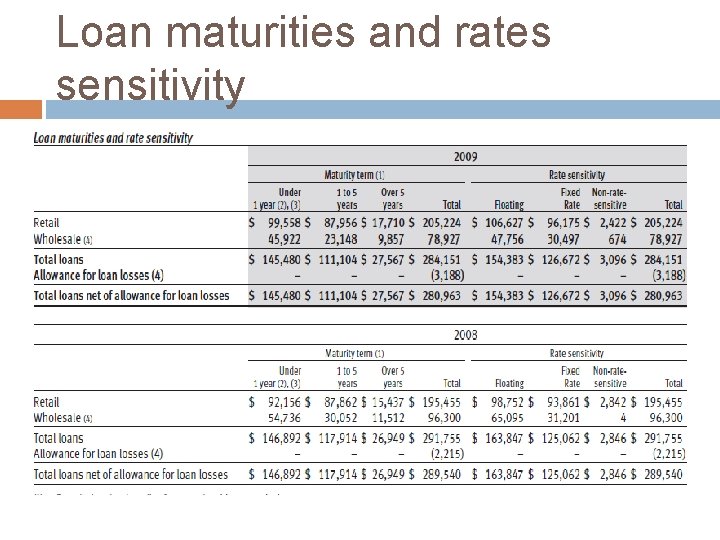
Loan maturities and rates sensitivity
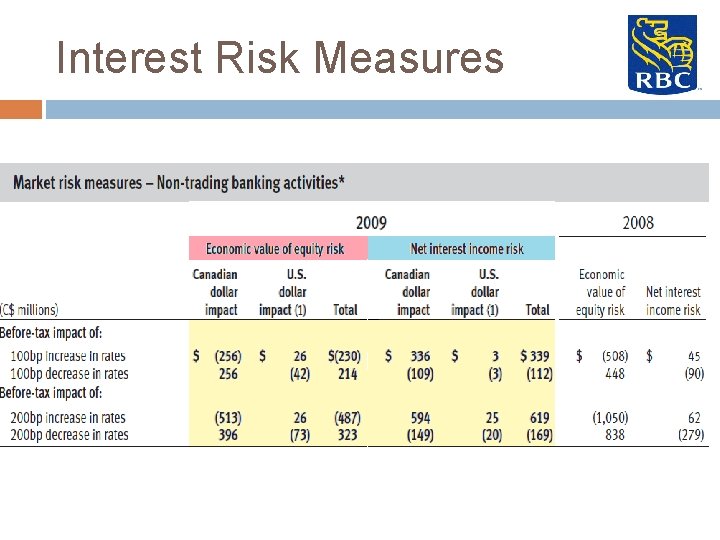
Interest Risk Measures
Foreign exchange rate and commodity price risk Transaction risk and Translation risk Potential impact on earnings and economic value due to currency rate and commodity price movements and volatilities. Through their proprietary positions they are exposed to the spot and forward exchange market, derivatives markets and commodities markets
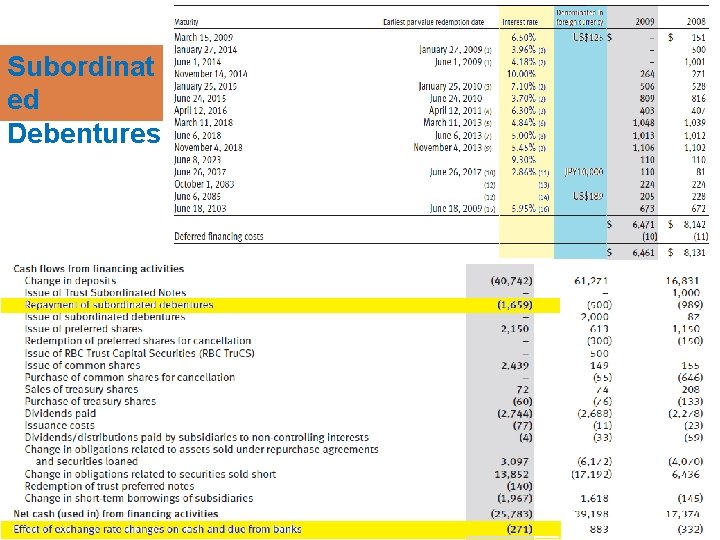
Subordinat ed Debentures
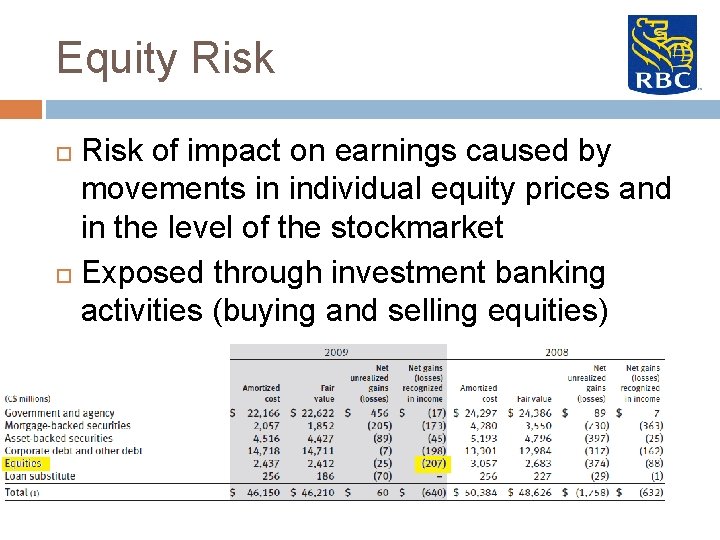
Equity Risk of impact on earnings caused by movements in individual equity prices and in the level of the stockmarket Exposed through investment banking activities (buying and selling equities)
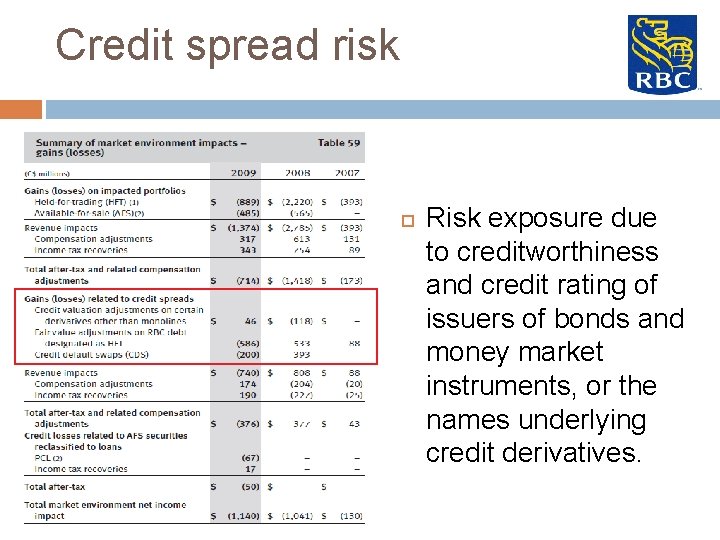
Credit spread risk Risk exposure due to creditworthiness and credit rating of issuers of bonds and money market instruments, or the names underlying credit derivatives.
Monitoring and managing Market Risk Group which operates independently from trading operations is responible for daily monitoring of their market risk exposure. And they use: Value at Risk Sensitivity analysis Stress test
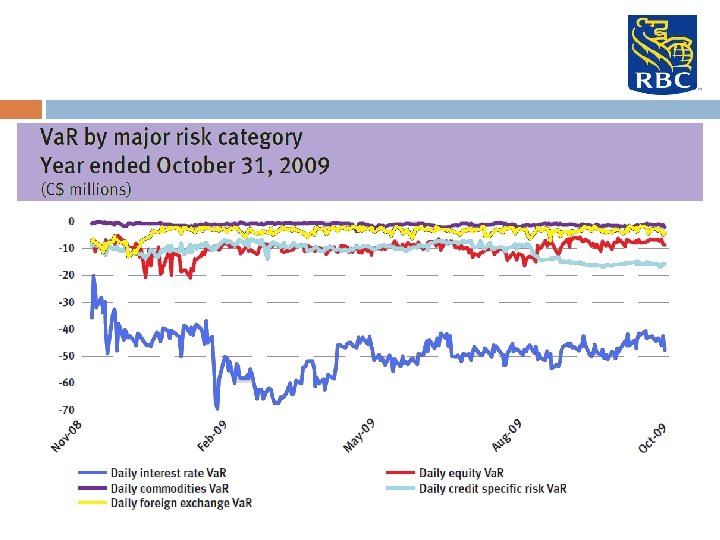
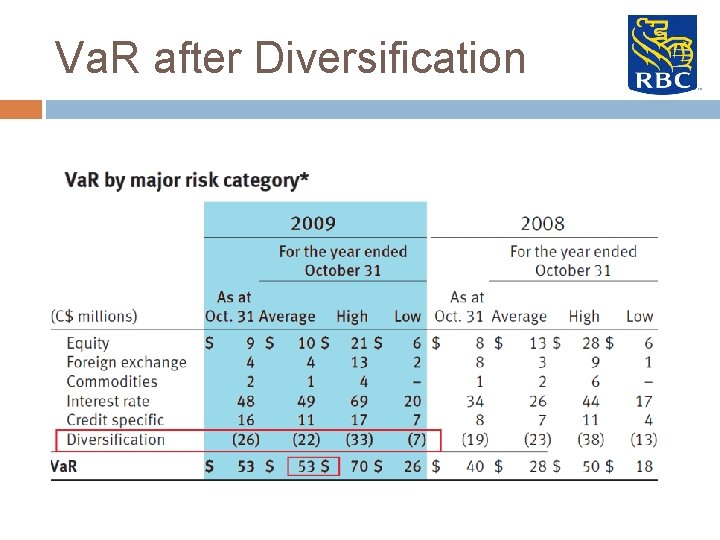
Value at Risk (Va. R) A statistical technique that measures the worst-case loss expected over a one-day period within a 99% confidence level. Measure and monitor the effects of correlation in the movements of interest rates, credit specific risk, exchange rates, equity and commodity prices. Highlight the benefit of diversification within the trading portfolio.
Va. R after Diversification
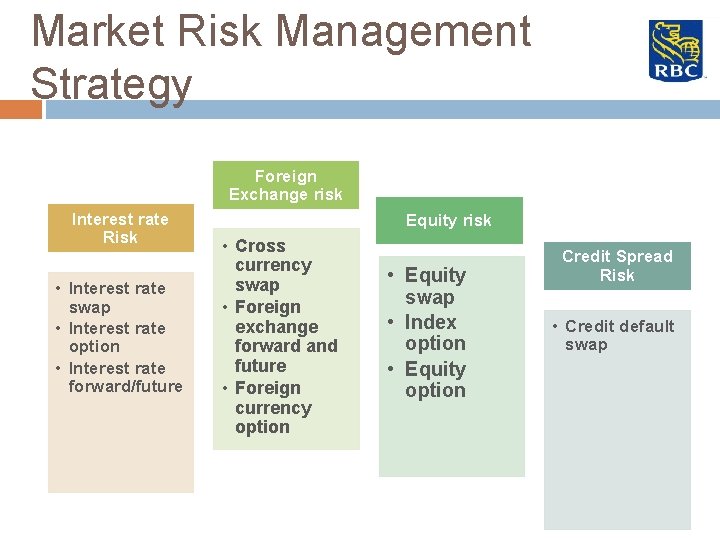
Market Risk Management Strategy Foreign Exchange risk Interest rate Risk • Interest rate swap • Interest rate option • Interest rate forward/future Equity risk • Cross currency swap • Foreign exchange forward and future • Foreign currency option • Equity swap • Index option • Equity option Credit Spread Risk • Credit default swap
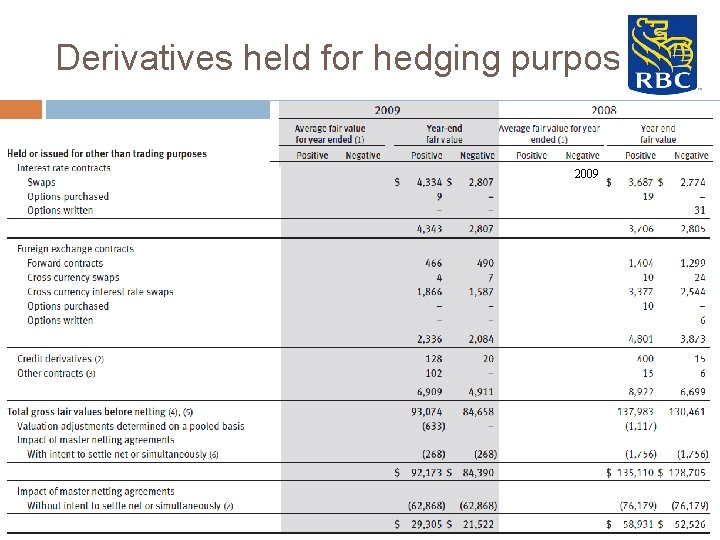
Derivatives held for hedging purpose 2009
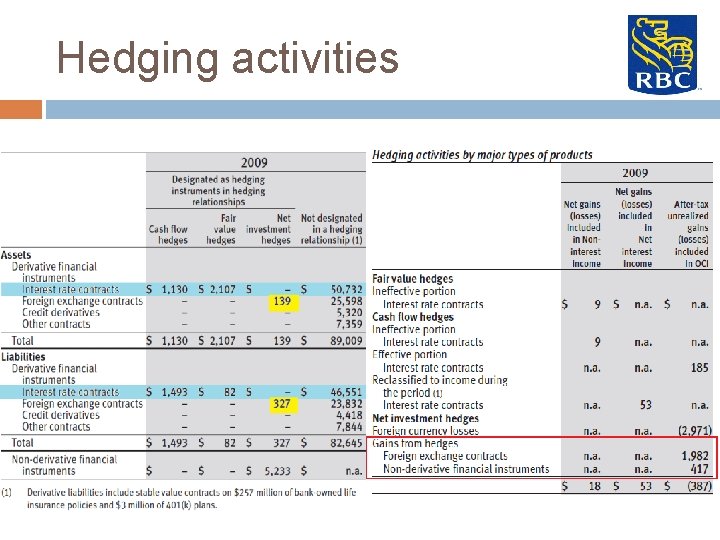
Hedging activities
2009 2008 2007
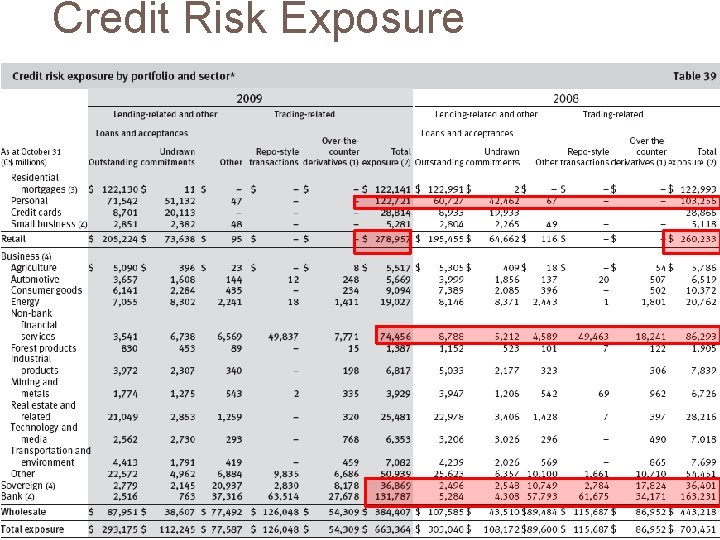
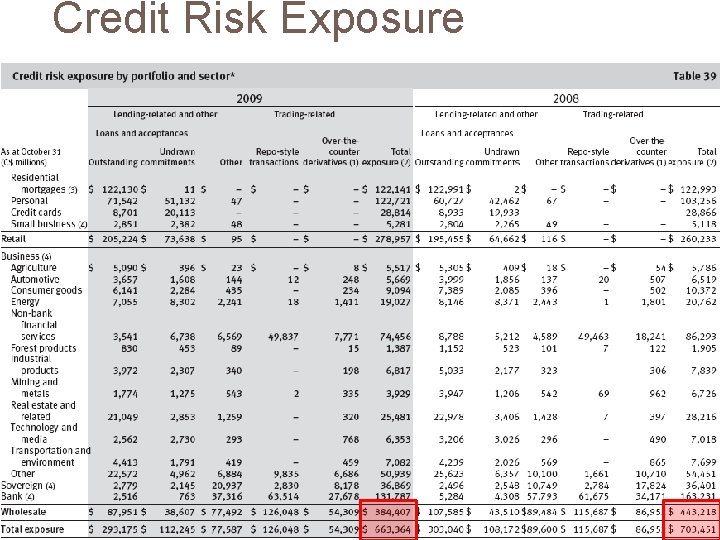
Credit Risk Introduction Risk of loss due to counterparty default Significant impact on business Credit products are key drivers Failure to manage risk leads to immediate impact on earnings & reputation
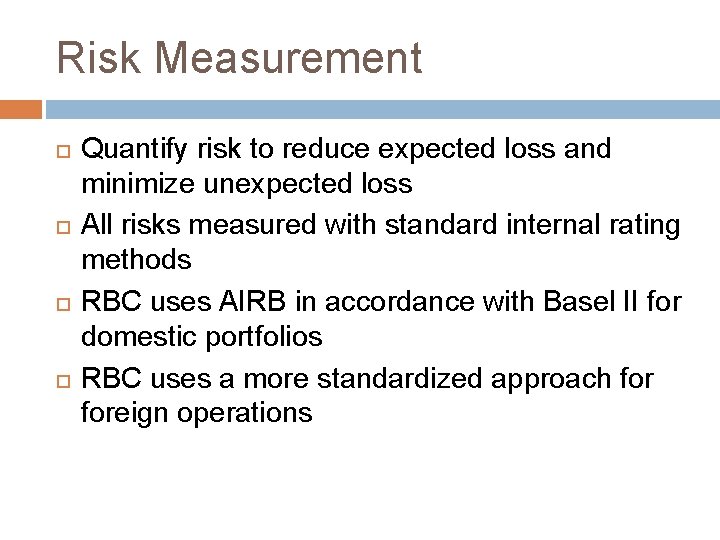
Risk Measurement Quantify risk to reduce expected loss and minimize unexpected loss All risks measured with standard internal rating methods RBC uses AIRB in accordance with Basel II for domestic portfolios RBC uses a more standardized approach foreign operations
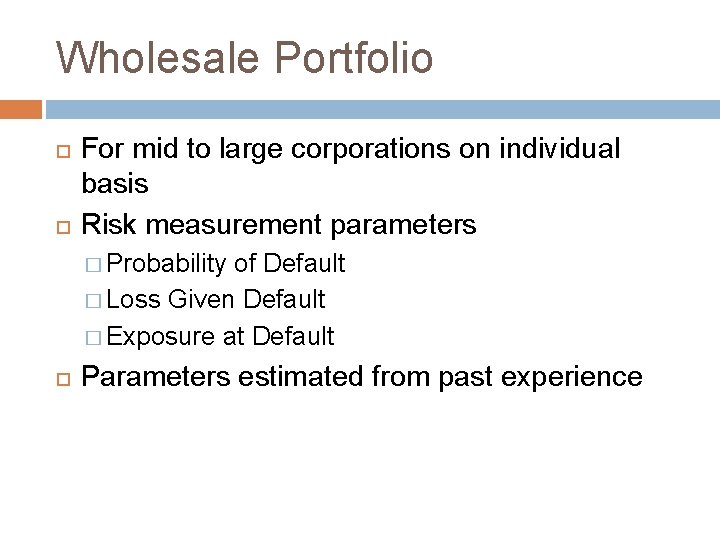
Wholesale Portfolio For mid to large corporations on individual basis Risk measurement parameters � Probability of Default � Loss Given Default � Exposure at Default Parameters estimated from past experience
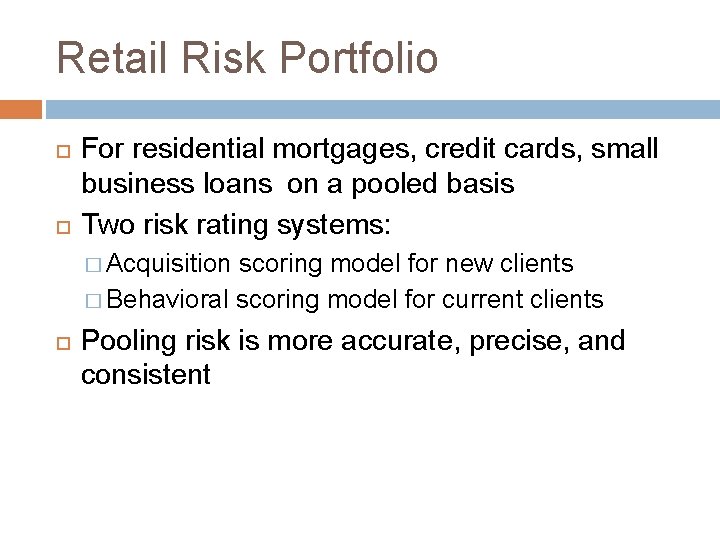
Retail Risk Portfolio For residential mortgages, credit cards, small business loans on a pooled basis Two risk rating systems: � Acquisition scoring model for new clients � Behavioral scoring model for current clients Pooling risk is more accurate, precise, and consistent
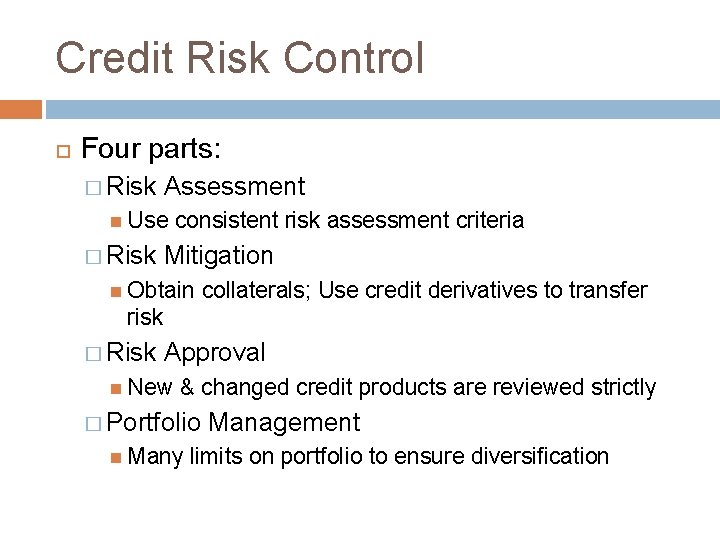
Credit Risk Control Four parts: � Risk Assessment Use � Risk consistent risk assessment criteria Mitigation Obtain collaterals; Use credit derivatives to transfer risk � Risk Approval New & changed credit products are reviewed strictly � Portfolio Many Management limits on portfolio to ensure diversification
Credit Risk Exposure
Credit Risk Exposure
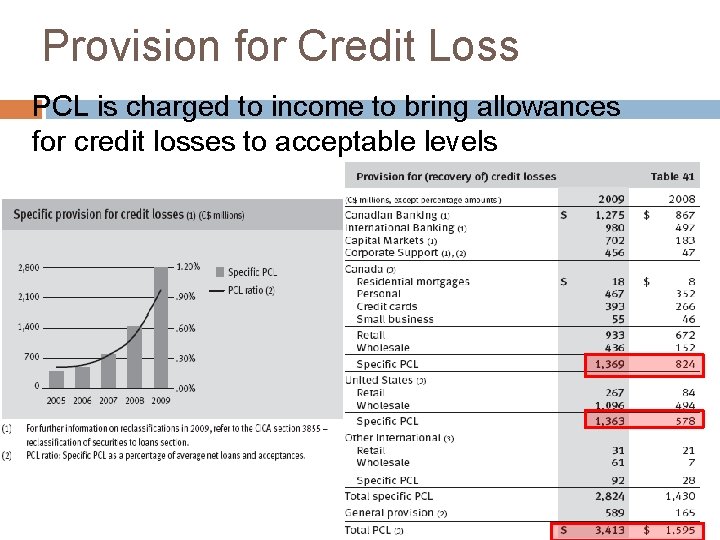
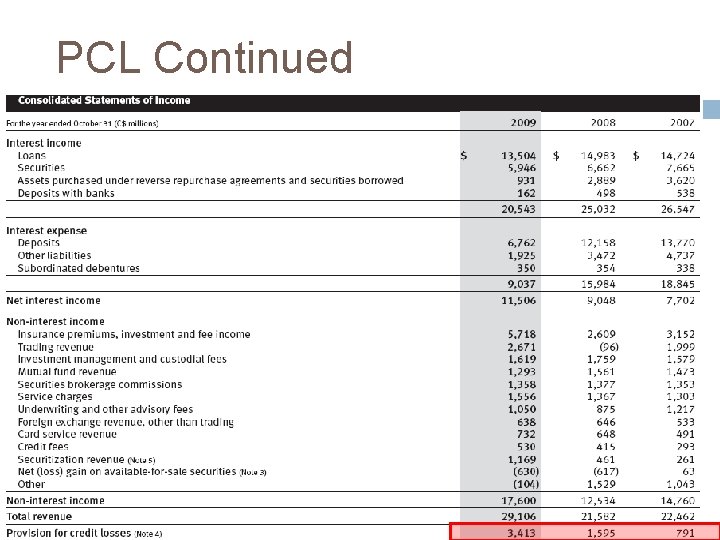
Provision for Credit Loss PCL is charged to income to bring allowances for credit losses to acceptable levels
PCL Continued
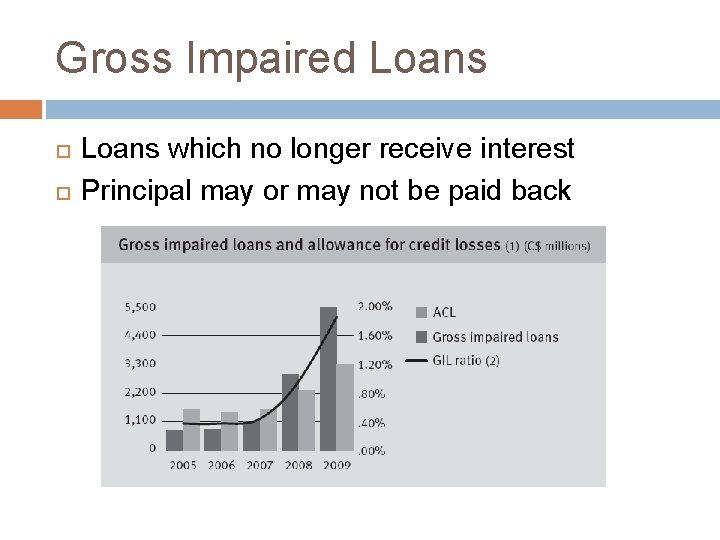
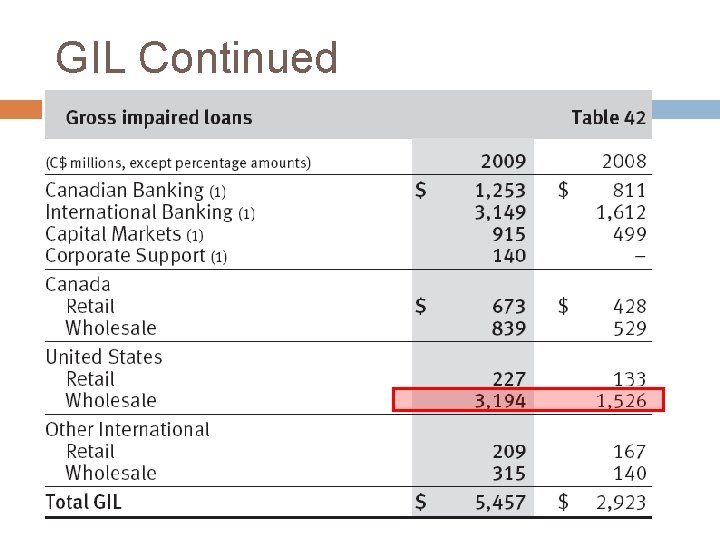
Gross Impaired Loans which no longer receive interest Principal may or may not be paid back
GIL Continued
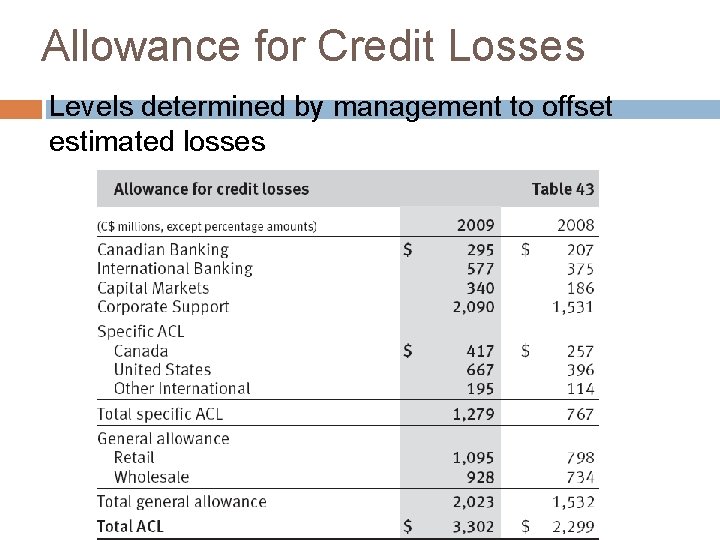
Allowance for Credit Losses Levels determined by management to offset estimated losses
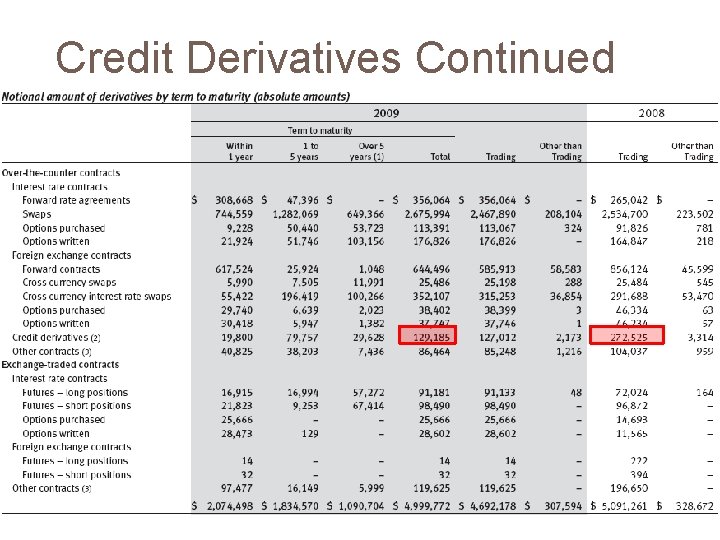
Credit Derivatives OTC contracts to transfer credit risk from one counterparty to another � E. g. credit default swaps, total return swaps RBC buys these for protection against loss of value for underlying assets
Credit Derivatives Continued
Credit Derivatives Continued Thus, we see a movement away from derivatives for hedging RBC prefers stricter risk acceptance protocol RBC increasing greater allowance for credit loss
Operational Risk Operational risk is the risk of loss or harm resulting from inadequate or failed internal processes, people and systems or from external events. Failure to manage operational risk can result in direct or indirect financial loss RBC adopts the Standardized Approach for operational risk: � Risk and control assessment � Operational event data collection and analysis � Industry loss analysis � Key risk indicators
Liquidity Risk The risk of being unable to generate or obtain sufficient cash or its equivalent in a timely and cost-effective manner to meet commitments as they come due.
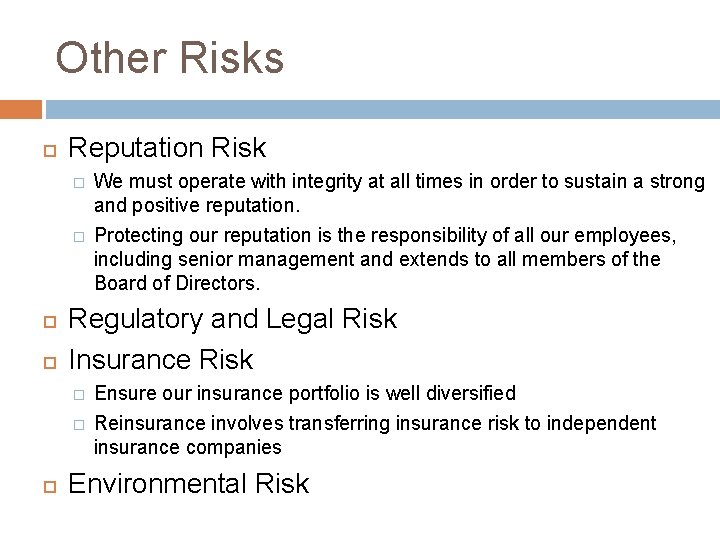
Other Risks Reputation Risk � � Regulatory and Legal Risk Insurance Risk � � We must operate with integrity at all times in order to sustain a strong and positive reputation. Protecting our reputation is the responsibility of all our employees, including senior management and extends to all members of the Board of Directors. Ensure our insurance portfolio is well diversified Reinsurance involves transferring insurance risk to independent insurance companies Environmental Risk
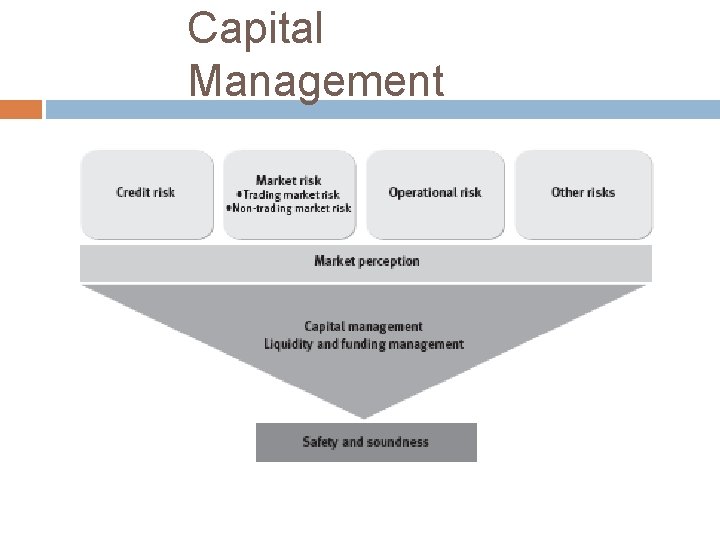
Capital Management
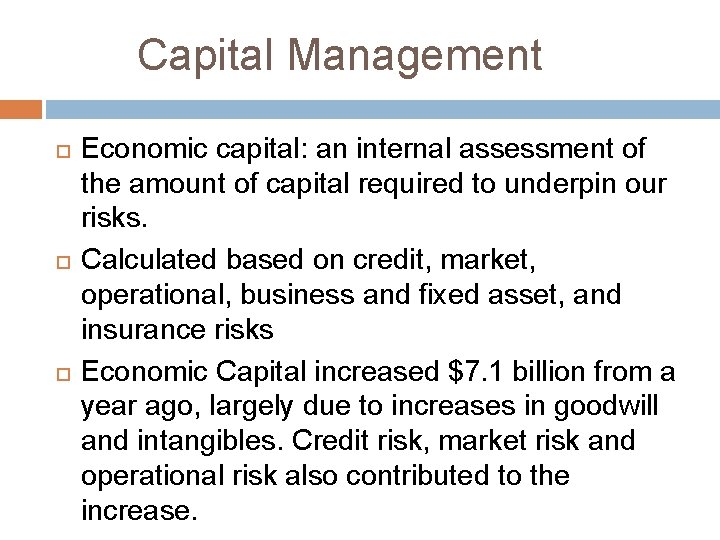
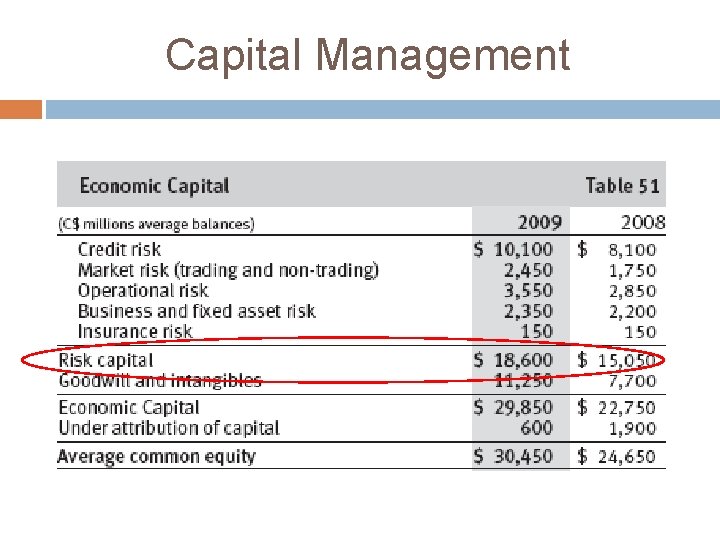
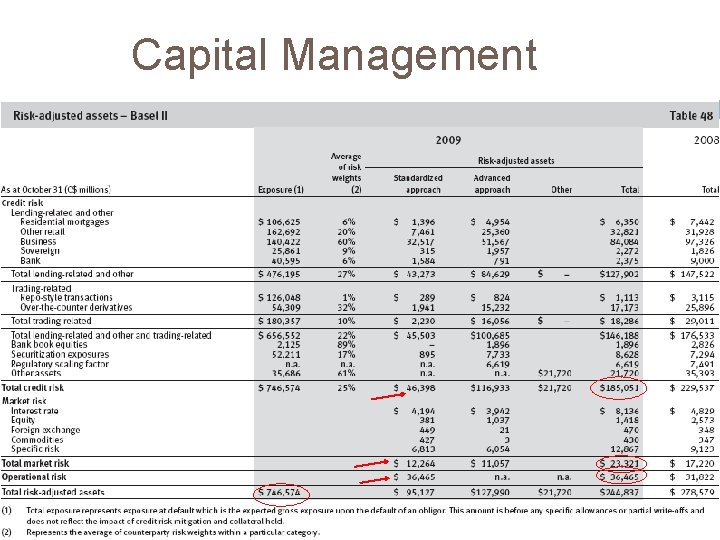
Capital Management Economic capital: an internal assessment of the amount of capital required to underpin our risks. Calculated based on credit, market, operational, business and fixed asset, and insurance risks Economic Capital increased $7. 1 billion from a year ago, largely due to increases in goodwill and intangibles. Credit risk, market risk and operational risk also contributed to the increase.
Capital Management
Capital Management
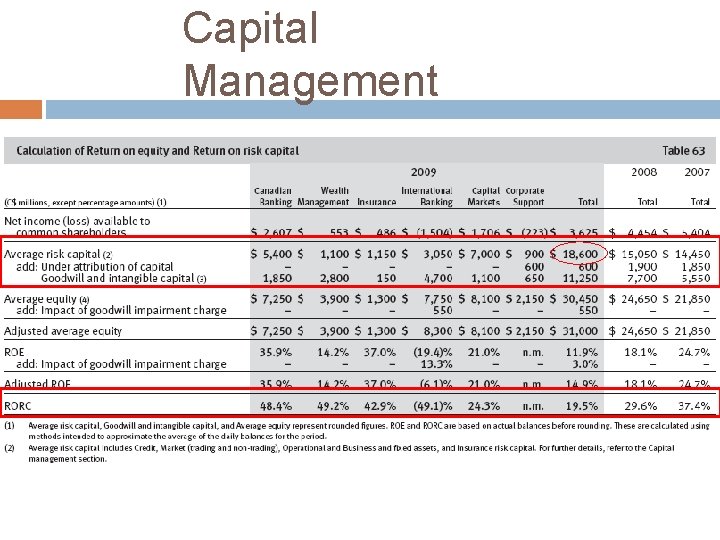
Capital Management RORC is used to measure returns on capital required to support the risks related to ongoing operations. RORC calculations are based on net income available to common shareholders divided by attributed risk capital
Capital Management
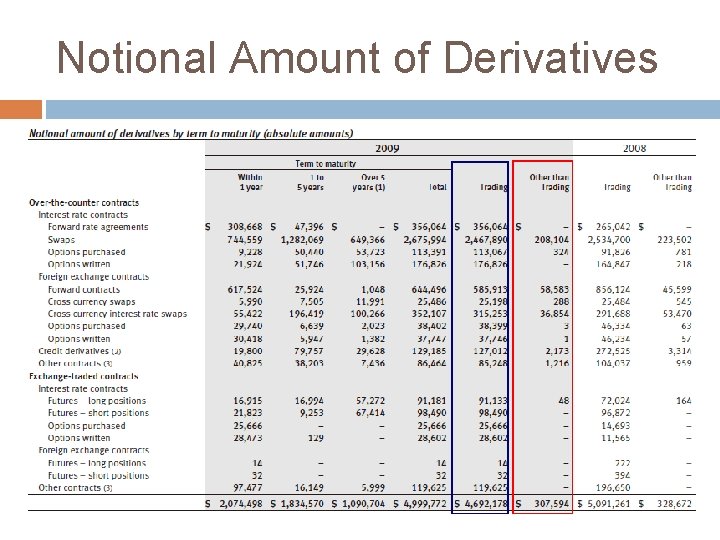
Derivative Instruments Derivative instruments are categorized as either financial or nonfinancial derivatives. Financial derivatives are financial contracts whose value is derived from an underlying interest rate, foreign exchange rate, credit risk, and equity or equity index. � � � Forwards and Futures Swaps Options Credit Derivatives Other Derivative Products Non-financial derivatives are contracts whose value is derived from a precious metal, commodity instrument or index.
Derivative Instruments The purposes of issuing derivative instruments � For trading purposes: Most derivative transactions relate to sales and trading activities. � For other-than-trading purposes: Derivatives are also used for purposes other than trading, primarily for hedging.
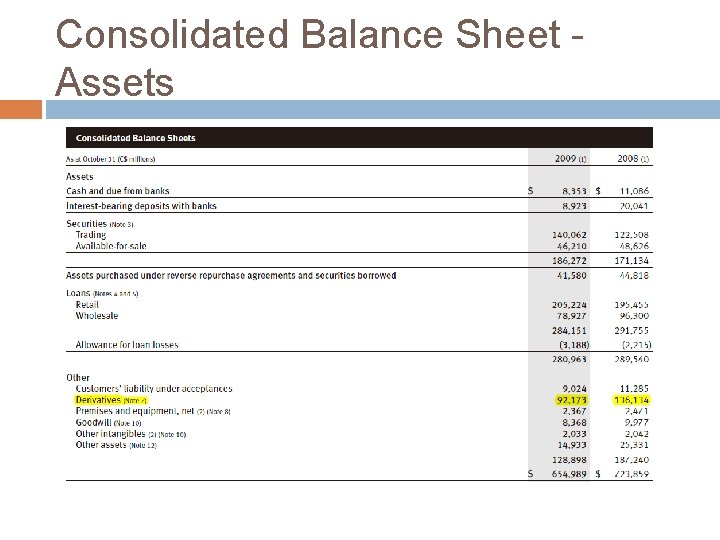
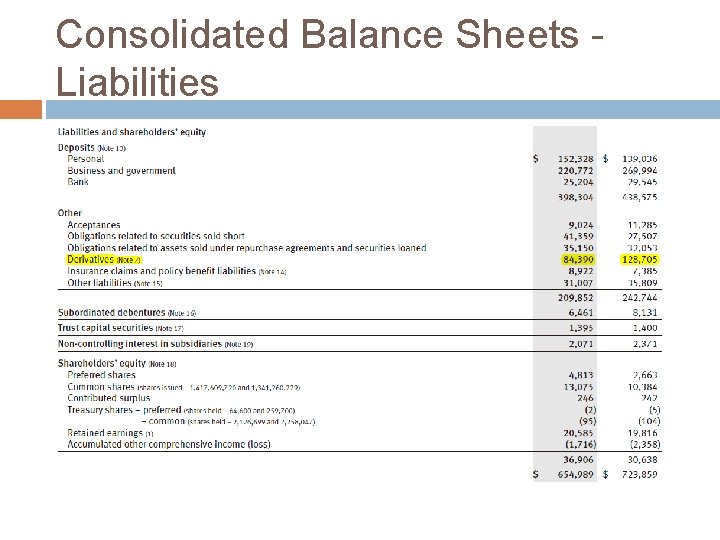
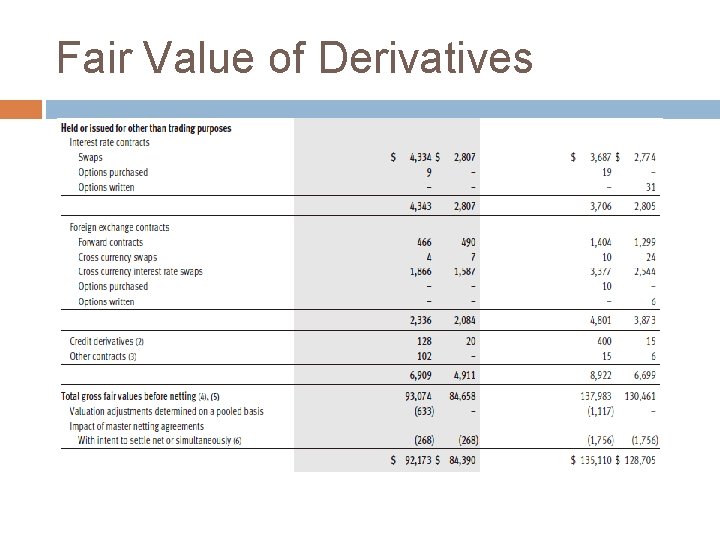
Derivative Instruments All derivative instruments (trading and otherthan-trading) are recorded on the Consolidated Balance Sheet (Assets/Liabilities) at Fair Value.
Consolidated Balance Sheet Assets
Consolidated Balance Sheets Liabilities
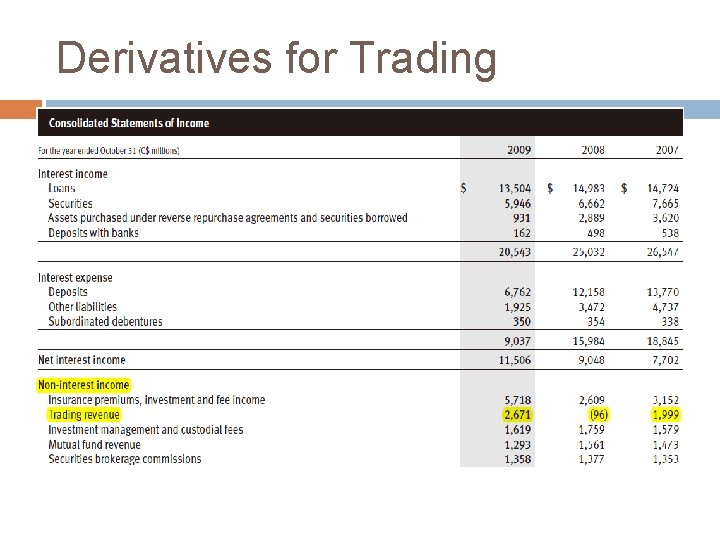
Derivatives for Trading When derivatives are used for trading purposes, the realized and unrealized gains/losses are recognized in Non-interest income – Trading revenue
Derivatives for Trading
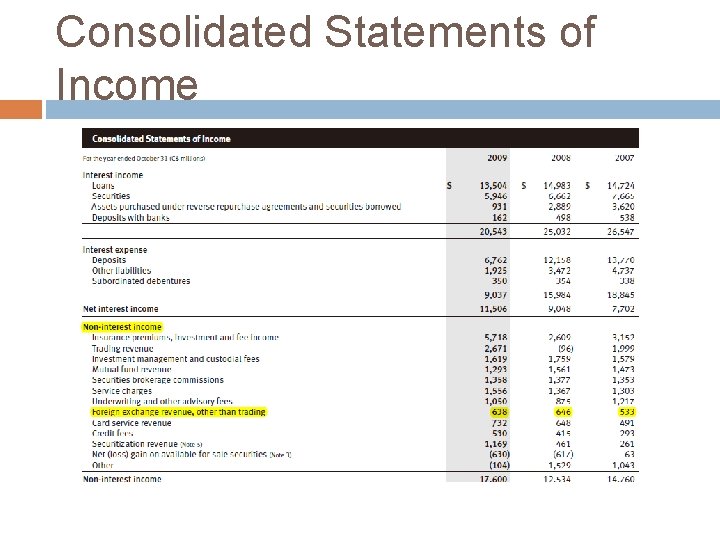
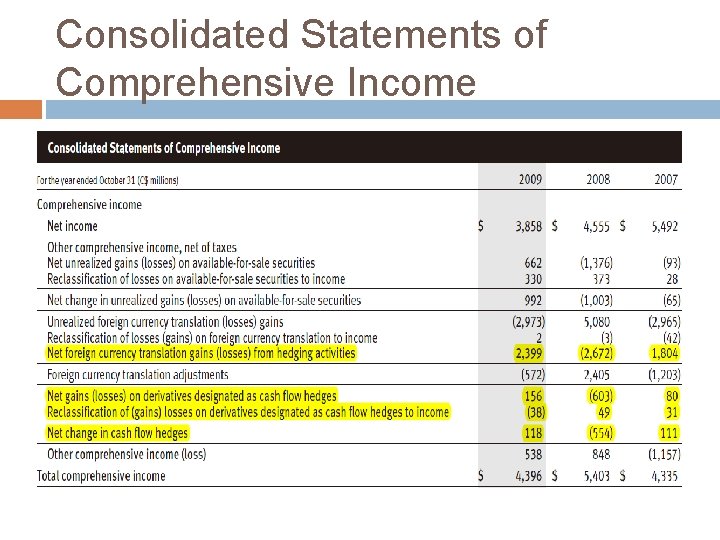
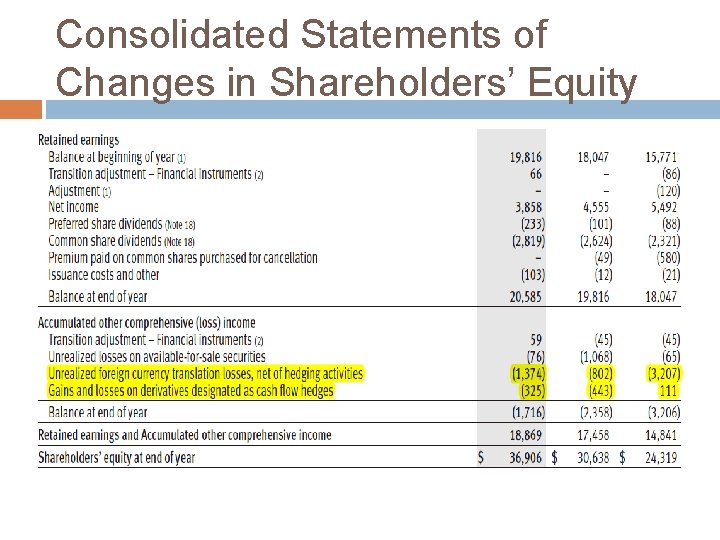
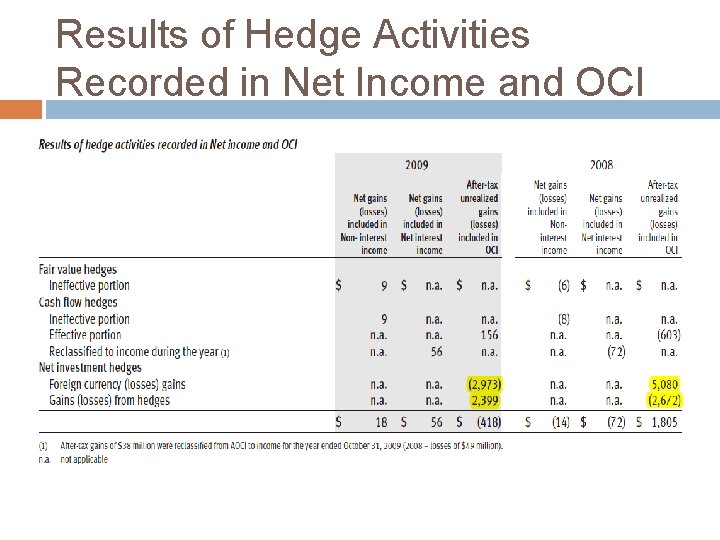
Derivatives for Hedging Hedge accounting may be applied. Fair value hedges � The carrying value is recorded in Non-interest income. Cash flow hedges � The effective portion is recognized in OCI, while the ineffective portion is recognized in Noninterest income. Net investment hedges � The effective portion is recognized in OCI, the ineffective portion in Non-interest income.
Consolidated Statements of Income
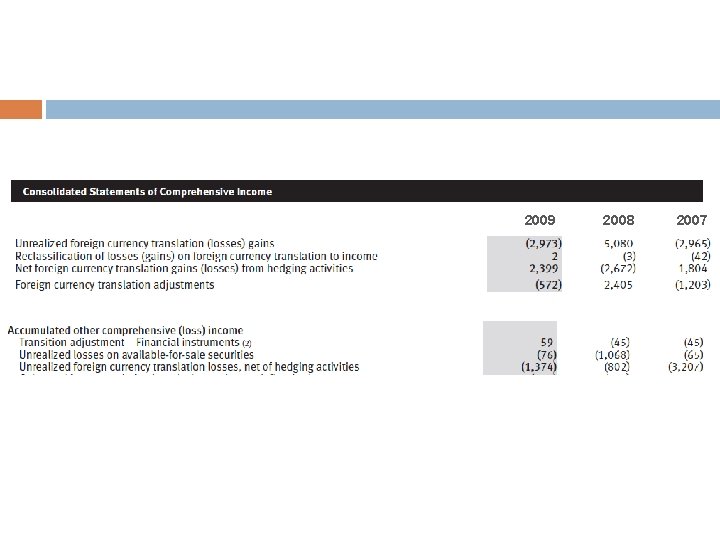
Consolidated Statements of Comprehensive Income
Consolidated Statements of Changes in Shareholders’ Equity
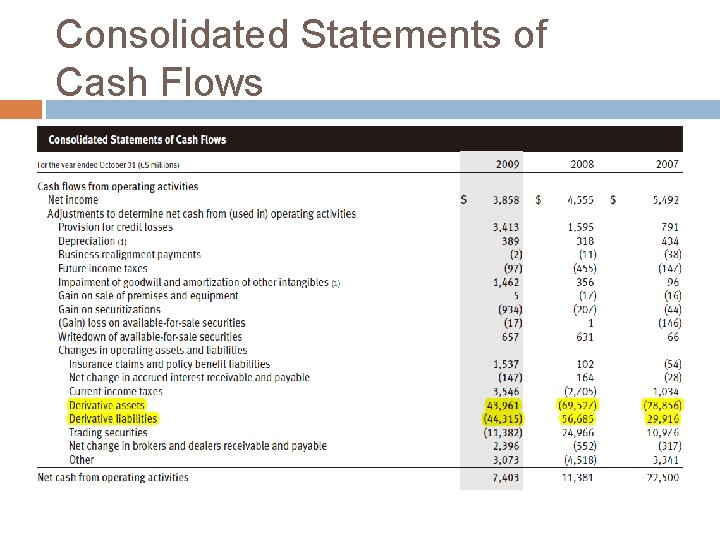
Consolidated Statements of Cash Flows
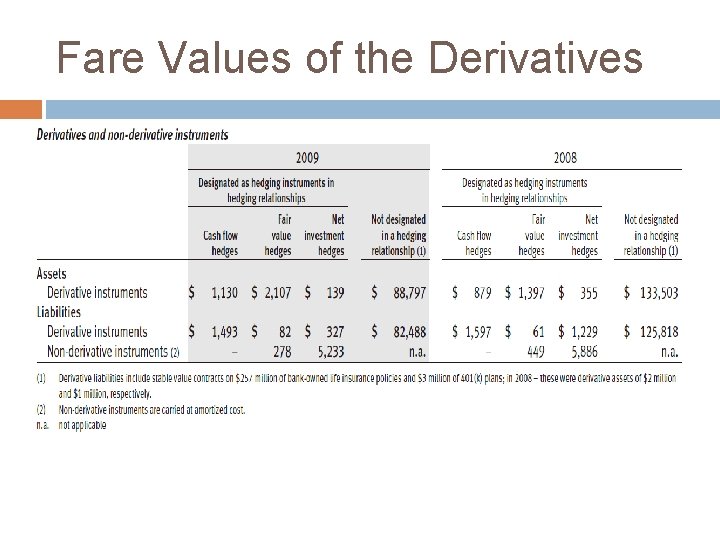
Risk Management Information in the RBC’s Annual Report RBC presents its risk management information and activities in Note 7 – Derivative Instruments and Hedging Activities.
Fare Values of the Derivatives
Results of Hedge Activities Recorded in Net Income and OCI
Notional Amount of Derivatives
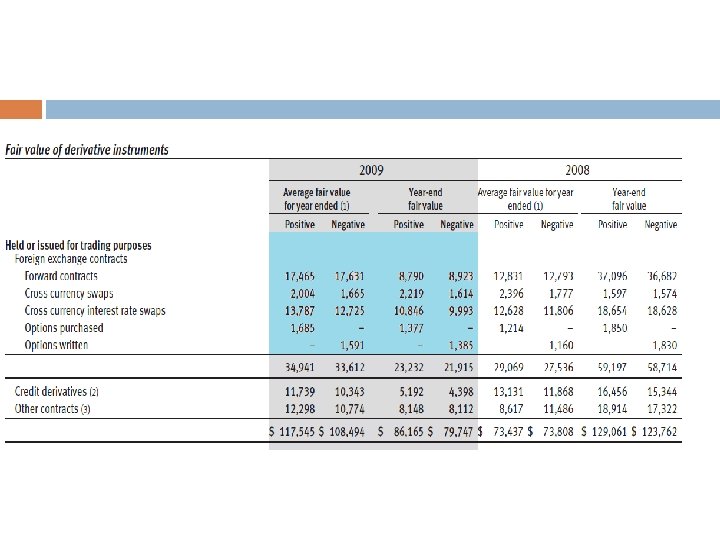
Fair Value of Derivatives
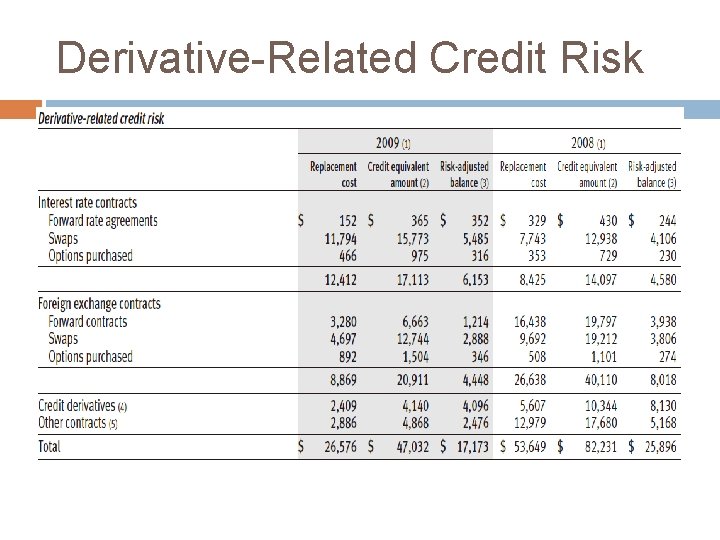
Derivative-Related Credit Risk Credit risk from derivative transactions is generated by the potential for the counterparty to default on its contractual obligations when one or more transactions have a positive market value to us. Derivative-related credit risk is represented by the positive fair value of the instrument and is normally a small fraction of the contract’s notional amount.
Derivative-Related Credit Risk
Conclusion Thank you for your attention Any questions