PHOTOSYNTHESIS AND CELL RESPIRATION CELLS AND ENERGY A




- Slides: 76
PHOTOSYNTHESIS AND CELL RESPIRATION
CELLS AND ENERGY A. Without the ability to produce and use energy, nothing could live.
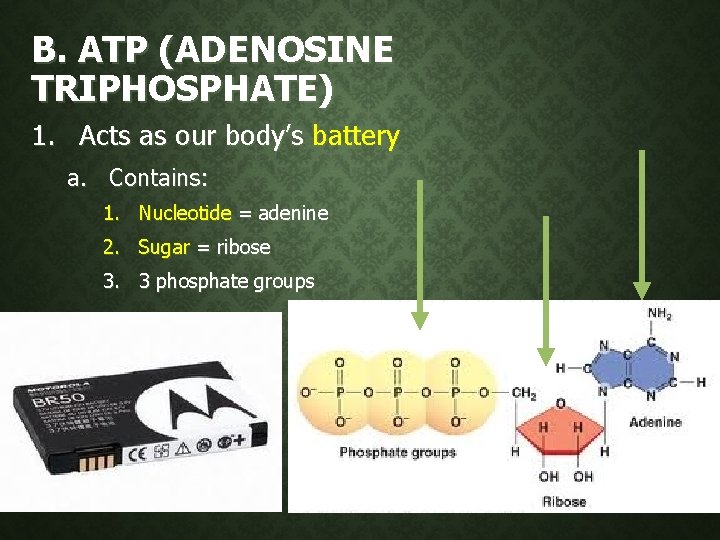
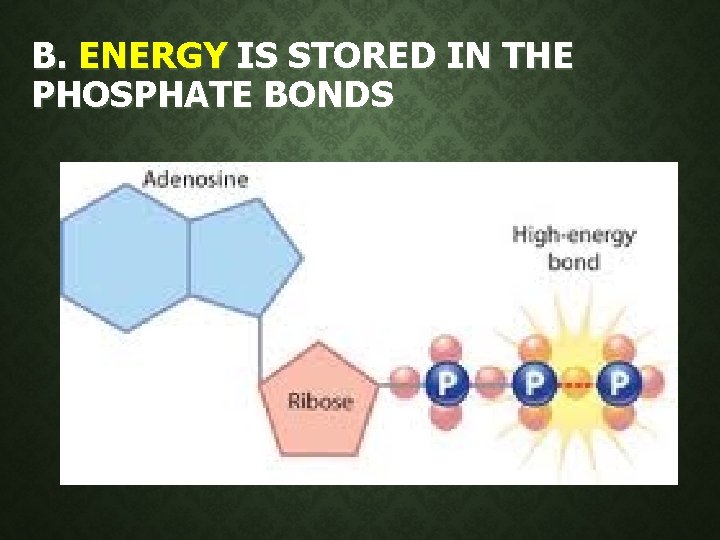
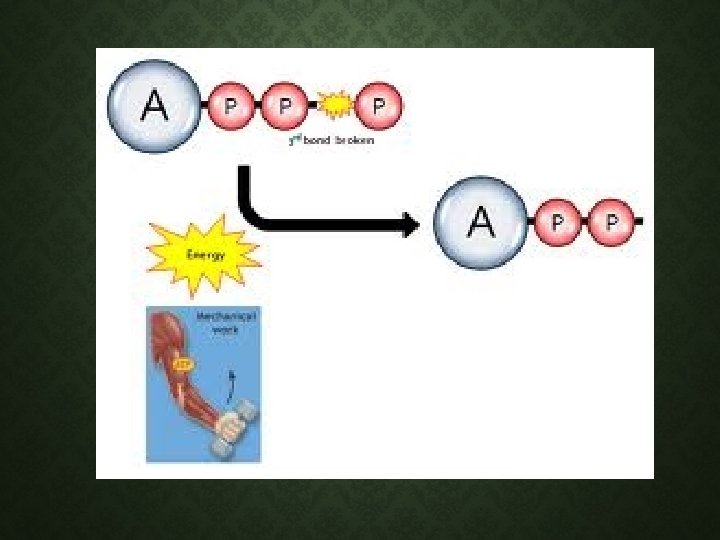
B. ATP (ADENOSINE TRIPHOSPHATE) 1. Acts as our body’s battery a. Contains: 1. Nucleotide = adenine 2. Sugar = ribose 3. 3 phosphate groups
B. ENERGY IS STORED IN THE PHOSPHATE BONDS
ATP AND NRG! https: //www. youtube. com/watch? v=bbtq. F 9 q_p. Fw
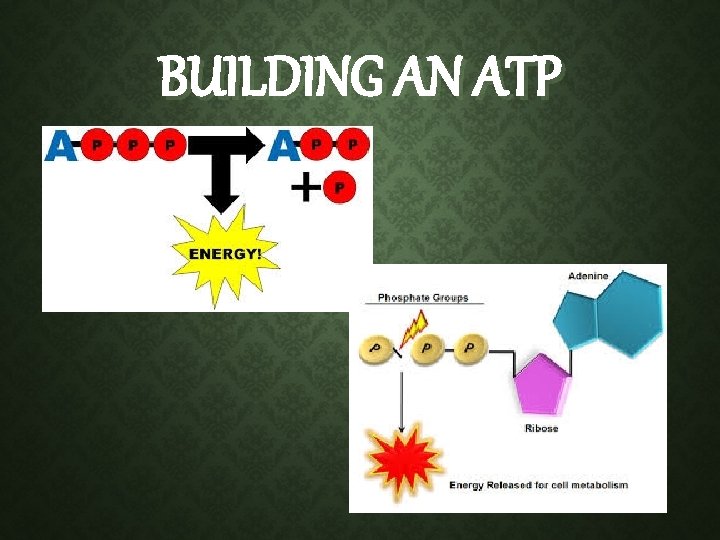
BUILDING AN ATP
Cellular Respiration Cells Breathing
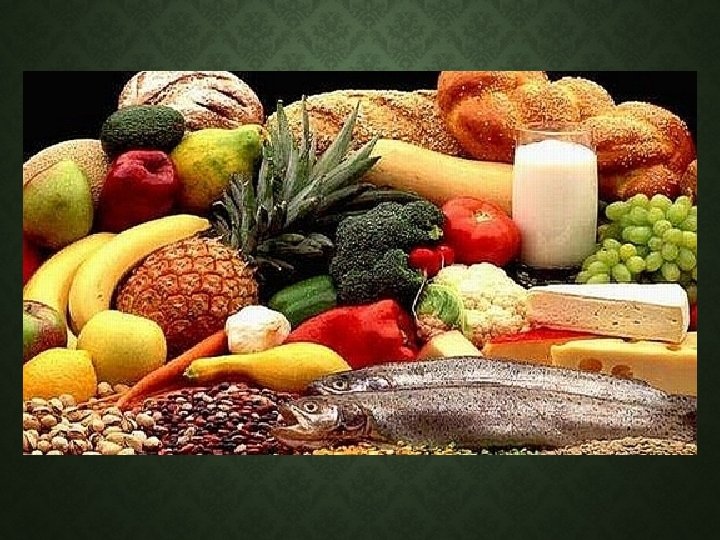
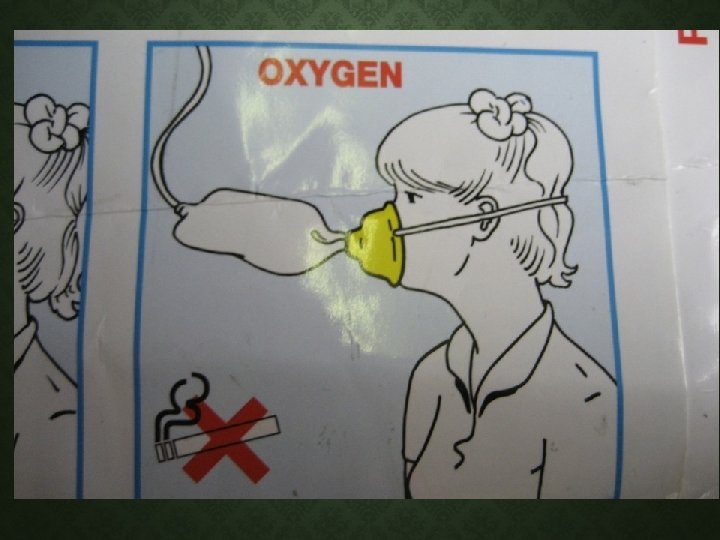
WHAT DO WE NEED TO LIVE?
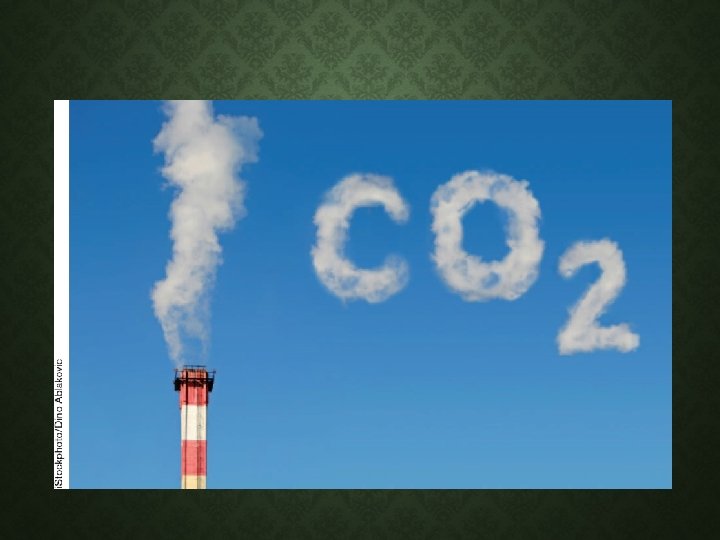
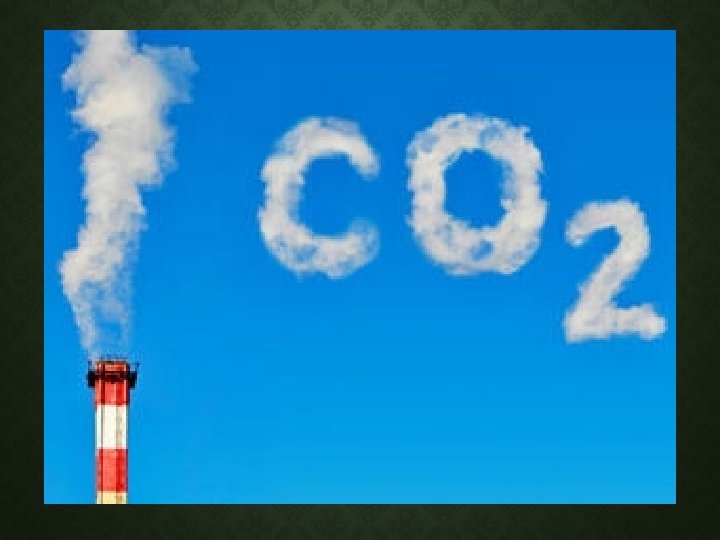
WHAT DO YOU MAKE/ GIVE OFF?
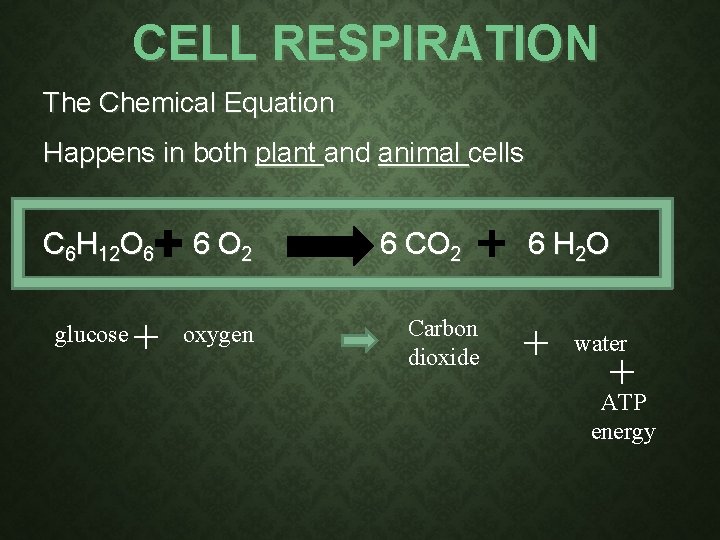
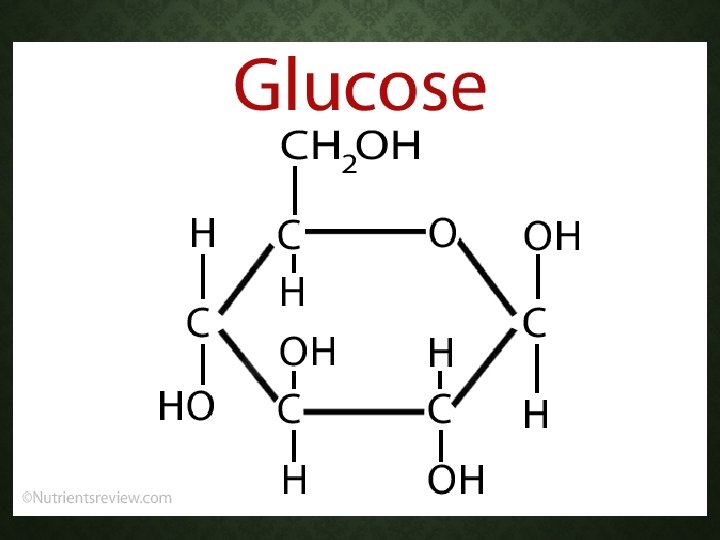
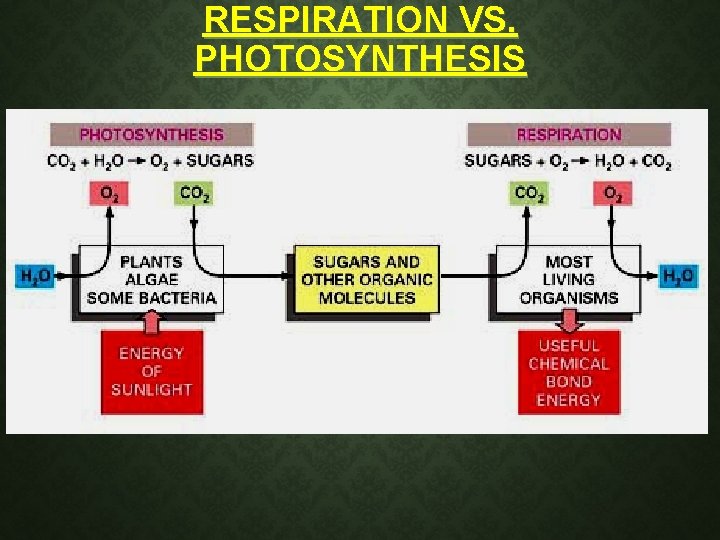
CELL RESPIRATION The Chemical Equation Happens in both plant and animal cells C 6 H 12 O 6 6 O 2 6 CO 2 6 H 2 O glucose + oxygen Carbon dioxide + water + ATP energy
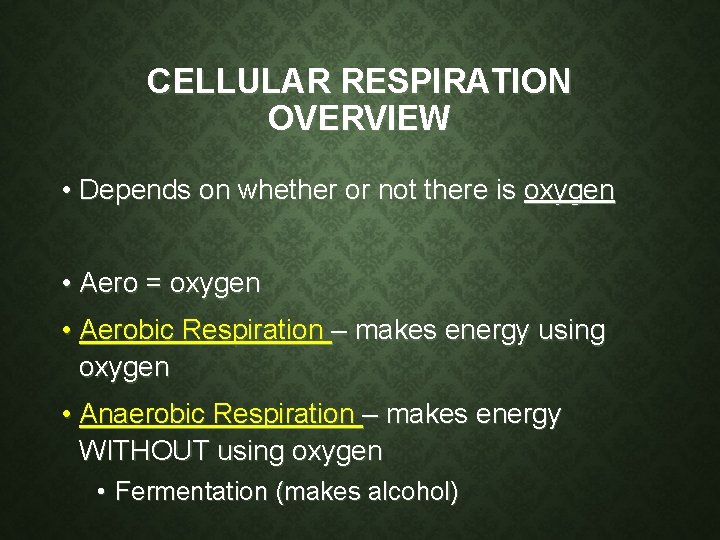
CELLULAR RESPIRATION OVERVIEW • Depends on whether or not there is oxygen • Aero = oxygen • Aerobic Respiration – makes energy using oxygen • Anaerobic Respiration – makes energy WITHOUT using oxygen • Fermentation (makes alcohol)
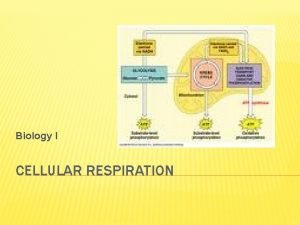
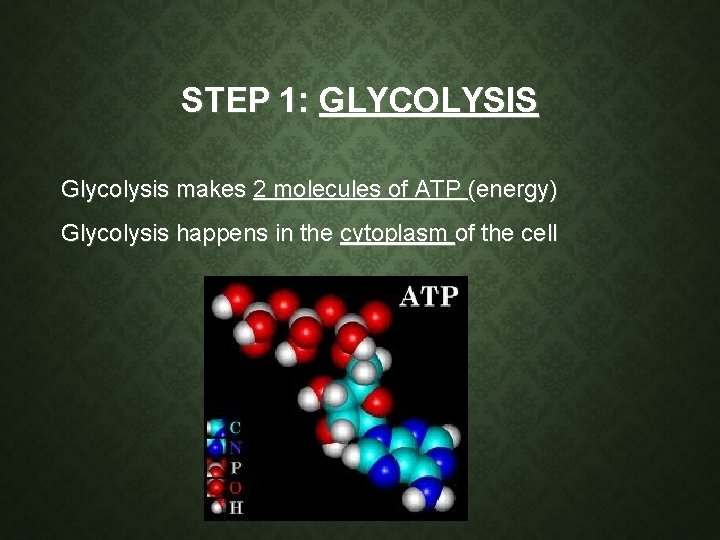
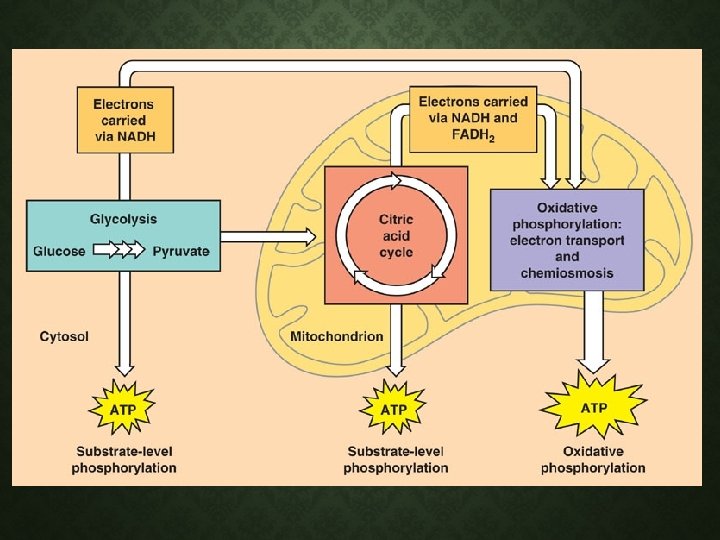
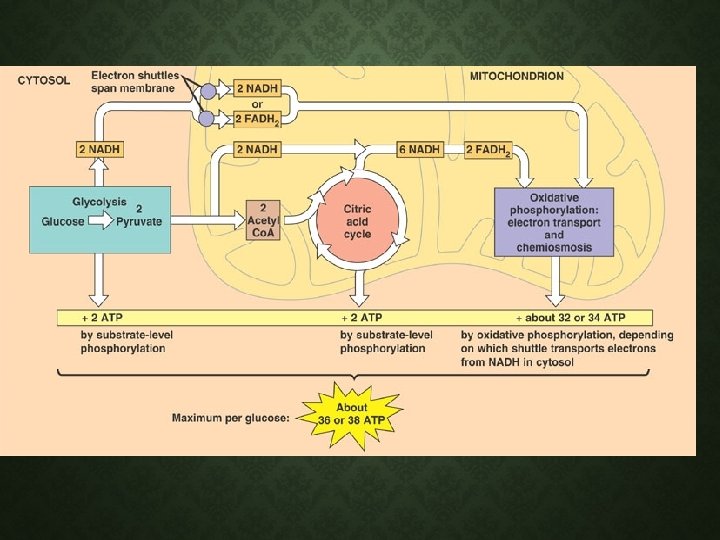
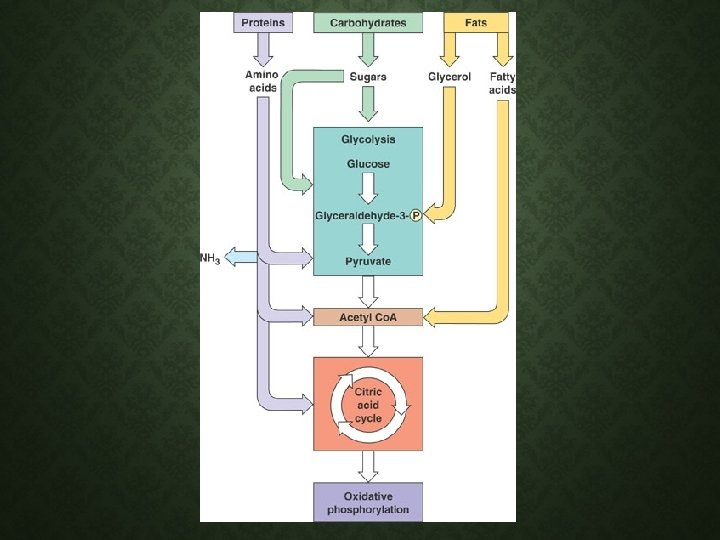
STEP 1: GLYCOLYSIS Glycolysis makes 2 molecules of ATP (energy) Glycolysis happens in the cytoplasm of the cell
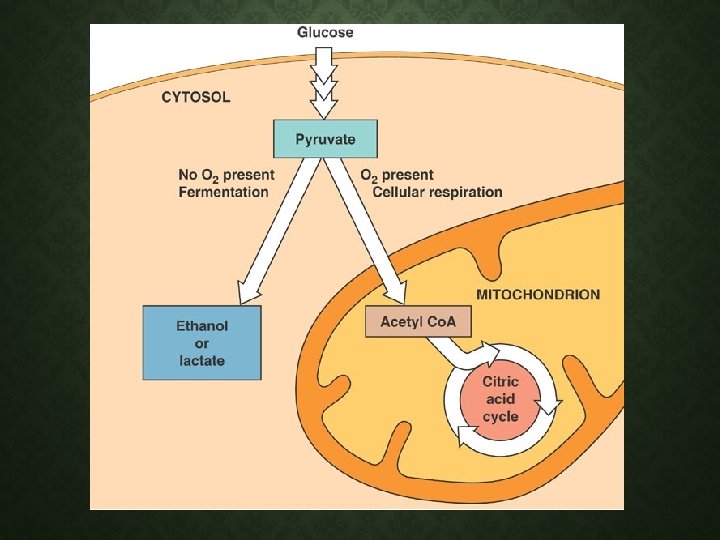
STEP 2: CHECK FOR OXYGEN • If oxygen is present, the cell can make more ATP…. YAY!!! • If no oxygen is present, the cell has to recycle the pieces from glycolysis and makes a toxin byproduct. • The recycled chemicals are called pyruvate
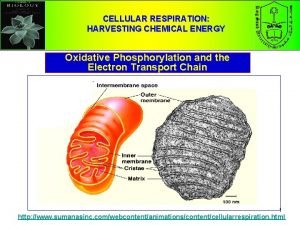
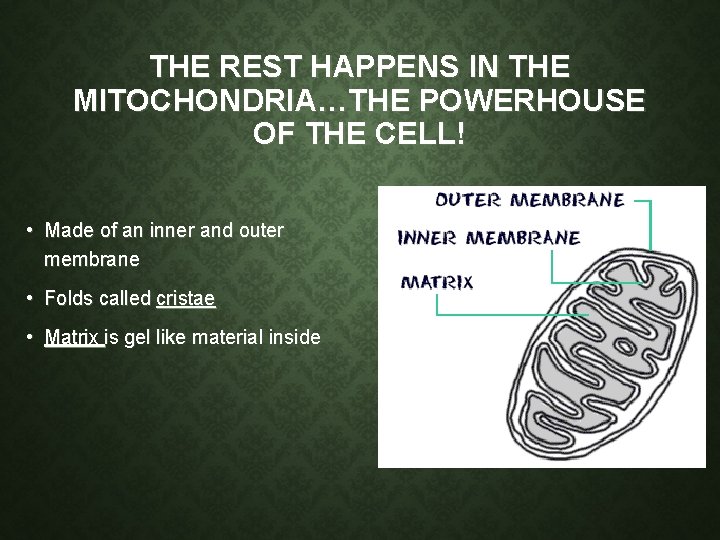
THE REST HAPPENS IN THE MITOCHONDRIA…THE POWERHOUSE OF THE CELL! • Made of an inner and outer membrane • Folds called cristae • Matrix is gel like material inside
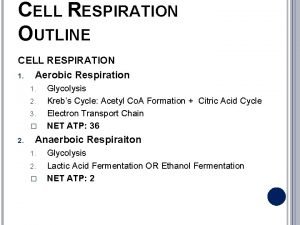
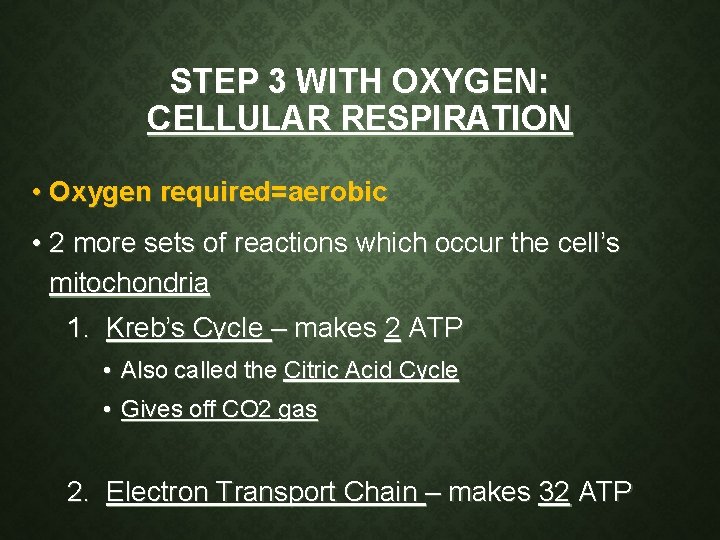
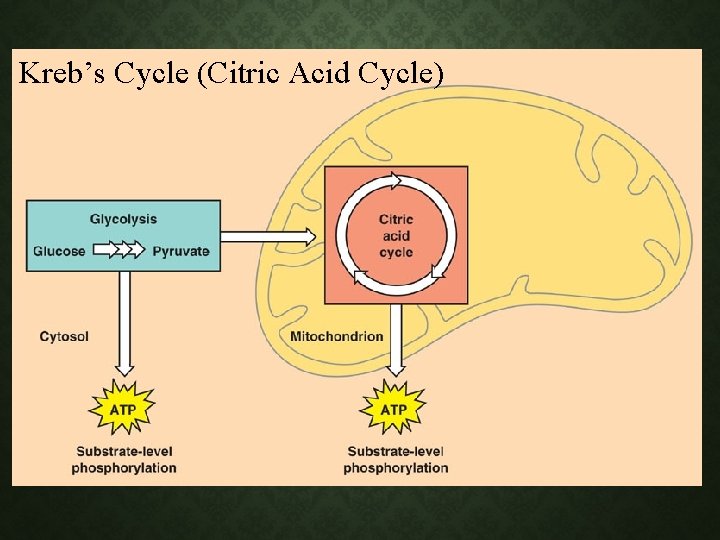
STEP 3 WITH OXYGEN: CELLULAR RESPIRATION • Oxygen required=aerobic • 2 more sets of reactions which occur the cell’s mitochondria 1. Kreb’s Cycle – makes 2 ATP • Also called the Citric Acid Cycle • Gives off CO 2 gas 2. Electron Transport Chain – makes 32 ATP
Kreb’s Cycle (Citric Acid Cycle)
STEP 3 WITHOUT OXYGEN: FERMENTATION • The cell must recycle the materials from glycolysis. (that is pyruvate) • This recycling process is called fermentation. • The product of fermentation is alcohol.
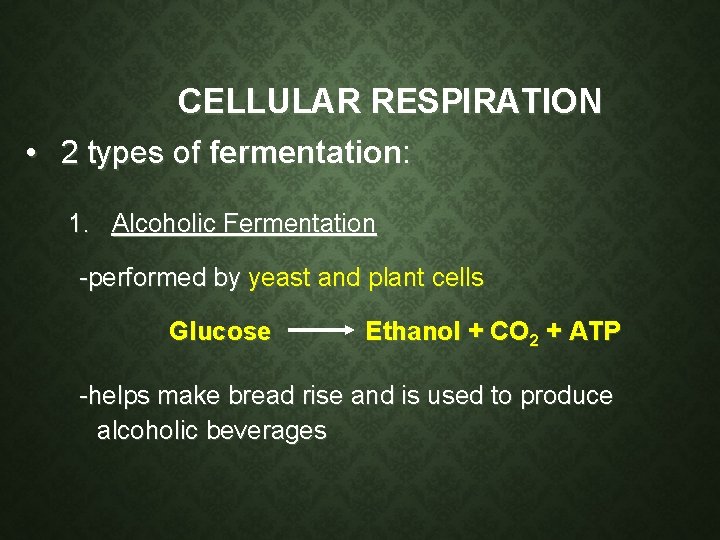
CELLULAR RESPIRATION • 2 types of fermentation: 1. Alcoholic Fermentation -performed by yeast and plant cells Glucose Ethanol + CO 2 + ATP -helps make bread rise and is used to produce alcoholic beverages
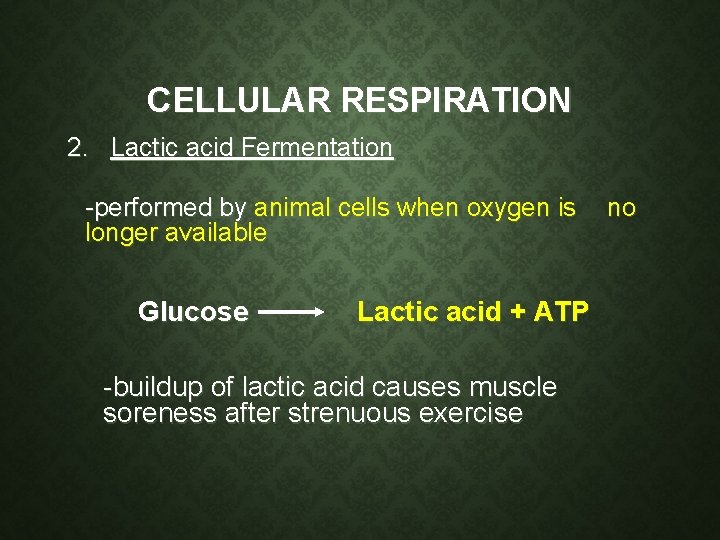
CELLULAR RESPIRATION 2. Lactic acid Fermentation -performed by animal cells when oxygen is no longer available Glucose Lactic acid + ATP -buildup of lactic acid causes muscle soreness after strenuous exercise
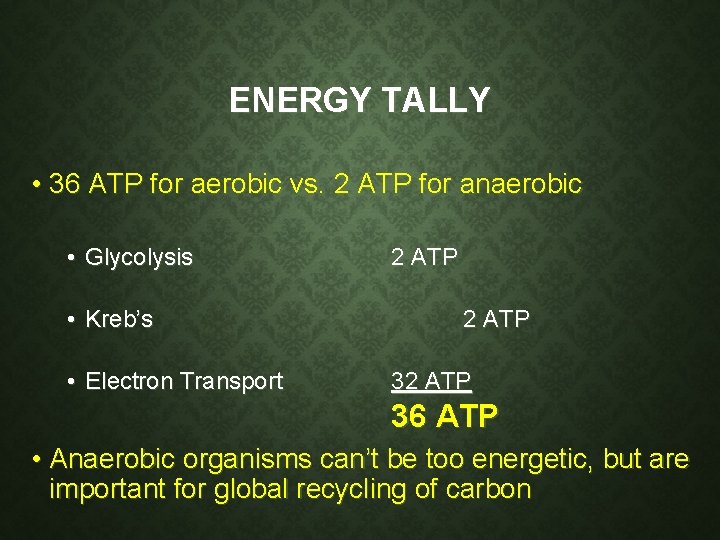
ENERGY TALLY • 36 ATP for aerobic vs. 2 ATP for anaerobic • Glycolysis • Kreb’s • Electron Transport 2 ATP 32 ATP 36 ATP • Anaerobic organisms can’t be too energetic, but are important for global recycling of carbon
CONNECT TO PAST INFO… • What kind of carb do we STORE energy as?
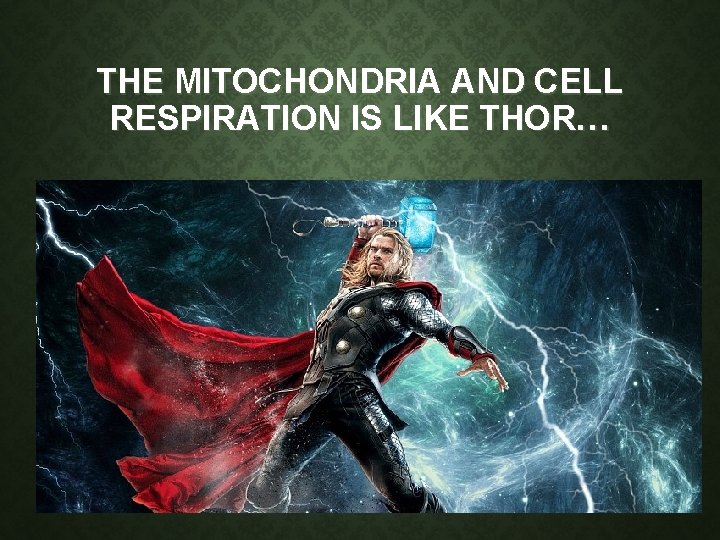
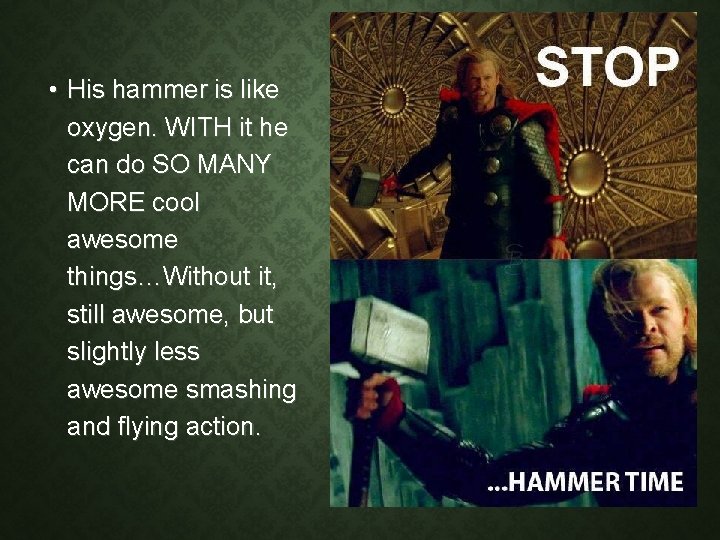
THE MITOCHONDRIA AND CELL RESPIRATION IS LIKE THOR…
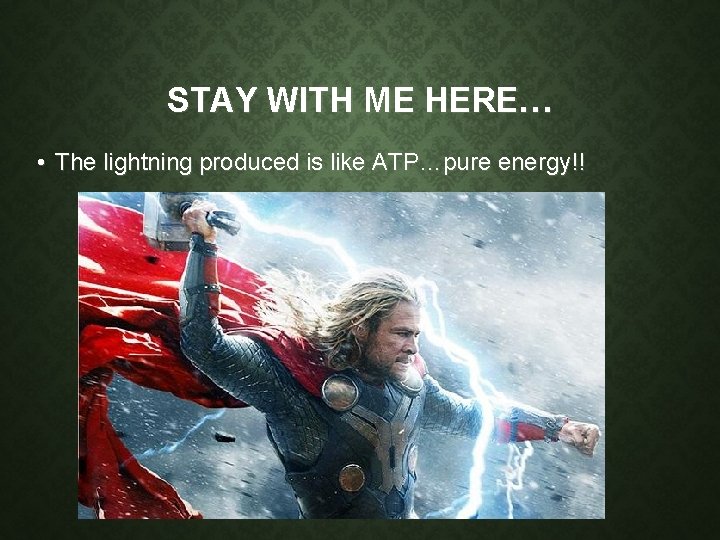
STAY WITH ME HERE… • The lightning produced is like ATP…pure energy!!
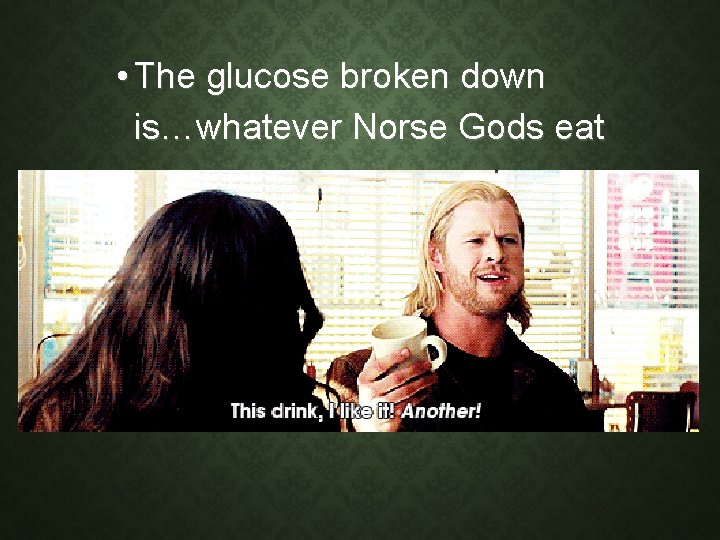
• The glucose broken down is…whatever Norse Gods eat
• His hammer is like oxygen. WITH it he can do SO MANY MORE cool awesome things…Without it, still awesome, but slightly less awesome smashing and flying action.
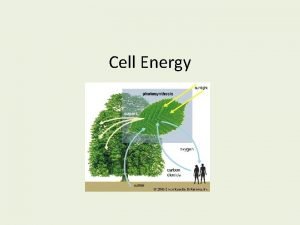
PHOTOSYNTHESIS • Almost all life on Earth depends on food made by autotrophs through the process of photosynthesis Sunlight is the major source of energy for life on Earth
PHOTOSYNTHESIS The definition: A process in which light energy, water and carbon dioxide are used to create glucose for energy. Photo= light Synthesis= to make All of life stems from this reaction!
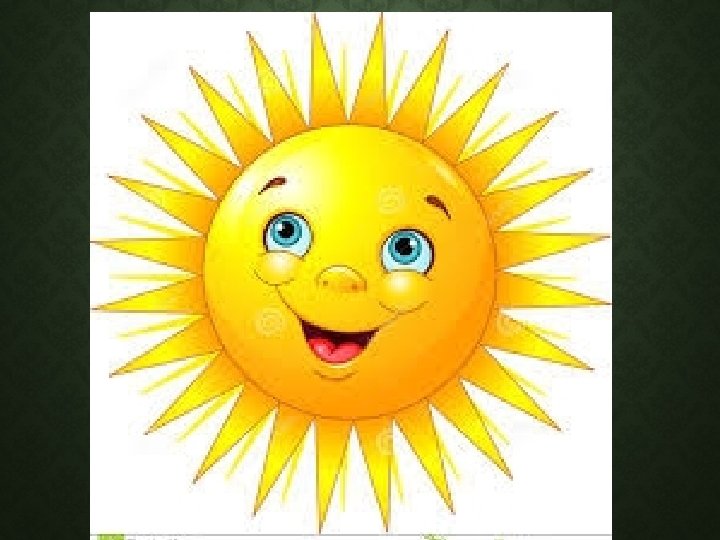
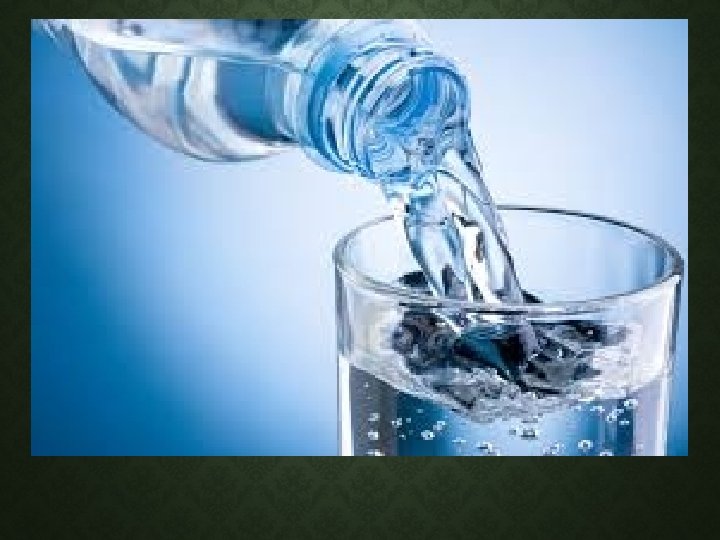
WHAT DO TREES/PLANTS NEED? ?
WHAT DO THEY GIVE OFF/MAKE?
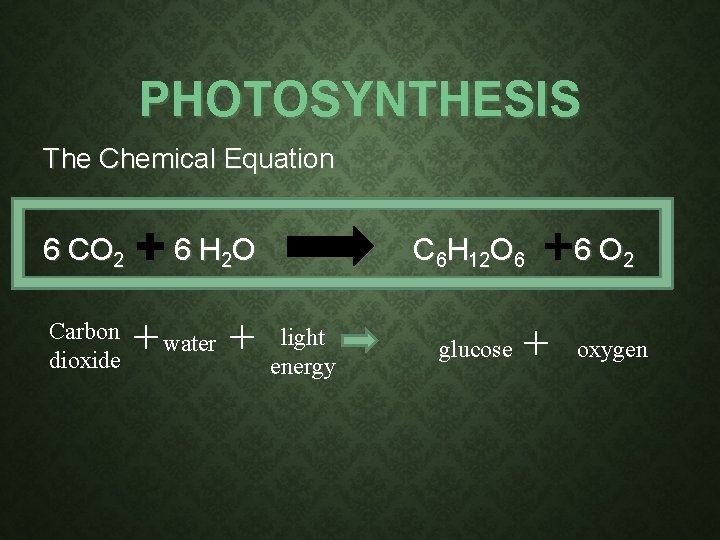
PHOTOSYNTHESIS The Chemical Equation 6 CO 2 6 H 2 O C 6 H 12 O 6 6 O 2 Carbon dioxide + water + light energy glucose + oxygen
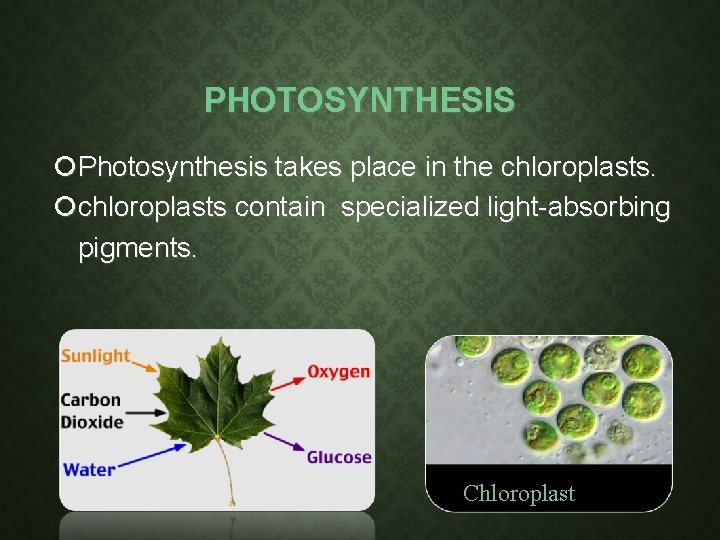
PHOTOSYNTHESIS Photosynthesis takes place in the chloroplasts contain specialized light-absorbing pigments. Chloroplast
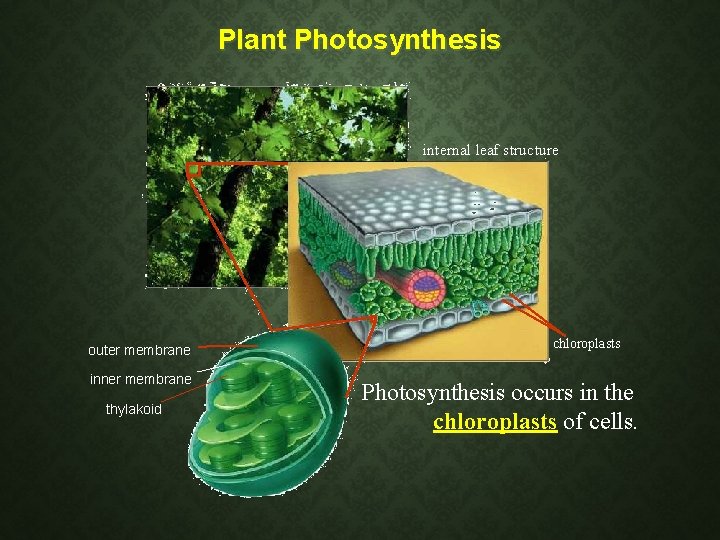
Plant Photosynthesis internal leaf structure outer membrane inner membrane thylakoid chloroplasts Photosynthesis occurs in the chloroplasts of cells.
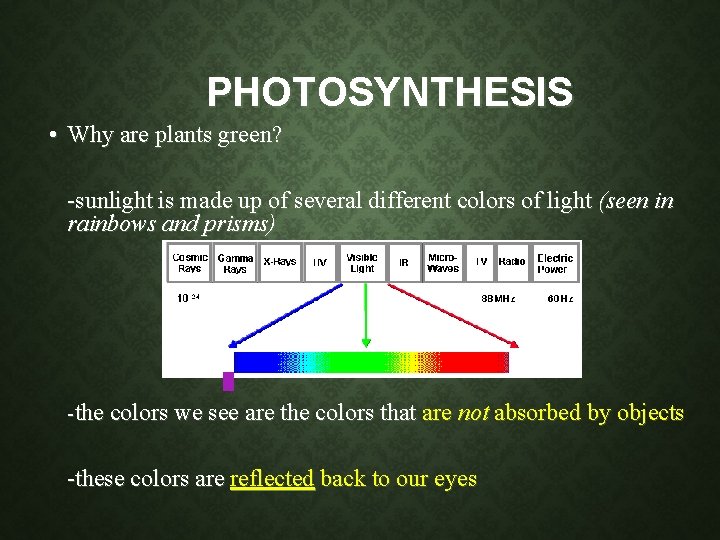
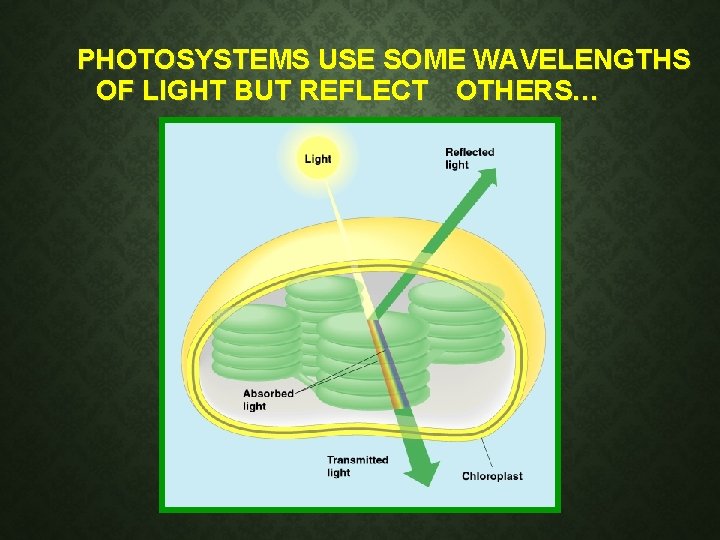
PHOTOSYNTHESIS • Why are plants green? -sunlight is made up of several different colors of light (seen in rainbows and prisms) -the colors we see are the colors that are not absorbed by objects -these colors are reflected back to our eyes
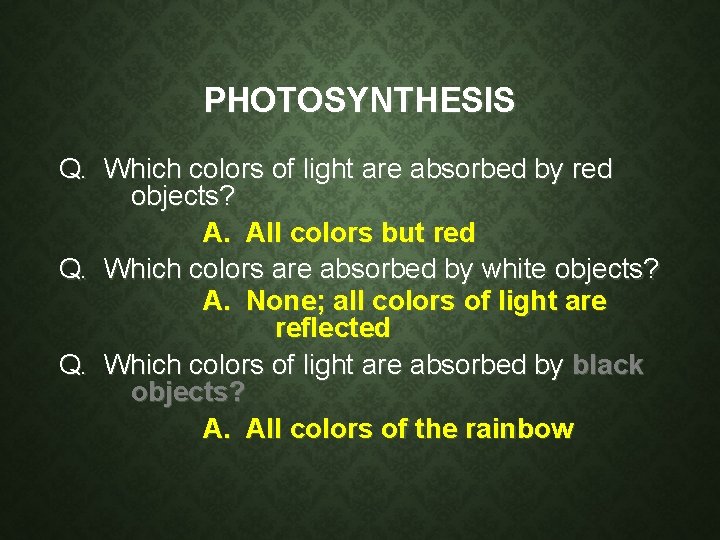
PHOTOSYNTHESIS Q. Which colors of light are absorbed by red objects? A. All colors but red Q. Which colors are absorbed by white objects? A. None; all colors of light are reflected Q. Which colors of light are absorbed by black objects? A. All colors of the rainbow
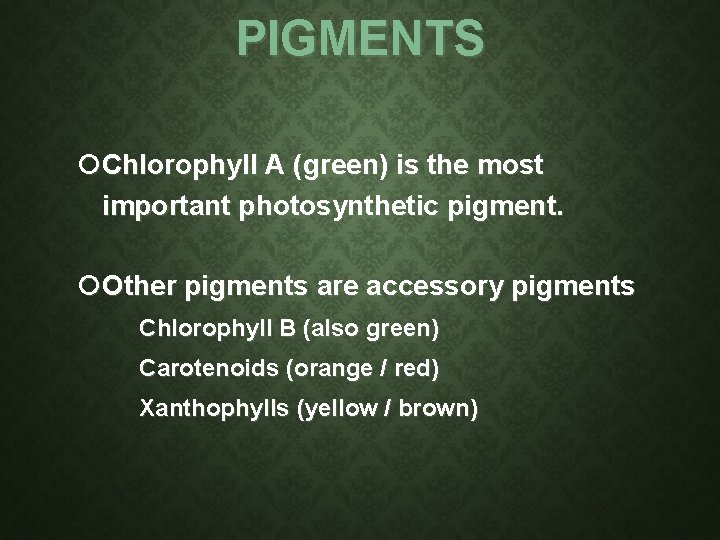
PIGMENTS Chlorophyll A (green) is the most important photosynthetic pigment. Other pigments are accessory pigments Chlorophyll B (also green) Carotenoids (orange / red) Xanthophylls (yellow / brown)
WHERE IS CHLOROPHYLL?
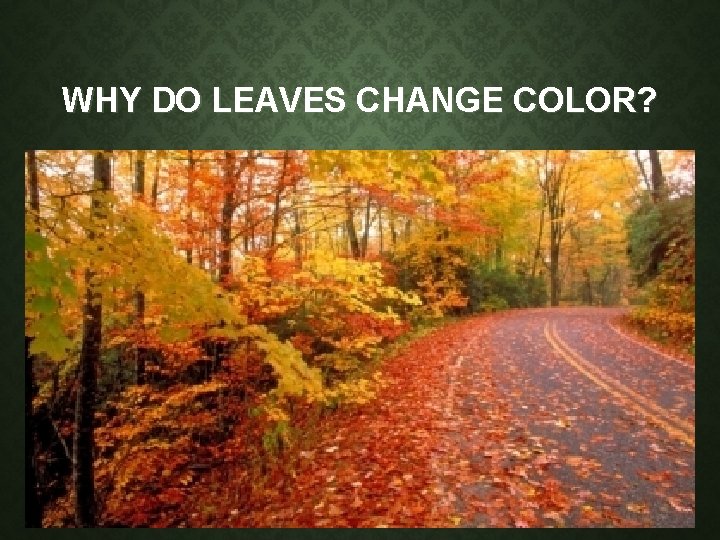
WHY DO LEAVES CHANGE COLOR?
WHY DO TREES DROP THEIR LEAVES?
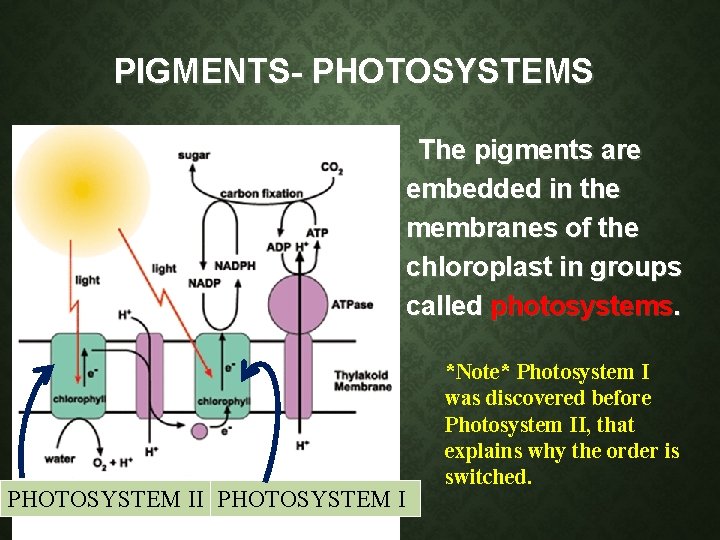
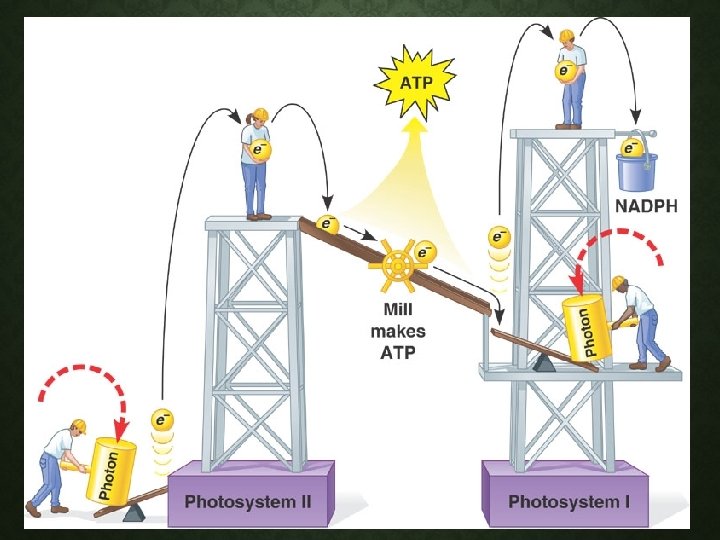
PIGMENTS- PHOTOSYSTEMS The pigments are embedded in the membranes of the chloroplast in groups called photosystems. PHOTOSYSTEM II PHOTOSYSTEM I *Note* Photosystem I was discovered before Photosystem II, that explains why the order is switched.
PHOTOSYSTEMS USE SOME WAVELENGTHS OF LIGHT BUT REFLECT OTHERS…
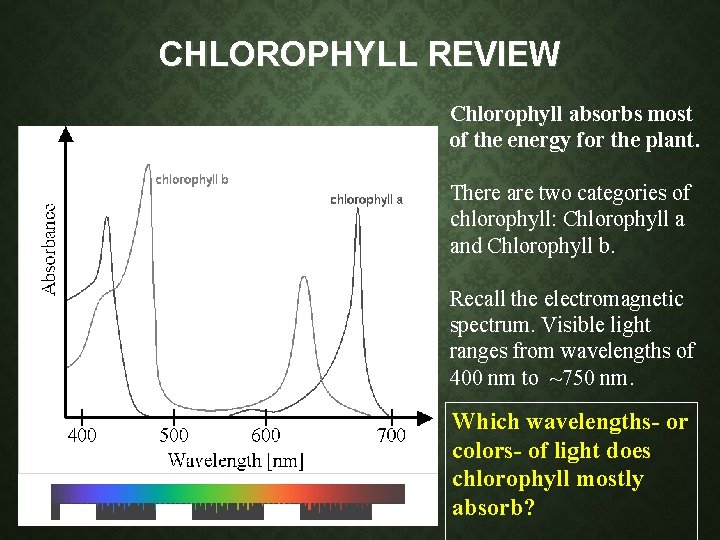
CHLOROPHYLL REVIEW Chlorophyll absorbs most of the energy for the plant. There are two categories of chlorophyll: Chlorophyll a and Chlorophyll b. Recall the electromagnetic spectrum. Visible light ranges from wavelengths of 400 nm to ~750 nm. 400 500 600 700 Which wavelengths- or colors- of light does chlorophyll mostly absorb?
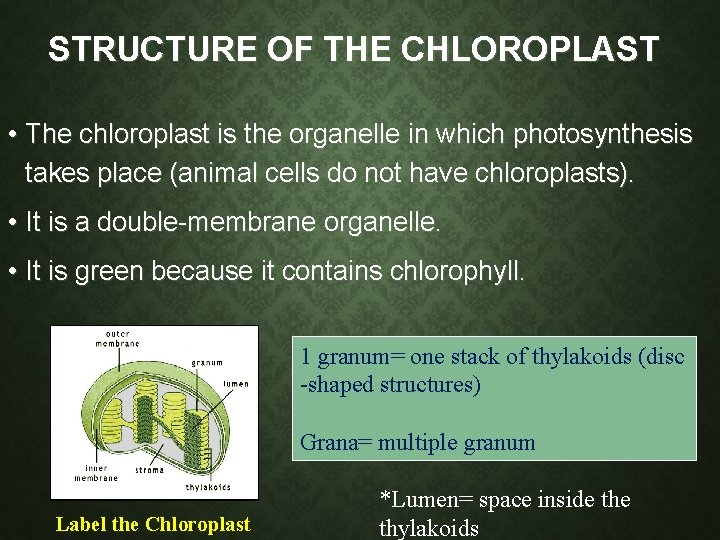
STRUCTURE OF THE CHLOROPLAST • The chloroplast is the organelle in which photosynthesis takes place (animal cells do not have chloroplasts). • It is a double-membrane organelle. • It is green because it contains chlorophyll. 1 granum= one stack of thylakoids (disc -shaped structures) Grana= multiple granum Label the Chloroplast *Lumen= space inside thylakoids
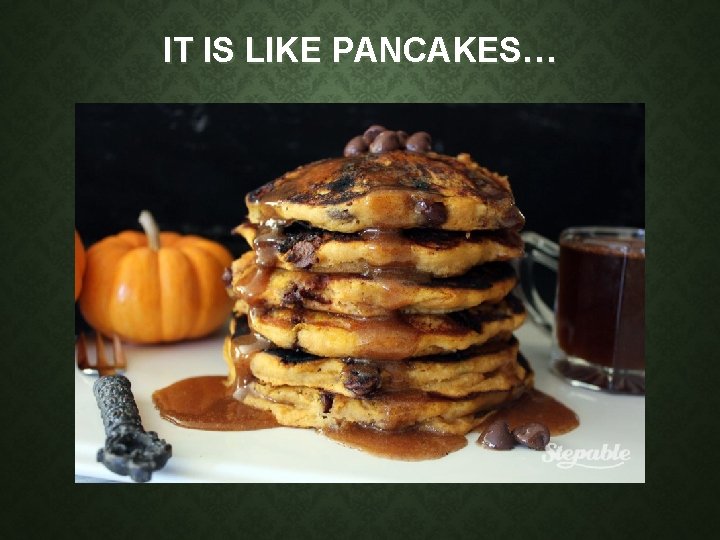
IT IS LIKE PANCAKES…
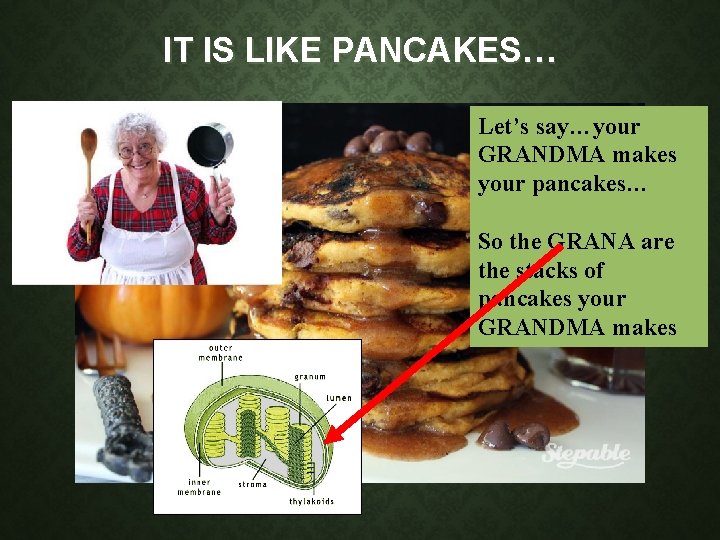
IT IS LIKE PANCAKES… Let’s say…your GRANDMA makes your pancakes… So the GRANA are the stacks of pancakes your GRANDMA makes
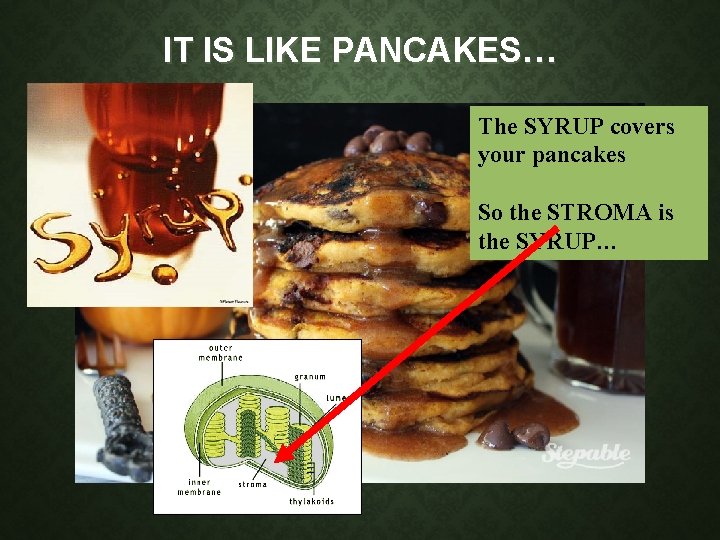
IT IS LIKE PANCAKES… The SYRUP covers your pancakes So the STROMA is the SYRUP…
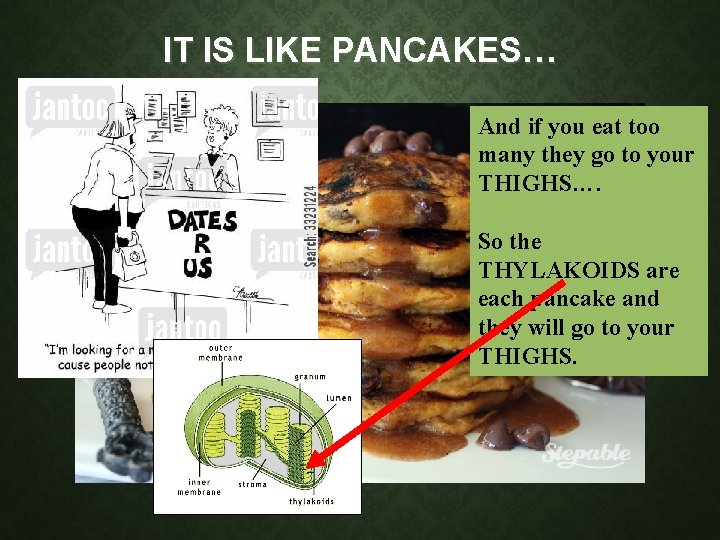
IT IS LIKE PANCAKES… And if you eat too many they go to your THIGHS…. So the THYLAKOIDS are each pancake and they will go to your THIGHS.
PHOTOSYNTHESIS: THE CHEMICAL PROCESS • Light reactions are the “photo” part of photosynthesis. Light is absorbed by pigments. • Dark reactions are the “synthesis” part of photosynthesis. Trapped energy from the sun is converted to the chemical energy of sugars.
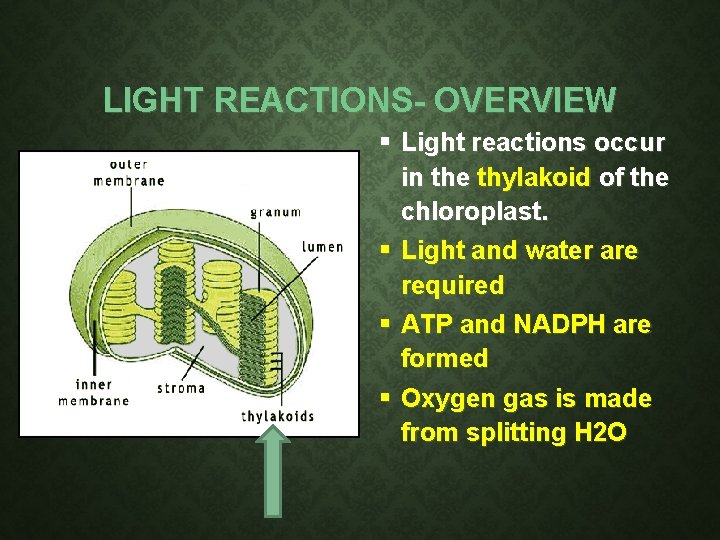
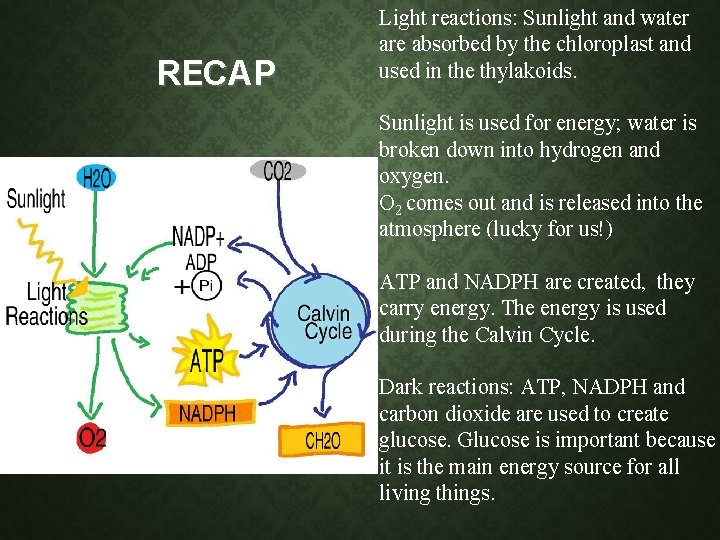
LIGHT REACTIONS- OVERVIEW Light reactions occur in the thylakoid of the chloroplast. Light and water are required ATP and NADPH are formed Oxygen gas is made from splitting H 2 O
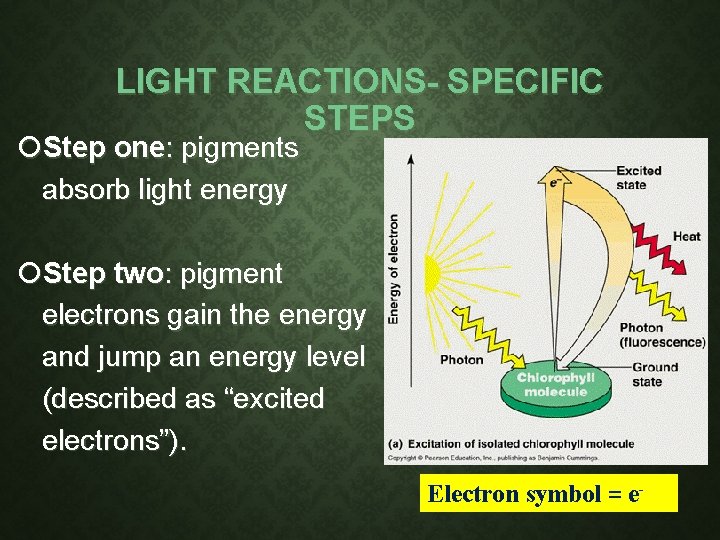
LIGHT REACTIONS- SPECIFIC STEPS Step one: pigments absorb light energy Step two: pigment electrons gain the energy and jump an energy level (described as “excited electrons”). Electron symbol = e-
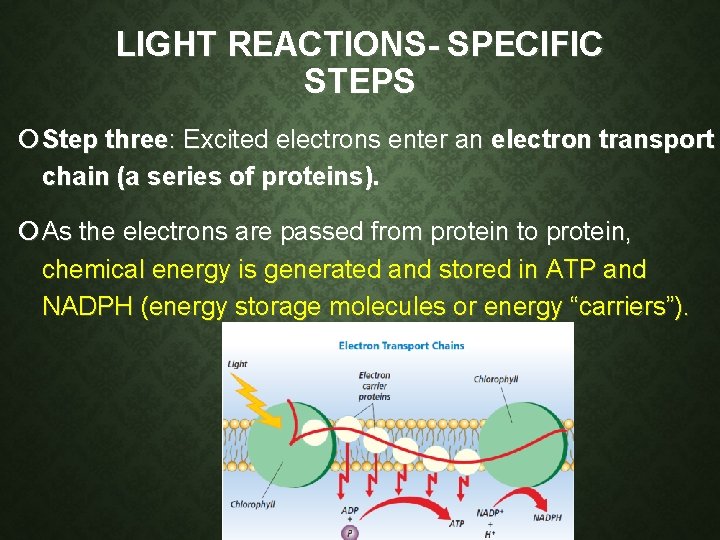
LIGHT REACTIONS- SPECIFIC STEPS Step three: Excited electrons enter an electron transport chain (a series of proteins). As the electrons are passed from protein to protein, chemical energy is generated and stored in ATP and NADPH (energy storage molecules or energy “carriers”).
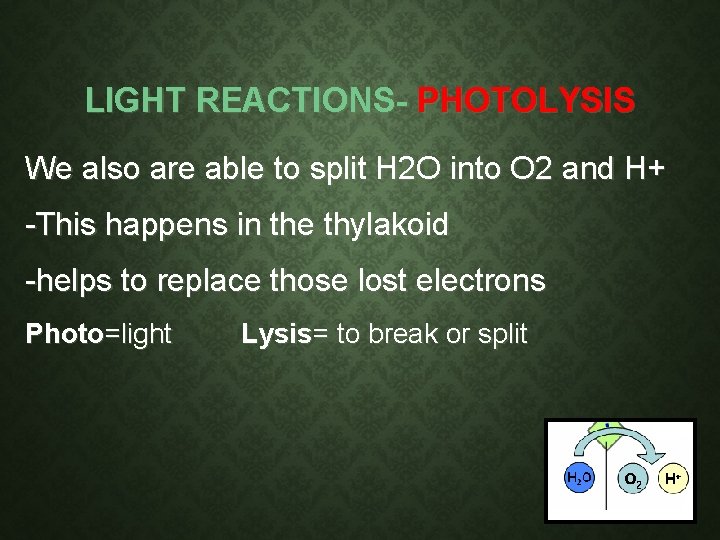
LIGHT REACTIONS- PHOTOLYSIS We also are able to split H 2 O into O 2 and H+ -This happens in the thylakoid -helps to replace those lost electrons Photo=light Lysis= to break or split
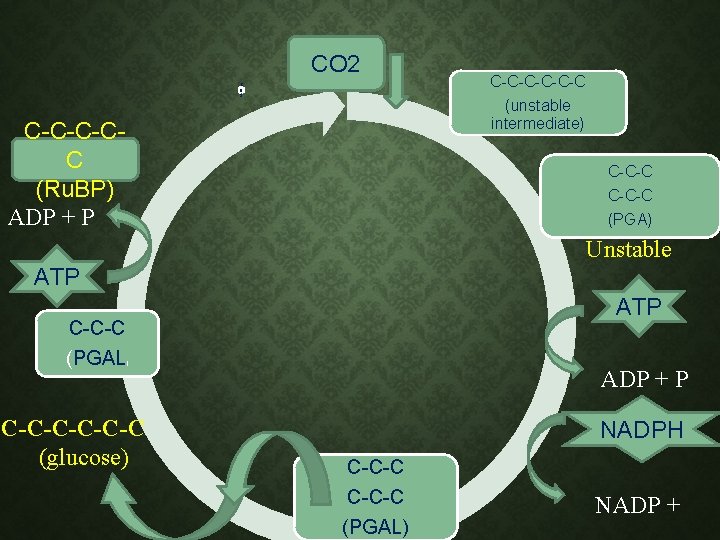
DARK REACTIONS- OVERVIEW Dark reactions (lightindependent) occur in the stroma. Carbon dioxide is “fixed” into the sugar glucose in a process known as carbon fixation ATP and NADPH molecules created during the light reactions power the production of glucose.
CO 2 C-C-C-C C O 2 (unstable intermediate) C-C-C-CC (Ru. BP) ADP + P C-C-C (PGA) Unstable ATP C-C-C (PGAL ATP ) C-C-C-C (glucose) ADP + P NADPH C-C-C (PGAL) NADP +
RECAP Light reactions: Sunlight and water are absorbed by the chloroplast and used in the thylakoids. Sunlight is used for energy; water is broken down into hydrogen and oxygen. O 2 comes out and is released into the atmosphere (lucky for us!) ATP and NADPH are created, they carry energy. The energy is used during the Calvin Cycle. Dark reactions: ATP, NADPH and carbon dioxide are used to create glucose. Glucose is important because it is the main energy source for all living things.
FACTORS THAT AFFECT PHOTOSYNTHESIS Sunlight- the amount of sunlight available and the color of the light (plants do not use green light- they reflect it). Temperature- As temperature increases, photosynthesis will increase but only up to a certain point (higher temperature mean higher rate of transpiration [water loss]). Availability of water and carbon dioxide.
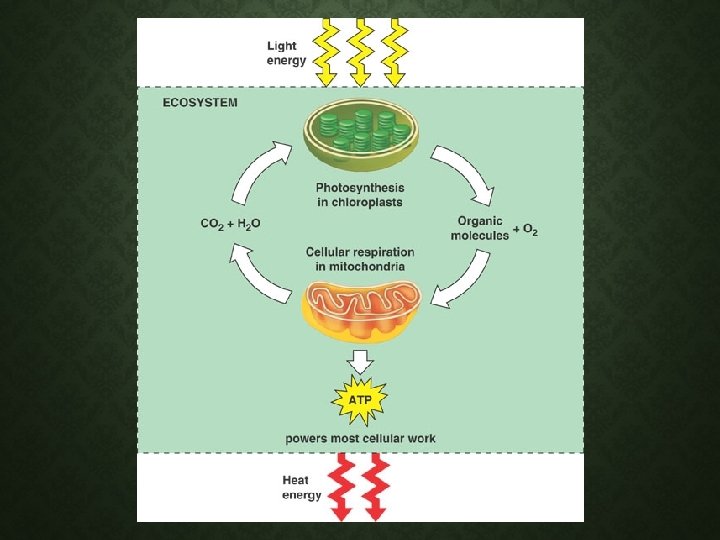
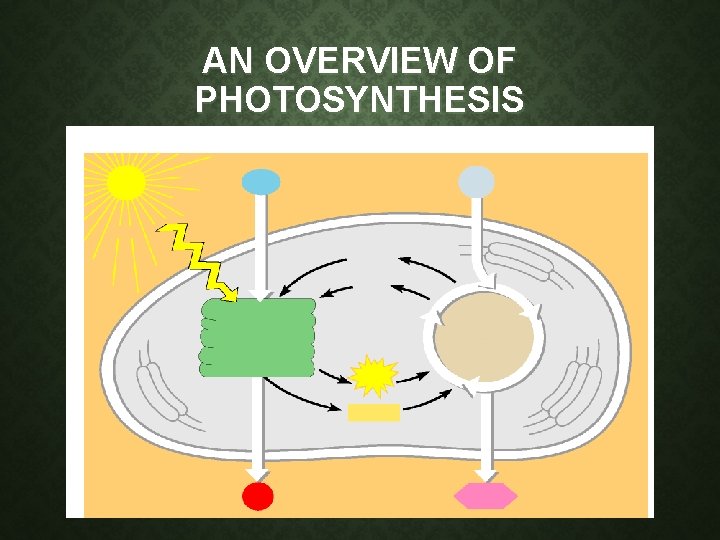
AN OVERVIEW OF PHOTOSYNTHESIS
RESPIRATION VS. PHOTOSYNTHESIS