
Do Now copy the summary below filling in
Do Now – copy the summary below filling in the blanks with the correct terms. Photosynthesis is a process that changes light energy into chemical energy. Photosynthesis occurs in the chloroplast of plant cells and needs CO 2, H 2 O, and sunlight to occur. Aerobic respiration, a process that uses oxygen, and anaerobic respiration, a process that doesn't use oxygen, are two forms of cellular respiration. Most cells use both types depending on an organism's needs. Cellular respiration also occurs outside of macro-organisms, as chemical processes — for example, in fermentation. In general, respiration is used to eliminate waste products and generate energy.
Homework and Announcements USA Test Prep Study for test (Monday) Read / Notes chapter 33. 1 and 33. 2 Notebook Check on Monday Vocabulary Review Stoma – define and function Chloroplast – define and function Guard cell Cohesion vs Adhesion Capillary Action – plants Calvin Cycle Glycolysis Krebs Cycle ETC ATP and ADP
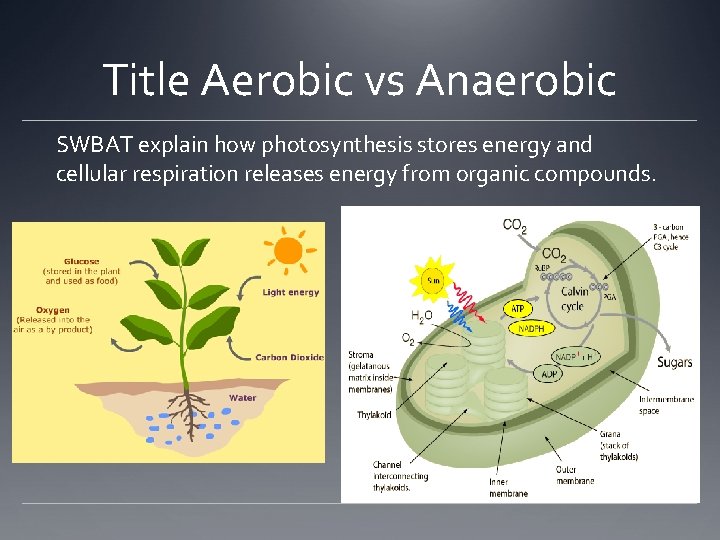
Title Aerobic vs Anaerobic SWBAT explain how photosynthesis stores energy and cellular respiration releases energy from organic compounds.
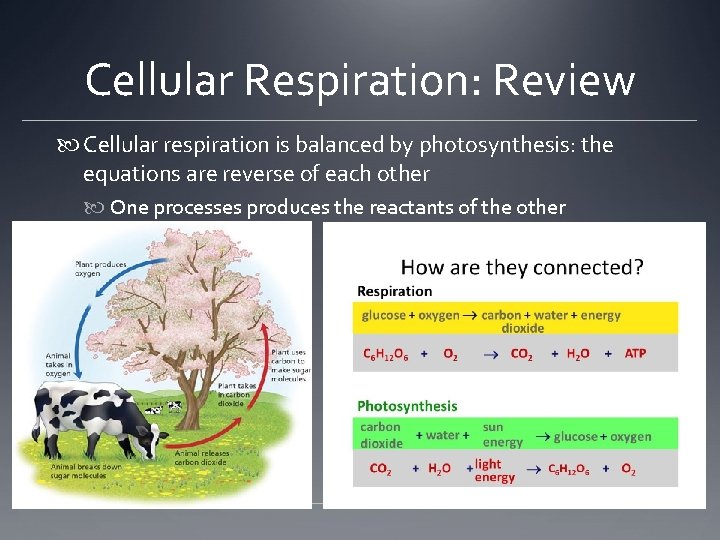
Cellular Respiration: Review Cellular respiration is balanced by photosynthesis: the equations are reverse of each other One processes produces the reactants of the other
Cellular Respiration: Review Aerobic Anaerobic Requires oxygen Doesn’t require oxygen Ex: Electron Transport Chain Ex: Fermentation ** Glycolysis & Krebs don’t DIRECTLY use oxygen, but are involved with products/reactants of oxygen

Venn Diagram – Cellular Respiration Aerobic Reactant Glucose & Oxygen A cell can extract 34 ATP using the Krebs cycle, and ETC) Both Anaerobic Occur in cytoplasm and mitochondria of cell Reactants Glucose & NAD+ (electron acceptor) Products CO 2, C 6 H 12 O 6 A cell can extract 2 ATP from 1 molecule of glucose (product of glycolysis) Glycolysis + Krebs Cycle + ETC = 36 ATP Human body cells produce lactic acid fermentation for quick energy
ATP and Respiration
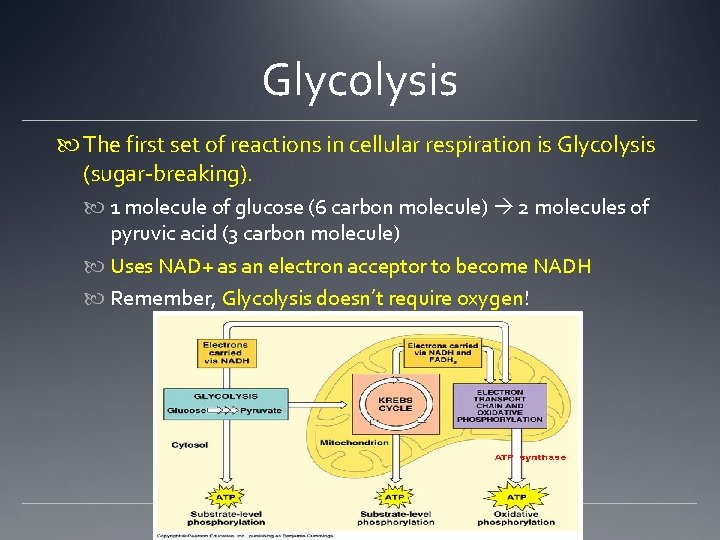
Glycolysis The first set of reactions in cellular respiration is Glycolysis (sugar-breaking). 1 molecule of glucose (6 carbon molecule) 2 molecules of pyruvic acid (3 carbon molecule) Uses NAD+ as an electron acceptor to become NADH Remember, Glycolysis doesn’t require oxygen!
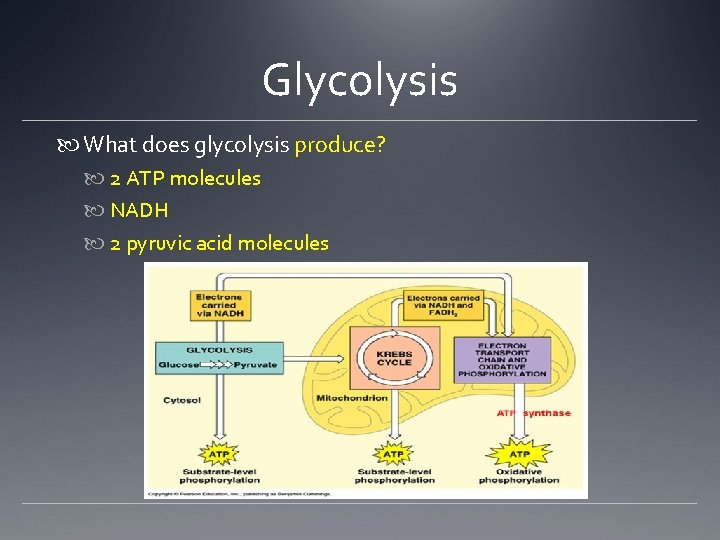
Glycolysis What does glycolysis produce? 2 ATP molecules NADH 2 pyruvic acid molecules
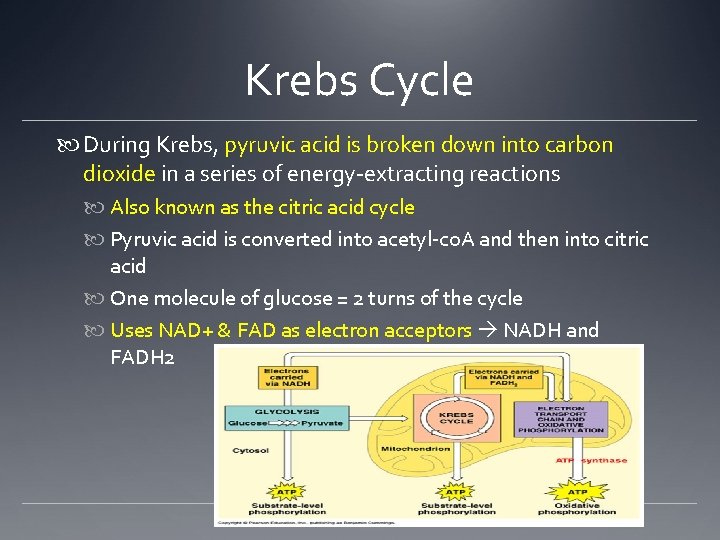
Krebs Cycle During Krebs, pyruvic acid is broken down into carbon dioxide in a series of energy-extracting reactions Also known as the citric acid cycle Pyruvic acid is converted into acetyl-co. A and then into citric acid One molecule of glucose = 2 turns of the cycle Uses NAD+ & FAD as electron acceptors NADH and FADH 2
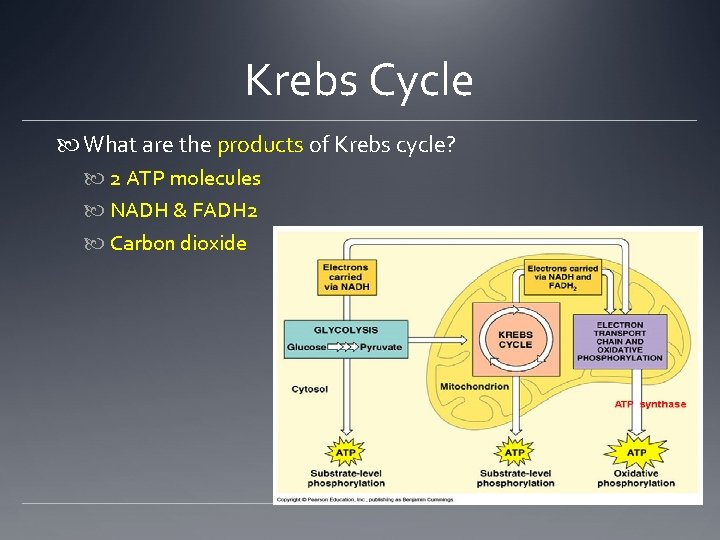
Krebs Cycle What are the products of Krebs cycle? 2 ATP molecules NADH & FADH 2 Carbon dioxide
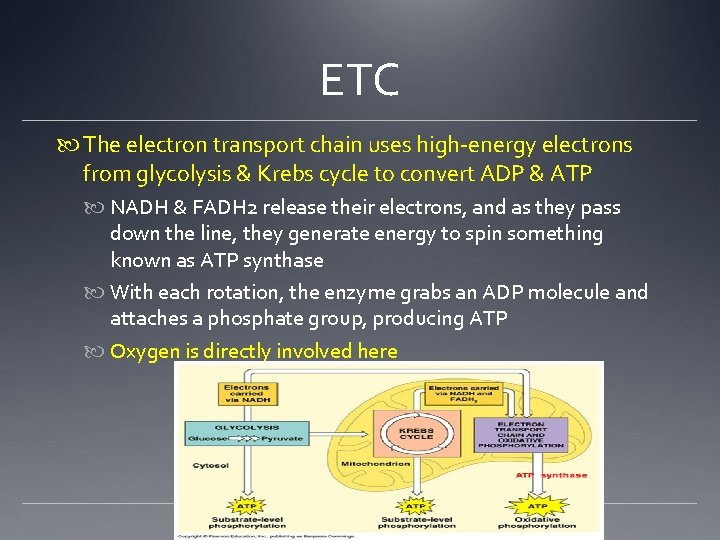
ETC The electron transport chain uses high-energy electrons from glycolysis & Krebs cycle to convert ADP & ATP NADH & FADH 2 release their electrons, and as they pass down the line, they generate energy to spin something known as ATP synthase With each rotation, the enzyme grabs an ADP molecule and attaches a phosphate group, producing ATP Oxygen is directly involved here
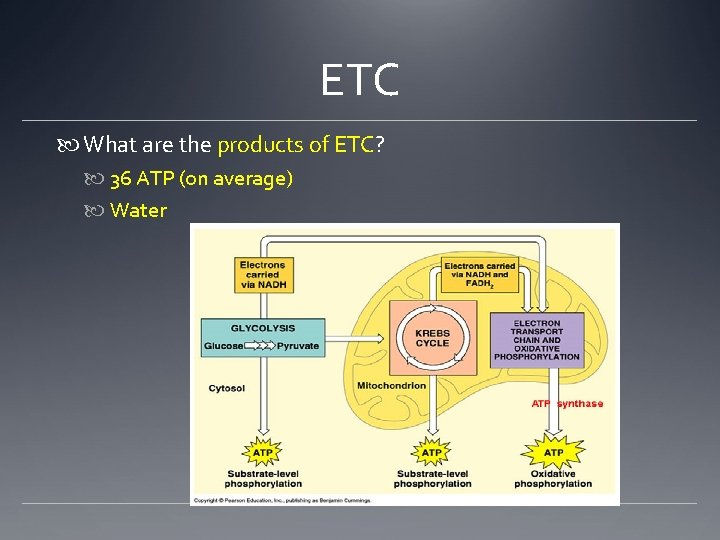
ETC What are the products of ETC? 36 ATP (on average) Water
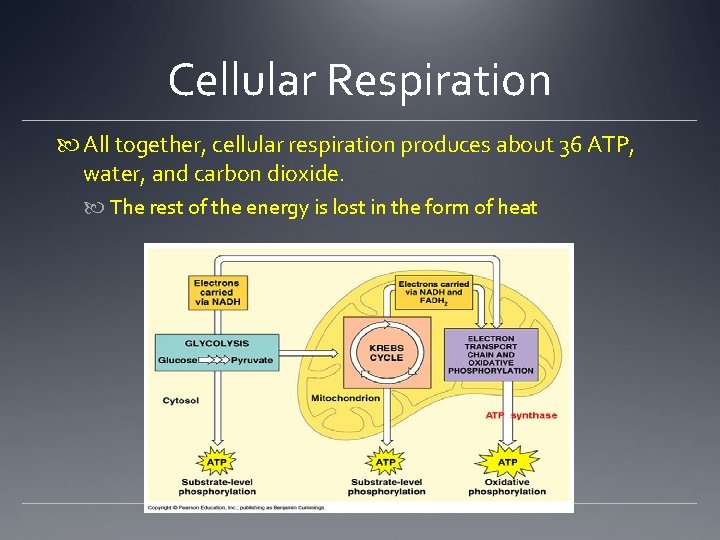
Cellular Respiration All together, cellular respiration produces about 36 ATP, water, and carbon dioxide. The rest of the energy is lost in the form of heat
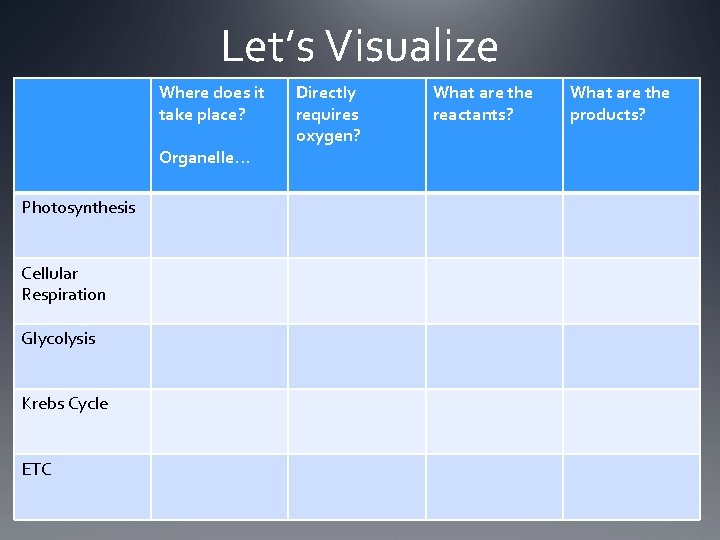
Let’s Visualize Where does it take place? Organelle… Photosynthesis Cellular Respiration Glycolysis Krebs Cycle ETC Directly requires oxygen? What are the reactants? What are the products?
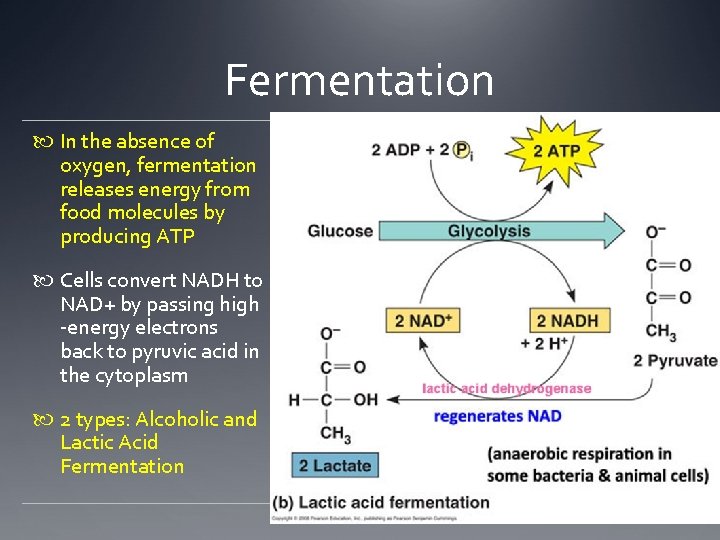
Fermentation In the absence of oxygen, fermentation releases energy from food molecules by producing ATP Cells convert NADH to NAD+ by passing high -energy electrons back to pyruvic acid in the cytoplasm 2 types: Alcoholic and Lactic Acid Fermentation
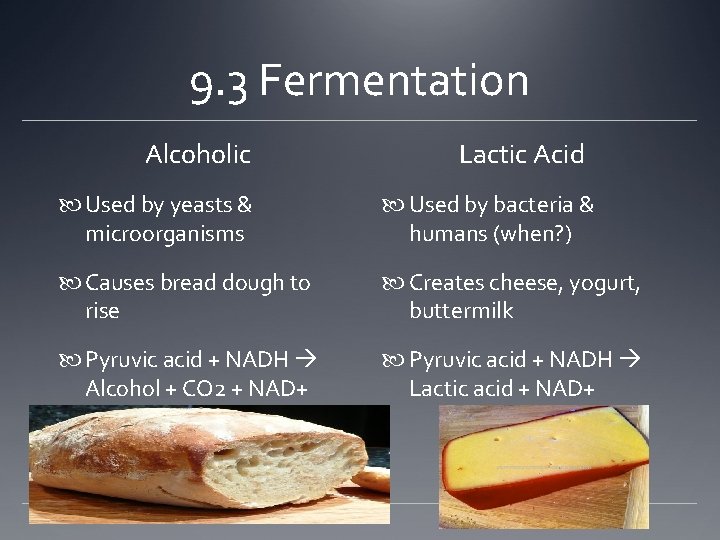
9. 3 Fermentation Alcoholic Lactic Acid Used by yeasts & microorganisms Used by bacteria & humans (when? ) Causes bread dough to rise Creates cheese, yogurt, buttermilk Pyruvic acid + NADH Alcohol + CO 2 + NAD+ Pyruvic acid + NADH Lactic acid + NAD+
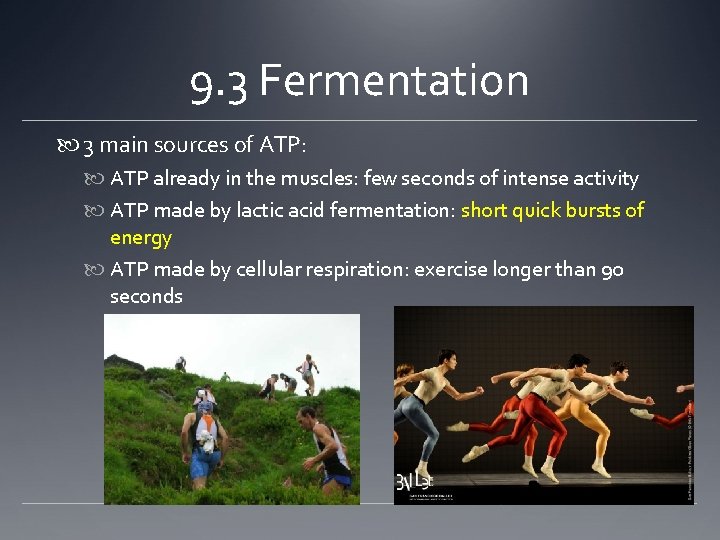
9. 3 Fermentation 3 main sources of ATP: ATP already in the muscles: few seconds of intense activity ATP made by lactic acid fermentation: short quick bursts of energy ATP made by cellular respiration: exercise longer than 90 seconds
Let’s Practice! Study Workbook A – Pg. 94, 97 -99, 104 Work with a buddy, answers only, one sheet of paper

Review Do you know it? Are you ready?
- Slides: 20