Chapter 8 Cellular Energy Section 2 Photosynthesis Section







- Slides: 29
Chapter 8 Cellular Energy Section 2: Photosynthesis Section 3: Cellular Respiration Click on a lesson name to select.
Overview • All energy on earth comes from the sun. • We depend on: – Plants – Algae (underwater plants) – Cyanobacteria (photosynthetic bacteria) • To provide this energy to us! Click on a lesson name to select.
Click on a lesson name to select.
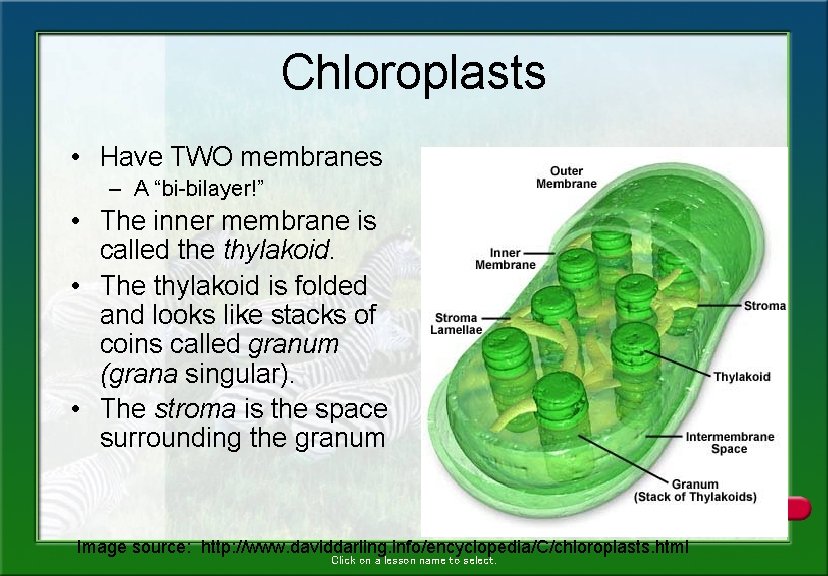
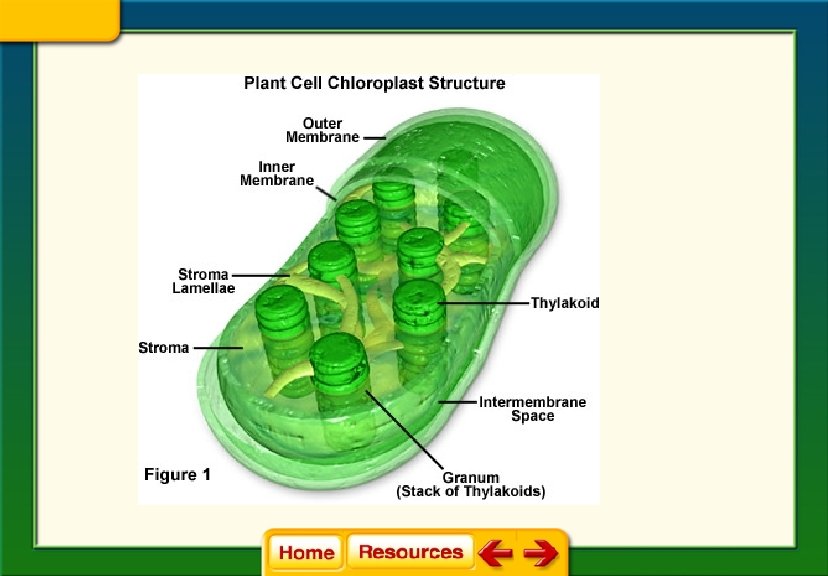
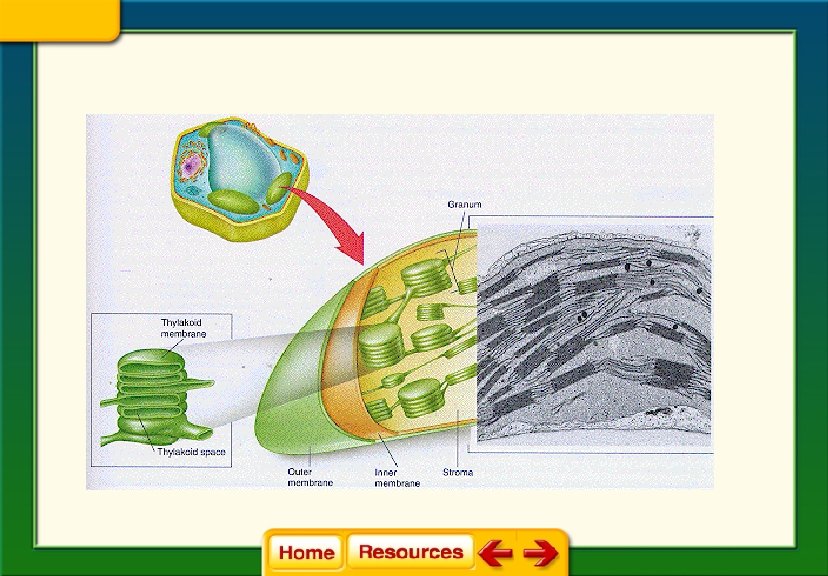
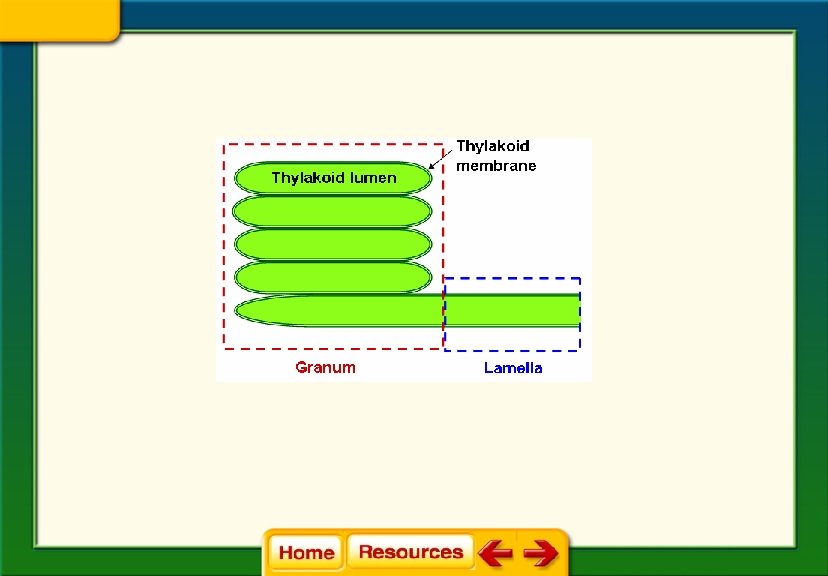
Chloroplasts • Have TWO membranes – A “bi-bilayer!” • The inner membrane is called the thylakoid. • The thylakoid is folded and looks like stacks of coins called granum (grana singular). • The stroma is the space surrounding the granum Image source: http: //www. daviddarling. info/encyclopedia/C/chloroplasts. html Click on a lesson name to select.
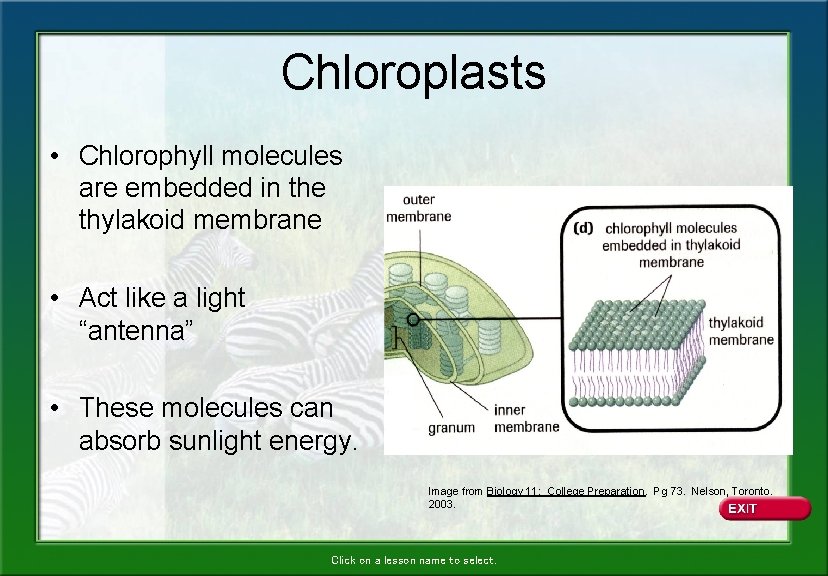
Chloroplasts • Chlorophyll molecules are embedded in the thylakoid membrane • Act like a light “antenna” • These molecules can absorb sunlight energy. Image from Biology 11: College Preparation. Pg 73. Nelson, Toronto. 2003. Click on a lesson name to select.
Chapter 8 Cellular Energy 8. 2 Photosynthesis Overview of Photosynthesis What is it? Video! Video II § Photosynthesis occurs in two phases. § Light-dependent reactions § Light-independent reactions
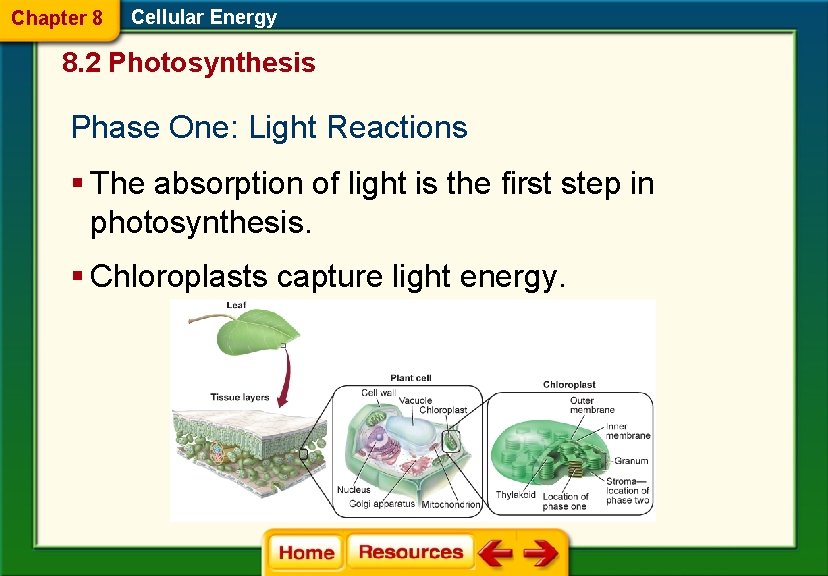
Chapter 8 Cellular Energy 8. 2 Photosynthesis Phase One: Light Reactions § The absorption of light is the first step in photosynthesis. § Chloroplasts capture light energy.
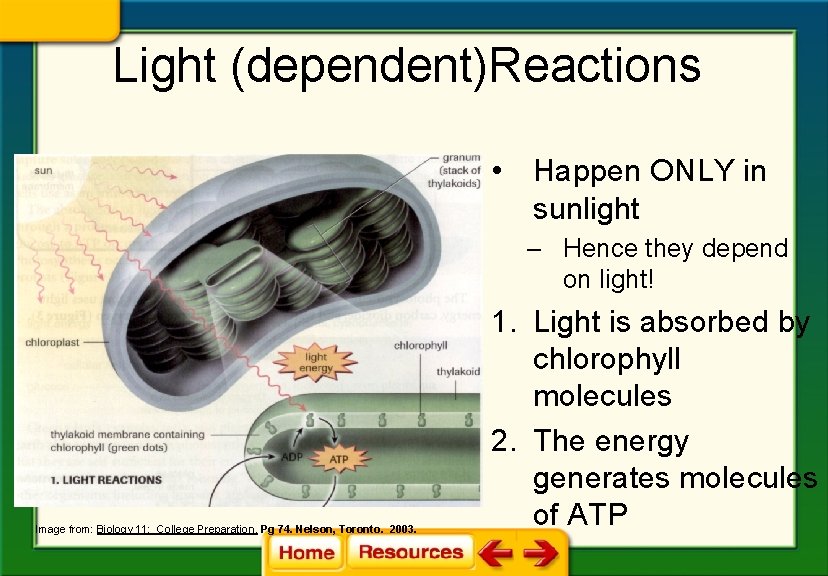
Light (dependent)Reactions • Happen ONLY in sunlight – Hence they depend on light! Image from: Biology 11: College Preparation. Pg 74. Nelson, Toronto. 2003. 1. Light is absorbed by chlorophyll molecules 2. The energy generates molecules of ATP
Chapter 8 Cellular Energy 8. 2 Photosynthesis Electron Transport § Light energy excites electrons in photosystem II § causes a water molecule to split, releasing an electron into the electron transport system, H+ into the thylakoid space, and O 2 as a waste product.
Chapter 8 Cellular Energy 8. 2 Photosynthesis § The excited electrons move from photosystem II to an electron-acceptor molecule in the thylakoid membrane. § The electron-acceptor molecule transfers the electrons along a series of electron-carriers to photosystem I.
Chapter 8 Cellular Energy 8. 2 Photosynthesis § Photosystem I transfers the electrons to a protein called ferrodoxin. § Ferrodoxin transfers the electrons to the electron carrier NADP+, forming the energystoring molecule NADPH.
• Recap Video
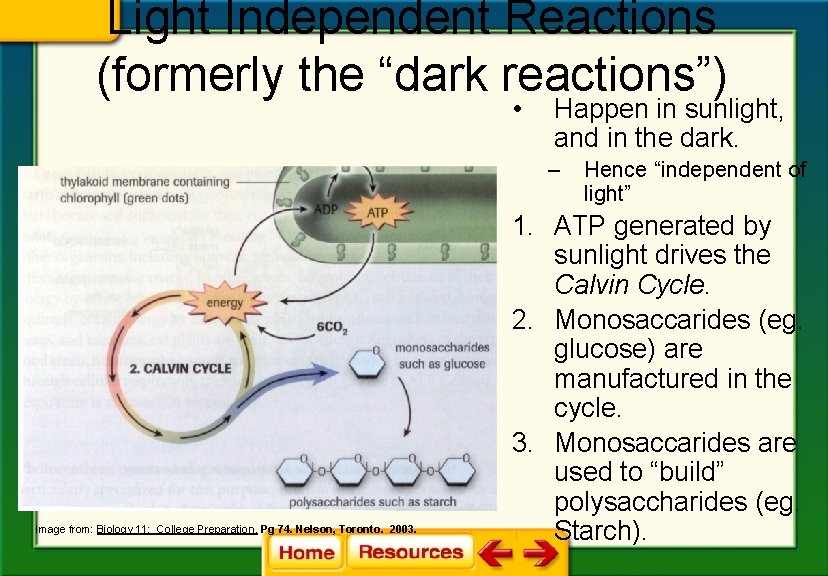
Light Independent Reactions (formerly the “dark reactions”) • Happen in sunlight, and in the dark. – Image from: Biology 11: College Preparation. Pg 74. Nelson, Toronto. 2003. Hence “independent of light” 1. ATP generated by sunlight drives the Calvin Cycle. 2. Monosaccarides (eg. glucose) are manufactured in the cycle. 3. Monosaccarides are used to “build” polysaccharides (eg. Starch).
Chapter 8 Cellular Energy 8. 2 Photosynthesis Phase Two: The Calvin Cycle § In the second phase of photosynthesis, called the Calvin cycle, energy is stored in organic molecules such as glucose.
Chapter 8 Cellular Energy
Chapter 8 Cellular Energy 8. 2 Photosynthesis § Six CO 2 molecules combine with six 5 -carbon compounds to form twelve 3 -carbon molecules called 3 -PGA. § The chemical energy stored in ATP and NADPH is transferred to the 3 -PGA molecules to form high-energy molecules called G 3 P.
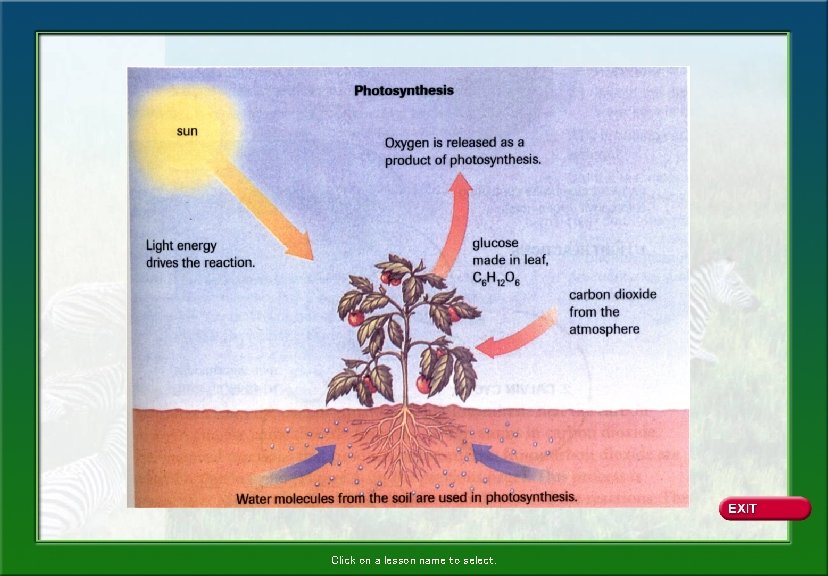
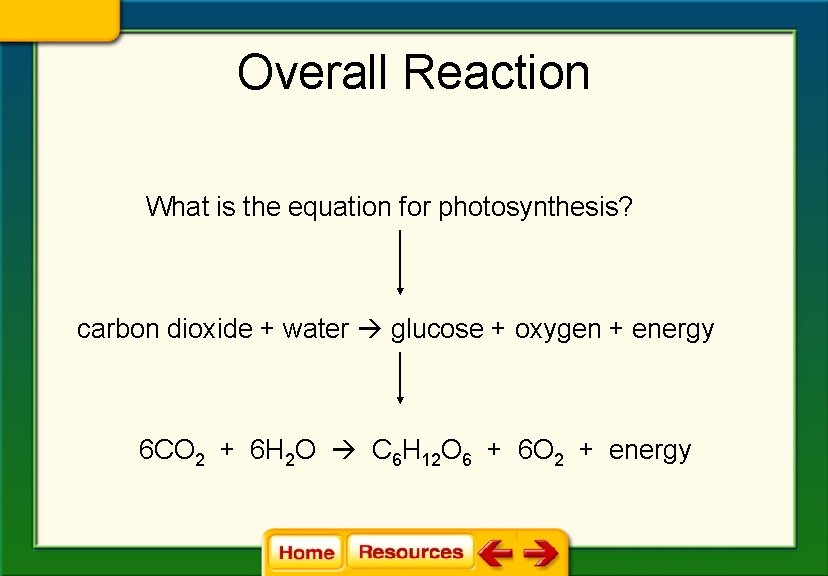
Overall Reaction What is the equation for photosynthesis? carbon dioxide + water glucose + oxygen + energy 6 CO 2 + 6 H 2 O C 6 H 12 O 6 + 6 O 2 + energy
stop
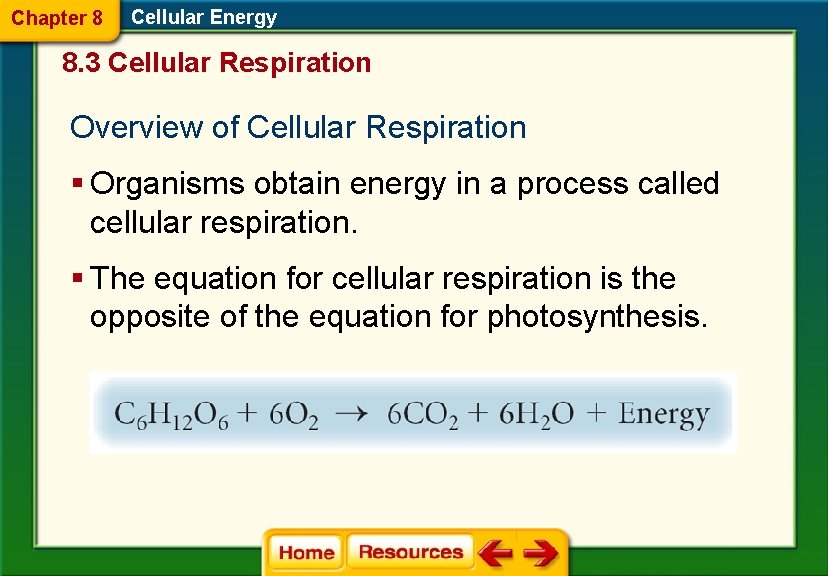
Chapter 8 Cellular Energy 8. 3 Cellular Respiration Overview of Cellular Respiration § Organisms obtain energy in a process called cellular respiration. § The equation for cellular respiration is the opposite of the equation for photosynthesis.
Chapter 8 Cellular Energy 8. 3 Cellular Respiration § Cellular respiration occurs in two main parts. § Glycolysis § Aerobic respiration
Chapter 8 Cellular Energy 8. 3 Cellular Respiration Glycolysis § Glucose is broken down in the cytoplasm through the process of glycolysis. § Two molecules of ATP and two molecules of NADH are formed for each molecule of glucose that is broken down.
Chapter 8 Cellular Energy 8. 3 Cellular Respiration Krebs Cycle § Glycolysis has a net result of two ATP and two pyruvate. § Most of the energy from the glucose is still contained in the pyruvate. § The series of reactions in which pyruvate is broken down into carbon dioxide is called the Krebs cycle.
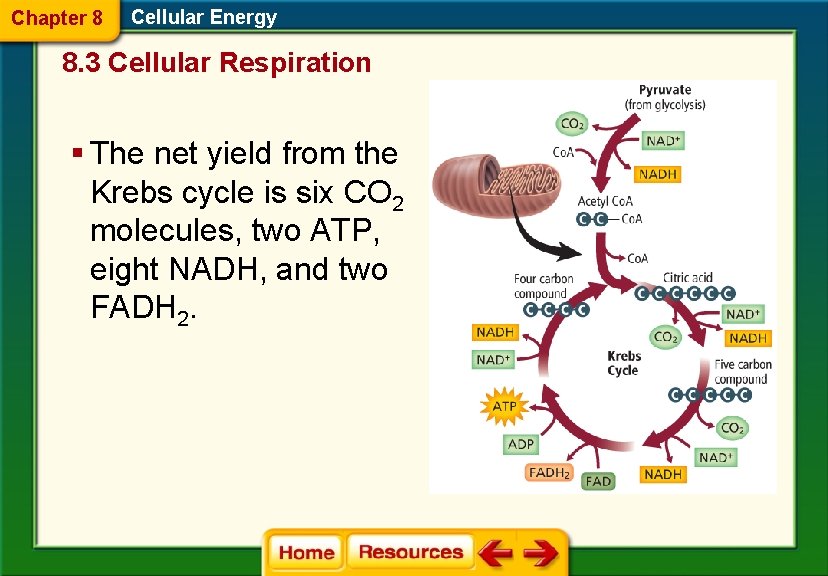
Chapter 8 Cellular Energy 8. 3 Cellular Respiration § The net yield from the Krebs cycle is six CO 2 molecules, two ATP, eight NADH, and two FADH 2.
Chapter 8 Cellular Energy 8. 3 Cellular Respiration Electron Transport § Final step in the breakdown of glucose § Point at which ATP is produced § Produces 24 ATP § Video
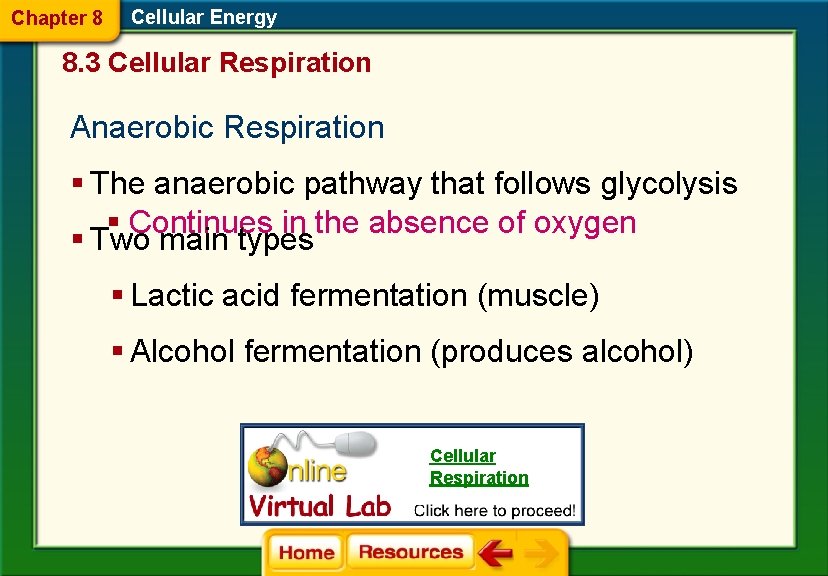
Chapter 8 Cellular Energy 8. 3 Cellular Respiration Anaerobic Respiration § The anaerobic pathway that follows glycolysis § Continues in the absence of oxygen § Two main types § Lactic acid fermentation (muscle) § Alcohol fermentation (produces alcohol) Cellular Respiration