Matter and Change Mrs Coyle Chemistry A Classification




- Slides: 53
Matter and Change Mrs. Coyle Chemistry
A) Classification of Matter
Some Criteria for the Classification of Matter l Properties l State (solid, liquid, gas) l Composition
Properties Intensive -Do not depend on amount of matter. Extensive -Depend on amount of matter.
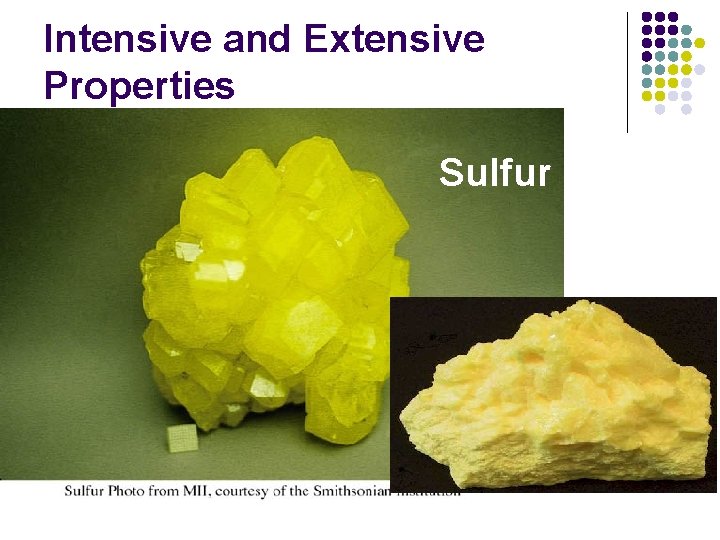
Intensive and Extensive Properties Sulfur
Properties l Physical: observed without changing the composition of the substance. l Chemical: the ability of a substance to undergo a specific chemical change
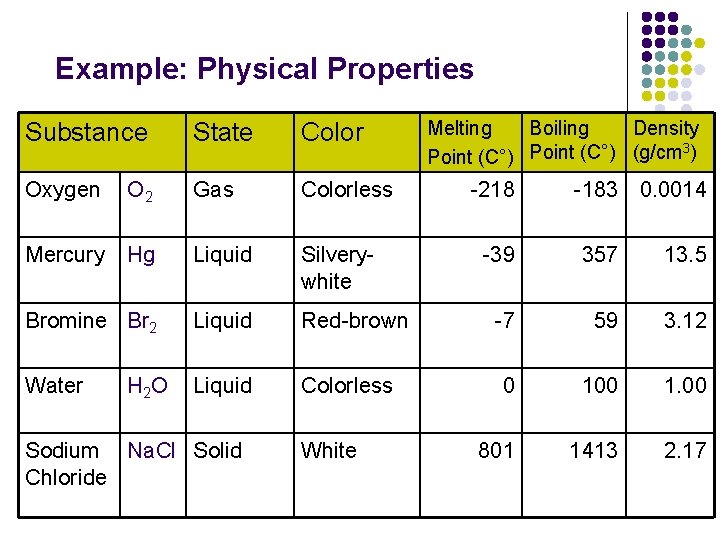
Examples of Physical Properties l Color, odor, hardness, density, melting point, boiling point, state, solubility.
Example: Physical Properties Substance State Color Oxygen O 2 Gas Colorless Mercury Hg Liquid Silverywhite Bromine Br 2 Liquid Red-brown Water Liquid Colorless H 2 O Sodium Na. Cl Solid Chloride White Melting Boiling Density 3 Point (C°) (g/cm ) -218 -183 0. 0014 -39 357 13. 5 -7 59 3. 12 0 100 1. 00 801 1413 2. 17
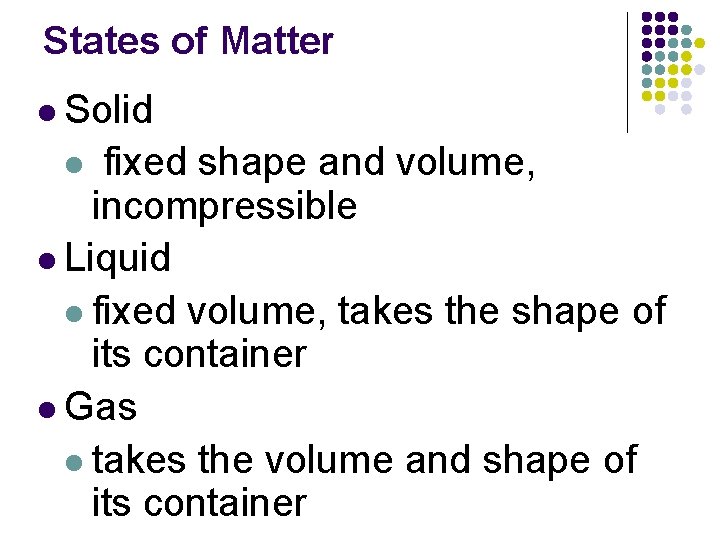
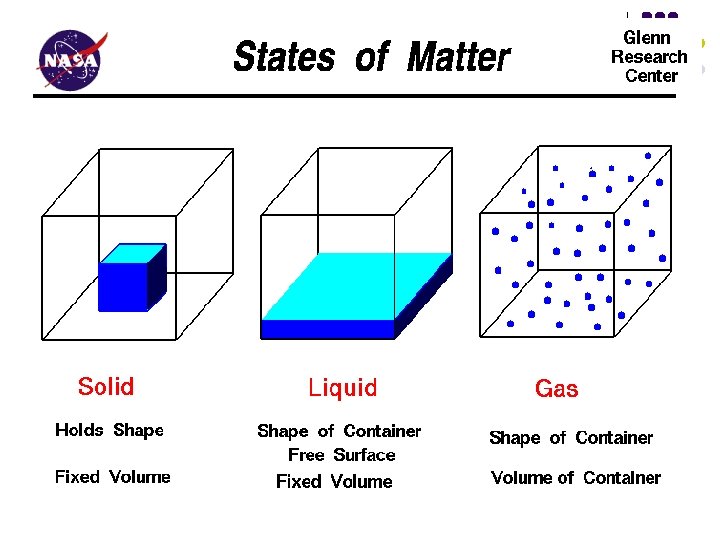
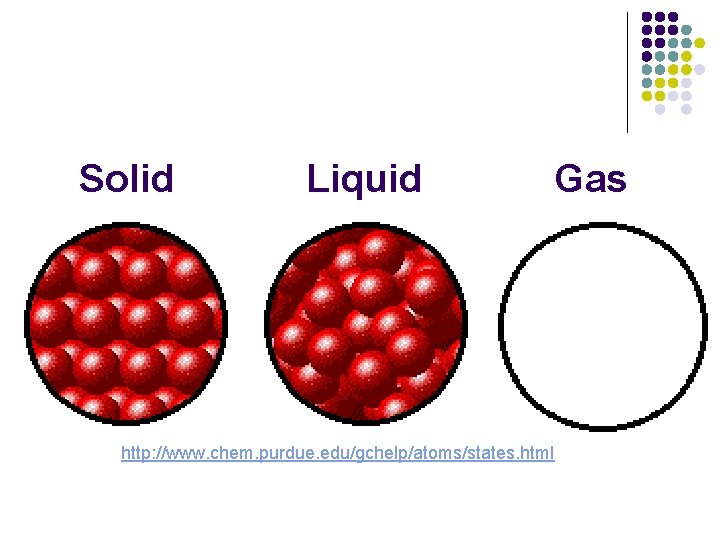
States of Matter l Solid fixed shape and volume, incompressible l Liquid l fixed volume, takes the shape of its container l Gas l takes the volume and shape of its container l
Solid Liquid http: //www. chem. purdue. edu/gchelp/atoms/states. html Gas
Bromine Gas (Vapor) Liquid
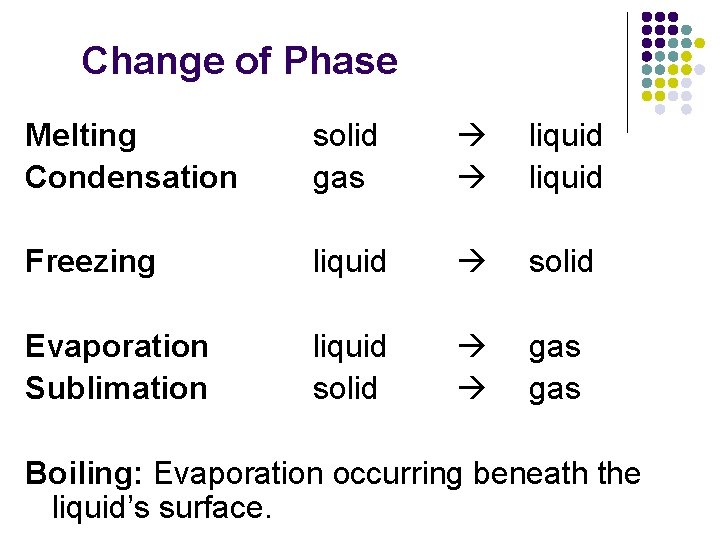
Change of Phase Melting Condensation solid gas liquid Freezing liquid solid Evaporation Sublimation liquid solid gas Boiling: Evaporation occurring beneath the liquid’s surface.
Is changing phase a physical or chemical change?
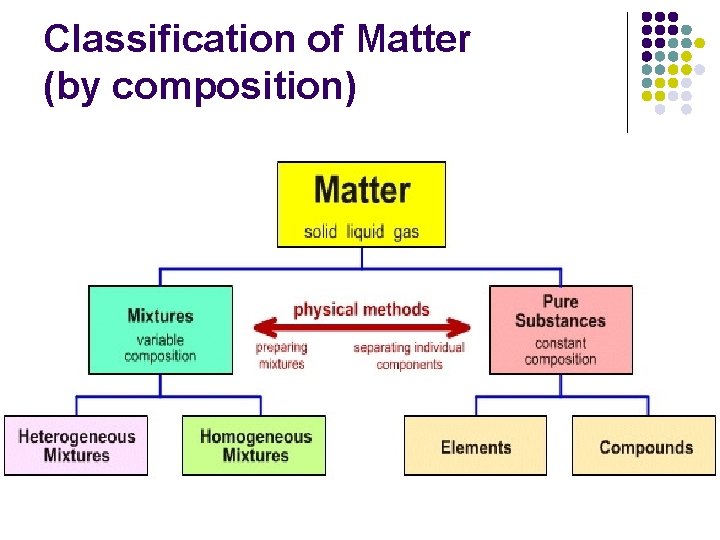
Classification of Matter (by composition)
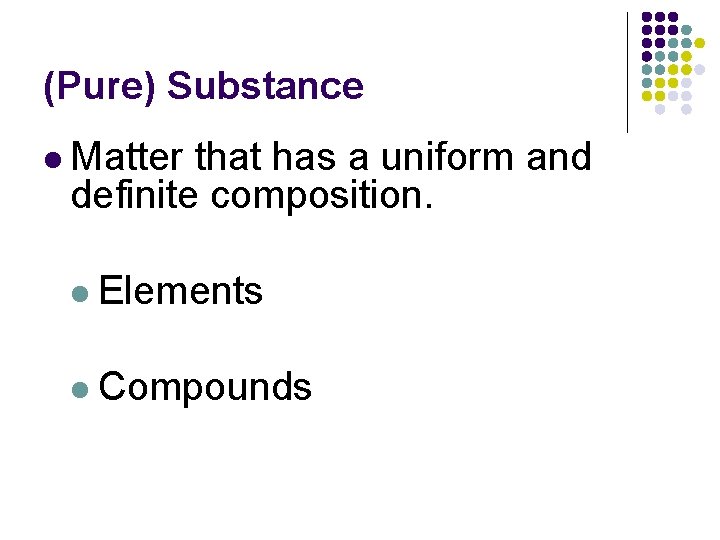
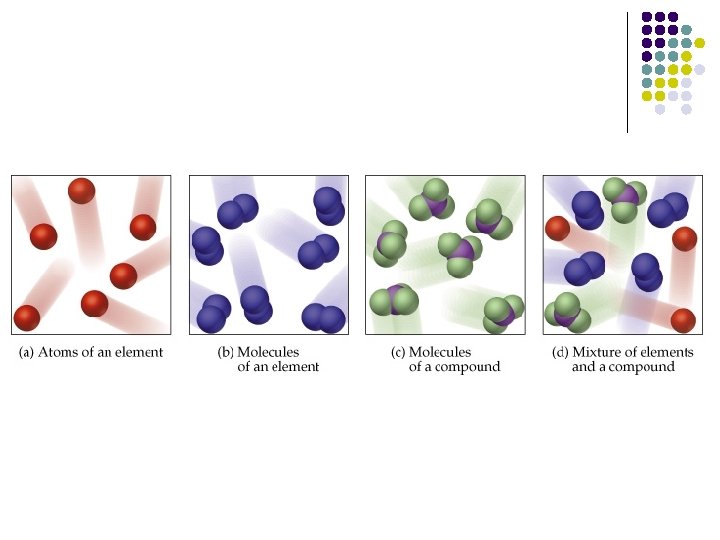
(Pure) Substance l Matter that has a uniform and definite composition. l Elements l Compounds
Mixture: a physical blend of two or more substances that are not chemically combined. l Homogeneous l Heterogeneous
B) Mixtures
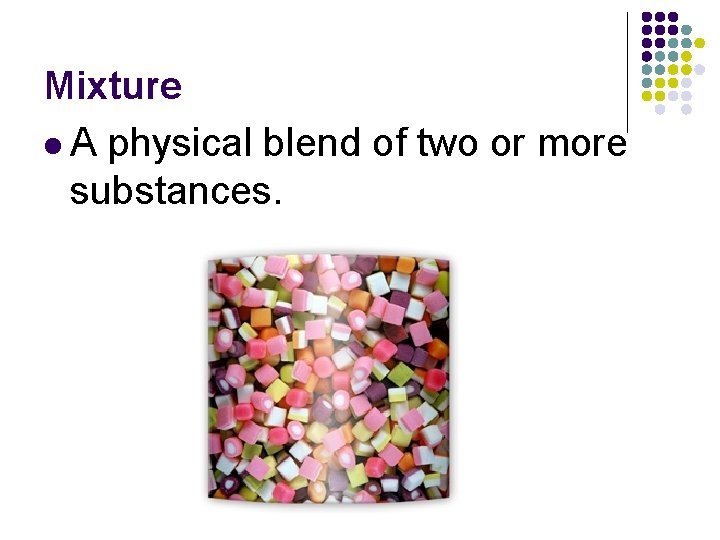
Mixture l A physical blend of two or more substances.
Mixtures l Homogeneous l Heterogeneous
Homogeneous mixture (solution) l Uniform l composition throughout. One phase.
Phase of a Mixture l. A part of a mixture with uniform properties and composition.
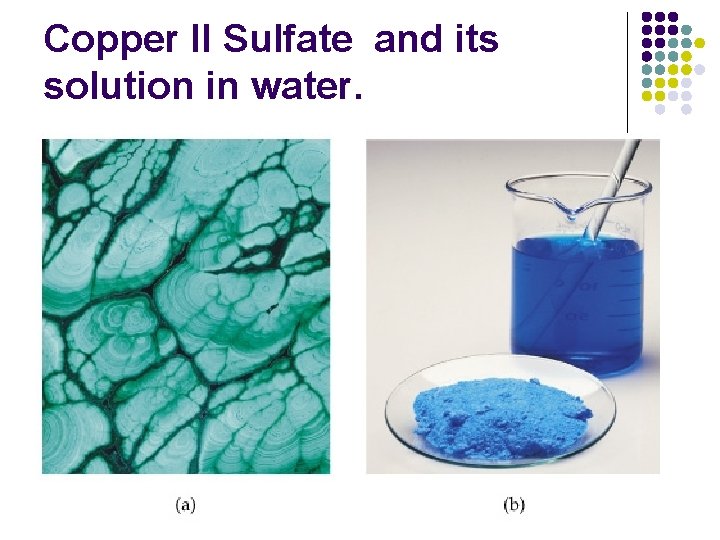
Copper II Sulfate and its solution in water.
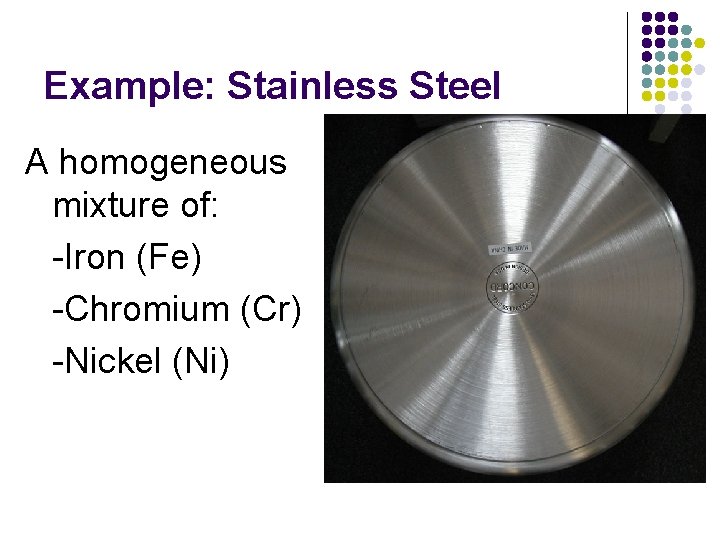
Example: Stainless Steel A homogeneous mixture of: -Iron (Fe) -Chromium (Cr) -Nickel (Ni)
Example: Gaseous Mixture l Elements argon and nitrogen and a compound (water vapor).
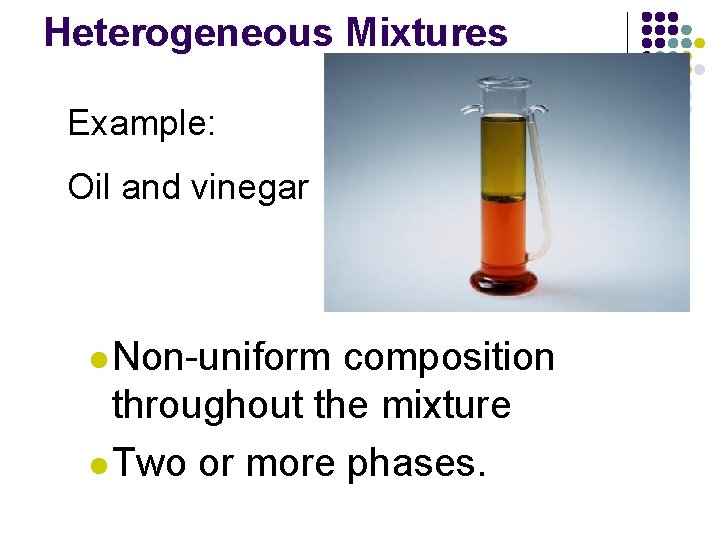
Heterogeneous Mixtures Example: Oil and vinegar l Non-uniform composition throughout the mixture l Two or more phases.
Note: l Mixtures can be physically separated. l Mixtures exhibit physical properties similar to the components of the mixture.
Separation Methods l Use differences in the physical properties of the components of the mixture.
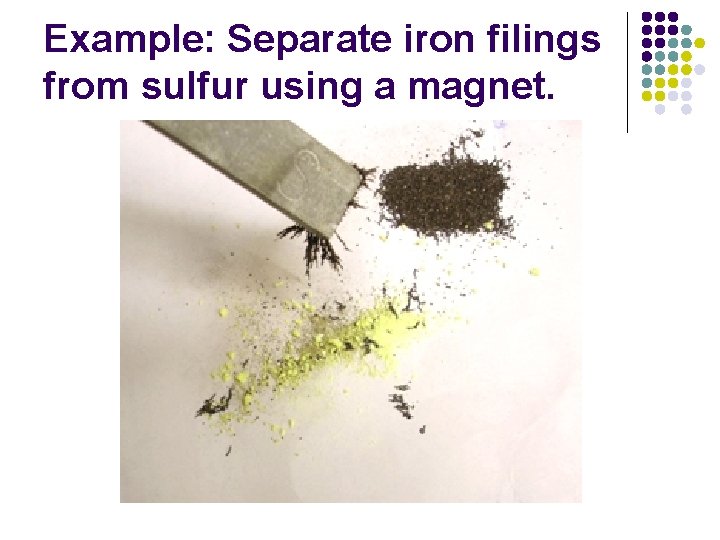
Example: Separate iron filings from sulfur using a magnet.
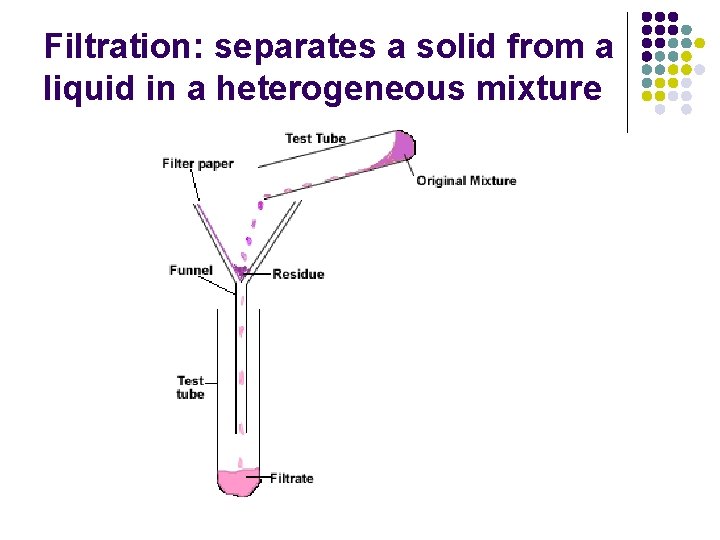
Filtration: separates a solid from a liquid in a heterogeneous mixture
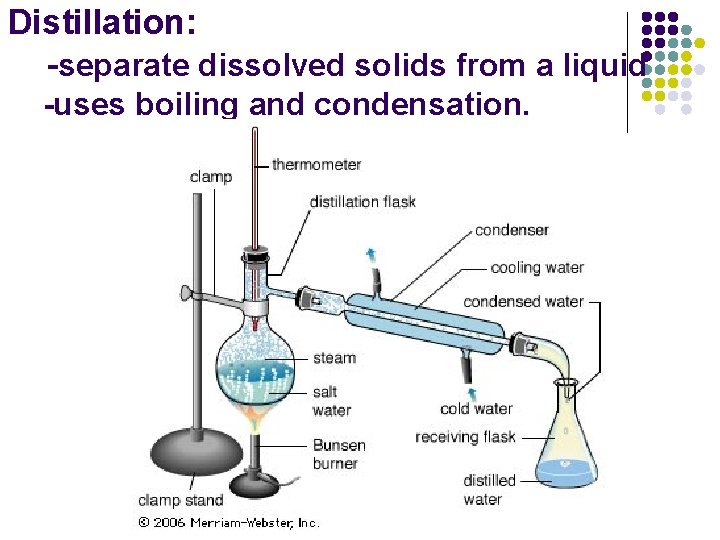
Distillation: -separate dissolved solids from a liquid -uses boiling and condensation.
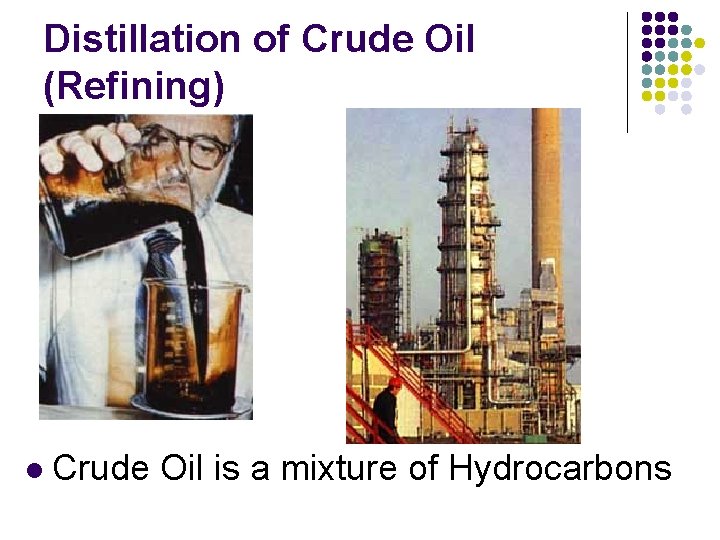
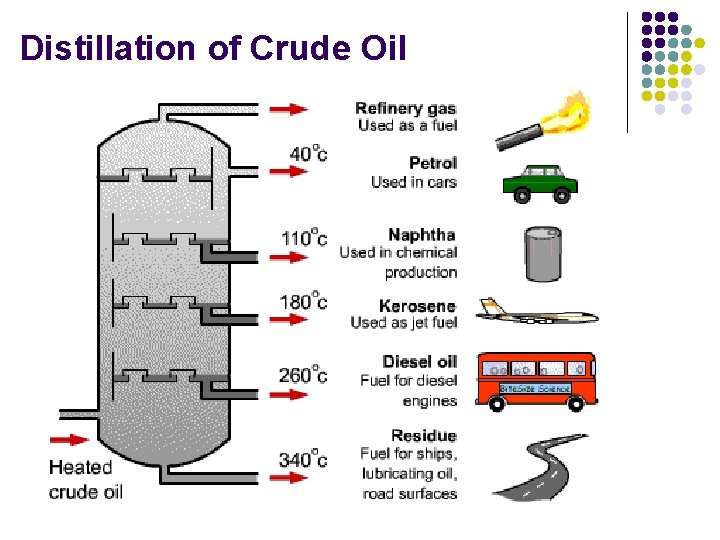
Distillation of Crude Oil (Refining) l Crude Oil is a mixture of Hydrocarbons
Distillation of Crude Oil
c) Elements and Compounds
Elements l The simplest substances. l Can not be separated into simpler substances. l Building blocks of all matter. l More than 100 known elements. l Represented by chemical symbols.
Chemical Symbols of Elements l System started by Jons Berzelius (Sweden, 1779 -1848) l One or two first letters of name of the element. l Many elements names have roots from: Latin, Greek, mythology, geography, names of scientists.
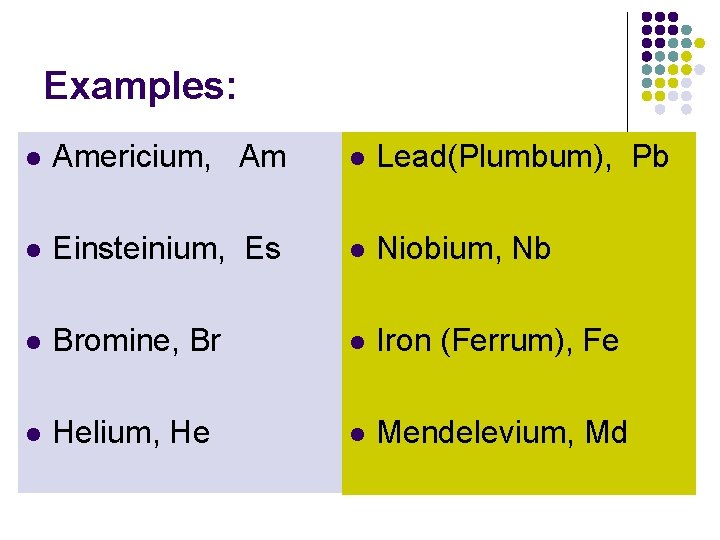
Examples: l Americium, Am l Lead(Plumbum), Pb l Einsteinium, Es l Niobium, Nb l Bromine, Br l Iron (Ferrum), Fe l Helium, He l Mendelevium, Md
Compound l A substance that contains two or more elements chemically combined. l Compounds have different properties from the individual substances. (Ex: H 2 O)
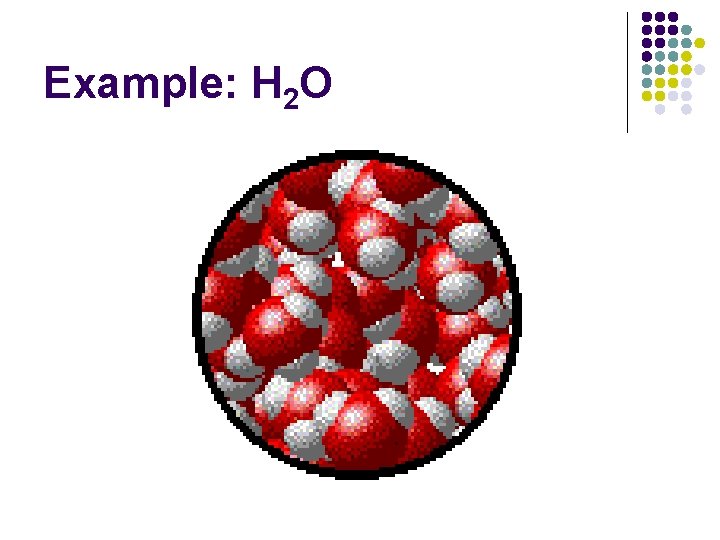
Example: H 2 O
Substance or mixture? l If composition is fixed and may not change substance
d) Chemical Properties and Chemical Changes
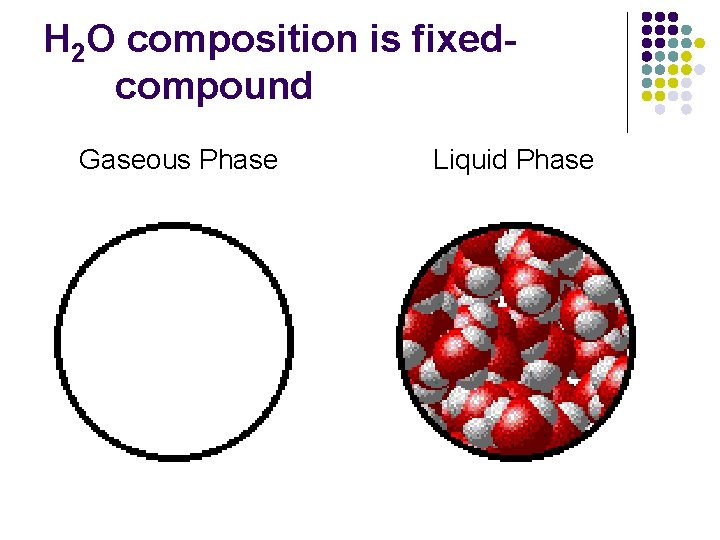
H 2 O composition is fixedcompound Gaseous Phase Liquid Phase
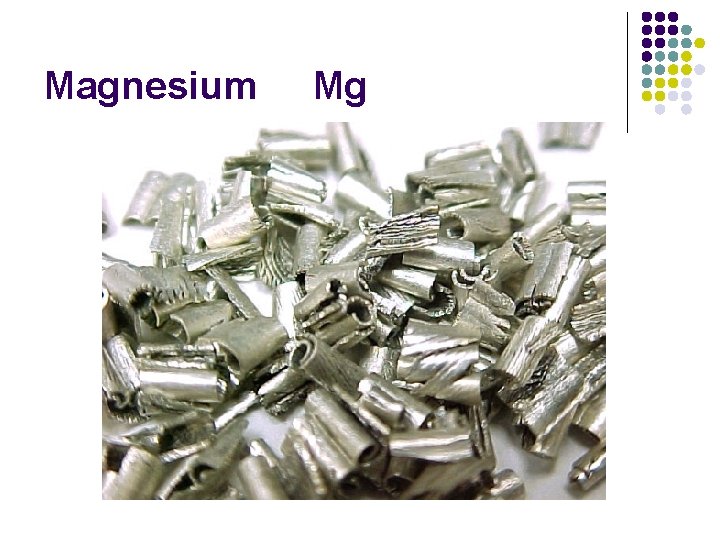
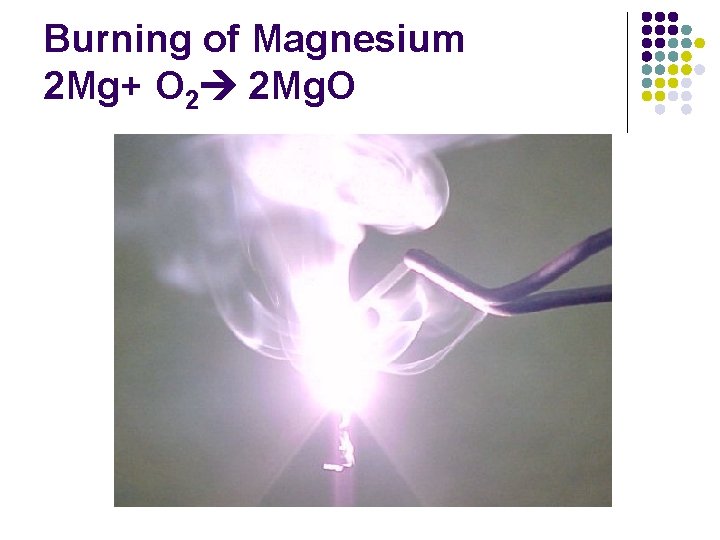
Chemical Properties l The ability of a substance to transform into a new substance (to undergo a chemical change). l Example: Magnesium reacts with oxygen to form magnesium oxide.
Magnesium Mg
Burning of Magnesium 2 Mg+ O 2 2 Mg. O
Physical Changes l Physical change: a change in the physical properties of a substance. l Composition does not change. May be reversible or irreversible. l Examples: Reversible: Irreversible: l
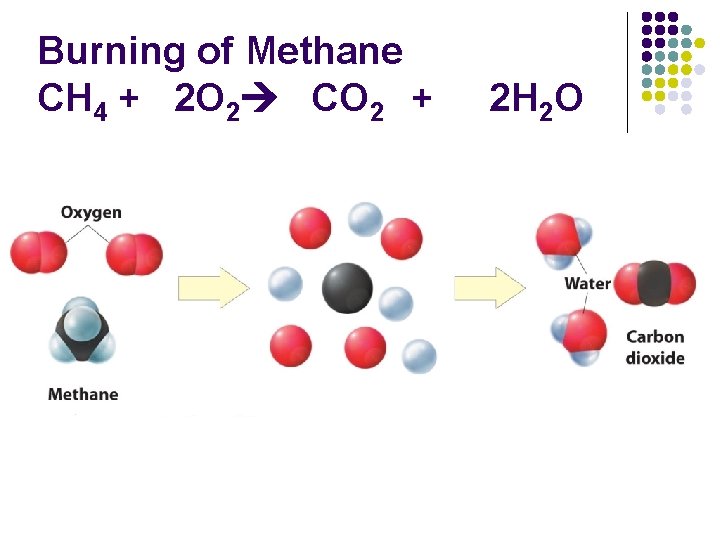
Chemical Change A change that produces matter with a different composition than the original matter. l Atoms rearrange themselves into new combinations. l
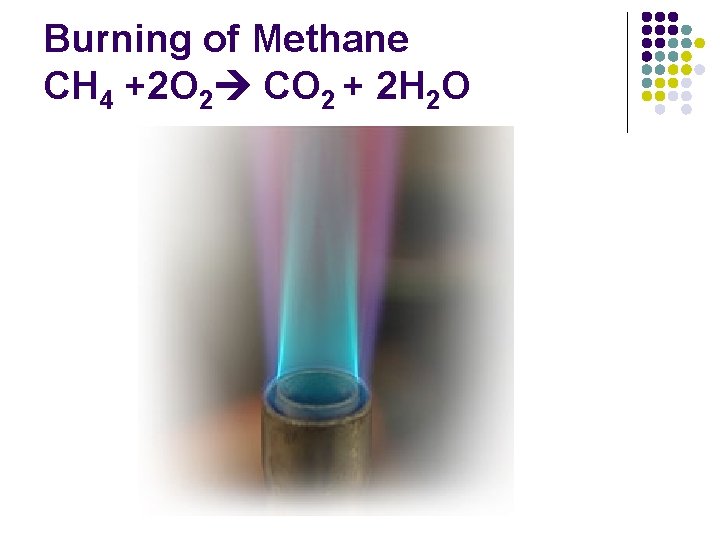
Burning of Methane CH 4 +2 O 2 CO 2 + 2 H 2 O
Burning of Methane CH 4 + 2 O 2 CO 2 + 2 H 2 O
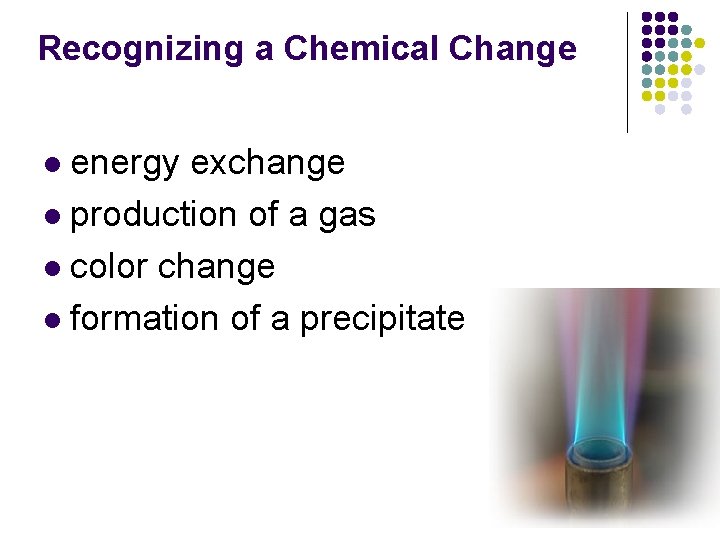
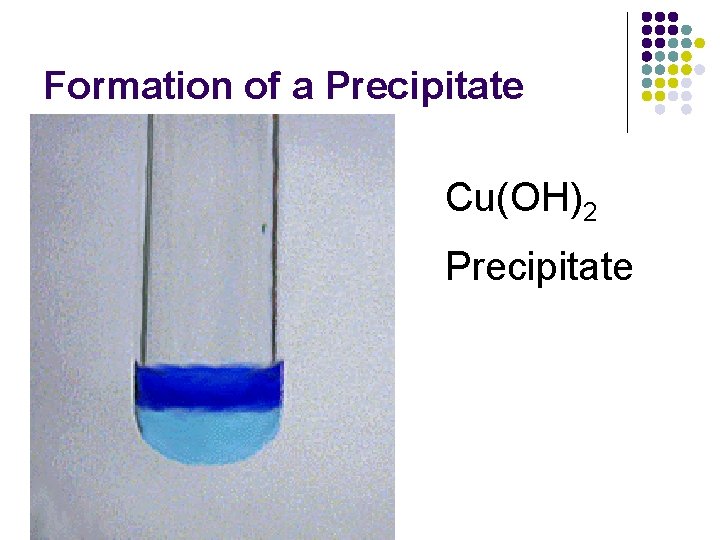
Recognizing a Chemical Change energy exchange l production of a gas l color change l formation of a precipitate l
Formation of a Precipitate Cu(OH)2 Precipitate
The Law of Conservation of Mass (Antoine Lavoisier) l In any chemical or physical change, mass is neither created or destroyed l Mass is CONSTANT