MARIUS M SOLOMON CRT University of Montreal March
- Slides: 44
MARIUS M. SOLOMON CRT, University of Montreal March, 2000
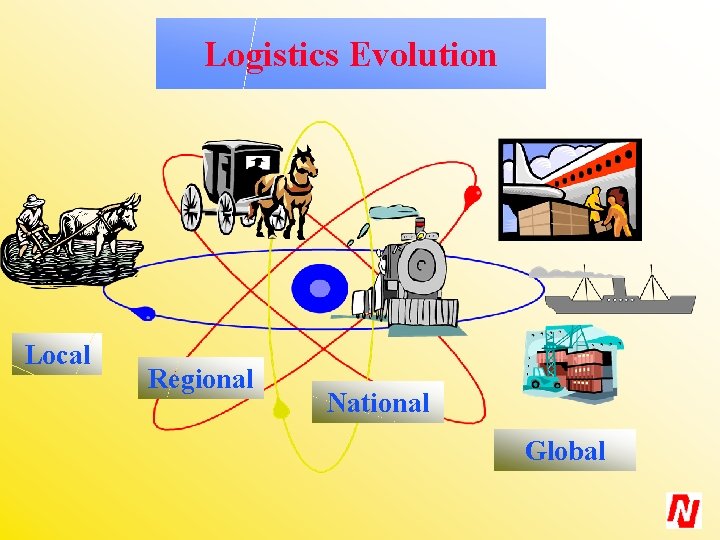
Logistics Evolution Local Regional National Global
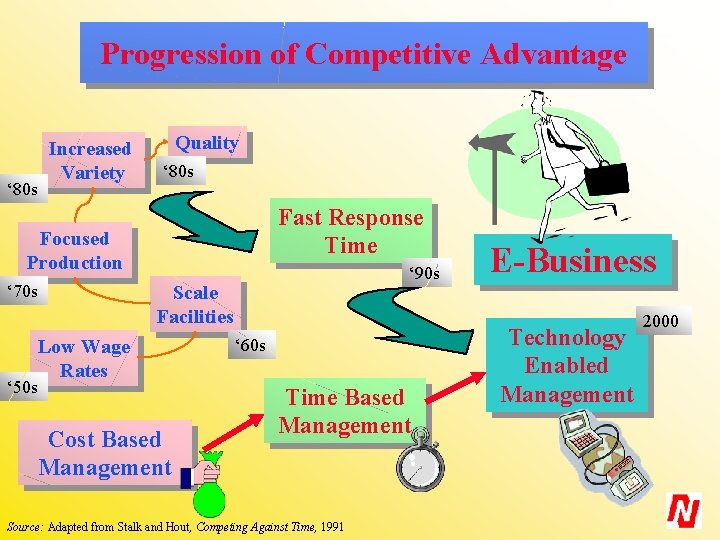
Progression of Competitive Advantage ‘ 80 s Increased Variety Quality ‘ 80 s Fast Response Time Focused Production ‘ 70 s ‘ 50 s ‘ 90 s Scale Facilities Low Wage Rates Cost Based Management ‘ 60 s Time Based Management Source: Adapted from Stalk and Hout, Competing Against Time, 1991 E-Business Technology Enabled Management 2000
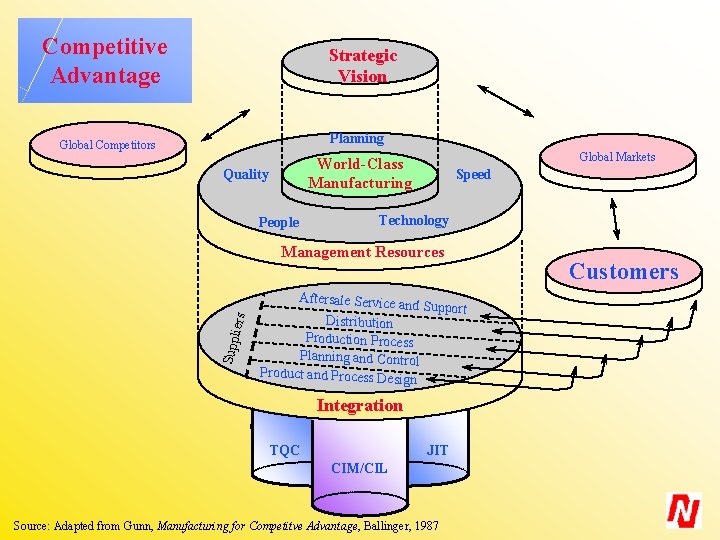
Competitive Advantage Strategic Vision Planning Global Competitors Global Markets World-Class Manufacturing Quality Speed Technology People Management Resources Suppl iers Aftersale Service an d Support Distribution Production Process Planning and Control Product and Process Des ign Integration TQC JIT CIM/CIL Source: Adapted from Gunn, Manufacturing for Competitve Advantage, Ballinger, 1987 Customers
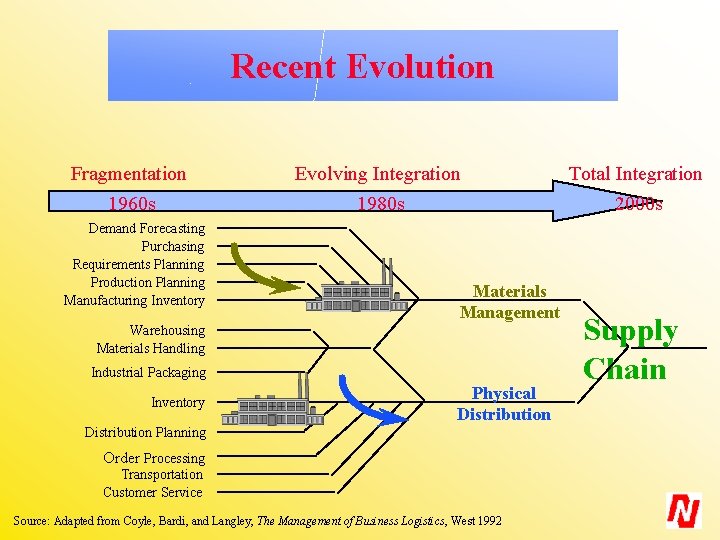
Recent Evolution Fragmentation Evolving Integration Total Integration 1960 s 1980 s 2000 s Demand Forecasting Purchasing Requirements Planning Production Planning Manufacturing Inventory Materials Management Warehousing Materials Handling Industrial Packaging Inventory Distribution Planning Physical Distribution Order Processing Transportation Customer Service Source: Adapted from Coyle, Bardi, and Langley, The Management of Business Logistics, West 1992 Supply Chain
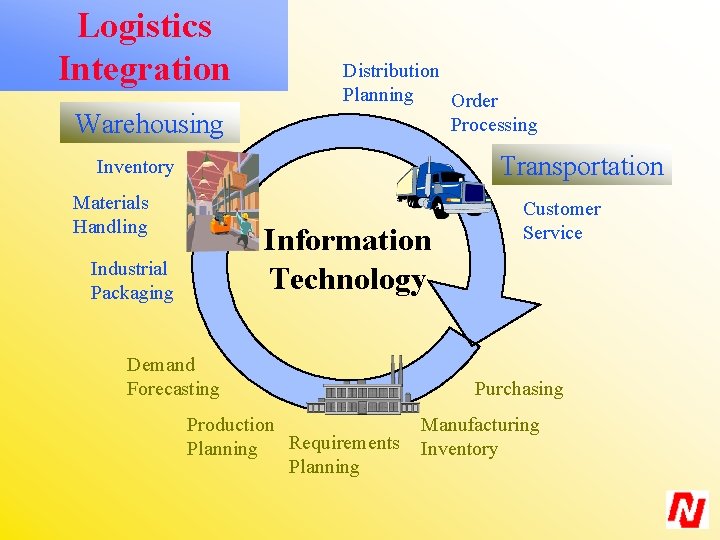
Logistics Integration Warehousing Distribution Planning Order Processing Transportation Inventory Materials Handling Information Technology Industrial Packaging Demand Forecasting Production Requirements Planning Customer Service Purchasing Manufacturing Inventory
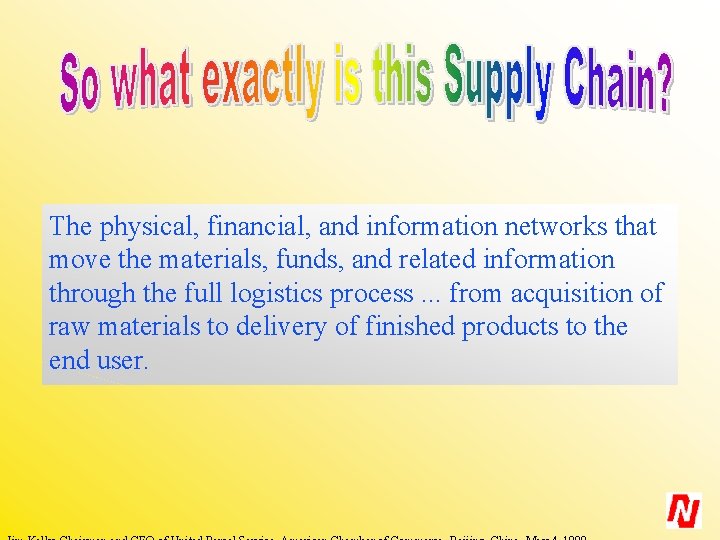
The physical, financial, and information networks that move the materials, funds, and related information through the full logistics process. . . from acquisition of raw materials to delivery of finished products to the end user.
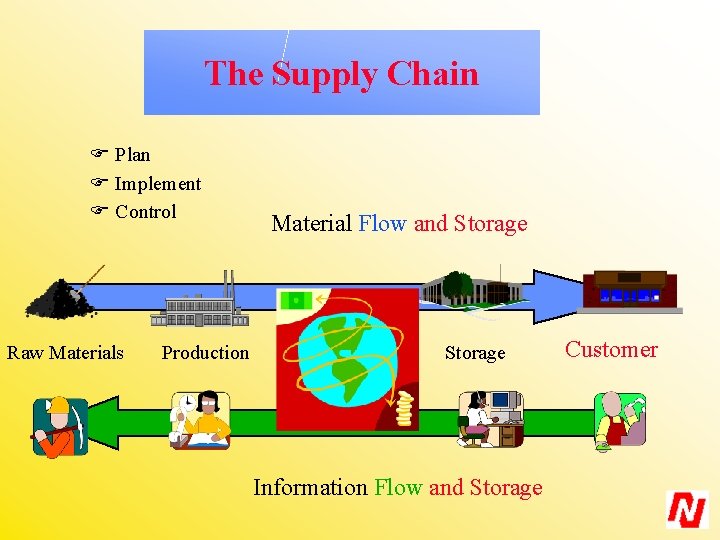
The Supply Chain F Plan F Implement F Control Raw Materials Production Material Flow and Storage Information Flow and Storage Customer
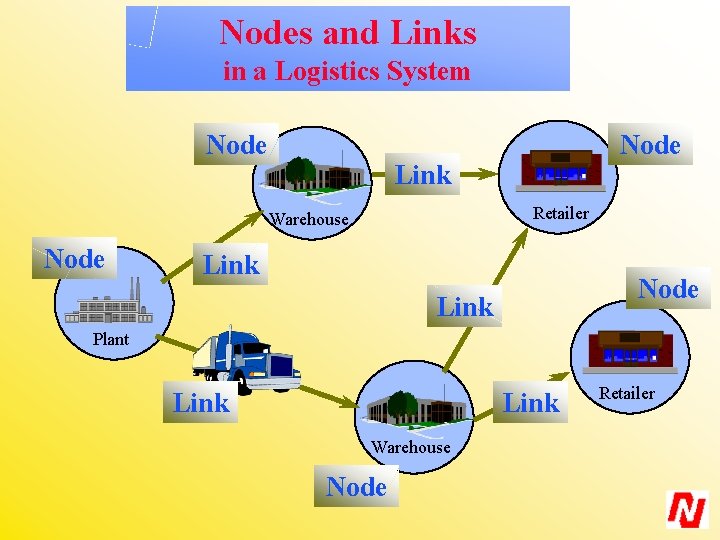
Nodes and Links in a Logistics System Node Link Retailer Warehouse Node Link Plant Link Warehouse Node Retailer
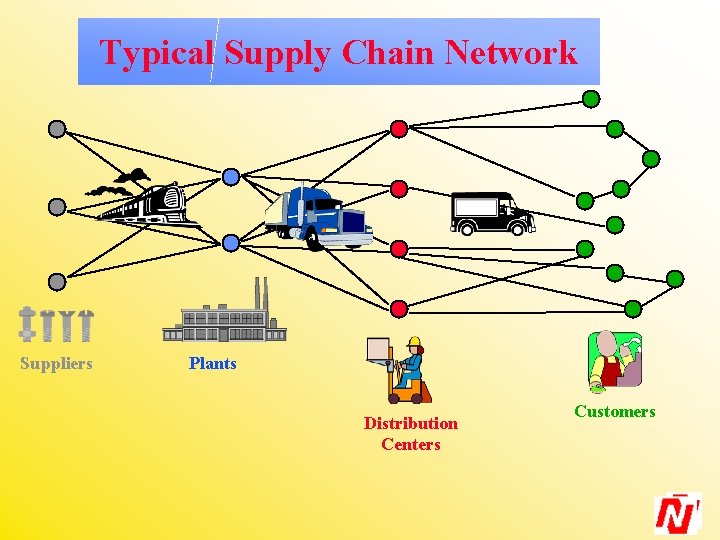
Typical Supply Chain Network Suppliers Plants Distribution Centers Customers
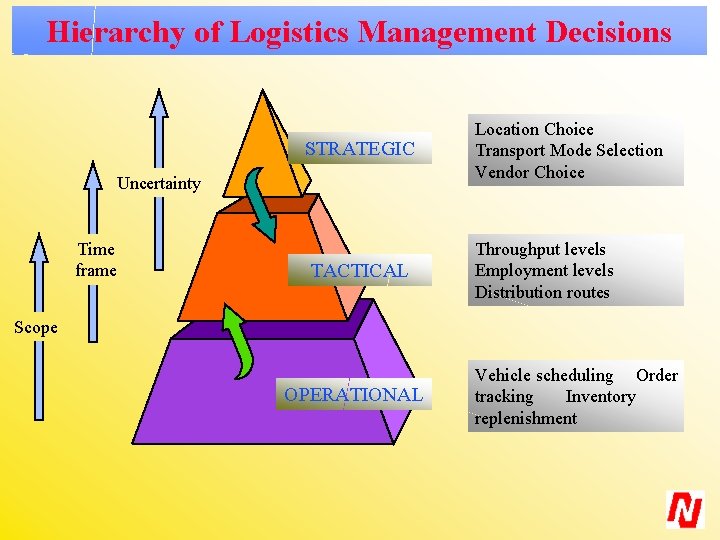
Hierarchy of Logistics Management Decisions STRATEGIC Uncertainty Time frame TACTICAL Location Choice Transport Mode Selection Vendor Choice Throughput levels Employment levels Distribution routes Scope OPERATIONAL Vehicle scheduling Order tracking Inventory replenishment
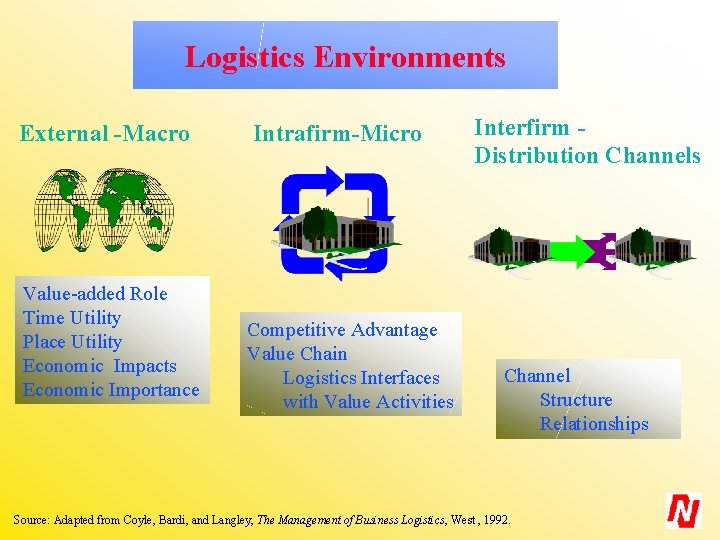
Logistics Environments External -Macro Value-added Role Time Utility Place Utility Economic Impacts Economic Importance Intrafirm-Micro Competitive Advantage Value Chain Logistics Interfaces with Value Activities Interfirm Distribution Channels Channel Structure Relationships Source: Adapted from Coyle, Bardi, and Langley, The Management of Business Logistics, West , 1992.
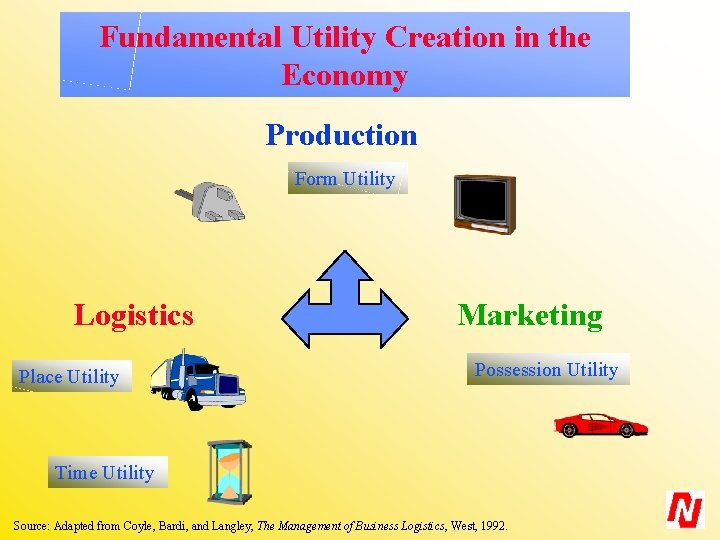
Fundamental Utility Creation in the Economy Production Form Utility Logistics Place Utility Marketing Possession Utility Time Utility Source: Adapted from Coyle, Bardi, and Langley, The Management of Business Logistics, West, 1992.
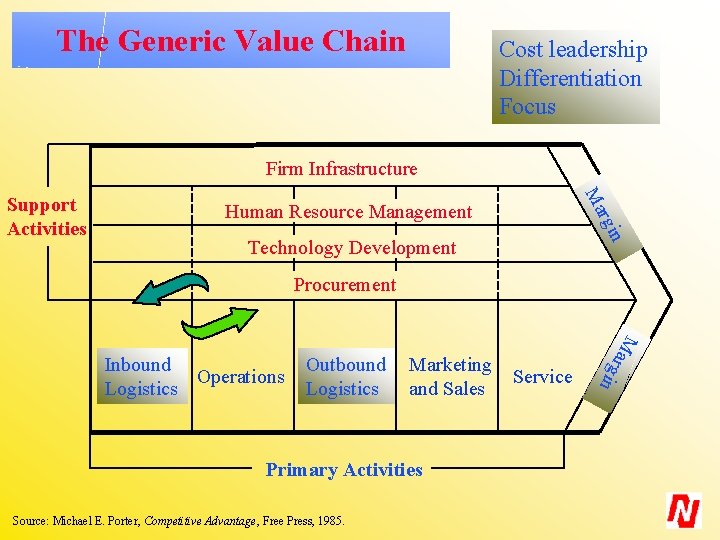
The Generic Value Chain Cost leadership Differentiation Focus Firm Infrastructure rg Ma Human Resource Management in Support Activities Technology Development Procurement Marketing and Sales Primary Activities Source: Michael E. Porter, Competitive Advantage, Free Press, 1985. Service n Outbound Logistics M a rgi Inbound Operations Logistics
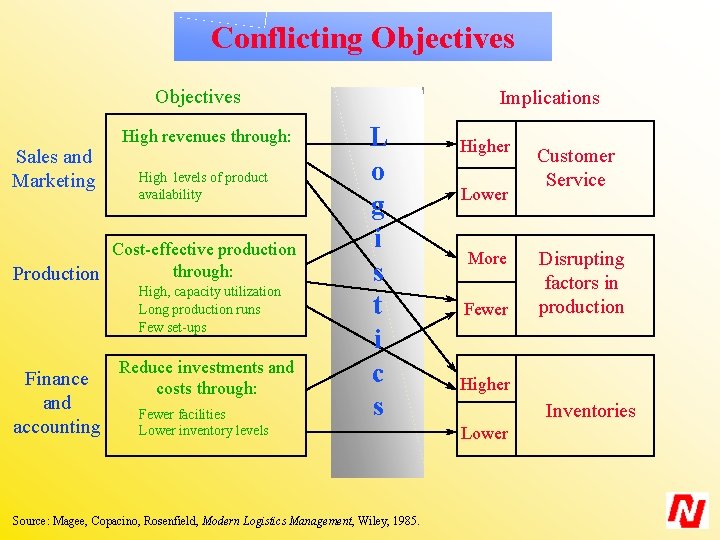
Conflicting Objectives Sales and Marketing High revenues through: High levels of product availability Cost-effective production through: Production High, capacity utilization Long production runs Few set-ups Finance and accounting Reduce investments and costs through: Fewer facilities Lower inventory levels Implications L o g i s t i c s Source: Magee, Copacino, Rosenfield, Modern Logistics Management, Wiley, 1985. Higher Lower More Fewer Customer Service Disrupting factors in production Higher Inventories Lower
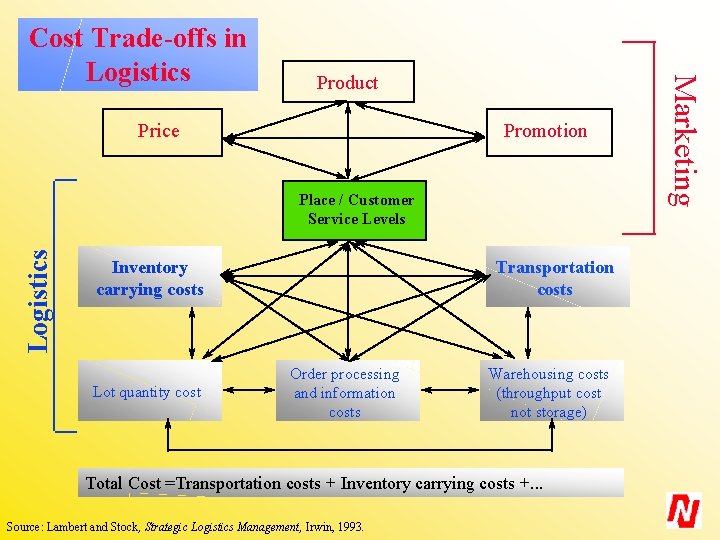
Product Price Promotion Logistics Place / Customer Service Levels Inventory carrying costs Lot quantity cost Transportation costs Order processing and information costs Warehousing costs (throughput cost not storage) Total Cost =Transportation costs + Inventory carrying costs +. . . Source: Lambert and Stock, Strategic Logistics Management, Irwin, 1993. Marketing Cost Trade-offs in Logistics
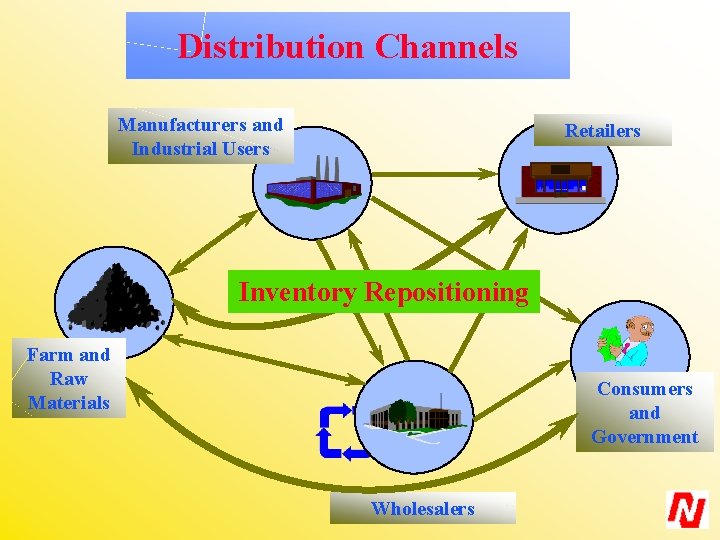
Distribution Channels Manufacturers and Industrial Users Retailers Inventory Repositioning Farm and Raw Materials Consumers and Government Wholesalers
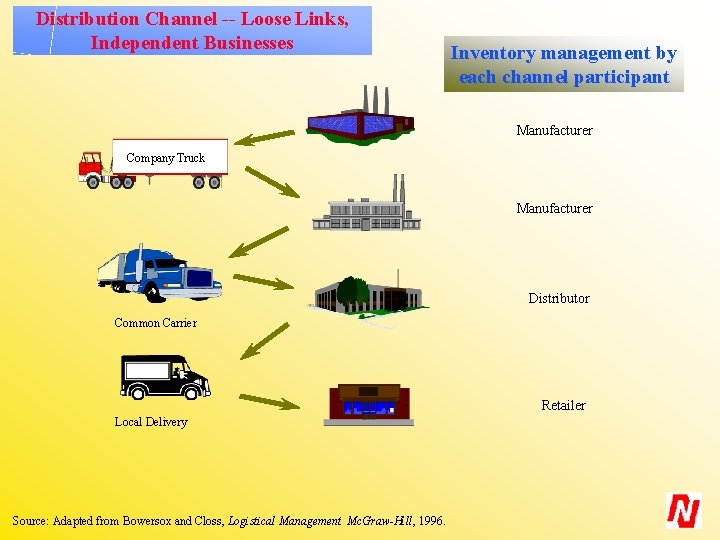
Distribution Channel -- Loose Links, Independent Businesses Inventory management by each channel participant Manufacturer Company Truck Manufacturer Distributor Common Carrier Retailer Local Delivery Source: Adapted from Bowersox and Closs, Logistical Management Mc. Graw-Hill, 1996.
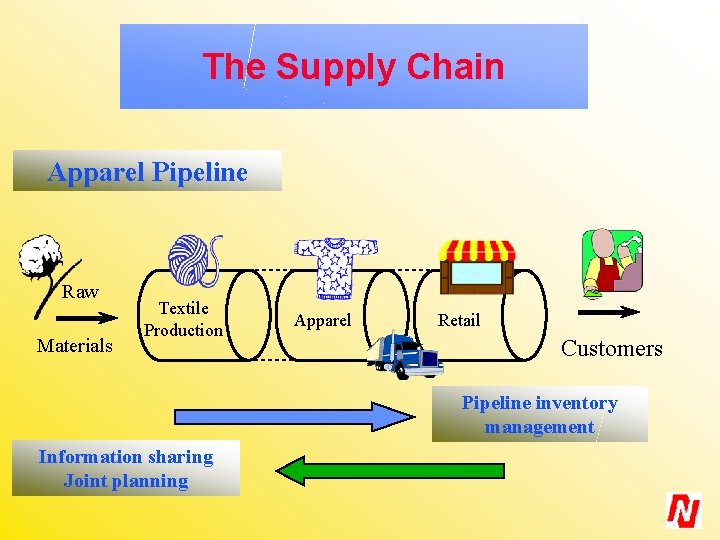
The Supply Chain Apparel Pipeline Raw Materials Textile Production Apparel Retail Customers Pipeline inventory management Information sharing Joint planning
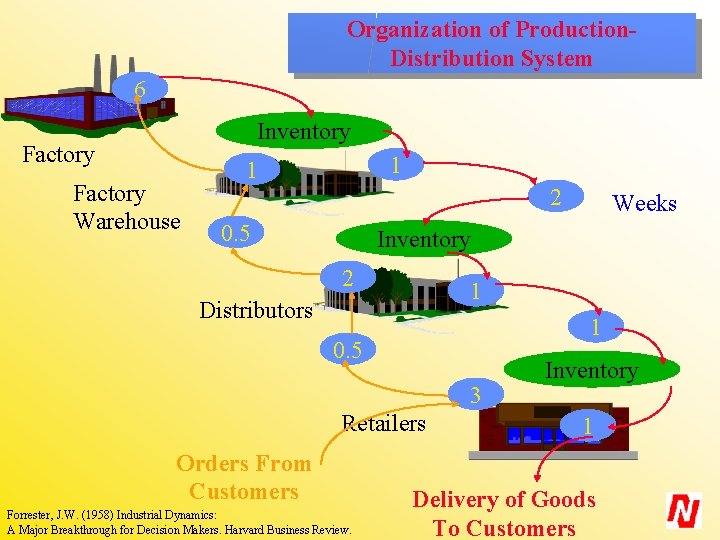
Organization of Production. Distribution System 6 Inventory Factory Warehouse 1 1 2 0. 5 Weeks Inventory 2 1 Distributors 1 0. 5 3 Retailers Orders From Customers Forrester, J. W. (1958) Industrial Dynamics: A Major Breakthrough for Decision Makers. Harvard Business Review. Inventory 1 Delivery of Goods To Customers
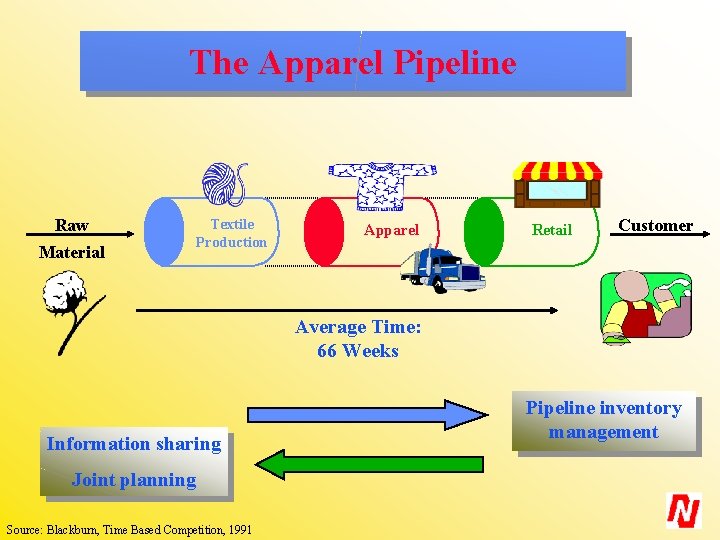
The Apparel Pipeline Raw Material Textile Production Apparel Retail Customer Average Time: 66 Weeks Information sharing Joint planning Source: Blackburn, Time Based Competition, 1991 Pipeline inventory management
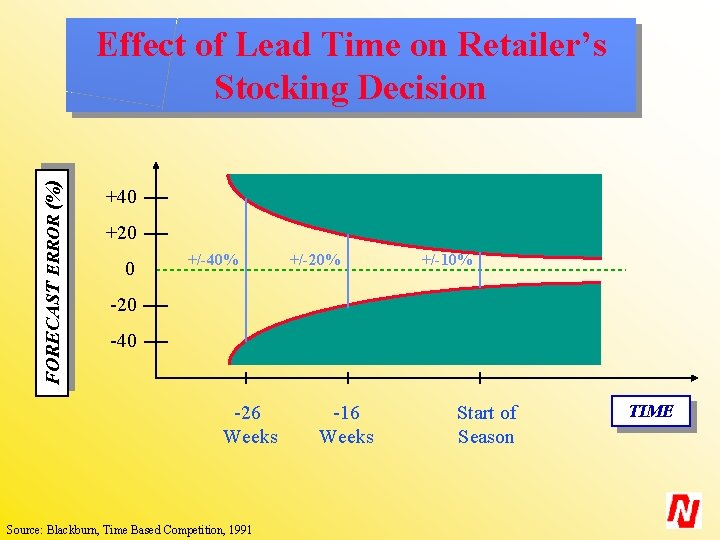
FORECAST ERROR (%) Effect of Lead Time on Retailer’s Stocking Decision +40 +20 0 +/-40% +/-20% +/-10% -20 -40 -26 Weeks Source: Blackburn, Time Based Competition, 1991 -16 Weeks Start of Season TIME
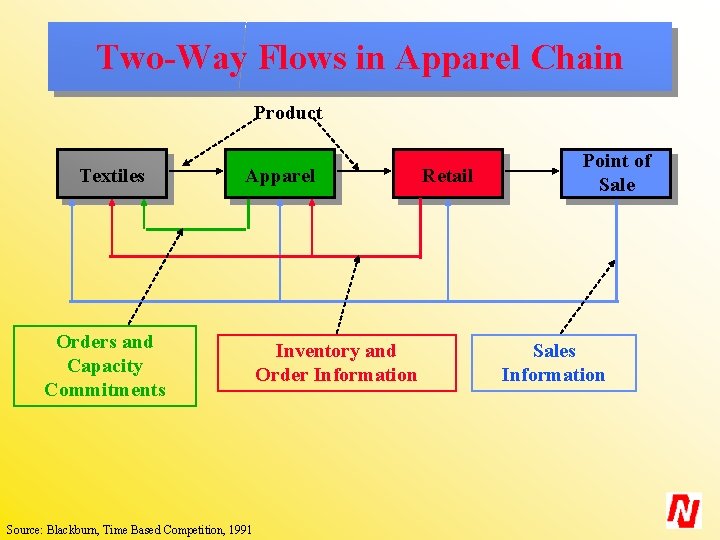
Two-Way Flows in Apparel Chain Product Textiles Apparel Orders and Capacity Commitments Source: Blackburn, Time Based Competition, 1991 Inventory and Order Information Retail Point of Sales Information
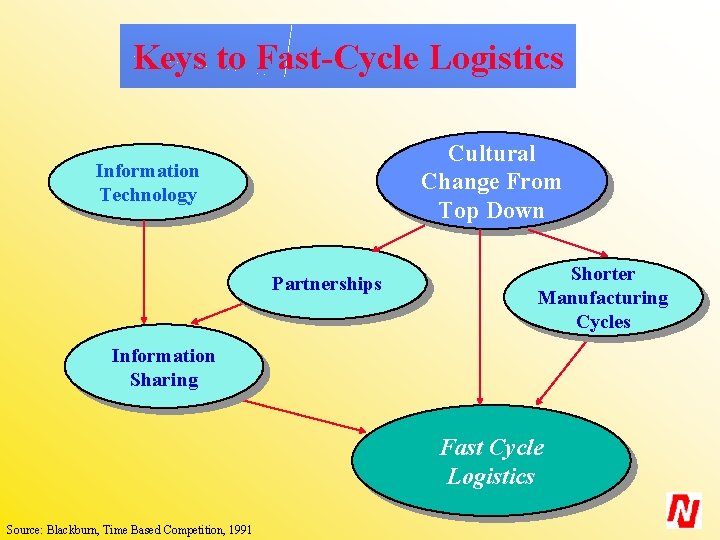
Keys to Fast-Cycle Logistics Cultural Change From Top Down Information Technology Partnerships Shorter Manufacturing Cycles Information Sharing Fast Cycle Logistics Source: Blackburn, Time Based Competition, 1991
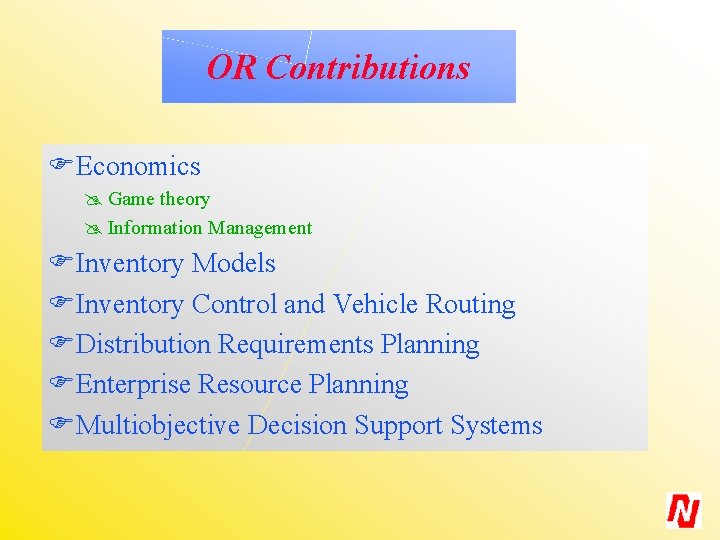
OR Contributions FEconomics @ Game theory @ Information Management FInventory Models FInventory Control and Vehicle Routing FDistribution Requirements Planning FEnterprise Resource Planning FMultiobjective Decision Support Systems
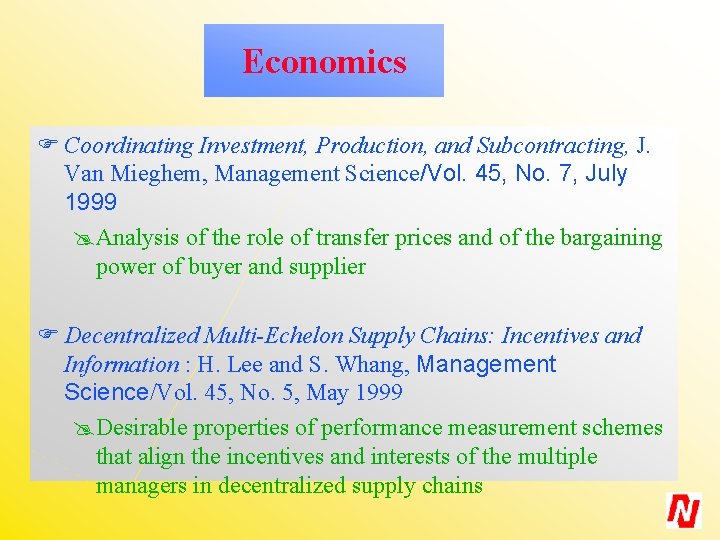
Economics F Capacity Choice and Allocation: Strategic Behavior and Supply Chain Performance, G. Cachon and M. Lariviere, Management Science/Vol. 45, No. 8, August 1999 @ Truth telling provides some advantages to the supply chain that should be weighed against the costs of inducing it F Competitive and Cooperative Inventory Policies in a Two. Stage Supply Chain, G. Cachon and P. Zipkin, Management Science/Vol. 45, No. 7, July 1999 @ Competition generally lowers supply chain inventory relative to the optimal solution
Economics F The Role of Returns Policies in Pricing and Inventory Decisions for Catalogue Goods Authors: H. Emmons and S. Gilbert, Management Science /Vol. 44, No. 2, February 1998 @ Relationship of such policies return policies on both retailer’s and manufacturer’s profits F Capacity Allocation Using Past Sales: When to Turn-and-Earn G. Cachon and M Lariviere, Management Science/Vol. 45, No. 5, May 1999 @ Turn-and-earn allocation does not generally coordinate the system, and in certain cases is a means for the supplier to increase profits at the expense of retailers
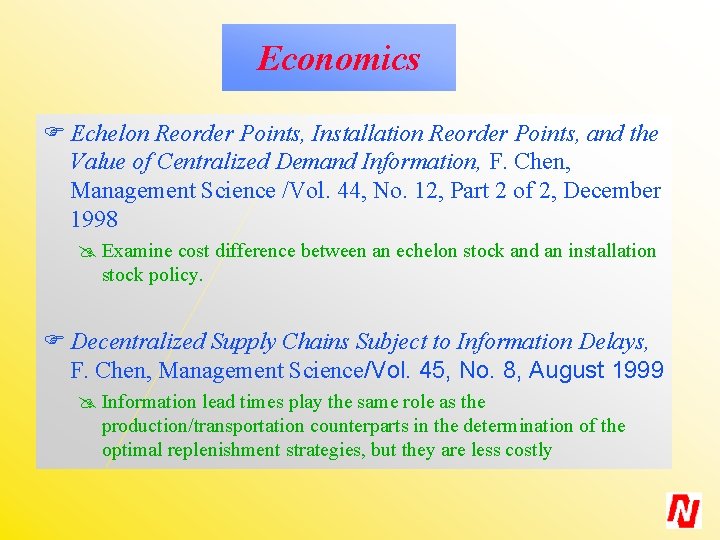
Economics F Centralization of Stocks: Retailers vs. Manufacturer, R. Anupindi and Y. Bassok, Management Science/Vol. 45, No. 2, February 1999 @ Shows that centralizing stocks by retailers increases profits for the manufacturer up to a certain level of “market search” in the supply chain F Value of Information in Capacitated Supply Chains, S. Gavirneni, et al. , Management Science/Vol. 45, No. 1, January 1999 @ Examine benefits of partial vs complete information sharing in a supplier-retailer setting
Economics F The Quantity Flexibility Contract and Supplier-Customer Incentives, A. Tsay, Management Science/Vol. 45, No. 10, October 1999 @ Quantity Flexibility (QF) contract and its implications for the behavior and performance of suppliers and customers F Quantity Flexibility Contracts and Supply Chain Performance, A. Tsay and W. Lovejoy, Manufacturing & Service Operations Management Vol 1, No 2, 1999 @Analysis extended to multiple time periods
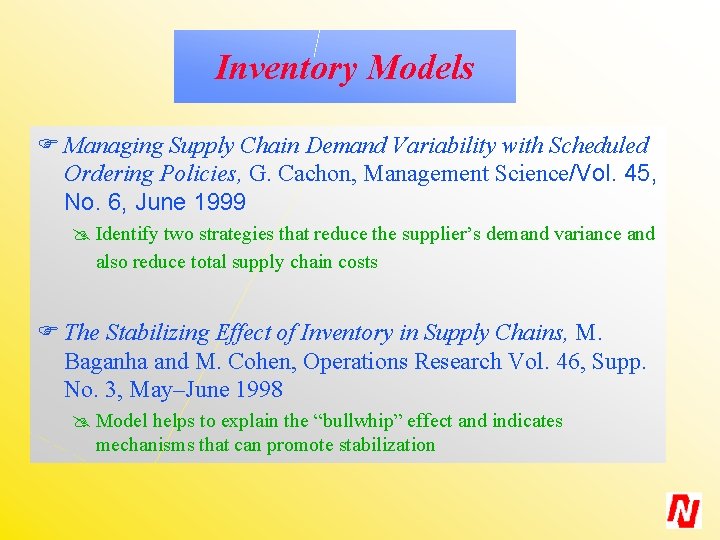
Economics F Coordinating Investment, Production, and Subcontracting, J. Van Mieghem, Management Science/Vol. 45, No. 7, July 1999 @Analysis of the role of transfer prices and of the bargaining power of buyer and supplier F Decentralized Multi-Echelon Supply Chains: Incentives and Information : H. Lee and S. Whang, Management Science/Vol. 45, No. 5, May 1999 @Desirable properties of performance measurement schemes that align the incentives and interests of the multiple managers in decentralized supply chains
Economics F Echelon Reorder Points, Installation Reorder Points, and the Value of Centralized Demand Information, F. Chen, Management Science /Vol. 44, No. 12, Part 2 of 2, December 1998 @ Examine cost difference between an echelon stock and an installation stock policy. F Decentralized Supply Chains Subject to Information Delays, F. Chen, Management Science/Vol. 45, No. 8, August 1999 @ Information lead times play the same role as the production/transportation counterparts in the determination of the optimal replenishment strategies, but they are less costly
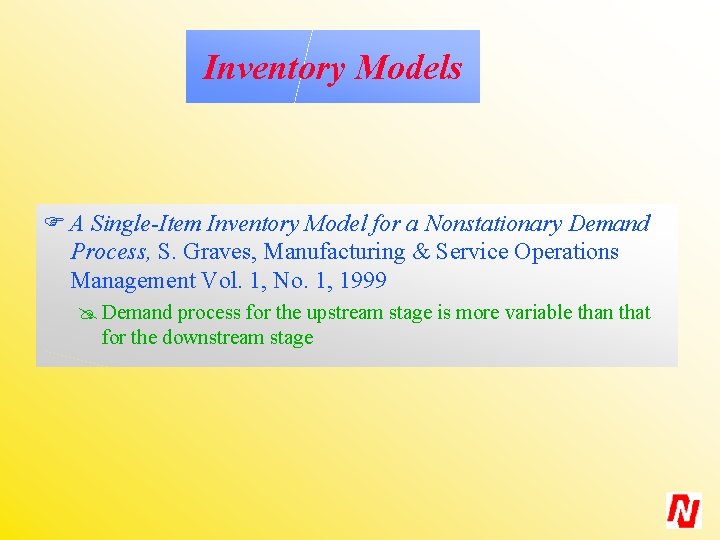
Inventory Models F Managing Supply Chain Demand Variability with Scheduled Ordering Policies, G. Cachon, Management Science/Vol. 45, No. 6, June 1999 @ Identify two strategies that reduce the supplier’s demand variance and also reduce total supply chain costs F The Stabilizing Effect of Inventory in Supply Chains, M. Baganha and M. Cohen, Operations Research Vol. 46, Supp. No. 3, May–June 1998 @ Model helps to explain the “bullwhip” effect and indicates mechanisms that can promote stabilization
Inventory Models F A Single-Item Inventory Model for a Nonstationary Demand Process, S. Graves, Manufacturing & Service Operations Management Vol. 1, No. 1, 1999 @ Demand process for the upstream stage is more variable than that for the downstream stage
Probabilistic Analyses and Algorithms for Three-Level Distribution Systems FWal-Mart’s cross-docking strategy FIntegrate inventory control and vehicle routing for a distribution system consisting of a single vendor, a fixed number of warehouses, and many retailers FWarehouses receive fully loaded trucks from the vendor but never hold inventory FWarehouses serve only to coordinate the frequency, time and sizes of deliveries to retailers Source: L. Chen and D. Simchi-Levi, MANAGEMENT SCIENCE/Vol. 44, No. 11, Part 1 of 2, November 1998
Distribution Requirements Planning F A Dynamic Model For Requirements Planning With Application To Supply Chain Optimization, S. Graves, et al. , Operations Research Vol. 46, Supp. No. 3, May–June 1998 @ Use a model for a single production stage as a building block for modeling a network of stages @ Apply the DRP model to strategic inventory placement in the film manufacturing processes at Kodak
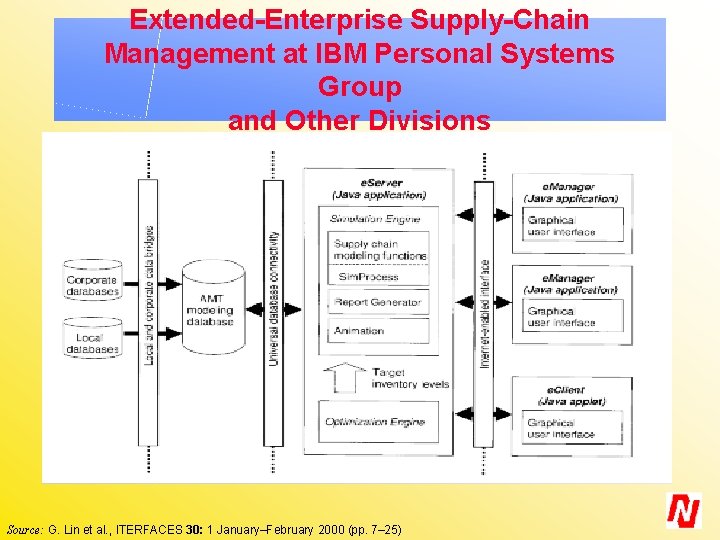
Extended-Enterprise Supply-Chain Management at IBM Personal Systems Group and Other Divisions Source: G. Lin et al. , ITERFACES 30: 1 January–February 2000 (pp. 7– 25)
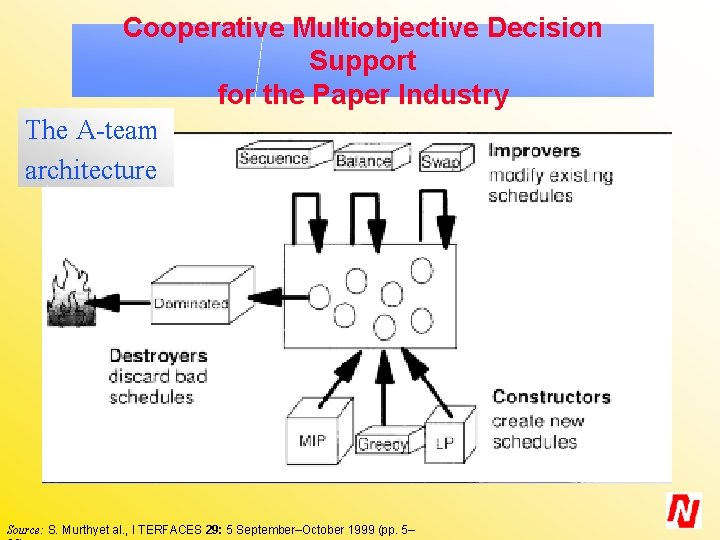
Cooperative Multiobjective Decision Support for the Paper Industry The A-team architecture Source: S. Murthyet al. , I TERFACES 29: 5 September–October 1999 (pp. 5–
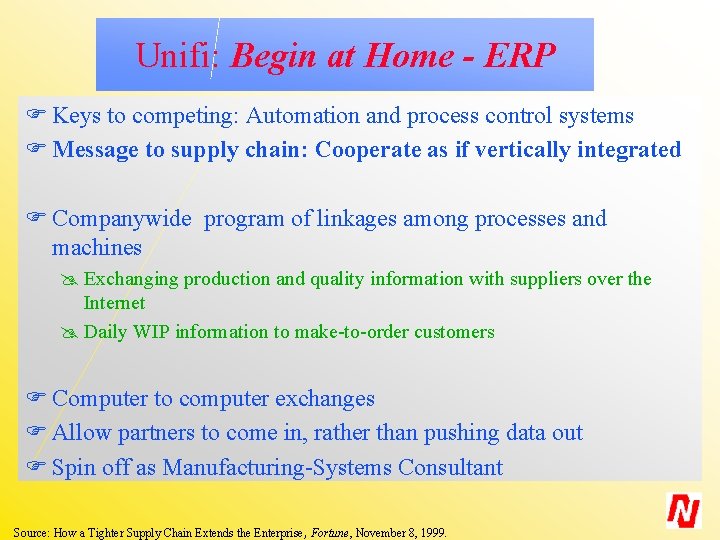
Unifi: Begin at Home - ERP F Keys to competing: Automation and process control systems F Message to supply chain: Cooperate as if vertically integrated F Companywide program of linkages among processes and machines @ Exchanging production and quality information with suppliers over the Internet @ Daily WIP information to make-to-order customers F Computer to computer exchanges F Allow partners to come in, rather than pushing data out F Spin off as Manufacturing-Systems Consultant Source: How a Tighter Supply Chain Extends the Enterprise, Fortune, November 8, 1999.
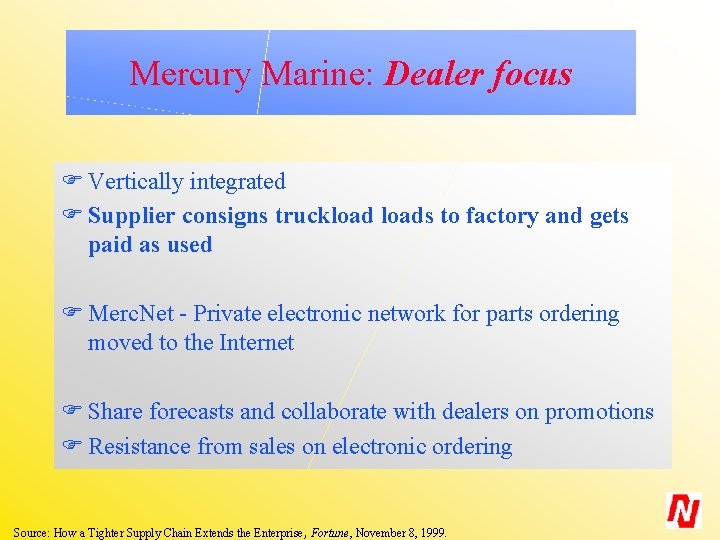
Mercury Marine: Dealer focus F Vertically integrated F Supplier consigns truckloads to factory and gets paid as used F Merc. Net - Private electronic network for parts ordering moved to the Internet F Share forecasts and collaborate with dealers on promotions F Resistance from sales on electronic ordering Source: How a Tighter Supply Chain Extends the Enterprise, Fortune, November 8, 1999.
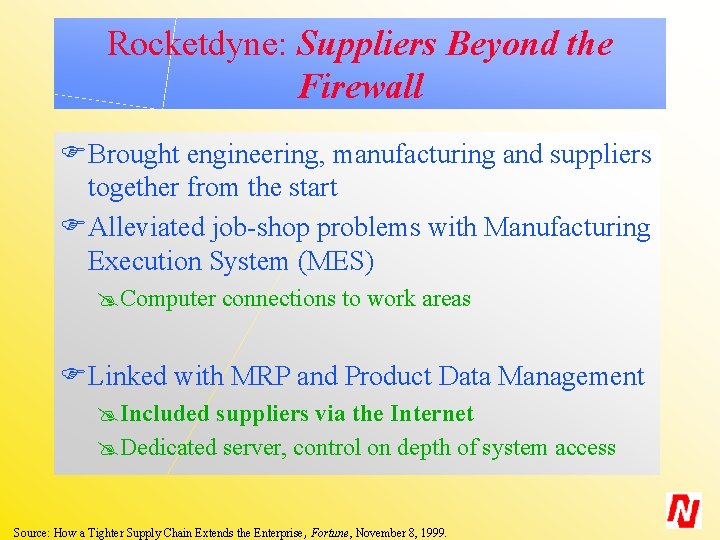
Rocketdyne: Suppliers Beyond the Firewall FBrought engineering, manufacturing and suppliers together from the start FAlleviated job-shop problems with Manufacturing Execution System (MES) @Computer connections to work areas FLinked with MRP and Product Data Management @Included suppliers via the Internet @Dedicated server, control on depth of system access Source: How a Tighter Supply Chain Extends the Enterprise, Fortune, November 8, 1999.
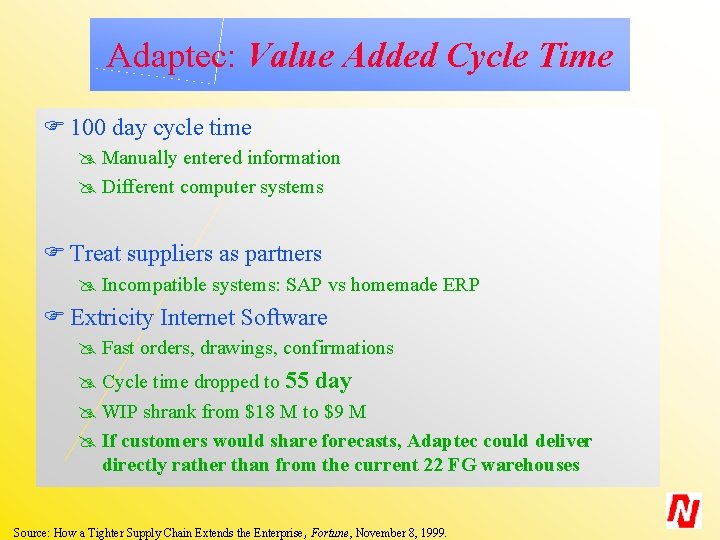
Adaptec: Value Added Cycle Time F 100 day cycle time @ Manually entered information @ Different computer systems F Treat suppliers as partners @ Incompatible systems: SAP vs homemade ERP F Extricity Internet Software @ Fast orders, drawings, confirmations @ Cycle time dropped to 55 day @ WIP shrank from $18 M to $9 M @ If customers would share forecasts, Adaptec could deliver directly rather than from the current 22 FG warehouses Source: How a Tighter Supply Chain Extends the Enterprise, Fortune, November 8, 1999.
Nimbus: Streamlined Supply Chain by Merging FMost studios outsource production, distribution, and packaging of VHS tapes and DVDs FTechnicolor - largest converter of movies to VHS @People, systems, and facilities capability to handle distribution @Nimbus’ sales rose to $89 M in first six months of 1999 @Consolidation of production facilities and other supply chain moves - $10. 2 M savings for the first half of 1999
Conclusions FIntegration and coordination @Production and Distribution @Routing and Location @Routing and Inventory FDynamic Problems FReal Time
Conclusions FIncrease in fast-cycle logistics for companies of all size FDoing business faster, and especially smarter @replacing inventory with information FWith real-time information companies can manage inventory in motion, rather than at rest FSupply chains are increasingly moving online FCan dramatically reduce overhead and obsolescence while speeding time to market Source: Fedex Corporation, 1999 Annual Report