LUNGMAP S 1400 LUNG MASTER PROTOCOL SWOG SPRING


- Slides: 57
LUNG-MAP S 1400 LUNG MASTER PROTOCOL SWOG SPRING MEETING APRIL 29, 2016 Slide 1
SWOG Welcome KAREN KELLY, MD SWOG LUNG CANCER COMMITTEE CHAIR DAVID GANDARA, MD STUDY CO-CHAIR, MEDICAL ONCOLOGY Slide: 2 Alliance NCICCTG ECOGACRIN S 1400 Master Protocol NRG
Study Updates VASSILIKI PAPADIMITRAKOPOULOU, MD STUDY CHAIR, MEDICAL ONCOLOGY Slide: 3
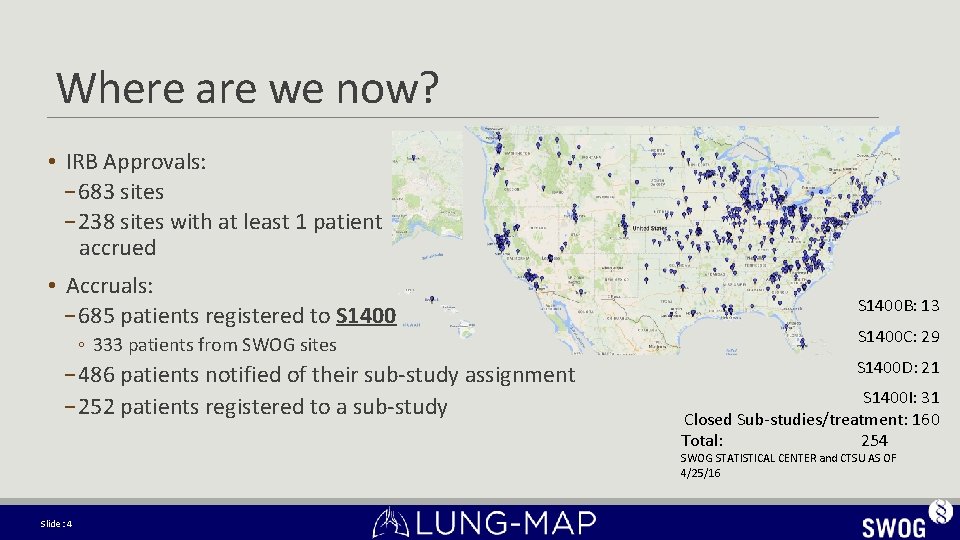
Where are we now? • IRB Approvals: − 683 sites − 238 sites with at least 1 patient accrued • Accruals: − 685 patients registered to S 1400 ◦ 333 patients from SWOG sites − 486 patients notified of their sub-study assignment − 252 patients registered to a sub-study S 1400 B: 13 S 1400 C: 29 S 1400 D: 21 S 1400 I: 31 Closed Sub-studies/treatment: 160 Total: 254 SWOG STATISTICAL CENTER and CTSU AS OF 4/25/16 Slide: 4
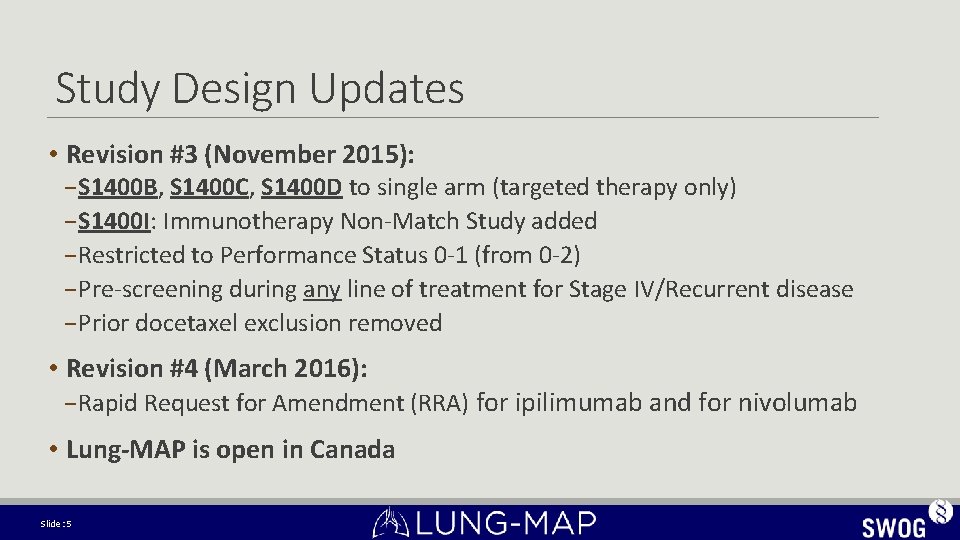
Study Design Updates • Revision #3 (November 2015): − S 1400 B, S 1400 C, S 1400 D to single arm (targeted therapy only) − S 1400 I: Immunotherapy Non-Match Study added − Restricted to Performance Status 0 -1 (from 0 -2) − Pre-screening during any line of treatment for Stage IV/Recurrent disease − Prior docetaxel exclusion removed • Revision #4 (March 2016): − Rapid Request for Amendment (RRA) for ipilimumab and for nivolumab • Lung-MAP is open in Canada Slide: 5
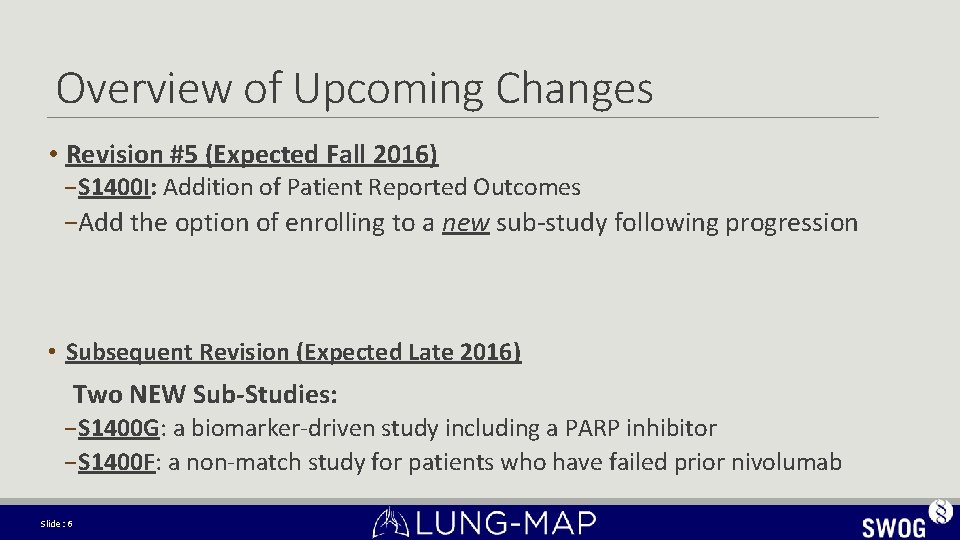
Overview of Upcoming Changes • Revision #5 (Expected Fall 2016) − S 1400 I: Addition of Patient Reported Outcomes −Add the option of enrolling to a new sub-study following progression • Subsequent Revision (Expected Late 2016) Two NEW Sub-Studies: − S 1400 G: a biomarker-driven study including a PARP inhibitor − S 1400 F: a non-match study for patients who have failed prior nivolumab Slide: 6
S 1400 I Patient Reported Outcomes JOSEPH UNGER, PH. D. SWOG BIOSTATISTICIAN (S 1400 IPRO) Slide: 7
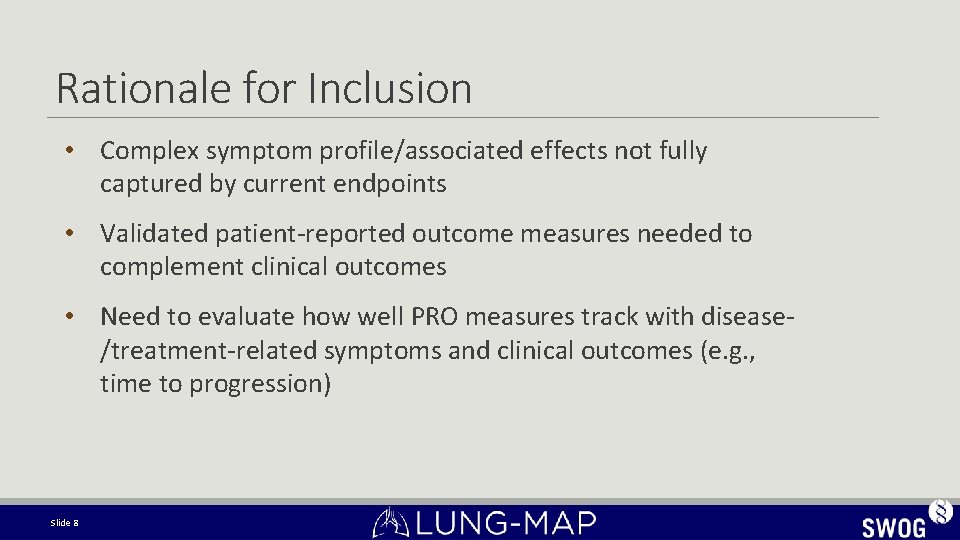
Rationale for Inclusion • Complex symptom profile/associated effects not fully captured by current endpoints • Validated patient-reported outcome measures needed to complement clinical outcomes • Need to evaluate how well PRO measures track with disease/treatment-related symptoms and clinical outcomes (e. g. , time to progression) Slide 8
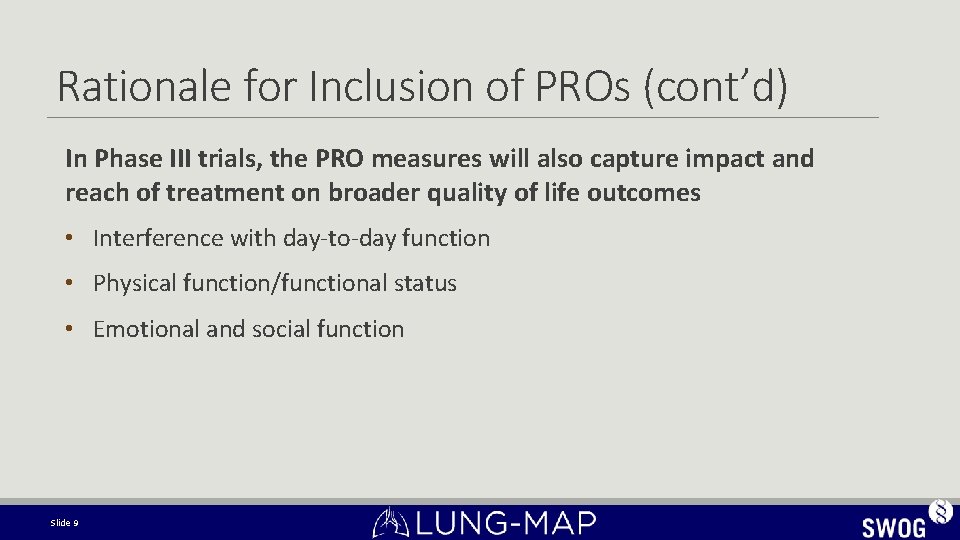
Rationale for Inclusion of PROs (cont’d) In Phase III trials, the PRO measures will also capture impact and reach of treatment on broader quality of life outcomes • Interference with day-to-day function • Physical function/functional status • Emotional and social function Slide 9
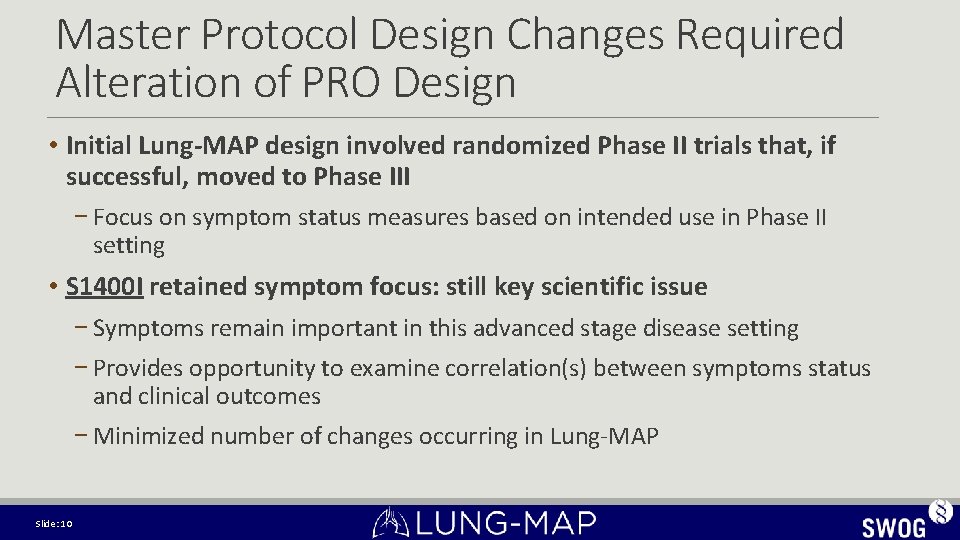
Master Protocol Design Changes Required Alteration of PRO Design • Initial Lung-MAP design involved randomized Phase II trials that, if successful, moved to Phase III − Focus on symptom status measures based on intended use in Phase II setting • S 1400 I retained symptom focus: still key scientific issue − Symptoms remain important in this advanced stage disease setting − Provides opportunity to examine correlation(s) between symptoms status and clinical outcomes − Minimized number of changes occurring in Lung-MAP Slide: 10
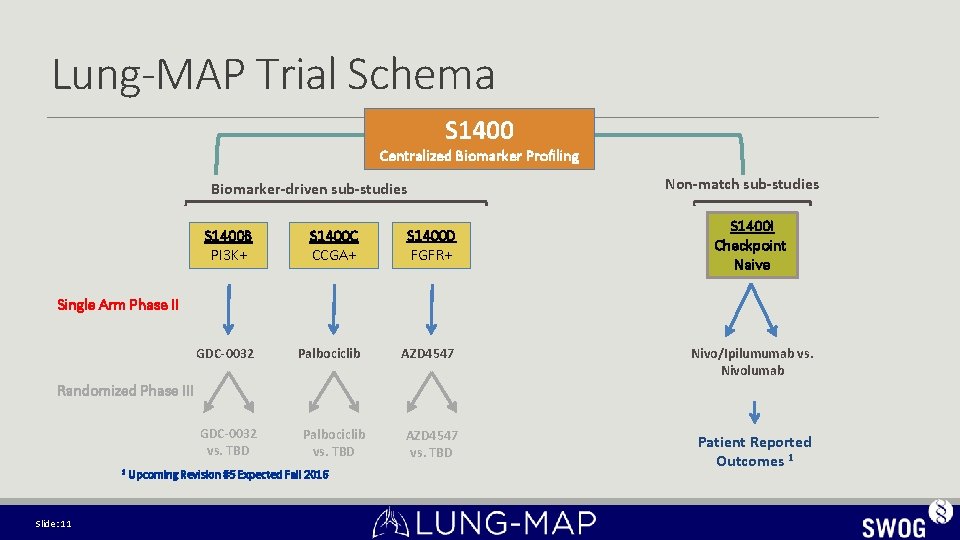
Lung-MAP Trial Schema S 1400 Centralized Biomarker Profiling Biomarker-driven sub-studies Non-match sub-studies S 1400 I Checkpoint Naive S 1400 B PI 3 K+ S 1400 C CCGA+ S 1400 D FGFR+ GDC-0032 Palbociclib AZD 4547 Nivo/Ipilumumab vs. Nivolumab AZD 4547 vs. TBD Patient Reported Outcomes 1 Single Arm Phase II Randomized Phase III GDC-0032 vs. TBD 1 Slide: 11 Palbociclib vs. TBD Upcoming Revision #5 Expected Fall 2016
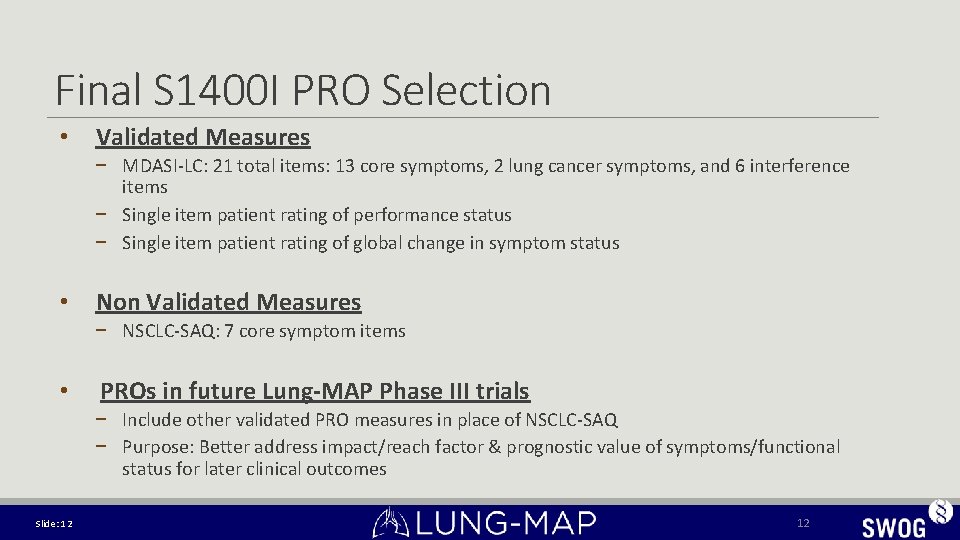
Final S 1400 I PRO Selection • Validated Measures − MDASI-LC: 21 total items: 13 core symptoms, 2 lung cancer symptoms, and 6 interference items − Single item patient rating of performance status − Single item patient rating of global change in symptom status • Non Validated Measures − NSCLC-SAQ: 7 core symptom items • PROs in future Lung-MAP Phase III trials − Include other validated PRO measures in place of NSCLC-SAQ − Purpose: Better address impact/reach factor & prognostic value of symptoms/functional status for later clinical outcomes Slide: 12 12
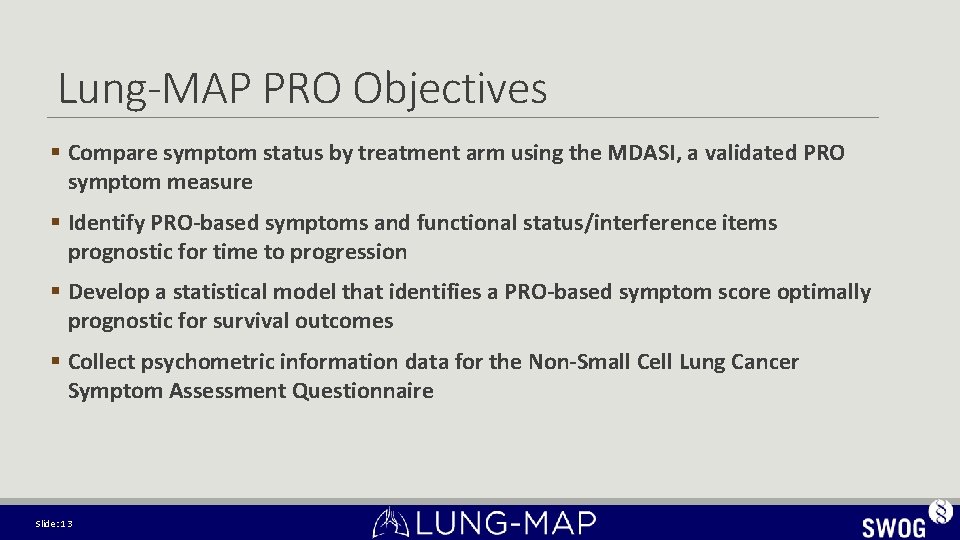
Lung-MAP PRO Objectives § Compare symptom status by treatment arm using the MDASI, a validated PRO symptom measure § Identify PRO-based symptoms and functional status/interference items prognostic for time to progression § Develop a statistical model that identifies a PRO-based symptom score optimally prognostic for survival outcomes § Collect psychometric information data for the Non-Small Cell Lung Cancer Symptom Assessment Questionnaire Slide: 13
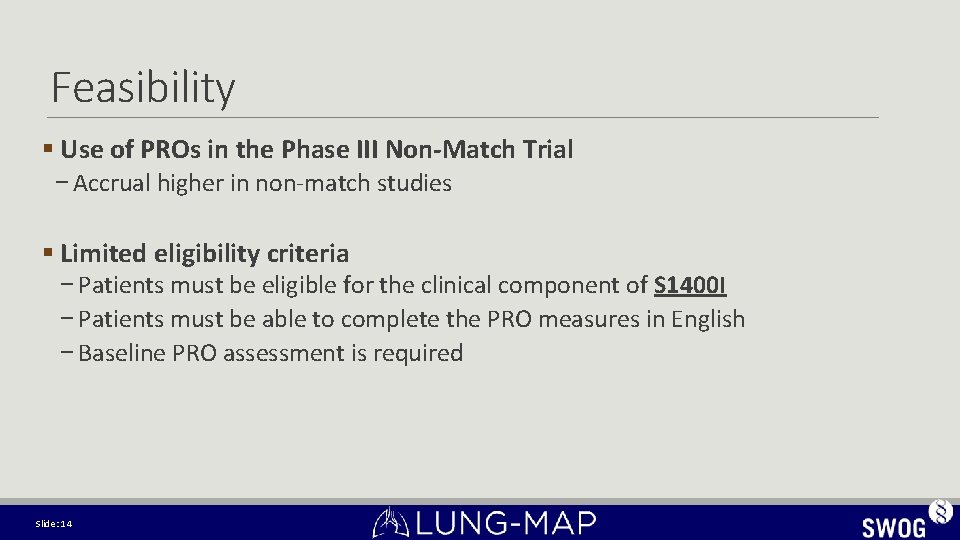
Feasibility § Use of PROs in the Phase III Non-Match Trial − Accrual higher in non-match studies § Limited eligibility criteria − Patients must be eligible for the clinical component of S 1400 I − Patients must be able to complete the PRO measures in English − Baseline PRO assessment is required Slide: 14
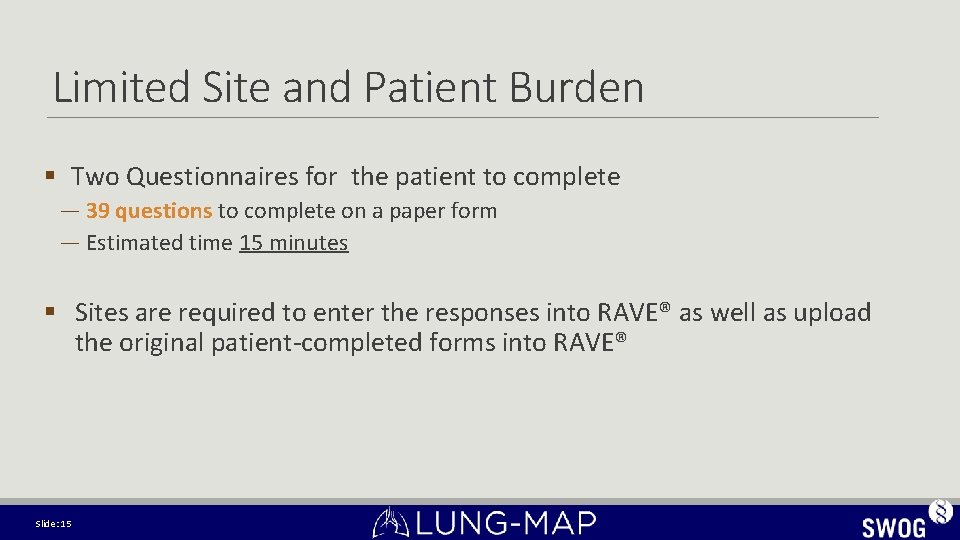
Limited Site and Patient Burden § Two Questionnaires for the patient to complete — 39 questions to complete on a paper form — Estimated time 15 minutes § Sites are required to enter the responses into RAVE® as well as upload the original patient-completed forms into RAVE® Slide: 15
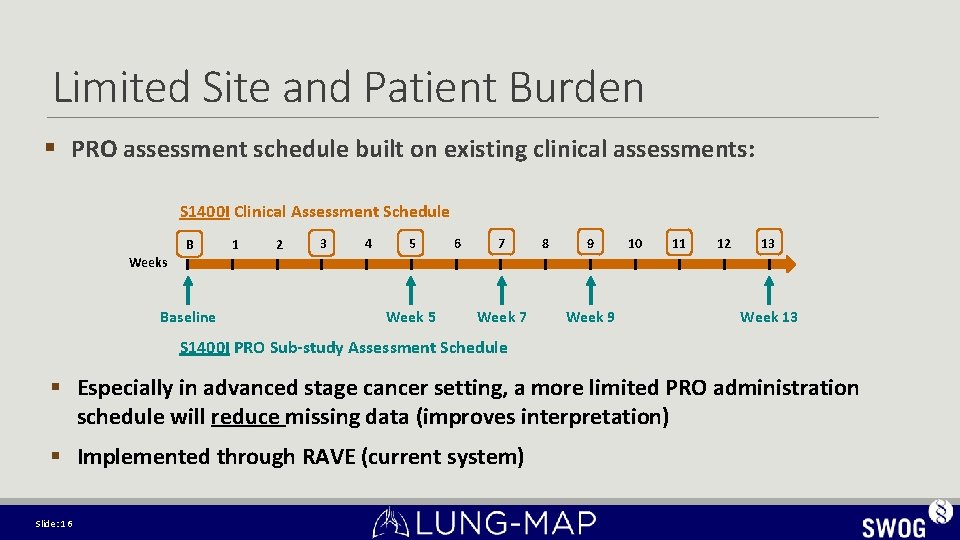
Limited Site and Patient Burden § PRO assessment schedule built on existing clinical assessments: S 1400 I Clinical Assessment Schedule B 1 2 3 4 5 6 7 8 9 10 11 12 13 Weeks Baseline Week 5 Week 7 Week 9 Week 13 S 1400 I PRO Sub-study Assessment Schedule § Especially in advanced stage cancer setting, a more limited PRO administration schedule will reduce missing data (improves interpretation) § Implemented through RAVE (current system) Slide: 16
Study Logistics MARY REDMAN, PHD STUDY LEAD BIOSTATISTICIAN Slide: 17
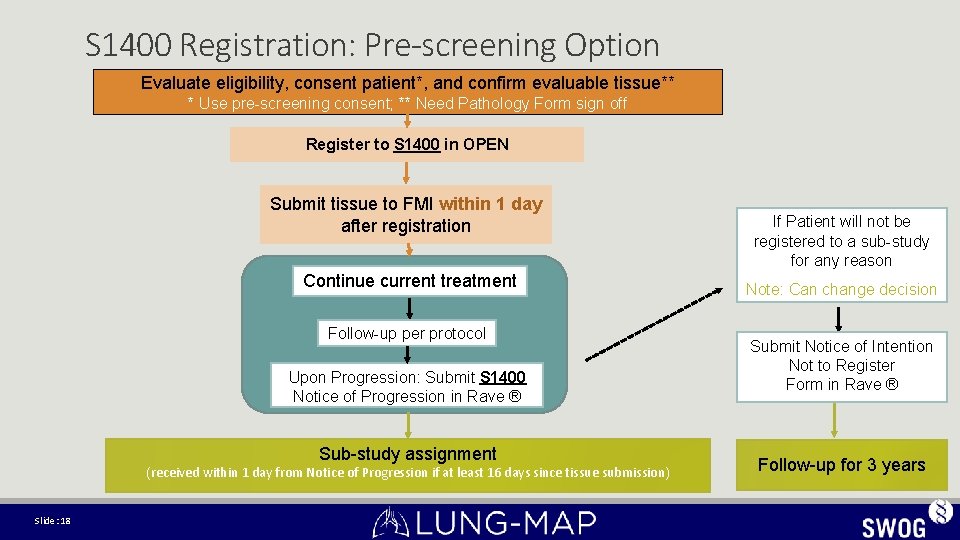
S 1400 Registration: Pre-screening Option Evaluate eligibility, consent patient*, and confirm evaluable tissue** * Use pre-screening consent; ** Need Pathology Form sign off Register to S 1400 in OPEN Submit tissue to FMI within 1 day after registration Continue current treatment Follow-up per protocol Upon Progression: Submit S 1400 Notice of Progression in Rave ® Sub-study assignment (received within 1 day from Notice of Progression if at least 16 days since tissue submission) Slide: 18 If Patient will not be registered to a sub-study for any reason Note: Can change decision Submit Notice of Intention Not to Register Form in Rave ® Follow-up for 3 years
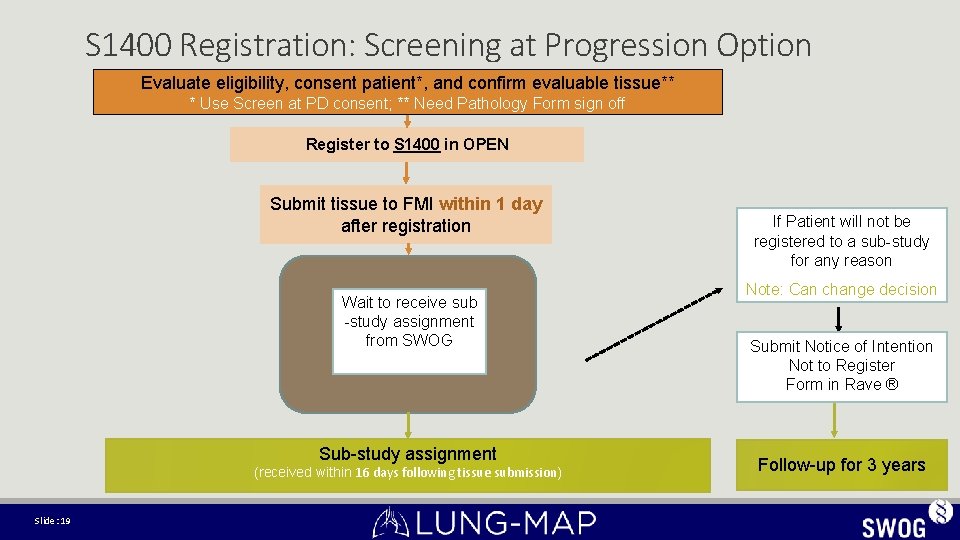
S 1400 Registration: Screening at Progression Option Evaluate eligibility, consent patient*, and confirm evaluable tissue** * Use Screen at PD consent; ** Need Pathology Form sign off Register to S 1400 in OPEN Submit tissue to FMI within 1 day after registration Wait to receive sub -study assignment from SWOG Sub-study assignment (received within 16 days following tissue submission) Slide: 19 If Patient will not be registered to a sub-study for any reason Note: Can change decision Submit Notice of Intention Not to Register Form in Rave ® Follow-up for 3 years
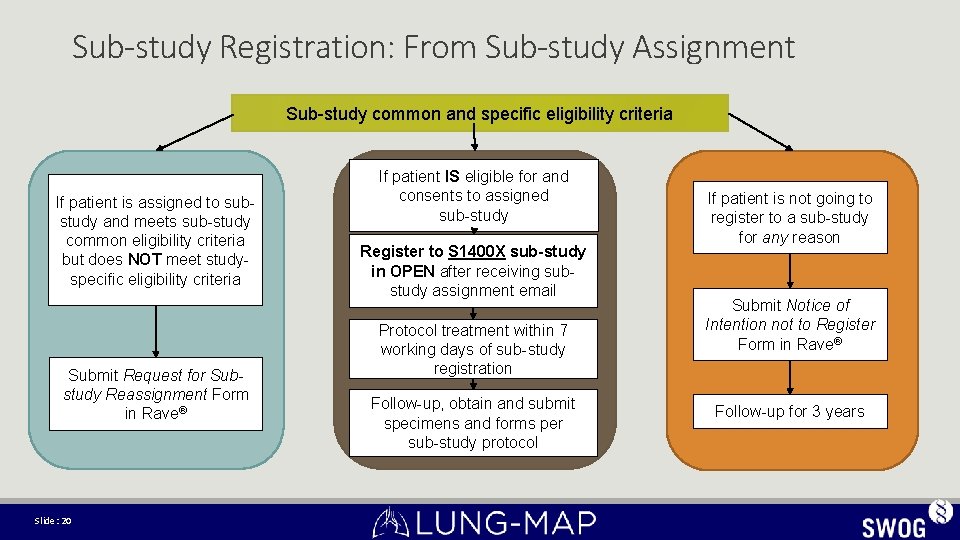
Sub-study Registration: From Sub-study Assignment Sub-study common and specific eligibility criteria If patient is assigned to substudy and meets sub-study common eligibility criteria but does NOT meet studyspecific eligibility criteria Submit Request for Substudy Reassignment Form in Rave Slide: 20 If patient IS eligible for and consents to assigned sub-study Register to S 1400 X sub-study in OPEN after receiving substudy assignment email Protocol treatment within 7 working days of sub-study registration Follow-up, obtain and submit specimens and forms per sub-study protocol If patient is not going to register to a sub-study for any reason Submit Notice of Intention not to Register Form in Rave Follow-up for 3 years
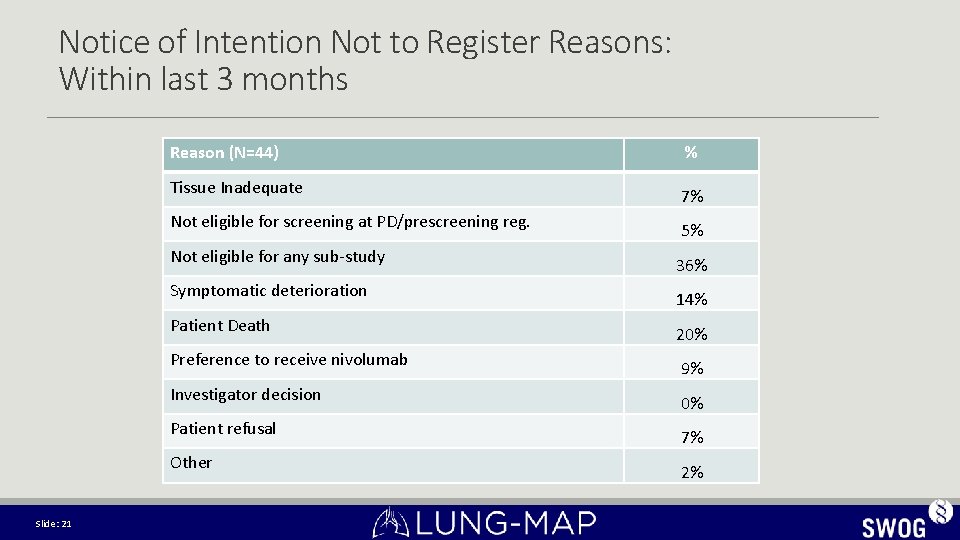
Notice of Intention Not to Register Reasons: Within last 3 months Reason (N=44) Tissue Inadequate Not eligible for screening at PD/prescreening reg. Not eligible for any sub-study Symptomatic deterioration Patient Death Preference to receive nivolumab Investigator decision Patient refusal Other Slide: 21 % 7% 5% 36% 14% 20% 9% 0% 7% 2%
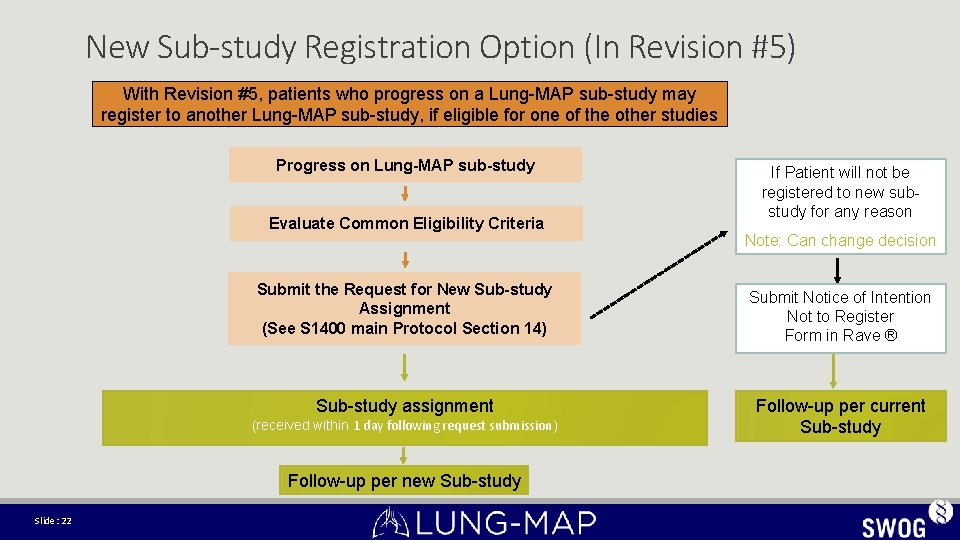
New Sub-study Registration Option (In Revision #5) With Revision #5, patients who progress on a Lung-MAP sub-study may register to another Lung-MAP sub-study, if eligible for one of the other studies Progress on Lung-MAP sub-study Evaluate Common Eligibility Criteria Note: Can change decision Submit the Request for New Sub-study Assignment (See S 1400 main Protocol Section 14) Submit Notice of Intention Not to Register Form in Rave ® Sub-study assignment Follow-up per current Sub-study (received within 1 day following request submission) Follow-up per new Sub-study Slide: 22 If Patient will not be registered to new substudy for any reason
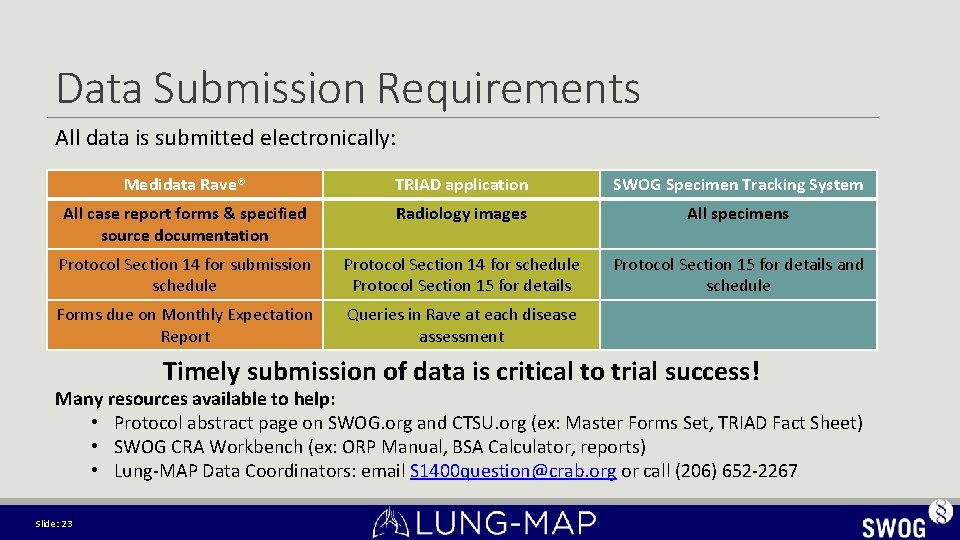
Data Submission Requirements All data is submitted electronically: Medidata Rave® TRIAD application SWOG Specimen Tracking System All case report forms & specified source documentation Radiology images All specimens Protocol Section 14 for submission schedule Protocol Section 14 for schedule Protocol Section 15 for details and schedule Forms due on Monthly Expectation Report Queries in Rave at each disease assessment Timely submission of data is critical to trial success! Many resources available to help: • Protocol abstract page on SWOG. org and CTSU. org (ex: Master Forms Set, TRIAD Fact Sheet) • SWOG CRA Workbench (ex: ORP Manual, BSA Calculator, reports) • Lung-MAP Data Coordinators: email S 1400 question@crab. org or call (206) 652 -2267 Slide: 23
Tissue Requirements PHILIP C. MACK, PHD STUDY CO-CHAIR, TRANSLATIONAL MEDICINE Slide: 24
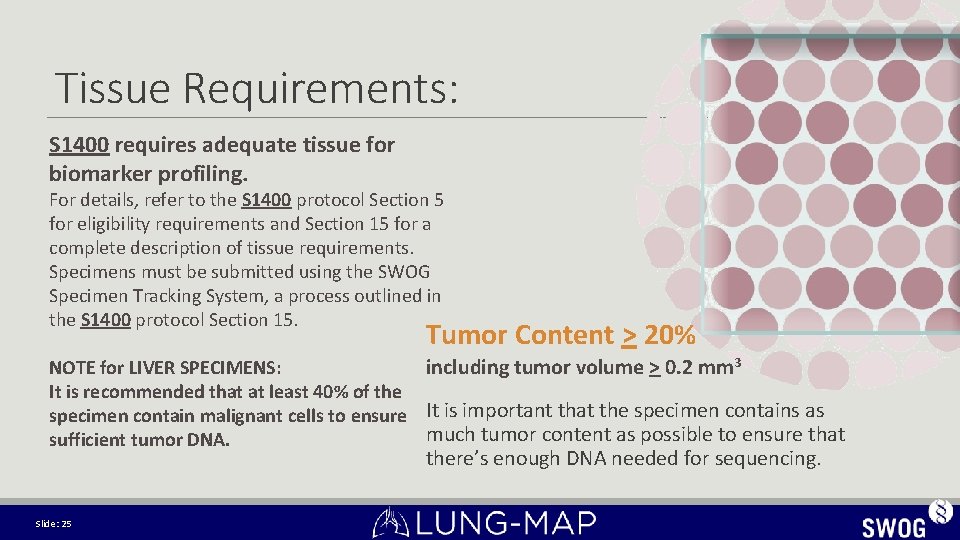
Tissue Requirements: S 1400 requires adequate tissue for biomarker profiling. For details, refer to the S 1400 protocol Section 5 for eligibility requirements and Section 15 for a complete description of tissue requirements. Specimens must be submitted using the SWOG Specimen Tracking System, a process outlined in the S 1400 protocol Section 15. Tumor Content > 20% including tumor volume > 0. 2 mm 3 NOTE for LIVER SPECIMENS: It is recommended that at least 40% of the specimen contain malignant cells to ensure It is important that the specimen contains as much tumor content as possible to ensure that sufficient tumor DNA. there’s enough DNA needed for sequencing. Slide: 25
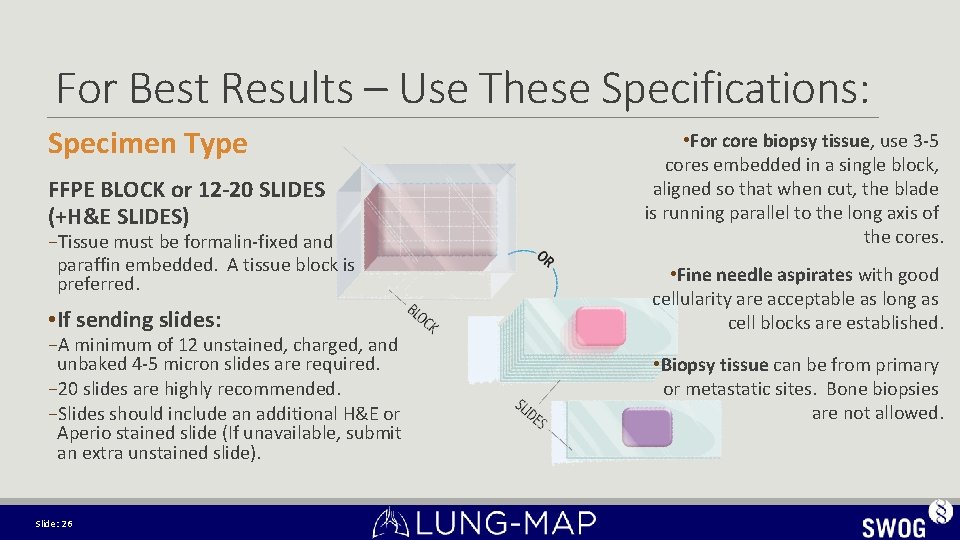
For Best Results – Use These Specifications: Specimen Type FFPE BLOCK or 12 -20 SLIDES (+H&E SLIDES) −Tissue must be formalin-fixed and paraffin embedded. A tissue block is preferred. • If sending slides: −A minimum of 12 unstained, charged, and unbaked 4 -5 micron slides are required. − 20 slides are highly recommended. −Slides should include an additional H&E or Aperio stained slide (If unavailable, submit an extra unstained slide). Slide: 26 • For core biopsy tissue, use 3 -5 cores embedded in a single block, aligned so that when cut, the blade is running parallel to the long axis of the cores. • Fine needle aspirates with good cellularity are acceptable as long as cell blocks are established. • Biopsy tissue can be from primary or metastatic sites. Bone biopsies are not allowed.
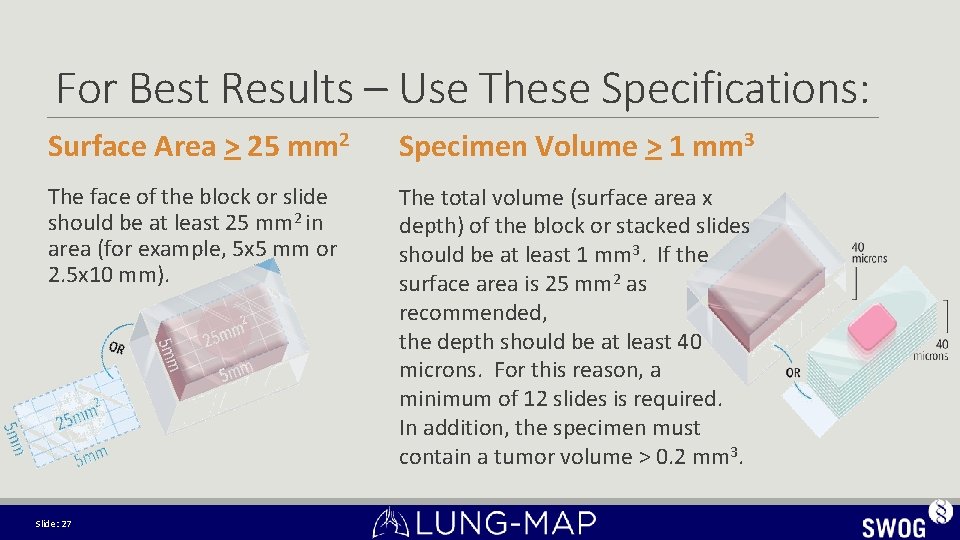
For Best Results – Use These Specifications: Surface Area > 25 mm 2 Specimen Volume > 1 mm 3 The face of the block or slide should be at least 25 mm 2 in area (for example, 5 x 5 mm or 2. 5 x 10 mm). The total volume (surface area x depth) of the block or stacked slides should be at least 1 mm 3. If the surface area is 25 mm 2 as recommended, the depth should be at least 40 microns. For this reason, a minimum of 12 slides is required. In addition, the specimen must contain a tumor volume > 0. 2 mm 3. Slide: 27
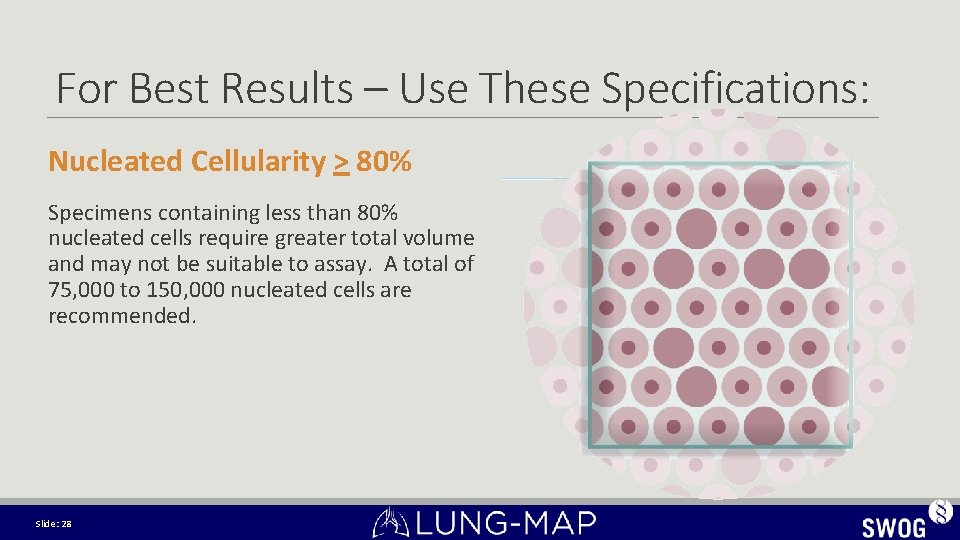
For Best Results – Use These Specifications: Nucleated Cellularity > 80% Specimens containing less than 80% nucleated cells require greater total volume and may not be suitable to assay. A total of 75, 000 to 150, 000 nucleated cells are recommended. Slide: 28
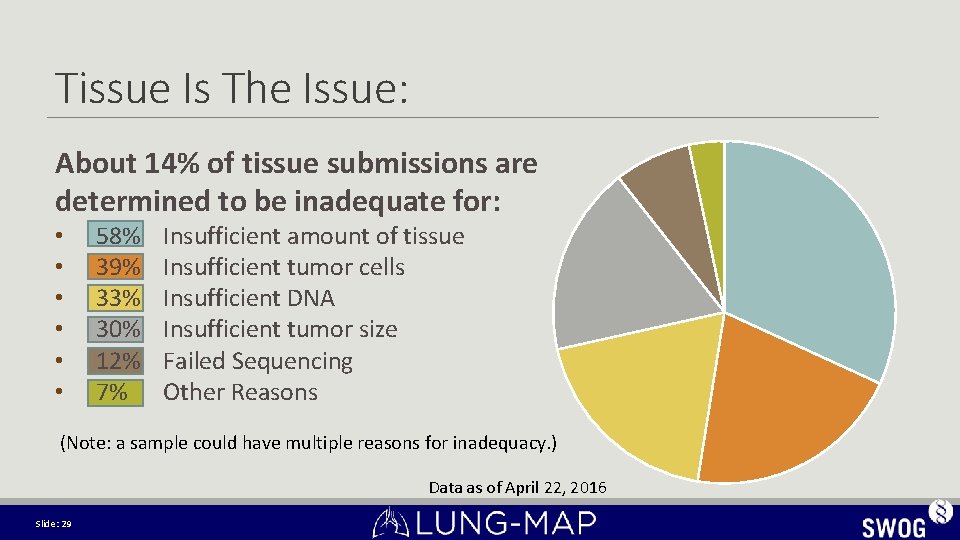
Tissue Is The Issue: About 14% of tissue submissions are determined to be inadequate for: • • • 58% 39% 33% 30% 12% 7% Insufficient amount of tissue Insufficient tumor cells Insufficient DNA Insufficient tumor size Failed Sequencing Other Reasons (Note: a sample could have multiple reasons for inadequacy. ) Data as of April 22, 2016 Slide: 29
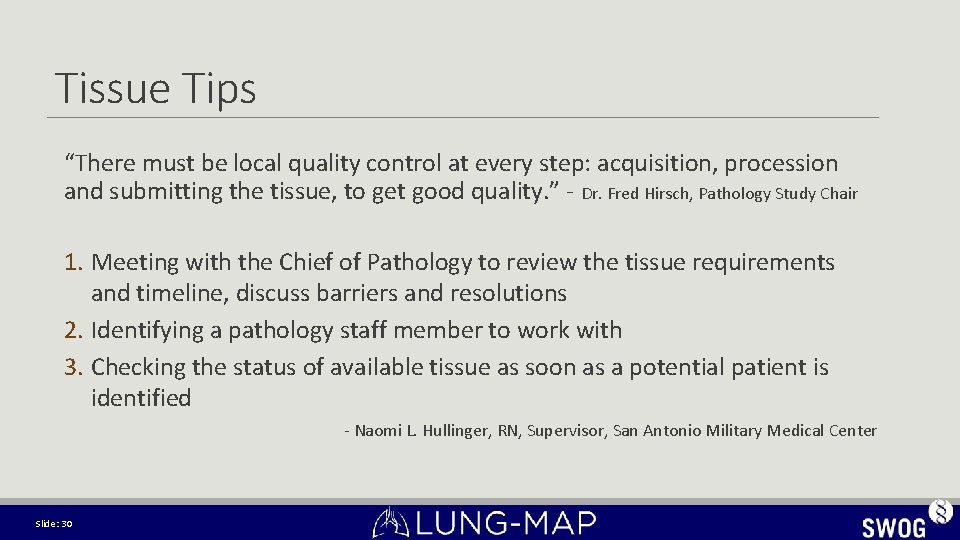
Tissue Tips “There must be local quality control at every step: acquisition, procession and submitting the tissue, to get good quality. ” - Dr. Fred Hirsch, Pathology Study Chair 1. Meeting with the Chief of Pathology to review the tissue requirements and timeline, discuss barriers and resolutions 2. Identifying a pathology staff member to work with 3. Checking the status of available tissue as soon as a potential patient is identified - Naomi L. Hullinger, RN, Supervisor, San Antonio Military Medical Center Slide: 30
Quality Assurance and Monitoring ELAINE ARMSTRONG, MS SWOG QUALITY ASSURANCE MANAGER Slide: 31
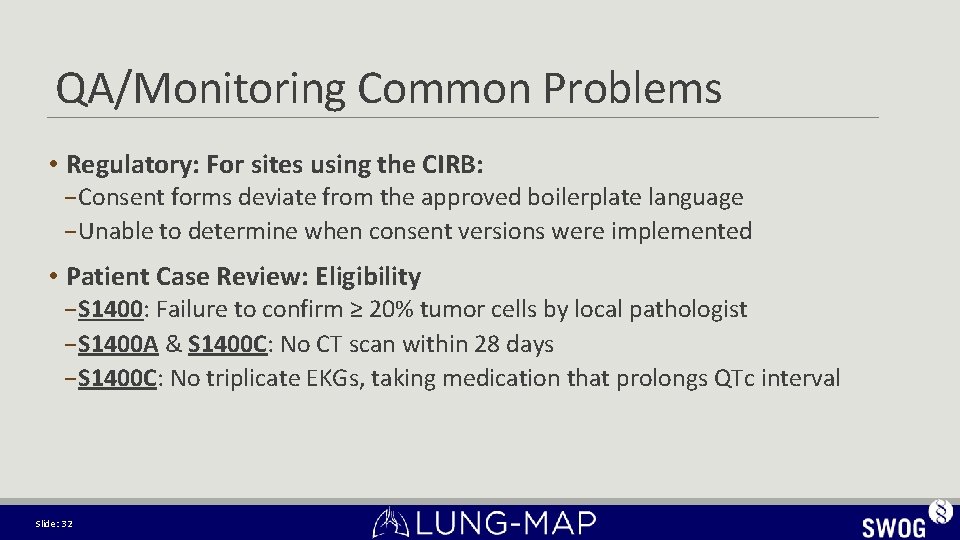
QA/Monitoring Common Problems • Regulatory: For sites using the CIRB: − Consent forms deviate from the approved boilerplate language − Unable to determine when consent versions were implemented • Patient Case Review: Eligibility − S 1400: Failure to confirm ≥ 20% tumor cells by local pathologist − S 1400 A & S 1400 C: No CT scan within 28 days − S 1400 C: No triplicate EKGs, taking medication that prolongs QTc interval Slide: 32
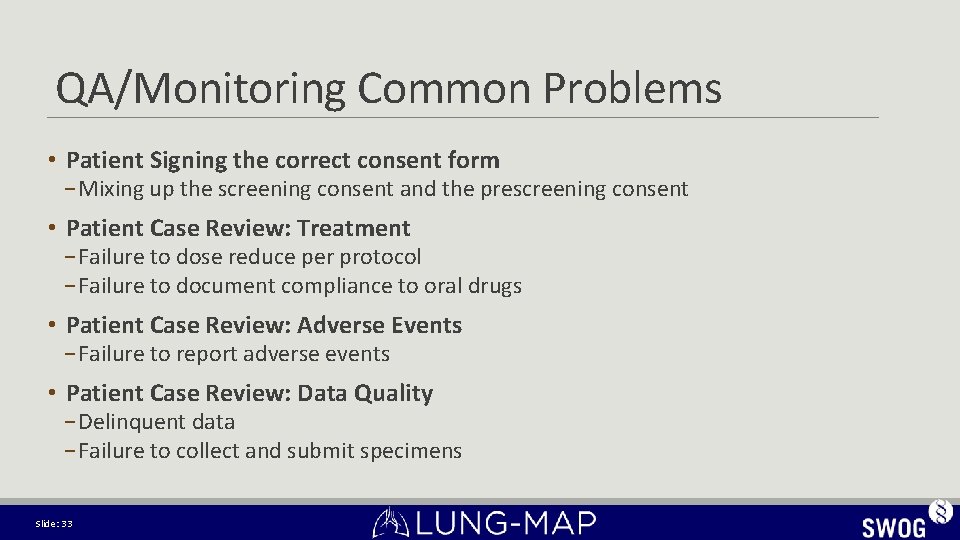
QA/Monitoring Common Problems • Patient Signing the correct consent form − Mixing up the screening consent and the prescreening consent • Patient Case Review: Treatment − Failure to dose reduce per protocol − Failure to document compliance to oral drugs • Patient Case Review: Adverse Events − Failure to report adverse events • Patient Case Review: Data Quality − Delinquent data − Failure to collect and submit specimens Slide: 33
Accrual Enhancement Committee ROY HERBST, MD, PHD STUDY CO-CHAIR, MEDICAL ONCOLOGY Slide: 34
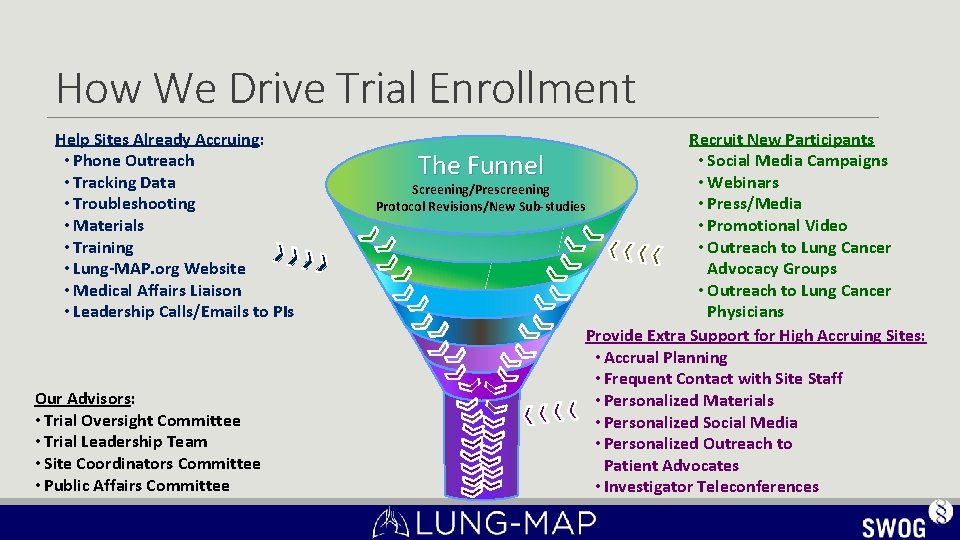
How We Drive Trial Enrollment Help Sites Already Accruing: • Phone Outreach • Tracking Data • Troubleshooting • Materials • Training • Lung-MAP. org Website • Medical Affairs Liaison • Leadership Calls/Emails to PIs Our Advisors: • Trial Oversight Committee • Trial Leadership Team • Site Coordinators Committee • Public Affairs Committee Recruit New Participants • Social Media Campaigns The Funnel • Webinars Screening/Prescreening • Press/Media Protocol Revisions/New Sub-studies • Promotional Video • Outreach to Lung Cancer Advocacy Groups • Outreach to Lung Cancer Physicians Provide Extra Support for High Accruing Sites: • Accrual Planning • Frequent Contact with Site Staff • Personalized Materials • Personalized Social Media • Personalized Outreach to Patient Advocates • Investigator Teleconferences
Site Coordinators Committee Exciting news! We are seeking applicants for a new S 1400 Lung-MAP Site Coordinators Committee. We would like the members to represent all types of sites: NCTN, NCORP, CCTG, academic, minority, etc. SWOG has funds to support travel for members to two SCC meetings per year, in conjunction with the SWOG Group Meeting, and funding for up to four conference calls per year. Apply at: https: //www. surveymonkey. com/r/LMAPSCC. Application Deadline May 15, 2016 Slide: 36
CCS Associates Recognition Caroline C. Sigman, Ph. D │ President, CEO Beverly Smolich, Ph. D | Director, Clinical Research Projects Accrual Enhancement Support: • Kisha Thomas, MPH, CCRA Project Manager, Lead Clinical Research Associate • Donya Bagheri, MS, DABT Executive Director, Research and Development • Rona Ackerman, MS Executive Administrative Associate Slide: 37 Drug Selection and Protocol Support: • Lynn Parker Thomas, Ph. D Senior Scientist • Amie Franklin, Ph. D Senior Scientist • Meena Navidi, Ph. D Director, Preclinical Projects • Danielle Zaragosa, MA Regulatory Affairs Associate
Site Perspectives RO Y HERBST, MD, PHD ST UD Y CO-CHAIR , MEDICAL ONCOLOGY EMILY SHARDELOW, BS, CCRP CLINICAL RESEARCH ASSOCIATE II UNIVERSITY OF KENTUCKY MARKEY CANCER CENTER CLINICAL RESEARCH ORGANIZATION (MCC CRO) JAMES L. WADE, III, MD, FACP, FASCO MEDICAL ONCOLOGY / HEMATOLOGY CANCER CARE SPECIALISTS OF CENTRAL ILLINOIS Slide: 38
Mapping out the Lung-Map Study: Using a Site Schema to Facilitate Operationalization EMILY SHARDELOW, BS, CCRP CLINICAL RESEARCH ASSOCIATE II Slide 39
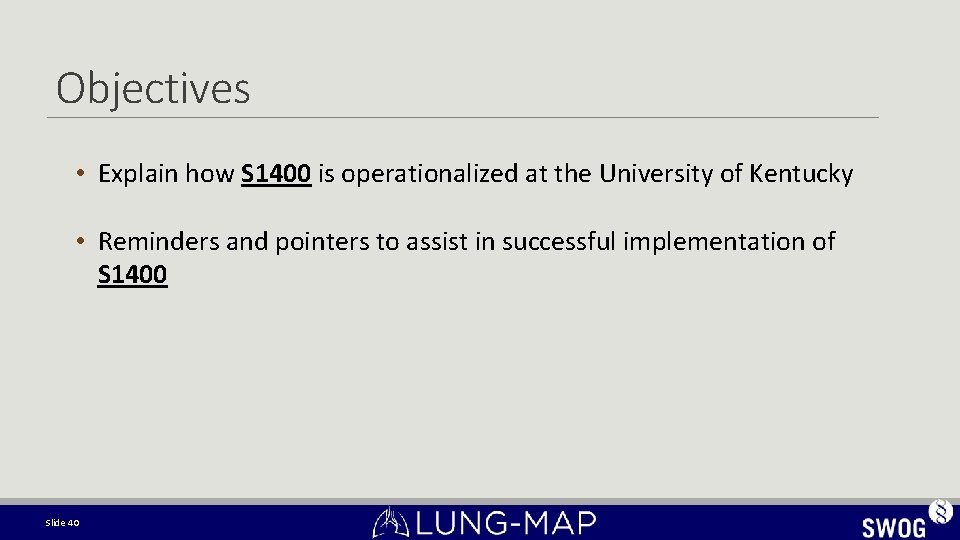
Objectives • Explain how S 1400 is operationalized at the University of Kentucky • Reminders and pointers to assist in successful implementation of S 1400 Slide 40
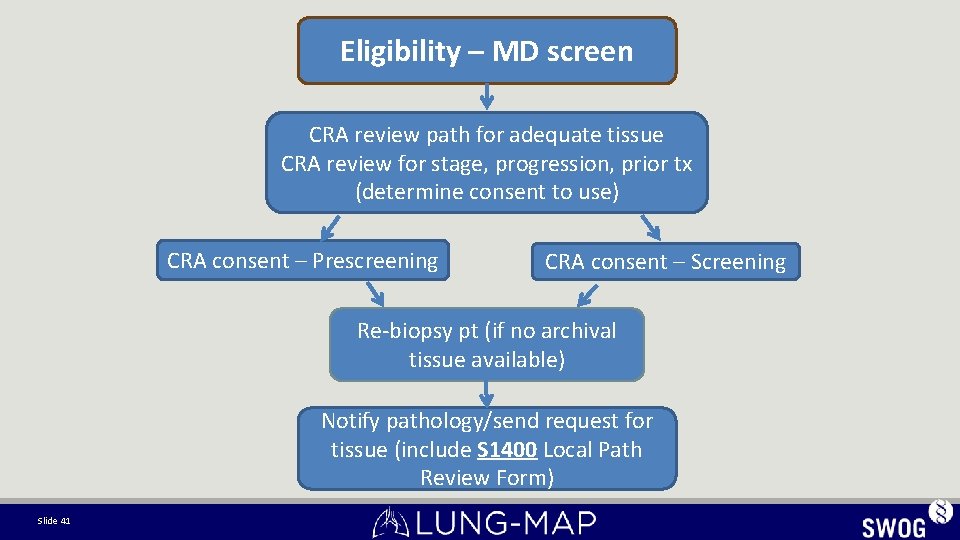
Eligibility – MD screen CRA review path for adequate tissue CRA review for stage, progression, prior tx (determine consent to use) CRA consent – Prescreening CRA consent – Screening Re-biopsy pt (if no archival tissue available) Notify pathology/send request for tissue (include S 1400 Local Path Review Form) Slide 41
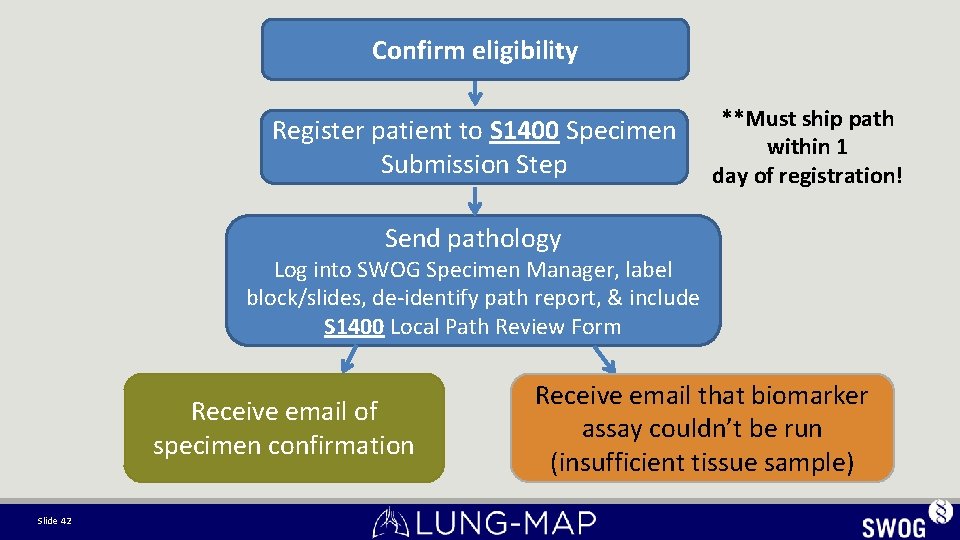
Confirm eligibility Register patient to S 1400 Specimen Submission Step **Must ship path within 1 day of registration! Send pathology Log into SWOG Specimen Manager, label block/slides, de-identify path report, & include S 1400 Local Path Review Form Receive email of specimen confirmation Slide 42 Receive email that biomarker assay couldn’t be run (insufficient tissue sample)
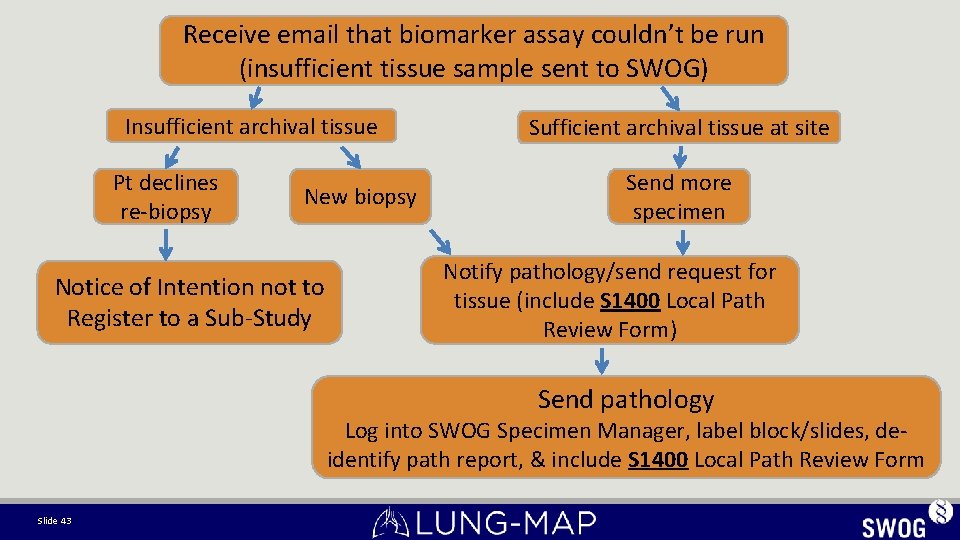
Receive email that biomarker assay couldn’t be run (insufficient tissue sample sent to SWOG) Insufficient archival tissue Pt declines re-biopsy New biopsy Notice of Intention not to Register to a Sub-Study Sufficient archival tissue at site Send more specimen Notify pathology/send request for tissue (include S 1400 Local Path Review Form) Send pathology Log into SWOG Specimen Manager, label block/slides, deidentify path report, & include S 1400 Local Path Review Form Slide 43
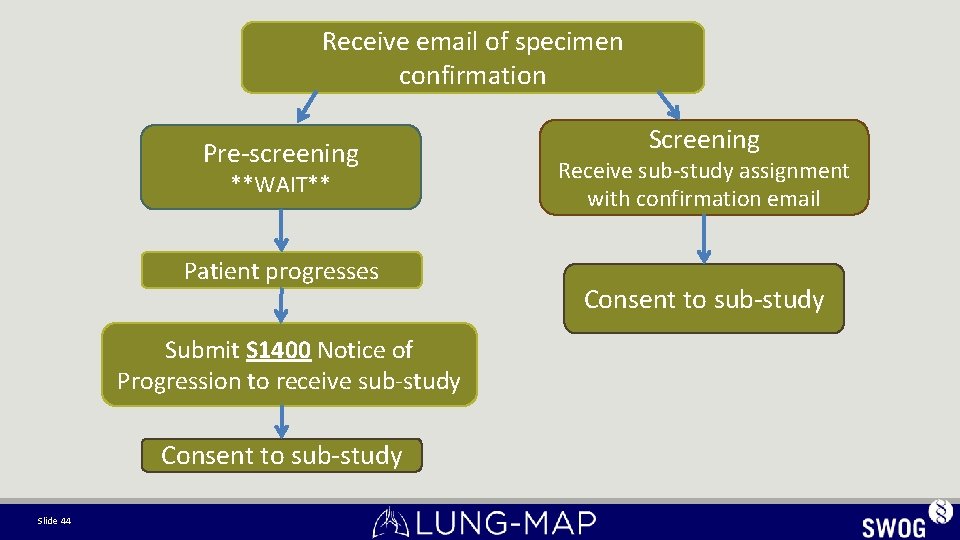
Receive email of specimen confirmation Pre-screening **WAIT** Patient progresses Submit S 1400 Notice of Progression to receive sub-study Consent to sub-study Slide 44 Screening Receive sub-study assignment with confirmation email Consent to sub-study
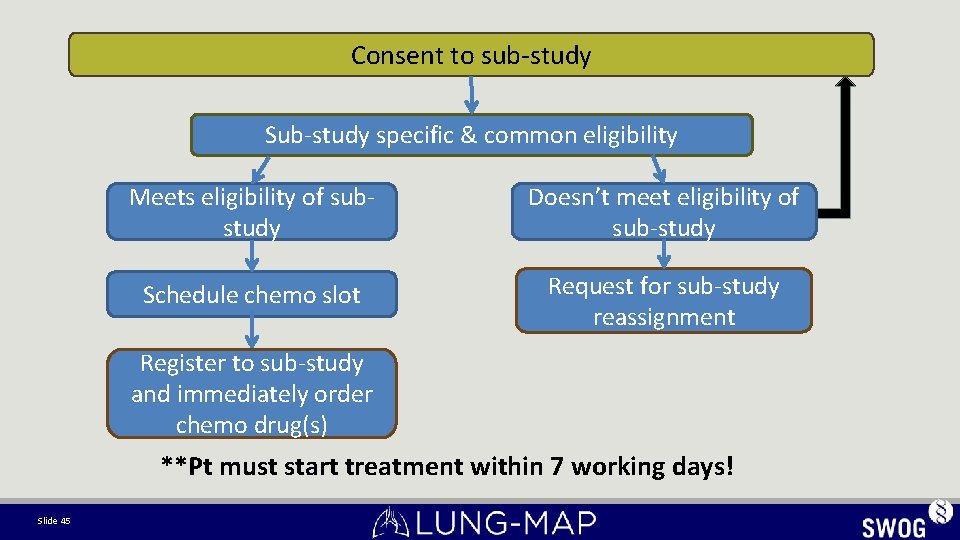
Consent to sub-study Sub-study specific & common eligibility Meets eligibility of substudy Doesn’t meet eligibility of sub-study Schedule chemo slot Request for sub-study reassignment Register to sub-study and immediately order chemo drug(s) **Pt must start treatment within 7 working days! Slide 45
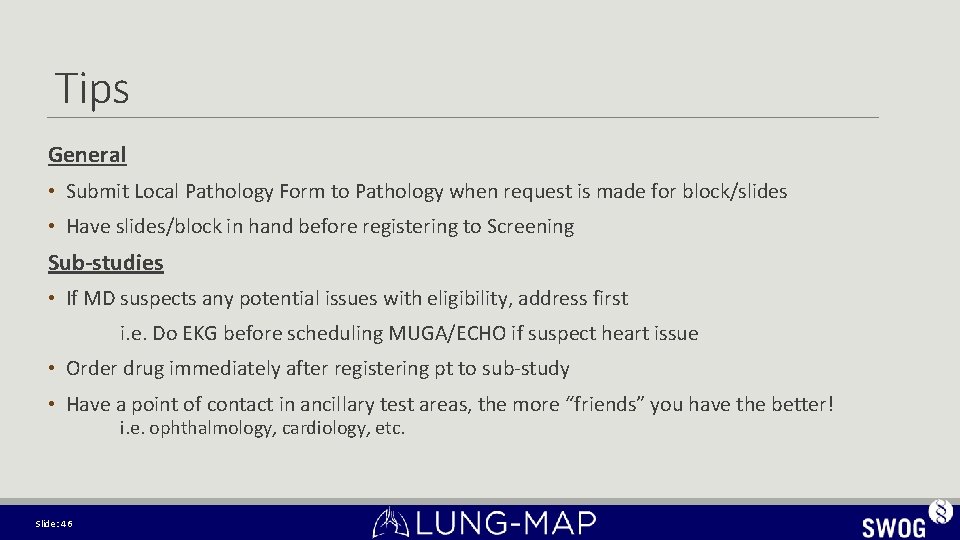
Tips General • Submit Local Pathology Form to Pathology when request is made for block/slides • Have slides/block in hand before registering to Screening Sub-studies • If MD suspects any potential issues with eligibility, address first i. e. Do EKG before scheduling MUGA/ECHO if suspect heart issue • Order drug immediately after registering pt to sub-study • Have a point of contact in ancillary test areas, the more “friends” you have the better! i. e. ophthalmology, cardiology, etc. Slide: 46
Heartland NCORP S 1400 Experience JAMES L. WADE III, MD, FACP, FASCO HEARTLAND NCORP PI Slide 47
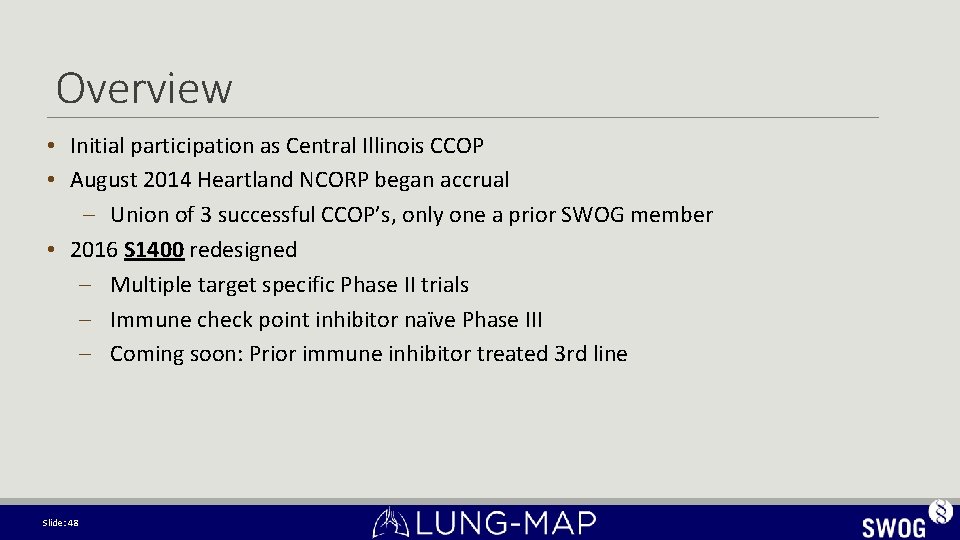
Overview • Initial participation as Central Illinois CCOP • August 2014 Heartland NCORP began accrual – Union of 3 successful CCOP’s, only one a prior SWOG member • 2016 S 1400 redesigned – Multiple target specific Phase II trials – Immune check point inhibitor naïve Phase III – Coming soon: Prior immune inhibitor treated 3 rd line Slide: 48
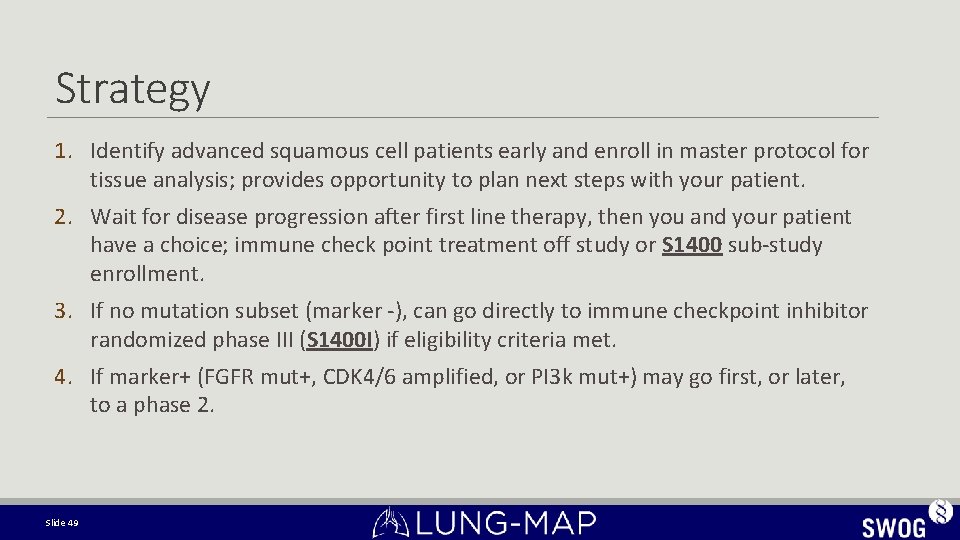
Strategy 1. Identify advanced squamous cell patients early and enroll in master protocol for tissue analysis; provides opportunity to plan next steps with your patient. 2. Wait for disease progression after first line therapy, then you and your patient have a choice; immune check point treatment off study or S 1400 sub-study enrollment. 3. If no mutation subset (marker -), can go directly to immune checkpoint inhibitor randomized phase III (S 1400 I) if eligibility criteria met. 4. If marker+ (FGFR mut+, CDK 4/6 amplified, or PI 3 k mut+) may go first, or later, to a phase 2. Slide 49
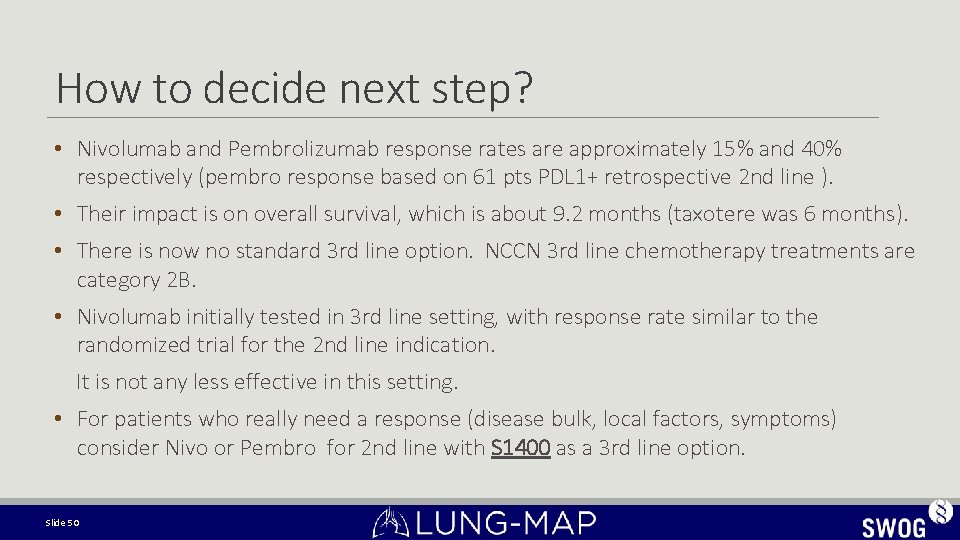
How to decide next step? • Nivolumab and Pembrolizumab response rates are approximately 15% and 40% respectively (pembro response based on 61 pts PDL 1+ retrospective 2 nd line ). • Their impact is on overall survival, which is about 9. 2 months (taxotere was 6 months). • There is now no standard 3 rd line option. NCCN 3 rd line chemotherapy treatments are category 2 B. • Nivolumab initially tested in 3 rd line setting, with response rate similar to the randomized trial for the 2 nd line indication. It is not any less effective in this setting. • For patients who really need a response (disease bulk, local factors, symptoms) consider Nivo or Pembro for 2 nd line with S 1400 as a 3 rd line option. Slide 50
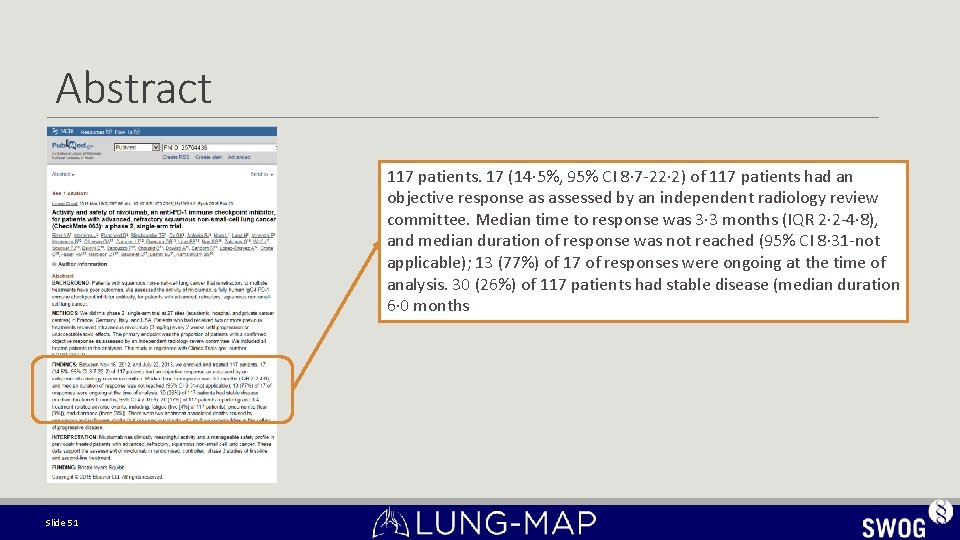
Abstract 117 patients. 17 (14· 5%, 95% CI 8· 7 -22· 2) of 117 patients had an objective response as assessed by an independent radiology review committee. Median time to response was 3· 3 months (IQR 2· 2 -4· 8), and median duration of response was not reached (95% CI 8· 31 -not applicable); 13 (77%) of 17 of responses were ongoing at the time of analysis. 30 (26%) of 117 patients had stable disease (median duration 6· 0 months Slide 51
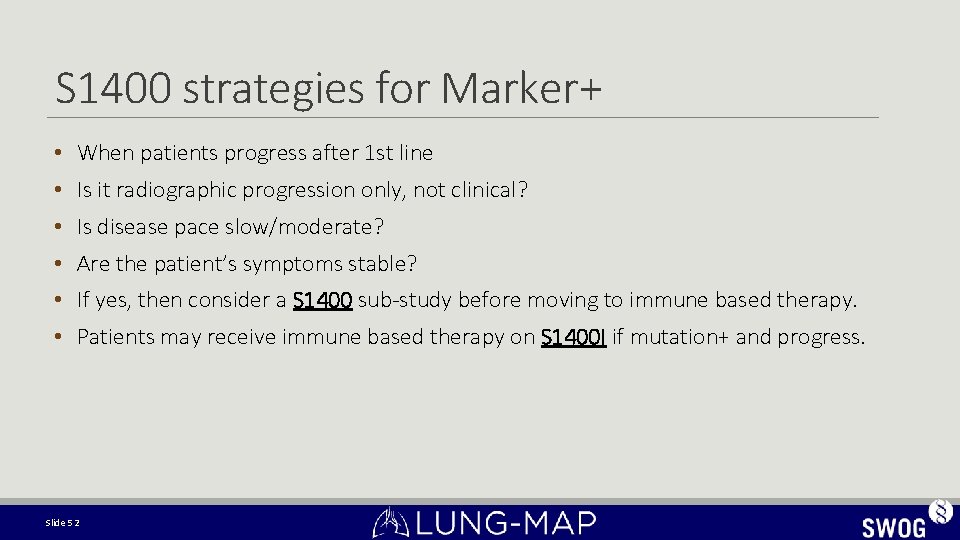
S 1400 strategies for Marker+ • When patients progress after 1 st line • Is it radiographic progression only, not clinical? • Is disease pace slow/moderate? • Are the patient’s symptoms stable? • If yes, then consider a S 1400 sub-study before moving to immune based therapy. • Patients may receive immune based therapy on S 1400 I if mutation+ and progress. Slide 52
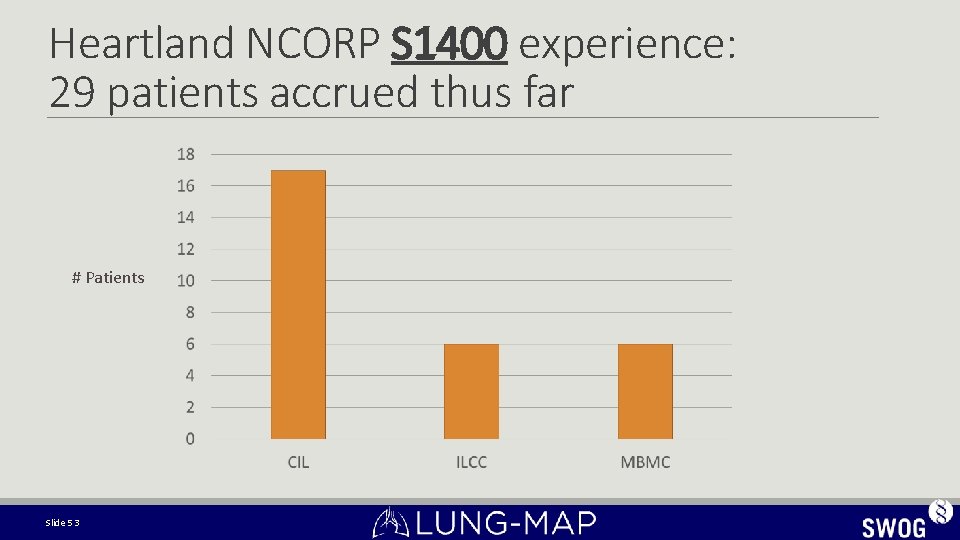
Heartland NCORP S 1400 experience: 29 patients accrued thus far # Patients Slide 53
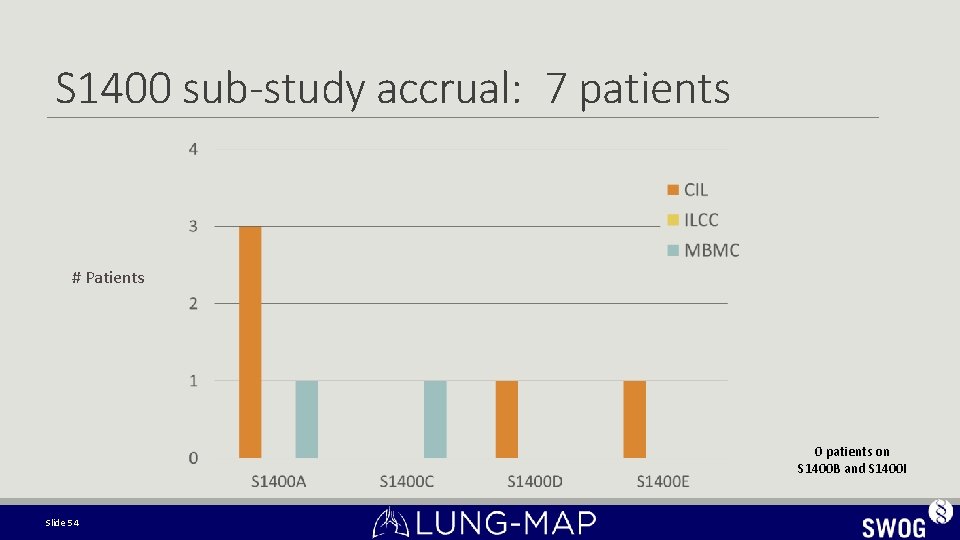
S 1400 sub-study accrual: 7 patients # Patients 0 patients on S 1400 B and S 1400 I Slide 54
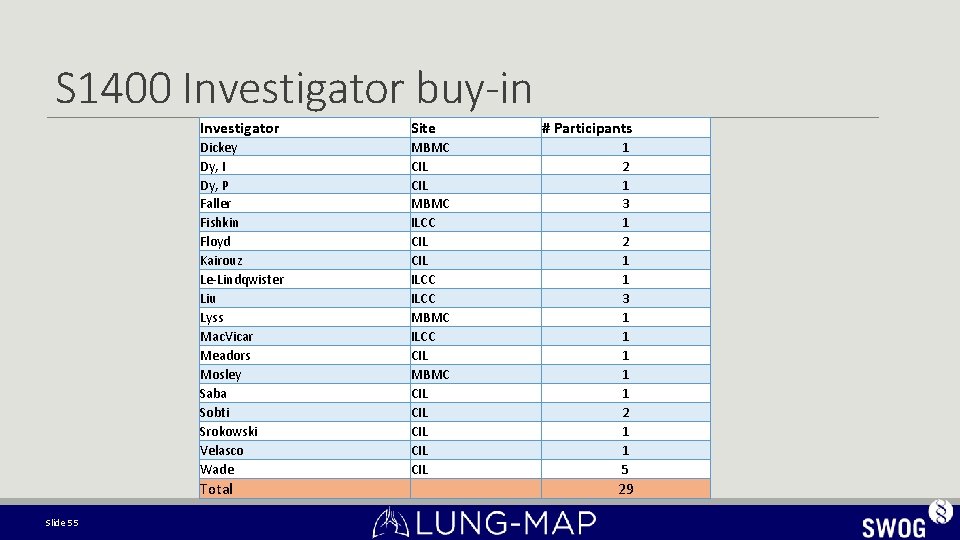
S 1400 Investigator buy-in Slide 55 Investigator Site Dickey Dy, I Dy, P Faller Fishkin Floyd Kairouz Le-Lindqwister Liu Lyss Mac. Vicar Meadors Mosley Saba Sobti Srokowski Velasco Wade MBMC CIL MBMC ILCC CIL ILCC MBMC ILCC CIL MBMC CIL CIL CIL Total # Participants 1 2 1 3 1 2 1 1 3 1 1 1 2 1 1 5 29
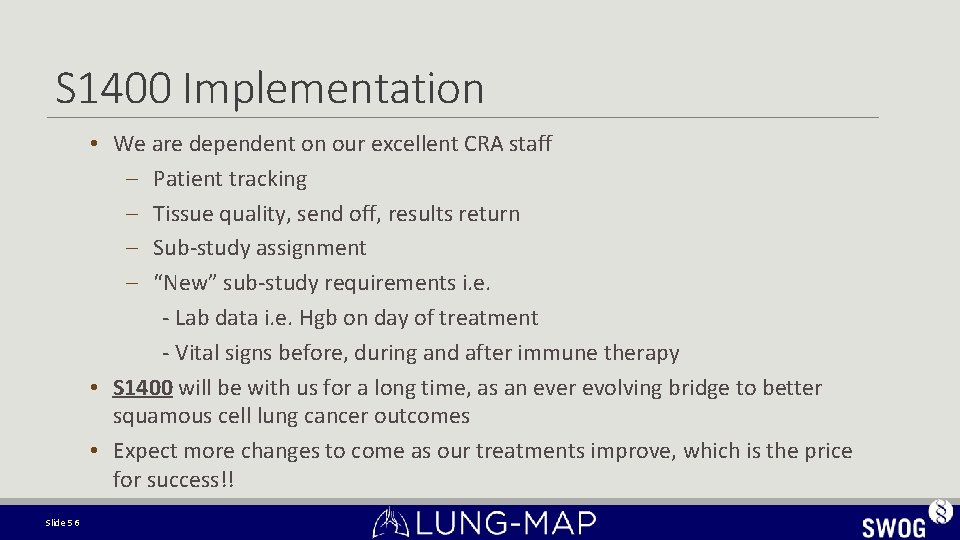
S 1400 Implementation • We are dependent on our excellent CRA staff – Patient tracking – Tissue quality, send off, results return – Sub-study assignment – “New” sub-study requirements i. e. - Lab data i. e. Hgb on day of treatment - Vital signs before, during and after immune therapy • S 1400 will be with us for a long time, as an ever evolving bridge to better squamous cell lung cancer outcomes • Expect more changes to come as our treatments improve, which is the price for success!! Slide 56
Questions? Thank you for your time. The slides presented today will be available on the SWOG website S 1400 Protocol Abstract page Other Study Materials S 1400 Group Meeting Materials link Slide: 57