
S 1605 Phase 2 trial of Atezolizumab in
S 1605: Phase 2 trial of Atezolizumab in BCG-unresponsive non-muscle invasive bladder cancer. SC: Peter Black, UBC Parminder Singh, Mayo Clinic
S 1605 Agenda 1. Introduction 2. Protocol Overview: 3. Translational Medicine & Bio-Banking � Study Objectives 4. Monitoring & Auditing � Inclusion/Exclusion Criteria 5. Investigator Responsibilities � Enrollment Goals � Visit Schedule � Study Procedures 6. Patient Perspective 7. Questions and Answers
Introduction Black & Singh
S 1605 SWOG Study Team Principal Investigators � Peter Black, M. D. (Urology) University of British Columbia Phone: 604/875 -4301 E-mail: pblack@mail. ubc. ca � Parminder Singh, M. D. (Medical Oncology) Mayo Clinic Arizona Phone: 480/342 -4800 Email: Singh. Parminder@mayo. edu � Seth Lerner, M. D. (Urology) Scott Department of Urology Baylor College of Medicine Phone: 713/798 -6841 E-mail: slerner@bcm. edu
S 1605 SWOG Study Team Protocol Coordinator � Nicki Trevino SWOG Operations Office ntrevino@swog. org Biostatisticians � Cathy Tangen, Dr. P. H. (Biostatistics) � Michael Wu, Ph. D. (Translational Studies) � Melissa Plets, M. S. SWOG Statistical Center Fred Hutchinson Cancer Research Center E-mail: ctangen@fredhutch. org E-mail: mcwu@fredhutch. org E-mail: mplets@fredhutch. org
S 1605 SWOG Study Team Translational Study Chair � David Mc. Conkey, Ph. D. Greenberg Bladder Cancer Institute Brady Urological Institute at Johns Hopkins Email: djmcconkey@jhmi. edu Patient Advocate � Rick Bangs E-mail: chezrick@comcast. net Pathologist � Scott Lucia, M. D. University of Colorado Scott. Lucia@ucdenver. edu
S 1605 – Intergroup Participation Alliance �Michael Woods, MD University of North Carolina ECOG-ACRIN �Trinity Bivalacqua, MD, Ph. D Brady Urological Institute at Johns Hopkins CCTG �Wassim Kassouf, MD Mc. Gill University
Study Objectives P Black

S 1605 Phase 2 trial of Atezolizumab in BCGunresponsive non-muscle invasive bladder cancer.
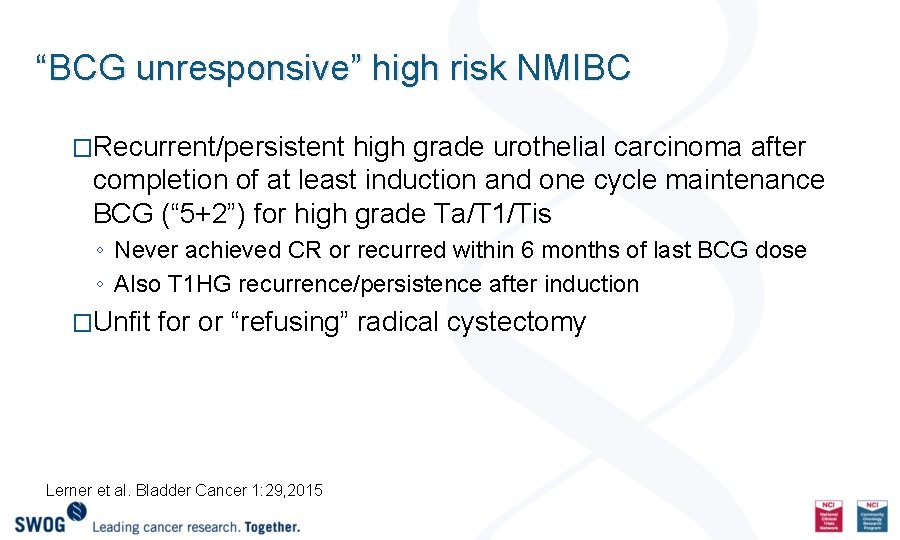
“BCG unresponsive” high risk NMIBC �Recurrent/persistent high grade urothelial carcinoma after completion of at least induction and one cycle maintenance BCG (“ 5+2”) for high grade Ta/T 1/Tis ◦ Never achieved CR or recurred within 6 months of last BCG dose ◦ Also T 1 HG recurrence/persistence after induction �Unfit for or “refusing” radical cystectomy Lerner et al. Bladder Cancer 1: 29, 2015)
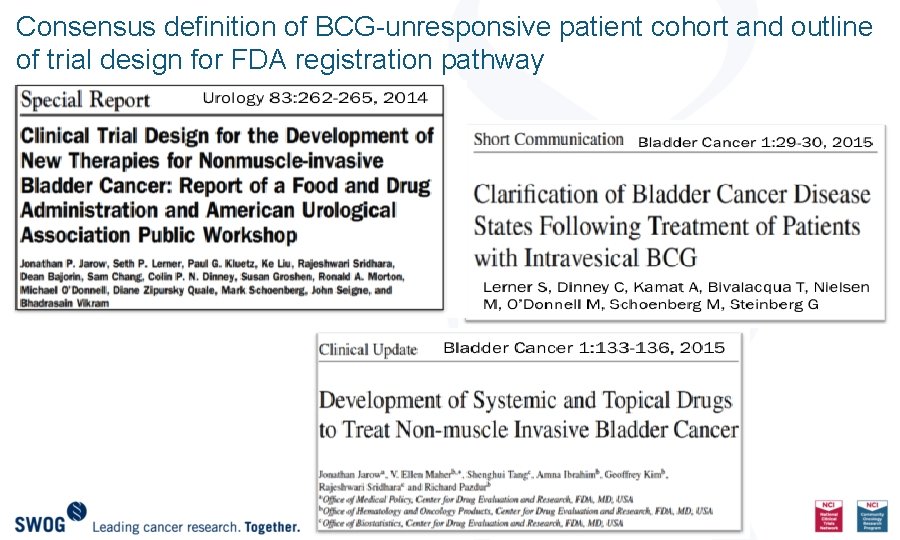
Consensus definition of BCG-unresponsive patient cohort and outline of trial design for FDA registration pathway
Current standard therapy in BCG unresponsive NMIBC �there are no established 2 nd line intravesical therapies (Valrubicin FDA approved but ineffective) �standard is radical cystectomy ◦ some patients not eligible ◦ some patients will decline ◦ many patients will experience complications ◦ most patients will experience negative impact on quality of life
Urgent unmet clinical need �novel therapies to preserve bladder
Draft FDA Guidance – November 2016 14
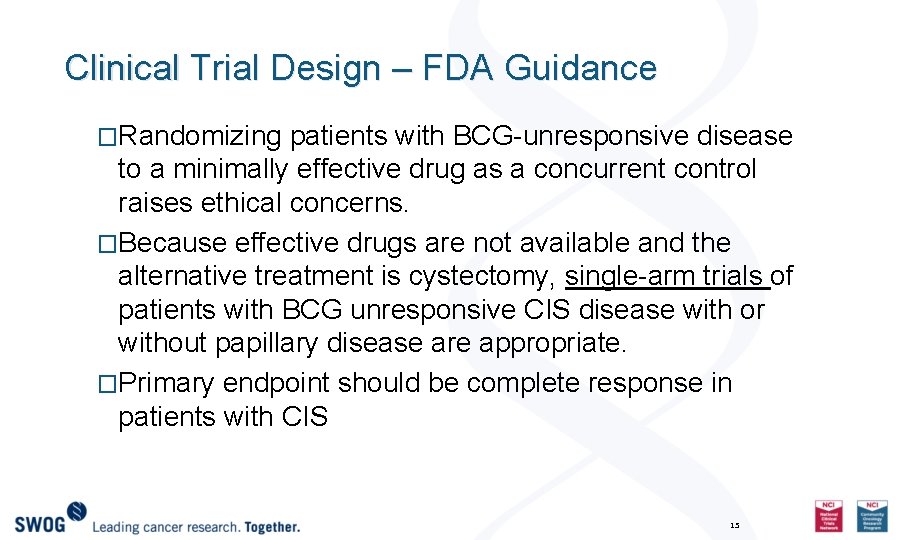
Clinical Trial Design – FDA Guidance �Randomizing patients with BCG-unresponsive disease to a minimally effective drug as a concurrent control raises ethical concerns. �Because effective drugs are not available and the alternative treatment is cystectomy, single-arm trials of patients with BCG unresponsive CIS disease with or without papillary disease are appropriate. �Primary endpoint should be complete response in patients with CIS 15
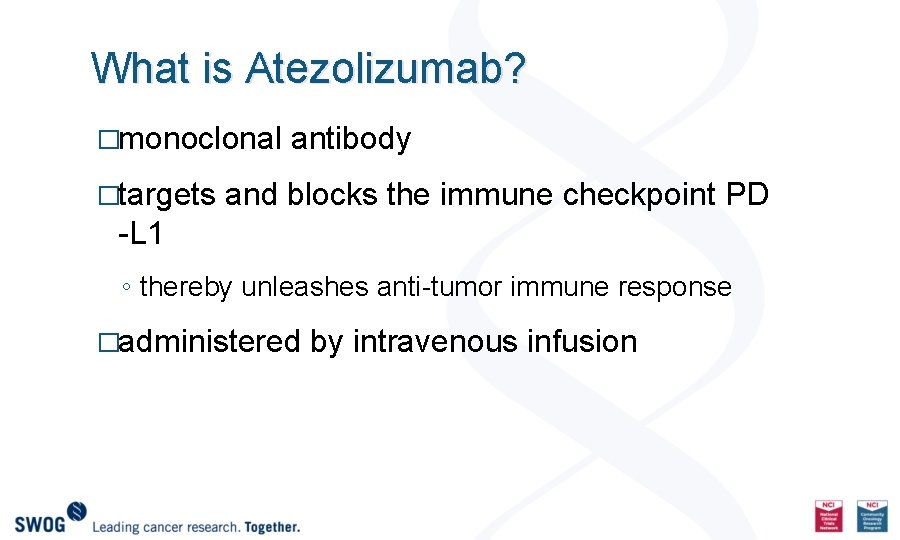
What is Atezolizumab? �monoclonal antibody �targets and blocks the immune checkpoint PD -L 1 ◦ thereby unleashes anti-tumor immune response �administered by intravenous infusion
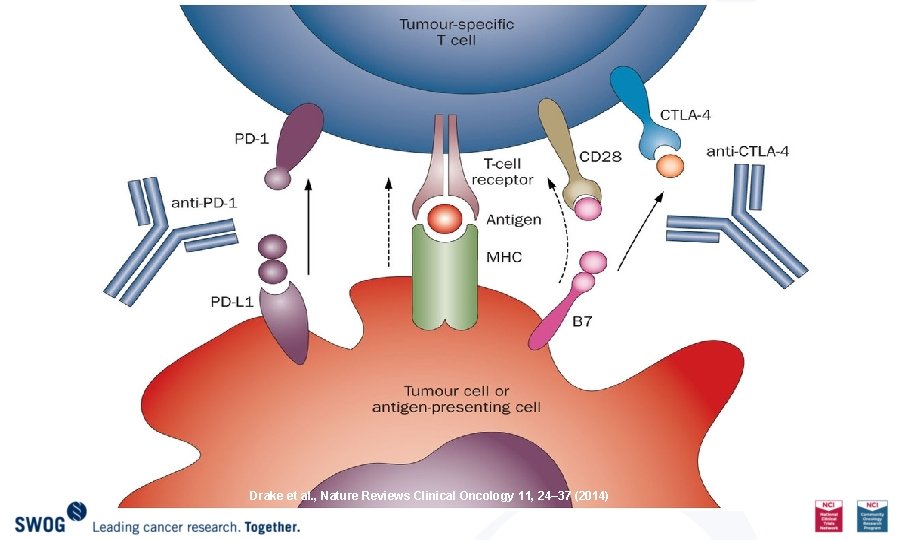
Drake et al. , Nature Reviews Clinical Oncology 11, 24– 37 (2014)
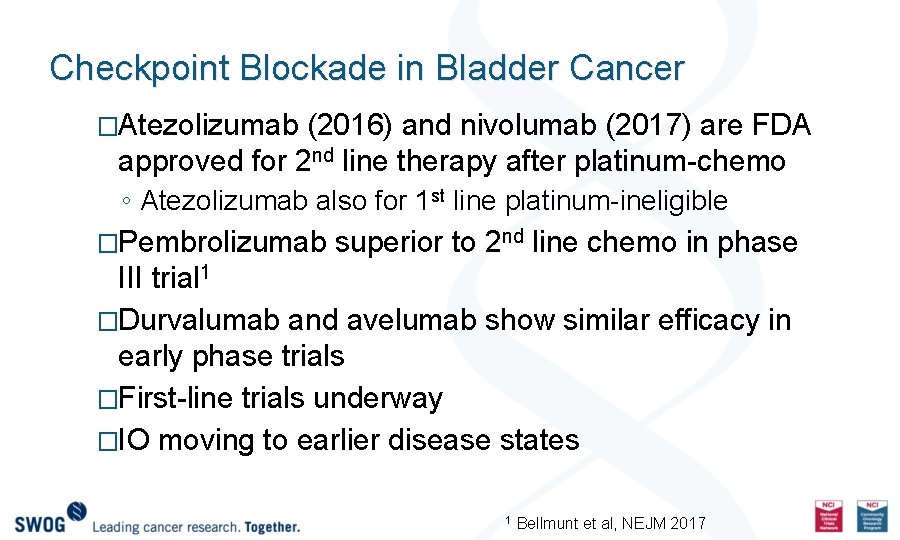
Checkpoint Blockade in Bladder Cancer �Atezolizumab (2016) and nivolumab (2017) are FDA approved for 2 nd line therapy after platinum-chemo ◦ Atezolizumab also for 1 st line platinum-ineligible �Pembrolizumab superior to 2 nd line chemo in phase III trial 1 �Durvalumab and avelumab show similar efficacy in early phase trials �First-line trials underway �IO moving to earlier disease states 1 Bellmunt et al, NEJM 2017
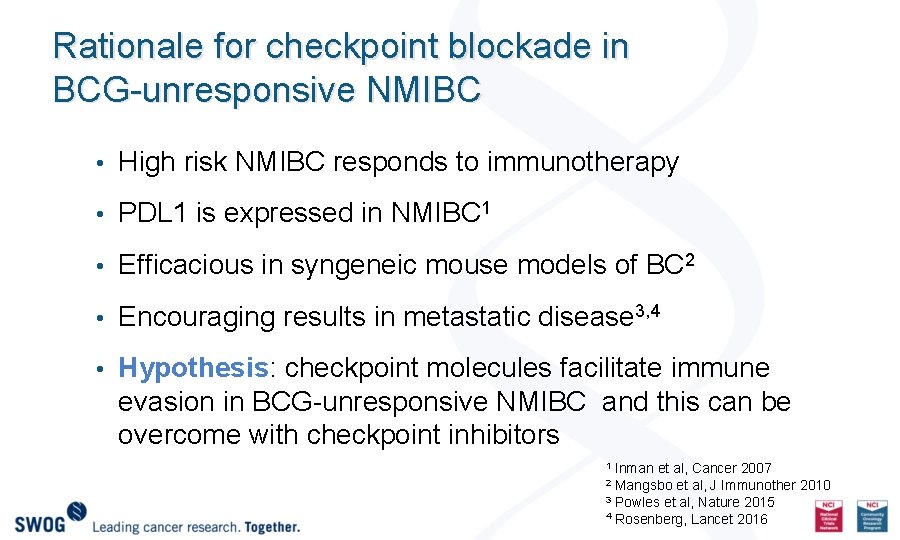
Rationale for checkpoint blockade in BCG-unresponsive NMIBC • High risk NMIBC responds to immunotherapy • PDL 1 is expressed in NMIBC 1 • Efficacious in syngeneic mouse models of BC 2 • Encouraging results in metastatic disease 3, 4 • Hypothesis: checkpoint molecules facilitate immune evasion in BCG-unresponsive NMIBC and this can be overcome with checkpoint inhibitors 1 Inman et al, Cancer 2007 2 Mangsbo et al, J Immunother 2010 3 Powles et al, Nature 2015 4 Rosenberg, Lancet 2016
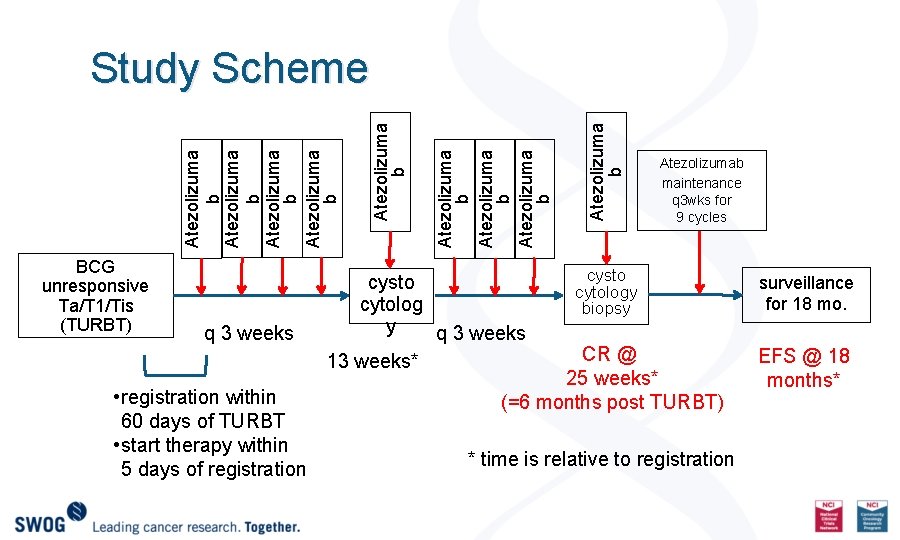
BCG unresponsive Ta/T 1/Tis (TURBT) q 3 weeks • registration within 60 days of TURBT • start therapy within 5 days of registration Atezolizuma b Atezolizuma b Atezolizuma b Study Scheme Atezolizumab maintenance q 3 wks for 9 cycles cysto cytology biopsy surveillance for 18 mo. CR @ 25 weeks* (=6 months post TURBT) EFS @ 18 months* cysto cytolog y q 3 weeks 13 weeks* * time is relative to registration
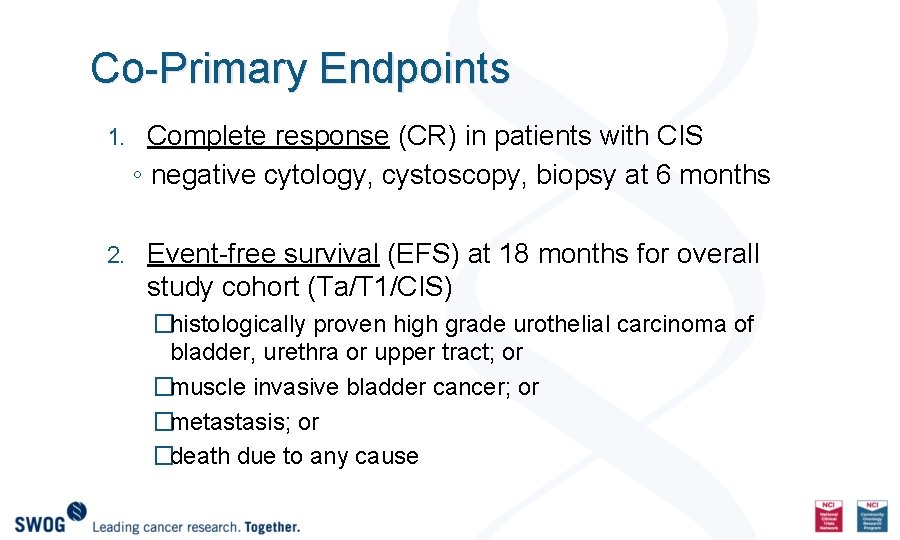
Co-Primary Endpoints 1. Complete response (CR) in patients with CIS ◦ negative cytology, cystoscopy, biopsy at 6 months 2. Event-free survival (EFS) at 18 months for overall study cohort (Ta/T 1/CIS) �histologically proven high grade urothelial carcinoma of bladder, urethra or upper tract; or �muscle invasive bladder cancer; or �metastasis; or �death due to any cause
Secondary Endpoints �Durability of response in CIS patients achieving CR �EFS in Ta/T 1 subset (no CIS) �Progression-free survival (PFS) ◦ Progression to MIBC, cystectomy or metastasis �Cystectomy-free survival �Cancer specific survival (CSS) �Overall survival (OS)
Inclusion & Exclusion Criteria P Black
Eligibility Criteria - Disease �patients must fulfill definition of BCG-unresponsive ◦ high grade Ta/Tis �after at least induction and maintenance (“ 5+2”) or 2 nd induction BCG �within 6 months of last dose BCG ◦ high grade T 1 �after at least induction BCG ◦ high grade Ta/Tis/T 1 �recurrence within 6 months of last dose BCG in patients who were NED at 6 month time point
Eligibility Criteria - Disease �histologically proven, recurrent, NMIBC within 60 days prior to registration meeting criteria for BCG-unresponsive ◦ tissue must be available for central pathology review �mixed urothelial carcinoma with a glandular and/or squamous component will be eligible �presence of other histologic variants, pure adenocarcinoma, or pure squamous cell ca, will make a patient ineligible
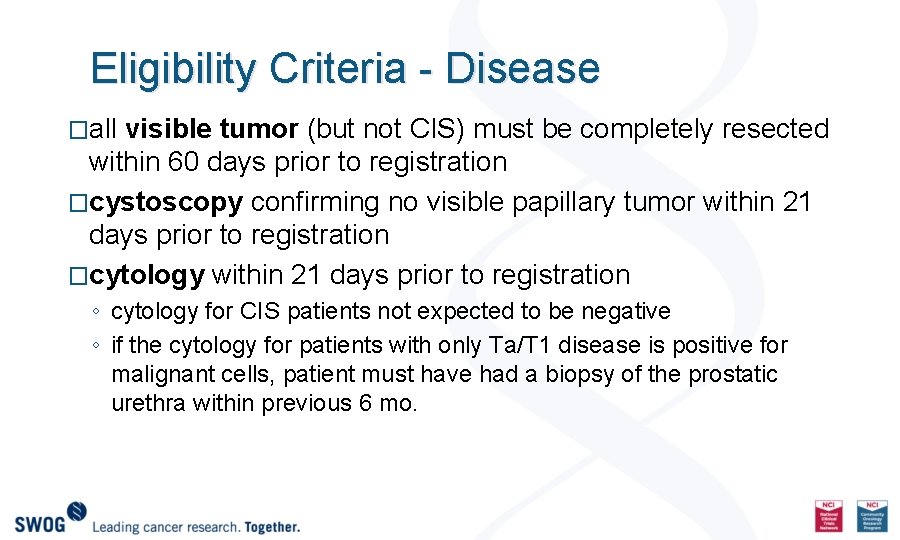
Eligibility Criteria - Disease �all visible tumor (but not CIS) must be completely resected within 60 days prior to registration �cystoscopy confirming no visible papillary tumor within 21 days prior to registration �cytology within 21 days prior to registration ◦ cytology for CIS patients not expected to be negative ◦ if the cytology for patients with only Ta/T 1 disease is positive for malignant cells, patient must have had a biopsy of the prostatic urethra within previous 6 mo.
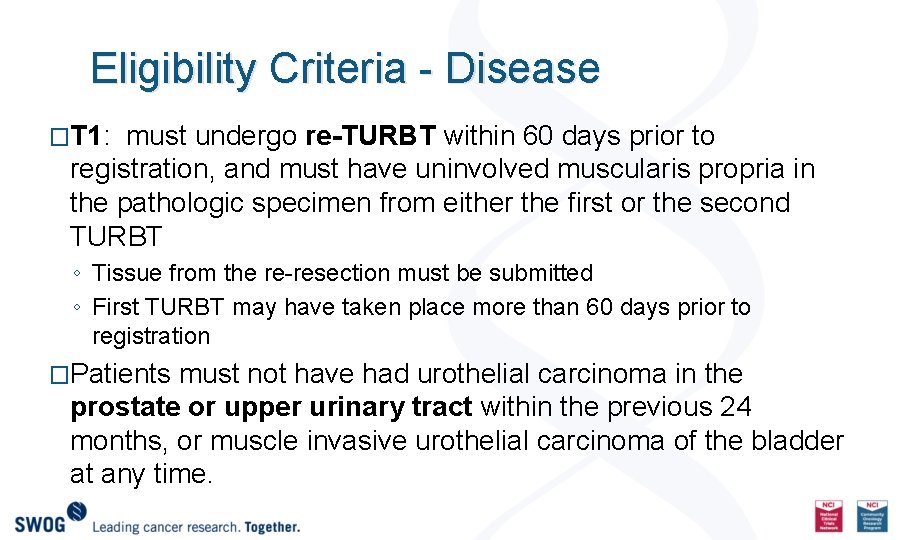
Eligibility Criteria - Disease �T 1: must undergo re-TURBT within 60 days prior to registration, and must have uninvolved muscularis propria in the pathologic specimen from either the first or the second TURBT ◦ Tissue from the re-resection must be submitted ◦ First TURBT may have taken place more than 60 days prior to registration �Patients must not have had urothelial carcinoma in the prostate or upper urinary tract within the previous 24 months, or muscle invasive urothelial carcinoma of the bladder at any time.
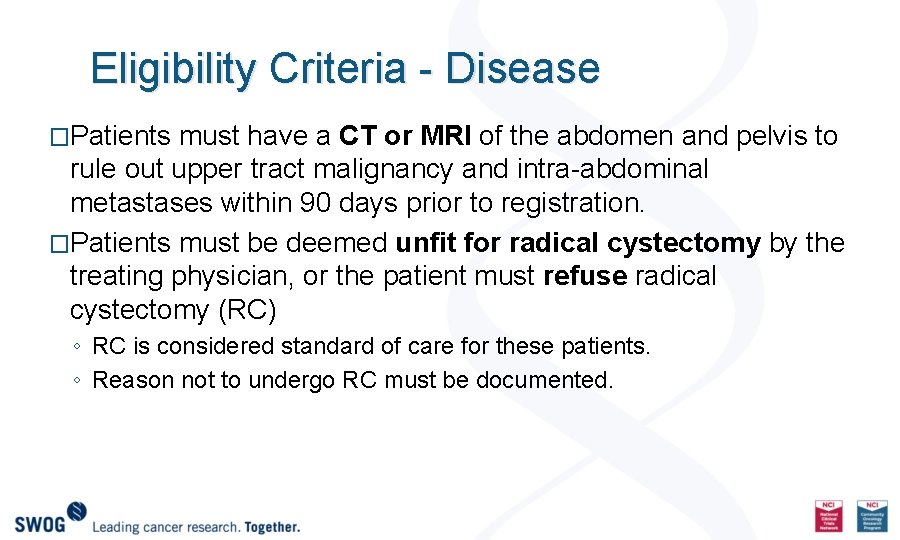
Eligibility Criteria - Disease �Patients must have a CT or MRI of the abdomen and pelvis to rule out upper tract malignancy and intra-abdominal metastases within 90 days prior to registration. �Patients must be deemed unfit for radical cystectomy by the treating physician, or the patient must refuse radical cystectomy (RC) ◦ RC is considered standard of care for these patients. ◦ Reason not to undergo RC must be documented.
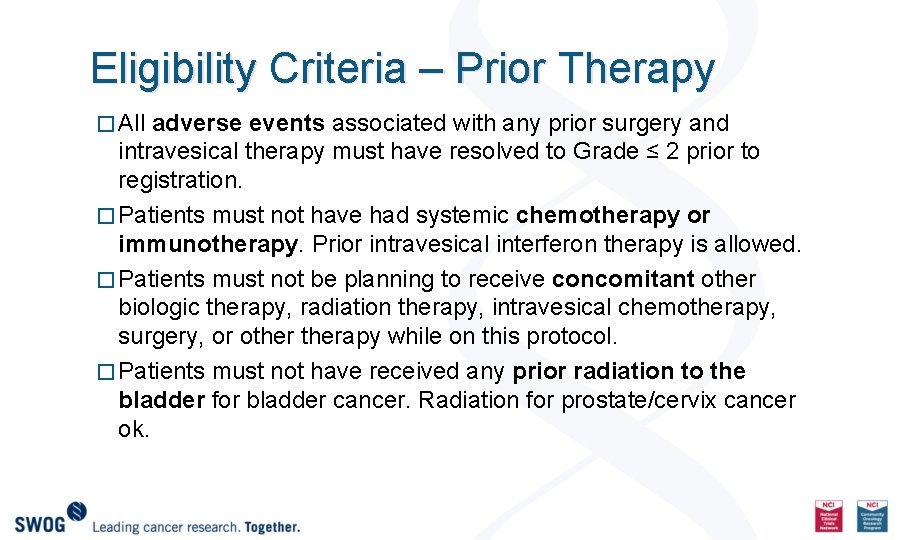
Eligibility Criteria – Prior Therapy � All adverse events associated with any prior surgery and intravesical therapy must have resolved to Grade ≤ 2 prior to registration. � Patients must not have had systemic chemotherapy or immunotherapy. Prior intravesical interferon therapy is allowed. � Patients must not be planning to receive concomitant other biologic therapy, radiation therapy, intravesical chemotherapy, surgery, or otherapy while on this protocol. � Patients must not have received any prior radiation to the bladder for bladder cancer. Radiation for prostate/cervix cancer ok.
Eligibility Criteria – Prior Therapy � Patients must not have received treatment with systemic immunosuppressive medications (e. g. prednisone, cyclophosphamide, azathioprine, methotrexate, thalidomide, and anti- TNF agents) within 2 weeks prior to Cycle 1, Day 1. � Exceptions: 1. Patients may have received acute, low dose, systemic immunosuppressant medications (e. g. , a one-time dose of dexamethasone for nausea); 2. The use of inhaled corticosteroids and mineralocorticoids (e. g. , fludrocortisone) for patients with orthostatic hypotension or adrenocortical insufficiency is allowed.
Eligibility Criteria – Lab/Clinical �adequate bone marrow and liver function �e. GFR ≥ 30 ml/min �Zubrod Performance Status ≤ 2 �no active infection within 14 days ◦ no severe infection within 28 days �no autoimmune disease requiring systemic therapy in last 2 years �no prior malignancy within 5 years (exceptions)
Enrollment Goals M Plets
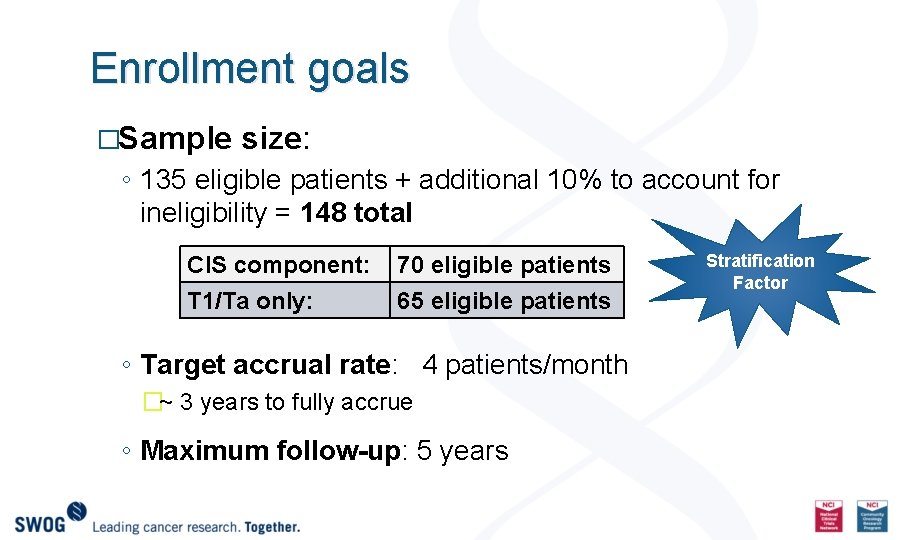
Enrollment goals �Sample size: ◦ 135 eligible patients + additional 10% to account for ineligibility = 148 total CIS component: T 1/Ta only: 70 eligible patients 65 eligible patients ◦ Target accrual rate: 4 patients/month �~ 3 years to fully accrue ◦ Maximum follow-up: 5 years Stratification Factor
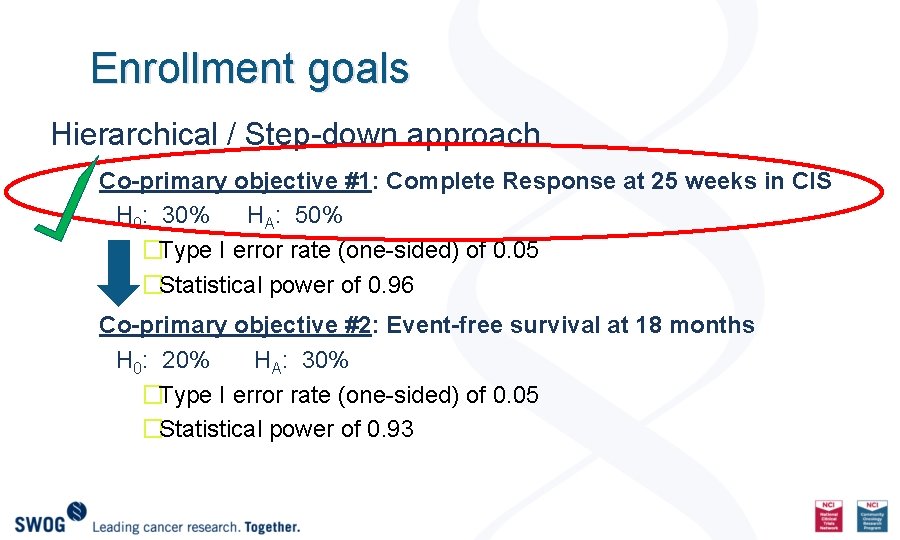
Enrollment goals Hierarchical / Step-down approach Co-primary objective #1: Complete Response at 25 weeks in CIS H 0: 30% HA: 50% �Type I error rate (one-sided) of 0. 05 �Statistical power of 0. 96 Co-primary objective #2: Event-free survival at 18 months H 0: 20% HA: 30% �Type I error rate (one-sided) of 0. 05 �Statistical power of 0. 93
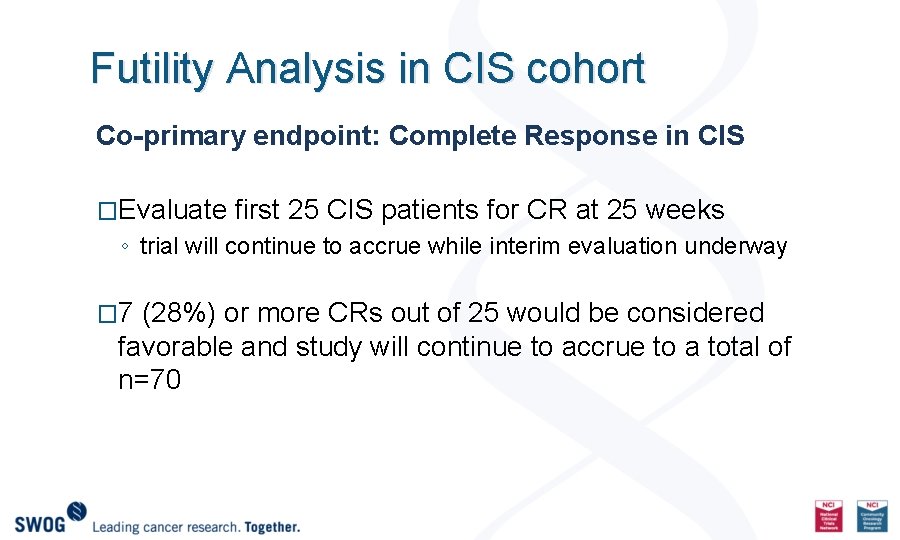
Futility Analysis in CIS cohort Co-primary endpoint: Complete Response in CIS �Evaluate first 25 CIS patients for CR at 25 weeks ◦ trial will continue to accrue while interim evaluation underway � 7 (28%) or more CRs out of 25 would be considered favorable and study will continue to accrue to a total of n=70
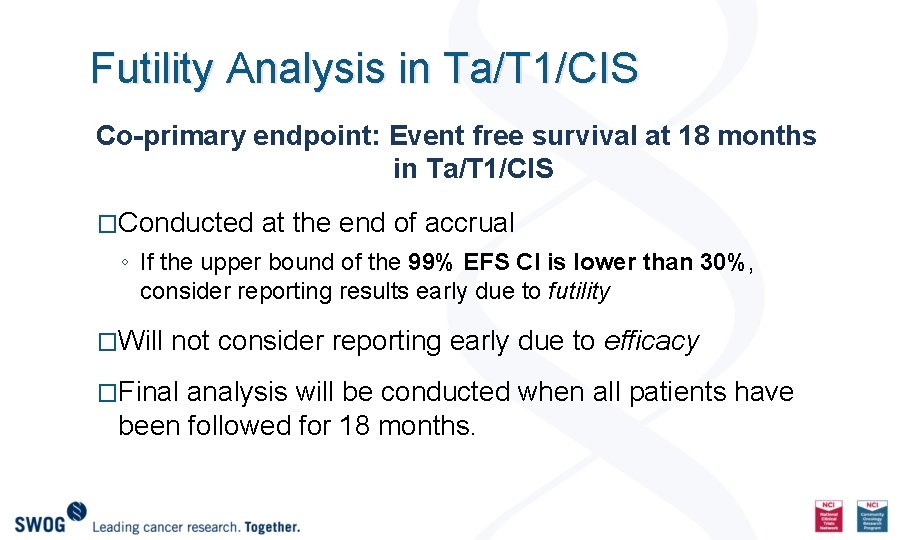
Futility Analysis in Ta/T 1/CIS Co-primary endpoint: Event free survival at 18 months in Ta/T 1/CIS �Conducted at the end of accrual ◦ If the upper bound of the 99% EFS CI is lower than 30%, consider reporting results early due to futility �Will not consider reporting early due to efficacy �Final analysis will be conducted when all patients have been followed for 18 months.
Visit Schedule Treatment and disease assessment M Plets
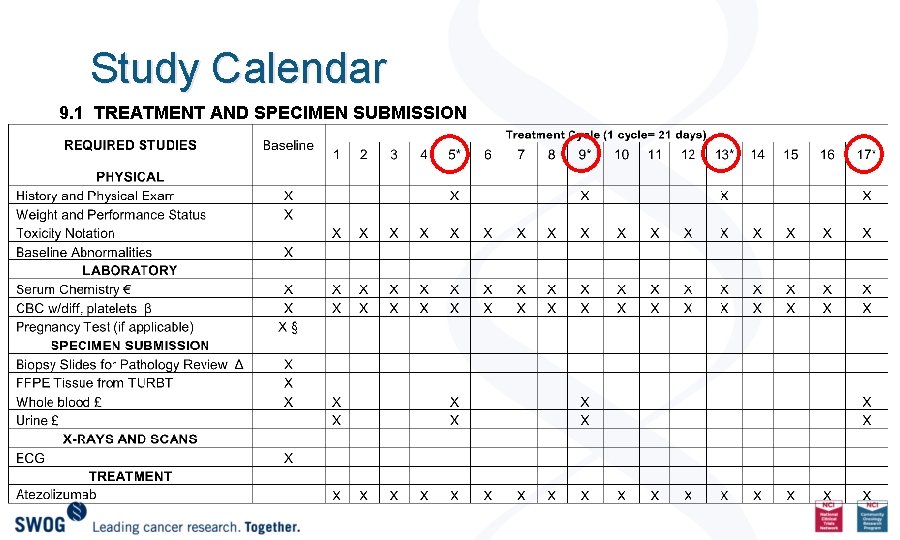
Study Calendar 9. 1 TREATMENT AND SPECIMEN SUBMISSION
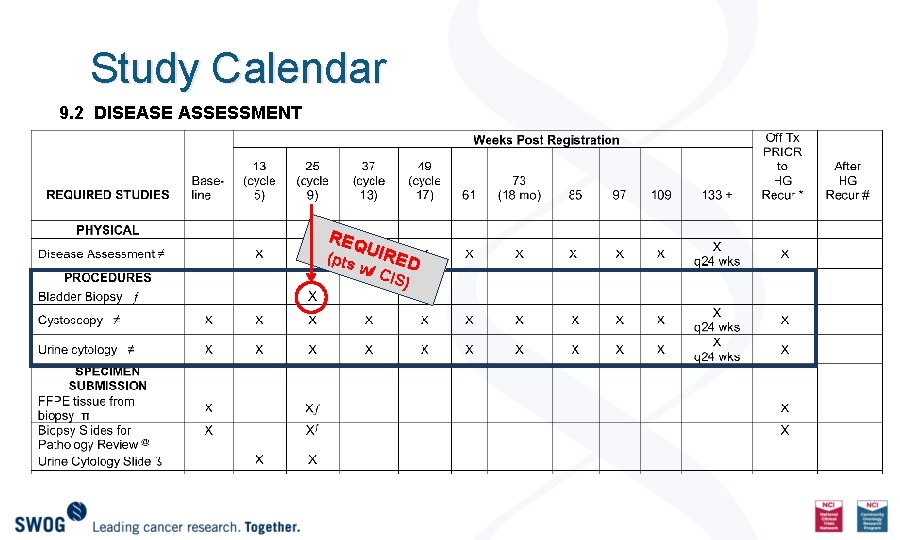
Study Calendar 9. 2 DISEASE ASSESSMENT REQ (pts UIRED w/ C IS)
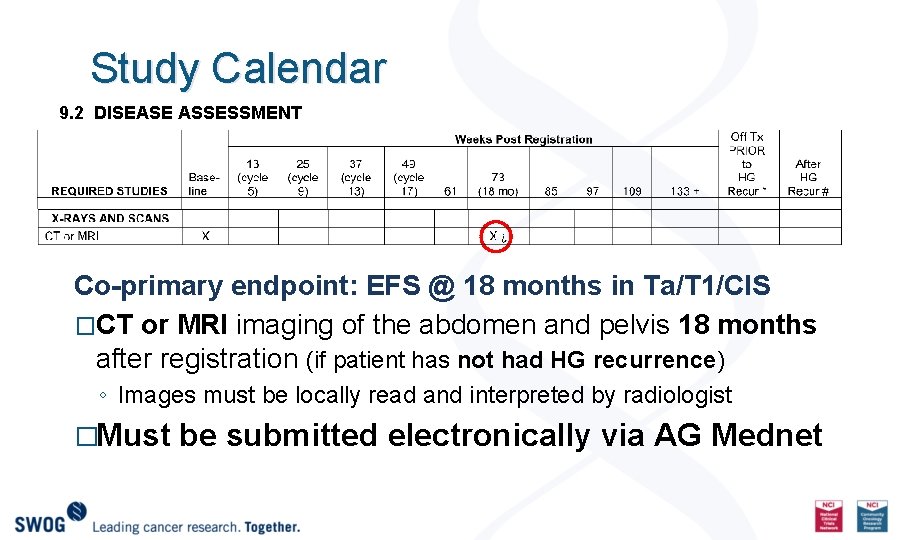
Study Calendar 9. 2 DISEASE ASSESSMENT Co-primary endpoint: EFS @ 18 months in Ta/T 1/CIS �CT or MRI imaging of the abdomen and pelvis 18 months after registration (if patient has not had HG recurrence) ◦ Images must be locally read and interpreted by radiologist �Must be submitted electronically via AG Mednet
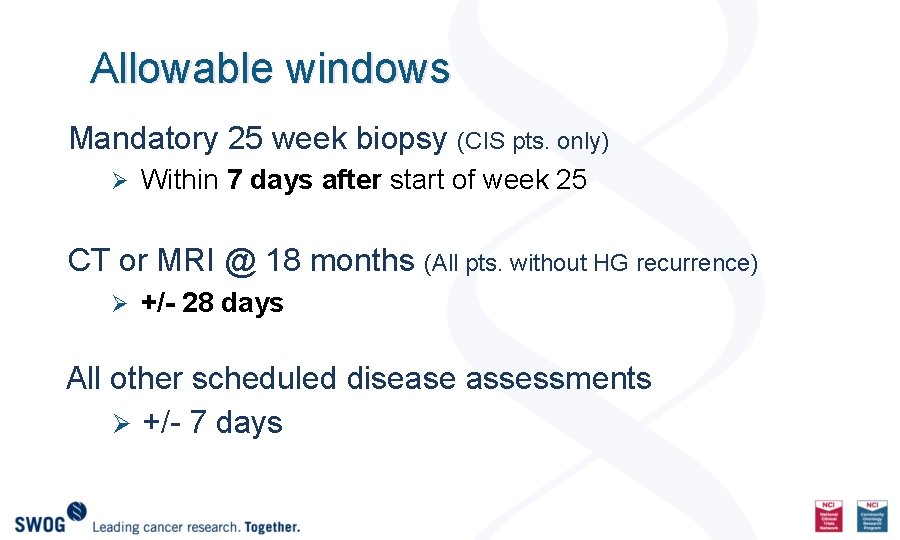
Allowable windows Mandatory 25 week biopsy (CIS pts. only) Ø Within 7 days after start of week 25 CT or MRI @ 18 months (All pts. without HG recurrence) Ø +/- 28 days All other scheduled disease assessments Ø +/- 7 days
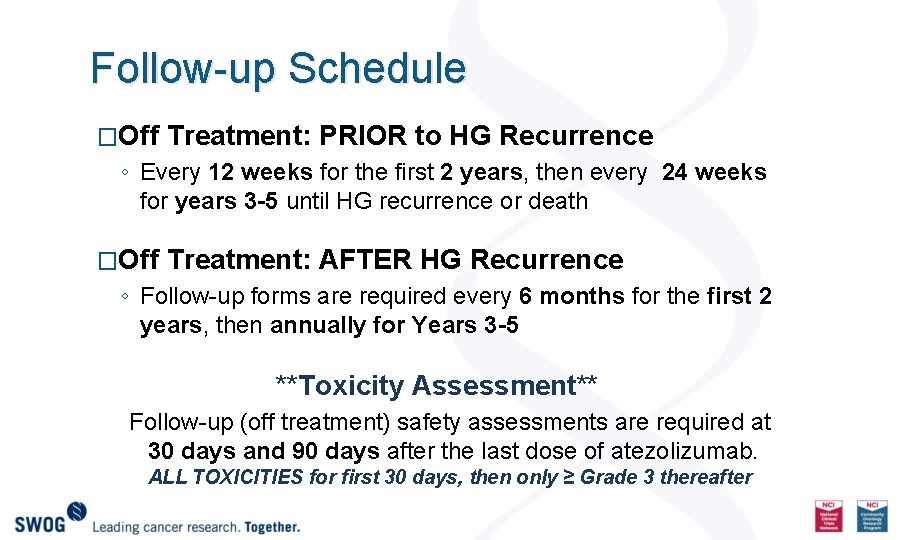
Follow-up Schedule �Off Treatment: PRIOR to HG Recurrence ◦ Every 12 weeks for the first 2 years, then every 24 weeks for years 3 -5 until HG recurrence or death �Off Treatment: AFTER HG Recurrence ◦ Follow-up forms are required every 6 months for the first 2 years, then annually for Years 3 -5 **Toxicity Assessment** Follow-up (off treatment) safety assessments are required at 30 days and 90 days after the last dose of atezolizumab. ALL TOXICITIES for first 30 days, then only ≥ Grade 3 thereafter
Visit Schedule Specimen Submission M Plets
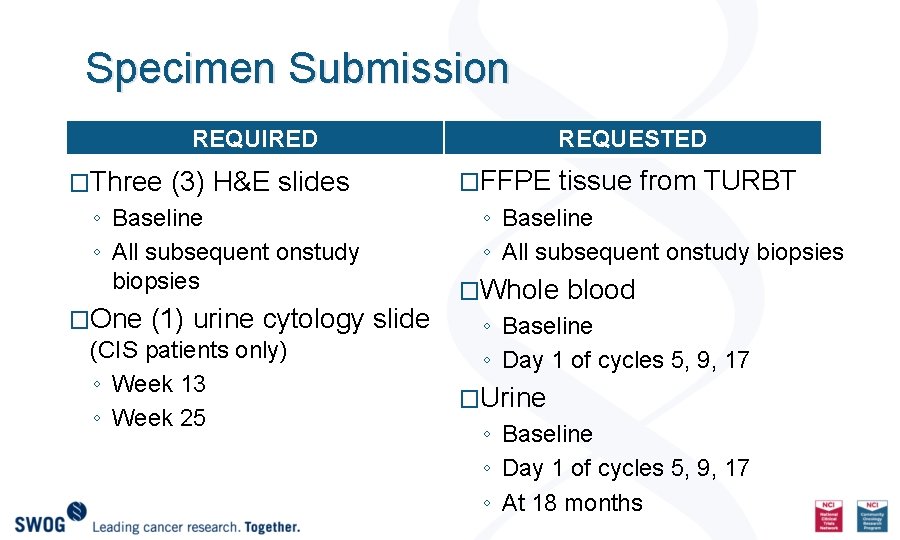
Specimen Submission REQUIRED �Three (3) H&E slides ◦ Baseline ◦ All subsequent onstudy biopsies REQUESTED �FFPE tissue from TURBT ◦ Baseline ◦ All subsequent onstudy biopsies �Whole blood �One (1) urine cytology slide ◦ Baseline (CIS patients only) ◦ Day 1 of cycles 5, 9, 17 ◦ Week 13 �Urine ◦ Week 25 ◦ Baseline ◦ Day 1 of cycles 5, 9, 17 ◦ At 18 months
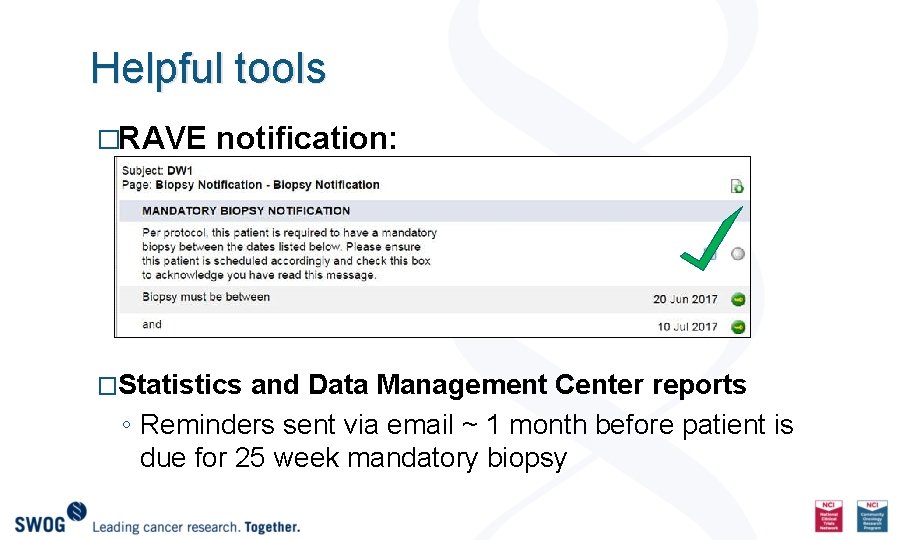
Helpful tools �RAVE notification: �Statistics and Data Management Center reports ◦ Reminders sent via email ~ 1 month before patient is due for 25 week mandatory biopsy
Helpful tools �Disease assessment flow chart (section 7. 3 of protocol) �Resources ◦ Statistics and Data Management Center (SDMC) �guquestion@crab. org, (206)652 -2267 ◦ Study Chairs – emails on title page of protocol
Treatment Plan and Monitoring P Singh
Prohibited Medications Anti-cancer systemic chemotherapy or biological therapy. � Immunotherapy not specified in this protocol. � Any non-study anti-cancer agent (investigational or non-investigational). � Investigational agents other than atezolizumab. � Radiation therapy � Live vaccines ◦ Seasonal influenza vaccines for injection are generally killed virus vaccines and are allowed; however, intranasal influenza vaccines (e. g. Flu-Mist®) are live attenuated vaccines, and are not allowed � Glucocorticoids for any purpose other than to modulate symptoms from an event of suspected immunologic etiology. ◦ The use of physiologic doses of corticosteroids (defined as 10 mg prednisone) is acceptable, however site investigators should consult with the Study Chair for any dose higher than 10 mg prednisone. �
Treatment Plan �Atezolizumab is administered at standard dose - 1200 mg IV every 3 weeks �No premedication required but can be used after 2 nd cycle at the discretion of physician �No PK/PD labs �First infusion is 60 min �If tolerated subsequent infusion can be reduced to 30 min �Vitals to be monitored every 30 min during infusion
Treatment Plan �Infusion can be restarted for grade 2 IRR side effects after treatment �Treatment will be abandoned completely if Grade 3 or higher IRR �CBC, CMP prior to every infusion and TSH every 2 infusion �Protocol does not mandate history and physical at every infusion
Adverse Events �CTCAE V 4. 0 for toxicity and serious adverse event reporting �no atezo dose reduction allowed �may suspend treatment up to 42 days due to AEs �standard medical management of AEs
Surveillance on treatment �Regular blood-work �Cytology + cystoscopy every 3 months up to 18 months �Mandatory biopsy at 6 months in all patients with CIS at baseline (exception: next slide) �Any positive cystoscopy or cytology will require biopsy and possibly imaging according to standard practice �CT-IVP or MRI prior to study entry and at 18 months
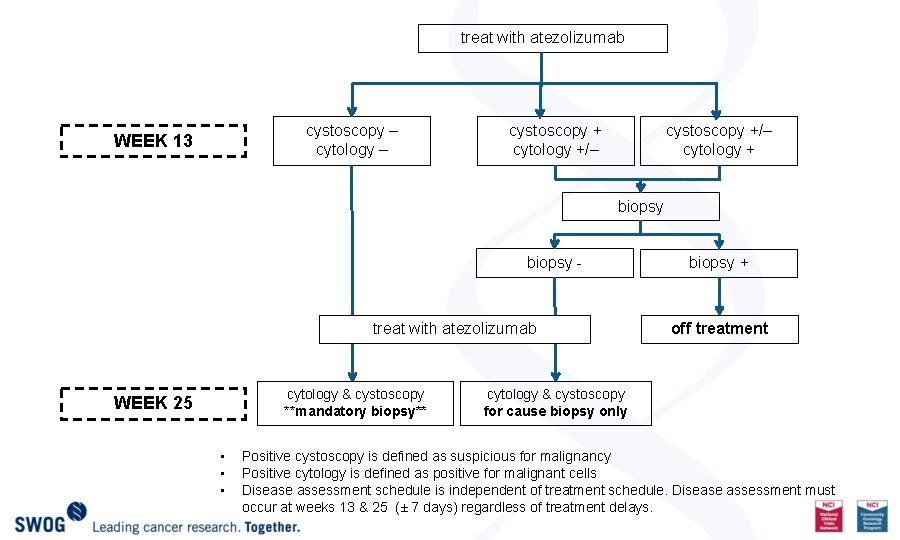
treat with atezolizumab cystoscopy – cytology – WEEK 13 cystoscopy + cytology +/– cystoscopy +/– cytology + biopsy - treat with atezolizumab cytology & cystoscopy **mandatory biopsy** WEEK 25 • • • biopsy + off treatment cytology & cystoscopy for cause biopsy only Positive cystoscopy is defined as suspicious for malignancy Positive cytology is defined as positive for malignant cells Disease assessment schedule is independent of treatment schedule. Disease assessment must occur at weeks 13 & 25 (± 7 days) regardless of treatment delays.
Imaging �All participants will undergo CT or MRI imaging of the abdomen and pelvis 18 months after registration if they have not had a high-grade recurrence �Images must be locally read and interpreted by radiologist �Imaging exams must then be submitted via AG Mednet for quality control and image banking
Quality Assurance Auditing and Monitoring �Audits are conducted according to FDA regulations and NCI guidelines for Auditing Clinical Trials for the National Clinical Trials Network (NCTN) Program, NCI Community Oncology Research Program (NCORP) and Research Bases �Additional on-site monitoring mandated by study �The major objective of the audit process is to verify study data that could affect the interpretation of primary study endpoints
Translational Medicine and Biobanking D Mc. Conkey
Mandatory specimen submission for central pathology review � 3 H&E slides from each TURBT/biopsy: ◦ prior to study registration (including both specimens if patient had re-TURBT) ◦ at time of mandatory re-biopsy in patients with CIS at baseline ◦ from all subsequent TURBT/biopsy for suspected recurrence �Urine cytology (1 slide) at week 13 and week 25 in all patients with CIS at baseline �Failure to submit will make patient ineligible!
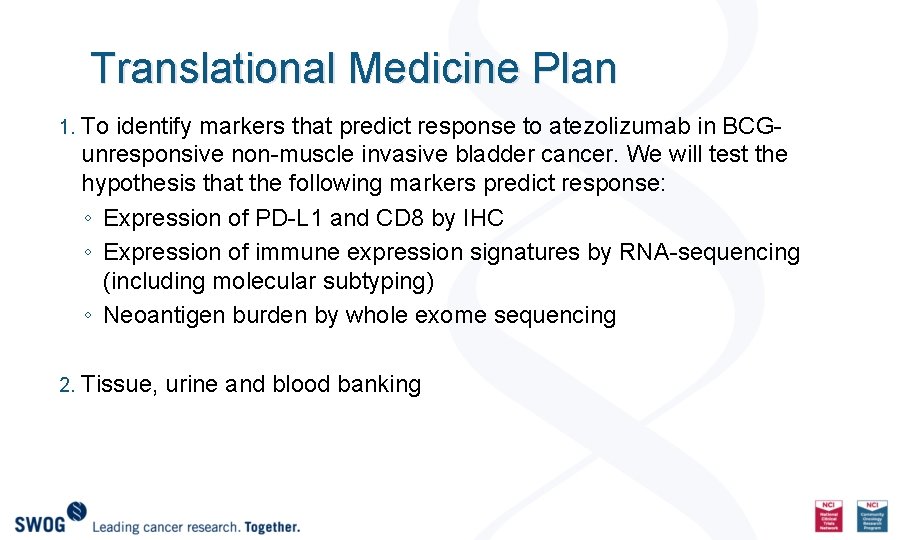
Translational Medicine Plan 1. To identify markers that predict response to atezolizumab in BCG- unresponsive non-muscle invasive bladder cancer. We will test the hypothesis that the following markers predict response: ◦ Expression of PD-L 1 and CD 8 by IHC ◦ Expression of immune expression signatures by RNA-sequencing (including molecular subtyping) ◦ Neoantigen burden by whole exome sequencing 2. Tissue, urine and blood banking
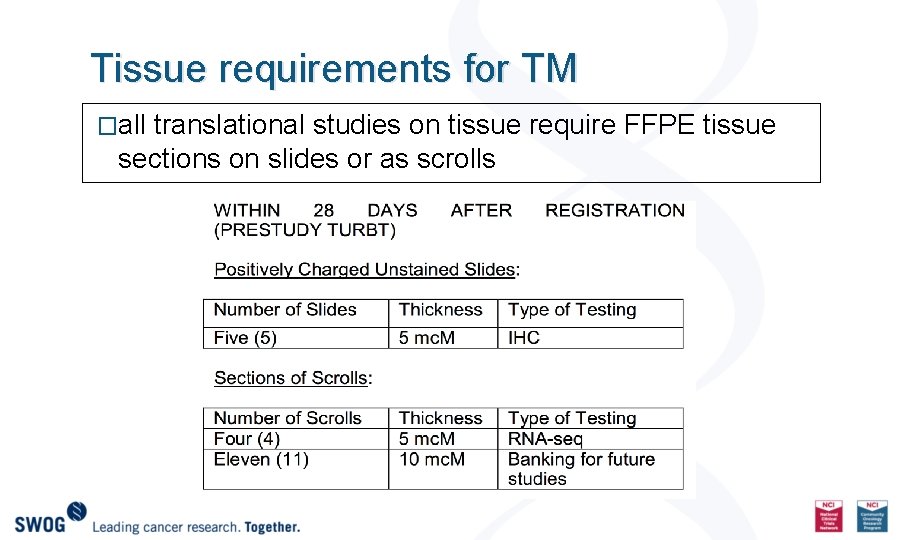
Tissue requirements for TM �all translational studies on tissue require FFPE tissue sections on slides or as scrolls
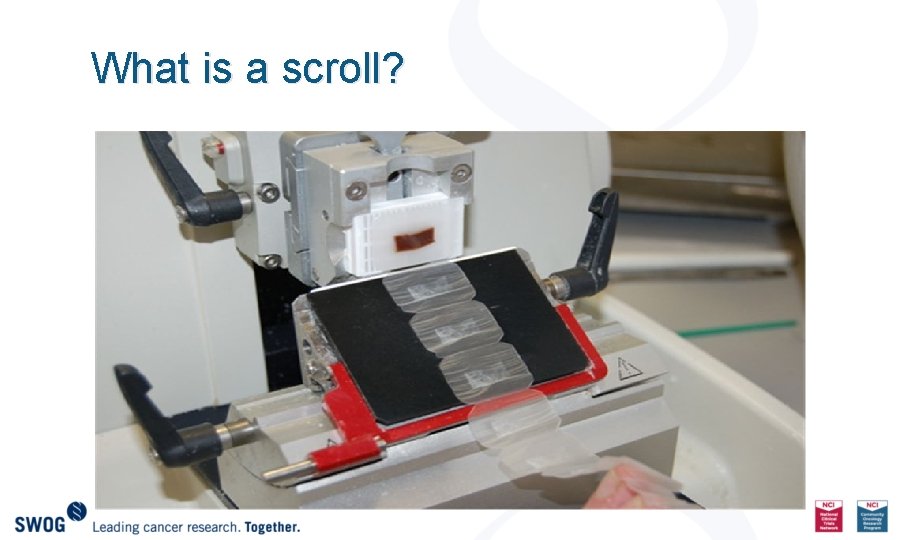
What is a scroll?
Immunohistochemistry �Genentech will sponsor IHC for PD-L 1 and CD 8 in a CLIA-certified third party laboratory �Validated assays from prior trials will be used ◦ FDA-approved Ventana PD-L 1 (SP 142 or SP 263) ◦ CD 8+ lymphocyte density in specified regions of tissue
RNA sequencing �FFPE sections �Genentech will sponsor RNAseq in a CLIA- certified third party laboratory �Molecular subtyping according to TCGA clusters �Raw data available to SWOG investigators for analysis
Mutation Rate �Not yet included in CTEP submission ◦ will require amendment �Plan whole exome sequencing from FFPE sections �Analysis of mutational load as a surrogate for neoantigen burden �Able to make microsatellite instability (MSI) calls as well ◦ surrogate for mismatch repair deficiency
Whole Blood for Banking Current Protocol �Whole blood at registration ◦ 5 ml in sodium heparin tube ◦ use for germline DNA to be compared to whole exome sequencing from tissue �Whole blood on day 1 of cycles 1, 5, 9, 17 ◦ 1 ml in Smart Tube �Freeze blood without further processing at -80°C until shipment
Whole Blood for Banking Upcoming amendment �Whole blood at registration ◦ 5 ml in sodium citrate tube ◦ use for germline DNA to be compared to whole exome sequencing from tissue �Whole blood at registration and on day 1 of cycles 5, 9, 17 ◦ 4 ml in sodium heparin tube ◦ Additional processing required
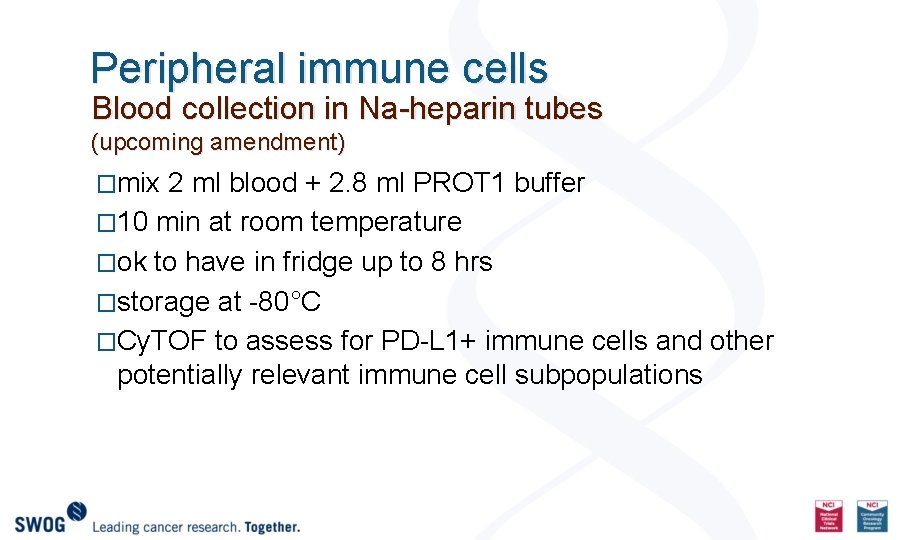
Peripheral immune cells Blood collection in Na-heparin tubes (upcoming amendment) �mix 2 ml blood + 2. 8 ml PROT 1 buffer � 10 min at room temperature �ok to have in fridge up to 8 hrs �storage at -80°C �Cy. TOF to assess for PD-L 1+ immune cells and other potentially relevant immune cell subpopulations
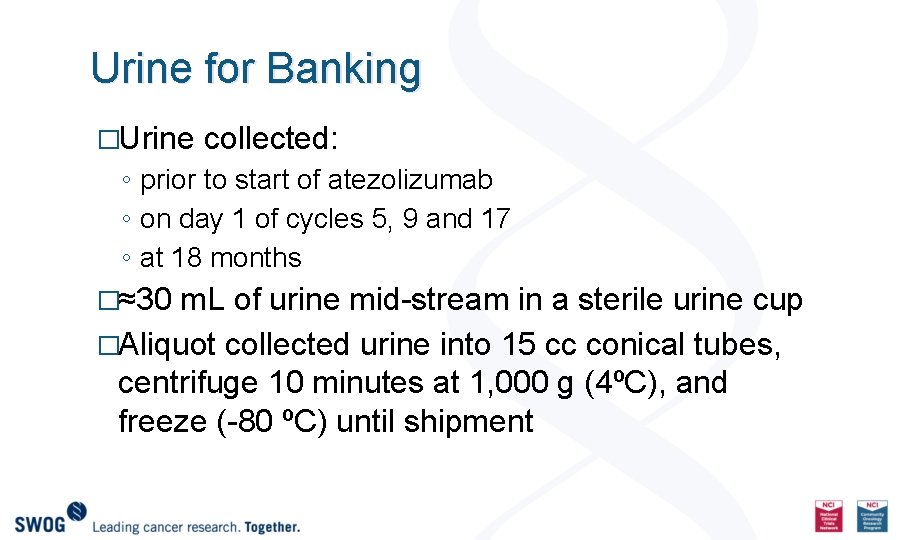
Urine for Banking �Urine collected: ◦ prior to start of atezolizumab ◦ on day 1 of cycles 5, 9 and 17 ◦ at 18 months �≈30 m. L of urine mid-stream in a sterile urine cup �Aliquot collected urine into 15 cc conical tubes, centrifuge 10 minutes at 1, 000 g (4ºC), and freeze (-80 ºC) until shipment
cf. DNA in urine �experimental assay to assess panel of genomic alterations in cell-free DNA in urine ◦ will need CTEP amendment �for detection of tumor and recurrence �not specifically related to therapeutic agent
Monitoring & Auditing E Lackey
S 1605 Regulatory Review �Auditing �Monitoring �Investigator Responsibilities Evonne Lackey, BA, CCRP
SWOG Quality Assurance Program (SWOG Policy 19) Program Purpose • Data reported on e. CRFs accurately reflect source documents • Verify compliance with protocol and regulatory requirements • Adherence to NCI/SWOG policies and procedures • Provide educational support related to GCP, data collection and data management
Quality Assurance Audit Process �Standard SWOG Audit Process ◦ 10% of registrations over past 3 years (minimum of 3 cases) ◦ Randomly selected cases emphasizing �Investigational studies �Multi-modality �Intergroup �Cancer control �High accrual studies ◦ Typical review is one full day (depends on number of subjects accrued)
Quality Assurance Audit Process �Assessment of communication between monitors, SDMC, site staff to assess potential problem areas, provide feedback, identify staff turnover, etc. �Safety monitoring through routine review of adverse event reports for accuracy and timeliness of SAE reporting
What’s Different for S 1605 �Mandatory training of key site personnel prior to 1 st patient registration �Additional mandatory training if major protocol changes or common problem areas are identified during monitoring and audits �Oversight through routine on-site auditing and off-site centralized monitoring
QA/On-Site Monitoring Process for S 1605 • First site visit within 6 months of first patient registration • Subsequent visits dependent on accrual but no less than once every 2 years • Site visits combined with treatment audits or other registration trial site visits
Other Reasons for More Frequent On-Site Monitoring Inadequate initial on-site monitoring result Deficient or delinquent data submission Higher than expected SAE reporting or ineligible cases Excessive staff turnover
What to Expect at an On-site Monitoring Visit � Regulatory requirements ◦ IRB approvals ◦ Consent form content Investigational drug accountability Patient Case Review ◦ Consent Form ◦ Eligibility ◦ Treatment ◦ Response ◦ Toxicity Assessment ◦ Data Quality
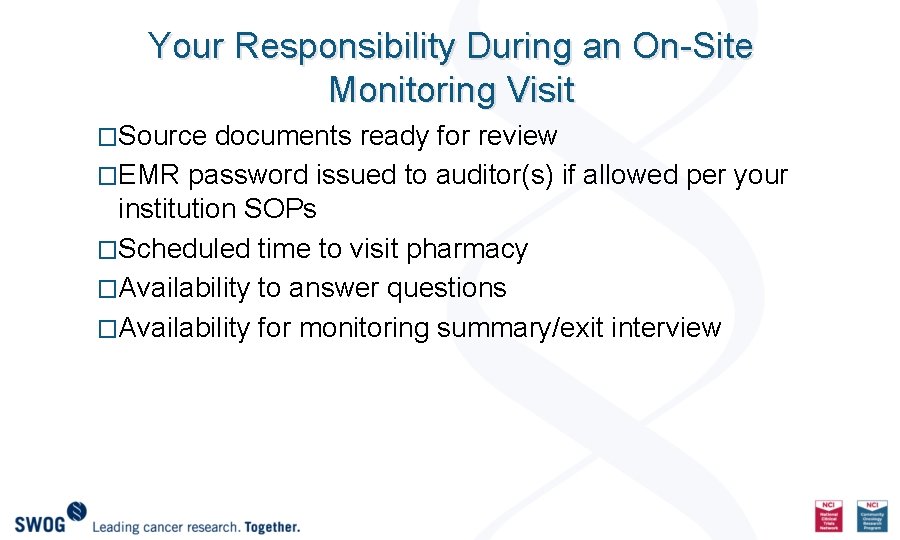
Your Responsibility During an On-Site Monitoring Visit �Source documents ready for review �EMR password issued to auditor(s) if allowed per your institution SOPs �Scheduled time to visit pharmacy �Availability to answer questions �Availability for monitoring summary/exit interview
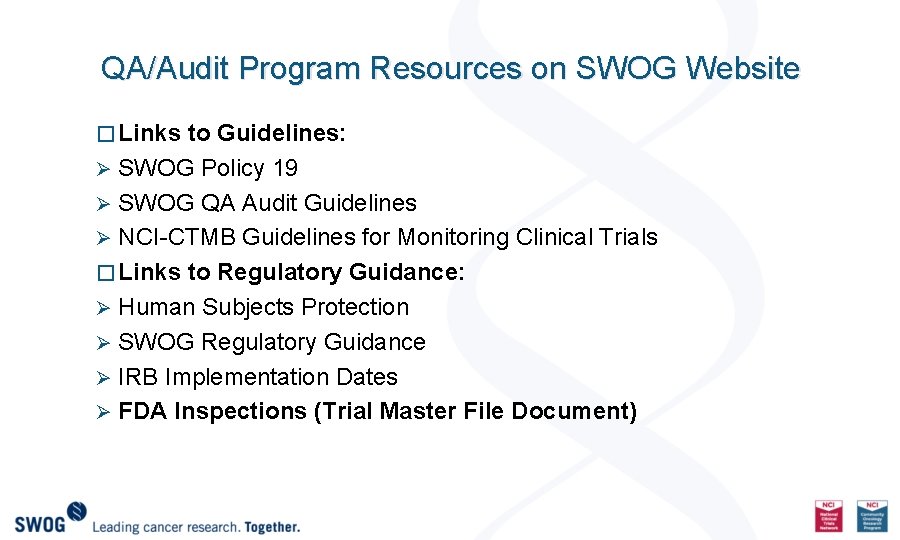
QA/Audit Program Resources on SWOG Website � Links to Guidelines: Ø SWOG Policy 19 Ø SWOG QA Audit Guidelines Ø NCI-CTMB Guidelines for Monitoring Clinical Trials � Links to Regulatory Guidance: Ø Human Subjects Protection Ø SWOG Regulatory Guidance Ø IRB Implementation Dates Ø FDA Inspections (Trial Master File Document)
Who to Contact for Questions Related to QA/On-Site Monitoring for S 1605 Elaine Armstrong (210) 614 -8808 OR Email: QA@SWOG. ORG
SDMC Risk-based Monitoring for S 1605 New for Registration Trials! In addition to routine reviews and audits, the SDMC Central Monitors will be conducting Source Document Verification (SDV)
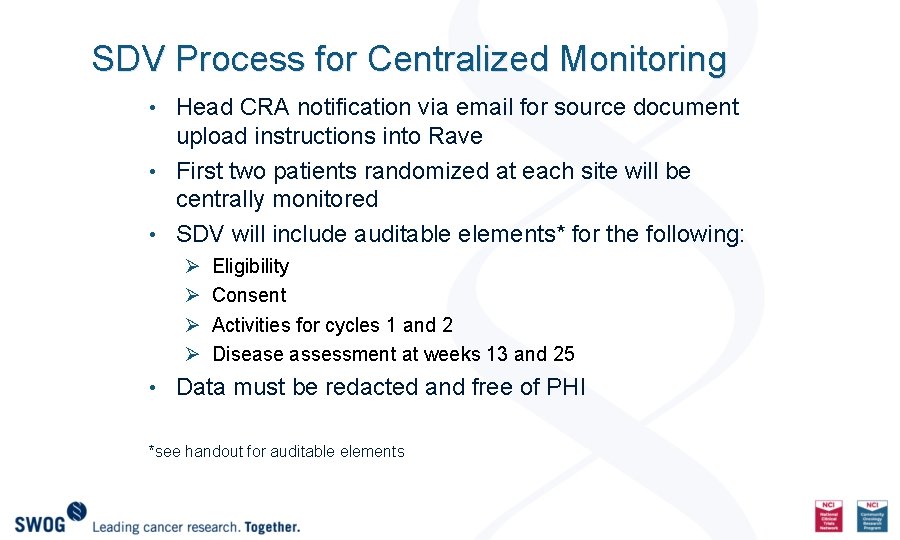
SDV Process for Centralized Monitoring Head CRA notification via email for source document upload instructions into Rave • First two patients randomized at each site will be centrally monitored • SDV will include auditable elements* for the following: • Ø Ø • Eligibility Consent Activities for cycles 1 and 2 Disease assessment at weeks 13 and 25 Data must be redacted and free of PHI *see handout for auditable elements
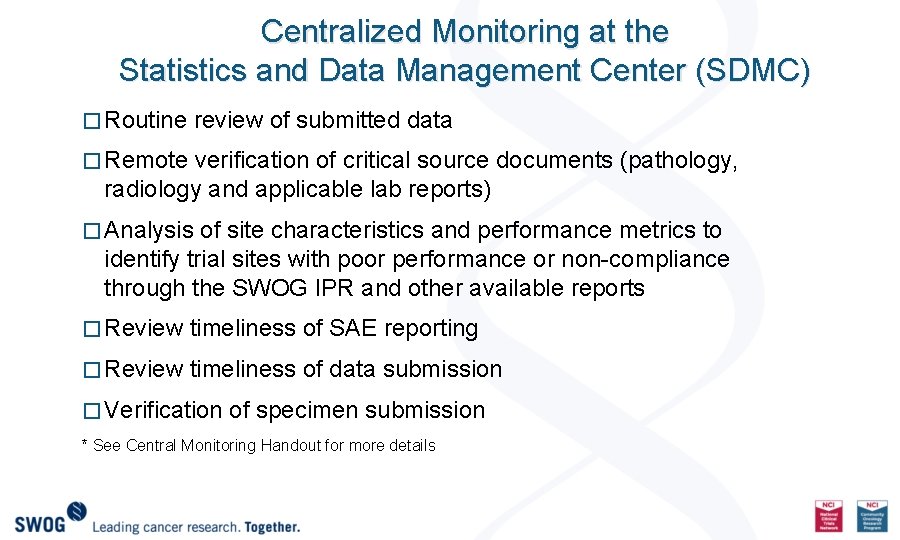
Centralized Monitoring at the Statistics and Data Management Center (SDMC) � Routine review of submitted data � Remote verification of critical source documents (pathology, radiology and applicable lab reports) � Analysis of site characteristics and performance metrics to identify trial sites with poor performance or non-compliance through the SWOG IPR and other available reports � Review timeliness of SAE reporting � Review timeliness of data submission � Verification of specimen submission * See Central Monitoring Handout for more details
Who to Contact for Questions Related to Centrally Monitored Data for S 1605 Dona Marrah, CCRP Donam@crab. org
Investigator Responsibilities E Lackey
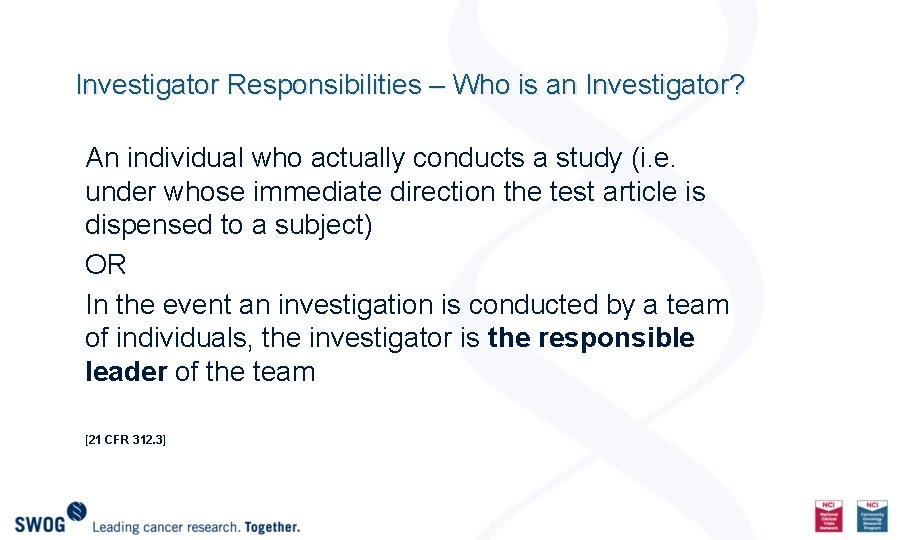
Investigator Responsibilities – Who is an Investigator? An individual who actually conducts a study (i. e. under whose immediate direction the test article is dispensed to a subject) OR In the event an investigation is conducted by a team of individuals, the investigator is the responsible leader of the team [21 CFR 312. 3]
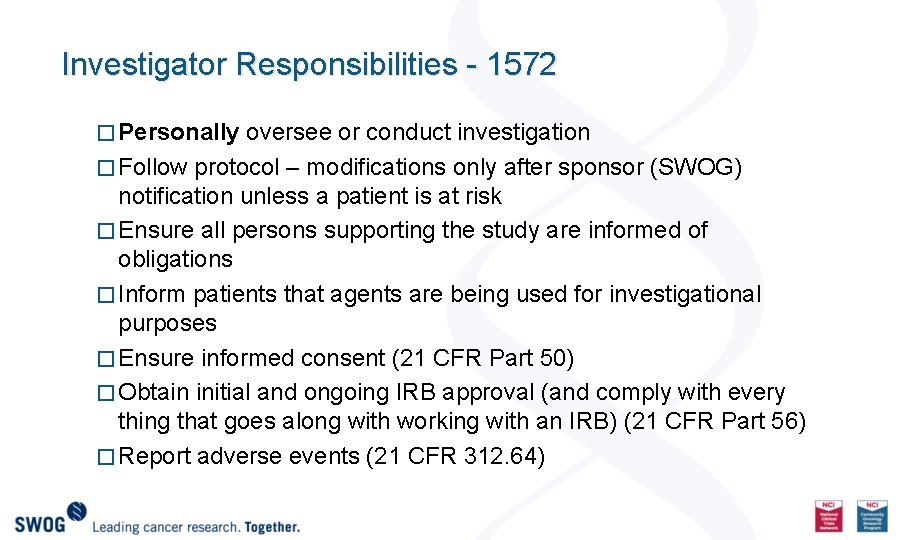
Investigator Responsibilities - 1572 � Personally oversee or conduct investigation � Follow protocol – modifications only after sponsor (SWOG) notification unless a patient is at risk � Ensure all persons supporting the study are informed of obligations � Inform patients that agents are being used for investigational purposes � Ensure informed consent (21 CFR Part 50) � Obtain initial and ongoing IRB approval (and comply with every thing that goes along with working with an IRB) (21 CFR Part 56) � Report adverse events (21 CFR 312. 64)
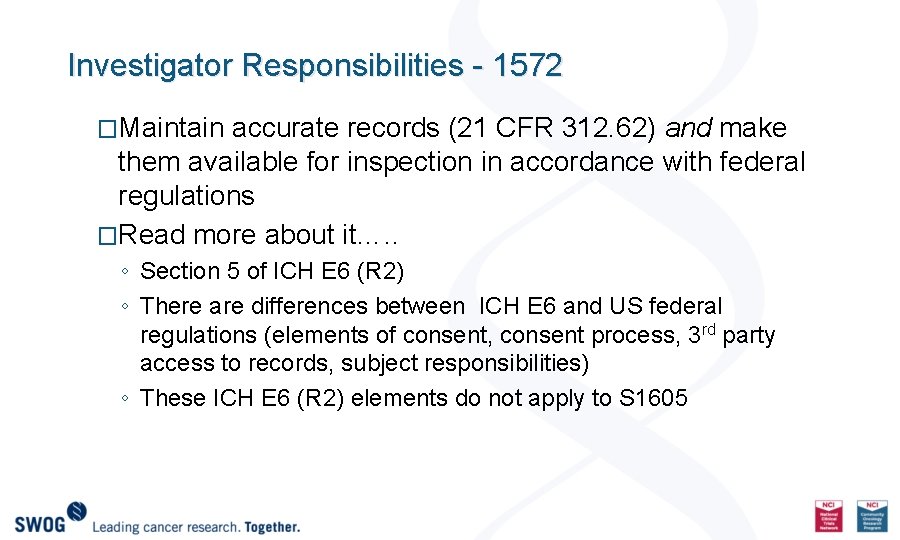
Investigator Responsibilities - 1572 �Maintain accurate records (21 CFR 312. 62) and make them available for inspection in accordance with federal regulations �Read more about it…. . ◦ Section 5 of ICH E 6 (R 2) ◦ There are differences between ICH E 6 and US federal regulations (elements of consent, consent process, 3 rd party access to records, subject responsibilities) ◦ These ICH E 6 (R 2) elements do not apply to S 1605
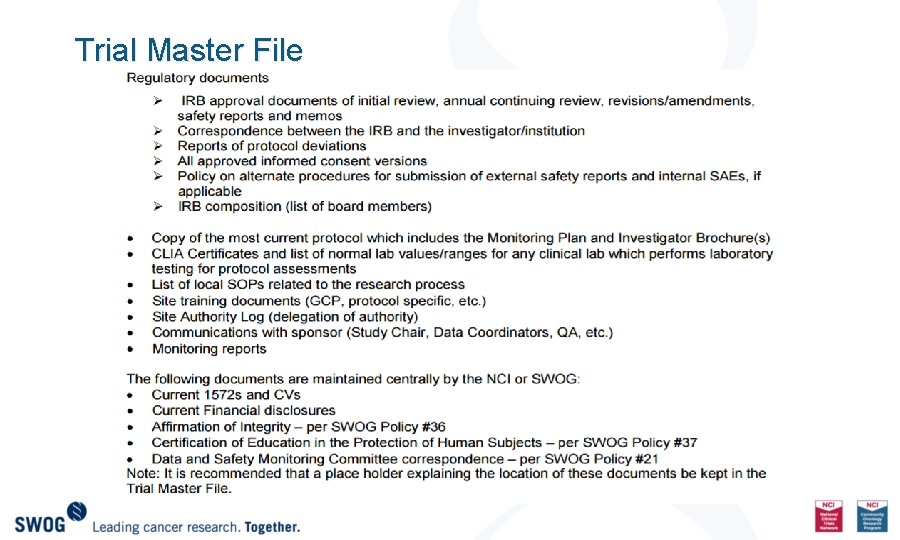
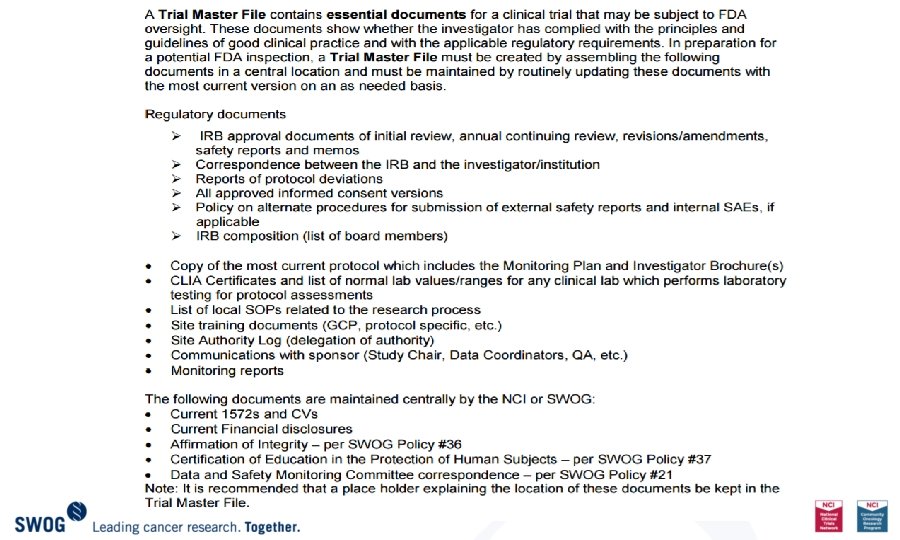
Trial Master File
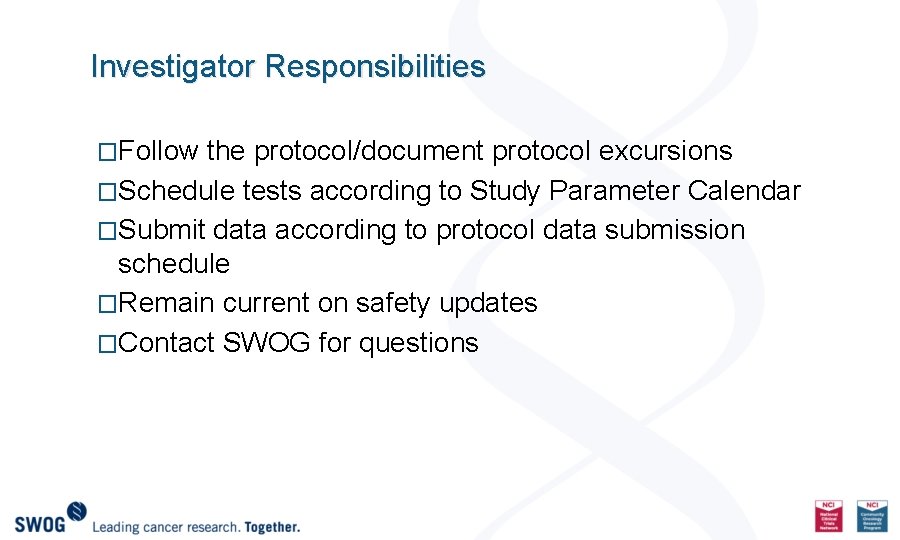
Investigator Responsibilities �Follow the protocol/document protocol excursions �Schedule tests according to Study Parameter Calendar �Submit data according to protocol data submission schedule �Remain current on safety updates �Contact SWOG for questions
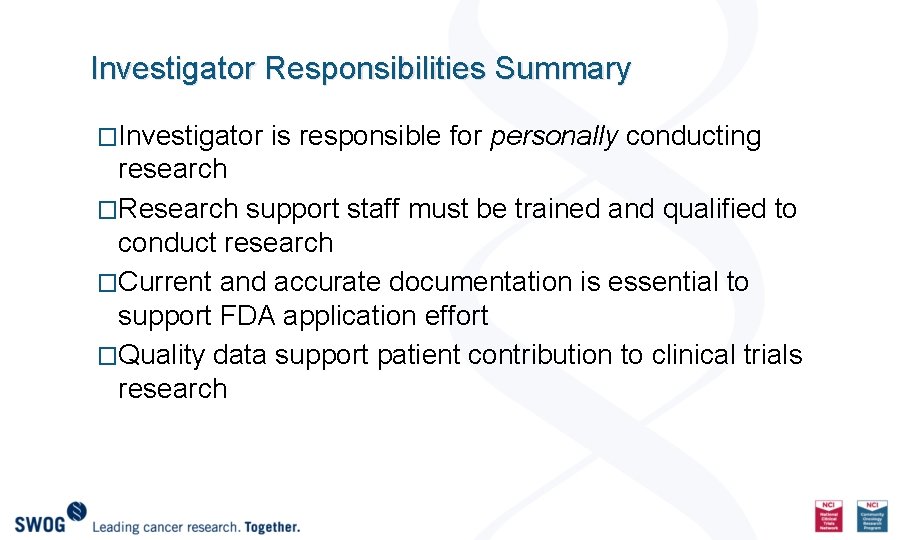
Investigator Responsibilities Summary �Investigator is responsible for personally conducting research �Research support staff must be trained and qualified to conduct research �Current and accurate documentation is essential to support FDA application effort �Quality data support patient contribution to clinical trials research
Thank You! �Contact Information ◦ Evonne Lackey �Elackey@fredhutch. org
Patient Perspective R Bangs
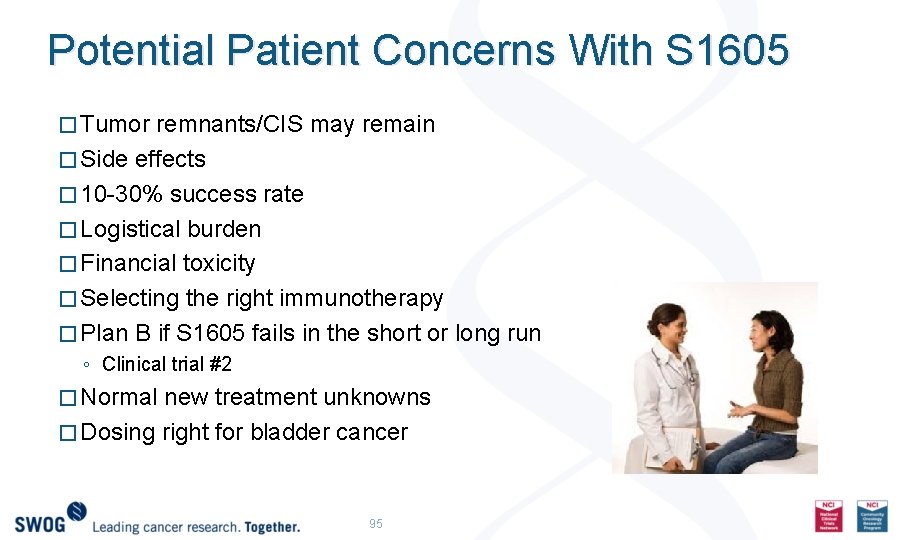
Potential Patient Concerns With S 1605 � Tumor remnants/CIS may remain � Side effects � 10 -30% success rate � Logistical burden � Financial toxicity � Selecting the right immunotherapy � Plan B if S 1605 fails in the short or long run ◦ Clinical trial #2 � Normal new treatment unknowns � Dosing right for bladder cancer 95
Questions & Answers S 1605 Panel
Frequently Asked Questions

FAQ ELIGIBILITY
Is a patient eligible if (s)he finished induction BCG but could not tolerate any maintenance therapy? �only recurrent HG T 1 disease is eligible after only induction BCG �all other patients must have at least 2 doses of maintenance BCG or a second induction �BCG intolerance is NOT an inclusion criterion
Patient has complete TURBT 5 weeks prior to registration by the same investigator – does (s)he need repeat cystoscopy within 3 weeks of registration? �Yes “Patients must have had cystoscopy confirming no visible papillary tumor within 21 days prior to registration. (CIS disease is not expected to have been completely excised). ”
Patient with prior history of muscle invasive bladder cancer treated with bladder preservation (max. TUR or RT) now has BCG unresponsive NMIBC. Eligible? �Ineligible for two reasons: ◦ prior MIBC ◦ prior RT to bladder for bladder cancer ◦ RT for prostate/cervix/colon is NOT a contraindication
Is a patient with HIV eligible? �HIV patient can be included if currently on HAART with CD 4 count >250
Is a patient with hepatitis eligible? Yes � Patients with past or resolved hepatitis B infection are eligible � ◦ � defined as having a negative hepatitis B surface antigen [HBs. Ag] test and a positive anti-HBc [antibody to hepatitis B core antigen] antibody test Patients positive for hepatitis C virus (HCV) antibody are eligible only if polymerase chain reaction (PCR) is negative for HCV RNA.
FAQ ENDPOINTS
What if a patient has low grade recurrence? �the patient continues on protocol �only high grade recurrences are considered treatment failure
What if a patient with CIS has for-cause biopsy after 3 months and it is negative? Does (s)he require mandatory repeat biopsy at 6 months? �the patient continues on protocol �if normal cystoscopy and normal cytology at 6 months, then no biopsy required – patient considered CR �if abnormal cysto and/or cytology, then repeat evaluation as per usual clinical routine
What if a patient on follow-up has positive cytology but negative cystoscopy? �cytology is considered positive if malignant cells are identified �the study include guidelines for evaluation of positive cytology ◦ perform cystoscopy �if visible lesion on cystoscopy, then proceed with bladder biopsy �if no visible lesion on cystoscopy, then proceed with random bladder biopsies to include ≥ 4 sites in the bladder and biopsies of the prostatic urethra (encourage TUR at 5 and 7 o’clock); �bilateral retrograde ureteropyelograms and bilateral upper tract washings for cytology should be performed at the same time; �the retrograde studies can be replaced by CT-IVP if the treating physician prefers.
Does a patient meet criteria for recurrence if positive cytology with negative cystoscopy and imaging? �positive cytology must be assessed according to protocol �CR in CIS patient: cystoscopy, cytology and biopsy must all be negative �recurrence: must be histologically proven high grade disease (Ta/T 1/CIS)
Patient develops new upper tract disease on follow-up can patient continue on protocol? �No �Since atezo is being administered sytemically, and upper tract or prostatic urothelial recurrence is considered treatment failure
FAQ TREATMENT
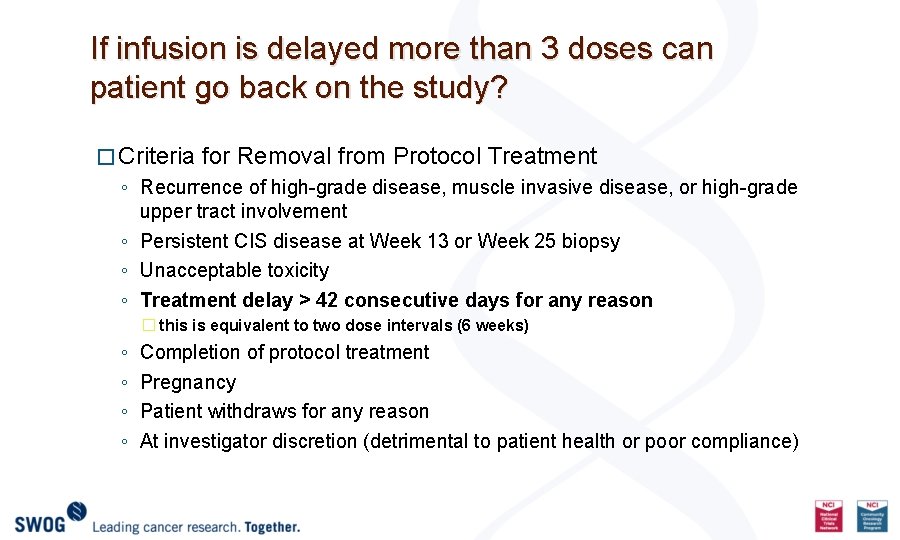
If infusion is delayed more than 3 doses can patient go back on the study? � Criteria for Removal from Protocol Treatment ◦ Recurrence of high-grade disease, muscle invasive disease, or high-grade upper tract involvement ◦ Persistent CIS disease at Week 13 or Week 25 biopsy ◦ Unacceptable toxicity ◦ Treatment delay > 42 consecutive days for any reason � this is equivalent to two dose intervals (6 weeks) ◦ ◦ Completion of protocol treatment Pregnancy Patient withdraws for any reason At investigator discretion (detrimental to patient health or poor compliance)
FAQ SPECIMENS AND TRANSLATIONAL MEDICINE
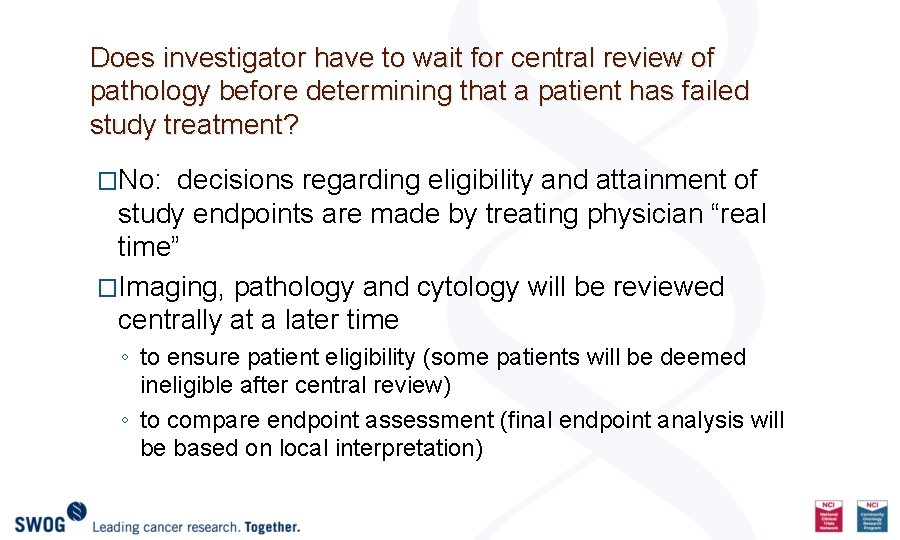
Does investigator have to wait for central review of pathology before determining that a patient has failed study treatment? �No: decisions regarding eligibility and attainment of study endpoints are made by treating physician “real time” �Imaging, pathology and cytology will be reviewed centrally at a later time ◦ to ensure patient eligibility (some patients will be deemed ineligible after central review) ◦ to compare endpoint assessment (final endpoint analysis will be based on local interpretation)
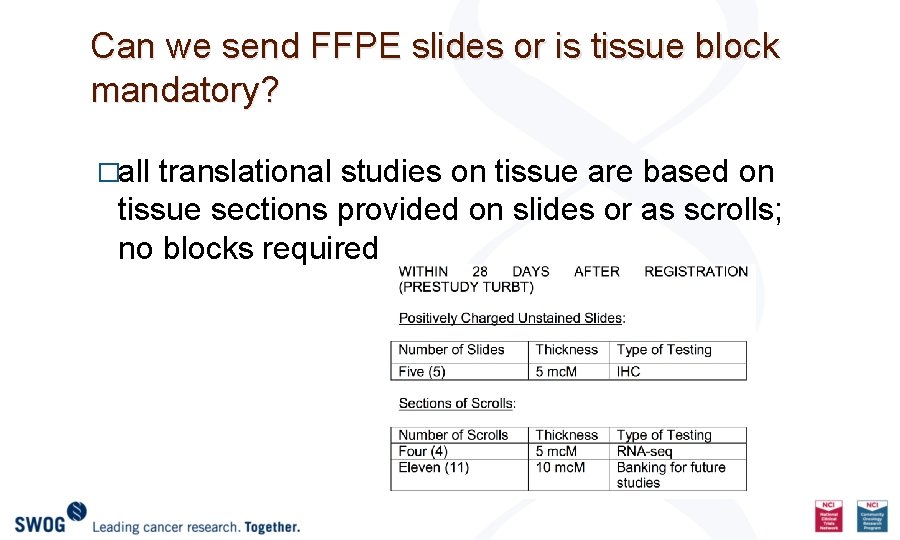
Can we send FFPE slides or is tissue block mandatory? �all translational studies on tissue are based on tissue sections provided on slides or as scrolls; no blocks required
FAQ S 1605 LOGISTICS
Are there any specific concerns around informed consent for this trial? �radical cystectomy is considered standard of care for these patients and they must be deemed unfit for, or they refuse cystectomy �requires careful discussion of potential toxicity of systemic PD-L 1 inhibition �optional consent for biobanking
Will the CIS and Ta/T 1 cohorts accrue separately? Can one close before the other? �enrollment will be capped in the Ta/T 1 arm to ensure 70 patients with CIS are accrued �CIS arm will not be capped
Does surveillance of patients end at 18 month time point? �All patients will be followed for recurrence, progression, and survival for 5 years after registration.
Will you provide any additional promotional resources? �Webinar for study team �Video for patients �Patient brochure �Poster for office �Additional Investigator Meetings
Acknowledgements SWOG Team � Gretchen Getz � Dana Sparks � Casey Dawson � Nathan Eriksen � Karen Anderson � Mark Schofield � Evonne Lackey � Sean O’Bryan CTEP/NCI � Bhupinder Mann � Elad Sharon � Massimo Cardinali � Boris Freidlin Genentech
- Slides: 120