Lecture 6 Hash functions TEK 4500 29 09
- Slides: 54
Lecture 6 – Hash functions TEK 4500 29. 09. 2020 Håkon Jacobsen hakon. jacobsen@its. uio. no
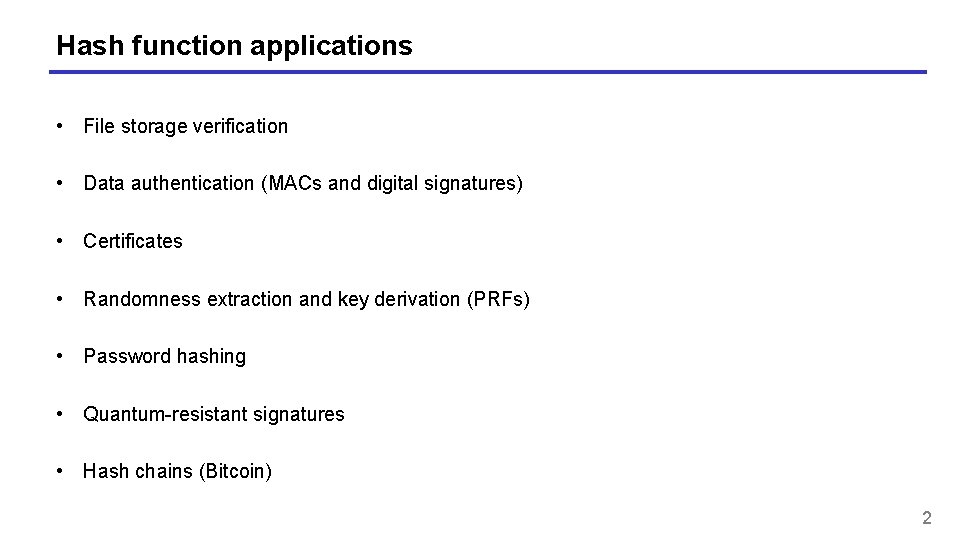
Hash function applications • File storage verification • Data authentication (MACs and digital signatures) • Certificates • Randomness extraction and key derivation (PRFs) • Password hashing • Quantum-resistant signatures • Hash chains (Bitcoin) 2
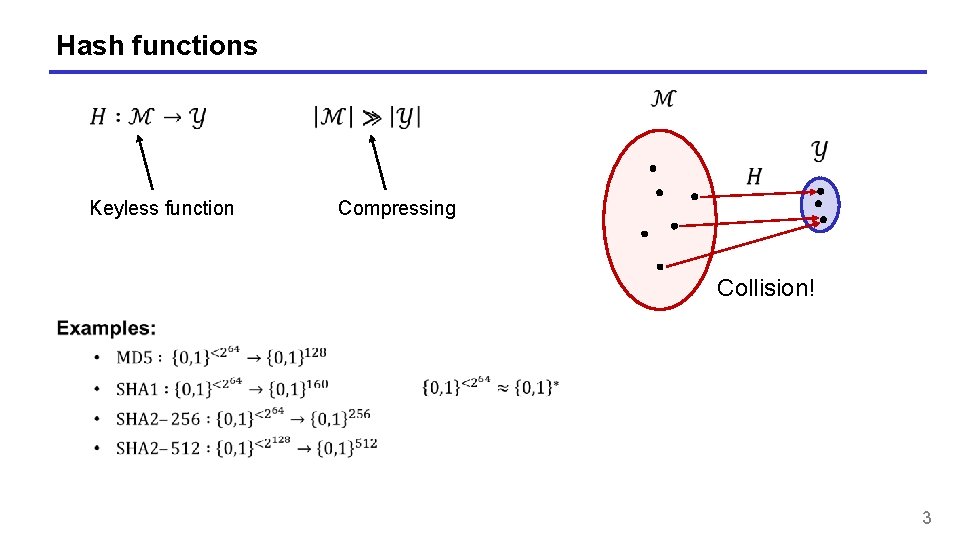
Hash functions Keyless function Compressing Collision! 3
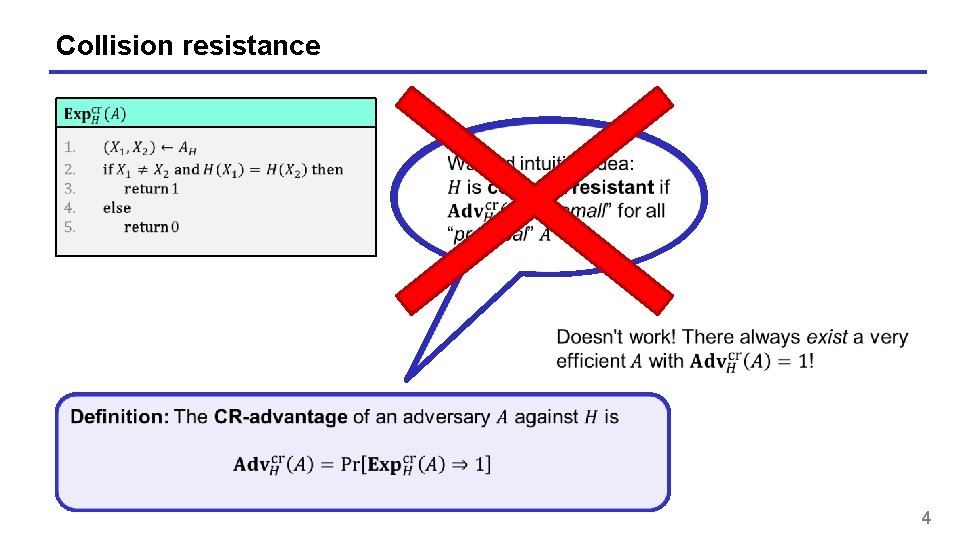
Collision resistance 4
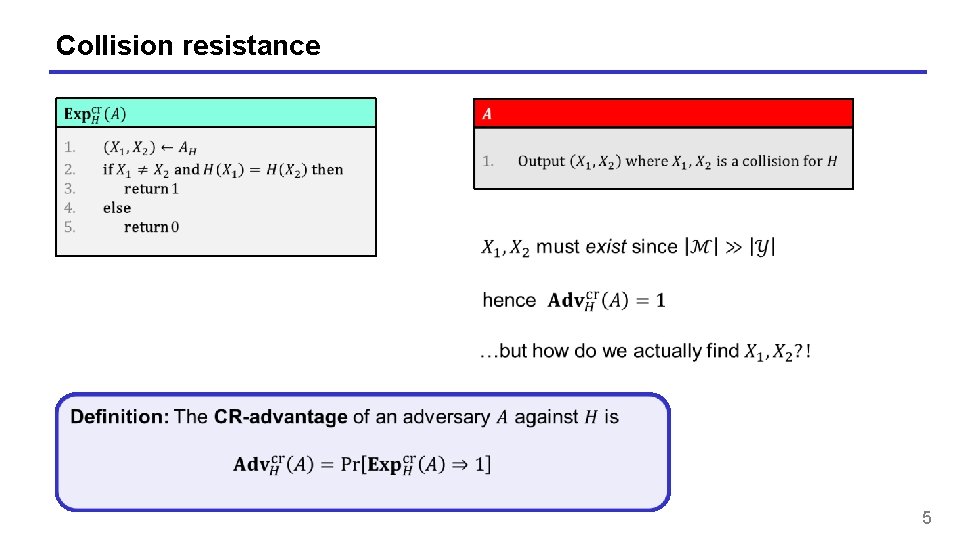
Collision resistance 5
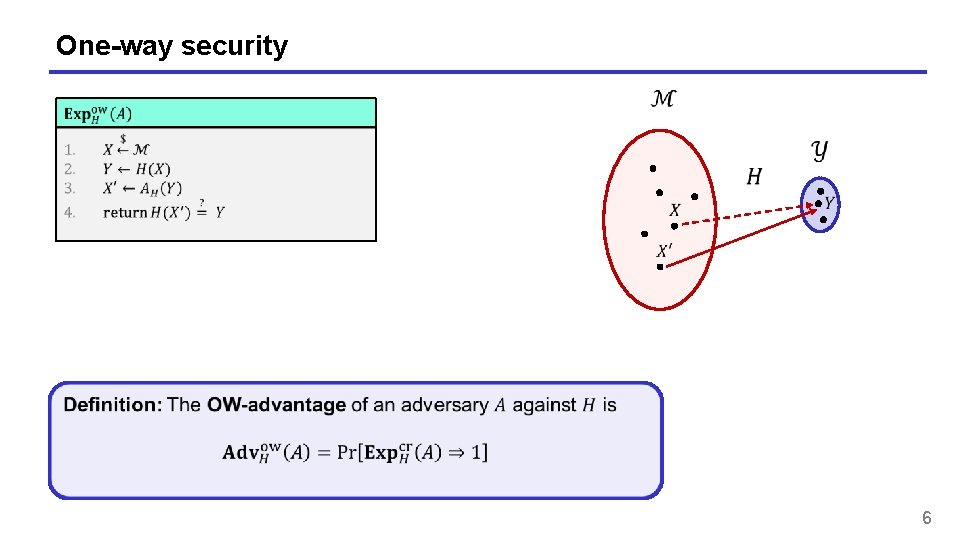
One-way security 6
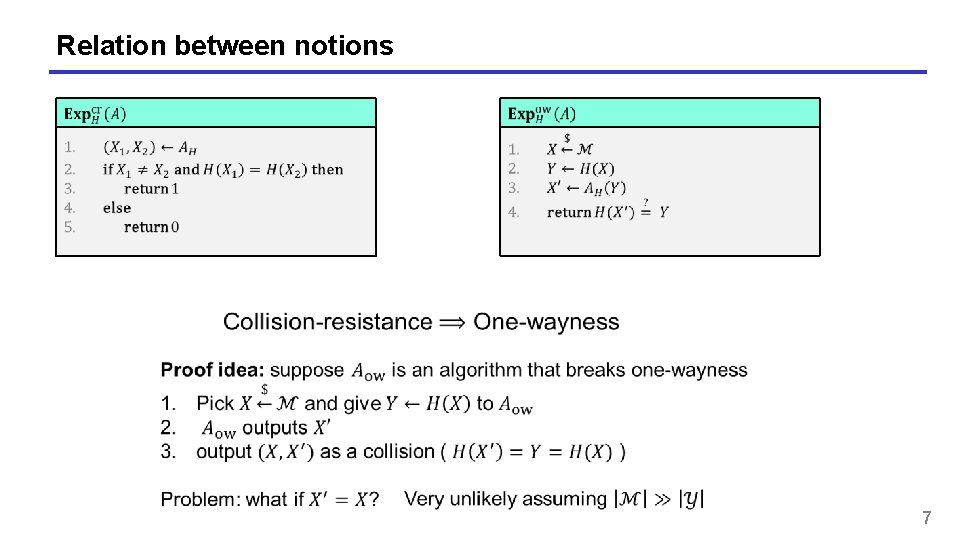
Relation between notions 7
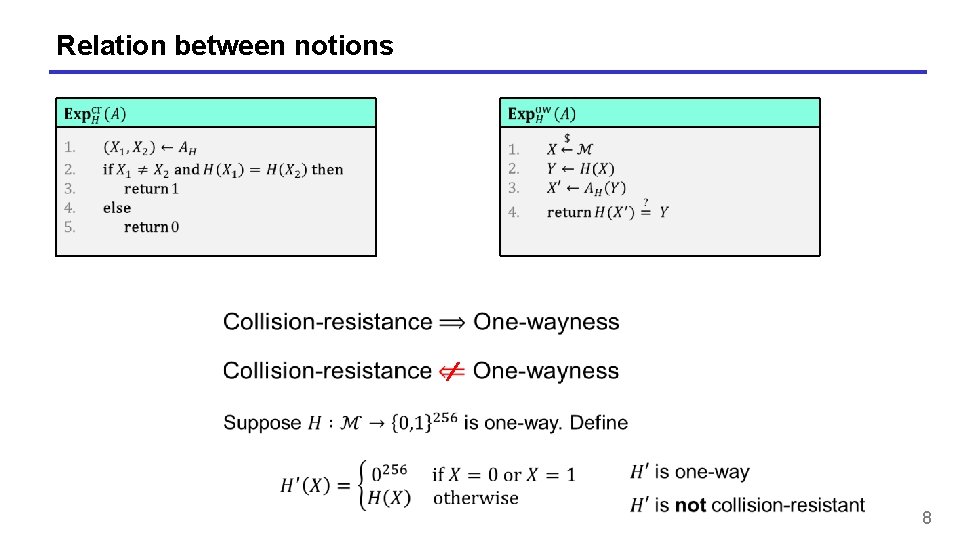
Relation between notions 8
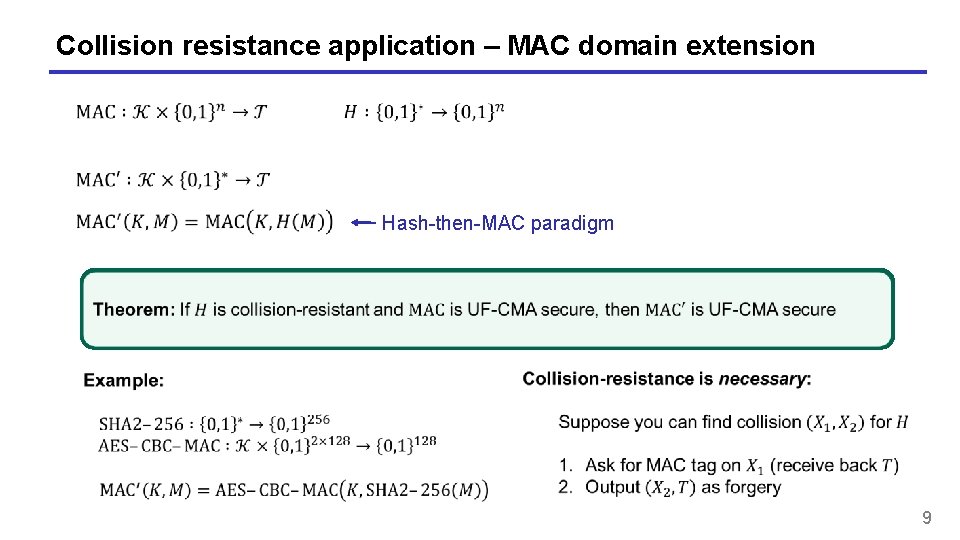
Collision resistance application – MAC domain extension Hash-then-MAC paradigm 9
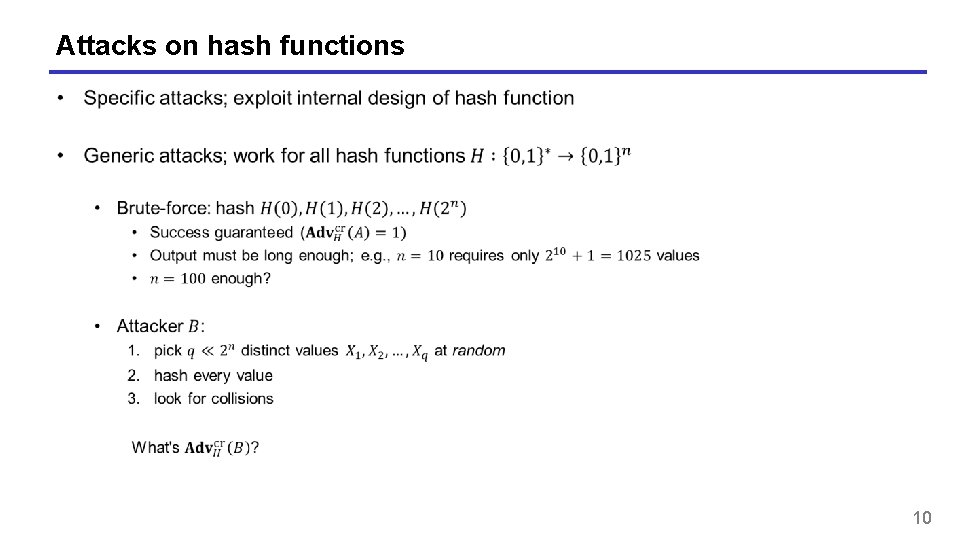
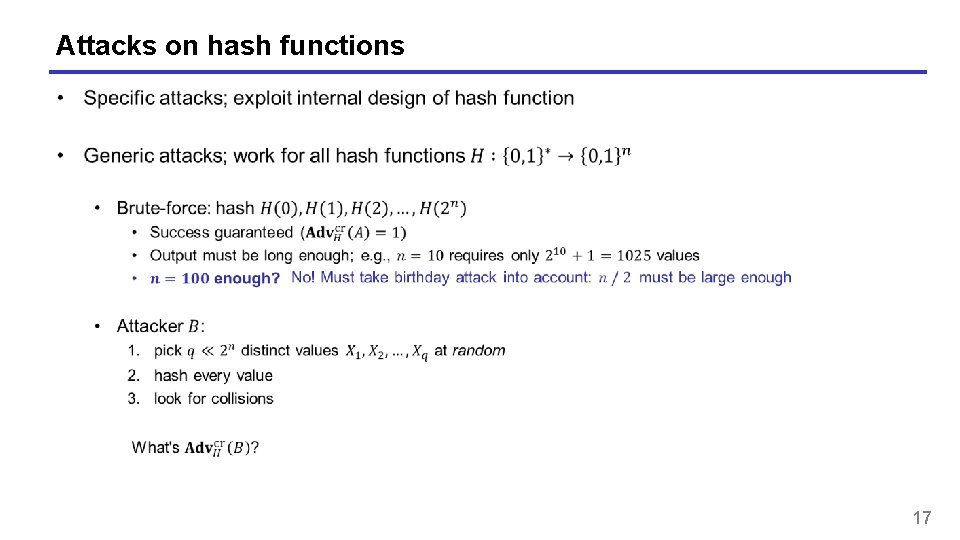
Attacks on hash functions 10
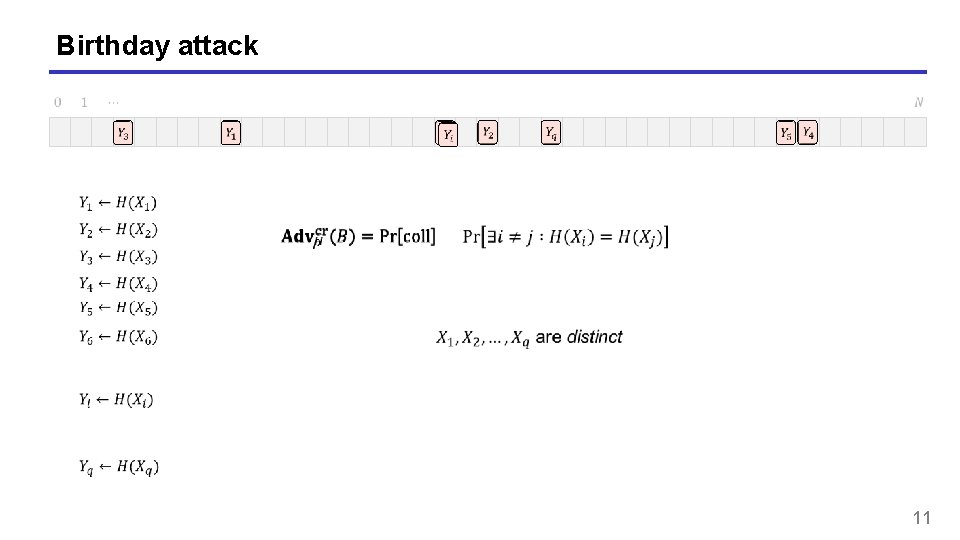
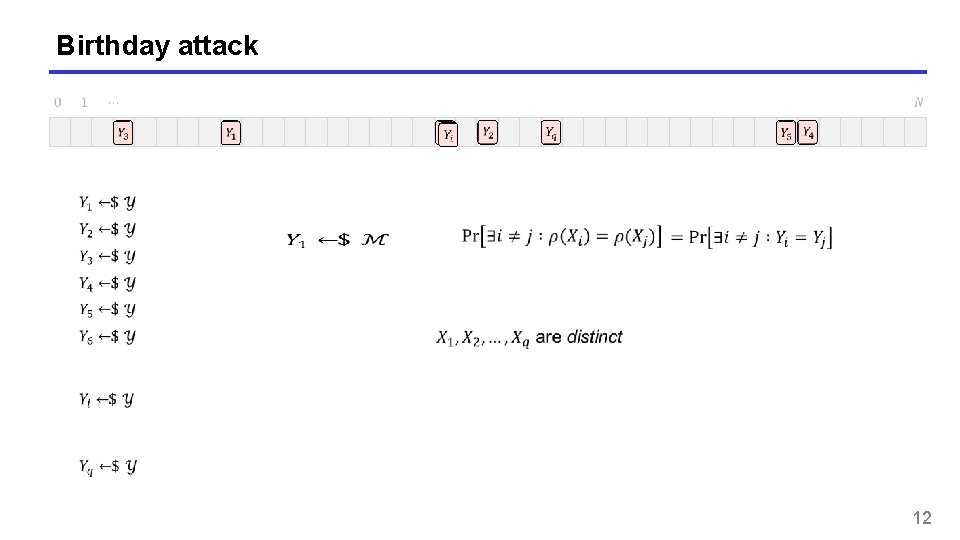
Birthday attack 11
Birthday attack 12
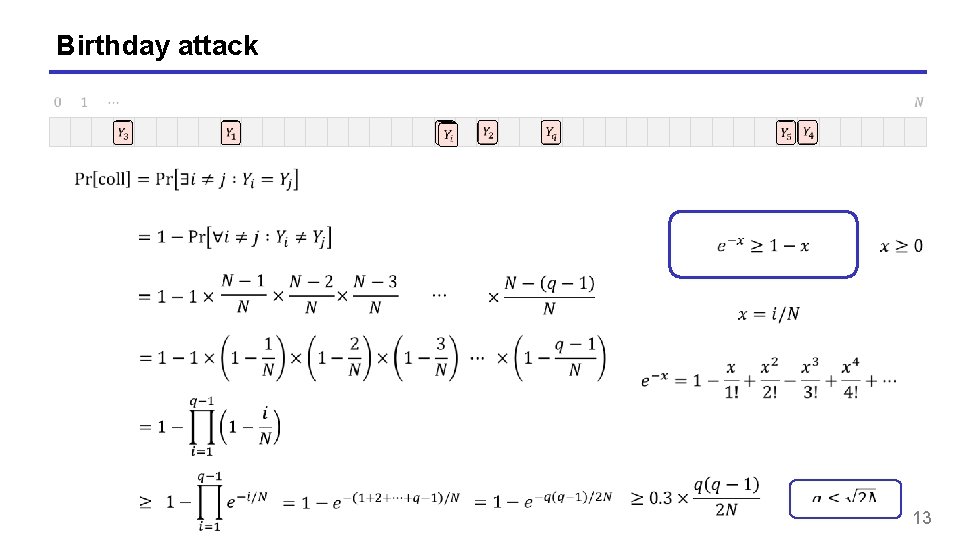
Birthday attack 13
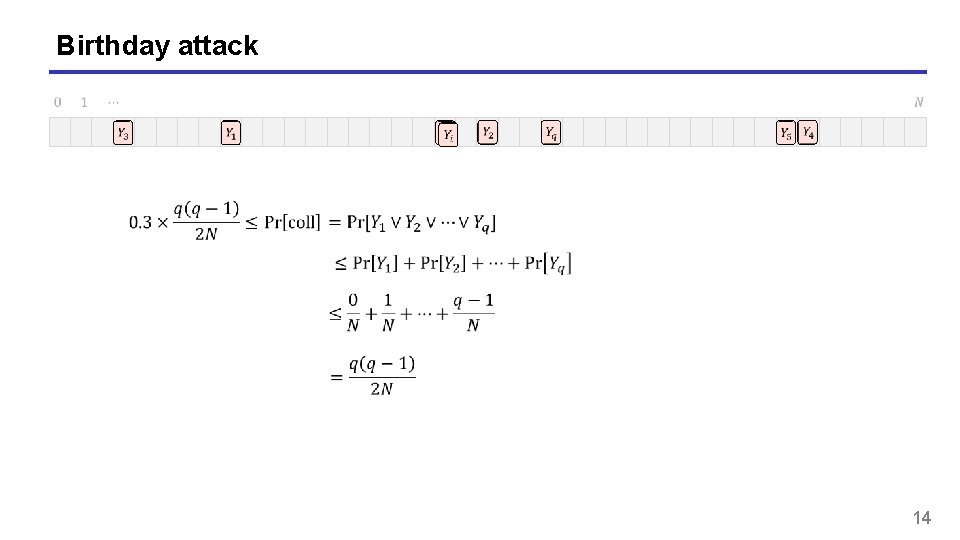
Birthday attack 14
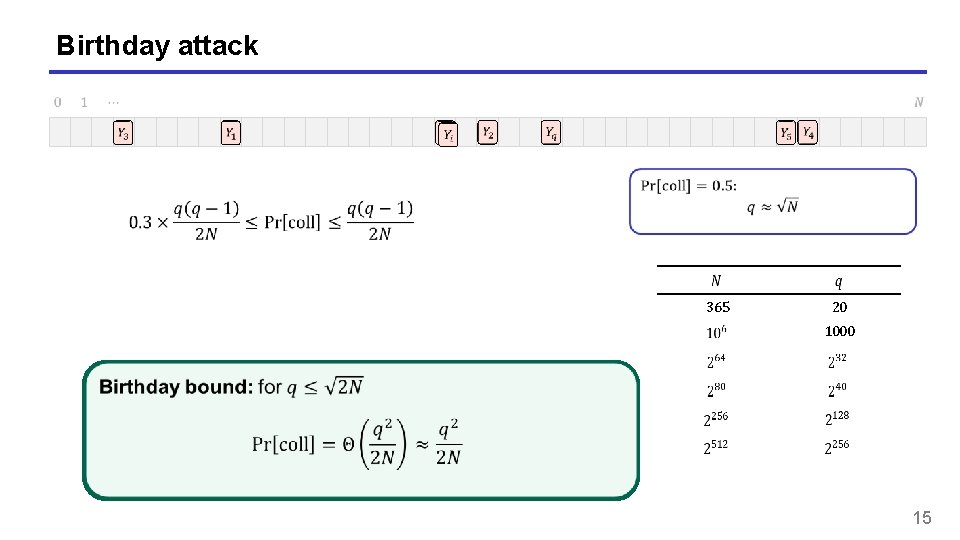
Birthday attack 365 20 1000 15
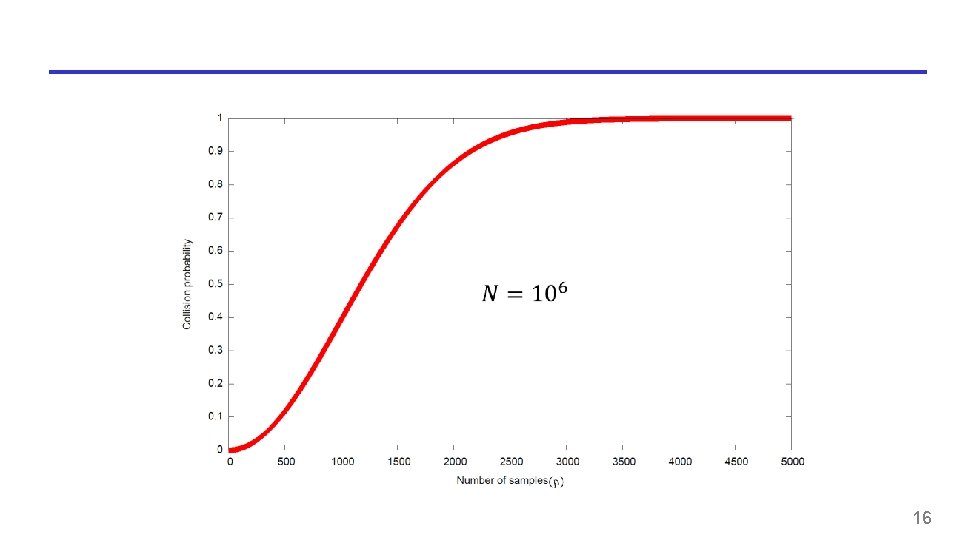
16
Attacks on hash functions 17
DESIGNING HASH FUNCTIONS
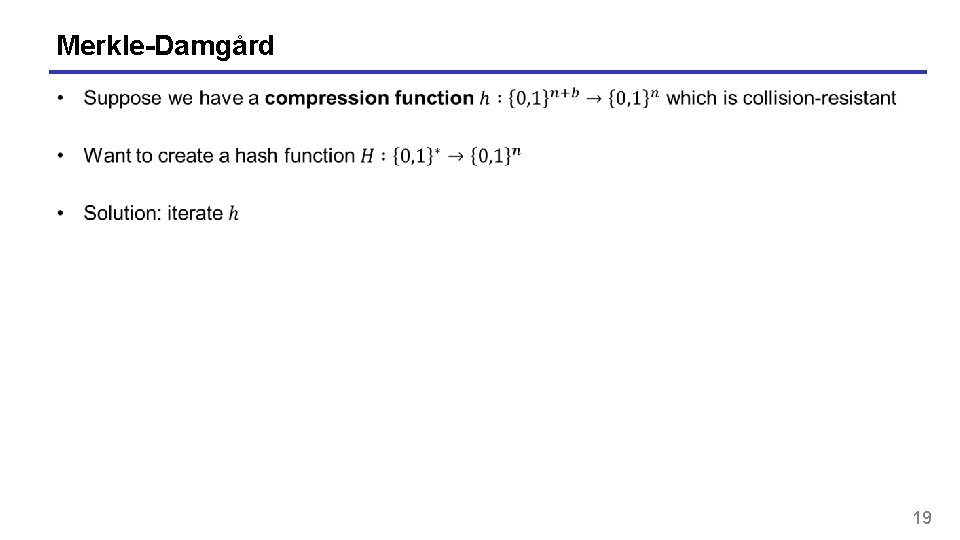
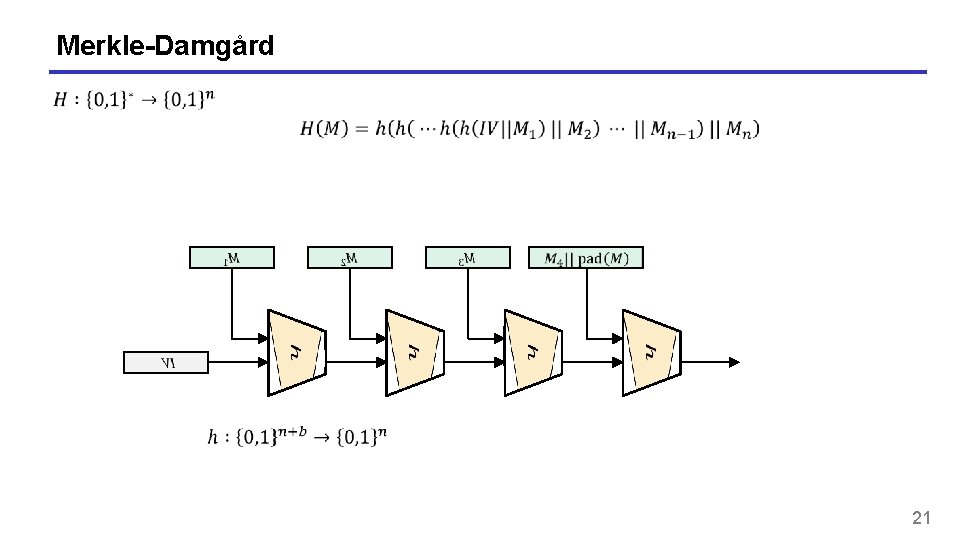
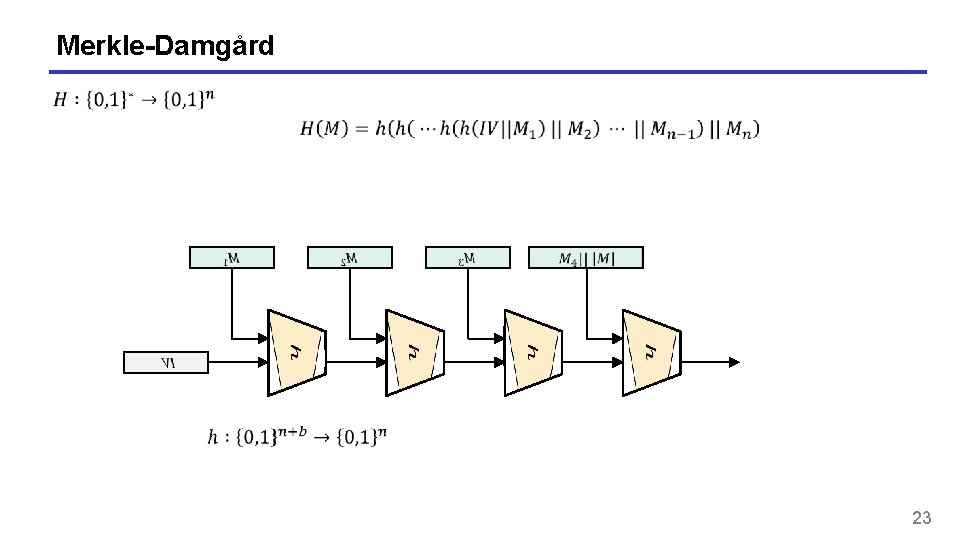
Merkle-Damgård 19
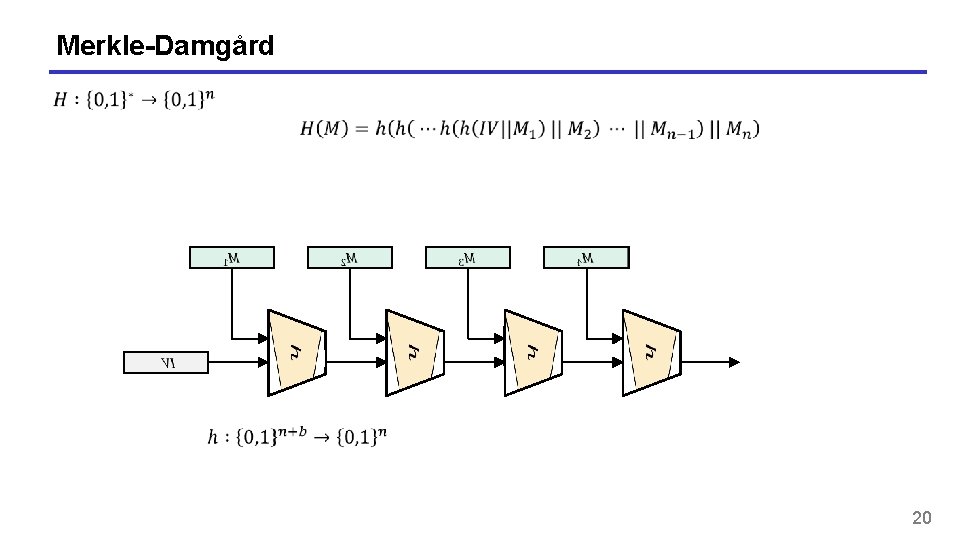
Merkle-Damgård 20
Merkle-Damgård 21
Merkle-Damgård 23
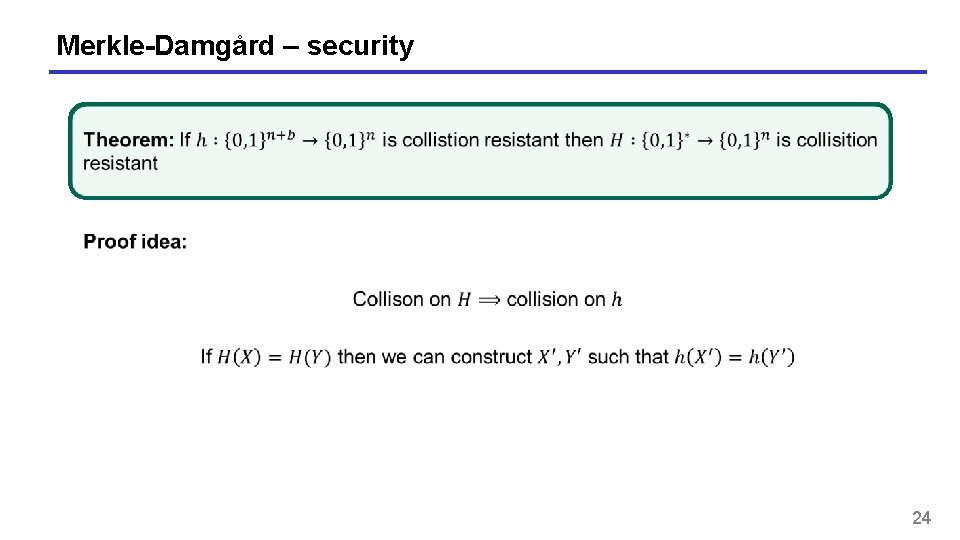
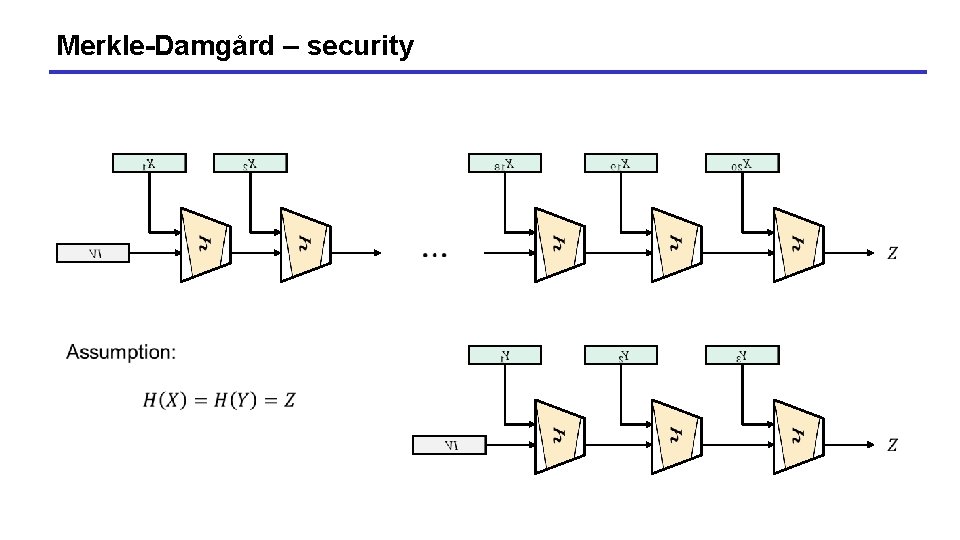
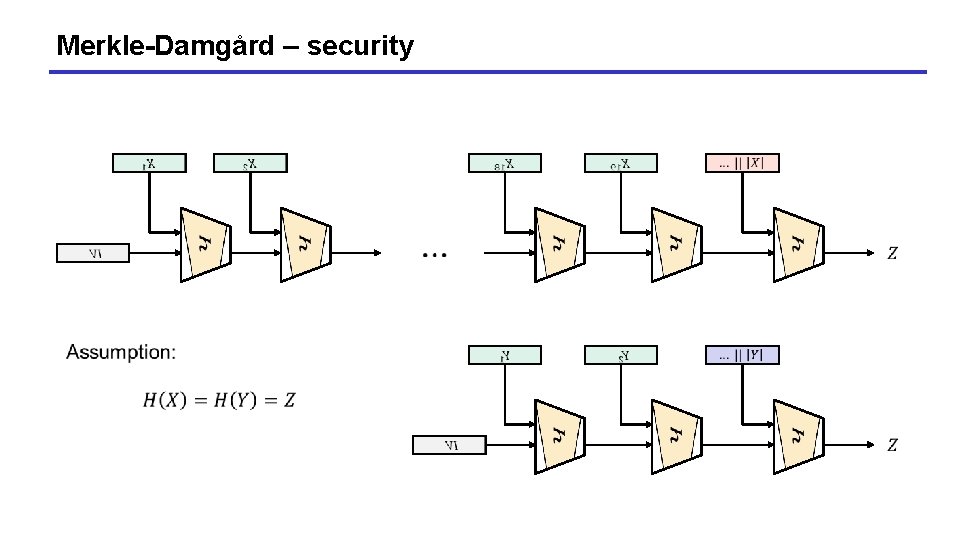
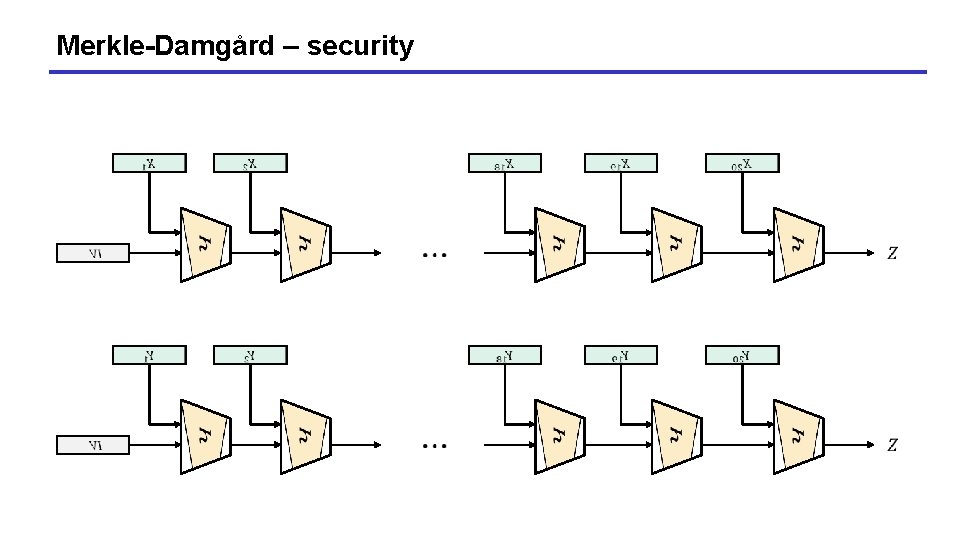
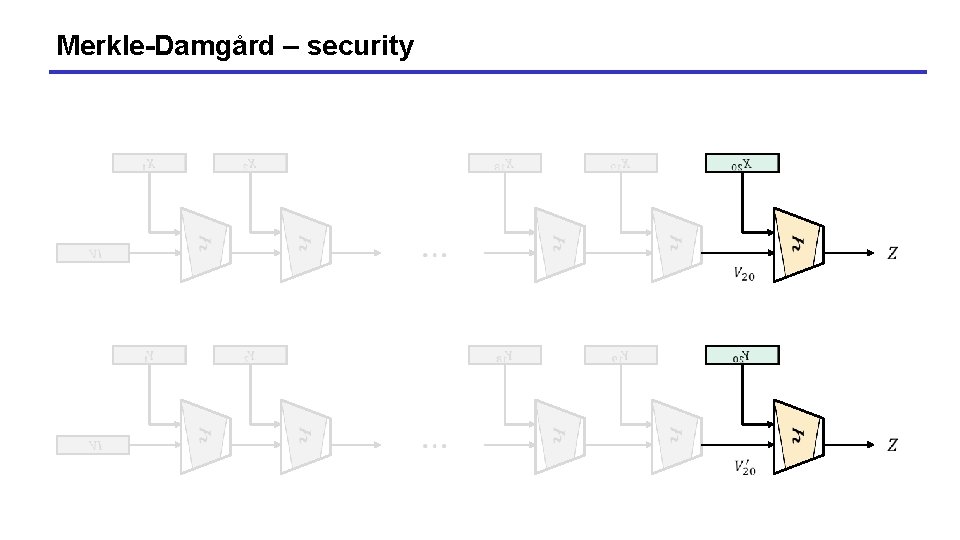
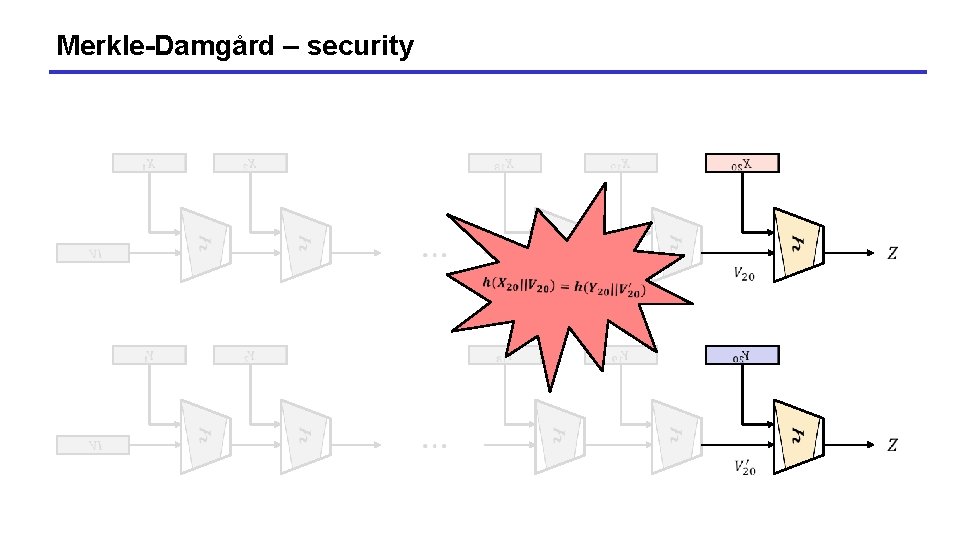
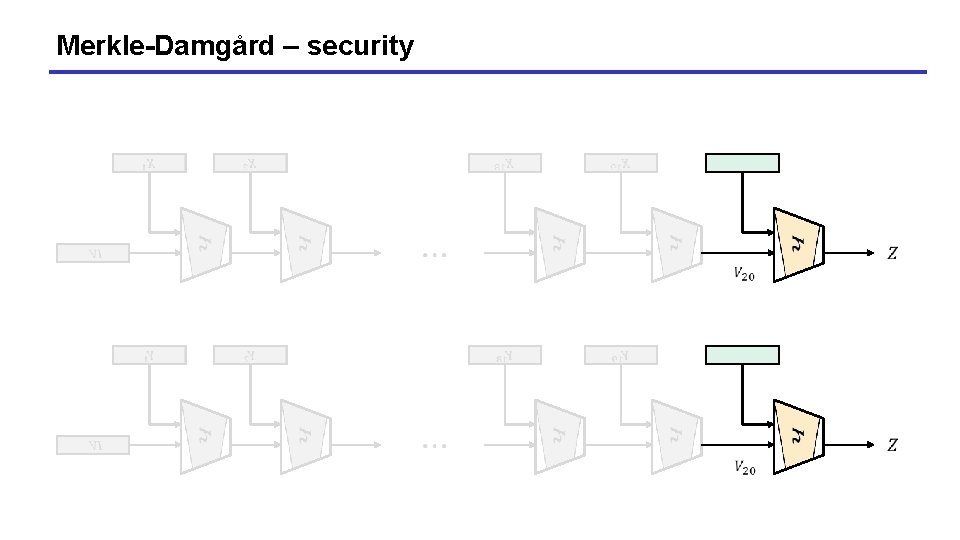
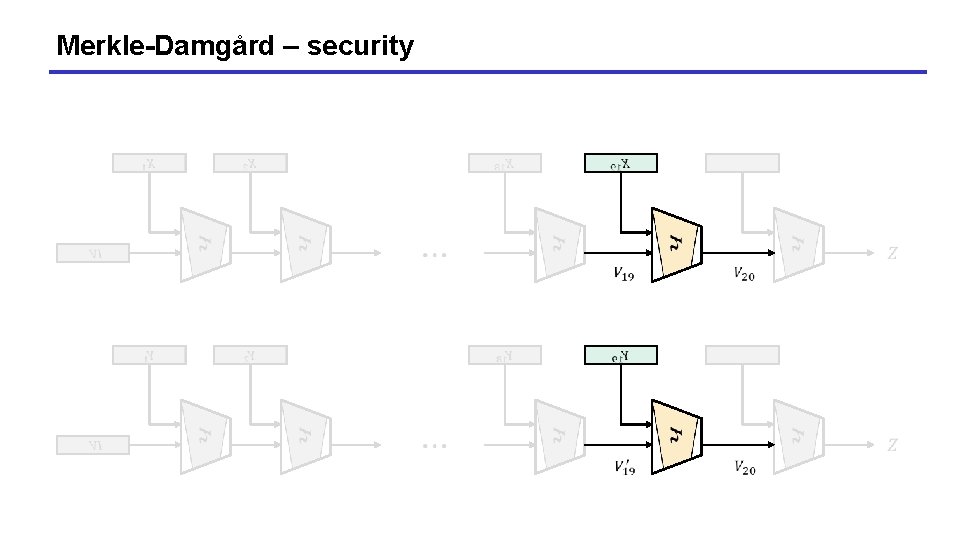
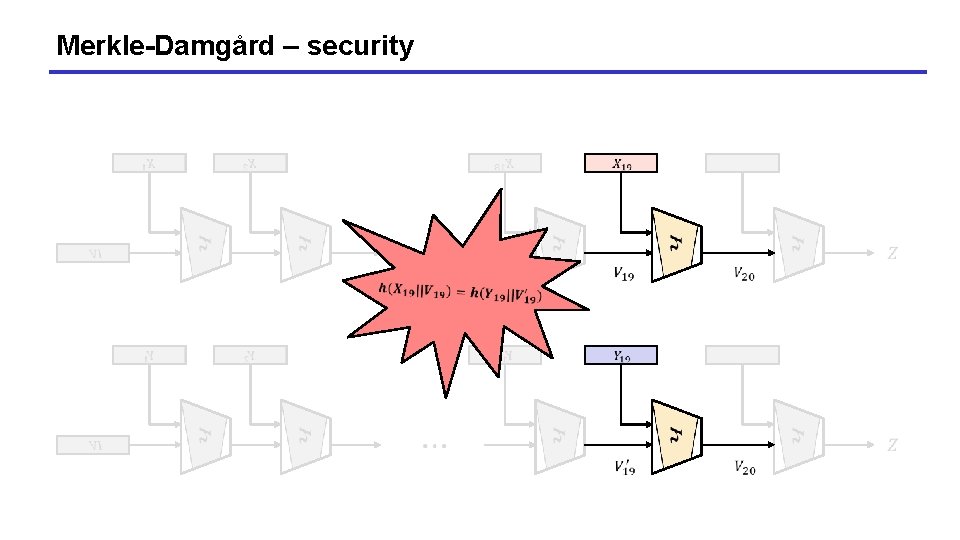
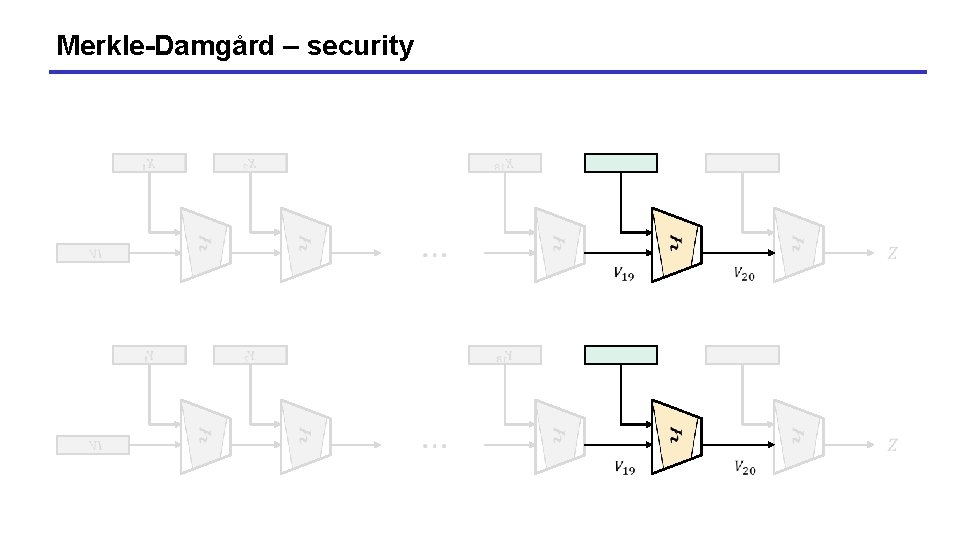
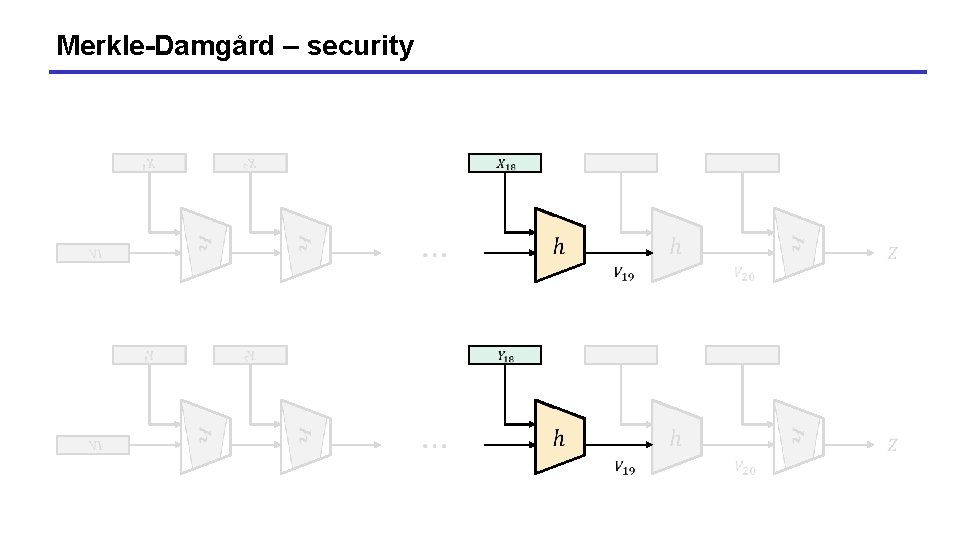
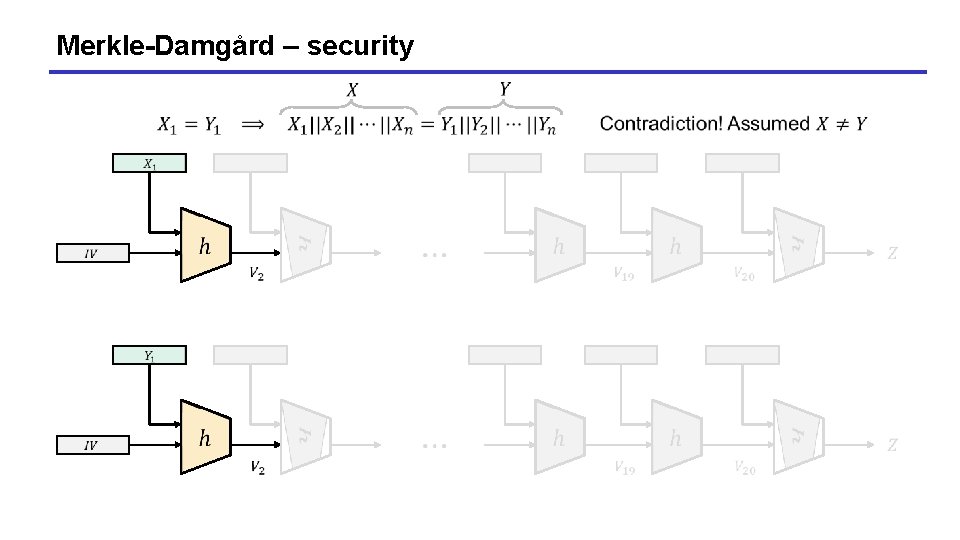
Merkle-Damgård – security 24
Merkle-Damgård – security
Merkle-Damgård – security
Merkle-Damgård – security
Merkle-Damgård – security
Merkle-Damgård – security
Merkle-Damgård – security
Merkle-Damgård – security
Merkle-Damgård – security
Merkle-Damgård – security
Merkle-Damgård – security
Merkle-Damgård – security
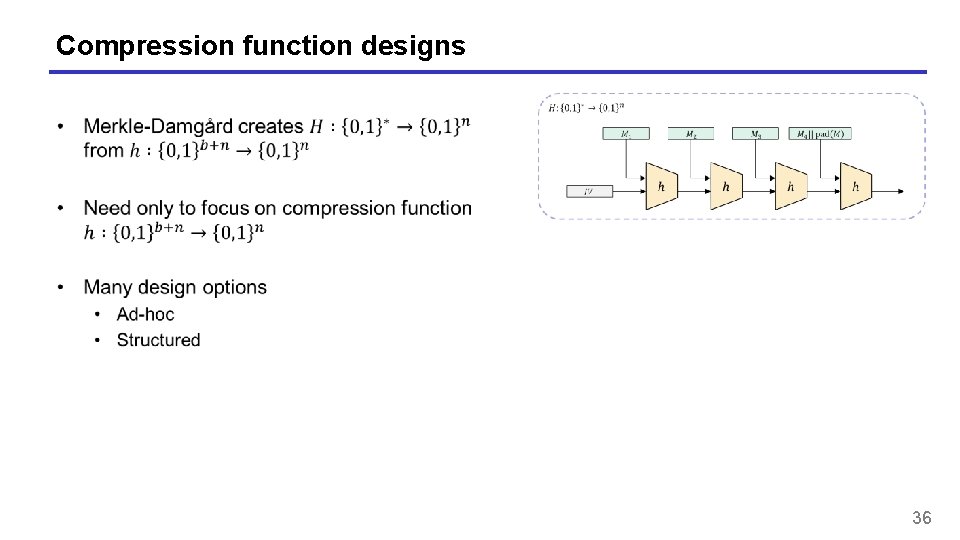
Compression function designs 36
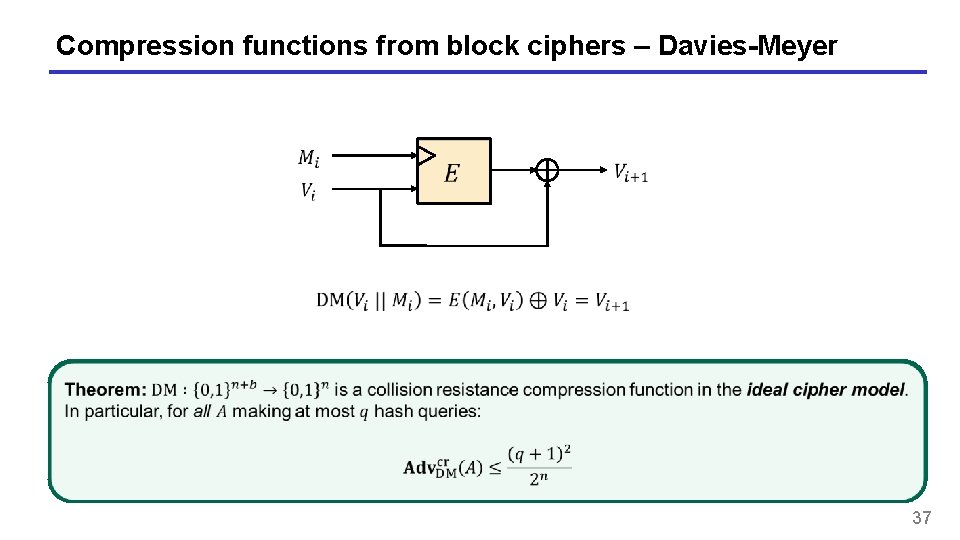
Compression functions from block ciphers – Davies-Meyer 37
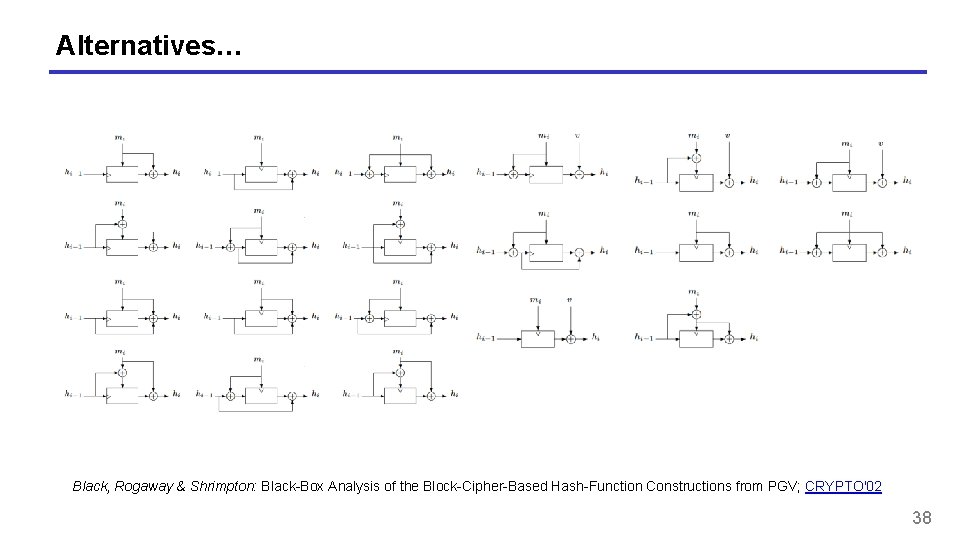
Alternatives… Black, Rogaway & Shrimpton: Black-Box Analysis of the Block-Cipher-Based Hash-Function Constructions from PGV; CRYPTO'02 38
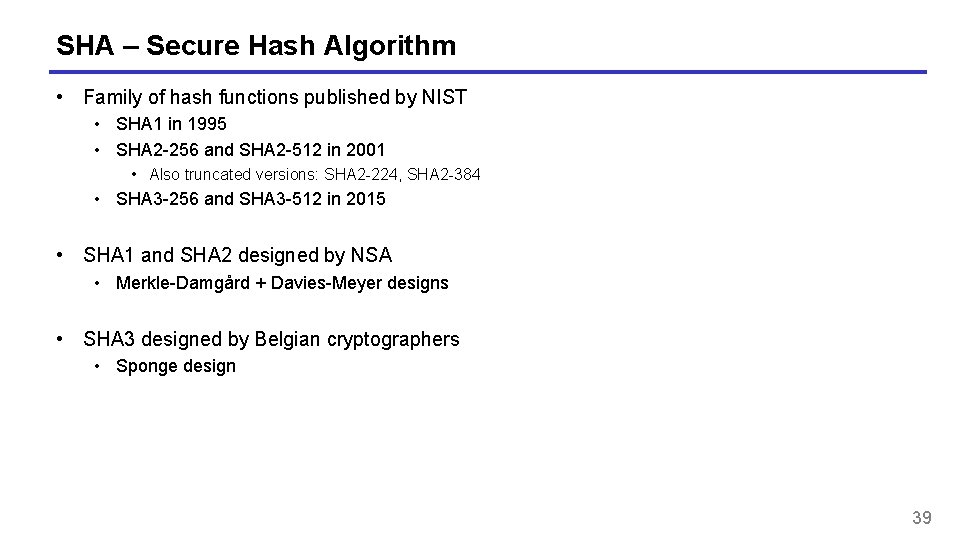
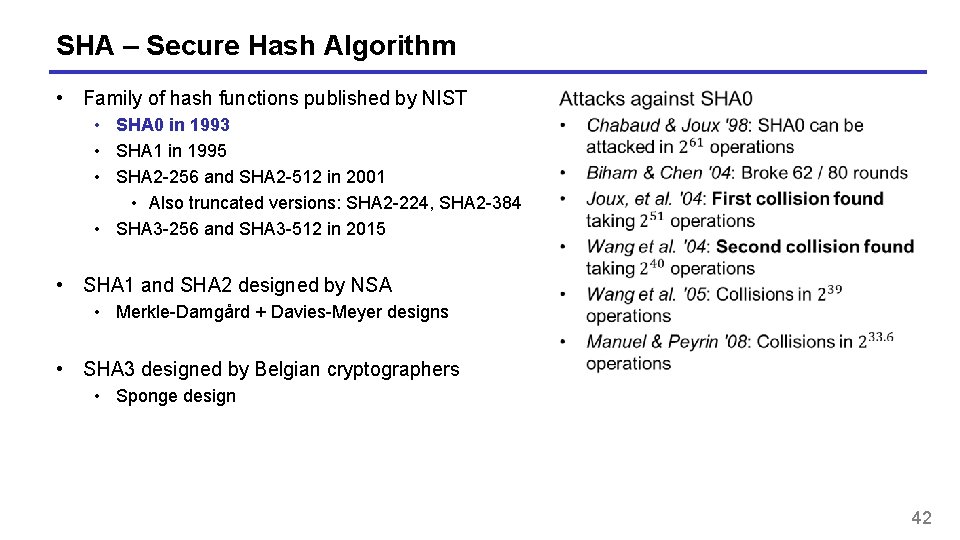
SHA – Secure Hash Algorithm • Family of hash functions published by NIST • SHA 1 in 1995 • SHA 2 -256 and SHA 2 -512 in 2001 • Also truncated versions: SHA 2 -224, SHA 2 -384 • SHA 3 -256 and SHA 3 -512 in 2015 • SHA 1 and SHA 2 designed by NSA • Merkle-Damgård + Davies-Meyer designs • SHA 3 designed by Belgian cryptographers • Sponge design 39
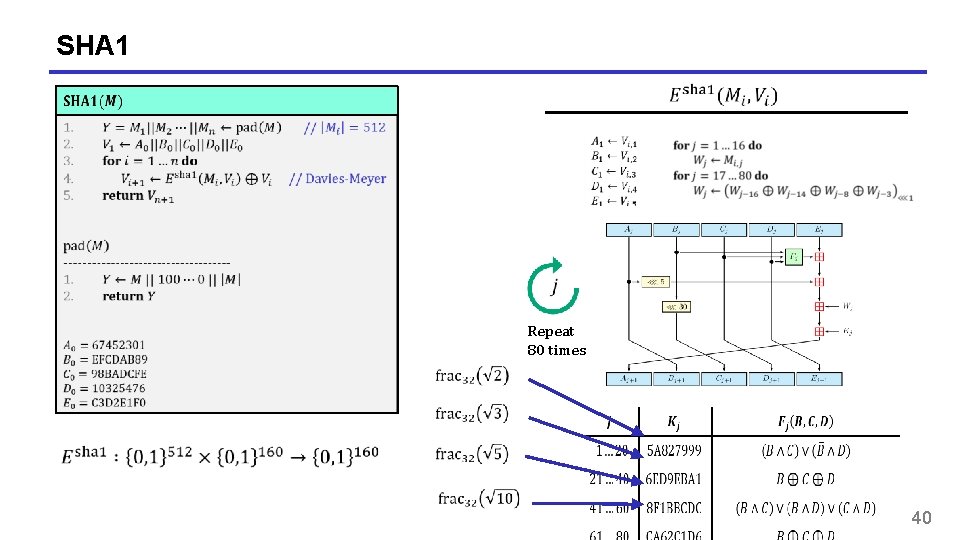
SHA 1 Repeat 80 times 40
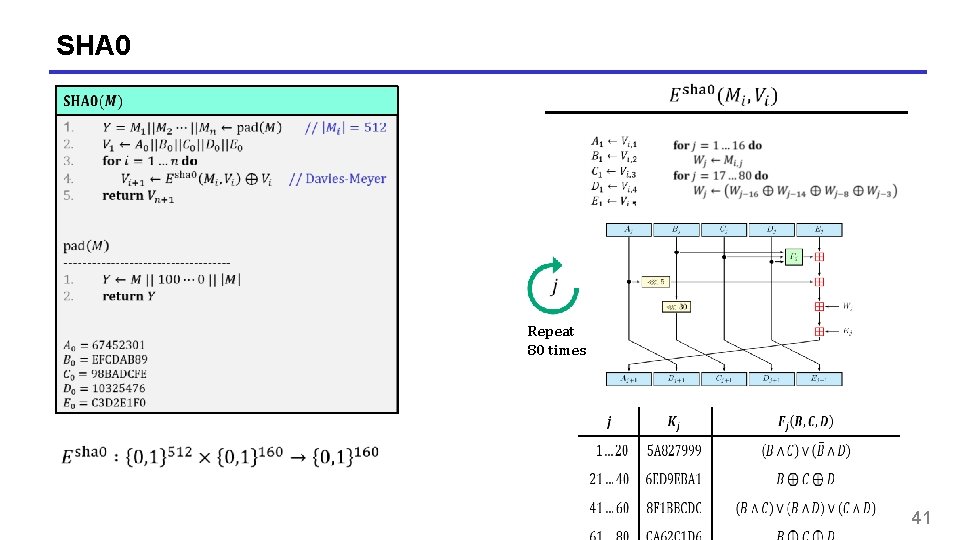
SHA 0 Repeat 80 times 41
SHA – Secure Hash Algorithm • Family of hash functions published by NIST • SHA 0 in 1993 • SHA 1 in 1995 • SHA 2 -256 and SHA 2 -512 in 2001 • Also truncated versions: SHA 2 -224, SHA 2 -384 • SHA 3 -256 and SHA 3 -512 in 2015 • SHA 1 and SHA 2 designed by NSA • Merkle-Damgård + Davies-Meyer designs • SHA 3 designed by Belgian cryptographers • Sponge design 42
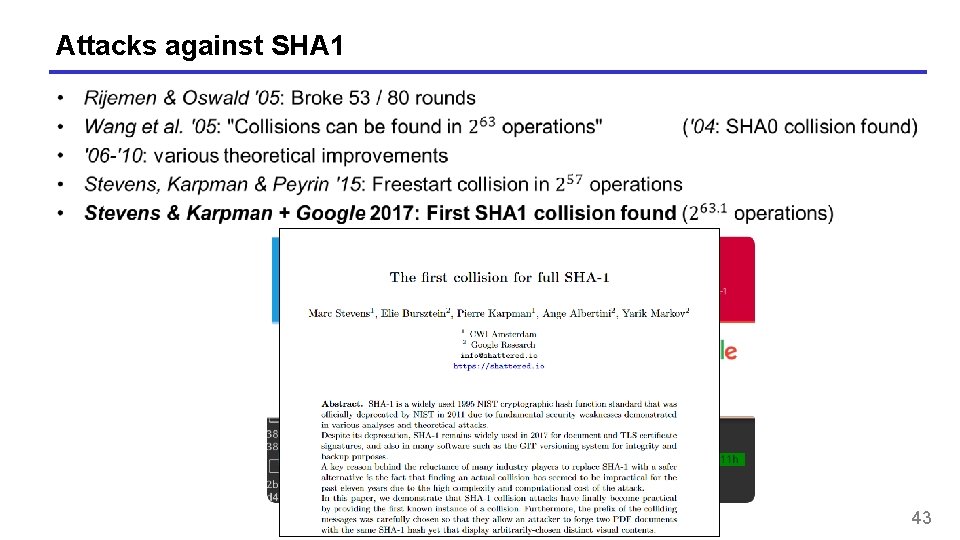
Attacks against SHA 1 43
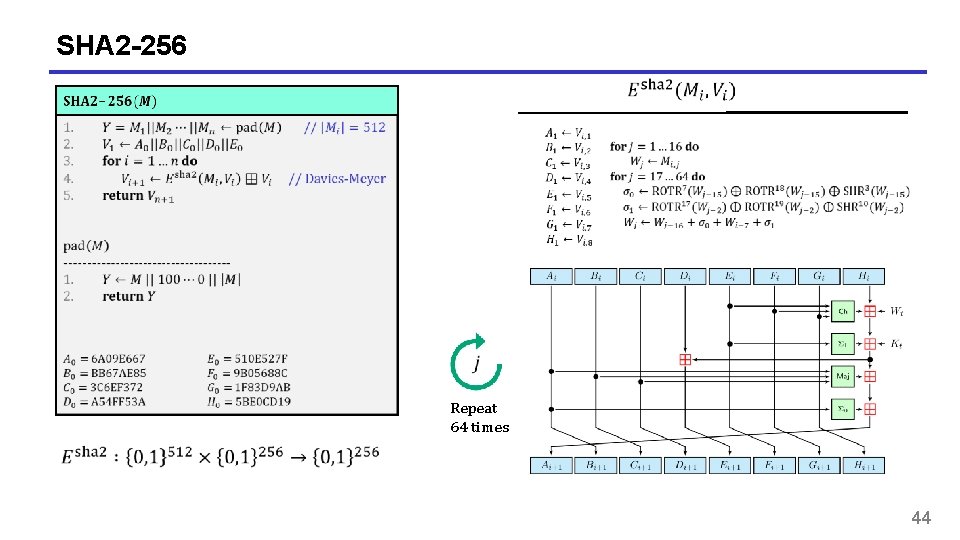
SHA 2 -256 Repeat 64 times 44
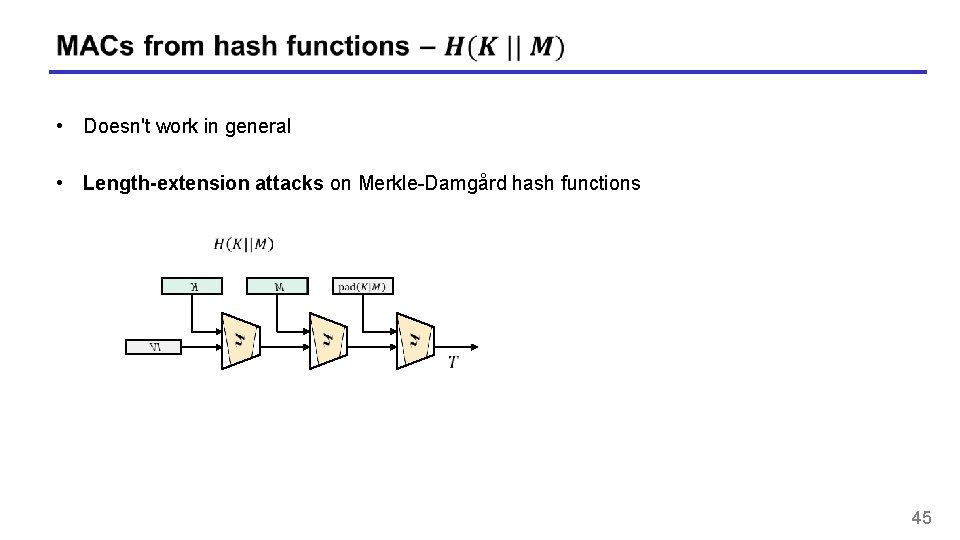
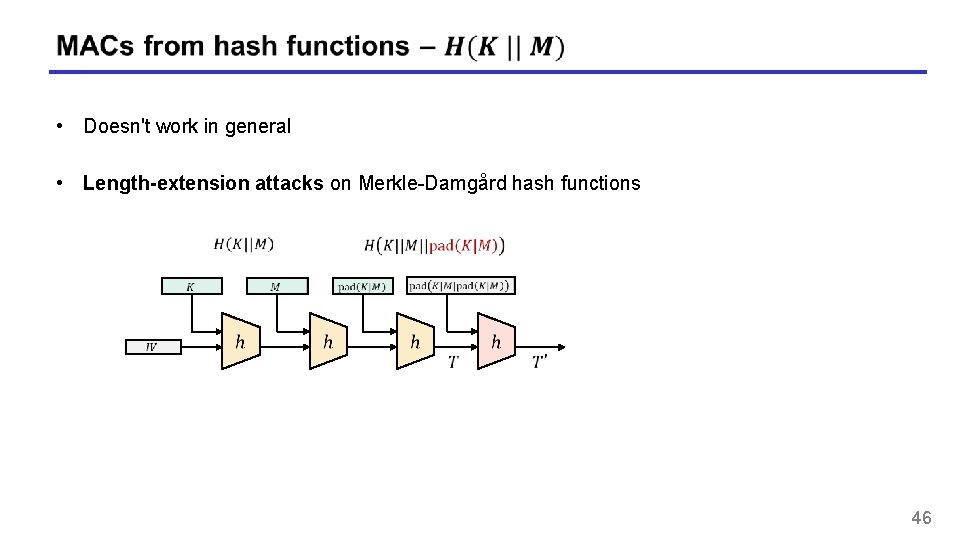
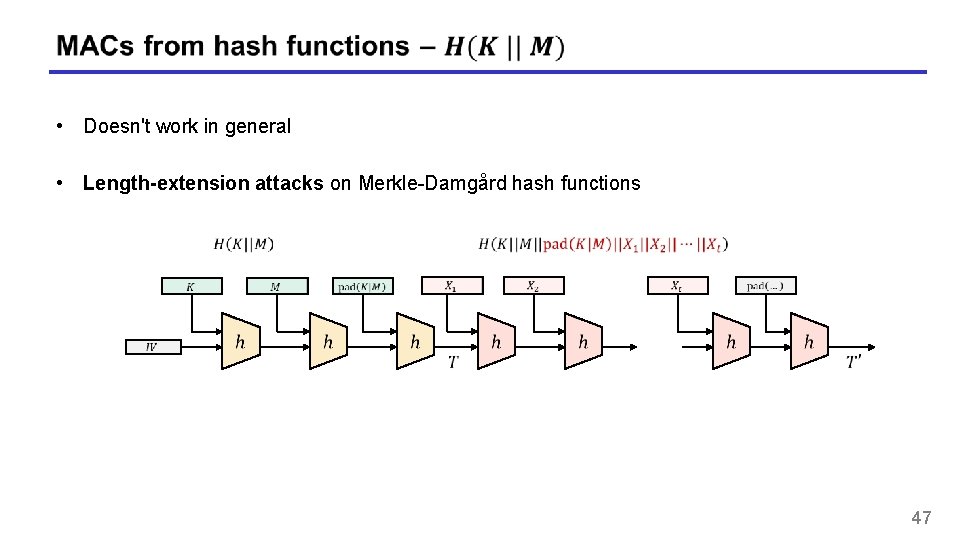
• Doesn't work in general • Length-extension attacks on Merkle-Damgård hash functions 45
• Doesn't work in general • Length-extension attacks on Merkle-Damgård hash functions 46
• Doesn't work in general • Length-extension attacks on Merkle-Damgård hash functions 47
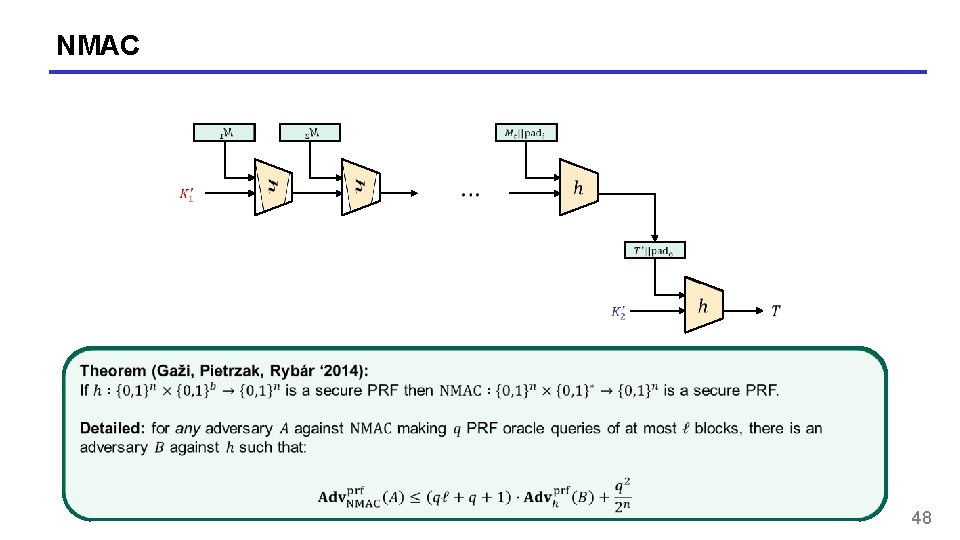
NMAC 48
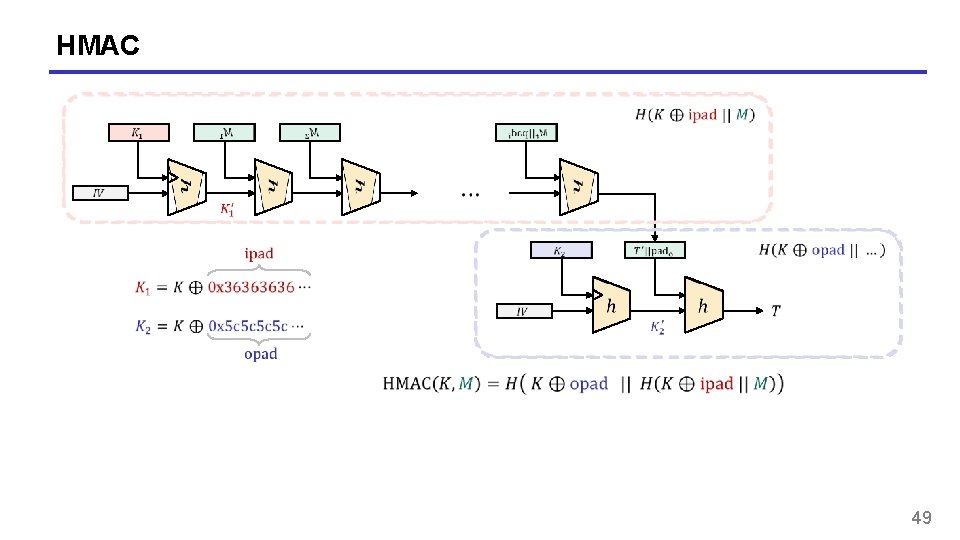
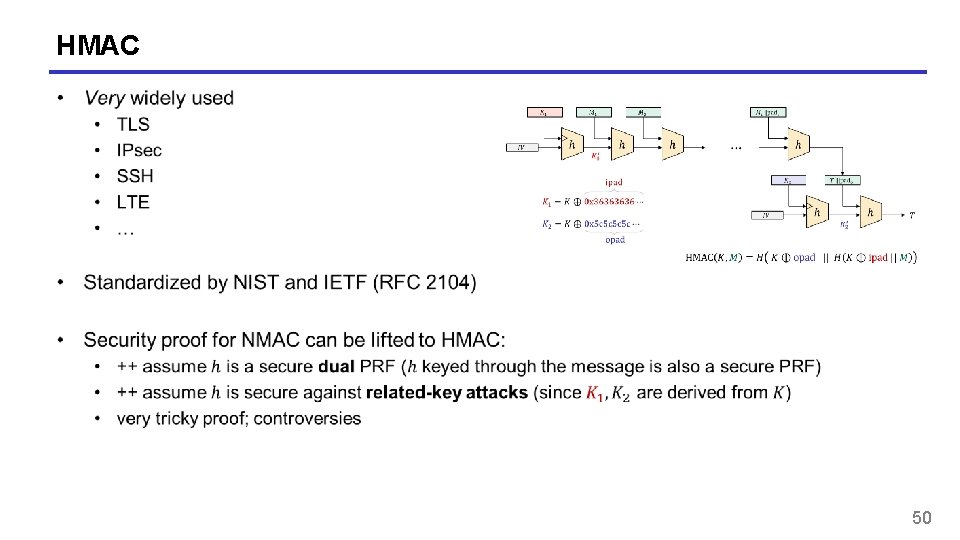
HMAC 49
HMAC 50
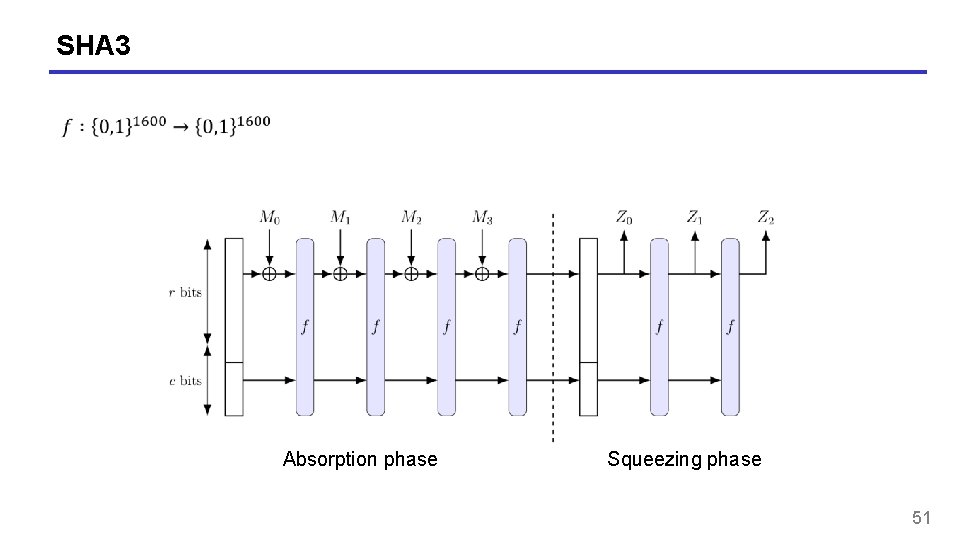
SHA 3 Absorption phase Squeezing phase 51
END OF PART 1 (SYMMETRIC CRYPTO)
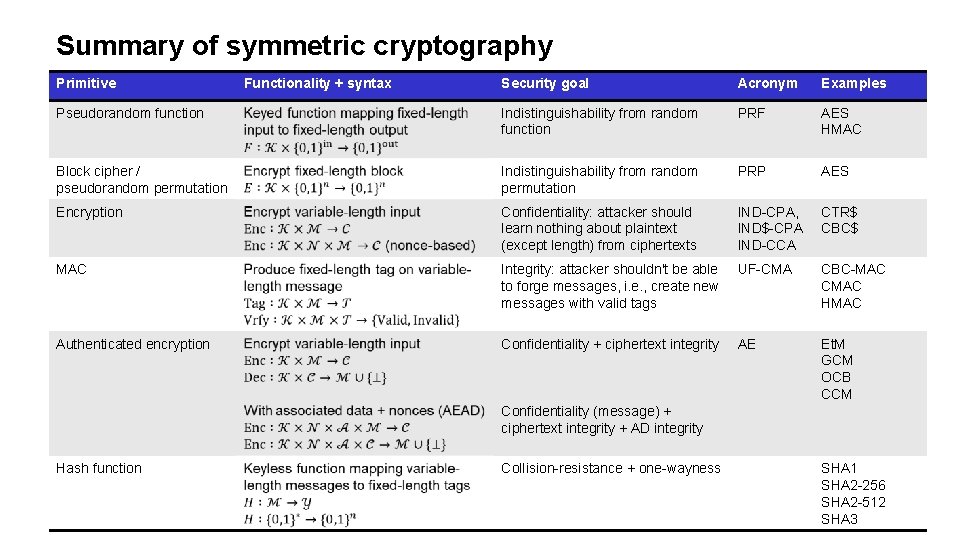
Summary of symmetric cryptography Primitive Functionality + syntax Security goal Acronym Examples Pseudorandom function Indistinguishability from random function PRF AES HMAC Block cipher / pseudorandom permutation Indistinguishability from random permutation PRP AES Encryption Confidentiality: attacker should learn nothing about plaintext (except length) from ciphertexts IND-CPA, IND$-CPA IND-CCA CTR$ CBC$ MAC Integrity: attacker shouldn't be able to forge messages, i. e. , create new messages with valid tags UF-CMA CBC-MAC CMAC HMAC Authenticated encryption Confidentiality + ciphertext integrity AE Et. M GCM OCB CCM Confidentiality (message) + ciphertext integrity + AD integrity Hash function Collision-resistance + one-wayness SHA 1 SHA 2 -256 SHA 2 -512 SHA 3
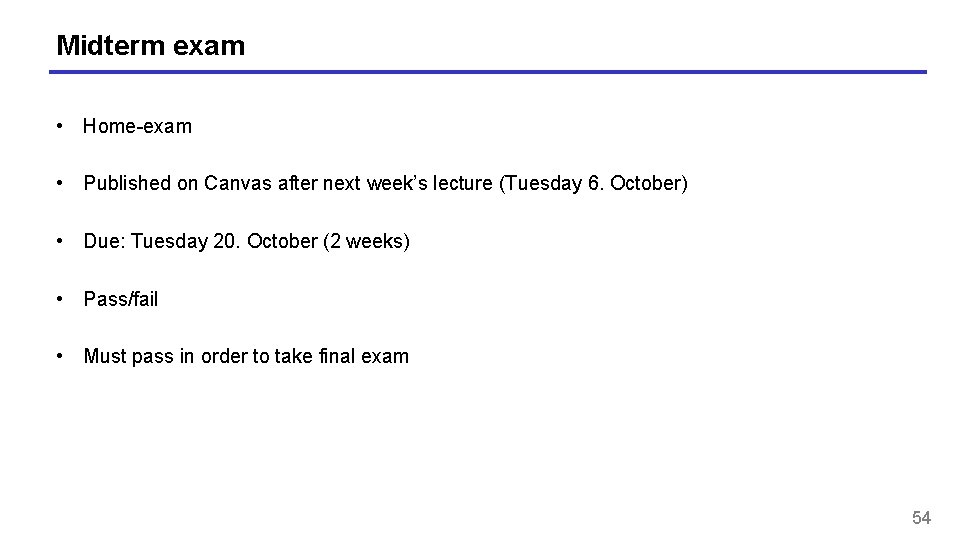
Midterm exam • Home-exam • Published on Canvas after next week’s lecture (Tuesday 6. October) • Due: Tuesday 20. October (2 weeks) • Pass/fail • Must pass in order to take final exam 54
Next week – October 6 • Guest lecture (I’m away) 55