Learning to fish Searching the literature Outline Search
















- Slides: 41
Learning to fish Searching the literature
Outline. ü Search process. ü Biomedical databases. ü Saving your searches. ü Managing your results.
Search Process
Building the search. • What is my search question? What am I trying to answer? • What are all the terms/keywords that can be used to describe my topic(s)? • Where is the best place to find information on this topic?
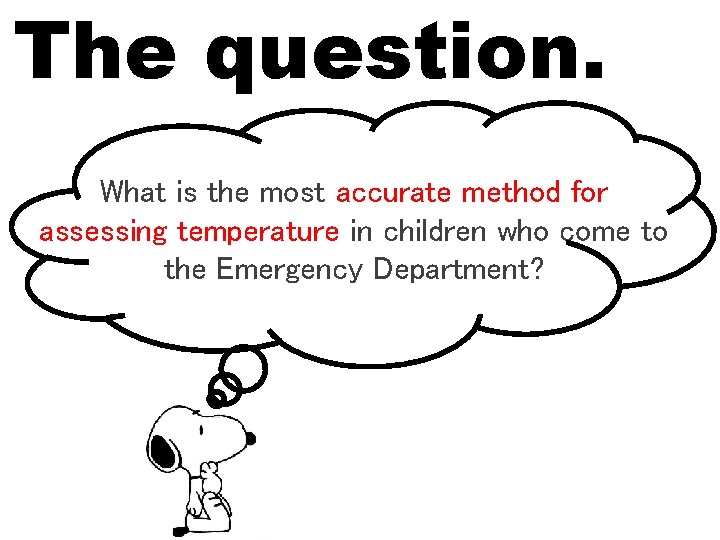
The question. What is the most accurate method for assessing temperature in children who come to the Emergency Department?
The question. What is the most accurate method for assessing temperature in children who come to the Emergency Department?
The question. What is the most accurate method for assessing temperature in children who come to the Emergency Department?
The question. What is the most accurate method for assessing temperature in children who come to the Emergency Department?
The question. What is the most accurate method for assessing temperature in children who come to the Emergency Department?
The question. What is the most accurate method for assessing temperature in children who come to the Emergency Department?
PICO(T). P = Patient/Problem/Population How would you describe a group of patients similar to yours? What are the most important characteristics of the patient? I = Intervention What main intervention, prognostic factor, or exposure are you considering? C = Comparison What is the main alternative you are considering, if any? Not always necessary. O = Outcome What do you hope to accomplish, measure, or improve? T = Type of Question/Study Are you asking a question of therapy, diagnosis, etiology/harm, prognosis, or prevention? Are you looking for randomized controlled trials (RCT), cohort studies, or economic analyses?
PICO(T). P = Patient/Problem/Population Children in the ED. I = Intervention Temperature assessment. C = Comparison N/A OR Different temperature assessments if you are comparing. O = Outcome Accurate temperature assessment.
Keywords. Concepts: • Child. • Emergency department. • Temperature assessment.
Keywords. Concepts: • Child. – Children – Youth – Kids • Emergency department. • Temperature assessment.
Keywords. Concepts: • Child. • Emergency department. – Emergency room – Emergency ward – Emergency medicine • Temperature assessment.
Keywords. Concepts: • Child. • Emergency department. • Temperature assessment. – Temperatures – Temperature measurement
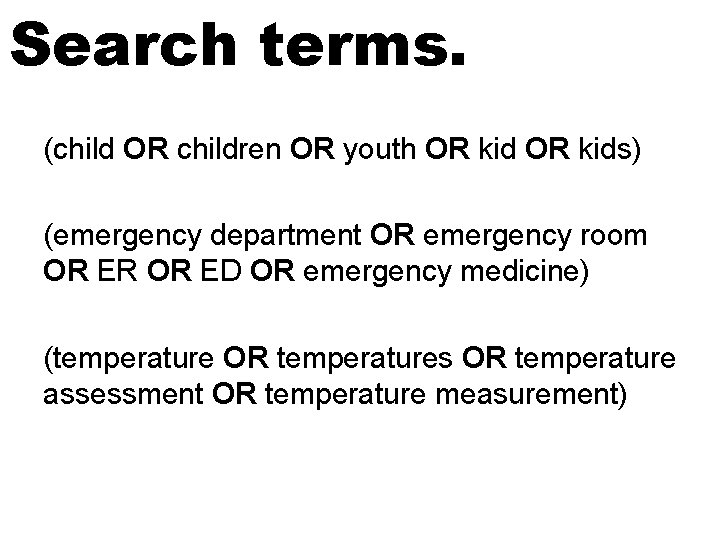
Grouping concepts with OR. • Child. – (child OR children OR youth OR kids) • Emergency department. – (emergency department OR emergency room OR ER OR ED OR emergency medicine) • Temperature assessment. – (temperature OR temperatures OR temperature assessment OR temperature measurement)
Combining concepts with AND. (child OR children OR youth OR kids) AND (emergency department OR emergency room OR ER OR ED OR emergency medicine) AND (temperature OR temperatures OR temperature assessment OR temperature measurement)
Biomedical Databases
Pub. Med / Medline. • Database of 24+ million citations. • Premier biomedical database. • Contains sophisticated vocabulary for searching the literature (Me. SH).
Medical Subject Headings (Me. SH) Children Child, Preschool Temperature Body Temperature Thermometers
Search terms. (child OR children OR youth OR kids) (emergency department OR emergency room OR ER OR ED OR emergency medicine) (temperature OR temperatures OR temperature assessment OR temperature measurement)
Searching Me. SH. http: //www. ncbi. nlm. nih. gov/mesh
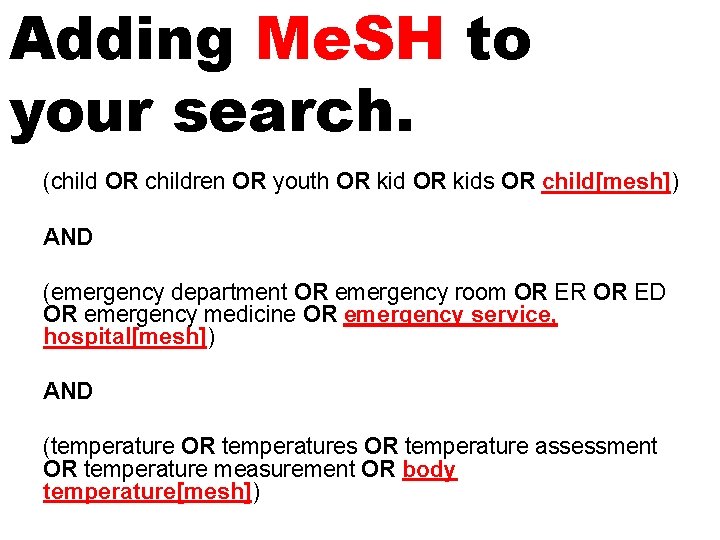
Adding Me. SH to your search. (child OR children OR youth OR kids OR child[mesh]) AND (emergency department OR emergency room OR ER OR ED OR emergency medicine OR emergency service, hospital[mesh]) AND (temperature OR temperatures OR temperature assessment OR temperature measurement OR body temperature[mesh])
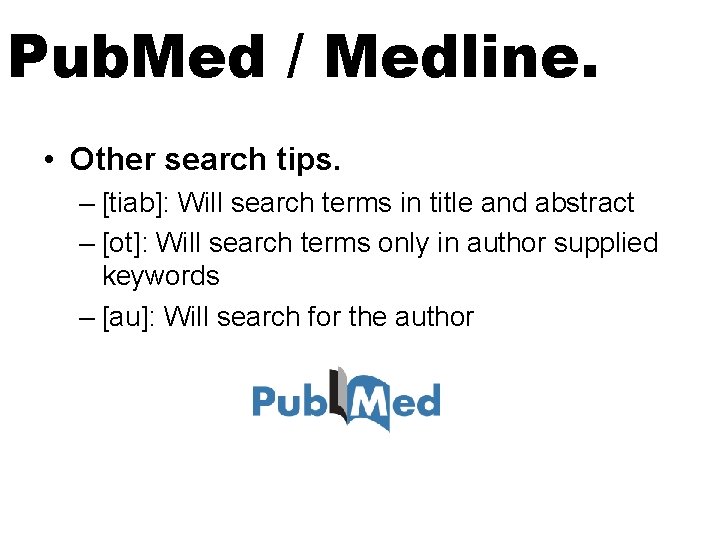
Pub. Med / Medline. • Other search tips. – [tiab]: Will search terms in title and abstract – [ot]: Will search terms only in author supplied keywords – [au]: Will search for the author
Adding [tags] to your search. (child[tiab] OR children[tiab] OR youth[tiab] OR kids[tiab] OR child[mesh]) AND (emergency department[ot] OR emergency room[ot] OR ER[ot] OR ED[ot] OR emergency medicine[ot] OR emergency service, hospital[mesh]) AND (temperature OR temperatures OR temperature assessment OR temperature measurement OR body temperature[mesh])
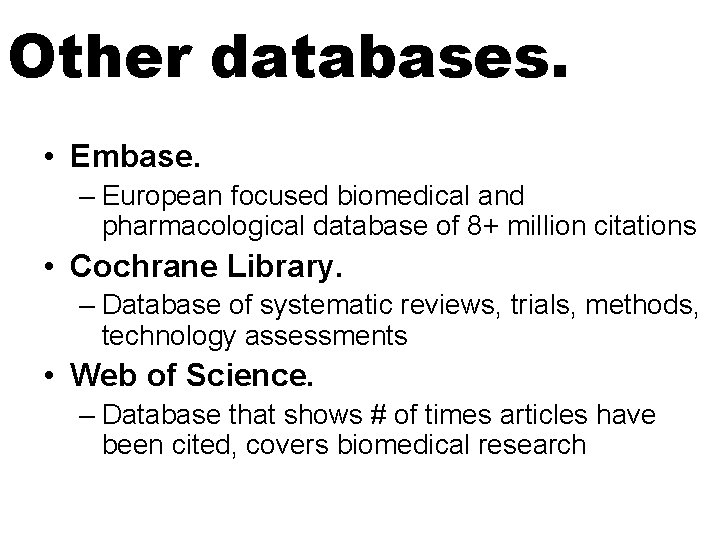
Other databases. • Embase. – European focused biomedical and pharmacological database of 8+ million citations • Cochrane Library. – Database of systematic reviews, trials, methods, technology assessments • Web of Science. – Database that shows # of times articles have been cited, covers biomedical research
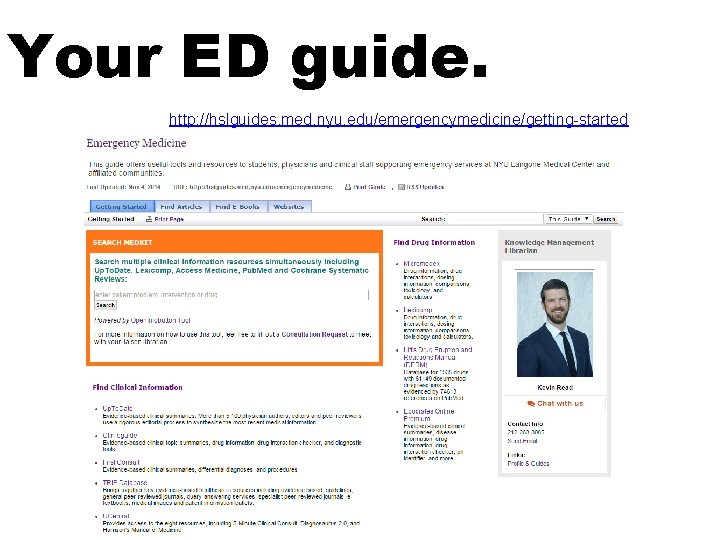
Your ED guide. http: //hslguides. med. nyu. edu/emergencymedicine/getting-started
your searches.
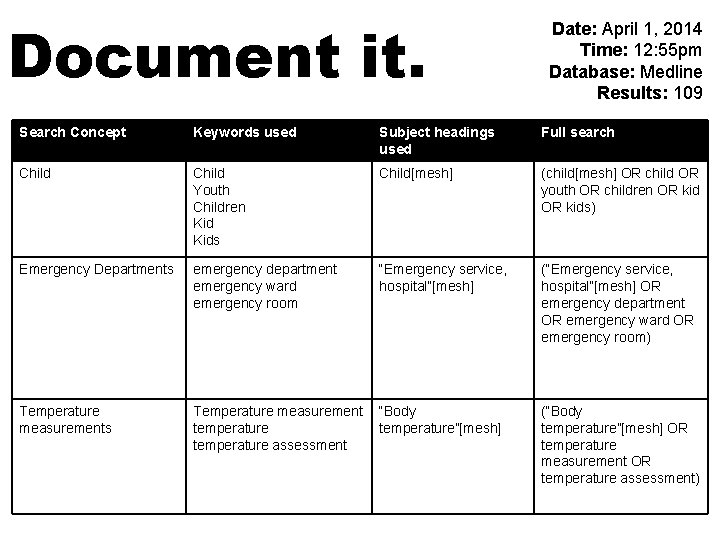
Document it. Date: April 1, 2014 Time: 12: 55 pm Database: Medline Results: 109 Search Concept Keywords used Subject headings used Full search Child Youth Children Kids Child[mesh] (child[mesh] OR child OR youth OR children OR kids) Emergency Departments emergency department emergency ward emergency room “Emergency service, hospital”[mesh] (“Emergency service, hospital”[mesh] OR emergency department OR emergency ward OR emergency room) Temperature measurements Temperature measurement temperature assessment “Body temperature”[mesh] (“Body temperature”[mesh] OR temperature measurement OR temperature assessment)
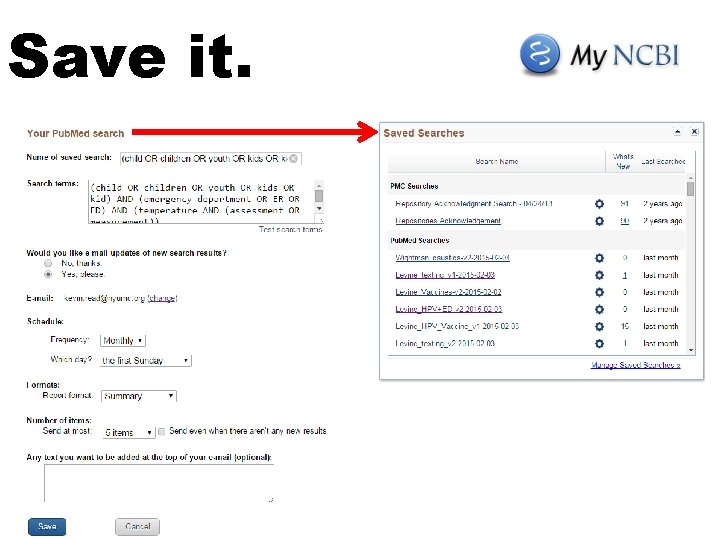
Save it.
Save it.
Organizing your literature
Endnote.
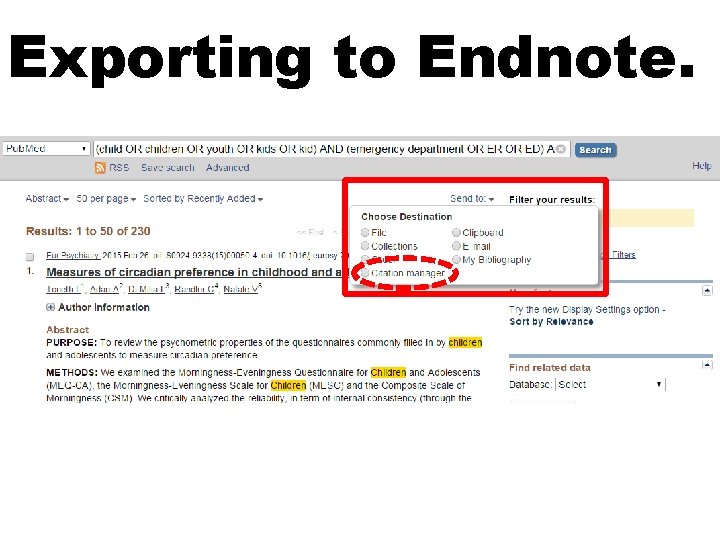
Exporting to Endnote.
Exporting to Endnote.
Endnote & Word.
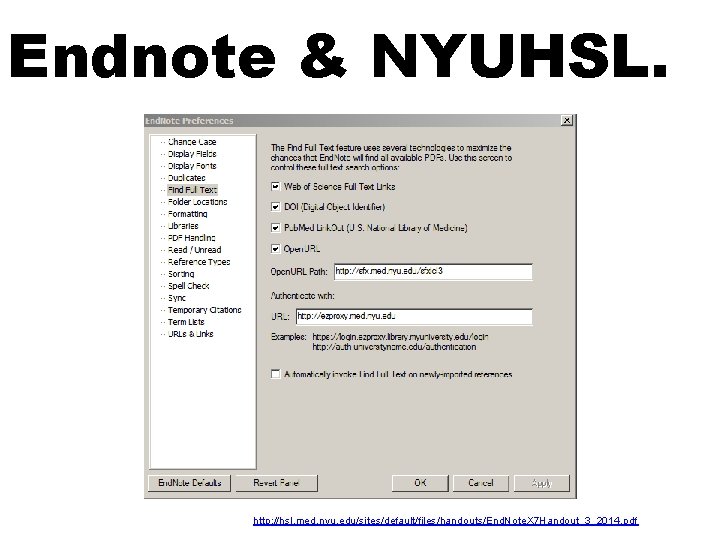
Endnote & NYUHSL. http: //hsl. med. nyu. edu/sites/default/files/handouts/End. Note. X 7 Handout_3_2014. pdf
Takeaways. ü Search process üRefine your question(s) üDefine your parameters üThink of all possible synonyms ü Use trusted biomedical databases. üWhich databases will find you the best results? üWhat features will help refine your search?
Takeaways. ü Save your searches. üDocument your searches üSave them with My. NCBI ü Manage your results. üUse Endnote (or something similar) üBuild Inclusion/Exclusion folders to sift through results
Q & A. kevin. read@nyumc. org