JE Works Induction Pase I 4 2 Standard




- Slides: 84
JE Works – Induction Pase I 4. 2 Standard Measurement Register, Petty Repair Book, Complaint Register 1
Indian Railways Works Manual Topics related to maintenance : • CHAPTER I • A. DUTIES OF ASSISTANT ENGINEER • B. DUTIES OF SECTION ENGINEER (Works) • • • CHAPTER II B. INSPECTION AND MAINTENANCE OF BUILDINGS 224. Inspection and Repairs 225. Monitoring of Maintenance 226. Periodical Maintenance Works C. INSPECTION OF STRUCTURAL STEEL AND TIMBER WORK BY ASSISTANT ENGINEER AND SUPERVISORS 2
Indian Railways Works Manual • CHAPTER III : MAINTENANCE OF SANITARY & HYGIENIC CONDITIONS IN STATION BUILDINGS, YARDS & RAILWAY COLONIES CHAPTER V : A. WATER SUPPLY H. WATER TREATMENT 537. Maintenance and Cleaning of Storage Tanks K. MAINTENANCE AND OPERATION OF WATER SUPPLY INSTALLATIONS • Check List for Water Supply Scheme - Annexure 5. 1 (Para 502). • Standards of Quality of Drinking Water - Annexure 5. 2 (Para 531). • • 3
Indian Railways Works Manual • CHAPTER VI : DRAINAGE & SEWERAGE • C. MAINTENANCE OF SEWERAGE AND DRAINAGE • CHAPTER VII : GARDENS & PLANTATIONS, DISPOSAL OF GRASS AND OTHER NATURAL PRODUCTS 4
Maintenance of colonies It is a well known fact that in Railways our Residential colonies are not being given much importance as compared to other structures. The Railway colonies are not maintained properly. The proper colony maintenance is basic need of occupants. 5
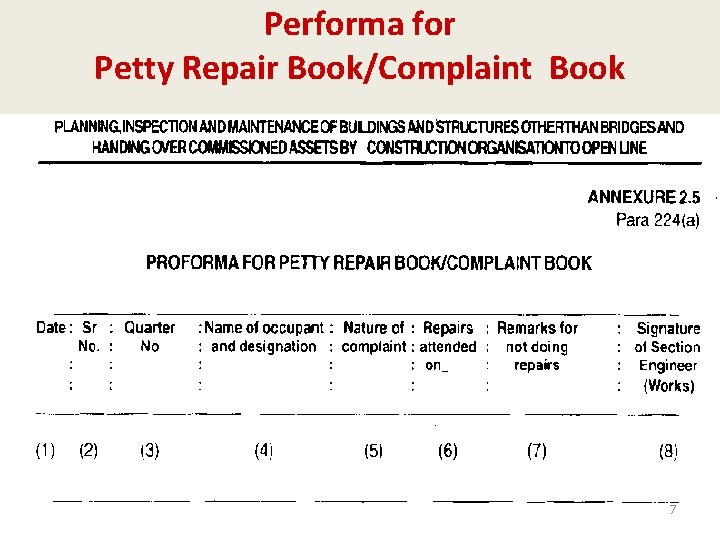
Registration of complaint for estimation of repairs requirement • Petty Repair Book : At each station ‘Petty Repair book’ shall be maintain (Annexure 2. 5) SM will enter repairs required to service building. SE/works should inspect the book frequently. The Divisional Engineer / Asst. Engineer should examine and initial the register. • In major Stations with SE/JE’s office - complaint books kept in SE/JE office where occupants can enter the complaints. 6
Performa for Petty Repair Book/Complaint Book 7
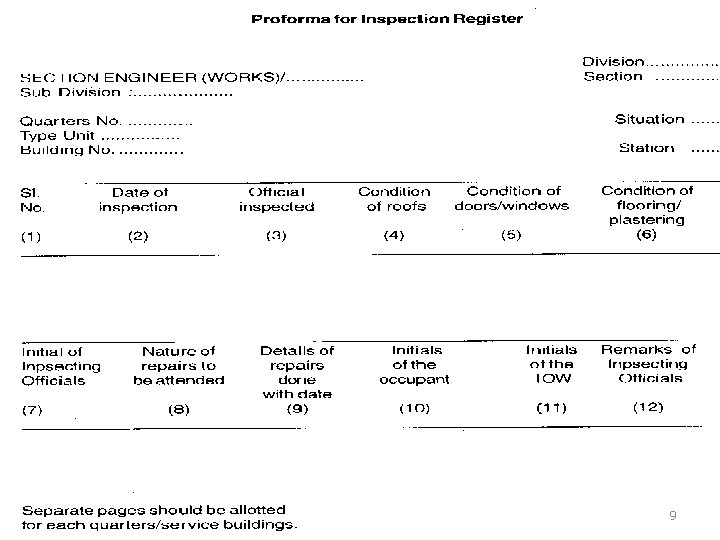
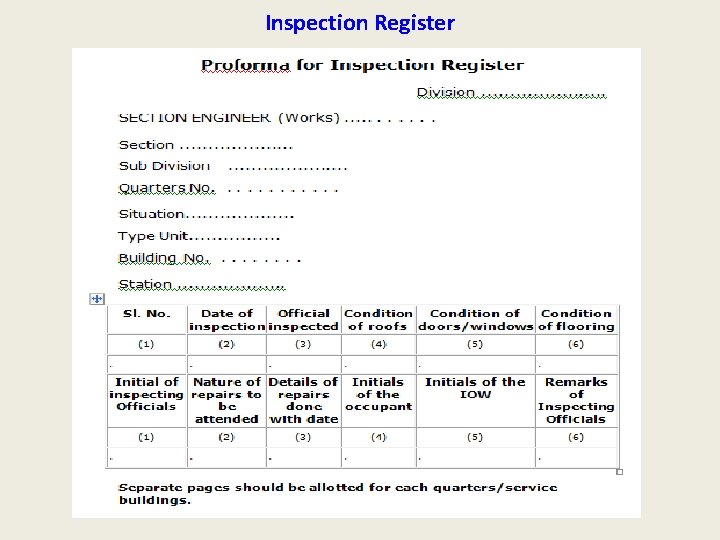
Inspection & Maintenance of Buildings. • All buildings shall be systematically inspected by the SSE/works and particulars of repairs submitted to ADEN. • The Inspection will be recorded in the inspection register as per Performa Annexure 2. 4. • One page will be allotted for each building. 8
9
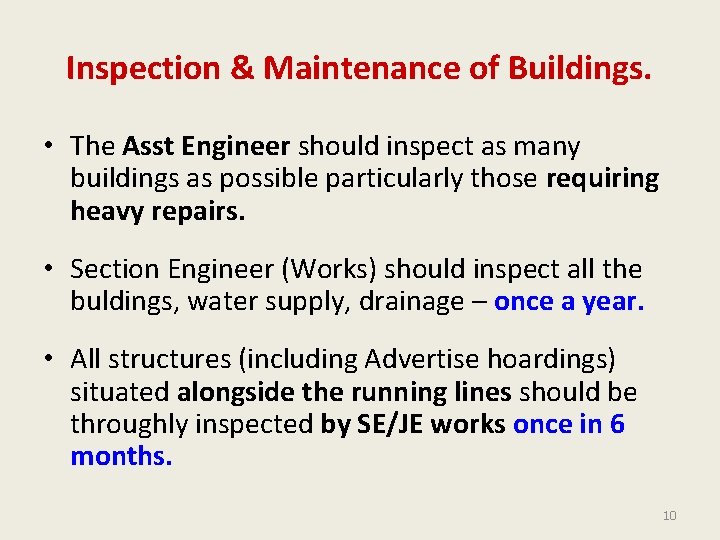
Inspection & Maintenance of Buildings. • The Asst Engineer should inspect as many buildings as possible particularly those requiring heavy repairs. • Section Engineer (Works) should inspect all the buldings, water supply, drainage – once a year. • All structures (including Advertise hoardings) situated alongside the running lines should be throughly inspected by SE/JE works once in 6 months. 10
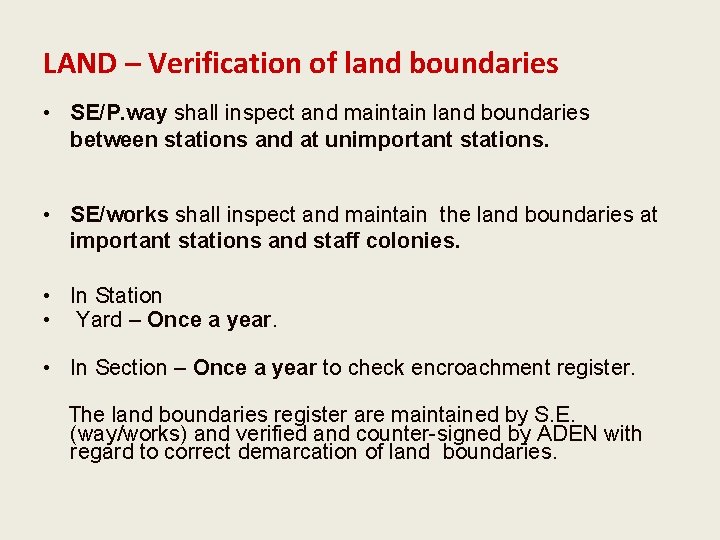
LAND – Verification of land boundaries • SE/P. way shall inspect and maintain land boundaries between stations and at unimportant stations. • SE/works shall inspect and maintain the land boundaries at important stations and staff colonies. • In Station • Yard – Once a year. • In Section – Once a year to check encroachment register. The land boundaries register are maintained by S. E. (way/works) and verified and counter-signed by ADEN with regard to correct demarcation of land boundaries.
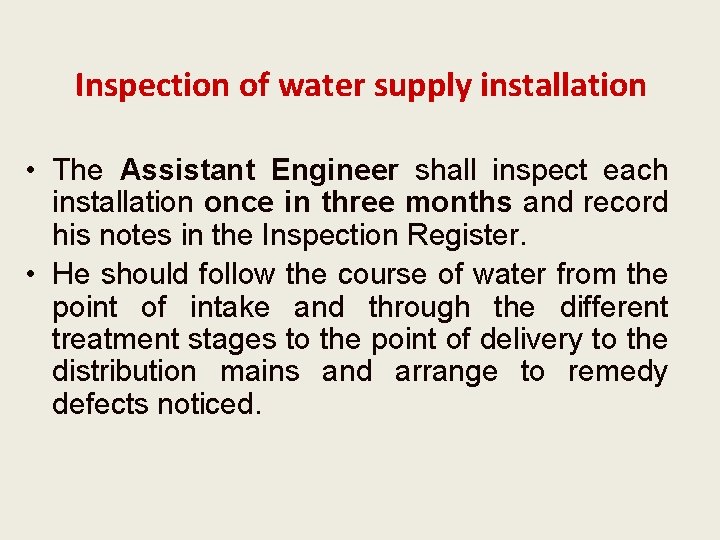
Inspection of water supply installation • The Assistant Engineer shall inspect each installation once in three months and record his notes in the Inspection Register. • He should follow the course of water from the point of intake and through the different treatment stages to the point of delivery to the distribution mains and arrange to remedy defects noticed.
Periodical Maintenance of Works The schedule of distempering colour washing and white washing of buildings will be done as per Annexure 2. 6(P-42, 43) of IRWM. • No colour washing should be done to the rubble stone masonry. • Painting of wood work and steel work once in 5 to 7 years. • Door, windows and ventilators of kitchens and pantries may be painted once in two years or more at the discretion of ADEN.
• Polishing mosaic or wooden flooring, replacing colour or white glazed tiles, plastering external surfaces and enamel painting, painting/varnishing wood work and painting steel work – Only on condition basis. • When there is change in tenancy, white washing may be done to the kitchen and bathroom at the discretion of ADEN.
Repairs of Sanitary & Water Supply Fittings Proper inspection to be done and replace in time. Chocking of septic tank should be avoided, dewater the same time to time/when ever required. Water tanks to be clean periodically (once in 6 months) and should be painted within specified time limit. Record to be maintained. Tests of water to be done periodically.
• Maintenance of valley gutters, vertical down take pipes of service buildings and platform covers should be attended before monsoon. • Steel columns of footings when buried in ground should be encased in cement concrete well above ground level. (FOB, Columns of platform shelters, water tank staging, etc. )
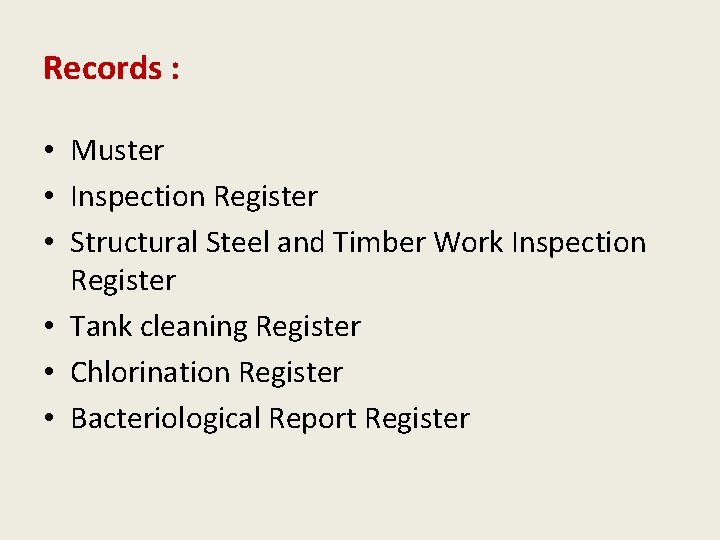
Records : • Muster • Inspection Register • Structural Steel and Timber Work Inspection Register • Tank cleaning Register • Chlorination Register • Bacteriological Report Register
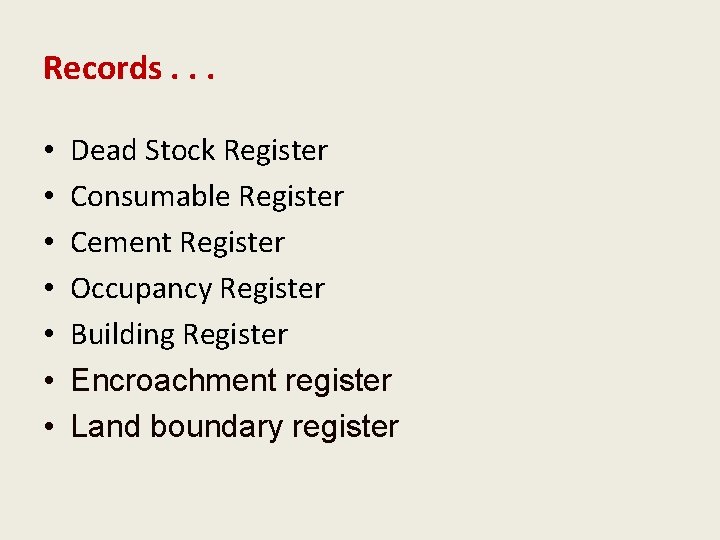
Records. . . • • Dead Stock Register Consumable Register Cement Register Occupancy Register Building Register Encroachment register Land boundary register
Inspection Register
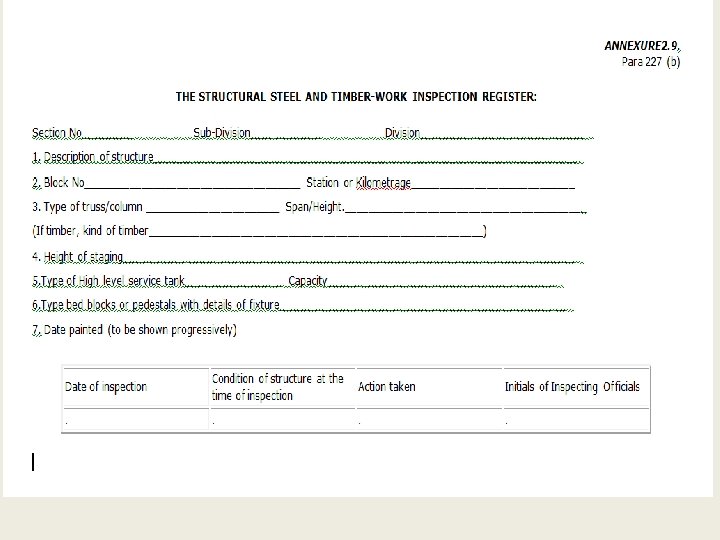
• THE STRUCTURAL STEEL AND TIMBERWORK INSPECTION REGISTER
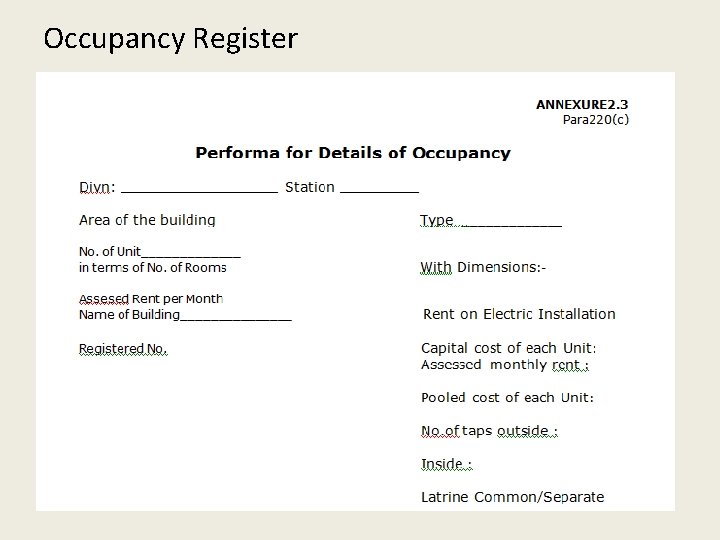
Occupancy Register
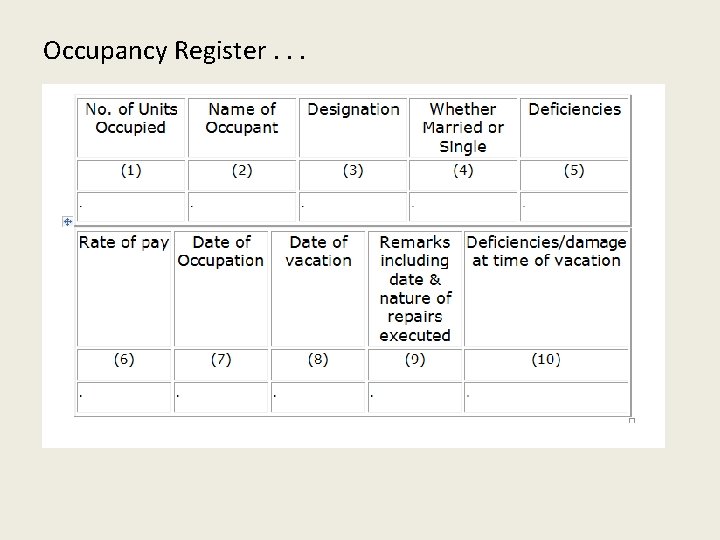
Occupancy Register. . .
• Water Tank Cleaning Register • Tanks used for the storage of drinking water should be rubbed and cleaned at such intervals as specified by the Divisional Engineer. • The cleaning of water tank and disinfection should be carried out as per recommended procedure. • Tanks used for the storage of water for locomotive and carriage washing purposes should be scrubbed and cleaned at least once in six months. • Reports on cleaning of tanks should be submitted to the Assistant Engineer by the Section Engineer (Works) who shall maintain a register with complete particulars for the purpose.
complaint Based on nature of classification is done: - 1. Urgent or minor repairs are arranged through departmental staff. 2. Rest of repairs (major & minor) are kept for planned work, which is done through • Zonal contract • Special work contract • Systematic building maintenance 25
System of colony maintenance Need base maintenance or day to day maintenance : - • On the compliant of occupant maintenance is done with help of the departmental labour for small repairs. • Maintenance through zonal contract : • Due to shortage of labour some part of maintenance is out sources and get it done by zonal contracts. • Systematic maintenance: -planed maintenance 26
Special work contract • All the planned maintenance items are grouped & estimate for repairs required are made & tenders indicating location of work & schedule of quantity are called. • Such works are expected to provide better rate & quality. 27
• The inside of staff quarters should be inspected in the presence of or with prior consent of the occupants. • ADEN should inspect as many as possible buildings those requires heavy repairs and arrange for repairs. § SSE(W) should inspect all buildings, water supply, sewerage installations and drainage once a year. 28
q In monsoon repairs or renovation works should not be carried out except works considered to be urgent. q Requisition for repairs & renovation works should specify the dates of previous such works without which work order should not be issued. q. Planning of repairs should be based on the inspection carried out, should be completed well in time to enable the repairs being done under zonal contract, which starts from 1 st July of each year. 29
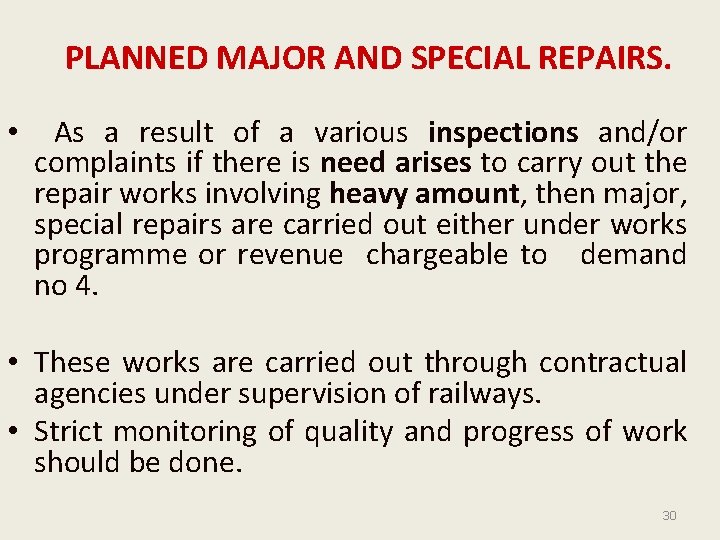
PLANNED MAJOR AND SPECIAL REPAIRS. • As a result of a various inspections and/or complaints if there is need arises to carry out the repair works involving heavy amount, then major, special repairs are carried out either under works programme or revenue chargeable to demand no 4. • These works are carried out through contractual agencies under supervision of railways. • Strict monitoring of quality and progress of work should be done. 30
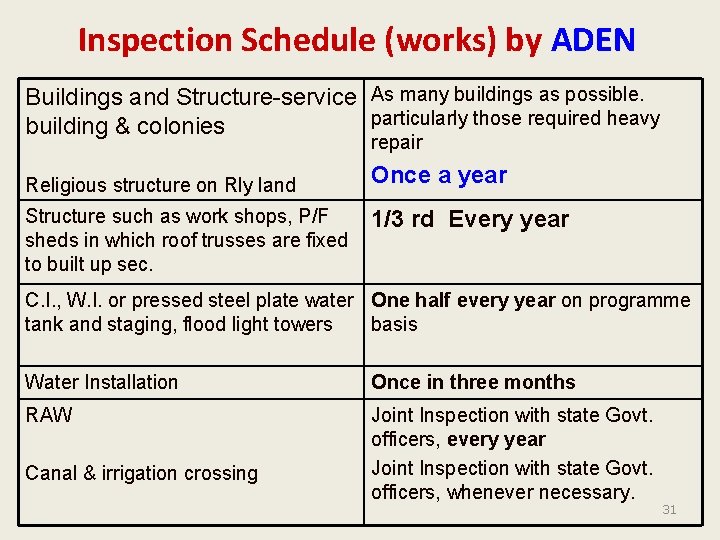
Inspection Schedule (works) by ADEN Buildings and Structure-service As many buildings as possible. particularly those required heavy building & colonies repair Religious structure on Rly land Structure such as work shops, P/F sheds in which roof trusses are fixed to built up sec. Once a year 1/3 rd Every year C. I. , W. I. or pressed steel plate water One half every year on programme tank and staging, flood light towers basis Water Installation Once in three months RAW Joint Inspection with state Govt. officers, every year Joint Inspection with state Govt. officers, whenever necessary. Canal & irrigation crossing 31
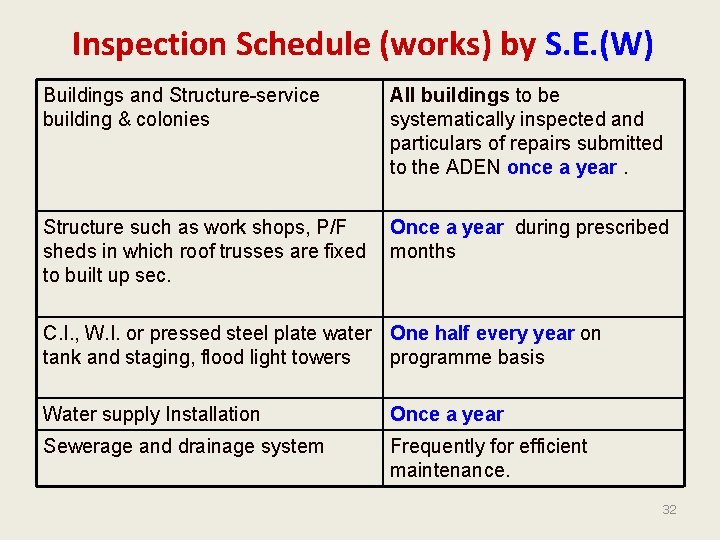
Inspection Schedule (works) by S. E. (W) Buildings and Structure-service building & colonies All buildings to be systematically inspected and particulars of repairs submitted to the ADEN once a year. Structure such as work shops, P/F Once a year during prescribed sheds in which roof trusses are fixed months to built up sec. C. I. , W. I. or pressed steel plate water One half every year on tank and staging, flood light towers programme basis Water supply Installation Once a year Sewerage and drainage system Frequently for efficient maintenance. 32
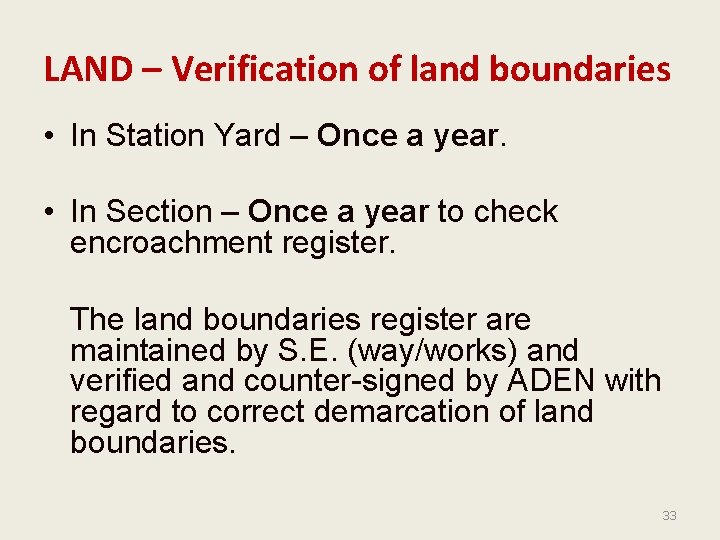
LAND – Verification of land boundaries • In Station Yard – Once a year. • In Section – Once a year to check encroachment register. The land boundaries register are maintained by S. E. (way/works) and verified and counter-signed by ADEN with regard to correct demarcation of land boundaries. 33
Inspection of water supply installation • The Assistant Engineer shall inspect each installation once in three months and record his notes in the Inspection Register. • He should follow the course of water from the point of intake and through the different treatment stages to the point of delivery to the distribution mains and arrange to remedy defects noticed. 34
Monitoring of Maintenance 1. Colony Care Committee. 2. Railway Sanitation Committee. 3. Service Improvement Group . 35
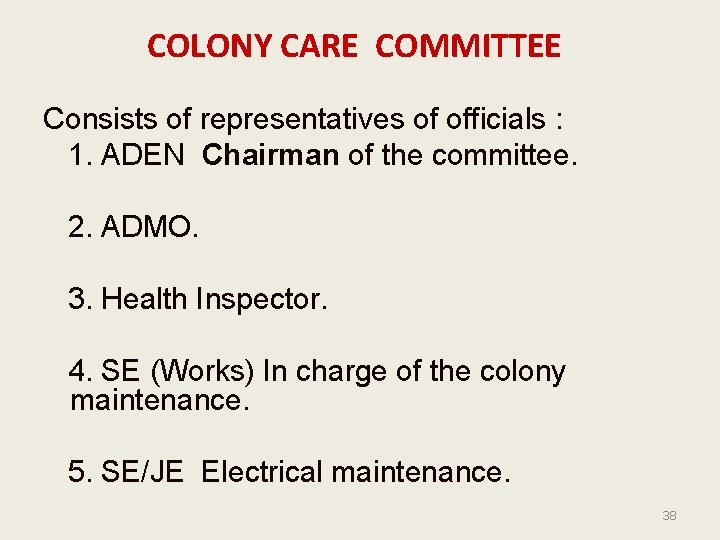
COLONY CARE COMMITTEE • Normally Colony Care Committees should be formed in big colonies having more than 1000 quarters. • These committees are formed to investigate and identify the routine and special repairs required for individual quarter and for colony. • Inspection – once in three months 36
COLONY CARE COMMITTEE • This committee will be different from Station Improvemet Groups and Housing Committee already working at various stations. 37
COLONY CARE COMMITTEE Consists of representatives of officials : 1. ADEN Chairman of the committee. 2. ADMO. 3. Health Inspector. 4. SE (Works) In charge of the colony maintenance. 5. SE/JE Electrical maintenance. 38
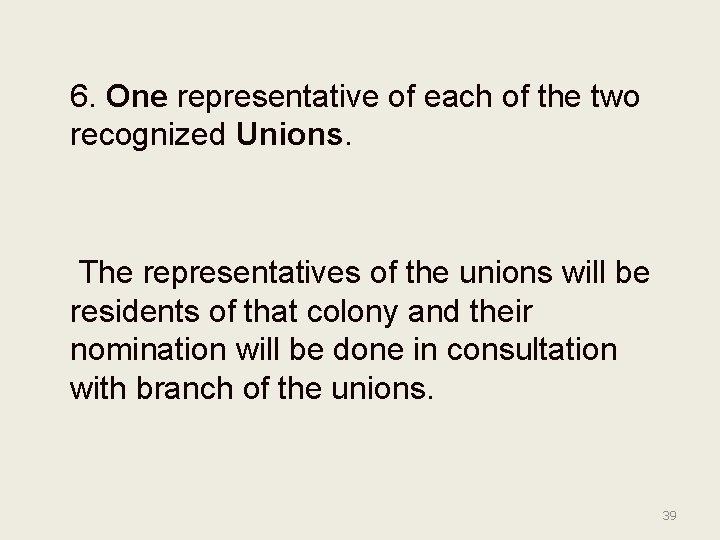
6. One representative of each of the two recognized Unions. The representatives of the unions will be residents of that colony and their nomination will be done in consultation with branch of the unions. 39
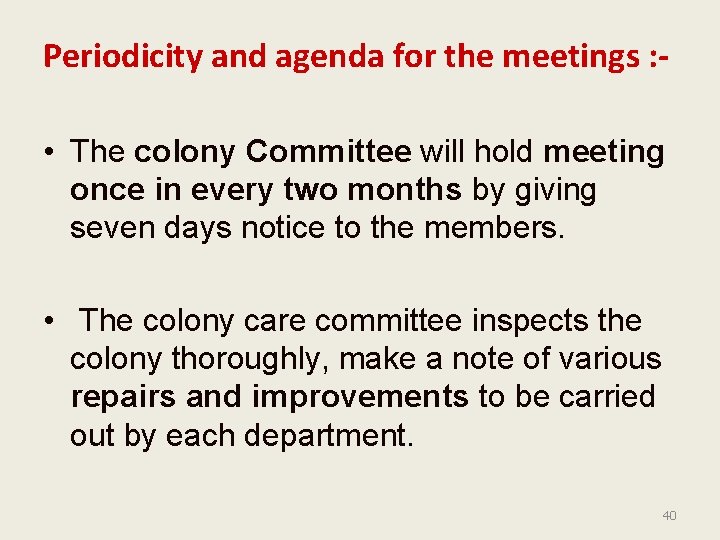
Periodicity and agenda for the meetings : • The colony Committee will hold meeting once in every two months by giving seven days notice to the members. • The colony care committee inspects the colony thoroughly, make a note of various repairs and improvements to be carried out by each department. 40
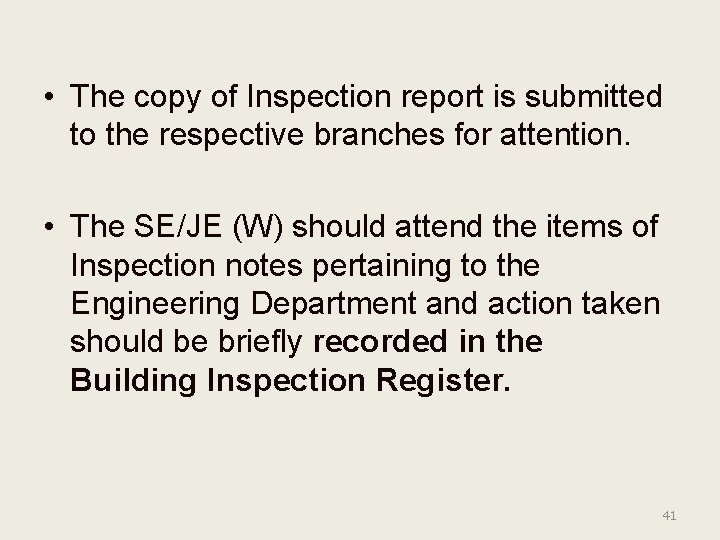
• The copy of Inspection report is submitted to the respective branches for attention. • The SE/JE (W) should attend the items of Inspection notes pertaining to the Engineering Department and action taken should be briefly recorded in the Building Inspection Register. 41
Service Improvement Groups (SIG) • Shall be formed at various levels for Inspecting all important stations. • Representatives of Engineering, Medical, Operating and Electrical departments shall be the members of the SIG. 42
• SE/(Works) being a member of this group, has a part to ply in this scheme by attending to the following items: 1. Checking up of the water taps provided for their working condition and water stagnation around the taps as well as on platform. 2. Clearing up of platform walls if defaced by pasting of unauthorized posters. 43
3. Ensuring repairs of platforms drains and washable aprons and side drains. 4. Maitenance of toilet facilities in waiting halls, Waiting rooms, Retiring rooms. 5. Checking of availability of water, arranging waste of water in the taps and hydrants for carriage filling by plugging leakage in time. 6. Ensuring periodical painting/ distempering/ white washing of the refreshment rooms / kitchen and attending to repairs. 44
Railway Sanitation Committee. • Formed at important stations. • This committee assists, monitors and controls the sanitary arrangements in station buildings, yards and residential colonies. • However beside formation of RSC, respective departments are not relived of their basic duties for it. 45
• At way side and less important stations the station master is responsible for maintaining sanitary and hygienic condition in station yards staff col. & surroundings. • Constitution and structure should be as per GMs instructions. • Periodical meeting are called upon, minutes of meeting are recorded and sent to CMS, Divisional Officers, Members of Committee, ADEN and SE/W concerned. 46
• CMS will take up the matters at appropriate level with respective departments. • Sanitation committee takes in to consideration. 1. Conservancy; Adequacy and cleanliness of latrines, dust bins, trenching grounds, septic tanks, soak pits etc. 2. Drinking water; adequacy, condition of reservoir, filter beds, tanks and protection from pollution. 47
3. Quarters – The stabling of cattle, use by occupants of any quarters leading to unsanitary conditions detrimental t health. 4. Colonies/Compounds – Condition of quarters surroundings, compounds, court yards, vegetation growth, accumulation of water. 5. Shops – Cleanliness and tidiness of shops specially butchers shops. 6. Presence of vicious and diseased animals. 7. Presence of any other nuisance, rats etc. detrimental to health. 48
Periodical Maintenance of Works The schedule of distempering colour washing and white washing of buildings will be done as per Annexure 2. 6(P-42, 43) of IRWM. • No colour washing should be done to the rubble stone masonry. • Painting of wood work and steel work once in 5 to 7 years. • Door, windows and ventilators of kitchens and pantries may be painted once in two years or more at the discretion of ADEN. 49
• Polishing mosaic or wooden flooring, replacing colour or white glazed tiles, plastering external surfaces and enamel painting, painting/varnishing wood work and painting steel work – Only on condition basis. • When there is change in tenancy, white washing may be done to the kitchen and bathroom at the discretion of ADEN. 50
REPAIR OF SANITARY & W/S FITTINGS Proper inspection to be done and replace in time. Chocking of septic tank should be avoided, de water the same time to time/when ever required. Water tanks to be clean periodically and should be painted within specified time limit. Tests of water to be done periodically. 51
• Maintenance of valley gutters, vertical down take pipes of service buildings and platform covers should be attended before monsoon. • Steel columns of footings when buried in ground should be encased in cement concrete well above ground level. (FOB, Columns of platform shelters, water tank staging, etc. ) 52
SYSTEMATIC BUILDING MAINTANACE • This is a very effective system of maintaining residential colonies in railways if implemented efficiently. • The team of SBM comprises of a multidisciplinary task forces including SE/JE (works), HI, SE/JE (Electrical) and welfare Inspector under the leadership of DEN/Sr. DEN. 53
Action to be taken under SBM • The SBM in the section of each ADEN should be started as per priorities decided in consultation with recognized unions. • Once a colony is identified for starting the work, the work should be taken up from one end to other end by systematic manner. 54
• A team consists of SE/JE (works). SE/JE (electrical), HI, WI. accompanied by ADEN, DMO, DPO and headed by DEN/ Sr. DEN of the section should visit colonies one by one, to draw up the master plan for each colony. • The representatives of the unions can also be associated during these inspections. 55
• Master plan should indicate major items of repairs required in quarters: • Replacement/repairs to doors/ windows. Provision of courtyards. • Rewiring. • Re-plastering, Re -flooring, etc. • water supply systems availability and possible solutions. • Approach paths, parks, play grounds, jungle clearance. • Drainage, sewerage, street lighting, garbage disposal, etc. 56
• Master plan should indicate against each work the approximate cost. • Time period of completion and agency will execute the work. • Items to be attended by departmentally as per master plan are to be inspected in detail by SE/JE of their respective departments. • Priorities of quarters to be attended are to be decided. 57
• Calculation of men power and materials for under taking the works is done by the SE/JE concerned in a register. • Arrangement for full staff and transportation of materials to the of work site. • The complete work is done by staff of all the three departments viz. , engineering, electrical, medical under the supervisor of each department. 58
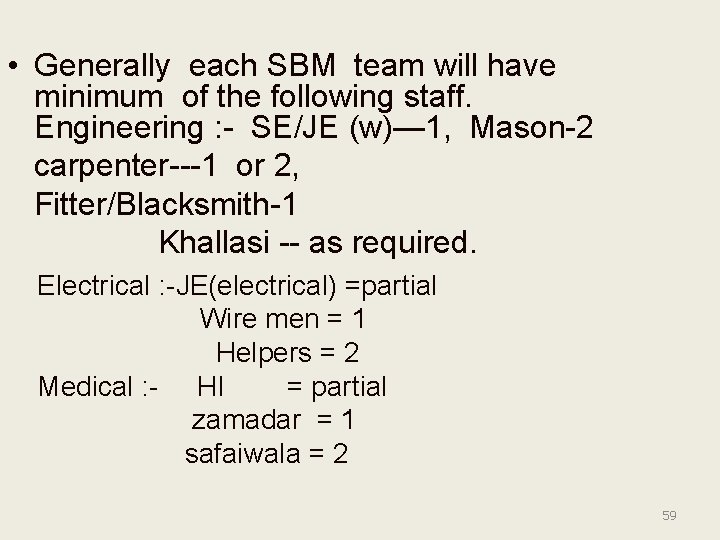
• Generally each SBM team will have minimum of the following staff. Engineering : - SE/JE (w)— 1, Mason-2 carpenter---1 or 2, Fitter/Blacksmith-1 Khallasi -- as required. Electrical : -JE(electrical) =partial Wire men = 1 Helpers = 2 Medical : - HI = partial zamadar = 1 safaiwala = 2 59
• Adequate quantities of materials required for full days work should reach the work site before 8. 30 hours. by means of motorized transport or hand cart with rubberized tyres. • The Asst. and Divisional Officers should closely monitor the system and ensure the supply of materials in time to ensure its success. They should also exercise field checks. 60
Inspection of Sewerage and Drainage System • Assistant Engineer shall inspect sewerage and drainage systems and ensure their efficient performance as prescribed (vide para 632 of works Manual) in association with the concerned Officer of the Medical Department. 61
Tips for maintenance • For patch repairs by cement normally curing is not done resulting into insufficient bonding with structure. Use of polymer for patch repairs may improve efficacy of repairs. – such polymers are available with reputed companies like Fosrock, sika, siko, pidlite etc. – Suitable polymer for different purposes can be found from catalog of reputed companies 62
• Wooden/flush doors for bathroom & toilet are having very less life, we may try FRP/PVC doors & frames. • Apron around building may save from settlement of foundation & dampness in wall to some extent. Apron should preferably be of RCC cantilever from wall. • In case of dampness in wall where DPC is missing/damaged we may try forming of polymer layer through injection/grouting 63
• Tiles/stone slabs fixed on walls are likely to fall because of improper adhesion/vibration/ loads, use of grits with epoxy adhesive at back may improve adhesion or other means to improve adhesion may be used 64
• For leakage treatment asphalt may not be the best method, but for urgent repairs it may give immediate relief. • Glass on steel window are breaking frequently we may try unbreakable transparent sheets. • In case of black cotton soil flooring may bulge & sink in such cases flooring with nominal R/F from wall to wall may be provided. • Drains of stoneware should be avoided. • In black cotton soil RCC pipe/ RCC drains should be made 65
Defects in existing system of maintenance • Mostly complaint based, with no contribution or inspection from supervisors. Artisans only going for inspection followed by repairs. • Non systematic working, repairs start much after dismantling. • No co-ordination between different artisans • Output from artisans being very low. • Material not being used properly. 66
• Transportation of material – no system. • Availability of cement & other important items. • System of imprest very poor, amount very low. • Involvement of officers for improvement of maintenance--- Extremely poor • Availability of tools with artisans • Inspection of maintenance works by SE/JEs & AEN almost NILL. • Disturbance to SE/JEs for miscellaneous works 67
• Output of maintenance staff – extremely poor. • Satisfaction level of occupants – poor. • Use of proper technology in repairs- poor. • Many old quarter are unfit for up-gradation, it is better to dismantle & rebuild new residences. • In all major colonies planning of adding new multistoried quarters may be done & quarters may be constructed as & when sanctioned with excellent arrangement of road, sewer, water supply & lighting. 68
69
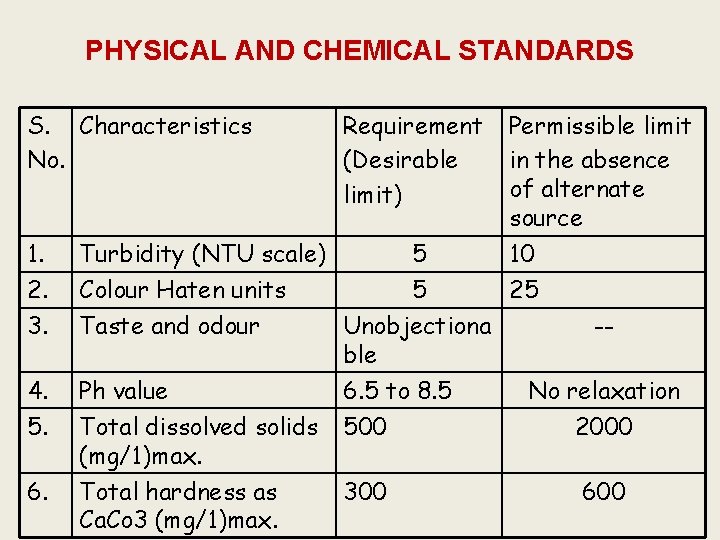
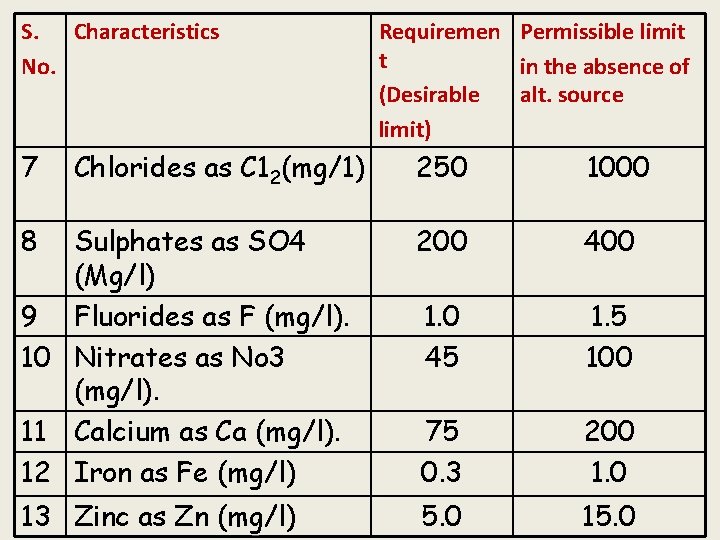
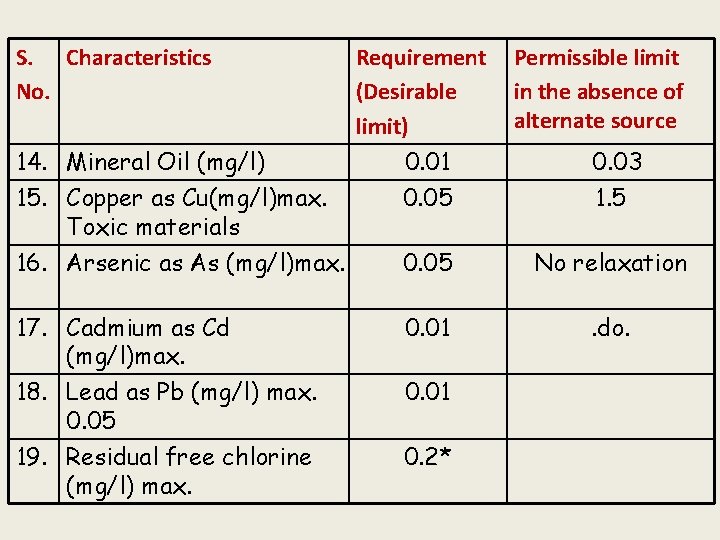
PURIFICATION OF RAW WATER • The water to be supplied for human consumption should be free from impurities. • The standards of water quality have been laid down by Bureau of Indian standards in IS: 10500. • The raw water from the source may need treatment to conform to these standards.
Treatment of water • Treatment is given to water before supplying to public. • Absolutely clear water is also not good for health because our body requires certain minerals and if they are present in water it is not wise to remove them so only those impurities should be removed which are harmful for health.
PHYSICAL AND CHEMICAL STANDARDS S. Characteristics No. 1. 2. 3. 4. 5. 6. Requirement (Desirable limit) Permissible limit in the absence of alternate source Turbidity (NTU scale) 5 10 Colour Haten units 5 25 Taste and odour Unobjectiona -ble Ph value 6. 5 to 8. 5 No relaxation Total dissolved solids 500 2000 (mg/1)max. Total hardness as 300 600 Ca. Co 3 (mg/1)max.
S. Characteristics No. Requiremen Permissible limit t in the absence of (Desirable alt. source limit) 7 Chlorides as C 12(mg/1) 250 1000 8 Sulphates as SO 4 (Mg/l) Fluorides as F (mg/l). Nitrates as No 3 (mg/l). Calcium as Ca (mg/l). Iron as Fe (mg/l) 200 400 1. 0 45 1. 5 100 75 0. 3 200 1. 0 5. 0 15. 0 9 10 11 12 13 Zinc as Zn (mg/l)
S. Characteristics No. Requirement (Desirable limit) Permissible limit in the absence of alternate source 14. Mineral Oil (mg/l) 15. Copper as Cu(mg/l)max. Toxic materials 16. Arsenic as As (mg/l)max. 0. 01 0. 05 0. 03 1. 5 0. 05 No relaxation 17. Cadmium as Cd (mg/l)max. 18. Lead as Pb (mg/l) max. 0. 05 19. Residual free chlorine (mg/l) max. 0. 01 . do. 0. 01 0. 2*
PHYSICAL AND CHEMICAL STANDARDS • The maximum allowable WHO value for free chlorine residual in drinking water is 5 mg/L. • The minimum recommended WHO value for free chlorine residual in treated drinking water is 0. 2 mg/L. • CDC recommends not exceeding 2. 0 mg/L due to taste concerns, and chlorine residual decays over time in stored water.
Fire Demand – Water Supply • It is essential to take into account the requirement of water due to FIRE demand also. This fire demand can be assessed according to local requirements and in the absence of any specific guide lines and IS: 9668 - 1980 can be followed. 1800 liters/min for every 50000 population or part there of (for 2 to 4 hrs in a day).
IS : 9668 WATER SUPPLIES FOR FIRE FIGHTING The essential requirements for any source of water for fire fighting are as follows: • Ready availability of the supply at all times. • Sources easily approachable and workable by the normal fire appliances. • Sources located within a workable distance.
Septic Tank • The septic tank should be constructed in 2 compartments, to facilitate cleaning of one while the other in use. • The interval of cleaning should not normally exceed 12 months.
Water Conservation • Indian Railways Water Policy • Water conservation is the practice of using water efficiently to reduce unnecessary water usage. According to Fresh Water Watch, water conservation is important because fresh clean water is a limited resource, as well as a costly one. • Rain Water Harvesting Rly. Bd. No. 2003/LMB/09/01. New Delhi, dated: 12. 06. 03. Sub: Adoption of Rain Water Harvesting Systems in the Railway. Establishments. • Sewage Treatment Plant Waste Water recycling 79
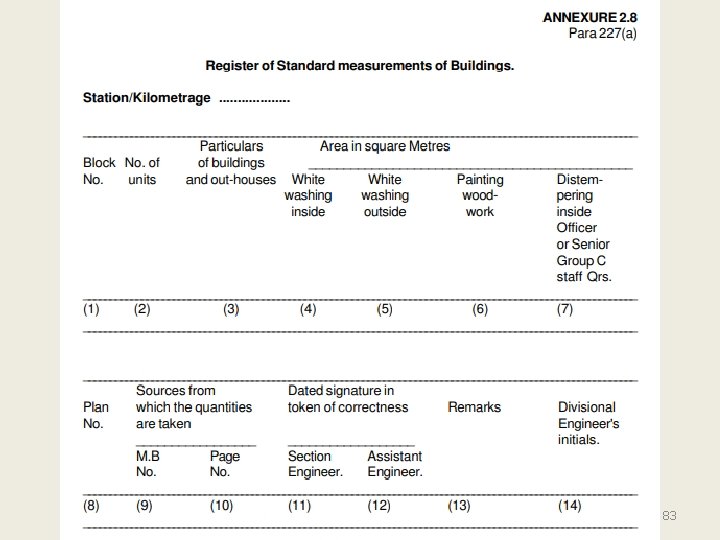
227 : Standard Measurement Registers for Buildings • a) Standard measurement registers in the format given in the Annexure 2. 8 shall be maintained in the offices of the Divisional Engineer, Assistant Engineer and the Section Engineer (Works). Authorised copies of these will be maintained in the Accounts Office for reference and checking of quantities entered in measurement books for annual repair works carried out. 80
227 : Standard Measurement Registers for Buildings • b) The entries made in the registers should be correctly amended when alterations or additions to structures are carried out or when new structures are built. (Annexure 2. 9). • c) The block Nos. entered in the standard measurement registers should correctly tally with the corresponding entries in the building registers. 81
227 : Standard Measurement Registers for Buildings • d) The measurement books from which the entries are carried into the standard measurement registers should be securely preserved in the Divisional Engineer's Office. • e) Standard measurement registers may be utilised for the estimating of quantities for periodical white-washing or colour washing and painting as and when required. Particulars of repair works should be carefully scrutinised by the Assistant Engineer before applying for sanction. • f) Date of whitewashing and painting done blockwise should be indicated on the building. 82
83
Thanks 84