INTRODUCTION WHAT IS ENERGY Energy is the measure
- Slides: 26
INTRODUCTION
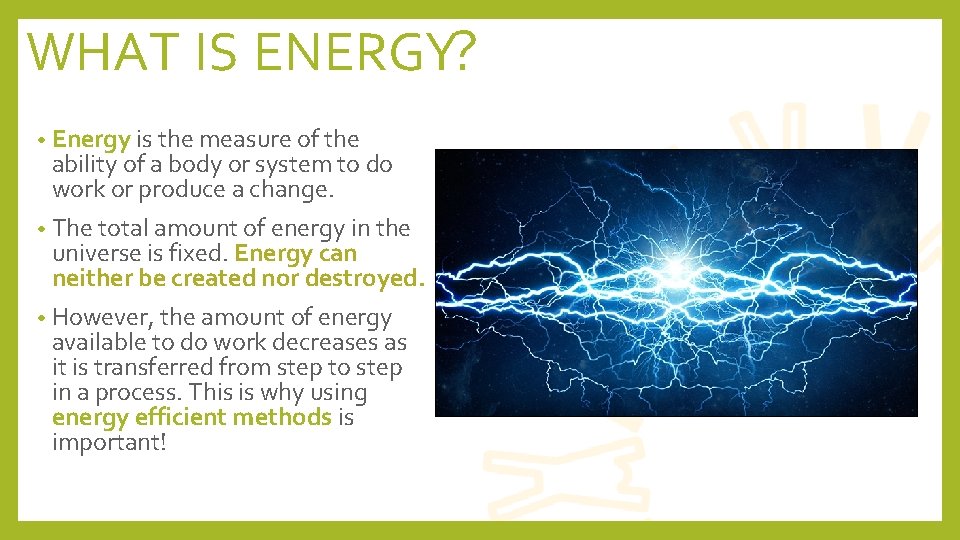
WHAT IS ENERGY? • Energy is the measure of the ability of a body or system to do work or produce a change. • The total amount of energy in the universe is fixed. Energy can neither be created nor destroyed. • However, the amount of energy available to do work decreases as it is transferred from step to step in a process. This is why using energy efficient methods is important!
POP QUIZ… This presentation includes an interactive component using Turning. Point software. You will be asked a series of questions at the start of the presentation and again at the end to help us measure your change in knowledge. Questions are answered by using the remotes handed out. Let’s do a practice question!
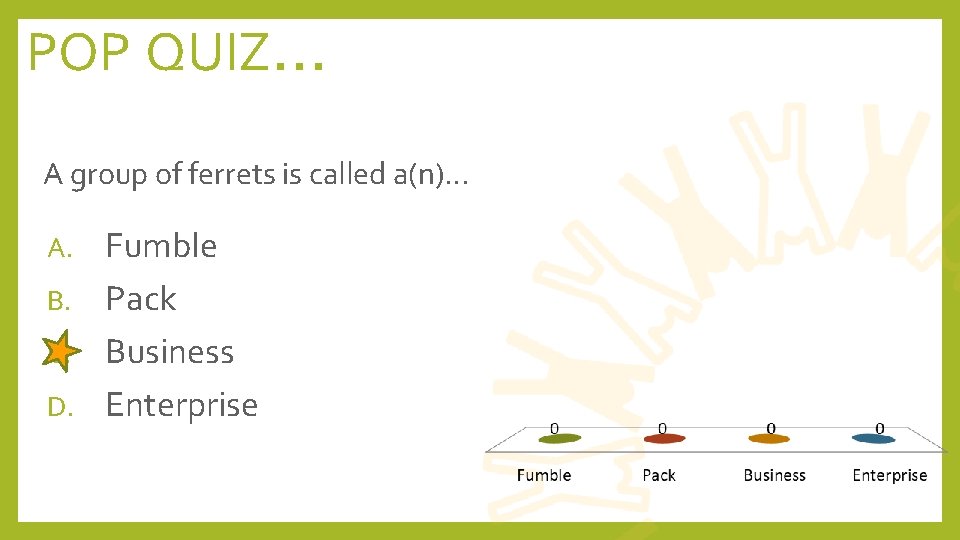
POP QUIZ… A group of ferrets is called a(n)… Fumble B. Pack C. Business D. Enterprise A.
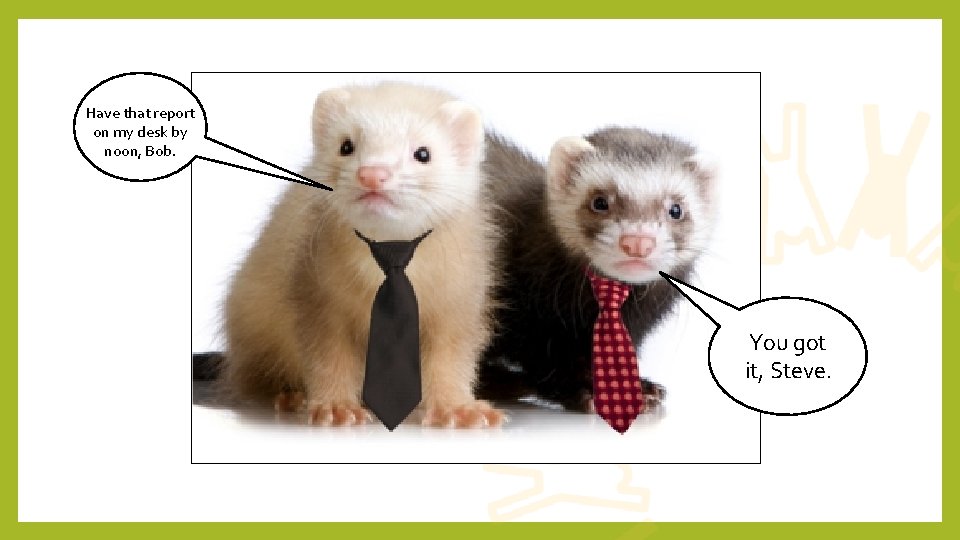
Have that report on my desk by noon, Bob. You got it, Steve.
COMMUNITY RECYCLING IN URBAN AND RURAL COMMUNITIES
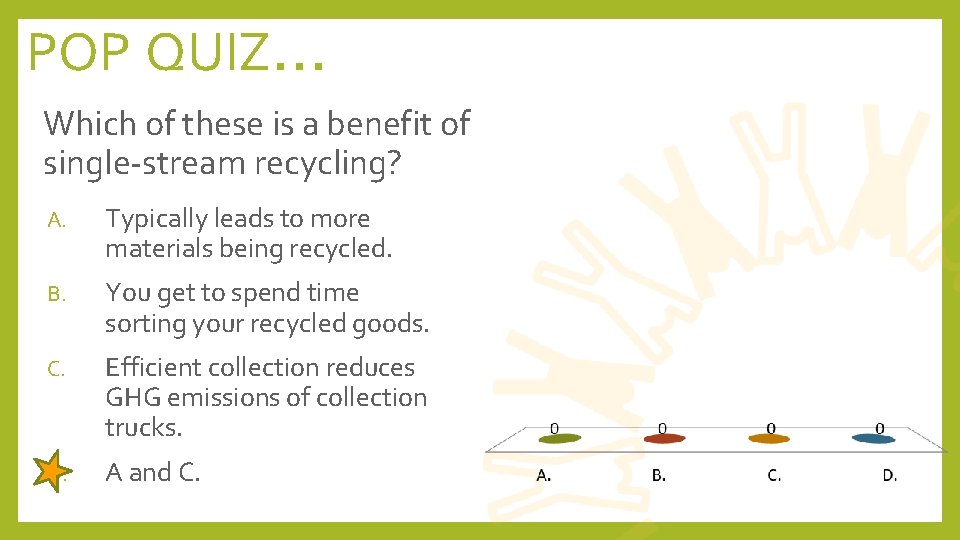
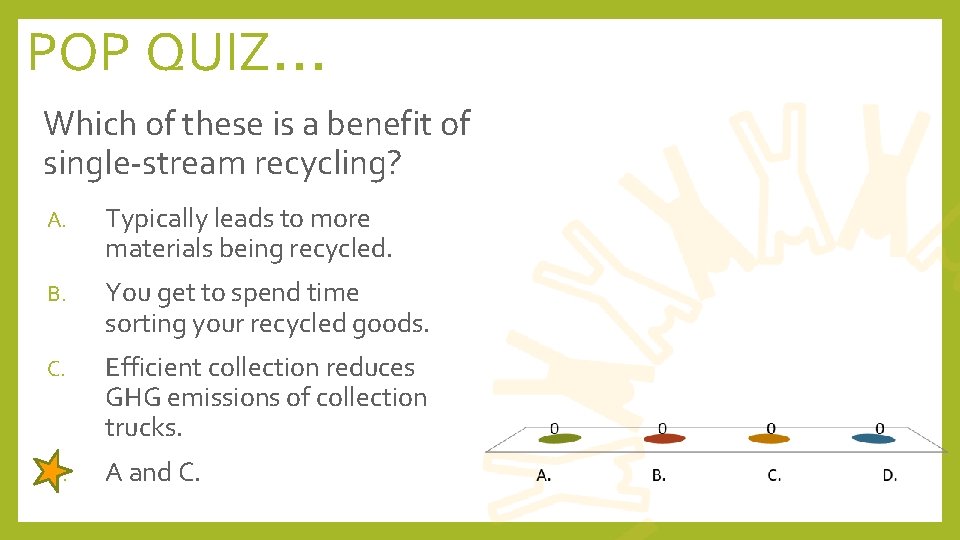
POP QUIZ… Which of these is a benefit of single-stream recycling? A. Typically leads to more materials being recycled. B. You get to spend time sorting your recycled goods. C. Efficient collection reduces GHG emissions of collection trucks. D. A and C.
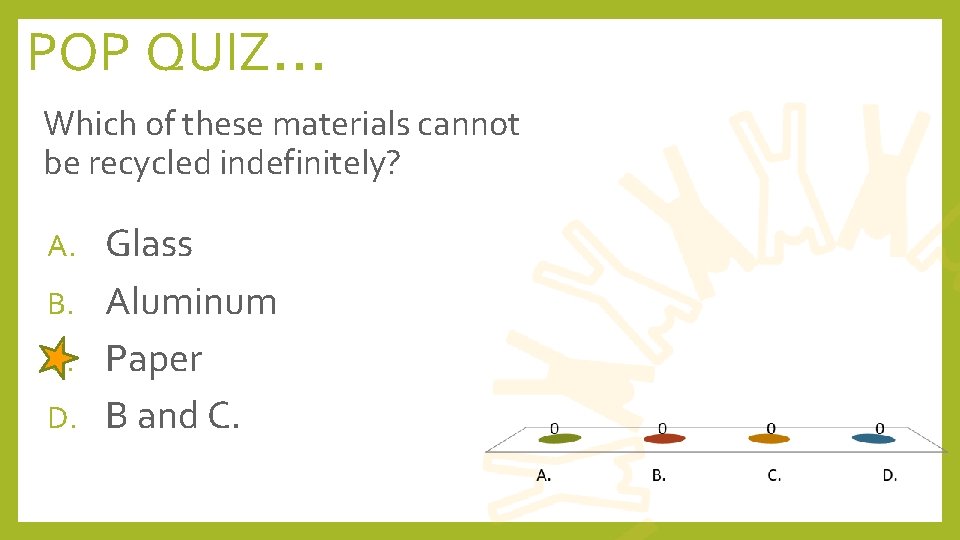
POP QUIZ… Which of these materials cannot be recycled indefinitely? Glass B. Aluminum C. Paper D. B and C. A.
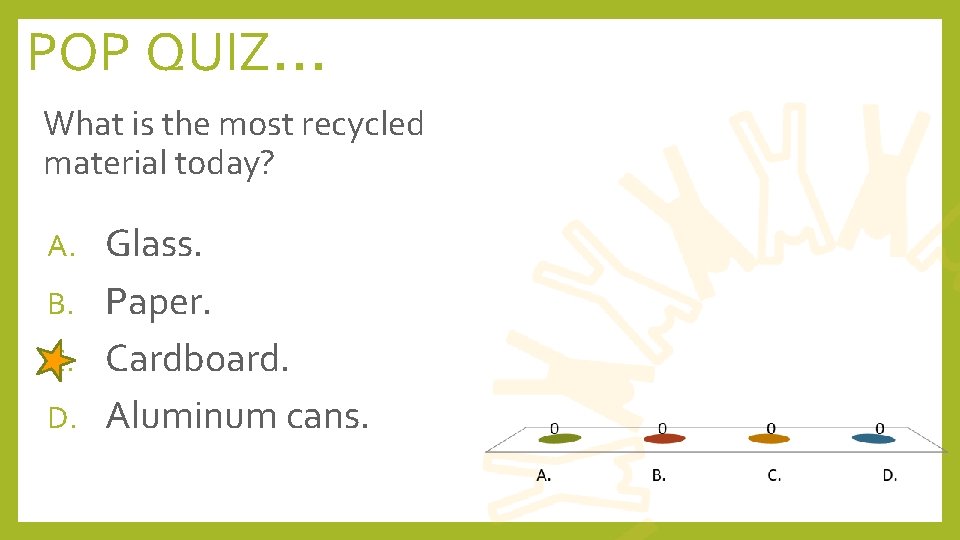
POP QUIZ… What is the most recycled material today? Glass. B. Paper. C. Cardboard. D. Aluminum cans. A.
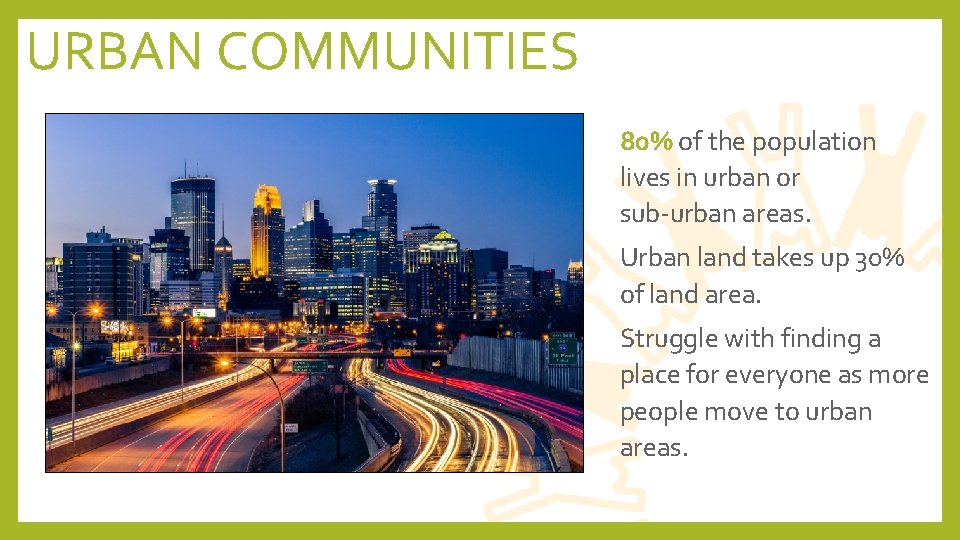
URBAN COMMUNITIES • 80% of the population lives in urban or sub-urban areas. • Urban land takes up 30% of land area. • Struggle with finding a place for everyone as more people move to urban areas.
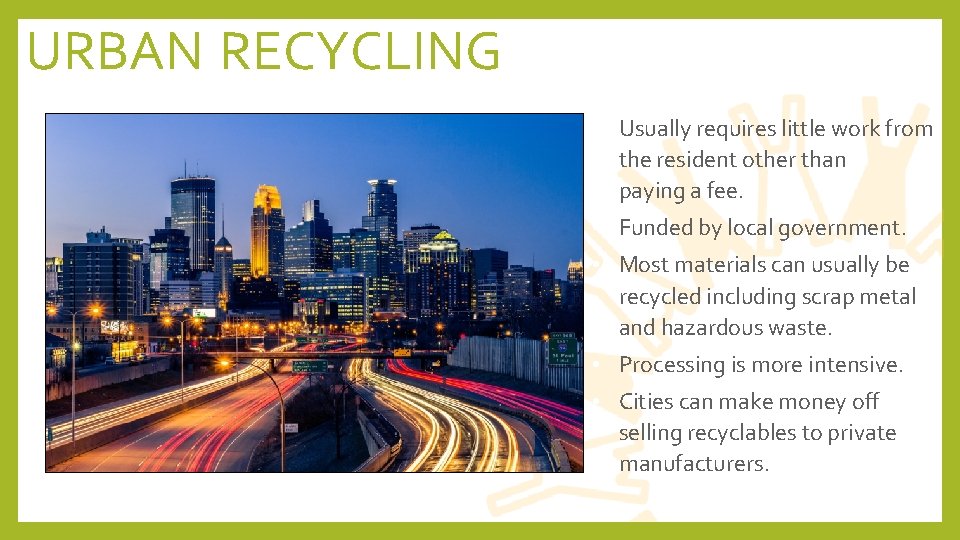
URBAN RECYCLING • Usually requires little work from the resident other than paying a fee. • Funded by local government. • Most materials can usually be recycled including scrap metal and hazardous waste. • Processing is more intensive. • Cities can make money off selling recyclables to private manufacturers.
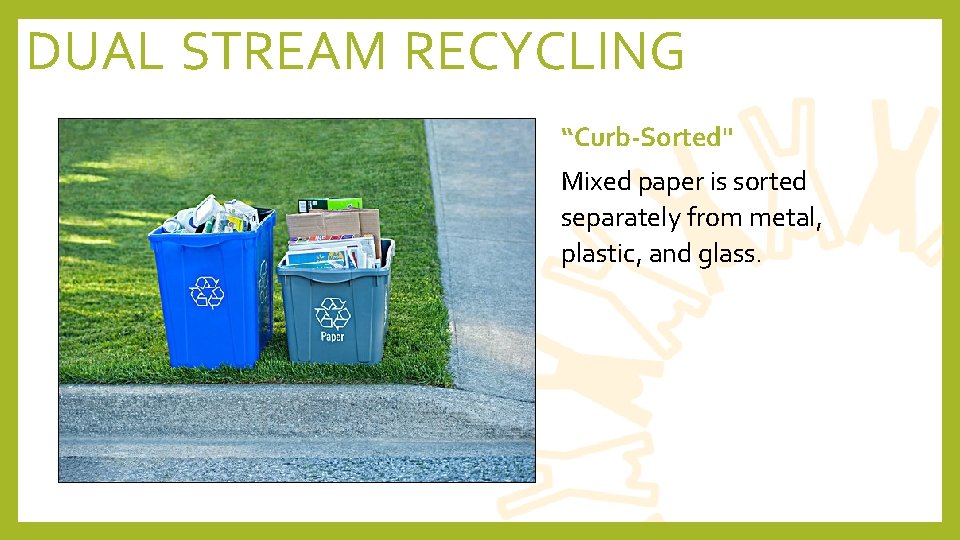
DUAL STREAM RECYCLING “Curb-Sorted" Mixed paper is sorted separately from metal, plastic, and glass.
SINGLE STREAM RECYCLING • All paper, cardboard, metal, plastic, and other recyclables are collected in the same bin. • Allows for greater collection efficiency and eliminates the burden on residents to sort recyclables. • Greater efficiency reduces GHG emissions from collection trucks. • Typically yields more recyclables collected.
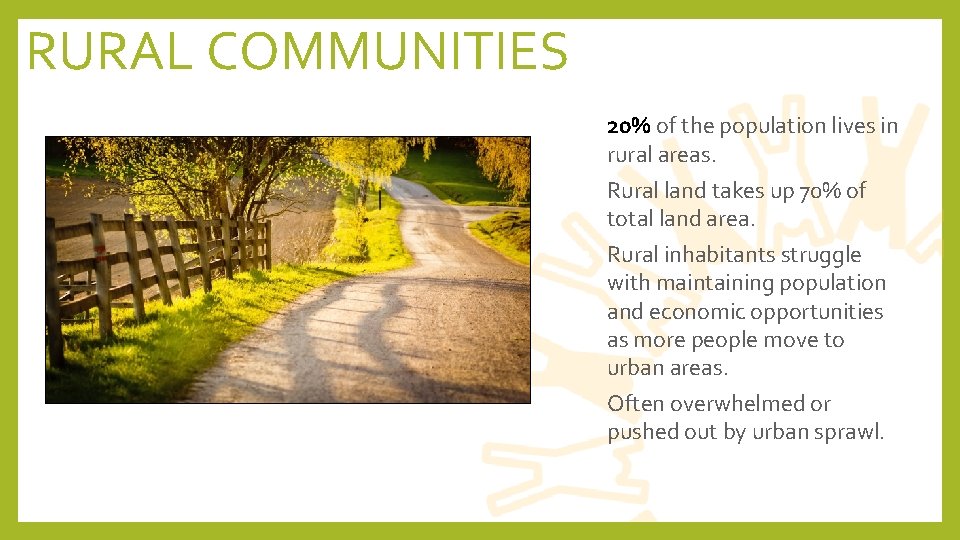
RURAL COMMUNITIES • 20% of the population lives in rural areas. • Rural land takes up 70% of total land area. • Rural inhabitants struggle with maintaining population and economic opportunities as more people move to urban areas. • Often overwhelmed or pushed out by urban sprawl.
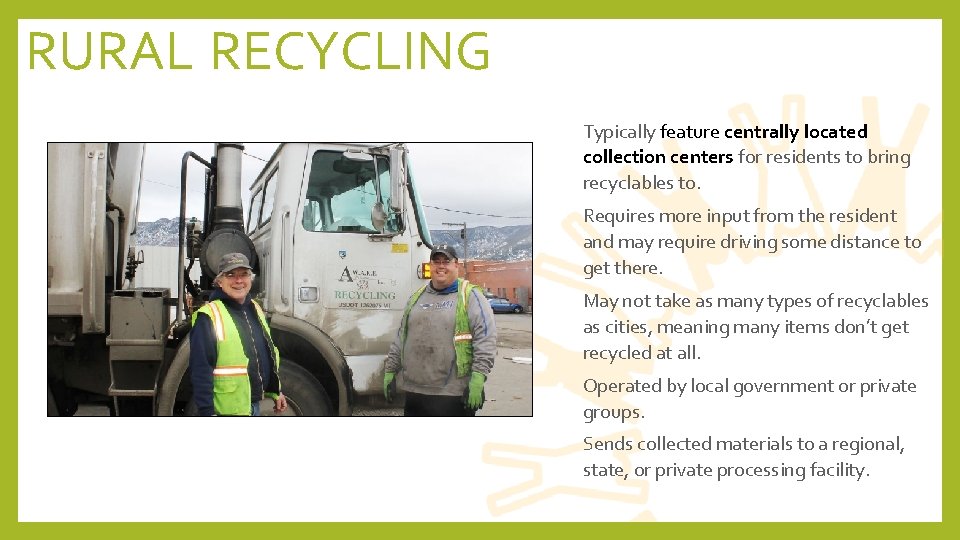
RURAL RECYCLING • Typically feature centrally located collection centers for residents to bring recyclables to. • Requires more input from the resident and may require driving some distance to get there. • May not take as many types of recyclables as cities, meaning many items don’t get recycled at all. • Operated by local government or private groups. • Sends collected materials to a regional, state, or private processing facility.
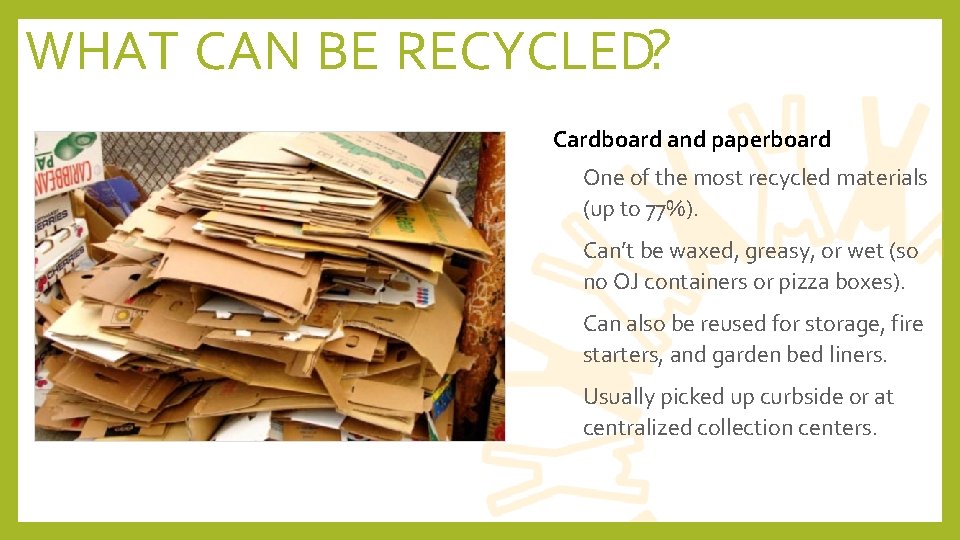
WHAT CAN BE RECYCLED? Cardboard and paperboard • One of the most recycled materials (up to 77%). • Can’t be waxed, greasy, or wet (so no OJ containers or pizza boxes). • Can also be reused for storage, fire starters, and garden bed liners. • Usually picked up curbside or at centralized collection centers.
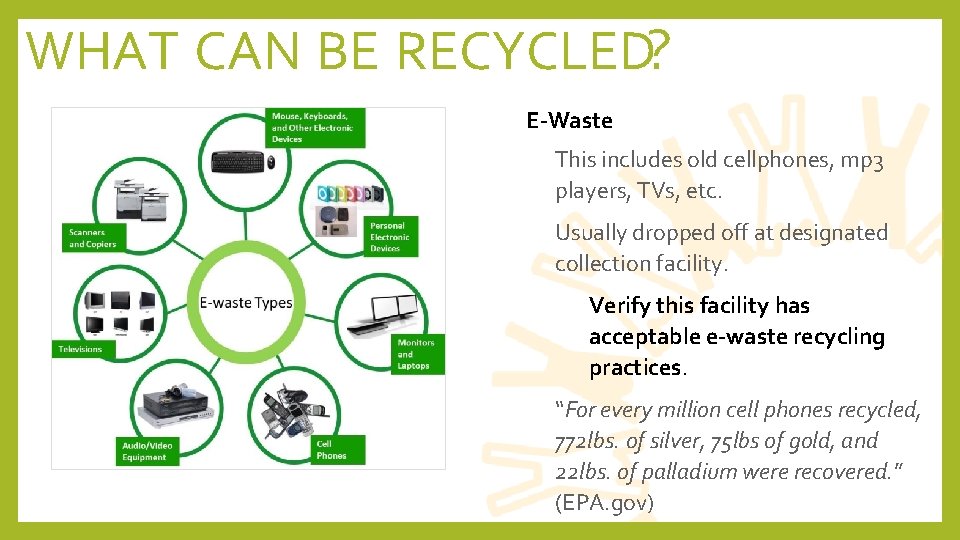
WHAT CAN BE RECYCLED? E-Waste • This includes old cellphones, mp 3 players, TVs, etc. • Usually dropped off at designated collection facility. o Verify this facility has acceptable e-waste recycling practices. • “For every million cell phones recycled, 772 lbs. of silver, 75 lbs of gold, and 22 lbs. of palladium were recovered. ” (EPA. gov)
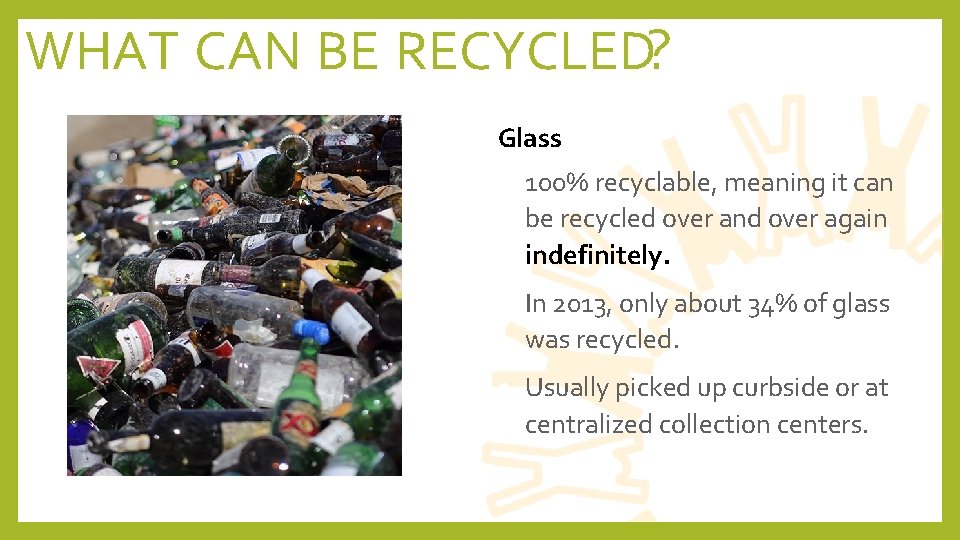
WHAT CAN BE RECYCLED? Glass • 100% recyclable, meaning it can be recycled over and over again indefinitely. . • In 2013, only about 34% of glass was recycled. • Usually picked up curbside or at centralized collection centers.
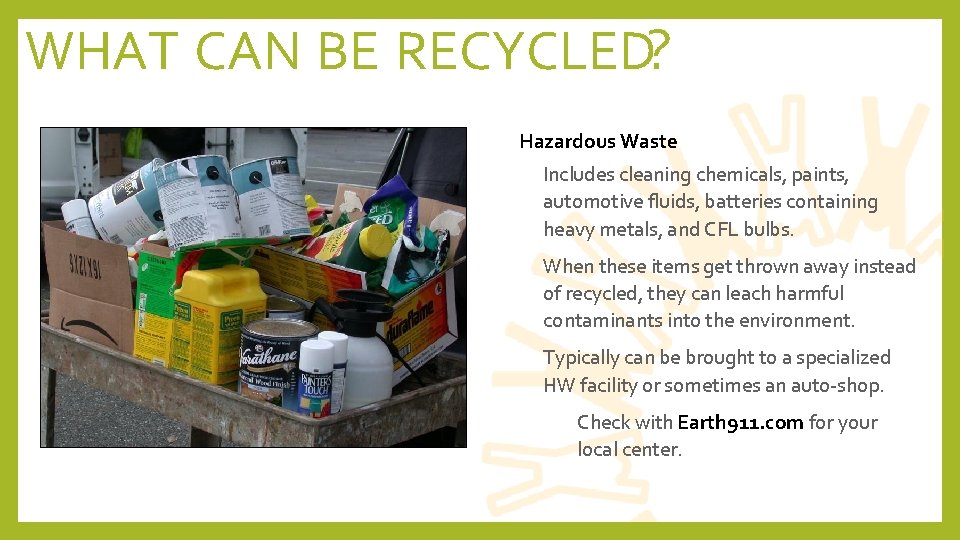
WHAT CAN BE RECYCLED? Hazardous Waste • Includes cleaning chemicals, paints, automotive fluids, batteries containing heavy metals, and CFL bulbs. • When these items get thrown away instead of recycled, they can leach harmful contaminants into the environment. • Typically can be brought to a specialized HW facility or sometimes an auto-shop. o Check with Earth 911. com for your local center.
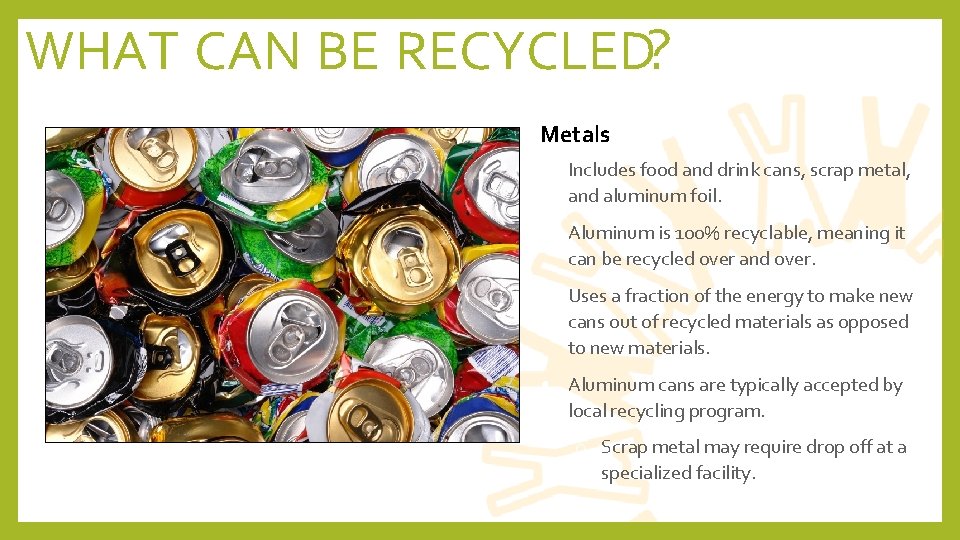
WHAT CAN BE RECYCLED? Metals • Includes food and drink cans, scrap metal, and aluminum foil. • Aluminum is 100% recyclable, meaning it can be recycled over and over. • Uses a fraction of the energy to make new cans out of recycled materials as opposed to new materials. • Aluminum cans are typically accepted by local recycling program. o Scrap metal may require drop off at a specialized facility.
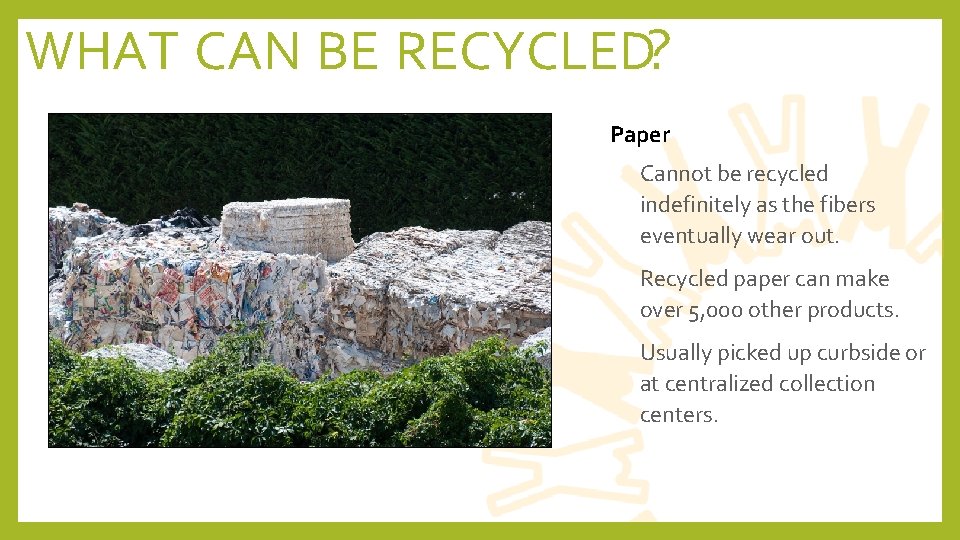
WHAT CAN BE RECYCLED? Paper • Cannot be recycled indefinitely as the fibers eventually wear out. • Recycled paper can make over 5, 000 other products. • Usually picked up curbside or at centralized collection centers.
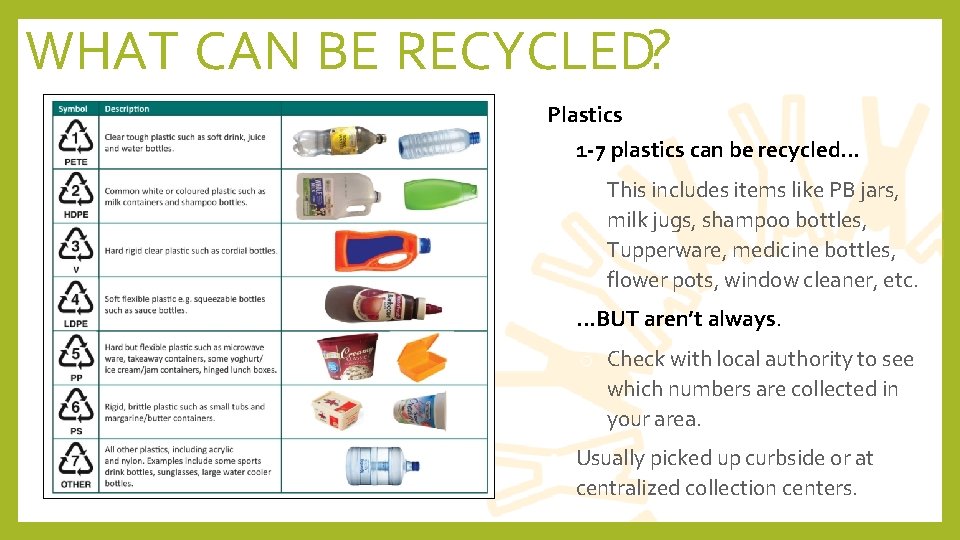
WHAT CAN BE RECYCLED? Plastics • 1 -7 plastics can be recycled… o This includes items like PB jars, milk jugs, shampoo bottles, Tupperware, medicine bottles, flower pots, window cleaner, etc. • …BUT aren’t always. o Check with local authority to see which numbers are collected in your area. • Usually picked up curbside or at centralized collection centers.
POP QUIZ… Which of these is a benefit of single-stream recycling? A. Typically leads to more materials being recycled. B. You get to spend time sorting your recycled goods. C. Efficient collection reduces GHG emissions of collection trucks. D. A and C.
POP QUIZ… Which of these materials cannot be recycled indefinitely? Glass B. Aluminum C. Paper D. B and C. A.
POP QUIZ… What is the most recycled material today? Glass. B. Paper. C. Cardboard. D. Aluminum cans. A.
WANT TO LEARN MORE? CONTACT: NAME TITLE EMAIL (XXX)XXX-XXXX Our headquarters is located at 3040 Continental Dr. Butte, MT