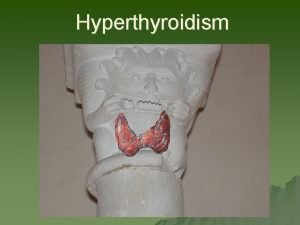
HYPERTHYROIDISM A Practical Approach to Dx and Rx








- Slides: 61
HYPERTHYROIDISM A Practical Approach to Dx. and Rx. Dr. R. V. S. N. Sarma. , M. D. , M. Sc. , (Canada) Consultant Physician and Chest Specialist www. drsarma. in
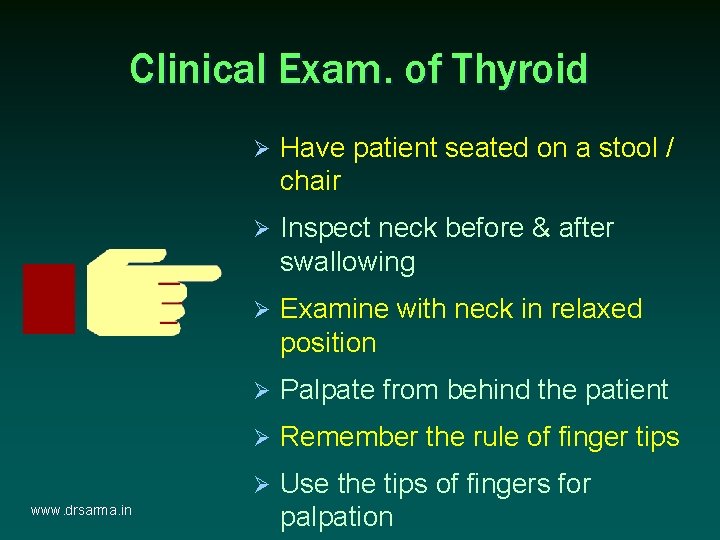
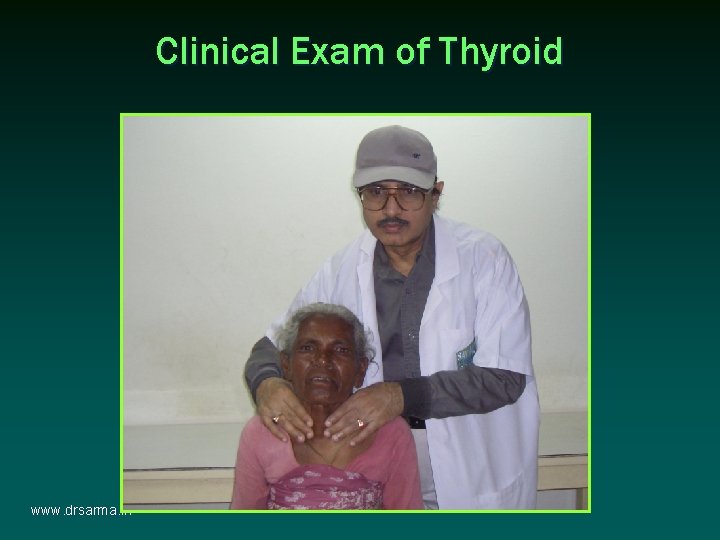
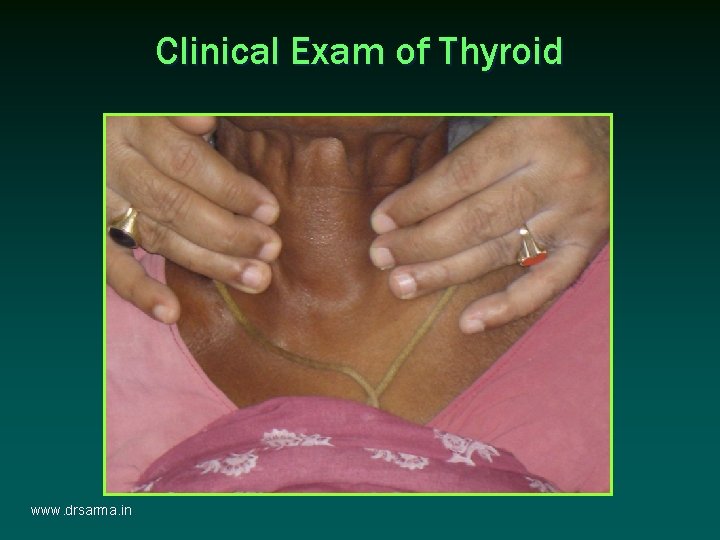
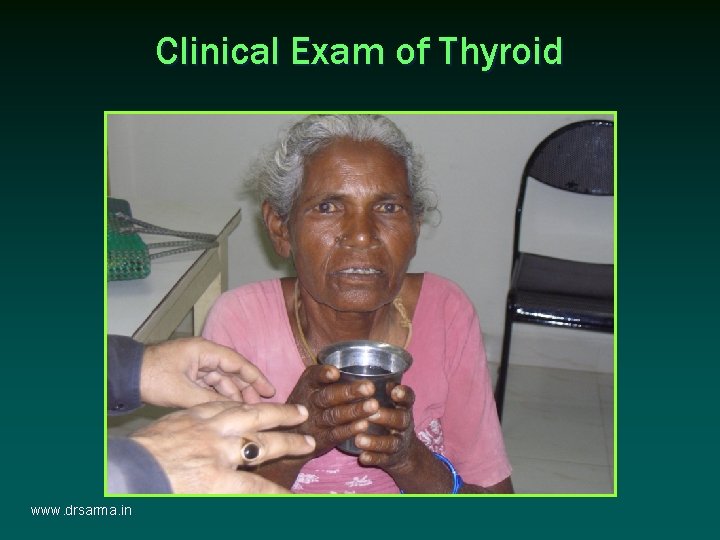
Clinical Exam. of Thyroid www. drsarma. in Ø Have patient seated on a stool / chair Ø Inspect neck before & after swallowing Ø Examine with neck in relaxed position Ø Palpate from behind the patient Ø Remember the rule of finger tips Ø Use the tips of fingers for palpation
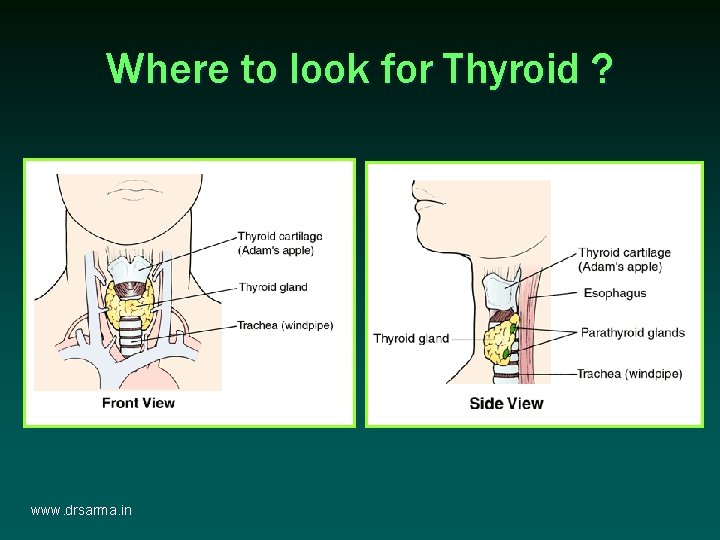
Where to look for Thyroid ? www. drsarma. in
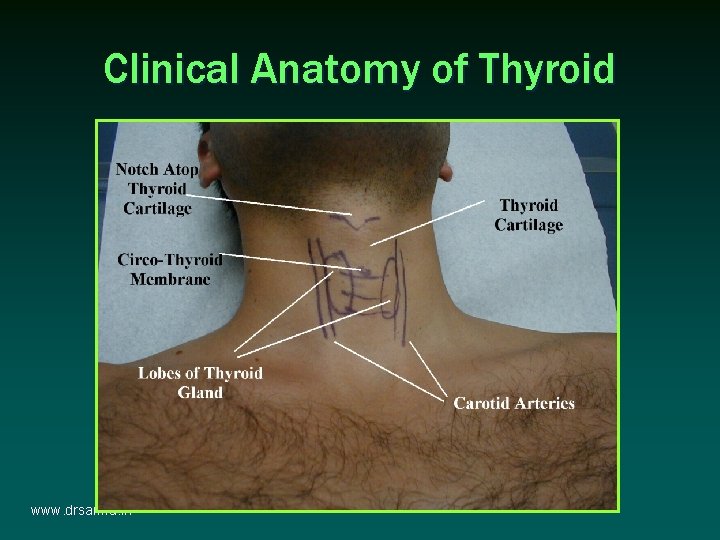
Clinical Anatomy of Thyroid www. drsarma. in
Clinical Exam of Thyroid www. drsarma. in
Clinical Exam of Thyroid www. drsarma. in
Clinical Exam of Thyroid www. drsarma. in
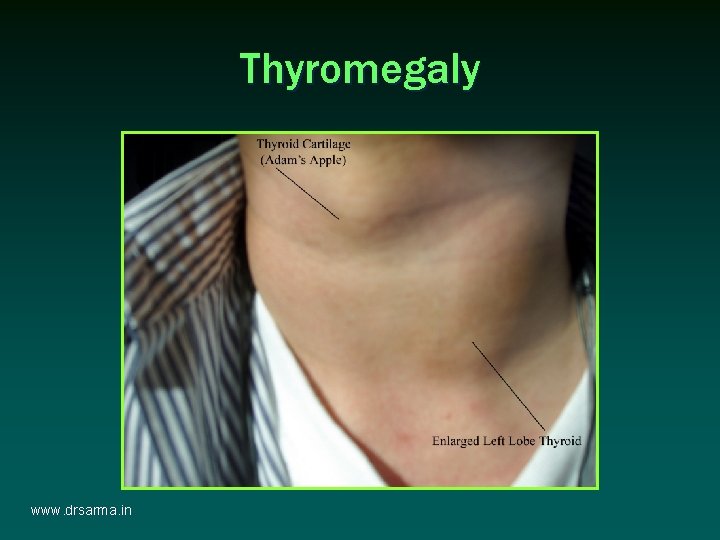
Thyromegaly www. drsarma. in
Hyperthyroidism Ø A hyper metabolic biochemical state Ø It is a multi system disease with Ø Elevated levels of FT 4 or FT 3 or both Ø What is thyrotoxicosis ? Ø What is hyperthyroidism ? Ø What are the various causes ? Ø How to differentiate the causes ? www. drsarma. in
Causes of Hyperthyroidism Graves Disease – Diffuse Toxic Goiter 2. Plummer’s Disease – Toxic MNG 3. Toxic phase of Sub Acute Thyroiditis SAT 4. Toxic Single Adenoma – STA 5. Pituitary Tumours – excess TSH 6. Molar pregnancy & Choriocarcinoma (↑↑ βHCG) 7. Metastatic thyroid cancers (functioning) www. drsarma. in 8. Struma Ovarii (Dermoid and Ovarian 1.
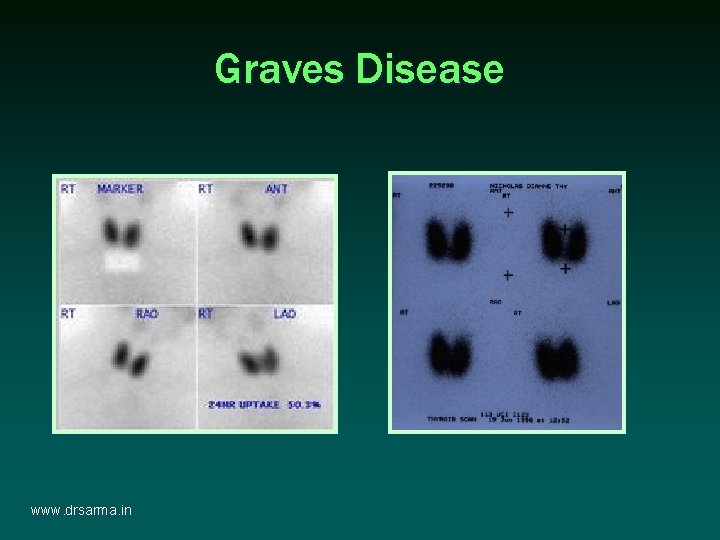
Graves Disease The most common cause of thyrotoxicosis (5060%). Ø Organ specific auto-immune disease Ø The most important autoantibody is l Thyroid Stimulating Immunoglobulin (TSI) or TSA l TSI acts as proxy to TSH and stimulates T 4 and T 3 Ø • Anti thyro peroxidase (anti-TPO) antibodies • Anti thyro globulin (anti-TG) Anti Microsomal www. drsarma. in and other
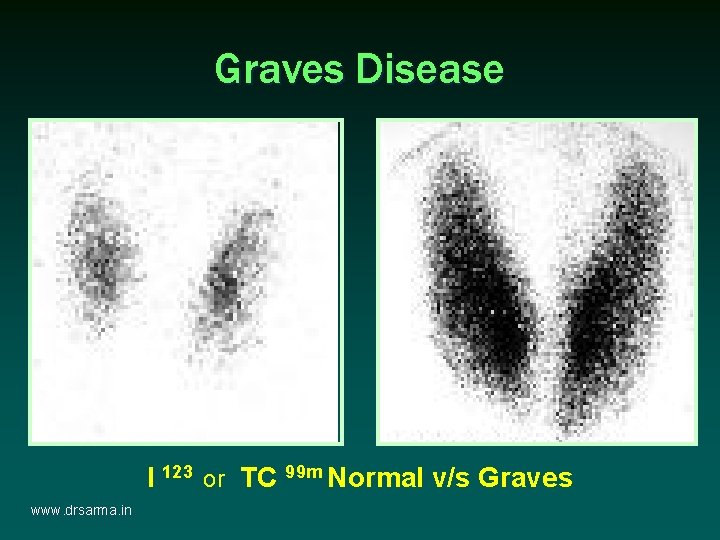
Graves Disease I 123 or TC 99 m Normal v/s Graves www. drsarma. in
Graves Disease www. drsarma. in
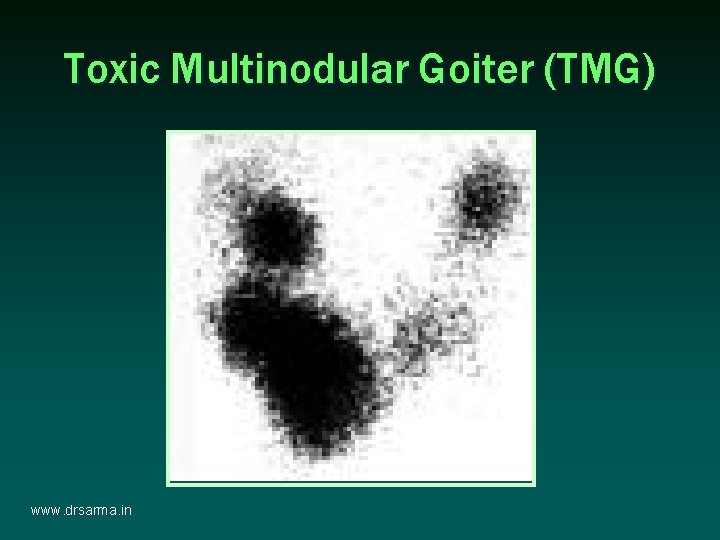
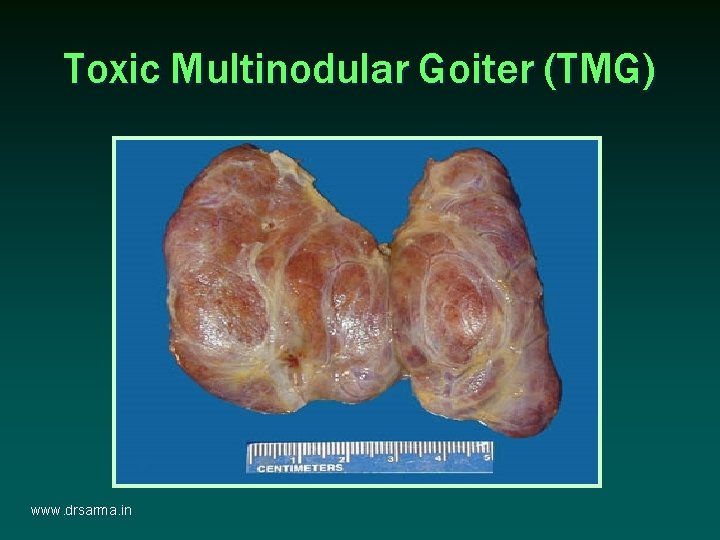
Toxic Multinodular Goiter (TMG) TMG is the next most common hyperthyroidism - 20% Ø More common in elderly individuals – long standing goiter Ø Lumpy bumpy thyroid gland Ø Milder manifestations (apathetic hyperthyroidism) Ø Mild elevation of FT 4 and FT 3 Ø Progresses slowly over time www. drsarma. in Ø Clinically multiple firm nodules (called Ø
Toxic Multinodular Goiter (TMG) www. drsarma. in
Toxic Multinodular Goiter (TMG) www. drsarma. in
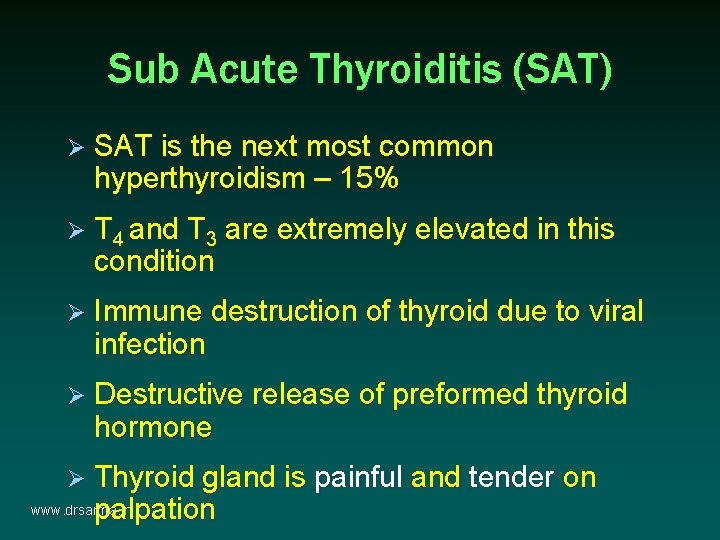
Sub Acute Thyroiditis (SAT) Ø SAT is the next most common hyperthyroidism – 15% Ø T 4 and T 3 condition are extremely elevated in this Ø Immune destruction of thyroid due to viral infection Ø Destructive release of preformed thyroid hormone Ø Thyroid gland is painful and tender on palpation www. drsarma. in
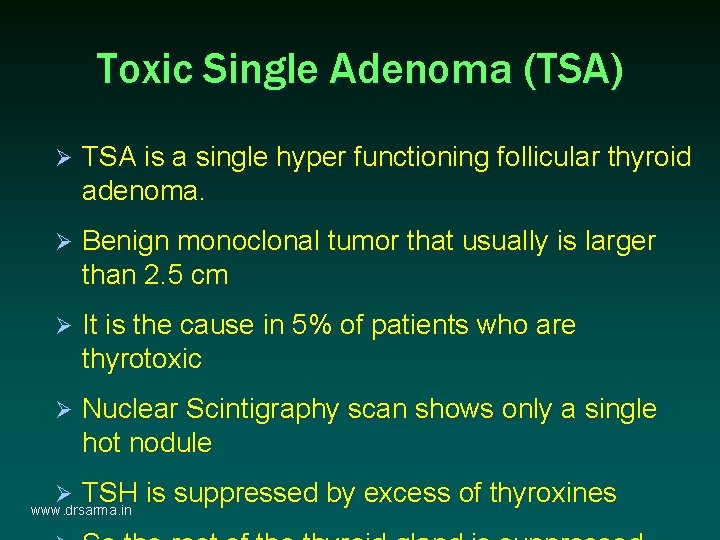
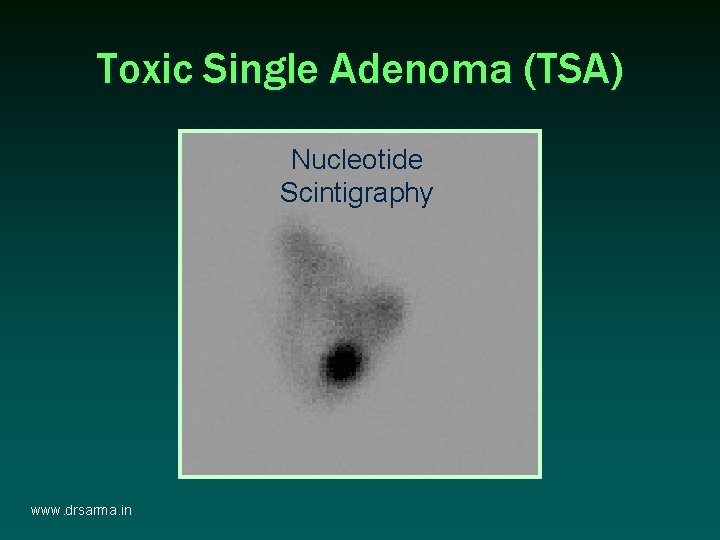
Toxic Single Adenoma (TSA) Ø TSA is a single hyper functioning follicular thyroid adenoma. Ø Benign monoclonal tumor that usually is larger than 2. 5 cm Ø It is the cause in 5% of patients who are thyrotoxic Ø Nuclear Scintigraphy scan shows only a single hot nodule Ø TSH is suppressed by excess of thyroxines www. drsarma. in
Toxic Single Adenoma (TSA) Nucleotide Scintigraphy www. drsarma. in
Age and Sex Ø Age l Graves disease 20 to 40 l Toxic MNG > 50 yrs l Toxic Single Adenoma 35 to 50 l Ø Sub Acute Thyroiditis age Any Sex M : F ratio www. drsarma. in l Graves Disease 1: 5 to 1: 10 l Toxic MNG 1: 2 to 1: 4
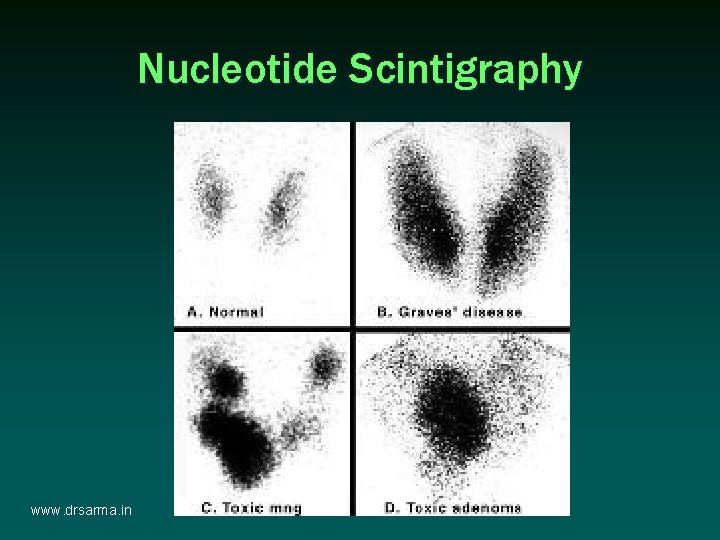
Nucleotide Scintigraphy www. drsarma. in
Clinical Features 1. Those that occur with any type of thyrotoxicosis 2. Those that are specific to Graves disease 3. Non specific changes of hyper metabolism www. drsarma. in
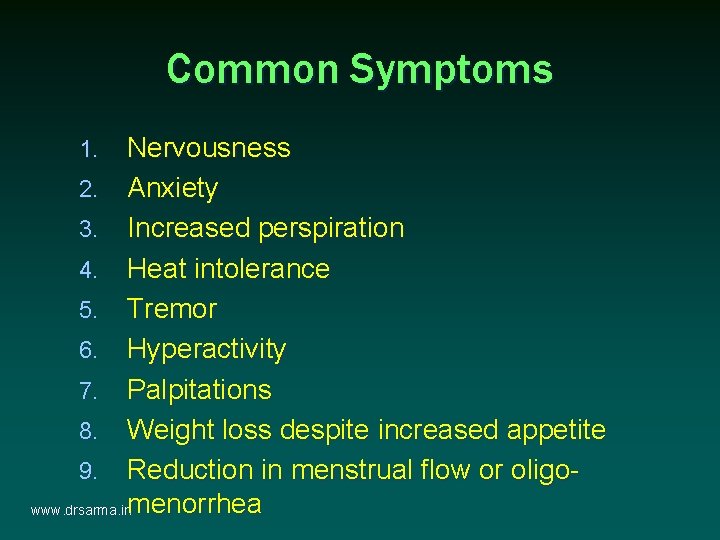
Common Symptoms Nervousness 2. Anxiety 3. Increased perspiration 4. Heat intolerance 5. Tremor 6. Hyperactivity 7. Palpitations 8. Weight loss despite increased appetite 9. Reduction in menstrual flow or oligowww. drsarma. inmenorrhea 1.
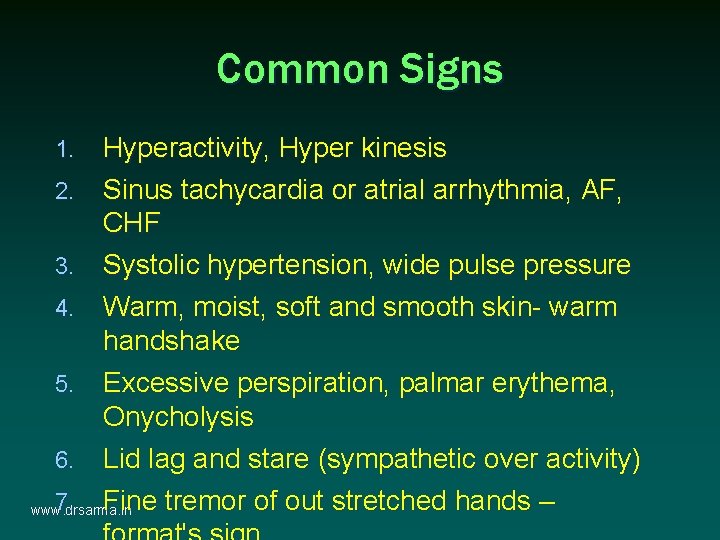
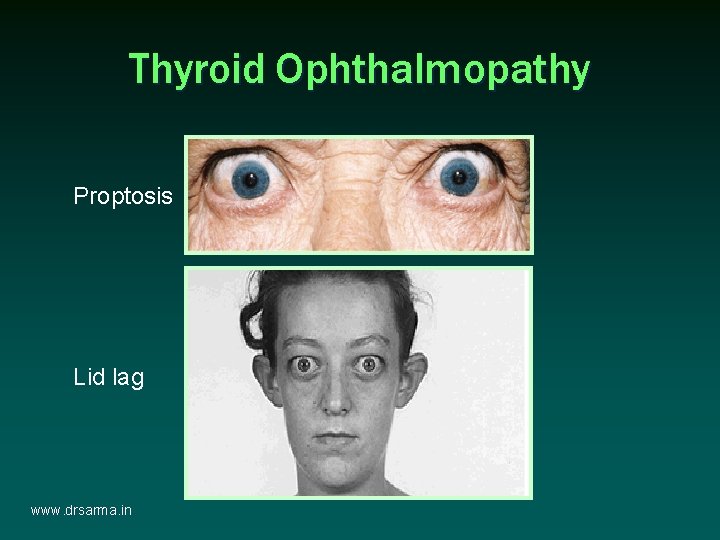
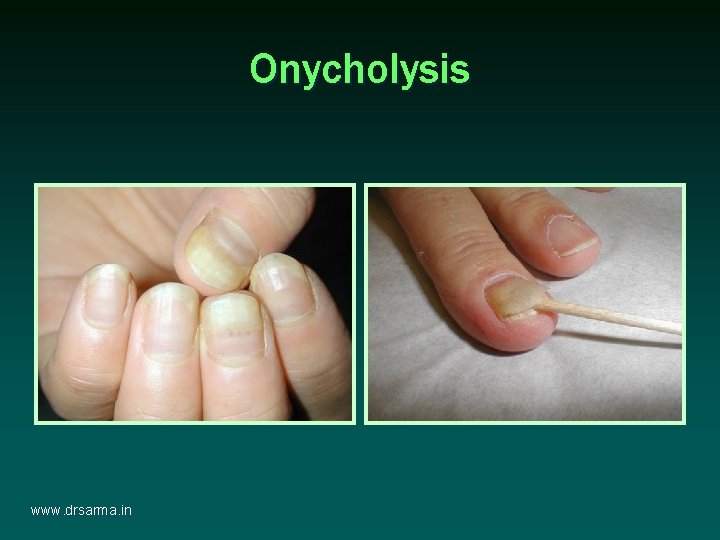
Common Signs Hyperactivity, Hyper kinesis 2. Sinus tachycardia or atrial arrhythmia, AF, CHF 3. Systolic hypertension, wide pulse pressure 4. Warm, moist, soft and smooth skin- warm handshake 5. Excessive perspiration, palmar erythema, Onycholysis 6. Lid lag and stare (sympathetic over activity) 7. Fine tremor of out stretched hands – www. drsarma. in 1.
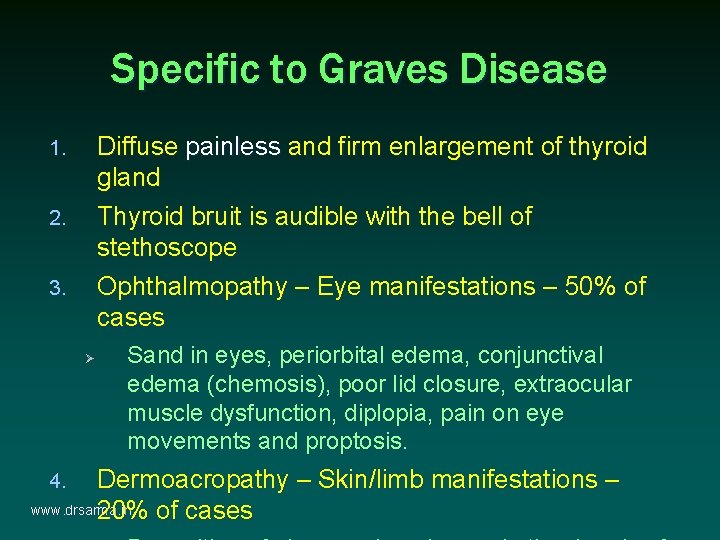
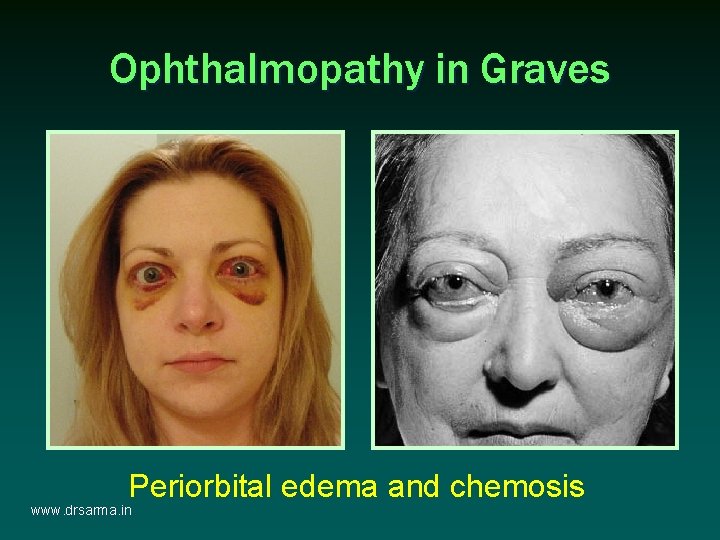
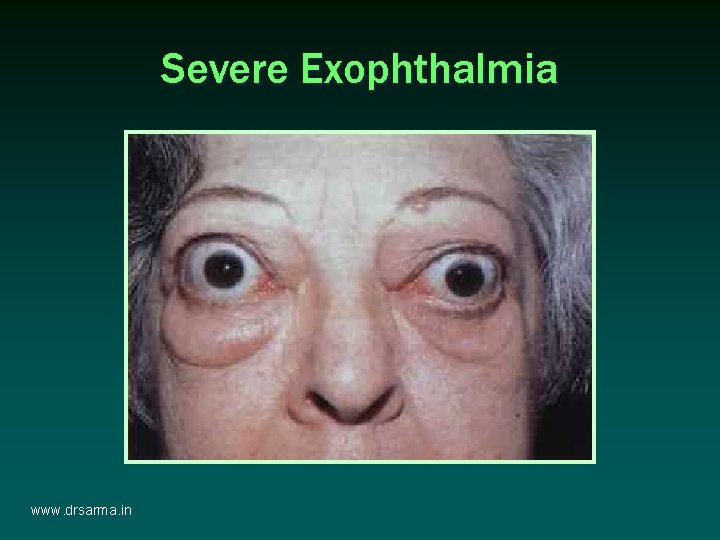
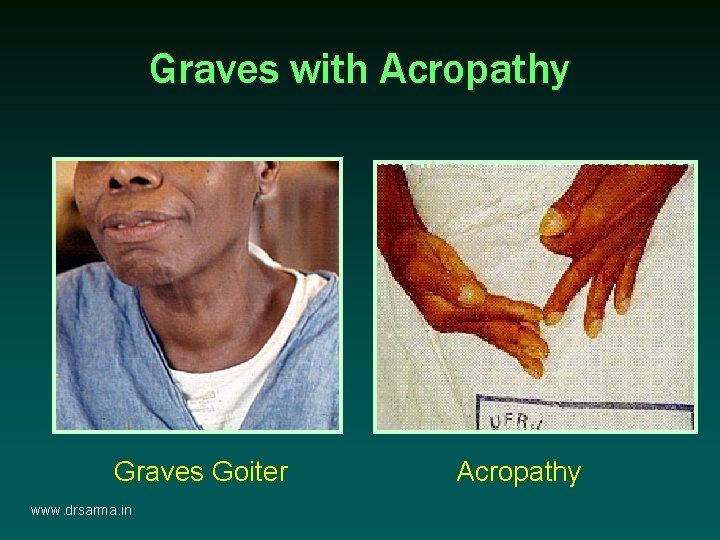
Specific to Graves Disease Diffuse painless and firm enlargement of thyroid gland Thyroid bruit is audible with the bell of stethoscope Ophthalmopathy – Eye manifestations – 50% of cases 1. 2. 3. Ø Sand in eyes, periorbital edema, conjunctival edema (chemosis), poor lid closure, extraocular muscle dysfunction, diplopia, pain on eye movements and proptosis. Dermoacropathy – Skin/limb manifestations – www. drsarma. in 20% of cases 4.
Clinical Presentations www. drsarma. in
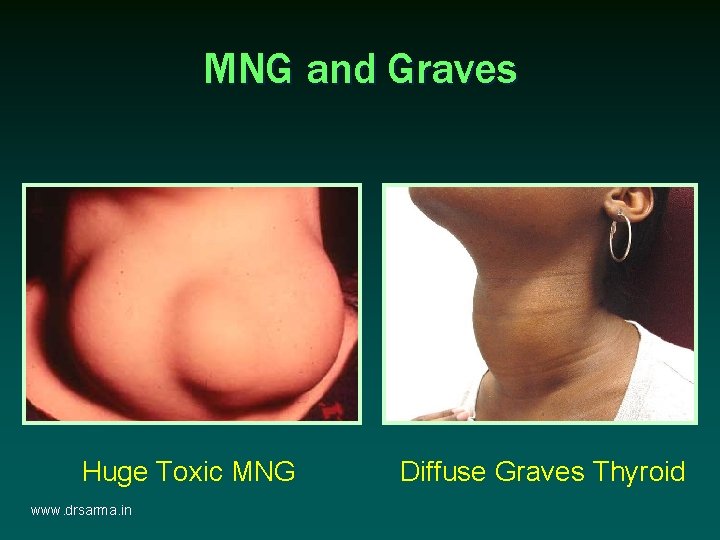
MNG and Graves Huge Toxic MNG www. drsarma. in Diffuse Graves Thyroid
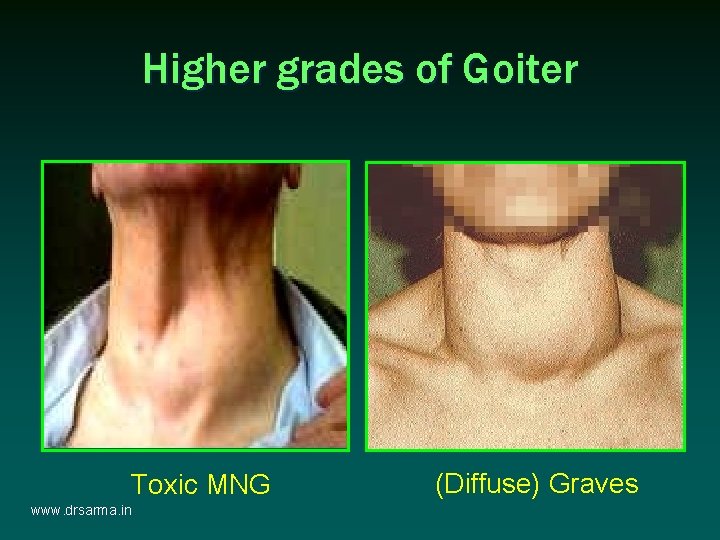
Higher grades of Goiter Toxic MNG www. drsarma. in (Diffuse) Graves
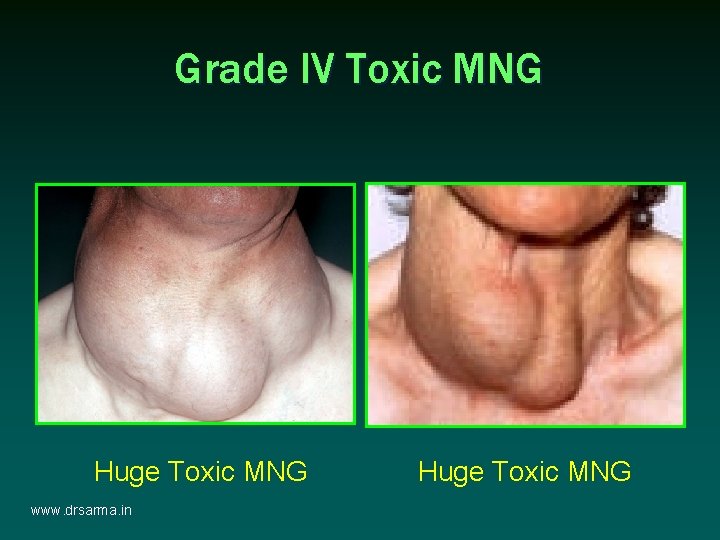
Grade IV Toxic MNG Huge Toxic MNG www. drsarma. in Huge Toxic MNG
Thyroid Ophthalmopathy Proptosis Lid lag www. drsarma. in
Ophthalmopathy in Graves Periorbital edema and chemosis www. drsarma. in
Ophthalmopathy in Graves Occular muscle palsy www. drsarma. in Laka
Severe Exophthalmia www. drsarma. in
Thyroid Dermopathy Pink and skin coloured papules, plaques on the shin www. drsarma. in
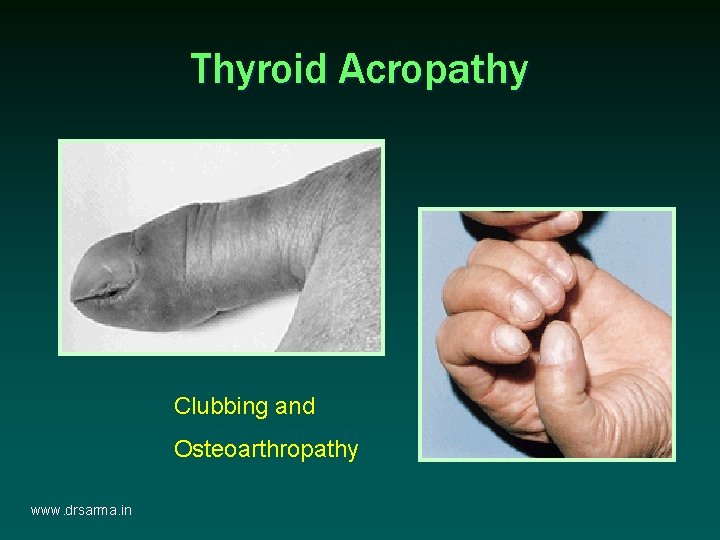
Graves with Acropathy Graves Goiter www. drsarma. in Acropathy
Thyroid Acropathy Clubbing and Osteoarthropathy www. drsarma. in
Onycholysis www. drsarma. in
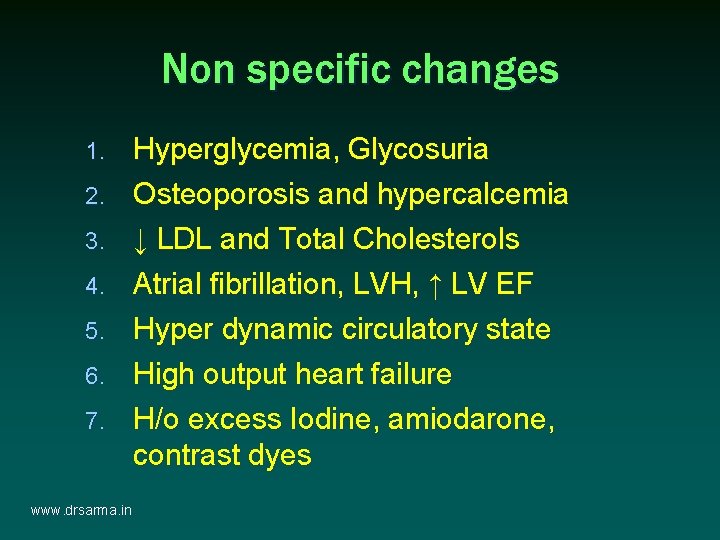
Non specific changes 1. 2. 3. 4. 5. 6. 7. www. drsarma. in Hyperglycemia, Glycosuria Osteoporosis and hypercalcemia ↓ LDL and Total Cholesterols Atrial fibrillation, LVH, ↑ LV EF Hyper dynamic circulatory state High output heart failure H/o excess Iodine, amiodarone, contrast dyes
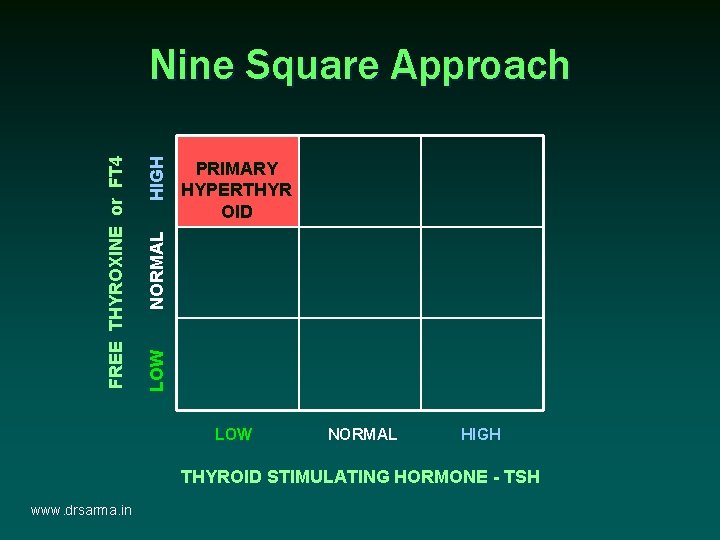
HIGH NORMAL PRIMARY HYPERTHYR OID LOW FREE THYROXINE or FT 4 Nine Square Approach LOW NORMAL HIGH THYROID STIMULATING HORMONE - TSH www. drsarma. in
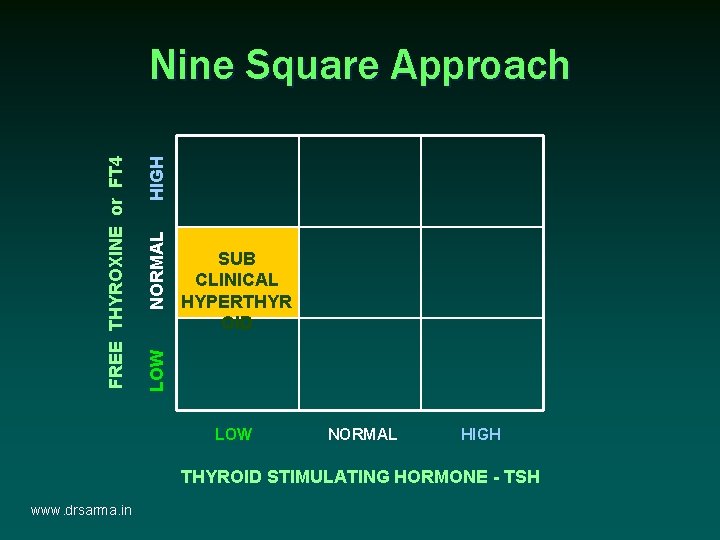
HIGH NORMAL SUB CLINICAL HYPERTHYR OID LOW FREE THYROXINE or FT 4 Nine Square Approach LOW NORMAL HIGH THYROID STIMULATING HORMONE - TSH www. drsarma. in
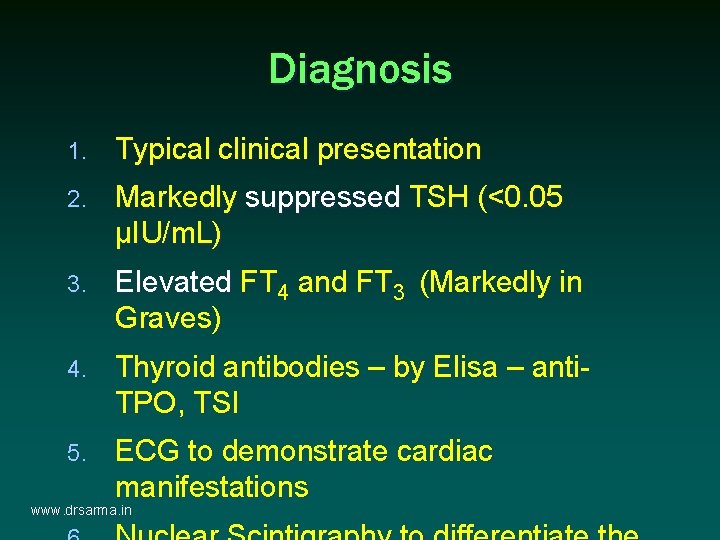
Diagnosis 1. Typical clinical presentation 2. Markedly suppressed TSH (<0. 05 µIU/m. L) 3. Elevated FT 4 and FT 3 (Markedly in Graves) 4. Thyroid antibodies – by Elisa – anti. TPO, TSI 5. ECG to demonstrate cardiac manifestations www. drsarma. in
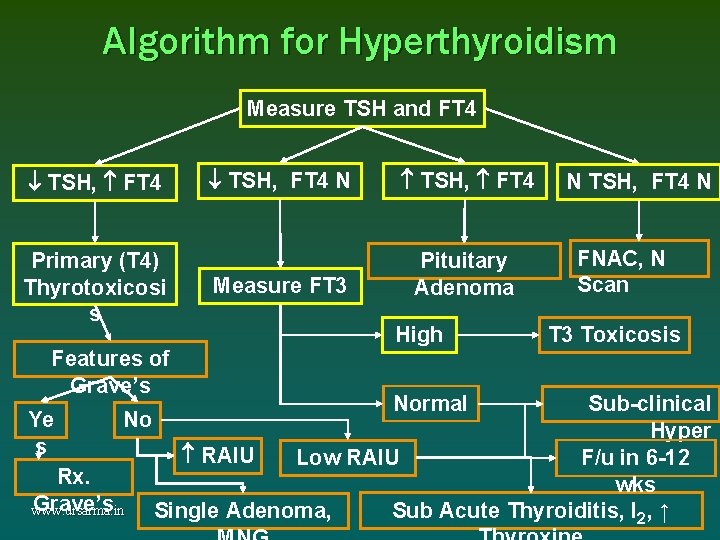
Algorithm for Hyperthyroidism Measure TSH and FT 4 TSH, FT 4 Primary (T 4) Thyrotoxicosi s Features of Grave’s TSH, FT 4 N TSH, FT 4 Measure FT 3 Pituitary Adenoma High Normal N TSH, FT 4 N FNAC, N Scan T 3 Toxicosis Sub-clinical Ye No Hyper s RAIU Low RAIU F/u in 6 -12 Rx. wks Grave’s www. drsarma. in Sub Acute Thyroiditis, I 2, ↑ Single Adenoma,
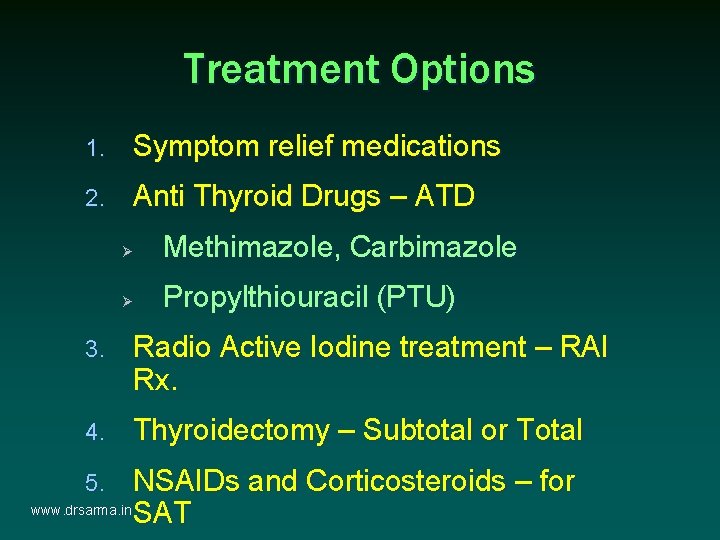
Treatment Options 1. Symptom relief medications 2. Anti Thyroid Drugs – ATD Ø Methimazole, Carbimazole Ø Propylthiouracil (PTU) 3. Radio Active Iodine treatment – RAI Rx. 4. Thyroidectomy – Subtotal or Total NSAIDs and Corticosteroids – for www. drsarma. in SAT 5.
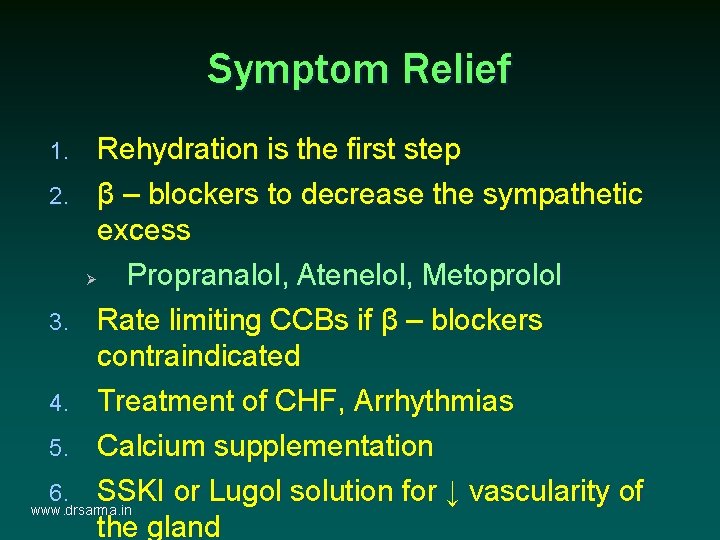
Symptom Relief Rehydration is the first step 2. β – blockers to decrease the sympathetic excess Ø Propranalol, Atenelol, Metoprolol 3. Rate limiting CCBs if β – blockers contraindicated 4. Treatment of CHF, Arrhythmias 5. Calcium supplementation 6. SSKI or Lugol solution for ↓ vascularity of www. drsarma. in the gland 1.
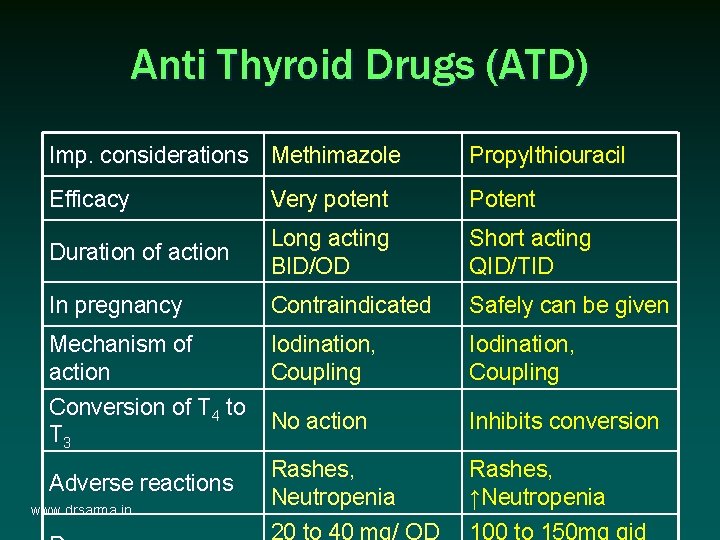
Anti Thyroid Drugs (ATD) Imp. considerations Methimazole Propylthiouracil Efficacy Very potent Potent Duration of action Long acting BID/OD Short acting QID/TID In pregnancy Contraindicated Safely can be given Mechanism of action Conversion of T 4 to T 3 Iodination, Coupling No action Inhibits conversion Rashes, Neutropenia 20 to 40 mg/ OD Rashes, ↑Neutropenia 100 to 150 mg qid Adverse reactions www. drsarma. in
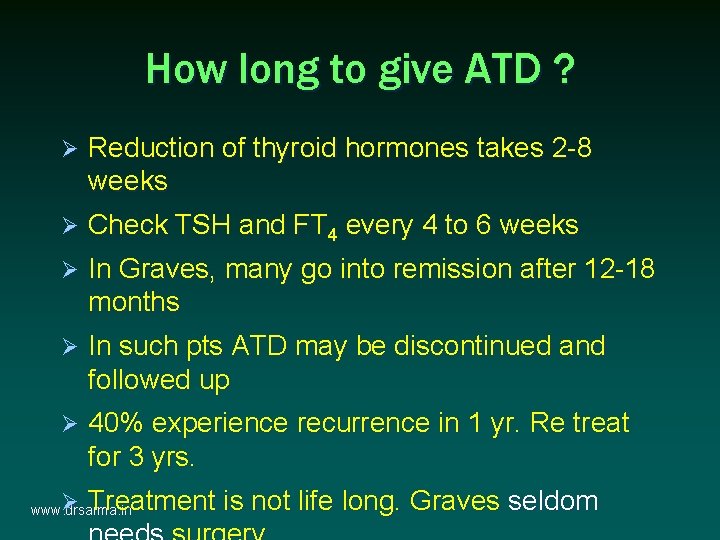
How long to give ATD ? Ø Reduction of thyroid hormones takes 2 -8 weeks Ø Check TSH and FT 4 every 4 to 6 weeks Ø In Graves, many go into remission after 12 -18 months Ø In such pts ATD may be discontinued and followed up Ø 40% experience recurrence in 1 yr. Re treat for 3 yrs. Ø Treatment is not life long. Graves seldom www. drsarma. in
Radio Active Iodine (RAI Rx. ) Ø In women who are not pregnant Ø In cases of Toxic MNG and TSA Ø Graves disease not remitting with ATD Ø RAI Rx is the best treatment of hyperthyroidism in adults Ø The effect is less rapid than ATD or Thyroidectomy Ø It is effective, safe, and does not require hospitalization. Ø Given orally as a single dose in a capsule or www. drsarma. in
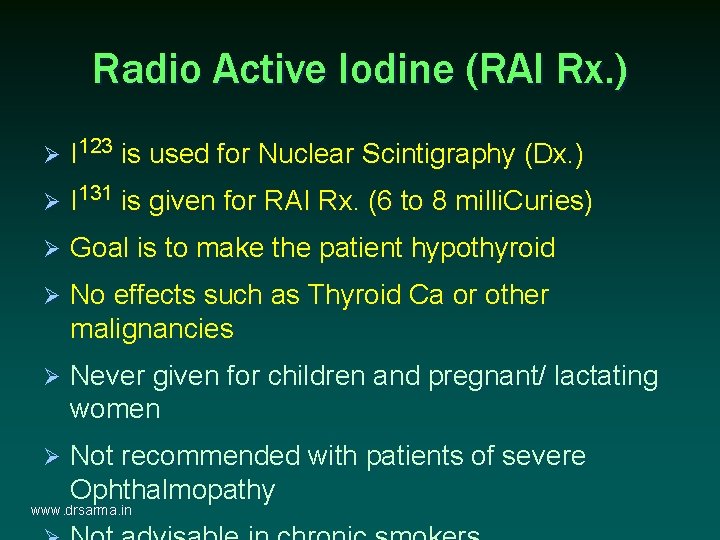
Radio Active Iodine (RAI Rx. ) Ø I 123 is used for Nuclear Scintigraphy (Dx. ) Ø I 131 is given for RAI Rx. (6 to 8 milli. Curies) Ø Goal is to make the patient hypothyroid Ø No effects such as Thyroid Ca or other malignancies Ø Never given for children and pregnant/ lactating women Ø Not recommended with patients of severe Ophthalmopathy www. drsarma. in
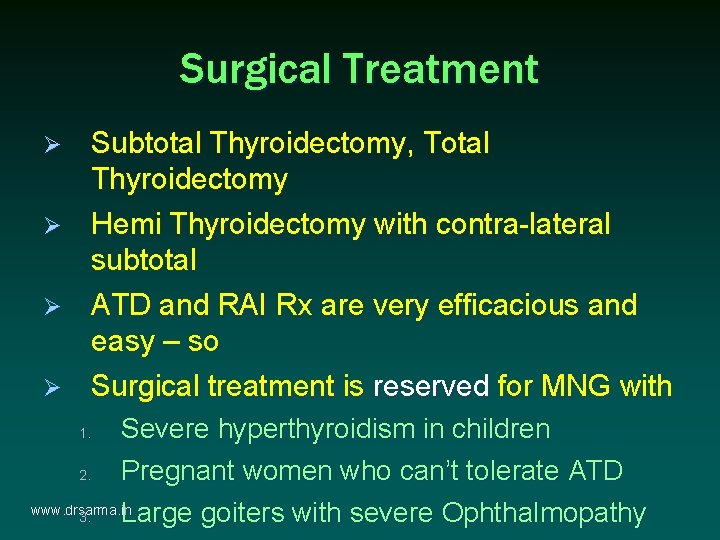
Surgical Treatment Ø Ø Subtotal Thyroidectomy, Total Thyroidectomy Hemi Thyroidectomy with contra-lateral subtotal ATD and RAI Rx are very efficacious and easy – so Surgical treatment is reserved for MNG with Severe hyperthyroidism in children 2. Pregnant women who can’t tolerate ATD www. drsarma. in 3. Large goiters with severe Ophthalmopathy 1.
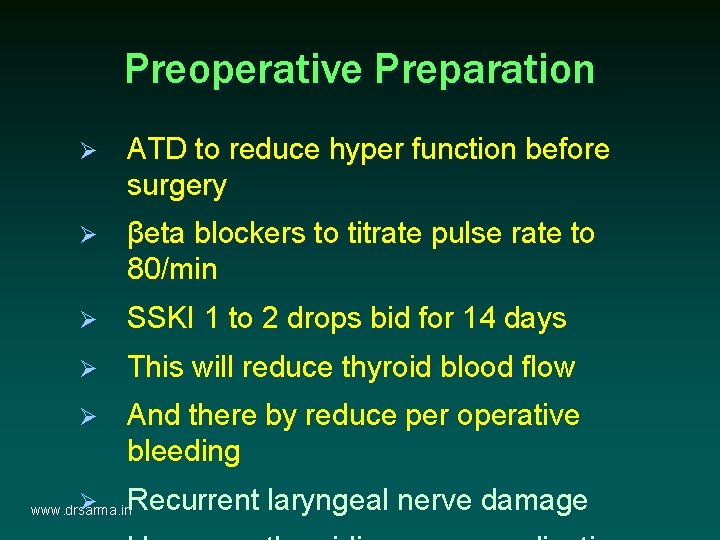
Preoperative Preparation Ø ATD to reduce hyper function before surgery Ø βeta blockers to titrate pulse rate to 80/min Ø SSKI 1 to 2 drops bid for 14 days Ø This will reduce thyroid blood flow Ø And there by reduce per operative bleeding Ø Recurrent laryngeal nerve damage www. drsarma. in
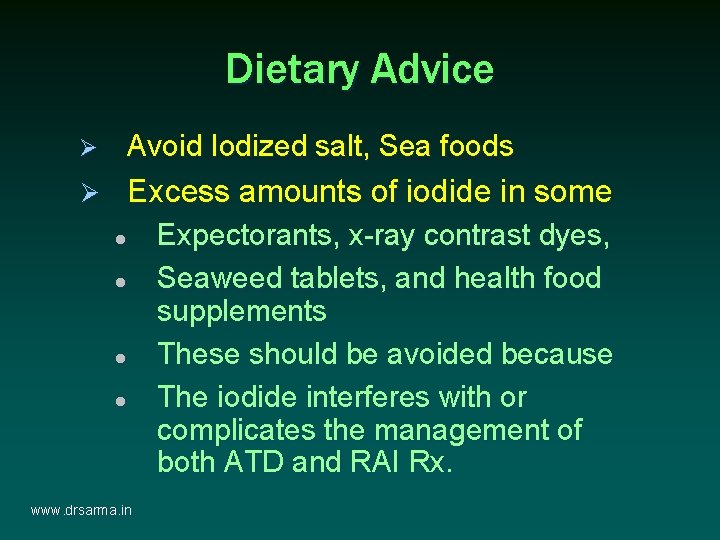
Dietary Advice Ø Avoid Iodized salt, Sea foods Ø Excess amounts of iodide in some l l www. drsarma. in Expectorants, x-ray contrast dyes, Seaweed tablets, and health food supplements These should be avoided because The iodide interferes with or complicates the management of both ATD and RAI Rx.
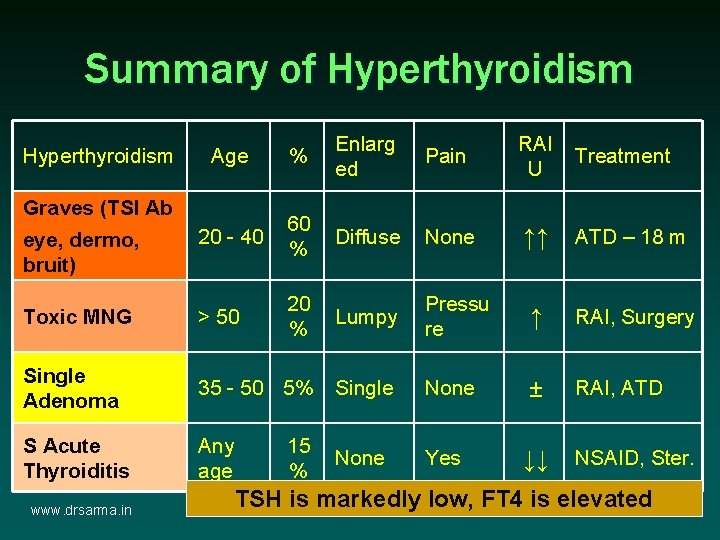
Summary of Hyperthyroidism Age % Enlarg ed Pain RAI U Treatment Graves (TSI Ab eye, dermo, bruit) 20 - 40 60 % Diffuse None ↑↑ ATD – 18 m Toxic MNG > 50 20 % Lumpy Pressu re ↑ RAI, Surgery Single Adenoma 35 - 50 5% Single None ± RAI, ATD S Acute Thyroiditis Any age None Yes ↓↓ NSAID, Ster. www. drsarma. in 15 % TSH is markedly low, FT 4 is elevated
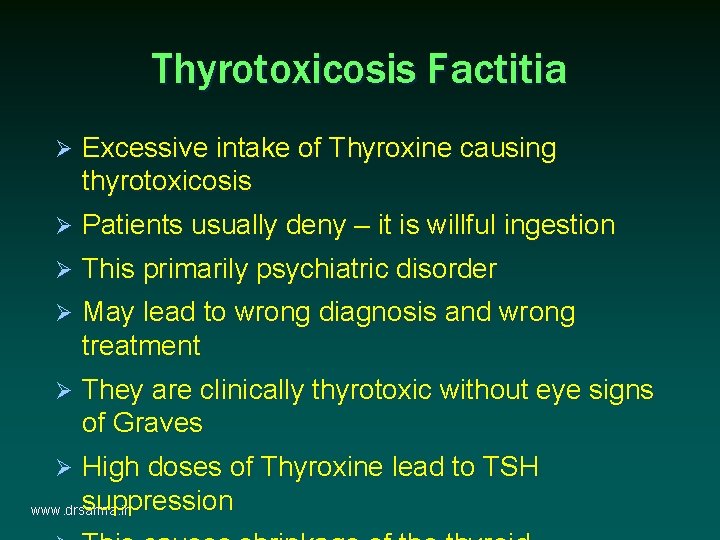
Thyrotoxicosis Factitia Ø Excessive intake of Thyroxine causing thyrotoxicosis Ø Patients usually deny – it is willful ingestion Ø This primarily psychiatric disorder Ø May lead to wrong diagnosis and wrong treatment Ø They are clinically thyrotoxic without eye signs of Graves High doses of Thyroxine lead to TSH suppression www. drsarma. in Ø
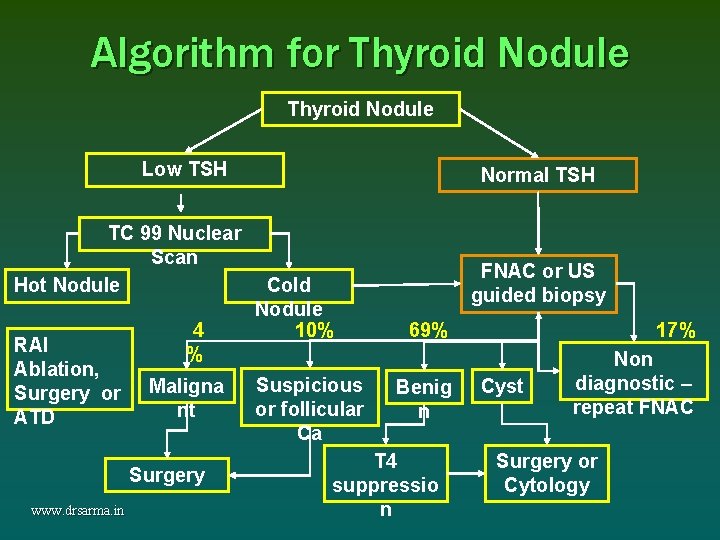
Algorithm for Thyroid Nodule Low TSH TC 99 Nuclear Scan Hot Nodule RAI Ablation, Surgery or ATD 4 % Maligna nt Surgery www. drsarma. in Normal TSH Cold Nodule 10% Suspicious or follicular Ca FNAC or US guided biopsy 69% 17% Benig n Non diagnostic – repeat FNAC T 4 suppressio n Cyst Surgery or Cytology
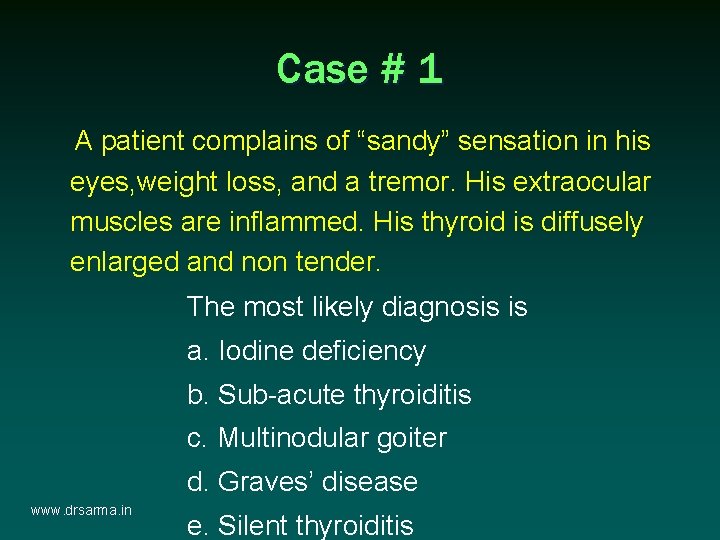
Case # 1 A patient complains of “sandy” sensation in his eyes, weight loss, and a tremor. His extraocular muscles are inflammed. His thyroid is diffusely enlarged and non tender. The most likely diagnosis is a. Iodine deficiency b. Sub-acute thyroiditis c. Multinodular goiter d. Graves’ disease www. drsarma. in e. Silent thyroiditis
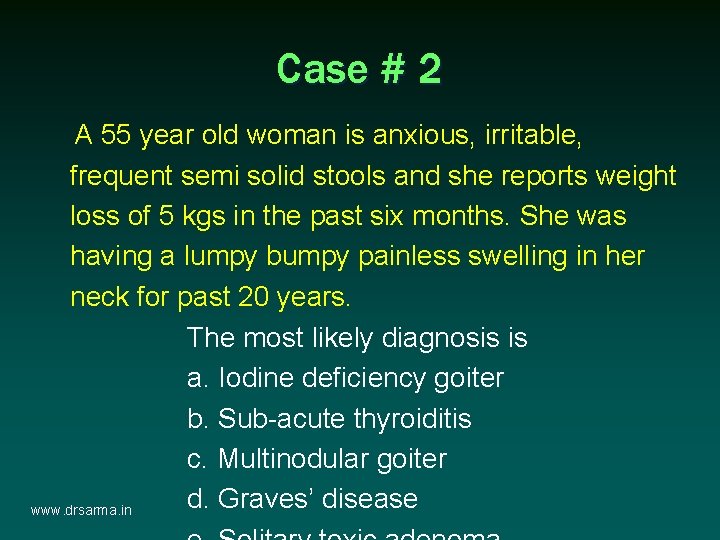
Case # 2 A 55 year old woman is anxious, irritable, frequent semi solid stools and she reports weight loss of 5 kgs in the past six months. She was having a lumpy bumpy painless swelling in her neck for past 20 years. The most likely diagnosis is a. Iodine deficiency goiter b. Sub-acute thyroiditis c. Multinodular goiter d. Graves’ disease www. drsarma. in
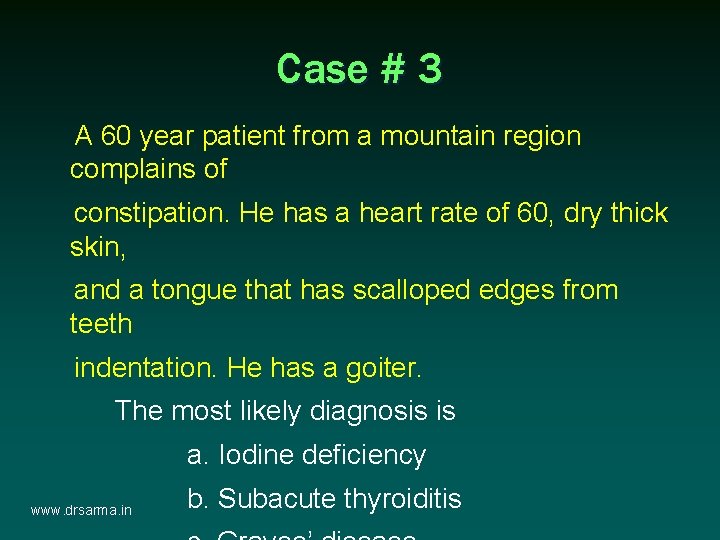
Case # 3 A 60 year patient from a mountain region complains of constipation. He has a heart rate of 60, dry thick skin, and a tongue that has scalloped edges from teeth indentation. He has a goiter. The most likely diagnosis is a. Iodine deficiency www. drsarma. in b. Subacute thyroiditis
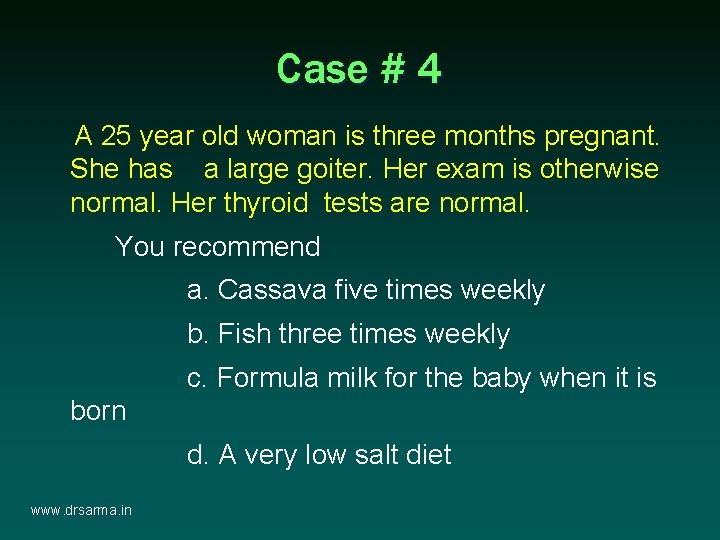
Case # 4 A 25 year old woman is three months pregnant. She has a large goiter. Her exam is otherwise normal. Her thyroid tests are normal. You recommend a. Cassava five times weekly b. Fish three times weekly c. Formula milk for the baby when it is born d. A very low salt diet www. drsarma. in
Case # 5 A 72 year old man complains of tremor and inability to concentrate. On exam, he has a heart rate of 100 beats per minute. He has a large goiter with many nodules. He has a fine tremor. His serum T 4 is very high and TSH is very low. Treatments that are likely to improve his symptoms are www. drsarma. in
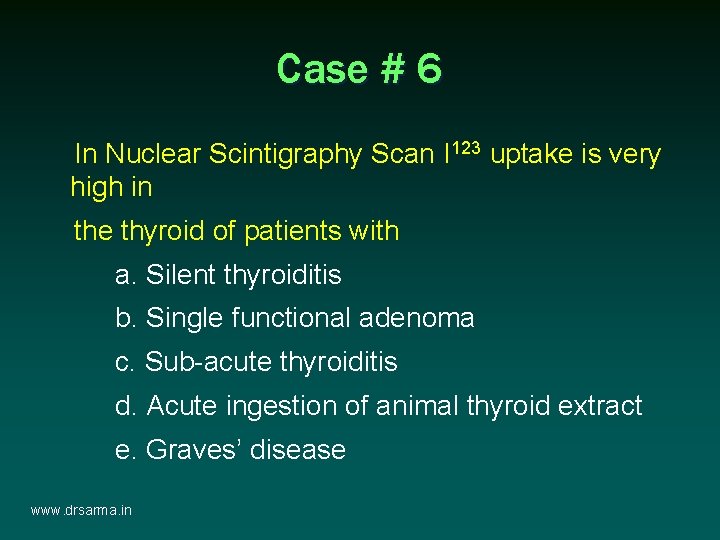
Case # 6 In Nuclear Scintigraphy Scan I 123 uptake is very high in the thyroid of patients with a. Silent thyroiditis b. Single functional adenoma c. Sub-acute thyroiditis d. Acute ingestion of animal thyroid extract e. Graves’ disease www. drsarma. in
Let us start applying www. drsarma. in