
Introduction Treatment of basic pathogenic factors in thyrotoxicosis


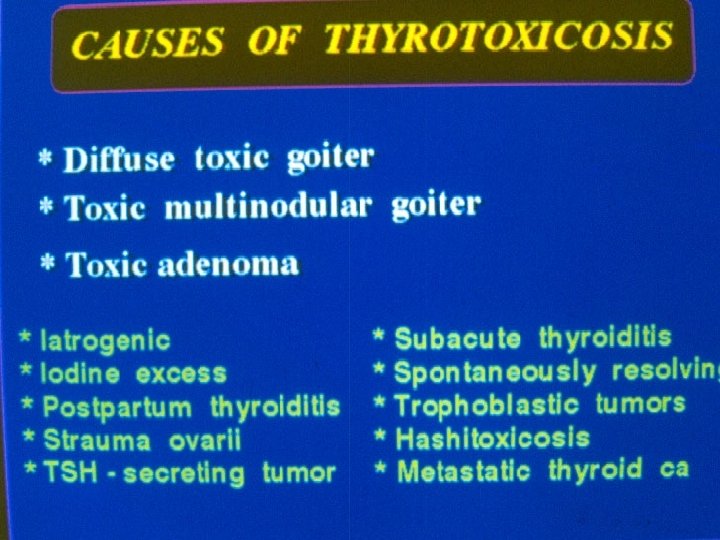
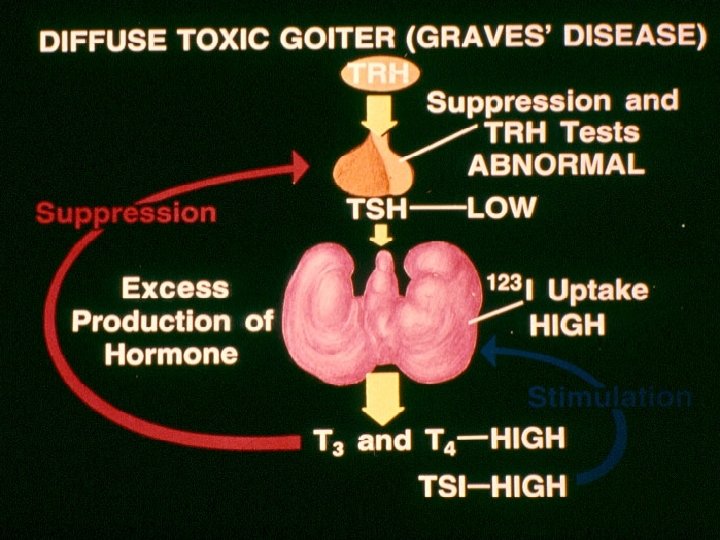
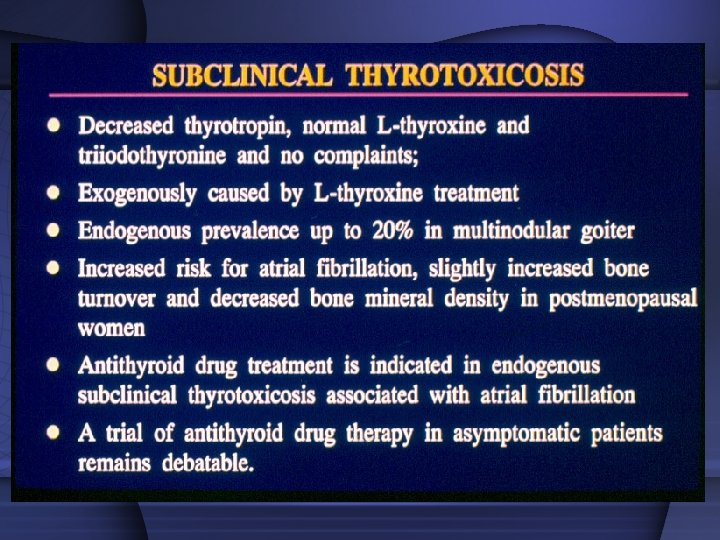
Introduction Treatment of basic pathogenic factors in thyrotoxicosis is only possible in rare conditions, such as thyrotropin secreting pituitary tumors, iatrogenic thyrotoxicosis and struma ovarii; existing therapies are only palliative. Treatment of thyrotoxicosis is designed to restrain thyroid hormone synthesis (antithyroid drugs) or to reduce the quantity of thyroid tissue (radioiodine and surgery).

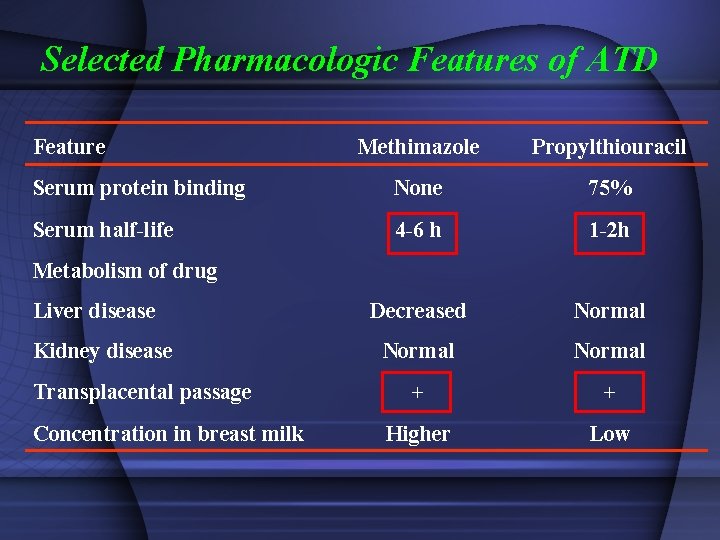
Selected Pharmacologic Features of ATD Feature Methimazole Propylthiouracil Serum protein binding None 75% Serum half-life 4 -6 h 1 -2 h Decreased Normal + + Higher Low Metabolism of drug Liver disease Kidney disease Transplacental passage Concentration in breast milk
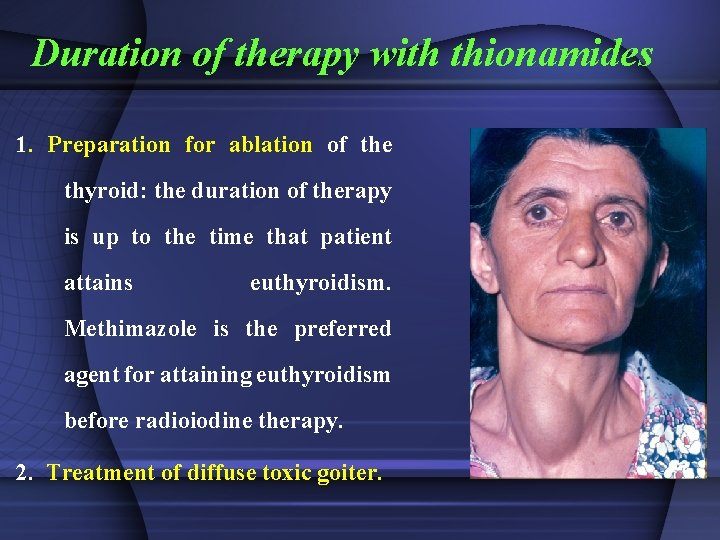
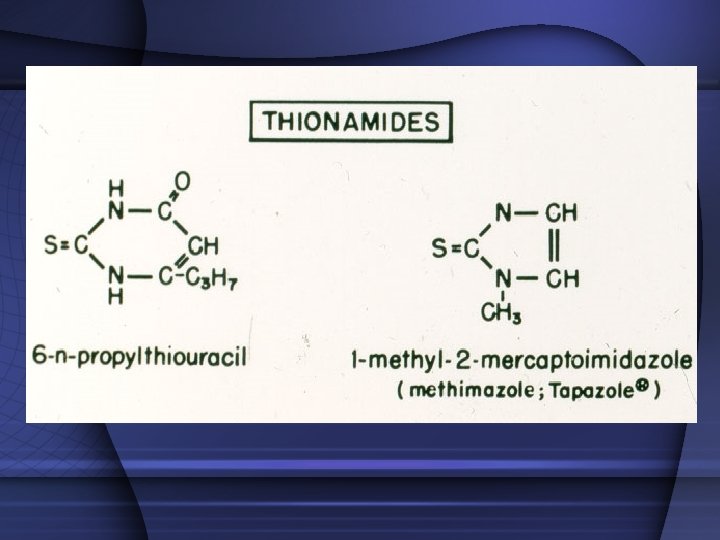
Duration of therapy with thionamides 1. Preparation for ablation of the thyroid: the duration of therapy is up to the time that patient attains euthyroidism. Methimazole is the preferred agent for attaining euthyroidism before radioiodine therapy. 2. Treatment of diffuse toxic goiter.
Use of Thionamides Compared to propylthiouracil, methimazole induces more speedy improvement in serum levels of T 4 and T 3. This effect, added to once or twice daily doses and better patient adherence, make this drug more desirable than propylthiouracil.
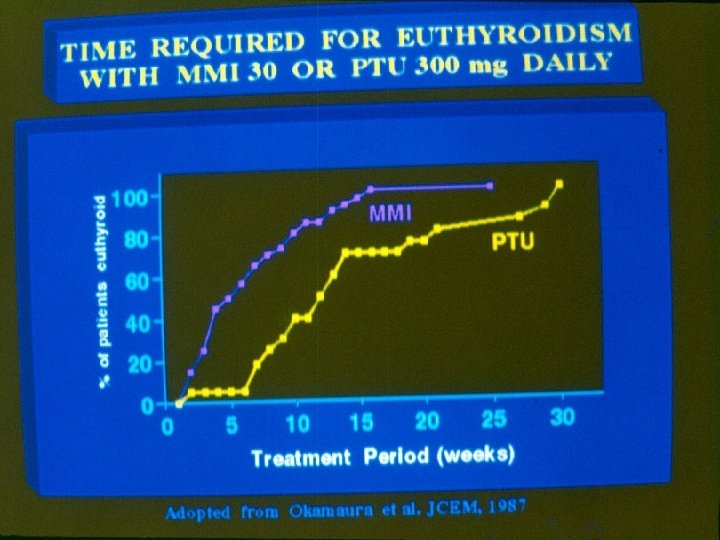

Summary of data of thionamide therapy 1. Significant improvement in the rate of relapse in patients treated for 18 months, as compared with those treated for 6 months 2. Up to four years of follow up did not find that treatment for longer than one year had any effect on relapse rate 3. Longer courses of therapy in children are accompanied by more likelihood of remission 4. There is no theoretical reason why patients whose disease is well controlled with a maintenance dose of thionamide drug could not continue with such a therapy indefinitely 5. A recent study of continuous methimazole therapy, showed that adapting such a treatment strategy may be beneficial for many patients.

Factors favoring relapse of thyrotoxicosis after treatment of Graves disease with thionamides More consistent factors: § § § Severe degree of thyrotoxicosis Large goiter Lack of decrease of goiter size during therapy High T 3 to T 4 ratio in the serum Higher baseline levels of anti-TSH receptor antibodies Lack of normalization of serum TSH Inconsistent factors: § Sex, age, cigarette smoking, duration of symptoms before diagnosis, presence of ophthalmopathy, Psychiartic disorders, (depression, hypochondriasis, paranoia, mental fatigue) and problems of daily life Azizi F. Exper Opin Drug Saf 2006; 5: 107 -116
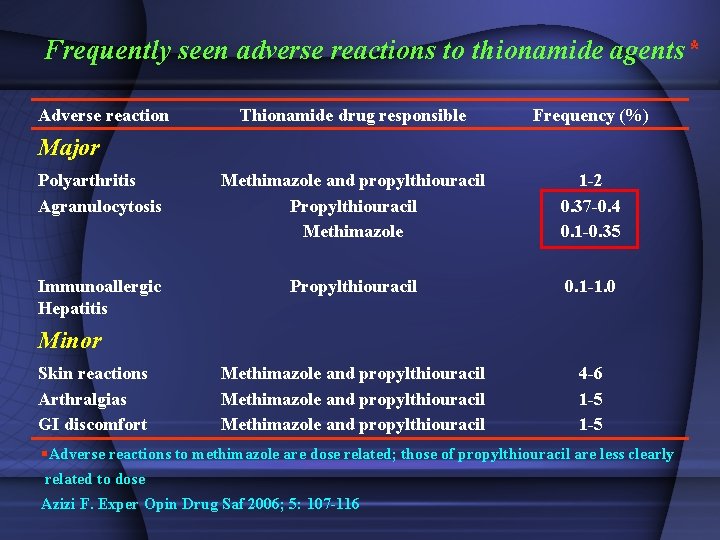
Frequently seen adverse reactions to thionamide agents* Adverse reaction Thionamide drug responsible Frequency (%) Polyarthritis Agranulocytosis Methimazole and propylthiouracil Propylthiouracil Methimazole 1 -2 0. 37 -0. 4 0. 1 -0. 35 Immunoallergic Hepatitis Propylthiouracil 0. 1 -1. 0 Methimazole and propylthiouracil 4 -6 1 -5 Major Minor Skin reactions Arthralgias GI discomfort §Adverse reactions to methimazole are dose related; those of propylthiouracil are less clearly related to dose Azizi F. Exper Opin Drug Saf 2006; 5: 107 -116

Special considerations ` Thionamide agents have been the treatment of choice for thyrotoxicosis during the pregnancy and postpartum periods. However use of these drugs during these important periods of women’s life needs special considerations.
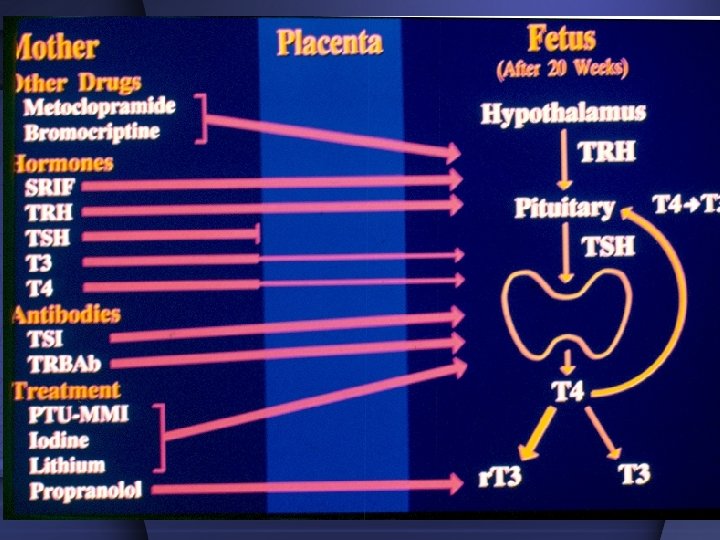

Treatment of Hyperthyroidism in Pregnancy • Mother ‘s T 4 in the high • • normal rage Mother’s TSH in the low normal rage Lowest drug dose to reach goals Thyroidectomy if required dose of ATD>40 mg MMI or 400 mg PTU Long term β-blocker therapy not advisable
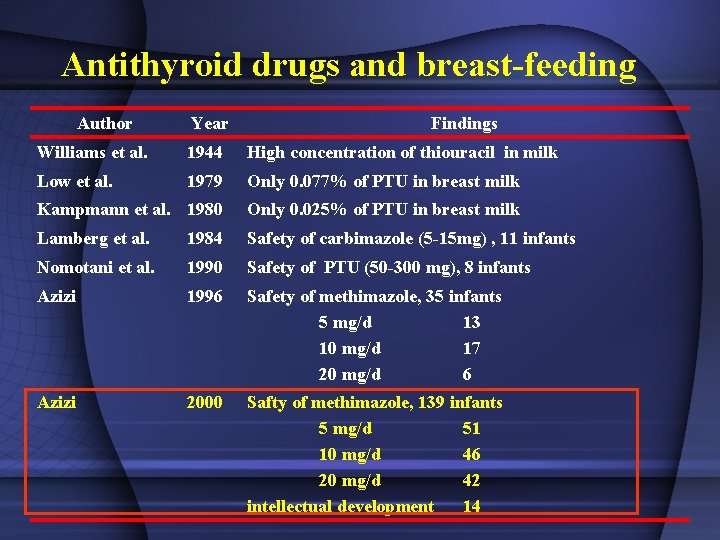
Antithyroid drugs and breast-feeding Author Year Findings Williams et al. 1944 High concentration of thiouracil in milk Low et al. 1979 Only 0. 077% of PTU in breast milk Kampmann et al. 1980 Only 0. 025% of PTU in breast milk Lamberg et al. 1984 Safety of carbimazole (5 -15 mg) , 11 infants Nomotani et al. 1990 Safety of PTU (50 -300 mg), 8 infants Azizi 1996 Safety of methimazole, 35 infants 5 mg/d 13 10 mg/d 17 20 mg/d 6 Azizi 2000 Safty of methimazole, 139 infants 5 mg/d 51 10 mg/d 46 20 mg/d 42 intellectual development 14
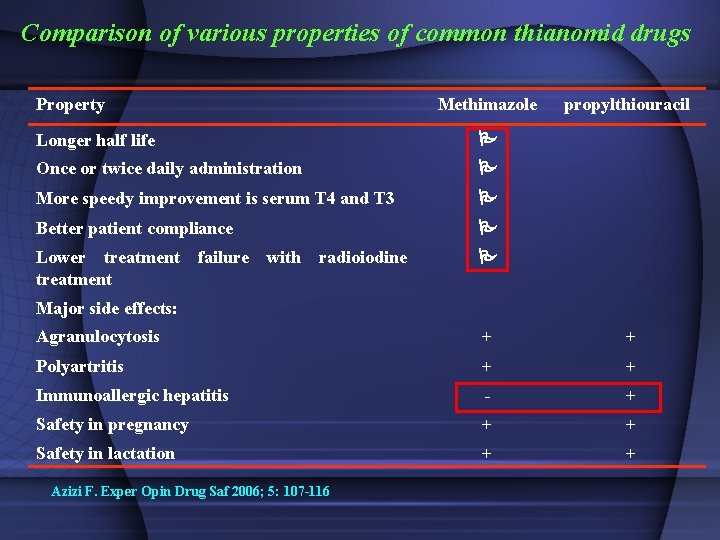
Comparison of various properties of common thianomid drugs Property Methimazole propylthiouracil Longer half life Once or twice daily administration More speedy improvement is serum T 4 and T 3 Better patient compliance Lower treatment failure with radioiodine treatment Major side effects: Agranulocytosis + + Polyartritis + + Immunoallergic hepatitis - + Safety in pregnancy + + Safety in lactation + + Azizi F. Exper Opin Drug Saf 2006; 5: 107 -116
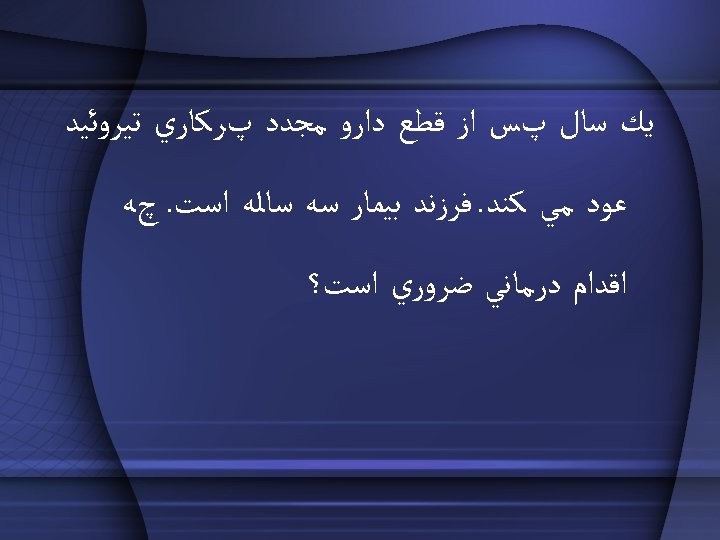
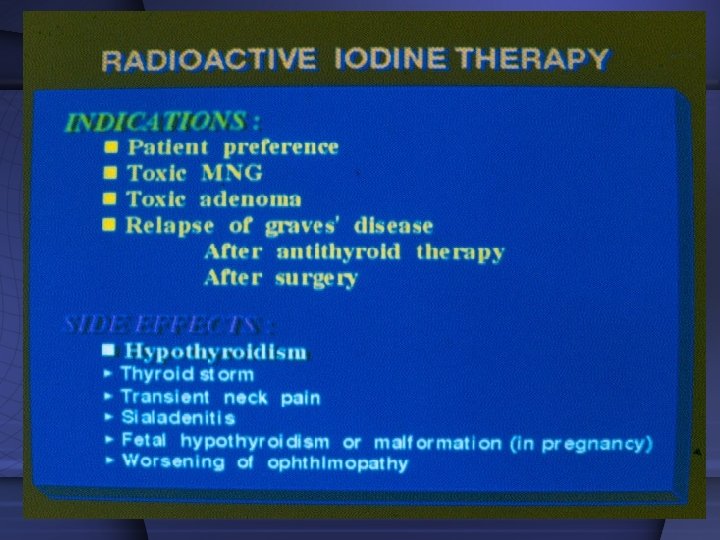
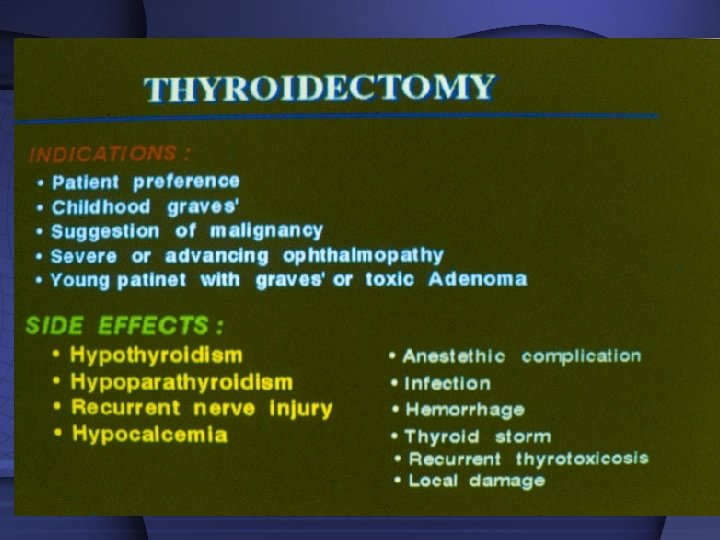

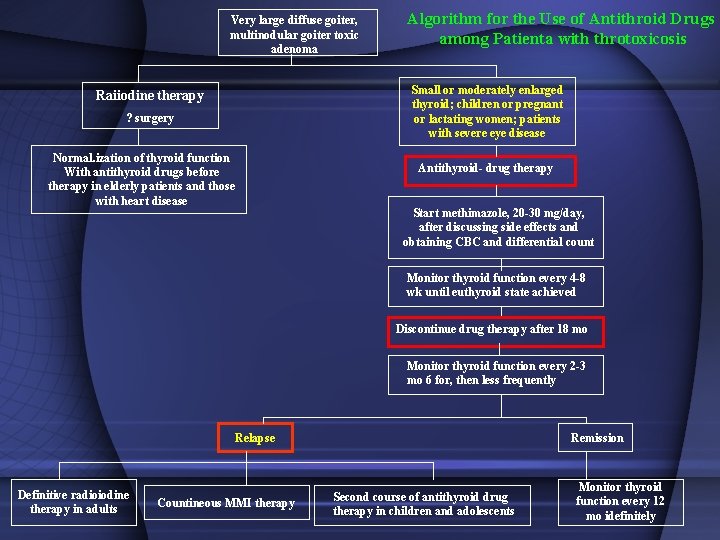
Very large diffuse goiter, multinodular goiter toxic adenoma Algorithm for the Use of Antithroid Drugs among Patienta with throtoxicosis Small or moderately enlarged thyroid; children or pregnant or lactating women; patients with severe eye disease Raiiodine therapy ? surgery Normal. ization of thyroid function With antithyroid drugs before therapy in elderly patients and those with heart disease Antithyroid- drug therapy Start methimazole, 20 -30 mg/day, after discussing side effects and obtaining CBC and differential count Monitor thyroid function every 4 -8 wk until euthyroid state achieved Discontinue drug therapy after 18 mo Monitor thyroid function every 2 -3 mo 6 for, then less frequently Relapse Definitive radioiodine therapy in adults Countineous MMI therapy Remission Second course of antithyroid drug therapy in children and adolescents Monitor thyroid function every 12 mo idefinitely

- Slides: 34